



L
Species Profile

Lobster

Nephropidae

Big claws, deep seas, tough lives
MaryLucky/Shutterstock.com

Lobster Distribution

Click a location to explore more animals from that region

This map shows coastal regions where Lobster are found.

Loading map...
lobster

At a Glance

Family Overview This page covers the Lobster family as a group. Stats below are general traits shared across the family.
Also Known As Clawed lobster, True lobster, Sea lobster
Diet Omnivore
Activity Nocturnal+
Lifespan 20 years
Weight 20 lbs
Status Not Evaluated
Did You Know?

Most species have two different claws: a heavy "crusher" for shells and a sharper "cutter" for slicing-though which side varies by individual.

Scientific Classification

Family Overview "Lobster" is not a single species but represents an entire family containing multiple species.

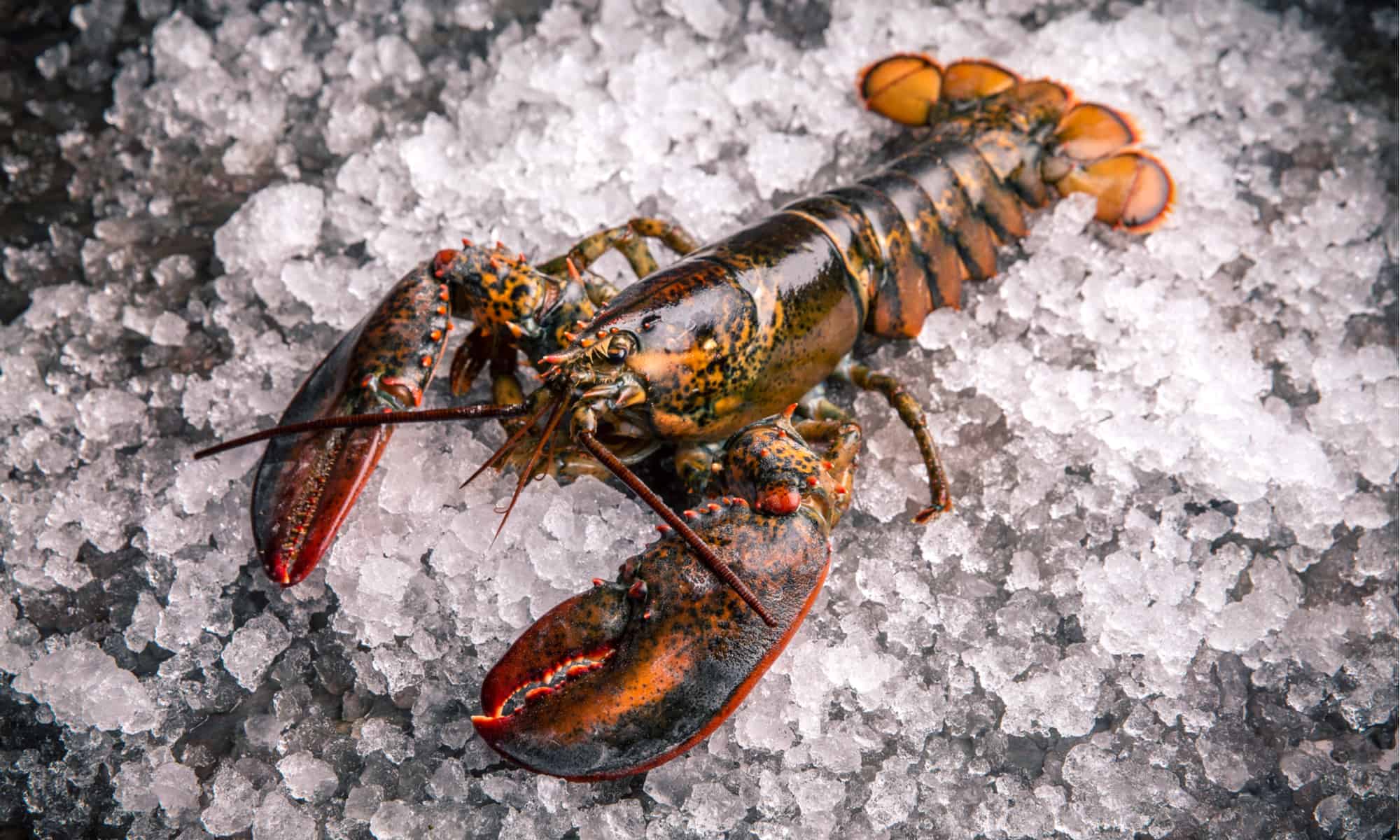
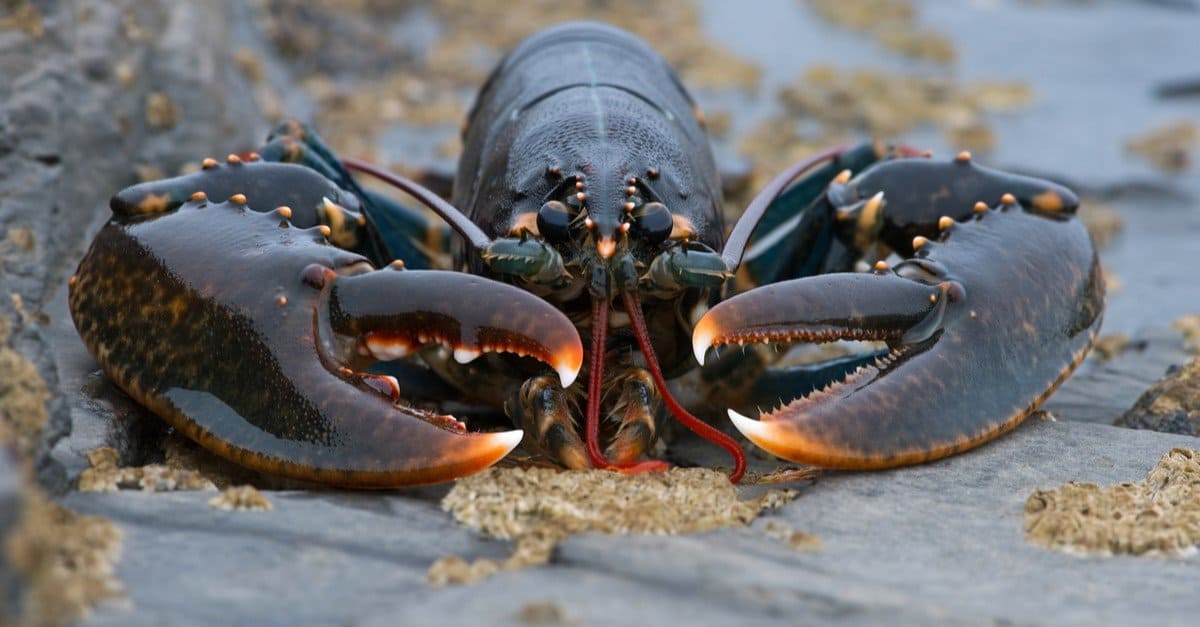
True/clawed lobsters (family Nephropidae) are large marine decapod crustaceans characterized by a robust body, long antennae, and typically a prominent pair of unequal claws (crusher and cutter) used for feeding and defense.

Kingdom
Animalia
Phylum
Arthropoda
Class
Malacostraca
Order
Decapoda
Family
Nephropidae

Distinguishing Features

  • Hard exoskeleton and segmented tail fan used for rapid backward escape
  • Five pairs of walking legs (Decapoda), with the first pair forming large claws in most Nephropidae
  • Long antennae and stalked compound eyes
  • Molting growth cycle; large individuals are typically older and molt less frequently

Physical Measurements

Males and females differ in size

Length
1 ft 2 in (4 in – 2 ft 2 in)
12 in (4 in – 2 ft 2 in)
Weight
3 lbs (0 lbs – 44 lbs)
3 lbs (0 lbs – 13 lbs)
Tail Length
7 in (2 in – 1 ft 2 in)
8 in (2 in – 1 ft 6 in)
Top Speed
5 mph
burst swimming

Appearance

Primary Colors
Secondary Colors
Skin Type Hard, calcified exoskeleton with varying roughness (granules/tubercles/spines); heavily armored claws; surface periodically replaced by molting.
Distinctive Features
  • Size range across Nephropidae: roughly ~8-60+ cm total length; from ~0.02 kg to >10 kg.
  • Lifespan range across species: about ~5-50+ years; longer-lived in larger, colder-water taxa.
  • Robust cephalothorax with a forward rostrum; long antennae and stalked eyes.
  • First pair of legs enlarged into true claws (chelae), commonly unequal (crusher and cutter).
  • Unlike spiny (Palinuridae) and slipper lobsters (Scyllaridae), nephropids typically have prominent front claws.
  • Powerful segmented abdomen with tail fan (uropods + telson) for rapid backward escape.
  • Benthic marine lifestyle: shelter in burrows/crevices or on soft bottoms; many are more active nocturnally.
  • Diet broadly omnivorous: scavenging plus predation on invertebrates; exact prey varies by species and habitat.
  • Wide depth/habitat diversity: coastal shelf to deep sea; muddy burrowers and hard-bottom crevice dwellers both occur.
  • Claws used for feeding, defense, and contests; lost limbs/claws can regenerate over successive molts.
  • High fisheries relevance in multiple regions; gear interactions can select for larger individuals and intact claws.

Sexual Dimorphism

Dimorphism is common but variable: males often develop larger, bulkier claws and may be overall larger. Females typically have a broader abdomen and pleopods adapted for carrying eggs; differences vary among genera and habitats.

  • Often larger overall size in many species/populations.
  • Enlarged or more robust chelae; asymmetry (crusher/cutter) commonly pronounced.
  • More prominent claw spines/tubercles in some taxa, especially mature males.
  • Broader abdomen to accommodate egg mass carried beneath the tail.
  • Pleopods and abdominal setae specialized for holding and aerating eggs.
  • Claws often comparatively slimmer than similarly sized males in many species.

Did You Know?

Most species have two different claws: a heavy "crusher" for shells and a sharper "cutter" for slicing-though which side varies by individual.

Across the family, sizes range from small "scampi/langoustine"-type lobsters to giants weighing tens of kilograms in rare cases.

They must molt to grow; after molting, the new shell hardens over days to weeks, and many hide until protected.

Many nephropids can regenerate lost claws and legs over successive molts.

Some species are burrowers in soft sediments (e.g., Norway-lobster types), while others prefer rocky crevices (e.g., Homarus types).

True/clawed lobsters are different from spiny and slipper lobsters: Nephropidae typically have large chelae (claws), while spiny/slipper lobsters lack big claws and rely on spines/armor and antennae.

They're important to coastal economies, but also ecologically significant as predators and scavengers that shape seafloor communities.

Unique Adaptations

  • Heterochelous claws (often unequal): specialization into crushing vs cutting functions increases feeding versatility across hard- and soft-bodied prey.
  • Powerful sensory antennae/antennules: chemoreception and mechanoreception help locate food and navigate in low light on the seabed.
  • Robust, calcified exoskeleton: strong armor against predators and rough substrates, balanced against the vulnerability period immediately after molting.
  • Regeneration through molting: lost appendages can regrow gradually, restoring function over multiple molts.
  • Broad ecological breadth within one family: members occupy habitats from shallow continental shelves to deep slopes (roughly from nearshore waters down to ~1,500-2,000 m in some species).

Interesting Behaviors

  • Shelter use and "home ranges": Many spend daylight in dens (rock crevices, reefs) or self-made burrows; the degree of burrowing vs crevice-dwelling varies widely among genera.
  • Nocturnal foraging: Commonly more active at night, roaming to hunt or scavenge; some deep-water species may be active whenever currents deliver food.
  • Claw-mediated feeding: Crusher claws crack bivalves and crustaceans; cutter claws tear softer prey and help manipulate food-yet some species have more slender claws adapted to smaller prey.
  • Agonistic displays: Individuals may posture with raised claws, antennae contact, and pushing; dominance can influence access to shelter, especially where dens are limited.
  • Reproductive behavior: Females carry fertilized eggs under the abdomen for extended periods (often many months); timing and fecundity vary strongly with size, latitude, and species.
  • Seasonal movements: Some coastal species shift depth with temperature and reproduction; deep-water nephropids may track bottom conditions and prey rather than seasons.

Cultural Significance

True or clawed lobsters (Nephropidae) are iconic seafood and key to North Atlantic fisheries. Once low status, now prized, they symbolize coastal life (Maine, Atlantic Canada, parts of Europe). Fisheries led to rules and debates on sustainability, bycatch, habitat, and climate.

Myths & Legends

A common New England sea tale says lobsters used to be so common they were fed to prisoners and servants, and some versions say laws limited how often they could be served.

In Lewis Carroll's Victorian fantasy "Alice's Adventures in Wonderland," the 'Lobster Quadrille' became a well-known cultural tale featuring lobsters as dancing characters-an enduring literary association in English-speaking culture.

The word 'lobster' traces back through Old English and Latin to Greek 'astakos,' reflecting the animal's long-standing place in Mediterranean natural history traditions recorded by writers like Aristotle and later Pliny.

Surrealist art cemented the lobster as a cultural symbol: Salvador Dalí's 'Lobster Telephone' helped turn the animal into a modern emblem of the strange and uncanny in 20th-century European art.

Conservation Status

NE Not Evaluated (family-level); species-level assessments span multiple categories (many Least Concern, numerous Data Deficient deep-sea taxa, and some narrow-range species listed as Vulnerable-Critically Endangered).

Has not yet been evaluated against the criteria.

Population Unknown

Protected Under

  • National and regional fisheries management measures (e.g., minimum/maximum size limits, closed seasons/areas, gear and effort limits, trap restrictions, protections for egg-bearing females)
  • Marine Protected Areas and no-take zones (varies by country/region)
  • EU Common Fisheries Policy technical and conservation measures (where applicable)
  • U.S. Magnuson-Stevens Fishery Conservation and Management Act and Canada Fisheries Act management frameworks (where applicable)

You might be looking for:

American lobster

35%

Homarus americanus

Large North Atlantic clawed lobster; the most common commercial "lobster" in North America.

European lobster

20%

Homarus gammarus

North Atlantic/Eastern Atlantic clawed lobster; common in Europe.

Caribbean spiny lobster

18%

Panulirus argus

A spiny lobster (no large claws); often called "lobster" in the tropics; family Palinuridae.

Norway lobster / Dublin Bay prawn

12%

Nephrops norvegicus

Smaller clawed lobster relative; important European fishery species.

Slipper lobsters

8%

Scyllaridae

Flattened "slipper"-shaped antennae; also called lobsters in some markets/regions; family Scyllaridae.

Life Cycle

Birth 20000 larvas
Lifespan 20 years

Lifespan

In the Wild
3–70 years
In Captivity
2–50 years

Reproduction

Mating System Polygynandry
Social Structure Solitary
Breeding Pattern Transient
Fertilization Internal Fertilization
Birth Type Internal_fertilization

Across Nephropidae, adults are mostly solitary; males often compete for shelters and briefly guard newly molted females to mate, but both sexes may have multiple mates across seasons. Females store sperm and brood eggs on pleopods.

Behavior & Ecology

Social Aggregation Group: 3
Activity Nocturnal, Crepuscular, Cathemeral
Diet Omnivore hard-shelled benthic invertebrates (especially bivalves and other shelled prey)
Seasonal Migratory 31 mi

Temperament

Generally territorial and competitive around shelters, especially among similar-sized adults
Aggression varies by species, density, habitat complexity, season, and molt stage
Larger individuals often dominate; smaller individuals may avoid conflict via retreat and timing
Males often more aggressive during mating periods; recently molted individuals are risk-averse

Communication

Stridulation (rasping) sounds produced by rubbing body parts, often during disturbance
Low-frequency clicks/rasps associated with handling or aggressive encounters Reported in several species
Chemical cues in urine/hemolymph for sex recognition, dominance status, and reproductive condition
Tactile signaling with antennae and claws during assessment, courtship, and contests
Visual displays and postures (raised claws, body elevation) used in threat and dominance
Hydrodynamic/mechanosensory detection of movements via antennules and setae, aiding spacing and avoidance

Habitat

Coastal Rocky Shore Kelp Forest Coral Reef Estuary Seabed/Benthic Deep Sea Open Ocean +2
Biomes:
Terrain:
Coastal Rocky Sandy Muddy
Elevation: Up to 8202 ft 1 in

Ecological Role

Benthic mesopredator and scavenger (varies by species and setting from more predatory to more scavenging/detritus-using), structuring bottom communities through selective predation and carrion consumption.

regulation of benthic invertebrate populations (e.g., mollusks, worms, echinoderms) carrion removal and nutrient recycling bioturbation and sediment mixing from burrowing/shelter maintenance energy transfer as prey for larger fishes, sharks, rays, and marine mammals influencing community composition and habitat complexity via foraging pressure and shelter use

Diet Details

Main Prey:
Bivalves Gastropods Crustaceans Polychaete worms and other benthic worms Echinoderms Small benthic fishes and fish eggs Carrion +1
Other Foods:
Seaweed Seagrass Biofilm and encrusting algae Detritus

Human Interaction

Domestication Status

Wild

True/clawed lobsters (Nephropidae) are wild marine animals, not domesticated. People catch them in fisheries and keep them short-term in live tanks, pounds, or aquaculture tanks, but they are not bred as pets. Humans use them for food, bycatch, research, public aquaria, and local cultural or market traditions.

Danger Level

Moderate
  • painful pinches/lacerations from strong claws (can cause cuts, bruising; rarely severe finger injuries with large individuals)
  • puncture injuries from spines/rostrum and sharp shell edges when handled
  • allergic reactions in susceptible people (shellfish allergy) from contact or aerosols during cooking/processing
  • foodborne illness risk if improperly stored/handled/cooked (a processing/food safety hazard rather than an attack risk)
  • minor hazards from live handling (slips, dropped animals, tank electrical/water risks in captivity)

As a Pet

Not Suitable as Pet

Legality: Often legal to have lobsters bought from the seafood trade, but local rules may limit owning or moving live lobsters, need permits to collect, ban releases, and control non-native species and aquaculture. Check fisheries and animal-transport rules.

Care Level: Expert Only

Purchase Cost: $15 - $300
Lifetime Cost: $1,000 - $20,000

Economic Value

Uses:
Commercial fisheries Live seafood and restaurant trade Subsistence/local fisheries (in some regions) Aquaculture/holding and distribution (primarily storage rather than full-cycle farming) Tourism and cultural branding (regional lobster economies) Research and education (laboratory use, aquaria)
Products:
  • meat (tail, claw, knuckle) sold fresh/frozen/canned
  • live lobster sales
  • shell byproducts (chitin/chitosan; compost/fertilizer/soil amendment in some supply chains)
  • bait (in some fisheries/regions)
  • display animals for public aquariums

Relationships

Related Species 6

Spiny lobsters Palinuridae Shared Order
Slipper lobsters Scyllaridae Shared Order
Reef lobsters Enoplometopidae Shared Family
Freshwater crayfish
Freshwater crayfish Astacidae Shared Family
Freshwater crayfish
Freshwater crayfish Cambaridae Shared Family
Freshwater crayfish
Freshwater crayfish Parastacidae Shared Family

Ecological Equivalents 5

Animals that fill a similar ecological role in their ecosystem

Spiny lobster Palinuridae Large benthic marine crustaceans that occupy rocky, reef, and shelf habitats; mostly nocturnal foragers and scavenger-predators. They have a similar fishery role and overall ecology to Nephropidae but lack the large crushing claws typical of that family.
Slipper lobsters Scyllaridae Bottom-dwelling, nocturnal crustaceans that shelter in crevices and burrows and feed on slow-moving invertebrates. They are functionally similar as benthic predators and scavengers, though their bodies are flattened and their antennae are broadened.
King crab
King crab Lithodidae Large, commercially fished benthic predators and scavengers that consume mollusks, worms, and other invertebrates; they overlap with clawed lobsters on cold-temperate shelves and in deep water, competing for similar prey.
Rock crabs and edible crabs Cancer spp. Robust benthic omnivores and predators in coastal temperate habitats. They compete for shelter and territory, share prey (bivalves, gastropods, and carrion), and can be both competitors and occasional predators of juvenile lobsters.
Octopus
Octopus Octopus spp. Crevice- and den-using benthic predators that target similar prey (crabs and mollusks) and occupy overlapping rocky habitats. Octopuses are also major predators of many nephropid lobsters.

Types of Lobster

19

Explore 19 recognized types of lobster

American lobster Homarus americanus
European lobster Homarus gammarus
Cape lobster Homarus capensis
Norway lobster / langoustine Nephrops norvegicus
Caribbean lobsterette Eunephrops bairdii
Blind lobster Acanthacaris caeca
Deep-sea lobster Acanthacaris tenuimana
New Zealand scampi Metanephrops challengeri
Japanese scampi Metanephrops japonicus
Australian scampi Metanephrops australiensis
Andaman scampi Metanephrops andamanicus
Bight scampi Metanephrops binghami
Atlantic deep-sea lobster Nephropsis atlantica
Red deep-sea lobster Nephropsis rosea
Japanese blind lobster Thaumastocheles japonicus
Deep-sea blind lobster Thaumastocheles zaleucus
Patagonian lobsterette Thymops birsteini
Grobov's lobsterette Thymopides grobovi
Laurent's lobsterette Thymopides laurentae

Lobsters are a family of crustaceans that live in waters along most of the world’s coastlines. There are 30 known species of clawed lobsters and 45 species of spiny (or rock) lobsters. 

The largest lobster species is the American lobster, which can be found from the coasts of North Carolina to Newfoundland. Because American lobsters grow continuously throughout their lives, they can reach sizes larger than any other living crustacean.

Lobsters are arthropods, like insects and spiders, and share features such as an exoskeleton and jointed legs, but they are more closely related to other crustaceans. They’re omnivores, eating both fish and algae. Lobsters have poor eyesight, so they depend on their ability to taste and smell while moving across the bottom of the ocean.

5 Incredible Facts

  • With a brain in their throat and teeth in their stomach, lobsters have some of the most unusual anatomy across the animal kingdom. Their eyes detect shadows and light, but not colors or images. Their stomach contains their “teeth,” a gastric mill that crushes up food. A lobster’s brain is located in its throat and is about the size of a grasshopper’s. Their heart and central nervous system lie in their abdomen. In addition, lobsters “taste” with their feet and “hear” using a series of sensory hairs on their legs!
  • A lobster’s underbelly is as strong as car tires. The underbelly membrane of lobsters (which protects against rocks on the seafloor) is about as strong as industrial rubber.
  • The largest lobster ever recorded might have been 100 years old. The largest lobster ever recorded was caught off Nova Scotia in 1977 and weighed 44 pounds 6 ounces, according to the Guinness Book of World Records. While age estimates of lobsters are inaccurate, it is believed this lobster may have been 100 years old.
  • Lobsters used to be considered “cockroaches of the sea.” In the early 1800s, lobsters were so plentiful in New England that they occasionally would wash ashore in piles two feet high. While lobsters are now seen as “gourmet” food, they were so plentiful in early America that Massachusetts servants demanded no more than three dinners per week.
  • The key to eternal life? Unlike most animals, which stop growing once they reach adulthood, lobsters continue to grow throughout their lives. Does this mean lobsters could hold the key to “immortal life?”

          Classification and Scientific Name
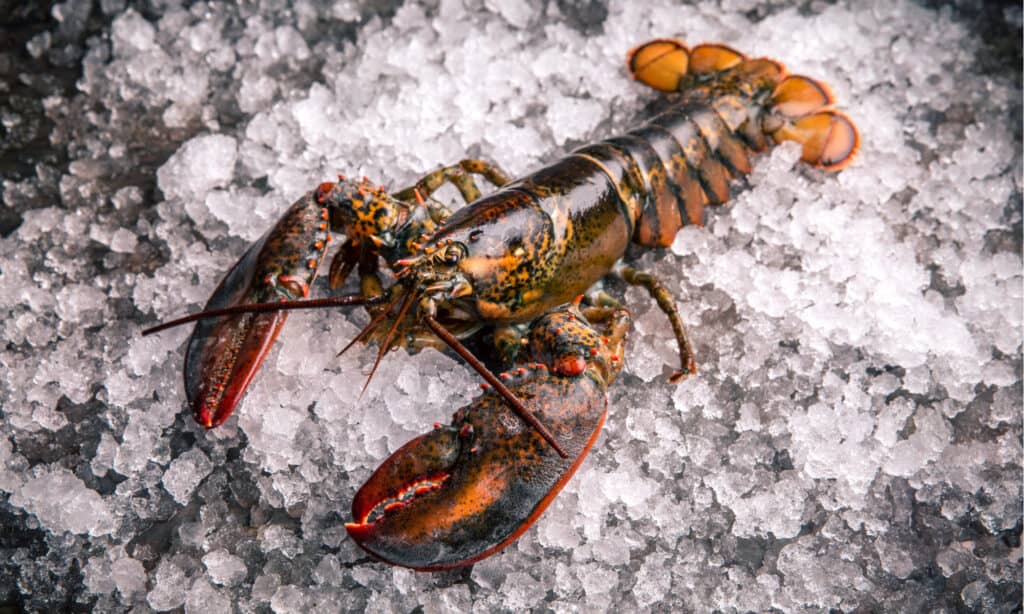
          lobster

          The lobster has a long evolutionary history as a decapod and crustacean.

          In regards to the type of lobster most Americans know, its common name is the American or Maine lobster. Its scientific name is Homarus americanus. Other commonly used names include the Atlantic lobster as well as the true lobster.

          Scientists think that decapods, like the mole crab (Emerita), evolved 450 million years ago, lobster-like crustaceans about 360 million years ago, and the ancestor of what we know today as the lobster showed up about 12 million years ago. Lobsters and crabs, then, share an evolutionary history.

          The taxonomy of the lobster shows that it belongs to the Nephropidae family and is in the class Malacostraca, order Decapoda. The Greek word deka, meaning ten, and pous, meaning feet.

          Other crustaceans, like spiny lobsters (Palinuridae) and slipper lobsters, may be called “lobster,” but they are not closely related and have no large claws like the very large front claws of the Maine lobster. The same is true for the squat lobster.

          The relatives that are most similar are the reef lobsters and three families of freshwater crayfish. The term “lobster” is used for several groups of crustaceans, but only members of the family Nephropidae, such as the American or Maine lobster, are considered “true lobsters.”

          Among edible lobsters, the Norway lobster (Nephrops norvegicus) is commercially popular in Europe, but it grows to only about 10 inches long. The average American lobster is twice that size.

          Appearance and Behavior
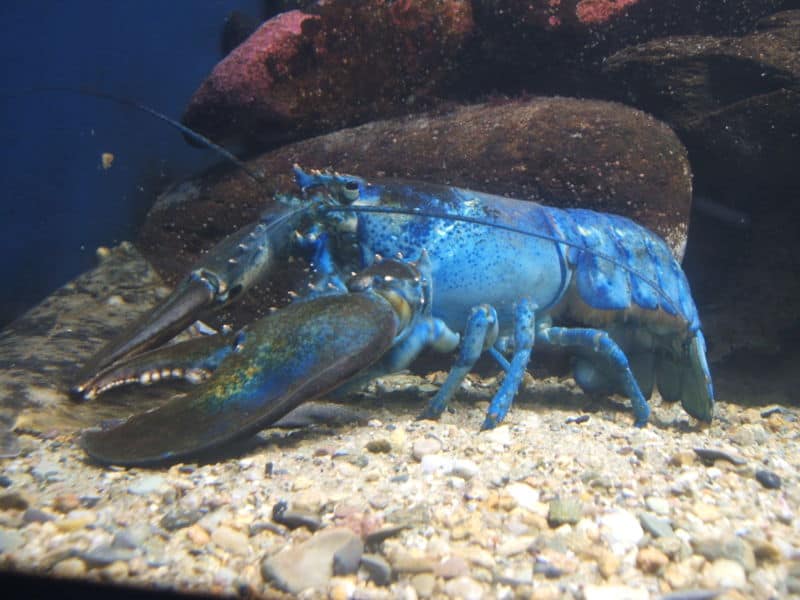
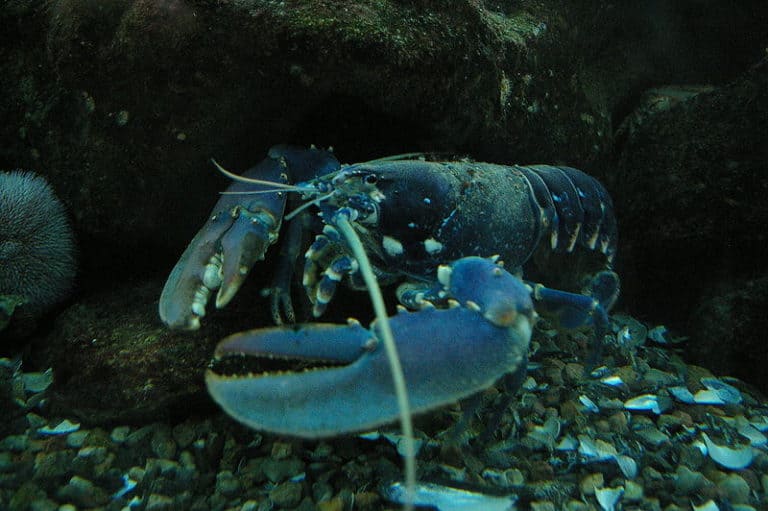
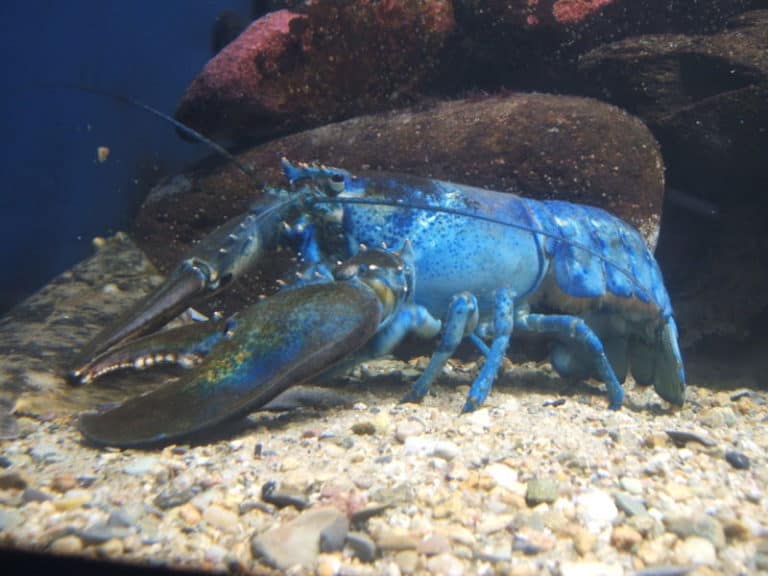
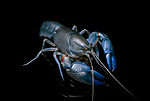
          A Blue Lobster is very rare, only one in every two million lobsters!

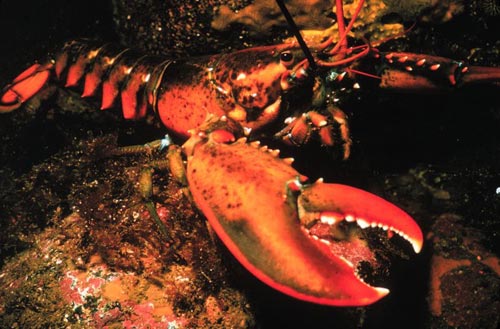
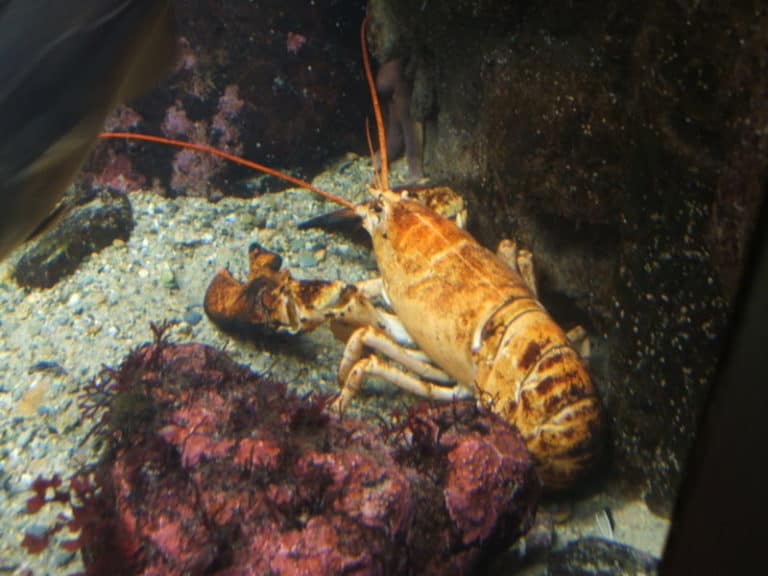
          When you think of a lobster, you may picture a red lobster sitting on someone’s dinner plate. However, they don’t turn red until after they’re cooked. The American or Maine lobster is greenish brown in color. Lobsters can be found in different colors, but these variations are extremely rare. The Maine Fishermen’s Alliance estimates that:

          • Every one in two million lobsters is blue
          • Looking for a yellow lobster? They’re seen once every 30 million lobsters.
          • White lobsters are even rarer. The chance of seeing a white lobster is about one in 100 million.

              The brownish color of most lobsters allows them to blend in with the sand and rocks on the bottom of the ocean. This can keep them hidden from predators. If a lobster spots a predator, it will scoot backward using its tail fin to move into a rock crevice. The fastest speed on record for a lobster moving backward is 11 mph. 

              A lobster’s body has two main parts covered in a hard shell. It can grow to be a little more than three feet long, but the average is 8-24 inches. Lobsters vary in weight from 1 pound to 15 pounds. Of course, some lobsters weigh more than 15 pounds.

              The American lobster has two claws, antennae, and two tiny black eyes. Its eyes don’t play a big part in its nocturnal hunting activities. The small sensory hairs on its ten legs and feet help a lobster to identify its prey. Also, a lobster uses its antennae to smell prey even if it’s far away.

              Lobsters are solitary and shy animals most of the time. However, they become aggressive when defending their territory against other lobsters. One lobster may push another with its claws in an effort to move it out of the territory.

              Habitat
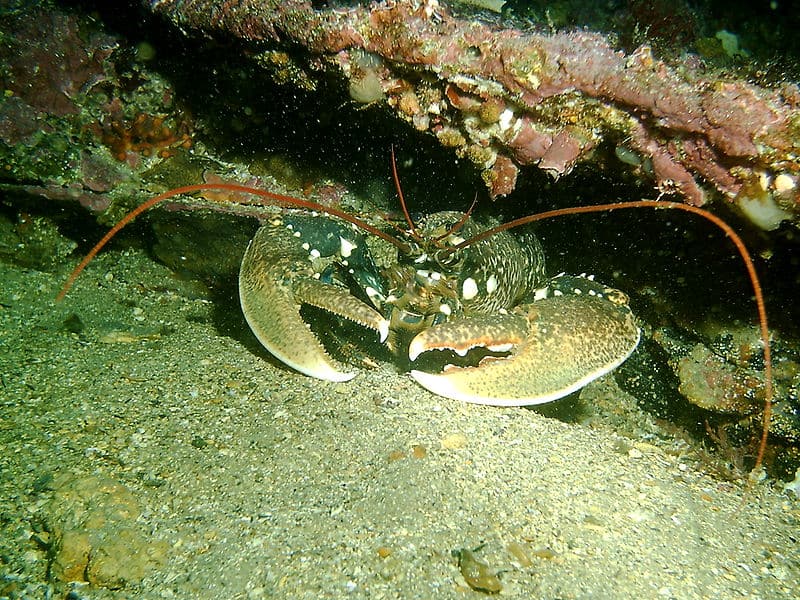
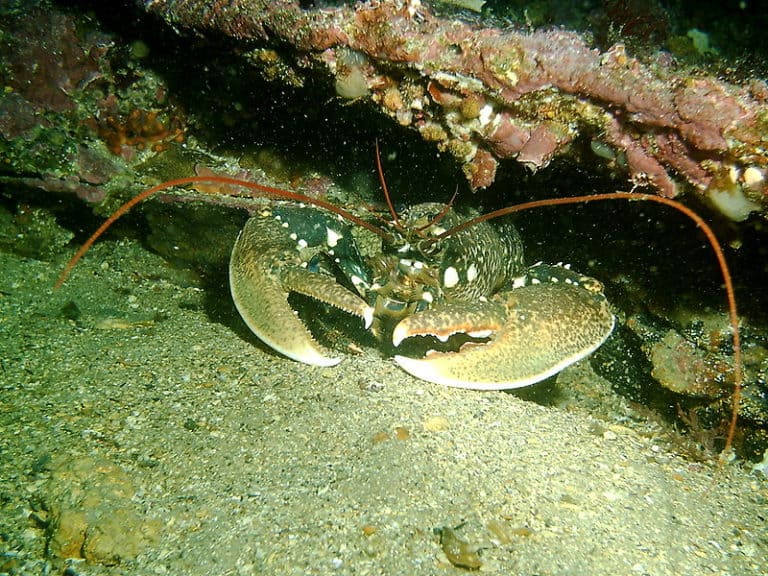
              A lobster in its habitat on the ocean floor, hiding between rocks.

              American lobsters live in the northern Atlantic Ocean. They prefer cold water habitats and live on the floor of the ocean, hiding between rocks and digging in the sand. Different lobster subspecies, such as the Spiny lobster, live in warm, tropical waters like the Gulf of Mexico, the Caribbean Sea, and off the coast of Florida in the Atlantic Ocean.

              The tiny eyes of a lobster have thousands of lenses. Their eyes are sensitive to bright light, so it’s a good thing they live at the bottom of the ocean. Although they can’t see clearly, lobsters can see shadows and dim images, which helps them avoid predators moving into the area. 

              These crustaceans use both of their claws to dig into the sand near a rock to make themselves a home. This home can serve as protection against predators.

              Scientists have found that American lobsters migrate away from the shoreline in the winter and spring. They want to live in the warmer, deep water during the cold weather months. As the weather warms up in the summer and stays warm into early fall, they move back toward the shore. Some lobsters move up and down the shoreline, never staying in one place. 

              Diet

              What do lobsters eat? Lobsters are omnivores. They eat mussels, sand fleas, clams, shrimp, and sometimes tiny fish. They are slow-moving, so they usually hunt slow-moving prey. They grab hold of their prey with their strong claws and squeeze. If they can’t find any of these animals to eat, lobsters eat plants that grow underwater.

              Predators and Threats
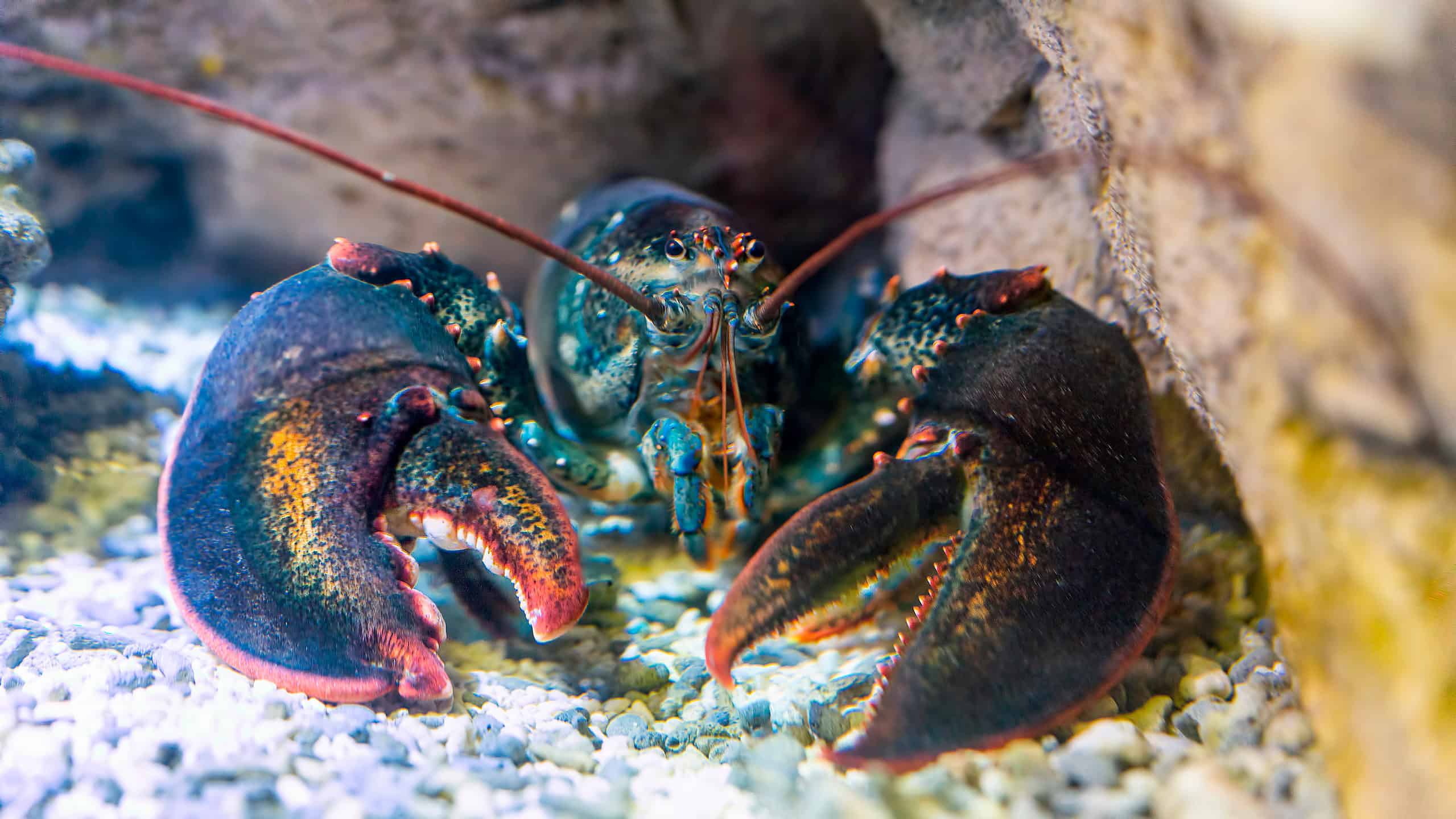
              Lobster under rock

              Most Maine lobsters are green to blend in near rocks, which hides them from predators.

              Lobsters have many predators, including eels, crabs, seals, and rock gunnels. An eel is able to push its thin body into rock crevices to grab a lobster that’s hiding there. Seals are fast swimmers and can catch lobsters with their powerful jaws. In addition, some fish, such as flounder and cod, also eat lobsters. However, the biggest threat to lobsters is humans. Millions of lobsters are caught in nets to sell in seafood markets and restaurants. People eat the heavily muscled abdomen and claws of the American lobster, but only the abdomen (marketed as a lobster tail) of the spiny lobster.

              When it comes to disease, lobsters can suffer from shell disease as well as different types of fungus and parasites. They are also threatened by chemicals and other pollutants in the ocean waters. The official conservation status of lobsters is Least Concern

              Reproduction, Babies, and Lifespan

              Lobster mating involves a dominant male that typically mates with a group of females. A unique aspect of lobster mating is that females must shed their hard outer shell before mating, which leaves them at risk of predation. During this period, females will live inside caves inhabited by males, who offer protection. After approximately two weeks, the female’s shell will have regrown, and she can leave. At this point, a new female will join the male.

              A female lobster carries sperm from a male so she can fertilize her eggs in July or August. She carries her eggs on the underside of her abdomen for about ten months. The typical lobster carries 8,000 eggs at a time. However, some female lobsters can carry as many as 100,000 eggs. After ten months, the female releases the lobster larvae, also known as hatchlings, into the ocean waters. A female lobster breeds every two years.
              Animals With Exoskeletons-European Lobster

              Some species of lobster can be quite large and can live 50 years or more!

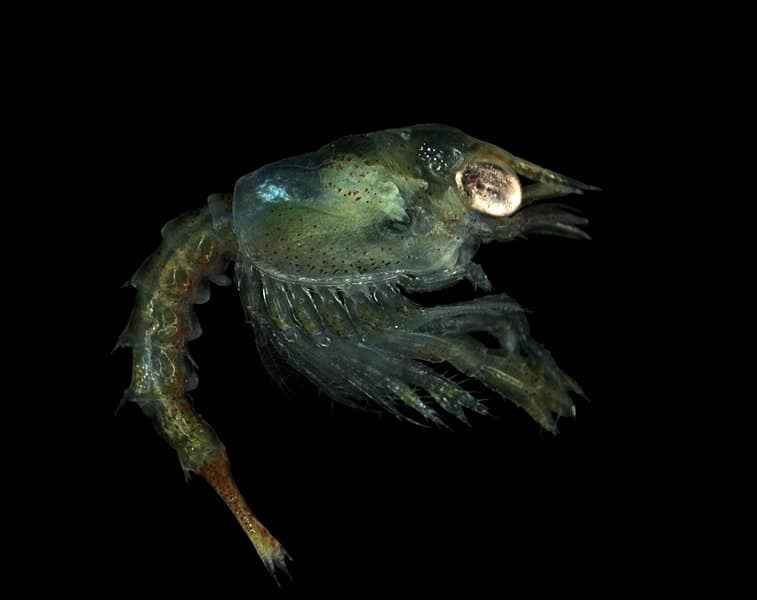
              For four to six weeks, the larvae float on or near the surface and eat plankton. During these weeks, the larvae molt (shed their shells) four times, growing a new one each time. After shedding its fourth shell, the larvae are large enough to sink to the ocean floor. 

              Not surprisingly, it’s estimated that less than one percent of lobster larvae survive to sink to the ocean floor. These tiny larvae are eaten by fish, seals, sea gulls, and other animals before they’re large enough to settle. For example, fewer than 80 out of 8,000 larvae may survive to this stage.

              Once a young lobster descends to the ocean floor, it makes its home by digging in the sand beneath a rock. At this point, the young lobster is very small, weighing only a fraction of a gram.

              Lobsters can live to be 50 years old or older. As they age, they can suffer from shell rot and various types of parasites. The oldest lobster in the world was caught in 2009. Scientists believe it’s 140 years old.

              Lobsters have the ability to regrow legs, claws, and antennae if they fall off due to injury or disease. In fact, scientists believe that losing a claw or leg is not a painful experience for a lobster. It can be lifesaving and prevent infection in the crustacean. This regrowth makes it a little easier to see how a lobster can live such a long life in the ocean.

              Population

              The population of American lobsters in the Gulf of Maine is approximately 250 million. Although millions of lobsters are caught each year by fishermen, the population is holding steady. The total population of spiny lobsters and other species that live in tropical waters is not known. The official conservation status of American lobsters is Least Concern.

              As a note, if a fisherman catches a female lobster who is carrying eggs on her abdomen, it’s against the law to keep her. The fisherman must put her back in the water. This is one of the efforts being made to make sure the lobster population steadily grows.

              View all 131 animals that start with L

              Sources

              1. David Burnie, Dorling Kindersley Animal, The Definitive Visual Guide To The World's Wildlife / Accessed December 14, 2008
              2. Tom Jackson, Lorenz Books The World Encyclopedia Of Animals / Accessed December 14, 2008
              3. David Burnie, Kingfisher The Kingfisher Animal Encyclopedia / Accessed December 14, 2008
              4. Richard Mackay, University of California Press The Atlas Of Endangered Species / Accessed December 14, 2008
              5. David Burnie, Dorling Kindersley Illustrated Encyclopedia Of Animals / Accessed December 14, 2008
              6. Dorling Kindersley Dorling Kindersley Encyclopedia Of Animals / Accessed December 14, 2008
              Thank you for reading! Have some feedback for us?


              Lobster FAQs (Frequently Asked Questions)

              No, not exactly. Sometimes lobsters are called bugs because they share a few characteristics with them. For one, both lobsters and bugs like grasshoppers have an exoskeleton (a hard shell). Also, lobsters and many bugs like crickets have jointed legs. A jointed leg has a few places where it can bend. In short, there are a lot of similarities between bugs and lobsters.