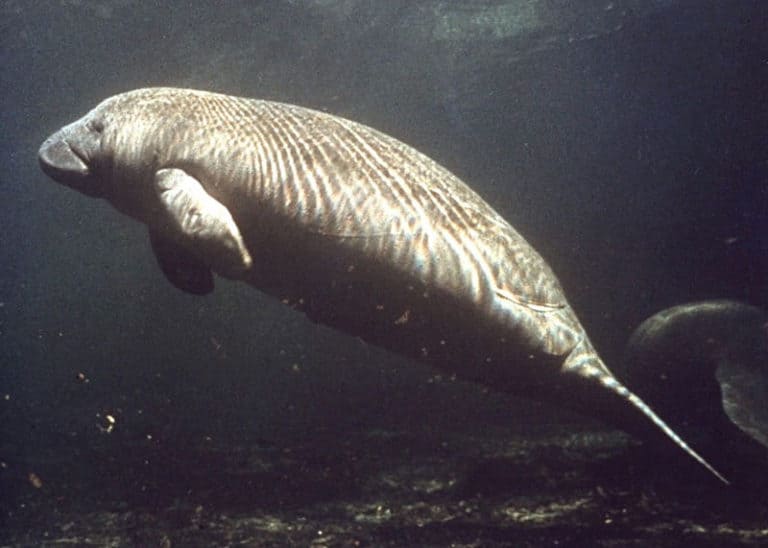
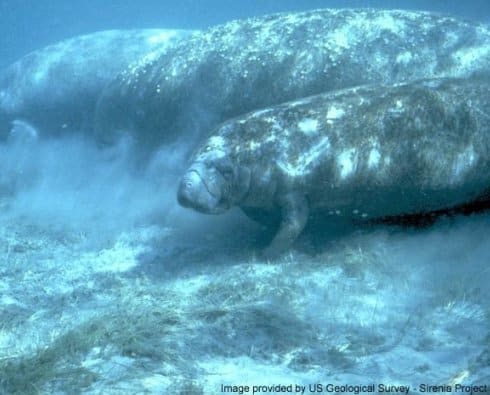
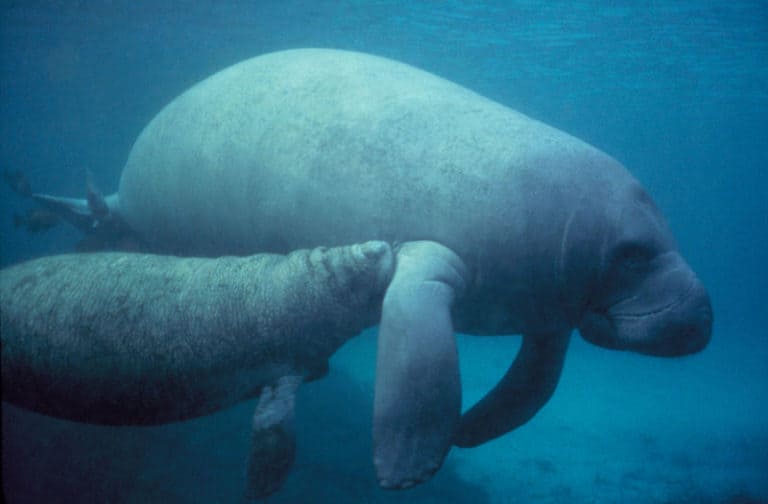
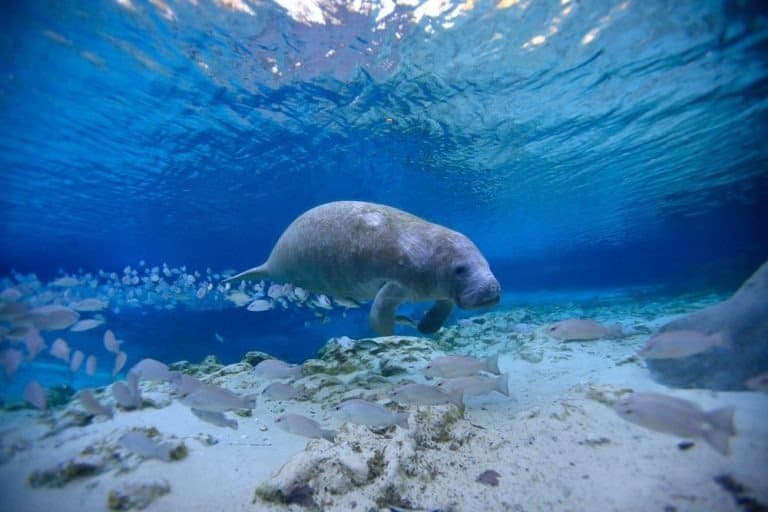

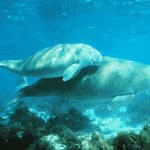


“Manatees are called sea cows. However, they are more closely related to an elephant.”
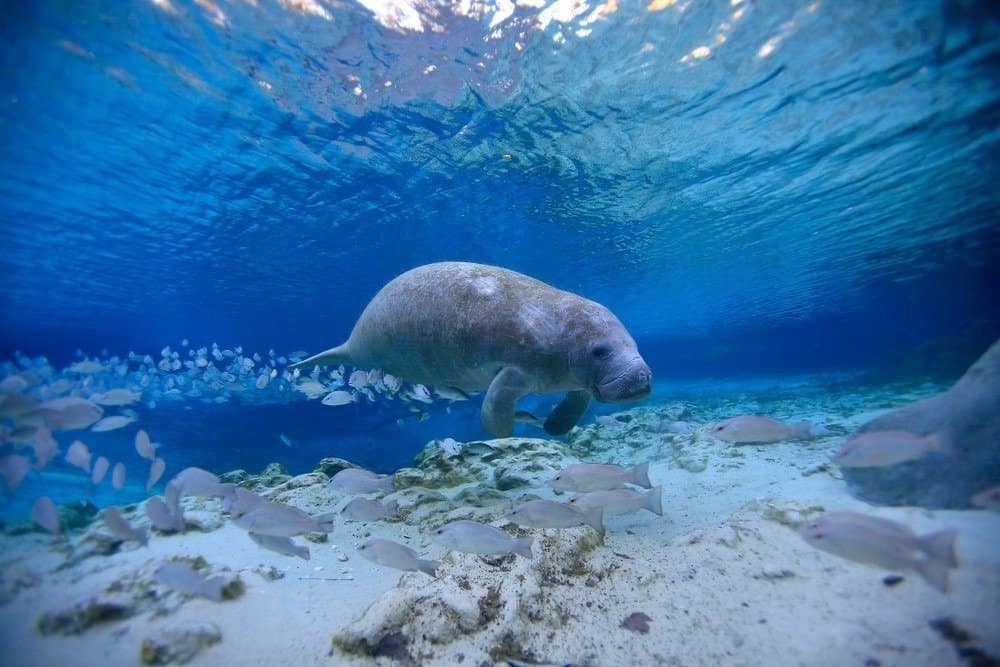
Manatees are very large, gray sea animals who spend much of their time grazing on vegetation in shallow water. There are three different species of manatees that live in warm water in different areas of the world. Manatees are animals that can weigh as much as 1,300 pounds and may be up to 13 feet long. While they don’t have many natural predators, humans are a huge threat to these creatures. All three of the manatee species have a conservation status of vulnerable or threatened and are in danger of becoming extinct if steps are not taken to protect them.
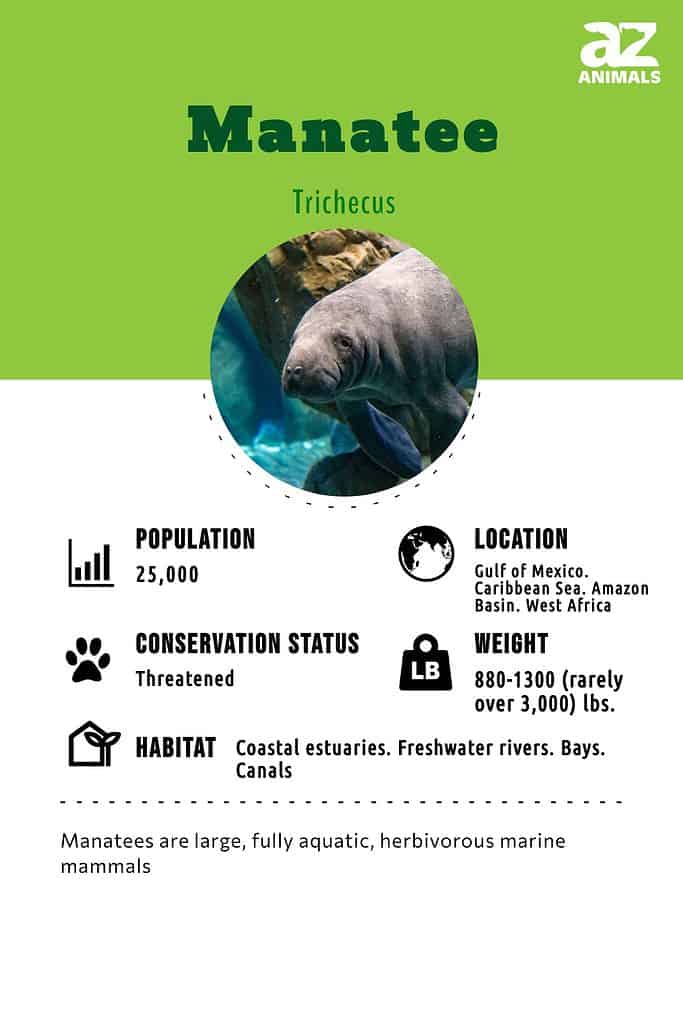
An Incredible Animal: Manatee Facts!
- Manatees are called sea cows because they are very large, often move slowly, and are often eaten by other sea animals.
- Manatees are animals that may eat as much as 10% to 15% of their body weight each day.
- Since manatees don’t have gills, they sleep upside down very close to the surface of the water so they’ll be able to breathe while they sleep.
- Mother manatees may nurse their calves for up to two years.
- Manatee calves are able to swim to the surface of the water as soon as they are born.
Scientific name
The scientific name for the manatee is Trichechus. Trichechus refers to the family Trichechidae, which is a genus of mammals, including manatees.
There are three different manatee species and two subspecies. The first of these species is the Trichechus Manatus, or the West Indian manatee. This manatee species has two subspecies: The Trichechus manatus latirostris (the Florida manatee) and the Trichechus manatus manatus (the Antillean manatee).
The second manatee species is the Trichechus senegalensis, or the West African manatee. And the third manatee species is the Trichechus inunguis, or the Amazonian manatee.
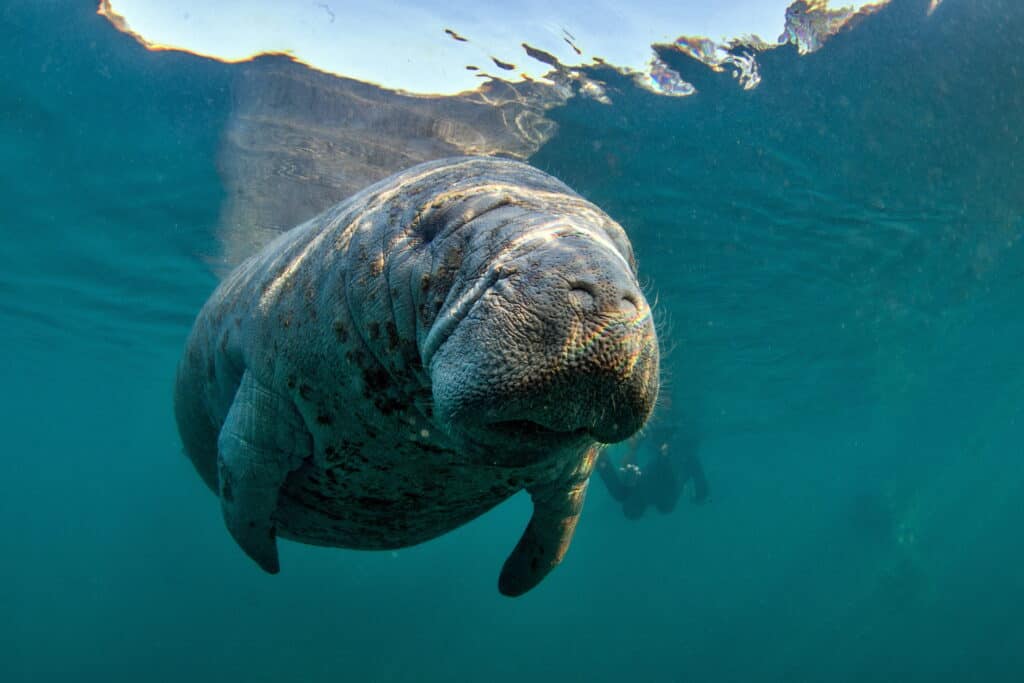
There are three species and 2 subspecies of the manatee.
©Tomas Kotouc/Shutterstock.com
Evolution
The fossil remains of the manatee ancestors, also known as sirenians, date back to the Early Eocene. It is thought that they moved into the isolated area on South America and became what we now know as Trichechidae. In the Late Miocene, trichechids were mostly found in coastal rivers and fed mainly on freshwater plants. They inhabited West Atlantic and Caribbean waters and grazed on seagrass meadows which began to grow during this period. To help them adapt to this changing environment, manatees developed molars so they could better feed off these seagrasses. Unfortunately for them, though, with glaciation came lowered sea levels which increased erosion resulting in more silt runoff. This silt caused a great deal of tooth wear for bottom-feeding manatees who had adapted to their new diet of sea grasses only recently.
As manatees evolved, several adaptations helped them survive and thrive in their aquatic environment. Natural selection favored larger body sizes so they could store heat better and a slower metabolism to conserve energy from their exclusive plant-based diet. Manatees were also never known for chasing prey, so there was no need for intricate sensory systems or complex behavior that would require more brainpower. This lack of predators allowed the manatee to continue this evolution without fear of extinction due to predation. Sharks are thought to be an infrequent exception, but overall the manatee’s evolutionary journey has been relatively peaceful as it adapted over 50 million years from its land mammal ancestors into one of the most recognizable marine mammals today.
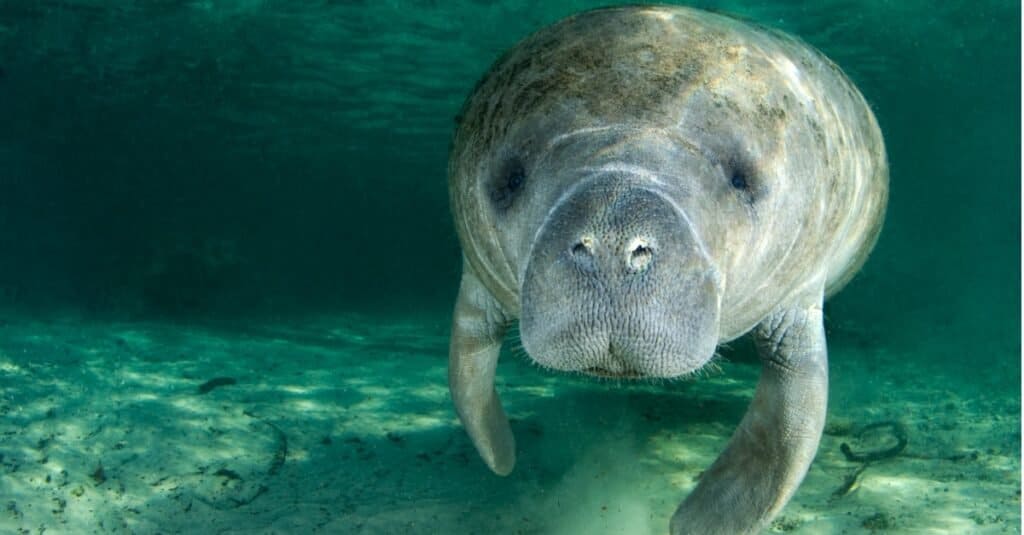
Manatees have been evolving for 50 million years.
©A Cotton Photo/Shutterstock.com
Appearance and Behavior
Manatees are very large sea creatures. They can weigh between 880 and 1,300 pounds, which is heavier than the weight of a grand piano. Most manatees are between 8 and 10 feet long, but some can even grow to be 13 feet long. In general, females are longer and heavier than their male counterparts. The largest known of these animals was 15 feet long and weighed 1,655 pounds.
These animals are gray; however, they often have different organisms like algae growing on their skin which can sometimes make them appear to be more brown or green in color.
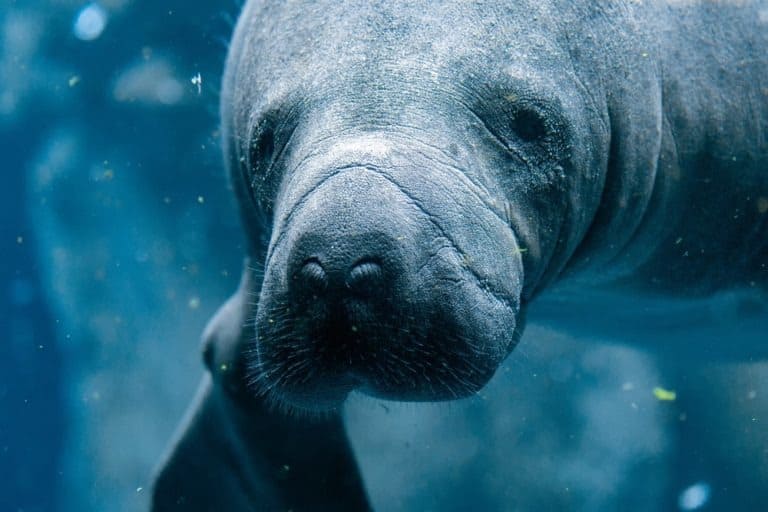
Manatees have a very distinct face. Their prehensile upper lip is very flexible. They use this part of their body for both gathering food and communicating with other manatees. Their snouts are also rather short, contributing to their easily recognized faces.
Adults do not have any canine teeth or incisors. Instead, they have cheek teeth that often fall out and are replaced without new teeth throughout their lives. There are usually no more than six teeth inside a manatee’s mouth at any given time. Their eyes are relatively small compared to the rest of their head and are close together.
To help them swim, manatees have a large, paddle-shaped tail. Unlike nearly all other mammals that have seven cervical vertebrae, these animals only have six cervical vertebrae. This difference is believed to be from mutation in their homeotic genes.
Manatees also have a simple stomach, but are still able to digest tougher plant matter in their large cecum, the pouch at the beginning of their large intestine.
In general, a manatee is a solitary animal that prefers to live along. The exceptions to this would be a mother with her babies or a male trying to find a mate. These animals spend about half of the day asleep. When they sleep, they stay submerged underwater and only come to the surface to breath (about every 20 minutes).
When they are not sleeping, these animals graze for food in shallow water. While they are known for being very slow swimmers, they can swim up to 15 miles per hour in short bursts when needed. Other times, they typically swim at a rate between 3 and 5 miles per hour.
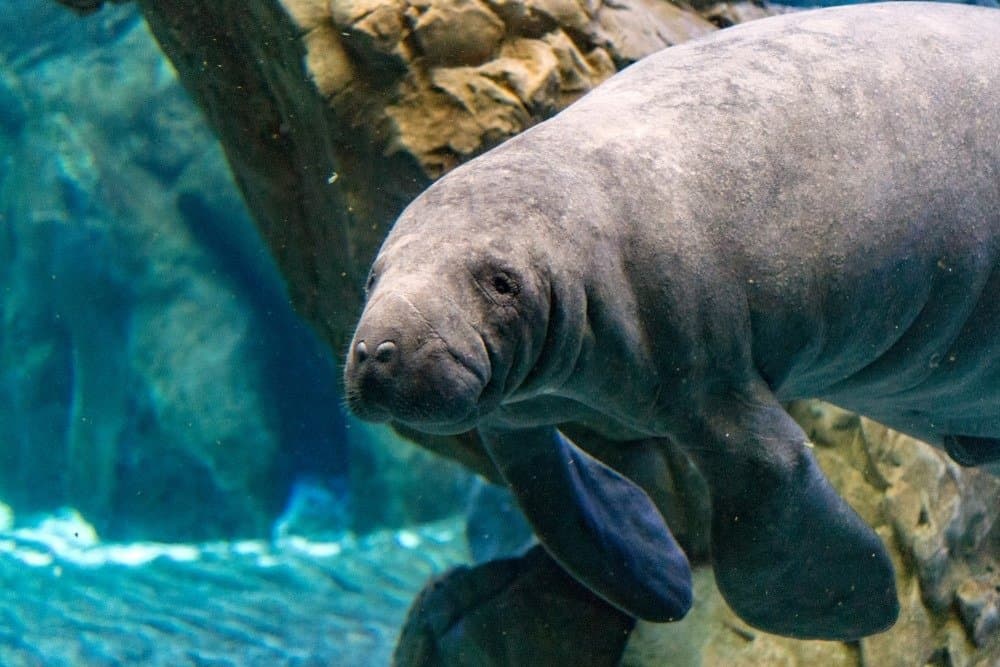
©Andrea Izzotti/Shutterstock.com
Habitat
The three species of manatees, The West Indian Manatee (also known as the American Manatee), the African Manatee, and the Amazonian Manatee are all named for the regions where they can be found. In most cases, they live in the oceans, seas, and rivers around the regions for which they are named.
West Indian Manatees usually stay along the east coast of the United States below the state of Georgia. However, at times, these animals have been spotted farther north near Cape Cod, Massachusetts or New York City, New York. During the cooler months between November and March, numerous West Indian Manatees head to the Crystal River National Wildlife Refuge and other rivers in Citrus County, Florida. In the winter months, they can also often be seen close to the warmer water made from power plants found along the coasts of Florida.
Amazonian Manatees can be found in the Amazon River and its tributaries. This species only lives in fresh water; they are not found in salt water. The West African manatee can be found along Africa’s west coast between the Senegal River and the Cuanza River. West African Manatees may live as far inland as Koulikori, Mali on the Niger River. This is located 2,000 kilometers from the coast.
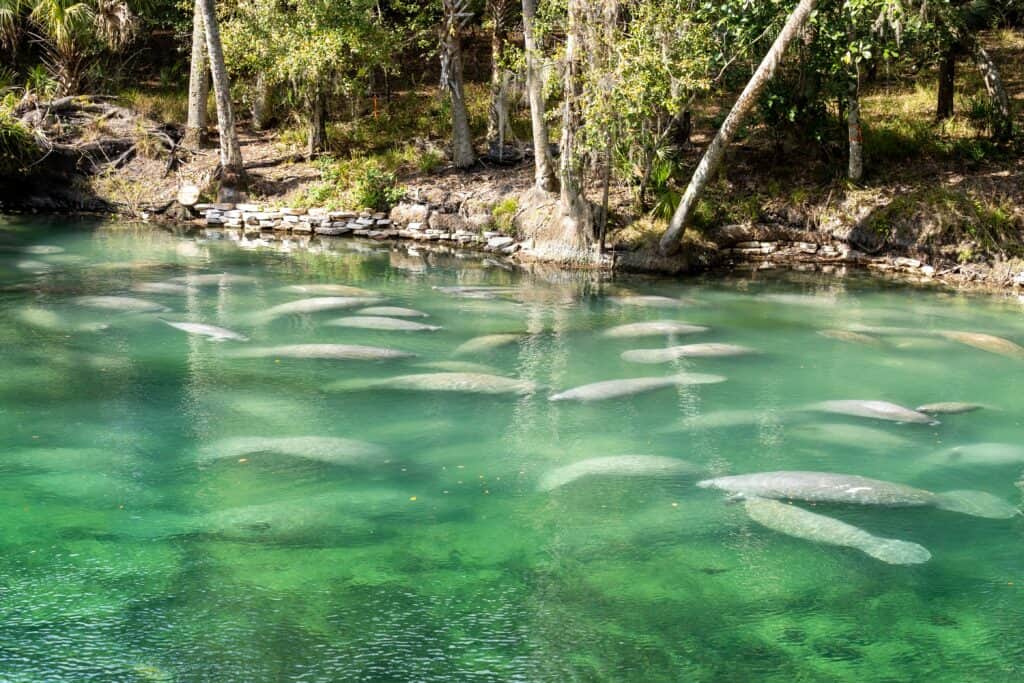
A herd of Florida Manatee swimming in the crystal-clear spring water at Blue Spring State Park in Florida, USA, a winter gathering site for manatees.
©JHVEPhoto/Shutterstock.com
Diet
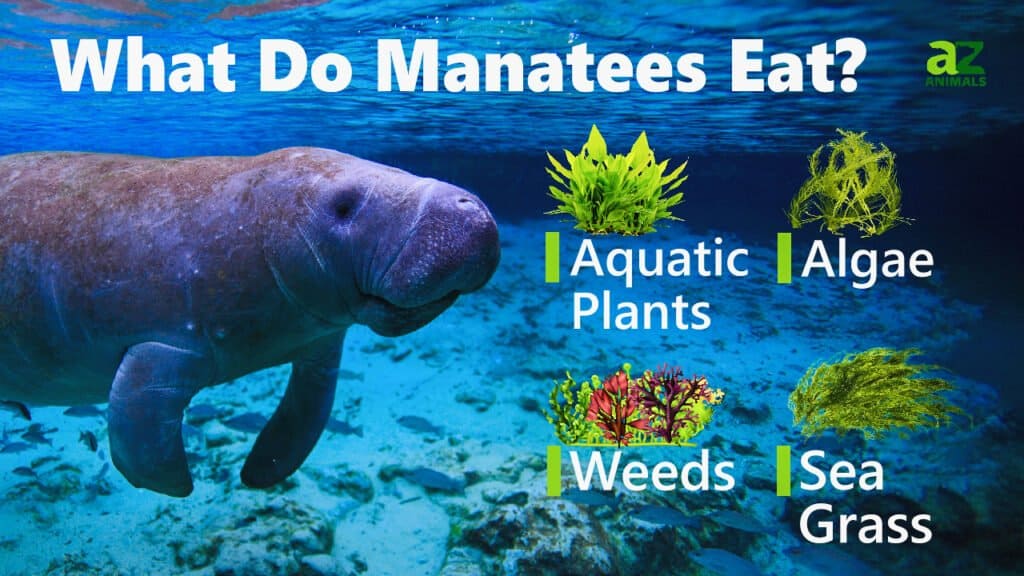
Manatees eat freshwater or saltwater plants, depending on whether they live in freshwater or in the ocean. Since they eat plants, these animals are herbivores. Some of the freshwater plants they eat include water lettuce, hydrilla, musk grass, floating hyacinth, and pickerel weed. Sea grasses, manatee grass, widgeon grass, sea clover, marine algae, and shoal grass are among their favorite saltwater plants.
There are some manatees that will eat food other than plants. The West African Manatee eats clams at times and the Antillean Manatee sometimes will eat fish from a net.
These animals eat a lot. Each day, an adult may eat between 10% and 15% of the body weight in plants. This means they may eat 130 pounds of food each day, which is as heavy as 13 gallons of paint. To eat this much, they spend much of their day, up to seven hours, grazing and eating.
To gather their food, manatees scoop up plants using their flippers and bring it towards their lips. They have special lips, called prehensile lips, which are split into two different sizes that can move independently from one another. When they bring food up to their mouths, they use the horny ridges on the roof of their mouths along with their lower jaws to break apart the plant material.
Predators and Threats
Unfortunately, these animals face many threats. While some of these threats are natural, humans pose the biggest threat.
One common threat these animals face is being hit by a ship. Many of these animals have been killed or injured from a collision with a propeller on a boat. Some who have survived this encounter have large scars in the shape of a spiral on their backs and others have been completely disfigured from the collision. Many less fortunate ones don’t live to swim away from these accidents and some have even been cut in two by large boats.
Some of these animals that are not killed by these accidents can still develop an infection from their cuts, which may still result in death. One possible explanation for the large number of collisions between them and boats is a manatee’s hearing abilities. Scientist have found that they hear on a high frequency, making them unable to hear the lower frequencies emitted by many larger boats.
Other human-made threats to these animals include floodgates, navigation locks, and other structures in the water. At times, they will get crushed by these structures. Sometimes, they also get tangled up in nets, box traps, or other fishing gear. They may die from this as well.
Another threat to the manatees is red tides. A red tide is an algae bloom that is made up of large concentrations of protozoans, unicellular algae, and other aquatic microorganisms that have been brought up from the seafloor. Red tides often occur after a hurricane or other powerful storm stirs up the waters enough. The microorganisms found in red tides are often toxic to manatees and other sea animals. For example, in 1996, a red tide along the southwestern coast of Florida killed at least 151 of these animals.
If manatees are in water that is below 60 degrees, their body will shut down, causing them to die. While most of them tend to stay in warmer waters, some may accidentally migrate to a colder area or become injured and unable to migrate to warmer waters before their current location gets too cold. Additionally, younger animals are very curious and may travel into colder water without realizing it.
There are not many natural predators to these animals. While an alligator, crocodile, killer whale, tiger shark may occasionally prey on a manatee, it does not happen very often. This is because these predators tend to swim in deeper parts of the ocean, while manatees stay in shallow waters.
Amazonian – and West African Manatees share a conservation status of vulnerable, according to the World Conservation Union. In 2017, the West Indian Manatee was downgraded from a conservation status of endangered to that of threatened. However, many scientists and other people concerned about the safety of the these animals were not happy with the decision to downgrade its conservation status. They did not think that data showing that many manatees died between 2010 and 2016 from pollution, being struck by boats, and dependence on artificially warm water was considered.
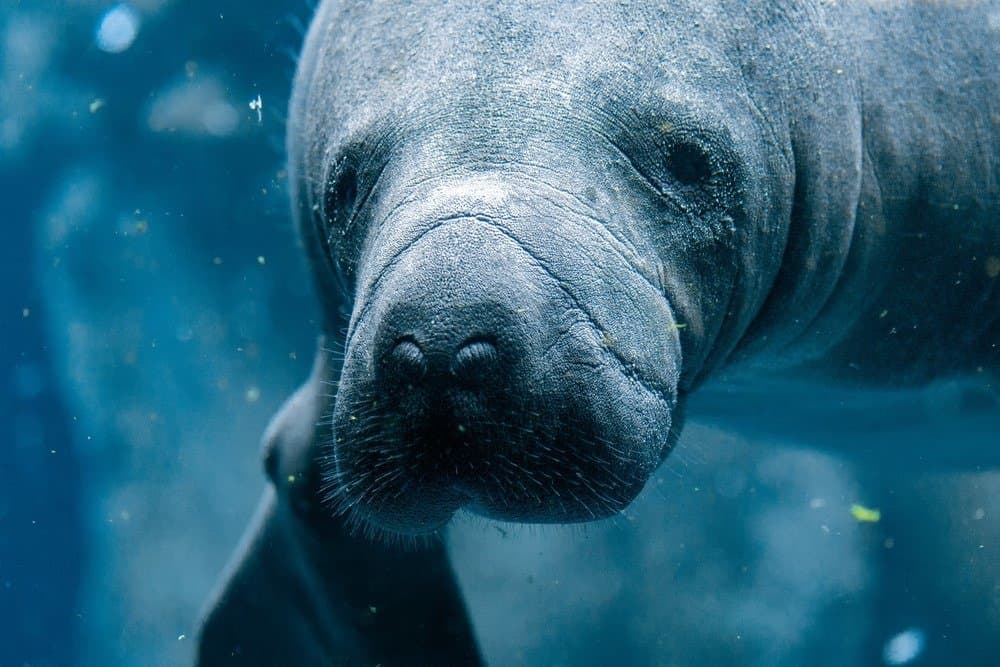
The biggest threat to manatees is human beings.
©Andrea Izzotti/Shutterstock.com
Reproduction, Babies, and Lifespan
These animals mate every two to five years. They do not mate for life unlike some other animals. When breeding, a mating herd is formed. A mating herd is 12 or more males (bull) following a single female (cow) manatee. Breeding peaks in the spring and summer months, though it can take place at any time during the year. Males and females both reach the age of sexual maturity at around five years.
Females will have a new calf every two to five years. Most often, they will only have a new calf after two years if their lost their last calf shortly after birth. Manatees have a gestation period of about one year. There are a few rare cases of twins, but most of the time they give birth to just one calf.
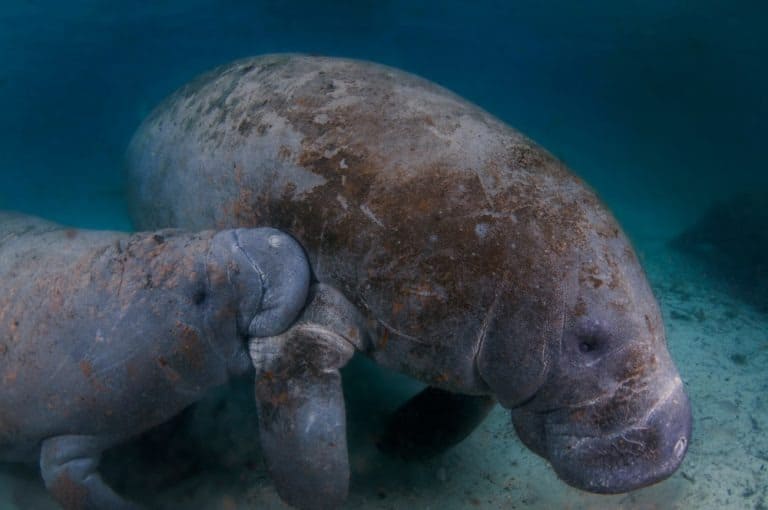
After birth, raising the calf is completely the mother’s job. The calves weigh about 66 pounds and are around 47 inches long. Mothers nurse their calves for one or two years. However, after a few weeks, young calves will also begin eating plants as well.
Upon being born, a newborn calf is able to swim to the surface on its own. They are also able to begin to vocalize shortly after being born. While they are likely able to survive on their own after about a year, many calves will stay with their mother for up to two years.
These animals have a lifespan of between 50 and 60 years. A Florida manatee in captivity named Snotty lived to be 69 years old.
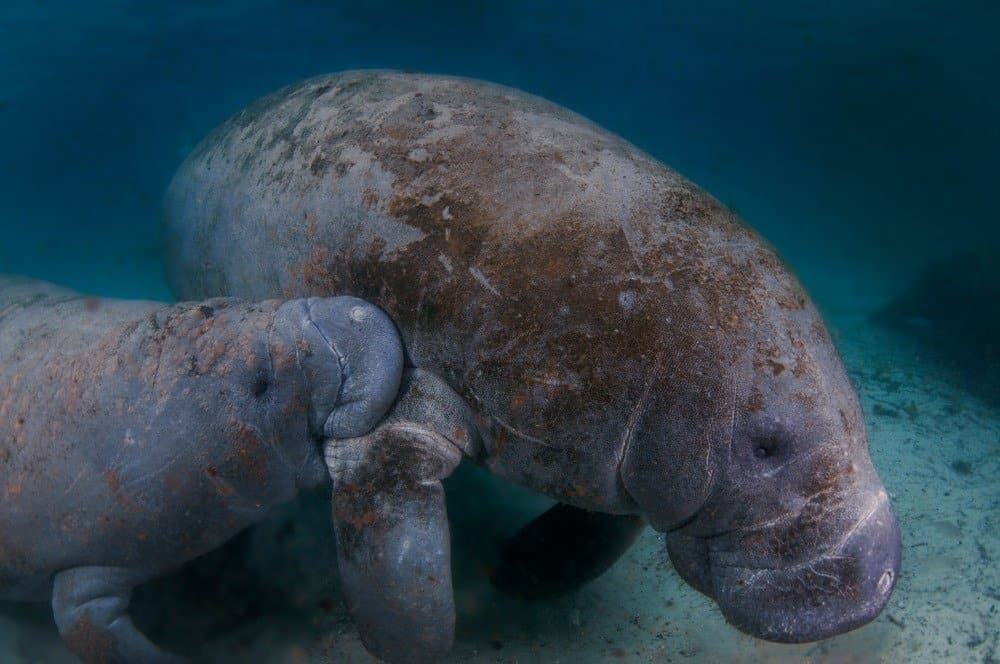
Baby manatees weigh around 60 pounds. They stay with their mother and nurse for two years.
©Greg Amptman/Shutterstock.com
Population
There are currently around 13,000 West Indian Manatees. The overall number of West Indian Manatees has increased recently. They have a conservation status of threatened.
The current population of the Amazonian Manatee is not known, but scientists believe their numbers are decreasing. The last recorded estimate for these animals was 10,000 in 1977. They have a conservation status of vulnerable.
There are less than 10,000 West African Manatees still living. Their numbers are decreasing as well due to the various threats they face. They have a conservation status of vulnerable.
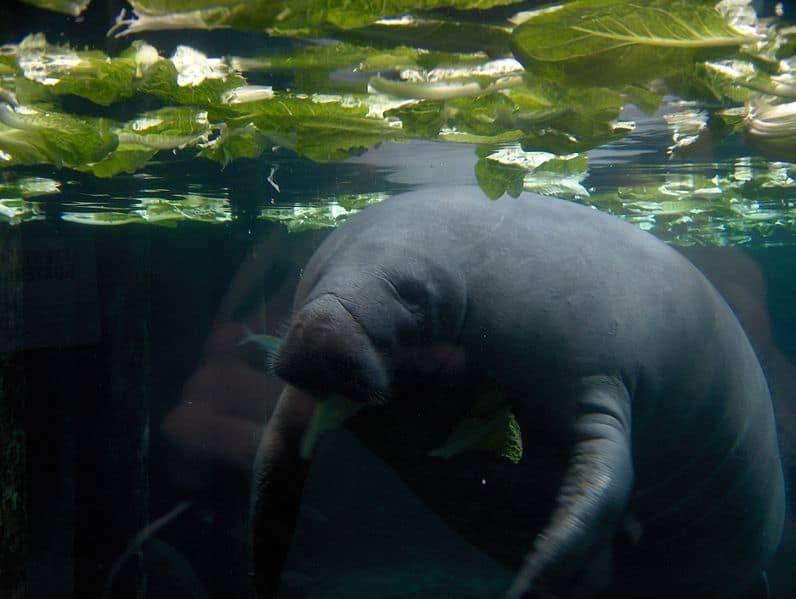
There are only 25,000 manatees left in the wild.
©Chris Muenzer / Creative Commons – Original
Manatees in the Zoo: Where To Find The Animal
If you would like to get a close-up view of these animals, there are a few different zoos where you’ll be able to do so. These include:
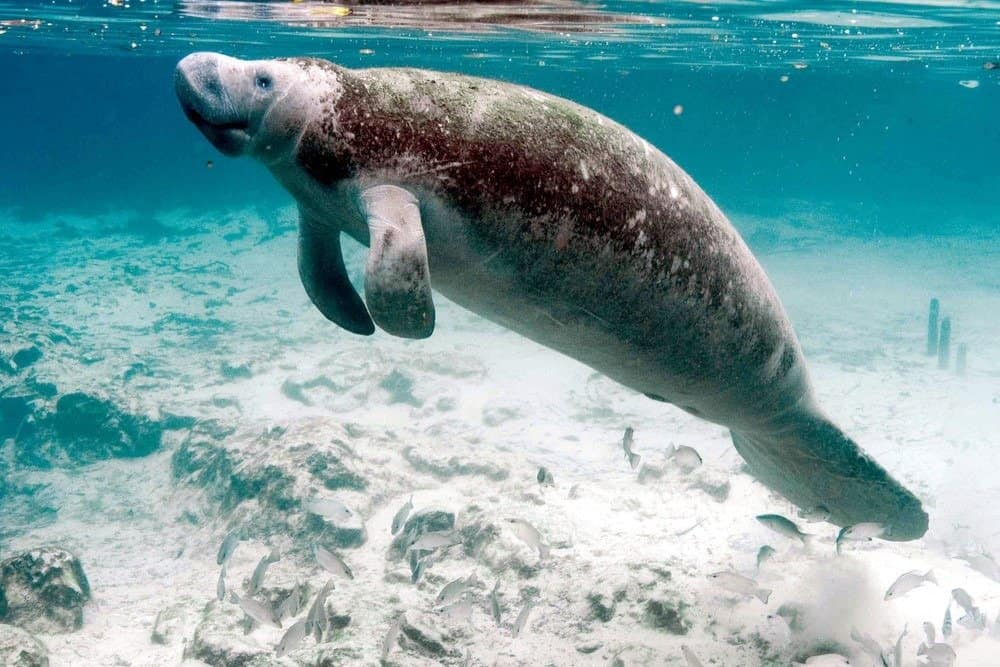
Several zoos are trying to save the manatee from extinction.
©Ramos Keith, U.S. Fish and Wildlife Service / public domain – Original / License
How to Save the Manatee
Since all three species of these animals have a conservation status of threatened or vulnerable, taking steps to save these magnificent beings and keep them from becoming endangered or extinct is important. There are things we can all do that can help protect them and increase their population, decreasing their chances of becoming extinct.
Below are a few ways you can help:
- Stop eating marine animals. A large amount of manatee are wiped out by commercial fishing vessels, caught in nets, and caught as bycatch.
- Be alert and obey the speed limits when boating: When you’re out in your boat, obeying speed zone signs is essential. This will decrease the chances that your boat’s propellers will cause serious harm to a manatee who may inadvertently swim into your boat. You should also be aware when you are out on the water and be on the lookout for them. Steer your boat to avoid any that you may see.
- Place trash in a trash can: Trash and other pollution from humans can make these animals sick and may even cause them to die. Always be considerate and dispose of your trash in a trash can.
- Do not try to feed a wild manatee: Wild manatees are perfectly capable of finding their own food. If you feed a wild manatee, you are encouraging it to come closer to marinas looking for more food. However, marinas pose a great risk to them due to all the boats and propellers, so they should not be fed and encouraged to come closer.
- Contact a trained professional if you find an injured manatee: Always let someone who knows what they are doing help a manatee who has been injured. While you may want to come to the rescue, you could easily make the injury worse or hurt yourself.
- Donate to manatee conservation organizations: Even if you don’t live in areas where these animals can be found, you can still make a difference. Find a manatee conservation group that is working towards saving these animals and make a donation to their organization.
- Become a manatee activist or volunteer: Another way you can help save these animals is to become politically involved. Write letters to your representatives letting them know you would like to see policies put into place that protects them. You could also become a volunteer with an organization that is working to protect these animals.
A few small steps can have a big impact and can help prevent the manatee from becoming endangered or, even worse, extinct.
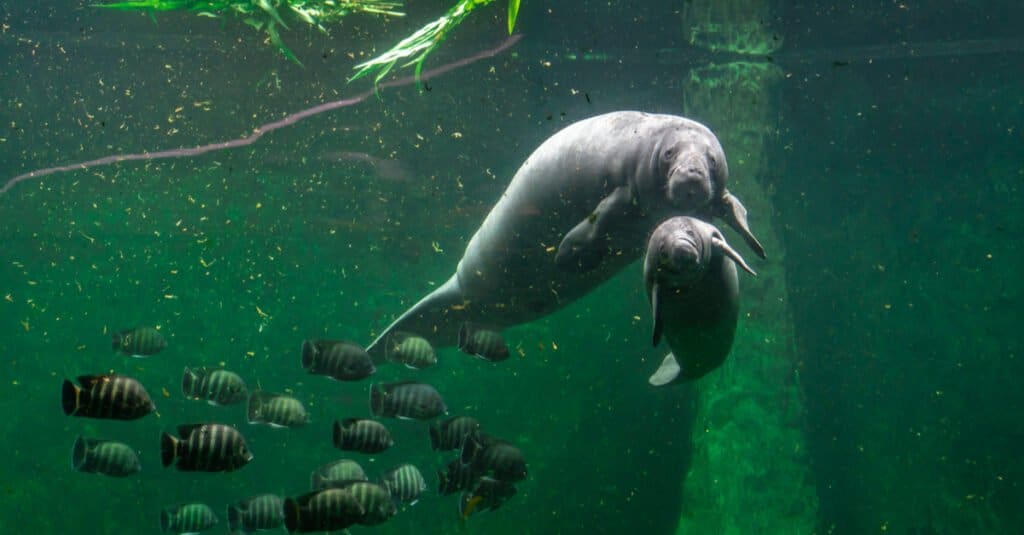
You can help save the manatee by refusing to eat marine animals. A large amount of manatee are wiped out by commercial fishing vessels, caught in nets, and caught as bycatch.
©Lukasz Machowczyk/Shutterstock.com
Types of Manatees
Amazonian manatee – Trichecus inunguis. Lives only in fresh water and is the smallest manatee. Found in tropical warm water.
African/West African manatee – Trichecus senegalensis. Lives in fresh water river systems and coastal habitats in Africa.
West Indian/Caribbean manatee – Trichecus manatus. Stays in warm water of Georgia, Floida and other southern coastal states. Need water over 68°F to survive. There are two subspecies of West Indian manatees below.
- Florida manatee – Trichecus manatus latirostris. Sub-species of the West Indian manatee. Found as far west as Texas.
- Antillean manatee – Trichecus manatus manatus. Smaller in size then Florida manatees. Found near the coastline of Mexico, South America and the Greater Antilles.
Manatee Pictures
View all of our Manatee pictures in the gallery.

Sources
- David Burnie, Dorling Kindersley (2011) Animal, The Definitive Visual Guide To The World's Wildlife / Accessed December 5, 2008
- Tom Jackson, Lorenz Books (2007) The World Encyclopedia Of Animals / Accessed December 5, 2008
- David Burnie, Kingfisher (2011) The Kingfisher Animal Encyclopedia / Accessed December 5, 2008
- Richard Mackay, University of California Press (2009) The Atlas Of Endangered Species / Accessed December 5, 2008
- David Burnie, Dorling Kindersley (2008) Illustrated Encyclopedia Of Animals / Accessed December 5, 2008
- Dorling Kindersley (2006) Dorling Kindersley Encyclopedia Of Animals / Accessed December 5, 2008
- David W. Macdonald, Oxford University Press (2010) The Encyclopedia Of Mammals / Accessed December 5, 2008
- Wikipedia / Accessed October 27, 2020
- Seaworld Parks & Entertainment / Accessed October 27, 2020
- Captain Mike's Swimming with the Manatees / Accessed October 27, 2020
- Save the Manatee / Accessed October 27, 2020
- Dolphin Research Centre / Accessed October 27, 2020
- U.S. Fish & Wildlife Service / Accessed October 27, 2020