

M
Species Profile

Manta Ray

Mobula

Wings of the sea, built to filter
SergeUWPhoto/Shutterstock.com

Manta Ray Distribution

Click a location to explore more animals from that region

This map shows coastal regions where Manta Ray are found.

Loading map...
Reef Manta Rays in a mating formation with several males following a mature female, Komodo National Park, Indonesia

At a Glance

Genus Overview This page covers the Manta Ray genus as a group. Stats below are general traits shared across the genus.
Also Known As Manta, Devil ray, Devilfish, Sea devil, mantarraya (Spanish), raia-manta (Portuguese)
Diet Filter Feeder
Activity Diurnal+
Lifespan 25 years
Weight 2000 lbs
Status Not Evaluated
Did You Know?

Size range across the genus: ~1-7 m disc width (tip-to-tip), from small devil rays to the largest oceanic mantas.

Scientific Classification

Genus Overview "Manta Ray" is not a single species but represents an entire genus containing multiple species.

Manta rays are large, plankton-feeding rays in the genus Mobula (family Mobulidae), closely related to devil rays. They are characterized by broad triangular pectoral fins (“wings”), forward-facing cephalic lobes used to funnel plankton, and a generally non-stinging tail (lacking the prominent venomous spine typical of many stingrays).

Kingdom
Animalia
Phylum
Chordata
Class
Chondrichthyes
Order
Myliobatiformes
Family
Mobulidae
Genus
Mobula

Distinguishing Features

  • Very large disc width (often several meters in adults, depending on species)
  • Cephalic lobes (“horns”) used in feeding
  • Terminal mouth and filter-feeding on zooplankton
  • Broad wing-like pectoral fins; graceful ‘flying’ swimming style
  • Generally lacks a prominent stinging spine on the tail compared with many stingrays

Physical Measurements

Males and females differ in size

Length
11 ft 6 in (4 ft 11 in – 29 ft 6 in)
16 ft 5 in (6 ft 7 in – 29 ft 6 in)
Weight
882 lbs (44 lbs – 2.2 tons)
1,543 lbs (44 lbs – 1.5 tons)
Tail Length
6 ft 7 in (1 ft 12 in – 16 ft 5 in)
8 ft 2 in (3 ft 3 in – 16 ft 5 in)
Top Speed
22 mph
swimming

Appearance

Primary Colors
Secondary Colors
Skin Type Leathery, mucus-coated skin with fine dermal denticles; usually smooth to touch, sometimes slightly rough along leading edges and tail base.
Distinctive Features
  • Disc width in manta rays typically ranges about ~3-7 m, depending on species (reef vs oceanic).
  • Broad triangular pectoral fins ("wings") forming a rhomboid disc; powerful, buoyant swimming style.
  • Forward-facing, unfurled cephalic lobes used to funnel plankton into the mouth; rolled when not feeding.
  • Large, wide mouth adapted for filter-feeding; gill rakers form the filtering apparatus (structure varies among species).
  • Coloration typically dark above and pale below; belly markings can be highly individual and species-informative.
  • Tail generally whip-like and lacks a prominent venomous spine; some species may show a small vestigial spine.
  • Small dorsal fin set toward the rear of the body; spiracles behind the eyes.
  • Common ecology across genus: pelagic/coastal cruisers that aggregate to feed or clean; strong variation from reef-associated to highly oceanic lifestyles.
  • Typical lifespan range across genus roughly ~15-50 years (smaller species shorter-lived; large mantas longer-lived).
  • Frequent scarring from mating, predators, and human interactions; conservation threats include bycatch and targeted gill-raker fisheries.

Sexual Dimorphism

Males have paired claspers and tend to mature at smaller sizes; females are often larger and may show abdominal distension when pregnant. Both sexes share similar coloration, with dimorphism mostly in reproductive anatomy and average body size.

  • Paired claspers on the pelvic fins (external reproductive organs).
  • Often smaller average disc width at maturity than females.
  • Tail base may appear slightly thicker due to clasper musculature.
  • No claspers; pelvic fin trailing edges appear smoother.
  • Often larger average disc width and body mass than males.
  • Pregnancy can produce noticeable abdominal rounding in late gestation.

Did You Know?

Size range across the genus: ~1-7 m disc width (tip-to-tip), from small devil rays to the largest oceanic mantas.

Mass ranges from "tens of kilograms" in the smallest Mobula to well over 2,000 kg in the biggest manta individuals.

Typical lifespan across Mobula is roughly ~15 to 45+ years (smaller species likely shorter-lived; large mantas among the longest-lived).

They filter-feed using modified gill structures (filter plates/rakers) while swimming with an open mouth-no teeth-based biting of prey.

Many Mobula rays use cleaning stations where small fishes remove parasites; this is especially well-known in reef-associated mantas.

Reproduction is slow: females usually produce a single, large pup after a long gestation, so populations recover slowly from fishing pressure.

The 'horns' aren't horns-cephalic lobes unfurl to funnel plankton, then roll up when not feeding.

Unique Adaptations

  • Cephalic lobes (forward fins) act like adjustable 'scoops' to direct plankton-rich water into the mouth-key to efficient filter-feeding.
  • Specialized gill filter plates/rakers strain tiny prey (zooplankton) while allowing water to pass out through the gills.
  • Large, stiff pectoral fins generate efficient lift-based swimming ('underwater flight') suited to long-distance cruising and repeated feeding passes.
  • Countershading and bold ventral patterns: dark backs reduce visibility from above; belly markings in many individuals are distinctive enough for photo-ID in research.
  • Highly developed sensory systems typical of rays: electroreception (ampullae of Lorenzini) and strong olfaction help them navigate and find productive waters.
  • A tail that generally lacks the prominent venomous spine typical of many stingrays-Mobula rays rely more on size, speed, and maneuverability than stinging defense.

Interesting Behaviors

  • Feeding strategies vary by place and species: surface 'ram-feeding' in plankton slicks, deeper feeding on dense layers, and tight loops ('cyclone feeding') when prey is concentrated.
  • Group feeding is common in several Mobula: rays may form 'feeding trains' (nose-to-tail lines) that help individuals stay in the richest plankton flow.
  • Cleaning-station routines: individuals queue or circle slowly while cleaner fishes pick off parasites; some return to the same sites repeatedly.
  • Seasonal movements show wide variation: reef-associated mantas often have smaller home ranges tied to local productivity, while oceanic mantas can travel long distances between feeding and mating areas.
  • Breaching: many species leap clear of the water and land with a loud slap-likely linked to communication, parasite removal, or courtship, though the purpose can differ by context.
  • Courtship 'trains': multiple males may follow a female in coordinated pursuit before mating; the length of these trains and timing varies across species and regions.
  • Depth use differs across the genus: some mobulids regularly dive hundreds of meters, while others spend more time in shallow coastal and reef environments.

Cultural Significance

Mobula mantas are global icons for marine ecotourism, gathering at cleaning stations or seasonal feeding areas. They face pressure from bycatch, targeted fisheries, and trade in gill plates. They mature late, have one pup, and are seen as 'gentle giants' that help local livelihoods through tourism.

Myths & Legends

Hawaiian tradition includes stories of family guardian spirits (ancestral guardians) that can take animal forms; different families may revere particular animals as protectors or guides.

Sailors in the Age of Sail told stories of giant 'devilfish' (mobulid rays, like Mobula) that could tangle anchors or drag boats, which helped give them the scary 'devil ray' nickname.

The common name 'manta' comes from Spanish for 'blanket' or 'cloak,' reflecting an old mariner's image of these rays as living sea-cloaks gliding over reefs and open water.

Conservation Status

NE Not Evaluated

Has not yet been evaluated against the criteria.

Population Decreasing

Protected Under

  • CITES Appendix II (Mobulidae; international trade regulated, including gill plates)
  • CMS (Convention on Migratory Species): many mobulids listed on Appendices I and/or II (migratory species protection and cooperation)
  • Regional and national protections vary widely (e.g., manta sanctuaries/retention bans in some countries; fisheries measures uneven and enforcement variable)

You might be looking for:

Oceanic manta ray (Giant manta)

55%

Mobula birostris

Largest manta species; typically pelagic/oceanic, wide-ranging in tropical/subtropical oceans.

Reef manta ray

40%

Mobula alfredi

More coastal/reef-associated manta; often seen at cleaning stations and near coral reefs.

Caribbean manta ray

5%

Mobula cf. birostris (often treated as a distinct regional form/species in some sources)

Regional Caribbean form historically grouped with M. birostris; taxonomy has been discussed/treated variably.

Life Cycle

Birth 1 pup
Lifespan 25 years

Lifespan

In the Wild
15–40 years
In Captivity
1–20 years

Reproduction

Mating System Promiscuity
Social Structure Aggregation Group
Breeding Pattern Transient
Fertilization Internal Fertilization
Birth Type Internal_fertilization

Behavior & Ecology

Social Congregation Group: 10
Activity Diurnal, Crepuscular, Cathemeral
Diet Filter Feeder Dense zooplankton/krill blooms (high-concentration patches targeted during seasonal productivity events)
Seasonal Migratory 3,107 mi

Temperament

Generally non-aggressive toward other animals and humans
Often tolerant of close approach at cleaning stations; can be curious
Becomes wary/avoidant with harassment, boat traffic, or repeated disturbance
Social tolerance increases during feeding events; otherwise individuals keep spacing

Communication

no well-established vocal repertoire; acoustic signaling, if any, appears minimal
body posture and wingbeat changes (banking, circling, rolling) during courtship and feeding
close-following and formation swimming (including mating trains) as social/sexual signaling
tactile contact and near-contact passes during courtship; occasional bumping
cephalic lobe position and mouth gape changes associated with feeding coordination
use of cleaning stations where repeated site use enables indirect social encounters
likely reliance on visual cues and hydrodynamic cues at close range; possible chemical cues remain uncertain

Habitat

Open Ocean Coastal Coral Reef Kelp Forest Deep Sea Seabed/Benthic
Biomes:
Terrain:
Coastal Island
Elevation: Up to 3280 ft 10 in

Ecological Role

Large-bodied pelagic planktivore (and occasional micronekton feeder) linking lower trophic levels to upper predators in coastal and oceanic food webs across the genus.

Transfers energy from plankton to higher trophic levels (trophic coupling between plankton blooms and large vertebrates) Nutrient redistribution via excretion and movement across habitats (coastal-offshore and surface-deeper layers in some regions) Supports predator populations as occasional prey for large sharks and killer whales (life-stage dependent) Can indicate ecosystem productivity and plankton dynamics; aggregations often track seasonal upwelling and frontal systems

Diet Details

Main Prey:
Zooplankton Krill Copepods Mysids and small crustaceans Larval and juvenile fish Small pelagic fish Small squid +1
Other Foods:
Phytoplankton

Human Interaction

Domestication Status

Wild

Manta rays (Mobula, family Mobulidae) are not domesticated. People mainly meet wild animals. Few live in large public aquaria — keeping them is hard. Human contact includes viewing and ecotourism, research tagging, and fisheries (meat, skin, gill rakers). Bycatch, entanglement, and vessel strikes also affect them; protections vary.

Danger Level

Low
  • Injury from collision with a large, fast-moving animal (especially in the water during feeding aggregations)
  • Tail strikes or abrasion injuries during handling/entanglement response (most lack a prominent venomous spine typical of many stingrays, but physical force can still injure)
  • Drowning/boating hazards indirectly associated with crowding at aggregation sites (human-side risk rather than animal aggression)

As a Pet

Not Suitable as Pet

Legality: Not suitable as a pet. Keeping Mobula rays is highly restricted; many places ban possession or require special permits. International trade is controlled (often CITES Appendix II). Only approved public aquariums or research centers may hold them.

Care Level: Expert Only

Purchase Cost:
Lifetime Cost: $250,000 - $5,000,000

Economic Value

Uses:
Ecotourism (diving/snorkeling wildlife viewing) Commercial/bycatch fisheries impacts International trade regulation/compliance costs Research and conservation programs
Products:
  • tourism services (boat trips, guided dives, hospitality)
  • meat (localized use in some regions/species)
  • gill rakers (historically traded; now widely regulated)
  • leather/skin (limited/localized)
  • media/branding value for marine tourism destinations

Relationships

Related Species 6

Reef manta ray Mobula alfredi Shared Genus
Giant oceanic manta ray Mobula birostris Shared Genus
Spinetail devil ray Mobula mobular Shared Genus
Chilean devil ray Mobula tarapacana Shared Genus
Bentfin devil ray Mobula thurstoni Shared Genus
Pygmy devil ray Mobula munkiana Shared Genus

Ecological Equivalents 4

Animals that fill a similar ecological role in their ecosystem

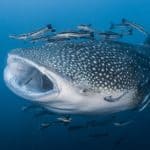
Whale shark
Whale shark Rhincodon typus Large pelagic filter-feeder. Overlaps with Mobula in plankton-rich tropical and subtropical waters and uses similar feeding hotspots such as fronts, upwellings, and dense zooplankton blooms.
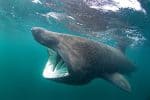
Basking shark
Basking shark Cetorhinus maximus Pelagic planktivore that tracks seasonal zooplankton concentrations; ecological similarity is the reliance on dense plankton patches and broad-scale movements to locate them.
Megamouth shark Megachasma pelagios Filter-feeding specialist on zooplankton and krill in offshore waters. Niche overlap is highest where Mobula species feed in mesopelagic or offshore plankton layers.
Planktivorous schooling fishes Clupeidae; Engraulidae They share the same primary food resource (zooplankton) and often aggregate at the same productive features. They can be competitors for plankton blooms and also indicate feeding opportunities.

Types of Manta Ray

10

Explore 10 recognized types of manta ray

Giant oceanic manta ray Mobula birostris
Reef manta ray Mobula alfredi
Spinetail devil ray Mobula mobular
Chilean devil ray Mobula tarapacana
Bentfin devil ray Mobula thurstoni
Pygmy devil ray Mobula munkiana
Shortfin devil ray Mobula kuhlii
Longhorned pygmy devil ray Mobula eregoodootenkee
Atlantic devil ray Mobula hypostoma
Lesser Guinean devil ray Mobula rochebrunei

The manta ray, which is also sometimes called the devilfish, is the largest ray in the world. Highly intelligent and mostly solitary, they are found in all of the world’s oceans except for the freezing cold waters of the Arctic and Southern Oceans. Long-lived and slow to reproduce, the species is vulnerable to overfishing and being harvested for international trade. Despite this, these brilliant creatures are incredibly friendly to human divers, often swimming up to greet them. You can learn all about the gorgeous, misunderstood manta ray below!

Five Incredible Manta Ray Facts!
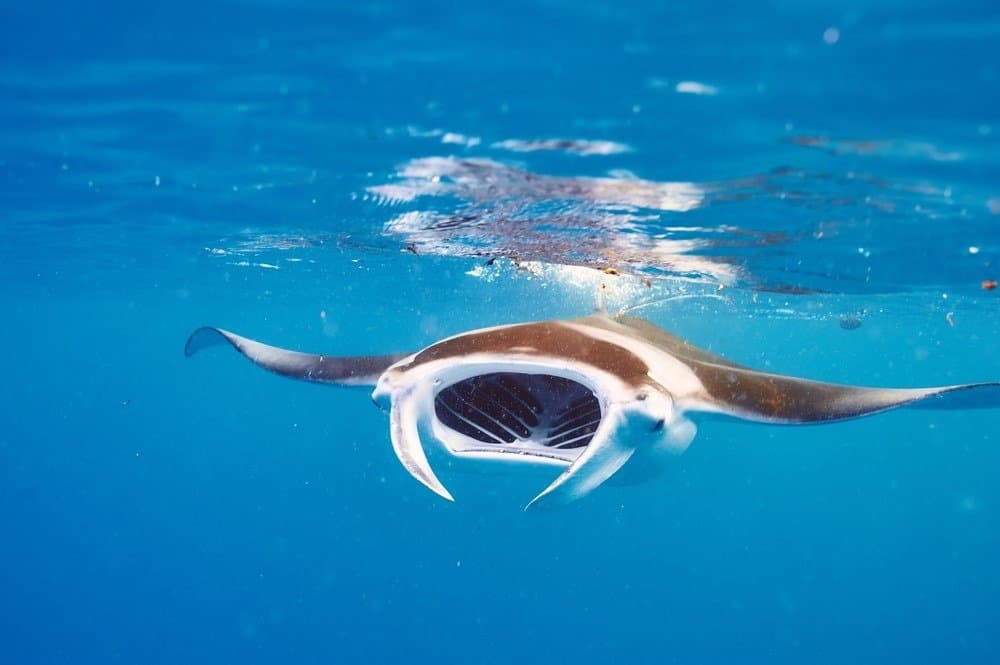
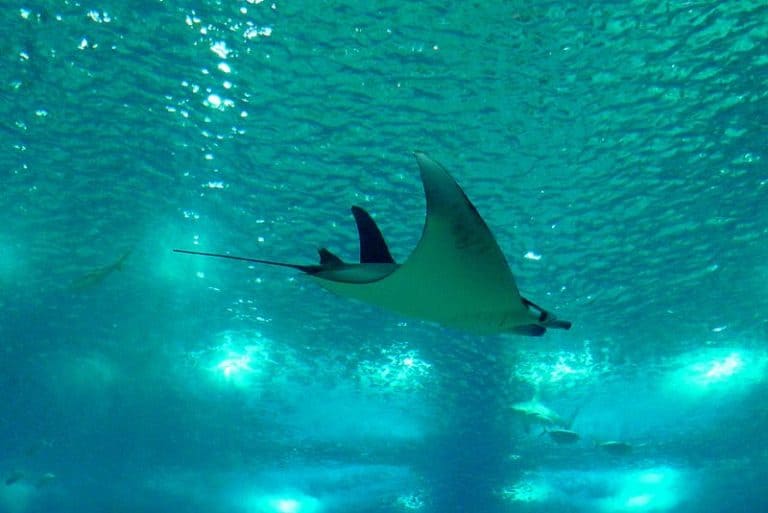
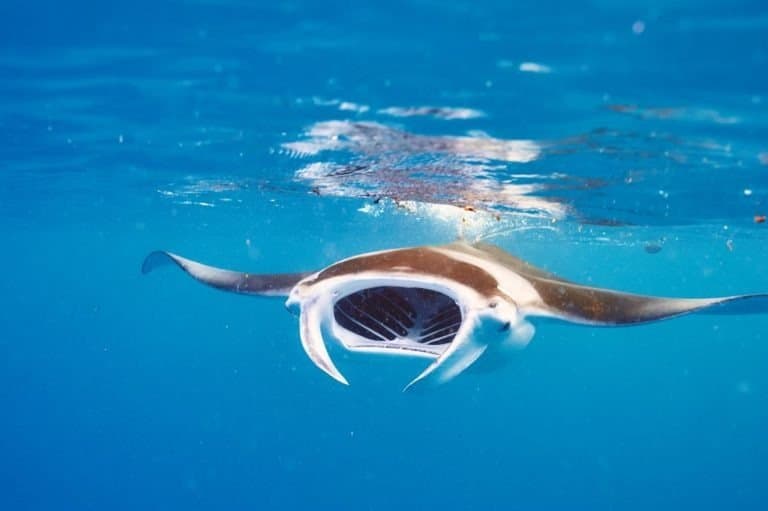
Manta ray floating underwater among plankton

Manta rays, like whales and sponges, are filter-feeders.

  • Massive Brain: These fish have the biggest brain-to-size ratio of any cold-blooded fish, and they display a level of intelligence comparable to dolphins, elephants, and primates.
  • Protected: Since 2011, manta rays have been protected in international waters by an international treaty, the Convention on Migratory Species, and many countries have placed bans on fishing them.
  • Distinct from Stingrays: Manta rays evolved from stingrays, but they are a completely distinct species. Unlike stingrays, they don’t possess a barb that can sting, and they are not bottom dwellers.
  • Unique Feeding: These fish use creative techniques to get the most out of filter-feeding, including performing barrel rolls to stay in one place and engaging in chain feeding, during which several fish follow each other, creating a cyclonic effect.
  • Biggest: The Manta Ray is one of the biggest fish in the world. The largest manta ray ever recorded weighed 5,000 pounds and was caught off New Jersey in 1933. Manta rays have a maximum “wingspan” of up to 30 feet.

Evolution
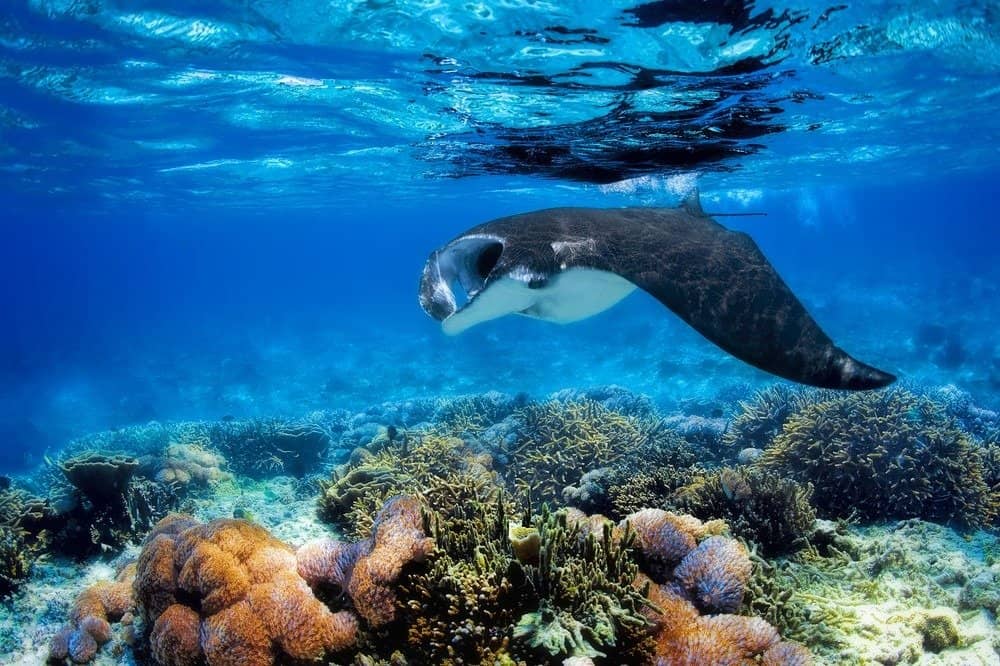
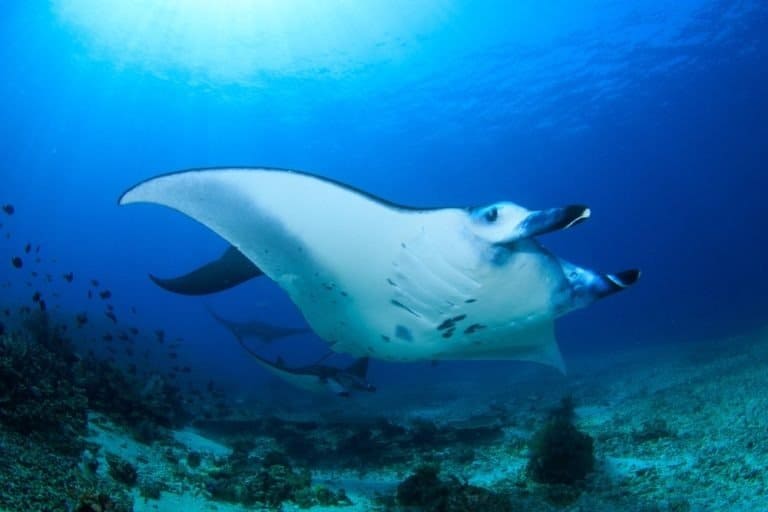
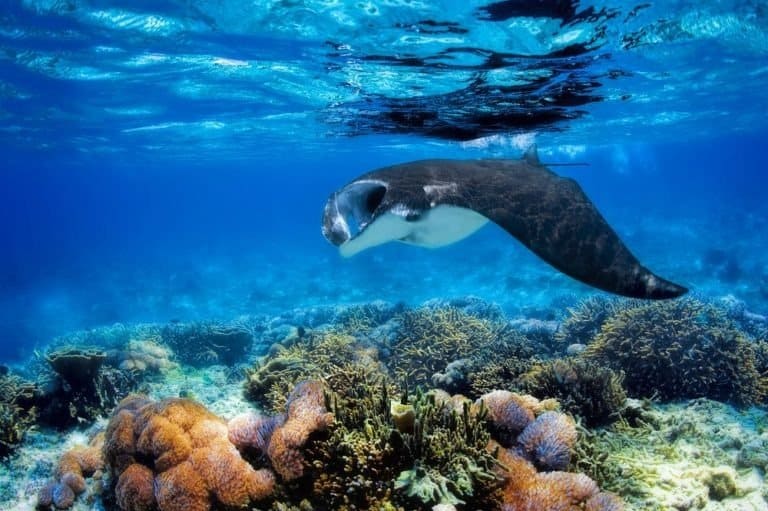
Manta ray filter feeding above a coral reef in the blue Komodo waters

Manta rays first evolved about 20 million years ago.

Because their bodies are primarily composed of biodegradable cartilage and collagen, the fossil records of Manta Rays are incredibly scant, leaving scientists to do guesswork to fill in the missing gaps in their evolutionary history. It is estimated that mantas first branched off from bottom-dwelling rays and skates around 20 million years ago. Somewhere along the line, mantas’ mouths moved from their underbelly to the front of their head, they lost their ability to sting, and grew larger, more wing-like appendages to allow them to swim with much greater ease.

Classification and Scientific Name
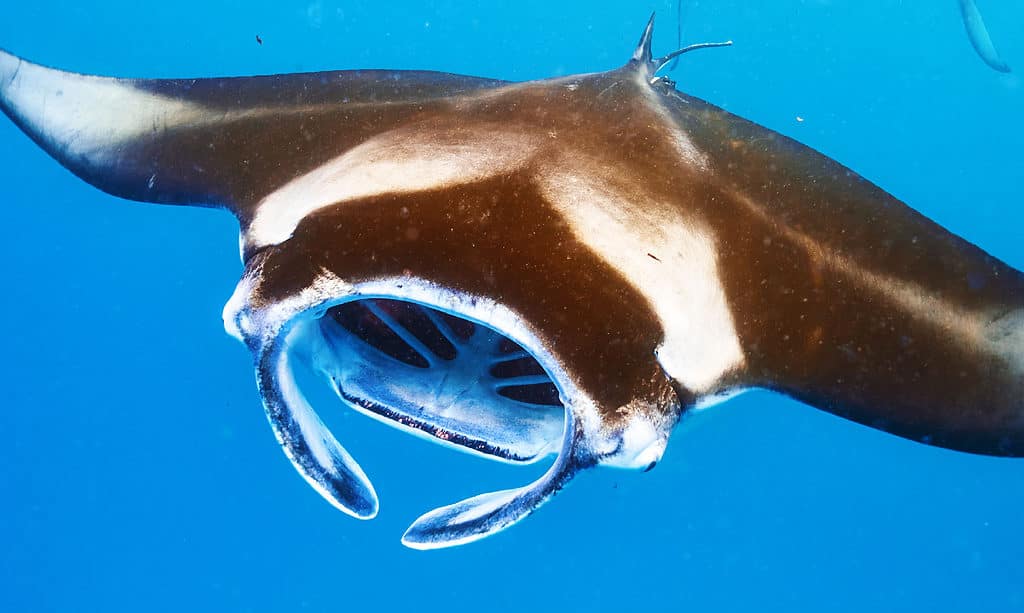
Manta ray

Manta rays were only recently classified into two distinct species.

These fish are members of the class Chondrichthyes, the order Myliobatiformes, the family Mobulidae, and the genus Mobula. For a long time, the genus was believed to have only one species, M. birostris, but another species, which has the scientific name M. alfredi, has since been identified.

The word “manta” is derived from the Spanish and Portuguese word for cloak or blanket. Traditionally, manta rays were hunted and captured using traps that resembled blankets, and the name stuck.

Types of Manta Rays

For many years, it was believed that there was only one species of manta. In 2008, however, scientists confirmed the existence of two distinct species:

Giant Oceanic Manta Ray (Mobula birostris)
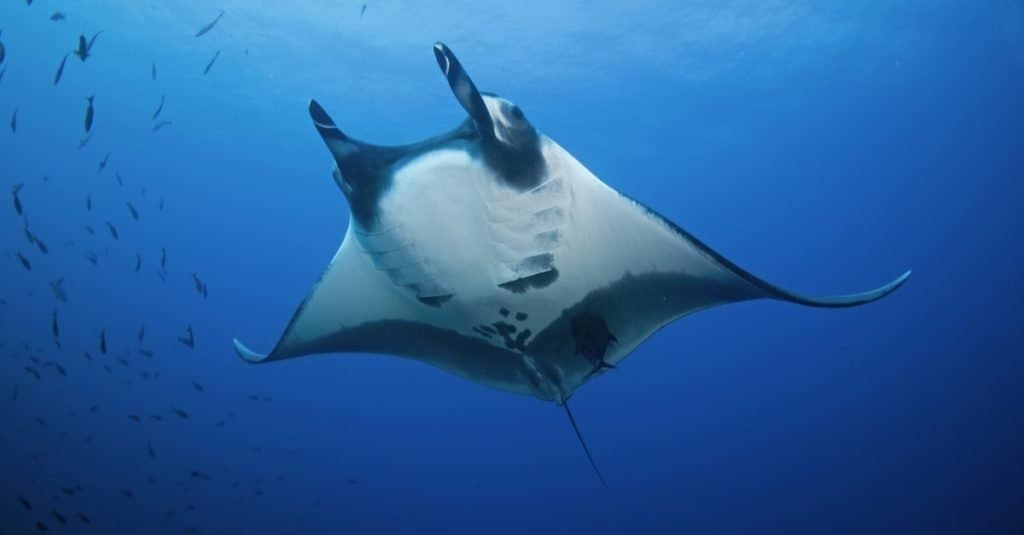
Biggest Fish: Giant Ocean Manta Ray

Though sometimes known as “devil fish,” Giant mantas are actually very friendly and completely harmless.

This massive fish is found in all major oceans. It tends to spend most of its time away from shorelines in open water. They can live to be up to 60 years old.

Reef Manta Ray (Mobula alfredi)
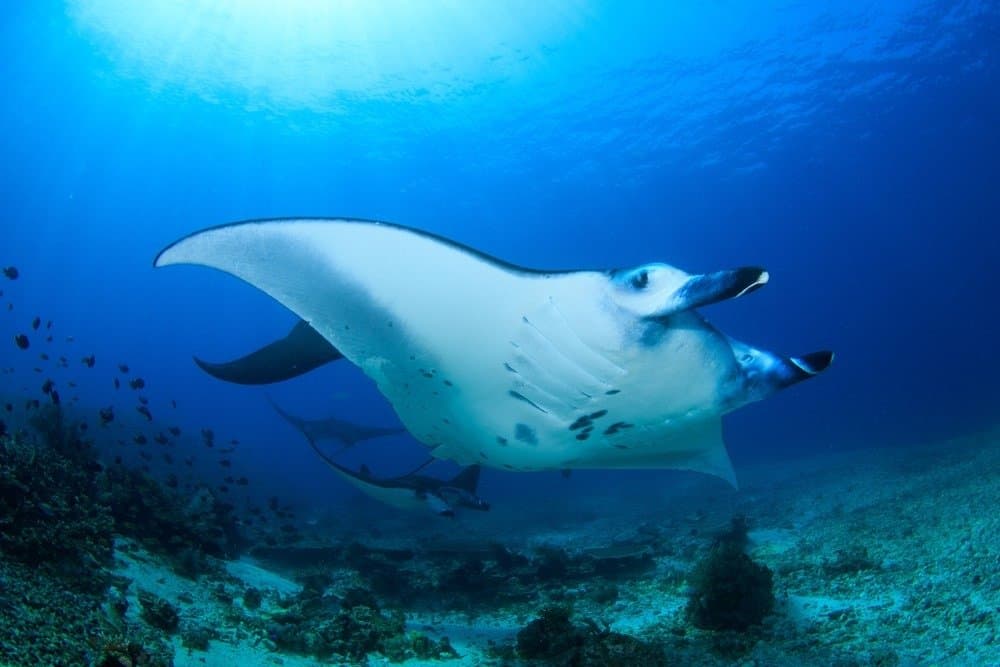
Reef Manta Rays in a mating formation with several males following a mature female, Komodo National Park, Indonesia

Reef Manta Rays are often hunted for the perceived medicinal value of their gills.

The reef manta ray, M. alfredi, primarily lives along coastlines in the Indo-Pacific. It is much smaller than the giant oceanic manta ray. Reef mantas are also considerably more endangered than their giant relatives.

Appearance
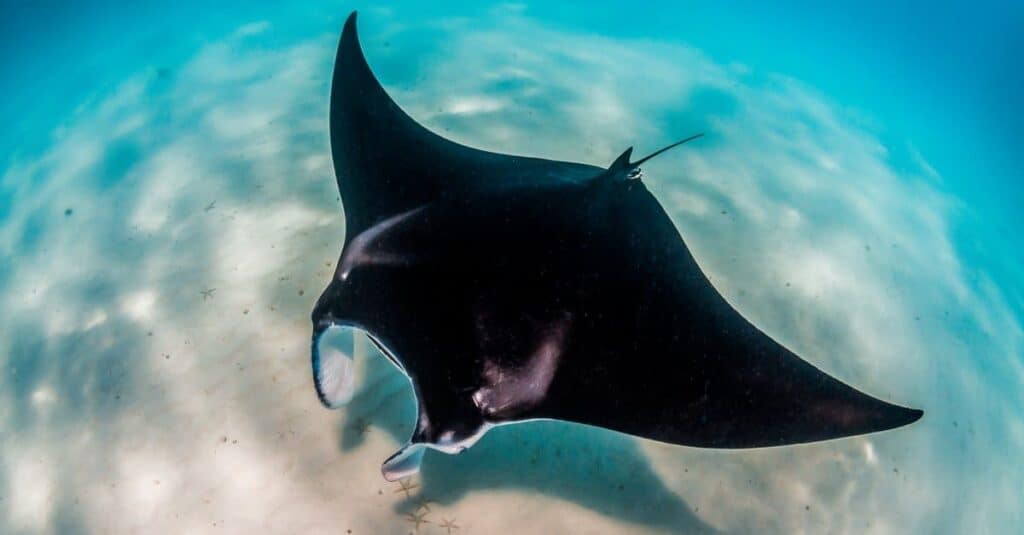
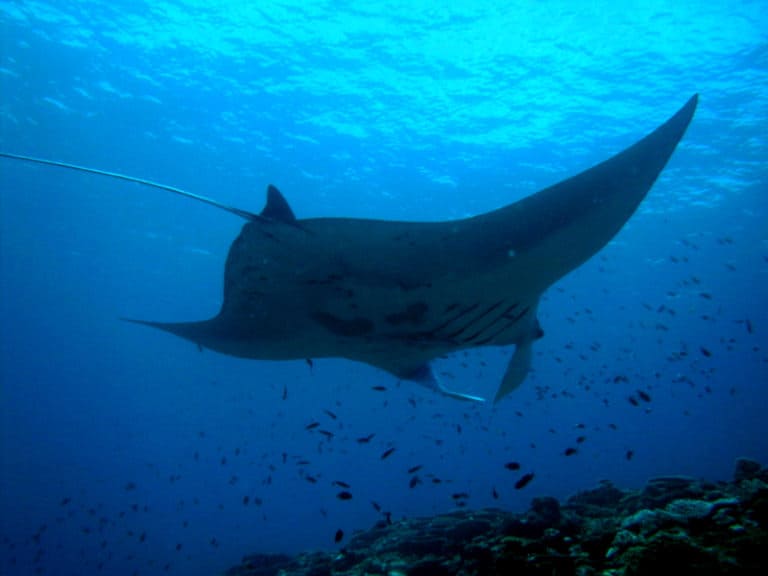
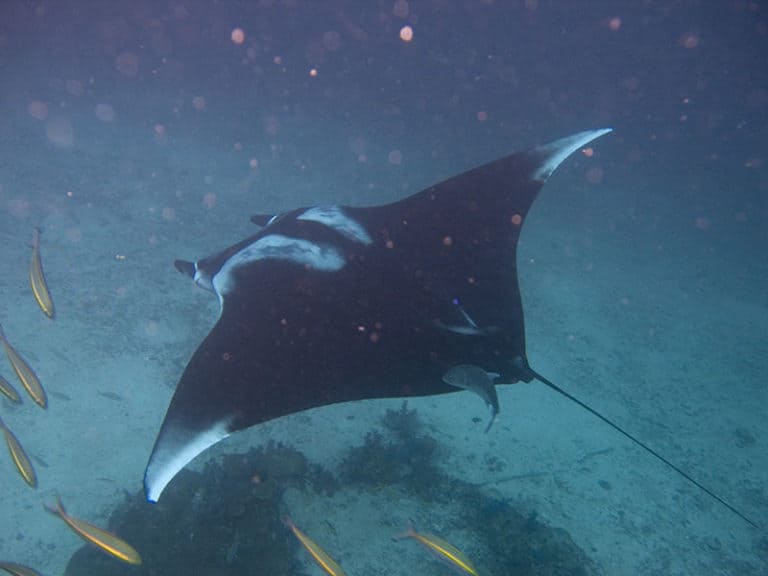
manta ray swimming close to ocean floor

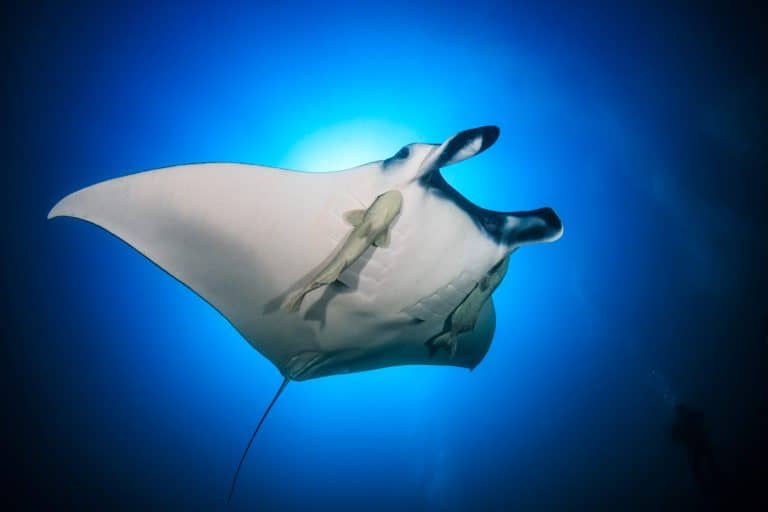
Manta rays are easily recognizable by their “horns” and massive wings.

These fish have massively wide, flat, triangular bodies with pectoral fins that resemble wings when in motion. Two cephalic lobes extend out from the front of its head, lending it the alternative name “devil fish.” The wingspan of the giant oceanic manta ray can extend up to 29 feet in length, and they can weigh up to 5,300 pounds.

These large fish have lateral eyes, and their wide, terminal mouths are located on the front edge of their heads rather than on the bottom, as with most rays. The two cephalic lobes at the front of its head extend out, allowing water to be introduced to the mouth; these lobes give the fish the distinction of being the only vertebrate animal with three paired appendages.

As filter feeders, they feed by swimming with their mouths wide open, allowing zooplankton and krill to sift through rows of small rakes that line their mouths. These gill plates, or gill rakers, are heavily prized in Chinese medicine.

These fish come in two color types. Some have chevron coloring, with black backs and white bellies, while others are mostly all black. They also have distinctive patterns of spots on their bellies.

Distribution, Population, and Habitat
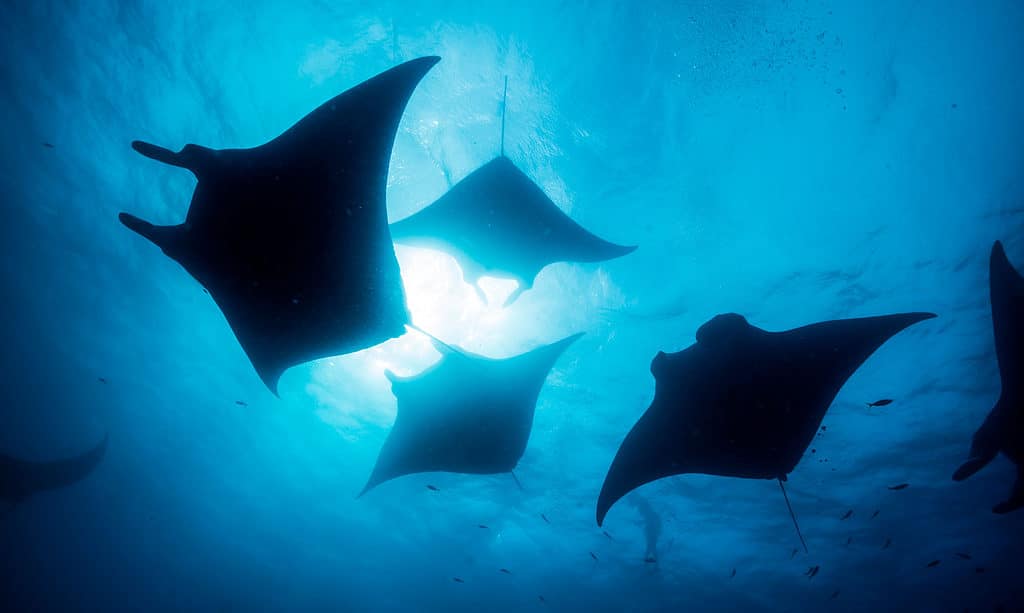
manta ray

Manta ray populations are broken into small, disparate groups, which makes studying them especially challenging.

They are found in all of the world’s oceans. They are split up into small, highly fragmented populations, making it difficult for scientists to arrive at reasonable worldwide population estimates. However, they appear to live in groups of 100 to 1,500 individuals. The largest population is believed to be in Ecuador, where they congregate at places like Machalilla National Park and the Galapagos Marine Reserve.

Due to the popular use of their gill rakers in Chinese medicine, for which there is no scientific evidence of any true health benefits, these fish are vulnerable to overfishing and overharvesting. Worldwide, the gill plate trade nets upwards of $30 million per year. These fish reproduce slowly and have long lifespans, putting their populations at even higher risk.

Both species are classified as Vulnerable by the IUCN, and efforts have been made to counteract this. Many countries have banned the fishing of these fish, including Mexico, Peru, Ecuador, the Philippines, and New Zealand; since 2011, the fishing of manta rays in international waters has been banned thanks to the Convention on Migratory Species.

Predators and Prey

Manta Ray Predators

The primary predators of these fish are large sharks and orcas, or killer whales. Humans also greatly impact the populations of mantas through the pollution of the ocean and illegal poaching.

Manta Ray Prey

These fish are filter feeders, so their diets mostly consist of planktonic organisms like copepods and mysids. Shrimp is another popular staple, and they are also believed to consume fairly large quantities of small- and moderate-sized fish.

Reproduction and Lifespan

Little is known about the reproduction habits and development timeline of manta rays because they are difficult to observe in the wild. Typically, however, males appear to court females by following closely behind them until mating begins. Sometimes, several rays mate together in “trains”; the full moon may trigger this behavior. The male fertilizes the female’s eggs, and a single live pup is typically born after a gestation period of 12 to 13 months. The small pups are miniature replicas of adults and can take off on their own right after being born.

The average lifespan of these fish is about 50 years.

Fishing and Cooking
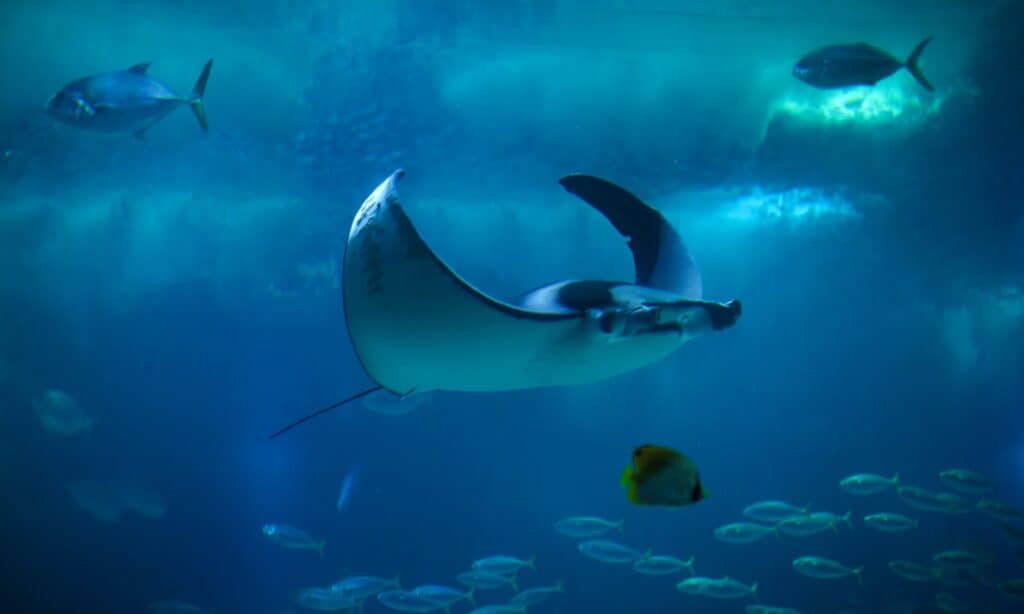
devil fish or devil ray (Mobula mobular)

Manta rays are a rare delicacy in places where they are eaten.

Mantas are eaten for food in some places, but they are typically treated as a rare delicacy. Scientists have no conclusive data on just how many of these unique rays are left in the ocean, so bans on fishing them are in place in many parts of the world, though many poachers persist. Due to their slow swimming speeds, hunters are able to easily catch mantas with harpoons or large nets.

View all 329 animals that start with M

Sources

  1. Manta Pacific Research Foundation / Accessed December 10, 2020
  2. NOAA Fisheries / Accessed December 10, 2020
  3. National Geographic / Accessed December 10, 2020
Corinna Cybele

About the Author

Corinna Cybele

My name is Corinna! In my profile photo you can see me with one of my two cats, Bisky! The other's name is Yma and she's a beautiful black Bombay kitty. I'm 24 years old and I live in Birmingham, AL with my partner Anastasia and like to spend my free time making music, collecting records and reading. Some other animals I've owned were a hamster, 2 chihuahuas and many different kinds of fish.

Thank you for reading! Have some feedback for us?


Manta Ray FAQs (Frequently Asked Questions)

Manta rays are filter feeders, which means that they consume food by filtering ocean water through their open mouths. Water, which is filled with zooplankton, krill, and other creatures, sifts through rows of gill plates that line their mouths. The majority of their diets consists of planktonic organisms like mysids and copepods, but they also ingest shrimp and small-to-moderate-sized fish.