

M
Species Profile

Mastiff

Canis lupus familiaris

Gentle Giant, Serious Guardian
Ricantimages/Shutterstock.com

Mastiff Distribution

Click a location to explore more animals from that region

Origin Location

This map shows the native origin of the Mastiff. As a domesticated species, they are now found worldwide.

Loading map...

Found in 1 country

Size Comparison

Human 5'8"
Mastiff 2 ft 7 in

Mastiff stands at 46% of average human height.

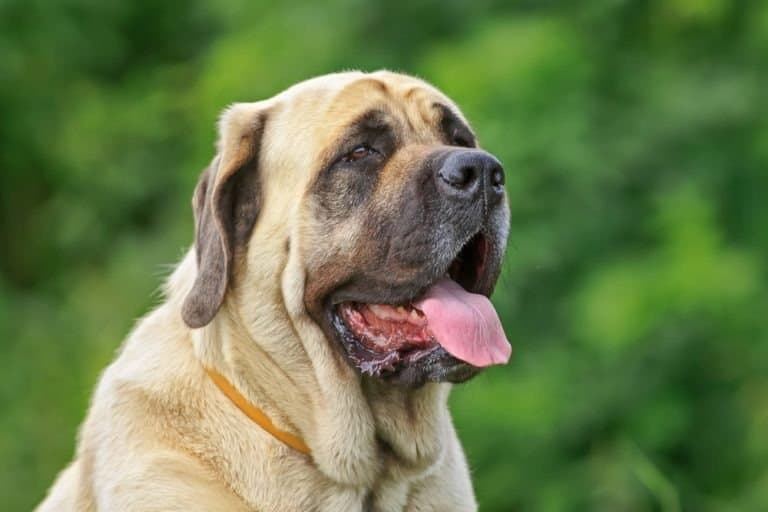
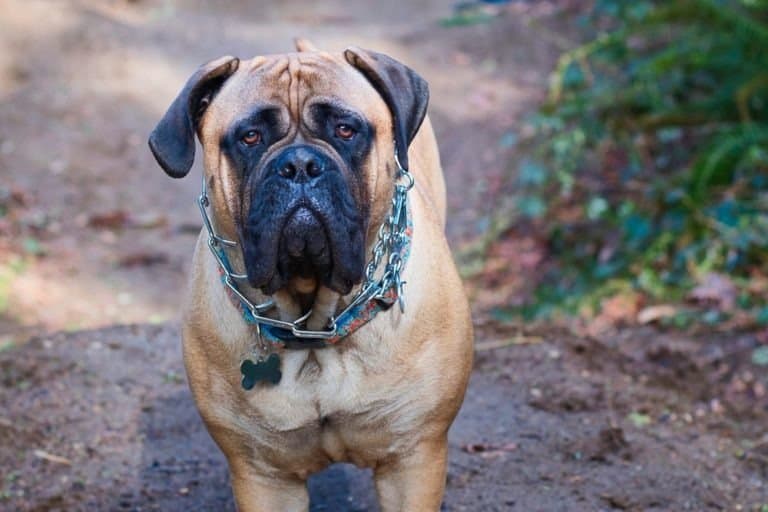
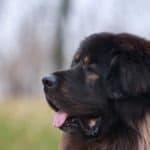
Portrait of a Mastiff Dog in outdoors.

At a Glance

Domesticated
Also Known As Mastiff, Gentle Giant, The Mastiff
Diet Omnivore
Activity Cathemeral+
Lifespan 5 years
Weight 104 lbs
Status Not Evaluated
Did You Know?

English Mastiffs are among the heaviest dog breeds; some historic individuals exceeded 90 kg.

Scientific Classification

The English Mastiff is a giant domestic dog breed traditionally used as a guardian and companion; it is among the heaviest of dog breeds and belongs to the broader molosser/mastiff-type lineage.

Kingdom
Animalia
Phylum
Chordata
Class
Mammalia
Order
Carnivora
Family
Canidae
Genus
Canis
Species
Canis lupus

Distinguishing Features

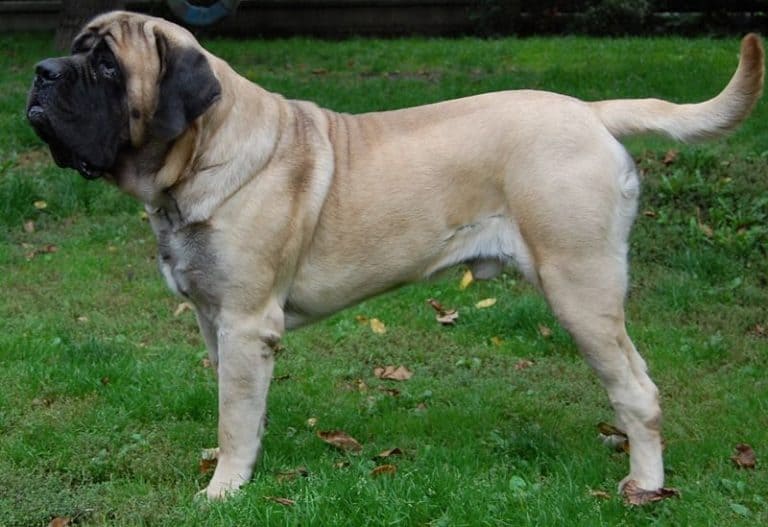
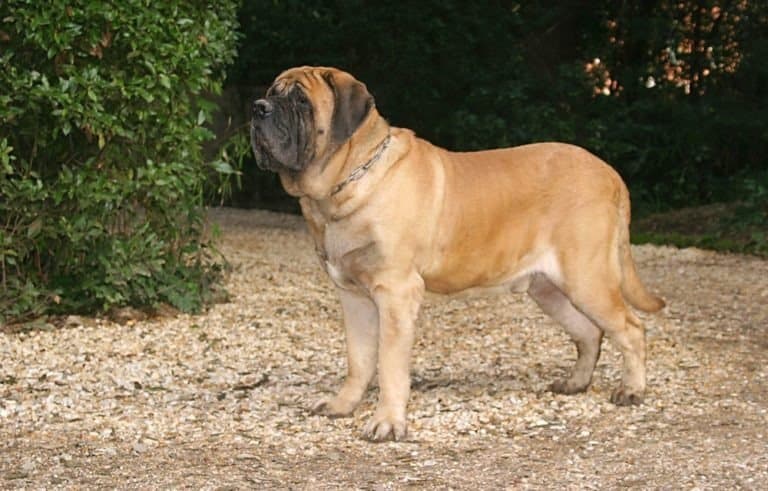
  • Very large, heavy-boned build with deep chest and broad head
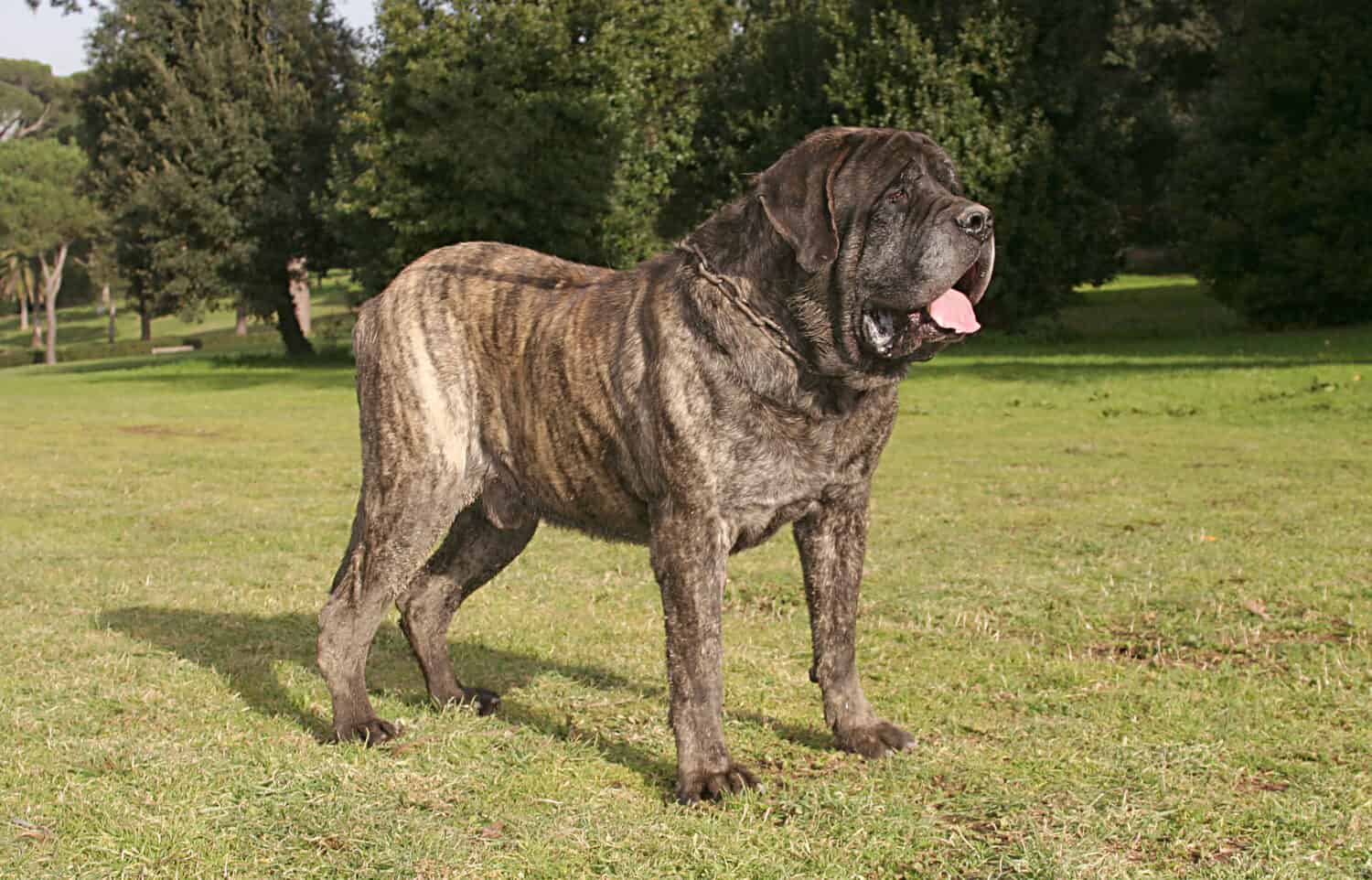
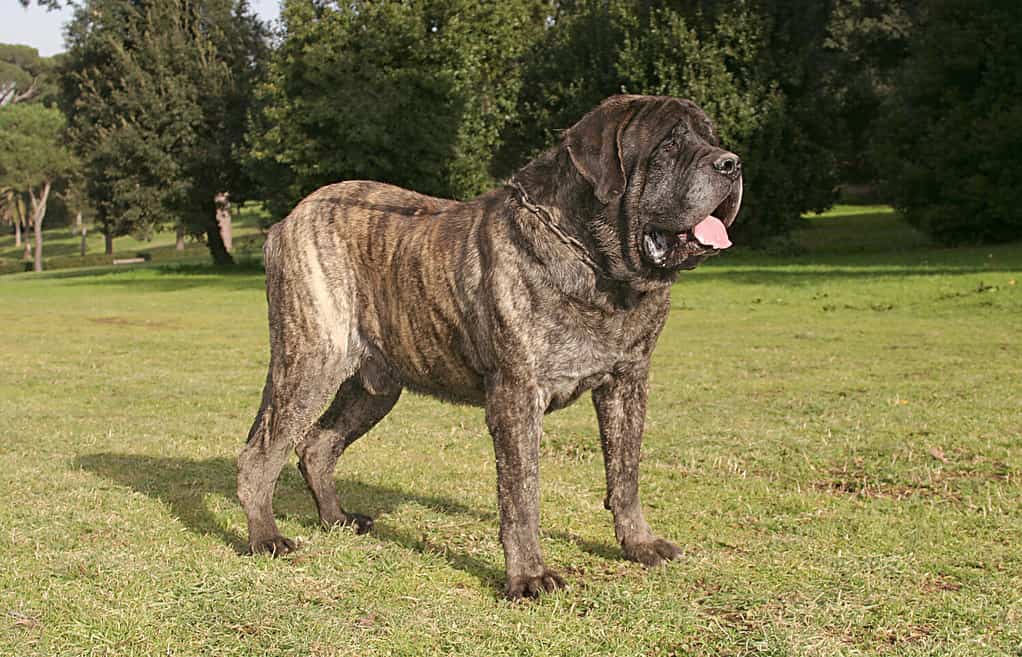
  • Short coat; commonly fawn/apricot/brindle with a dark facial mask
  • Calm, steady temperament typical of guardian breeds (varies by individual and training)

Physical Measurements

Males and females differ in size

Height
2 ft 8 in (2 ft 6 in – 2 ft 12 in)
2 ft 5 in (2 ft 4 in – 2 ft 6 in)
Length
4 ft 9 in (4 ft 3 in – 5 ft 5 in)
4 ft 5 in (3 ft 11 in – 4 ft 11 in)
Weight
198 lbs (154 lbs – 265 lbs)
143 lbs (119 lbs – 170 lbs)
Tail Length
12 in (10 in – 1 ft 2 in)
1 ft 2 in (12 in – 1 ft 4 in)
Top Speed
19 mph
running

Appearance

Primary Colors
Secondary Colors
Skin Type Short, dense coat over thick, loose skin with pronounced facial wrinkles and dewlap.
Distinctive Features
  • Domestic dog breed (Canis lupus familiaris), a domesticated subspecies of the gray wolf (Canis lupus), not a separate wild species.
  • Giant, heavy-boned molosser-type build; among the heaviest dog breeds with massive chest and broad back.
  • Very large, square head with short muzzle, black mask, and deep stop; heavy lips often cause drooling.
  • Loose skin with forehead wrinkles and pronounced dewlap; thick neck and substantial forequarters.
  • Calm guardian temperament and low prey-drive relative to wild-type canids; bred for companionship and protection.
  • Health risks common in giant breeds: hip/elbow dysplasia, osteoarthritis, cruciate injury, and panosteitis in juveniles.
  • High bloat (GDV) risk: use slow feeding, smaller meals, and avoid hard exercise around meals.
  • Cardiac concerns (e.g., dilated cardiomyopathy) and cancer risk (e.g., osteosarcoma) occur in the breed.
  • Heat sensitivity due to size and head structure; needs shade, cooling, and moderated summer activity.
  • Care needs: controlled growth diet for puppies, joint support, consistent training/socialization, regular nail/skin-fold care, and drool management.
  • Often confused with other mastiff-type breeds (e.g., Bullmastiff, Neapolitan Mastiff); English Mastiff is typically larger, heavier, and less wrinkled than Neapolitan types.

Sexual Dimorphism

Males are typically markedly larger and heavier, with broader skulls, thicker necks, and more pronounced jowls. Females are smaller and slightly more refined in head and body, while retaining the same overall mastiff structure.

  • Greater overall height and mass; notably heavier bone and chest width.
  • Broader, squarer skull with thicker neck and more prominent musculature.
  • Often more pronounced jowls and dewlap, increasing visible drool.
  • Smaller, lighter frame with slightly narrower head and chest.
  • Often less pronounced jowls/dewlap while maintaining the breed's blocky outline.
  • May appear more agile and quicker to mature behaviorally.

Did You Know?

English Mastiffs are among the heaviest dog breeds; some historic individuals exceeded 90 kg.

Despite the name, "mastiff" refers to a broad molosser-type lineage; the English Mastiff is distinct from Bullmastiffs, Neapolitan Mastiffs, Tibetan Mastiffs, and others.

They're known for a "gentle giant" temperament: typically calm, steady, and family-oriented when well socialized.

Their size means growth is slow; many don't fully mature (body and mind) until around 2-3 years.

They can be relatively low-energy indoors, but they still need regular, joint-friendly exercise and training.

Historically, mastiff-type dogs in Britain were valued as estate guardians and for holding large game; modern English Mastiffs are primarily companions/guardians.

Unique Adaptations

  • Extreme mass and powerful musculature: a breed-shaped deterrent well suited to guardian roles (a domestic-dog specialization beyond typical gray wolf morphology).
  • Broad head and strong jaw architecture typical of molosser types, supporting holding/guarding tasks rather than endurance pursuit.
  • Thick skin and substantial neck/shoulder build that historically helped in confrontations and restraint work.
  • Energy economy: many individuals conserve energy and prefer short, controlled activity-useful for steady guarding, but requires weight management.
  • Human-directed social flexibility: as a domestic dog, they readily form strong bonds with people and can discriminate familiar vs. unfamiliar individuals in a home context.

Interesting Behaviors

  • Quiet watchdogging: many English Mastiffs observe first and use deep, infrequent barking when something is truly off.
  • "Leaning" and body-blocking: they may calmly place their weight against a person as an affiliative, protective behavior.
  • Territorial boundary patrol: slow, methodical checks of doors, gates, and perimeters-more sentinel than sprinter.
  • Careful greeting style: they often prefer calm introductions and can be reserved with strangers without early, positive socialization.
  • Drool rituals: excitement, meals, or water can trigger noticeable slobber; many owners keep "drool cloths."
  • Low-prey chase tendency compared with many working/field breeds, but individuals vary-early training matters.

Cultural Significance

In Britain, the English Mastiff (Canis lupus familiaris) became a symbol of strong protectors and loyal friends. It shaped the idea of a giant, calm house guardian and is separate from breeds like the Bullmastiff and continental or Asian mastiffs.

Myths & Legends

Roman and later British writers described great British mastiff-type dogs famed in war and arena spectacle-stories that elevated them as legendary "war dogs" of the isles.

Medieval and early modern English households kept powerful mastiff-type dogs as guardians; popular lore celebrated them as unwavering protectors of home and hearth.

The tale of the "Lyme Hall Mastiff" traditions in England recounts mastiff guardianship and devoted watchfulness tied to noble estates, reinforcing the breed-type's legendary loyalty.

In 19th-century dog lore, mastiffs were often portrayed as noble, lion-like guardians-an image repeated in Victorian writing and anecdotes that helped cement the 'gentle giant' legend.

Conservation Status

NE Not Evaluated

Has not yet been evaluated against the criteria.

Population Stable

Life Cycle

Birth 8 pups
Lifespan 5 years

Lifespan

In the Wild
2–10 years
In Captivity
6–10 years

Reproduction

Mating System Polygyny
Social Structure Managed Domestic
Breeding Pattern Serial
Fertilization Managed Selective
Birth Type Managed_selective

Behavior & Ecology

Social Pack Group: 4
Activity Cathemeral, Diurnal, Crepuscular
Diet Omnivore Meat-forward meals (commonly beef or chicken-based diets), often best tolerated as a high-quality large/giant-breed formula.

Temperament

Calm, steady, low-to-moderate energy; typically more sedentary than many domestic dogs.
Gentle, affectionate, and strongly human-oriented; distinguishes from wolves by reduced independence and roaming.
Protective guardian tendency: reserved with strangers, alert to threats; usually not overtly reactive without provocation.
Generally tolerant and patient; requires early socialization to prevent fearfulness in novel people/places.
Often slow-maturing and sensitive to harsh handling; responds best to consistent, positive reinforcement training.
Lower prey drive and chase motivation than many breeds; can coexist with other pets when raised together.
Breed-typical health concerns affecting behavior/activity: hip/elbow dysplasia, cruciate injury risk, osteoarthritis pain.
Emergency risk: gastric dilatation-volvulus (bloat); use slow feeding, avoid heavy exercise around meals.
Cardiac/ocular concerns can occur (e.g., dilated cardiomyopathy, entropion/ectropion); monitor stamina and comfort.
Care requirements: controlled exercise to protect joints, weight management to prevent obesity, heat intolerance precautions.
Most individuals are placid and affiliative; variation includes some more wary/protective or more outgoing/social.

Communication

Deep, low-frequency bark used as deterrent or alert
Short "boof"/woof alarms when someone approaches
Growl/rumble to set boundaries, often low and sustained
Whines/whimpers for attention, discomfort, or separation stress
Occasional howl in response to sirens or other dogs
Leaning/pressing body against people to seek contact or reassurance
Blocking stance and body positioning to guard space or family members
Facial expressions and ear set; subtle signals often precede vocal warnings
Tail carriage and slow wag; restrained movement communicates calm or uncertainty
Scent investigation and urine marking; typically reduced territorial marking versus free-ranging canids
Mouthing, pawing, and nudging to request interaction; drool and jowls may accompany close contact

Habitat

Terrain:
Plains Hilly Coastal
Elevation: Up to 18044 ft 8 in

Ecological Role

Domesticated omnivorous canid functioning primarily as a human-associated guardian/companion (English Mastiff specialized for deterrence and protection rather than pursuit hunting), with minimal direct predatory role in modern managed environments.

guardian/deterrent reducing human-wildlife conflict around homes/farms companionship and social support (including therapy/working companion roles when temperament-trained) indirect pest pressure via presence and occasional opportunistic predation/scavenging supports human activities and security in domestic landscapes

Diet Details

Main Prey:
Small mammals Birds Fish Livestock scraps and offal
Other Foods:
Grains and starches Roots and tubers Vegetables Fruits Grasses

Human Interaction

Domestication Status

Domesticated

Canis lupus familiaris (domestic dog) is a gray wolf subspecies shaped by human breeding over thousands of years. The English Mastiff is a giant molosser-type bred for mass, strength, calm guarding and companionship. Compared with other dogs it is large, slower to mature, less athletic, and needs early socialization, training, size management, and may face housing rules or breed laws.

Danger Level

Moderate
  • Accidental injury due to extreme size and strength (knocking over children/elderly, leash pulling).
  • Protective/territorial reactions if under-socialized or poorly managed around strangers and at thresholds (doors, yards, vehicles).
  • Bite risk exists with any dog; consequences can be severe in giant breeds due to jaw strength and body mass.
  • Resource guarding or dog-dog conflict can escalate quickly because physical intervention is difficult.
  • Heat stress/overexertion can cause sudden collapse, creating emergency handling risks for owners.

As a Pet

Suitable as Pet

Legality: Generally legal to own in most U.S. locations as a domestic dog. However, some cities/HOAs/landlords and some insurance providers may restrict or surcharge large guardian-type breeds; always check local ordinances, lease terms, and liability coverage requirements.

Care Level: Experienced

Purchase Cost: $200 - $5,000
Lifetime Cost: $18,000 - $45,000

Economic Value

Uses:
Companion animal Guard/estate deterrence Show and sport (conformation, therapy work in some cases) Breeding (regulated kennels) Pet services economy
Products:
  • puppy/adult dog sales and adoption placements
  • veterinary services (notably orthopedics, cardiology, dermatology)
  • training and behavior services (early socialization, obedience)
  • pet insurance policies tailored to giant breeds
  • specialized giant-breed supplies (extra-large crates, beds, vehicles/ramps, heavy-duty leashes/harnesses)
  • premium large/giant-breed food and joint-support supplements

Relationships

It is said that Julius Caesar described a Mastiff in his accounts of invading Britain in 55 BC. In other words, Mastiffs have been around a long time, at least since the ancient civilizations of Egypt and Rome.

During ancient times, the breed was noted for its courage and intimidating appearance and was therefore bred to be guard and fighting dogs, even being pitted against bears, bulls, lions, tigers, and human gladiators for amusement. Breeders in the known world took note and began to breed them to suit regional needs and preferences, which is why we have several noted types of Mastiff today: Bull, English, Italian, Neapolitan, French, and Tibetan.

Despite the regional variety, each type of Mastiff exhibits the same dignified strength, massive size, and kind manner toward their family, as was evident thousands of years ago. This has made them an ideal family dog.

Types of Mastiffs

The Mastiff is a very large dog, and while some types, like the Tibetan Mastiff, have a double coat, others, such as the Bullmastiff and English Mastiff, typically have a short, single coat. For the English Mastiff, males average around 31 inches at the shoulder and can weigh up to 230 pounds, while females average 28 inches and up to 170 pounds. Other Mastiff breeds, such as the Bullmastiff and Cane Corso, are generally smaller. It is quite common for a 9-week-old Mastiff puppy to weigh 30 pounds. They become fully grown at 3 years old. Here are the six types of Mastiffs:
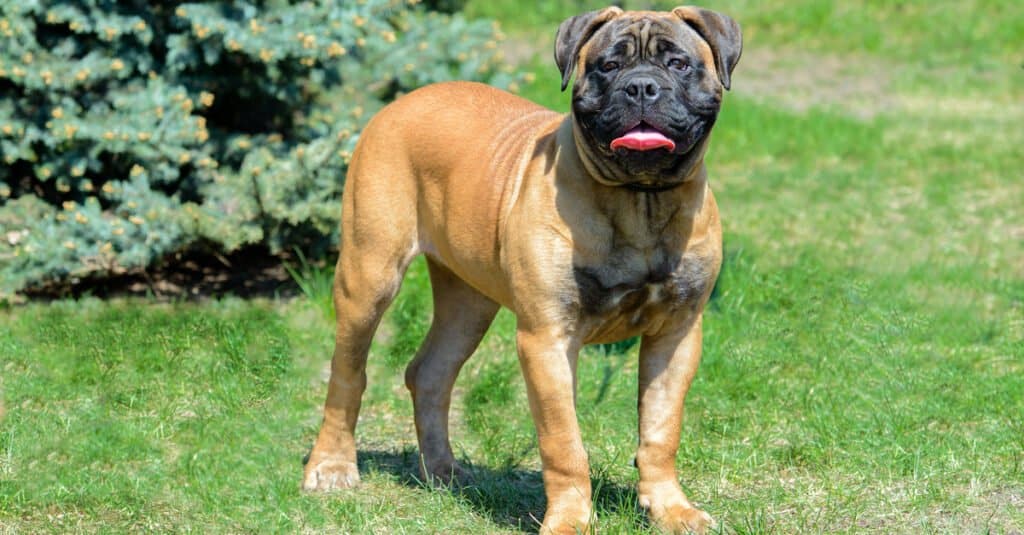
Bullmastiff standing in front of bush

The Bullmastiff, smaller in stature compared to other Mastiffs, is a cross between an English Mastiff and an Old English Bulldog.

  • Bullmastiff: A cross between an English mastiff and an Old English Bulldog, the Bullmastiff was bred in the 19th century to be the ultimate guard dog. While not as large as other mastiffs, the Bullmastiff can still weigh up to 130 pounds.
  • English Mastiff: This colossal canine, and the largest of the various Mastiff types, is strong and courageous while also being quite sweet and dignified.
  • Italian Mastiff: Perhaps more commonly known as the Cane Corso, this breed traces its origins to ancient Rome, where it was valued as a guard and war dog. Legends claim they were used in battle, but stories of them charging enemy lines with flaming oil-filled buckets are not supported by historical evidence.
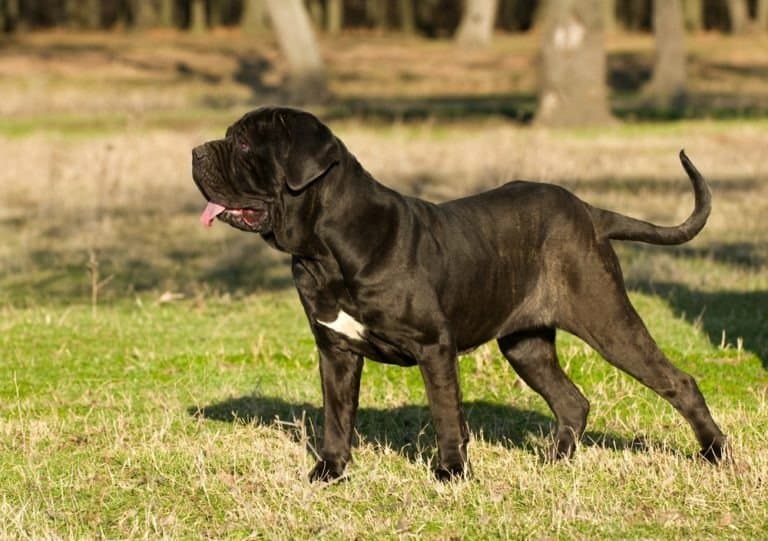
  • Neapolitan Mastiff: The Neapolitan Mastiff has been guarding homes against intruders since the days of ancient Rome. This heavily wrinkled behemoth is sweet to its loved ones but wary of strangers.
  • French Mastiff: Also known as Bordeaux Mastiff, the French Mastiff has a powerful, muscular body capable of pulling carts, transporting heavy objects, and guarding flocks. They are fawn-colored with a massive, bulldog-like head and undershot jaw.
  • Tibetan Mastiff: These imposing giants are considered one of the best guard dogs for their watchful, imposing, and intimidating presence. Like the others, the Tibetan Mastiff is sweet and mellow with their families, but they can be territorial and somewhat aloof with strangers. These noble canines have V-shaped ears and expressive brown eyes.

Cons of Owning a Mastiff

While Mastiffs make great family dogs, as with all pets, there could be reasons not to welcome one into your home. For starters, heavy drooling. The breed is notoriously famous for its drooling, and this can be messy and inconvenient.
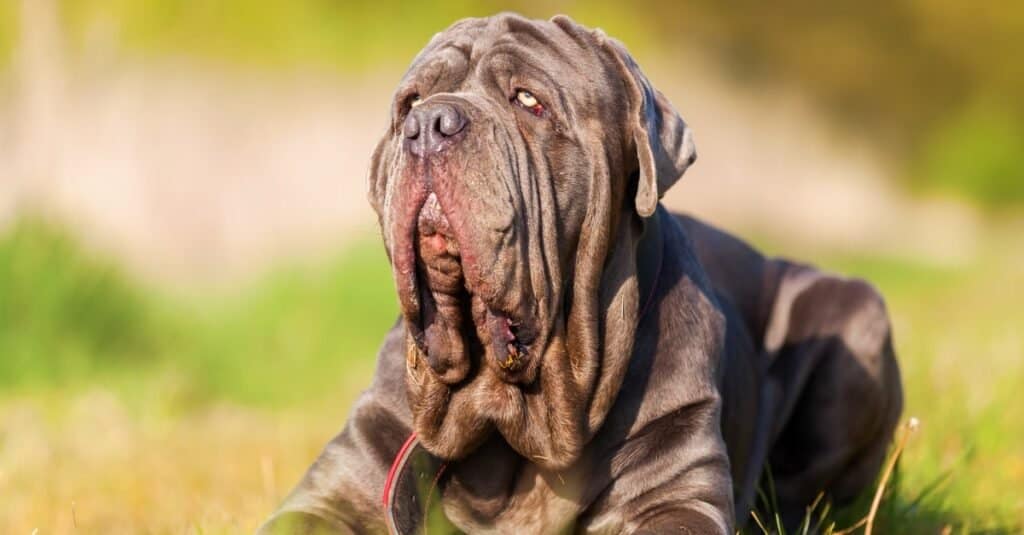
Ugliest Dogs

Don’t be deceived, Neapolitan Mastiffs, while they might look quite intimidating, are extremely loving toward their families.

Second, their size. Mastiffs can weigh as much as an adult human, making transportation in a small vehicle or carrying them in a crate quite challenging.

Third, cost. The price to buy a Mastiff from a reputable breeder can be $2,500 or more, depending on the type. Also, due to their size, there is the large expense of feeding them.

Common Health Issues

Conditions to watch out for in this very large breed dog are hip and elbow dysplasia. Both are inherited. When the dog’s hip and elbow joints do not properly fit into their respective joints, pain and problems associated with arthritis and mobility arise.

Additionally, Mastiffs are vulnerable to eye issues that could lead to partial or full vision loss, particularly in the case of progressive retinal atrophy, a condition that occurs when the photoreceptor cells in a dog’s eyes start to deteriorate.

Temperament and Behavior

Mastiffs have affectionate, friendly personalities, making them ideal for families, especially ones with older children. These dogs are often described as “couch potatoes,” but they do need regular exercise such as a walk in the woods, a game of chase in the backyard, or fetching a ball to control their weight and stave off bone, joint, and muscle issues. Thirty minutes a day is recommended.
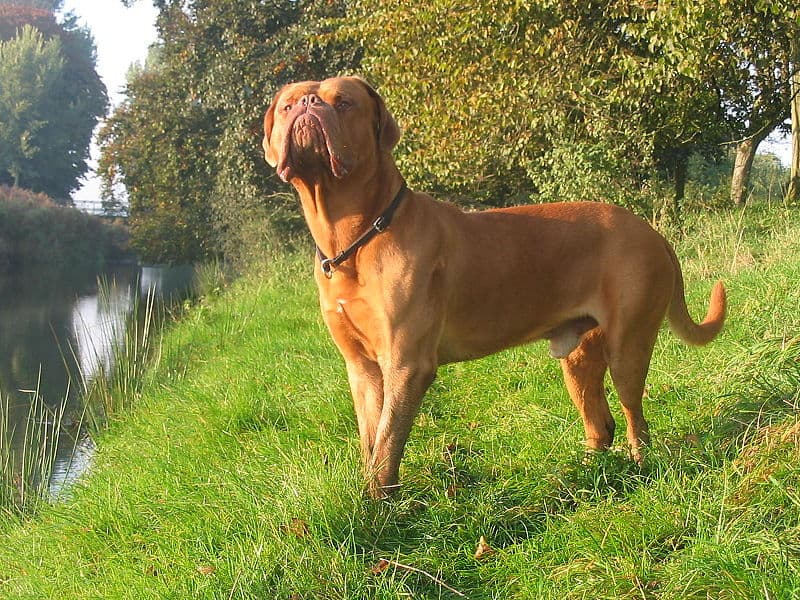
Dogue De Bordeaux standing in field

A French Mastiff was featured in the movie Turner and Hooch (1989) starring Tom Hanks.

Two things that are not advised with a Mastiff are jogging with them, as they can overheat in a short time, and apartment living. Although not an overly active breed, Mastiffs are large, and they would be better suited to a home with a yard where they can stretch their legs.

One of the most notable traits of this breed is its sensitive nature. They have a talent for reading the facial expressions of their owners. They are people pleasers. This makes obedience training a relatively easy process, but it should be noted that an owner who uses a harsh tone is not likely to have success. Words of praise and treats go a long way toward effectively training a Mastiff.

These gentle, affectionate giants make for a great family dog. However, a family with small children should get a Mastiff puppy, so that the dog has an opportunity to learn how to interact with them and become accustomed to their behavior.

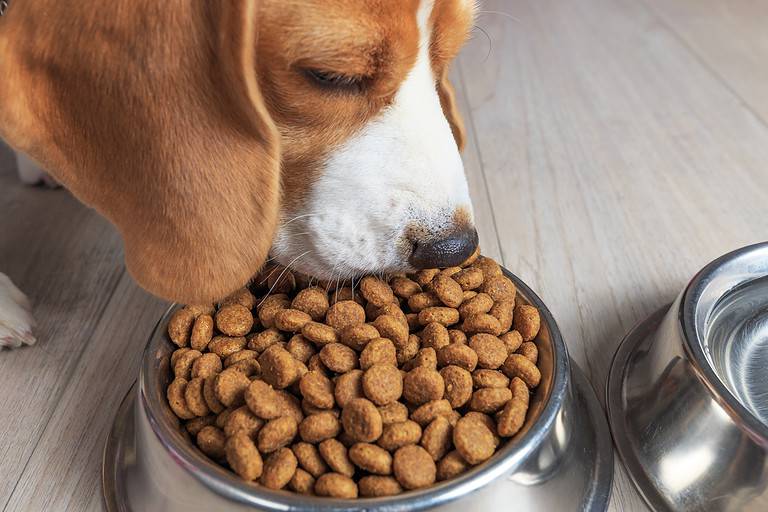
The Best Dog Food for Mastiffs

The nutrition needs of puppies and adult dogs are, not surprisingly, different. Due to this breed’s immense size, it is even more crucial to provide adequate nutrition throughout each life stage.
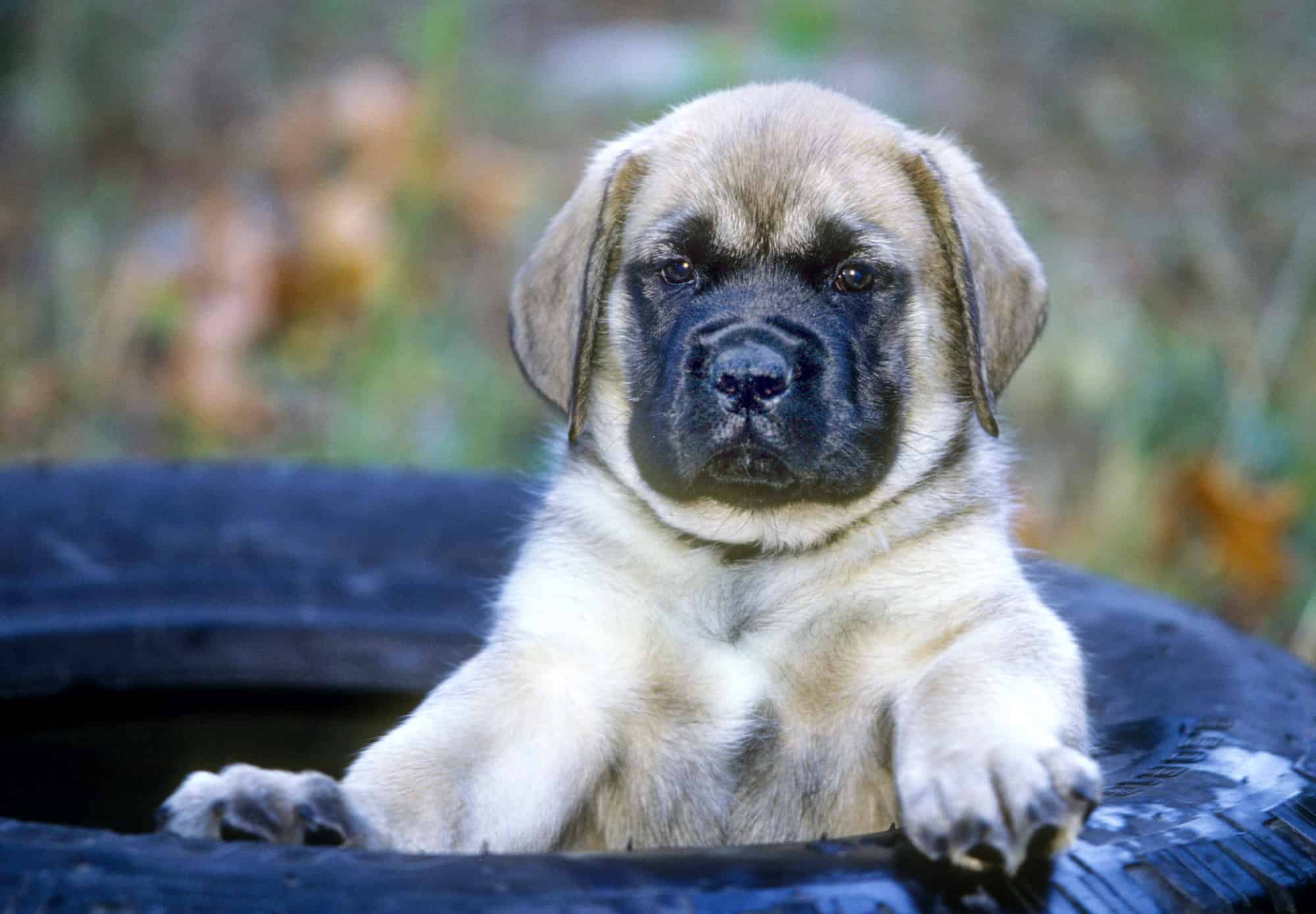
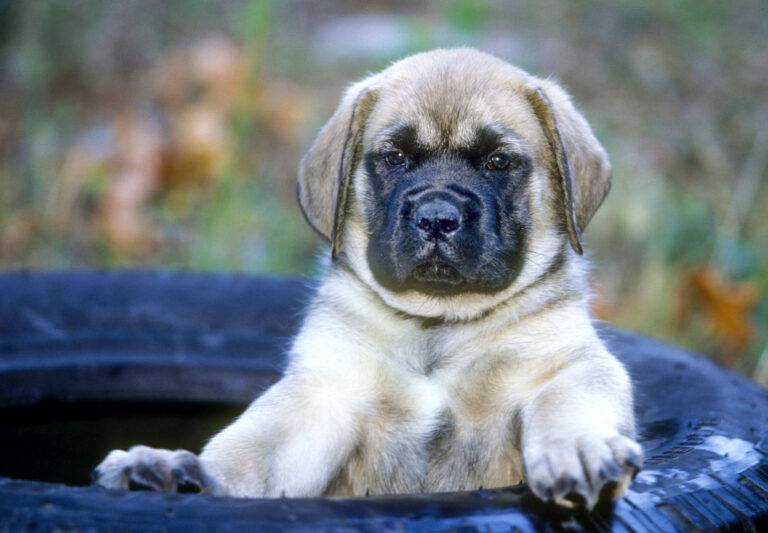
English Mastiff puppy few months old in grass with ball

Mastiff puppies require nutrient-dense meals that promote a slow growth rate.

Puppy food: The goal of quality food at this stage is to promote a slow rate of growth. This occurs with food that has adequate amounts of protein, calcium, and DHA. Protein should be the first ingredient listed in quality puppy food. While building muscle and contributing to skin and coat health, protein is also a source of energy without adding needlessly to weight gain. Calcium ensures proper growth of bones and teeth, and docosahexaenoic acid, or DHA, promotes brain development and continued eye health and could help to prevent progressive retinal atrophy.

Do not overfeed a Mastiff puppy. If this breed gains weight too quickly, it can increase its risk of developing health issues. Their bones, muscles, and joints need time to develop, so they can fully support their adult body.

Adult dog food: Protein will remain an important nutrient for Mastiffs at every adult life stage. It can help prevent hip and elbow dysplasia by providing the nutrients needed to maintain strong bones, muscles, and joints. Omega-3 and Omega-6 fatty acids contribute to an adult dog’s healthy coat and skin, and antioxidants in their food support the immune system.

Maintenance and Grooming

English, Neapolitan, and Bullmastiffs moderately shed. The Tibetan Mastiff is a heavy seasonal shedder, while its Italian cousin, the Cane Corso, sheds moderately. These dogs shed more during the change of seasons.

The daily grooming routine of this dog breed is relatively easy. Use a soft brush with boar’s hair bristles to remove loose or dead hair from their coat. A grooming glove, an effective tool especially when it comes to removing loose hair from their legs and wrinkly face, offers more control while working around their ears, nose, and eyes. Begin brushing at the head and move in the hair’s natural direction toward the tail.
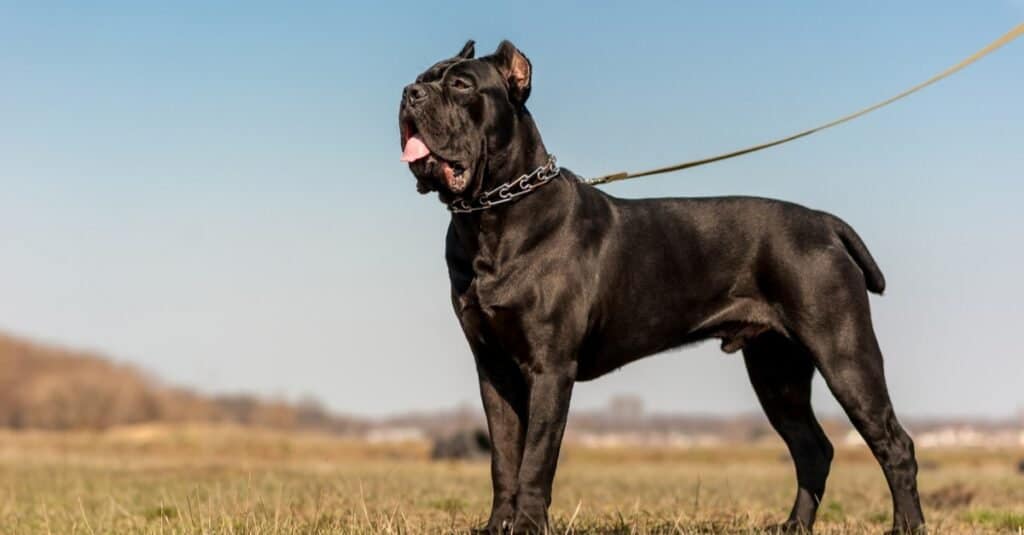
Strongest Dog Breed Bite - Cane Corso

The Italian Mastiff does not shed as much or require as much grooming as its Tibetan cousin.

An owner should check for patches of dry skin, bald spots, and itchy areas, as food or skin allergies or even a shampoo could cause these skin conditions.

View all 329 animals that start with M

Sources

  1. David Burnie, Dorling Kindersley Animal, The Definitive Visual Guide To The World's Wildlife / Accessed January 24, 2025
  2. Tom Jackson, Lorenz Books The World Encyclopedia Of Animals / Accessed January 24, 2025
  3. David Burnie, Kingfisher The Kingfisher Animal Encyclopedia / Accessed January 24, 2025
  4. David Burnie, Dorling Kindersley Illustrated Encyclopedia Of Animals / Accessed January 24, 2025
  5. Dorling Kindersley Dorling Kindersley Encyclopedia Of Animals / Accessed January 24, 2025
  6. American Kennel Club / Accessed January 24, 2025
Heather Ross

About the Author

Heather Ross

Heather Ross is a secondary English teacher and mother of 2 humans, 2 tuxedo cats, and a golden doodle. In between taking the kids to soccer practice and grading papers, she enjoys reading and writing about all the animals!

Thank you for reading! Have some feedback for us?


Mastiff FAQs (Frequently Asked Questions)

The initial cost for a Mastiff runs between $1,800 and $2,500. Tibetan Mastiffs are more expensive because they are rarer. The veterinarian costs for a Mastiff range between $300 and $500 annually. This varies depending on the general health of the dog.

Food costs can range from $200 to $500 per month depending on what brand an owner chooses.