






M
Species Profile

Mole

Talpidae

Built to burrow, born to sense
MatthiasKabel / Creative Commons

Mole Distribution

Click a location to explore more animals from that region

Loading map...
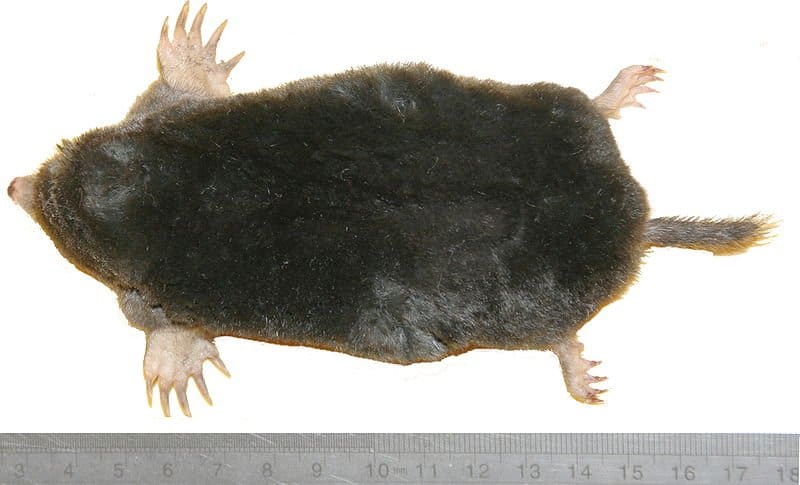
Mole on an isolated background

At a Glance

Family Overview This page covers the Mole family as a group. Stats below are general traits shared across the family.
Also Known As Shrew mole, Desman
Activity Cathemeral+
Lifespan 3 years
Weight 0.52 lbs
Status Not Evaluated
Did You Know?

Size across the family ranges from ~7-22 cm body length (tails from very short to ~20 cm in desmans) and roughly ~0.01-0.52 kg in mass.

Scientific Classification

Family Overview "Mole" is not a single species but represents an entire family containing multiple species.

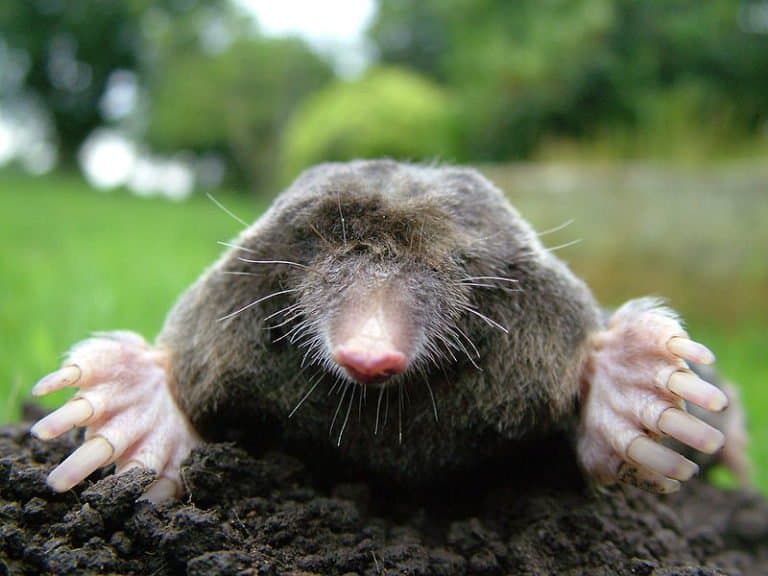
True moles are small insectivorous mammals specialized for a fossorial (burrowing) lifestyle. They are characterized by cylindrical bodies, reduced external ears, small eyes, velvety fur that can lie in either direction, and powerful forelimbs with broad, outward-facing paws for digging.

Kingdom
Animalia
Phylum
Chordata
Class
Mammalia
Order
Eulipotyphla
Family
Talpidae

Distinguishing Features

  • Strongly modified forelimbs for digging (broad hands, robust humerus)
  • Velvety, dense fur adapted to moving through soil
  • Reduced eyes and external ear pinnae
  • Extensive tunnel systems; diet mainly earthworms and invertebrates

Physical Measurements

Males and females differ in size

Length
7 in (4 in – 1 ft 5 in)
6 in (3 in – 1 ft 6 in)
Weight
0 lbs (0 lbs – 1 lbs)
Tail Length
2 in (1 in – 8 in)
1 in (0 in – 8 in)
Top Speed
4 mph
running
Venomous

Appearance

Primary Colors
Secondary Colors
Skin Type Moles (Talpidae) have dense, short fur that can lie either way. Skin is loose to reverse in tunnels. Nose/feet have little fur; tails range from short, furry to long, scaly or keeled in semi-aquatic forms.
Distinctive Features
  • Family-wide size range (smallest to largest members): ~6-22 cm head-body length; tail ~0.5-20 cm; mass ~0.008-0.52 kg (fossorial moles smaller; desmans largest).
  • Lifespan range across Talpidae: commonly ~1-6 years in the wild; maximum longevity in captivity can reach ~8-10+ years in some species.
  • Cylindrical body with short neck, wedge-shaped head, and reduced external ear pinnae; eyes small and often partially covered by fur/skin.
  • Forelimbs highly modified for digging: broad, outward-facing hands with enlarged claws and a reinforced shoulder girdle.
  • Fur is exceptionally dense and plush; 'reversible' nap reduces friction when moving forward or backward in tunnels.
  • Sensory ecology emphasizes touch/vibration detection and olfaction; many have Eimer's organs on the snout (extreme specialization in star-nosed moles).
  • Behavior/ecology (general): most species are solitary, territorial tunnelers with extensive burrow systems and frequent soil mounds; activity is often year-round with short rest-forage cycles.
  • Behavior/ecology (variation): shrew moles are more surface-active and less specialized for deep tunneling; star-nosed moles are semi-aquatic and forage rapidly in wetlands; desmans are primarily aquatic, with webbed feet and laterally compressed tails.
  • Diet is mainly animal prey: earthworms, insect larvae, and other invertebrates; semi-aquatic talpids add aquatic invertebrates and occasionally small vertebrates.
  • Ecological role: strong influence on soil structure (aeration/mixing) and invertebrate populations; effects vary with habitat, density, and burrowing depth.
  • Reproduction varies by species and latitude: typically seasonal breeding with litters often ~1-7 young; nest chambers lined with vegetation in deeper tunnel sections.

Sexual Dimorphism

Sexual dimorphism is generally subtle across Talpidae. Males are often slightly larger and may have seasonally enlarged scent glands and testes; females may show less pronounced external swelling, with differences varying among fossorial, semi-aquatic, and aquatic lineages.

  • Slightly greater body mass and head/shoulder robustness in many species.
  • Seasonal enlargement of testes and associated scent-marking behavior in some species.
  • May maintain or patrol larger tunnel ranges during breeding season.
  • Often slightly smaller overall; differences may be minimal outside breeding season.
  • Mammary development visible during lactation; otherwise external differences are subtle.
  • In some species, may occupy more stable nest areas during rearing.

Did You Know?

Size across the family ranges from ~7-22 cm body length (tails from very short to ~20 cm in desmans) and roughly ~0.01-0.52 kg in mass.

Many true moles can push through soil with outward-turned, shovel-like forepaws; several species also use "mole highways" of long-lived tunnels.

Their velvety fur lies easily in either direction, helping them move forward or backward in tight tunnels without snagging.

Touch is paramount: many talpids have dense tactile receptors (including Eimer's organs in several lineages), letting them detect prey movements and textures in darkness.

Not all "moles" are fully subterranean: shrew-moles often forage more at the surface, while desmans (Talpidae) are adapted to life in water.

Some species cache prey (especially earthworms), creating underground larders that can supply food when hunting is difficult.

Typical wild lifespans are short (often ~2-4 years), but some individuals can live longer-up to ~6-8 years in captivity depending on species.

Unique Adaptations

  • Power-digging forelimbs: enlarged shoulder girdle and rotated forelimbs position broad hands outward for efficient "breaststroke" excavation; many have reinforced wrist/hand bones for bracing against soil.
  • "Extra thumb" support: several fossorial moles have a prominent prepollex (a thumb-like bone) that increases digging surface area and leverage.
  • Sensory snouts: dense mechanoreceptors in the muzzle (notably Eimer's organs in multiple talpid lineages) support high-resolution touch for prey detection in darkness.
  • Low-light anatomy: small eyes and reduced external ears are common in strongly fossorial forms, reducing abrasion in tunnels; degree of reduction varies across the family.
  • Reversible, dense fur: short, plush hair reduces friction and helps keep soil from lodging in the coat as the animal reverses in tunnels.
  • Physiology for confined spaces: many fossorial talpids tolerate elevated CO₂ and low O₂ better than typical surface-dwelling mammals, aiding life in poorly ventilated burrows.
  • Diversity of lifestyles within Talpidae: classic "true moles" (e.g., Talpa, Scalopus, Scapanus) are highly fossorial; shrew-moles (e.g., Neurotrichus, Urotrichus) are smaller and often less strictly subterranean; desmans (e.g., Desmana, Galemys) are semi-aquatic with swimming-specialized bodies and long tails.

Interesting Behaviors

  • Tunnel engineering: many species maintain networks with deep nest chambers, shallow feeding runs, and "molehill" spoil piles; layout and depth vary with soil and moisture.
  • Mostly solitary and territorial: adults of many fossorial species defend tunnel systems; overlap often increases during breeding seasons.
  • Aboveground excursions: despite a subterranean reputation, many species periodically travel on the surface-especially during dispersal or in saturated/frozen soils.
  • Vibration-first hunting: prey detection commonly relies on substrate-borne vibrations and fine touch along the snout and forepaws; reliance varies by habitat and lineage.
  • Food storage: some talpids immobilize and stockpile invertebrates (notably earthworms) in underground chambers for later use.
  • Semi-aquatic foraging (desmans): desmans swim and dive for aquatic invertebrates and small prey, using their sensitive snouts and maneuverable tails; this contrasts strongly with the tunnel-based ecology of Talpa/Scalopus/Scapanus.
  • Seasonal and habitat variation: activity patterns shift with temperature, rainfall, and soil conditions; some species are active year-round where soils remain workable, while others alter depth and routes seasonally.

Cultural Significance

Moles (Talpidae) are signs of underground life—'mole' can mean a hidden spy. They appear in language and moleskin name; molecatchers are old jobs. Seen as garden pests, they aerate soil, mix organic matter, and help control bugs.

Myths & Legends

Aesop's fable "The Mole and His Mother" tells of a mole claiming it can see; its mother challenges the claim, making the mole a traditional emblem for self-deception and boasting.

In parts of European folk tradition, a mole (or mole's paw) was carried as an amulet-especially in folk-medicine contexts-associated with relieving ailments such as toothache or rheumatism and with warding off misfortune.

European rural superstition often treated sudden molehill patterns as signs or omens about coming weather or changes in the land, reflecting the animal's hidden influence beneath fields and gardens.

In longstanding European storytelling, the mole is frequently cast as a chthonic (underworld/earth) creature-an archetype of the hidden worker below ground-appearing in moral tales and countryside narratives about what lies unseen beneath one's feet.

Conservation Status

NE Not Evaluated

Has not yet been evaluated against the criteria.

Population Unknown

Protected Under

  • Legal protection varies widely by species and country; many widespread moles have little targeted protection beyond general wildlife laws, while threatened endemics may be fully protected under national endangered-species statutes.
  • EU Habitats Directive (Annexes II & IV) and Bern Convention listings apply to the Pyrenean desman (Galemys pyrenaicus) in parts of its range; river-basin management strongly influences outcomes.
  • National Red Lists/Red Data Books in several range states list at-risk talpids (notably some island endemics and desmans), with measures including habitat protection, water-quality regulation, and limits on killing/trapping.

You might be looking for:

European mole

28%

Talpa europaea

Common Eurasian burrowing mole; classic ‘molehill’ maker in fields and gardens.

Star-nosed mole

22%

Condylura cristata

North American semi-aquatic mole with a distinctive star-shaped sensory organ on the nose.

View Profile

Eastern mole

18%

Scalopus aquaticus

Widespread eastern North American species; strong digger in soils of lawns, woods, and fields.

Coast mole

12%

Scapanus orarius

Pacific Northwest mole commonly encountered in moist soils; makes extensive tunnel systems.

Russian desman (mole relative)

6%

Desmana moschata

Aquatic talpid with a long snout; sometimes informally grouped with ‘moles’ though very distinct in lifestyle.

Life Cycle

Birth 4 pups
Lifespan 3 years

Lifespan

In the Wild
1–7 years
In Captivity
2–12 years

Reproduction

Mating System Polygynandry
Social Structure Solitary
Breeding Pattern Seasonal
Fertilization Internal Fertilization
Birth Type Internal_fertilization

Across Talpidae, adults are usually solitary and meet mainly during a short breeding season. Males expand or roam through larger ranges overlapping multiple females, and both sexes may mate with more than one partner; females typically rear the litter alone.

Behavior & Ecology

Social Labor Group: 1
Activity Cathemeral, Nocturnal, Crepuscular
Diet Insectivore Earthworms (commonly favored where abundant), with many species also heavily using insect larvae
Seasonal Hibernates

Temperament

Highly territorial in many fossorial species; aggressive encounters occur at tunnel boundaries.
Secretive and low-visibility; much interaction is mediated by tunnels rather than open contact.
Strongly motivated to forage frequently; activity often occurs in short bouts throughout day and night.
Variation across Talpidae: semi-aquatic desmans and shrew-moles may be less strictly territorial.

Communication

High-pitched squeaks and chirps during close encounters or distress.
Soft contact calls between mothers and young in the nest.
Occasional snorts/grunts during aggressive interactions Reported in some species
Scent marking with urine/feces and glandular secretions along runways and nest areas.
Tactile signaling via body contact in narrow tunnels Nudging, pushing
Substrate-borne vibrations from digging/tapping that may convey presence or territoriality.
Chemical cues used for mate recognition and reproductive state; intensity varies among species.

Habitat

Biomes:
Temperate Forest Boreal Forest (Taiga) Temperate Grassland Mediterranean Tundra Alpine Wetland Freshwater Tropical Rainforest Tropical Dry Forest +4
Terrain:
Mountainous Hilly Plateau Plains Valley Coastal Island Riverine Volcanic Karst +4
Elevation: Up to 13779 ft 6 in

Ecological Role

Primarily insectivorous/vermivorous predators and ecosystem engineers across soils and (in some lineages) freshwater margins; they strongly influence below-ground and benthic food webs.

Regulation of soil invertebrate populations (predation on worms, grubs, and other invertebrates) Bioturbation: soil mixing, aeration, and changes to soil structure through tunneling Nutrient cycling via redistribution of organic matter and soil horizons Creation of microhabitats and pathways used by other organisms (tunnels/runways) Food-web support as prey for larger predators (raptors, carnivores, snakes)

Diet Details

Main Prey:
Earthworm Insect larvae Insects Soil and leaf-litter invertebrates Arachnids Mollusks Small vertebrates Aquatic prey +2
Other Foods:
Plant matter

Human Interaction

Domestication Status

Wild

Talpidae (true moles and close relatives such as desmans and shrew-moles, depending on taxonomy) have no domestication history. They have been captured historically for fur, pest control, scientific study, and occasional zoo/exhibit keeping, but there are no established domesticated lines. Individuals may be temporarily held (e.g., wildlife rehabilitation, research permits), but this is not domestication.

Danger Level

Low
  • Bites/scratches when handled (rare; typically minor but can become infected)
  • Parasites (fleas/ticks/mites) and associated pathogens (risk generally low compared with many other wild mammals, but not zero)
  • Property damage: tunneling can undermine lawns, gardens, golf courses, and occasionally irrigation lines/seedlings (primary human conflict across the family)
  • Localized agricultural impacts where burrowing disrupts root zones or creates soil mounds; also can be beneficial via soil mixing depending on context

As a Pet

Not Suitable as Pet

Legality: Varies widely by country/state/province; commonly restricted or prohibited to private ownership as native wildlife. Where not explicitly prohibited, possession often requires wildlife permits (collection/rehab/research) and compliance with animal welfare and invasive-species laws. International movement is typically regulated.

Care Level: Expert Only

Purchase Cost: Up to $200
Lifetime Cost: $2,000 - $15,000

Economic Value

Uses:
Agriculture and landscaping (pest/nuisance) Ecosystem services Historical fur trade Scientific and biomedical research Conservation/ecotourism (limited, localized)
Products:
  • fur/pelts (historical; some regions)
  • pest-control services/markets (trapping, deterrents, exclusion products)
  • soil aeration and mixing benefits (indirect ecosystem service)
  • research outputs (sensory biology, biomechanics of digging, physiology)

Relationships

Related Species 3

Ecological Equivalents 5

Animals that fill a similar ecological role in their ecosystem

Pocket gophers Geomyidae Convergent fossorial lifestyle: extensive burrow systems, strong digging forelimbs, and major ecological effects on soil structure. Herbivorous rather than insectivorous.
African mole-rats Bathyergidae Subterranean mammals that share a tunnel-based ecology and reduced reliance on vision; differ notably in diet (feeding mostly on underground plant parts) and in sociality (some species are highly eusocial).
Golden moles Chrysochloridae Close niche match via convergent evolution: small, burrowing, insectivorous mammals with reduced eyes and ears and powerful digging anatomy, despite being only distantly related.
Marsupial moles Notoryctes Extreme convergence on a sand-swimming/burrowing insectivore niche in Australia; they share compact bodies, reduced eyes, and specialized forelimbs.
Tuco-tucos Ctenomys spp. Rodent burrowers that engineer soils and occupy subterranean niches; they overlap in habitat use but differ in diet (herbivory) and in sensory and limb specializations.

Types of Mole

38

Explore 38 recognized types of mole

European mole Talpa europaea
Roman mole Talpa romana
Blind mole Talpa caeca
Iberian mole Talpa occidentalis
Aquitanian mole Talpa aquitania
Caucasian mole Talpa caucasica
Altai mole Talpa altaica
Levant mole Talpa levantis
David's mole Talpa davidiana
Japanese mole (large Japanese mole) Mogera wogura
Small Japanese mole Mogera imaizumii
Sado mole Mogera tokudae
Echigo mole Mogera etigo
Taiwan mole Mogera insularis
Chinese mole Scaptochirus moschatus
White-tailed mole Parascaptor leucura
Owen's mole Scapanulus oweni
Himalayan mole Euroscaptor parvidens
Long-nosed mole Euroscaptor longirostris
Short-tailed mole Euroscaptor micrura
Kloss's mole Euroscaptor klossi
Malay mole Euroscaptor malayana
Star-nosed mole
Star-nosed mole Condylura cristata
Eastern mole Scalopus aquaticus
Hairy-tailed mole Parascalops breweri
American shrew-mole Neurotrichus gibbsii
Townsend's mole Scapanus townsendii
Coast mole Scapanus orarius
Broad-footed mole Scapanus latimanus
Japanese shrew-mole Urotrichus talpoides
Mountain shrew-mole Dymecodon pilirostris
Long-tailed mole Scaptonyx fusicaudus
Gracile shrew-mole Uropsilus gracilis
Anderson's shrew-mole Uropsilus andersoni
Long-tailed shrew-mole (investigator shrew-mole) Uropsilus investigator
Chinese shrew-mole Uropsilus soricipes
Russian desman Desmana moschata
Pyrenean desman Galemys pyrenaicus

Moles are among the most remarkable diggers in the animal kingdom.

In human culture, moles are animals that have sometimes conjured up images of industry and hard work. With their massive claws, they hollow out an impressive system of tunnels and chambers underneath soft, moist soil.

These complex underground labyrinths provide defensive protection, a source of food, and an entire home for the mole. This is critical to moles’ survival because they are otherwise defenseless animals against humans and predators. It has proven to be a remarkably successful survival strategy that enables mole animals to flourish around the world.

An Incredible Animal: 4 Mole Facts
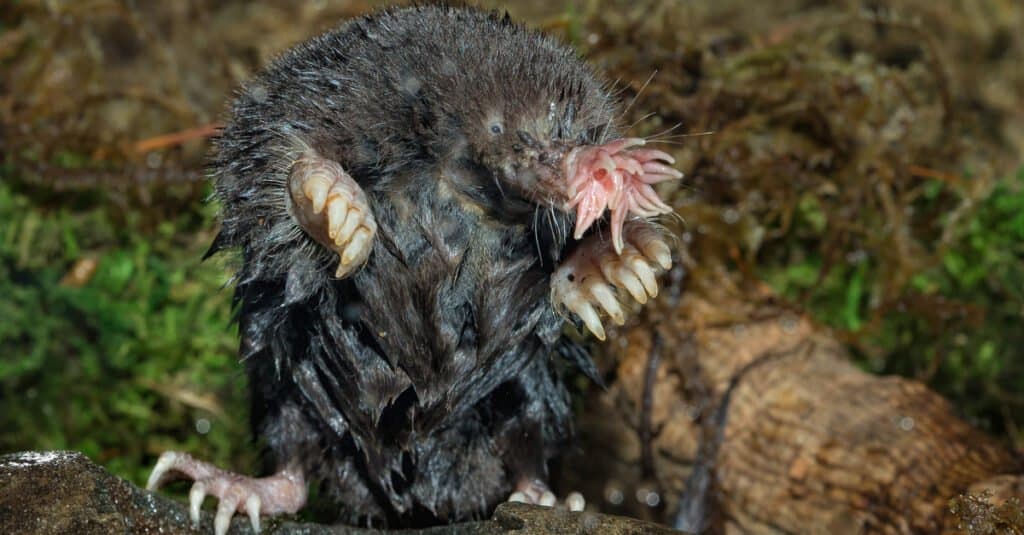
animals with big noses: star-nosed mole

The tentacles that surround a star-nosed mole’s nose have roughly 100,00 nerve endings on them.

  • During the Middle Ages, the English word for the mole was actually moldwarp. This has its origins in a Germanic word possibly meaning earth thrower. The term “mountain out of a molehill” probably originated later from the English Tudor period around the 1500s.
  • Moles have sometimes been hunted for their short, soft coat of fur. In order to make it easier for the mole to move around in the tunnels, this fur can bend in any direction.
  • The star-nosed mole is perhaps the strangest-looking species of mole. To give you an idea of what it looks like, you should picture 22 tentacle-like structures jutting out from the nose. These tentacles make the star-nosed mole extremely sensitive to vibrations and electricity produced by prey.
  • They can dig about 15 to 18 feet of tunnels in an hour.

Evolution and Origins

Moles have an evolutionary lineage that dates back to various epochs, including the Eocene Epoch (54.8 to 33.7 million years ago) in Europe, the Oligocene Epoch (33.7 to 23.8 million years ago) in Asia and the Mediterranean region, and the Late Oligocene Epoch (28.5 to 23.8 million years ago) in North America.

Regarding their classification and history, the 17 genera of moles that are considered “true” belong to three subfamilies within the Talpidae family (part of the order Soricimorpha), which is classified under the broader category of insectivorous mammals. Shrews, from the Soricidae family, are the closest living relatives to moles.

Scientific Name
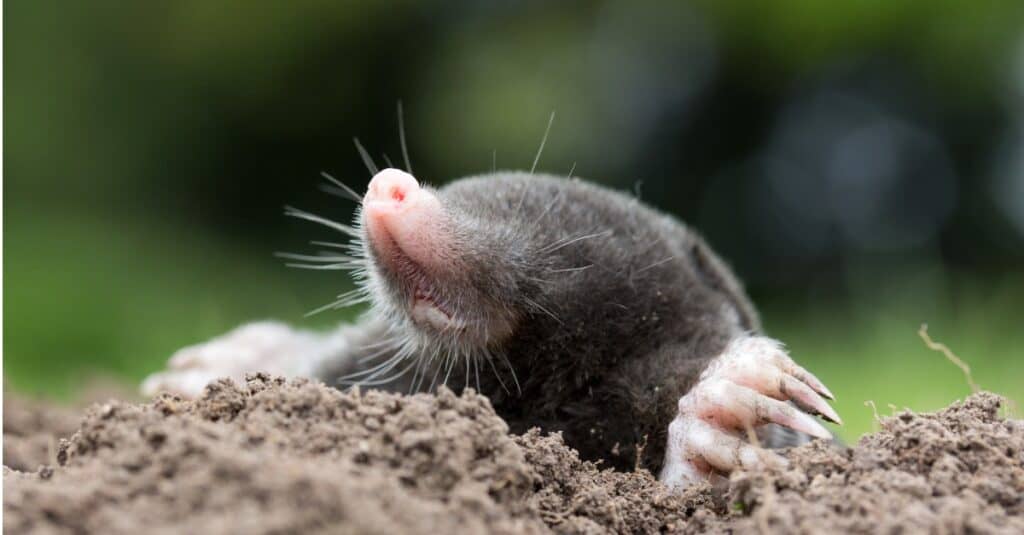
Mole, as a term, refers to any species in the family Talpidae (which simply means “mole” in Latin). The earliest of the species probably evolved in the Eocene Epoch some 34 to 55 million years ago somewhere in Europe and then spread out from there over the ensuing millions of years.

There are some 42 species currently living in the world. These species are spread out among some 10 genera (the scientific classification between family and species). Together, the entire family is known as the true moles. This family belongs to the order Eulipotyphla, which also includes shrews and hedgehogs.

In addition to the true mole family, there are several species that resemble a mole animal but are not actually part of the mole lineage. One of them is the golden mole of sub-Saharan Africa. This family is actually part of an entirely separate order called Afrosoricida. Another is the marsupial mole of Australia. It is more closely related to other marsupials like kangaroos than their true mole counterparts.

These creatures are an example of convergent evolution: two distinct lineages that evolved separately but adapted similar traits for related lifestyles. In this case, they separately evolved shovel-like paws, poor sight, and a long body. There are many differences that attest to their separate lineages. The pouch of the marsupial mole is one example.

Different Types of Moles

There are four subspecies of mole, they are the following:

  • Congenital moles
  • Dysplastic nevi
  • Acquired nevi
  • Spitz nevi

Appearance and Behavior

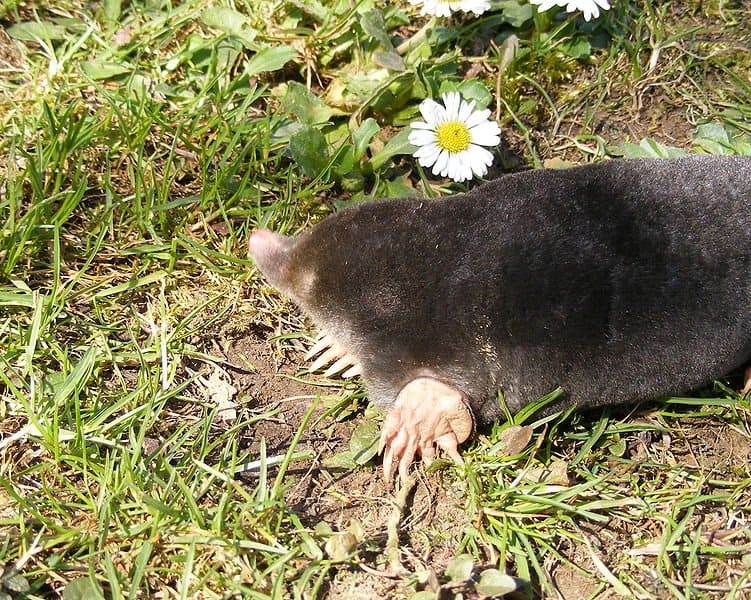
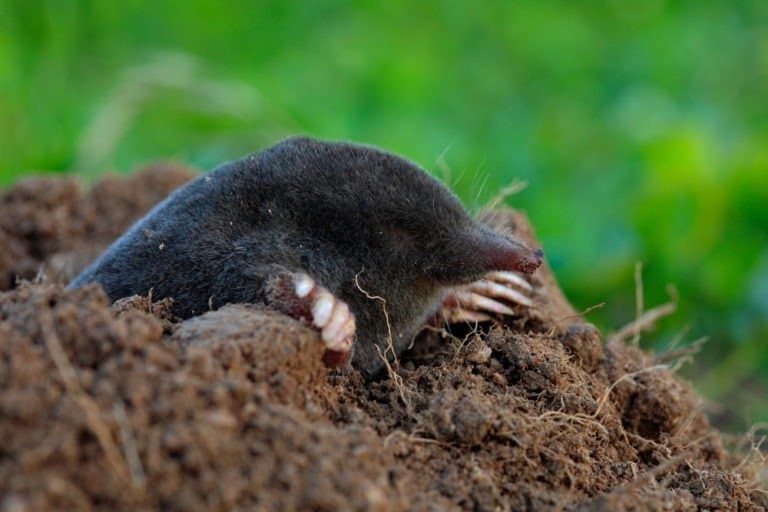
The mole is an animal with a striking, distinctive appearance, well-adapted for its burrowing lifestyle. Its massive hands, short limbs, and sharp claws enable it to burrow through the ground with relative ease. These hands also sometimes make excellent paddles for swimming. What’s really remarkable about the physical characteristics is that these huge forepaws contain two thumbs each. Whereas the other fingers have multiple joints, the thumbs are only composed of a single bone.

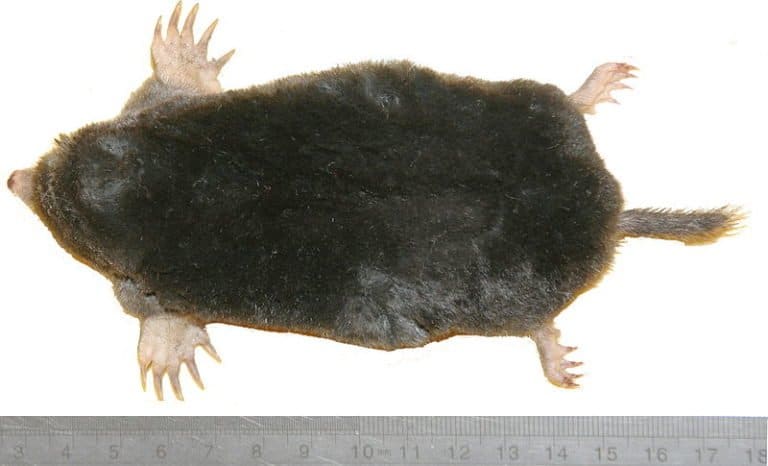
This digital setup appears to be unique to this animal because it is not a feature of the closely related shrews. Other interesting features of the mole include the small, beady eyes and the lack of visible external ear flaps. This is complemented by a short tail and a hairless pointed snout lined with whiskers. The long, flat body is covered in black or brown fuzzy fur as well.

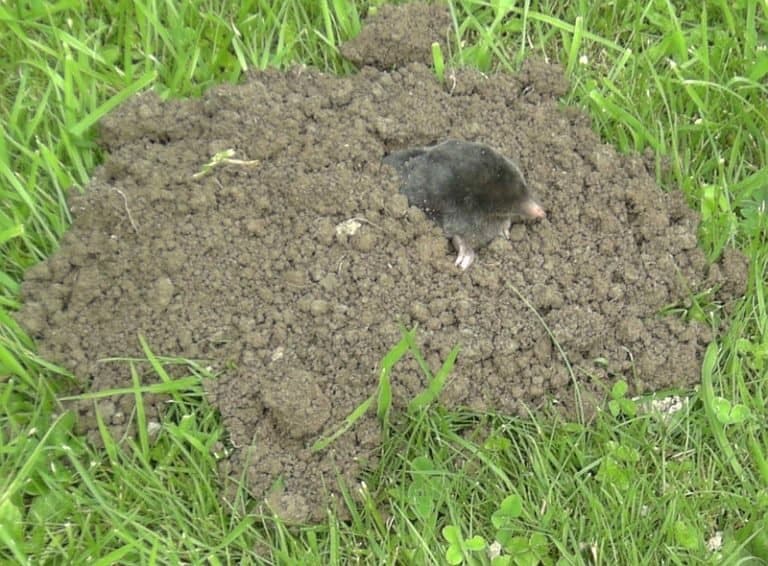
This creature digs through the ground with a swift fore-and-aft motion, which resembles a swimming stroke. It will then push the loose soil to the surface, creating the well-known molehill. The mole animal has a much easier time digging in moist soil, though it can also churn through dry soil as well. The underground tunnels are quite complex, extending perhaps hundreds of feet in every direction and containing both storage and nesting areas.

These chambers can exist a full 15 feet underground. When needed, the mole is a master of improvisation. It can create entirely new underground networks in a matter of hours.
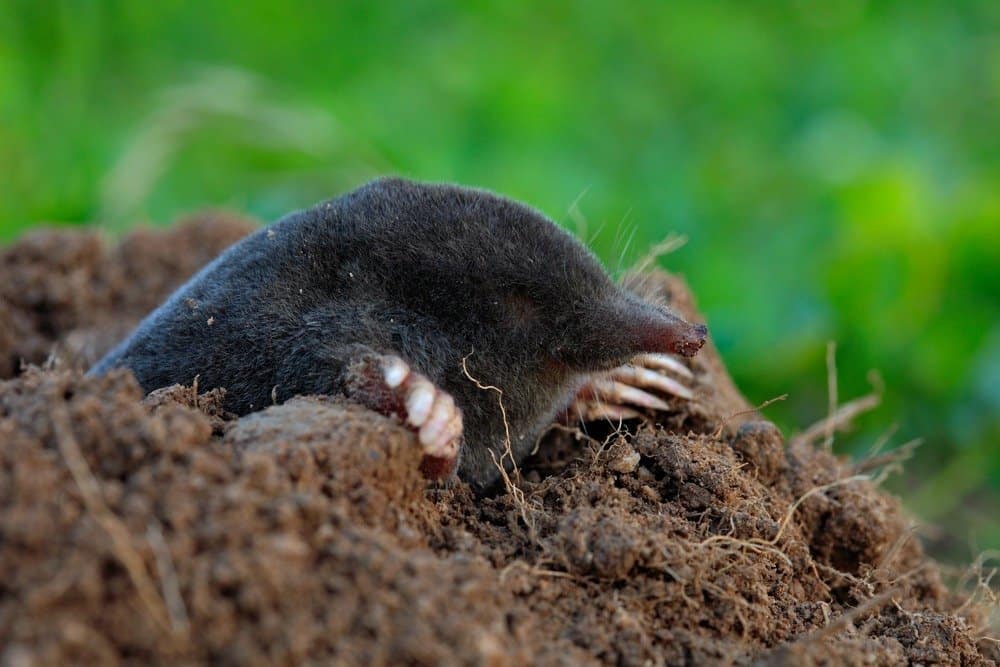
mole emerging from dirt mound

Moles spend the majority of their lives underground, only traveling to the surface to gather nest material and find water during droughts. It does almost everything else underground, including feeding and copulation. The mole has evolved unique hemoglobin (oxygen-carrying molecules) in the blood to survive long periods of low oxygen while underground. They are active both day and night during short spurts of wakefulness in between intervals of sleep.

The mole family is an incredibly diverse bunch that has evolved unique characteristics to cope with the various ecosystems in which it resides. For instance, the American, Chinese, and Japanese shrew moles have long tails, external ear flaps, and smaller hands. They spend more time above ground than the typical mole.

Some species of Russian moles, on the other hand, are amphibious creatures with webbed feet, water-repellent fur, long tails, and closable facial openings to prevent water from entering. They still nest in burrows but come out to forage underwater for their food. Finally, the European mole has the ability to construct a large mound above ground, composed of nearly 2,000 pounds of soil. This formidable structure contains the same network of tunnels and rooms as a normal underground burrow.

These creatures differ quite a bit in terms of size too. The American shrew mole is the smallest of the species. Its body measures less than 2 inches and weighs no more than an ounce. The largest species is the Russian desman, which measures up to 9 inches and weighs nearly 8 ounces.

The typical mole species is somewhere in between these two extremes. It measures about 6 inches long and weighs about 4 ounces or less than the size of a chipmunk. Males are called boars, while females are called sows. The sexes are very similar in size and appearance, but female anatomy may undergo significant changes during the breeding season.

The mole animal compensates for its poor vision with a powerful sense of hearing and touch. The hairs on the snout and claws are capable of sensing the surrounding environment with remarkable detail. The mole also communicates via scent glands by marking its territory as a warning against outside intruders. The mole is a solitary creature that will aggressively defend its territory from any perceived threats. A group of moles, which is called labor, may come together at certain times of the year for the breeding season. Some moles are also known to take over an absent neighboring burrow when given the opportunity.

The Animal’s Habitat

The mole family is present on every major continent except for Antarctica. It prefers temperate ecosystems with moist or loose soil, including prairies, floodplains, forests, coastal dunes, wetlands, gardens, cultivated fields, and lowland or alpine meadows. In warmer climates, the mole is primarily restricted to the cooler mountainous habitats. Given its massive range, this species is a very diverse family with lots of different physical characteristics, habitats, and survival strategies.

What Does the Animal Eat?

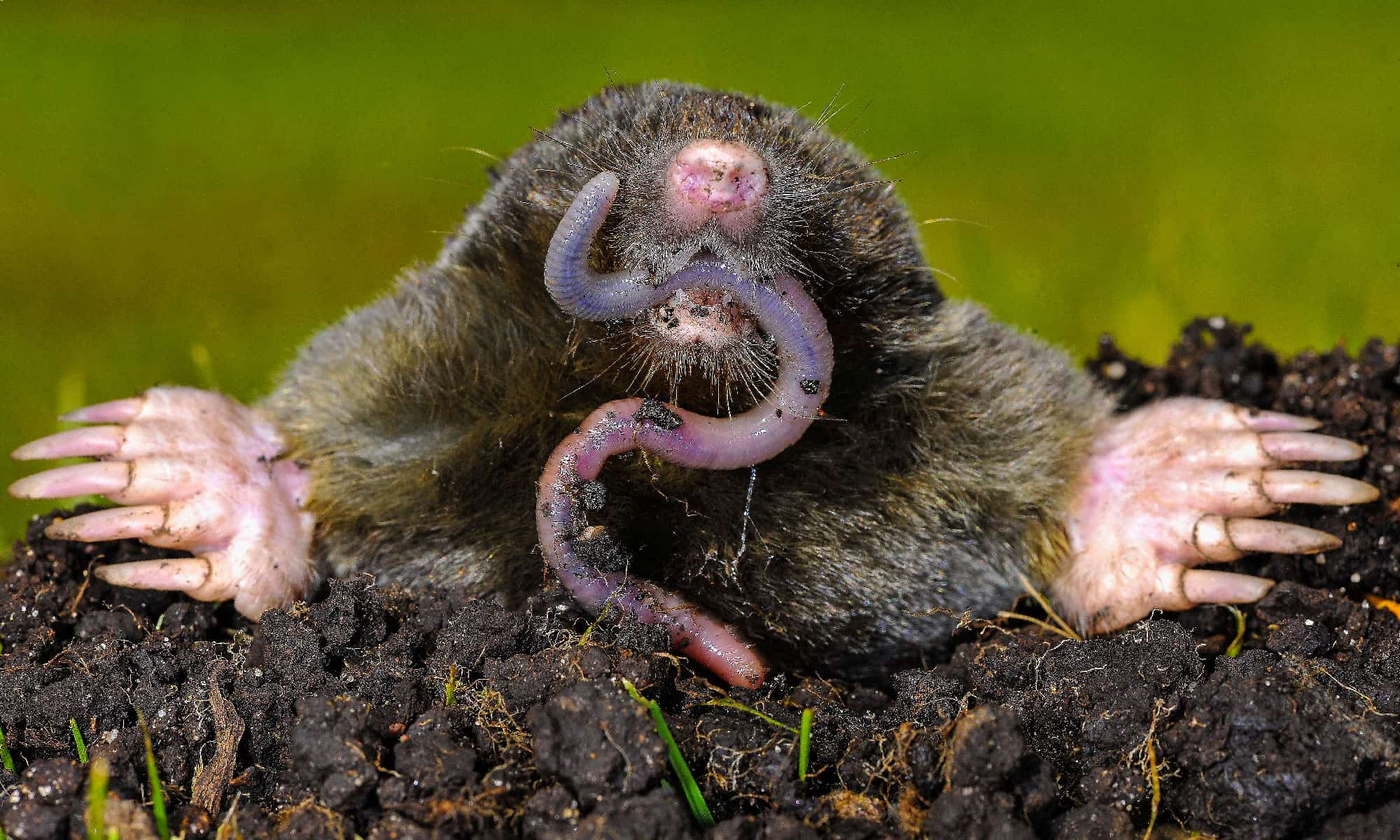
Moles eat grubs, earthworms, beetles, and snails.

The mole’s favorite food is earthworms, insects, and other small invertebrates. This is supplemented with seeds, roots, tubers, fungi, and small mammals. Some species have specialized diet requirements. In the case of some amphibious moles, they will also eat fish and amphibians. The mole animal has a special toxin in its saliva that immobilizes prey so it can store and consume the meat at a later time. The creature can consume its entire body weight in food every single day to support its energy-intensive digging habits.
Predators and Threats

The small and defenseless mole animals are often preyed upon by foxes, coyotes, weasels, snakes, hawks, and owls. Because the moles are so vulnerable above ground, the burrow provides a natural defense against most predators. However, this may not save the mole from predators with a very good ability for digging.

Habitat loss isn’t too much of a problem for this group. Because moles prefer agriculture and gardens, they have adapted very well to human habitats. However, this also singles them out as annoying pests that can disrupt or ruin crops, even as they sometimes consume other insects and pests as well. This brings to mind images of uprooted plants and piles of soil.

Many moles end up being hunted or poisoned by humans to prevent this kind of damage. A more humane strategy is to release noxious chemicals to drive them away or catch them in traps and transport them elsewhere. Usually, it is not the crops and plants they are consuming, but rather the worms and insects near those crops. The plants are mere casualties of the mole’s intense foraging behavior.

Reproduction, Babies, and Lifespan

Most of the species have a single breeding season that lasts throughout the spring months. Much of the action occurs underground, beginning with the search for an appropriate mate. Males will travel up to half a mile to look for a female’s burrow. If no existing tunnel is available to connect the respective burrows, then the males may dig entirely new tunnels.

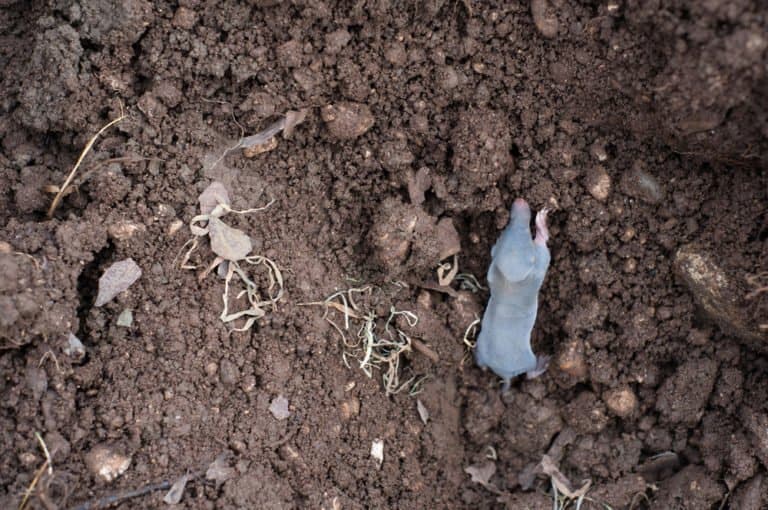
After copulation, the female is largely left alone to rear the young by herself without any help from the male. She carries the children for approximately a month and then produces a litter of three to five young at a time. These pups are born hairless and blind in a nest of dry vegetation, but they grow and develop rapidly toward maturity after only a few months of life.

The mother will fully wean her pups after about a month. They will then leave the nest and begin to seek their independence shortly afterward. This is the time they are most vulnerable to predators. If they survive, then the young are ready to reproduce the following spring after their birth. The typical lifespan of a mole is only about three years in the wild.
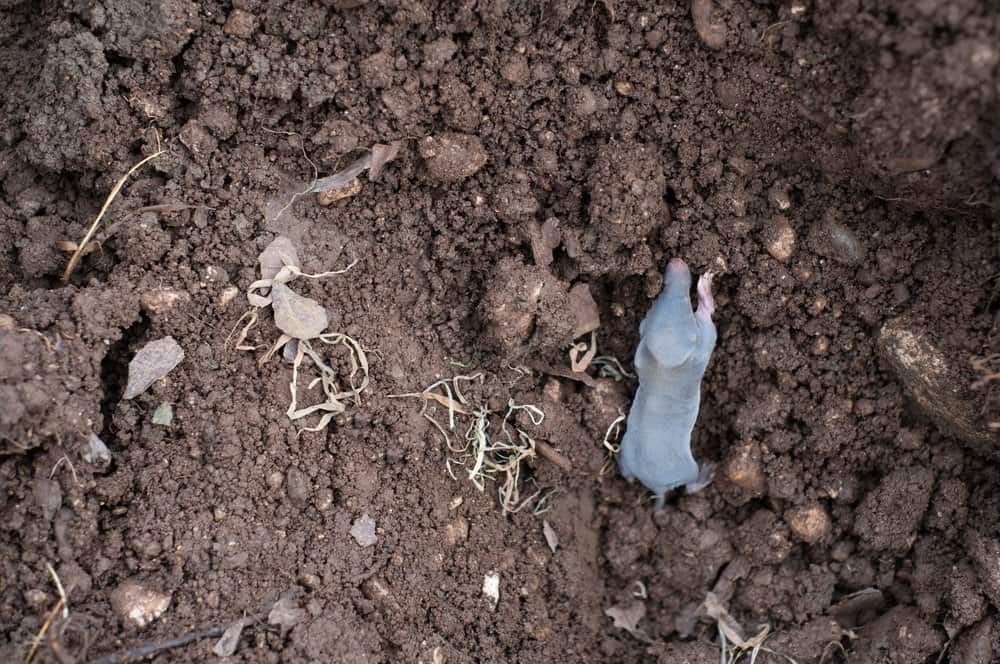
baby mole on dirt mound

Population

Based on conservation estimates, the mole family as a whole appears to be a picture of excellent health. According to the IUCN Red List, which tracks the conservation status of numerous species, these creatures are mostly listed as being of least concern. However, there are several exceptions, including the Etigo mole of Japan and the Russian desman (both endangered), the vulnerable Pyrenean desman of Spain, and the near-threatened Sado mole of Japan. It is not entirely clear how many moles are currently living, but many populations appear to be stable, though some are decreasing in number.

View all 330 animals that start with M

Sources

  1. Britannica
  2. Live Science
  3. Havahart
Rebecca Bales

About the Author

Rebecca Bales

Rebecca is an experienced Professional Freelancer with nearly a decade of expertise in writing SEO Content, Digital Illustrations, and Graphic Design. When not engrossed in her creative endeavors, Rebecca dedicates her time to cycling and filming her nature adventures. When not focused on her passion for creating and crafting optimized materials, she harbors a deep fascination and love for cats, jumping spiders, and pet rats.
Connect:

Thank you for reading! Have some feedback for us?


Mole FAQs (Frequently Asked Questions)

A mole is a small burrowing creature with big claws that belongs to a family with the scientific name of Talpidae. Any species outside of this family is not considered to be a true mole, despite some physical and behavioral similarities. Some people believe that moles are rodents, but in fact they belong to an entirely separate order known as Eulipotyphla.