M
Species Profile

Monte Iberia Eleuth

Eleutherodactylus iberia

Cuba's leaf-litter mini marvel
Pierre Fidenci / Creative Commons

Monte Iberia Eleuth Distribution

Click a location to explore more animals from that region

Endemic Species
Loading map...

Found in 1 country

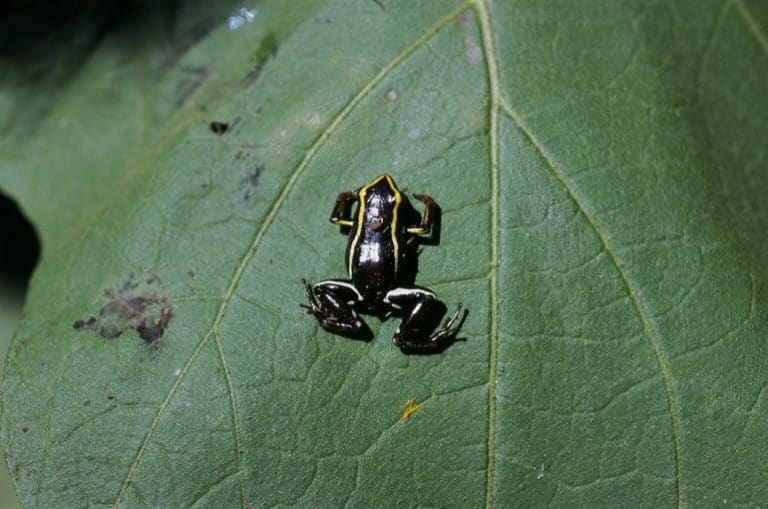
Monte Iberia Eleuth sitting on a leaf

At a Glance

Wild Species
Also Known As Monte Iberia frog, Monte Iberia pygmy frog, ranita de Monte Iberia, ranita pigmea de Monte Iberia
Did You Know?

Adults measure just ~8.5-10.0 mm snout-vent length (SVL), placing it among the smallest known frogs (original description: Estrada & Hedges, 1996).

Scientific Classification

A minute terrestrial frog (“eleuth”) endemic to the Monte Iberia region of eastern Cuba, famous for being among the smallest frogs in the world.

Kingdom
Animalia
Phylum
Chordata
Class
Amphibia
Order
Anura
Family
Eleutherodactylidae
Genus
Eleutherodactylus
Species
Eleutherodactylus iberia

Distinguishing Features

  • Extremely small adult size (among the smallest anurans)
  • Terrestrial direct development typical of eleutherodactylid frogs (no free-living tadpole stage)
  • Endemic to a tiny area in eastern Cuba (Monte Iberia region)

Did You Know?

Adults measure just ~8.5-10.0 mm snout-vent length (SVL), placing it among the smallest known frogs (original description: Estrada & Hedges, 1996).

It is endemic to a very small area in eastern Cuba (Monte Iberia region), meaning it naturally occurs nowhere else on Earth (IUCN Red List).

Like other Eleutherodactylus relatives, it has direct development-no free-swimming tadpole stage; froglets hatch from terrestrial eggs (widely documented for Eleutherodactylus).

It lives in the humid forest leaf litter, where tiny prey such as mites and springtails are abundant and moisture loss is minimized (habitat ecology summarized by IUCN).

Its extreme miniaturization is linked to a shift toward very small invertebrate prey and a life spent in the leaf-litter microhabitat (miniaturization patterns discussed in Hedges et al., 2008).

Its conservation status is threatened primarily because a single, very limited range makes it highly sensitive to habitat change and drying (IUCN Red List: Critically Endangered).

Unique Adaptations

  • Extreme miniaturization (~1 cm SVL) enabling exploitation of leaf-litter crevices and tiny prey resources (Estrada & Hedges 1996; broader context: Hedges et al. 2008).
  • High dependence on saturated microclimates: thin amphibian skin and tiny body mass make it especially sensitive to drying, tying it to persistently humid forest floor conditions (IUCN).
  • Direct development reduces reliance on standing water-an advantage in terrestrial forest floors-while simultaneously increasing dependence on stable, moist nesting sites (Eleutherodactylus trait).
  • Camouflaging coloration/patterning that matches dark, decomposing leaf litter, reducing detection by predators in low, filtered light environments.

Interesting Behaviors

  • Leaf-litter microhabitat use: typically stays within the damp litter layer and near the soil surface, where humidity is highest (IUCN habitat notes).
  • Terrestrial reproduction with direct development (no tadpoles): eggs are laid on land; hatchlings emerge as miniature frogs (Eleutherodactylus life history).
  • Crypsis and stillness: relies on remaining motionless and blending into mottled litter rather than fleeing long distances-energetically efficient for a tiny frog.
  • Micro-foraging: hunts minute arthropods at very short range, using quick tongue strikes and short hops suited to cluttered litter.

Cultural Significance

The Monte Iberia eleuth (Monte Iberia dwarf frog, Eleutherodactylus iberia) is a symbol in conservation education of Cuba's unique species and the need to protect Alejandro de Humboldt/Monte Iberia rainforests. Scientists use it to show vertebrate miniaturization and micro-endemic risks.

Myths & Legends

No well-documented traditional folklore specific to Eleutherodactylus iberia is widely recorded in the ethnographic literature; instead, its 'story' is primarily scientific and conservation-historical.

Naming origin: the species epithet and common name reference Monte Iberia in eastern Cuba, the locality where it was discovered and described (Estrada & Hedges, 1996).

As a symbol, the Monte Iberia dwarf frog (Eleutherodactylus iberia) stands for Cuba's tiny forest life. IUCN uses it to show how small habitat changes can endanger rare species.

Conservation Status

CR Critically Endangered

Facing an extremely high risk of extinction in the wild.

Population Decreasing

Protected Under

  • Cuba: National System of Protected Areas (SNAP) framework (e.g., Decree-Law 201/1999)
  • Occurs within/associated with protected-area management in the Alejandro de Humboldt National Park landscape (UNESCO World Heritage Site)

Life Cycle

Birth 2 froglets

Lifespan

In the Wild
0 years
In Captivity
0 years

Reproduction

Mating System Data Deficient
Social Structure Solitary
Breeding Pattern Transient
Fertilization Substrate Spawning
Birth Type Substrate_spawning

Species-specific mate-bonding is poorly reported. As in other terrestrial Eleutherodactylus, males likely call from small territories to attract females; mating involves amplexus and external fertilization with eggs deposited on land, with direct development and no parental helpers.

Behavior & Ecology

Social Pair Group: 1
Activity Nocturnal, Crepuscular
Diet Insectivore Leaf-litter microarthropods small enough to fit its extremely small gape-most plausibly mites (Acari) and springtails (Collembola), which dominate the micro-arthropod fauna of humid forest leaf litter.

Temperament

HUBS: predominantly solitary, secretive, leaf-litter dwelling; social contact usually limited to breeding contexts (IUCN assessments).
Males are typically site-attached when calling; likely maintain short-range spacing/territoriality around calling perches, as in Eleutherodactylus spp. (genus-level pattern; species-specific quantification not published).
Very low detectability and strong crypsis; relies on remaining motionless and cover-seeking rather than overt aggression (IUCN assessments).
Adult body size is extremely small (among the world's smallest frogs); published natural-history accounts emphasize minute terrestrial habits (Estrada & Hedges, 1996; species description).
Lifespan in the wild and longevity in captivity have not been published for this species; no defensible numeric estimate available in primary sources.

Communication

Male advertisement calling is reported for the species; used for mate attraction and spacing Estrada & Hedges, 1996
Quantitative acoustic parameters (e.g., dominant frequency, call duration, pulse rate) are not consistently reported in accessible primary descriptions; species-specific call metrics remain poorly compiled.
Tactile signaling during amplexus and close-range courtship typical of anurans; specific ethogram not published for this species.
Chemical cues likely important for close-range recognition in leaf litter; no species-specific experiments available.
Spatial signaling via perch/site fidelity (maintaining distance between callers) functions as indirect communication; species-specific territory sizes unreported.

Habitat

Biomes:
Tropical Rainforest
Terrain:
Island Mountainous Hilly Rocky
Elevation: 984 ft 3 in – 1968 ft 6 in

Ecological Role

Leaf-litter micro-predator in the Monte Iberia rainforest floor community (endemic, minute terrestrial frog).

Regulation of leaf-litter microarthropod populations (top-down control on mites/springtails and other tiny invertebrates) Energy transfer from detritus-based food webs (microarthropods) to higher trophic levels (predators of small frogs) Contributes to structuring leaf-litter community composition through selective predation on the smallest arthropod size classes

Diet Details

Main Prey:
leaf-litter microarthropods Springtails Tiny ants Minute beetles and beetle larvae Small fly larvae and adults Tiny soft-bodied arthropods

Human Interaction

Domestication Status

Wild

Monte Iberia eleuth (Eleutherodactylus iberia) is a wild, not domesticated frog found only in a tiny area of eastern Cuba (Monte Iberia). Adults are among the world’s smallest (~9–11 mm). They have direct development (no tadpole stage). No captive history or lifespan data. Human contact is mostly research and habitat protection; related eleuths can be spread by plant trade.

Danger Level

Low
  • No known medically significant toxicity or envenomation risk to humans has been documented for this species; physical harm is negligible due to its minute size.
  • Primary 'risk' is conservation/ethical: human handling/collection can harm populations; conversely, humans can introduce pathogens (e.g., chytrid fungi) to frogs via contaminated gear or handling.

As a Pet

Not Suitable as Pet

Legality: Not suitable and usually illegal as a pet. Monte Iberia Eleuth (Eleutherodactylus iberia) is native to Cuba with a tiny range and is protected; export needs permits, and taking from the wild is wrong and likely illegal. Check laws.

Care Level: Expert Only

Purchase Cost:
Lifetime Cost: $500 - $5,000

Economic Value

Uses:
Scientific research value Conservation value Education/awareness value Nature-based tourism value (specialist herpetology/ecotourism)
Products:
  • No direct commercial products (species is not a conventional harvest/production animal).
  • Indirect value via biodiversity research (systematics, miniaturization biology, bioacoustics) and conservation funding/awareness tied to endemic Cuban herpetofauna.

Relationships

Predators 4

Cuban racer Cubophis cantherigerus
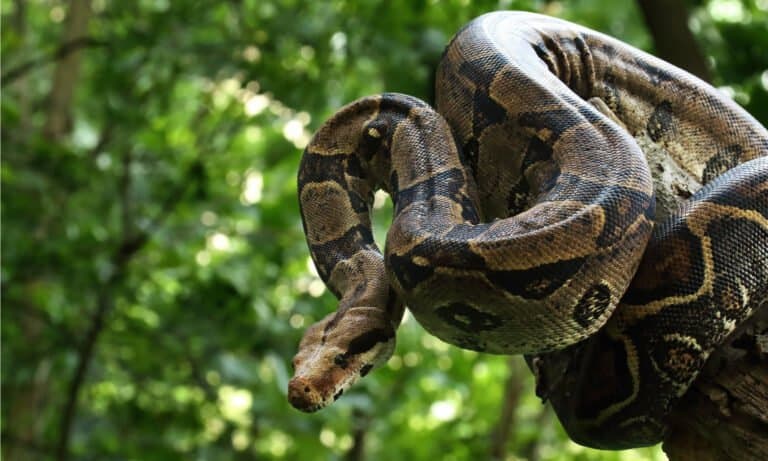
Cuban/Caribbean dwarf boas Tropidophis
Cuban anole
Cuban anole Anolis
Large forest-floor spiders Phormictopus

Related Species 5

Northern greenhouse frog Eleutherodactylus planirostris Shared Genus
Eleutherodactylus limbatus Eleutherodactylus limbatus Shared Genus
Eleutherodactylus orientalis Eleutherodactylus orientalis Shared Genus
Cuban rain frogs Eleutherodactylus Shared Genus
Caribbean rain frogs Eleutherodactylidae Shared Family

Ecological Equivalents 4

Animals that fill a similar ecological role in their ecosystem

Flea frog Brachycephalus didactylus Extremely small, terrestrial leaf-litter microhabitat specialist that feeds on tiny arthropods and relies on moist forest-floor refugia. Occupies a functionally similar niche despite being in a different family.
Brazilian pumpkin toadlets Brachycephalus spp. Minute, diurnal leaf-litter frogs occupying the humid forest floor; they face similar constraints on prey size, dehydration risk, and dependence on microclimate.
New Guinea microhylid frogs Paedophryne spp. Among the smallest terrestrial frogs; leaf-litter specialists that hunt mites and springtails—showing ecological convergence with Eleutherodactylus iberia in use of micro-prey and microhabitat.
Caribbean direct-developing rain frogs Eleutherodactylus spp. Share direct development (no free-living tadpole), terrestrial reproduction, and leaf-litter foraging typical of Eleutherodactylus ('eleuths') in humid forests.
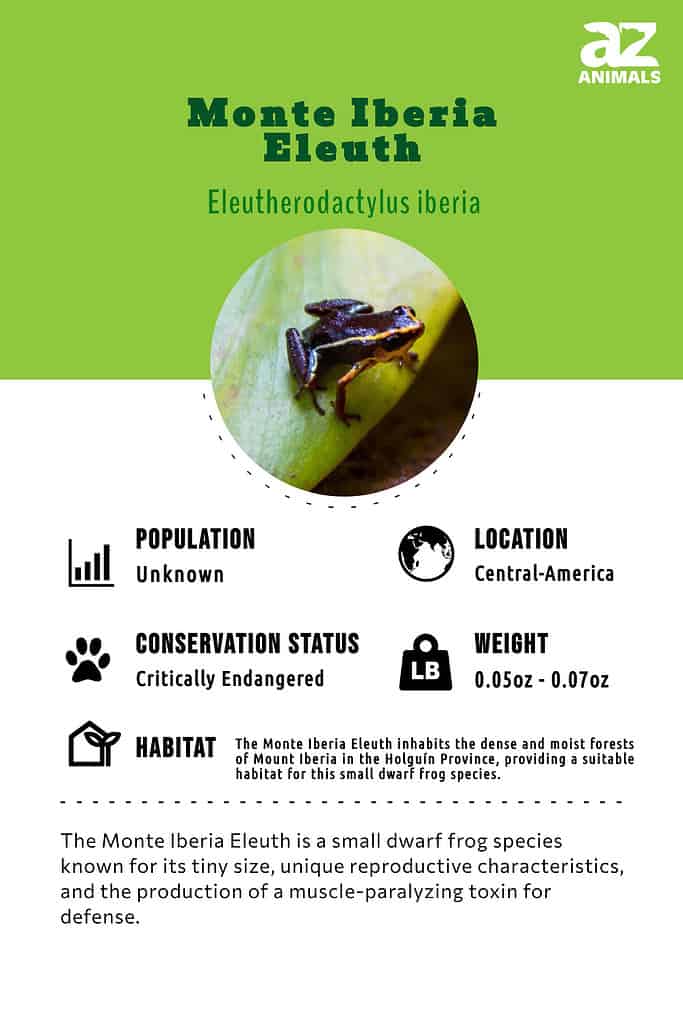
The Monte Iberia Eleuth is a small dwarf frog species known for its tiny size, unique reproductive characteristics, and the production of a muscle-paralyzing toxin for defense.

The Monte Iberia eleuth is a dwarf frog (though it is often simply referred to as the Monte Iberia frog), only growing to be less than half an inch in length.

In the entire world, the only frog that is quite as small is the Brazilian Golden frog.

As part of the eleutherodactylid species, the Monte Iberia Eleuth (pronunciation: mon-tee ahy-beer-ee-uh eh-looth) frog can be found in eastern Cuba, though they only live in the rainforest.

Incredible Monte Iberia Eleuth Facts!
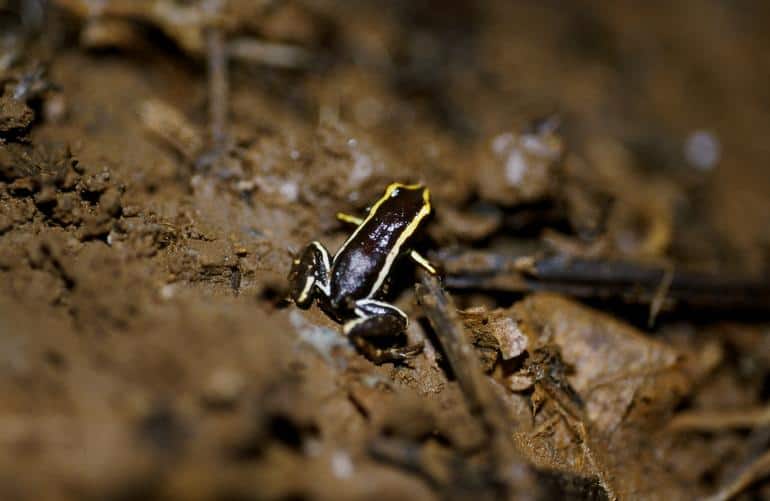
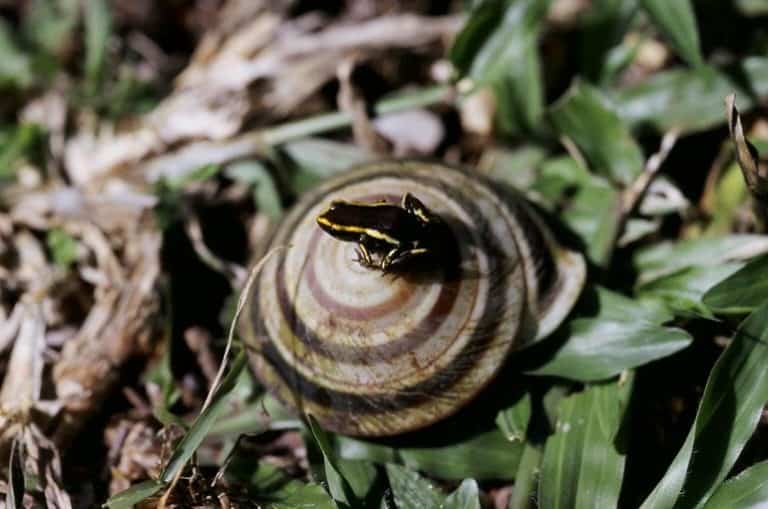
Monte Iberia Eleuth on ground

In order to protect itself from numerous predators, the Monte Iberia Eleuth employs a defense mechanism by producing a toxin that causes paralysis in muscles.

Here are some of the interesting facts about the Monte Iberia Eleuth

  • These frogs are no bigger than the size of a fingertip at 3/8 inch long.
  • The head Monte Iberia frog is rather wide, though their thin fingers create quite a contrast.
  • These dwarf frogs have a rather bitter odor.
  • The Monte Iberia Eleuth produces a muscle-paralyzing toxin to defend itself against its many predators.
  • Unlike other frog species, these frogs are never tadpoles. Instead, they are born as a frog when they hatch from their egg.

Scientific Name
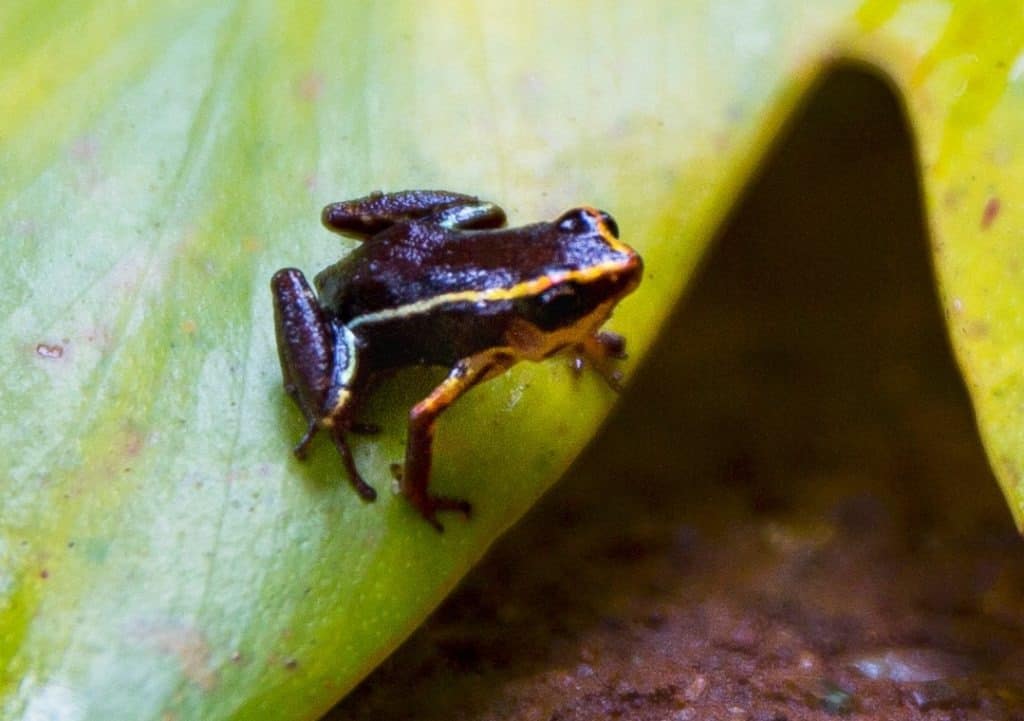
smallest animals - Monte Iberia Eleuth

The scientific name given to the Monte Iberia Eleuth is Eleutherodactylus iberia (pronounced: mon-tee ahy-beer-ee-uh eh-looth).

The Monte Iberia Eleuth (pronunciation: mon-tee ahy-beer-ee-uh eh-looth) goes by the scientific name Eleutherodactylus iberia. They come from the kingdom Animalia and phylum Chordata. The class is called Amphibia and the order is Anura. The family that these miniature frogs come from is called Eleutherodactylid and the genus is called Eleutherodactylus.
The word “Eleutherodactylus” from the combination of two Greek words – “eleutheros” (“free” or “unbound”) and “dactylos” (“finger”). The toes of this dwarf hamster are slender and long with various colors.

Evolution and Origins

Discovered in 1993 on Mount Iberia in the Holguin Province, the small creature was named after its place of origin. Despite its initial discovery, there is still much to learn about this fascinating species. The Monte Iberia Eleuth is part of a closely related group found in Cuba, consisting of five other known species.

The dwarf frogs emit a distinctive and somewhat unpleasant odor. To safeguard themselves from numerous predators, the Monte Iberia Eleuth generates a toxin that paralyzes muscles.

Unlike many other frog species, these frogs do not undergo a tadpole stage. Instead, they hatch from their eggs as fully-formed frogs.

Appearance
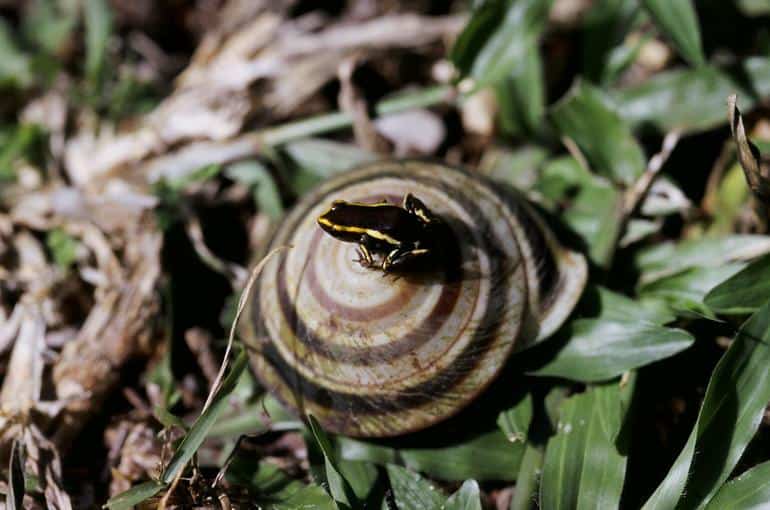
Monte Iberia Eleuth under a tree

Measuring a mere 3/8 of an inch in length, the Monte Iberia Eleuth ranks among the tiniest dwarf frogs globally, showcasing its remarkably small size.

The Monte Iberia Eleuth is incredibly small at 3/8 of an inch in length, making it one of the smallest dwarf frogs in the world. Learn more about the world’s smallest animals here.

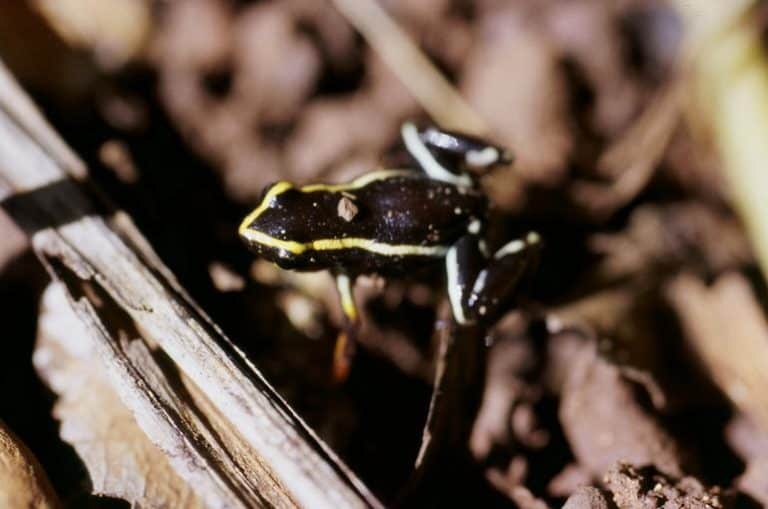
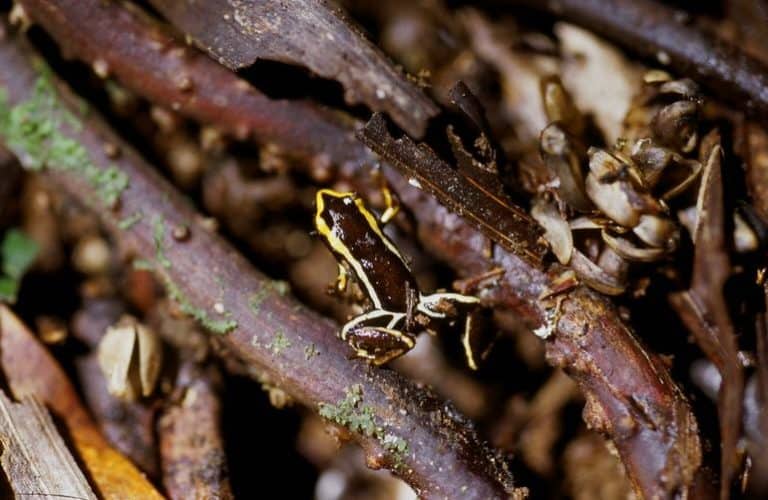
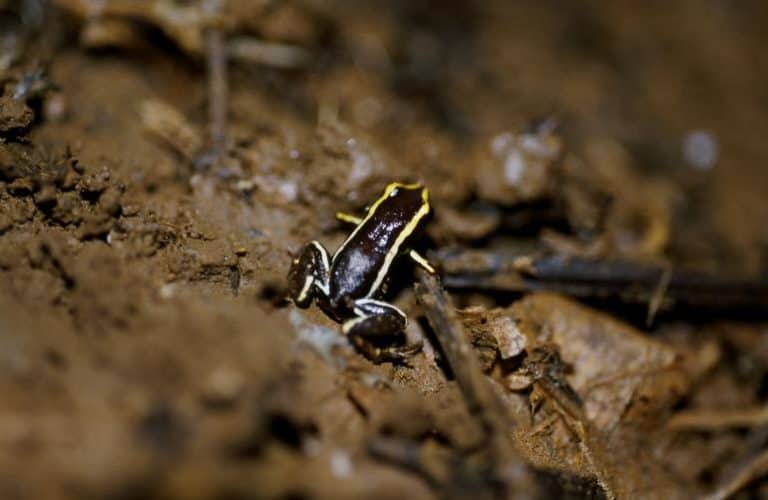
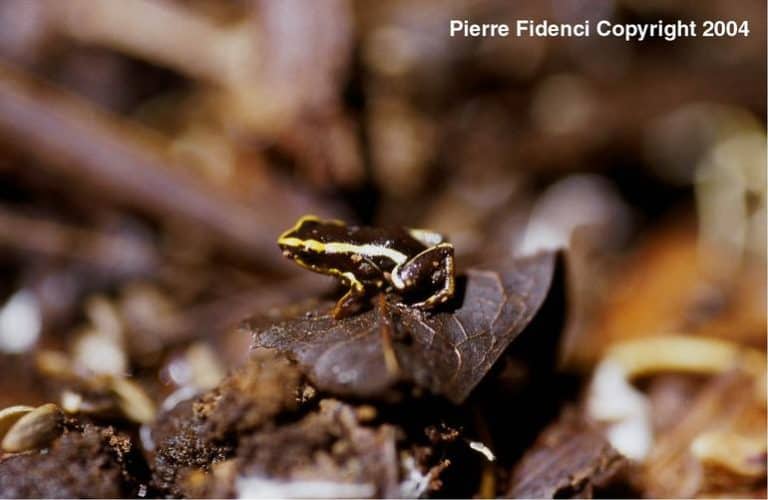
Though the name might have rather difficult pronunciation, their size, and black body make them easy to identify. The only other coloring on their back is a set of parallel yellow stripes that also go down each leg. They have a purple belly as well.

Their body is also quite striking with a wide head and thin fingers, the latter of which gives them their scientific name. Though other frogs may have some degree of teeth, the same is not true of this dwarf frog since they only have a few.

The yellow markings serve a very distinct purpose – warning predators. In nature, the reason for bold colors is to signify a poisonous animal. This rule applies to the Monte Iberia Eleuth as well since they produce pumiliotoxins. These toxins paralyze the muscles of the predator, protecting them from being eaten.

Behavior
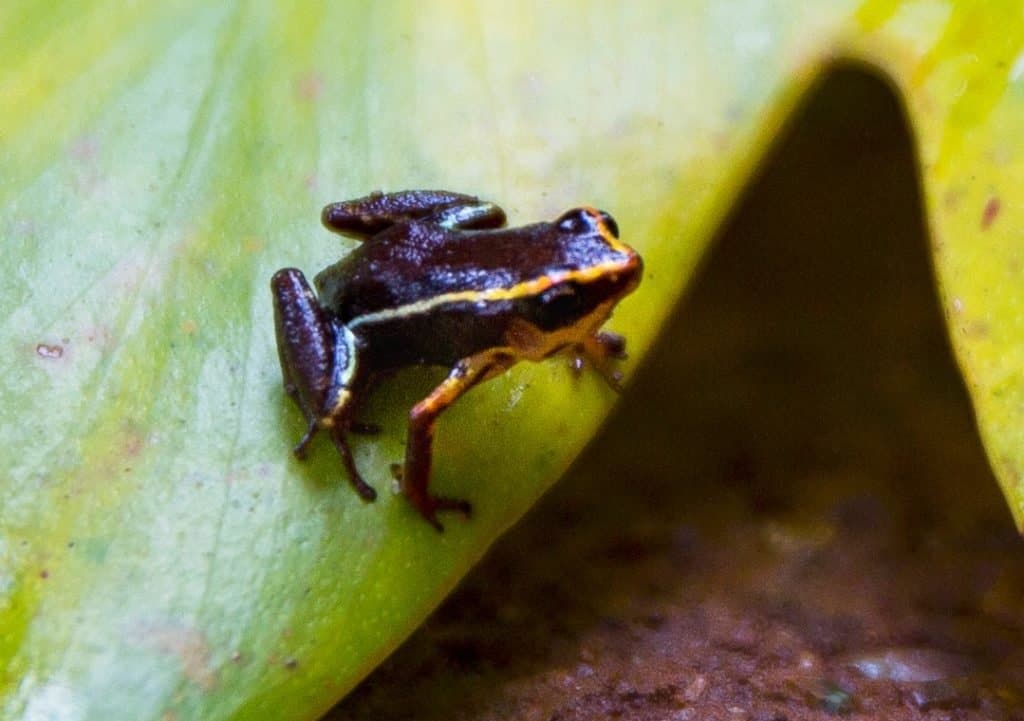
Monte Iberia Eleuth on a leaf

Due to the diminutive size of the Monte Iberia Eleuth, there has been limited research conducted on this particular frog species.

With the small size of the Monte Iberia Eleuth, there has been very little research on the frog. They tend to get around their habitat with little interference or monitoring. However, there are a few typical behaviors that have been witnessed, like their tendency to live diurnally.

The dwarf frog avoids danger to the best of its ability. Whenever a noise as small as a rustle of leaves arises, they jump away and avoid danger. When they wake at night, they keep a solitary lifestyle until they are ready to mate.

The preferred environment of the Monte Iberia Eleuth is in areas with minimal soil drainage, allowing them to hide beneath leaves, ferns, and other plant life. However, they can jump away from potential threats with relative ease.

One of the most unique characteristics of the Monte Iberia Eleuth is their way of communicating with high-pitched noises.

Habitat

Monte Iberis Eleuth prefers the climate of the tropical rainforest, but the population isn’t spread out much. Most of these frogs will find their home in Cuba, using the easternmost part of the area to create their home and source their food. They will live in areas as low as sea level for moisture, though they can survive at mild elevations as well. They need a lot of humidity to thrive.

These dwarf frogs like to stay fairly close to their own kind, which is why the population is condensed into two main groups. Most of them cannot be found more than 600 meters away from each other, even though they prefer to be separate from other frogs in their species until they procreate.
Part of the reason that the dwarf frog gets its name is because it is found on the Monte Iberia tableland. In fact, this is the region in which the Monte Iberia Eleuth was originally discovered.

Diet

The Monte Iberis Eleuth, despite its miniature size, will eat the same insect-rich diet that other frogs eat. Since they are often in moist areas, the diet naturally consists of the invertebrates that are located near these areas. The small carnivores will seek out their prey within the water bodies that they live near, allowing them to get a steady source of nutrients.

The majority of the foods that they will consume include spiders, moths, and other insects. They’ll also go after mites and ants for the protein that they need to keep their energy up.

Predators and Threats

The dwarf frogs, due to being a very tiny size, have a lot of predators and form an essential part of the natural food chain. Most animals that hunt down these dwarf frogs are simply larger than them, allowing the predator to easily overcome them. However, due to the toxic substance that they release, some predators are deterred.

Deforestation by humans has significantly disrupted the natural habitat of the Monte Iberia Eleuth, contributing to their limited population.

What Eats Monte Iberia Eleuth?

The Monte Iberia Eleuth often is hunted by birds, toads, and fish that are local to the area. However, the poisonous chemical that it releases is often the defense it needs to elude danger.

What Does Monte Iberia Eleuth Eat?

Small yet fierce, the Monte Iberia Eleuth is unafraid to go after moths, spiders, insects, and semi-aquatic invertebrates to feed themselves.

Reproduction, Babies, and Lifespan
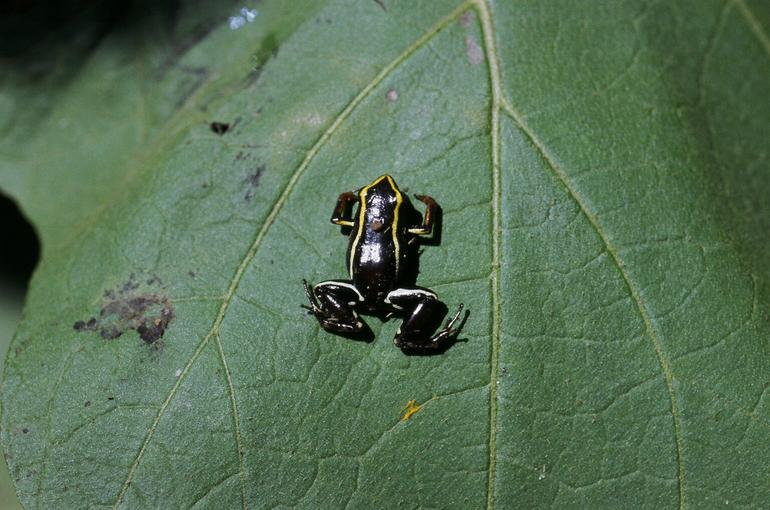
Monte Iberia Eleuth sitting on a leaf

The reproductive process of these frogs remains largely unknown, with limited information available about their breeding and reproductive behaviors.

Little is known about the reproduction process of these frogs. The female releases eggs to hatch the dwarf frogs, but they are unlike other amphibians. They never start as tadpoles like other amphibians, but they are born as small frogs.

Sources suggest that when the first female was found, she was spotted next to a single egg. Researchers surmise that the reproduction process usually results in fewer eggs in this species and they do not lay a lot of eggs at once, which may be part of the reason for the small population.

The clutch size in these frogs is very small, potentially producing as few as one egg at a time. However, during the incubation period, both the male and the female frogs will care for their eggs until they hatch.

Even when they are full-grown, the dwarf frog doesn’t live very long, only reaching about 3 years old in their lifetime. Some of the dwarf frog species only live to be 1 year old.

Population

While the exact population of these frogs is unknown, their preference for living in one specific region in the world leads researchers to believe that the population is rather low. The first time they were discovered was in 1996.

According to the IUCN, this dwarf frog is currently critically endangered. The population is also said to be small around the world because they are tiny and reproduce much slower than the rest of the frogs – leading to a fewer number of eggs. Conservation efforts are not currently being made.

Zoo

Due to the limited population, finding this particular dwarf frog in zoos is rare.

View all 330 animals that start with M

Sources

  1. Soft Schools / Accessed February 8, 2021
  2. Wikipedia / Accessed February 8, 2021
  3. Planet Fauna / Accessed February 8, 2021
  4. Animals Around The World / Accessed February 8, 2021
Rebecca Bales

About the Author

Rebecca Bales

Rebecca is an experienced Professional Freelancer with nearly a decade of expertise in writing SEO Content, Digital Illustrations, and Graphic Design. When not engrossed in her creative endeavors, Rebecca dedicates her time to cycling and filming her nature adventures. When not focused on her passion for creating and crafting optimized materials, she harbors a deep fascination and love for cats, jumping spiders, and pet rats.
Connect:

Thank you for reading! Have some feedback for us?


Monte Iberia Eleuth FAQs (Frequently Asked Questions)

The dwarf frogs have a carnivorous diet, so they eat a variety of insects (much like all the other frogs). Their diet primarily consists of insects, spiders, and moths.