



N
Species Profile

Neapolitan Mastiff

Canis lupus familiaris

Wrinkles with a watchdog's heart.
Christian Mueller/Shutterstock.com

Neapolitan Mastiff Distribution

Click a location to explore more animals from that region

Origin Location

This map shows the native origin of the Neapolitan Mastiff. As a domesticated species, they are now found worldwide.

Loading map...

Found in 1 country

Size Comparison

Human 5'8"
Neapolitan Mastiff 2 ft 3 in

Neapolitan Mastiff stands at 39% of average human height.

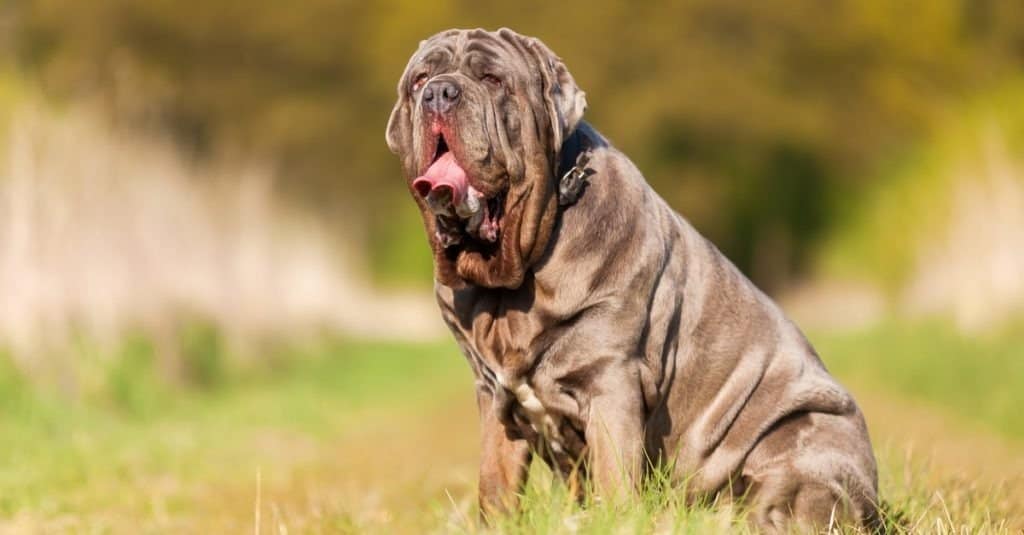
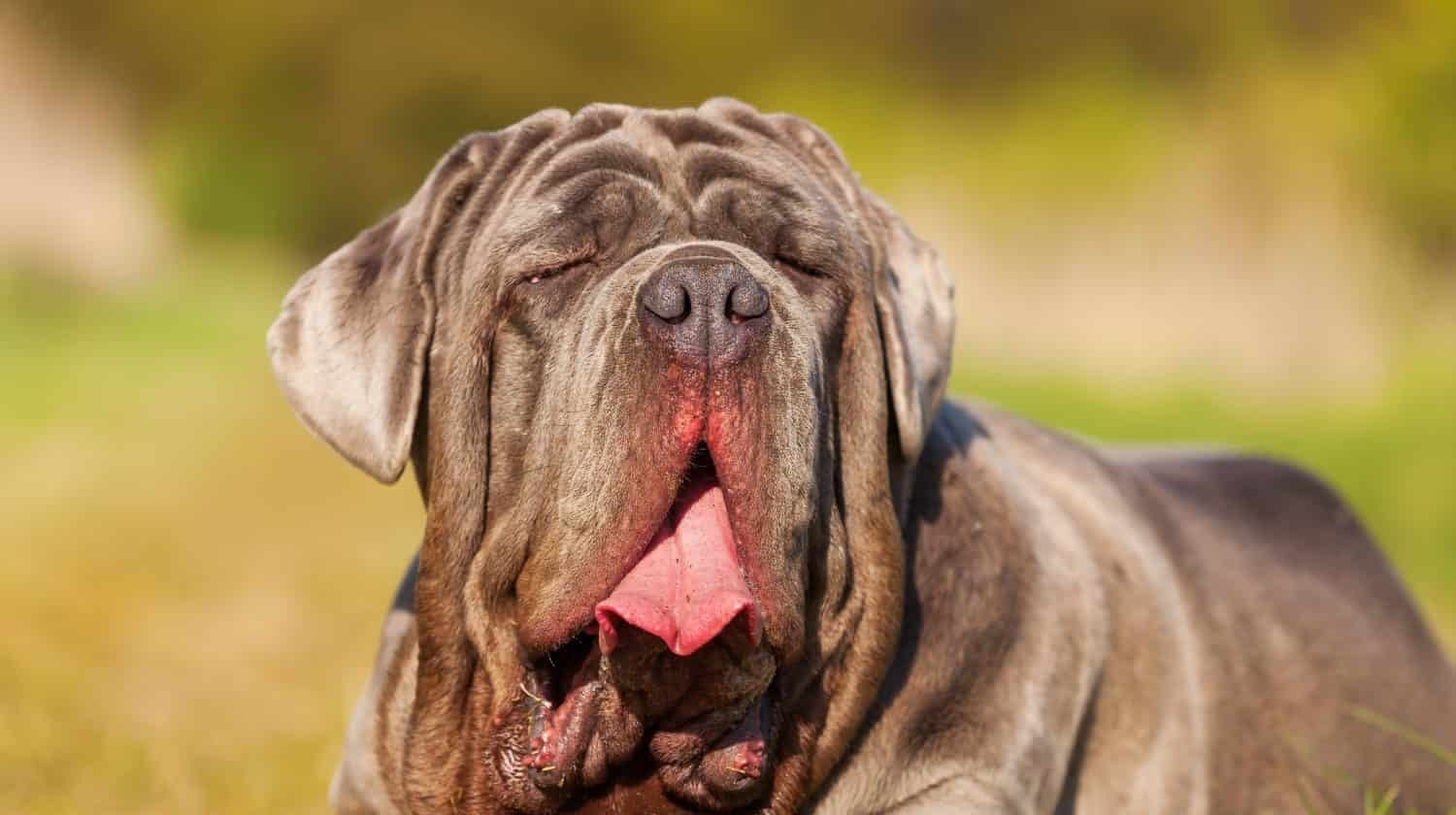
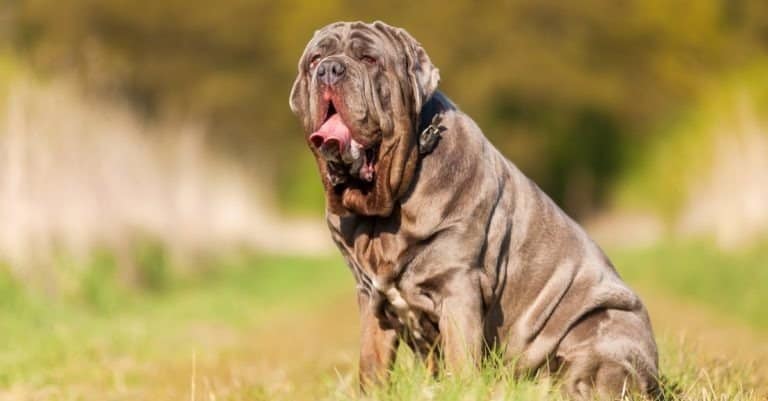
portrait of a Neopolitan Mastiff dog outdoors on a meadow

At a Glance

Domesticated
Also Known As Mastino Napoletano, Neopolitan Mastiff, Mastín Napolitano, Neo, Italian Mastiff
Diet Omnivore
Activity Diurnal+
Lifespan 4 years
Weight 70 lbs
Status Not Evaluated
Did You Know?

Neapolitan Mastiffs are a molosser-type domestic dog (Canis lupus familiaris), shaped by human selection for guarding rather than wild hunting like the gray wolf (Canis lupus).

Scientific Classification

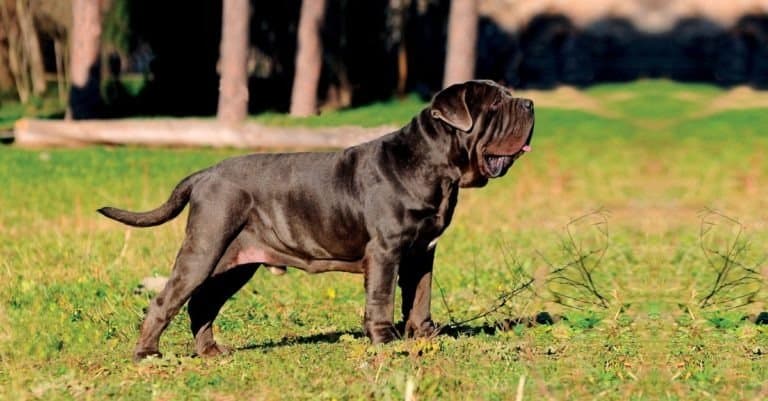
The Neapolitan Mastiff is a large Italian molosser-type domestic dog breed known for its massive build, loose skin and pronounced wrinkles, and traditional use as a guardian dog.

Kingdom
Animalia
Phylum
Chordata
Class
Mammalia
Order
Carnivora
Family
Canidae
Genus
Canis
Species
Canis lupus

Distinguishing Features

  • Very large, heavy-boned mastiff-type build
  • Loose skin with prominent wrinkles, especially on head/neck
  • Broad head with short-to-moderate muzzle
  • Drooping lips (flews) and pronounced dewlap
  • Typically solid coat colors (e.g., gray/blue, black, mahogany, tawny)

Physical Measurements

Males and females differ in size

Height
♂ 2 ft 4 in (2 ft 2 in – 2 ft 6 in)
♀ 2 ft (1 ft 11 in – 2 ft 2 in)
Length
♂ 3 ft 10 in (3 ft 3 in – 4 ft 5 in)
Weight
♂ 154 lbs (132 lbs – 176 lbs)
♀ 115 lbs (99 lbs – 132 lbs)
Tail Length
♂ 1 ft 3 in (12 in – 1 ft 6 in)
♀ 1 ft 4 in (1 ft 2 in – 1 ft 6 in)
Top Speed
19 mph
running

Appearance

Primary Colors
Secondary Colors
Skin Type Very loose, thick skin with pronounced facial/body wrinkles; short, dense coat requiring skin-fold care.
Distinctive Features
  • Massive molosser build with broad chest and heavy bone; far larger than typical domestic dogs.
  • Loose skin forming deep wrinkles, especially on forehead, cheeks, and dewlap; hallmark breed trait.
  • Large, broad head with short-to-moderate muzzle and heavy lips; drooling is common.
  • Loose gait with rolling movement; substantial neck and shoulder musculature for guarding work.
  • Coat is short and low-shedding, but skin folds need regular cleaning/drying to prevent dermatitis.
  • Heat sensitivity risk due to large size and facial skin; avoid strenuous exercise in hot weather.
  • Common health concerns: hip/elbow dysplasia, entropion/ectropion, cherry eye, skin infections in folds.
  • High bloat (GDV) risk in giant breeds; feed multiple smaller meals and limit post-meal activity.
  • Temperament is typically steady and protective; stable behavior depends on early socialization and training.
  • Requires supportive bedding and controlled weight to reduce joint stress in adulthood.

Sexual Dimorphism

Males are typically taller, heavier, and more massive-headed, with more pronounced wrinkles and dewlap. Females are slightly smaller with a comparatively lighter frame and less extreme head and skin fold development.

♂
  • Larger overall size and heavier bone; more imposing silhouette.
  • Broader head with thicker neck and more prominent dewlap.
  • Wrinkles and facial folds often deeper and more extensive.
♀
  • Slightly smaller, more moderate proportions while retaining breed type.
  • Head and skin folds typically less exaggerated than males.
  • Often a somewhat lighter, more agile movement than males.

Did You Know?

Neapolitan Mastiffs are a molosser-type domestic dog (Canis lupus familiaris), shaped by human selection for guarding rather than wild hunting like the gray wolf (Canis lupus).

Their hallmark "wrinkled" look comes from abundant loose skin and a very broad, heavy head-features far more exaggerated than in most dogs.

They tend to be calm at home but intensely watchful: many will position themselves between family and a visitor without being prompted.

The breed's modern standard was rebuilt in Italy after WWII, when enthusiasts in the Naples region consolidated local guarding dogs into a recognized type.

They often drool heavily and may leave "mastiff strings" of saliva-normal for the breed's loose lips and large jowls.

Despite the intimidating appearance, well-bred Neos are typically steady, family-attached dogs when properly socialized from puppyhood.

Their sheer mass means puppies should grow slowly; controlled diet and exercise help protect developing joints.

Unique Adaptations

  • Loose skin and heavy folds can help protect the neck and body in a confrontation-one reason mastiff types were historically favored as guardians.
  • Massive bone and muscle provide "deterrence by presence," reducing the need for constant high-energy patrolling.
  • Broad skull and strong jaw structure suit the traditional role of holding and controlling rather than chasing prey over distance.
  • A calm, low-reactivity temperament (when well-bred) supports steady home guarding without nonstop arousal.

Interesting Behaviors

  • Silent assessment: often watches quietly before deciding whether to engage, relying on presence more than noise.
  • Body-block guarding: may lean, stand broadside, or step between you and a stranger as a natural "barrier."
  • Territory awareness: tends to memorize routine and notice small changes in the home or yard.
  • Close-range bonding: commonly follows family members room-to-room despite a low-activity style.
  • Drool-and-drink ritual: after drinking, many fling water and drool-keep towels handy.
  • Wary-of-strangers posture: slow, deliberate approach; benefits greatly from structured introductions and early socialization.

Cultural Significance

A symbol of traditional Italian property and estate guardianship, the Neapolitan Mastiff is closely associated with southern Italy (especially the Naples/Campania region). The breed's post-World War II revival and formalization by Italian fanciers turned a local guardian type into an internationally recognized emblem of Italian molosser heritage.

Myths & Legends

Italian breed lore commonly links the Neapolitan Mastiff to the ancient "Molossian" war and guard dogs admired by Greeks and later Romans-stories describe massive mastiff-like dogs accompanying soldiers and protecting camps.

Traditional accounts in southern Italy describe huge, wrinkled mastiffs kept in courtyards and farmsteads as night guardians-dogs valued for a watchful presence that deterred intruders before any fight began.

After World War II, a few mastiff-like dogs shown in Italy inspired people, especially Piero Scanziani, to record and protect the Neapolitan type, turning local tales of a big guardian into a real breed.

Like many European black-dog traditions, rural storytelling sometimes cast large, dark guardian dogs as eerie night sentinels at gates and roads-protectors whose silhouette alone warned strangers to keep their distance.

Conservation Status

NE Not Evaluated

Has not yet been evaluated against the criteria.

Population Stable

Life Cycle

Birth 8 pups
Lifespan 4 years

Lifespan

In the Wild
1–8 years
In Captivity
6–10 years

Reproduction

Mating System Polygynandry
Social Structure Managed Domestic
Breeding Pattern Transient
Fertilization Internal Fertilization
Birth Type Internal_fertilization

Behavior & Ecology

Social Pack Group: 3
Activity Diurnal, Crepuscular, Cathemeral
Diet Omnivore Meat-forward complete dog diet (high-quality animal protein; e.g., beef or poultry-based formulations)

Temperament

Guardian-bred: vigilant, territorial, and naturally suspicious of strangers; typically not an indiscriminate greeter.
Affectionate and steady with family; often calm indoors when adequately exercised and mentally engaged.
Breed distinction vs base dog/wolf context: less pack-dependent, more human-directed guarding and home-range focus.
HUBS (common patterns): tends toward low-to-moderate activity, high watchfulness; individuals vary from reserved to assertive.
Can be dog-selective; early, ongoing socialization reduces reactivity but may not remove guarding instincts.
Training style needs: firm, consistent, reward-based handling; harsh corrections can increase defensiveness.
Health concerns affecting behavior: prone to heat intolerance, orthopedic pain (hips/elbows), and eye/skin issues that can reduce tolerance.
Care requirements: controlled exercise, weight management, joint support, wrinkle/skin-fold hygiene, and structured visitor routines.
Because of size and strength, requires management skills (leash manners, thresholds, muzzle conditioning if needed).

Communication

Deep, booming alarm bark used for territorial warning
Low rumbling growl signaling discomfort or escalation
Whines/soft grumbles for attention or proximity seeking
Body blocking/leaning to control space; uses physical presence as a deterrent
Fixed stare and still posture when assessing strangers; may freeze before reacting
Scent marking and perimeter checking around home/yard
Facial tension, lip lift, and head-low posture to signal unease
Seeks contact with trusted people: leaning, nudging, following room-to-room

Habitat

Biomes:
Temperate Forest Boreal Forest (Taiga) Tundra Alpine Temperate Grassland Mediterranean Desert Hot Desert Cold Tropical Dry Forest Savanna Wetland +5
Elevation: Up to 16404 ft 3 in

Ecological Role

Domestic apex-associated omnivore and human-linked scavenger/consumer; primarily a guardian/companion rather than an ecological predator.

Provides human security/guarding (deterrence of intruders and some wildlife) Companion animal role with indirect social benefits to humans When free-roaming (context-dependent), may reduce local rodent presence but can also disturb wildlife; responsible management prevents negative impacts

Diet Details

Main Prey:
Domesticated livestock Small mammals Carrion
Other Foods:
Starches, grains and tubers Vegetables Fruits Grasses

Human Interaction

Domestication Status

Domesticated

Domestic dogs (Canis lupus familiaris) come from gray wolves and were domesticated thousands of years ago to work with people in hunting, guarding, and companionship. The Neapolitan Mastiff is a modern Italian molosser/guardian from southern Italy, standardized after World War II and bred for massive size, heavy bone, loose skin, deep wrinkles, and a strong guardian nature.

Danger Level

Moderate
  • High impact risk due to giant size/strength (knockdowns, pulling, barrier-breaching if under-managed)
  • Serious bite potential if poorly socialized, mishandled, or allowed to practice territorial aggression; guarding instincts can generalize to guests/contractors
  • Increased risk during adolescence if training is delayed (behavior becomes physically difficult to control)
  • Child safety concerns mainly from size and clumsiness rather than predation; supervision recommended
  • Lower predatory drive than many breeds, but same-species context applies: any dog can bite under stress, pain, fear, or resource guarding

As a Pet

Suitable as Pet

Legality: Generally legal as a pet in many jurisdictions, but may face restrictions or special requirements under breed-specific legislation (BSL), dangerous-dog ordinances, landlord/HOA rules, and insurance exclusions due to size/guardian reputation. Always verify local laws, housing rules, and liability coverage.

Care Level: Experienced

Purchase Cost: $1,500 - $6,000
Lifetime Cost: $30,000 - $90,000

Economic Value

Uses:
Companion animal Property/estate guarding and deterrence Working/security sport participation (limited/handler-dependent) Show and conformation Professional breeding and stud services Veterinary and pet-care services (high spend per dog due to giant-breed needs)
Products:
  • guardian/companion placements
  • show dogs and breeding stock
  • training services (obedience, impulse control, safe handling)
  • specialty equipment (giant crates, heavy-duty leashes, large beds)
  • high-volume nutrition products
  • veterinary care related to orthopedic, eye, skin-fold, and GI issues

Relationships

Ecological Equivalents 6

Animals that fill a similar ecological role in their ecosystem

Cane Corso
Cane Corso Canis lupus familiaris Both are Italian molossers: the Neapolitan Mastiff is heavier-boned and slower, with very loose skin and deep wrinkles used for defense. These breeds require extra skin-fold care, drool management, caution in heat, and share health risks such as hip/elbow dysplasia and bloat (GDV).
English Mastiff
English Mastiff Canis lupus familiaris Both are giant mastiff guardian breeds. The Neapolitan Mastiff is more wrinkled and typically more wary, while the English Mastiff is calmer. The Neapolitan commonly has eyelid problems (ectropion, entropion, cherry eye), skinfold infections, and front-end mobility stress; controlled growth and attentive joint care can help manage these issues.
Tibetan Mastiff
Tibetan Mastiff Canis lupus familiaris Fills a territorial guardian role; very independent with a lower prey drive compared to hunting breeds. Has a short, heavily wrinkled coat (not a double coat), fares poorly in heat, and requires early socialization and firm, experienced handling.
Kangal
Kangal Canis lupus familiaris Both help deter intruders: the Kangal is more athletic and suited to roaming and guarding livestock, while the Neapolitan Mastiff is better for close-range property guarding. For these large, heavy-chested breeds, avoid heavy-impact exercise as puppies, keep them lean, and watch for GDV (gastric dilatation-volvulus).
Dogue de Bordeaux
Dogue de Bordeaux Canis lupus familiaris Molosser guardian-type breed with a short coat and similar guardian role and body build. The Neapolitan Mastiff is heavier and more wrinkled and requires extra care for facial folds and drooling. Both breeds are prone to heart and joint problems; also watch for eye irritation, skin fold infections, and overheating.
Gray wolf
Gray wolf Canis lupus The Neapolitan Mastiff (Canis lupus familiaris) is a domesticated guardian breed, not a pack‑hunting wolf. It has a broad, short head, loose wrinkled skin, and low endurance; it forms a strong bond with humans and requires extra human‑led training, socialization, controlled exercise, and veterinary care.

Quick Take

  • Males must reach 200 pounds to fulfill the intimidating look established during Roman wars.
  • Standard legumes in commercial food create a lethal risk of cardiomyopathy for this breed.
  • These fierce gladiators possess a surprisingly mellow nature and an affectionate bond with other pets.
  • The 1940s standardization event was necessary to transition this breed into the global spotlight.

Neapolitan Mastiffs love being lapdogs, though they have a hard time grasping that they aren’t as small as they were as puppies.

These dogs are highly protective of their owners’ families, giving very strong and fearless stares. Neapolitan Mastiffs are often available in shelters and rescues at a lower price, although they can also be adopted from breeders.

An infographic titled Neapolitan Mastiff featuring a large grey mastiff and sections detailing the breed's history, health risks, and temperament.
They survived Roman wars and gladiator pits, but today's biggest threat to this 200-pound giant might be hidden in its food bowl. © A-Z Animals

History and Origin

This huge breed dates back to the early Roman years, when the legionnaires and civilians used them as guard dogs, catch dogs, war dogs, and even as gladiators. The Neapolitan Mastiffs were used throughout central Italy. There is little doubt that they were bred and developed to create an intimidating look that would scare would-be adversaries.

Piero Scanziani first drew up the standard for this mammoth breed in the late 1940s and helped bring this dog into the global spotlight.

3 Pros and Cons of Ownership

Before adding a Neapolitan Mastiff to the family, get a better understanding of what is in store. Here’s an unbiased look at the pros and cons before finally settling on a decision.

ProsCons
Protective: If your main requirement for keeping a dog is for guarding purposes, this dog is prepared for the task.Repelling towards strangers: These dogs are not very good towards strangers, viewing it as a disturbance in their owner’s family’s lives.
No hefty exercise requirements: These dogs do not have many needs when it comes to exercise. A bit of room at home and a little time on a leash for a walk is good enough for them.Drooling: These dogs have an excessive drooling problem that can turn into a mess in the long run.
Little grooming: If you are not someone who wants to spend too much time grooming your dog, the Neapolitan Mastiff won’t require it. Their short coat is easy to maintain and brush.Hot weather: These dogs can’t sustain hot weather, and it can be dangerous for their health.
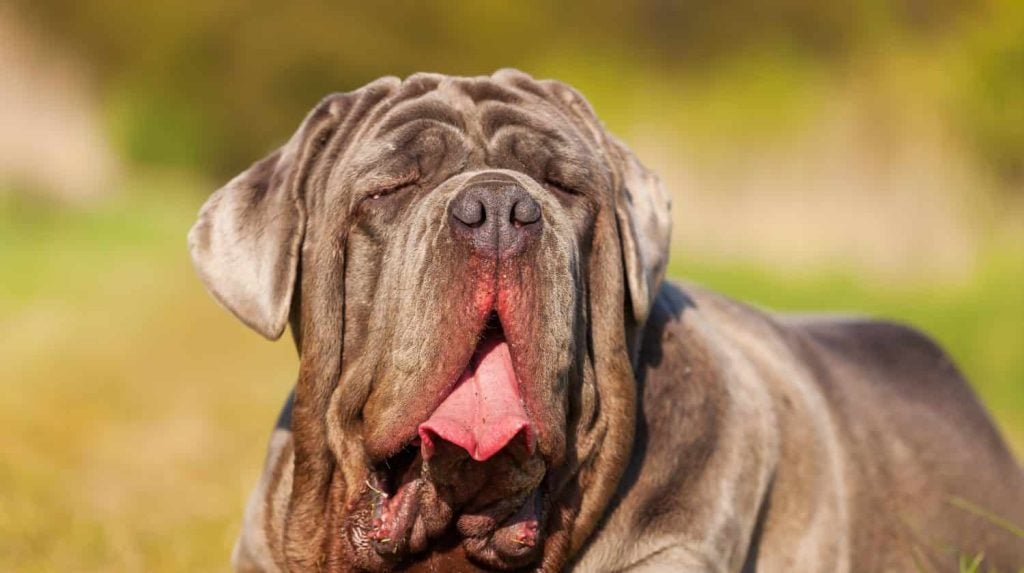
portrait picture of a Neapolitan Mastiff outdoors

Neapolitan Mastiffs do not have many needs when it comes to exercise, and a bit of room at home and a little time on a leash for a walk is good enough for them.

Size and Weight

Neapolitan Mastiff dogs are giant dogs. The females are about 24 to 29 inches in size, while the males are 26 to 31 inches. Regarding their weight, females reach 120 to 175 pounds while males weigh around 150 to 200 pounds.
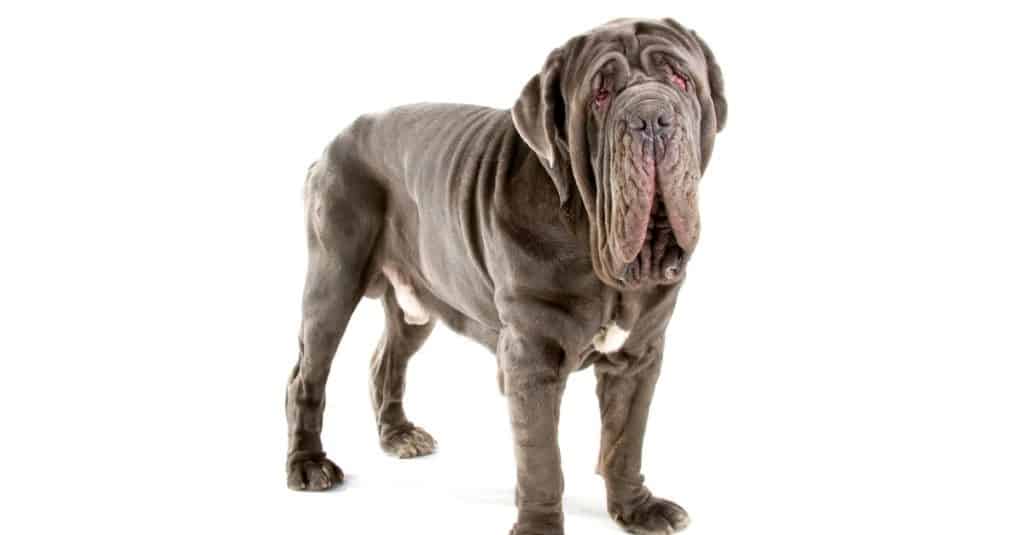
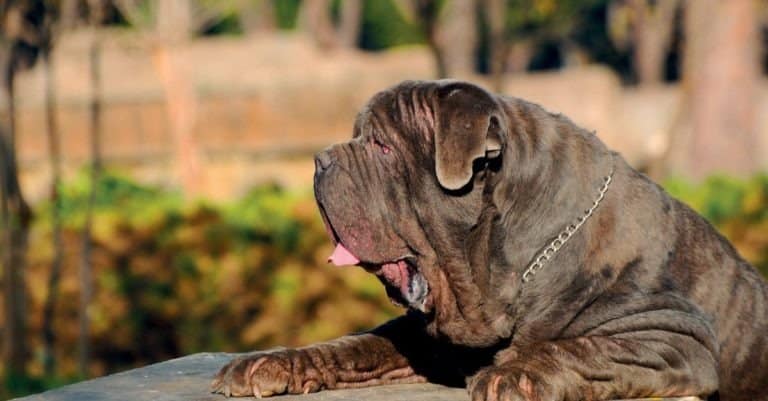
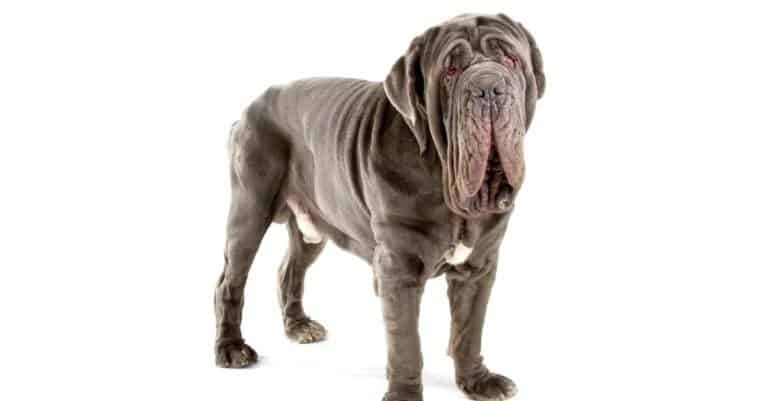
Neapolitan Mastiff isolated

Neapolitan Mastiff males weigh around 150 to 200 pounds.

Common Health Issues

Like many other animals, these dogs also suffer from a variety of health issues. Many of the common ailments they face are typical amongst long-legged dogs. They often face elbow and hip dysplasia, which is caused by abnormal growth and development in the socket.

Cherry eye is another concern amongst these dogs. The condition, which also impacts the tissue around their eye, can cause irritation and pain. Often, the pink tissue below the eyelid will protrude.

The eyes are a great source of health issues for these dogs – they can also suffer from entropion and progressive retinal atrophy. Entropion means that the eyelids start to roll inward, causing scratching and irritation as the eyelashes scratch the eyeball. Progressive retinal atrophy, on the other hand, causes the eyes to waste away, which can take a long time to show symptoms.

A heart condition called cardiomyopathy can occur in Neapolitan Mastiffs. This disease impacts the muscles within the heart, causing them to be rigid and enlarged. Some of these dogs suffer from autoimmune thyroiditis, preventing their body from creating the hormones from their thyroid gland.

Temperament

The temperament of these dogs is both quiet and affectionate, so it should be no surprise that any threat to their owners is met with protective aggression. They won’t go out of their way to be violent, but they will do what they have to for the safety of their family.

These dogs love being around other pets and bonding well with other animals in the home. Found with breeders and animal rescues, they quickly find their place within the home amongst their housemates with a mellow demeanor. They are relatively easygoing.

Strangers don’t always feel the welcoming personality of the Neapolitan Mastiff, as the dog may be worried about threats to their family. They can also become rather aggressive towards dogs outside of their home that they are unfamiliar with.

They are very closely connected to the people they live with, struggling with separation anxiety when left alone.
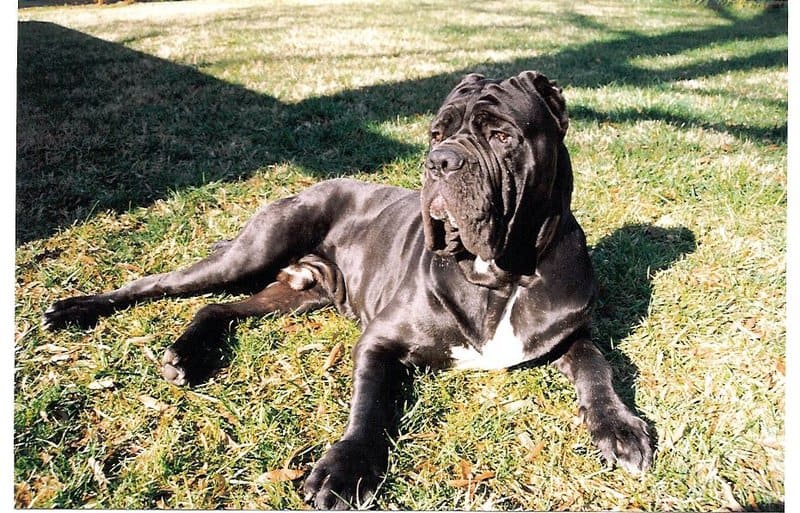
The temperament of Neapolitan Mastiffs is both quiet and affectionate, so it should be no surprise that any threat to their owners is met with protective aggression.

How to Take Care of One

The first thing that you would know before you take in any pets would be how to properly take care of them. From training to food to exercise, everything plays an important role. Here are a few things that you would need to know before you start living with a Neapolitan Mastiff:

The Best Dog Food for Them

You can offer a variety of options in your dog’s diet. Though kibble and other dry dog food are necessary to keep the teeth clean and fill the majority of their diet, some human foods are safe with the right preparation.

In particular, this dog enjoys cooked turkey and chicken, though they will also indulge in tuna on occasion. Some owners will use pasta as a way to regulate their digestive system when experiencing diarrhea.

Especially since this breed can end up with cardiomyopathy, owners should be careful to pick legume-free food. That’s because legumes in dog food have been linked to heart failure.

Maintenance and Grooming

While these dogs do not require an extensive amount of grooming, they will need regular baths to eliminate any buildup of bacteria in their folds. Most dogs don’t become very messy, only needing a bath every six to eight weeks. Bathing also eliminates excess hair that they’ve shed.

Between baths, make sure to wipe their wrinkles with a damp cloth. Nails should be trimmed once every few weeks, while their teeth need to be brushed as well. Many treats on the market automatically break down plaque that can accumulate, but it doesn’t replace the need to use dog-friendly toothpaste and a brush.

Since earwax can build up, it’s important to clean the ears as well.
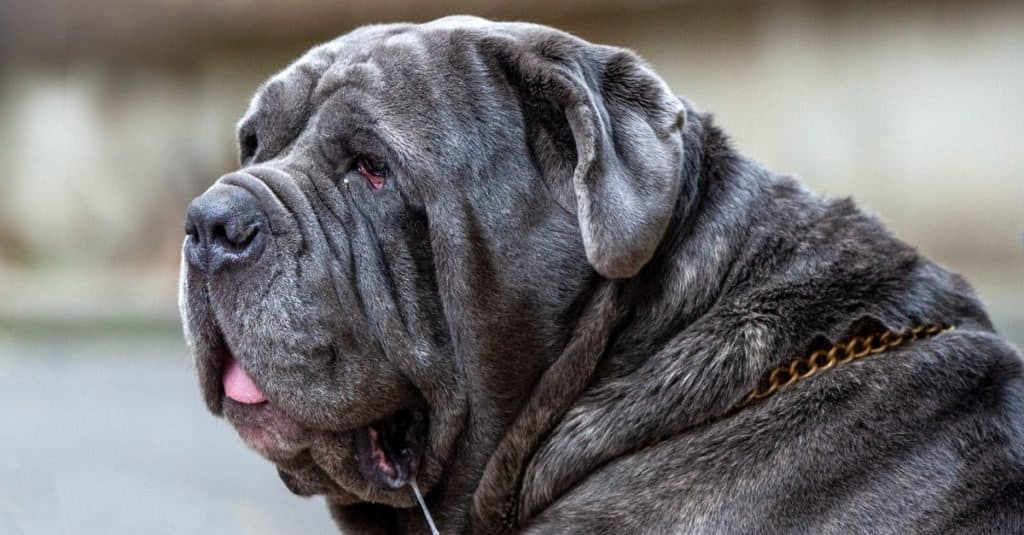
Biggest Dog Breeds: Neapolitan Mastiff

Neapolitan Mastiffs need regular baths to eliminate any buildup of bacteria in their folds.

Training

While it is not very difficult to train these dogs, they can sometimes be stubborn and resistant to training if they are constantly pushed or strictly led.

Start training your puppy early on, keeping them nearby as you work to pick up a sense of motivation. Puppies have an open and pure mind, offering a foundation that is relatively responsive to commands.
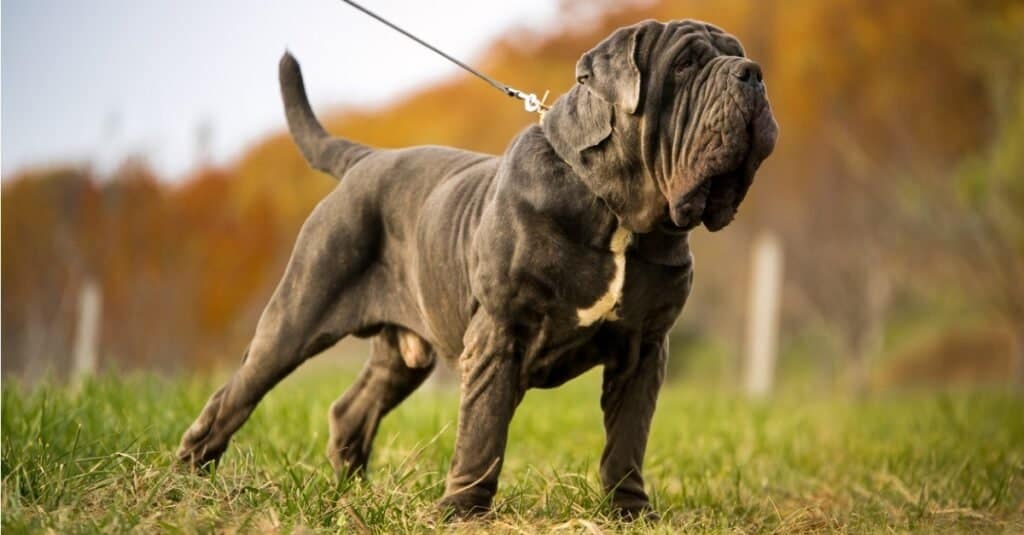
Gray Dog Breeds

Neapolitan Mastiffs can sometimes be stubborn and resistant to training if they are constantly pushed or strictly led.

Exercise

These dogs do not require a lot of exercise. The best exercise for these dogs is usually a daily walk, though they are also happy with a little extra space within the home to mosey around.

Daily walks are very important for Neapolitan Mastiff puppies, as they have much more energy.

Puppies

Neapolitan puppies are taken care of pretty much the same way as you would take care of an adult Neapolitan Mastiff dog. However, you should start training the puppy early on to help them develop good habits and get used to the usual tasks. They may be independent, but they learn quickly and enjoy pleasing their owner.

As said above, Neapolitan Mastiff puppies need regular walks to get out their energy and maintain their mental health.
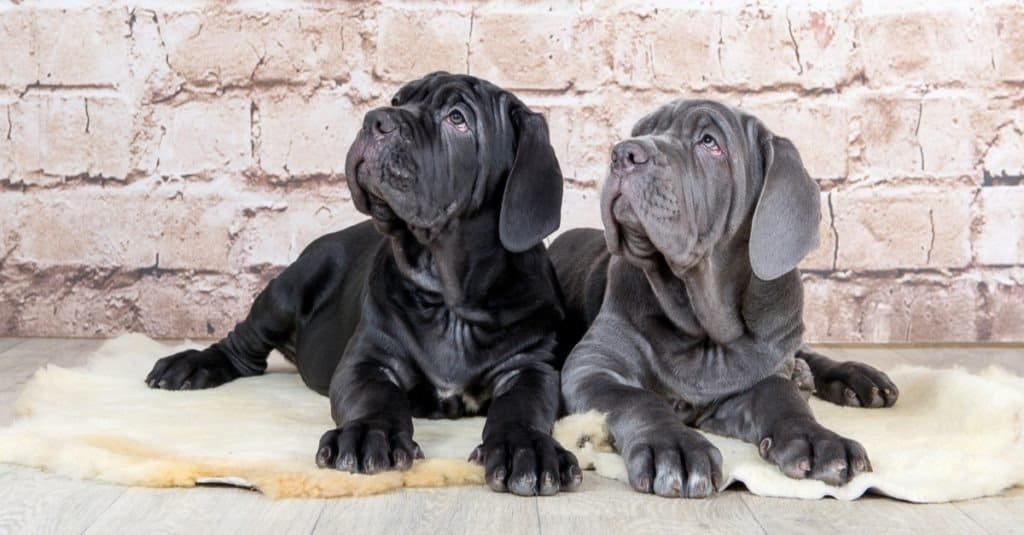
Grey, black and brown puppies, Neapolitan Mastiff

Taking care of Neapolitan Mastiff puppies is similar to taking care of adult ones.

With Children

Neapolitan Mastiffs are known to be great with children, just as they are with the other family members — protective and affectionate. However, you’d always want to supervise a Neapolitan Mastiff around toddlers, as the dog can be too large for them and can knock over the babies without intending to.

The Neapolitan Mastiffs are excellent watchdogs, and their stature makes them impressively intimidating.
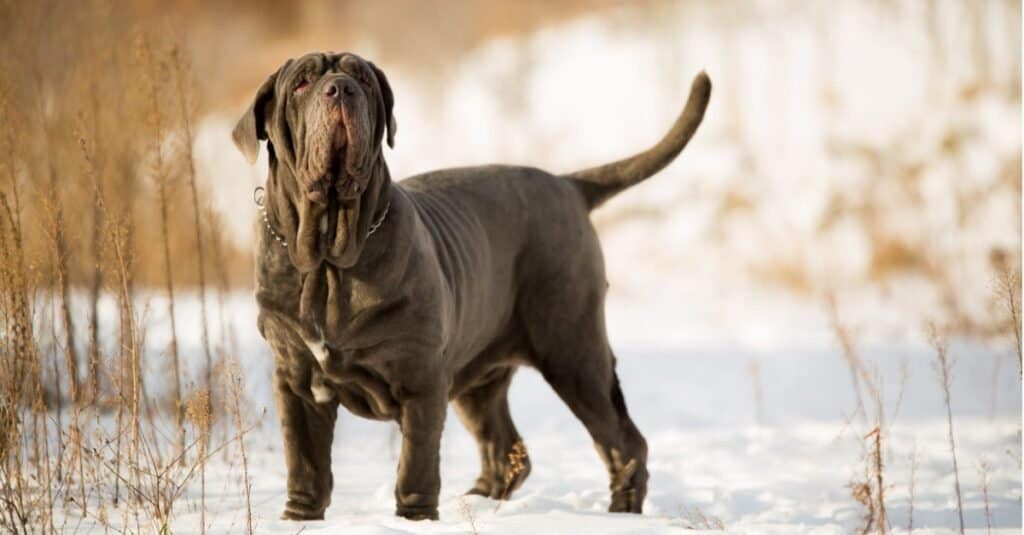
Types of Big Dogs

With Neapolitan Mastiffs, you always want to supervise them around toddlers, as they can knock them over.

Similar Dogs

As wonderful a dog as the Neapolitan Mastiff may be, they aren’t for everyone. Here are some dogs that are similar to the Neapolitan Mastiffs:

  • American Bulldog: This one belongs to the Mastiff family but has a shorter and coarser coat. It is also known to be far more aggressive than the Neapolitan Mastiff, making it better suited to a child-free home.
  • Bull Mastiff: Another from the Mastiff family, the Bull Mastiffs are known to be loyal and affectionate. Like the Neapolitan Mastiffs, they are also very protective.
  • Pug: Just like the Neapolitan Mastiff dogs, these dogs also require little grooming and are prone to several health problems. They are much smaller than the Neapolitan Mastiff, making them better suited to apartments and small homes.
View all 98 animals that start with N

Sources

  1. Dogspot / Accessed January 29, 2021
  2. Daily Puppy / Accessed January 29, 2021
  3. Dogtime / Accessed January 29, 2021
  4. Vetstreet / Accessed January 29, 2021
  5. The Nest / Accessed January 29, 2021
  6. Espree / Accessed January 29, 2021
  7. Your Pure Bred Puppy / Accessed January 29, 2021
Heather Ross

About the Author

Heather Ross

Heather Ross is a secondary English teacher and mother of 2 humans, 2 tuxedo cats, and a golden doodle. In between taking the kids to soccer practice and grading papers, she enjoys reading and writing about all the animals!

Thank you for reading! Have some feedback for us?


Neapolitan Mastiff FAQs (Frequently Asked Questions)

Neapolitan Mastiffs are fearless and extremely protective of their homes!