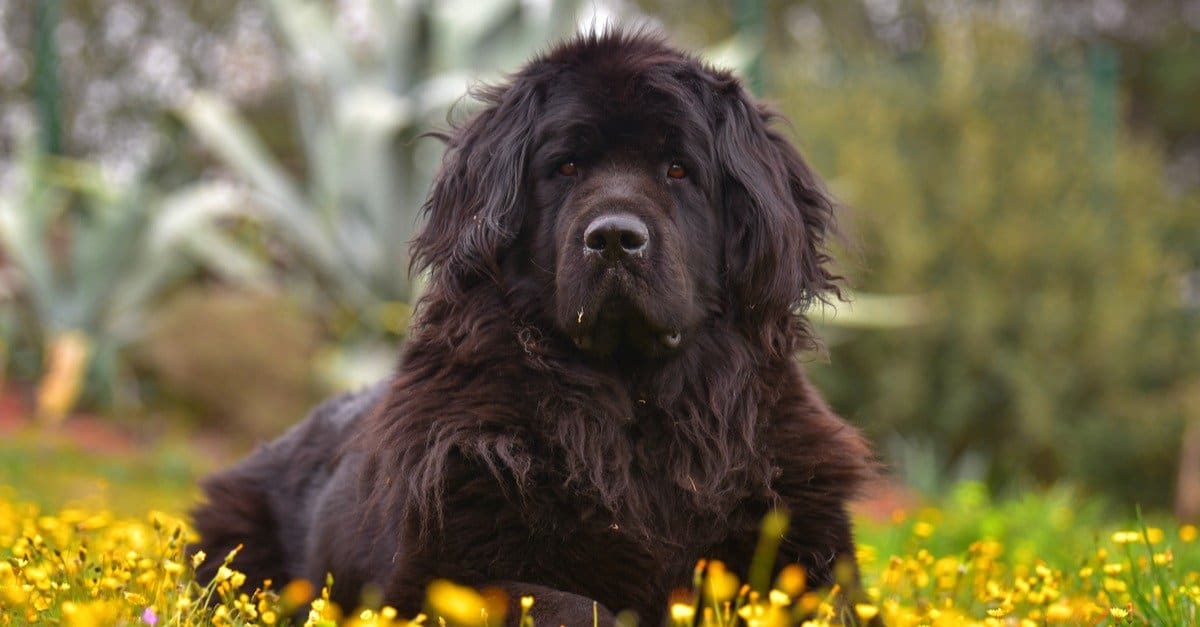
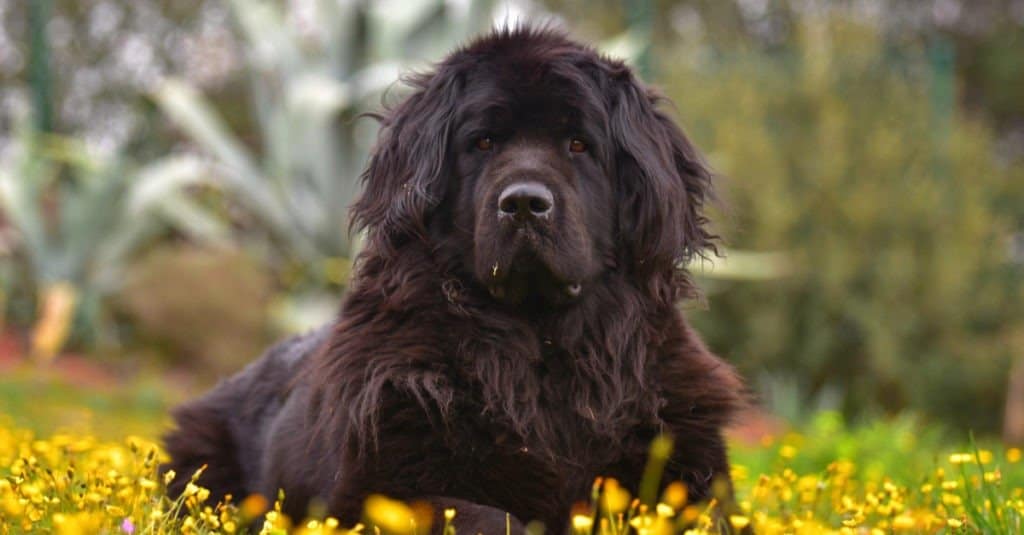
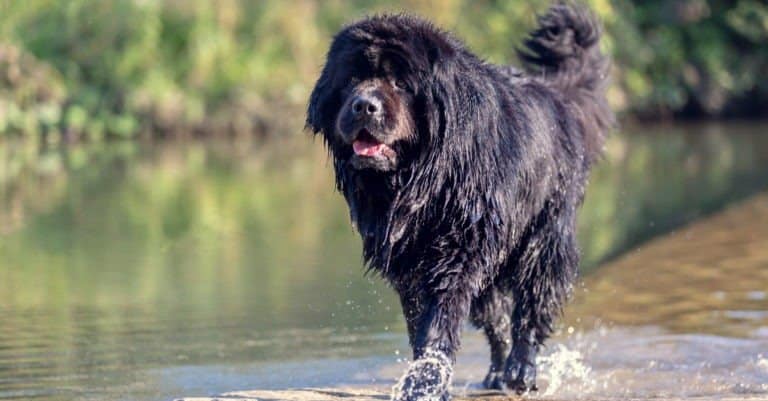
The Newfoundland (or the Newfie for short) is a very talented work and guard dog that originated from the Canadian province that bears its name. It was bred by early settlers to save drowning fishermen from the cold, frigid waters around Newfoundland; the webbed feet and thick fur made it an ideal rescue dog.
The breeding process possibly involved dogs such as the Great Pyrenees, Portuguese Water Dog, Leonberger, and St. Bernard, all brought over from Europe. The results were the Lesser St. John’s Dog, which developed into the Labrador Retriever, and the Greater St. John’s Dog, which became the Newfoundland.
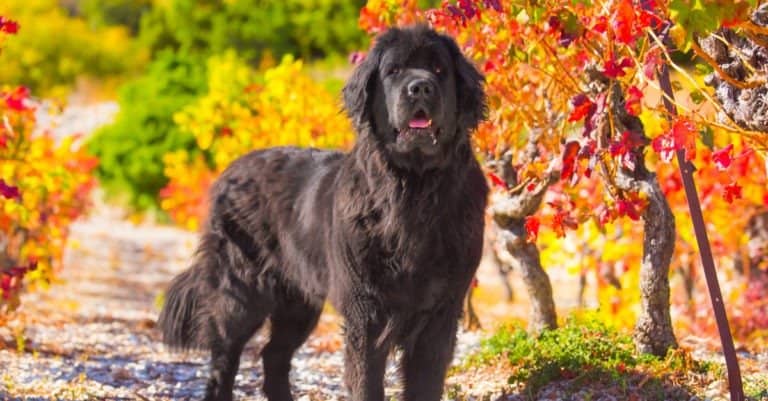
Most of the Newfoundland’s physical and behavioral characteristics were established by the 17th century: the broad skull, the large snout, the massive frame, and the droopy ears and skin around the face.
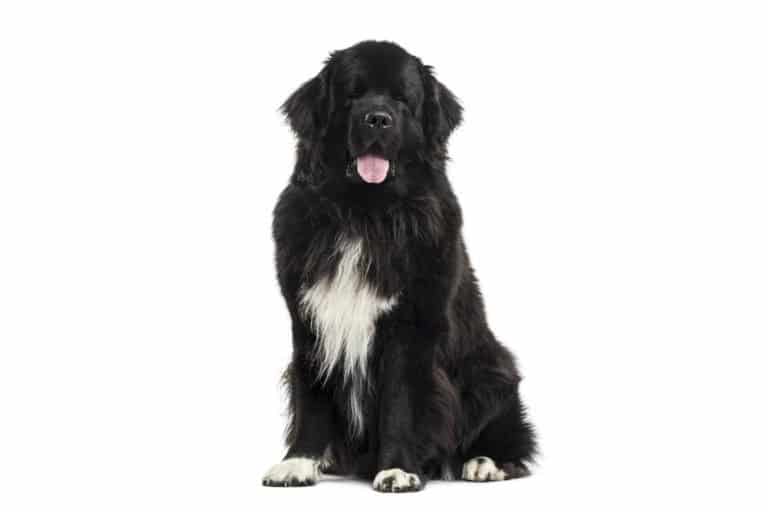
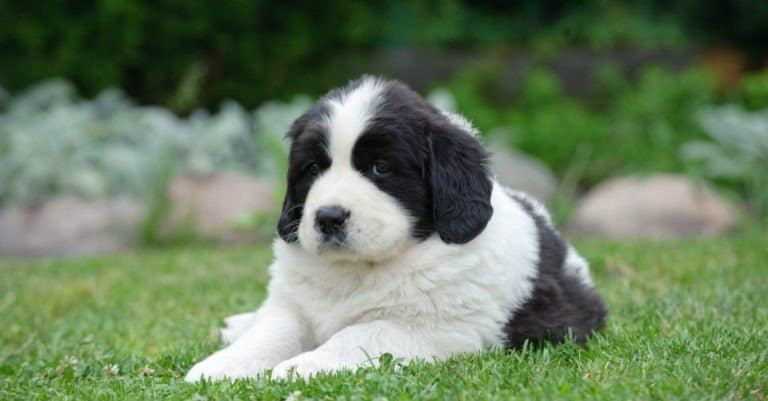
The thick, heavy double coat of fur is typically all-black, brown, or gray. There is also a black and white version called a Landseer.
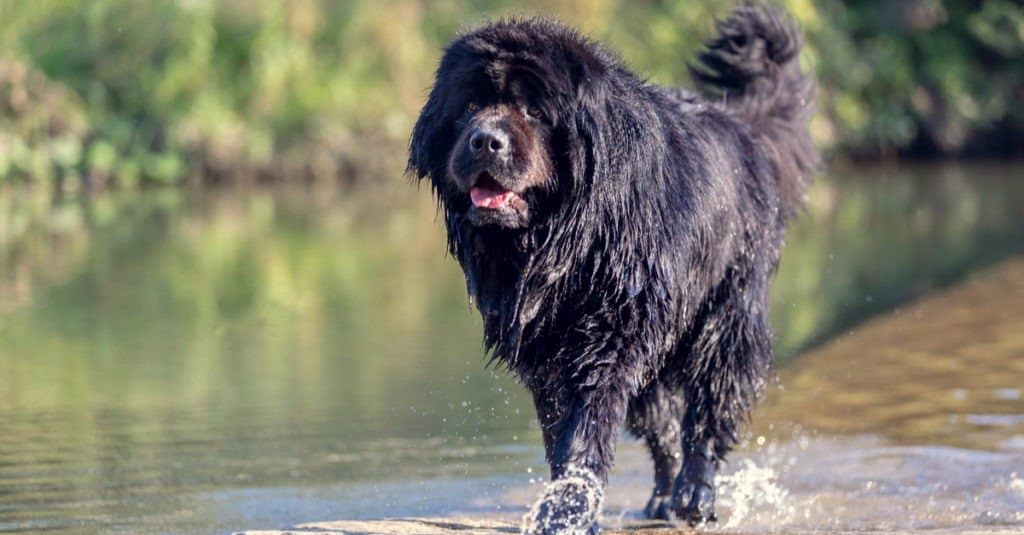
The Newfoundland is a large dog with a muscular build that is a good family dog.
©rzoze19/Shutterstock.com
3 Pros and Cons of Ownership
| Pros | Cons |
|---|---|
| Excellent strength This muscular breed is an excellent work and guard dog. | Immense weight The Newfoundland is a real beast to manage. |
| Friendly and devoted The Newfoundland is an affectionate companion for adults and children alike. | Health problems This breed is prone to several health issues that contribute to a relatively poor lifespan. |
| Patient demeanor This breed is diligent, steadfast, and easy to train. | High separation anxiety You should not leave your Newfoundland alone for long periods of time. |
Size and Weight
The Newfoundland has a large, muscular build that makes it well-suited for difficult tasks. Males are larger than females and stand 28 inches at the shoulder, while females are typically 24 inches high. Males weigh 130 to 150 lbs, with females weighing 100 to 120 lbs.
Temperament
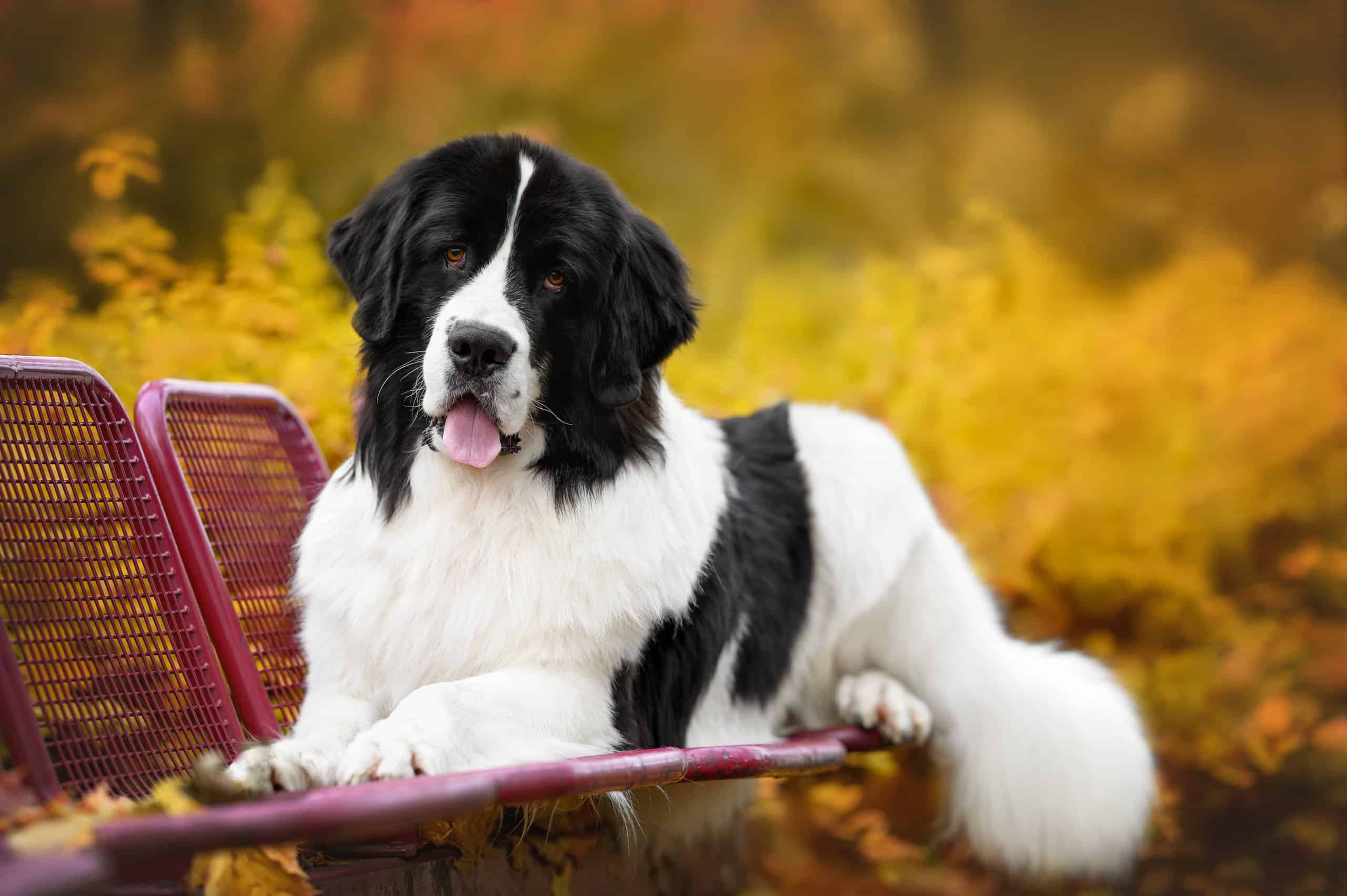
This Landseer is a black and white Newfoundland that also has the kind and gentle personality of the breed.
©Otsphoto/Shutterstock.com
The Newfoundland is a big, lovable companion with a kind and gentle personality. Owners have frequently said that it possesses a sweet and modest trait that adapts well to almost any lifestyle (though it does require enough living space to accommodate its massive body).
This breed is not a troublemaker, but it should not be left alone for long periods of time, either indoors or outdoors, due to its separation anxiety. If you want a dog that can be left to its own devices, then this is probably not the breed for you. As long as you shower it with enough love and attention, the Newfie has a calm and relaxed behavior. The only exception is that it can be a little protective of its family. This is not necessarily a bad trait, though, if you’re looking for a good guard dog. Newfoundlands are popular search and rescue dogs for the coast guards of England, France, and Italy.
Common Health Issues
The Newfoundland is unfortunately wracked with several health issues. Some of the more serious issues include: eye diseases like cherry eye and cataracts; subvalvular aortic stenosis, which narrows the blood flow out of the left ventricle of the heart; hypothyroidism, or low production of the thyroid hormone, resulting in lethargy and obesity; and hip and elbow dysplasia, which is a misalignment of the joints. Other issues include bloating, kidney or bladder stones, epilepsy, and tears or ruptures of the anterior cruciate ligament in the knee. Cancer is also one of the leading causes of death. The chance of any single condition arising is unlikely on its own, but you should look out for the signs so you can catch them early.
Care
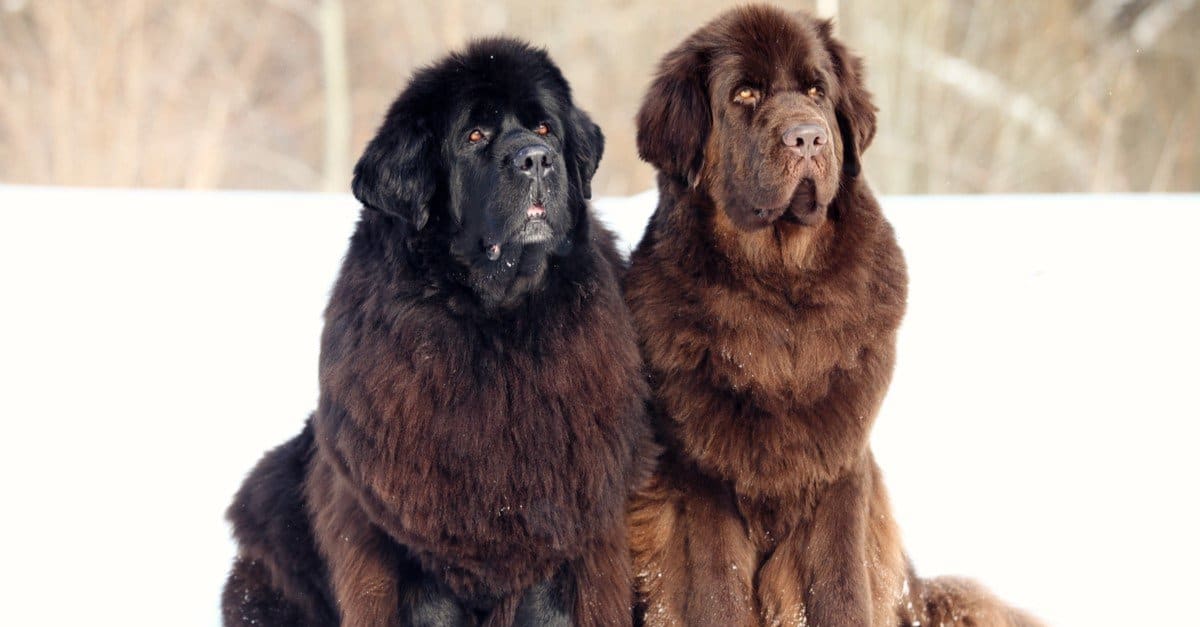
The Newfoundland dog, one of the biggest dog breeds, requires quite a lot of maintenance and care.
©iStock.com/Dixi_
The Newfoundland’s big body requires quite a lot of maintenance and care, and it is expensive to own. For best results, you should obtain a Newfie as a puppy to socialize and train it as soon as possible. You should also take it in for annual health checkups to catch problems early.
Best Dog Food
The Newfoundland requires some 4 to 5 cups of high-quality dry food divided into two meals every day. The exact amount will depend on the dog’s age, size, and activity level. Obviously, younger and active dogs will require more food. If the dog begins to put on a lot of pounds, then you should carefully manage its calorie intake. For an ideal member of this breed, you should be able to feel but not see the ribs through the skin. If you need some advice about your dog’s diet, then you should consult your vet. The Newfie’s weekly food cost may be higher than most other breeds.
Maintenance and Grooming
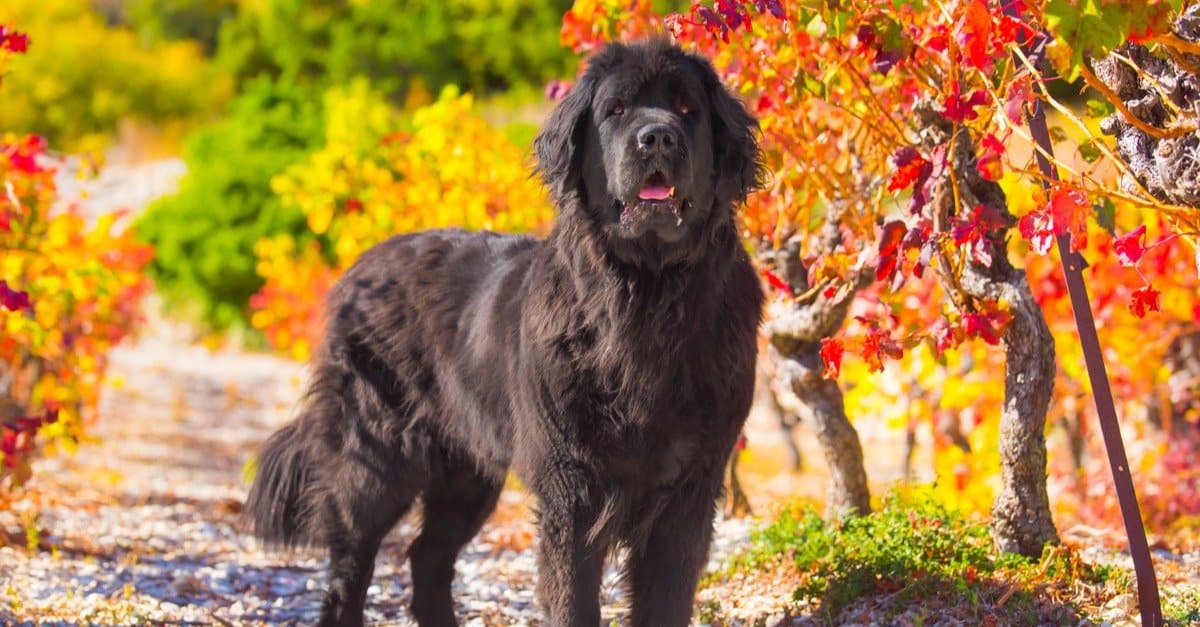
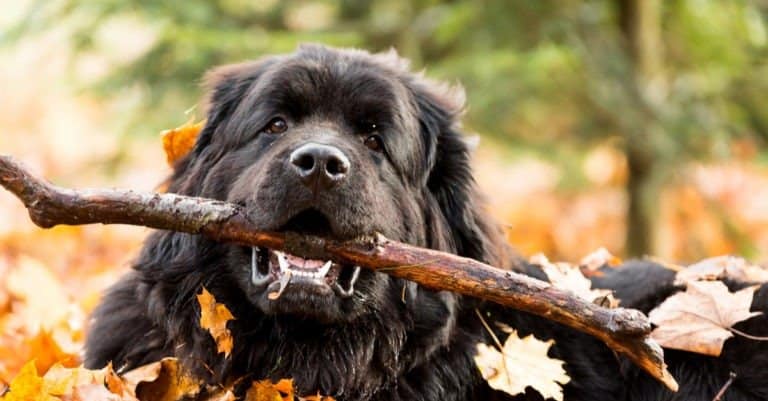
With a loyal and diligent personality, the Newfoundland is easy to train.
©Pandas/Shutterstock.com
The Newfoundland is content with weekly brushes for most of the year and daily brushes at the height of the shedding season. If the dog has been spayed or neutered, then it may need to be brushed a few times a week all year long. Regular nail trimming and ear cleaning should be given as well. And you may need to clean up the dog’s constant drooling.
Training
The Newfoundland is a breeze to train. With its loyal and diligent personality, it easily follows commands and doesn’t get riled up. You should be aware, however, that it responds best to gentle and positive training methods. Negative training or shouting is counterproductive and might only discourage it from working with you. But if you treat it right, then the Newfie can excel at obedience and agility training. It’s also an excellent work dog that can be trained to pull carts, haul wood, and pull in nets. Also, thanks to the webbed feet, immense lung capacity, and oily double coat, the Newfie can be trained as a rescue dog to save drowning victims and take them to shore.
Exercise
The Newfoundland requires about 30 minutes of moderate exercise every single day. Even though it is mostly an indoor dog (and probably not ideal for people who want a highly athletic breed), the Newfoundland does enjoy swimming, hiking, and long walks. Swimming is probably the ideal exercise for this breed. Not only is the Newfoundland an excellent swimmer, but the exercise is low-impact and won’t strain its body. Because of the long double coat, you will want to make sure your dog is properly cool and hydrated in the warmer months.
Puppies
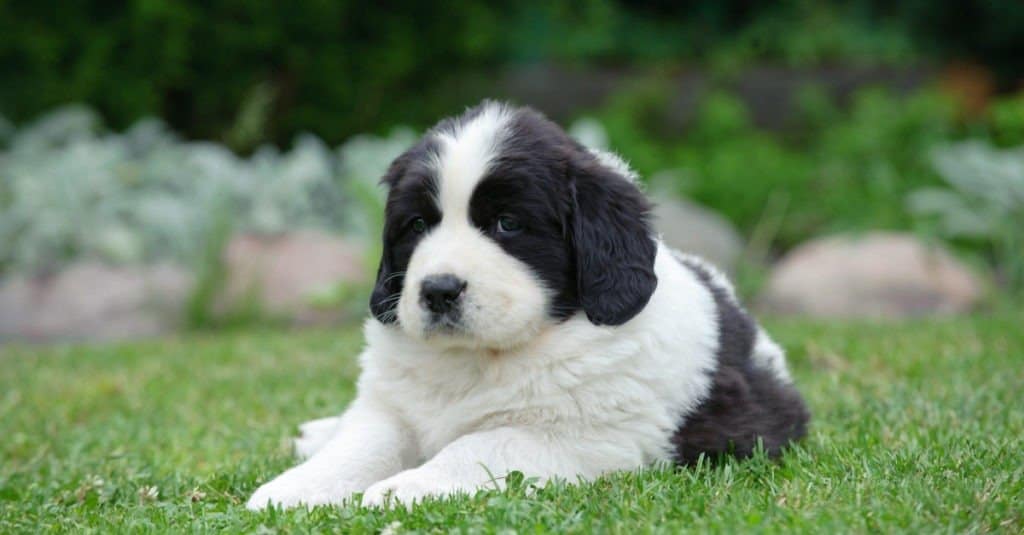
A Newfoundland puppy grows fastest between four and seven months of age.
©Waldemar Dabrowski/Shutterstock.com
The Newfoundland grows very quickly between the ages of four and seven months. Because the fast growth places so much strain on its joints and bones, you should let your puppy run and play on soft grass rather than pavement and other hard surfaces. Swimming is also ideal for the reasons stated above. In order to maximize its health, you should feed the puppy with enough protein to support its growing body. It is always a good idea to purchase your puppy from a reputable breeder who screens for possible health issues.
Children
Few other breeds of dog are quite as kind and gentle with children as the Newfie. Although its immense size is somewhat intimidating to smaller children, the Newfoundland’s protective nature has rightly earned it a stellar reputation as a very good nanny dog. This breed is also highly tolerant of rough play. There are a few things you should keep in mind, however. No matter how close they are, you should always supervise every interaction between your children and dog so you can intervene if things go awry. Second, you should teach your children not to disturb a sleeping or eating dog.
Similar Dogs
The Landseer is the closest relative of the Newfoundland. It has almost all of the same traits and physical characteristics. Besides the Landseer, you can also check out the following working dogs:
- Saint Bernard: Originating from the Swiss Alps, this kind and gentle behemoth was bred for rescue work by the Great St. Bernard Hospice at some point in the 17th century. The coat comes in two varieties, smooth or rough, both with a mixture of white and brown markings. The Saint Bernard differs from the Newfoundland in that it is a larger dog on average.
- English Mastiff: As another large and powerful breed with a kind and gentle nature, the English Mastiff has often drawn comparisons to the Saint Bernard. The short coat tends to be light brown or tan around the body and black around the muzzle, ears, nose, and eyes.
- Great Dane: Also known as the German Mastiff, this breed is a friendly dog that thrives on physical affection from its owner. Descended from hunting dogs in the Middle Ages, it tends to have floppy ears, a large snout, and a square body with a short coat of fawn, black, brindle, or harlequin.
Famous
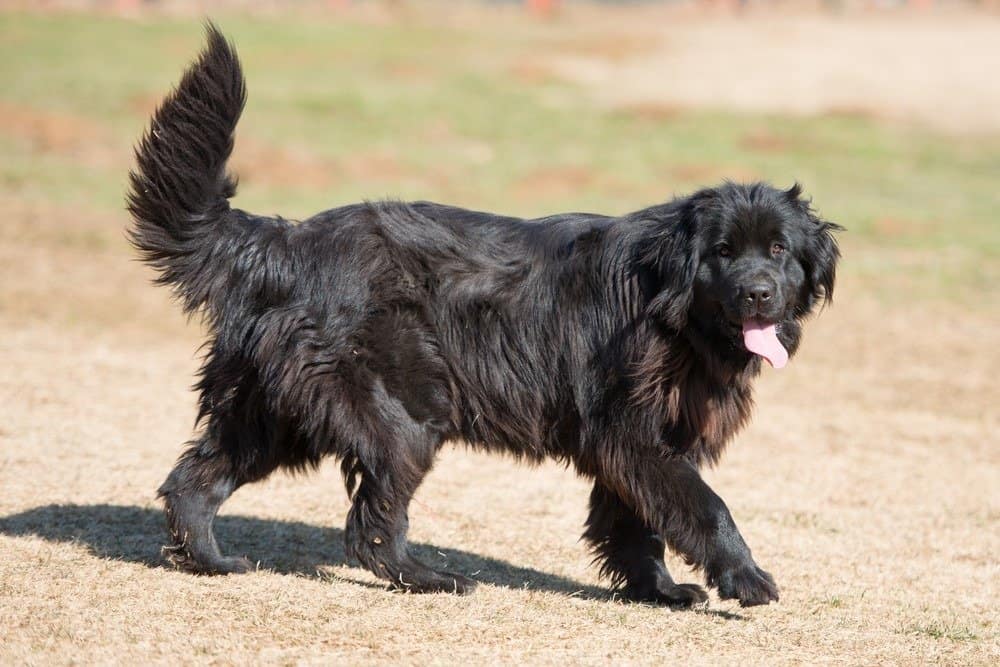
Some Newfoundland dogs have gained fame for saving people from drowning.
©Purino/Shutterstock.com
History is filled to the brim with examples of famous Newfies. Here is just a small sample of them:
- A Newfoundland named Seaman was part of the 8,000-mile Lewis and Clark expedition of North America in the early 19th century. One incident in particular stands out. On the night of May 29th, 1805, Meriwether Lewis wrote in his diary that Seaman scared off a large buffalo bull that came close to the tent.
- Napoleon the Wonder Dog was a star of Van Hare’s Magic Circus starting in 1862. He toured the country and dazzled onlookers with entertaining tricks and routines.
- Sable Chief served as the mascot of the Royal Newfoundland Regiment in World War I.
- Nana is the fictionalized Newfie in J.M. Barrie’s Peter Pan, based on his own dog Luath (though the 1953 animated Disney film changed it to a St. Bernard).
- Presidents Ulysses S. Grant, James Buchanan, and Rutherford Hayes all kept a Newfoundland. So did the poets Emily Dickinson and Lord Byron.
- Swansea Jack (1930 to 1937) saved between 23 and 27 people from drowning, which earned it the title “Dog of the Century” in its native Wales.
Newfoundland Pictures
View all of our Newfoundland pictures in the gallery.

Pandas/Shutterstock.com
Sources
- American Kennel Club / Accessed September 10, 2018
- American Kennel Club / Accessed September 10, 2018
- The Paws / Accessed September 10, 2018