

N
Species Profile

Norfolk Terrier

Canis lupus familiaris

Small dog, true working terrier
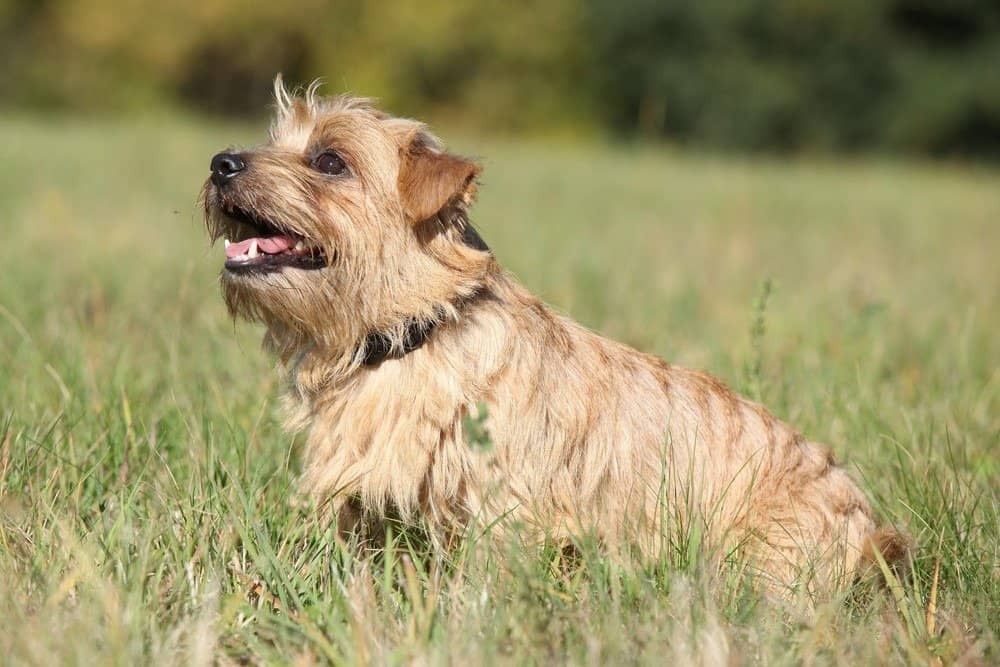
Sue Thatcher/Shutterstock.com

Norfolk Terrier Distribution

Click a location to explore more animals from that region

Origin Location

This map shows the native origin of the Norfolk Terrier. As a domesticated species, they are now found worldwide.

Loading map...

Size Comparison

Human 5'8"
Norfolk Terrier 9 in

Norfolk Terrier stands at 14% of average human height.

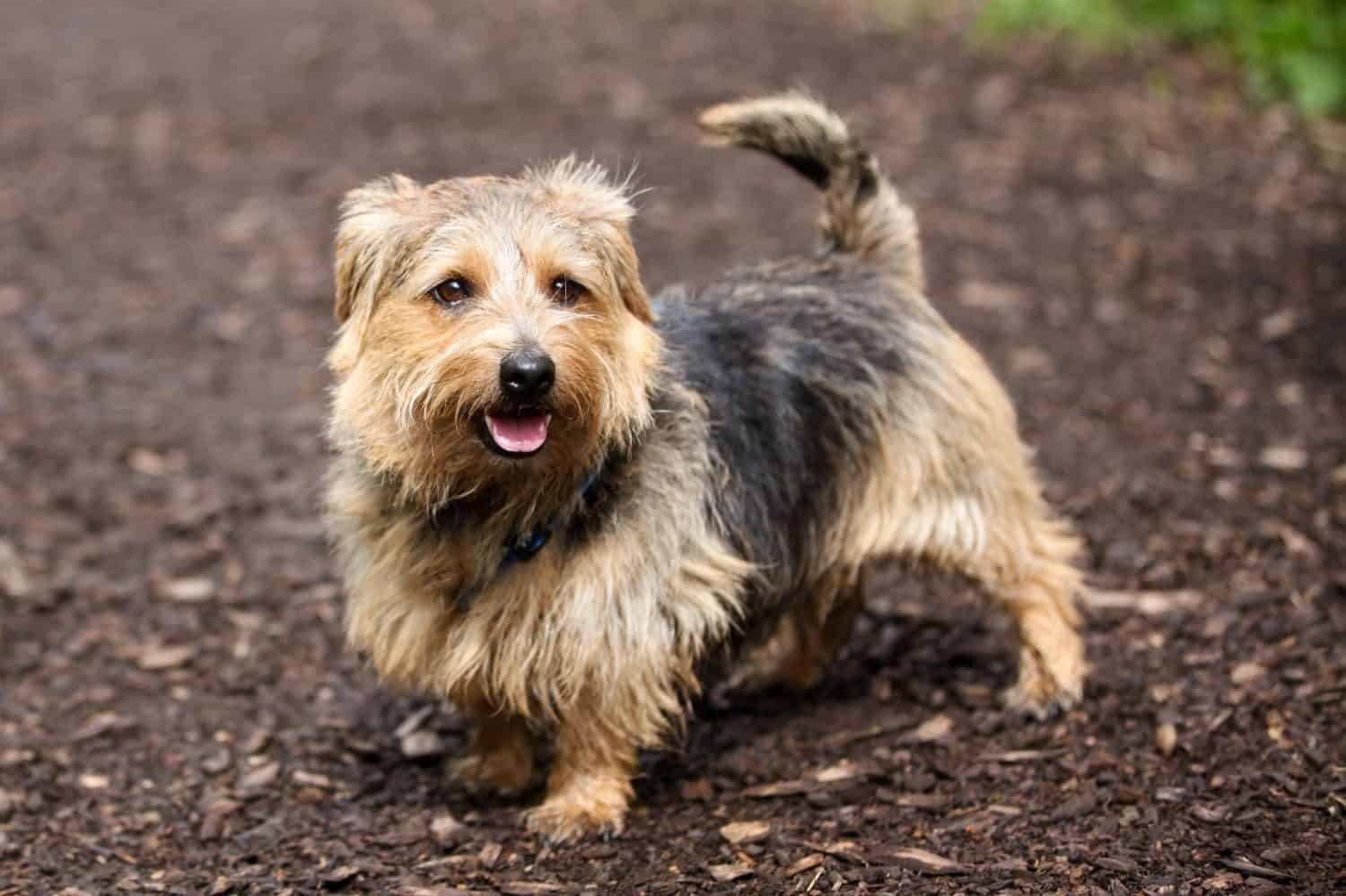
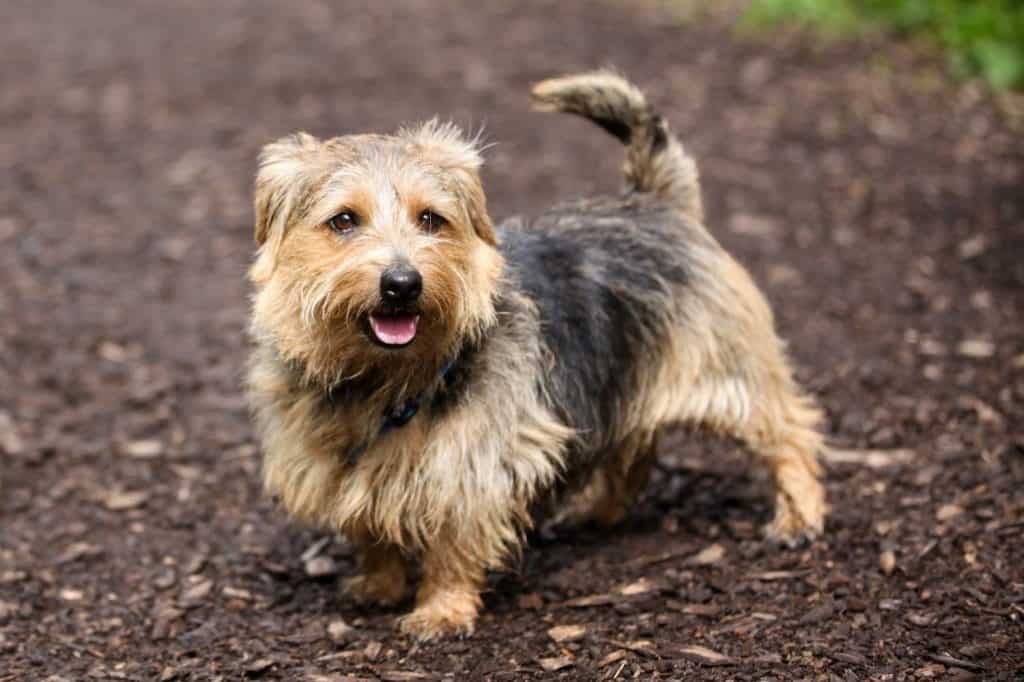
Norfolk Terrier enjoying a walk

At a Glance

Domesticated
Diet Omnivore
Activity Cathemeral+
Lifespan 14 years
Weight 6 lbs
Status Not Evaluated
Did You Know?

Norfolk Terriers and Norwich Terriers were once shown as one breed; they were split primarily by ear carriage (Norfolk: drop ears; Norwich: prick ears).

Scientific Classification

The Norfolk Terrier is a small terrier dog breed developed in the United Kingdom as a working vermin-hunting and farm dog; today it is primarily kept as a companion breed while retaining typical terrier boldness and drive.

Kingdom
Animalia
Phylum
Chordata
Class
Mammalia
Order
Carnivora
Family
Canidae
Genus
Canis
Species
Canis lupus

Distinguishing Features

  • Small, sturdy terrier build; low to the ground relative to some terriers
  • Traditionally described as having drop ears (contrasting with the closely related Norwich Terrier’s prick ears)
  • Rough/wiry coat texture common in terrier breeds
  • Bred for alertness, tenacity, and vermin control

Physical Measurements

Height
9 in (9 in – 10 in)
Weight
12 lbs (11 lbs – 13 lbs)
Tail Length
4 in (3 in – 5 in)
Top Speed
16 mph
running

Appearance

Primary Colors
Secondary Colors
Skin Type Domestic dog skin with a harsh, wiry double coat; weather-resistant topcoat with softer undercoat; requires regular hand-stripping or careful clipping to maintain texture.
Distinctive Features
  • Small, low-to-ground, sturdy terrier build adapted for vermin work and tight spaces.
  • Drop (folded) ears distinguish it from the closely related Norwich Terrier's typical prick ears.
  • Coarse, wiry coat with noticeable beard and eyebrows; functional protection in brush and burrows.
  • Alert, bold terrier temperament with strong prey drive; benefits from structured training and enrichment.
  • Care: routine brushing plus periodic stripping; active daily exercise despite small size.
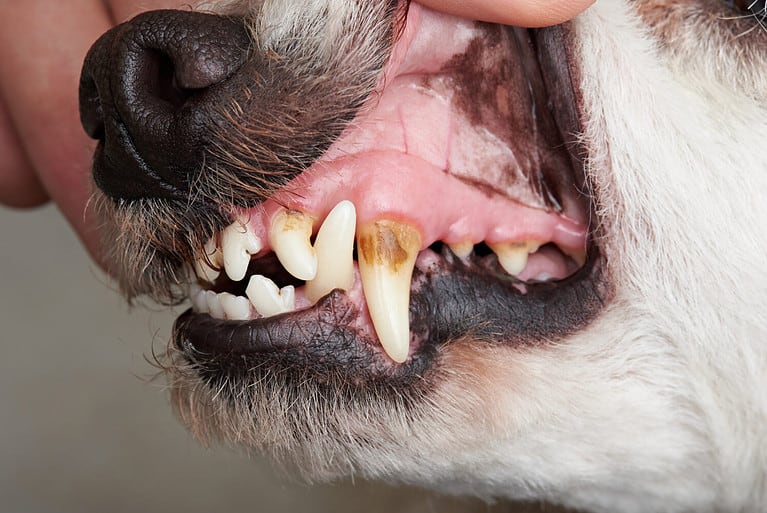
  • Health considerations seen in the breed include patellar luxation, hip dysplasia, dental crowding, and occasional airway/soft-palate issues; maintain lean body condition and dental care.

Sexual Dimorphism

Sexual dimorphism is mild: males are typically slightly larger and more heavily boned with broader heads. Females are often a bit lighter-framed; coat color and texture are otherwise similar.

♂
  • Slightly larger overall size and heavier bone in many individuals.
  • Broader head and neck musculature may be more pronounced.
♀
  • Often slightly smaller with a lighter, finer overall frame.
  • May appear more refined through head and chest while keeping the same coat type.

Did You Know?

Norfolk Terriers and Norwich Terriers were once shown as one breed; they were split primarily by ear carriage (Norfolk: drop ears; Norwich: prick ears).

Despite their small size, they were bred to go to ground after rats and other vermin on farms-classic working-terrier heritage.

They're among the smallest terrier breeds, but are notably "big-dog" confident and game.

Their harsh, wiry coat is designed to shed dirt and resist brambles-useful for fieldwork.

Many Norfolks "talk" with grumbles, barks, and playful noises, reflecting their alert, opinionated terrier nature.

They're typically sturdy and low-slung, built for squeezing into tight spaces while remaining strong and athletic.

Unique Adaptations

  • Drop ears (breed hallmark) that distinguish them from the closely related Norwich Terrier; the split became formal in kennel clubs in the 20th century.
  • Compact, low, sturdy frame-useful for maneuvering through narrow passages and uneven farm terrain while staying strong enough for sustained work.
  • Harsh, wiry, weather-resistant double coat that helps protect skin from abrasion and damp conditions during outdoor work.
  • High prey drive and rapid reaction time-selective traits from generations of vermin-control breeding.
  • Pain tolerance and boldness typical of working terriers; advantageous for confronting rodents but requires mindful, safe outlets today.

Interesting Behaviors

  • Vermin-seeking instincts: intense sniffing, tracking, and quick pounces on small moving targets (toys can trigger this).
  • Digging and "excavation" behavior, especially in gardens-an expression of their earthdog heritage.
  • Alert watchdog vocalizing: quick to announce visitors or unfamiliar sounds; may need training to limit nuisance barking.
  • Tenacious play style: tug, chase, and fetch with a persistent "finish the job" attitude.
  • Exploring tight spaces: squeezing under furniture or into brushy areas, reflecting their original go-to-ground work.
  • High social curiosity: many enjoy being close to people, but can be independent-minded in training (typical terrier).

Cultural Significance

Norfolk Terrier (Canis lupus familiaris) was bred in the UK as a farm and stable ratter. Today it is mainly a companion but is seen as a small, fearless, curious rural terrier. It split from the Norwich Terrier.

Myths & Legends

Rural England stable stories say small working terriers like the Norfolk Terrier guarded feed by hunting rats, making them almost legendary "barn guardians" praised by horsemen and farmers.

Early 1900s Cambridge stories tell of small, rough-coated terriers kept by students and locals to catch rats in stables and yards; these 'Cambridge terrier' tales helped shape the Norfolk/Norwich Terrier (Canis lupus familiaris) origin story.

A dog club legend says two nearly identical terriers were split into different breeds mainly by ear type—standing ears or folded ears—keeping the drop-eared Norfolk Terrier as its own long tradition.

In British working-dog circles, terriers were sometimes spoken of with affectionate superstition-"a good little ratter brings luck to the yard"-a folk sentiment tied to their role in protecting grain, tack, and livelihoods.

Conservation Status

NE Not Evaluated

Has not yet been evaluated against the criteria.

Population Stable

Life Cycle

Birth 3 pups
Lifespan 14 years

Lifespan

In the Wild
12–16 years
In Captivity
10–17 years

Reproduction

Mating System Polygynandry
Social Structure Managed Domestic
Breeding Pattern Serial
Fertilization Managed Selective
Birth Type Managed_selective

Norfolk Terriers are small, bold UK vermin-hunters now companion dogs; unlike wolves, mating is human-managed with selected pairs and occasional artificial insemination. Litters are raised by the dam; watch patellar luxation, cardiac/eye issues; provide exercise and hand-stripping.

Behavior & Ecology

Social Pack Group: 3
Activity Cathemeral, Matutinal, Vespertine
Diet Omnivore Meat-forward foods (often chicken, turkey, beef, or fish-based complete dog diets; many individuals show high motivation for meat treats).

Temperament

HUBS (domestic dogs): highly human-oriented, adaptable social roles, cooperative with people; dog sociability varies.
Breed-distinguishing vs base species (gray wolf context): far smaller, less pack-dependent, stronger human bonding, intensified vermin-prey drive.
Bold, confident, tenacious; quick to investigate novel sounds/smells and persist at problems.
Affectionate with family; can be reserved with strangers but typically warms with calm introductions.
Terrier assertiveness: may be dog-selective and prone to resource guarding without early training.
High prey/chase motivation; may pursue small animals-management needed in multi-pet homes.
Care requirements (behavioral): daily brisk exercise plus sniffing/foraging games; short, upbeat training sessions.
Care requirements (social): early socialization to dogs/people/handling; reinforce quiet to limit nuisance alert barking.
Health concerns that can affect behavior/handling tolerance: dental disease, patellar luxation, hip dysplasia, eye conditions; monitor pain-related irritability.
Grooming/care: wire coat needs regular brushing and periodic hand-stripping; consistent handling builds cooperative grooming behavior.

Communication

sharp alert bark
excited yips
growl Warning/resource guarding
whine Attention or frustration
low grumble during play or discomfort
rich body language: ear set, tail carriage, freezing, lip-licking, turning away
play solicitation: play bow, quick darts, pawing
scent investigation and marking; intense ground sniffing when on quarry scent
digging/scratching at scent sources as persistence signal during hunting-style play
handler check-ins: sustained eye contact, returning to heel zone when uncertain
attention bids: nose nudges, paw taps, bringing toys/objects
conflict signals: stiff posture, blocking, hard stare; de-escalation through disengaging when reinforced

Habitat

Biomes:
Temperate Forest Temperate Grassland Boreal Forest (Taiga) Tundra Alpine Mediterranean Desert Hot Desert Cold Savanna Tropical Dry Forest Tropical Rainforest Wetland Freshwater Marine +8
Terrain:
Plains Hilly Valley Coastal Mountainous Island
Elevation: Up to 16404 ft 3 in

Ecological Role

Human-associated domestic omnivore; historically a small-breed vermin-control hunter and today primarily a companion animal with retained mesopredatory instincts.

rodent and pest control in farm/household settings (historical/behavioral role) removal of food waste via human-provided feeding (commensal scavenging tendency, managed in modern care) social/companion role that supports human wellbeing (domestication-driven ecological niche)

Diet Details

Main Prey:
Rat Mouse Vole Rabbit Squirrel Small birds Insects and other invertebrates +1
Other Foods:
Berries and other fruits Grasses and plant matter Cooked grains and starches Vegetables

Human Interaction

Domestication Status

Domesticated

The Norfolk Terrier (Canis lupus familiaris) is a modern UK breed made in the late 1800s–1900s from small working terriers for vermin control on farms. Split from the Norwich by ear type (Norfolk = drop ears, Norwich = prick ears), it was standardized by kennel club breeding and is now mainly companion but keeps strong prey drive and terrier boldness.

Danger Level

Low
  • nips/bites if startled, handled roughly, or poorly socialized (common small-dog risk)
  • resource guarding or possessiveness over toys/food in some individuals
  • prey-drive chasing can cause incidental collisions or falls (tripping hazard) and risk to small pets
  • barking/alerting can create nuisance complaints rather than physical harm

As a Pet

Suitable as Pet

Legality: Generally legal to own as a domestic dog in most jurisdictions; subject to local dog licensing, vaccination (e.g., rabies), leash laws, and housing/insurance breed policies. Rarely targeted by breed-specific legislation compared with some large guarding breeds.

Care Level: Moderate

Purchase Cost: $1,800 - $4,000
Lifetime Cost: $18,000 - $45,000

Economic Value

Uses:
Companion animal (pet industry) Breeding/show (conformation, limited but established) Working role (small-scale vermin control/barn hunt) Services (grooming, boarding, training, veterinary care)
Products:
  • purchase/adoption fees
  • veterinary services (preventives, dentistry, chronic care)
  • training classes and behavior consults (prey-drive and barking management)
  • grooming/hand-stripping services and tools
  • pet supplies (food, crates, fences, toys; especially durable chew/toy items)

The Norfolk Terrier has an independent streak and a stubborn persistence that are hallmark qualities of the terrier breed. These pups are protective of their family and always up for a game of fetch or a lively walk.

Though a Norfolk terrier is happy to curl up beside its owner on the sofa, it won’t stay still for long. This dog belongs to the terrier group, so it is always anxious to find its next digging mission. This is a high-energy dog that loves activity in all forms.

History and Origin

These dogs date back to the 1880s in England. A British dog owner named Frank Jones bred these terriers to drive rats and foxes out of their holes. Their persistence and courage made this appealing (and easy) work for this dog. They were sometimes used in sporting contests to see which terrier could drive out all of the rats from a burrow in the shortest amount of time.

This breed actually was a folded-ear version of the Norwich Terrier until there was a call to have them developed and recognized as their own breed. After several years of argument, the Norfolk terrier was recognized by The Kennel Club in 1964 as a separate breed apart from the Norwich terrier. The different names come from the British county and town where they were bred. While the Norfolk terrier has ears that fold down, the Norwich terrier’s ears stand up. This is about the only difference between these dogs besides their names.

3 Pros and Cons of Ownership

ProsCons
A loyal watchdog
This small dog has a big bark that is effective at alerting a family that someone has entered the property. Though they’re too small to be a threatening guardian, their bark can definitely get an owner’s attention.
Difficult to train
Though they are alert, Norfolk terriers have a stubborn streak that can be a challenge during obedience training.
Hypoallergenic
Because this dog sheds very little, it is categorized as hypoallergenic. It doesn’t drop much dander from its fur.
A digger
These dogs were bred to dig holes to scare out rats, foxes, and other rodents. Furthermore, they were perfect for sporting events focused on driving out rodents. However, this digging behavior can sometimes result in a messy backyard.
A playful nature
This dog is always ready for a walk in the neighborhood, a run around the yard, a game of fetch, and more. The kids in a family have a ready-made playmate with this pup.
Requires special grooming
Grooming the coat of a Norfolk or Norwich terrier requires a technique called hand-stripping to get rid of loose or dead hair. Unless an owner learns this technique, the dog will need professional grooming.
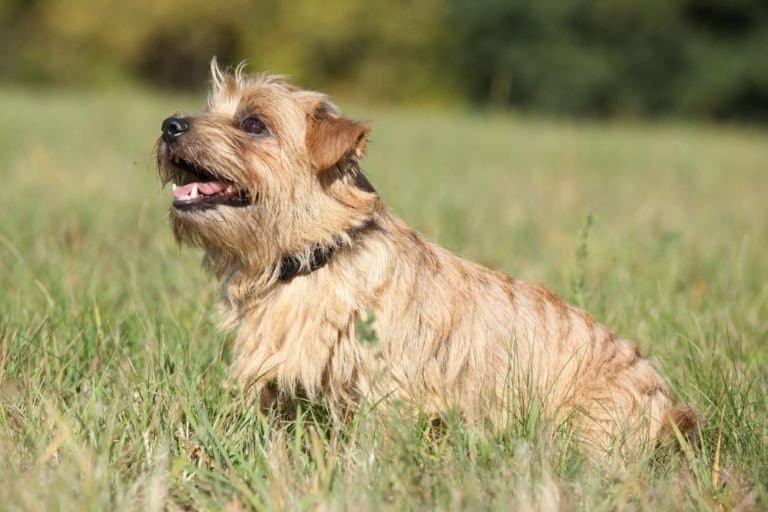
Norfolk Terrier sitting in grass

Norfolk Terriers are always ready for a walk in the neighborhood, a run around the yard, a game of fetch, and more.

Size and Weight

The Norfolk terrier is a small dog with a short-haired, wire coat. A male grows to be 10 inches tall, while females grow to be 9 inches tall at the shoulder. Both male and female Norfolk terriers weigh up to 12 lbs. At 7 weeks old, a Norfolk terrier puppy weighs 4 lbs. This dog is fully grown at one year old.

Common Health Issues

As with any canine, Norfolk terriers have some health issues that are common to their breed. For example, hip dysplasia is a common health issue for Norfolk terriers. Hip dysplasia is a genetic condition where the dog’s hip joint does not fit in the way it should. It can cause lameness and pain. A second common health issue is heart disease. This condition affects older Norfolk terriers and usually comes in the form of a weakened heart valve. Obesity can increase the odds that this dog develops heart disease. A liver disorder called a portosystemic shunt is another health issue for these dogs. Essentially, this condition deprives a dog’s liver of proper blood flow. When there’s not enough blood flowing through the liver, this organ can’t take toxins out of the bloodstream.

Temperament

Feisty is one of the best words to describe the personality of a Norfolk terrier. Despite their small size, these dogs are fearless. That’s part of the reason why they are successful at digging up the holes of rats and other rodents to scare them out of the area. They are quick to bark at strangers on their owner’s property.

One of the most notable traits of a Norfolk terrier is its loyalty. Instead of sleeping in a dog bed or crate, this dog is much happier sleeping on the bed of its owner. In short, Norfolk terriers love to be with their owners, tagging along both inside and outside the house. Some owners think of their Norfolk terrier as a pint-sized guardian.

Their behavior is high-energy. These dogs like to run, dig, jump, and play. They can be rough and tumble at playtime and are tougher than they look. Norfolk terriers are good with children, especially when they join a household as a puppy.
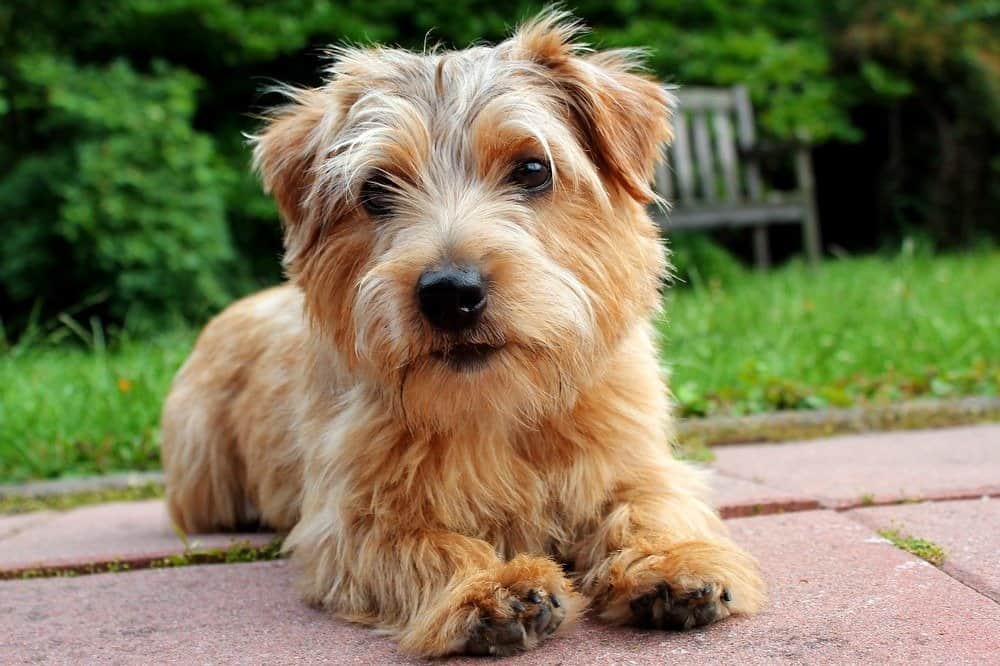
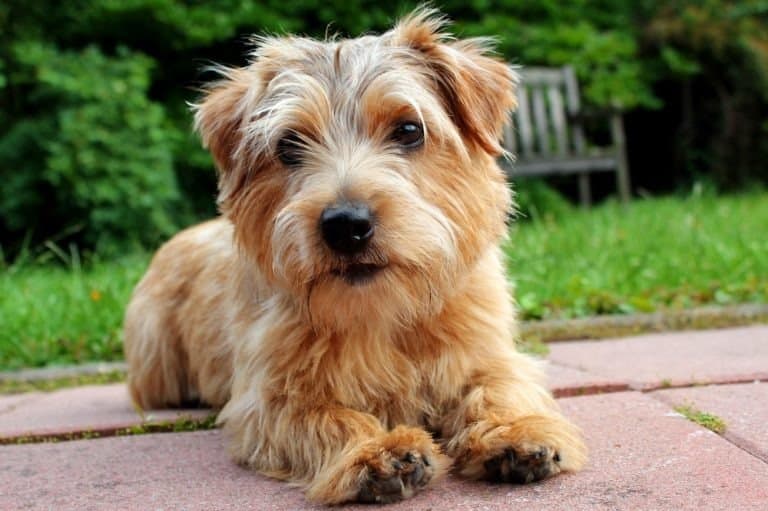
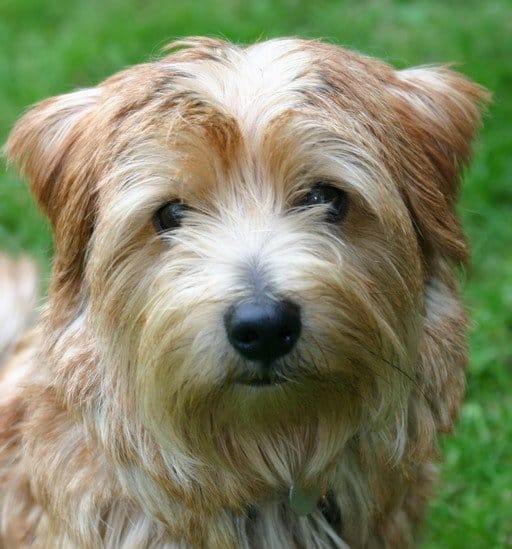
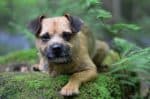
Norfolk terrier lying on pathway

Norfolk terriers love to be with their owners, tagging along both inside and outside the house.

How to Take Care of One

Having a Norfolk terrier as a pet means giving it the right kind of care so it will lead a long, healthy life. For instance, feeding this breed the right type of food can prevent some of the common health issues mentioned above. Consider these important factors related to its care.

The Best Dog Food

It’s important to note this breed’s propensity for heart disease. Consult your vet about your Norfolk Terrier’s health and diet, and do a little research on the connection between legumes in dog food and heart failure in dogs. There is a variety of legume-free dog foods on the market.

Not surprisingly, a Norfolk terrier puppy needs a different type of diet than an adult dog. Look at some of the main ingredients:

Norfolk terrier puppy food: Protein should be the main ingredient in food for a Norfolk terrier puppy. This gives them the energy they can burn with all of their activities. Calcium is important for strong bone and teeth development. Strong bone development helps to prevent hip dysplasia. Antioxidants and omega-3 fatty acids contribute to a puppy’s strong immune system and healthy organs, including its liver.

Norfolk terrier adult dog food: Protein is also an important ingredient for adult Norfolk terriers. The right amount of protein and fat gives them the energy they need without adding extra weight. Vitamin A is essential to a dog’s eye health, and antioxidants boost the immune system. Keeping calcium in the dog’s diet contributes to continued bone health and may help prevent hip dysplasia. Avoid fillers and go with whole grains and vegetables in an adult dog’s food to maintain its energy and metabolism.

Maintenance and Grooming

How much does a Norfolk terrier shed? Norfolk terriers shed very little. In fact, they’re classified as hypoallergenic dogs because they’re light shedders and leave behind a small amount of dander.

These dogs have a double coat that needs to be groomed twice a year by a professional. A groomer trims and hand-strips the coat, removing dead and loose hair. This process also gets rid of tangles and mats.

An owner should brush their terrier’s coat once a week using a soft brush with boar’s hair bristles or a slicker brush. This removes dirt and minor tangles. It’s best to give this dog a bath just once a month. Ichthyosis, which is itchy, dry skin, is a common ailment of this breed. Bathing this dog more than once a month can bring on this condition.
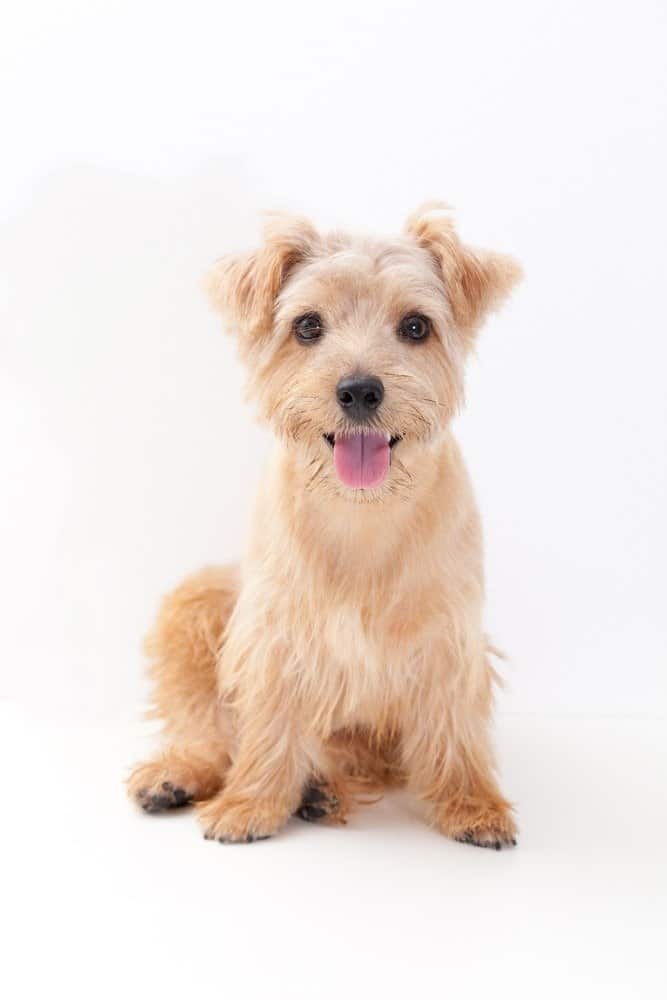
Norfolk Terrier on a white background

Norfolk Terriers are classified as hypoallergenic dogs because they’re light shedders and leave behind a small amount of dander.

Training

A Norfolk terrier can be challenging to train. This is due to its stubborn streak. It can be easily distracted by birds or rodents in the training area. Using treats and praise can help a Norfolk terrier learn its lessons more quickly.

Once a Norfolk terrier works through obedience training, it is a perfect candidate to train for a sporting event. Earthdog is a non-competitive event in which Norfolk terriers and other small dogs test their digging skills to find rodents.
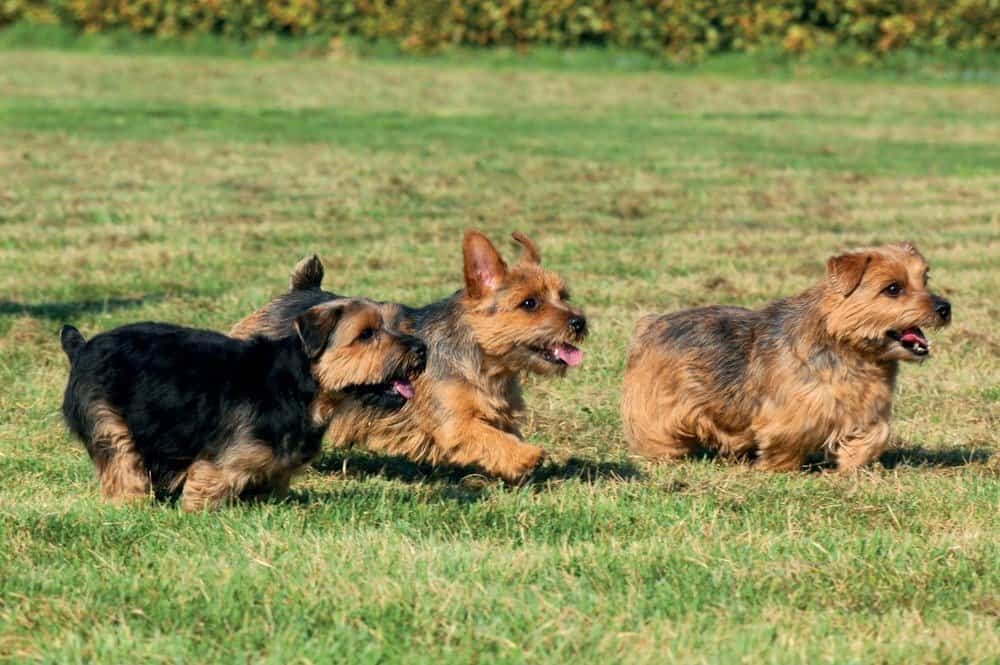
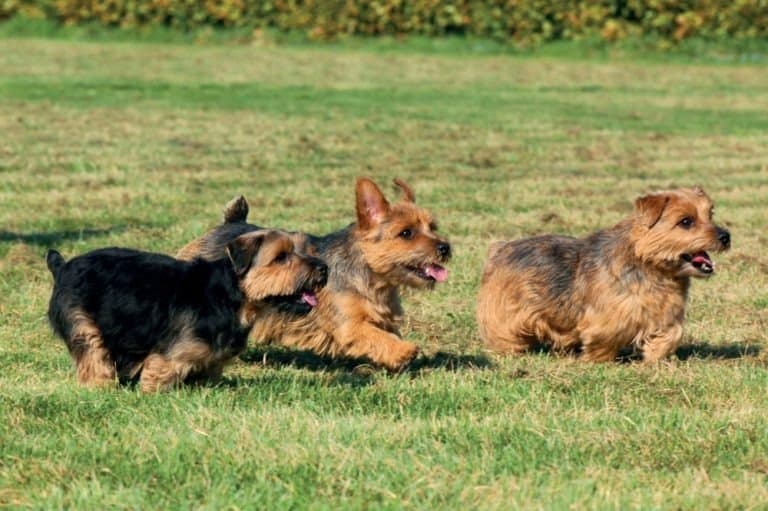
Norfolk Terrier dogs playing outside

Norfolk Terriers can be easily distracted by birds or rodents in the training area.

Exercise

These high-energy dogs need regular exercise to stay healthy. Unless they are trained to stay with an owner, they should remain on a leash when walked. Otherwise, they are likely to take off after squirrels, cats, and other animals during a neighborhood walk. They need 20 to 40 minutes of exercise per day. Playing hide and seek and chase are great activities for a family to play with their Norfolk terrier.

This dog is suitable for apartment life and can be a good guardian. But it needs space to exercise. An apartment dweller should be willing to take their Norfolk terrier on walks. A Norfolk terrier that doesn’t get enough exercise outdoors can become destructive of items in a home.

Puppies

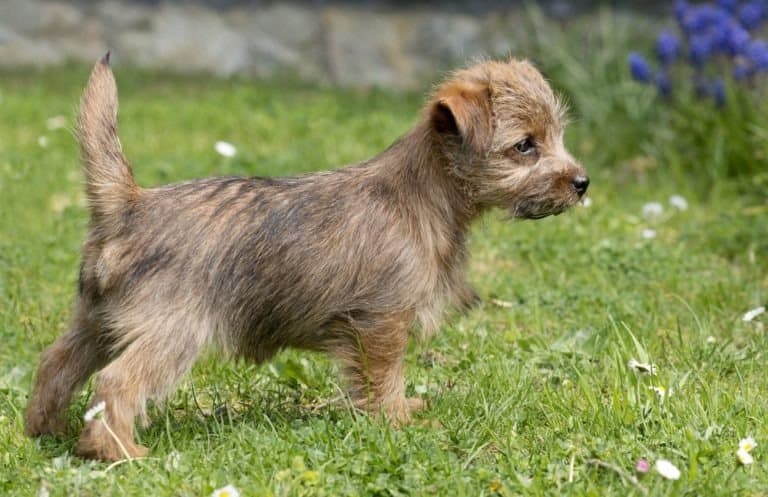
One thing to keep in mind with Norfolk terrier puppies is to avoid overfeeding them. Obesity is an issue with all small dogs, including this breed. So, taking steps to feed puppies the right amount of protein and fat can help them to avoid excess weight.
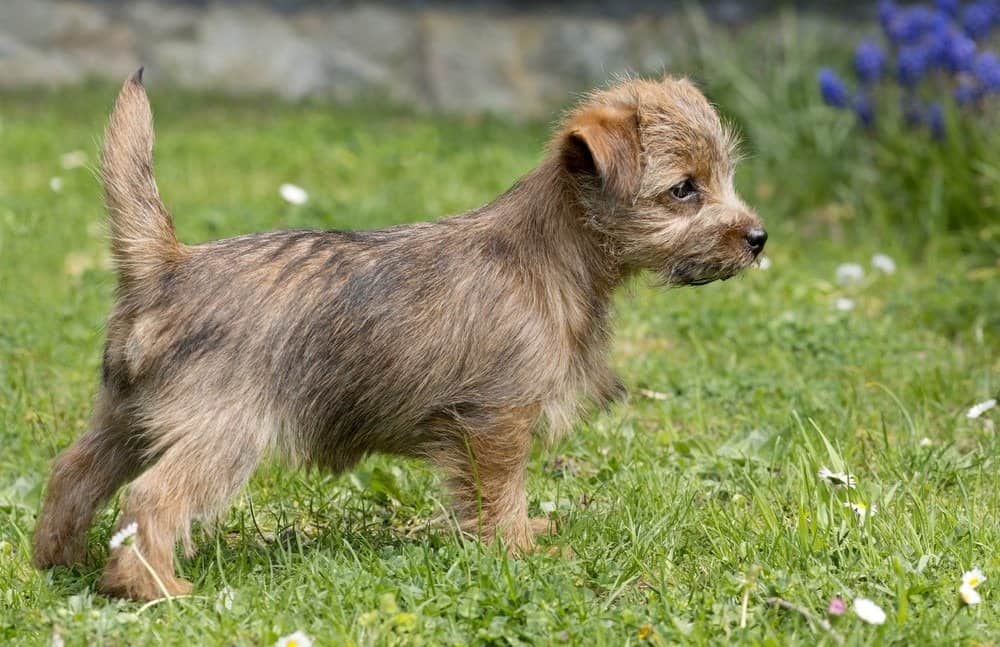
Puppy Norfolk Terrier standing in grass

Obesity is an issue with all small dogs, including this breed, so try to avoid overfeeding them.

With Children

These dogs are a good choice for families with children. They are playful and affectionate. It’s ideal to introduce a puppy to a family with young children. Consequently, the terrier becomes used to interacting with little kids from the start.

Similar Dogs

Other breeds similar to the Norfolk terrier include the Cairn terrier, Australian terrier, and Affenpinscher.

  • Cairn terrier: A fellow member of the terrier group, this dog loves to dig and has high energy like the Norfolk terrier. However, they grow to be a little bigger than Norfolk terriers.
  • Australian terrier: Another friendly, alert, and intelligent member of the terrier group. One difference between them is that this dog has a much simpler grooming routine than the Norfolk terrier.
  • Affenpinscher: This dog belongs to the toy group, not the terrier group. However, it has the same loyal nature and outgoing personality as the Norfolk terrier.

View all 98 animals that start with N

Sources

  1. David Burnie, Dorling Kindersley Animal, The Definitive Visual Guide To The World's Wildlife / Accessed November 11, 2008
  2. Tom Jackson, Lorenz Books The World Encyclopedia Of Animals / Accessed November 11, 2008
  3. David Burnie, Kingfisher The Kingfisher Animal Encyclopedia / Accessed November 11, 2008
  4. David Burnie, Dorling Kindersley Illustrated Encyclopedia Of Animals / Accessed November 11, 2008
  5. Dorling Kindersley Dorling Kindersley Encyclopedia Of Animals / Accessed November 11, 2008
  6. American Kennel Club / Accessed November 15, 2020
  7. Wisdom Panel / Accessed November 15, 2020
  8. Vetstreet / Accessed November 15, 2020
Heather Ross

About the Author

Heather Ross

Heather Ross is a secondary English teacher and mother of 2 humans, 2 tuxedo cats, and a golden doodle. In between taking the kids to soccer practice and grading papers, she enjoys reading and writing about all the animals!

Thank you for reading! Have some feedback for us?


Norfolk Terrier FAQs (Frequently Asked Questions)

The initial cost of a Norfolk terrier ranges from $1500 to $3500. The vet costs for this dog range from $200 to $400 for a regular checkup. Grooming costs are around $100 per visit and food costs range from $10 to $40 a month.