

Numbats eat up to 20,000 termites each day!

A numbat is a marsupial found in the western part of Australia. This small mammal uses its long, sticky tongue to capture termites that live underground. It hunts for termites by day and sleeps at night, making its home in hollow logs and burrows. Once widespread across southern Australia, the numbat is found only in the wild in Western Australia, where it is the state animal. It is endangered and today there are fewer than 1,000 numbats outside of captivity.
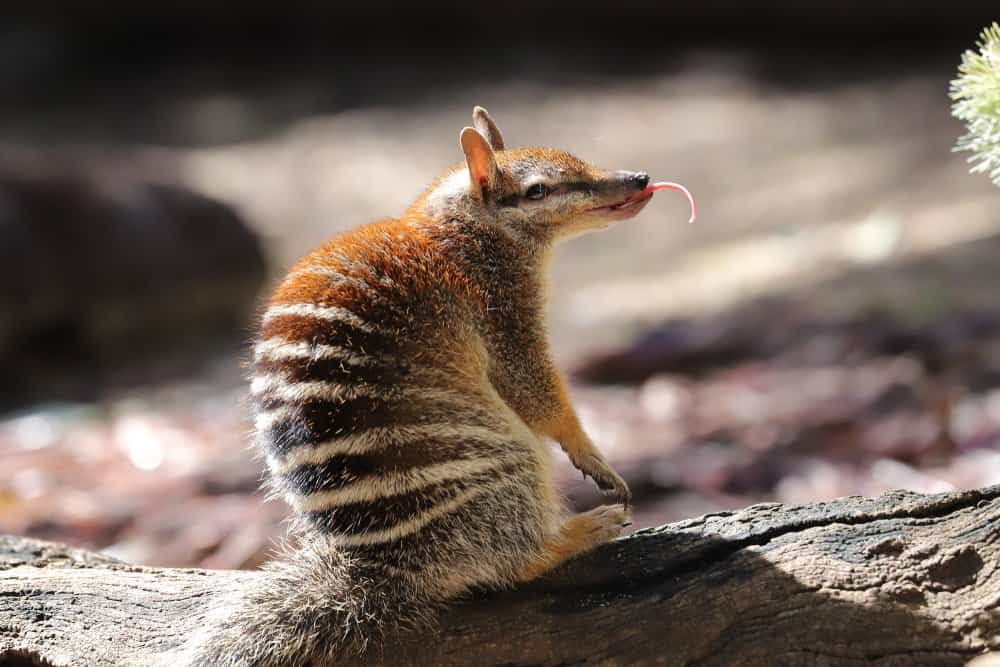
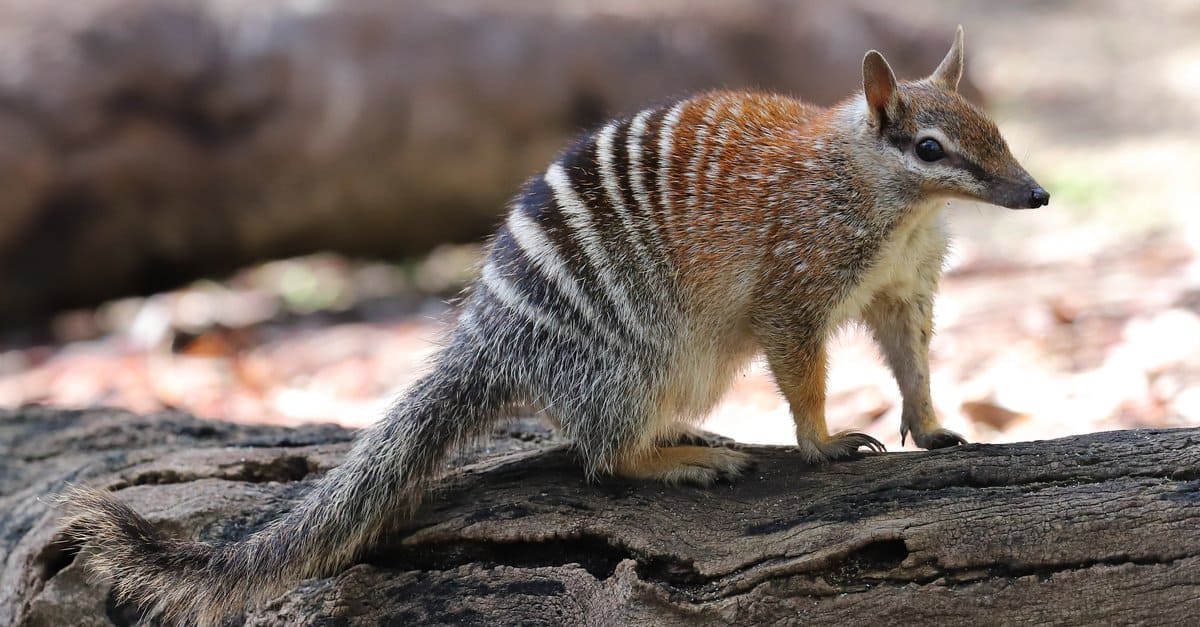
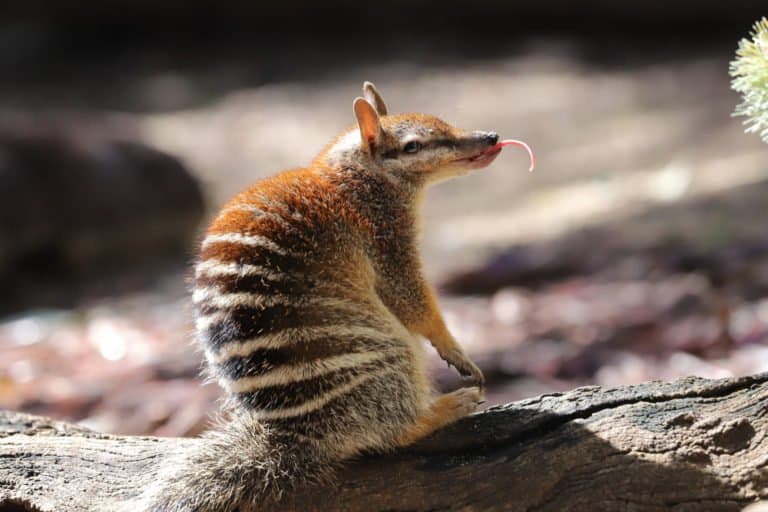
The small numbat uses its long, sticky tongue to capture termites.
©Ken Griffiths/Shutterstock.com
3 Fun Facts About the Numbat
- The numbat’s only source of food is termites.
- Numbats communicate with one another by making soft clicking noises.
- Numbats have dull, peg-like teeth and don’t chew the termites before swallowing.
Scientific Name
The numbat’s scientific name is Myrmecobius fasciatus. Myrmex means ant, bios refers to life, and fasciatus translates as striped. It belongs to the Myrmecobiidae family, which is part of the order of Australian marsupial carnivores Dasyuromorphia, and its class is Mammalia.
The common name of numbat was originated by the indigenous people in the York and Toodyay districts located east of Perth. The mammal is called the “Walpurti” in the Pitjantjatjara dialect of the desert language groups living in parts of Western Australia, South Australia, and the Northern Territory.
While the numbat is not an anteater, other names for the animal are the banded anteater or the marsupial anteater.
There are two subspecies of this marsupial: Myrmecobius fasciatus rufus and Myrmecobius fasciatus fasciatus. Myrmecobius fasciatus fasciatus is the surviving subspecies.
Myrmecobius fasciatus rufus has been extinct since the 1960s. It lived in South Australia’s arid central regions and had a more red-colored coat than Myrmecobius fasciatus fasciatus. There have only been a small number of this numbat’s fossils discovered, with the oldest dating back to the Pleistocene, commonly called the Ice Age, 11,700-2.58 million years ago.
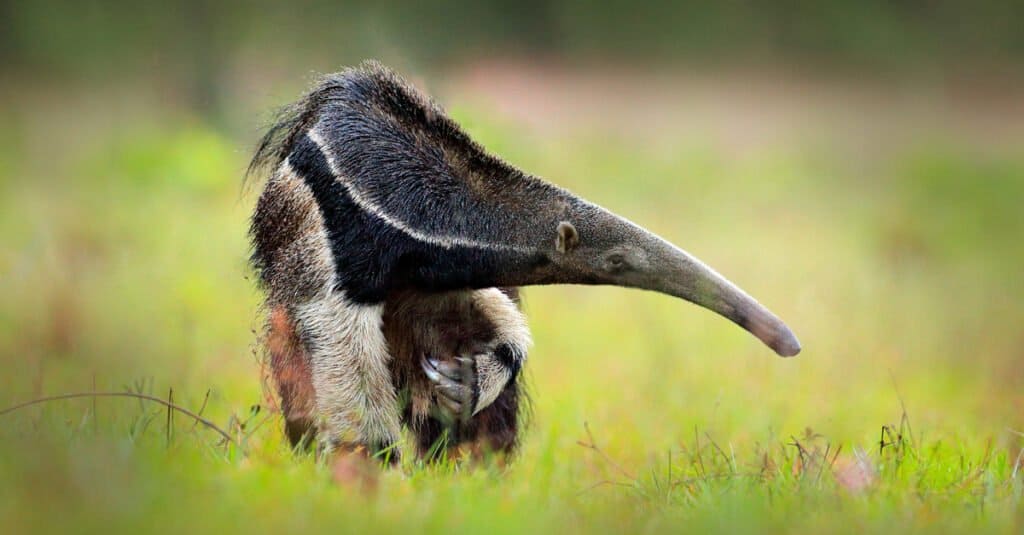
The numbat is not a member of the anteater family but its other names are the banded anteater and marsupial anteater.
©Ondrej Prosicky/Shutterstock.com
Evolution and History
According to genetic studies, the numbat’s ancestors separated from other marsupials sometime during the late Eocene Epoch between 32 million and 42 million years ago.
European settlers in Australia first came across the numbat in 1831 while exploring the Avon Valley in Western Australia. Specimens were first classified by George Robert Waterhouse in 1836. The numbat was part of John Gould’s acclaimed work “The Mammals of Australia” published in 1845.
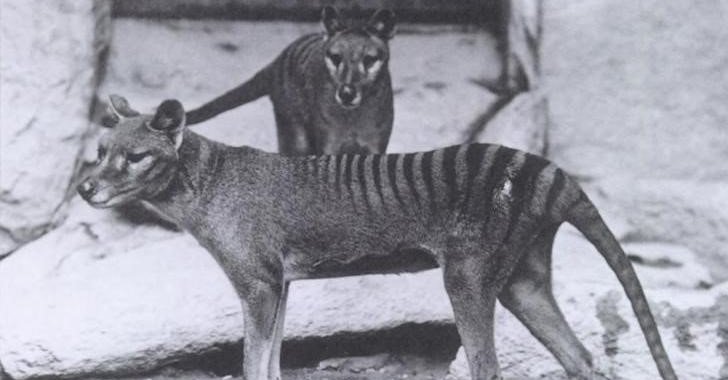
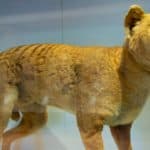
Numbats share an ancestor that was alive 35 million to 41 million years ago with the native carnivorous marsupial, the thylacine, also known as the Tasmanian tiger, which became extinct in the 1930s. Scientists believe 95% of the DNA of the numbat and the thylacine may be identical and are using the numbat’s genome in efforts to recreate the thylacine’s genetic sequence, offering the possibility of reintroducing this species back into Australia.
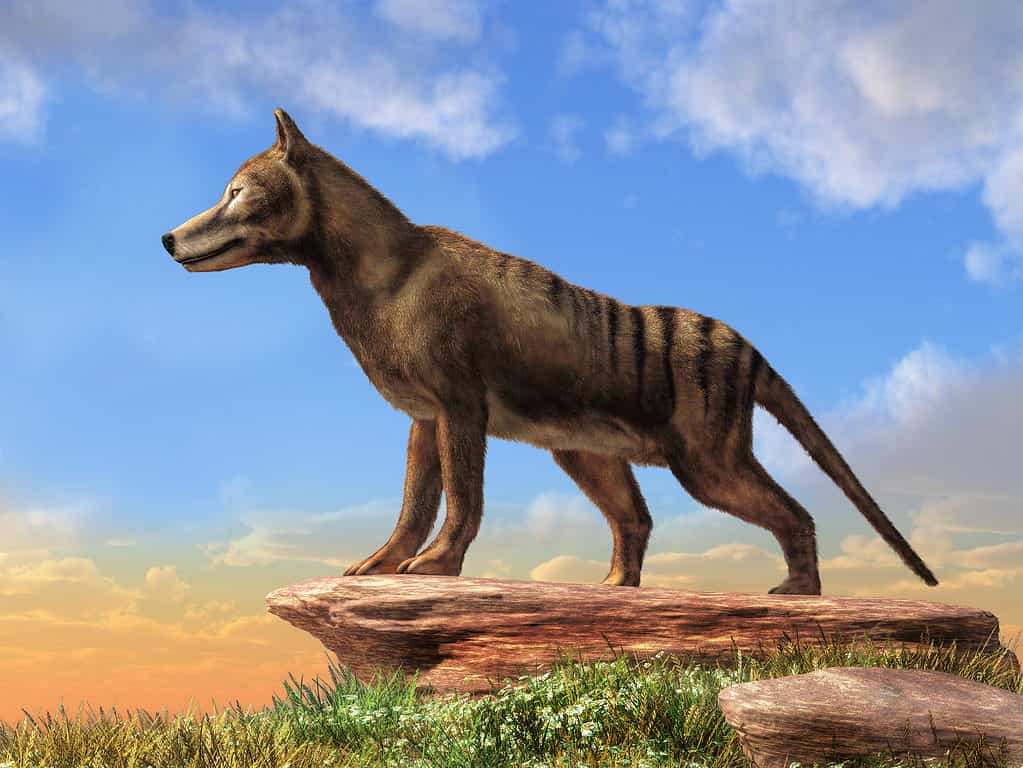
The numbat shares around 95% of DNA with the now-extinct thylacine.
©Daniel Eskridge/Shutterstock.com
Appearance and Behavior
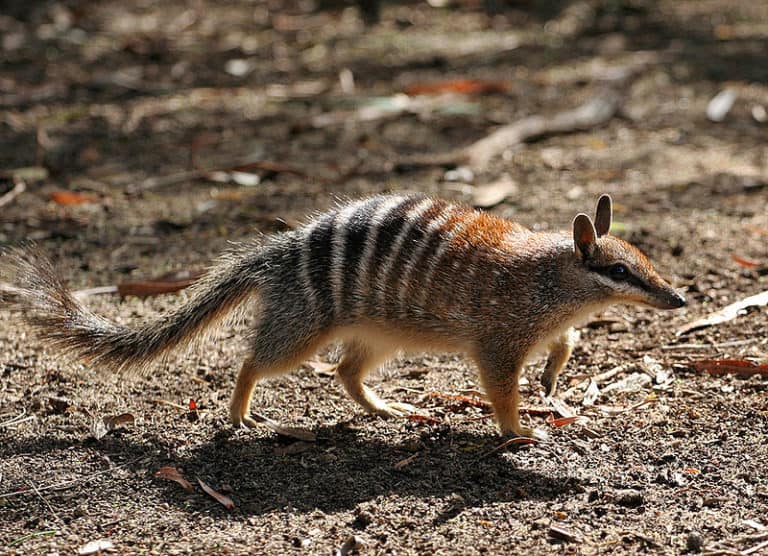
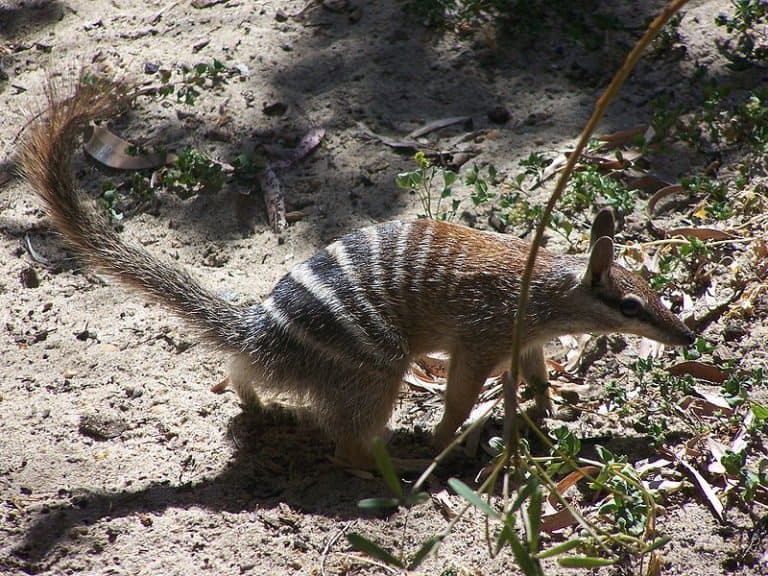
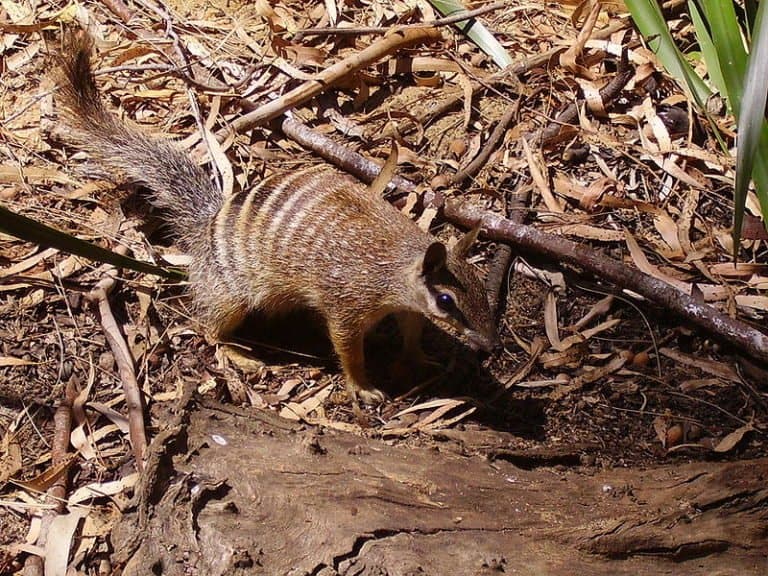
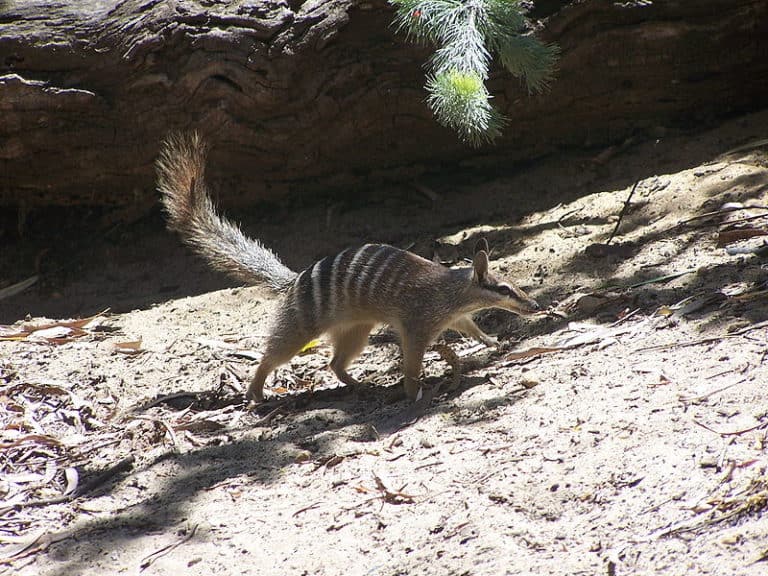
A numbat’s coat is a mixture of reddish brown with black and white stripes on its back and a small black stripe over each of its dark eyes. Its ears are thin and pointy. Its slim body is 7 to 12 inches long (a 12-inch long numbat is the same size as a standard ruler).
A numbat’s bushy tail measures 4 to 8 inches long. Some people compare the appearance of a numbat’s tail to that of an Eastern gray squirrel. Adult male and female numbats weigh a little over one pound (imagine two hamsters from the pet shop and you have the total weight of an adult numbat).
Due to its long nose and tongue, the numbat has been compared to the anteater, who also eats thousands of insects for nourishment. These mammals don’t have sharp teeth like other carnivores do. Instead, they have teeth that look like pegs with dull edges. However, as numbats don’t chew the termites they capture, there is no need for them to have sharp teeth that can cut through meat.
The brownish-red coat of a numbat helps it to blend into its forest environment when predators are around. Also, their eyes are on the sides of their head so they can see danger in time to seek protection inside a log or in a burrow. Numbats are fast and can scurry up a tree using their long claws to grip the bark and escape a predator. In fact, numbats can move up to 20 miles per hour when they need to make it somewhere fast!
Adult numbats are solitary animals. This is mostly due to the fact that they need to eat a lot of termites to maintain their energy level. Living alone means they don’t have to compete with a group of numbats for food. One of the few times you’ll see numbats together is during the breeding season. Also, baby numbats live together for a while until they are ready to leave their nest and set out on their own. If numbats ever choose to gather together, the group is called a colony or a cloud.
Generally, numbats are not aggressive animals. They are alert and ready to freeze or run at the first sign of danger. However, two males can show aggression toward one another when competing for a female during the breeding season.
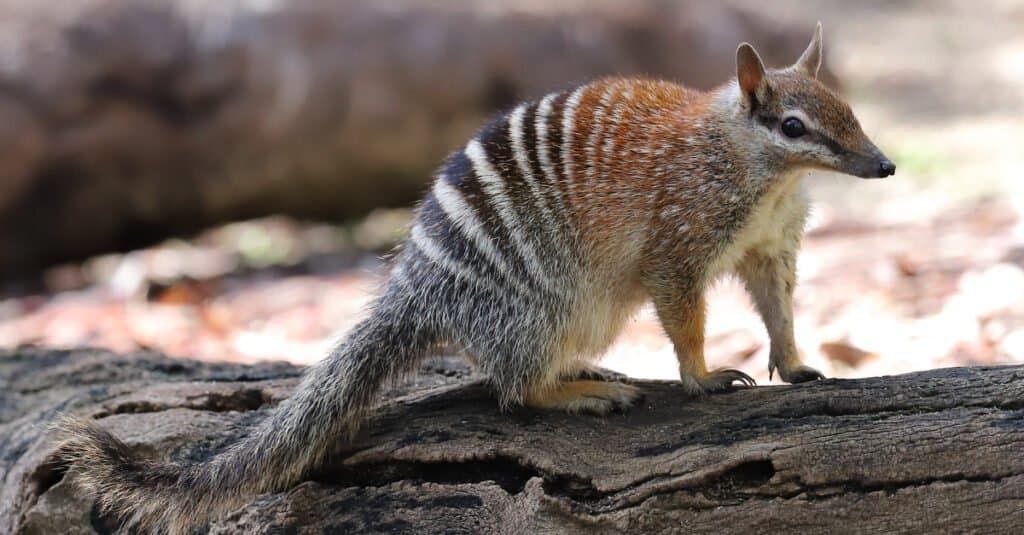
The numbat’s brownish-red coat helps it to blend into its environment when under threat from predators.
©Ken Griffiths/Shutterstock.com
Habitat
Numbats once lived in areas of southern Australia as well as New South Wales and Victoria. Now, their territory is in the southwestern part of western Australia in the eucalypt woodlands.
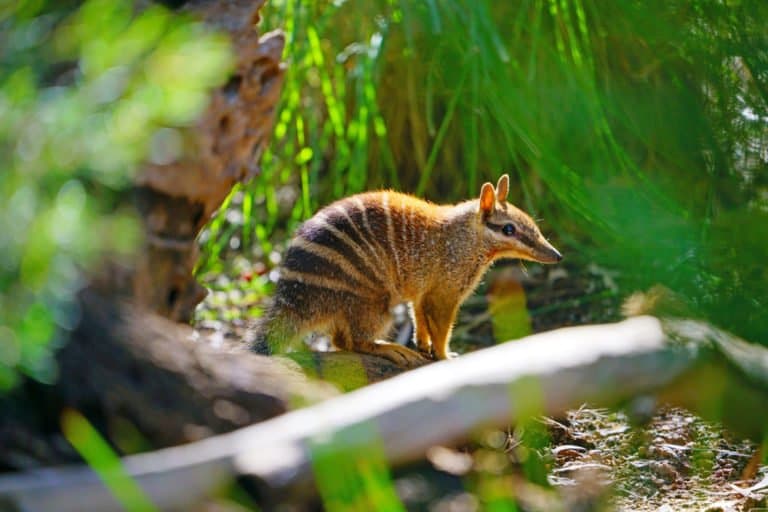
Dryandra Woodlands close to Narrogin and Perup Nature Reserve next to Manjinup are two places where you’ll see numbats. In eucalypt woodlands there are large groups of trees but there’s enough space for sunlight to filter through to warm the ground. This is important because termites don’t become active when the ground is cold. The climate is dry and temperate in these woodlands.
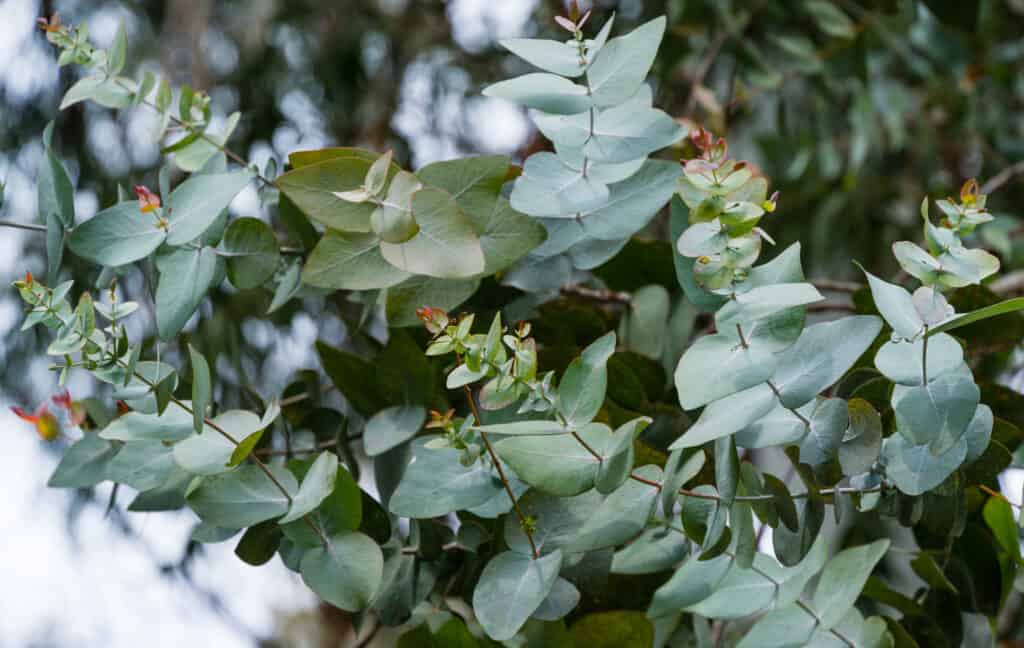
Numbats make their home in the eucalypt woodlands of Western Australia.
©iStock.com/Marina Denisenko
Diet
A numbat’s diet consists exclusively of termites. If they happen to eat an ant or another type of insect it’s because the trespassing insect was in the way when the numbat’s tongue was grabbing for termites underground. Numbats eat 20,000 termites per day. When a numbat eats 20,000 termites, it is eating one-tenth of its own weight in food.
Numbats are active whenever termites are active. So, in the summertime when the sun warms the ground in the morning, stirring up the termites, numbats will be out looking for them. In the wintertime, when the sun is at its hottest during midday, the termites are active and so are the numbats. Numbats use their sense of smell to find termites underground. Also, some scientists believe numbats can feel the vibrations of termite activity as they walk along the forest floor.
Numbats get a supply of water from the termites they eat. This has helped them adapt to the dry environment they live in.
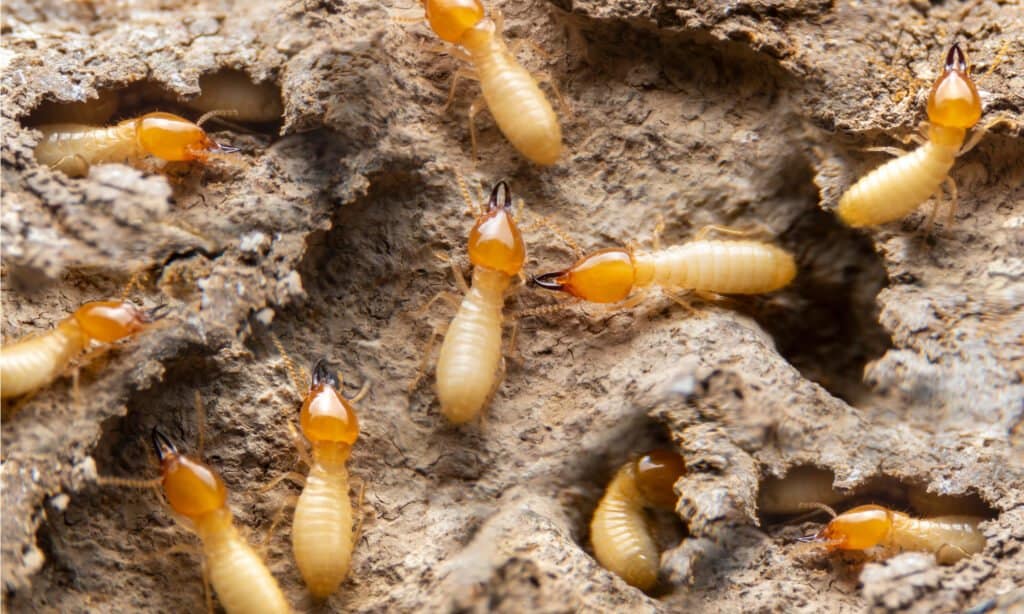
Numbats consume 20,000 termites a day — 10% of their own weight in food.
©Witsawat.S/Shutterstock.com
Predators and Threats
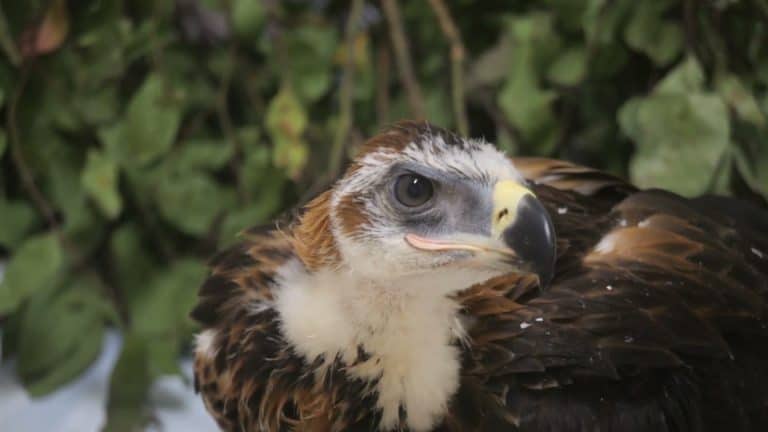
As you may have guessed, numbats have a lot of predators. They are eaten by birds of prey in the area such as falcons, wedge-tailed eagles, and collared sparrowhawks. Also, they are prey to carpet pythons, goannas, and other reptiles. Foxes and feral cats hunt for numbats as well.
The habitat of numbats is threatened by people building houses and the expansion of farmlands. Cutting down and removing trees from the area where numbats live takes away their shelter as well as their food source. Bush fires also destroy the trees taking away shelter from numbats.
The population of numbats ranges around 1,000. This is due to all of their predators as well as the environmental threats. The numbat’s official conservation status is Endangered. This has put them on the Red List of the International Union for Conservation of Nature (IUCN). Numbats are protected under Australian law. So, there are penalties if someone is caught hunting them or capturing them for any reason.
Fortunately, there are sanctuaries where people care for numbats in order to increase the overall population. Two of these sanctuaries are Scotia Sanctuary and Yookamurra Sanctuary in Australia.
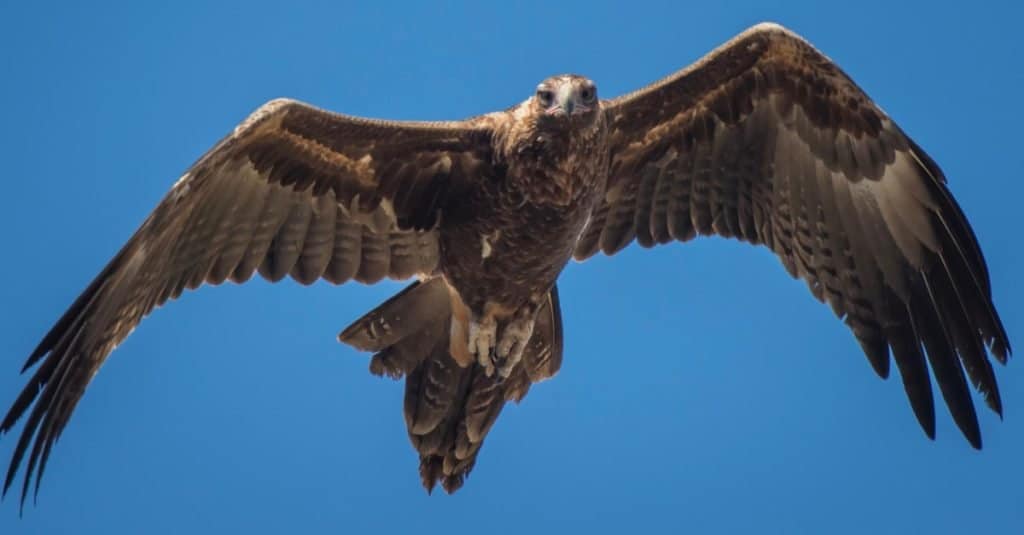
Wedge-tailed eagles are just one of the numbat’s predators.
©Terry Dell/Shutterstock.com
Reproduction, Babies, and Lifespan
The mating season of the numbat goes from December to January. A male numbat uses a smelly substance from its sternal gland to mark logs in its territory to let females know it is searching for a mate. A numbat mates with several females during this time. The gestation period of a numbat is just 14 days. This is one of the shortest gestation periods for any mammal. The female numbat gives live birth to 4 pups that each weigh less than one pound.
After they are born, the numbat pups attach themselves to their mother to nurse. She carries them along on her chest until they are about 6 months old. A mother numbat has small folds of skin on her chest to protect the pups as she moves up trees and over the ground. There are even small hairs called guard hairs inside the skinfolds to keep the pups warm. These folds of skin are kind of like a numbat’s version of a kangaroo’s pouch.
Another adaptation of a numbat pup relates to its nose. A numbat pup has a flat, short nose that allows it to easily nurse for several months. After a pup reaches the point where it begins to eat termites, it develops the long, pointy nose seen on adult numbats. When the pups are 6 months old, the mother detaches them from her body partly because they are now too heavy to carry along with her. She leaves the pups in a hollow log or a burrow where she will visit to nurse them each day.
When they are 8 or 9 months old, the pups leave the burrow for periods of time to practice capturing termites. When a numbat pup reaches 1 year old, it leaves the burrow to find a home and start life on its own.
Male and female numbats in the wild live for an average of 5 years. Numbats living a protected life in a sanctuary can sometimes live for 8 years. A numbat’s life can be cut short when it’s injured, and the injury becomes infected. Also, these marsupials are vulnerable to parasites that can cause disease.

After a pup begins to eat termites, it develops the long, pointy nose seen on adult numbats.
©EQRoy/Shutterstock.com
Population
The total population of numbats is less than 1,000. The official status of the numbat is endangered. Numbats are now a protected species, but the population is still in decline.
However, there are steps being taken to increase the number of numbats in Australia. The Perth Zoo is breeding numbats and releasing young ones into the wild. Also, there are protected areas such as Mt. Gibson Wildlife Sanctuary where numbats can breed and remain safe from predators including foxes and feral cats.
Numbat Pictures
View all of our Numbat pictures in the gallery.

EQRoy/Shutterstock.com
Sources
- David Burnie, Dorling Kindersley (2011) Animal, The Definitive Visual Guide To The World's Wildlife / Accessed November 2, 2009
- Tom Jackson, Lorenz Books (2007) The World Encyclopedia Of Animals / Accessed November 2, 2009
- David Burnie, Kingfisher (2011) The Kingfisher Animal Encyclopedia / Accessed November 2, 2009
- Richard Mackay, University of California Press (2009) The Atlas Of Endangered Species / Accessed November 2, 2009
- David Burnie, Dorling Kindersley (2008) Illustrated Encyclopedia Of Animals / Accessed November 2, 2009
- Dorling Kindersley (2006) Dorling Kindersley Encyclopedia Of Animals / Accessed November 2, 2009
- David W. Macdonald, Oxford University Press (2010) The Encyclopedia Of Mammals / Accessed November 2, 2009