
Due to its long prehensile tongue, the okapi is one of the few animals in the world said to be able to lick its own ear!
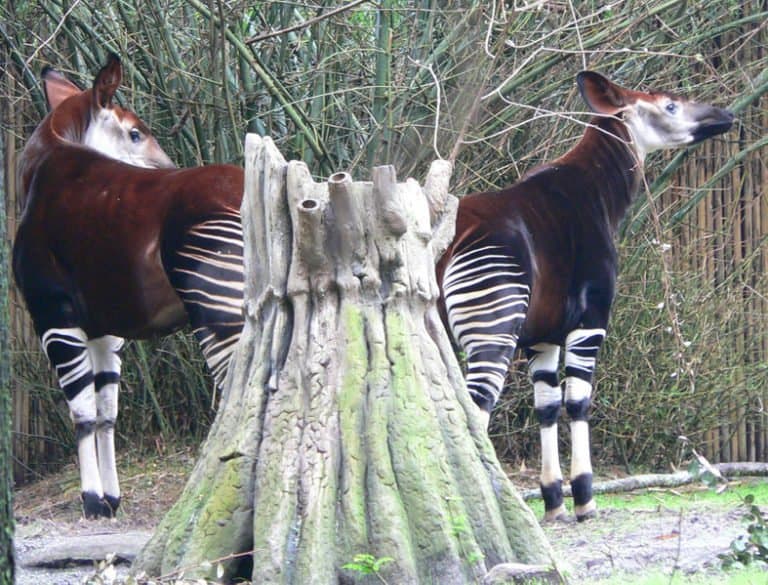
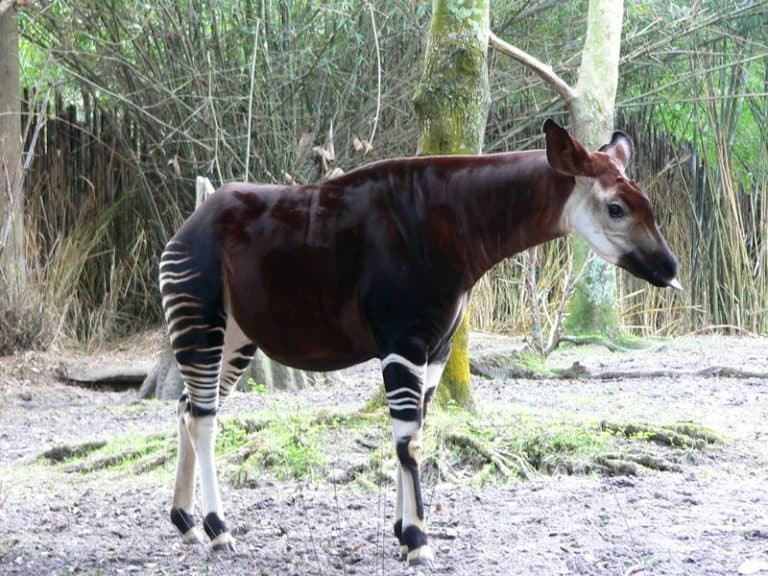
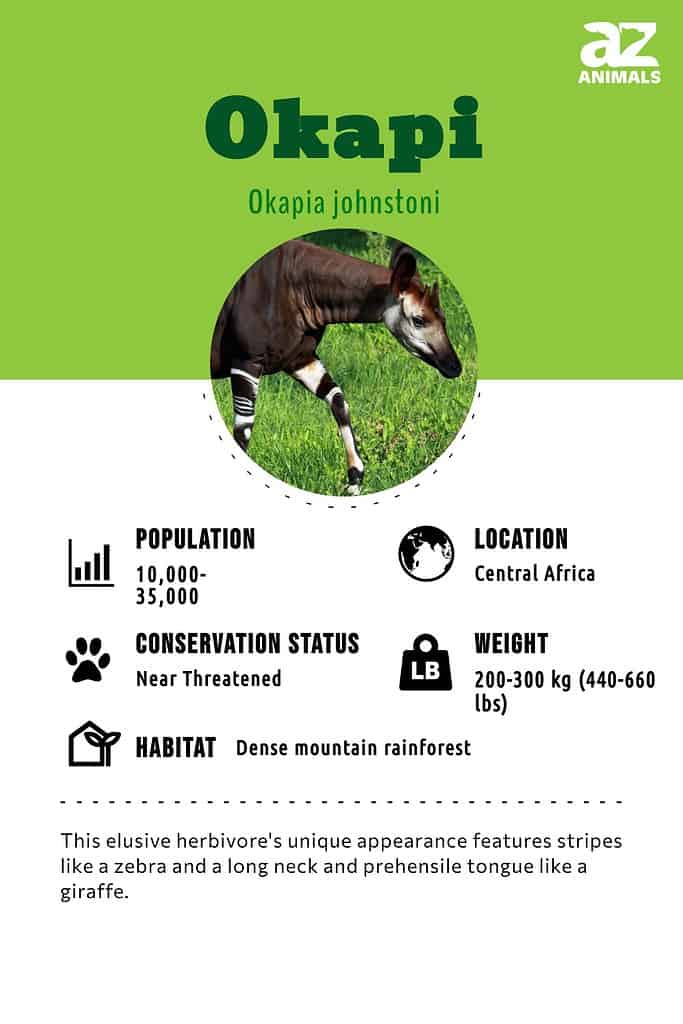
The okapi is an elusive herbivore present in only central Africa in a small area of tropical mountain forest. It has a long neck, in common with its close relative the giraffe, and the stripes on its rear and legs that are similar to zebra’s patterns. The okapi is so rarely seen, it was not categorized as a species until the 1900s. It is believed to be common in its limited habitat and is listed as near threatened.
3 Fascinating Facts About the Okapi
- The okapi’s prehensile tongue helps it reach food, assists with grooming, and is so long that it is one of the few animals in the world that can lick its own ear!
- This animal has been called a forest zebra by some due to its similar stripes.
- The okapi was classed as a species in 1900-1901 after an analysis of two pieces of its skin were sent to London to be analyzed.
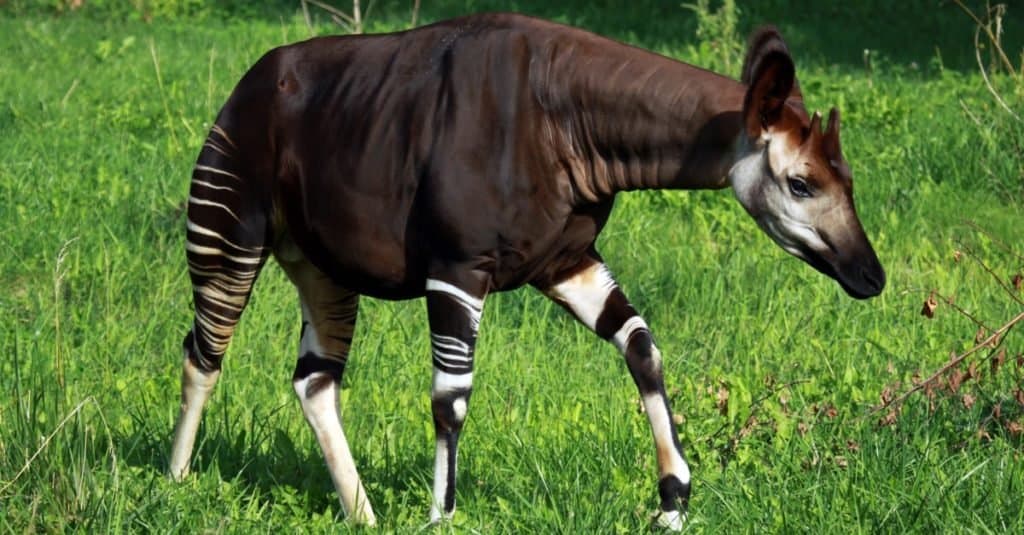
The okapi was not classed as a species until 1900-1901.
©Michal Sloviak/Shutterstock.com
Scientific Name
The okapi’s scientific name is Okapia johnstoni. Okapia comes either from the Mbuba word “okapi” or the related Lese Karo name “o’api.” Johnstoni is in honor of Sir Harry Johnston, the British special commissioner in Uganda who was the first to source pieces of the okapi’s skin and a skull from the Ituri Forest.
This mammal’s genus is Okapia and it belongs to the Order Artiodactyla and the Family Giraffidae. The okapi and giraffe are the only members of Giraffidae still in existence.
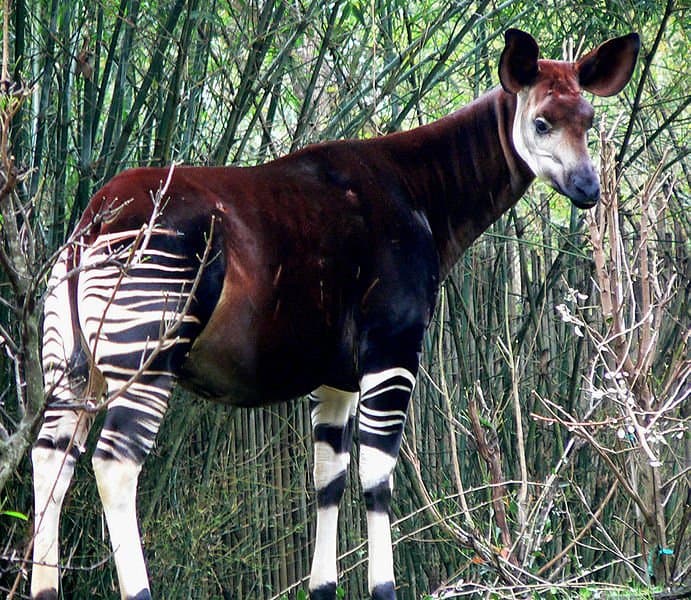
The okapi is also known as the forest giraffe, Congolese giraffe, and zebra giraffe (while its striped markings appear similar to a zebra’s, the okapi is not closely related to it).
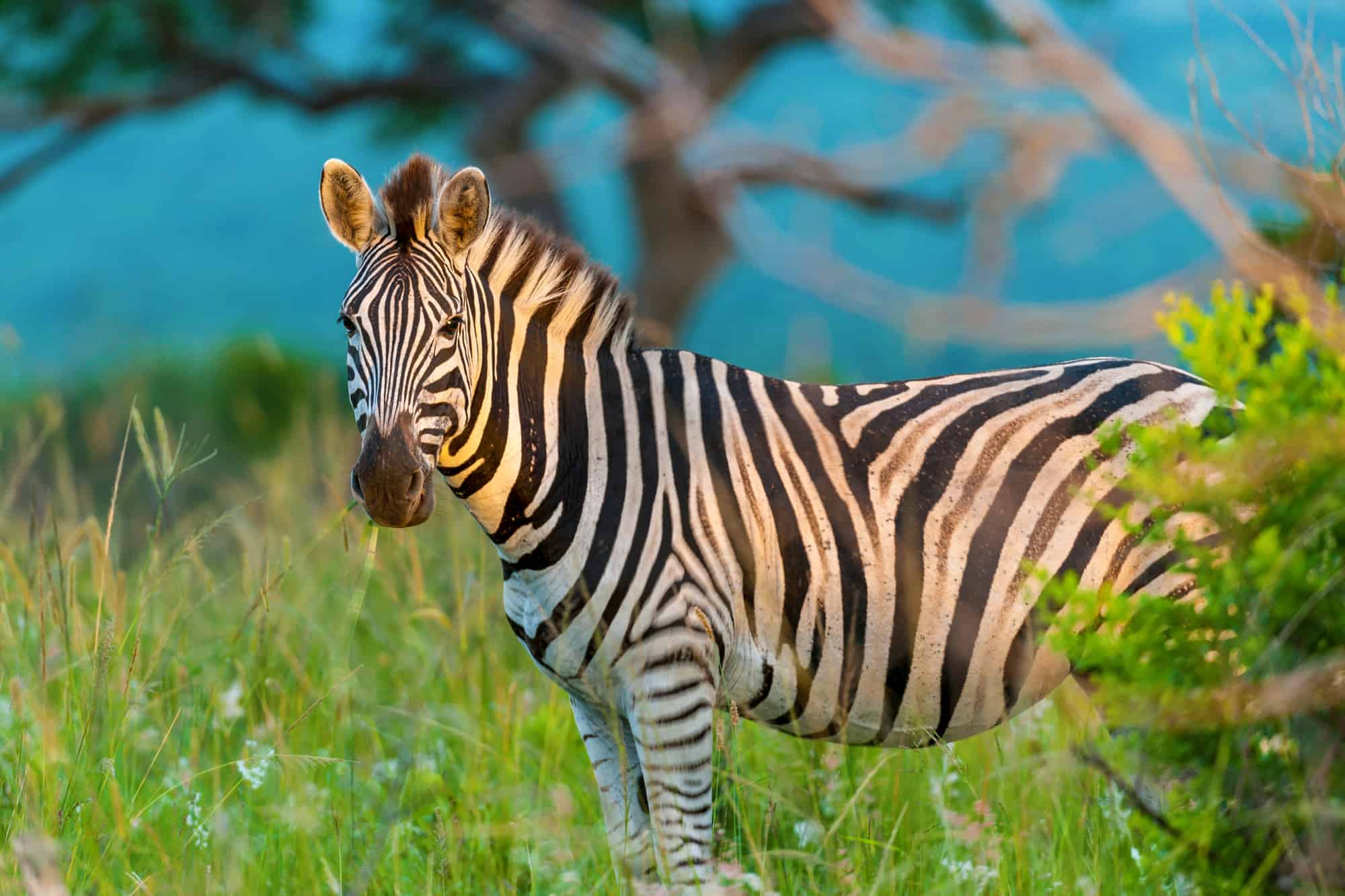
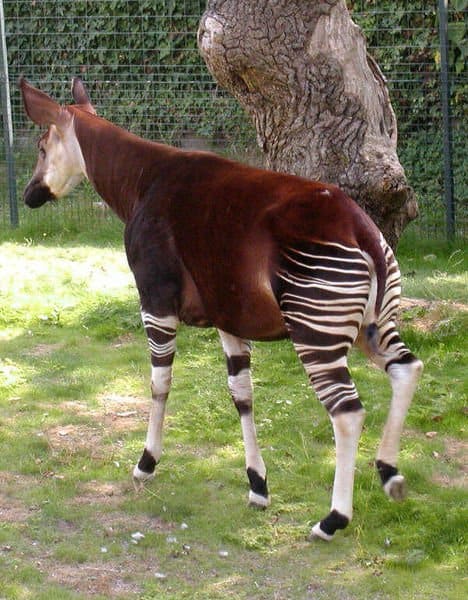
Although the okapi has similar stripes to a zebra, the two species are not closely related.
©Roger de la Harpe/Shutterstock.com
Evolution and History
The okapi has been called a living fossil because while it has lived over many geological periods it still appears like a more primitive animal. The earliest recorded ancestors of the okapi are members of the Giraffidae who first appeared in the Early Miocene Epoch, 23 million to 16 million years ago, in Africa. By the Middle Miocene Epoch, 16 million to 11.6 million years ago, Giraffids migrated to Europe and Asia. A genetic study in 2016 showed that a common ancestor of the okapi and giraffe lived around 11.5 million years ago.
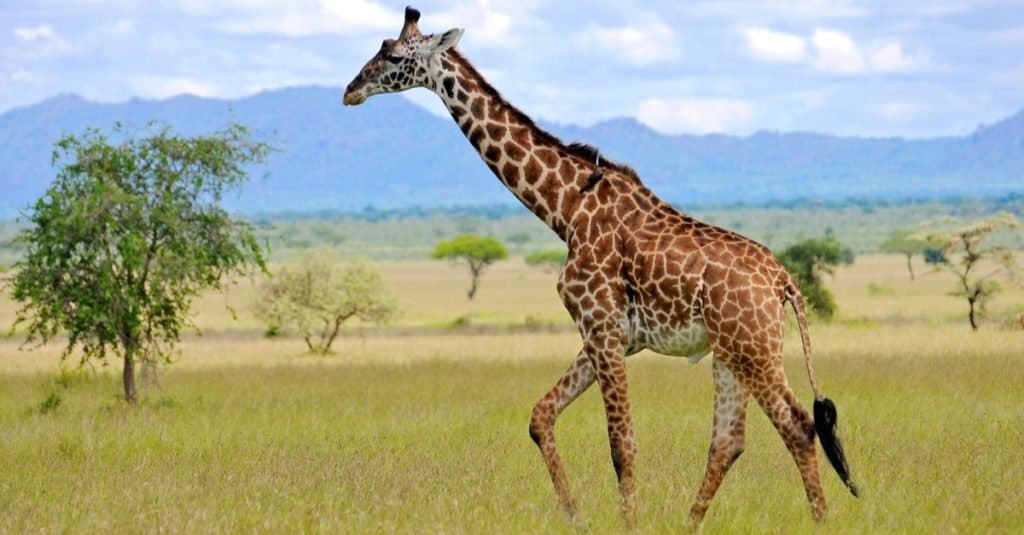
The okapi and giraffe are both members of the Giraffidae family, which first appeared in the Early Miocene Epoch.
©PLANET EARTH/Shutterstock.com
Appearance
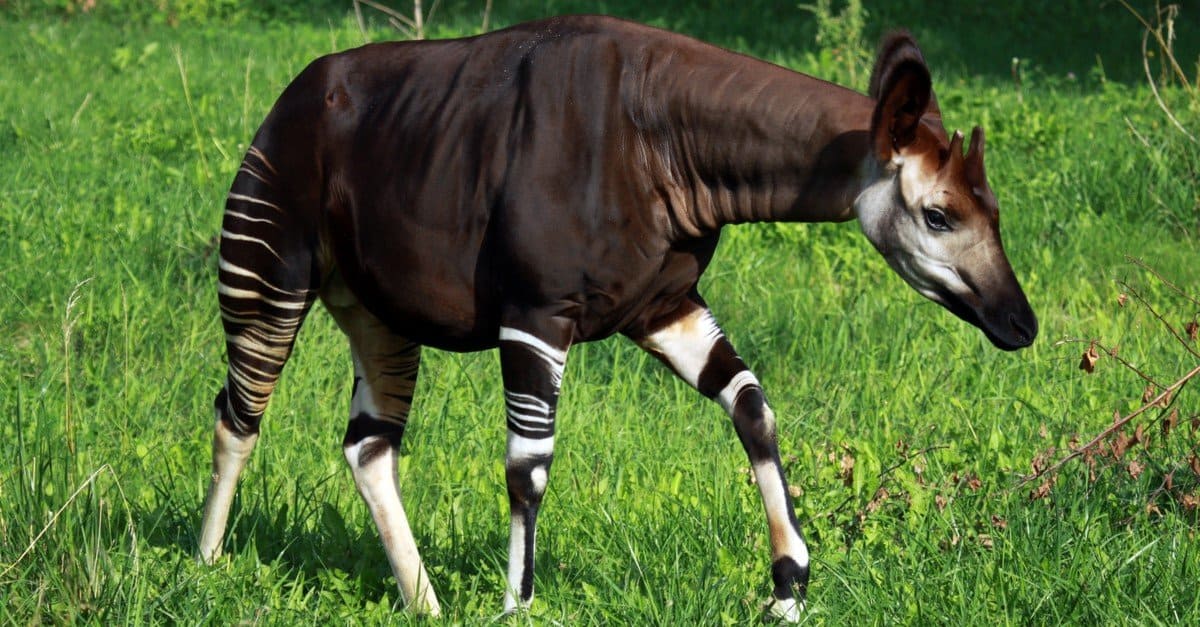
Many believe that the okapi’s unique appearance makes it one of the strangest animals alive today.
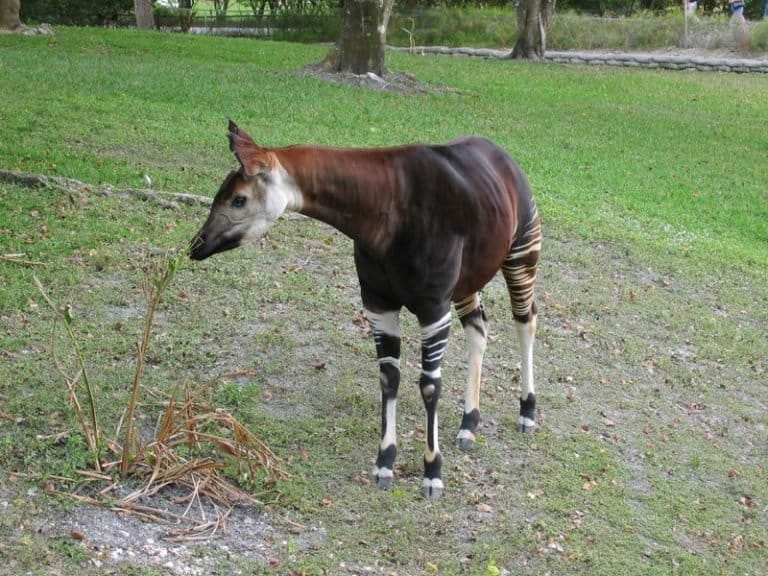
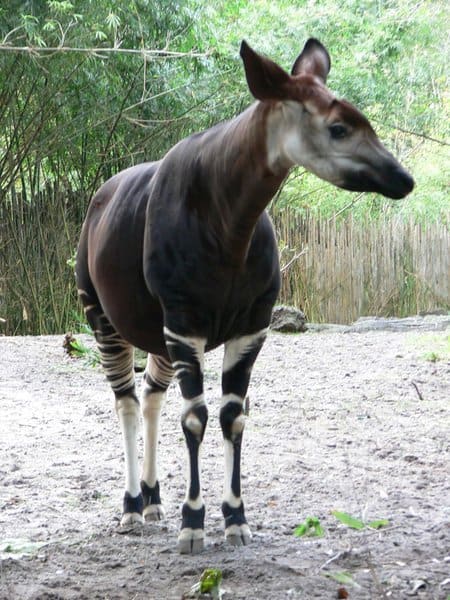
The okapi has a red-brown coat with white, horizontal striped markings on its hindquarters and legs, white ankles with a dark area above each hoof, and thick skin that prevents it from becoming injured easily.
Most notable is the okapi’s long, black tongue, which is prehensile, allowing it to grab leaves from the branches above its head. The okapi’s long neck also helps it to reach leaves in higher areas as well as being used to defend itself and its territory. Its set-back ears assist in the detection and monitoring of predators.
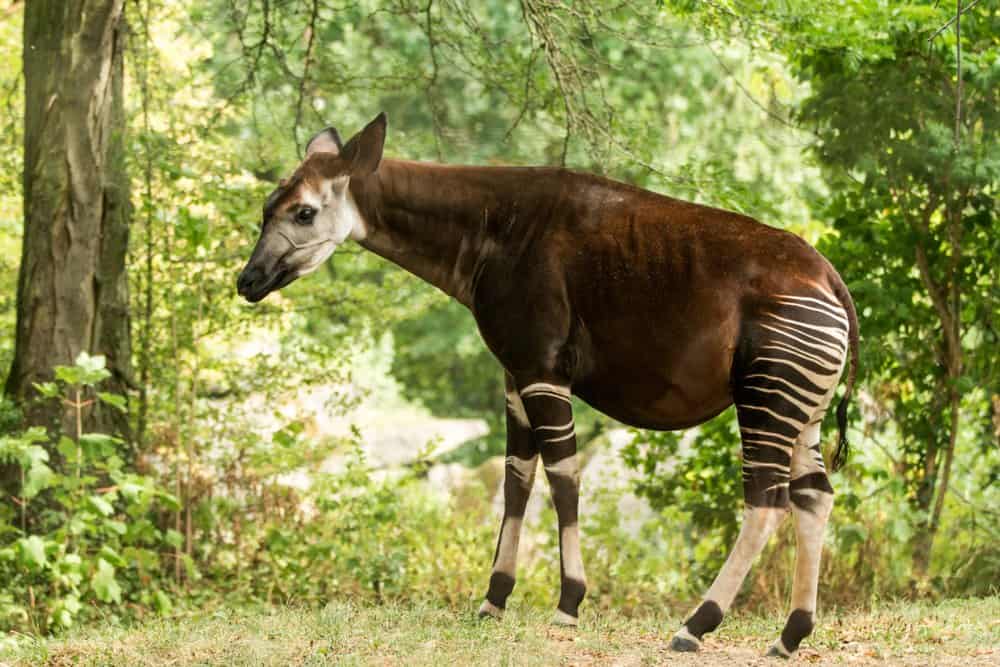
The okapi’s long neck helps it to reach leaves and defend itself and its territory.
©Jiri Hrebicek/Shutterstock.com
Behavior
The okapi is diurnal so is active during the daytime, spending most of its time searching its forest habitat for food. This species is primarily solitary, except during mating, when mothers are caring for calves, and occasionally feeding in a small group of other okapi.
Male okapi typically inhabit a bigger territory than female okapi, and their areas are marked with urine and by rubbing their necks onto trees. A male will battle another, using their necks to fight, over their territory and during mating season for a female.
These animals are thought to communicate with quiet sounds and depend on their hearing abilities when they cannot see through the dense forest of their habitat. You can find out some incredible facts about okapis here.
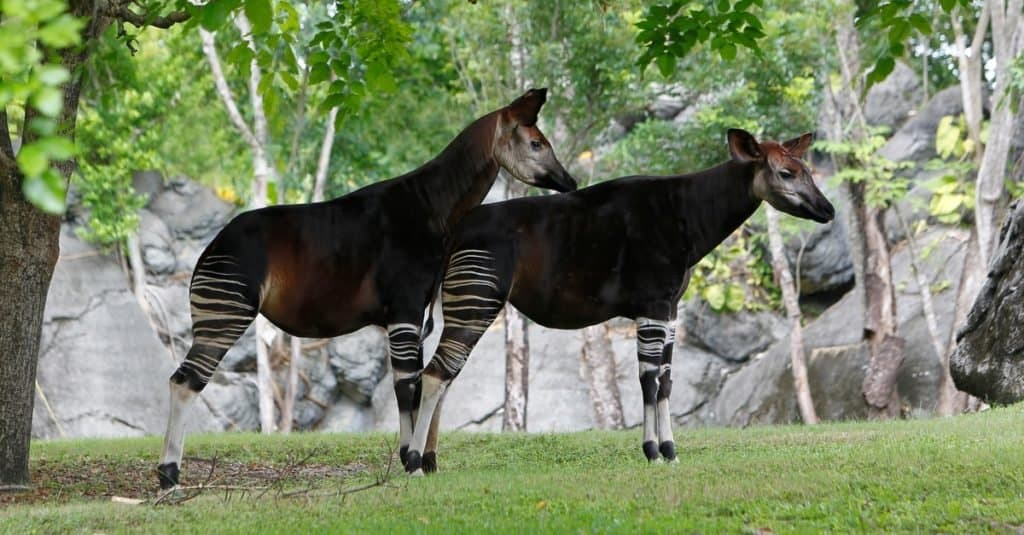
The okapi is generally a solitary animal except during mating, nurturing a calf, or fighting for territory.
©slowmotiongli/Shutterstock.com
Habitat
Okapis live in the north-eastern Democratic Republic of Congo in dense rainforest in a range of altitudes 500-1,000 m (1,640-3,280 ft) above sea level, though typically most will be at 800 m (2,624 ft) near a slow-moving water source.
Their population is concentrated in the Ituri rainforest, of which about 20% is dedicated to the Okapi Wildlife Reserve, a World Heritage Site. The thick foliage of the forest helps shield these shy animals from predators. They are restricted to this 63,000 square km (24,324 square miles) forest due to inhospitable regions beyond it and while they are believed to be commonly found in this area, their population is threatened by habitat loss from deforestation.
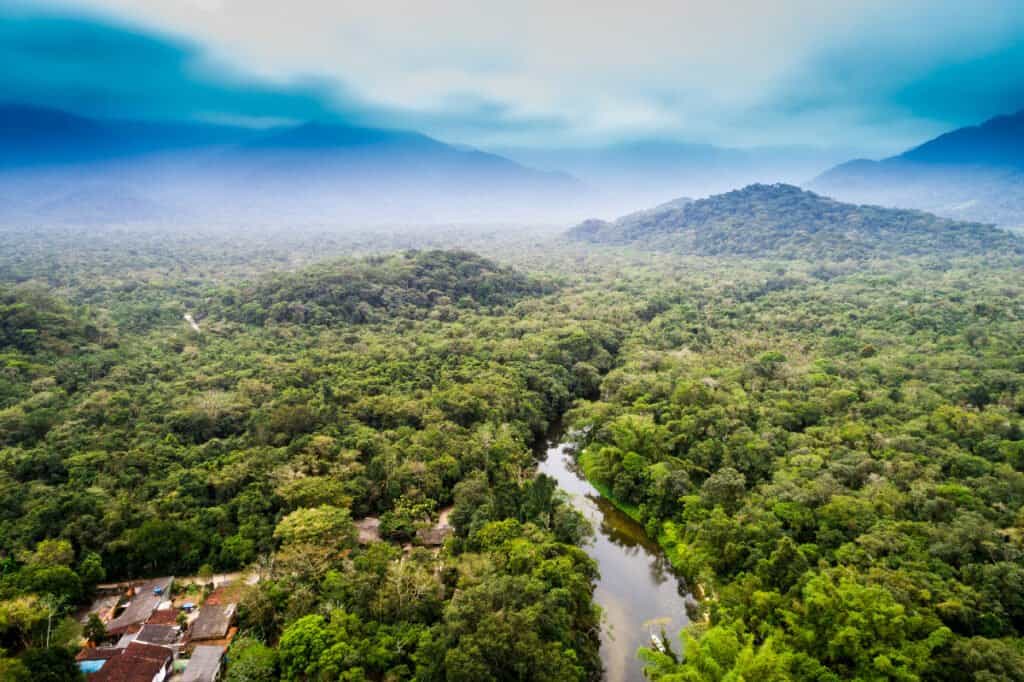
The okapi lives in a dense rainforest habitat in the Democratic Republic of Congo.
©iStock.com/gustavofrazao
Diet
As the okapi is a herbivore its diet is exclusively plant matter. Okapis have a very wide range to choose from — they eat more than 100 varieties of plants, with some of these being poisonous to animals and humans. They use their long tongue to draw leaves, shoots, and twigs from trees and plants overhead.
They will also eat fruits, berries, and fungi. One way to ensure they are consuming salt and vital minerals is to ingest a red clay.
These animals will spend the majority of their day looking for food and usually will stick close to areas they are familiar with to make sure they have an escape route if they encounter any predators.
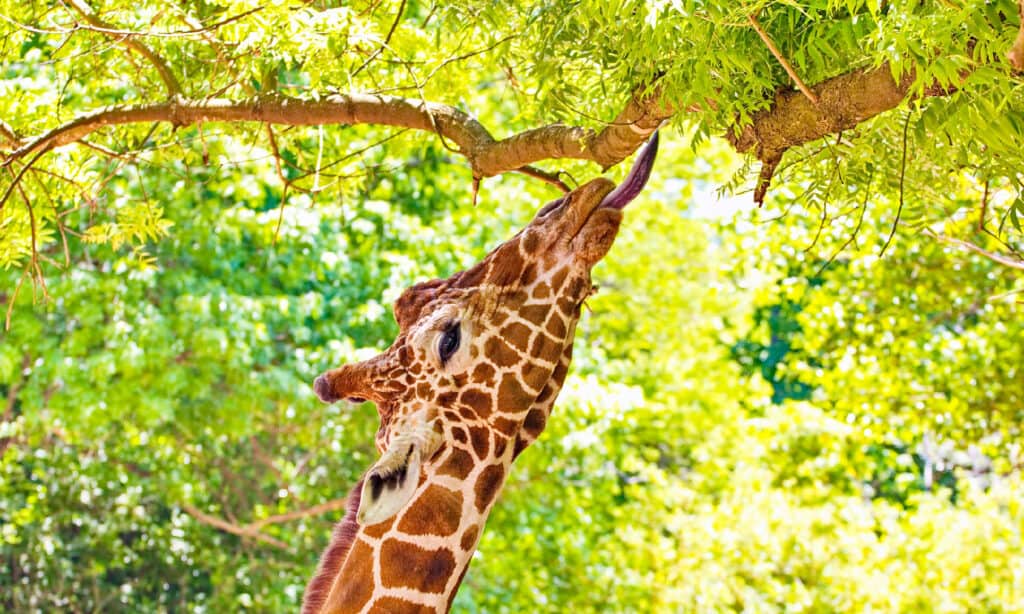
Like the giraffe, the okapi uses its prehensile tongue to draw leaves into its mouth.
©iStock.com/Simplyphotos
Predators and Threats
Perhaps it’s because the okapi has a limited range that it has fewer predators than many other species.
Its primary predator is the leopard. The okapi cannot deploy its main defensive tactic of using its sensitive hearing to detect predators moving through the forest undergrowth against the leopard as the cat’s climbing abilities mean it spends time among the trees, allowing it to spy the okapi from above and ambush it.
Another predator is also a member of the feline family — the serval, which is also excellent at climbing trees and has a keen sense of hearing. Humans are a threat to the okapi population through hunting, with indigenous populations valuing its meat and hide, and deforestation.
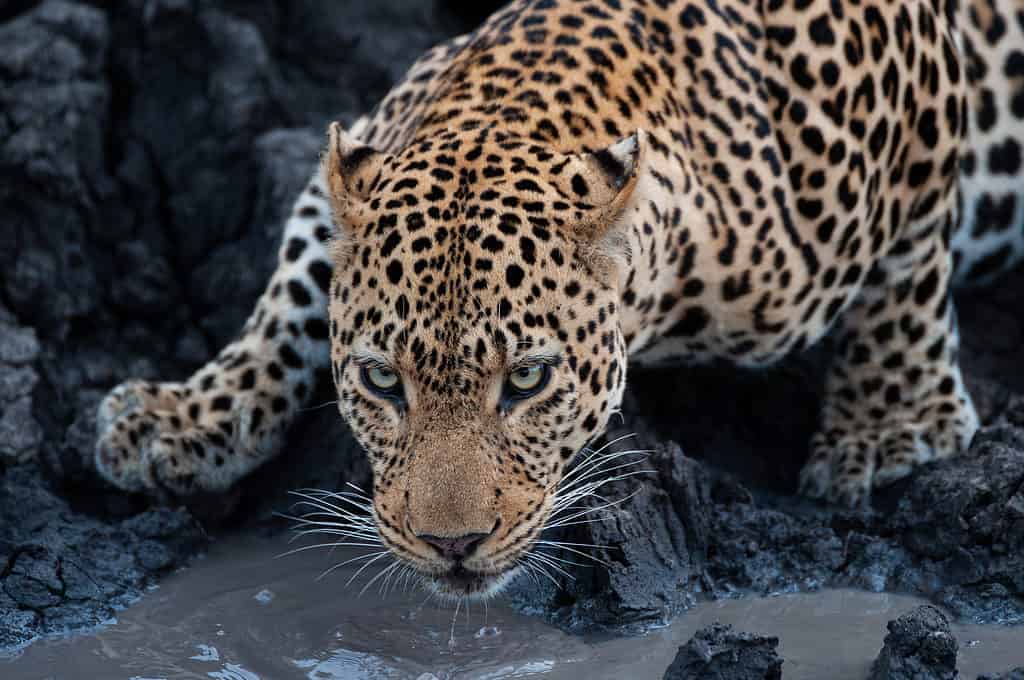
The leopard is the okapi’s main predator.
©Rudi Hulshof/Shutterstock.com
Reproduction, Life Cycle, and Lifespan
While some facts are known about the elusive okapi’s reproduction and life cycle, others still remain to be discovered. It’s believed that the gestation period of the okapi can be as long as 16 months, with the female giving birth to a calf that is capable of standing up by itself within 30 minutes of being born — this is similar to other herbivores with hoofs and is likely a defensive measure as it would be vulnerable to predators if it could not run to escape a threat.
Mother and calf spend around two months nesting in the protective undergrowth and although the adult female will safeguard and feed her young, it’s thought they do not develop as close a bond as other hoofed mammals do. Typically, a calf is weaned at about 6 months but it could keep suckling from its mother for over a year. The okapi’s stripes come in at a young age and it reaches maturity at around 3 years old.
It’s hard to say what the average lifespan is for the okapi in the wild, however in captivity, they have been known to live between 15 and 20 years, and some have been known to live to around 30 years.
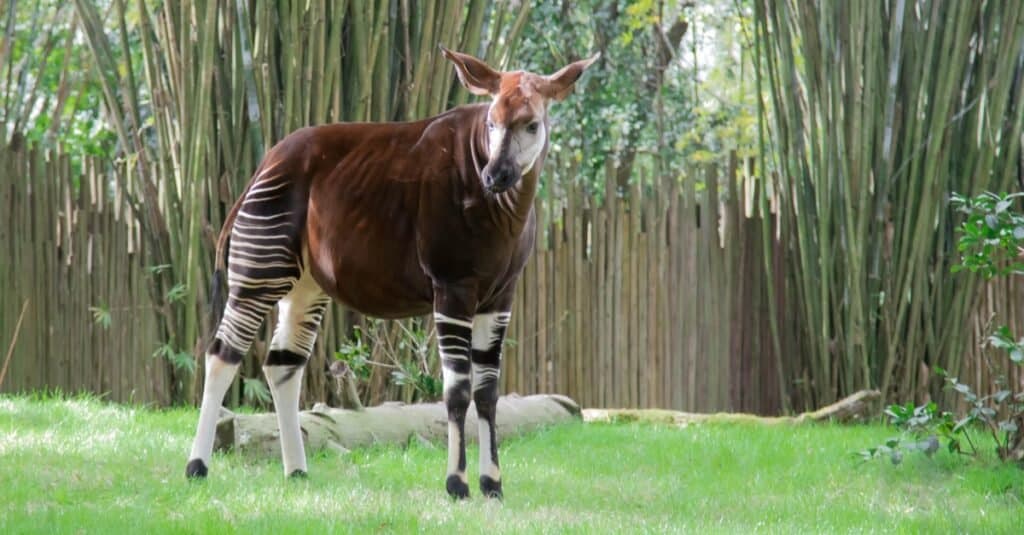
In captivity, the okapi’s lifespan is around 15-20 years on average.
©seth miles/Shutterstock.com
Conservation and Population
The IUCN classifies the okapi as Near Threatened and estimates there are 10,000-35,000 individuals remaining in the wild.
While these animals are believed to be commonly found in their natural range, their habitat is under serious threat of increasing deforestation and as a result, the okapi has fewer and fewer food sources. Also an issue is that they are often injured or killed by getting caught in the traps that local people are using to snare other animals. The Democratic Republic of Congo has protected the okapi by law since 1933.
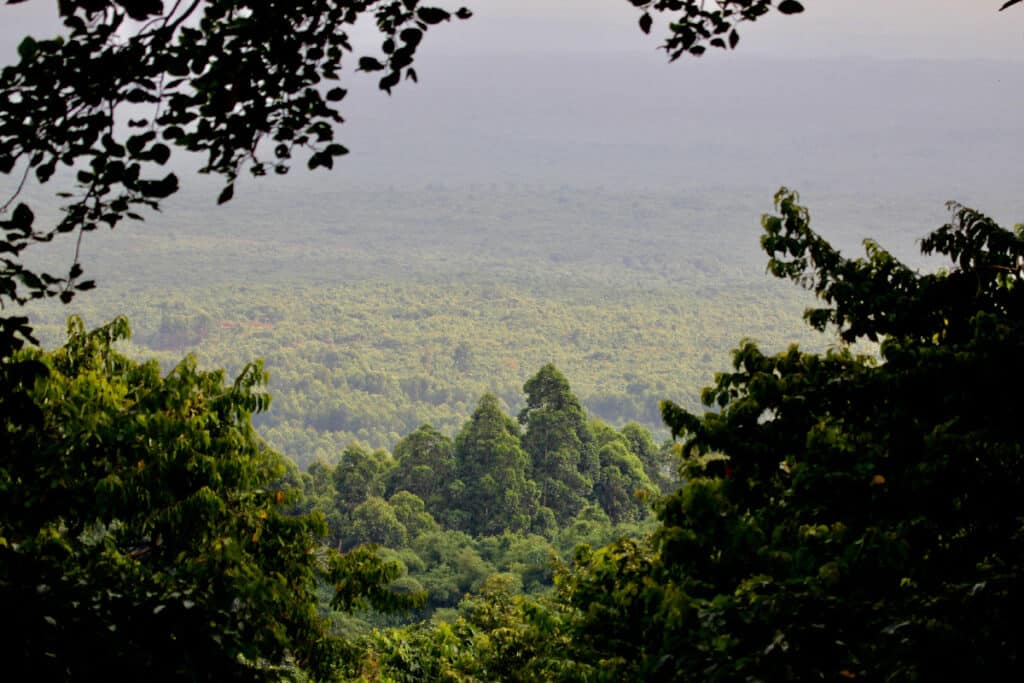
The okapi’s rainforest habitat provides it with excellent camouflage amongst the dense foliage.
©Kiki Dohmeier/Shutterstock.com
Okapi Pictures
View all of our Okapi pictures in the gallery.

How to say Okapi in ...
Sources
- David Burnie, Dorling Kindersley (2011) Animal, The Definitive Visual Guide To The World's Wildlife / Accessed May 13, 2009
- Tom Jackson, Lorenz Books (2007) The World Encyclopedia Of Animals / Accessed May 13, 2009
- David Burnie, Kingfisher (2011) The Kingfisher Animal Encyclopedia / Accessed May 13, 2009
- Richard Mackay, University of California Press (2009) The Atlas Of Endangered Species / Accessed May 13, 2009
- David Burnie, Dorling Kindersley (2008) Illustrated Encyclopedia Of Animals / Accessed May 13, 2009
- Dorling Kindersley (2006) Dorling Kindersley Encyclopedia Of Animals / Accessed May 13, 2009
- David W. Macdonald, Oxford University Press (2010) The Encyclopedia Of Mammals / Accessed May 13, 2009
- Okapi Information / Accessed May 13, 2009
- Okapi Conservation / Accessed May 13, 2009
- About the Okapi / Accessed May 13, 2009