
O
Species Profile

Old English Sheepdog

Canis lupus familiaris

Shaggy charm, steady herding heart
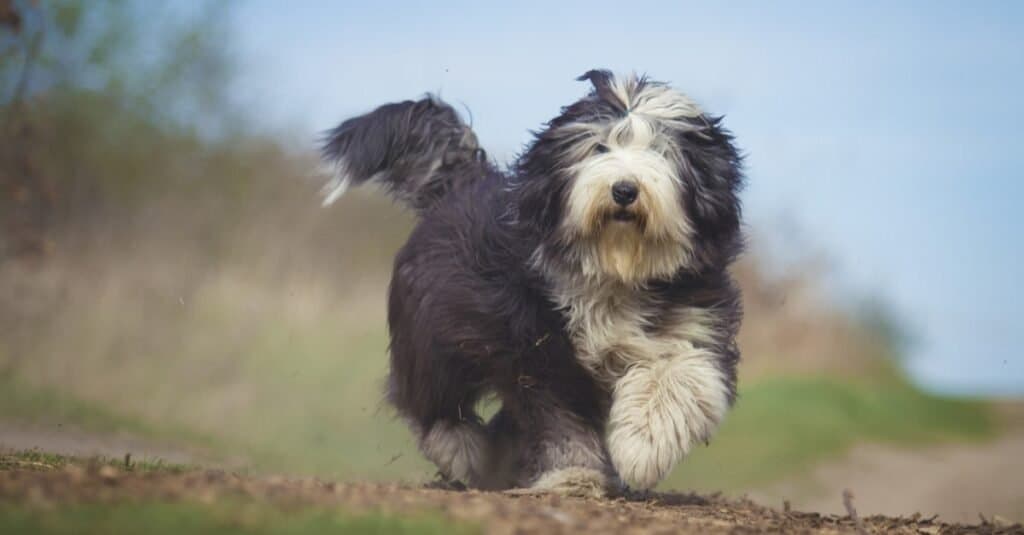
Best dog photo/Shutterstock.com

Old English Sheepdog Distribution

Click a location to explore more animals from that region

Origin Location

This map shows the native origin of the Old English Sheepdog. As a domesticated species, they are now found worldwide.

Loading map...

Size Comparison

Human 5'8"
Old English Sheepdog 1 ft 12 in

Old English Sheepdog stands at 35% of average human height.

Types of heeler dogs - Old English Sheepdog

At a Glance

Domesticated
Also Known As Bobtail, OES, O.E.S., English Sheepdog
Diet Omnivore
Activity Diurnal+
Lifespan 5 years
Weight 45 lbs
Status Not Evaluated
Did You Know?

Despite the name, the breed was widely used as a drover-moving cattle and sheep long distances to market.

Scientific Classification

A large, shaggy-coated herding dog breed developed in England, historically used for driving cattle and sheep; now primarily a companion and show breed.

Kingdom
Animalia
Phylum
Chordata
Class
Mammalia
Order
Carnivora
Family
Canidae
Genus
Canis
Species
Canis lupus

Distinguishing Features

  • Large, robust herding-dog build with a profuse double coat
  • Characteristic shaggy appearance; coat often covers eyes and face
  • Common coloration includes grizzled gray/blue with white (and other variations)
  • Docked tail was traditional in some regions (now restricted/banned in many countries)

Physical Measurements

Males and females differ in size

Height
♂ 2 ft 1 in (2 ft – 2 ft 2 in)
♀ 1 ft 11 in (1 ft 10 in – 2 ft)
Length
♂ 3 ft 7 in (3 ft 3 in – 3 ft 11 in)
Weight
♂ 84 lbs (71 lbs – 99 lbs)
♀ 71 lbs (60 lbs – 79 lbs)
Tail Length
♂ 12 in (10 in – 1 ft 2 in)
♀ Up to 10 in
Top Speed
25 mph
running

Appearance

Primary Colors
Secondary Colors
Skin Type Normal canine skin under a very dense, weather-resistant double coat; prone to matting if neglected.
Distinctive Features
  • Domestic dog breed (Canis lupus familiaris), selectively bred; not a separate wild Canis species.
  • Large, square-built herding/driver type with heavy bone and broad, bear-like gait.
  • Profuse, shaggy double coat with abundant facial furnishings; eyes often partially hidden.
  • Coat color commonly gray-and-white; gray may lighten with age and grooming.
  • Tail may be naturally bobbed or full; docking historically common but not universal/allowed everywhere.
  • Sociable, adaptable companion temperament; herding/guarding instincts can persist by line.
  • High grooming burden: frequent brushing/combing and regular trimming to prevent mats and skin irritation.
  • Moderate daily exercise needs; benefits from structured activity and mental enrichment.
  • Heat-sensitive due to dense coat; requires shade, hydration, and cautious warm-weather exercise.
  • Common health concerns: hip dysplasia, cataracts/PRA, hypothyroidism, and gastric dilatation-volvulus risk.
  • Often confused with Bearded Collie, Briard, and Polish Lowland Sheepdog; OES is heavier and more square.

Sexual Dimorphism

Males are typically taller, heavier, and more robustly built with broader heads and necks. Females are usually slightly smaller and lighter-framed, though both share the same shaggy coat type.

♂
  • Larger overall size and weight; heavier bone and broader chest.
  • Broader head, thicker neck, and more pronounced forequarters.
  • Coat can appear fuller, especially around mane and shoulders.
♀
  • Slightly smaller, lighter frame; often more refined head and muzzle.
  • Chest and neck typically less massive; overall silhouette can look less blocky.
  • Coat may appear marginally less bulky, though still very profuse.

Did You Know?

Despite the name, the breed was widely used as a drover-moving cattle and sheep long distances to market.

The "bobtail" look is traditional: some were born with naturally short tails, and docking also became common historically.

Its iconic coat is a double coat; when properly grown out it forms a dense, weather-shedding shag over much of the body.

Old English Sheepdogs are often confused with Bearded Collies and Briards, but they're heavier-boned with a distinctive rolling gait.

The breed's "bear-like" silhouette is partly from abundant coat plus a robust frame compared with many other herding dogs.

They can have a loud, carrying bark-useful historically for moving stock and alerting handlers.

They typically mature slowly for a dog, often staying puppyish in attitude well into young adulthood.

Unique Adaptations

  • Profuse, insulating double coat evolved to protect against cold, wind, and wet British weather during outdoor work-more extreme than the typical domestic dog coat.
  • Large, sturdy build with strong hindquarters suited to steady, day-long trotting behind livestock, distinguishing it from lighter-framed sheep-herding breeds.
  • Dense facial furnishings (hair over eyes and muzzle) can help shield from weather and brush, though it requires human grooming to prevent irritation.
  • Temperament shaped for cooperative work with humans: generally sociable and biddable compared with the wild gray wolf, which operates in largely self-directed packs.
  • Domestic-dog flexibility: thrives on human-guided routines, training, and mixed environments (home/show), unlike the wild wolf's territory- and prey-based lifestyle.

Interesting Behaviors

  • Herding/"driving" instincts: may try to gather children or other pets by circling, blocking, or gentle bumping.
  • The classic "rolling" trot (a ground-covering, ambling gait) is characteristic and often noticed in the show ring.
  • Social shadowing: many prefer to stay near their people and may follow from room to room.
  • Playful clowning: frequent body wiggles, bouncy greetings, and goofy "grab a toy to say hello" habits.
  • Vocal communication: some individuals use a range of barks and grumbles to "comment" on household activity.
  • Mouthy puppy phase: like many canids, youngsters explore with their mouths and benefit from chew outlets and training.
  • Weather-seeking: many choose cool floors or shade; heavy-coated dogs often sprawl to dissipate heat.

Cultural Significance

Old English Sheepdog (Canis lupus familiaris) was bred in England to drive and herd sheep. Its shaggy bobtail look and rolling walk made it a symbol of rural Britain and a media shorthand for a friendly family dog.

Myths & Legends

Old English Sheepdog 'bobtail' story from rural Britain says drovers' dogs had tails cut short to mark them as working animals and to avoid taxes; the story became part of the breed's identity.

In British pastoral anecdotes, shaggy drovers' dogs were said to look like "small bears," a folk description that fed the breed's enduring "bear-dog" nickname in some circles.

Old English Sheepdogs are tied to the 'Dulux dog' shaggy mascot, which helped create a modern legend of the breed as the friendly, paint-splattered family dog.

Rural working-dog tales sometimes describe the sheepdog as a "nursemaid" to children-an idealized household legend that reflects their sociable temperament and herding attentiveness.

Naming lore: stories around the term "Old English" emphasize a romantic, old-country heritage-more a traditional branding narrative than a single documented founding moment, reflecting how breeds gathered identities through local reputation.

Conservation Status

NE Not Evaluated

Has not yet been evaluated against the criteria.

Population Stable

Life Cycle

Birth 7 pups
Lifespan 5 years

Lifespan

In the Wild
3–8 years
In Captivity
8–15 years

Reproduction

Mating System Promiscuity
Social Structure Managed Domestic
Breeding Pattern Transient
Fertilization Managed Selective
Birth Type Internal_fertilization

Behavior & Ecology

Social Pack Group: 4
Activity Diurnal, Crepuscular
Diet Omnivore Animal-protein-forward meals (e.g., chicken, beef, lamb) with moderate fat; many individuals also strongly prefer meat-based training treats.

Temperament

Species context (Canis lupus familiaris): highly social, human-directed cooperative behavior replaces wild hunting roles.
Breed distinction: developed for droving/sheep work; retains herding patterning, circling, and gentle pressure.
HUBS: most individuals are friendly and clownish; variation includes shyness or guarding without early socialization.
Affectionate, people-focused companion; prefers constant inclusion and may develop separation-related behaviors.
Boisterous and playful; can be rambunctious with jumping/"body-bumping" unless trained early.
Biddable but sometimes stubborn; responds best to positive reinforcement and clear, consistent cues.
Generally good with children when supervised; large size and enthusiasm can overwhelm small kids.
Dog-social but may "police" movement, attempt to herd pets/children; teach impulse control and recall.
Exercise needs moderate-high; daily aerobic activity plus mental work reduces nuisance barking and restlessness.
Care requirements: heavy double coat demands frequent line-brushing, mat prevention, regular bathing/drying.
Care requirements: heat-sensitive under coat; prioritize cool-weather exercise and shade/water in warm climates.
Health concerns: hip dysplasia and elbow issues; maintain lean weight and appropriate joint-friendly exercise.
Health concerns: eye disease risk (e.g., PRA/cataracts); regular ophthalmic screening recommended.
Health concerns: hypothyroidism and immune-mediated disease occur; monitor energy, skin/coat changes.
Health concerns: gastric dilatation-volvulus risk in deep-chested dogs; manage meals and post-meal activity.

Communication

Alert barking with deep, resonant tone when strangers approach or household changes occur.
Excited "woo-woo"/grumble-like sounds during play and greetings.
Whining or whimpering to solicit attention, proximity, or routine-based needs.
Occasional howl-like vocalization, typically in response to sirens or social cues.
Broad body language: leaning, pawing, and nudging to initiate contact or guide movement.
Herding signals: circling, blocking paths, and controlled chasing when aroused or under-stimulated.
Facial expression and eye contact: soft eyes for affiliation; hard stare when controlling motion.
Posture and movement: bouncing gait and play-bows; may use shoulder/body to direct others.
Scent marking and sniffing as social information; uses routine route-checking around home.
Coat and grooming interactions: tolerates handling when conditioned; may protest mats with avoidance signals.

Habitat

Biomes:
Temperate Forest Temperate Grassland Boreal Forest (Taiga) Tundra Alpine Mediterranean Desert Hot Desert Cold Savanna Tropical Dry Forest Tropical Rainforest Freshwater Wetland Marine +8
Terrain:
Plains Hilly Valley
Elevation: Up to 16404 ft 3 in

Ecological Role

Domesticated omnivorous canid functioning primarily as a human-associated companion and working/herding animal rather than an ecosystem apex predator.

Herding/stock management support (historical working role) Companionship and social support to humans Deterrence/alerting (watchdog function) Incidental pest reduction (opportunistic predation on small rodents/invertebrates)

Diet Details

Main Prey:
Small rodents Rabbits and hares Small birds and eggs Invertebrates
Other Foods:
Grasses Berries and other fruits Vegetables Grains and starches Fungi and plant matter

Human Interaction

Domestication Status

Domesticated

Old English Sheepdog (Canis lupus familiaris): Domestic dogs came from gray wolves and were shaped to live and work with people. This breed was developed in England as a large, shaggy herding and drover dog to move cattle and sheep. Friendly, with strong herding drive and high grooming needs; kept as family pets, show dogs, or for herding.

Danger Level

Low
  • Accidental knockdowns or bruises from a large, exuberant dog
  • Herding behaviors (bumping, chasing, occasional nipping) if under-trained or under-exercised
  • Bites are possible like any dog, usually tied to fear, pain, poor socialization, or mishandling
  • Allergen exposure (dander/saliva) despite the long coat; not reliably hypoallergenic
  • Zoonotic/parasite risks common to dogs (e.g., fleas/ticks, intestinal parasites) if preventive care is lacking

As a Pet

Suitable as Pet

Legality: Old English Sheepdogs are usually legal to own in the U.S. and most places. They must follow local licensing, leash, and vaccine rules. Tail docking may be banned in some countries. Check local laws and rental or HOA rules.

Care Level: Experienced

Purchase Cost: $150 - $3,500
Lifetime Cost: $22,000 - $50,000

Economic Value

Uses:
Companion animal ownership (pet industry spending) Professional grooming and coat-care products Veterinary services and preventive care Breeding and conformation showing (registrations, handling, travel) Training services (basic manners, obedience, behavior support) HUBS: working/utility heritage (historical droving/herding) and modern sport/therapy roles
Products:
  • Companion animal services (boarding, daycare, walking)
  • Grooming services (de-matting, trimming, bathing, blowouts)
  • Breed-related commerce (puppies from reputable breeders, rescue adoption fees)
  • Dog sport/show entries and related equipment
  • Merchandise/media featuring the breed (advertising, mascots, brand imagery)

Relationships

Quick Take

  • Reaching the nanny dog standard requires managing a 100-pound muscular frame.
  • The 12 year average lifespan creates a shorter companionship duration than other herding breeds.
  • This Sheepdog was counter-intuitively bred for cattle rather than its namesake livestock.
  • A first shedding cycle is necessary to resolve the puppy’s black and white colors.

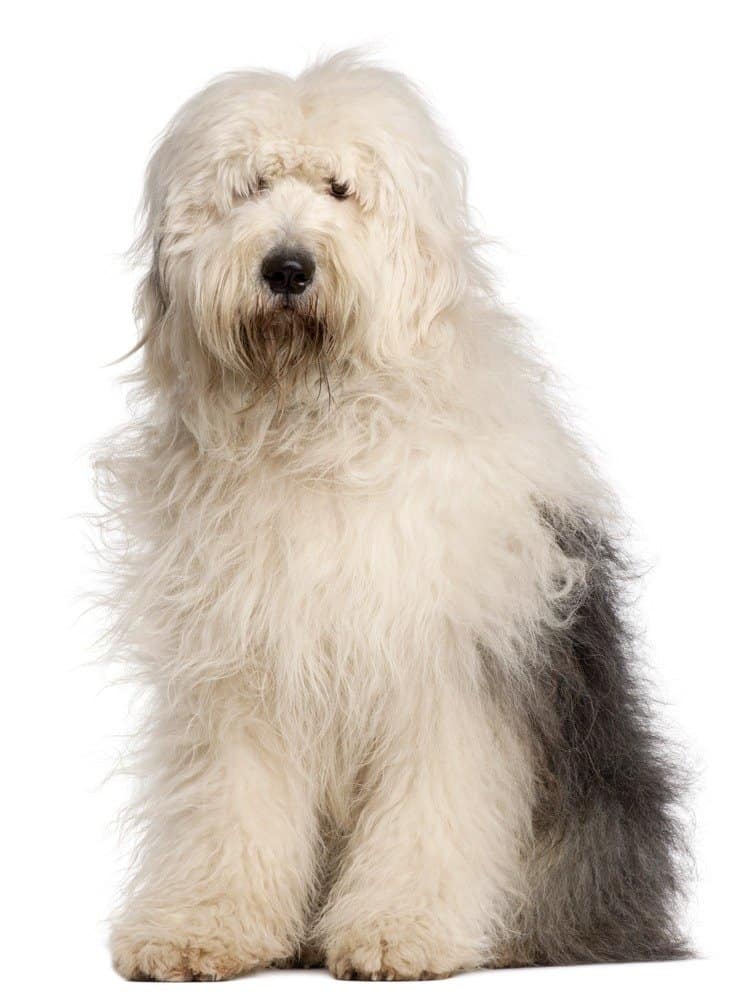
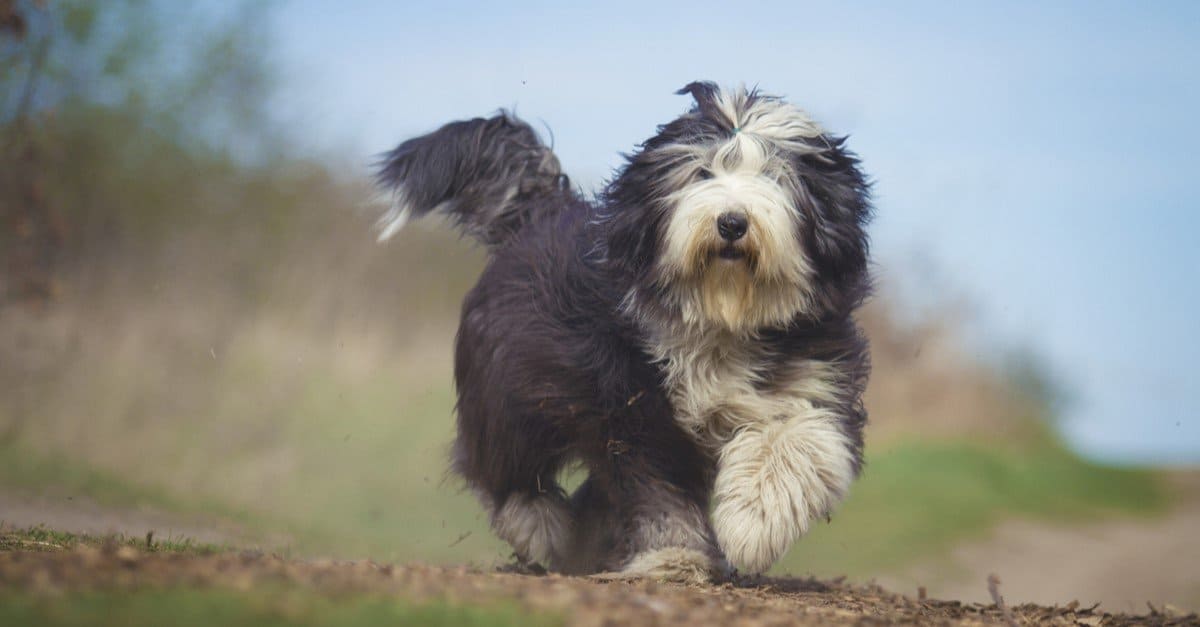
With its big shaggy coat, obscured eyes, and white and gray color scheme, the Old English Sheepdog is one of the most recognizable breeds in the world. Its very appearance seems to radiate friendly and approachable energy.

An educational infographic about the Old English Sheepdog featuring a large illustration of the shaggy grey and white dog surrounded by charts on size, health, and history.
Don't let the shaggy coat fool you—this 100-pound powerhouse was built for the gritty world of cattle droving long before it became the world's favorite 'nanny dog.' © A-Z Animals

History and Origin

This breed originated at some point in the 19th century from the West Country of England, particularly the counties of Devon and Somerset, in southwestern England. Some of its speculated ancestors are the bearded collie and perhaps the Russian Owtchar. By the late 1800s, this breed made its way to the United States and quickly became a popular choice for wealthy American families. Despite the name, it does not usually herd sheep. Instead, it was originally bred to move cattle along country roads between the pasture and the market.

You do not need to employ this breed as a working dog to enjoy its lovable company, however. You just need to give it plenty of affection and care. It also makes for an excellent show dog that loves to perform for audiences. Alternative names for this breed include the Bobtail or the bob-tail sheepdog. According to the American Kennel Club, it ranks about average in popularity.

3 Pros and Cons of Ownership

ProsCons
Good-natured and friendly
The Old English Sheepdog has a reputation for its warm and care-free personality.
Takes time to groom
The thick double coat of fur requires a lot of care and maintenance.
Athletic and trainable
With its keen intelligence, the Old English Sheepdog is eager to work out, learn new tricks, and explore new places.
Shorter life expectancy
The Old English Sheepdog only lives about 10 to 12 years on average, which is shorter than many other breeds of dogs.
An able watchdog
This breed keeps a vigilant watch over its home.
A loud barker
The Old English Sheepdog does bark a moderate amount and may not be right for people who want a completely silent breed.


old english sheepdog isolated on white background

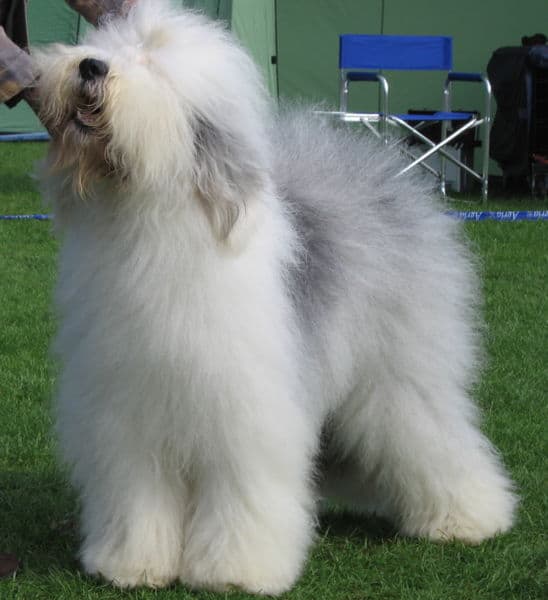
Old English Sheepdogs have a thick double coat of fur that requires a lot of care and maintenance.

Size and Weight

The Old English Sheepdog is a medium- to large-sized breed with a very compact body, a big square head, and a strong, muscular frame. Males weigh more than females on average. Here is a more complete breakdown of its size and weight:

Height (Male)22 inches
Height (Female)21 inches
Weight (Male)80 to 100 pounds
Weight (Female)60 to 90 pounds

Common Health Issues

The Old English Sheepdog is generally a strong, healthy breed with only a few notable problems. This breed is sometimes afflicted with eye diseases such as progressive retinal atrophy (the gradual loss of function in the retina) and cataracts (a clouding of the eye that is often associated with old age). Another potential health issue is hypothyroidism, which results from the underproduction of the thyroid hormone. Potential symptoms of this condition include lethargy, obesity, temporary cognitive decline, and infertility. Canine hip dysplasia is a genetic disorder that causes a developmental abnormality in the hip socket, resulting in lameness and limping. Other common problems include heart disease, arthritis, and deafness. Cancer is also one of the leading causes of death in this breed. Fortunately, some of these problems can be caught early with an annual health checkup.
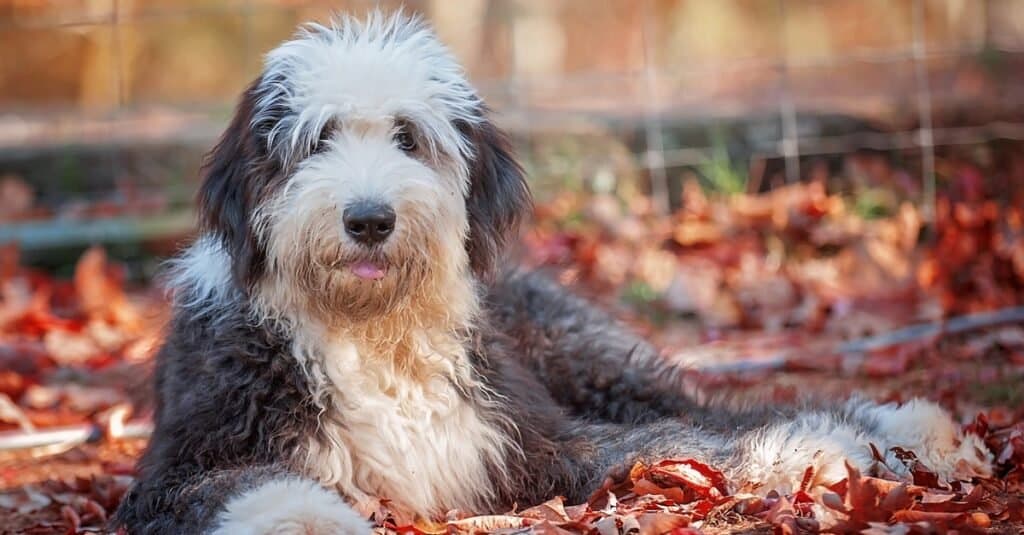
Gray Dog Breeds

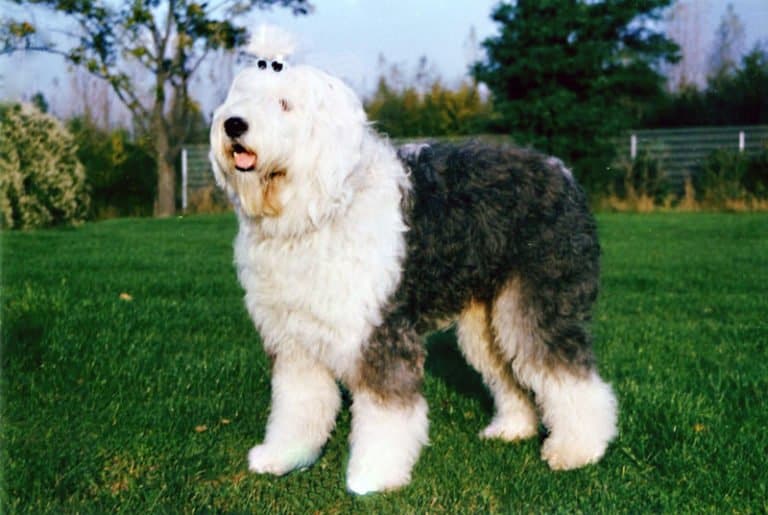
The Old English Sheepdog is generally a strong, healthy breed with only a few notable problems.

Temperament and Behavior

The Old English Sheepdog is a kind and gentle soul with a very friendly and affectionate personality. It is also intelligent and playful in equal measure and just loves to experience new situations and people. Despite being very athletic and energetic, this breed is actually suitable for a variety of different living conditions in both the country and the city. As long as it receives enough exercise every day, it will cause very little trouble around the home. But don’t let its laid-back nature fool you. The Old English Sheepdog actually makes for a good watchdog thanks to its alert personality and a loud and resonating bark. This breed is just an all-around excellent companion wherever you live.
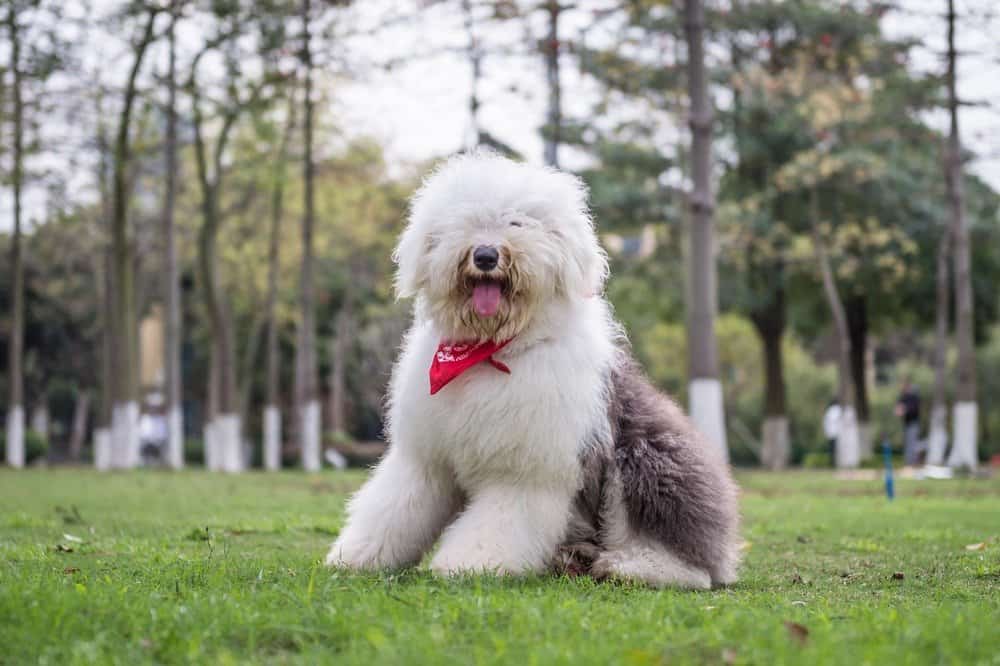
Old English Sheepdog with necktie

The Old English Sheepdog is a large, athletic dog breed with an unmistakable shaggy coat. 

How to Take Care of an Old English Sheepdog

The Old English Sheepdog is a medium to high-maintenance pet. You will get the best result if you socialize and train this breed from an early age as a puppy. This will form a deep lifelong bond with your dog that will encourage it to obey more often.

The Best Dog Food

The Old English Sheepdog requires high-quality dog food to support its moderately active lifestyle. The dog’s age shouldn’t be a huge factor when choosing the type and brand of food. Treats can be given to help guide your dog in training. However, this breed may tend to become overweight, so it is a good idea to limit calorie consumption throughout the day.

Maintenance and Grooming

With its thick coat of double fur, the Old English Sheepdog is not a hypoallergenic breed. It sheds a good amount, though probably not any more often than comparable long-haired or bob-tailed breeds.

In order to prevent matting, tangles, and the accumulation of dirt and grime, this breed does require very careful and thorough grooming around two or three times a week. The fur tends to become quite dirty after outdoor activity and may therefore require periodic baths as well. You should also trim the nails regularly to prevent any discomfort when walking or running. If you do not want the burden of grooming it yourself, then you should take it to a specialty groomer instead.
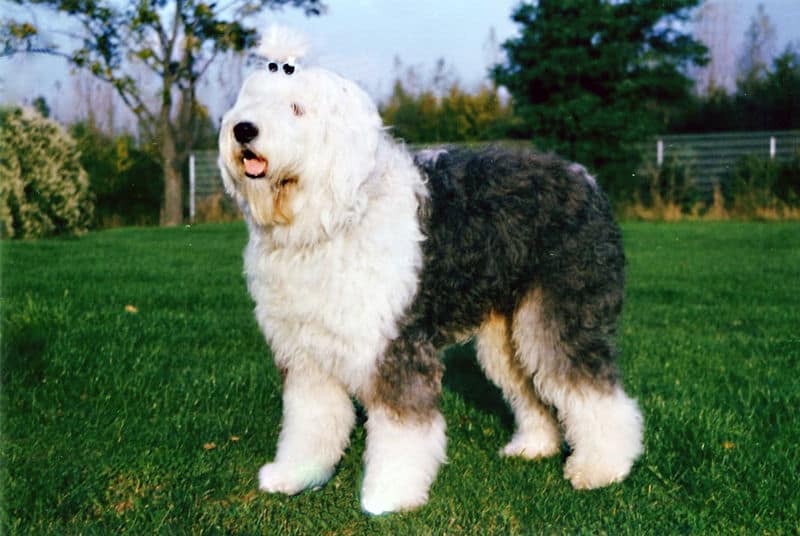
Old English Sheepdog

In order to prevent matting, tangles, and the accumulation of dirt and grime, this breed does require very careful and thorough grooming around two or three times a week.

Training

Obedience training is an important aspect of this breed’s socialization that will teach it basic commands such as sit, come, and stay. Fortunately, the Old English Sheepdog has a strong memory and a laid-back, compliant nature, so training should come relatively easily to it as long as you don’t push it too hard. This breed does not tolerate confinement very well, so you should not leave it in a crate for long periods of time.
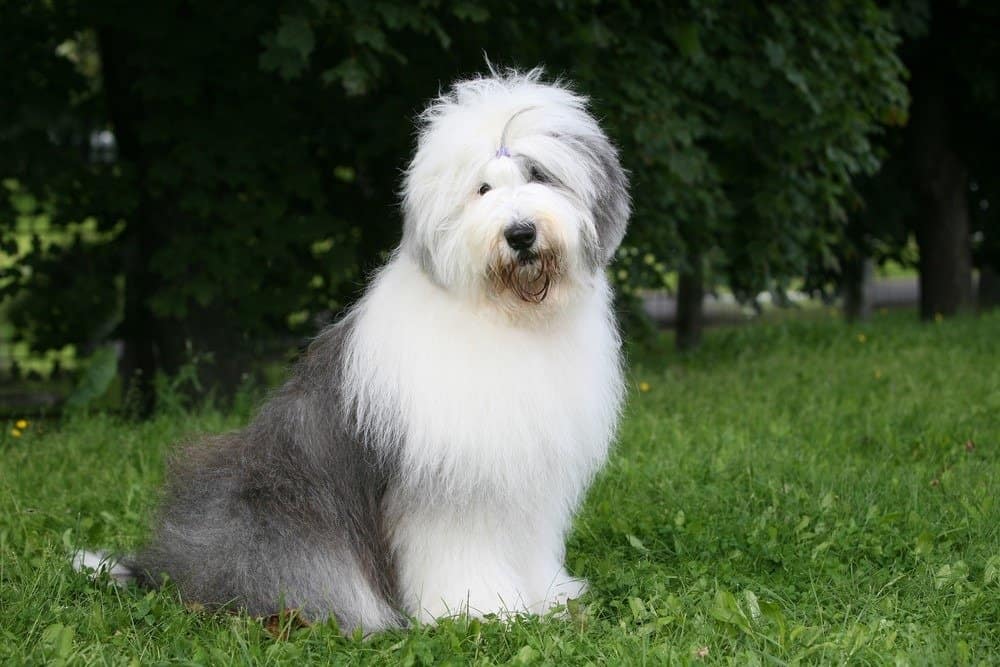
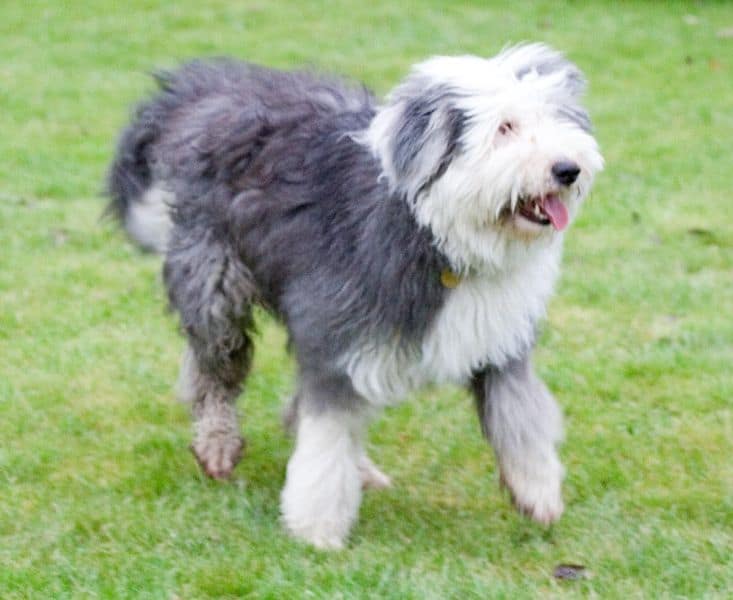
Old English Sheepdogs have a strong memory and a laid-back, compliant nature, so training should come relatively easily to them as long as you don’t push them too hard.

Exercise

The Old English Sheepdog requires about one or two hours a day of moderate exercise in the form of walks and play sessions. A large yard is not necessary to keep this breed occupied, but you should make sure there is plenty of space around your home for daily activity. Despite its high energy level, this breed does know when to settle down and relax with the family after a long exercise session.

Puppies

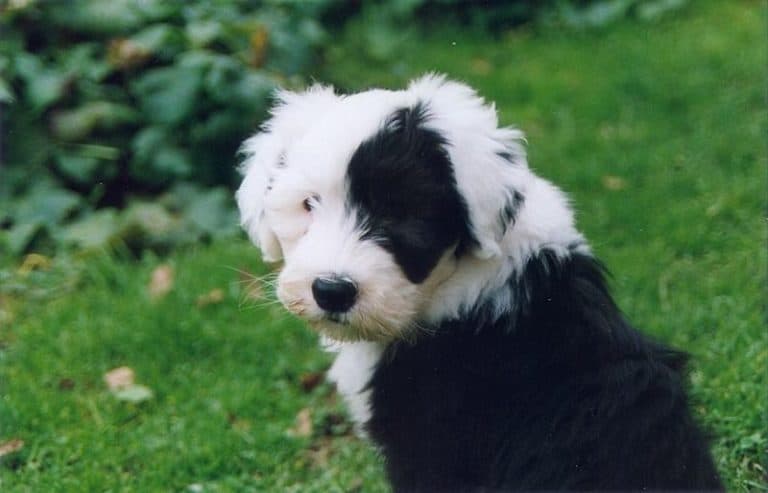
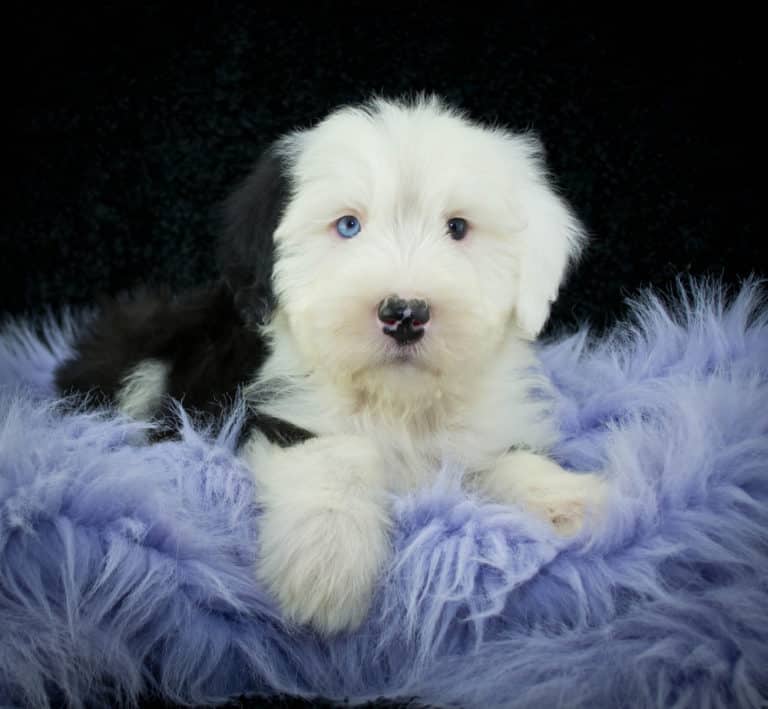
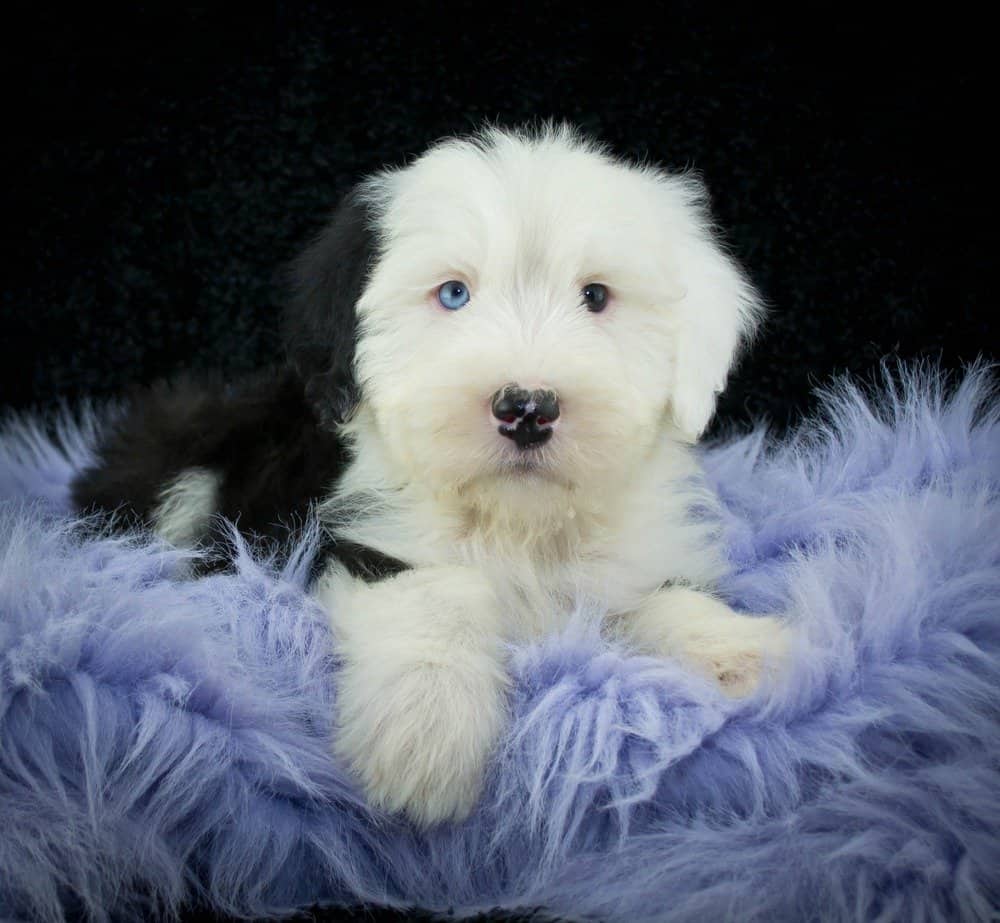
The first thing you will always want to do when buying a new puppy is to make sure it is fully up to date with its vaccines and health checkups. For the best results, you should purchase the puppy from a breeder who actually screens for genetic conditions. You may also notice that the English Sheepdog puppies tend to have a different appearance compared to their adult counterparts. They are born with a black and white coat of fur. The white and gray coat only develops after it sheds for the first time.
old english sheepdog puppy

English Sheepdog puppies tend to have a different appearance compared to their adult counterparts.

With Children

The Old English Sheepdog has a very casual and friendly demeanor for its entire life that makes it well-suited around children. It is patient and tolerant and doesn’t mind rough play. It is just an overall great companion for people of all ages. In fact, this breed is often called a nanny dog because of its kind and supportive role within the family.

Similar Breeds

If you are a fan of the Old English Sheepdog, then you might want to check out the following breeds of dogs, though many of these are not hypoallergenic either.

  • Border Collie: Although sporting a shorter coat of fur, this highly intelligent and athletic breed was created in northern England for the purpose of herding livestock. It has a very alert and lively personality that requires lots of physical and mental stimulation.
  • Bearded Collie: This breed is very similar to the Border Collie, but it has a very similar appearance to the Old English Sheepdog with the long shaggy hair and white and gray coloration. It is an athletic and intelligent breed with a loyal bearing.
  • English Shepherd: With its intelligent and athletic disposition, this breed is similar to the Border Collie. In fact, both the English Shepherd and the Border Collie share a common ancestry around England.
  • German Shepherd: Although it has a more wolf-like appearance, the German Shepherd has the temperament and behavior of a traditional herding dog. It is very strong, trainable, and obedient. This makes it ideal for all sorts of tasks such as police duty, disability assistance, and search and rescue.

Famous Examples

The Old English Sheepdog is a fairly popular breed that has appeared in numerous works of fiction and the wider popular culture. Here are just a few examples:

  • President Franklin D. Roosevelt briefly owned an English Sheepdog called Tiny between 1933 and 1934. After about a year, he gifted it to his friend, Admiral Cary Grayson.
  • Paul McCartney owned an English Sheepdog called Martha between 1966 and its death in 1981. The dog supposedly inspired the song Martha, My Dear. Martha’s offspring, Arrow, later appeared on the cover of a live album.
  • The Old English Sheepdog was a mainstay of several powerful American families, including the Vanderbilts, Morgans, Goulds, and Guggenheims.
  • The 1959 Disney film The Shaggy Dog is about a teenage boy who transforms into an Old English Sheepdog with the power of an enchanted ring. This breed was also featured in the movies Chitty Chitty Bang Bang, the 1989 animated film The Little Mermaid, and One Hundred and One Dalmatians.
View all 88 animals that start with O

Sources

  1. American Kennel Club / Accessed September 10, 2018
  2. Pet ID Register / Accessed September 10, 2018
  3. National Pure Bred Dog Day / Accessed September 10, 2018
  4. Adopt a Pet / Accessed September 10, 2018
Heather Ross

About the Author

Heather Ross

Heather Ross is a secondary English teacher and mother of 2 humans, 2 tuxedo cats, and a golden doodle. In between taking the kids to soccer practice and grading papers, she enjoys reading and writing about all the animals!

Thank you for reading! Have some feedback for us?


Old English Sheepdog FAQs (Frequently Asked Questions)

That depends on how you obtain it. The cost of adopting an Old English Sheepdog is only around $300. This should cover the cost of both vaccinations and care. The cost of the Old English Sheepdog from a distinguished breeder, on the other hand, is quite a bit more expensive. It can easily run you between $1,200 and $1,500.