Otter
 Verified by: AZ Animals Staff
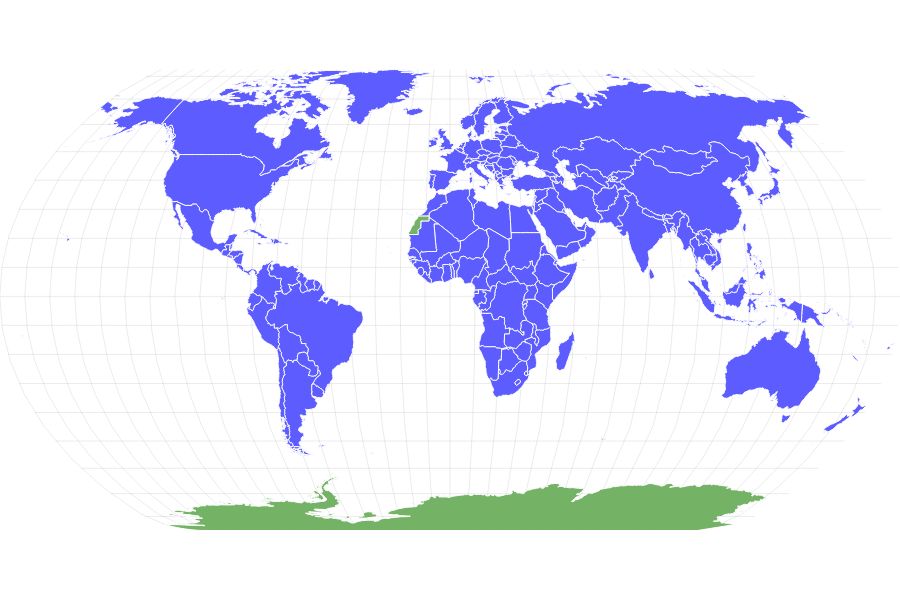
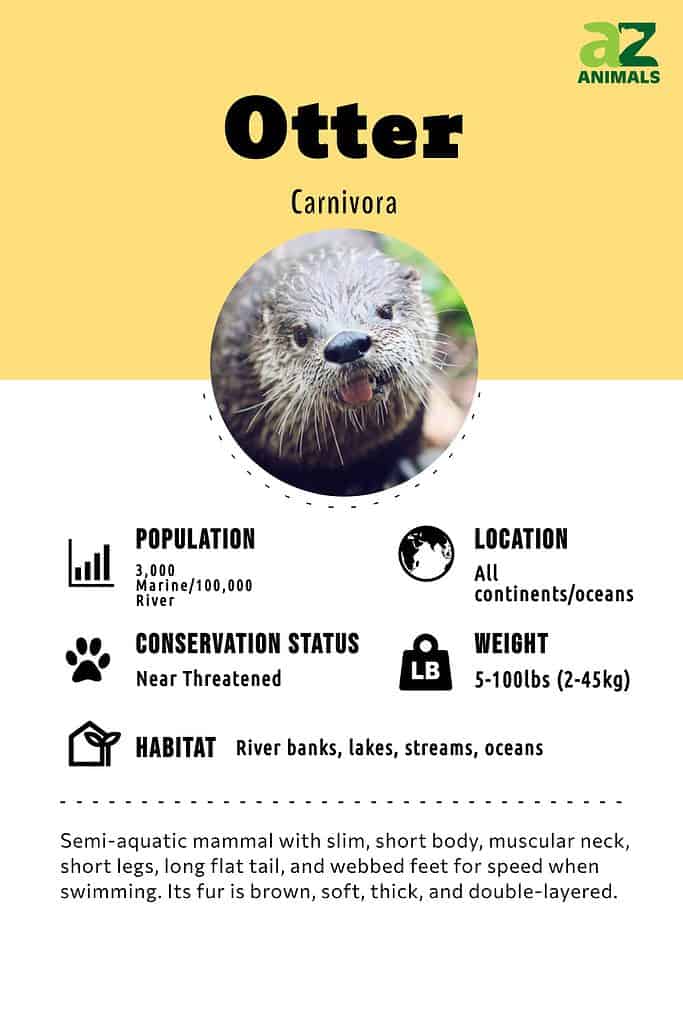
There are 13 different species worldwide
Advertisement
Otter Scientific Classification
Read our Complete Guide to Classification of Animals.
Otter Conservation Status
Otter Facts
- Main Prey
- Fish, Crabs, Frogs, Crayfish, Sea Urchins, Turtles, Insects
- Habitat
- River banks, lakes, streams, and marine areas
- Predators
- Birds, Fox, Wolves, Alligators, Coyotes
- Diet
- Carnivore
- Average Litter Size
- 3

 © fred goldstein/Shutterstock.com


How to Add Us to Google News


“Giant otters are notorious chatterboxes“
Just like many people, there are giant otters that are considered chatterboxes for their species. Though they can’t form words, they have a vocabulary that consists of 22 recognizable noises. Each noise is used to address a different type of situation. This is how giant otters effectively communicate with each other.
5 Otter Facts
- Otters are animals with thick fur that helps them float in the water
- Otters often use rocks to crack open food
- The male otter bites the female when they are breeding
- While eating and resting, otters often hold hands
Types of Otters
- Asian Small-clawed Otter (Aonyx cinereus) – Native to South China and India, and Southeast Asia. Other names: oriental small-clawed otter, Asian short-clawed otter, ash otter. Listed Vulnerable.
- Smooth-coated Otter (Lutrogale perspicillata) – Native to India and Southeast Asia. Other names: Indian smooth-coated otter, Asian otter. Listed Vulnerable.
- Hairy-nosed Otter (Lutra sumatrana) – Native to Vietnam,Thailand, Malaysia, Indonesia, Borneo and Cambodia. Other names: Sumatran otter. Listed Endangered.
- Spotted-necked Otter (Hydrictis maculicollis) – Native to Central Africa. Other names: speckled-throated otter, spot-necked otter. Listed Near Threatened.
- African Clawless Otter (Aonyx capensis) – Native to Central and Southern Africa. Other names: Cape clawless otter, white-cheeked otter. Listed Near Threatened.
- Congo Clawless Otter (Aonyx congicus) – Native to the Congo, Africa. Other names: white-cheeked otter. Listed Near Threatened.
- Eurasian Otter (Lutra lutra) – Native to Eurasia and Southeast Asia. Other names: old world otter, river otter. Listed Near Threatened.
- North American River Otter (Lontra canadensis) – Native to North America. Other names: northern river otter, river otter. Listed Least Concern.
- Sea Otter (Enhydra lutris) – Native to the Northeast Pacific. Other names: sea beaver, Kamtchatka otter. Listed Endangered.
- Giant Otter (Pteronura brasiliensis) – Native to South America. Other names: ariranha, river wolf, water dog. Listed Endangered.
- Marine Otter (Lontra felina) – Native to the west coast of South America. Other names: huallaca, chingungo, sea cat. Listed Endangered.
- Southern River Otter (Lontra provocax) – Native to Argentina and Chile, South America. Other names: huillin, little Patagonian wolf, Chilean otter. Listed Endangered.
- Neotropical Otter (Lontra longicaudis) – Native to Central and South America. Other names: water dog, taira, water cat, South American river otter, long-tailed otter, little water wolf. Listed Near Threatened.
Scientific Name
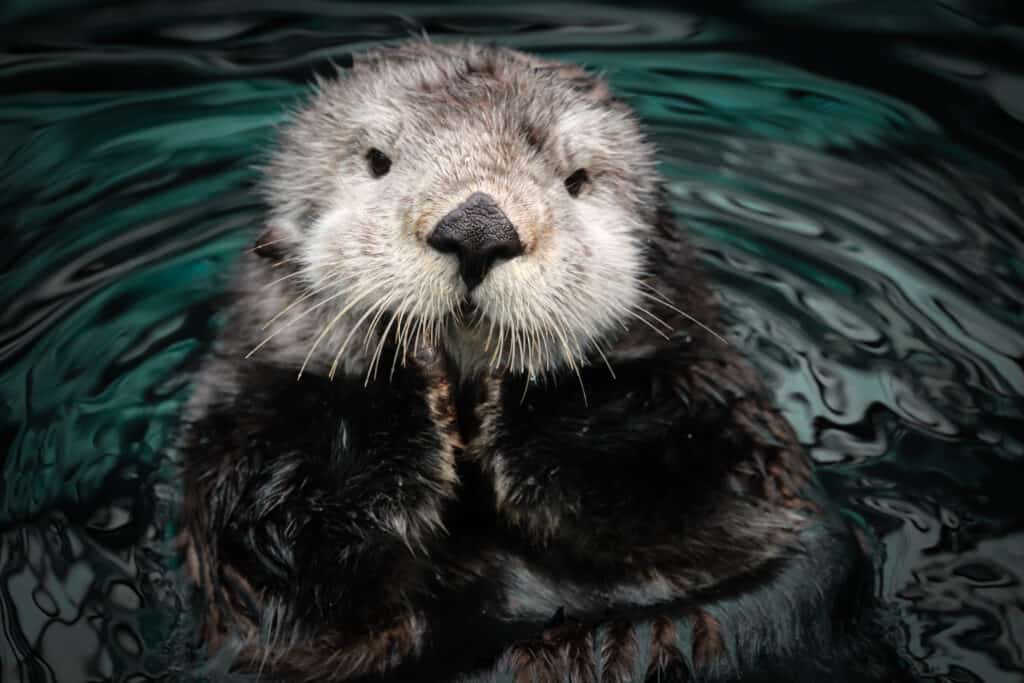
Otters are under the Carnivora. The scientific names vary by otter.
©nvphoto/Shutterstock.com
The classification otters fall under is Mammalia, and otters fall under the Carnivora order. They belong to the weasel family, and its subfamily is the Lutrinae.
In total, there are 13 different species of otters. While the giant is the largest, its polar opposite is the small-clawed. Two species of otters are water animals known as sea otters and marine otters. The other 11 species are river otters.
The first use of the term “river otter” dates back to 1913, as it appears in a book by Joseph Grinnell. They were listed as being among the wild animals to be found in California. The same year marks when California declared the sea otter a “fully protected animal.” Dating back over a century, otters used to be referred to as land otters as opposed to river otters.
Evolution
Otters, members of a group that includes minks, badgers, and weasels, differ from other mustelids because they don’t create dens or burrows and can live their whole lives in water. Even more unique is the sea otter, which some researchers believe is a relative to the earless seal. The sea otter, along with the African clawless otter, oriental small-clawed otter, European otter, and African speckle-throated otter, share a 5 million-year-old ancestor.
Based on fossil findings, the Enhydra lineage became confined to the Northern Pacific region around 2 million years ago, and the extinct Enhydra macrodonta and the modern sea otter, Enhydra lutris, evolved. Today’s modern sea otter evolved in Russia and Japan, then spread to Alaska, the North American coast, and the Aleutian Islands.
Appearance & Behavior
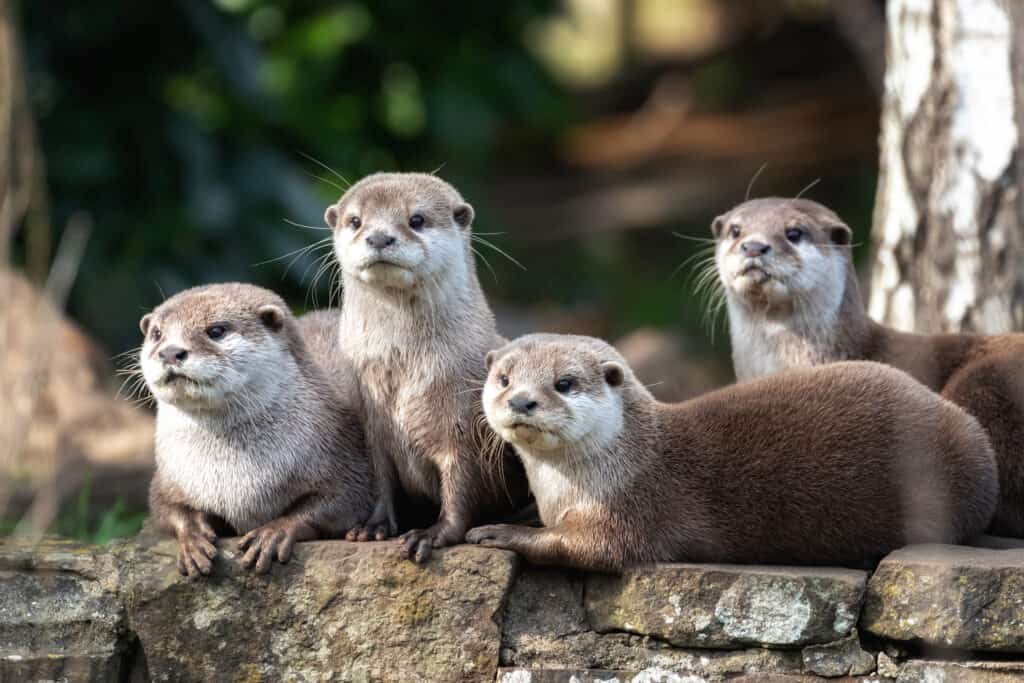
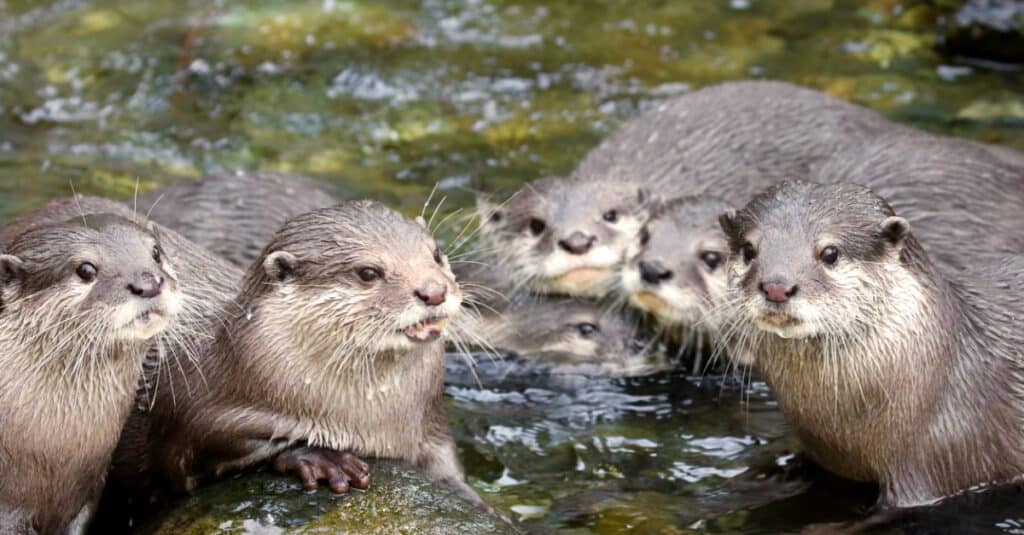
Otters are social creatures and enjoy being together. They live as families that consist of a mother and her offspring.
©iStock.com/Rixipix
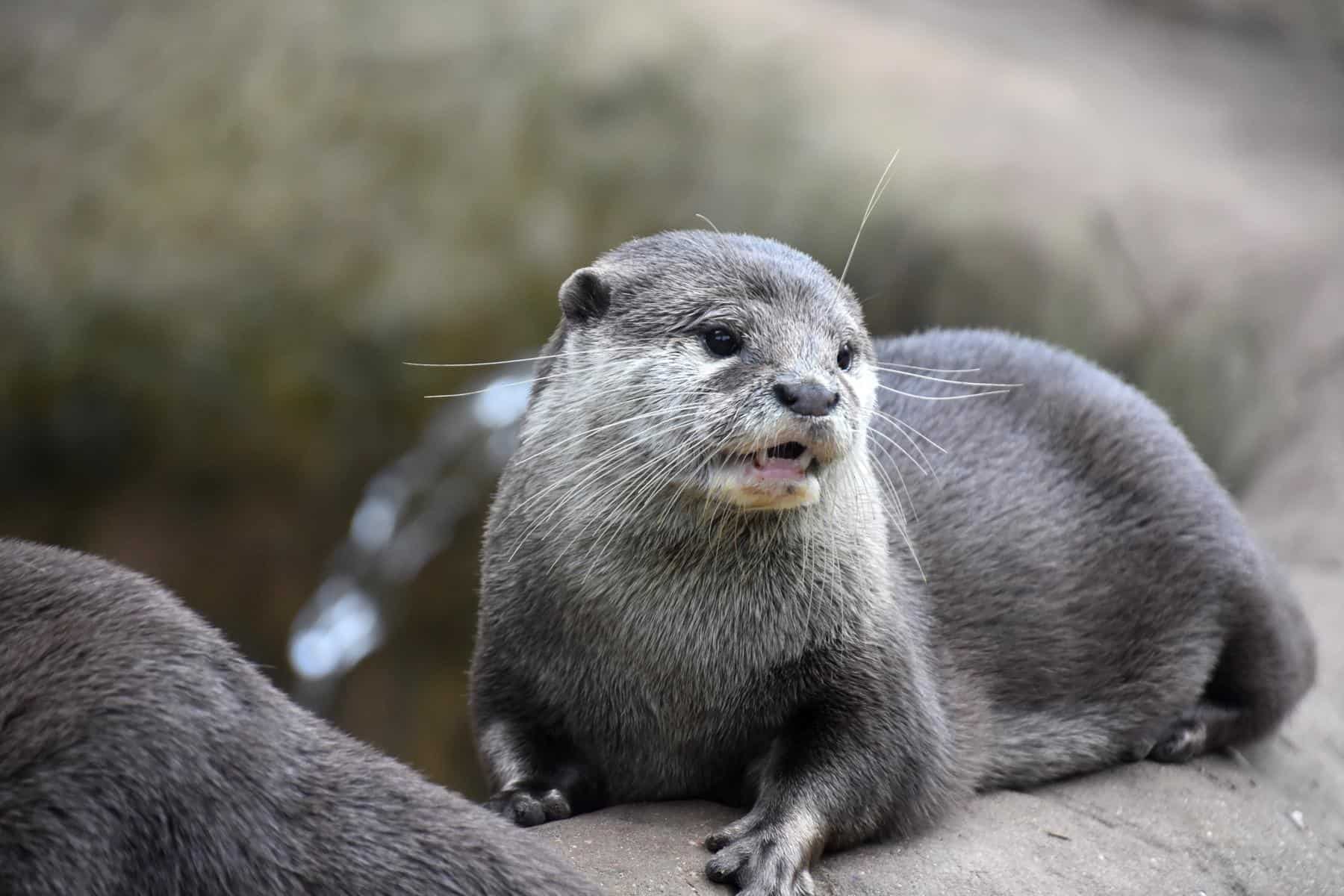
Otters are animals that are known for being slim and short. They have muscular necks and short legs. Their long, flat tails and four webbed feet help them swim faster. They have short noses and ears, and their fur is brown, soft, and thick. Their outer fur varies in its shade of brown, with the fur underneath being lighter. Having two layers of fur keeps them warm and dry. On each square inch of their body, they may have as much as one million hairs.
The smallest of these animals weighs six pounds (or eight times more than the average can of soup,) and as the largest of the breed, sea otters weigh 99 pounds (or 10 times more than the average cat.)The typical otter is between two and six feet long. In comparison, a full-sized bed is 10 feet in length.
In the Southern Pacific Ocean, the world’s smallest otters, Chungungos, can be found. The world’s largest otter to date was found in the Big Fish, a body of water in Maine. While most otters are an average size of 40 inches (or half Michael Jordan’s height), this one was 76 inches long, making it approximately as tall as Michael Jordan is.
Otters enjoy being together. They live as families that consist of a mother and her offspring. When they are not eating or sleeping, they can be seen playing and often choose the bank of a river to turn into their sliding board.
Groups of otters that are in the water are referred to as rafts. When they are in a group but out of the water, they can be referred to as a bevy, romp, or lodge. Adult otters may become defensive if they feel like their offspring is being threatened.
Habitat
There are many places in the world where otters live. They prefer a wet habitat and often make their home on coastlines, lakes, oceans, and freshwater rivers. Most choose to live in dens that beavers and other similar animals build. These dens are found underground and include various inner chambers that keep them dry.
When it comes to sea otters, water is their preferred habitat to land. They make their home on central California’s coast, as well as Alaska and Russia’s Pacific Coasts. Otters will often retreat to giant kelp forests away from shore.
Diet
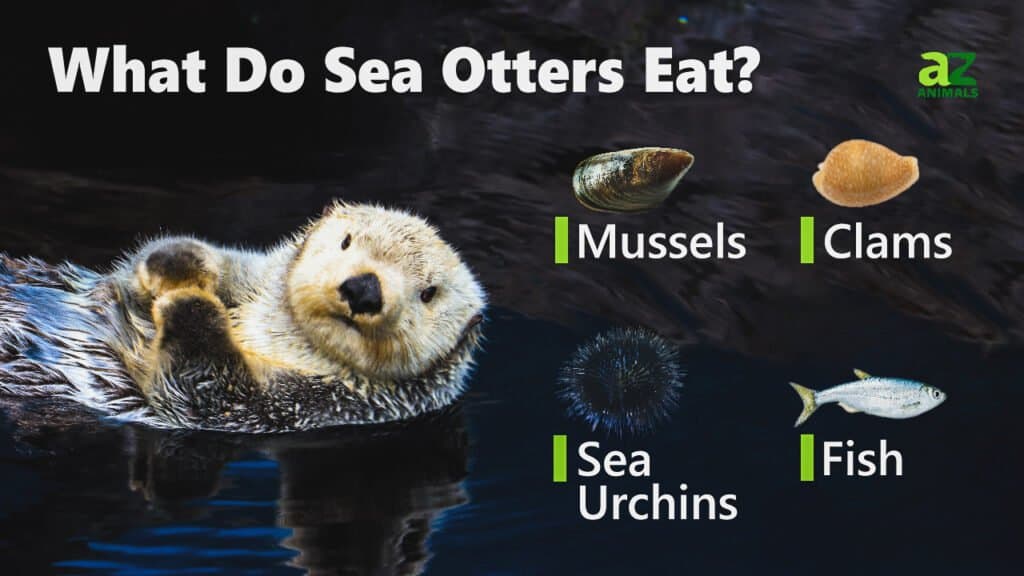
As carnivores, otters eat a diet consisting of meat. The different types of otters have different diets. Marine animals are the preferred choice of sea otters. This means they eat snails, mussels, and crabs, as well as other types of marine animals. A sea otter will eat about 25% of their weight. in marine animals per day. River otters have a different diet. They prefer birds and small mammals. Their diet is mostly made up of fish, frogs, crayfish, and crabs. For a complete list of what otters eat, check out our “What Do Otters Eat” page.
Predators & Threats
The biggest threat to otters is people because hunting them is a common activity. It is so common that certain species have been greatly depleted as a result. People have been hunting these animals for a long time. When they started, homemade weapons and arrows were used. As killing them became more popular, hunters started to set traps and shoot the otters that fell into them. These days, most people only use traps to catch an otter.
Commercial fishermen have been hunting this animal for a long time. The reason is that the natural diet of an otter means fewer marine animals for fishermen to catch. Some fishermen catch them without meaning to because the otters enter their fishing nets.
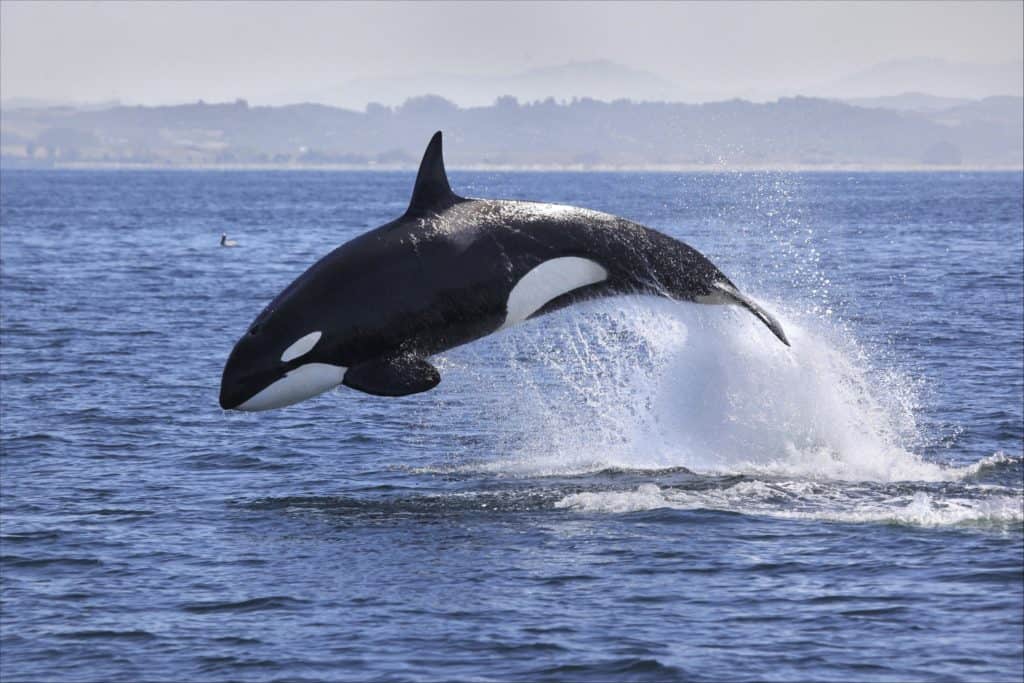
The
killer whale
is numbered among the predators that threaten otters.
©Tory Kallman/Shutterstock.com
Land and water predators are also a threat. Coyotes pose a danger to them, and so do eagles. In some parts of the world, water lions are a threat to otters. Another significant threat is killer whales and sharks. In areas with swampland, another threat is crocodiles and alligators. Those that live in the wild are often hunted by bobcats.
Due to the many predators of otters, there are several species that are in danger of becoming extinct. This is because the loss of habitat and air/water pollution are having a negative effect on them. The IUCN Red List includes water-based otters on their list of animals that are endangered.
In Asia, the existence of otters is threatened because of the illegal trading of them. The only type of otters not in danger of extinction are those that live in the waters of North America.
Reproduction, Babies, And Lifespan
When an otter is between the ages of two and three, they are old enough to reproduce. Those in different regions of the world mate for different reasons. In ideal conditions, they can reproduce multiple times during their reproductive season. Those conditions are an abundance of food and a comfortable place to reproduce.
North American otters mate from late into winter and through the beginning of the spring season. Not all otters breed in the same way. Some breeds take longer to have babies than others. When the egg is fertilized in a pregnant otter something happens called delayed implantation. This means that the egg won’t become attached to the mother’s womb until the environment is suitable for an otter to give birth. These are the otters that are pregnant for 63 to 65 days before giving birth.
When a male is ready to reproduce, he will seek out a female companion. Males and females do not generally grow up together. The only exception is that when they are babies, the males will stay with their mothers.
In some cases, females will be able to reproduce again immediately after giving birth. Yet this is not a common practice. Females would rather nurse their babies to adulthood before having more. If a mother loses one of her babies, she may not want to wait to reproduce again. She may choose to do it right away. The only exception to this is if the mother otter lives in an environment that isn’t stressful.
During the mating season, males go to where they know the females will be. A male cannot mate with a female until she approves of doing so. Sometimes, a male will find another female if they feel one won’t approve.
At four months old, pups can begin to eat solid foods. This is when they start learning how to hunt.
©iStock.com/Mirko_Rosenau
Some otter species are monogamous, while others are polygamous. If a female sea otter wants to mate with a specific male, she will roll around and play with them. Playing together releases the female hormone needed for reproduction. Sometimes, a male sea otter will bite his female companion’s nose if he wants to reproduce with her.
These activities are done on dry land. River otters and sea otters mate in the water. Once babies have been conceived, the mother otter is pregnant for different amounts of time, according to her species. The shortest pregnancy is 60 days, while the longest is nine months.
When they are born, a mom will give birth to between one and six pups. If they have a water birth, it takes place on kelp. Babies may also be born in an otter’s den. Until new pups are one month old, they cannot see. They depend on their mother for everything. A pup will not leave their den until they are able to see. After they gain the ability to see, the mother will teach them how to swim in the water.
Certain types of otter babies are born with growing teeth and all of their fur. When they are born, their average weight is five ounces, about the same as a baseball.
At four months old, pups can begin to eat solid foods. This is when they start learning how to hunt. Pups are so fragile that 32% of them won’t survive until their first birthday. Even adult female otters don’t always survive long enough to be able to mate.
If held in captivity, an otter can reach the age of between 15 and 20 years old. Those that live in the wild have a much shorter lifespan. Those that live in the water have an average life span of between eight and nine years.
Baby otters are also called whelps and kits, in addition to pups.
Population
Water-dwelling otters have declined in population. Within the previous 45 years, the population has dropped to less than half of what it was. However, the population has increased over the last two decades in South Dakota. Between 1998 and 2000, 34 otters were placed into the Big Sioux. As of 2006, the last time it was counted, the population in South Dakota was 100.
How to Add Us to Google News


Otter FAQs (Frequently Asked Questions)
Are otters carnivores, herbivores, or omnivores?
Since otters eat meat, they fall into the category of carnivores.
Are otters dangerous?
There are times when otters can be dangerous. If humans approach their babies, they will aggressively protect the pups. If they want to, they can overpower smaller children as well as most pets. They carry rabies and can transfer it to people or to pets.
Are otters friendly?
In general, otters are not overly friendly to people. Though they may seem that way, it is not always the case.
Do otters eat alligators?
At times, a river otter will eat an alligator. If they find themselves near one, an otter may attack an alligator because it sees it as food.
What do otters do?
Otters often attack marine animals with hard shells so they can eat them.
Are otters smart?
Otters are known for being smarter than many other animals. Some people even believe that they are smarter than dolphins.
Do otters mate for life?
It is not unusual for otters to mate for life. They are known to remain with their otter partner for their whole life, just like human couples do.
What Kingdom do Otters belong to?
Otters belong to the Kingdom Animalia.
What phylum do Otters belong to?
Otters belong to the phylum Chordata.
What class do Otters belong to?
Otters belong to the class Mammalia.
What family do Otters belong to?
Otters belong to the family Mustelidae.
What order do Otters belong to?
Otters belong to the order Carnivora.
What genus do Otters belong to?
There are several genus groups for otters. River otters belong to Lutra, while sea otters belong to Enhydra.
What type of covering do Otters have?
Otters are covered in Fur.
In what type of habitat do Otters live?
Otters live in river banks, lakes, and streams.
What is the main prey for Otters?
Otters prey on fish, crabs, and frogs.
What are some predators of Otters?
Predators of Otters include birds, foxes, and wolves.
What is the average litter size for an Otter?
The average litter size for an Otter is 3.
What is an interesting fact about Otters?
There are 13 different Otter species worldwide.
What is the scientific name for the Otter?
The scientific name for an Otter varies by species.
What is the lifespan of an Otter?
Otters can live for 15 to 25 years.
Otter Vs Mink
Both animals belong to the Mustelidae family. However, they don’t belong to the same subfamily; Otters belong to the Lutrinae subfamily while minks belong to the Mustelinae subfamily. Besides otter and minks differ in size, range, and swimming patterns.
What are the differences between a seal and an otter?
The key differences between seals and otters are size, family, and their method of thermoregulation. Seals are larger than otters, weighing a lot more than them and growing much longer. Although seals and otters are often believed to be related, the truth is that they belong to completely different families.
Thank you for reading! Have some feedback for us? Contact the AZ Animals editorial team.
Sources
- David Burnie, Dorling Kindersley (2011) Animal, The Definitive Visual Guide To The World's Wildlife
- Tom Jackson, Lorenz Books (2007) The World Encyclopedia Of Animals
- David Burnie, Kingfisher (2011) The Kingfisher Animal Encyclopedia
- Richard Mackay, University of California Press (2009) The Atlas Of Endangered Species
- David Burnie, Dorling Kindersley (2008) Illustrated Encyclopedia Of Animals
- Dorling Kindersley (2006) Dorling Kindersley Encyclopedia Of Animals
- David W. Macdonald, Oxford University Press (2010) The Encyclopedia Of Mammals