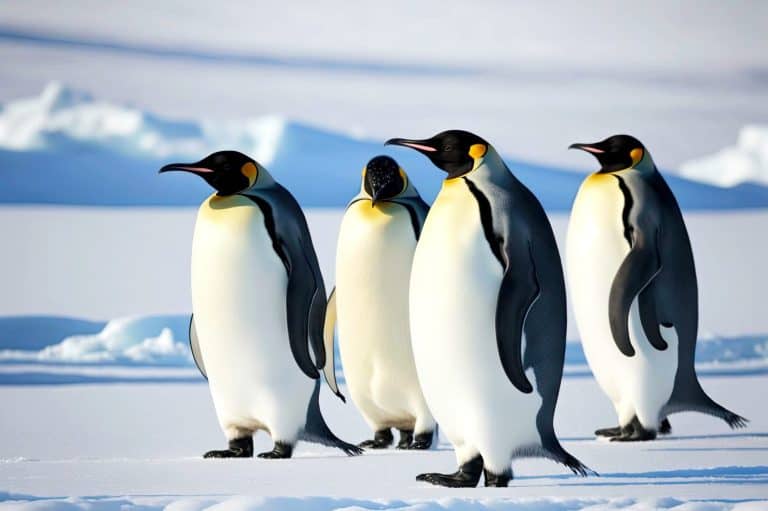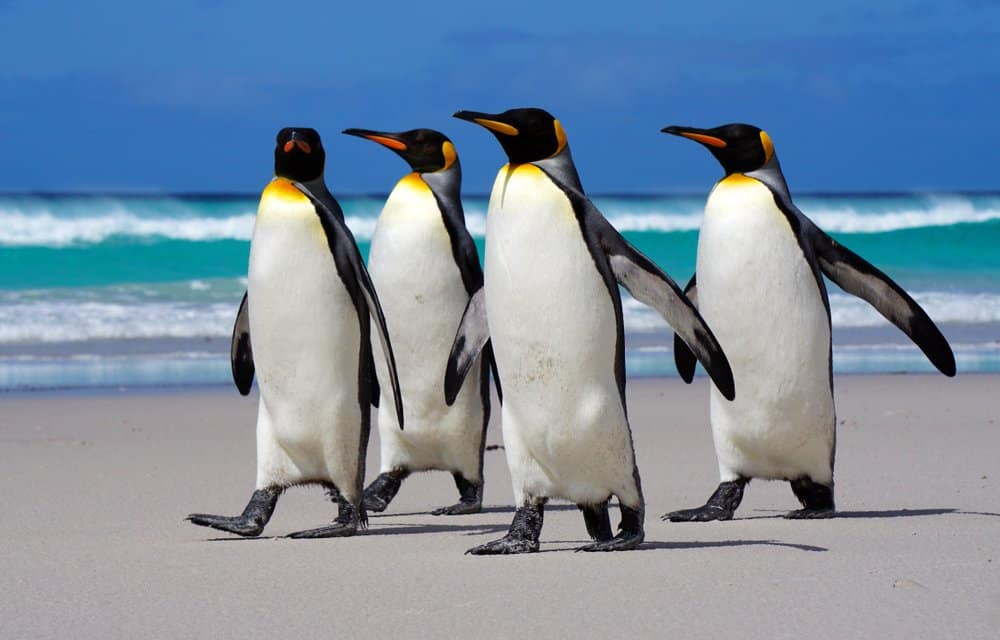
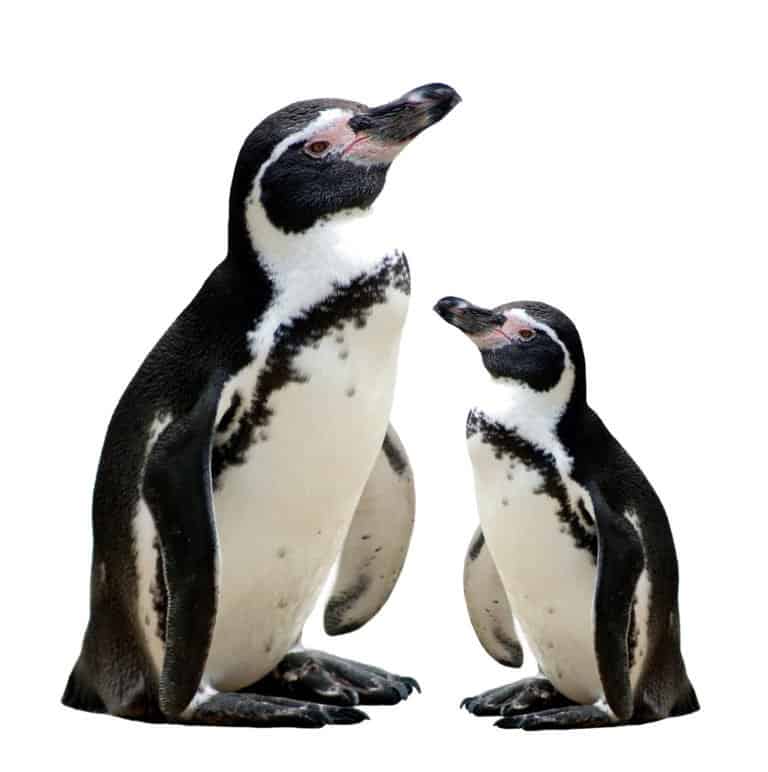
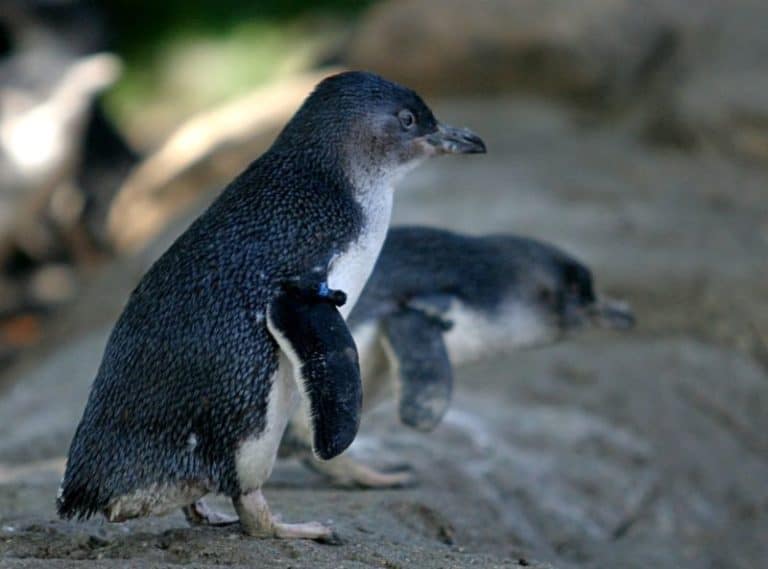
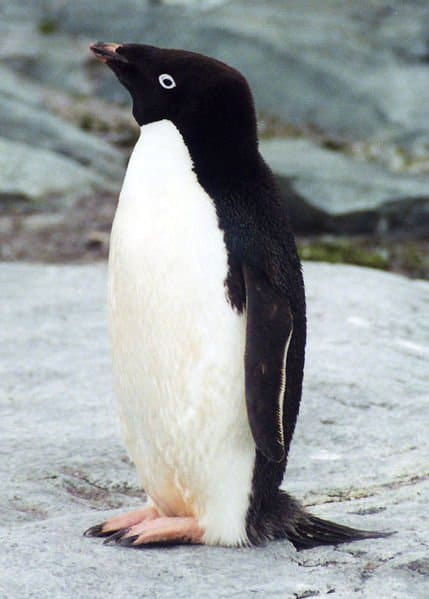
Penguins are one of the most beloved animals on the planet!
Their tuxedo coloring, adorable waddle, and cute faces make penguins one of the most beloved animals in the world. From the equatorial deserts of Africa to the Nordic grasslands of Scandinavia, humans can’t help but ooooh and awww over the aquatic, flightless bipedal birds! A lot of folks mistakenly believe that penguins only live in the North and South Poles, but in reality, they live throughout the Southern Hemisphere. One species even nests close to the equator. However, none live in or around the Arctic Circle.
Scientists are locked in a debate about penguin taxonomy and genetic links, but they all agree that at least 15 species currently inhabit the earth.
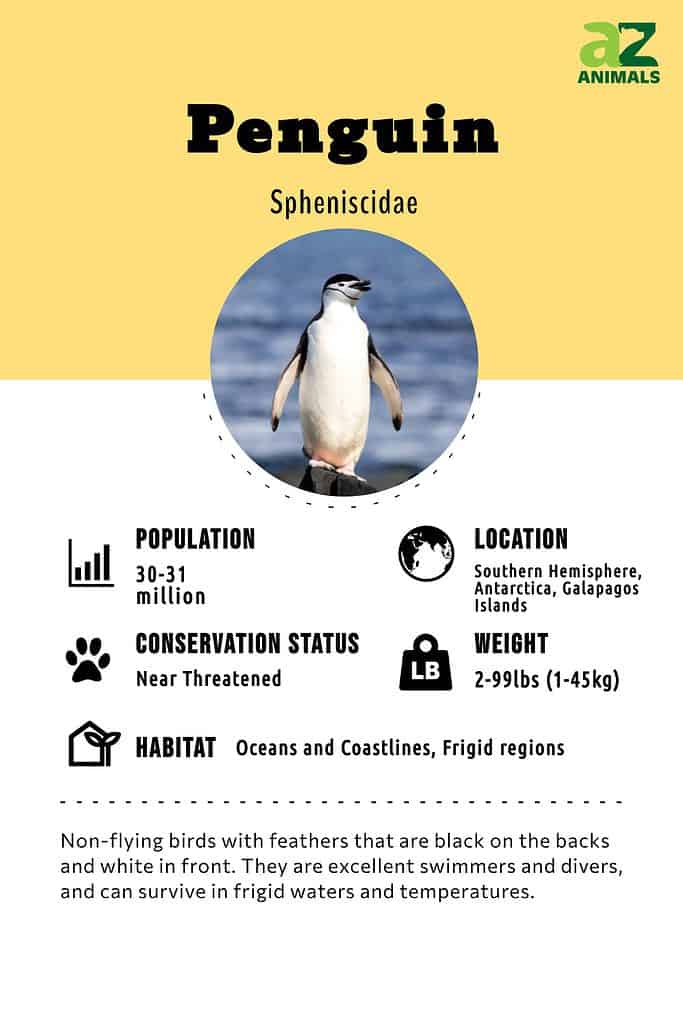
Fun and Fascinating Penguin Facts
- Human-sized penguins waddled around the Earth in prehistoric times. The Anthropornis nordenskjoeldi reached heights of 1.8 meters (5 feet 11 inches) and tipped the scale at 90 kilograms (200 pounds). The emergence of large-toothed whales and seals likely led to the extinction of giant penguins.
- In 1948, a Florida man named Tony fashioned himself a pair of 30-pound, three-toed lead shoes and stomped around beaches at night to further a myth that a 15-foot-tall penguin ruled the surf at night. He did it for ten years, never got caught, and didn’t reveal the hoax until 40 years later.
- Penguins’ black and white coloring is defensive camouflage.
- Despite the Falkland’s active landmines, the island cluster has morphed into a makeshift nature preserve for penguins because the animals are too lightweight to trigger the mines.
- The oldest known penguin species in the fossil record is the Waimanu manneringi, which lived 62 million years ago.
Scientific Name
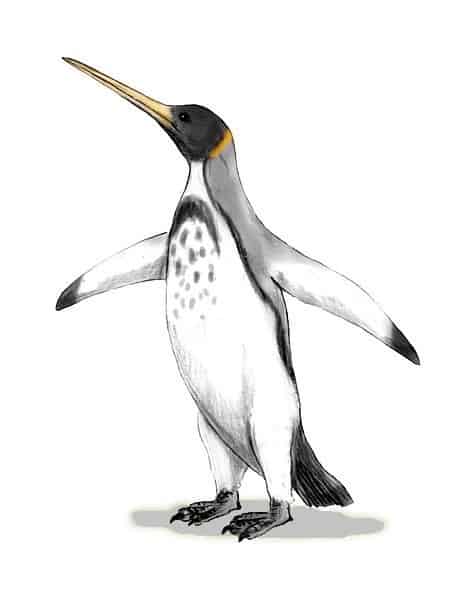
Though the exact etymology of the word “penguin” is debatable, the general scientific name is Spheniscidae.
©Nobu Tamura (http://spinops.blogspot.com), CC BY 3.0, via Wikimedia Commons – Original / License
The general scientific name for penguin is Spheniscidae. However, the exact etymology of the word “penguin” is up for debate. The word first appeared in the 1700s as a synonym for the great auk, a now-extinct marine bird that sported similar coloring to penguins but wasn’t related. Some believe the made-up synonym derived from the French word “pingouin,” which sailors used for auk birds.
The Oxford English Dictionary, American Heritage Dictionary, and Merriam-Webster credit Welsh with the word. They hypothesize that penguin was a mash-up of “pen” — the Welsh word for head — and “gwyn” — the Welsh word for white — because great auks were first seen on White Head Island in Newfoundland.
Other linguists believe penguin has Latin roots, linking it to the word “pinguis,” meaning “fat” or “oil.” They pin this theory on a Germanic word for penguin, “fettgans,” which translates to “fat goose,” and a Dutch word for the animal, “vetgans,” which also roughly translates to “fat goose.”
Evolution
Scientists believe penguins evolved from flying birds, and are kin to the order Procellariiformes which includes petrels, albatrosses, loons, and frigatebirds. As penguins adapted to aquatic habitats and developed abilities for diving and swimming, they lost the ability to fly. The Waimanu manneringi, from New Zealand, is the earliest known penguin species, present during the Cretaceous Period 60-65 million years ago.
Some researchers theorize that penguins are related to members of the Alcidae family because they resemble other marine birds like puffins, cormorants, and razorbills. But this is viewed more as convergent evolution, where groups of species evolve independently but similarly.
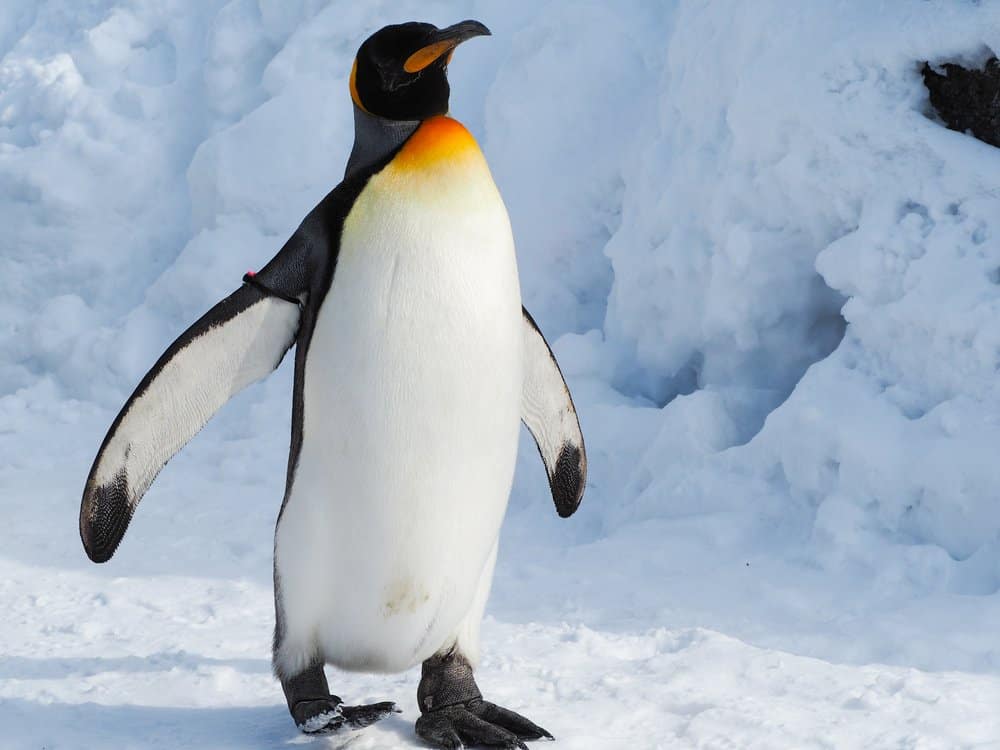
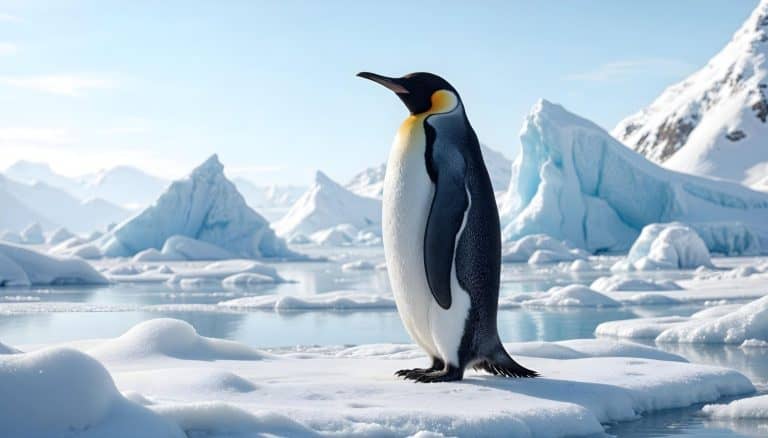
The Emperor Penguin is the largest member of the penguin order Sphenisciformes.
©Joey_Danuphol/Shutterstock.com
Types of Penguins
| Aptenodytes (great penguins) | Aptenodytes patagonicus | A. p. Patagonicus / A. p. halli | King penguin |
| Aptenodytes (great penguins) | Aptenodytes forsteri | None | Emperor penguin |
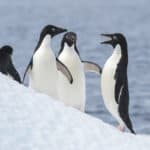
| Pygoscelis (brush-tailed penguins) | Pygoscelis adeliae | None | Adélie penguin |
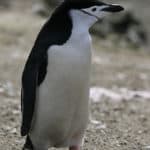
| Pygoscelis (brush-tailed penguins) | Pygoscelis antarctica | None | Chinstrap penguin, Ringed penguin, Bearded penguin, Stonecracker penguin |
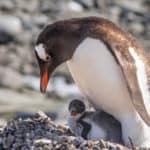
| Pygoscelis (brush-tailed penguins) | Pygoscelis papua | None | Gentoo penguin |
| Eudyptula (little penguins) | Eudyptula minor | E. m. variabilis / E. m. chathamensis Little penguin taxonomy is still very much fluid and disputed. | Little blue penguin, Little penguin, Fairy penguin, Māori name: Kororā |
| Eudyptula (little penguins) | Eudyptula novaehollandiae | Little penguin taxonomy is still very much fluid and disputed. | Australian little penguin |
| Eudyptula (little penguins) | Eudyptula albosignata | Little penguin taxonomy is still very much fluid and disputed. | White-flippered penguin |
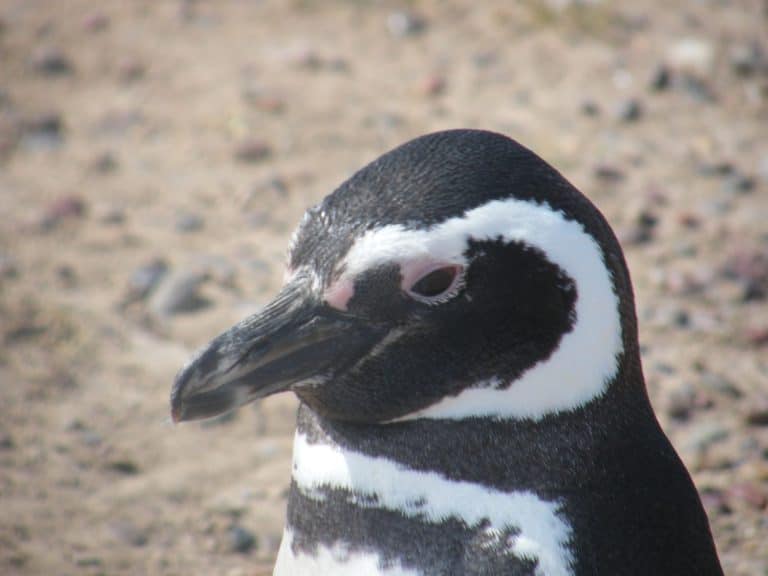
| Spheniscus (banded penguins) | Spheniscus magellanicus | None | Magellanic penguin |
| Spheniscus (banded penguins) | Spheniscus humboldti | None | Humboldt penguin |
| Spheniscus (banded penguins) | Spheniscus mendiculus | None | Galapagos penguin |
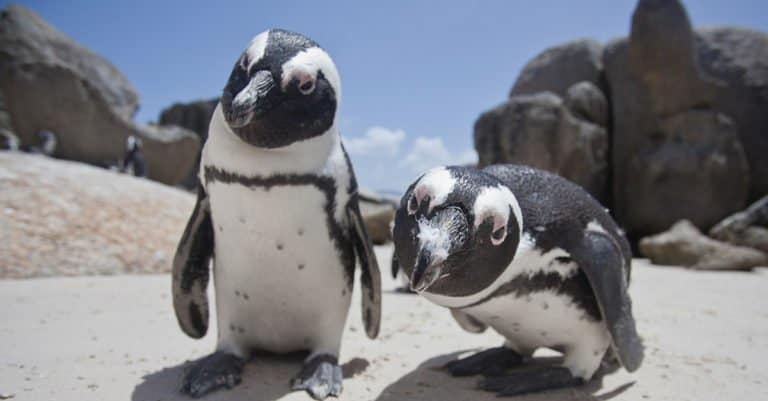
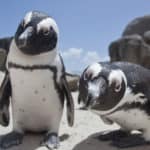
| Spheniscus (banded penguins) | Spheniscus demersus | None | African penguin, Cape penguin, South African penguin |
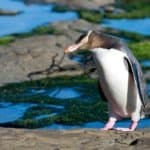
| Megadyptes | Megadyptes antipodes | None | Yellow-eyed penguin, Hoiho, Tarakaka |
| Eudyptes (crested penguins) | Eudyptes pachyrhynchus | None | Fiordland penguin, Fiordland crested penguin, New Zealand crested penguin, Māori name: Tawaki or Pokotiwha |
| Eudyptes (crested penguins) | Eudyptes robustus | None | Snares penguin |
| Eudyptes (crested penguins) | Eudyptes sclateri | None | Erect-crested penguin |
| Eudyptes (crested penguins) | Eudyptes chrysocome | E. c. chrysocome / E. c. filholi – Eastern | Southern rockhopper penguin |
| Eudyptes (crested penguins) | Eudyptes filholi | The eastern rockhopper penguin is considered a subspecies of the southern rockhopper penguin by some scientists and its own species by others. | Eastern rockhopper penguin |
| Eudyptes (crested penguins) | Eudyptes moseleyi | None | Northern rockhopper penguin |
| Eudyptes (crested penguins) | Eudyptes schlegeli (disputed) | Some scientists think Eudyptes schlegeli penguins are a subspecies of Macaroni penguins. Others disagree. | Royal penguin |
| Eudyptes (crested penguins) | Eudyptes chrysolophus | Some scientists think Eudyptes schlegeli penguins are a subspecies of Macaroni penguins. Others disagree. | Macaroni penguin |
Appearance and Behavior
Appearance
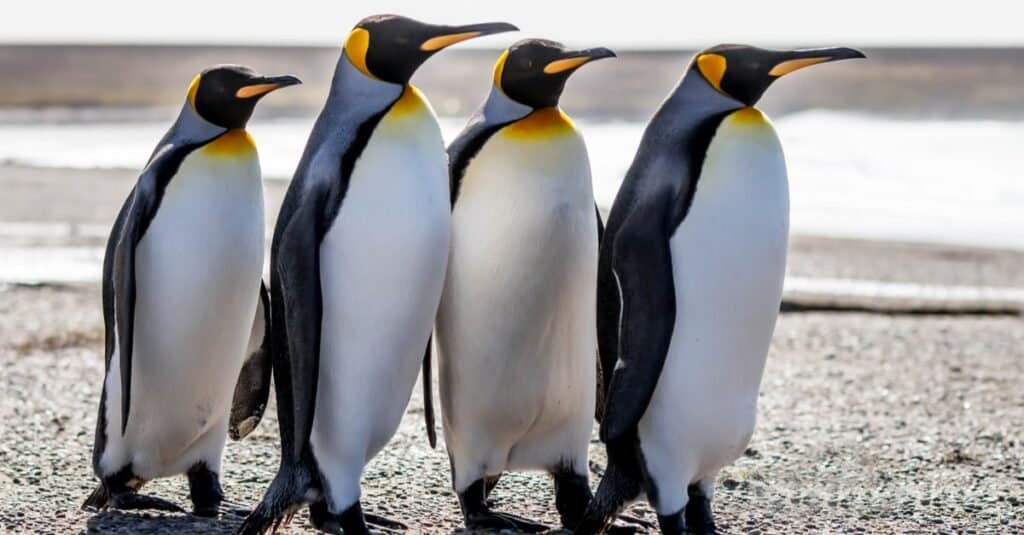
The term for the black and white tuxedo appearance of penguins is “counter-shading,” a camouflage that confuses predators.
©fieldwork/Shutterstock.com
Penguins are animals with a signature look: black backs and white fronts. The technical term for their coloring is “counter-shading.” It’s an evolutionary advantage that serves as spectacular camouflage because penguin predators have difficulty distinguishing between a white underbelly and a reflective water surface. On land, the black back helps penguins blend into the rocky terrain on which many species nest and breed.
They may look sleek and leathery, but penguins are covered in animals that are feathers, and their plumage serves two primary purposes. Firstly, it helps with buoyancy and contributes to their agile swimming skills. Secondly, penguin feathers act as insulation, which allows the birds to withstand frigid water and air temperatures.
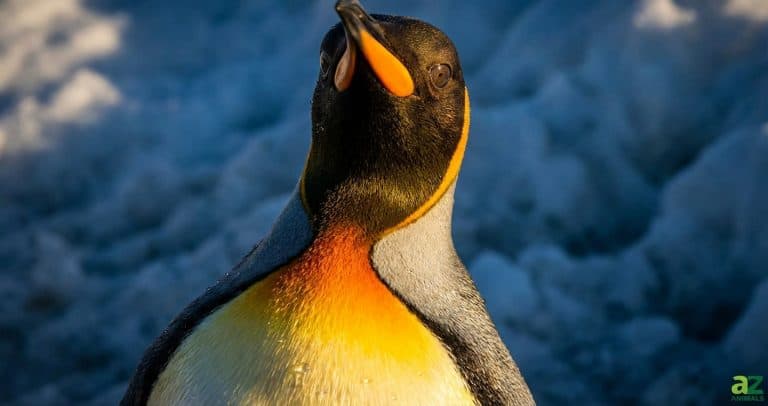
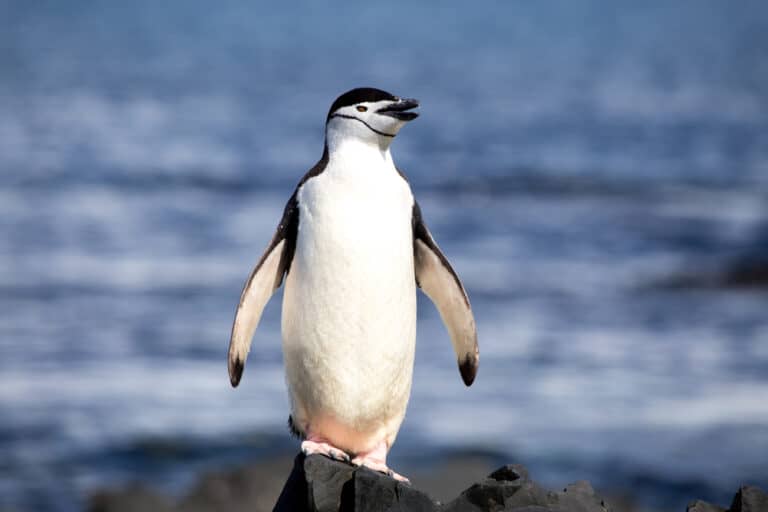
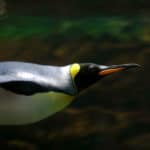
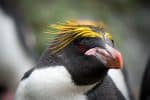
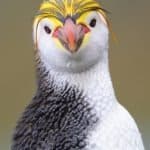
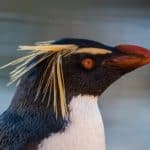
Several penguin species have a distinct aesthetic flare. Rockhoppers sport fancy crests and feathers on their heads. Chinstrap penguins feature a white band across their jaw areas, and golden feathers adorn the necks and heads of giant penguins. Cape penguins don distinctive pink patches above their eyes, and little blue penguins have blue-tinted feathers instead of jet-black.
Every so often, a penguin is born with light-brown feathers instead of black. They’re known as isabelline penguins, and they tend to live shorter lives because of their inferior camouflage — but they are beautiful!
Average Sizes of Penguin Species
| Aptenodytes patagonicus | 70 to 100 centimeters (28 to 39 inches) | 9.3 to 18 kilograms (21 to 40 pounds) |
| Aptenodytes forsteri | 122 centimeters (48 inches) | 22 to 45 kilograms (49 to 99 pounds) |
| Pygoscelis adeliae | 46 to 71 centimeters (18 to 28 inches) | 3.6 to 6.0 kilograms (7.9 to 13.2 pounds) |
| Pygoscelis antarctica | 68 to 76 centimeters (27 to 30 inches) | 3.2 to 5.3 kilograms (7.1 to11.7 pounds) |
| Pygoscelis papua | 51 to 90 centimeters (20 to 35 inches) | 4.9 to 8.5 kilograms (11 to 19 pounds) |
| Eudyptula minor | 30 to 33 centimeters (12 to 13 inches) | 1.5 kilograms (3.3 pounds) |
| Eudyptula novaehollandiae | 30 to 33 centimeters (12 to 13 inches) | 1.5 kilograms (3.3 pounds) |
| Eudyptula albosignata | 30 centimeters (12 inches) | 1.5 kilograms (3.3 pounds) |
| Spheniscus magellanicus | 61 to 76 centimeters (24 to 30 inches) | 2.7 to 6.5 kg (6.0 to 14.3 pounds) |
| Spheniscus humboldti | 56 to 70 centimeters (22 to 28 inches) | 3.6 to 5.9 kilograms (8 to13 pounds) |
| Spheniscus mendiculus | 49 centimeters (19 inches) | 2.5 kilograms (5.5 pounds) |
| Spheniscus demersus | 60 to 70 centimeters (24 to 28 inches) | 2.2 to 3.5 kilograms (4.9 to 7.7 pounds) |
| Megadyptes antipodes | 62 to 79 centimeters (24 to 31 inches) | 3 to 8.5 kilograms (6.6 to 18.7 pounds) |
| Eudyptes pachyrhynchus | 60 centimeters (24 inches) | 3.7 kilograms (8.2 pounds) |
| Eudyptes robustus | 50 to 70 centimeters (19.5 to 27.5 inches) | 2.5 to 4 kilograms (5.5 to 8.8 pounds) |
| Eudyptes sclateri | 50 to 70 centimeters (20 to 28 inches) | 2.5 to 6 kilograms (5.5 to 13.2 pounds) |
| Eudyptes chrysocome | 5 to 58 centimeters (18 to 23 inches) | 2 to 4.5 kilograms (4.4 to 9.9 pounds) |
| Eudyptes filholi | 45 to 55 centimeters (17.7 to 21.6 inches) | 2.2 to 4.3 kilograms (4.9 to 9.4 pounds) |
| Eudyptes schlegeli | 65 to 76 centimeters (26 to 30 inches) | 3 to 8 kilograms (6.6 to 17.6 pounds) |
| Eudyptes chrysolophus | 70 centimeters (28 inches) | 5.5 kilograms (12 pounds) |
Behavior
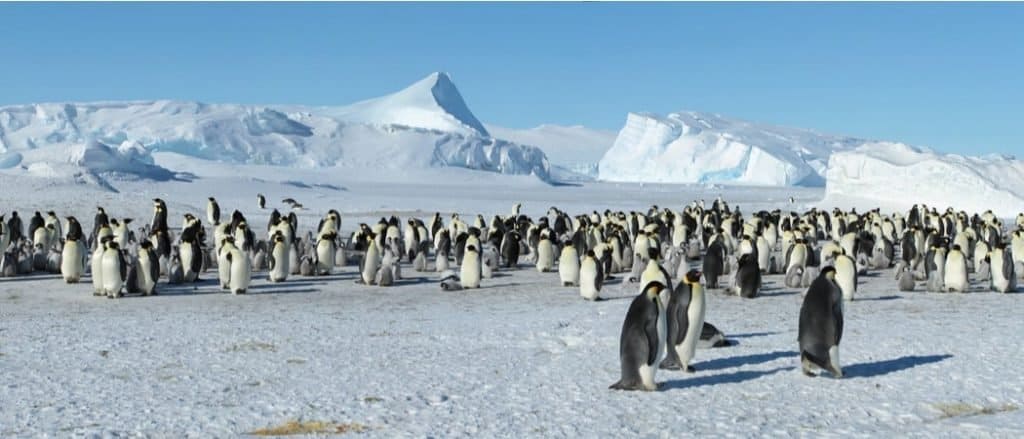
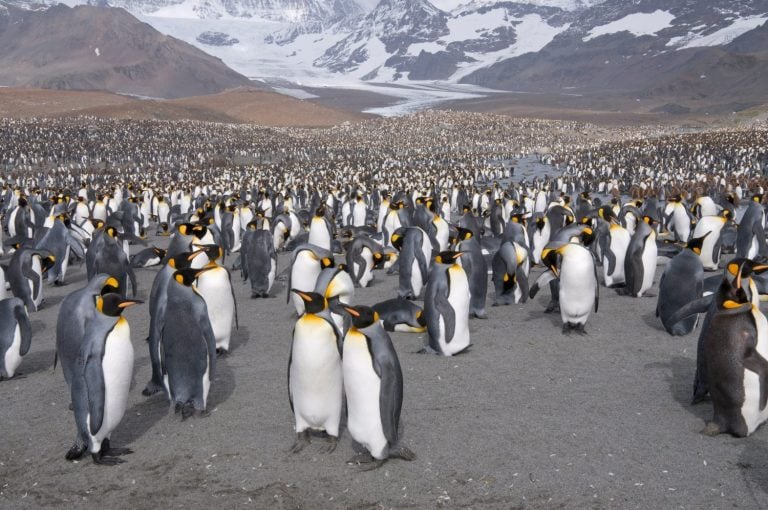
Penguins are social creatures who cohabitate in large groups called colonies.
©Sergey 402/Shutterstock.com
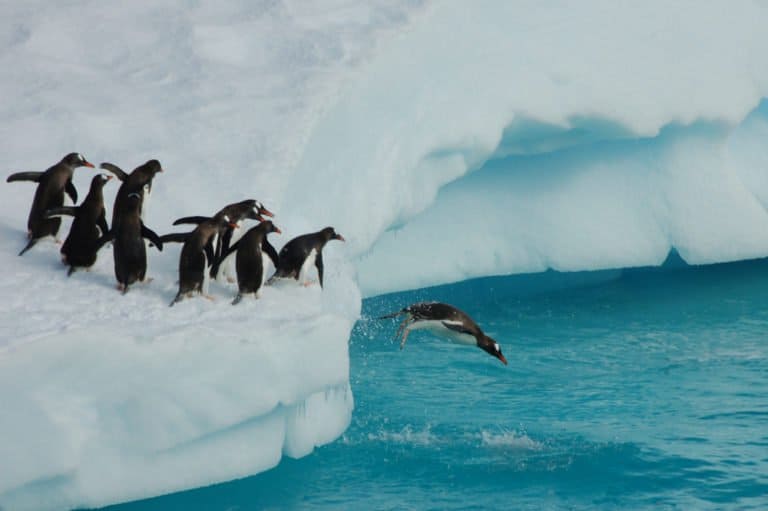
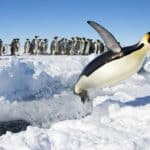
When land-bound and standing upright, penguins use their tails and wings for balance. If time is of the essence, penguins slide on their bellies and use their feet to propel and steer. The technique is called “tobogganing.” Penguins are also skilled jumpers and do so when traversing prickly terrain.
Penguins are very social animals that hang out in large groups called colonies. As such, they’ve developed vocal and visual communication skills and standards. Adult male penguins are “cocks,” and females are “hens.” A group of penguins on land is called a “waddle”; a group in the water is a “raft.”
Habitats
Wild penguins live almost exclusively in the Southern Hemisphere, save for banded penguins, which live near the equator and sometimes migrate into the Northern Hemisphere. Significant populations exist in Angola, Antarctica, Argentina, Australia, Chile, Namibia, New Zealand, South Africa, and the Falkland Islands. Furthermore, penguins in captivity live in zoos and animal sanctuaries around the world.
The chart below details specific habitat regions for the different penguin species.
Primary Locations of Penguin Species Around the World
| Aptenodytes patagonicus | King penguin | Islands in the South Atlantic and South Indian Oceans |
| Aptenodytes forsteri | Emperor penguin | Islands in the Antarctic and Sub-Antarctic Region |
| Pygoscelis adeliae | Adélie penguin | Antarctic Continent, Southern Ocean |
| Pygoscelis antarctica | Chinstrap penguin | Islands in the Southern Pacific and Antarctic Oceans |
| Pygoscelis papua | Gentoo penguin | Islands in the Antarctic Region, Falkland Islands, South Georgia |
| Eudyptula minor | Little blue penguin | New Zealand, Chile, South Africa |
| Eudyptula novaehollandiae | Australian little penguin | Australia |
| Eudyptula albosignata | White-flippered penguin | Banks Peninsula, Motunau Island |
| Spheniscus magellanicus | Magellanic penguin | Argentina, Chile, Falkland Islands |
| Spheniscus humboldti | Humboldt penguin | Pinguino de Humboldt National Reserve in Northern Chile, Peru |
| Spheniscus mendiculus | Galapagos penguin | Archipiélago de Colón |
| Spheniscus demersus | Cape penguin | Southwestern African Coast |
| Megadyptes antipodes | Yellow-eyed penguin | New Zealand Coasts and Islands |
| Eudyptes pachyrhynchus | Fiordland penguin | Southwestern New Zealand Coasts and Surrounding Islands |
| Eudyptes robustus | Snares penguin | Snares Islands |
| Eudyptes sclateri | Erect-crested penguin | Bounty and Antipodes Islands |
| Eudyptes chrysocome | Southern rockhopper penguin | Subantarctic of the Western Pacific and Indian Oceans |
| Eudyptes filholi | Eastern rockhopper penguin | Prince Edward, Crozet, Kerguelen, Heard, Macquarie, Campbell, Auckland, and the Antipodes Islands |
| Eudyptes moseleyi | Northern rockhopper penguin | Tristan da Cunha, Inaccessible Island, Gough Island |
| Eudyptes schlegeli (disputed) | Royal penguin | Subantarctic islands, Macquarie Island |
| Eudyptes chrysolophus | Macaroni penguin | Islands in Subantarctic and Antarctic Peninsula |
Diet
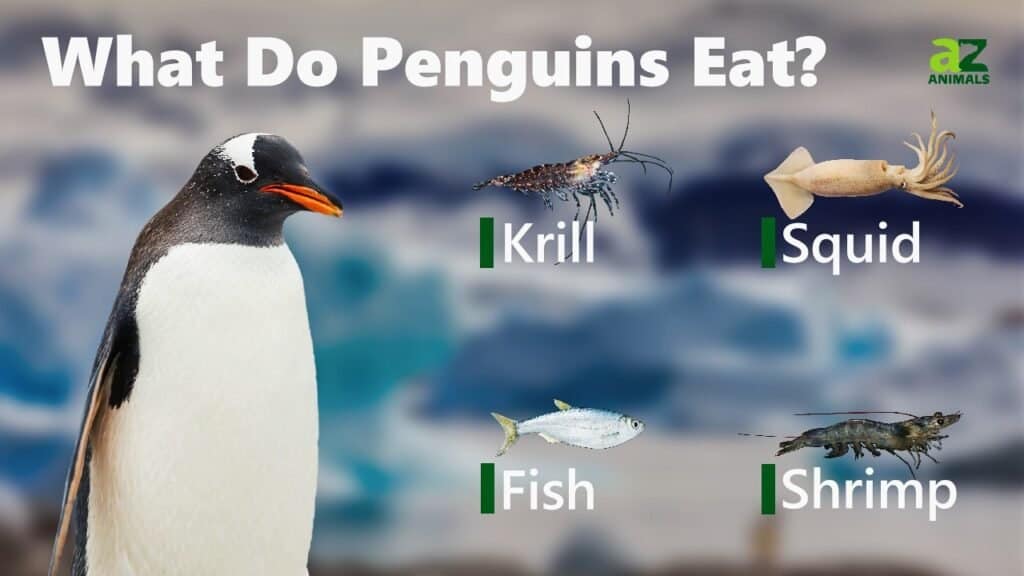
All penguins are carnivores that dine on marine life. They’re pescatarians! Specific diets, however, are regionally dependent. The chart below details the regular menu for each animal.
What Different Species of Penguins Eat
| Aptenodytes patagonicus | King penguin | lanternfish, squid, krill |
| Aptenodytes forsteri | Emperor penguin | fish, crustaceans, cephalopods, Antarctic silverfish, glacial squid, hooked squid, Antarctic krill |
| Pygoscelis adeliae | Adélie penguin | Antarctic krill, ice krill, Antarctic silverfish, sea krill, glacial squid |
| Pygoscelis antarctica | Chinstrap penguin | small fish, krill, shrimp, squid |
| Pygoscelis papua | Gentoo penguin | fish, krill, squat lobsters, squid |
| Eudyptula minor | Little blue penguin | clupeoid fish, cephalopods, crustaceans, arrow squid, slender sprat, Graham’s gudgeon, red cod, ahuru, barracouta, anchovy, arrow squid |
| Eudyptula novaehollandiae | Australian little penguin | pilchards, anchovies, cephalopods, crustaceans |
| Eudyptula albosignata | White-flippered penguin | Very little is known about the white-flippered penguin, including diet specifics. |
| Spheniscus magellanicus | Magellanic penguin | cuttlefish, squid, krill |
| Spheniscus humboldti | Humboldt penguin | krill, small crustaceans, squid, fish |
| Spheniscus mendiculus | Galapagos penguin | small fish, mullet, sardines |
| Spheniscus demersus | Cape penguin | sardines, anchovies, squid, small crustaceans |
| Megadyptes antipodes | Yellow-eyed penguin | blue cod, red cod, opalfish, New Zealand blueback sprat, arrow squid |
| Eudyptes pachyrhynchus | Fiordland penguin | arrow squid, krill, red cod, hoki |
| Eudyptes robustus | Snares penguin | krill, small fish, cephalopods |
| Eudyptes sclateri | Erect-crested penguin | small fish, krill, squid |
| Eudyptes chrysocome | Southern rockhopper penguin | krill, squid, octopus, lantern fish, mollusks, plankton, cuttlefish, crustaceans |
| Eudyptes filholi | Eastern rockhopper penguin | small fish, octopus, squid, and krill-like crustaceans |
| Eudyptes moseleyi | Northern rockhopper penguin | krill, crustaceans, squid, octopus, fish |
| Eudyptes schlegeli (disputed) | Royal penguin | krill, fish, squid |
| Eudyptes chrysolophus | Macaroni penguin | krill, crustaceans, cephalopods |
Predators and Threats
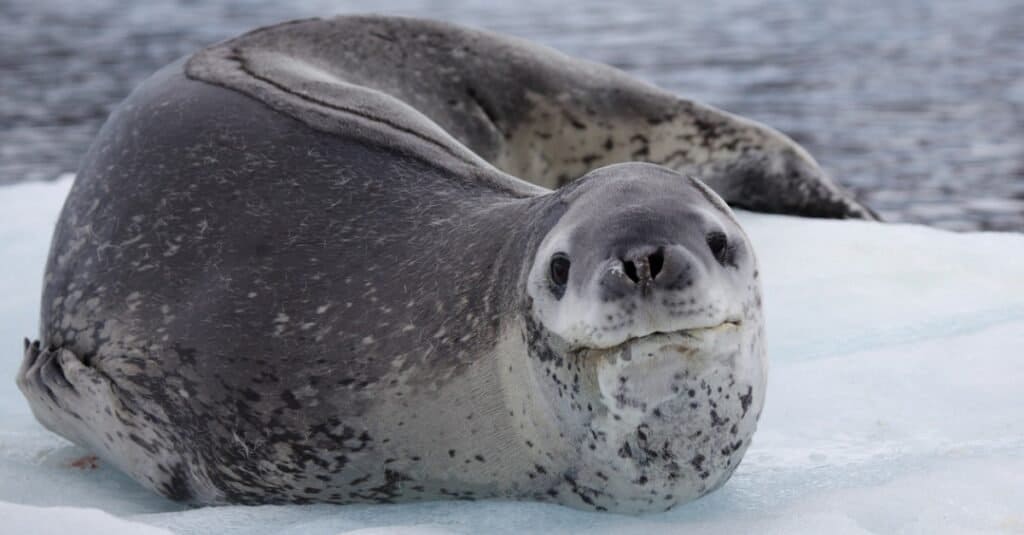
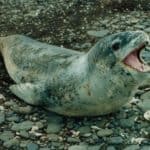
The leopard seal is one of the natural predators of penguins.
©Mogens Trolle/Shutterstock.com
Climate change is a massive threat to several penguin species, and marine-life conservationists are working against time to develop solutions. Natural penguin predators include leopard seals, sharks, killer whales, fur seals, and sea lions.
Reproduction, Babies, and Lifespan
Reproduction
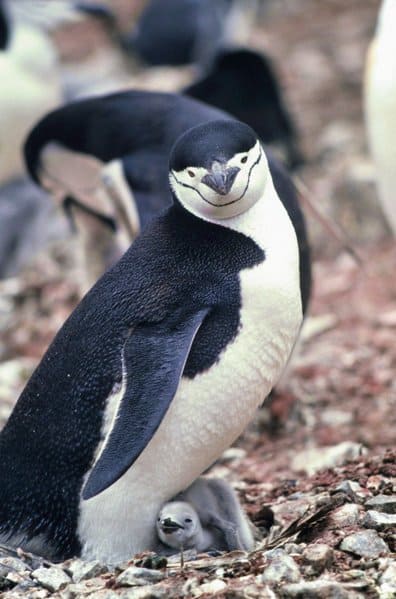
Penguins breed on either ice blocks or rocky outcrops. Except for yellow-eyed and Fiordland species, penguins breed in large colonies, ranging from 100 pairs to hundreds of thousands for the chinstrap, king, and Macaroni.
Penguins stay monogamous for the breeding season, but chinstrap penguins often mate for life! Most pairs produce two eggs per clutch. Larger penguins, aka the “great penguins,” only lay one. Most species only lay one brood per mating season, but little penguins may lay several.
Relative to adult penguins’ sizes, their eggs are small. However, the shells are extra-thick and serve as protection against rough terrain. Fascinatingly, when Aptenodytes forsteri (emperor penguins) lose an egg or a chick, they try to kidnap another pair’s offspring. Penguin snatching seldom succeeds, but it doesn’t stop them from trying!
Aptenodytes forsteri males handle all the incubation duties. Both parents share responsibility for the other species. Incubation shifts can last days or weeks while one parent heads out to forage for food.
Babies
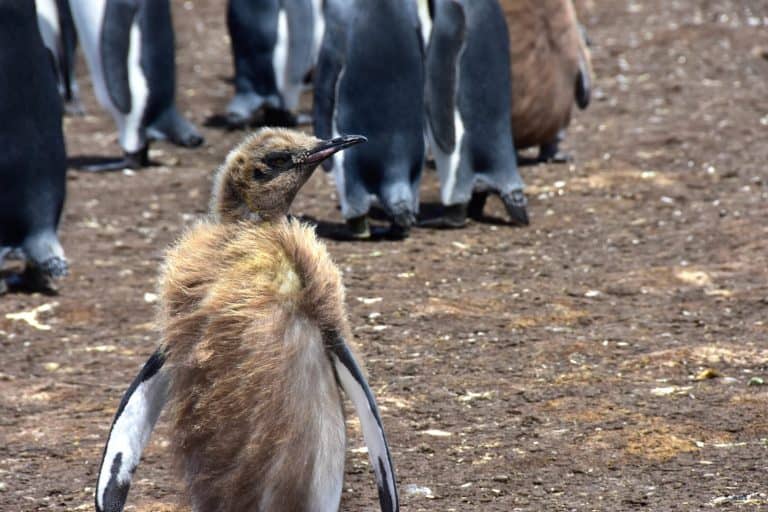
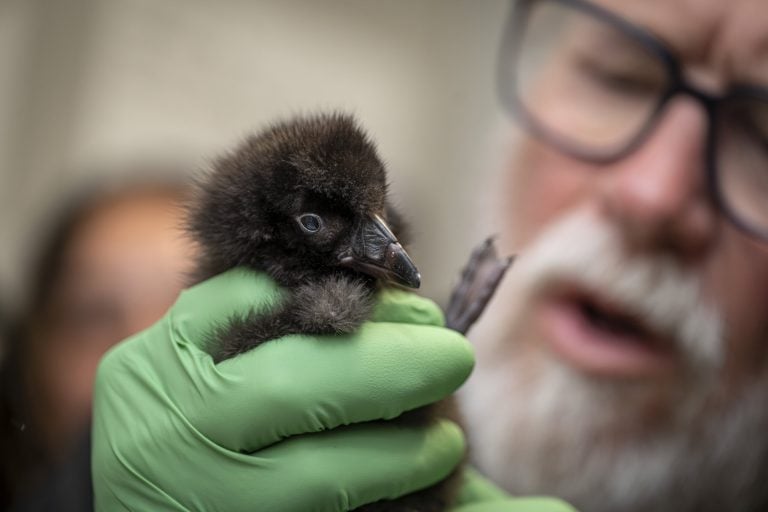
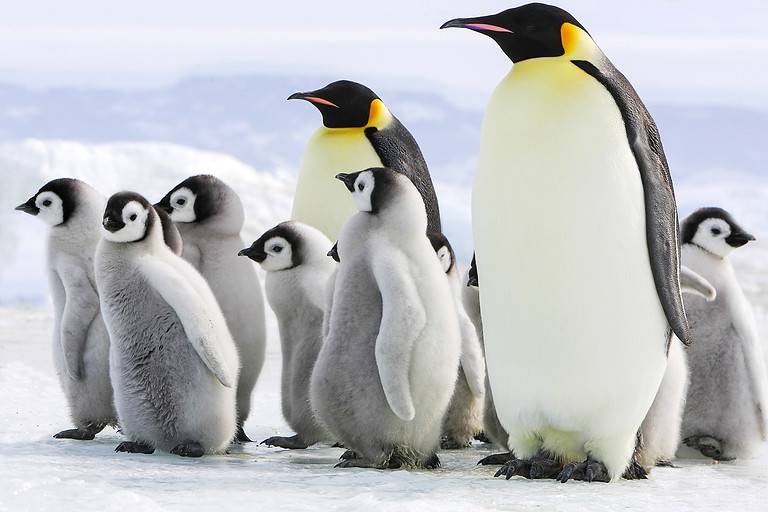
Baby penguins are called “chicks” or “nestlings.” When they gather in a group, it’s called a “crèches.” Newborn penguins are dependent on their parents until they grow waterproof feathers. For some species, that may only be seven to nine weeks. For other species, it may be as long as 13 months.
Lifespans
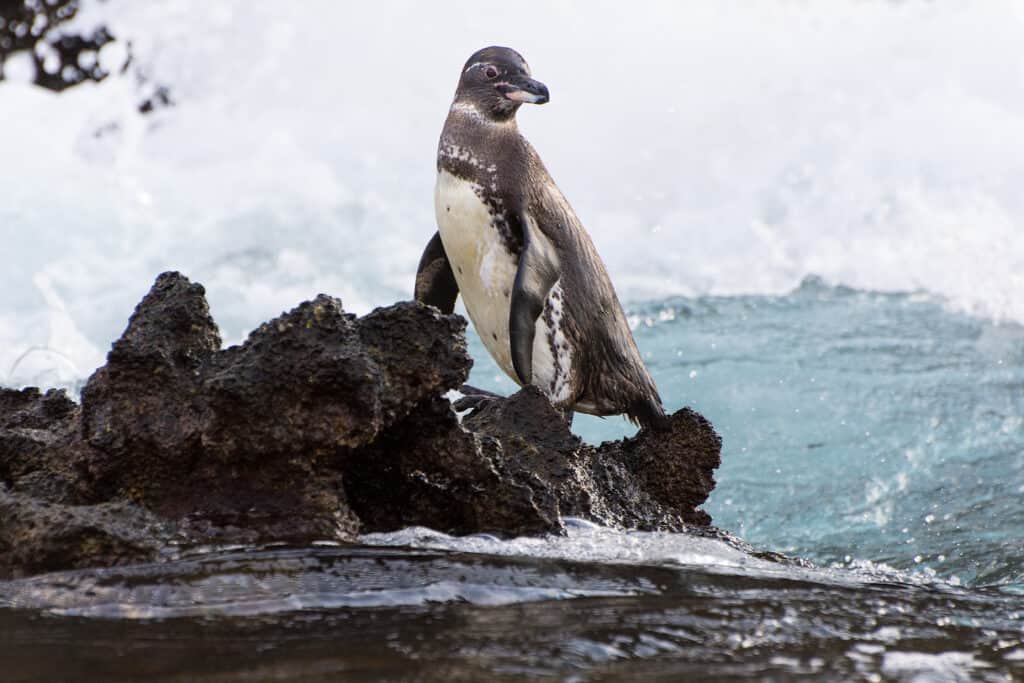
The lifespan of a penguin can range from 6 to 26 years.
©iStock.com/Kirk Hewlett
A penguin’s life expectancy is dependent on species, but ranges from 6 to 26 years.
Average Lifespan of Penguin Species
| Aptenodytes patagonicus | King penguin | 26 Years |
| Aptenodytes forsteri | Emperor penguin | 20 Years |
| Pygoscelis adeliae | Adélie penguin | 20 Years |
| Pygoscelis antarctica | Chinstrap penguin | 15 to 20 Years |
| Pygoscelis papua | Gentoo penguin | 13 Years |
| Eudyptula minor | Little blue penguin | 6 Years |
| Eudyptula novaehollandiae | Australian little penguin | 7 Years |
| Eudyptula albosignata | White-flippered penguin | 15 to 20 Years |
| Spheniscus magellanicus | Magellanic penguin | 30 Years |
| Spheniscus humboldti | Humboldt penguin | 15 to 20 Years |
| Spheniscus mendiculus | Galapagos penguin | 15 to 20 Years |
| Spheniscus demersus | Cape penguin | 10 to 27 Years |
| Megadyptes antipodes | Yellow-eyed penguin | 23 Years |
| Eudyptes pachyrhynchus | Fiordland penguin | 10 to 20 Years |
| Eudyptes robustus | Snares penguin | 11 years |
| Eudyptes sclateri | Erect-crested penguin | 15 to 20 Years |
| Eudyptes chrysocome | Southern rockhopper penguin | 10 Years |
| Eudyptes filholi | Eastern rockhopper penguin | 10 Years |
| Eudyptes moseleyi | Northern rockhopper penguin | 10 Years |
| Eudyptes schlegeli (disputed) | Royal penguin | 15 to 20 Years |
| Eudyptes chrysolophus | Macaroni penguin | 8 to 15 Years |
Population
Some penguin species are stable. Climate change and human encroachment, however, are pushing others closer to extinction. Below, is an outline of penguin population estimates, in addition to their conservation status according to the International Union for the Conservation of Nature (IUCN).
Population Estimates and Conservation Status
| Aptenodytes patagonicus | King penguin | 2.2 to 3.2 Million Breeding Pairs | Least Concern (IUCN) |
| Aptenodytes forsteri | Emperor penguin | 130,000 to 250,000 Breeding Pairs | Near Threatened (IUCN) |
| Pygoscelis adeliae | Adélie penguin | 4.5 Million Breeding Pairs | Least Concern (IUCN) |
| Pygoscelis antarctica | Chinstrap penguin | 7.5 Million Breeding Pairs | Least Concern (IUCN) |
| Pygoscelis papua | Gentoo penguin | 387,000 Breeding Pairs | Least Concern (IUCN) |
| Eudyptula minor | Little blue penguin | 350,000 to 600,000 Individual Animals | Least Concern (IUCN) |
| Eudyptula novaehollandiae | Australian little penguin | 350,000 to 600,000 Individual Animals | Least Concern (IUCN) |
| Eudyptula albosignata | White-flippered penguin | 3,750 Breeding Pairs | Threatened (ESA) |
| Spheniscus magellanicus | Magellanic penguin | 1.3 Million Breeding Pairs | Near Threatened (IUCN) |
| Spheniscus humboldti | Humboldt penguin | 32,000 Adult Individuals | Vulnerable (IUCN) |
| Spheniscus mendiculus | Galapagos penguin | Less Than 1,000 Breeding Pairs | Endangered (IUCN) |
| Spheniscus demersus | Cape penguin | Less Than 40,000 Individual Adults | Endangered (IUCN) |
| Megadyptes antipodes | Yellow-eyed penguin | 4,000 Individual Adults | Endangered (IUCN) |
| Eudyptes pachyrhynchus | Fiordland penguin | 3,000 Breeding Pairs | Vulnerable (IUCN) / Endangered (DOC) |
| Eudyptes robustus | Snares penguin | 25,000 Breeding Pairs | Vulnerable (IUCN) |
| Eudyptes sclateri | Erect-crested penguin | 150,000 Adult Individuals | Endangered (IUCN) |
| Eudyptes chrysocome | Southern rockhopper penguin | 1.5 Million Pairs (For All Rockhopper Penguins) | Vulnerable (IUCN) |
| Eudyptes filholi | Eastern rockhopper penguin | 1.5 Million Pairs (For All Rockhopper Penguins) | Vulnerable (IUCN) |
| Eudyptes moseleyi | Northern rockhopper penguin | 100,000 to 499,999 Breeding Pairs at Gough Island, 18,000 to 27,000 Pairs At Inaccessible Island, 3,200 to 4,500 on Tristan da Cunha | Endangered (IUCN) |
| Eudyptes schlegeli (disputed) | Royal penguin | 1.5 Million Pairs (For All Rockhopper Penguins) | Near Threatened (IUCN) |
| Eudyptes chrysolophus | Macaroni penguin | 18 Million Individuals | Vulnerable (IUCN) |
Penguin Pictures
View all of our Penguin pictures in the gallery.

Phil West/Shutterstock.com
Sources
- David Burnie, Dorling Kindersley (2011) Animal, The Definitive Visual Guide To The World's Wildlife / Accessed December 5, 2008
- Tom Jackson, Lorenz Books (2007) The World Encyclopedia Of Animals / Accessed December 5, 2008
- David Burnie, Kingfisher (2011) The Kingfisher Animal Encyclopedia / Accessed December 5, 2008
- Richard Mackay, University of California Press (2009) The Atlas Of Endangered Species / Accessed December 5, 2008
- David Burnie, Dorling Kindersley (2008) Illustrated Encyclopedia Of Animals / Accessed December 5, 2008
- Dorling Kindersley (2006) Dorling Kindersley Encyclopedia Of Animals / Accessed December 5, 2008
- Christopher Perrins, Oxford University Press (2009) The Encyclopedia Of Birds / Accessed December 5, 2008