




P
Species Profile

Pied Tamarin

Saguinus bicolor

Manaus' black-and-white forest neighbor
Berendje Fotografie/Shutterstock.com

Pied Tamarin Distribution

Click a location to explore more animals from that region

Endemic Species
Loading map...

Found in 1 country

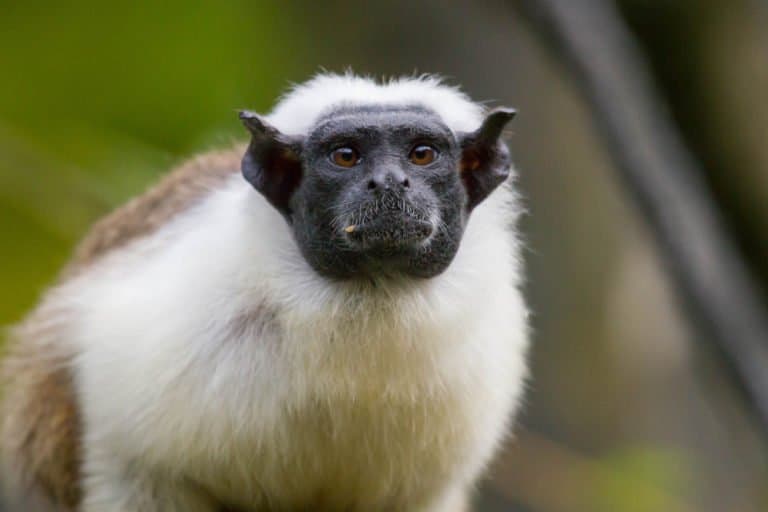
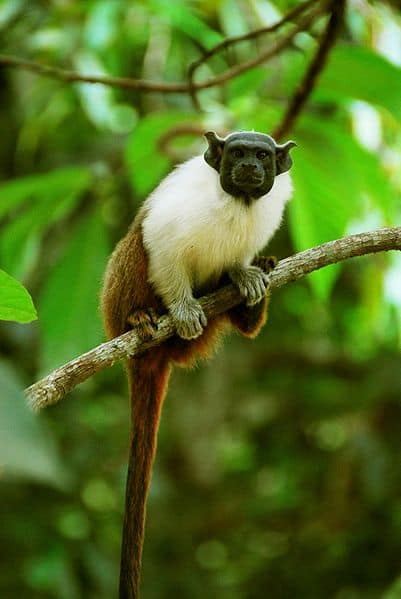
Pied Tamarin (Saguinus Bicolor) - looking forward

At a Glance

Wild Species
Also Known As saguí-pintado, painted tamarin, black-and-white tamarin
Diet Omnivore
Activity Diurnal+
Lifespan 10 years
Weight 0.55 lbs
Did You Know?

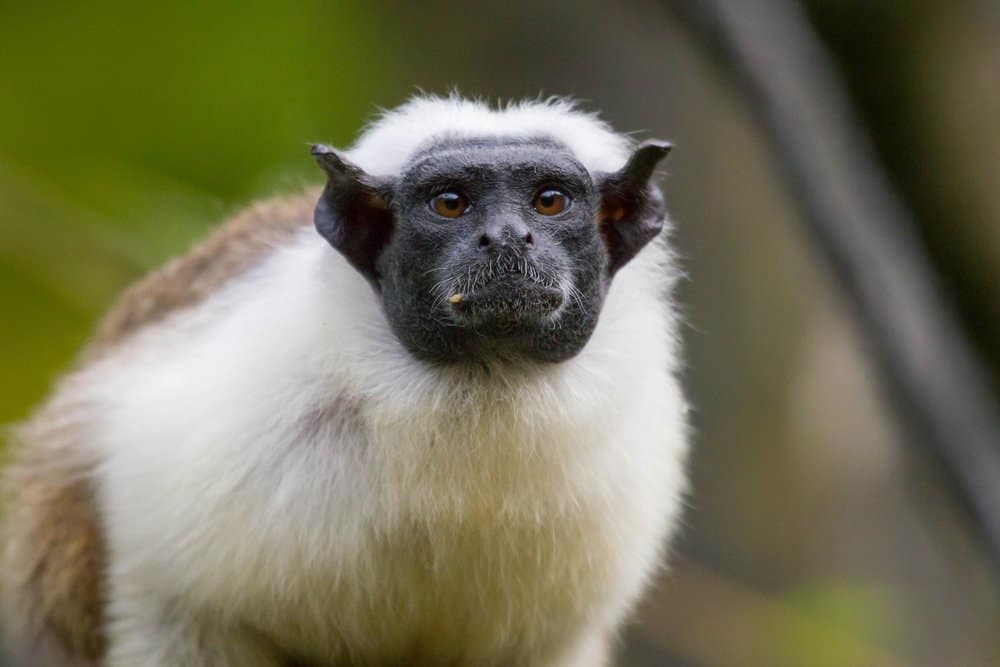
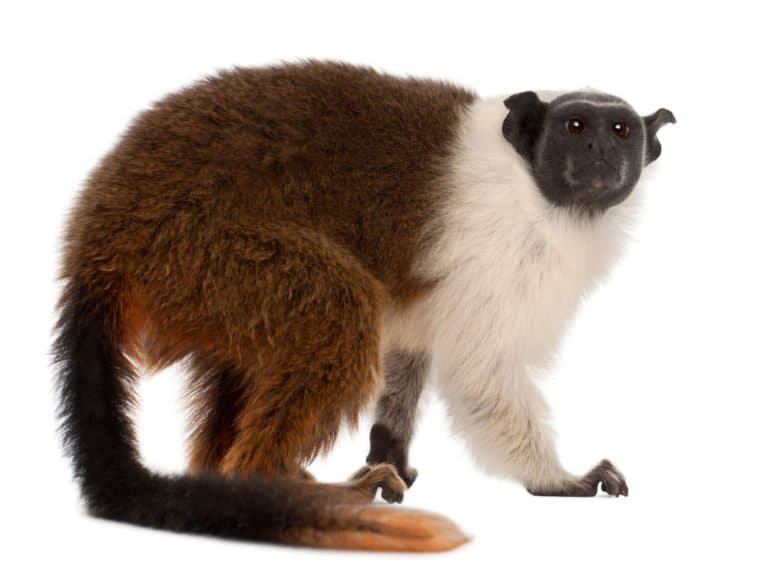
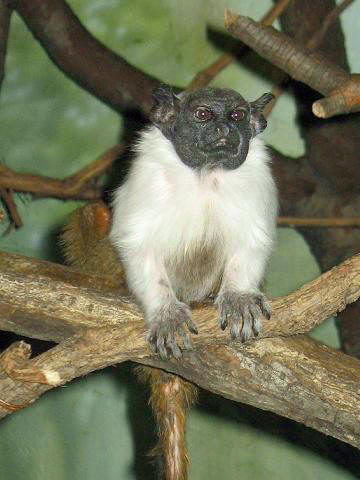
ID at a glance: a stark pied pattern with a white head and forequarters contrasting with much darker hindquarters and tail.

Scientific Classification

The pied tamarin is a small New World monkey (a callitrichid) known for its contrasting black-and-white coat and very restricted range around Manaus in the central Brazilian Amazon. It is one of the most range-restricted primates and is heavily impacted by habitat loss and urban expansion.

Kingdom
Animalia
Phylum
Chordata
Class
Mammalia
Order
Primates
Family
Callitrichidae
Genus
Saguinus
Species
Saguinus bicolor

Distinguishing Features

  • Small-bodied callitrichid (tamarin) with strong ‘pied’ black-and-white coloration
  • Endemic to a very small area around Manaus, Brazil
  • Typically lives in small social groups; agile arboreal forager (insects, fruits, exudates)

Physical Measurements

Length
2 ft (1 ft 9 in – 2 ft 4 in)
Weight
1 lbs (1 lbs – 1 lbs)
Tail Length
1 ft 3 in (1 ft 1 in – 1 ft 5 in)

Appearance

Primary Colors
Secondary Colors
Skin Type Short, dense fur over body; largely hairless (glabrous) facial skin with visible pigmentation.
Distinctive Features
  • High-contrast 'pied' pelage: white forequarters/head with black hindquarters-key field identification trait.
  • Face mostly bare with pink skin and dark mottling; small rounded ears with short fur margins.
  • Claw-like tegulae (except big toe nail) typical of Callitrichidae, aiding vertical clinging and foraging.
  • Adult size reported: head-body length 20.8-28.4 cm; tail length 33-42 cm (Nowak, 1999).
  • Adult body mass commonly reported ~0.35-0.55 kg (Nowak, 1999; corroborated across callitrichid references).
  • Maximum recorded longevity in captivity reported at 16.8 years (AnAge database, Saguinus bicolor).
  • Endemic to central Brazilian Amazon around Manaus; extremely restricted range makes populations vulnerable to habitat fragmentation and urban expansion (IUCN Red List species account).

Did You Know?

ID at a glance: a stark pied pattern with a white head and forequarters contrasting with much darker hindquarters and tail.

Size: head-body length ~20-28 cm; tail length ~33-42 cm; adult mass commonly ~0.43-0.55 kg (field/captive reports for Saguinus bicolor).

Reproduction (Callitrichidae hallmark): gestation about 140-145 days; births are very often twins, with extensive help from non-mother group members.

Family trait: like other callitrichids (tamarins & marmosets), it has claw-like nails (tegulae) on most digits for gripping trunks/branches; the big toe retains a flatter nail.

Extreme endemism: it naturally occurs only in a small area of the central Brazilian Amazon around Manaus (state of Amazonas), making it unusually vulnerable to local habitat change.

Conservation: listed as Critically Endangered on the IUCN Red List (species-level assessment), largely due to habitat loss/fragmentation and urban expansion around Manaus.

Genus diversity: Saguinus tamarins range from the tiny, insect-hunting saddleback tamarins to boldly patterned species-S. bicolor is among the most geographically restricted of the genus.

Unique Adaptations

  • Claw-like nails (tegulae) on most digits improve clinging and vertical support on trunks-an adaptation shared across Callitrichidae that complements their small body size and agile climbing.
  • Twin-focused life history: a reproductive strategy (common in callitrichids) supported by cooperative care-helpers effectively offset the energetic cost of carrying/nursing two infants.
  • Small-body, fast metabolism strategy: relies on high-quality, quickly obtained foods (insects, ripe fruits, nectar/gums when available) and rapid, wide-ranging daily foraging within its fragmented landscape.
  • Conspicuous bicolor patterning: the sharp black-and-white contrast is a reliable field mark for species recognition in a region where multiple tamarins and small primates can overlap in appearance.
  • Flexible use of disturbed habitats: can persist in secondary forest fragments and edge mosaics more than many larger primates-yet fragmentation still increases mortality risk and isolates groups.

Interesting Behaviors

  • Cooperative breeding: group members (often males and older siblings) carry infants for much of the day, returning them to the mother mainly to nurse-key to raising frequent twins in a small-bodied primate.
  • Scent communication: uses scent glands and urine-washing to mark routes, sleeping sites, and territorial boundaries; scent cues help coordinate spacing between neighboring groups.
  • Mixed-species foraging: like many tamarins, it may associate with other small primates to improve predator detection and foraging efficiency (a broader Saguinus/Callitrichidae pattern documented across the Amazon).
  • Arboreal, rapid foraging: moves in quick bounds and short leaps through the mid-story and lower canopy, scanning leaves and bark crevices for insects and other small prey.
  • Diet flexibility near edges: exploits fruit, nectar/exudates, and arthropods, and can use secondary growth-yet still depends on connected forest for safe movement and sleeping sites.
  • High vigilance: frequent alarm calling and scan pauses, reflecting strong predation pressure typical for small-bodied New World monkeys (raptors, snakes, small felids).

Cultural Significance

In Manaus and nearby towns, the pied tamarin (collared or Manaus tamarin) is a flagship species for urban-forest conservation and environmental education. Local research and outreach in forest fragments show how city growth and roads threaten endemic Amazon wildlife.

Myths & Legends

The species Saguinus bicolor gets its name bicolor, meaning two-colored, for its black-and-white coat. It was described by Spix in 1823 during early Amazon exploration in Brazil.

In Manaus, the Pied Tamarin (Saguinus bicolor) is called the 'neighborhood monkey' of city green patches, used as a symbol to link protecting small forest patches with saving a species found nowhere else.

No widely documented myths or legends specific to the pied tamarin (Saguinus bicolor) are reported in major scientific species references; most available literature focuses on its taxonomy, distribution, ecology, and conservation rather than traditional folklore.

Conservation Status

CR Critically Endangered

Facing an extremely high risk of extinction in the wild.

Population Decreasing

Protected Under

  • CITES Appendix I
  • Brazil: Federal Law No. 5,197/1967 (Fauna Protection Law)
  • Brazil: Law No. 9,605/1998 (Environmental Crimes Law)

Life Cycle

Birth 2 infants
Lifespan 10 years

Lifespan

In the Wild
7–14 years
In Captivity
10–18 years

Reproduction

Mating System Polyandry
Social Structure Cooperative Breeder
Breeding Pattern Long Term
Fertilization Internal Fertilization
Birth Type Internal_fertilization

Groups typically contain a single breeding female with two or more adult males; mating is internal and multiple males may copulate with the breeding female. Fathers and helpers provide extensive infant carrying and provisioning, consistent with cooperative breeding.

Behavior & Ecology

Social Troop Group: 6
Activity Diurnal, Matutinal, Vespertine
Diet Omnivore large-bodied arthropods (especially orthopterans and caterpillars)

Temperament

Cooperative and socially tolerant within-group; extensive alloparenting and food sharing, especially with infants.
Territorial toward neighboring groups; intergroup encounters include chasing, threat displays, and loud calling.
Vigilant and risk-averse; rapid, coordinated group movement after alarm calls to evade predators.
Dominance typically centered on breeding female; subordinate reproduction often behaviorally suppressed (callitrichid-typical; variation among groups).

Communication

Long-distance contact/coordination calls used to maintain cohesion in dense forest.
Alarm calls (sharp chirps/tsik-like notes) that trigger scanning, freezing, or fleeing.
Close-range social calls (trills/twitters) during foraging, grooming, and infant handling.
Scent marking (anogenital/suprapubic glands, urine marking) on branches and frequently used routes.
Visual threat and arousal displays: piloerection, open-mouth threats, lunges, and rapid chases.
Tactile communication: grooming, huddling/contact sitting; frequent infant carrying signals and transfers.

Habitat

Biomes:
Tropical Rainforest
Terrain:
Plains Riverine
Elevation: Up to 393 ft 8 in

Ecological Role

Omnivorous mesopredator and frugivore; important small-bodied forest consumer in central Amazon edge/fragment landscapes.

seed dispersal (fruits consumed and seeds moved between feeding sites) regulation of arthropod populations via predation (including herbivorous insects) potential incidental pollination while taking nectar/flowers (pollen transfer) trophic link transferring energy from insects/fruits to higher predators (raptors, small carnivores)

Diet Details

Main Prey:
Arthropods Lepidopteran larvae Beetles Spiders Small vertebrates Bird eggs and nestlings
Other Foods:
Ripe fruits Nectar and floral parts Plant exudates

Human Interaction

Domestication Status

Wild

Pied Tamarin (Saguinus bicolor) is a wild New World primate, not domesticated. People-driven habitat loss and city growth around Manaus have sharply reduced its range and numbers. It is sensitive to capture and poor captive care; illegal pet trade kills many baby tamarins. Conservation includes protected areas, corridors, captive care and community education.

Danger Level

Low
  • Bites and scratches (can become infected; risk increases if animals are handled or kept privately)
  • Zoonotic disease interface risk typical of non-human primates (bidirectional transmission; e.g., enteric pathogens, respiratory viruses), especially with close contact, feeding, or captivity
  • Public-health and animal-welfare risks from illegal pet trade (stress, poor sanitation, lack of veterinary care)
  • Conservation risk to the species from humans: habitat loss/urban expansion around Manaus, capture, and disturbance (primary 'danger' is from humans to tamarins rather than tamarins to humans; emphasized by IUCN Red List assessments for Saguinus bicolor)

As a Pet

Not Suitable as Pet

Legality: Keeping pied tamarins (Saguinus bicolor) as pets is generally illegal. Brazil bans them without IBAMA/ICMBio permission. CITES Appendix I bars commercial trade; non‑commercial trade needs permits. Many countries (US, EU) restrict ownership and require permits and health checks.

Care Level: Expert Only

Purchase Cost: $1,500 - $7,000
Lifetime Cost: $25,000 - $90,000

Economic Value

Uses:
Conservation flagship / environmental education (high local symbolic value around Manaus) Ecotourism and nature guiding (indirect value where viewing is possible/managed) Scientific research value (comparative primatology, conservation biology; callitrichids also used in biomedical research broadly) Illegal wildlife trade (negative/illicit economic driver) Ecosystem services (insect predation; seed dispersal in mixed diets-indirect ecological value rather than a market product)
Products:
  • Non-consumptive wildlife viewing/interpretation services (ecotourism)
  • Research data/biological samples under permit (non-commercial, regulated)

Relationships

Predators 7

Harpy eagle
Harpy eagle Harpia harpyja
Ornate hawk-eagle Spizaetus ornatus
Crested eagle Morphnus guianensis
Ocelot
Ocelot Leopardus pardalis
Margay
Margay Leopardus wiedii
Tayra Eira barbara
Boa constrictor
Boa constrictor Boa constrictor

Ecological Equivalents 5

Animals that fill a similar ecological role in their ecosystem

Golden-handed tamarin Saguinus midas Very similar small-bodied, diurnal, arboreal frugivore–insectivore tamarin with similar group-living and predator-avoidance behaviors (alarm calling, rapid canopy travel) and similar use of edge and secondary-forest mosaics.
Moustached tamarin Leontocebus mystax Occupies a comparable foraging niche (insects, small vertebrates, and fruit) and forms mixed-species associations with other callitrichids in parts of Amazonia; pied tamarins show comparable small-primate niche partitioning where sympatric with other primates.
Saddleback tamarin Leontocebus fuscicollis Ecologically analogous callitrichid: a small, fast-moving, insect-focused forager that commonly uses lower forest strata and edges, with similar vulnerability to fragmentation and high predation pressure.
Common marmoset Callithrix jacchus Another callitrichid with cooperative breeding and a small-bodied, arboreal insect- and fruit-based diet; relevant as an ecological analogue for understanding edge and urban-interface pressures, although marmosets rely more on exudates and gouging than tamarins.
Silvery marmoset Mico argentatus Small Amazonian callitrichid that feeds on arthropods and fruit and shows similar sensitivity to forest structure; occupies a comparable niche in disturbed and secondary habitats.

“One of the 25 Most Endangered Primates”

Pied tamarins are endangered primates in northwest Brazil. The Yoda-looking species, who enjoy strong social bonds, also go by Brazilian bare-faced tamarins.

Primates in Peril list pied tamarins as one of the 25 most endangered primates. Furthermore, according to the International Union for the Conservation of Nature, the species’ population has dropped more than 80 percent over three generations, making these tamarins Critically Endangered.

Urban sprawl and rural expansion are exceptionally destructive to the species, and many conservation groups are working to ensure tamarin survival.

Incredible Pied Tamarin Facts!

  • Pied tamarins only live in a quadrant of restricted rainforest in Brazil. However, conservationists are worried that lawmakers may sacrifice protected areas in favor of expansion.
  • Pied tamarins are New World monkeys — a taxonomic grouping of five primate families found in the tropical regions of Central America, South America, and Mexico.
  • The biggest threat to Brazilian bare-faced tamarins is habitat destruction linked to Manaus — a bustling metropolis in the heart of the Amazon Rainforest.
  • Pied tamarins are one of the only species in its genus with hairless faces.

Pied Tamarin Scientific Name

Saguinus bicolor is the scientific name for these tamarins. Saguinus is a portmanteau of the Portuguese word “sagui,” which translates to “small monkey,” and the Latin suffix “inus,” meaning “of or pertaining to.” Bicolor refers to the animal’s dual-toned fur.

Colloquially, pied means “having two or more colors,” and tamarin describes species in the marmoset — the small monkey — family. Most have distinctive fur tufts around the shoulders and neck — in addition to hairy faces. However, pied tamarins stand apart from the marmoset pack with their hairless mugs.

Pied Tamarin Appearance and Behavior

Appearance

At 7 to 11 inches and only weighing about 430 grams — just short of a pound — these tamarins are small compared to other primates. However, they’re one of the larger tamarin species — and have proportionally large claws!

Pied tamarins’ necks and shoulders are wreathed in shaggy white fur. But, from the waist down, they don almond-colored coats.

These tamarins’ black hairless faces, large distinct ears, and round eyes make for a very “Yoda-esque” visage.

Speaking of eyes, females of the species can see more colors than males because the former enjoy trichromatic vision and the latter only dichromatic.

As for the rest of their features, these tamarins sport flat noses with sideways nostrils and have 32 teeth. Plus, instead of fingernails, claws extended from pied tamarins’ toes — except on the big toe.
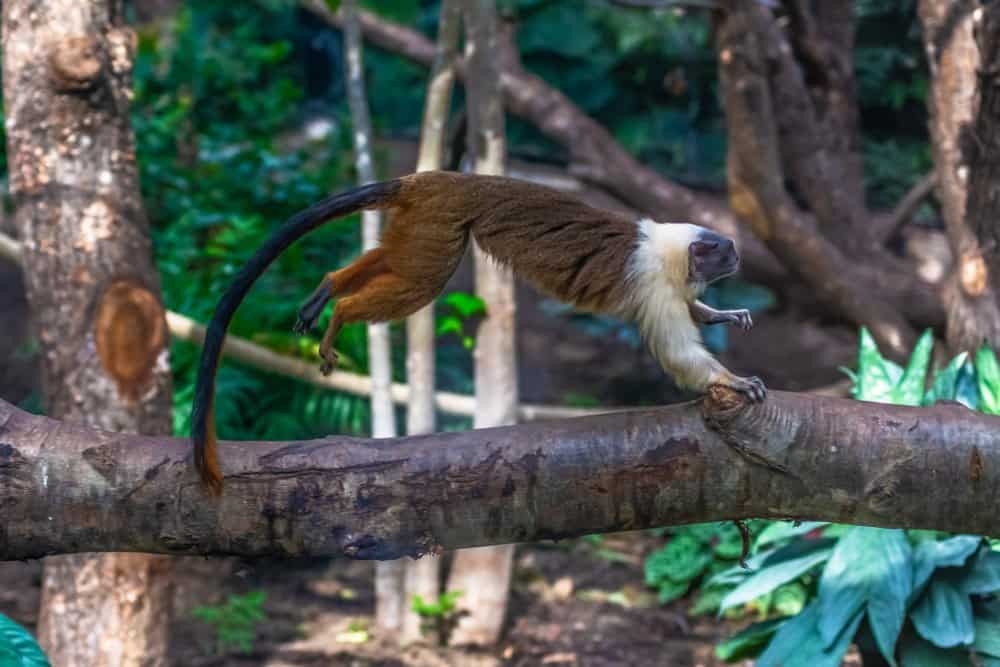
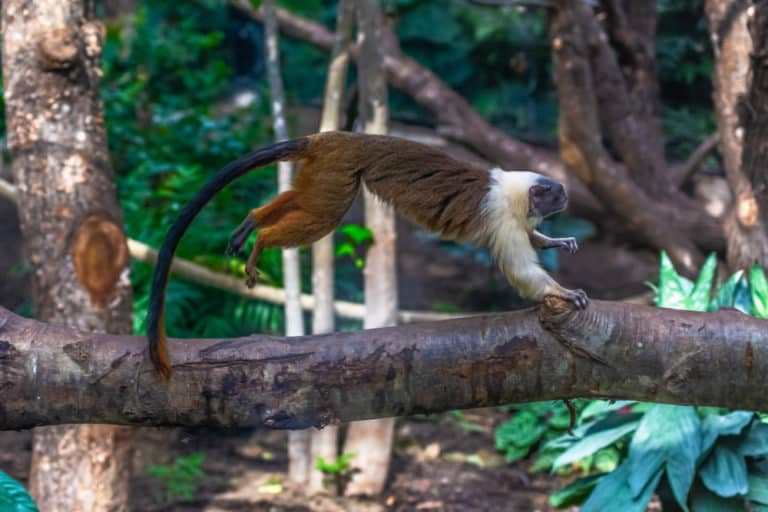
Pied Tamarin (Saguinus Bicolor) - jumping off a tree branch

Pied tamarin or Saguinus bicolor hopping on a branch

Behavior

These tamarins are social animals that live in small cooperative groups of up to 15 individuals, but most have between five and seven members.

A matriarchal, polyandrous species, pied tamarin clusters are led by alpha females who are the only lady members of the tribe to mate and give birth. Other females in the group exhibit reproductive instincts, but they self-suppress urges.

Pied tamarins are highly territorial animals that use body language and high-pitched vocalizations to alert friends and scare enemies. A journalist embedded with researchers in the Amazon once described the monkey’s chatter as sounding like a “boiling teapot doing morse code.”

Diurnal, arboreal, and quadrupedal, Brazilian bare-faced tamarins spend their days foraging in trees using all four limbs for locomotion.

Additionally, like most primates, these tamarins use a multi-faceted communication system involving scent markings, body language, and a series of whistles and chirps. Grooming is central to their lives and plays a major role in maintaining social balance.

Pied Tamarin Habitat

Pied tamarins only live in one Brazilian region in and around Manaus, Amazonas. The real-life Wakanda of South America, Manaus is a booming, high-tech city smack in the middle of the Amazon Rainforest.

The rivers Amazon, Cuieiras, Negro, and Urubu outline the species’ historical region. The species can be found 27 miles north of Manaus and up to 62 miles east.

The bare-faced monkeys prefer lowland rainforests and typically hang in elevations between 32 and 40 feet. Currently, various preservation initiatives protect tamarin habitats. However, conservationists worry about politicians dismantling current protections and, by extension, eliminating area endangered species.

Pied Tamarin Diet

These tamarins are omnivores that enjoy figs, flowers, fruits, insects, spiders, frogs, lizards, and bird eggs. However, they prefer to feast on plants and fruits.

Scientists who work with these tamarins in captivity have had difficulties developing ideal diets for their subjects. As a result, many of the small monkeys living in zoos and labs struggle with breeding and reproduction. However, the more we learn about nutrition, the more progress researchers are making.

Pied Tamarin Predators and Threats

Small wild cats, birds of prey, and snakes are the tamarins’ natural predators. Dogs and cats introduced to the region by humans also attack the small primates.

Food competition is another major headache for pied tamarins. Red-handed and golden-handed tamarins also occupy the same area, eat the same foods, and may be displacing pied tamarins.

But ultimately, habitat destruction is the species’ main threat. Manaus, the city in pied tamarins’ historical region, is expanding, as are surrounding farmlands — and the concomitant road-building and field clearing are destroying the monkey’s natural homes. Electrocution is also on the rise.

Pied Tamarin Reproduction, Babies, and Lifespan

Reproduction

Only alpha females reproduce in these tamarin groups, and they mate with several males. Gestation lasts between 140 and 170 days, 80 percent of births produce twins, and dad does most of the infant care. Mothers step in when the baby needs to nurse, but the father and other group members handle the rest.

Babies

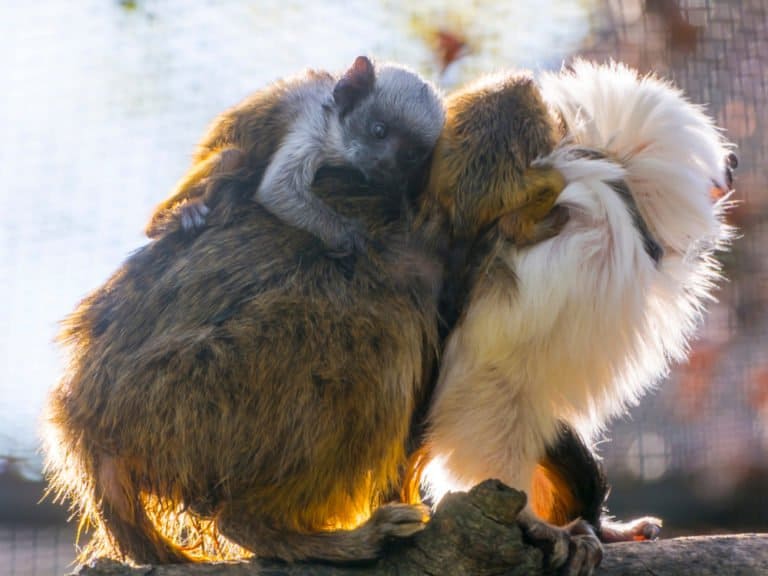
Baby tamarins aren’t independent and cling to their parents for about 21 days. Newborns mostly stick to their fathers, except when it’s time to eat, and they’re handed off to mom. Additionally, other members of the traveling pack will take turns carrying and caring for babies.

What are baby pied tamarins called? Like humans, brand new monkeys are called “infants.”

When infants reach a month old, they start exploring a bit on their own but still spend six to seven weeks strapped to someone else.

Females reach reproductive maturity at 18 months; for males, it takes 20 months.

Lifespan

In the wild, these tamarins typically live 10 years. In captivity, many survive to about 19.

Pied Tamarin Population

Even though conservationists don’t have a firm count on the number of remaining pied tamarins, experts consider the animal Critically Endangered because their population has decreased by at least 80 percent over the past three generations.

Primatologists now mostly agree that these tamarins have three subspecies: S.b. bicolour, S.b. ochraceus, and S.b. martinsi. They all have slightly different coloring but live in the same region.

Pied Tamarins in U.S. Zoos

Currently, 170 tamarins live in zoos worldwide. In the United States:

This is not an exhaustive list. To find a zoo near you with these tamarins, turn to a search engine.

View all 247 animals that start with P

Sources

  1. David Burnie, Dorling Kindersley (2011) Animal, The Definitive Visual Guide To The World's Wildlife / Accessed July 5, 2010
  2. Tom Jackson, Lorenz Books (2007) The World Encyclopedia Of Animals / Accessed July 5, 2010
  3. David Burnie, Kingfisher (2011) The Kingfisher Animal Encyclopedia / Accessed July 5, 2010
  4. Richard Mackay, University of California Press (2009) The Atlas Of Endangered Species / Accessed July 5, 2010
  5. David Burnie, Dorling Kindersley (2008) Illustrated Encyclopedia Of Animals / Accessed July 5, 2010
  6. Dorling Kindersley (2006) Dorling Kindersley Encyclopedia Of Animals / Accessed July 5, 2010
  7. David W. Macdonald, Oxford University Press (2010) The Encyclopedia Of Mammals / Accessed July 5, 2010
  8. PRIMATES IN PERIL / Accessed November 9, 2020
A-Z Animals Staff

About the Author

A-Z Animals Staff

AZ Animals is a growing team of animals experts, researchers, farmers, conservationists, writers, editors, and -- of course -- pet owners who have come together to help you better understand the animal kingdom and how we interact.
Connect:

Thank you for reading! Have some feedback for us?


Pied Tamarin FAQs (Frequently Asked Questions)

Pied tamarins eat everything from figs to lizards, making them omnivores. However, the bare-faced monkeys prefer plants, fruits, and veggies over meat.