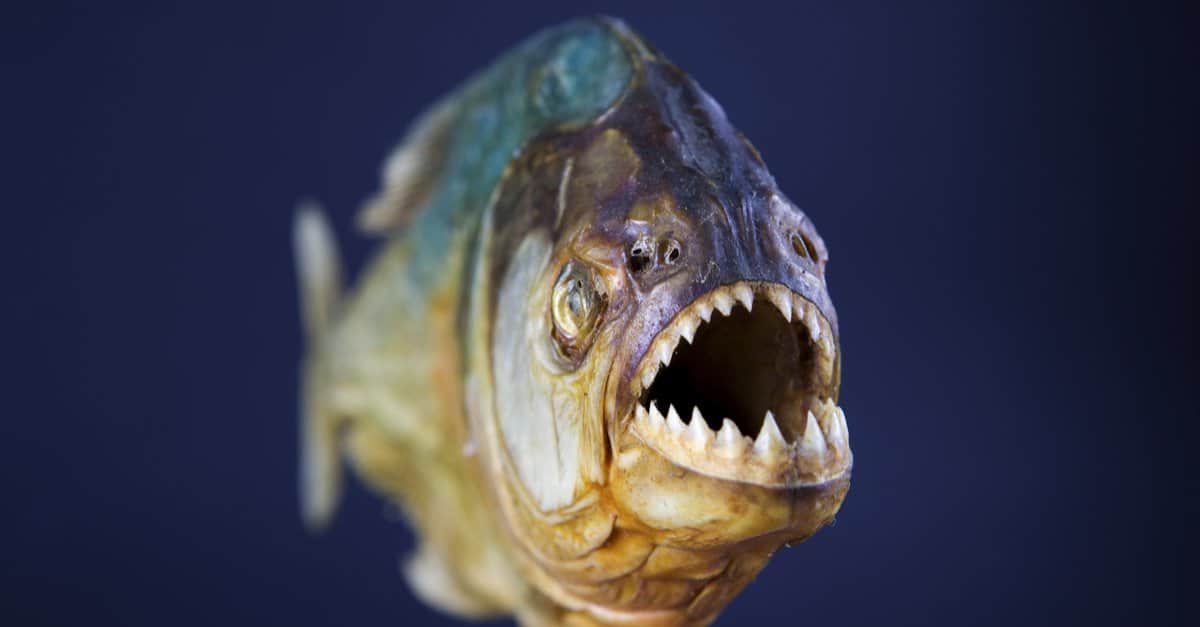
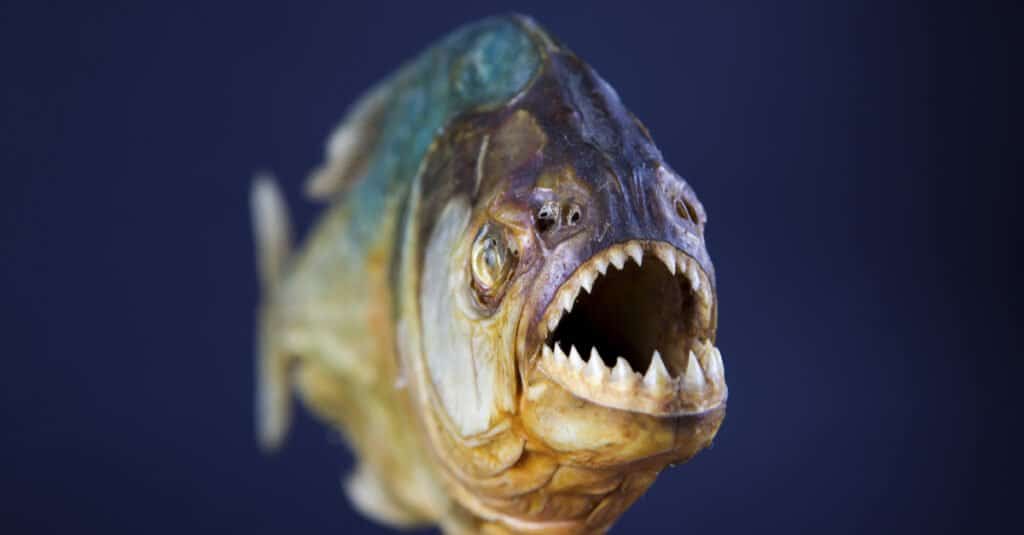






Piranhas have a nasty reputation for being fierce creatures that engage in deadly feeding frenzies. However, they actually eat a wide variety of food, including plants and carrion. Piranhas are fairly small, usually under two feet, and typically travel in groups called shoals. Piranha is the common name used to refer to any of potentially over 60 species of freshwater fish with razor-sharp teeth.
Classification and Scientific name
Piranha is the common name for various species of fish within the family Serrasalmidae or the subfamily Serrasalminae that are also in the tetra family Characidae of the Characiformes order. Piranha species are found in several genera, including:
- Catoprion
- Pristobrycon
- Pygocentrus
- Pygopristis
- Serrasalmus
These fish species are sometimes called caribe or piraya. Some specific species scientific names include the red-bellied piranha (Pygocentrus nattereri), the lobetooth piranha (Pygocentrus denticulata), the San Francisco piranha (Pygocentrus piraya), and the black piranha (Serrasalmus rhombeus).
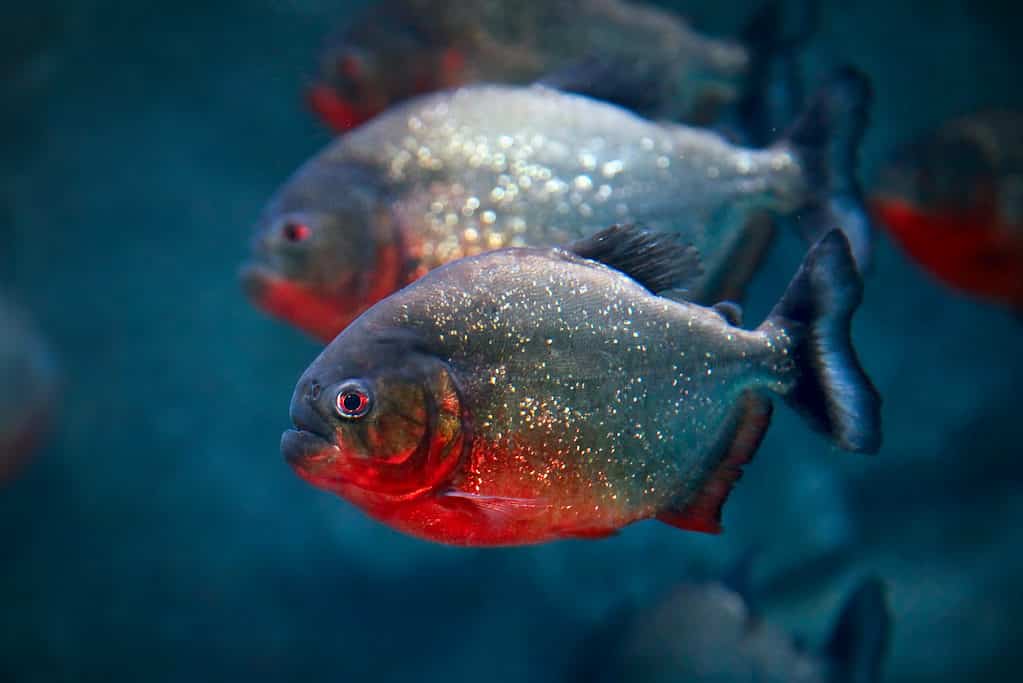
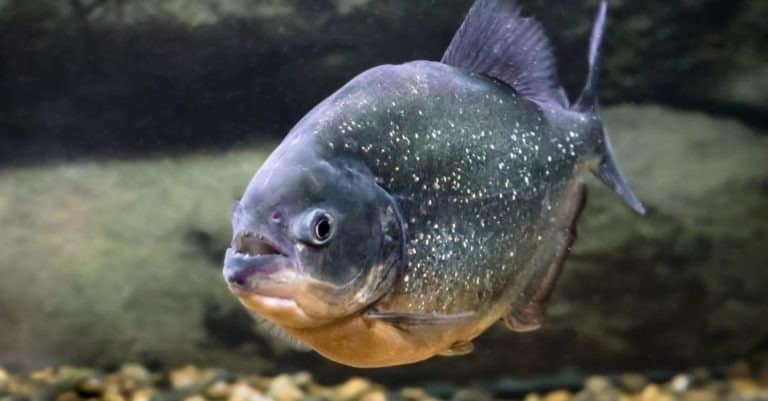
Piranha is the common name used to refer to over 60 species of fish.
©Tatiana Belova/Shutterstock.com
Evolution
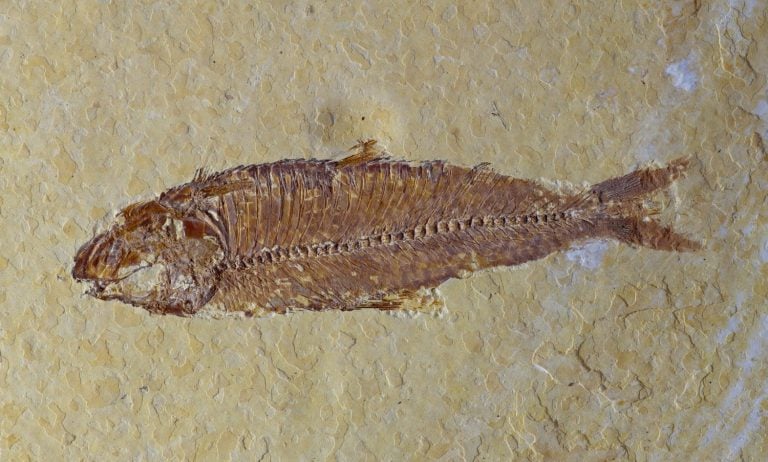
The discovery of the fossil Megapiranha paranensis has been a major breakthrough in understanding the evolution of piranhas. This 5-centimeter-long upper jawbone, with its zigzag arrangement of teeth, suggested that modern-day pacus and piranhas have one common ancestor. The fossil also revealed other features which helped scientists to estimate its size, which was much larger than any modern species at 3 feet long. In comparison, modern piranhas only reach 17 inches or so. It is worth noting that there are many misconceptions about how dangerous and aggressive piranhas really are. Contrary to popular belief, most species actually eat insects or plants rather than flesh and rarely attack humans if they can help it.
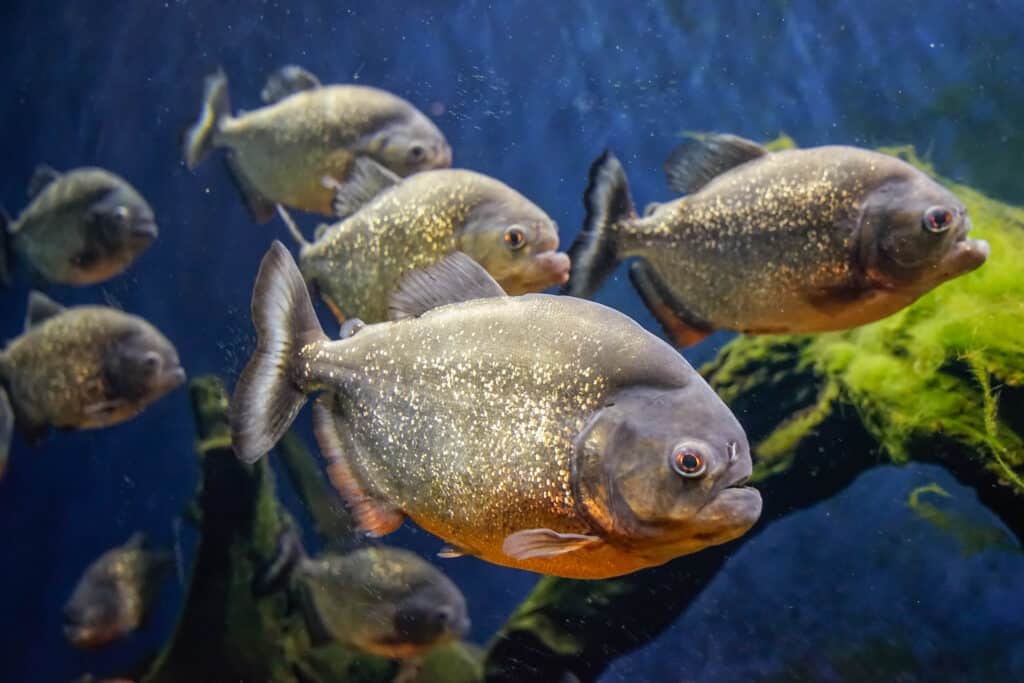
Modern-day piranhas reach 17 inches long. Their prehistoric ancestors were 3 feet long!
©Jinny Jin/Shutterstock.com
Types of Piranha
The exact number of species is unknown, but there are thought to be 30 to 60 or more. The most infamous species is the red-bellied piranha, which lives in South America and is primarily found in the Amazon River along with several other piranha species.
Some notable species facts include:
- Red-bellied piranha: Found primarily in the Amazon River, this fish is the most infamous piranha species with the strongest jaws and sharpest teeth.
- Black piranha: Also called a red-eye piranha, this fish is thought to be the largest species and is known for having the strongest bite relative to its body mass.
- Lobetooth piranha: This species is also considered dangerous to humans and lives mainly in the Orinoco River basin and the lower Amazon tributaries.
- San Francisco piranha: Found mainly in Brazil’s San Francisco River, this species is also capable of attacking large animals and humans, though it usually feeds on smaller animals.
- Wimple piranha: This fish survives by snacking on other fish by nipping their fins and scales and then swimming away.

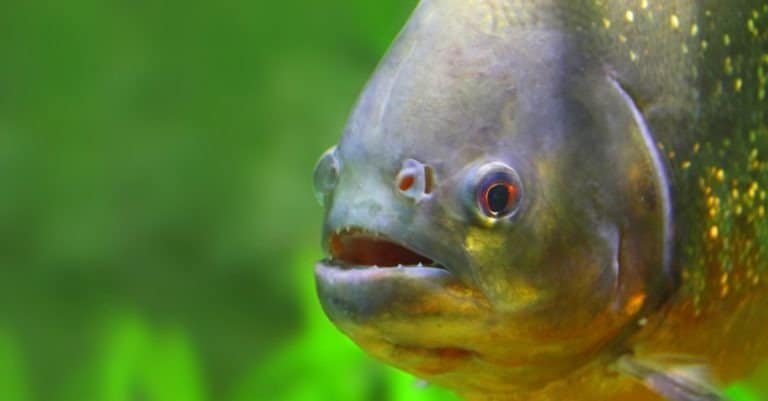
Some piranhas have red eyes.
©guentermanaus/Shutterstock.com
Appearance
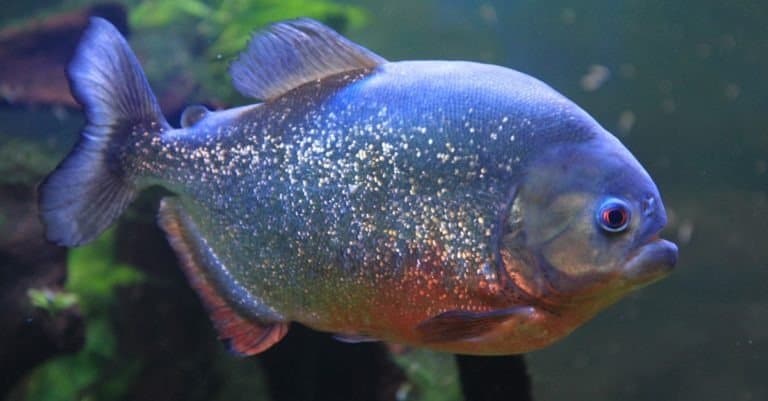
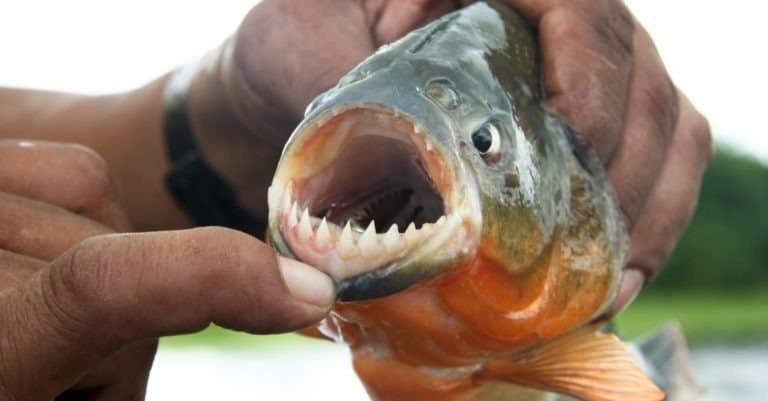
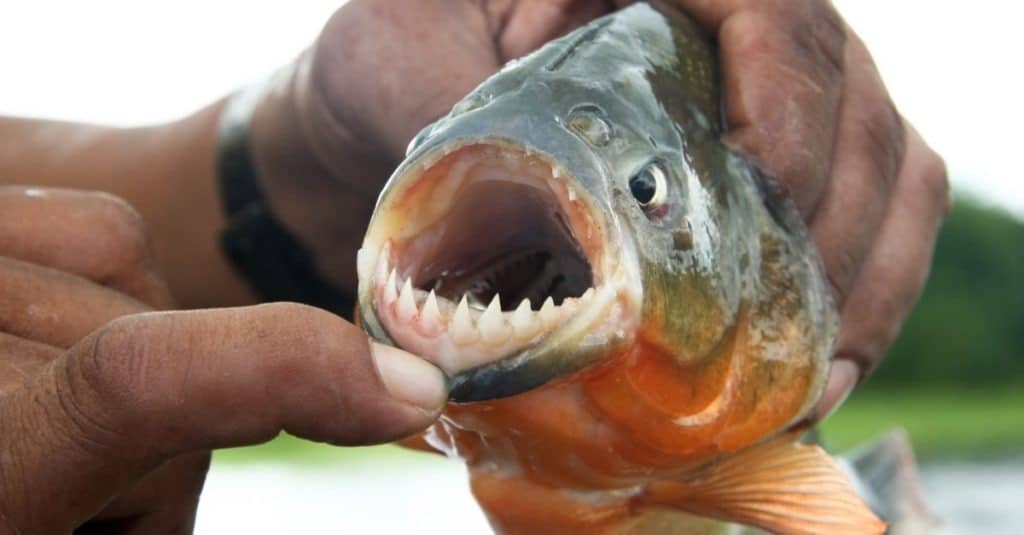
These fish’s coloring varies by species. For example, the red-bellied piranha is grayish with white speckles and a red belly. The black piranha is a uniform color of gray to nearly black with distinctive red eyes. Piranha species have a characteristic rhombus shape. They are typically between six and 13 inches long, but some species can be up to two feet in length. The weight of the fish doesn’t usually exceed 6.6 pounds. They have a recognizable jaw shape with large jaw muscles that are connected to the jaw tip, which makes it protrude slightly. The teeth of this fish are razor sharp and serrated, which makes them very adept at quickly tearing flesh.
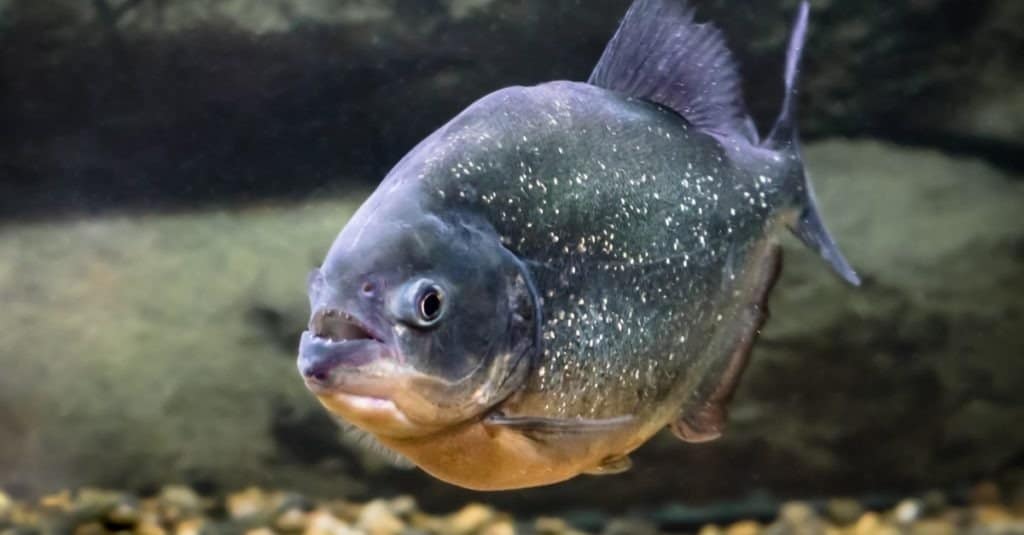
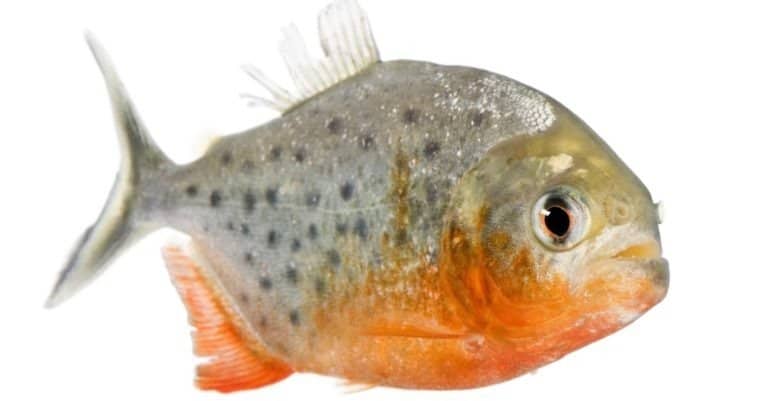
Piranha are typically between six and 13 inches long.
©ChocoPie/Shutterstock.com
Distribution, Population, and Habitat
These are freshwater fish and are indigenous to the Amazon basin. Some species have been discovered in Bangladesh, China, and even the United States, but these are generally escapees from exotic fish traders. Many species are found only in a single river system, while others, like the red-bellied piranha, are found in several river systems in South America. Some species like murky, slow-moving water and are often found in very shallow water. However, other species live in deep river channels and turbid water.
These fish are widespread and not threatened. Small fish are mainly active during the day. Larger and medium-sized fish are active during several periods, including dawn, late afternoon, and night.
There is only a minor commercial fishery of these fish, as well as sport fishing. Some species are used as aquarium fish but are illegal in many areas as pets. They are considered a nuisance by fishermen as they often steal bait, take fish off the line, and damage fishing gear.
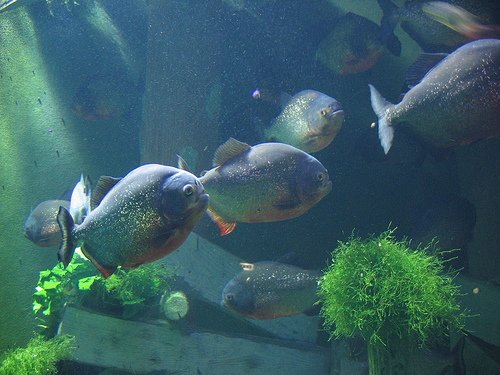
Piranhas are freshwater fish native to the Amazon Basin.
©Aurelie Chaumat – Public Domain
Predators and Prey
Most species are opportunistic predators. They will eat nearly anything from plant life to other fish, insects, carrion, worms, and so on. Some species are adept at scale-eating and feed primarily by nipping off the scales or fins of other fish. This is more common with juvenile fish and smaller species. Piranhas also scavenge quite often.
What eats piranhas?
These fish are regularly eaten by just about anything larger than it, including turtles, crocodiles, other fish, dolphins, and many species of water birds. They are also hunted by humans and used as food fish, or their teeth are used for carving by various South American tribes.
What do piranhas eat?
These fish are omnivorous and eat a wide variety of food, including fruit, seeds, insects, and other fish. They may prey on large animals that come into their habitat by attacking as a group. A large enough group can quickly kill a fairly big animal. However, piranhas typically group together for protection rather than coordinated hunting, though feeding frenzies can occur when food is scarce.
Reproduction and Lifespan
The breeding habits of most species are relatively unknown. Most known breeding behavior has been observed in aquariums. These fish can usually breed by the time they are a year old. Females lay thousands of eggs near thick vegetation, to which the eggs stick. Males fertilize the eggs, and then the eggs hatch after two or three days. Young fish will hide in vegetation until they’re big enough to defend themselves. The parents will often defend their nesting sites by swimming around them. These fish may live up to ten years in captivity, but it’s unknown how long they live in the wild.
Female piranhas lay thousands of eggs.
©Alberto Loyo/Shutterstock.com
Fishing and Cooking
These fish have a minor commercial fishing interest and some recreational fishing interest as well. Catching them is fairly straightforward, but the main key is to have a wire-wrapped line above the hook. Fishers usually use bits of meat and actively thrash or plop the line to attract piranhas. The piranha will often quickly swipe the bait before it’s able to be pulled up. Handling the fish must be done very carefully, as they will bite. They also have sharp ridges on their undersides that can cut skin.
These fish can be eaten and are usually grilled whole. They are mainly eaten in their native South America. The taste is described as very salty, fishy, and a bit ripe.

Plate of freshly caught piranhas, at Sacambu Reserve, Peru.
©MatthieuCattin/Shutterstock.com
Population and Conservation
There is no global data on how many of these fish are left in the world. They are not listed as threatened or endangered by IUCN, CITES, or USFWS. New species are still being discovered. The status of all piranha species is currently listed as ‘least concern.’
Piranha Pictures
View all of our Piranha pictures in the gallery.

Jirik V/Shutterstock.com
Sources
- Britannica / Accessed February 1, 2021
- Wikipedia / Accessed February 1, 2021
- Seaworld Parks & Entertainment / Accessed February 1, 2021
- Live Science / Accessed February 1, 2021
- Fish Base / Accessed February 1, 2021