P
Species Profile

Polar Bear

Ursus maritimus

Built for sea ice, born to hunt seals
Lamberrto/Shutterstock.com

Polar Bear Distribution

Click a location to explore more animals from that region

This map shows coastal regions where Polar Bear are found.

Loading map...

Size Comparison

Human 5'8"
Polar Bear 4 ft 3 in

Polar Bear stands at 75% of average human height.

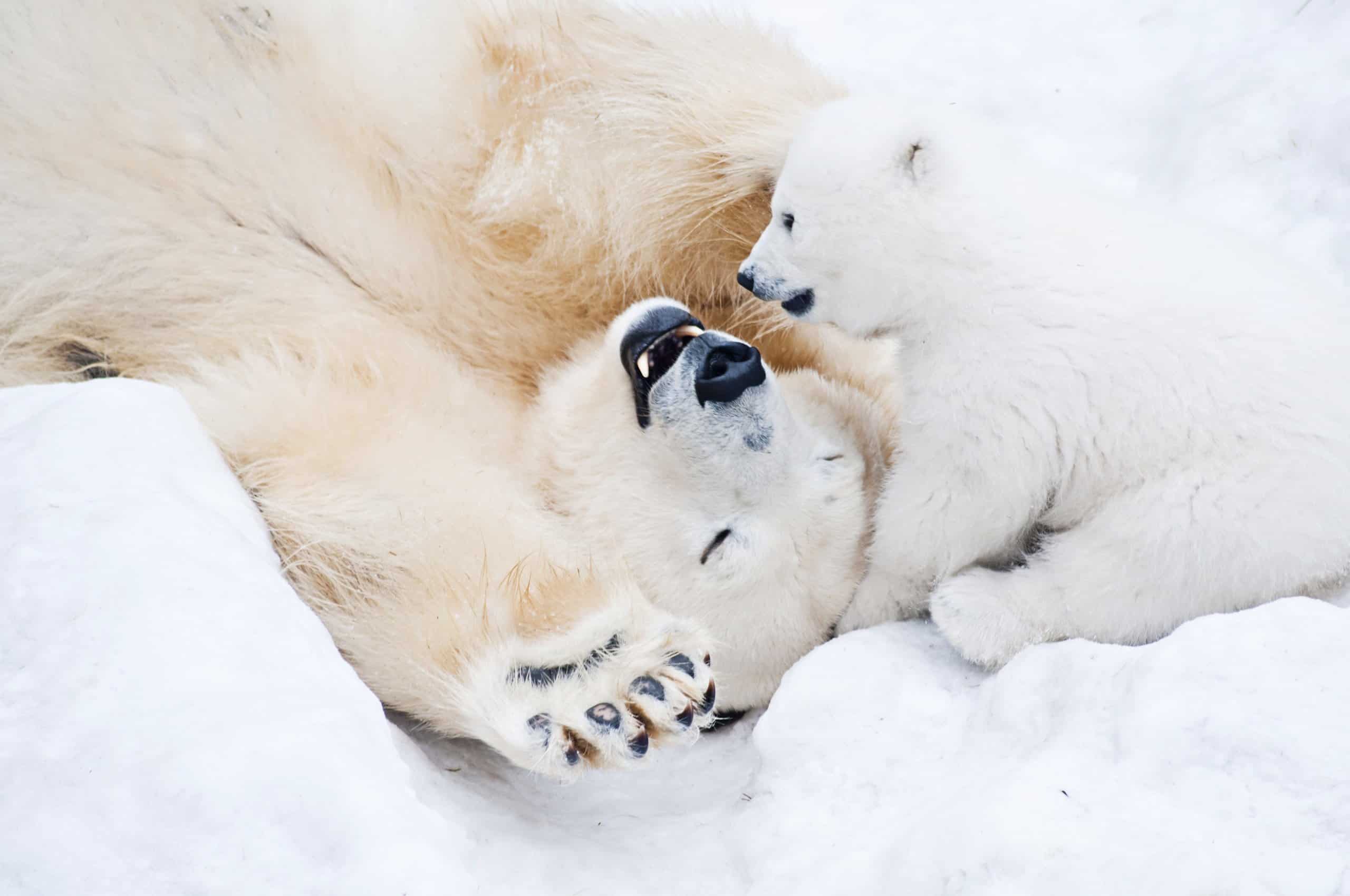
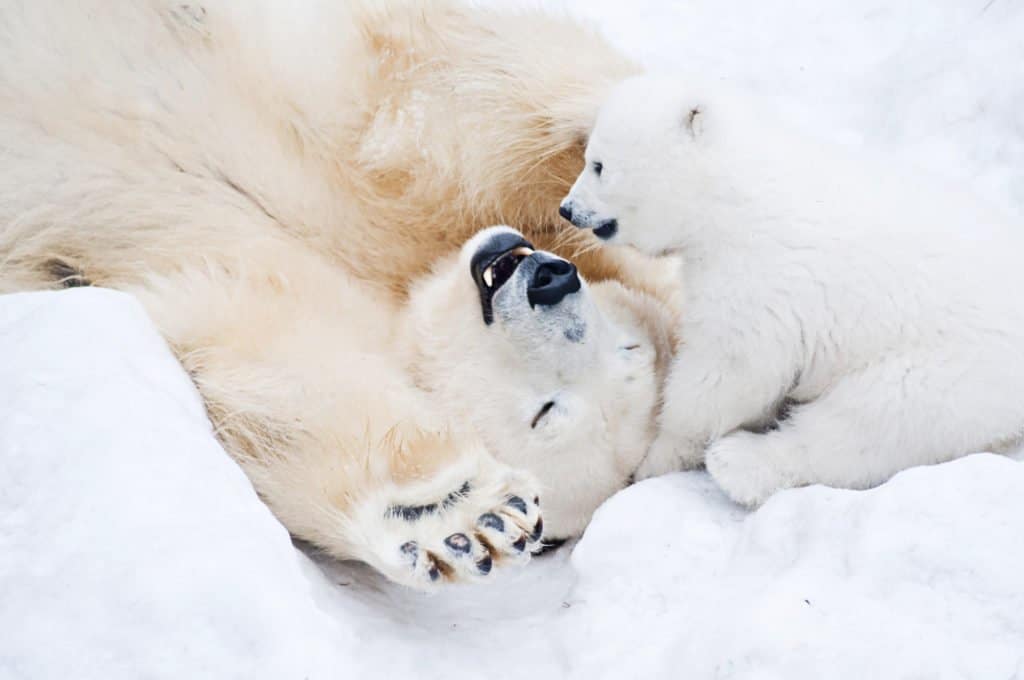
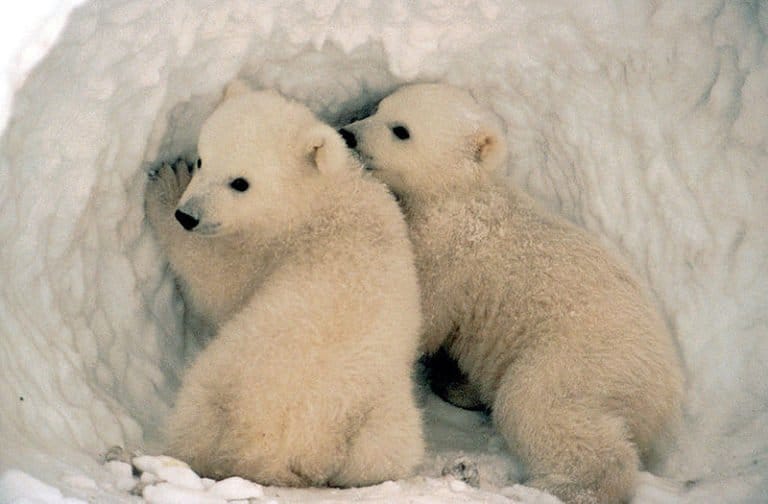
Polar Bear Cub

At a Glance

Wild Species
Also Known As Ice bear, White bear, Sea bear, Nanuq, Nanook, Nanuk
Diet Carnivore
Activity Cathemeral+
Lifespan 17 years
Weight 700 lbs
Status Vulnerable
Did You Know?

Adults are the largest living bear: males typically 350-700 kg; females ~150-250 kg (Ursus maritimus).

Scientific Classification

A large Arctic bear species specialized for life on sea ice, primarily hunting seals and adapted for cold-water swimming and extreme cold.

Kingdom
Animalia
Phylum
Chordata
Class
Mammalia
Order
Carnivora
Family
Ursidae
Genus
Ursus
Species
Ursus maritimus

Distinguishing Features

  • Creamy-white fur (over dark skin) that provides camouflage on ice/snow
  • Long neck and relatively narrow head compared with other bears
  • Large, broad, furred paws with rough pads for traction on ice and efficient swimming
  • Thick blubber layer and dense underfur for insulation
  • Highly carnivorous diet focused on ringed and bearded seals

Physical Measurements

Males and females differ in size

Height
4 ft 11 in (4 ft 3 in – 5 ft 3 in)
3 ft 11 in (3 ft 3 in – 4 ft 7 in)
Length
8 ft 10 in (8 ft 1 in – 10 ft 3 in)
7 ft 3 in (6 ft 2 in – 7 ft 10 in)
Weight
992 lbs (772 lbs – 1,543 lbs)
496 lbs (331 lbs – 661 lbs)
Tail Length
4 in (3 in – 5 in)
4 in (3 in – 5 in)
Top Speed
25 mph
running

Appearance

Primary Colors
Secondary Colors
Skin Type Thick black-pigmented epidermis under dense double coat; substantial subcutaneous blubber for insulation.
Distinctive Features
  • Adult size: males typically 2.4-3.0 m total length; females 1.8-2.4 m (Stirling 2011).
  • Mass: adult males commonly 350-700 kg; adult females ~150-250 kg, varying by season and region (Derocher et al. 2004; Stirling 2011).
  • Lifespan: commonly ~15-18 years in the wild; recorded maxima >30 years (Stirling 2011; Amstrup 2003).
  • Thermal insulation: dense underfur plus hollow/translucent guard hairs; blubber layer can exceed ~10 cm in well-fed adults (Stirling 2011).
  • Feet: very large, partially webbed forepaws; rough papillae and furred soles aid traction on ice and swimming (Stirling 2011).
  • Swimming specialization: strong forelimb propulsion; documented long-distance swims >600 km during sea-ice retreat (e.g., 687 km event; Pagano et al. 2012).
  • Sea-ice dependence: primary foraging occurs on sea ice; reduced ice increases fasting duration and energetic stress (Stirling & Derocher 2012).
  • Hunting ecology: predominantly preys on ringed seals and bearded seals; uses still-hunting at breathing holes and ambush at ice edges (Stirling 2011).
  • Home range: among the largest of any terrestrial carnivore; adult ranges commonly in the tens to hundreds of thousands of km², varying with ice dynamics (Amstrup et al. 2000).
  • Reproduction: delayed implantation; pregnant females enter maternity dens in autumn and give birth typically Nov-Dec (Ramsay & Stirling 1988).
  • Neonates: cubs typically ~0.6 kg at birth; litters 1-3 (most often 2); family groups remain together ~2-3 years (Ramsay & Stirling 1988; Stirling 2011).
  • Denning: pregnant females den on land or stable ice/snowdrifts for several months; den emergence commonly March-April (Ramsay & Stirling 1988).
  • Conservation linkage: population status tightly coupled to sea-ice trends; additional risks include contaminants, increased human-bear conflicts, and industrial activity (Stirling & Derocher 2012).

Sexual Dimorphism

Marked sexual dimorphism: adult males are substantially longer, heavier, and broader-skulled than females. Females are smaller and are the sex that excavates and occupies maternity dens for extended periods during gestation and early cub rearing.

  • Typically 2.4-3.0 m total length; commonly 350-700 kg adult mass (Stirling 2011).
  • Broader head and neck with more robust forequarters; proportionally larger canines and skull.
  • More extensive neck/shoulder musculature supporting powerful forelimb stroke for swimming and prey handling.
  • Typically 1.8-2.4 m total length; commonly ~150-250 kg adult mass (Stirling 2011).
  • Pregnant females accumulate substantial fat reserves for months-long denning fast.
  • Only females den for parturition and early lactation; usually rear 1-3 cubs (most often 2).

Did You Know?

Adults are the largest living bear: males typically 350-700 kg; females ~150-250 kg (Ursus maritimus).

A polar bear's paw can be ~30 cm wide, spreading body weight on thin ice and acting like a paddle in water.

Blubber can reach roughly ~11 cm thick, providing major insulation and energy storage during fasting periods.

Mating is usually April-May, but implantation is delayed until ~September; cubs are born in winter dens (often Dec-Jan).

Litter size is usually 2 cubs (range 1-3); cubs typically stay with their mother about 2-2.5 years.

They are strong long-distance swimmers and have been recorded swimming for days and covering well over 100 km between ice and land.

IUCN lists the species as Vulnerable; loss of sea ice reduces access to their primary prey-seals.

Unique Adaptations

  • Sea-ice specialization: distribution and hunting strategy are tightly linked to access to sea ice for catching seals-especially ringed and bearded seals (Erignathus barbatus).
  • Thermal insulation system: dense underfur plus water-shedding guard hairs and thick subcutaneous fat (blubber, up to ~11 cm reported) reduce heat loss in air and water.
  • Large, furred feet with textured pads: broad paws (~30 cm wide) improve flotation on snow/ice and provide traction; fur on the soles helps reduce slipping and heat loss.
  • Streamlined, powerful swimming: elongated body, strong forelimb paddling, and the ability to close nostrils help sustain long cold-water swims between ice platforms.
  • Countercurrent heat exchange in limbs: vascular adaptations help limit heat loss from extremities while standing on ice or swimming.
  • Seasonally tuned reproduction (delayed implantation): mating in spring with implantation months later aligns birth with winter denning and peak maternal fat reserves.
  • High-fat diet physiology: metabolism and digestive capacity are adapted to energy-rich blubber, enabling rapid fat accumulation when seals are abundant.

Interesting Behaviors

  • Still-hunting at seal breathing holes: bears wait motionless by a breathing hole to ambush ringed seals (Pusa hispida).
  • Stalking seals on the ice edge: slow, low-profile approaches followed by a short sprint and strike.
  • Ice-breaking/"seal popping": using forelimbs and body weight to smash thin ice over a lair or breathing hole to reach seals.
  • Seasonal fasting and opportunism: when sea ice retreats, many individuals spend weeks-months on land/ice margins, scavenging (e.g., whale remains) and eating limited terrestrial foods.
  • Denning (pregnant females): snow dens are excavated on land or stable sea-ice areas; mothers rely on stored fat and nurse through the denning period without eating.
  • Large-ranging movement ecology: individuals track shifting sea ice; documented home ranges can span tens of thousands to hundreds of thousands of km² depending on region, season, and sex.
  • Intraspecific interactions: generally solitary, but temporary aggregations occur at rich food sources (e.g., whale carcasses), with dominance displays and avoidance behavior reducing conflict.

Cultural Significance

Polar bear (Ursus maritimus) is a well-known animal in Inuit and other Arctic cultures, seen as powerful and spiritual. It is a symbol of the Arctic, used in conservation because its survival depends on sea ice; Indigenous knowledge helps research and management.

Myths & Legends

In Inuit traditions, the polar bear is often associated with a powerful bear spirit regarded as master of bears and tied to respect for animals and proper hunting conduct.

A widely told Arctic motif describes a polar bear that can remove its "skin" to become human, highlighting the perceived closeness and transformation boundary between people and bears in northern storytelling.

In some Inuit and Greenlandic narratives, marriages or unions between a woman and a bear (or a bear taking human form) appear as cautionary or origin tales, emphasizing kinship, taboo, and the bear's potency.

The Norwegian fairy tale "White-Bear King Valemon" features a magical white bear king who is an enchanted prince-an enduring European story linking the mysterious white bear to transformation and royalty.

In Chukchi and other Siberian Arctic stories, the polar bear (Ursus maritimus) is a powerful, otherworldly hunter whose spirit must be shown ritual respect; these themes reach into tales of sea-ice travel and survival.

Conservation Status

VU Vulnerable

Facing a high risk of extinction in the wild.

Population Decreasing

Protected Under

  • IUCN Red List: Vulnerable (assessment published 2015)
  • 1973 Agreement on the Conservation of Polar Bears (Range States treaty)
  • CITES Appendix II (international trade regulated)
  • United States: Endangered Species Act - Threatened; Marine Mammal Protection Act protections
  • Canada: Species at Risk Act - Special Concern (federal listing; management largely via co-management/provincial-territorial regimes)
  • Norway (Svalbard): strict protection under national/Svalbard environmental legislation
  • Russian Federation: protected under national wildlife/Red Data Book frameworks (regional protections vary)

Life Cycle

Birth 2 cubs
Lifespan 17 years

Lifespan

In the Wild
0–30 years
In Captivity
0–42 years

Reproduction

Mating System Polygynandry
Social Structure Solitary
Breeding Season Late March-early June (peak mating typically April-May)
Breeding Pattern Transient
Fertilization Internal Fertilization
Birth Type Internal_fertilization

Behavior & Ecology

Social Sleuth Group: 1
Activity Cathemeral, Diurnal
Diet Carnivore Ringed seal (Pusa hispida) blubber (high-energy fat), the primary and often preferred prey where available (e.g., Stirling & McEwan 1975; Ramsay & Stirling 1988; Thiemann et al. 2008).

Temperament

HUBS: Predominantly solitary, tolerant at concentrated foods; aggression increases with scarce prey (Stirling, 1988).
Not territorial; extensive home-range overlap is common, especially on shifting sea ice (Amstrup, 2003).
Generally cautious-curious; may investigate novel stimuli, particularly subadults or food-stressed individuals.
Maternal females are highly defensive of cubs near dens and during spring emergence (Derocher et al., 2012).

Communication

huffs/blows Alarm
growls Threat
roars High-intensity aggression
chuffs/soft breathy sounds Close-range contact
moans Distress/low arousal
cubs bawl/whine when separated or hungry
olfactory signaling via urine and scent trails; strong reliance on chemical cues for mating Stirling, 1988
chemical recognition of reproductive state during breeding season Amstrup, 2003
visual displays: head-low posture, open-mouth threat, ear position changes Stirling, 1988
tactile signaling: nose-to-nose contact, body leaning, paw swats as escalation
mother-cub contact calls plus close following and nuzzling to maintain cohesion

Habitat

Open Ocean Coastal Beach Rocky Shore Tundra River/Stream Lake +1
Terrain:
Coastal Island Plains Rocky Sandy Muddy
Elevation: Up to 3280 ft 10 in

Ecological Role

Apex predator of the Arctic sea-ice marine food web; also an important scavenger linking marine carcasses to terrestrial/coastal scavenger communities.

Top-down regulation of ice-associated pinnipeds (notably ringed and bearded seals), influencing prey behavior and local trophic dynamics Nutrient redistribution via carcass remains (seal/whale) that subsidize scavengers (e.g., Arctic foxes, gulls, ravens) and coastal tundra nutrient inputs Indicator/umbrella function for sea-ice ecosystem integrity-diet and body condition track sea-ice accessibility to seal prey (widely used in Arctic monitoring literature)

Diet Details

Main Prey:
Ringed seal Bearded seal Harp seal Hooded seal Spotted seal and ribbon seal Walrus Beluga Narwhal Seabirds and eggs/chicks Carrion of large marine mammals +4

Human Interaction

Domestication Status

Wild

Polar bears are wild animals and have not been domesticated. There is no credible record of a domestication process or sustained selective breeding for tameness or household use. Human interaction has mainly involved Indigenous subsistence harvest and co-managed hunting where permitted, conflict prevention and response, scientific research, and keeping some individuals in captivity for public education and conservation purposes.

Danger Level

Extreme
  • Predatory attacks: polar bears are large apex carnivores that can treat humans as prey in some circumstances, particularly where bears are food-stressed or habituated to human-associated attractants.
  • High lethality when incidents occur due to large body mass, bite force, and persistence in attacks; victims are at risk of severe trauma or death.
  • Increased encounter risk near Arctic settlements, industrial sites, and travel routes when sea ice conditions force bears onto land or concentrate them near human food sources.
  • Attractant-driven conflict (garbage, stored meat, animal carcasses) leading to repeated visits and dangerous habituation.
  • Risks to workers and researchers in remote Arctic operations (field camps, tagging, denning surveys) requiring armed guards and strict safety protocols.

As a Pet

Not Suitable as Pet

Legality: Polar Bear (Ursus maritimus) is not a suitable pet and is usually illegal. Permits go to zoos, research, or conservation. CITES Appendix II; US and states limit private ownership.

Care Level: Expert Only

Purchase Cost:
Lifetime Cost: $10,000,000 - $30,000,000

Economic Value

Uses:
Subsistence and regulated harvest (local/Indigenous communities) Ecotourism and wildlife viewing Zoo exhibition and conservation education Scientific research and monitoring Management expenditures (conflict response, relocations, deterrence, public safety) Regulated/illegal wildlife trade (skins/trophies) subject to strict controls
Products:
  • tourism services (guided viewing, lodging, transport)
  • employment and local revenue tied to seasonal bear viewing
  • cultural/traditional uses from legally harvested bears (where permitted under co-management regimes)
  • educational programming and conservation fundraising by accredited institutions

Relationships

Classification and Scientific Name

Ursus maritimus (“maritime bear”) was first described in 1774 by Constantine John Phipps. Inuit people call it Nanook, and Norwegian names are isbjørn (‘ice bear’) or kvitbjørn (‘white bear’).

The polar bear was once believed to be its own separate species, but recent evidence has shown that it is actually a hybrid of the brown bear. The accepted scientific name for the polar bear is now Ursus maritimus.

The polar bear is a large species of bear that is found inhabiting the ice fields in the Arctic Ocean. It is the biggest species of bear in the world (with the exception of the Kodiak brown bears found in Alaska, which can reach similar sizes), with males often weighing in at around 1300 pounds. Thought to be closely related to the brown bear, the polar bear’s name actually means “sea bear” as they are known to not just spend a great deal of time close to the coast but are also strong and capable swimmers that have been spotted up to 100 miles from the closest ice or land. They are, however, being devastatingly affected by global warming as the ice that they rely so heavily on is disappearing fast and has led to the polar bear becoming a strong symbol of the effects of climate change. Polar bear populations have also fallen across the Arctic Ocean due to hunting, pollution, and drilling for oil and gas, leading to them being as listed as a threatened species.
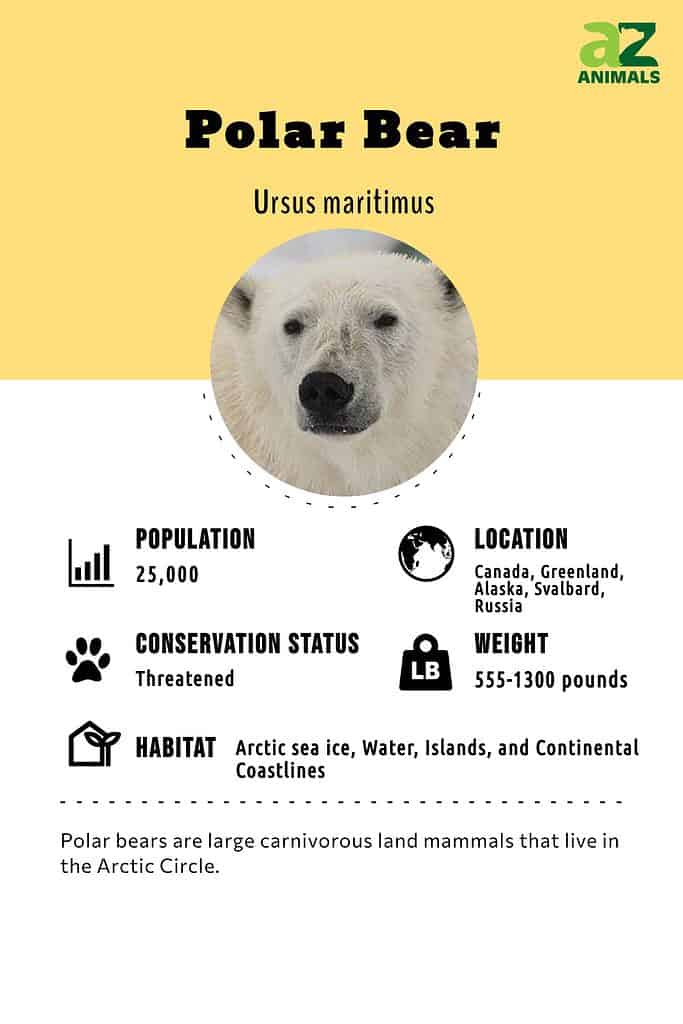
Polar Bear Infographic
Polar Bears are the largest carnivorous land mammals, often reaching 8 feet long.

Evolution

The Ursidae family has evolved over millions of years. The oldest known polar bear fossil is a 130,000 to 110,000-year-old jaw bone found on Prince Charles Foreland in 2004. This suggests that the polar bear diverged from a population of brown bears during the Pleistocene period when Siberia was covered by glaciers. It is believed that this isolation led to changes in the molar teeth of polar bears between 10,000 and 20,000 years ago, which further differentiated them from their brown bear ancestors.

DNA analysis suggests polar bears diverged from brown bears, Ursus arctos, ~150k years ago. Some clades of brown bear mtDNA are closer to polar than other brown bears. Irish bear’s (now extinct) mtDNA is particularly close. Nuclear genome comparison revealed distinct clades ~603k years ago, but a recent complete genome analysis revised this date to 400k years ago.

However, the two species have mated intermittently for all that time, most likely coming into contact with each other during warming periods, when polar bears were driven onto land, and brown bears migrated northward. Most brown bears have about 2 percent genetic material from polar bears, but one population, the ABC Islands bears, has between 5 percent and 10 percent polar bear genes, indicating more frequent and recent mating.

Polar bears can breed with brown bears to produce fertile hybrids, suggesting their genetic similarity persists despite morphological and behavioral differences. Thus, the two species remain classified as separate.
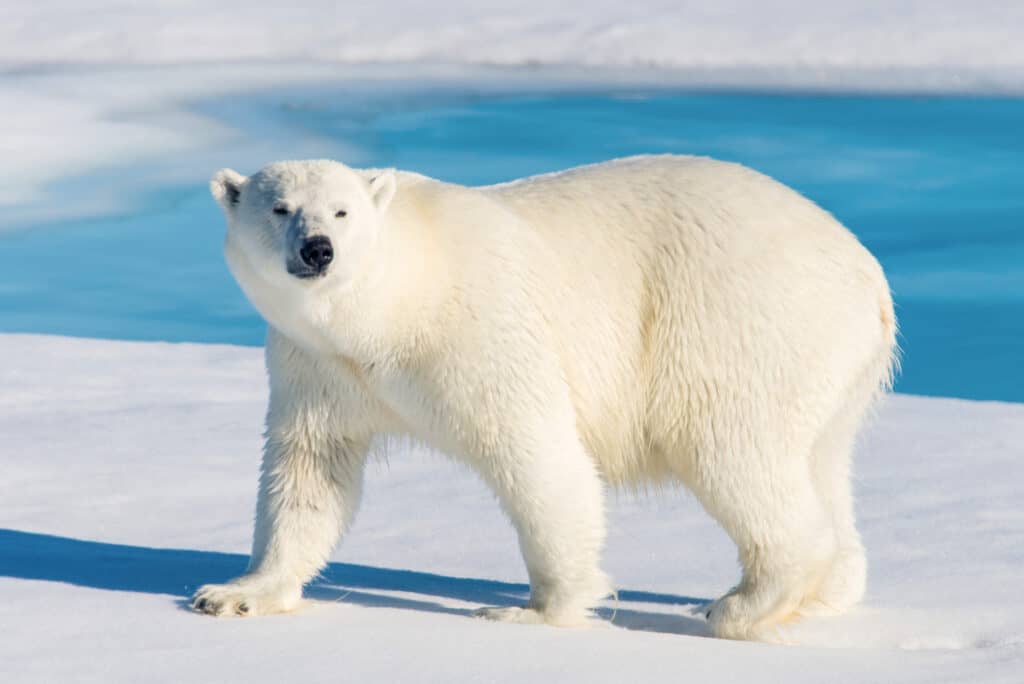
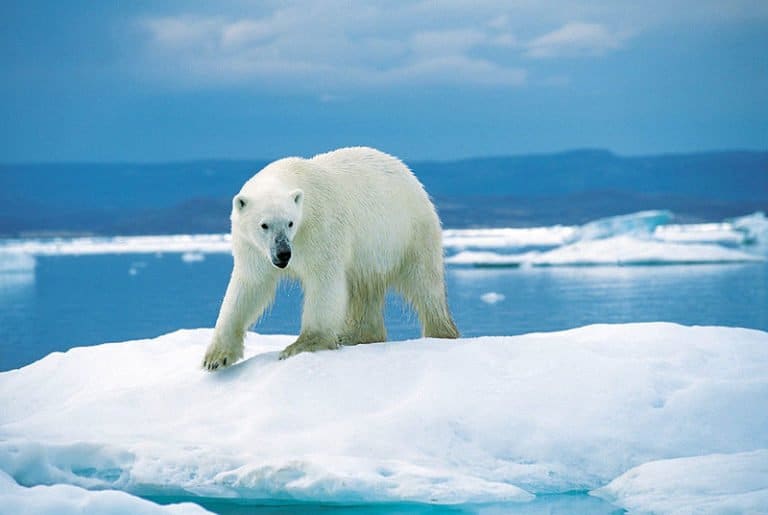
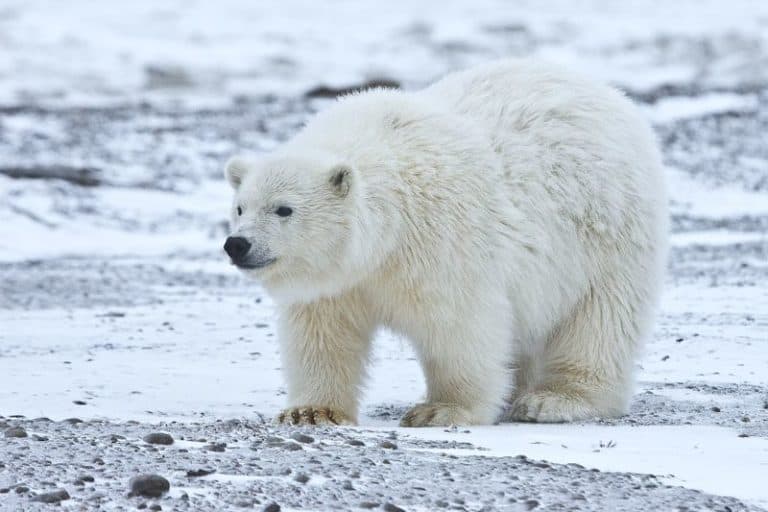
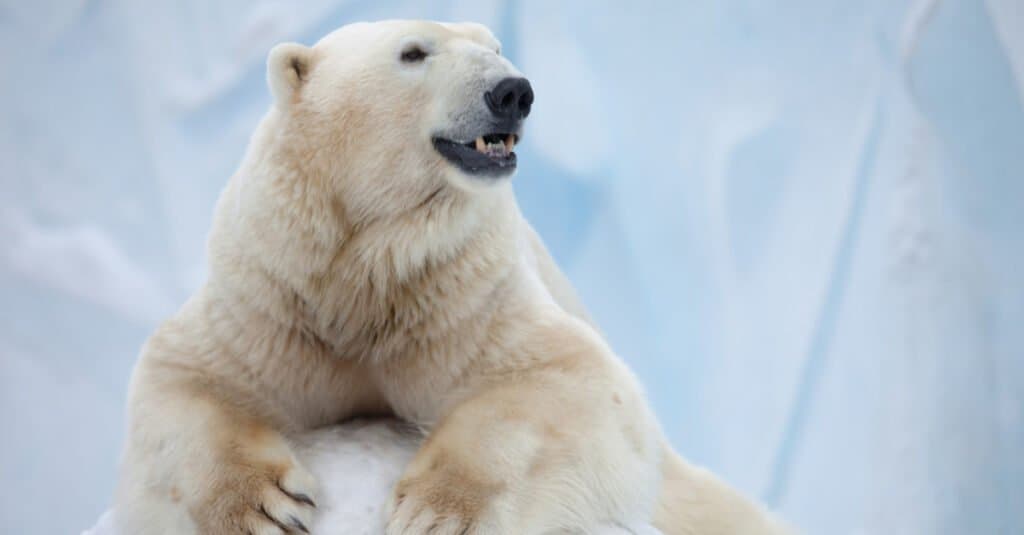
A Polar Bear, The white bear is center frame. looking toward the camera. The bear's head is frame left, it is standing on ice/snow, swimming-pool-blue water is visible in the background.

DNA analysis suggests polar bears diverged from brown bears, Ursus arctos, ~150k years ago.

Anatomy and Appearance

Adult polar bears are animals that typically measure more than six feet in length and weigh around half a ton. Females, though, are much lighter than their male counterparts, that are almost double their weight. Polar bears are one of the few large mammals found in such hostile conditions and have adapted well to their life on the ice. Their fur is thick and dense and is made up of a warm undercoat with longer guard hairs on top that are clear, hollow tubes that trap warmth from the sun and transmit it directly down to their black skin, which then absorbs the welcome heat. The polar bear is an animal with a strong and muscular body, broad front paws that help when paddling in the water, and fur on the bottom of its feet that not only helps to keep them warm but also gives the polar bear extra grip when moving about on the ice. They have very long necks in comparison to other bear species, which enables their head to remain above the water when swimming. They also have more elongated muzzles and smaller ears than their relatives.

The largest polar bear ever recorded weighed 2,209 pounds (1,002 kg)! It stood more than 11 feet tall on its high legs and was discovered in Alaska in 1960. While polar bears are the largest bear species, in documented altercations that pit polar bears vs. grizzly bears, it has normally been the grizzly that stands its ground while the polar bear flees.
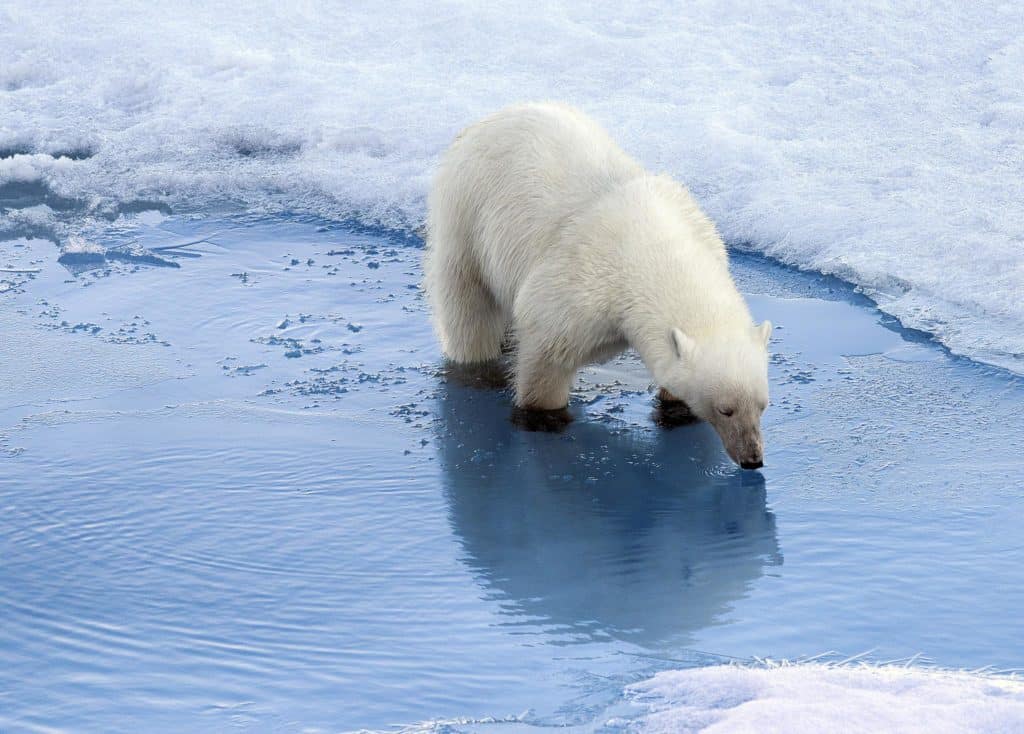
Polar bears are one of the few large mammals found in such hostile conditions and have adapted well to their life on the ice.

Distribution and Habitat

Polar bears are animals that are found on the icy coasts that surround the North Pole and as far south as Hudson Bay. Around 60% of polar bears can be found in northern Canada, with the remaining individuals distributed throughout Greenland, Alaska, Svalbard, and Russia, where they tend to be found relatively close to the ocean, roaming vast distances across the ice fields. Polar bear populations have fallen drastically throughout their natural range, with the biggest threat to this enormous carnivore being global warming. Although polar bears are accustomed to seasonal changes in the Arctic Circle, the summer ice melt is happening earlier and more ferociously year by year, meaning that polar bears have less time to hunt on the ice before it disappears. Their precarious habitats are also affected severely by human encroachment in the forms of hunting, growing settlements, and the release of chemical pollutants into the water.
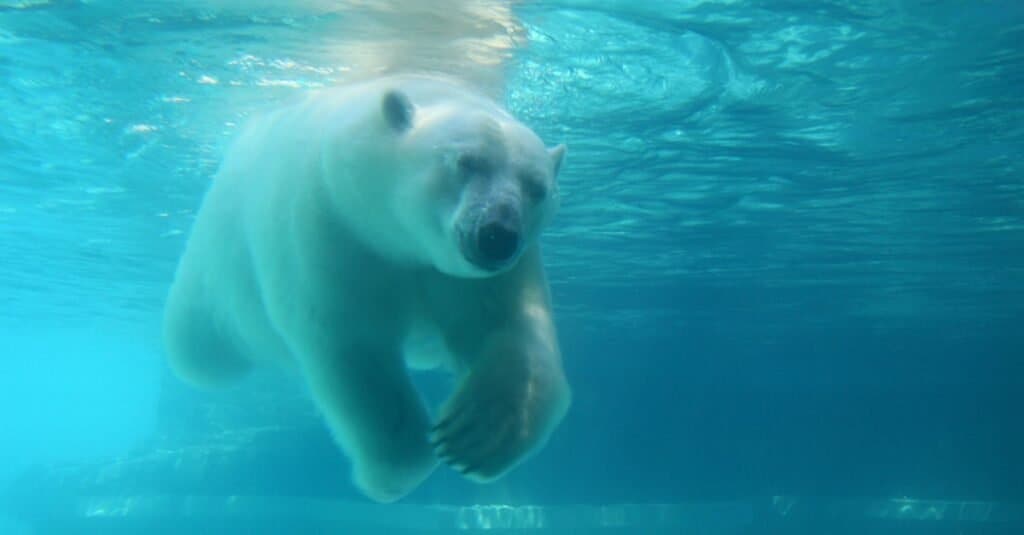
Can Bears Swim

Polar bears can be found in Canada, Greenland, Alaska, Svalbard, and Russia.

Behavior and Lifestyle

The polar bear is a solitary animal that can not only run at speeds of up to 25mph, but its strong ability to swim at 6mph makes it a true apex predator within its environment. These semi-aquatic mammals can hunt both on the ice and in the water and have been known to swim vast distances across the open ocean in search of food. Polar bears are able to dive under the water to catch their prey which they do by keeping their eyes open and holding their breath for up to two minutes. On land, they tend to hunt using two main techniques: they either stalk then chase their prey or sit waiting next to a breathing hole for up to many hours before ambushing the seal as it emerges. Eating seals is vital to the survival of the polar bear as they are able to provide it with a high-energy meal. During the short Arctic summer, however, polar bears are forced further north as the ice recedes when they have to feed on other animals further inland.

You can check out incredible facts about polar bears.
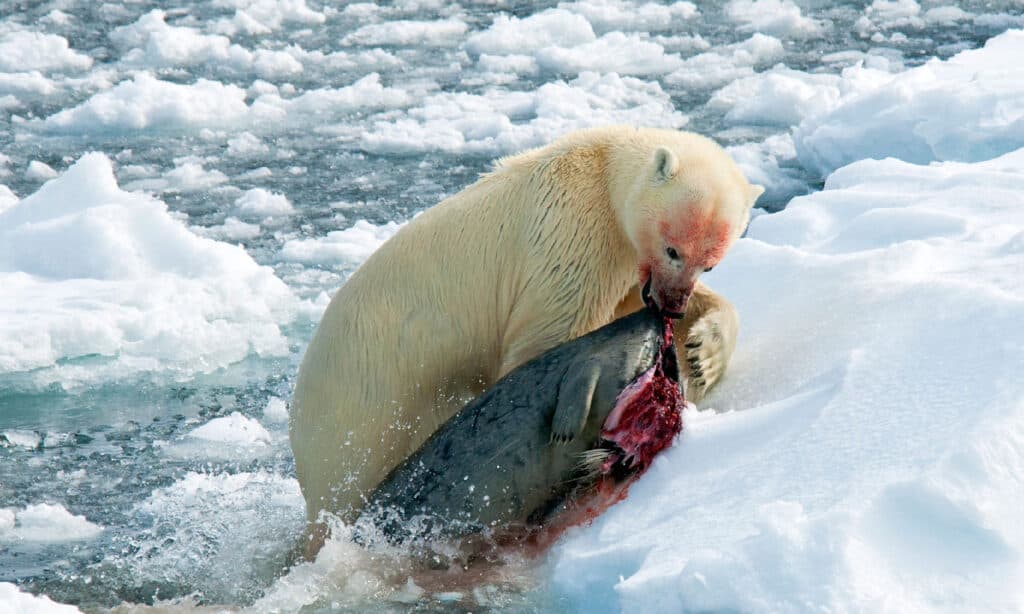
Polar Bear with just caught dead seal

Eating seals is vital to the survival of the polar bear as they are able to provide it with a high-energy meal.

Reproduction and Life Cycles

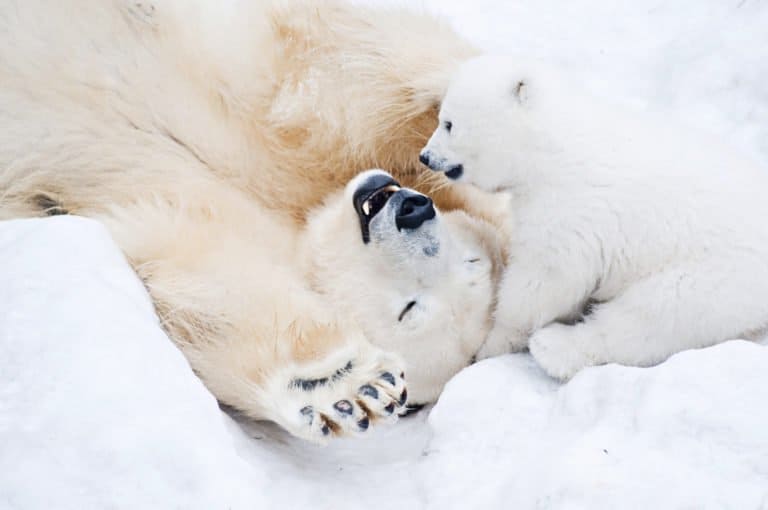
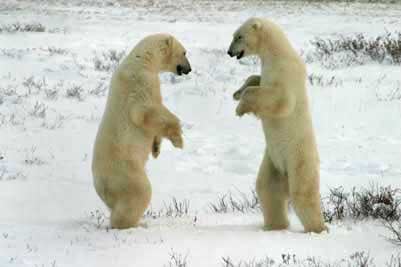
Polar bears tend to breed in the spring between April and May, with the gestation period then varying considerably (depending on the health of the female) due to a period of delayed implantation. Up to 9 months later, the female gives birth to between 1 and 4 cubs in a den that she has dug into the snow or ground. The cubs weigh just over one pound when they are newborns and are hairless, and cannot see. Females enter their dens towards the end of autumn and don’t emerge with their cubs until the harsh winter conditions have turned into spring. Although polar bear cubs begin eating solid food when they are around 5 months old, they are not weaned until they are between two and three. Cubs are known to commonly play-fight with other cubs, which involves wrestling and chasing, along with baring their teeth and even biting one another, but without causing harm. These games are critical for polar bear cubs to learn how to fight and therefore defend themselves successfully once they leave their mother and live on their own.
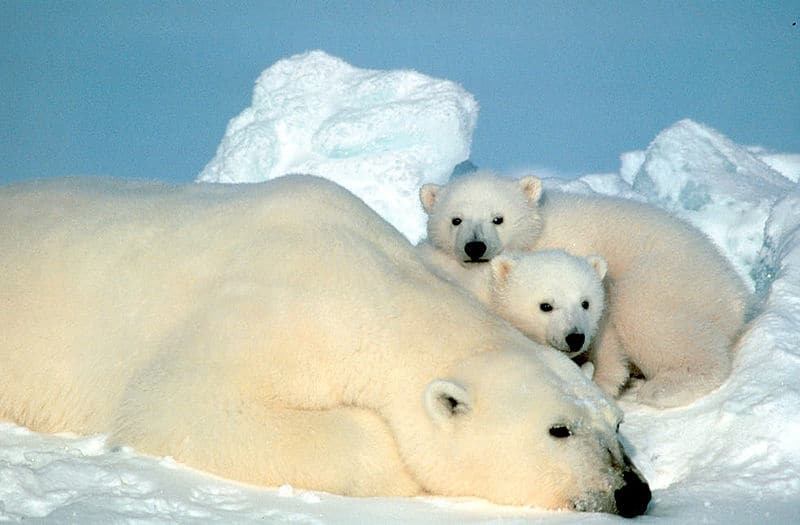
The polar bear has a relatively slow rate of reproduction which means that populations are not only shrinking rapidly, but they are not growing quickly enough to sustain themselves.

Diet and Prey

The polar bear is the largest carnivorous mammal on land and must hunt regularly to ensure that it is well-fed and maintains its insulating layer of fat to keep it warm. The skins and blubber of ringed seals make up the bulk of the polar bears’ diet as they often leave the remaining meat, which provides an important source of food for other animals, such as arctic foxes. Although seals are their primary source of food, polar bears also eat birds, berries, fish, and reindeer (particularly during the trickier summer months), along with the occasional walrus. The carcasses from large marine mammals, including seals, walruses, and even whales, also provide a regular food source for polar bears that are said to have such a good sense of smell that they are able to sniff them out from a considerable distance away. Polar bears are also known to break into underground seal dens to hunt the pups inside them.
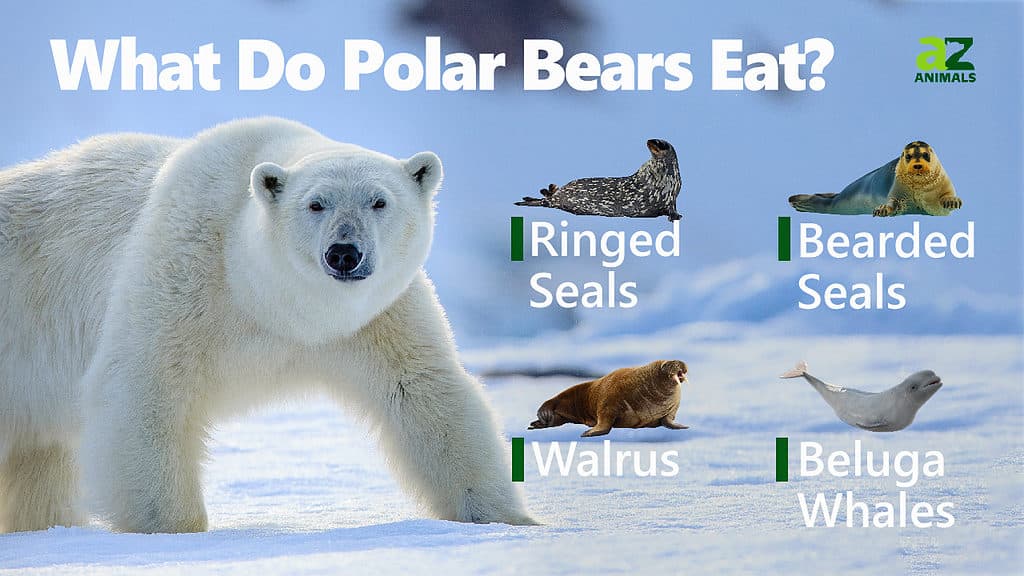
Polar Bear Eat
Polar bears are carnivores and eat mostly meat. There are not many vegetables available where they live.

Predators and Threats

Due to the fact that the polar bear is an enormous and ferocious predator, there are no animals that prey on them in their surrounding environment. They tend to have the most trouble with other polar bears, and females will protect their cubs fiercely from males that may be trying to harm them. Humans are by far the biggest threat to the dwindling polar bear population numbers as they have greedily hunted them from their arrival in the Arctic Ocean in the 1600s until the mid-1970s when international hunting bans fell into place. Along with the receding ice fields that are crucial to the survival of the polar bear caused by climate change, they are also heavily affected by drilling for oil and gas, increased shipping activity, and rising levels of industrial chemicals that pollute the water. The polar bear has a relatively slow rate of reproduction which means that populations are not only shrinking rapidly, but they are not growing quickly enough to sustain themselves. Some experts claim that the polar bear could be extinct from the wild in the next 30 years.
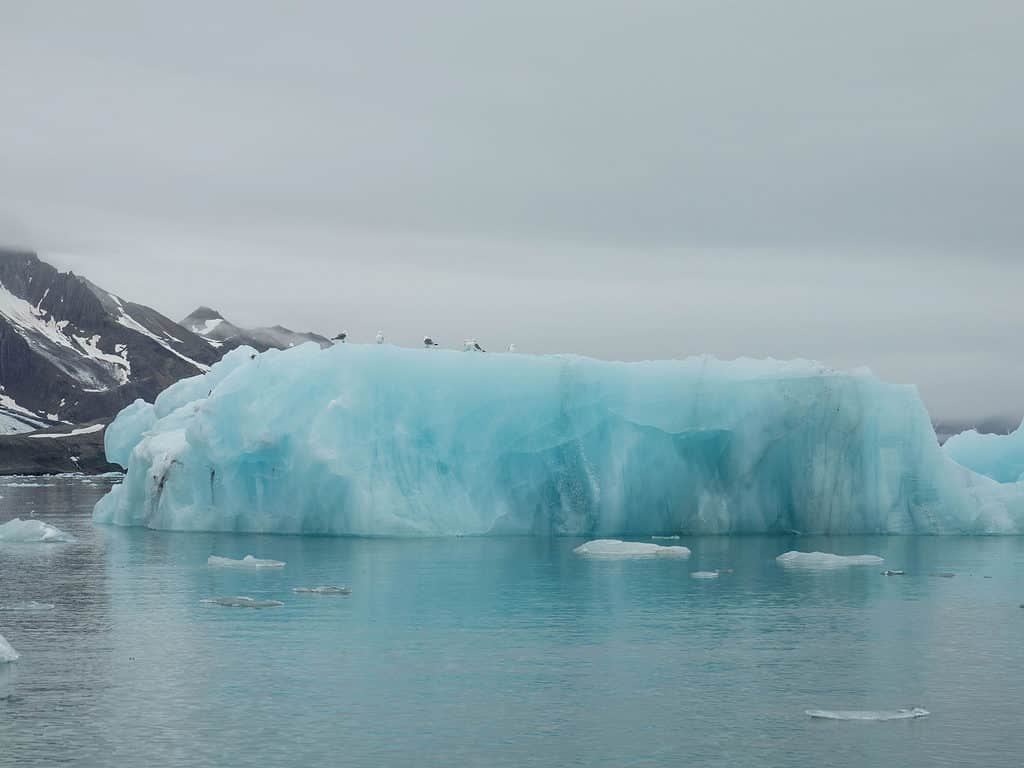
Iceberg from a melting glacier in the arctic.

The polar bear could be extinct from the wild in the next 30 years if we do not stop climate change and global warming.

Interesting Facts and Features

Before the harsh winter conditions have fully arrived, female polar bears dig themselves a den in the snow where they hibernate through these hostile months (and where they give birth to their cubs) and only emerge in the spring. These dens are known to be up to forty degrees warmer than the outside, but males seem to prefer to be active all year round. Polar bears have a layer of blubber under their skin which can be up to 4 inches thick and helps to keep them warm. They are, in fact, so well insulated that polar bears must move slowly for the majority of the time so that they don’t overheat. Polar bears shed their fur in the summer, meaning that they seem at their whitest at the beginning of autumn. By the spring, their coats appear to be more yellow in color, which is something thought to be partially due to the oils found in seal skins.
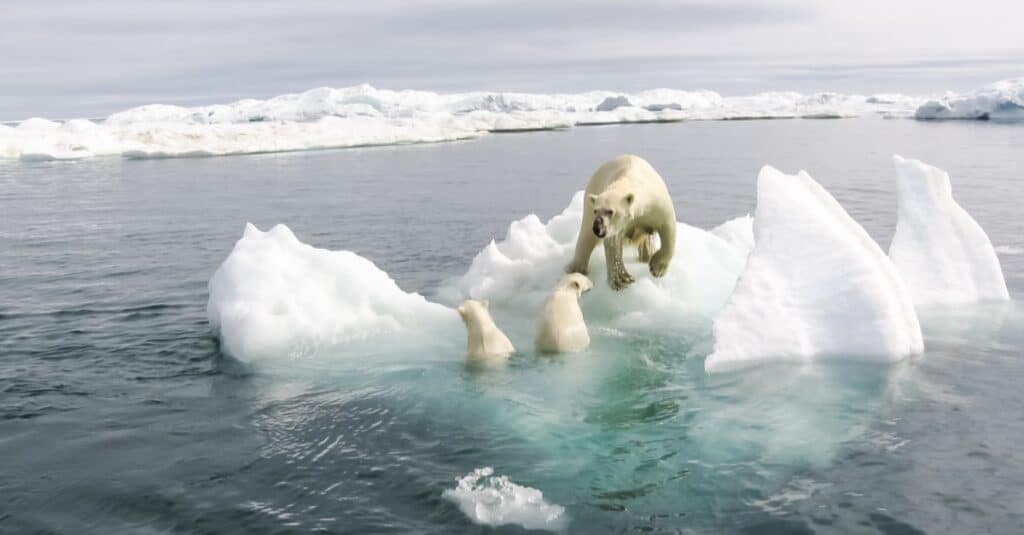
polar bears in arctic water

Polar bears have a layer of blubber under their skin which can be up to 4 inches thick and helps to keep them warm.

Relationship with Humans

Before the 1600s, when the European, Russian and American hunters arrived in the heart of the Arctic Circle, only native people really knew anything about them. Polar bears were mercilessly hunted until 1973, when an international agreement put an end to such uncontrolled hunting. Even today, native people are still allowed to hunt the polar bear for traditional uses, but the biggest threat to polar bears is the rapidly melting ice shelf. Global warming caused by people is thought to be reducing so quickly, in fact, that some say that their southern limit of Hudson Bay will have no ice at all by 2080. Polar Bears are known to be aggressive towards humans, with reported attacks still occurring, including the most recent and famous incident in Svalbard, when a number of teenagers and their expedition leaders were attacked by a polar bear in their camp.
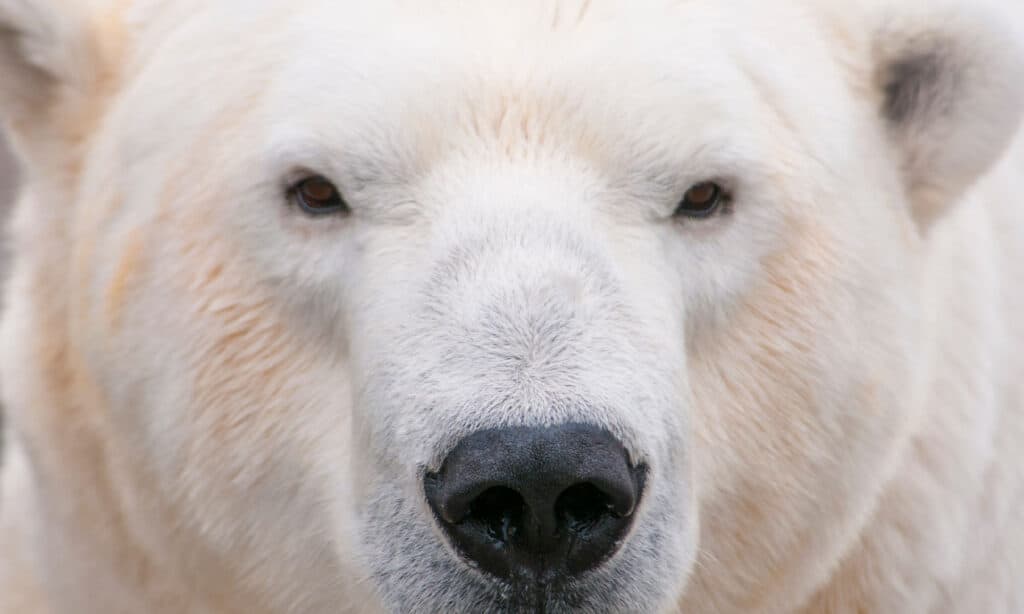
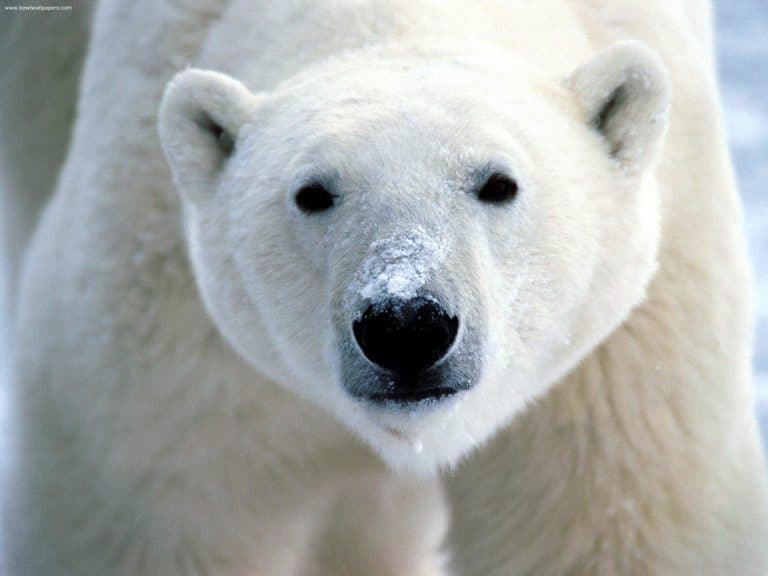
Full frame of a polar bear's face. The polar bear is with with a black nose and black eyes.

Polar bears were mercilessly hunted until 1973, when an international agreement put an end to such uncontrolled hunting.

Conservation Status and Life Today

Today, the polar bear has been listed on the IUCN Red List as a species that is Vulnerable in its natural environment. Although international hunting bans have prevented such a high level of hunting, conservation efforts within the Arctic Circle prove to be hard, with the one thing that the polar bear actually needs to survive disappearing more every year. Increased levels of industrial activity in their natural environment also cause declines in the quality of their remaining habitats. There are estimated to be between 20,000 – 25,000 polar bears left roaming close to the North Pole, with the majority of these found in northern Canada.
Strongest animal bite – polar bear

There are estimated to be between 20,000 – 25,000 polar bears left in the wild.

Types of Polar Bears

There are only one species of the polar bear. However, there are eight total species of bears. The eight species of bears that are currently extant on the planet today include the American black bear, the Asiatic black bear, the brown bear, the polar bear, the sloth bear, the sun bear, the spectacled bear, and the giant panda. These bears can be found in a wide variety of habitats throughout North America and Europe, as well as parts of South America and Asia. Bears are characterized by their bulky bodies with short legs, long snouts for sniffing out food sources or potential mates, and small rounded ears to better detect predators or nearby prey sources.

Additionally, they have thick fur coats, which help them keep warm in cold climates such as those inhabited by polar bears who live almost exclusively on sheets of ice year-round. All modern species also possess paws with five nonretractile claws, which come in handy when climbing trees or digging up roots while searching for food during hibernation season. Finally, all modern-day species have a distinctive short tail used primarily for balance while walking or running.

View all 247 animals that start with P
How to say Polar Bear in ...
Bulgarian
Бяла мечка
Czech
Medvěd lední
Danish
Isbjørn
German
Eisbär
English
Polar Bear
Esperanto
Blanka urso
Spanish
Oso polar
Estonian
Jääkaru
French
Ours blanc
Finnish
Jääkarhu
Hebrew
דוב קוטב
Croatian
Polarni medvjed
Indonesian
Beruang Polar
Italian
Orso polare
Chinese
北極熊
Malay
Beruang Polar
Dutch
IJsbeer
English
Isbjørn
Polish
Niedźwiedź polarny
Portuguese
Urso-polar
English
Urs polar
Swedish
Isbjörn
Turkish
Kutup ayisi
Japanese
ホッキョクグマ
Hungarian
Jegesmedve

Sources

  1. David Burnie, Dorling Kindersley (2011) Animal, The Definitive Visual Guide To The World's Wildlife / Accessed November 10, 2008
  2. Tom Jackson, Lorenz Books (2007) The World Encyclopedia Of Animals / Accessed November 10, 2008
  3. David Burnie, Kingfisher (2011) The Kingfisher Animal Encyclopedia / Accessed November 10, 2008
  4. Richard Mackay, University of California Press (2009) The Atlas Of Endangered Species / Accessed November 10, 2008
  5. David Burnie, Dorling Kindersley (2008) Illustrated Encyclopedia Of Animals / Accessed November 10, 2008
  6. Dorling Kindersley (2006) Dorling Kindersley Encyclopedia Of Animals / Accessed November 10, 2008
  7. David W. Macdonald, Oxford University Press (2010) The Encyclopedia Of Mammals / Accessed November 10, 2008
  8. Polar Bear Information / Accessed November 10, 2008
  9. Polar Bear Facts / Accessed November 10, 2008
  10. Polar Bear Threats / Accessed November 10, 2008
Heather Hall

About the Author

Heather Hall

Heather Hall is a writer at A-Z Animals, where her primary focus is on plants and animals. Heather has been writing and editing since 2012 and holds a Bachelor of Science in Horticulture. As a resident of the Pacific Northwest, Heather enjoys hiking, gardening, and trail running through the mountains with her dogs.

Thank you for reading! Have some feedback for us?


Polar Bear FAQs (Frequently Asked Questions)

Polar Bears are Carnivores, meaning they eat other animals.