










Quick Take
- Mastering the Poodle breed requires distinguishing between more than 40 different crossbreed variations.
- Surprisingly, the Poodle began as a German duck hunter rather than a noble lap dog.
- Executing a 5-meal daily feeding protocol is required for Poodle puppies during the maturation phase.
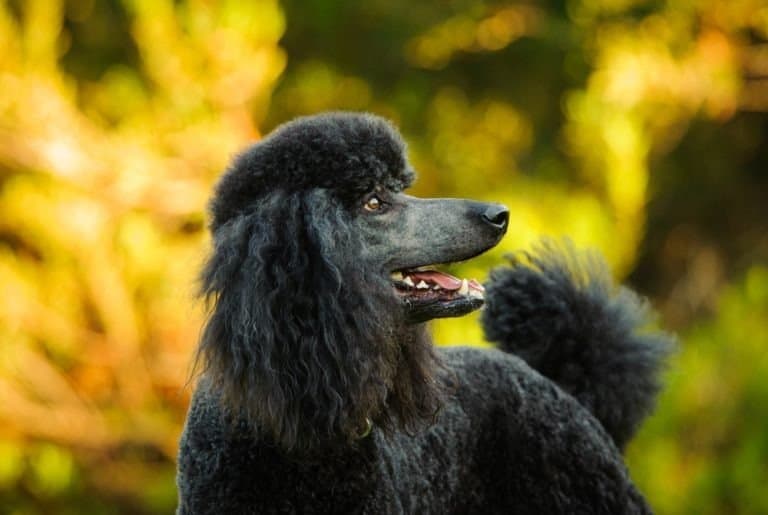
Poodles have beautiful hairdos and are the best show dogs for their elegant appearance and innate performance ability. Poodles make very affectionate family dogs and are known to be very talented.
These dogs are usually purebred, but you can always find them in rescue shelters, often mixed with other breeds like the Maltese. In fact, Maltese dogs are fairly similar to the poodle, making them a helpful alternative. These dogs are very intelligent and are also easy to train, ensuring that they are well-behaved for their owners. They need to be kept busy, and too much free time can leave them with destructive behavior.
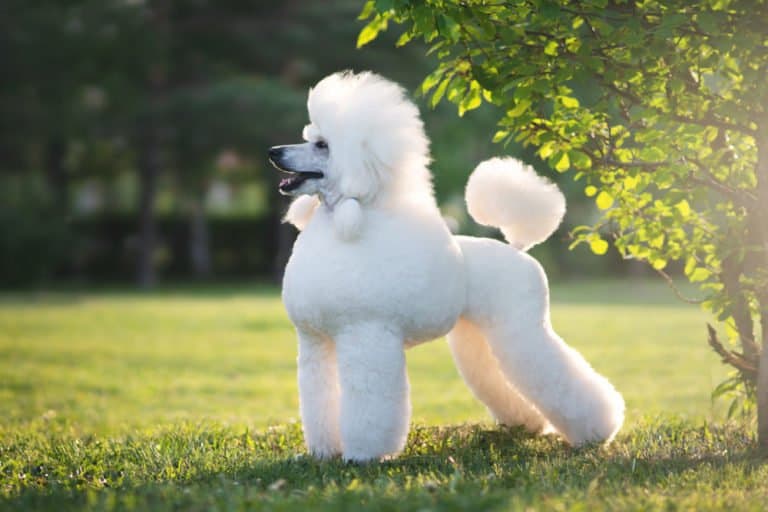
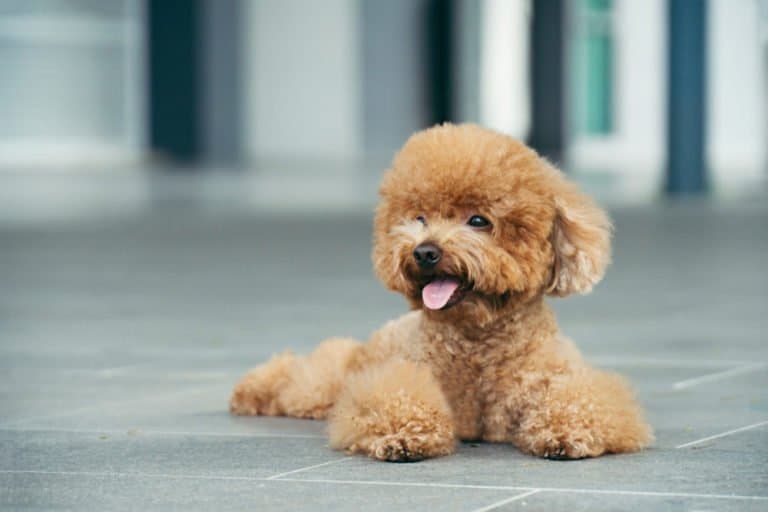
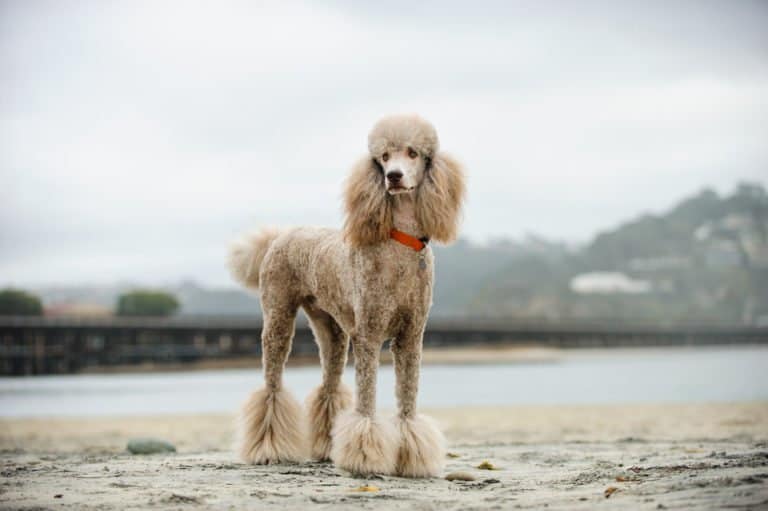
The different types of poodles are primarily separated into three categories: standard, miniature, and toy. Unofficially, there is also the teacup breed, which is rather small and isn’t even as big as the incredibly tiny toy poodle.

History and Origin
The Poodle is an older breed of dog that traces its roots to the 1400s in lands around Germany. It is assumed that their main purpose was to help hunt ducks, which requires good intelligence and awareness to bite gently while fetching felled birds. The French were the next to continue developing the early Poodle into was called the Caniche, literally translated to “duck dog”. As a breed, they quickly became a favorite pooch of the nobility around Europe.
As the Poodle became more and more beloved, breeders developed the Toy and Miniature Poodle versions. The Standard Poodle continued to be used for hunting, while the Mini was used to hunt truffles, and the Toy was a lap dog to the rich.
The Poodle was registered by The Kennel Club in England in the 1870s and by the American Kennel Club in the 1880s. After the Second World War, they became very popular in America.
The Different Types of Poodles and Poodle Mixes
Poodle crossbreeds run the gamut. Also called “oodles,” there are more than 40 poodle crossbreeds, including:
- Maltipoo: Maltipoos are loving, playful, and intelligent small-breed dogs. They are a hybrid breed that is a cross between a Maltese and either a Poodle or a Miniature Poodle. Depending on how strong the Maltese genes are, Maltipoos may be hypoallergenic dogs, like poodles. The breed is good with children and loves spending time with the members of their family. A Maltipoo may have a curly or scruffy coat. White, cream, and silver are the most common coat colors, though they can also be blue, gray, black, or brown.
- Schnoodle: – Schnoodles are hybrid dogs that are made by crossing a Poodle and a Schnauzer. Since Poodles come in three sizes (Toy, Miniature, and Standard), and Schnauzers also come in three sizes (Miniature, Standard, and Giant), there is a lot of variation in the size of this breed. This breed is loving and loyal. They are also very intelligent and may inherit the suspiciousness of their Schnauzer parent. The appearance of a Schnoodle can vary based on the specific genes it inherits, and it may have a silky and wavy coat, a straight coat, or a curly coat. They can also be a variety of colors, including black, black with white, gray, silver, apricot, or sable.
- Labradoodle: The Labradoodle breed was created in 1989 by a man named Wally Conron. He originally crossbred the two dogs to create a service dog for a woman whose husband was allergic to the standard Labrador retrievers that are used as guide dogs. Today, they are highly sought after around the world as family pets. While all dogs are different, Labradoodles are generally easy-to-train dogs. However, they are an intelligent breed, so be prepared for independence and some stubbornness while training.
- Yorkie Poo: For Yorkie Poos, both parent breeds are among the most popular in the United States. When you combine them, you get the Yorkie poo, a very affectionate and energetic mix. It does not have any agreed-upon standards, but it is generally characterized by a small, petite body and a very expressive face. The soft fur can be either curly or straight with a wide variety of different colors and markings, including black, white, cream, chocolate, apricot, and gray.
- Aussiedoodle: Aussiedoodles are a fluffy-haired bundle of cuteness. Born from extremely intelligent animals, the Aussiedoodle is extremely intelligent. It’s also a fairly cooperative dog, making training almost easy. The Aussiedoodle is fun and will keep the family entertained and active. This is a great pet for an active family with a nice yard or a nearby dog park.
- Westiepoo: Westiepoos are social, intelligent dogs that are full of curiosity. They are the result of breeding a West Highland White terrier with a miniature poodle. These dogs date back to the 1970s. They are believed to have originated in the United States. These small, playful dogs are popular with families. They are loyal and protective of their loved ones.
- Weimardoodle: The Weimardoodle is a combination of a Weimaraner and a Poodle. Both the Weimaraner and Poodle are friendly, athletic, and intelligent breeds, but they do differ physically. When you combine them, you will usually get a dog with a slim physique, a long and narrow muzzle, flapping ears, and a long, furry tail. The most common colors are black, white, cream, gray, brown, fawn, and a combination of black and white.
- Goldendoodle: Goldendoodles are medium-sized and often have a shaggy, low-shedding coat. Since they are a mix of two dogs, they have the sweet and pleasing nature of the golden retriever and the intelligence level of a poodle. Though they may come at a high price from a breeder, they may also be found in shelters with a low adoption fee.
3 Pros and Cons of Ownership
| Pros | Cons |
|---|---|
| Poodles are brilliant dogs, and if you are looking for a dog that is smart and affectionate at the same time, this one would be a great choice. | Grooming has to be fairly regular with poodles, which means that you, as an owner, would have to see that you take out regular time for your poodle. |
| These dogs are easy to train and joyfully complete all tasks assigned to them. | Poodles are very prone to a lot of health problems and can fall sick very easily. |
| These dogs shed very little, so in the long run, you wouldn’t have to worry about creating a lot of mess and cleaning up after them. | These dogs can develop destructive behavior if their mental and physical health is not taken care of. |

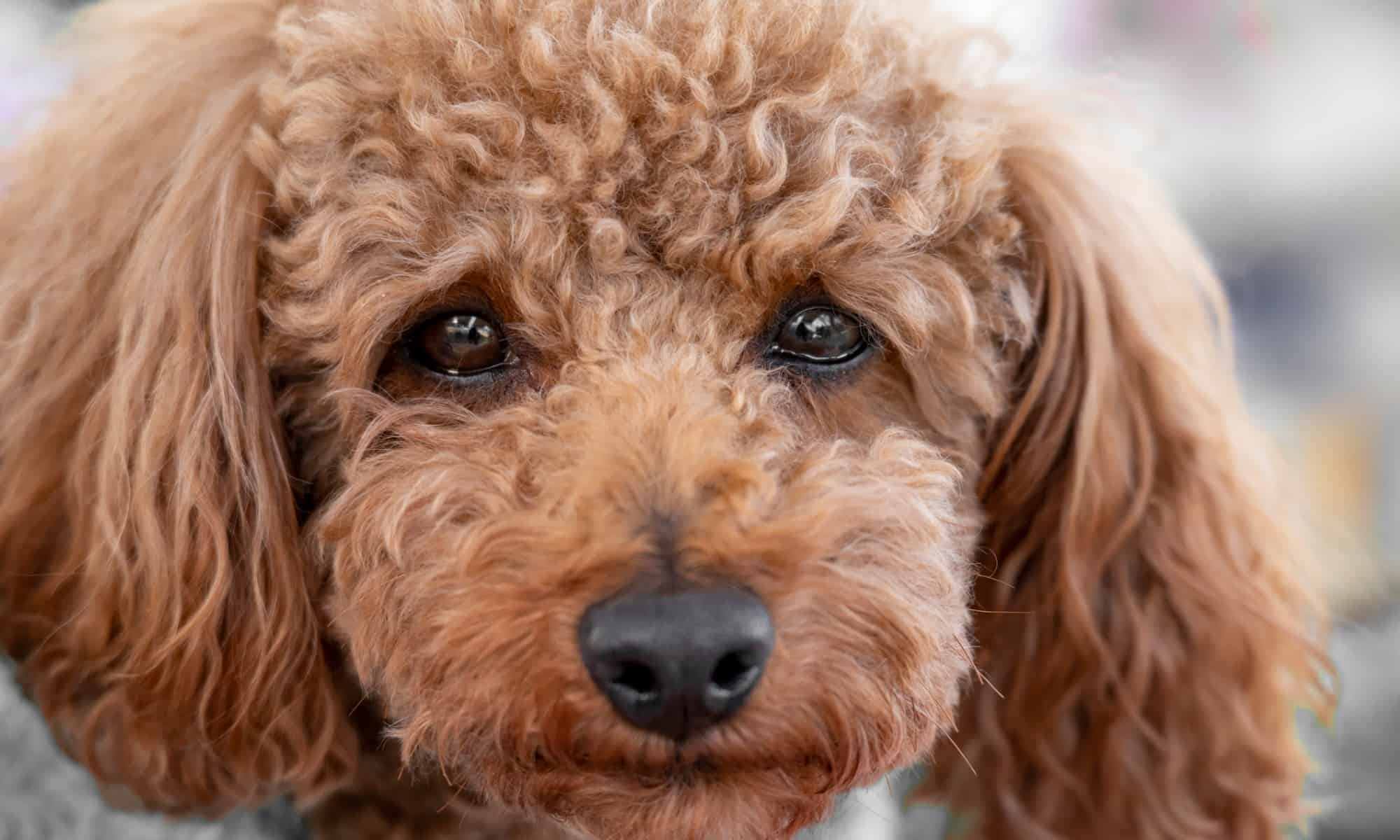
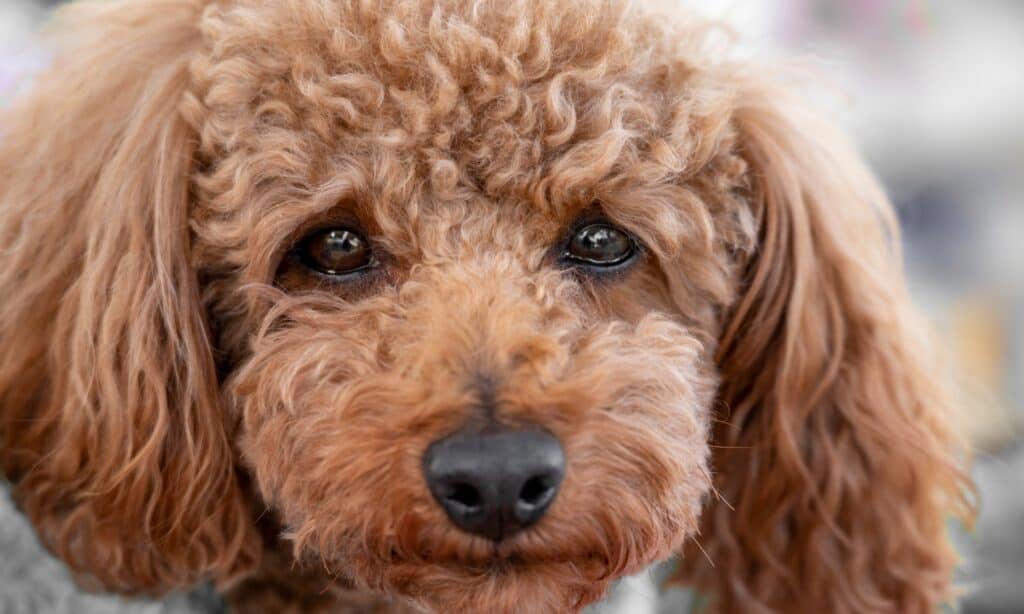
Poodles are brilliant dogs, and if you are looking for a dog that is smart and affectionate at the same time, this one would be a great choice.
©Chendongshan/Shutterstock.com
Size and Weight
Toy poodles are up to 10 inches tall and weigh 4-6 pounds. Miniature poodles are 10-15 inches tall and weigh 10-15 pounds. Standard poodles are over 15 inches tall (usually up to 24 inches) and typically weigh 40-70 pounds, with females generally weighing 40-50 pounds and males 60-70 pounds. The variations in size depend on the type of poodle that the owner gets, considering how small the teacup and the toy poodle can be at their full size.
Common Health Issues
These dogs are prone to a lot of health issues, even when pet owners choose to purchase purebred puppies from a breeder. One of the most common issues that they face is bloating, which happens as a result of the accumulation of gas in their stomach.
Addison’s disease is another common condition, impacting the hormones of the dog. Even though standard poodles are the most publicized for it, all variations are susceptible. The condition occurs when there’s damage to the adrenal glands, making it impossible for their small bodies to create enough aldosterone and cortisol. Thyroid disorders are also common in this breed.
Hip dysplasia can occur in poodles as well, causing substantial pain in malformed hip muscles. These dogs tend to be at risk for epilepsy, though it is more common as the dog gets older.
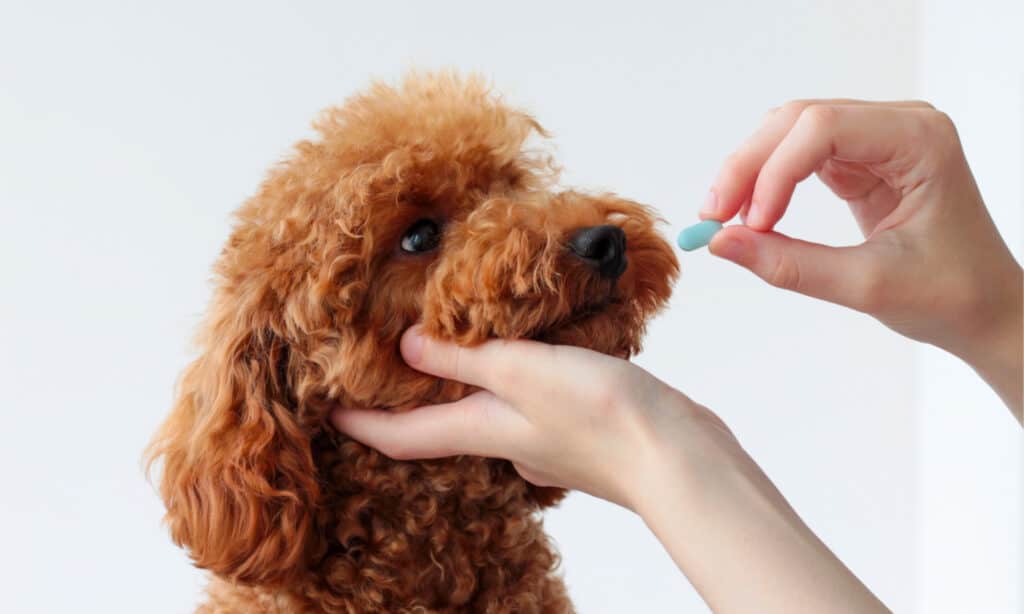
One of the most common issues that poodles face is bloating, which happens as a result of the accumulation of gas in their stomach.
©Varvara Serebrova/Shutterstock.com
Temperament
These dogs are known to be extremely intelligent and loyal. They are faithful and are very easy to train. Besides, they make great family dogs and can quickly pick up commands.
Standard Poodles are known to be very energetic. However, they are also known to be slightly more reserved than the miniature and the toy poodles. Out of the three variations of this dog breed, miniature poodles are known to be the most active.
Miniature poodles are also the most playful and best suited for children. Toy and Miniature poodles are known to be a bit more mischievous than the standard poodles.
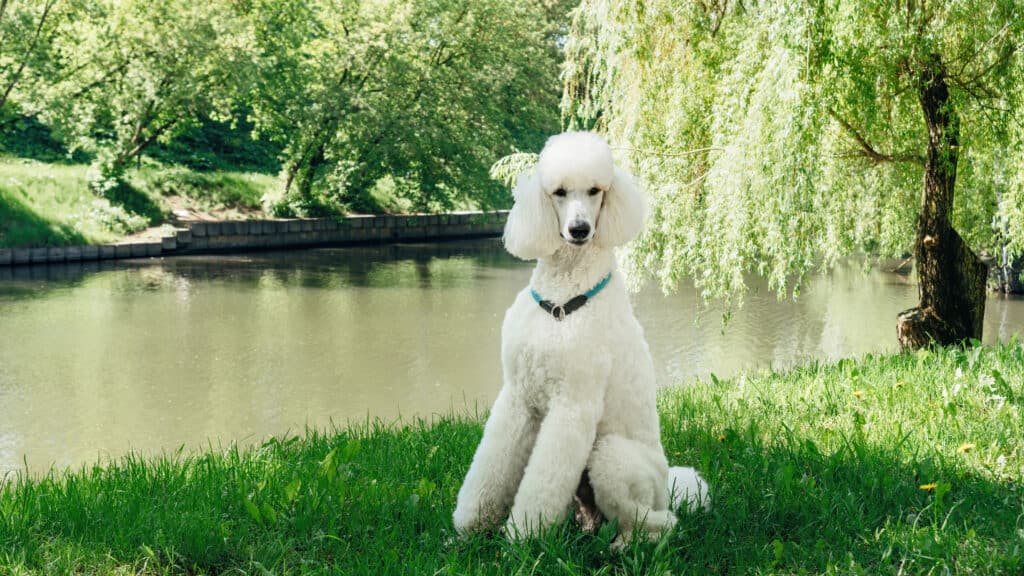
Standard Poodles are known to be very energetic. However, they are also known to be slightly more reserved than the miniature and the toy poodles.
©nieriss/Shutterstock.com
How to Take Care of a Poodle
Like any other pet, these dogs also have their own set of special needs. Therefore, before buying a poodle, you should be able to figure out how to take care of these dogs. Here are some things that you should know:
The Best Dog Food
These dogs can be fed muscle meat that usually comes from turkey, beef, and ducks. Other meat sources could include sheep, bison, and moose. They could also be given organ meat. If feeding meat, it should be prepared safely to avoid the risk of foodborne illness. Some owners choose to feed raw diets, but it’s important to consult a veterinarian to ensure the diet is balanced and safe.
While adults can be fed about one to two times per day, puppies should be fed about 4 to 5 times per day since their stomachs are smaller and cannot digest a lot of food in one go.
Maintenance and Grooming
These dogs require a lot of grooming. You would need to brush their hair every day. A proper grooming session would need to take place every three to six weeks, though some people groom their dogs much more frequently to maintain a certain aesthetic.
However, the hair strands that are tangled together and are very difficult to brush out and straighten should be cut out with scissors — very carefully. For pet owners who are unsure of how to perform this maintenance themselves, a high-quality groomer is a necessity.
It is important to bathe your dog regularly, especially if it is dirty after playing outside for too long. You should be able to find a suitable shampoo for your poodle online or in a dog shop, depending on the particular needs.
You would also need to brush your dog’s teeth and cut its nails. However, all of this would have to be done with sensitivity lest you might end up hurting your dog.
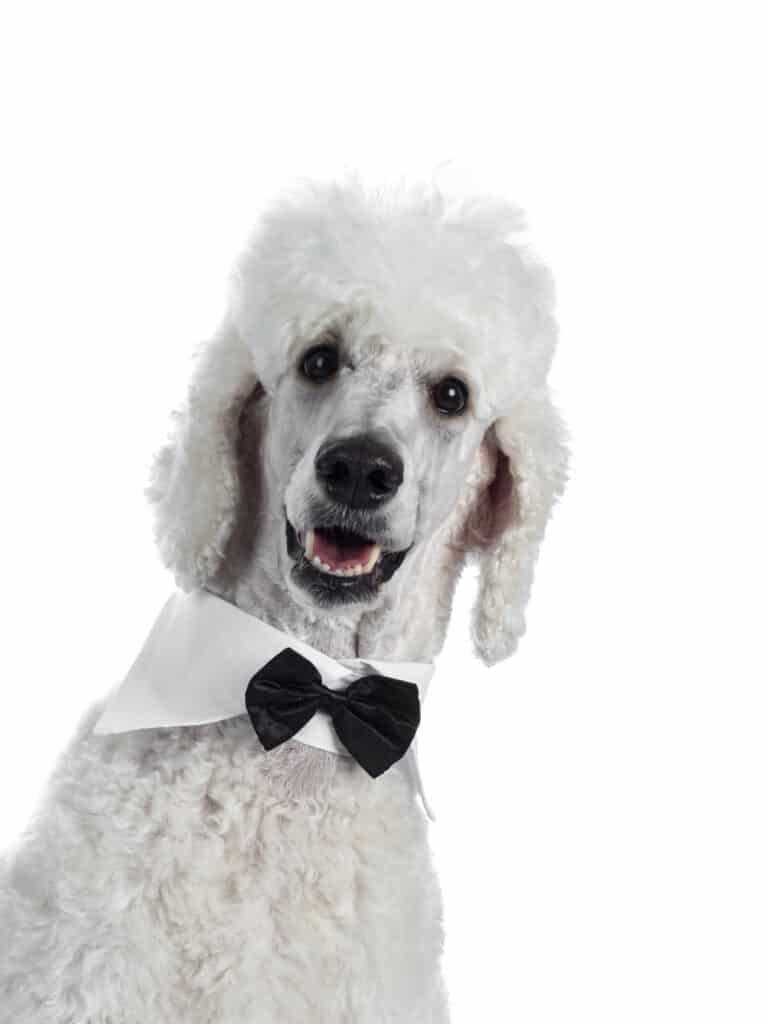
A proper grooming session would need to take place every three to six weeks, though some people groom their dogs much more frequently to maintain a certain aesthetic.
©iStock.com/Nynke Van Holten
Training
These dogs are very easy to train. They are intelligent dogs and can pick up commands very easily. You can start by teaching your dog their name and can slowly introduce other simple commands like sitting, standing, and coming when they are called. These dogs are eager to please and show off, but they need an adequate trainer.
Most poodles follow your commands and complete the tasks assigned to them. They are energetic, and you would love assigning tasks to them.
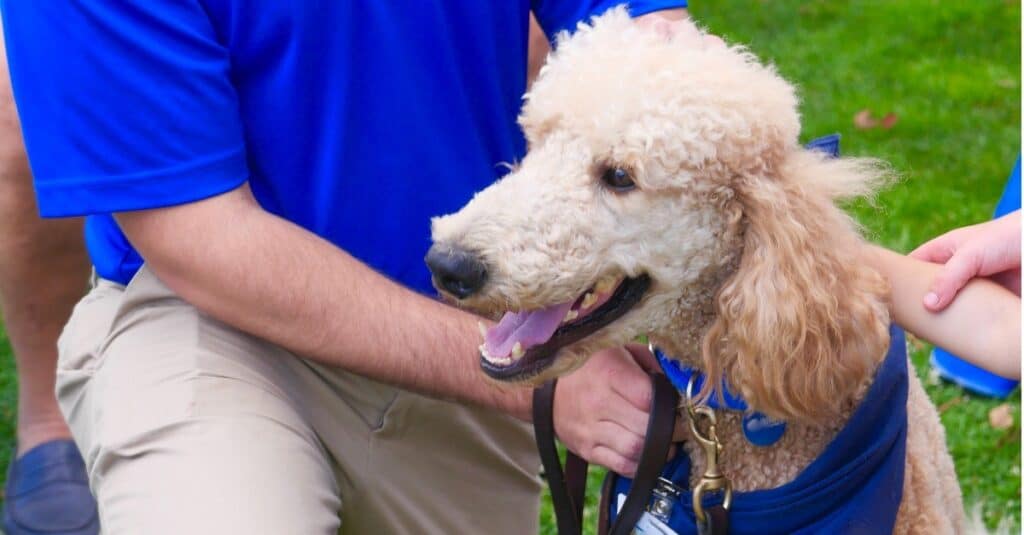
A Medical Service Dog can remind its handler to take medication, alert medical providers of necessary medical attention, and more.
©iStock.com/Laura Fay
Exercise
These dogs need about an hour of exercise every day. A good walk usually does wonders for them. You can also engage them in a game of rousing, and that would definitely fulfill their daily exercise needs. With access to a plentiful area to play, this physical activity can reduce the risk of chewing and scratching.
Puppies
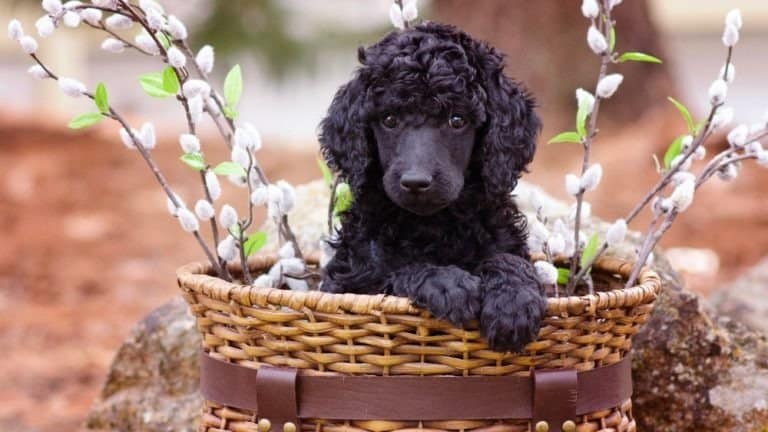
Puppies are brought up and taken care of the same way. However, as compared to feeding the adults about 1 to 2 times a day, you will need to feed the puppies about 4 to 5 times a day because they have small stomachs and they can’t usually digest a lot of food in one go.
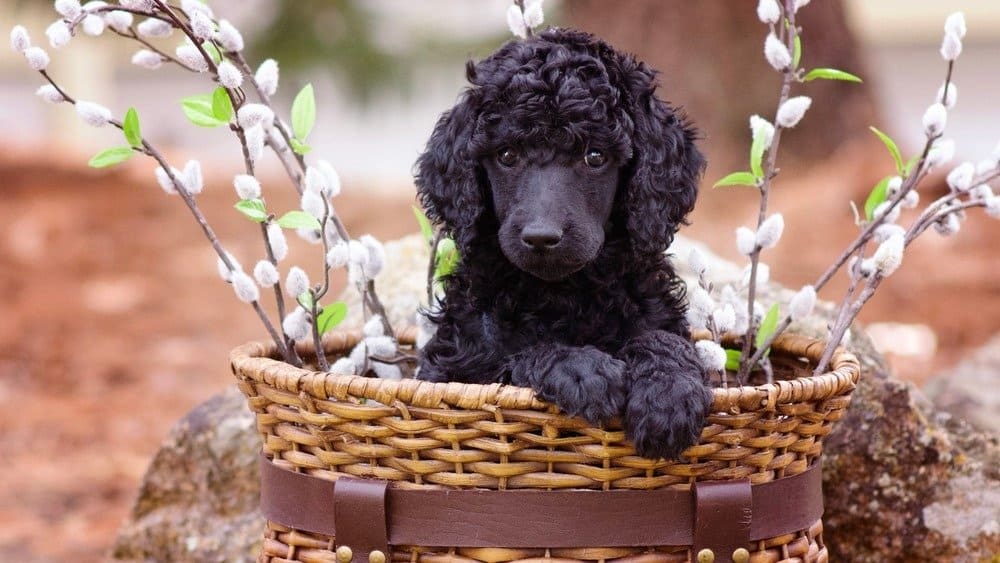
You should feed poodle puppies about 4 to 5 times a day because they have small stomachs and can’t usually digest much food in one go.
©Jennifer Stidham/Shutterstock.com
With Children
These dogs make great family dogs. Miniature poodles are known for being playful and energetic, making them a good choice for families with children. However, standard and toy poodles can also be great with kids, depending on their temperament and training.
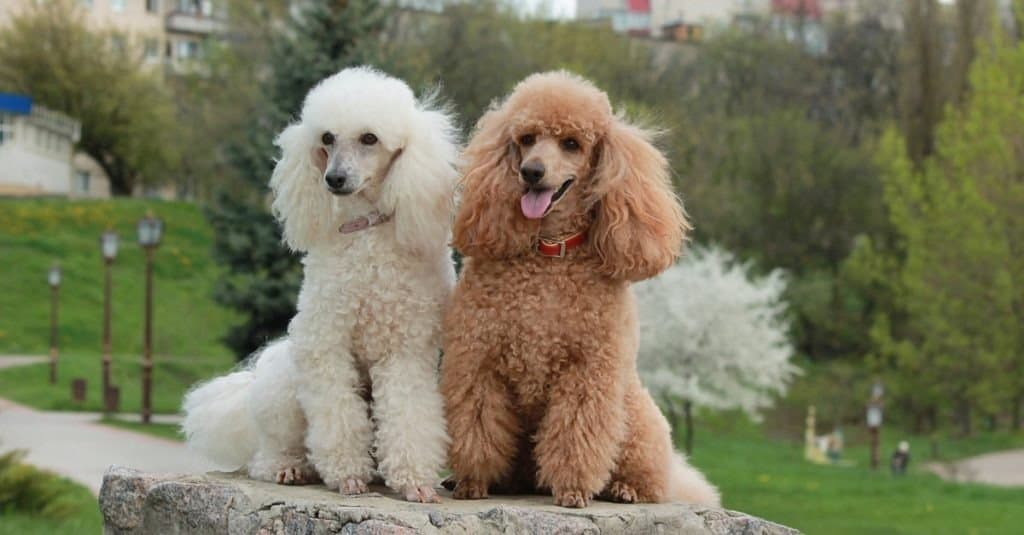
Poodles make great family pets.
©Anna_Bondarenko/Shutterstock.com
Similar Dogs
Though poodles can be a beautiful addition to the household, they aren’t for everyone. Here are a few dogs that are similar to poodles that may work better for some pet owners.
- Afghan Hound: Though it is considered to be a hound breed, this dog offers a similar size and weight, but with long and straight hair instead. It still requires a lot of work to keep it as aesthetically pleasing. They aren’t quite as playful as the poodle, but they are much quieter. If owners can handle their desire to chase anything that catches their interest, the Afghan Hound could be a good option.
- American Water Spaniel: The American Water Spaniel is just as happy with apartment living as a poodle, and they aren’t meant for certain travel. They require about half of the food that a poodle does, but they are just as easy to train.
Famous Examples
Several famous celebrities are known to have owned a poodle, though teacup poodles are the most popular pets among the variations. These include Walt Disney, Elizabeth Taylor, Lucille Ball, Katharine Hepburn, Jackie Kennedy, and Marilyn Monroe.
Poodles have appeared in several movies, like Breakfast at Tiffany’s and The Secret Life of Pets collection of animated films.
Poodle Pictures
View all of our Poodle pictures in the gallery.

AntonMaltsev/Shutterstock.com
Sources
- Petssync / Accessed December 7, 2020
- Canna-Pet / Accessed December 7, 2020
- Galavanting Poodles / Accessed December 7, 2020
- The Poodle Information Center / Accessed December 7, 2020
- WikiHow / Accessed December 7, 2020
- Borrow My Doggie / Accessed December 7, 2020
- The Cesar's Way / Accessed December 7, 2020
- The American Kennel Club / Accessed December 7, 2020