



P
Species Profile

Puffin

Fratercula

Wing-powered divers of the cold seas
Rbmurray Photography/Shutterstock.com

Puffin Distribution

Click a location to explore more animals from that region

This map shows coastal regions where Puffin are found.

Loading map...
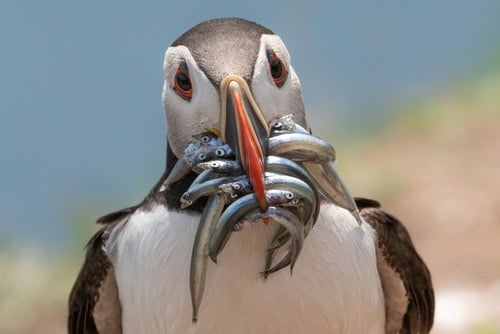
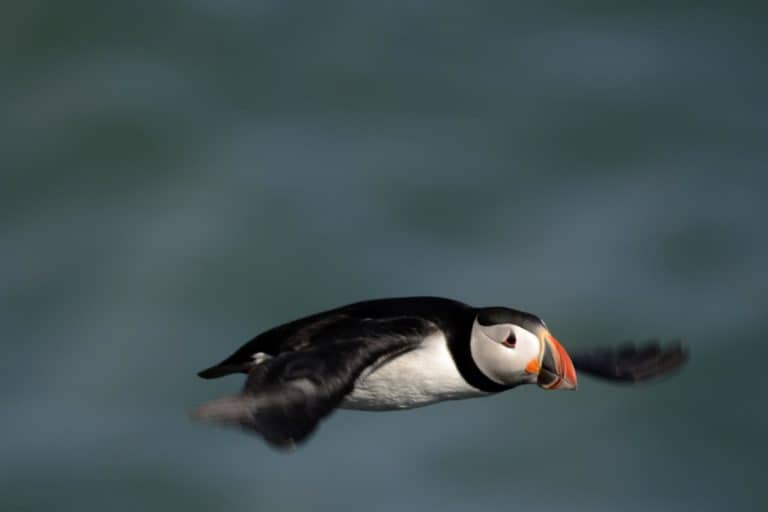
Atlantic Puffin returning from sea with a mouthful of sand eels to feed its young on Skomer Island

At a Glance

Genus Overview This page covers the Puffin genus as a group. Stats below are general traits shared across the genus.
Also Known As Sea parrot, Clown of the sea, Sea clown, Lundi
Diet Piscivore
Activity Diurnal+
Lifespan 20 years
Weight 0.85 lbs
Status Not Evaluated
Did You Know?

Across the genus Fratercula, adults span ~26-38 cm in length, ~47-65 cm wingspan, and roughly ~320-900 g in mass (Atlantic is smallest; tufted is largest).

Scientific Classification

Genus Overview "Puffin" is not a single species but represents an entire genus containing multiple species.

Puffins (true puffins: genus Fratercula) are seabirds in the auk family (Alcidae), specialized for diving and underwater “flight” to catch small fish and zooplankton. They breed colonially in burrows or rock crevices on coastal cliffs and islands and spend most of the year at sea.

Kingdom
Animalia
Phylum
Chordata
Class
Aves
Order
Charadriiformes
Family
Alcidae
Genus
Fratercula

Distinguishing Features

  • Stocky, black-and-white alcid body plan; strong flight underwater using wings
  • Deep, laterally compressed bill; in breeding season the bill becomes brightly colored and ornamented
  • Colonial breeding; many populations nest in burrows (especially Atlantic Puffin)
  • Short wings adapted for diving; rapid wingbeats in flight

Physical Measurements

Males and females differ in size

Length
1 ft 1 in (10 in – 1 ft 3 in)
Weight
1 lbs (1 lbs – 2 lbs)
Tail Length
2 in (2 in – 3 in)
Top Speed
50 mph
flying

Appearance

Primary Colors
Secondary Colors
Skin Type Dense waterproof feathers over body; bare keratin bill (seasonally enlarged/colorful) and scaly legs/feet adapted for swimming and landing.
Distinctive Features
  • Genus size range: ~26-38 cm length; ~47-63 cm wingspan; ~300-780 g mass (smallest to largest species).
  • Stocky, short-necked silhouette; wings specialized for underwater "flight" and fast flapping.
  • Large laterally compressed bill; bill color and plates intensify in breeding season, dulling afterward.
  • Often carry multiple small fish crosswise in the bill using backward-pointing spines and strong tongue.
  • Bright webbed feet (commonly orange); feet used for propulsion and cliff/rock landings.
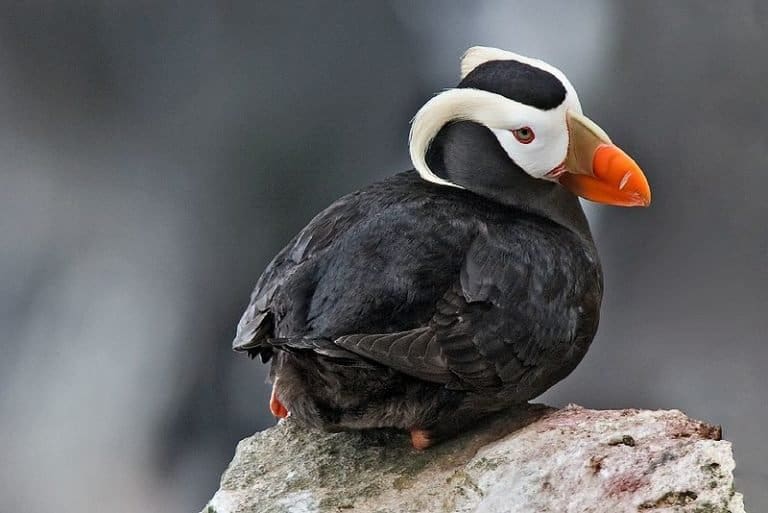
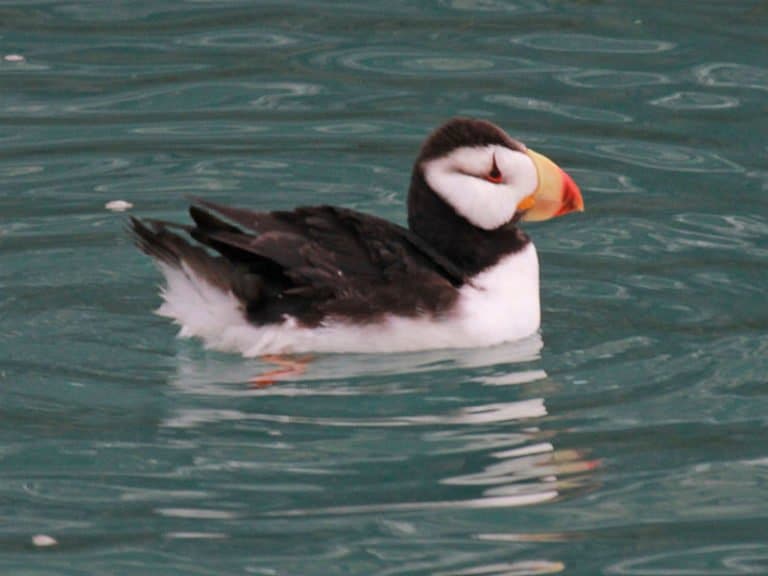
  • Facial markings vary: Atlantic typically bold white face; Horned shows small dark 'horn' above eye; Tufted grows long yellow head tufts in breeding season.
  • Breeding in dense colonies on coastal islands/cliffs; nesting in burrows (common) or rock crevices, varying with substrate and species.
  • Outside breeding season they are strongly pelagic, spending months at sea; foraging depth and diet vary by region and prey availability.
  • Typical lifespan across genus roughly ~15-30+ years; long-lived individuals can exceed ~30 years.

Sexual Dimorphism

Sexes are very similar in plumage and overall coloration across Fratercula. Males average slightly larger with deeper bills in many populations, but overlap is substantial and sexing by appearance alone is unreliable.

  • Slightly larger body size on average, especially in heavier populations.
  • Bill often marginally deeper or longer, most noticeable in breeding season.
  • Slightly smaller average body size with subtly slimmer bill proportions.
  • Plumage pattern and coloration generally indistinguishable from males.

Did You Know?

Across the genus Fratercula, adults span ~26-38 cm in length, ~47-65 cm wingspan, and roughly ~320-900 g in mass (Atlantic is smallest; tufted is largest).

They're pursuit divers: "flying" underwater with their wings to chase small fish and zooplankton.

Puffins can hold multiple fish crosswise in the bill at once, thanks to specialized mouth structures that help grip prey while they keep hunting.

All true puffins nest colonially on islands and sea cliffs-often in burrows (especially Atlantic and tufted) or rock crevices (common for horned), depending on soil and terrain.

Outside the breeding season they become highly pelagic, ranging far offshore and spending months at sea between brief visits to land.

Lifespan is long for a small seabird: many live ~15-25+ years, and the longest-lived individuals can exceed 30 years in the wild (records vary by species and study).

Unique Adaptations

  • Wing-propelled diving: short, stiff wings generate thrust underwater, while dense plumage and strong muscles support repeated dives for prey.
  • Multi-fish carrying toolkit: spines/roughness on the palate plus a strong, flexible tongue help secure fish crosswise so the bird can keep capturing more without dropping earlier catches.
  • Salt management: specialized nasal salt glands allow them to drink seawater and excrete excess salt-key for months spent far from land.
  • Insulating, water-shedding feathers: tightly packed plumage and preen oil help maintain buoyancy and warmth in cold waters of the North Atlantic and North Pacific.
  • Seasonal bill ornamentation: the striking bill colors and plates are primarily breeding-season signals and are reduced after breeding, lowering maintenance costs at sea.
  • Cliff-and-soil versatility: the genus can exploit both earthen slopes (burrow nesting) and rocky talus/crevices, broadening where colonies can persist across different coastlines.

Interesting Behaviors

  • Colony breeding with strong site fidelity: pairs often return to the same colony year after year; the exact nesting style varies with habitat (burrows vs crevices).
  • Seasonal "costume change": bright bill and facial features are most vivid in the breeding season; after breeding, puffins shed the colorful outer bill plates and look plainer.
  • Central-place foraging while breeding: adults commute from colonies to feeding areas, bringing back loads of small fish to chicks; prey choice varies by region and ocean conditions.
  • Highly pelagic nonbreeding life: once breeding ends, true puffins disperse widely at sea and are rarely seen from land for long stretches.
  • Social, noisy colony life: vocalizations, postures, and billing displays are common at nesting sites, but species differ in typical nesting density and cliff vs slope use.
  • Flexible diet within a shared pattern: all rely heavily on small schooling fish and marine invertebrates, but dominant prey can shift (e.g., sand eels, capelin, herring, juvenile gadids, and more) depending on ocean basin and year.

Cultural Significance

True puffins (Fratercula) are beloved icons of northern coasts, used in tourism and conservation. Historically eaten and used for feathers, they appear in local art, stamps, and education. In places like Iceland's Westman Islands, people rescue grounded chicks.

Myths & Legends

Name lore from medieval Europe: the English word "puffin" is linked to older terms for the salted meat of young seabirds ("puffins"/"pufflings"), reflecting historical coastal harvesting traditions rather than a single mythic tale.

St Kilda (Scotland) island tradition: puffins were historically taken in large numbers for food and oil, and their feathers used for bedding-an enduring human story tied to remote North Atlantic life.

Faroe Islands and Icelandic cliff-hunting heritage: traditional puffin catching with nets on sea cliffs is remembered in local stories, songs, and community identity as part of seasonal island life.

Icelandic puffin cultural association: the puffin is a beloved coastal symbol; local anecdotes and folk memory often frame puffins as seasonal visitors that return with summer to sea-cliff colonies.

"Sea parrot/clown of the sea" nicknames: across northern Europe, puffins' colorful bills inspired enduring popular epithets that function like modern folk labels, shaping how communities narrate and personify them.

Conservation Status

NE Not Evaluated

Has not yet been evaluated against the criteria.

Population Decreasing

Protected Under

  • EU Birds Directive (2009/147/EC)
  • UK Wildlife and Countryside Act 1981 (regional protections for breeding seabirds)
  • U.S. Migratory Bird Treaty Act
  • Canada Migratory Birds Convention Act, 1994
  • Site-based protections via seabird reserves and Marine Protected Areas across parts of the North Atlantic and North Pacific

You might be looking for:

Atlantic Puffin

42%

Fratercula arctica

Most widely recognized puffin; breeds across the North Atlantic on sea cliffs and offshore islands.

Horned Puffin

22%

Fratercula corniculata

North Pacific puffin with small fleshy 'horn' above the eye in breeding plumage.

Tufted Puffin

20%

Fratercula cirrhata

North Pacific puffin with long golden facial plumes in breeding season.

Rhinoceros Auklet (sometimes called a puffin)

10%

Cerorhinca monocerata

An auk sometimes grouped with puffins in popular usage; has a horn-like bill projection in breeding season.

Puffins (broader sense: auk family)

6%

Alcidae

If used loosely, “puffin” may be conflated with other alcids; Alcidae includes murres, guillemots, razorbills, auklets, and puffins.

Life Cycle

Birth 1 chick
Lifespan 20 years

Lifespan

In the Wild
10–35 years
In Captivity
12–30 years

Reproduction

Mating System Monogamy
Social Structure Socially Monogamous
Breeding Pattern Long Term
Fertilization Internal Fertilization
Birth Type Internal_fertilization

Across Fratercula, pairs are typically socially monogamous and often reunite over multiple breeding seasons at the same burrow or crevice. Both parents share incubation and chick provisioning. Extra-pair mating is reported as uncommon but may occur.

Behavior & Ecology

Social Colony Group: 5000
Activity Diurnal, Crepuscular, Cathemeral
Diet Piscivore Small schooling forage fish-especially sand eels/sandeels where available (also capelin or herring regionally).
Seasonal Migratory 1,553 mi

Temperament

Highly gregarious at breeding sites but defensive around the immediate burrow entrance
Generally non-aggressive at sea; tolerance of close neighbors varies by colony density
Strongly site-faithful; many individuals return to the same colony and burrow area
Flighty/avoidant response to predators; communal vigilance in colonies
Variation across the genus in colony crowding and territorial intensity at nest sites

Communication

Low growls and grunts used in burrow and at close range
Purring or humming notes during pair bonding and nest attendance
Harsh croaks/moans during conflicts or disturbance in dense colonies
Bill postures and gentle bill-touching during courtship and pair maintenance
Head-bobbing and body postures to signal ownership at burrow entrances
Allopreening and close-contact displays between mates; less common outside breeding
Synchronized takeoffs/landings and local following cues when commuting to foraging areas

Habitat

Biomes:
Marine Tundra Boreal Forest (Taiga) Temperate Forest Temperate Rainforest
Terrain:
Coastal Island Rocky Sandy Volcanic
Elevation: Up to 1640 ft 5 in

Ecological Role

Mid-trophic marine predators (forage-fish specialists) that also function as strong marine-to-terrestrial nutrient vectors during colonial breeding.

Regulate and respond to forage-fish and zooplankton populations (predation pressure within coastal/shelf food webs) Transfer marine-derived nutrients to island soils via guano, pellets, and prey remains, enriching cliff/island plant communities and invertebrate communities Provide prey for higher-level predators (e.g., large gulls, raptors, marine mammals/terrestrial mammals at colonies), supporting broader food webs Serve as bioindicators of marine ecosystem condition (changes in prey type/size delivered to chicks reflect forage-fish availability and oceanographic shifts)

Diet Details

Main Prey:
Small schooling forage fish Gadids and other small benthic/neritic fishes Krill and other crustaceans Squid and other small cephalopods

Human Interaction

Domestication Status

Wild

True puffins (genus Fratercula) are wild seabirds with no history of domestication. People have taken eggs, feathers, and sometimes birds in coastal communities, and now protect them, study and band them, and watch them on tours. Threats include fishing bycatch, oil and plastics, invasive predators, and climate change. Conservation protects colonies, removes predators, and restores sites.

Danger Level

Low
  • Bites/pinches and scratches if handled (sharp bill and claws), mainly during capture/rehab/research
  • Zoonotic disease risk typical of wild birds (e.g., Salmonella/Campylobacter exposure via feces; avian influenza risk in outbreak contexts)
  • Allergic/respiratory irritation from feathers/guano in confined settings (primarily for handlers)
  • Indirect safety risks to people visiting colonies (cliff edges, rough seas, boat landings, severe weather)

As a Pet

Not Suitable as Pet

Legality: Puffins (Fratercula) are generally illegal to keep as pets. In the U.S. they are protected by the Migratory Bird Treaty Act; permits and licensed centers are needed to have them or for rehab, research, or education.

Care Level: Expert Only

Purchase Cost:
Lifetime Cost: $20,000 - $150,000

Economic Value

Uses:
Ecotourism and recreation Cultural significance (coastal communities; traditional harvest in limited areas) Research and education Indicator species for marine ecosystem health Indirect economic interactions with fisheries (shared prey; bycatch mitigation costs) Conservation management and habitat restoration funding
Products:
  • wildlife watching (boat trips, cliff viewpoints) and associated local tourism revenue
  • nature photography/film and media branding
  • educational programming (aquariums/museums via permitted outreach, not pet trade)
  • scientific data (banding, tracking, diet studies) supporting marine policy
  • historical/local products in some regions (eggs/feathers/meat) where culturally practiced and regulated

Relationships

Related Species 6

Rhinoceros auklet Cerorhinca monocerata Shared Family
Razorbill Alca torda Shared Family
Common murre Uria aalge Shared Family
Thick-billed murre Uria lomvia Shared Family
Black guillemot Cepphus grylle Shared Family
Crested auklet Aethia cristatella Shared Family

Ecological Equivalents 5

Animals that fill a similar ecological role in their ecosystem

Murres Uria spp. Pursuit-diving alcids that forage on small schooling fish and zooplankton and breed colonially on coastal cliffs and islands. They strongly overlap in prey and marine habitat use.
Rhinoceros auklet Cerorhinca monocerata Burrow-nesting, fish-carrying alcid that uses similar coastal pelagic foraging zones and provisioning behavior, carrying multiple fish crosswise in the bill.
Cormorant
Cormorant Phalacrocorax spp. Diving seabirds that pursue fish underwater in overlapping nearshore waters. They play a similar role as mid-level marine predators, though they propel themselves with their feet rather than their wings.
Diving Petrels Pelecanoides spp. Small seabirds adapted for underwater foraging on zooplankton and small fish; ecologically similar due to pursuit-diving foraging behavior despite distant relatedness.
Penguins
Penguins Spheniscidae Convergent niche: wing-propelled pursuit diving for fish and krill, and colonial breeding; differ in being flightless and being largely restricted to the Southern Hemisphere.

Types of Puffin

3

Explore 3 recognized types of puffin

Atlantic puffin Fratercula arctica
Horned puffin Fratercula corniculata
Tufted puffin Fratercula cirrhata

Quick Take

  • Securing 62 fish in a single bill is a record-breaking achievement for this species.
  • Diving to 60 meters creates monitoring gaps that complicate behavioral research.
  • It is surprising that penguin-like seabirds maintain a 55mph flight speed.
  • The excavation of underground burrows is a mandatory nesting process for chick survival.

Puffins are distinctive seabirds belonging to the auk family, with an evolutionary history that traces back tens of millions of years. Today, four species inhabit the cold coastal regions of the Northern Hemisphere, where they are recognized for their colorful beaks and strong flying ability. Although puffins still occupy a wide range, many populations — especially Atlantic Puffins — have experienced significant declines in recent decades due to habitat loss, human activity, and changes in marine ecosystems.

A comprehensive infographic about puffins featuring illustrations of various species, a distribution map of the Northern Hemisphere, and statistical charts on their diving and flight capabilities.
Record-breaking 62-fish hauls and 55 MPH sprints: discover the elite survival tactics of the Northern Hemisphere’s most iconic seabird. © A-Z Animals

Evolution

Scientific evidence hints at possible origins in the Pacific between 56 and 66 million years ago, during the Paleocene Era. According to fossil evidence, the tribe to which puffins belong, the Fraterculini, was already present in the region by the Middle Miocene, about 15 million years ago.

Once Prehistoric auks (puffins’ larger biological family) had spread to the Atlantic, both categories (i.e., those in the Pacific and the newly colonized Atlantic) developed apart from each other.

Classification
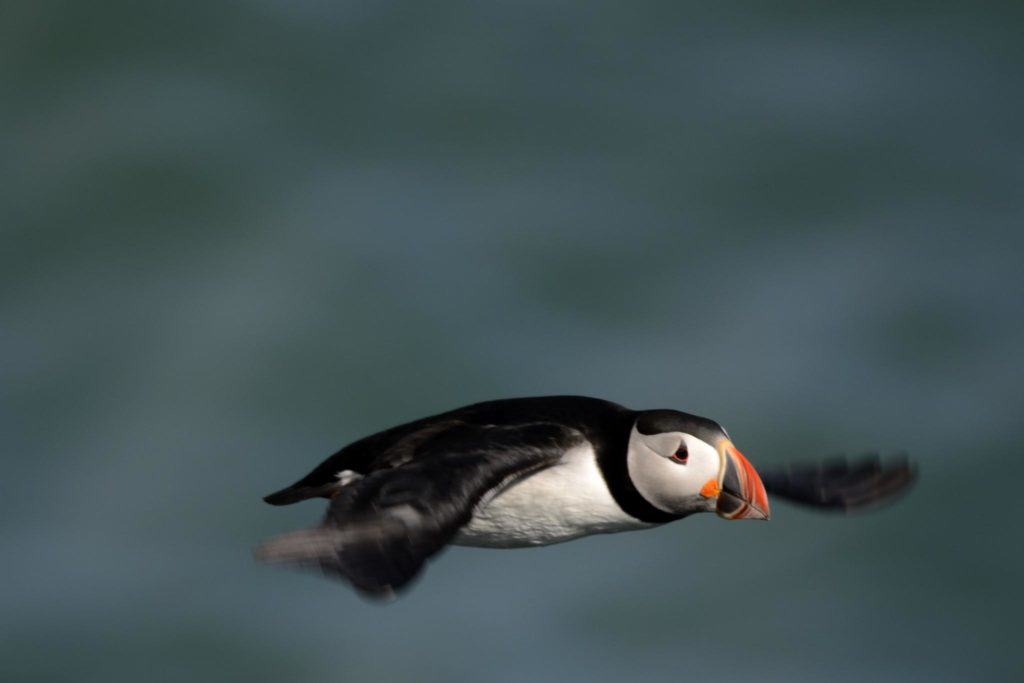
Unlike penguins, puffins are capable of flight.

The Puffin is a small species of seabird closely related to other auk species, such as guillemots. Best known for their brightly colored, triangular beaks, Puffins are one of the most distinctive of all seabirds, and although they are not considered to be an endangered species, Puffins are extinct from many areas where they would have once been found in abundance. Puffins have disappeared from or become rare in many areas where they were once abundant, due to a combination of hunting, habitat loss, and environmental changes. Despite their penguin-like stance and appearance, Puffins can fly extremely well and have been known to reach speeds of more than 50mph for short periods of time.

There are four puffin species:

  • The Atlantic puffin (Fratercula arctica): This species is the only kind to be found on the Atlantic. Countries it breeds in include Greenland, Iceland, Ireland, and Norway.
  • The horned puffin (Fratercula corniculata): It is similar to the Atlantic puffin, although it has a tuft above each of its eyes. It can be found in Alaska, British Columbia, and Siberia.
  • The tufted or crested puffin (Fratercula cirrhata):  A bold red bill and yellow tufts are this species’ distinguishing features. It can be found in Alaska, British Columbia, and Washington State.
  • The rhinoceros auklet (Cerorhinca monocerata): It is named for the horn-like protuberance from its beak, which it sheds yearly, and is also noticeable for the white plumes above its eyes and behind its beak. It can be found in Alaska, California, and Japan.

Anatomy and Appearance
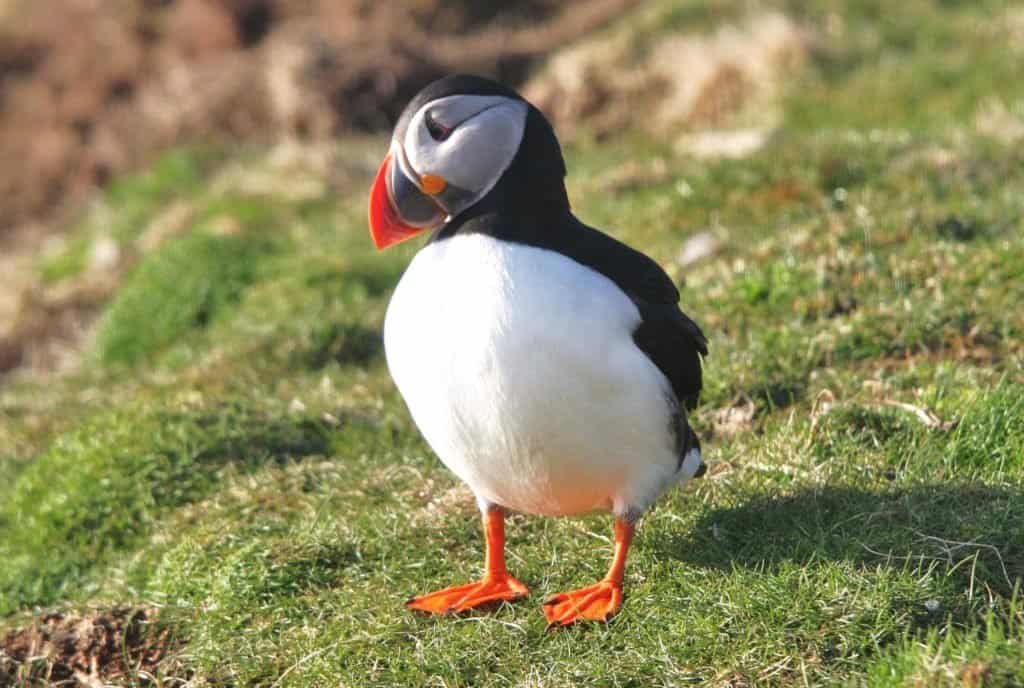
Although male and female puffins look pretty much alike, the former are larger.

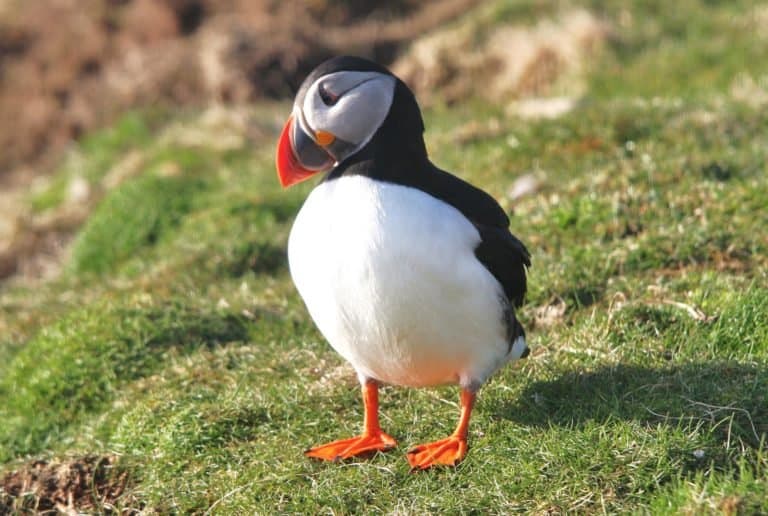
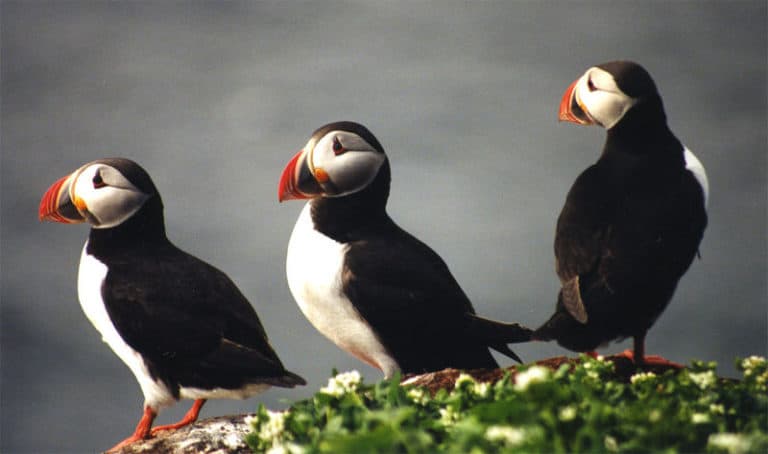
Puffins are small-sized birds that have thick black and white plumage that helps to keep them warm in the cold conditions of the northernmost, Northern Hemisphere. They have black necks, backs, and wings with white underparts and whitish feathers on the sides of the face. Their feet and legs are a dull yellow color during the colder winter months, changing to a bright orange during the breeding season. Puffins are birds with broad, flattened bills that are large and triangular in shape and well known for their brightly colored markings. Red runs down the entire length and across the tip, with the base being of a more greyish color with intervening yellow markings, and in the same way as their legs and feet. The bill of the Puffin is more brightly colored during the warmer breeding season, becoming duller as they shed for the colder winter months. Although both males and females are almost identical in appearance, males tend to be slightly larger in size than their female counterparts and can therefore be more easily identified when the two sexes are seen together.

Distribution and Habitat
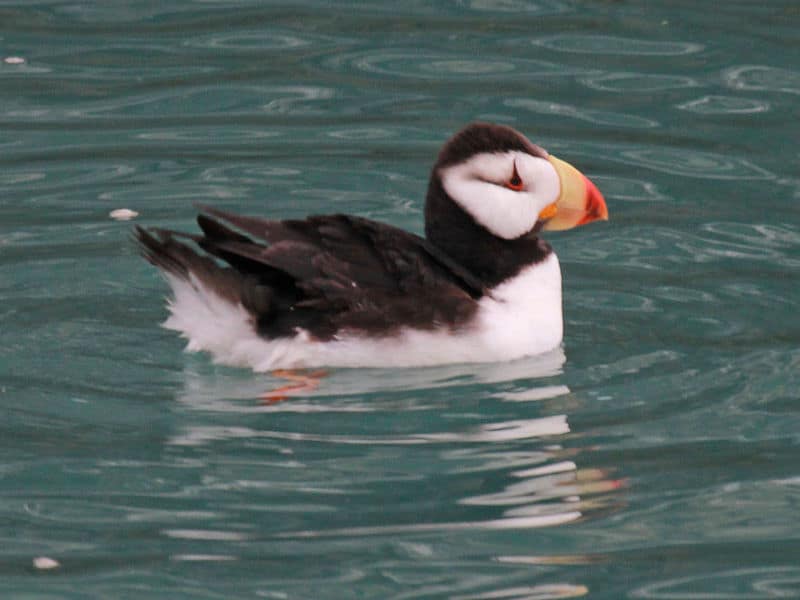
Puffins have seen much of their natural range shrink.

Puffins are birds that are found inhabiting the sea and coastal regions of the Northern Hemisphere, most commonly in the Atlantic, Pacific, and in parts of the Arctic Circle. The exact location of the Puffin is largely dependent on the species, with the Atlantic Puffin inhabiting coastlines throughout the North Atlantic Ocean, from Denmark in the east to Canada in the west, and from northern Norway all the way down to the Canary Islands and Spain in the south, but not in the north Pacific. The Tufted Puffin and the Horned Puffin, however, are absent from the North Atlantic and instead can be found in large colonies in the northern Pacific Ocean from the west coast of Canada to Japan and possibly even Korea, although their status there is not known. Although puffins still occupy a wide range, populations have declined in many regions, and puffins are now absent from much of their former range. They continue to face threats from human activity, habitat loss, and environmental disasters such as oil spills.

Behaviour and Lifestyle

Like other species of auk (and indeed numerous other seabirds), Puffins are highly sociable animals that are found on grassy clifftops in vast colonies that can contain as many as two million individuals. However, it is not just on land that they are known to stick together, as when they are feeding out at sea, Puffins are known to form “rafts” to ensure that they are better protected from their numerous predators due to the technique of safety in numbers. As well as being fast and efficient in the air, Puffins are also incredibly adept and agile swimmers that are known to dive to depths of up to 60 meters for as long as two minutes at a time (although the average dive usually only lasts for around 20 seconds), to maximize their chances of catching plenty of fish both for their themselves and for their young. During the winter months, Puffins spend most of their time hunting out at sea, sometimes many miles from land, before returning to the cliffs during the warmer months to breed, making it fairly difficult for scientists to fully understand the status of the species.

Reproduction and Life Cycles
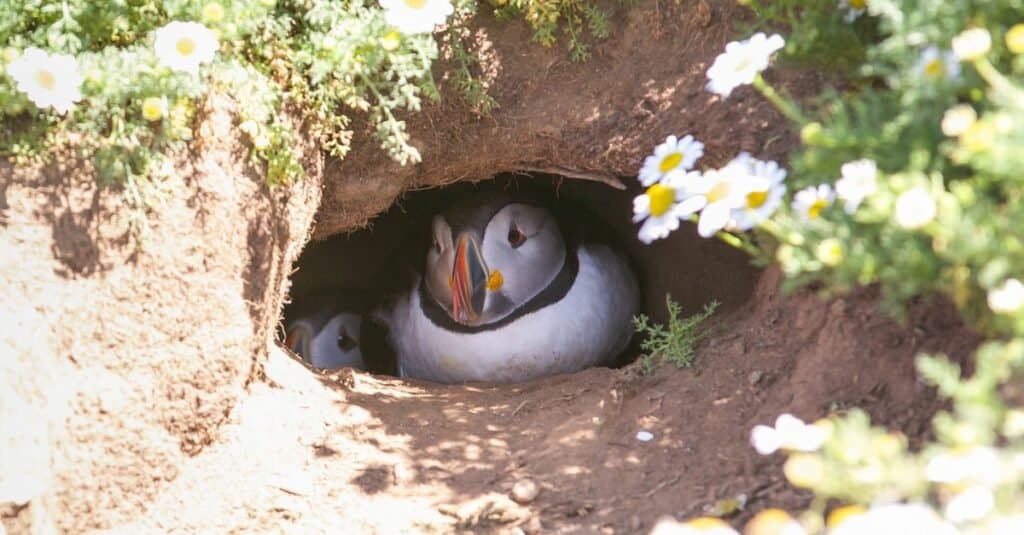
Birds that nest on the ground: Atlantic Puffin

Puffin chicks are cared for by both parents, who mate for life.

Puffins have an annual breeding season that lasts throughout the warmer summer months from April until mid-late August, which they spend in large colonies on the soft, grassy clifftops. By using their beaks like a shovel and their webbed feet with sharp claws to excavate the unwanted soil, they can dig burrows into the ground that can be more than a meter in depth and over a few meters long in order to keep their valuable egg or young safely hidden from predators such as gulls. Puffins mate for life, and the female Puffin lays a single white egg that is incubated by both parents until it hatches up to six weeks later in the burrow, covered in medium-brownish feathers. The chick is looked after and fed by both parents, who bring it fish back from the sea in their beaks until it becomes independent, leaving the nest at around two months old. Puffins can reproduce from between four and five years of age and can live for up to 20 years in the wild, although older adults are not unheard of, with some individuals reaching the age of thirty.

Diet and Prey
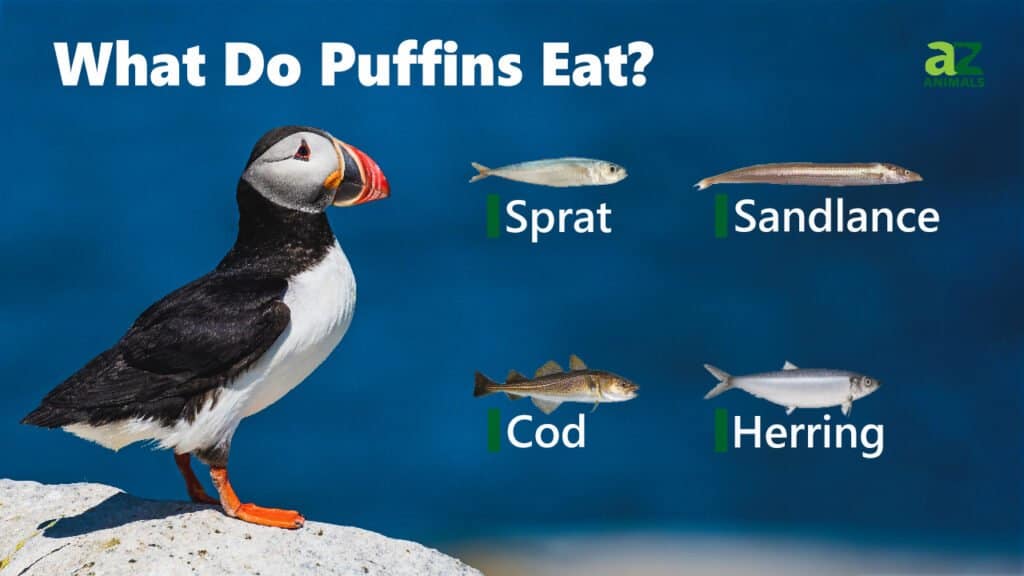
What Do Puffins Eat
Puffins enjoy a mainly piscivorous diet.

Despite the fact that Puffins are technically omnivorous animals, they have a solely carnivorous diet that is largely comprised of small fish and supplemented with animal plankton during the leaner winter months. Puffins primarily prey on sandeels, capelin, herring, and sprat, along with the occasional squid, mollusk, or crustacean, which they hunt for under the surface of the water during dives that average around 20 seconds at a time. Their uniquely shaped beaks are also perfectly designed for carrying fish, thanks to the layer of spines that are found on the upper part of the beak and on their tongue. By carefully catching small fish that are arranged from head to tail along the entire length of the bill, Puffins can continue fishing for more without losing any of the catch that they already have stored, commonly collecting up to 30 fish before returning to land to feed their hungry chick.

Predators and Threats
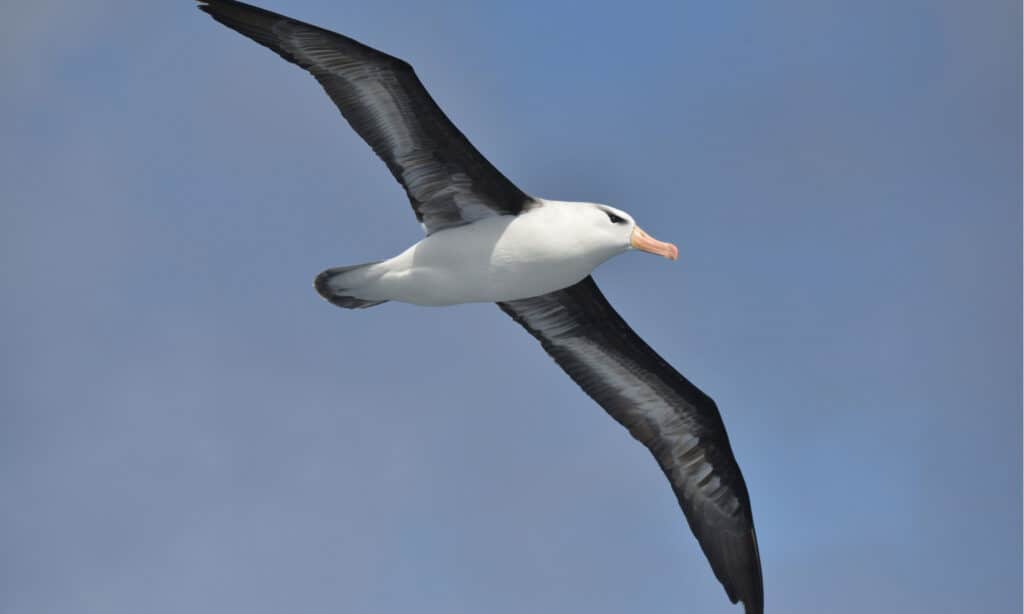
Albatross Vs Seagull- Albatross

Seagulls, as well as other large birds, prey on puffins.

Even though Puffins are relatively small in size, they have fewer native land predators than expected because they nest high on the clifftops and in burrows that are more than 3 feet underground. However, they still have to look out for gulls, hawks, eagles, and foxes, which are the most common land predators of adult Puffins and their young. In areas that are closer to human habitation, Puffins are also preyed upon by domestic cats and dogs, with rats often targeting their valuable eggs that are hidden in the burrows underground. Out at sea, Puffins are preyed upon by large birds such as skuas and large gulls that compete for the same food that the Puffins are hunting. Major threats to puffins today include human activities such as coastal development, tourism, oil spills, and the introduction of non-native predators, as well as climate change and declining prey availability due to ocean warming. These factors have contributed to significant declines in puffin populations across much of their historical range.

Interesting Facts and Features
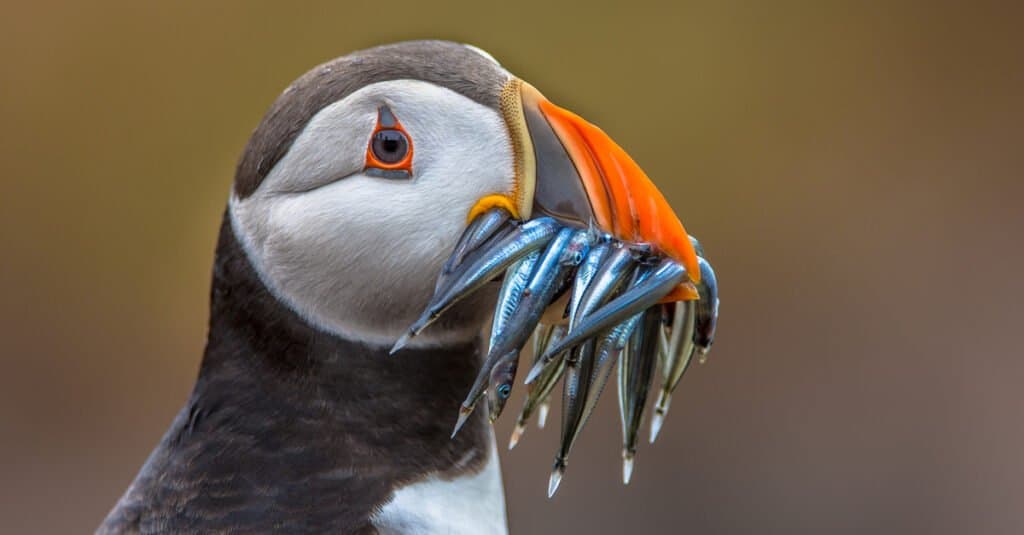
Puffin vs Penguin - Puffin Eating

Thanks to their special beaks, puffins are capable of carrying impressive quantities of fish from the sea to their nests.

Puffins are excellent swimmers but also incredibly fast in the air, and are able to launch very quickly from land or the water when needed. Puffins are so fast that they can fly at speeds of up to 55mph (88km/h) for short periods of time, with their little wings beating as much as 300 to 400 times every minute. Puffins are often seen with rows of small fish lined up along the length of their brightly colored, triangular beaks, particularly during the breeding season when they are fishing to feed their young chicks. Visiting the breeding grounds up to 10km away often can be a tiring process for such a small bird, so they commonly collect as many fish as they can in one go. Although they are usually known to bring back between 4 and 30 small fish such as sand eels, one individual was recorded with a whopping 62 stuffed into its bill.

Relationship with Humans
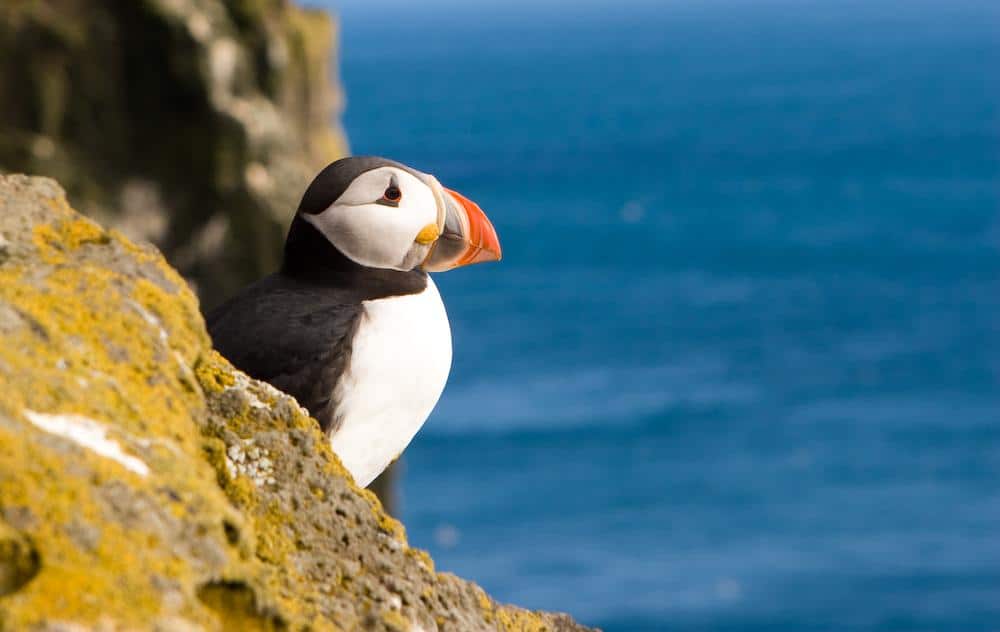
Humans have not only hunted puffins extensively for eggs and meat, but have also affected their natural habitats.

Ever since humans have inhabited the most northerly regions of the world, they have hunted Puffins both for their meat and also for their eggs to provide people with an easy source of protein during the warmer summer months when the birds nest on land. With more and more inhabitants, populations began to drastically suffer, leading to the extinction of many Puffin colonies throughout the Northern Hemisphere. Humans have also played a significant role in disturbing their natural habitats in general, with increasing amounts of coastal development and over-tourism, which brings less space and more disturbances for these small birds to contend with. Another key issue has been the impact of fishing that has led to a severe decline in the Puffin’s natural prey species, and this, coupled with increased ocean activity and, more devastatingly, oil spills, has led to Puffins completely disappearing from many regions where they were once found in abundance.

Conservation Status and Life Today

As of 2026, the Atlantic Puffin is listed as Vulnerable by the IUCN due to significant population declines, while the Tufted and Horned Puffins remain classified as Least Concern. Although puffins still occupy a large range, their populations are decreasing, and they face ongoing threats, particularly from pollution and climate change. Oil spills from large tankers are one of the most dangerous pollutants to Puffins as they get easily stuck in the thick oil and become covered in it, and so are unable to fly or swim. In the 1800s and 1900s, the Puffin was commonly hunted for its meat and eggs, which led to a severe decline in the world’s Puffin population, even completely eliminating some Puffin colonies. In the 21st and late 20th century, however, the Puffin has enjoyed better protection, and conservation work is being carried out, particularly in North America, to help to save remaining Puffin populations.

View all 247 animals that start with P
How to say Puffin in ...
Bulgarian
Тъпоклюна кайра
Catalan
Fraret atlàntic
Czech
Papuchalk bělobradý
Danish
Lunde
German
Papageitaucher
English
Atlantic Puffin
Estonian
Lunn
Spanish
Fratercula arctica
Esperanto
Atlantika fraterkulo
French
Macareux moine
Galician
Arao papagaio
Italian
Fratercula arctica
Hungarian
Lunda
Dutch
Papegaaiduiker
Japanese
ニシツノメドリ
English
Lunde (fugl)
Polish
Maskonur zwyczajny
Slovenian
Mormon (ptič)
Finnish
Lunni
Swedish
Lunnefågel
Turkish
Bayağı deniz papağanı

Sources

  1. David Burnie, Dorling Kindersley Animal, The Definitive Visual Guide To The World's Wildlife / Accessed November 10, 2008
  2. Tom Jackson, Lorenz Books The World Encyclopedia Of Animals / Accessed November 10, 2008
  3. David Burnie, Kingfisher The Kingfisher Animal Encyclopedia / Accessed November 10, 2008
  4. Richard Mackay, University of California Press The Atlas Of Endangered Species / Accessed November 10, 2008
  5. David Burnie, Dorling Kindersley Illustrated Encyclopedia Of Animals / Accessed November 10, 2008
  6. Dorling Kindersley Dorling Kindersley Encyclopedia Of Animals / Accessed November 10, 2008
  7. Christopher Perrins, Oxford University Press The Encyclopedia Of Birds / Accessed November 10, 2008
  8. Atlantic Puffin Information / Accessed November 10, 2008
  9. Tufted Puffin Information / Accessed November 10, 2008
  10. Horned Puffin Information / Accessed November 10, 2008
  11. Puffin Facts / Accessed November 10, 2008
Dana Mayor

About the Author

Dana Mayor

I love good books and the occasional cartoon. I am also endlessly intrigued with the beauty of nature and find hummingbirds, puppies, and marine wildlife to be the most magical creatures of all.
Connect:

Thank you for reading! Have some feedback for us?


Puffin FAQs (Frequently Asked Questions)

Both penguins and puffins have a similar appearance, but the two birds are very different. For starters, puffins can fly while penguins are unable to. Also, puffins live in the Northern Hemisphere while penguins are mostly found in the Southern Hemisphere.