




Quick Take
- This breed maintained elite status within Chinese royalty for more than 2,000 years.
- Exceeding the 18-pound weight limit triggers critical risks linked to the breed’s square body structure.
- Counter-intuitively, the short, glossy coat results in a much higher level of shedding than expected.
- Immediate health screening by a vet is a mandatory step to identify hidden genetic disorders.
What many people don’t realize is that this somewhat goofy-looking breed also has a long and illustrious history that intertwines with human royalty around the world. The pug originated in China more than 2,000 years ago. It was a common pet of the royal families in China and Buddhist monks in Tibet. The pug was then brought from China to Europe in the 16th century and became the official dog of the House of Orange, the ruling family of the Netherlands.
According to the American Kennel Club, the pug is among the top 40 most popular breeds in the United States. This is perhaps because it has many appealing qualities that make it a good companion, including its expressive face, its gentle nature, and its friendly demeanor.

Types
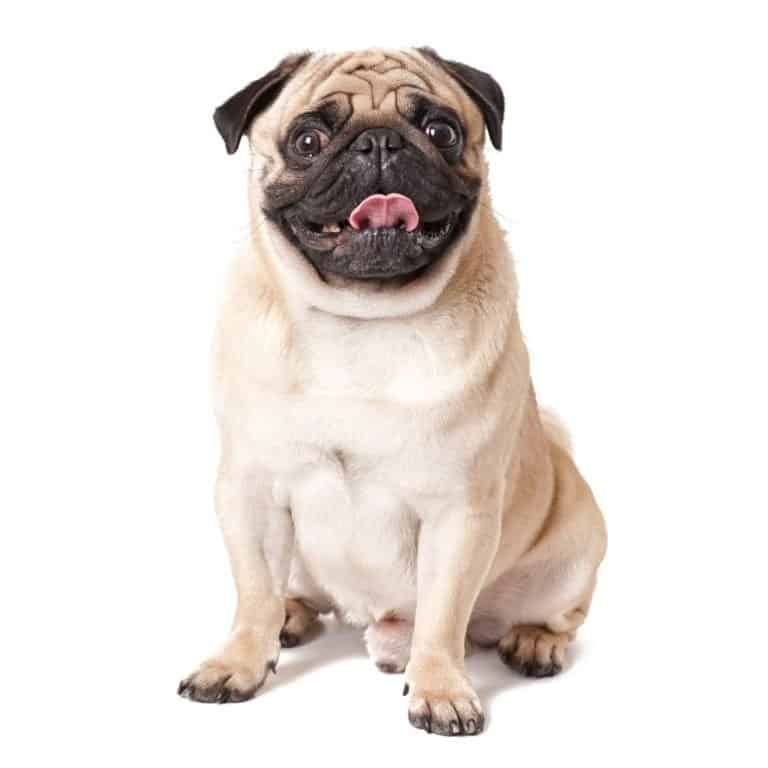
Colors for the pug are fawn (most common), black, silver, and apricot. Only fawn and black are recognized by the American Kennel Club and the Canadian Kennel Club. The ears can be either rose style, meaning small and folded against the head, or the standard button style.
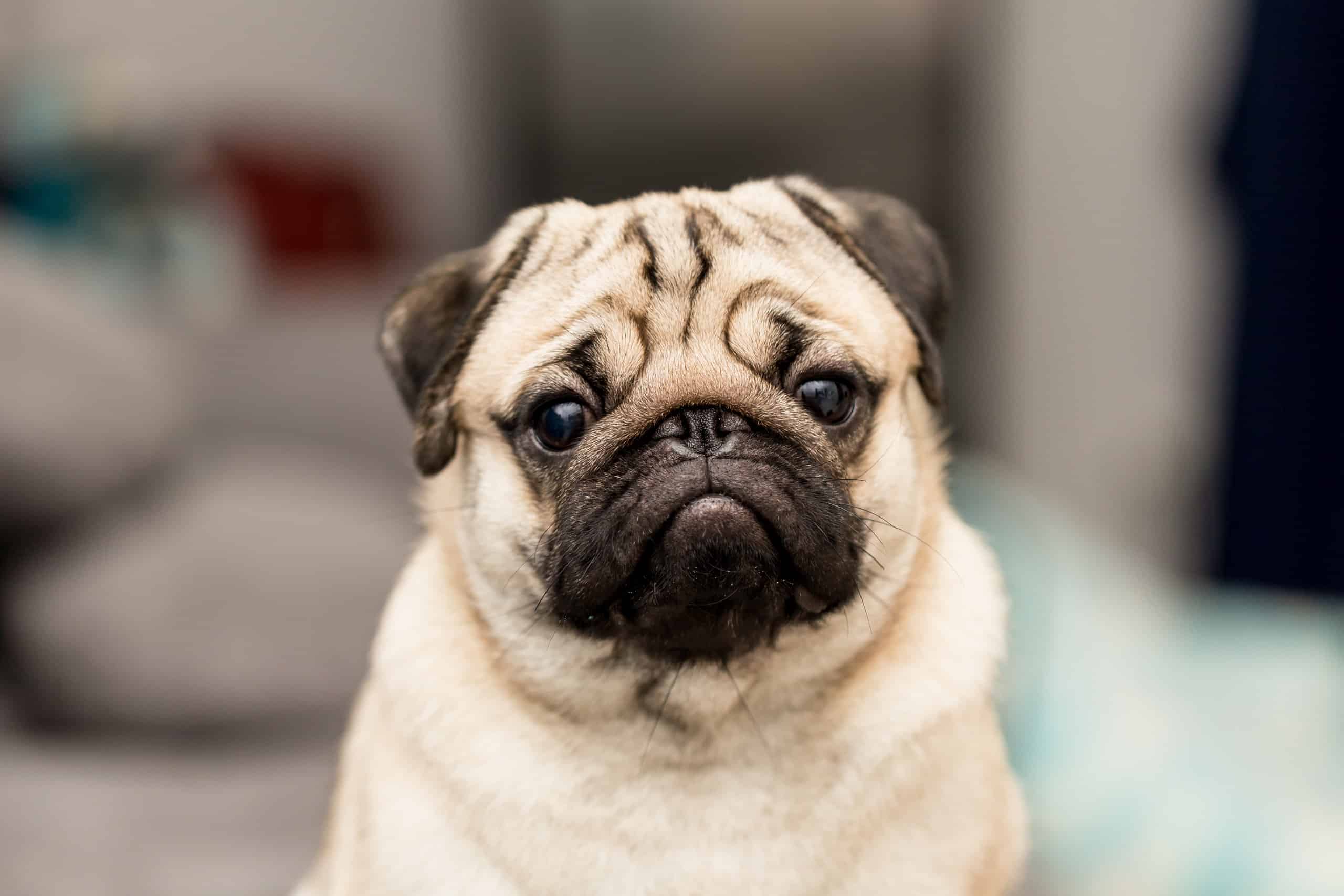
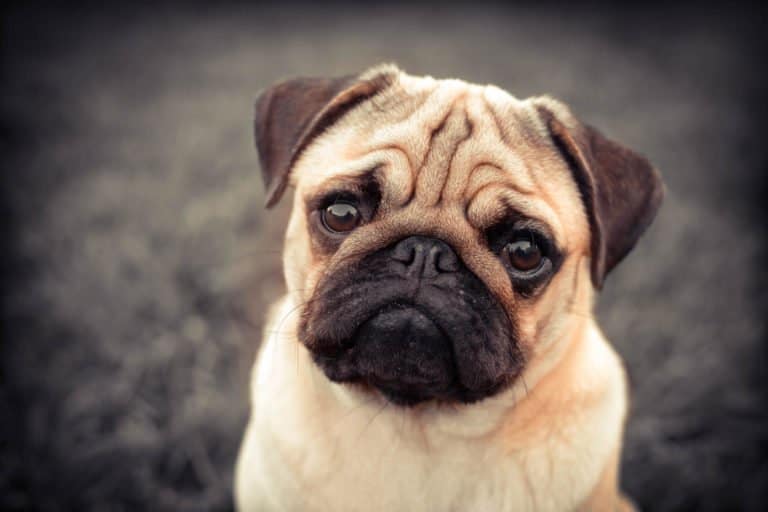
The pug was bred to be a companion dog that is friendly, loyal, and sensitive with a big personality.
©220 Selfmade studio/Shutterstock.com
3 Pros and Cons of Ownership
| Pros | Cons |
|---|---|
| Low to moderate maintenance The pug is good for owners who don’t have a lot of time to care for a dog. | Health problems The pug is prone to breathing difficulties and eye conditions due to the structure of its head. |
| Friendly and loyal disposition The pug wants to make friends with everyone. | Mischievous nature The pug has a penchant for mischief, though this tends to express itself as playing and teasing rather than actual trouble. |
| Big personality The pug has a very charming and outgoing personality for such a small size. | Sensitive personality If you’re too harsh with it, then you may accidentally hurt the pug’s feelings. |
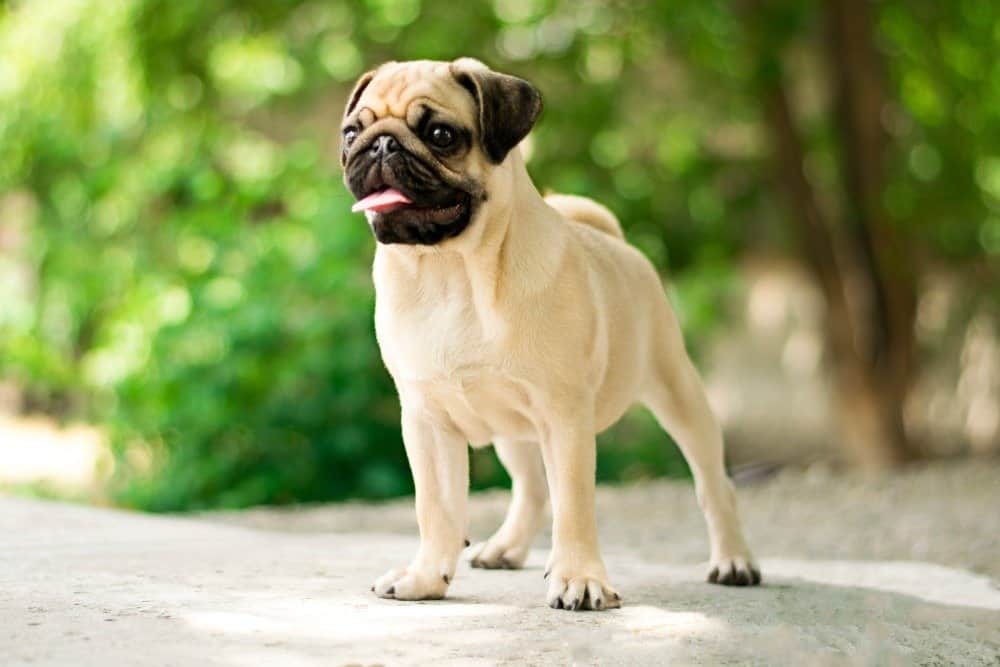
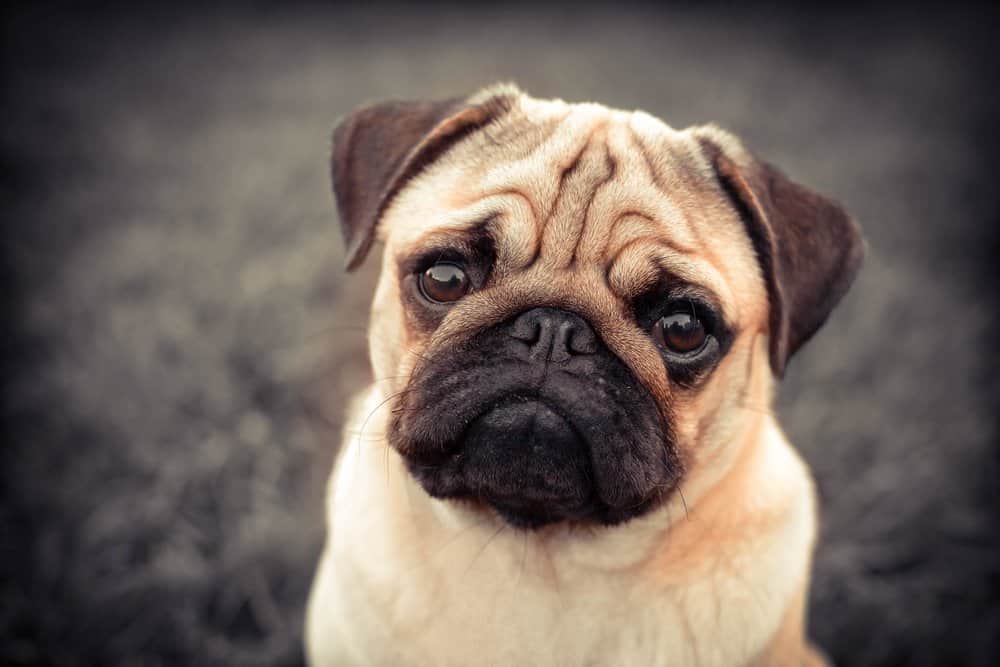
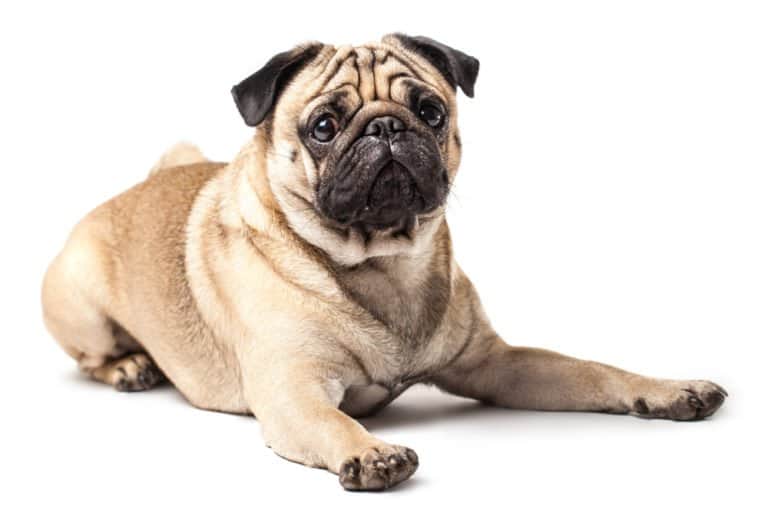
A toy dog, the Pug is easily identified by its bulging eyes and curly tail.
©Studio number 94/Shutterstock.com
Size and Weight
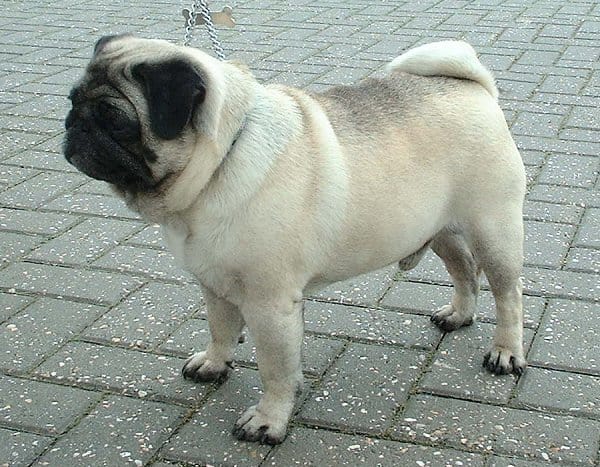
The pug is a small toy dog with a rather square, compact body, strong, straight legs, and a very short curling tail. Here is a more precise breakdown of the size:
| Height (Male) | 10 to 13 inches |
|---|---|
| Height (Female) | 10 to 13 inches |
| Weight (Male) | 14 to 18 pounds |
| Weight (Female) | 14 to 18 pounds |
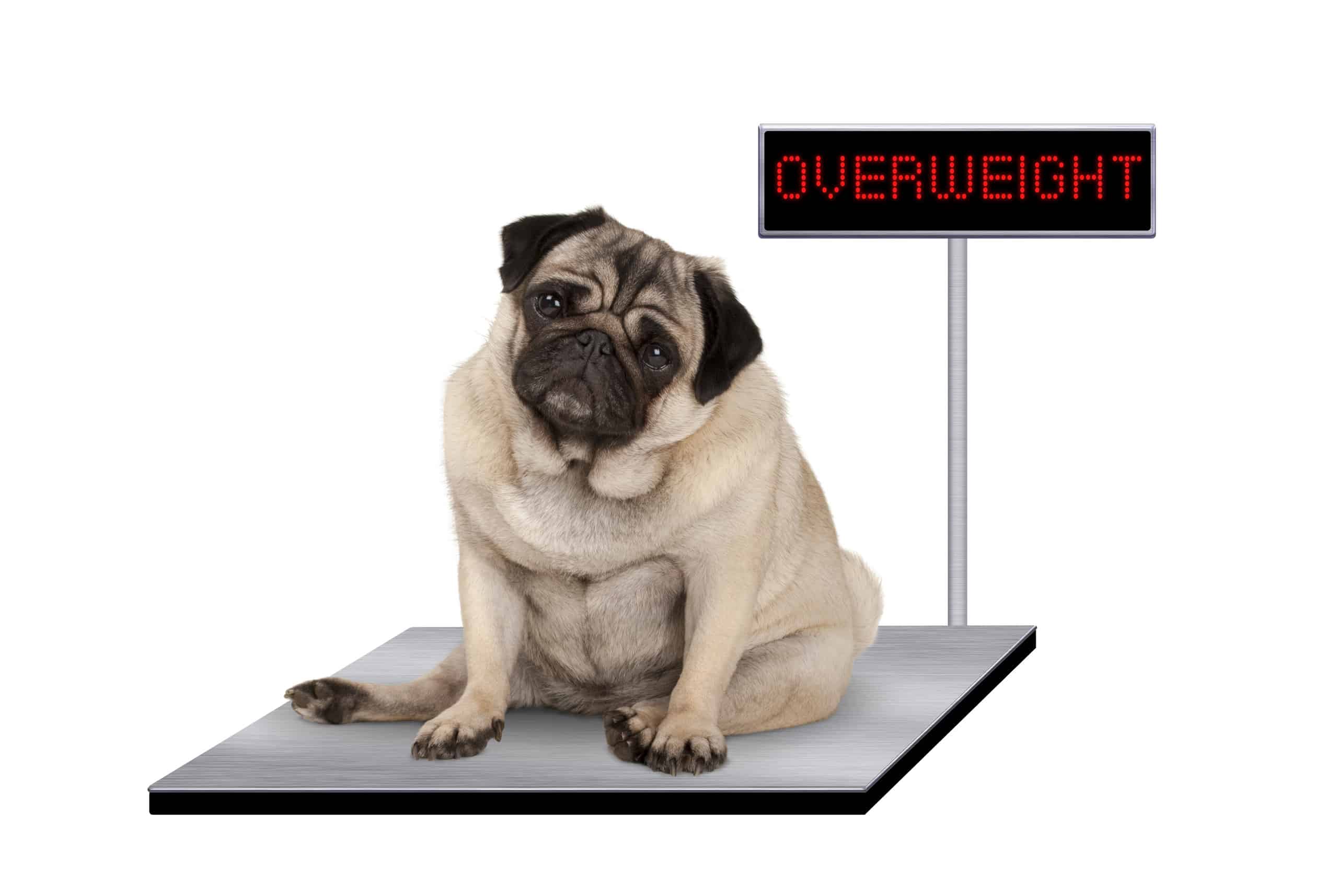
Pugs are one of many breeds that are prone to obesity.
©Monica Click/Shutterstock.com
Common Health Issues
The pug’s unique square appearance is one of the most attractive and appealing qualities of this breed, but it is also the source of its greatest health liability. The prominent brow ridge makes it vulnerable to bulging eyes and scratched corneas, while the flat snout sometimes causes breathing problems and airway obstructions.
Because the pug has some difficulty panting, the airway problems make it very difficult for this breed to regulate high body temperatures. That means when it’s particularly hot out, the pug may not be able to work off the excess heat, putting its health in danger. This is why you should strive to keep the pug cool and comfortable at all times, especially in warmer climates.
The smaller airway will also sometimes cause a condition known as reverse sneezing, in which it appears to gasp and snort. This is generally not harmful to the dog but may cause it minor distress. Other common health problems include obesity, cancer, skin problems, and hip dysplasia (a genetic condition that causes the hip joint to develop abnormally, possibly resulting in lameness and limping).
Some pugs may have underbites, a trait common in brachycephalic breeds, which can lead to dental health problems.
Added to its charismatic personality, the pug can be trained to do tricks and tasks.
©iStock.com/Monica Click
Temperament and Behavior
The pug’s personality is sometimes described with the Latin phrase “multum in parvo,” which means a lot in a little. This phrase refers to its strong-willed and charismatic personality, bolstered by its huge range of almost human-like facial expressions. The pug was bred as a small, lovable companion and therefore seems to have a natural insight into the mood of its owners. This makes it a very good pet that can adapt to many different living situations. It just wants to spend as much time as it can with its owner, whether that means playing, exercising, or just lounging around the house.
How to Take Care of a Pug
The pug is a good breed for any pet owner who doesn’t have a lot of time for care. Although you should attend to its brushing, exercise, and specific dietary needs, the pug does not require constant maintenance and work as some breeds do. If you get a dog from a young age as a puppy, then you will likely have the best outcomes in terms of training and socialization.
The Best Dog Food
Because of its many potential health concerns, the pug requires high-quality dog food with a particular emphasis on a healthy lifestyle. Puppies need about a cup of food per day, while a fully grown pug needs about one and a half cups. You can also give it treats from time to time to reinforce its obedience training. But because it tends to overeat and gain weight, you should always keep an eye on the calorie consumption of your dog. Be prepared to cut back the calorie intake if it appears your dog is beginning to pack on the pounds. Obesity could seriously reduce the dog’s quality of life and overall health.
The pug can probably be trained to bring you its food bowl.
©Ezzolo/Shutterstock.com
Maintenance and Grooming
The pug has a short, glossy coat of fawn, silver, or black fur that requires semi-regular maintenance, perhaps once a week with a medium-bristle brush and a mitt or glove. Surprisingly, given the short length of the hair, this breed probably sheds more than you would expect, so it is important to remove any loose hair that you can. The pug does not require a regular bath unless it is particularly dirty. Nail trimming should be done regularly to prevent discomfort and annoyance.
Training
Because of its good nature, even temper, and playful and charming personality, the pug is a very easy dog to train, especially from an early age. It wants nothing more than to please its owner with a show of obedience. Even though this is a small breed, it can be trained to perform any tricks and tasks that your imagination desires. However, the pug is a sensitive soul who may react poorly to harsh training methods. That is why you should encourage it with positive feedback and treats. Try not to raise your voice or become frustrated with it.
Pug Exercise
The pug is a good breed for people who don’t need an overly active dog. It is comfortable spending a great deal of the day resting around the home. Nevertheless, in order to keep your dog healthy, pug owners should engage their pets with regular and moderate exercise in the form of walks and play time. Even though it is hardly the most athletic breed, the pug can excel at agility and sports competitions. Because it tends to gain weight, exercise will help prevent it from becoming heavy or obese. Whenever you go out in the summer, you should make sure your dog has plenty of protection from the sun and receives regular water breaks to prevent overheating.
Puppies
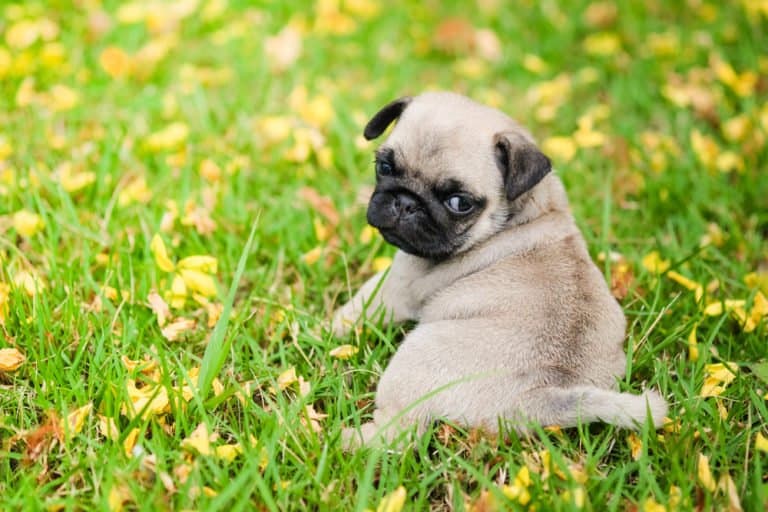
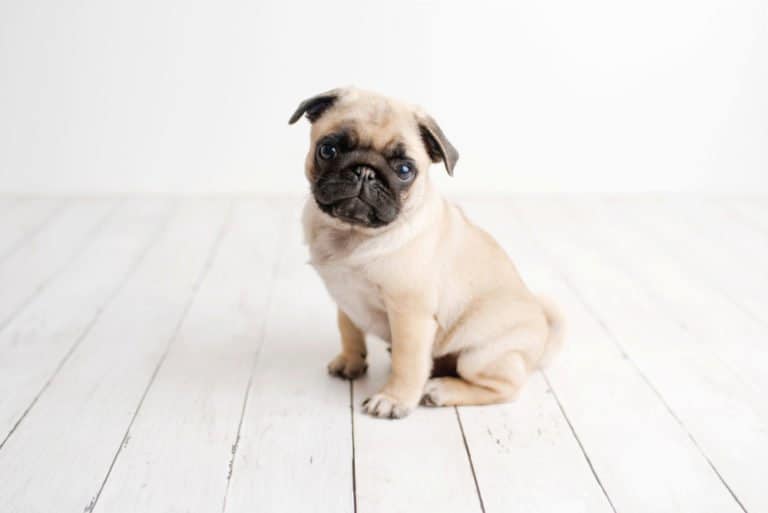
Because of this breed’s many health issues, you should always obtain an early health screening from the vet immediately after purchasing your puppy. You might want to look out for any genetic or immune disorders that sometimes affect puppies from an early age. It is better to catch them early so you still have time to intervene. The silver, fawn, or black coat should also develop from a very early age.
It is a good idea to have a vet do a health screening as early as possible with your new puppy.
©Ezzolo/Shutterstock.com
Children
It is no stretch to say that the pug may be one of the very best dog breeds for children. Considering its size, the dog is very tolerant of rough play. It is small but also sturdy, kind but also resolute. Compared to a larger or more active breed, it is also less likely to frighten small children. Your family may be delighted and charmed by the pug’s little antics.
Similar Breeds
If you enjoy small, short-snouted dogs, then you might want to check out the following breeds:
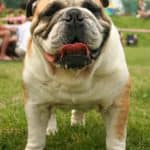
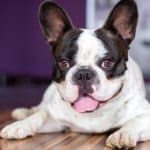
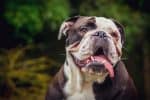
- Bulldog: Sometimes celebrated as a symbol of British tenacity, the well-known bulldog has a short snout, a wrinkled face, and a small, muscular build that almost defies description, much like the pug. Originating from England, it is a friendly, loyal, and dignified dog with a big heart and charming personality.
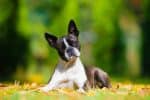
- Boston Terrier: The Boston Terrier is an excellent companion with a friendly, care-free personality and a sense of humor. This intelligent breed will often try to please its owner with a desire for training, obedience, and friendship. It has a similar short snout, compact body, and wrinkled face as the pug.
- Pekingese: This is another breed of small Chinese lap dog with a short snout and a friendly personality. One major difference is that the Pekingese has a much longer and more elegant coat of hair than the pug. This also means it may require more grooming and upkeep.
Famous
The pug is one of the most famous dog breeds around the world. You may already be familiar with the following fictional or celebrity pugs:
- Born in 2012, Doug the Pug is one of the most famous animals in the world with millions of followers on Facebook and Instagram. Doug has appeared with various celebrities, including Shakira and Justin Bieber. Doug resides in Nashville, Tennessee.
- A pug named Double D Cinoblu’s Masterpiece won the best in show award at the 2004 World Dog Show.
- The film series Men in Black, starring Will Smith and Tommy Lee Jones, featured an extraterrestrial character disguised as a little pug. He was actually portrayed by a dog called Mushu but voiced by the actor Tim Blaney.
- The 1986 film The Adventures of Milo and Otis starred an unusual combination: an orange tabby cat and a pug that go on an adventure together in the wild countryside. The original Japanese version was directed by Masanori Hata. A shorter English language version came out in 1989.
Pug Pictures
View all of our Pug pictures in the gallery.

Nature Art/Shutterstock.com
Sources
- David Burnie, Dorling Kindersley Animal, The Definitive Visual Guide To The World's Wildlife / Accessed November 11, 2008
- Tom Jackson, Lorenz Books The World Encyclopedia Of Animals / Accessed November 11, 2008
- David Burnie, Kingfisher The Kingfisher Animal Encyclopedia / Accessed November 11, 2008
- David Burnie, Dorling Kindersley Illustrated Encyclopedia Of Animals / Accessed November 11, 2008
- Dorling Kindersley Dorling Kindersley Encyclopedia Of Animals / Accessed November 11, 2008
- American Kennel Club / Accessed November 9, 2020