


P
Species Profile

Puma

Puma concolor

One cat, a continent of habitats
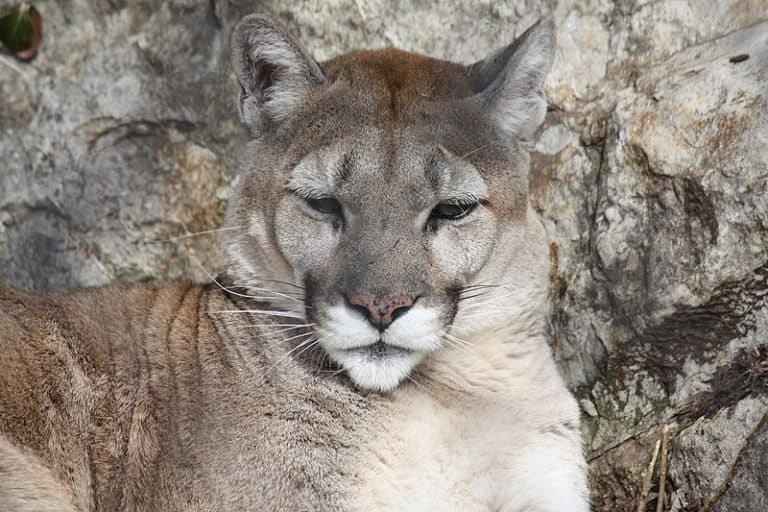
Nick Jewell / Flickr

Puma Distribution

Click a location to explore more animals from that region

Loading map...

Found in 73 locations

Size Comparison

Human 5'8"
Puma 2 ft 3 in

Puma stands at 39% of average human height.

At a Glance

Wild Species
Also Known As Panther, Catamount, Mountain cat, Painter
Diet Carnivore
Activity Crepuscular+
Lifespan 10 years
Weight 90 lbs
Status Least Concern
Did You Know?

It has one of the widest ranges of any terrestrial mammal in the Americas: from Canada to southern Chile/Argentina (IUCN).

Scientific Classification

A large New World cat with one of the widest ranges of any terrestrial mammal in the Americas; also commonly called mountain lion, cougar, or panther (regionally).

Kingdom
Animalia
Phylum
Chordata
Class
Mammalia
Order
Carnivora
Family
Felidae
Genus
Puma
Species
Puma concolor

Distinguishing Features

  • Uniform tawny/tan coat with paler underparts (not spotted as adults)
  • Long tail with darker tip
  • Powerful hindquarters adapted for jumping and short bursts of speed
  • Broad head with small rounded ears; facial markings can be subtle

Physical Measurements

Males and females differ in size

Height
♂ 2 ft 2 in (1 ft 12 in – 2 ft 6 in)
♀ 2 ft 2 in (1 ft 12 in – 2 ft 6 in)
Length
♂ 6 ft 11 in (5 ft 10 in – 8 ft 5 in)
♀ 6 ft 3 in (5 ft 2 in – 7 ft 5 in)
Weight
♂ 150 lbs (117 lbs – 220 lbs)
♀ 93 lbs (64 lbs – 99 lbs)
Tail Length
♂ 2 ft 6 in (1 ft 12 in – 3 ft 2 in)
♀ 2 ft 6 in (1 ft 12 in – 2 ft 12 in)
Top Speed
50 mph
running

Appearance

Primary Colors
Secondary Colors
Skin Type Mammalian skin covered in short, dense fur (pelage); seasonal thickness varies with climate.
Distinctive Features
  • Common-name synonyms: cougar, mountain lion, puma (same species: Puma concolor).
  • Adult coat typically uniform tawny; regional variation from grayish to more reddish-brown.
  • Long, cylindrical tail with a distinct black tip; tail length ~0.63-0.97 m (Nowak, 2005; IUCN accounts).
  • Head-body length ~1.04-1.54 m; shoulder height ~60-90 cm (Nowak, 2005; IUCN accounts).
  • Black-backed ears with lighter central patches; pale muzzle/chin with subtle darker facial borders.
  • Large, muscular hindquarters and relatively small head; adapted for powerful leaps and short sprints.
  • Large paw prints without claw marks (retractile claws); typically 4-toed track with broad heel pad.
  • Whiskers prominent; nose leather usually pinkish with dark border (individual variation).
  • Lifespan: typically ~8-13 years in the wild; up to ~20 years in captivity (IUCN/field synthesis).
  • Solitary, primarily crepuscular/nocturnal ambush predator; primary prey often deer and other medium-large mammals (regional variation).
  • Broad geographic range and habitat adaptability (mountains, forests, deserts); frequent human-wildlife conflict near developed edges.

Sexual Dimorphism

Males are noticeably larger and more robust than females, with broader heads/necks and heavier musculature. Coat coloration and patterning are generally similar between sexes; differences are primarily in overall size and build.

♂
  • Heavier average body mass: ~53-100 kg (records occasionally higher); more muscular build (Nowak, 2005; IUCN accounts).
  • Broader skull/neck and thicker forequarters; overall longer body on average.
♀
  • Lighter body mass: ~29-64 kg; slimmer neck and overall build (Nowak, 2005; IUCN accounts).
  • Slightly shorter head-body length on average; otherwise similar pelage coloration.

Did You Know?

It has one of the widest ranges of any terrestrial mammal in the Americas: from Canada to southern Chile/Argentina (IUCN).

Adults typically measure 1.04-1.80 m head-body plus a 0.53-0.95 m tail; shoulder height ~60-76 cm (species accounts/field guides).

Typical mass: females ~29-64 kg; males ~53-100 kg (regional variation documented across North & South America).

It cannot roar (unlike Panthera cats); instead it can hiss, growl, purr, and give the famous piercing "scream."

Gestation is ~82-96 days; litters range 1-6 (often 2-3), and kittens keep their spots for camouflage early in life.

Wild longevity is commonly ~8-13 years; in captivity individuals can reach ~20 years (zoo records/species accounts).

A well-documented long-distance dispersal: a young male traveled about 1,067 miles (about 1,717 km) from the Black Hills to Connecticut (reported via genetic analysis and tracking reports).

Unique Adaptations

  • Powerful hindlimbs and flexible spine enable explosive acceleration and strong leaping ability-key for short ambush bursts in rugged terrain.
  • Large, furred paws and retractile claws improve traction and silent movement on snow, rock, and forest litter across its broad habitat range.
  • Highly adaptable diet and habitat use: occupies deserts, chaparral, temperate rainforest, boreal edges, and high-elevation Andes-an ecological generalist among large cats (IUCN).
  • Camouflage coat (typically tawny to grayish) with countershaded belly blends across open woodland, brush, and rocky slopes; kittens' spots provide early-life concealment.
  • Visual adaptations for low light (tapetum lucidum) support crepuscular/nocturnal hunting.

Interesting Behaviors

  • Solitary, territorial lifestyle: adults generally live alone except during mating or females with kittens; territories are advertised with scrapes, scat, and urine scent marks (Logan & Sweanor, 2001).
  • Ambush-and-pounce hunting: typically stalks then bursts from cover, aiming for a throat/neck bite; primary prey in many regions is deer (Odocoileus spp.), but diet shifts to locally abundant mammals.
  • Caching: frequently drags prey (sometimes heavier than itself) to cover and caches it with leaves/soil, returning to feed over multiple nights-reducing scavenger competition.
  • Crepuscular/nocturnal activity bias near people: activity often shifts toward night in human-dominated landscapes, a common pattern in carnivore conflict ecology.
  • Mother-kitten development: kittens are born spotted and remain with the mother for roughly 12-24 months; juveniles then disperse, with males often traveling farther than females (field studies).
  • Communication without roaring: uses vocalizations (chirps, whistles, growls) plus body posture and scent; screaming calls are most often tied to mating/territorial contexts.

Cultural Significance

The cougar (Puma concolor), called puma, mountain lion, or panther, is both a feared hunter and a respected power symbol. In the Andes it stands for strength and guardianship; in North America it appears in Indigenous clan stories and conservation debates, including the Florida panther.

Myths & Legends

In Inca belief, the puma (Puma concolor) is one of three sacred animals with the condor and snake, representing different worlds; Cusco was said to be shaped like a puma, showing royal, sacred power.

Among Puebloan traditions (including Zuni and Hopi narratives recorded in ethnographies), Mountain Lion is commonly portrayed as a directional guardian/war protector figure-associated with protection, hunting prowess, and the power of the North.

In Navajo traditional accounts, Mountain Lion is a powerful being associated with protection and the mastery of hunting, appearing in stories that frame proper respect for dangerous animals and the land.

In Amazonian and Andean Indigenous stories, the puma appears in tales that warn about forest danger and teach hunting rules, acting as an enforcer when people take more than they need.

Early colonial-era and frontier folklore across the American West treated the "panther/catamount" as an elusive phantom of wild places-an animal whose scream and unseen presence became a staple of campfire stories and place-names.

Conservation Status

LC Least Concern

Widespread and abundant in the wild.

Population Decreasing

Protected Under

  • CITES Appendix II (Puma concolor)
  • United States: Endangered Species Act protections apply to certain listed populations/subspecies (e.g., Florida panther); state/provincial status and hunting regulations vary across the range
  • Various national and subnational wildlife laws and protected-area frameworks across the Americas regulate take and provide habitat protection

Life Cycle

Birth 2 cubs
Lifespan 10 years

Lifespan

In the Wild
8–18 years
In Captivity
12–20 years

Reproduction

Mating System Polygyny
Social Structure Solitary
Breeding Pattern Transient
Fertilization Internal Fertilization
Birth Type Internal_fertilization

Solitary males maintain territories overlapping several females and briefly associate only during estrus (often ~3-10 days). Copulation is repeated; gestation is ~91-96 days, producing 1-6 cubs (commonly 2-3), which the female raises alone.

Behavior & Ecology

Social Solitary Group: 1
Activity Crepuscular, Nocturnal, Cathemeral
Diet Carnivore Deer (Odocoileus spp.; especially mule deer/white-tailed deer), consistently reported as the dominant prey in diet studies across North America (e.g., Hornocker 1970; Logan & Sweanor 2001).

Temperament

Strongly territorial; males typically defend larger ranges than females
Generally avoidant of humans; shifts toward nocturnality where human activity is high
Intraspecific encounters often avoided; aggression mainly between same-sex adults
Opportunistic and adaptable hunter; behavior varies with prey availability and habitat
Maternal behavior is highly protective; females aggressively defend kittens at close range

Communication

hiss
growl
snarl
purr
chirp
whistle
yowl
scream
scent marking with urine spray on vertical objects
ground scrapes and scent mounds (often with urine and feces) along travel routes
fecal deposition at conspicuous sites used as signposts
claw marks and scratching on trees/logs as visual and scent cues
facial rubbing on objects to deposit scent from glands
body postures and tail positioning to signal threat or avoidance at close range

Habitat

Biomes:
Tropical Rainforest Tropical Dry Forest Savanna Desert Hot Desert Cold Mediterranean Temperate Grassland Temperate Forest Temperate Rainforest Boreal Forest (Taiga) Alpine +5
Terrain:
Mountainous Hilly Plateau Plains Valley Coastal Island Riverine Rocky Sandy +4
Elevation: Up to 19028 ft 11 in

Ecological Role

Large carnivore (often apex predator) and keystone predator in many ecosystems; suppresses and redistributes ungulate prey and can limit/alter mesocarnivore activity via intraguild predation and risk effects.

Top-down regulation of ungulate populations and localized browsing pressure Behavior-mediated trophic cascades (prey avoidance influencing habitat use) Carrion provisioning: cached kills and remains subsidize scavengers (ravens, vultures, bears, foxes, etc.) and nutrient cycling Potential suppression of some mesocarnivores through direct predation and fear effects, which can indirectly benefit smaller prey species

Diet Details

Main Prey:
Deer Elk Moose Bighorn sheep Pronghorn Collared peccary Camelids Capybara Rabbits and hares Rodents and mid-sized mammals Raccoons; Skunks; Coyotes Birds Domestic livestock +7

Human Interaction

Domestication Status

Wild

Cougar (Puma concolor) has no record of true domestication. People have captured and kept cougars in zoos or private collections, which is taming, not making a domestic species. Across the Americas cougars cause livestock conflicts, are hunted or protected, appear near towns, are studied with collars, and feature in local cultures.

Danger Level

High
  • Physical attack risk (rare but potentially fatal): Cougars can inflict severe trauma via bite and claw injuries; children and solitary individuals are disproportionately represented in reported attacks in North America. A classic peer-reviewed review documented 53 attacks (10 fatal) in North America from 1890-1990 (Beier 1991, Conservation Biology).
  • Encounter contexts that elevate risk: jogging/running at dawn/dusk, small children unattended, close-range surprise encounters, feeding on carcasses, presence of habituated individuals near human developments, and areas with high deer densities that draw cougars close to residences.
  • Zoonotic/disease considerations (lower-probability, context-dependent): potential exposure via bites/scratches (secondary infection), ectoparasites (ticks/fleas), and pathogens present in wild carnivores (risk primarily for handlers, rehabilitators, or captive settings rather than typical hikers).
  • Indirect human safety risks: vehicle collisions involving cougars (driver injury/property damage) and conflict situations during attempted capture/dispatch.

As a Pet

Not Suitable as Pet

Legality: Cougars (Puma concolor) are mostly illegal or impractical as pets. Where allowed, strict permits, cages, inspections, and insurance are needed. Usually only zoos, licensed exhibitors, or rehabbers keep them; CITES Appendix II.

Care Level: Expert Only

Purchase Cost: $2,000 - $10,000
Lifetime Cost: $80,000 - $250,000

Economic Value

Uses:
HUB-Conflict costs (livestock depredation, pet losses, defensive killing, compensation programs) HUB-Regulated hunting/management value (license revenue where legal; agency management costs) HUB-Conservation/ecosystem service value (trophic regulation via deer and other prey; biodiversity/landscape value) HUB-Education/ecotourism value (wildlife viewing interest; zoo education) HUB-Scientific/research value (ecology, connectivity genetics, disease surveillance) HUB-Cultural value (symbolic/heritage significance; local identity "panther/cougar")
Products:
  • Historically: pelts and bounties in some regions (market and policy varied by era)
  • Modern: hunting licenses/permits and guided-hunt services in jurisdictions where harvest is legal
  • Non-consumptive: ecotourism and zoo exhibition/education programs
  • Management services: conflict mitigation (range riders, deterrents), compensation/insurance frameworks
  • Research outputs: telemetry datasets, genetic samples, and conservation planning tools

Relationships

Key Facts

  • Pumas are impressively athletic and are capable of leaping distances of 20 feet.
  • In spite of their shrinking range, their conservation status is Least Concern due to their adaptability.
  • In spite of their size they are not considered to be “Big Cats”, because they do not roar.
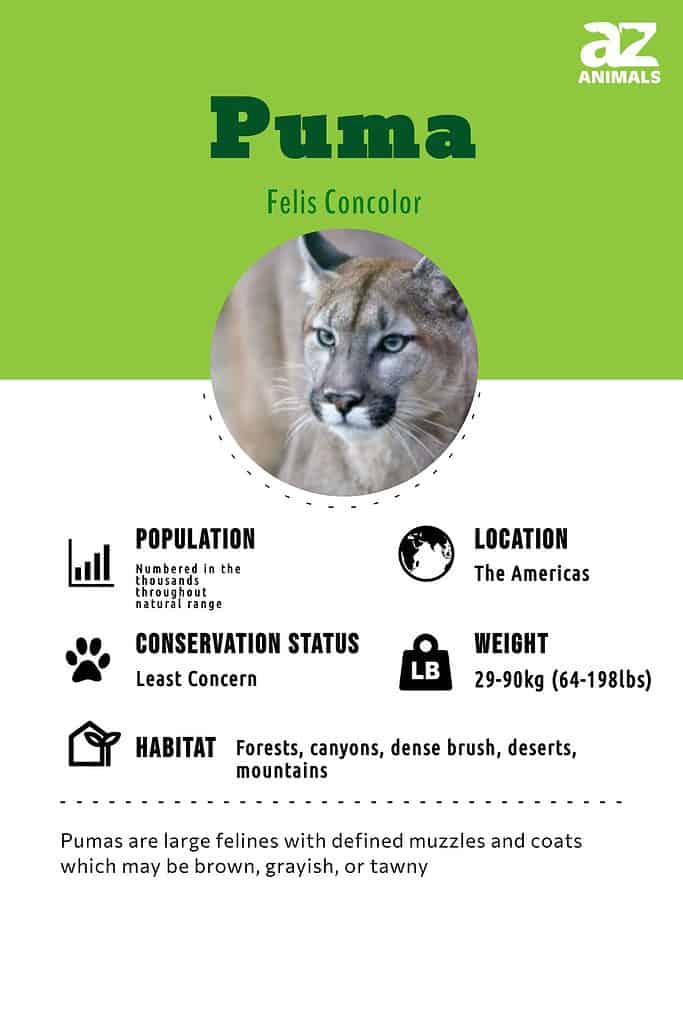
Classification
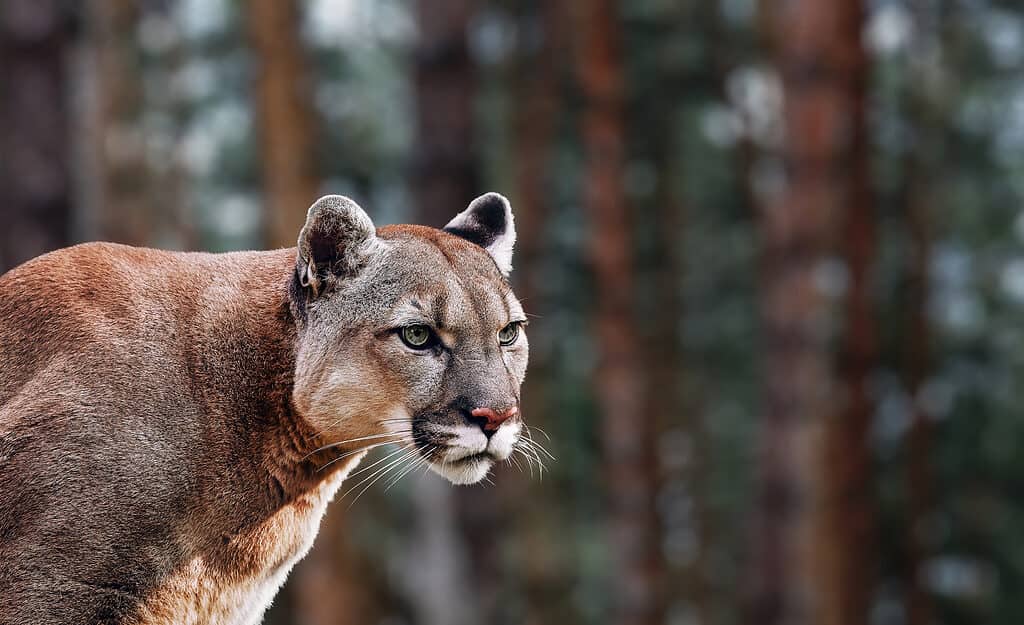
Mountain lion with forest background

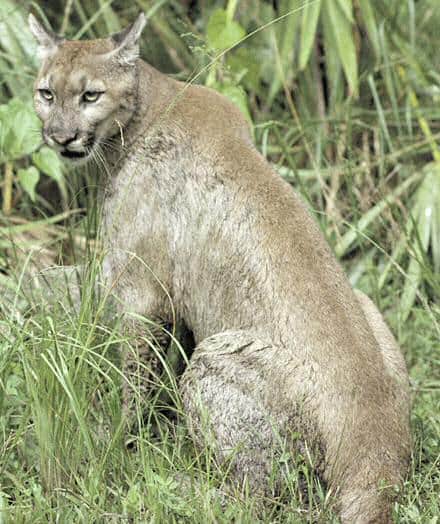
Pumas are extremely adaptable and are capable of living in a wide variety of habitats

The Puma is a large, reclusive cat predominantly found in the mountains from southern Canada to the tip of South America. Also commonly known as the Cougar and the Mountain Lion, Pumas are able to reach larger sizes than some ‘big’ cat individuals but despite their large size they are believed to be more closely related to smaller feline species. Due to their extensive distribution, there are 7 subspecies of Puma all of which share similar characteristics but tend to vary slightly in color and occasionally size. The Puma is thought to be one of the most adaptable felines on the American continents as they are found in a variety of different habitats and unlike numerous Cat species, the Puma has no markings on its fur leading to its scientific name Felis concolor which means ‘cat of one color’.

Evolution

The ancestor of the puma is believed to have made its way from Asia to North America about 8 million years ago, via the Bering land bridge. This event is believed to have occurred 3 million years after it first appeared in Asia.

On arrival, it gave rise to the Felis (wild and domestic cats which would expand to Africa, Asia, and Europe)  Leopardus (ocelots, margays, oncillas, and other South American wild cats), Lynx (the Canadian, Eurasian, and Iberian lynxes), Puma (mountain lions), and Prionailurus (Asian leopard cats). 

 Between 6 to 4 million years later, these felines would make their way to South America by way of the Isthmus of Panama. 

It is worth noting that certain experts believe that the North American population of pumas eventually dwindled and that present-day cougars are actually arrivals which retraced their steps from South America to North America at a later date.

Anatomy and Appearance
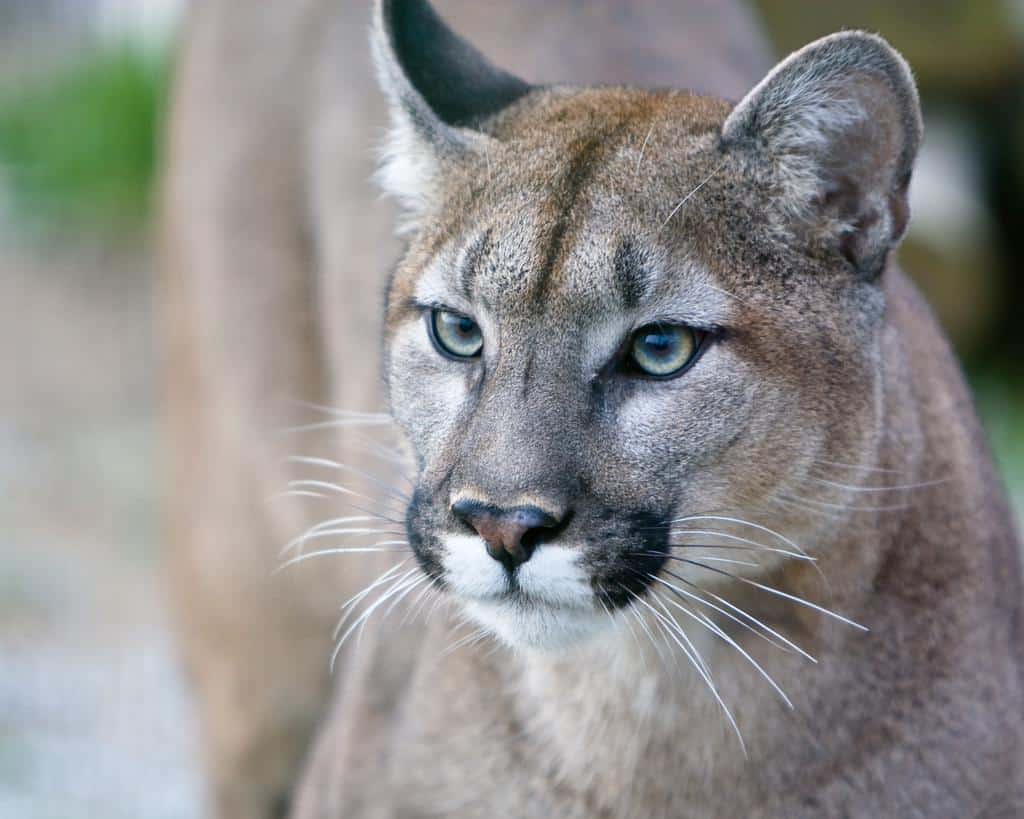
Pumas have a wide range of vision owing to their wideset eyes

Due to the fact that the majority of Pumas are found in more mountainous regions, they have a thick coat of fur which helps to keep them warm in the freezing winters. Depending on the subspecies and location, the Puma’s fur varies in colour from brown-yellow to grey-red, with those individuals found in colder regions being more grey and those found in warmer areas having more of a red tinge to their fur. The Puma is an incredibly powerful predator and has muscular hind legs that are slightly longer and stronger than the front, which makes them more agile when leaping. They also have enormous paws which are very large in comparison to their body size. The Puma is an animal with large wide-set eyes which not only enable it to see what is ahead of it, but they can also see for some distance around them as well. They have pointed ears and their acute hearing allows them to detect prey even when it is too dark for them to see.

Distribution and Habitat
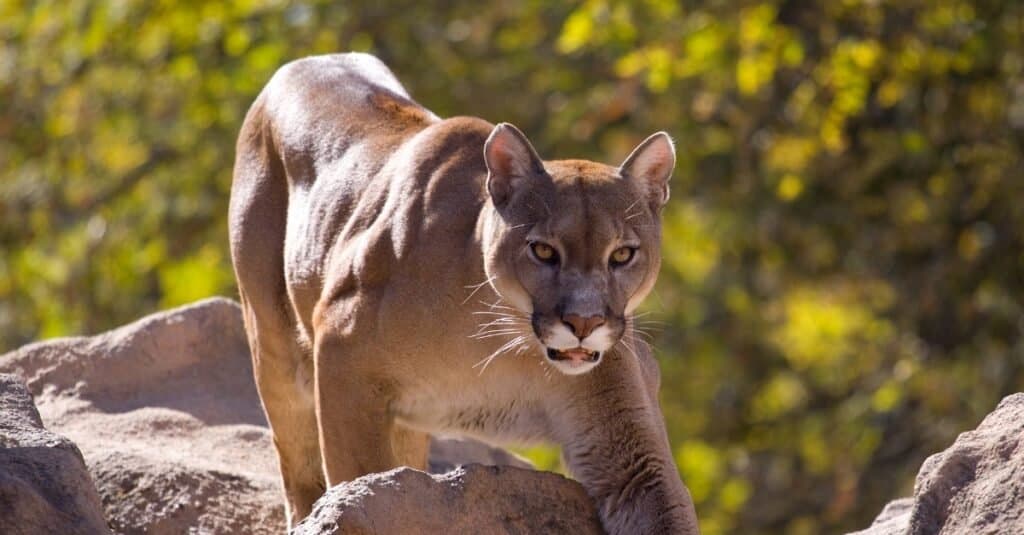
Deadliest Animals in America

Pumas can be found in deserts, plains, and jungles

The Puma is an animal that is found in the mountains throughout South and North America where it inhabits rocky crags and slightly lower pastures. Although these seem to be the Puma’s preferred habitats they are extremely adaptable animals that can be found in a variety of habitats including forests, tropical jungle, grasslands and even in more arid desert regions. However, with expanding Human settlements and land clearance for agriculture, the Puma is being pushed into smaller pockets of its historically vast range, retreating into more hostile mountain environments that are further away from people. It is widely believed however that the Puma’s adaptability has been vital in ensuring that it doesn’t disappear from the wild forever.

Behavior and Lifestyle

Cougar in fall leaves

Pumas prefer to hunt at night

The Puma is a solitary animal with the exception of the time cubs spend with their mother. Pumas patrol large home ranges in search of food which varies from 80 square miles in the summer to 40 in the winter, when the falling snow restricts access to a number of mountain areas. Some regions can become so hostile that Pumas migrate from the mountain forests and go down into the valleys to escape the worst of the cold. Pumas are not only capable of easily adapting to different surroundings but they are also able to hunt effectively during the day or night. Their strong and muscular hind legs and large paws mean that the Puma can move about amongst the rocks more quickly and with greater agility. Pumas are known to make a variety of different sounds, particularly when warning another Puma away from their territory and during the mating season when they are looking for a mate.

Reproduction and Life Cycles

The breeding season tends to occur between December and March with litters of up to 6 cubs being born after a three-month gestation period, generally between February and September. After mating, the male and the female part company and he will continue to mate with other females for the duration of the season. Like numerous other felines, Puma cubs are born blind and are completely helpless for their first two weeks of life until their blue eyes fully open. Unlike the one-colour adult Pumas, cubs are born with spots on their fur which helps them to be more easily camouflaged from hungry predators. They are able to eat solid food when they are between 2 and 3 months old and remain with their mother for about a year. Many Pumas live to an average age of 12 years but they have been known to reach 25 years in captivity.

Diet and Prey
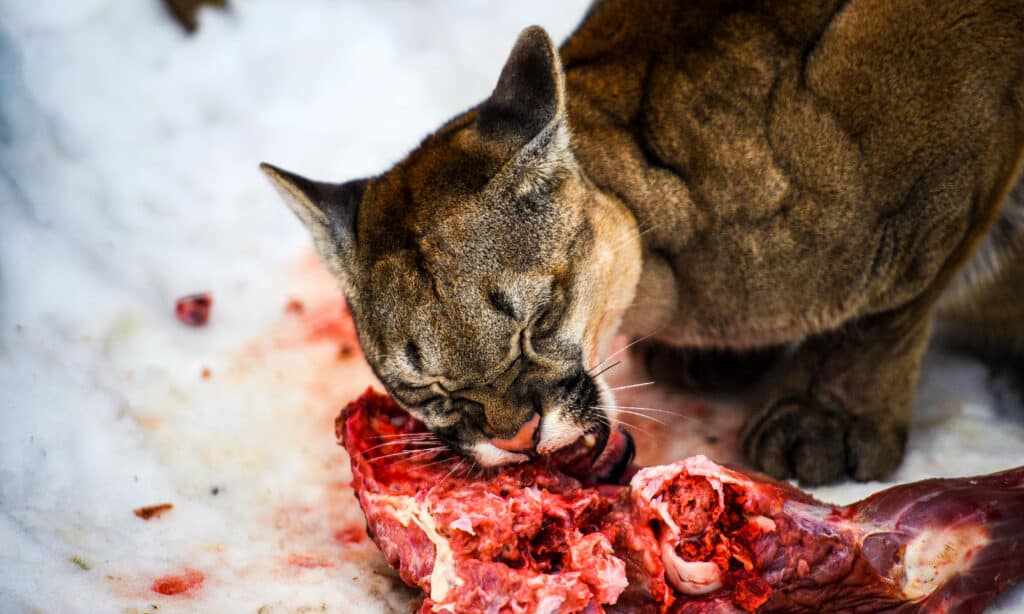
cougar eating

Pumas may occasionally hunt larger mammals or even livestock

The Puma is a large and powerful carnivore, hunting and eating only other animals in order to survive. The majority of the Puma’s diet is comprised of small animals like Mice, Rats, Birds, Fish, and Rabbits that are found living in abundance on fertile mountain slopes and in lowland forests. The large size of the Puma also means that it can hunt bigger animals including Sheep, Raccoons, Goats, and livestock which it catches by pouncing onto the animal to secure it. The Puma’s agile and incredibly muscular body means that it can easily outrun many of the species that it hunts.

Predators and Threats
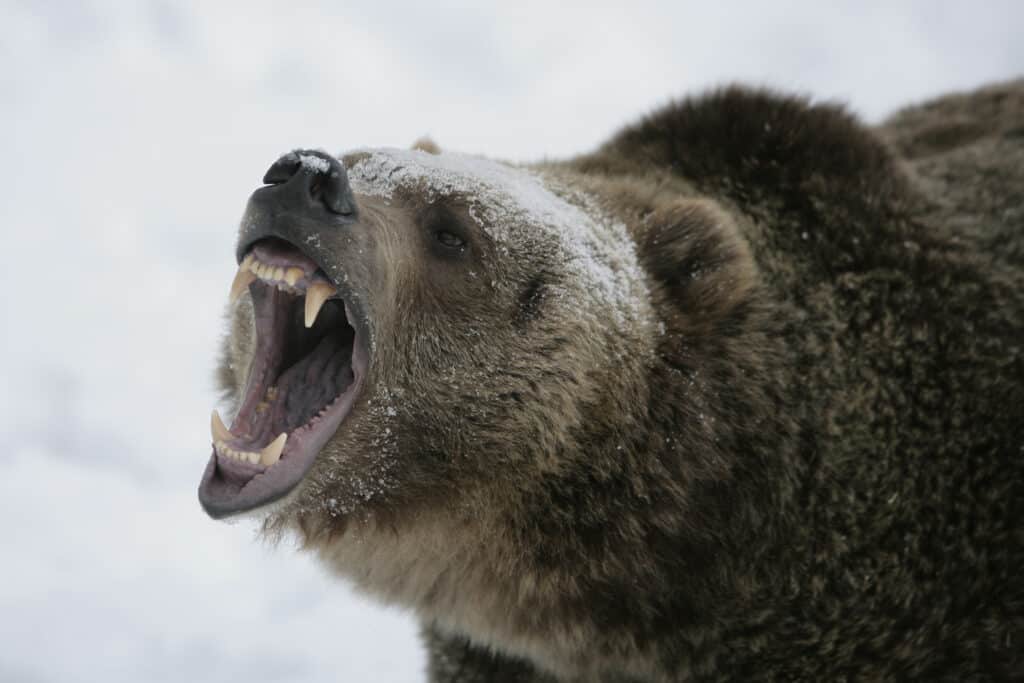
Grizzly bear in snow

Bears may hunt injured or ailing cougars

The Puma is one of the most dominant predators throughout much of their natural environment and are therefore rarely preyed upon by other species. It has been known however, for Pumas that are vulnerable due to sickness or injury to be preyed upon by other large predators including Bears and Wolves, and even other Pumas. The biggest threat to the Puma however, is people who have not only hunted this large Cat (mainly for its fur) but have also subjected it to drastic habitat loss throughout much of its natural range, mainly due to expanding Human settlements and deforestation for agriculture. In some areas they are also hunted by ranch owners who blame Pumas for their loss of livestock.

Interesting Facts and Features

One of the most obvious reasons as to why this large and powerful feline is not classified as one of the world’s ‘big’ Cats is that Pumas are not able to roar. This is something distinctive to the ‘big’ Cat family as no other feline is able to do so. The powerful hind legs of the Puma are so muscular that they not only allow them to pounce on and secure their prey, but they are also able to leap enormous distances of up to 20ft. One of the most famous subspecies of Puma is the Florida Panther which is the smallest of the Puma species and also the rarest. Thought to be on the brink of extinction, this endangered animal has more of a red tinge to the fur on its back along with having a dark spot in the centre.

Relationship with Humans

The Puma is a fearsome predator and although attacks on Humans are rare, they do occur nonetheless. There have been nearly 100 recorded attacks on Humans but most of these occur because the Puma has been cornered or feels threatened in some way. Rare cases of severe starvation have also led to Pumas attacking Humans although this is not that common as people are not generally seen as prey to them. Puma population numbers throughout both North and South America have been declining over the past century particularly, mainly due to habitat loss and the shooting of Pumas by farmers who fear for their animals.

Conservation Status and Life Today

Despite being pushed into smaller regions of their vast historical range, the Puma has been listed by the IUCN as an animal that is of Least Concern of becoming extinct in its natural environment in the immediate future. This is because Pumas are not only incredibly adaptable animals but they are also quite common in the more remote mountainous regions. In fact, many feel that it is the Pumas ability to adapt to a number of different environments that has been the reason as to why the population is still as numerous as it is.

Similar Animals

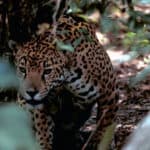
  • Jaguar: Even larger than the puma, it is the only one of the big cats to exist in the Americas. Find out about this fierce feline which is not only fond of water, but is also capable of taking down caimans, too.
  • Leopard: Sleek, agile, and stealthy, this large feline found in Africa and Asia prefers to hunt by night. Discover more about this graceful predator, here.
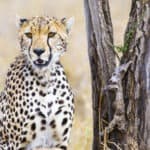
  • Cheetah: It is the fastest predator on the planet. How does it do what it does? Click the link to discover all you need to know about this distant relative to the puma.
View all 247 animals that start with P
How to say Puma in ...
Bulgarian
Пума
Czech
Puma
Danish
Puma
German
Puma
English
Puma
Esperanto
Pumo
Spanish
Puma_concolores
Estonian
Puuma
Finnish
Puuma
French
Puma
Hebrew
פומה
Hungarian
Puma (állatnem)
Japanese
ピューマ属
Latin
Puma
Dutch
Poema
English
Fjelløveno
Polish
Puma
Portuguese
Suçuarana
Swedish
Puma
Turkish
Puma (cins)
Vietnamese
Báo sư tử
Chinese
美洲狮

Sources

  1. David Burnie, Dorling Kindersley (2011) Animal, The Definitive Visual Guide To The World's Wildlife / Accessed November 10, 2008
  2. Tom Jackson, Lorenz Books (2007) The World Encyclopedia Of Animals / Accessed November 10, 2008
  3. David Burnie, Kingfisher (2011) The Kingfisher Animal Encyclopedia / Accessed November 10, 2008
  4. Richard Mackay, University of California Press (2009) The Atlas Of Endangered Species / Accessed November 10, 2008
  5. David Burnie, Dorling Kindersley (2008) Illustrated Encyclopedia Of Animals / Accessed November 10, 2008
  6. Dorling Kindersley (2006) Dorling Kindersley Encyclopedia Of Animals / Accessed November 10, 2008
  7. David W. Macdonald, Oxford University Press (2010) The Encyclopedia Of Mammals / Accessed November 10, 2008
  8. About Pumas / Accessed November 10, 2008
  9. Puma Information / Accessed November 10, 2008
Dana Mayor

About the Author

Dana Mayor

I love good books and the occasional cartoon. I am also endlessly intrigued with the beauty of nature and find hummingbirds, puppies, and marine wildlife to be the most magical creatures of all.
Connect:

Thank you for reading! Have some feedback for us?


Puma FAQs (Frequently Asked Questions)

Pumas are Carnivores, meaning they eat other animals.