R
Species Profile

Raccoon Dog

Nyctereutes procyonoides

Masked canid, master of winter torpor
Miroslav Hlavko/Shutterstock.com

Raccoon Dog Distribution

Click a location to explore more animals from that region

Invasive Species
Loading map...

Size Comparison

Human 5'8"
Raccoon Dog 10 in

Raccoon Dog stands at 14% of average human height.

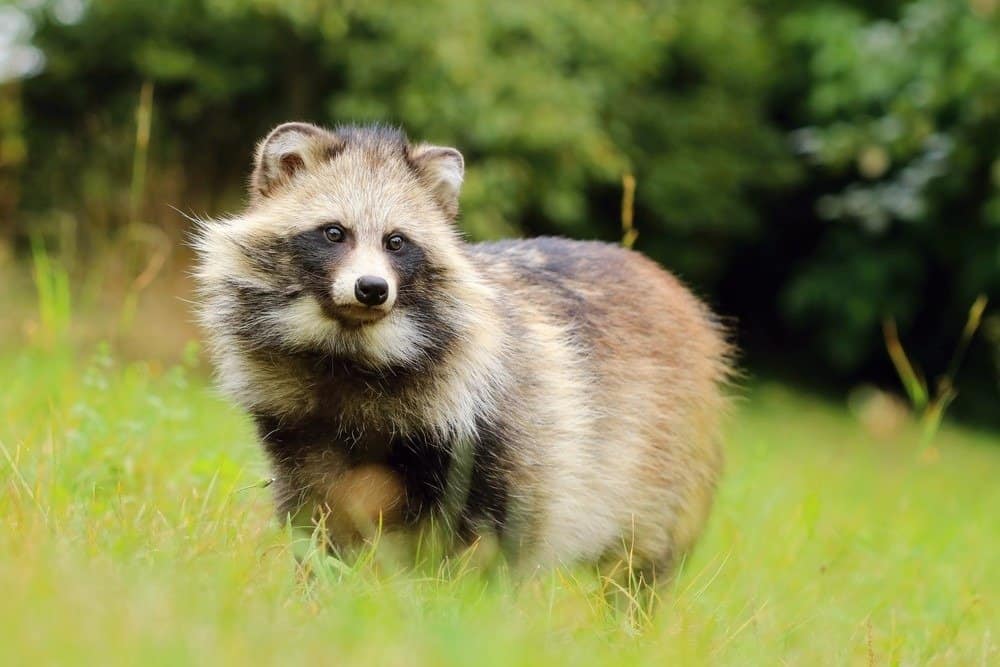
Fat raccoon dog in grassland

At a Glance

Wild Species
Also Known As Tanuki, Neoguri
Diet Omnivore
Activity Nocturnal+
Lifespan 3 years
Weight 15 lbs
Status Least Concern
Did You Know?

Not a raccoon: it is a true canid (Family Canidae) despite the mask (Wilson & Reeder, Mammal Species of the World).

Scientific Classification

The raccoon dog is a small to medium-sized canid native to East Asia, notable for its raccoon-like facial mask and omnivorous diet. It is one of the few canids that commonly undergoes winter torpor and is well known in Japanese folklore as the “tanuki.” Introduced populations occur in parts of Europe, where it has spread widely.

Kingdom
Animalia
Phylum
Chordata
Class
Mammalia
Order
Carnivora
Family
Canidae
Genus
Nyctereutes
Species
Nyctereutes procyonoides

Distinguishing Features

  • Canid with raccoon-like dark facial mask and grizzled coat
  • Shorter legs and a stockier build than many fox-like canids
  • Omnivorous diet (small vertebrates, insects, fruit, carrion)
  • Seasonal fattening; winter torpor/low activity in cold climates
  • Dense winter coat; often seen in pairs

Physical Measurements

Males and females differ in size

Height
10 in (9 in – 12 in)
10 in (8 in – 12 in)
Length
2 ft 7 in (2 ft 1 in – 3 ft 1 in)
2 ft 5 in (1 ft 10 in – 2 ft 12 in)
Weight
17 lbs (10 lbs – 33 lbs)
11 lbs (7 lbs – 15 lbs)
Tail Length
7 in (5 in – 10 in)
7 in (5 in – 9 in)
Top Speed
25 mph
running

Appearance

Primary Colors
Secondary Colors
Skin Type Dense double-layer fur (soft insulating underfur with long coarse guard hairs); skin largely obscured by pelage.
Distinctive Features
  • Raccoon-like black facial mask; despite appearance, it is a canid (family Canidae), not a raccoon (Procyonidae).
  • Stocky, low-slung body with relatively short legs; compact silhouette compared with many canids.
  • Thick seasonal coat; winter pelage markedly fuller and longer than summer coat.
  • Small, rounded ears that can appear partly hidden by dense fur.
  • Bushy tail typically shorter than head-body length; often darker dorsally than ventrally.
  • Grizzled (salt-and-pepper) appearance from banded guard hairs; overall coloration variable by season and region.

Sexual Dimorphism

Sexual dimorphism is weak. Males average slightly larger and heavier than females, but both sexes share similar coat coloration and the characteristic facial mask, making sex difficult to determine by appearance alone.

  • Slightly larger overall body size and more robust head/neck in many individuals.
  • Slightly smaller overall body size; facial mask and pelage pattern typically indistinguishable from males.

Did You Know?

Not a raccoon: it is a true canid (Family Canidae) despite the mask (Wilson & Reeder, Mammal Species of the World).

Size (adult): head-body length ~50-68 cm; tail ~13-25 cm (Nowak, Walker's Mammals of the World).

Highly seasonal weight: commonly ~4-10 kg, with pre-winter fattening reported up to ~14 kg in some populations (Nowak; Macdonald & Sillero-Zubiri, Canids: Foxes, Wolves, Jackals and Dogs).

Large litters for a canid: gestation ~59-64 days; litter often ~6-9 pups, with larger litters reported (Nowak; Macdonald & Sillero-Zubiri).

One of the few canids that commonly enters winter torpor (reduced activity and metabolic rate; not "true hibernation") in cold regions (Macdonald & Sillero-Zubiri).

Introduced widely into Europe during the 20th century and has expanded across many northern/central regions; considered invasive in parts of its introduced range (IUCN Red List species account).

Famous in art and folklore: in Japan, raccoon dogs appear in statues, prints, and shrine or restaurant decor as bringers of good fortune (Japanese folk tradition).

Unique Adaptations

  • Winter torpor + fat storage: builds substantial autumn fat reserves and reduces winter metabolism/activity-rare among canids and key to surviving cold, food-scarce seasons (Macdonald & Sillero-Zubiri).
  • Dense, insulating winter coat: long guard hairs and thick underfur support cold-climate survival and contribute to the species' "stocky," fluffy appearance (Nowak).
  • Dietary flexibility: strong omnivory (including fruits/berries) allows persistence in wetlands, forests, farmland mosaics, and suburban edges (IUCN; Macdonald & Sillero-Zubiri).
  • Reproductive output: relatively high fecundity (often ~6-9 pups) supports population recovery and rapid expansion where conditions are favorable (Nowak).
  • Cranial/dental versatility: canid dentition combined with omnivorous feeding enables both animal prey handling and plant-rich diets (comparative canid ecology syntheses).

Interesting Behaviors

  • Omnivorous foraging: eats small vertebrates (rodents, frogs), invertebrates, carrion, and substantial plant material (berries/fruits), shifting seasonally with availability (Macdonald & Sillero-Zubiri).
  • Seasonal rhythm: in colder climates, activity drops markedly in winter; individuals may remain in dens for extended periods during severe weather (torpor) and resume ranging in spring (Macdonald & Sillero-Zubiri).
  • Pair bonding and shared parental care: often forms monogamous pairs; males commonly provision the female and help rear pups-unusual levels of biparental care among many carnivores (Macdonald & Sillero-Zubiri).
  • Den use: commonly uses burrows (often enlarged from other animals) and natural cavities; denning increases during breeding and winter periods (Nowak).
  • Mostly crepuscular/nocturnal: peaks around dusk/night, especially near humans or where disturbed; can become more diurnal in low-disturbance areas (IUCN/field syntheses).
  • Dispersal and range expansion: juveniles disperse and can colonize new habitats effectively, aiding rapid spread in introduced European populations (IUCN; European invasion ecology literature).

Cultural Significance

Raccoon dog (Nyctereutes procyonoides) is a cultural icon in Japan. Ceramic statues at shops and eateries stand for luck, wealth, and a warm welcome. Its night habits, masked face, and winter fatness join tales of a mischievous shapeshifter across East Asia.

Myths & Legends

Shape-shifting raccoon dog spirit (Japan): folkloric raccoon dogs that transform into people, monks, or everyday objects to play tricks, reward kindness, or expose greed; often portrayed as jovial shapeshifters in village tales.

The tea-kettle raccoon dog story (Japan): a classic story in which a raccoon dog transforms into a tea kettle, bringing its rescuer good fortune and entertaining crowds-one of the most famous transformation legends.

Shigaraki raccoon-dog statues (Japan): tradition of placing pot-bellied, straw-hatted raccoon-dog figures outside businesses to invite customers and good luck; the imagery draws on Japanese folk beliefs about prosperity and playful deception.

Drum-and-belly tales (Japan): humorous folktales describe raccoon dogs beating their bellies like drums during nighttime revels, a motif linked to their festive, boisterous reputation.

Trickster-on-the-road stories (Japan): regional legends tell of travelers encountering raccoon dog-made phantom lights or illusory paths at night, echoing the animal's nocturnal habits and reputation for misdirection.

Folkloric "lucky raccoon dog" associations (Japan): in some local traditions, respectful treatment of raccoon dog spirits is said to bring household or business success, while mistreatment invites pranks or misfortune.

Conservation Status

LC Least Concern

Widespread and abundant in the wild.

Population Increasing

Protected Under

  • Not listed under CITES
  • Japan: Wildlife Protection and Hunting Management Law (hunting/management regulated)
  • South Korea: Wildlife Protection and Management Act (species management/hunting regulated)
  • China: Wildlife Protection Law of the People's Republic of China (utilization, hunting and trade regulated via permits)

Life Cycle

Birth 6 pups
Lifespan 3 years

Lifespan

In the Wild
1–8 years
In Captivity
6–14 years

Reproduction

Mating System Monogamy
Social Structure Socially Monogamous
Breeding Pattern Long Term
Fertilization Internal Fertilization
Birth Type Internal_fertilization

Forms stable male-female pairs and typically breeds once yearly (often Feb-Apr). Internal fertilization; gestation ~59-64 days; litters commonly 6-9 pups. Both parents provision and guard the den, with males frequently bringing food during lactation.

Behavior & Ecology

Social Family group Group: 8
Activity Nocturnal, Crepuscular, Cathemeral
Diet Omnivore Amphibians (frogs/toads) when seasonally abundant; shifts to fruits/berries in late summer-autumn (reported in multiple stomach/scat studies; e.g., Kauhala 1996; Kauhala & Saeki 2004).
Seasonal Hibernates

Temperament

Typically shy and avoidance-prone; relies on concealment rather than confrontation when disturbed (Kauhala & Saeki 2004).
Strong pair-bonding with biparental care; males commonly provision lactating females and pups (Kauhala & Saeki 2004).
High within-family tolerance at dens; unrelated adults usually maintain distance except at concentrated food resources (Kauhala & Saeki 2004).
Behaviorally flexible omnivore; in human-dominated landscapes may become bolder and more nocturnal (Kauhala & Saeki 2004).
Northern populations commonly reduce activity in winter via torpor-like dormancy, lowering movement and foraging (Kauhala & Saeki 2004).
Across populations, stable units are pairs and family groups; group cohesion drops after juvenile dispersal (Kauhala & Saeki 2004).

Communication

barks
growls
whines
yelps
squeals
urine scent-marking along travel routes and territory edges Kauhala & Saeki 2004
fecal marking, including repeated use of conspicuous defecation sites/latrines
anal gland secretions used in close-range identification and threat contexts
body postures (crouching, piloerection) signaling fear, submission, or threat
tactile contact within pairs/families Nuzzling, grooming at the den

Habitat

Biomes:
Temperate Forest Boreal Forest (Taiga) Temperate Grassland Wetland Freshwater
Terrain:
Plains Hilly Valley Riverine Coastal Island Muddy Sandy +2
Elevation: Up to 6561 ft 8 in

Ecological Role

Omnivorous mesocarnivore and scavenger; opportunistic predator of small vertebrates/invertebrates and a seasonal fruit consumer.

Regulates some prey populations locally (rodents, amphibians, ground-nesting bird eggs/chicks) Scavenging accelerates carrion removal and nutrient cycling Seed dispersal via endozoochory from fruit consumption (potentially aiding plant spread, including invasive plants in introduced ranges) Links aquatic-terrestrial food webs by exploiting wetlands/riparian prey (notably amphibians)

Diet Details

Main Prey:
Small rodents Ground-nesting birds and eggs Amphibians Reptiles Fish Insects Earthworms and other annelids Mollusks Carrion +3
Other Foods:
Fruits and berries Mast and seeds Cereal grains and agricultural crops Roots, tubers and other plant material Fungi

Human Interaction

Domestication Status

Wild

Nyctereutes procyonoides (raccoon dog) is a wild canid, not domesticated. It is bred in captivity for fur. Adults ~50–68 cm, 3–10 kg, gain heavy winter fat; short wild life but may live >10 years captive; show winter torpor. Omnivorous, use farm/edge habitats. Introduced to Europe from fur farms; managed as invasive and for health and conflict risks.

Danger Level

Moderate
  • Zoonoses: can participate in rabies ecology where rabies is present (risk heightened via bites/saliva exposure in endemic regions).
  • Parasites: documented carriers of zoonotic endoparasites in parts of their range (e.g., Echinococcus spp., Trichinella spp. in some regions), creating risk through handling carcasses, fecal contamination, or undercooked meat exposure where relevant.
  • Ectoparasites and skin disease: can host sarcoptic mange (Sarcoptes scabiei), which can transiently affect humans and poses significant risk to pets and other wildlife.
  • Bites/scratches: generally shy, but can bite if cornered, handled, or trapped; risk includes secondary infection and, in endemic areas, rabies exposure.

As a Pet

Not Suitable as Pet

Legality: Raccoon dog (Nyctereutes procyonoides) laws vary by country and state and are often restricted. Many places treat them as wild, exotic, or invasive, and may require permits or ban them. Check local rules; transport may be limited.

Care Level: Expert Only

Purchase Cost: Up to $2,000
Lifetime Cost: $10,000 - $40,000

Economic Value

Uses:
Fur and pelt production (commercial and small-scale) Hunting/trapping (game/furbearer; invasive-control harvest) Cultural value (folklore, tourism/media symbolism) Negative economic impacts (invasive-species management costs; predation on game birds; disease control/surveillance)
Products:
  • Fur/pelts marketed as raccoon dog fur (fashion trim and garments)
  • Hunted/trapped carcasses (localized use; often primarily for fur rather than meat)
  • Ecosystem services/disservices tied to scavenging and predation (context-dependent)

Relationships

Ecological Equivalents 5

Animals that fill a similar ecological role in their ecosystem

Raccoon dogs can climb trees, swim, and dive underwater

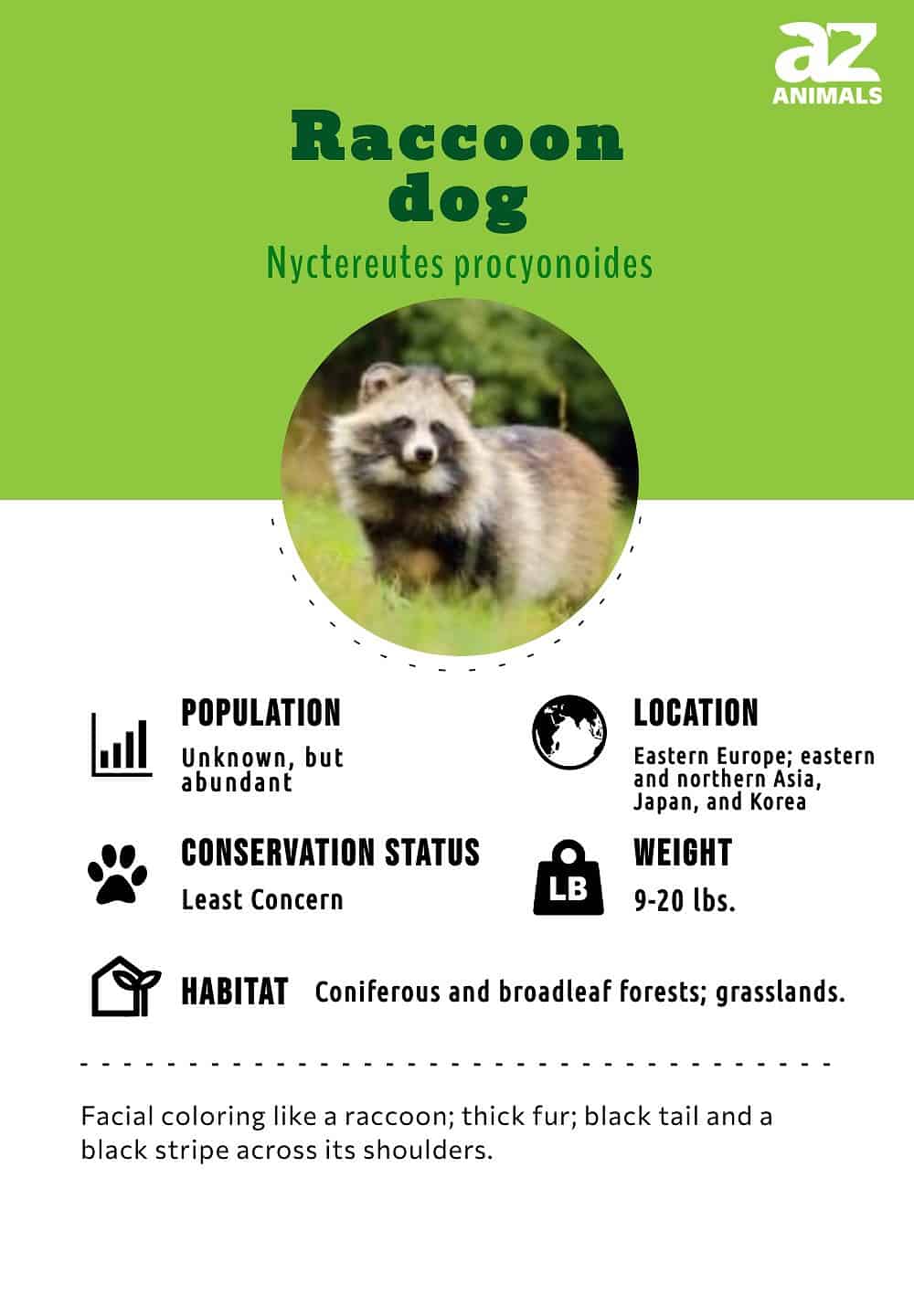
Raccoon dogs live in Europe and Asia. Although they look similar to raccoons, they are not related to them. These animals are omnivores and are active at night and part of the day. They have a lifespan of 6 to 11 years. They are social animals that live in pairs or small groups.
Incredible Facts!

  • These animals are closely related to the fox.
  • They have an average of 6 babies per litter.
  • They eat birds, fish, insects, and fruit.
  • These creatures have very poor eyesight.
  • They hibernate during extreme snowstorms.

Scientific Name

The scientific name for the common raccoon dog is Nyctereutes procyonoides. The Greek word Nyctereutes mean night wanderer: nykt (night), ereutes (wanderer). It belongs to the Family Canidae and Class Mammalia.
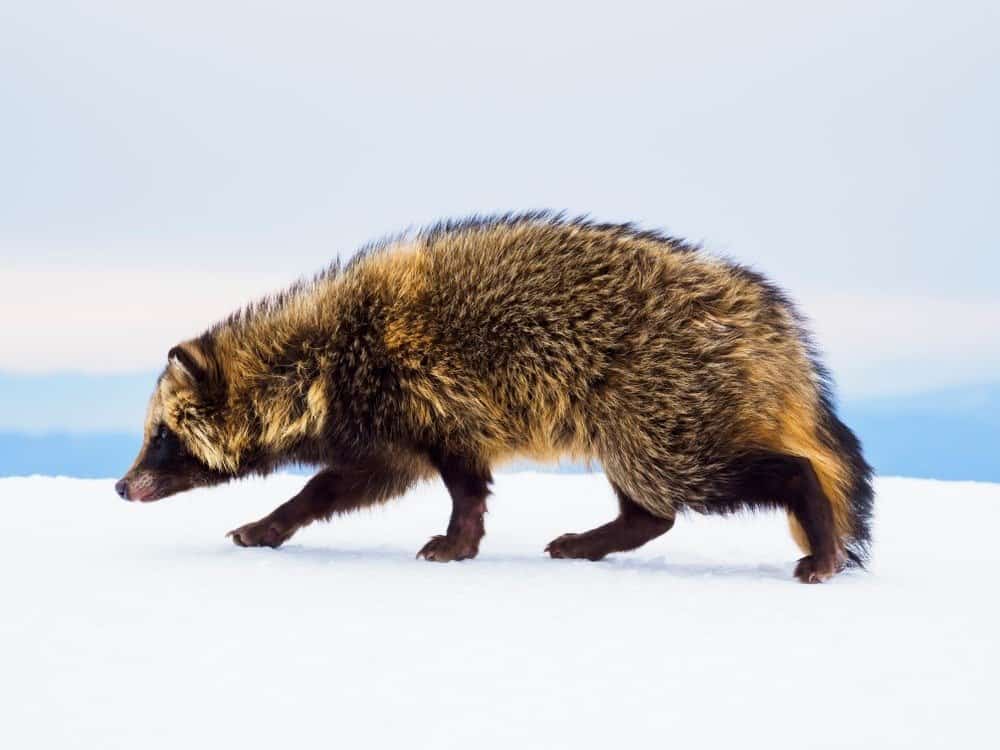
There are four subspecies of the common raccoon dog:

  • Chinese raccoon dog (N. p. procyonoides) in eastern China
  • Korean racoon dog (N. p. koreensis) in Korea
  • Yunnan raccoon dog (N. p. orestes) in southeastern China and northern Vietnam
  • Ussuri raccoon dog N. p. ussuriensis) in Russia’s Siberian and Amur territories, northeastern China, and North Korea; introduced to Europe.

The Japanese raccoon dog was once thought to be a subspecies (N. p. viverrinus), but the current opinion is that it is a separate species since it has a larger skull and teeth. Other names for the common raccoon dog are Japanese badger, tanuki, mangut, and Neoguri (the Korean name for this animal).

Appearance

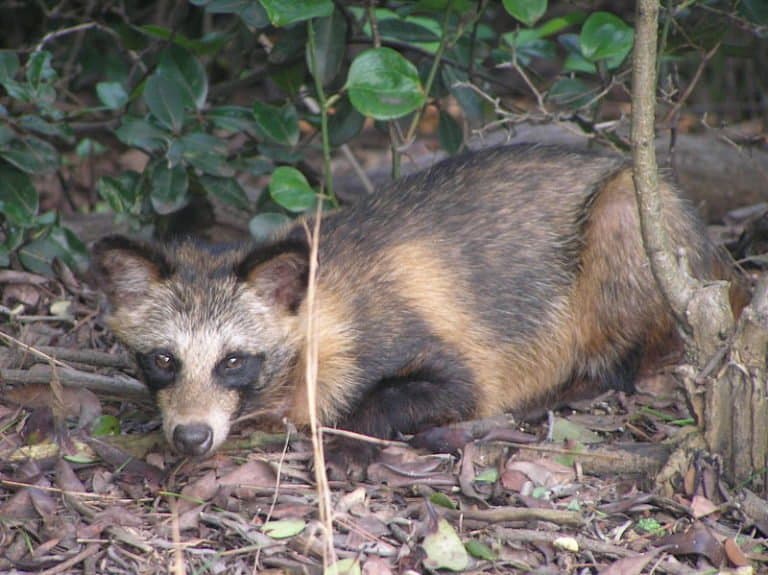
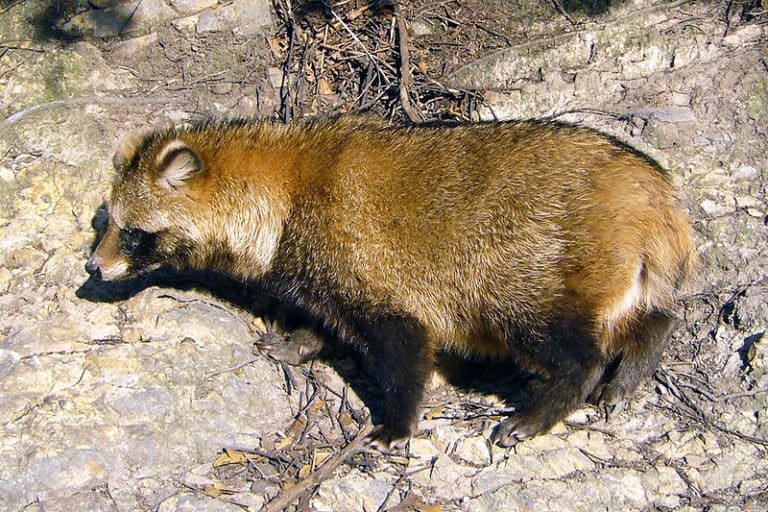
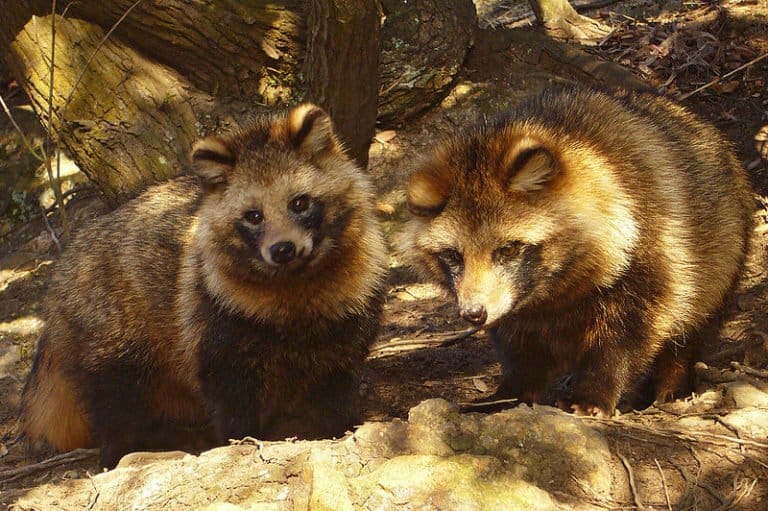
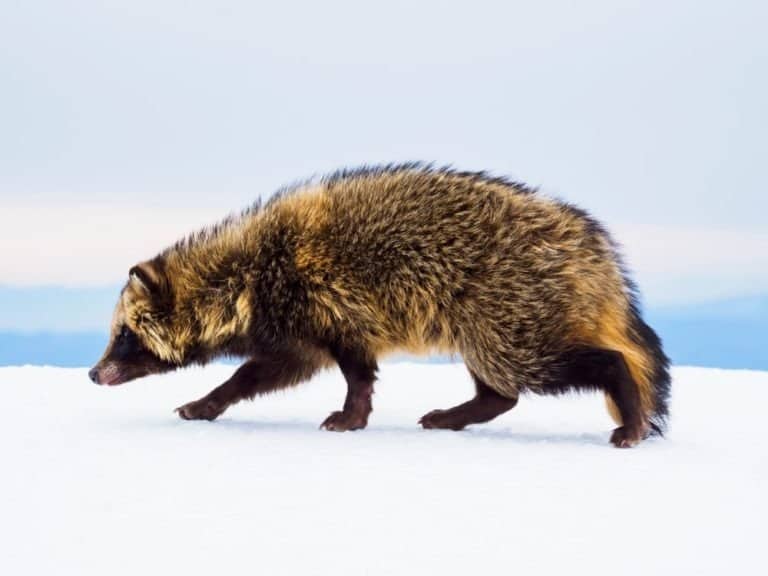
The thick coat of the raccoon dog is a mixture of brown, gray, tan, and black hair. It has a black tail and a black stripe across its shoulders. A raccoon dogs has two dark eyes and fox-like ears.

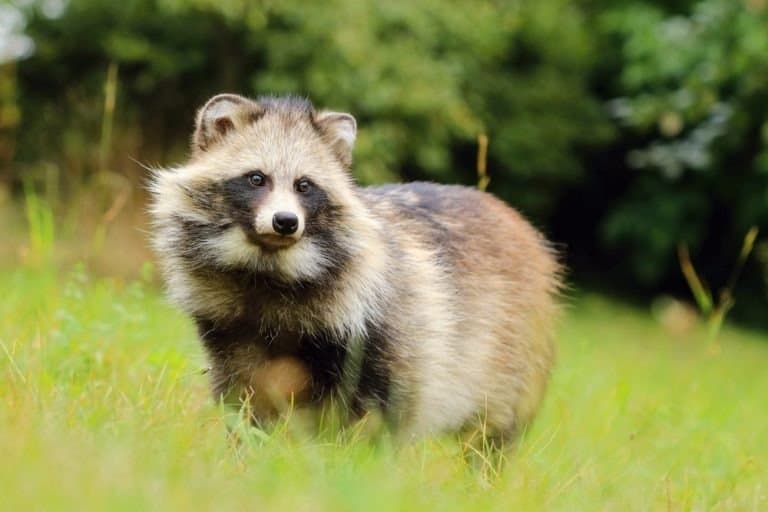
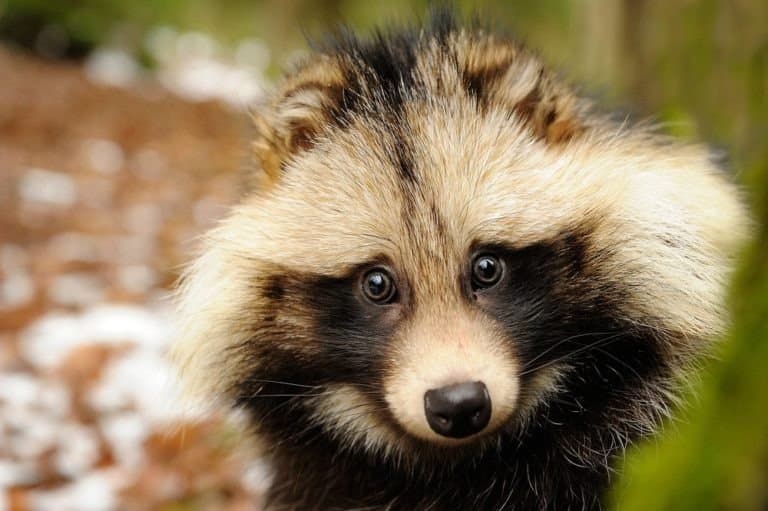
Along with black hair on its neck, the raccoon dog has black hair on its nose and black rings around both its eyes. This mask of black hair makes this animal look like a raccoon. Now you know how it got its name! But it’s not actually related to a raccoon. In fact, its closest relative is the fox.
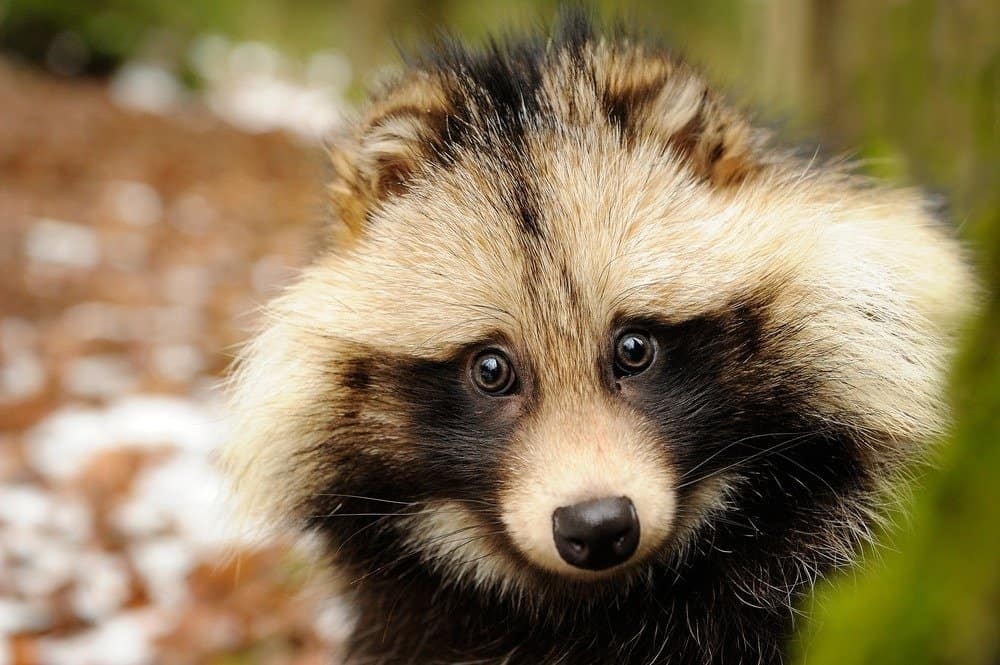
Raccoon dog cute close-up portrait in the winter forest

The raccoon dog gots its name for its facial similarity to a raccoon.

In Japan and China, there are a few mangut, or tanuki, with a coat of pure white fur. The saying goes that if you see an all-white tanuki, you can expect good luck to come your way. Unfortunately, these tanuki are rarely seen.

An adult measures between 20 and 27 inches long. The weight of an adult animal ranges between 9 and 20 pounds. As an example, a 20-pound raccoon dog weighs about the same as two average-sized housecats. The heaviest known raccoon dog was 22 pounds.

Racoon dogs have poor eyesight but an excellent sense of smell. This helps them to find prey, especially when hunting at night.

Behavior

This mammal lives and hunts in pairs or with a small family. A social group of raccoon dogs is called a pack. They try to avoid being seen but will become aggressive if they feel threatened.

This animal’s brown coat allows it to blend in with its environment as a protection against predators. These mammals can also swim and climb trees to escape threats. The ability to climb trees is a characteristic they share with one other animal from the Canidae family, namely the gray fox.

Habitat
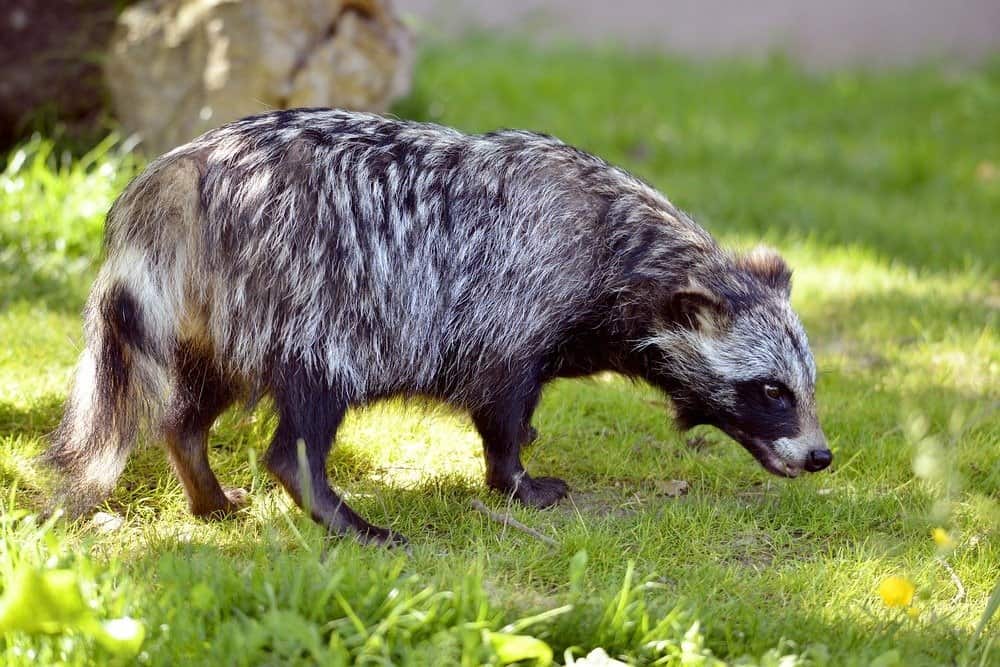
Raccoon dogs live in Europe and Asia. Specifically, they live in China, Japan, Russia, Vietnam, North Korea, South Korea, Austria, France, Hungary, Poland, Romania, Slovakia, Germany, Sweden, and Finland.

These animals live in a temperate climate. Their habitat includes coniferous and broadleaf forests as well as grasslands. They have also been known to live in urban settings.

These mammals live in areas of thick vegetation where they can hide and blend in with their environment. When food becomes scarce in their habitat, these mammals migrate to find a new territory where prey is more plentiful. They are adaptable and can move long distances to find a food source.

The activities of these animals slow down in the wintertime from December to February. They hibernate, but only during serious snowstorms. They find an abandoned burrow created by a badger or other animal and settle in for the cold weather months. These mammals hibernate in pairs.

Diet
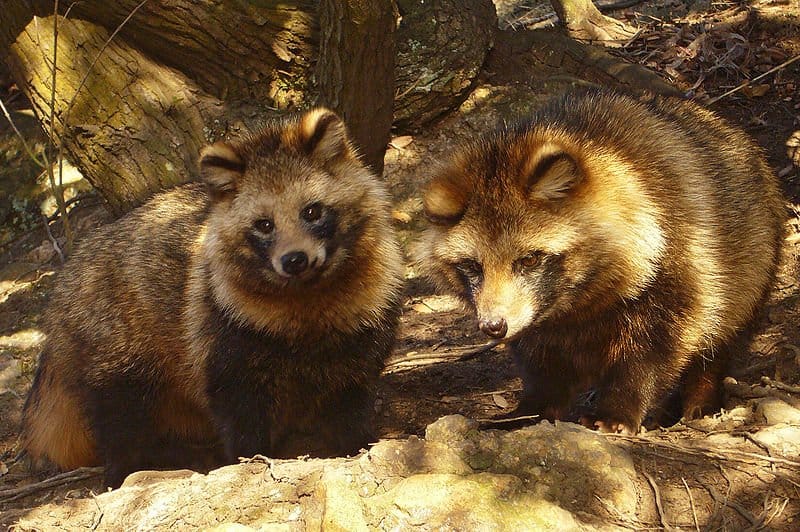
What do these animals eat? They are omnivores that eat birds, insects, lizards, snakes, and mice. Plants, berries, and nuts are also on the menu. This mammal can swim, so it captures frogs, crabs, and fish in rivers and streams.

Some raccoon dogs live in urban environments where wildlife is scarce. So, they’ve been known to dig through garbage cans and eat leftovers thrown away by people. Sometimes raccoon dogs steal eggs out of birds’ nests. In short, they adapt to eating whatever is in their environment and are sometimes called scavengers.

Predators and Threats

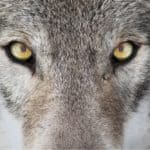
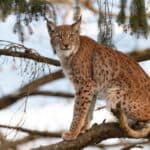
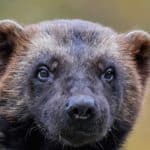
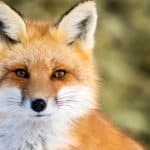
Predators of the raccoon dog include wolverines, wolves, lynx, Golden eagles, and domesticated dogs. If the animal can’t escape from a predator, it has only its teeth and claws to use for protection. Many of its predators are stronger and can overpower this mammal.

Humans are another threat to these animals. There is a demand for the fur of a raccoon dog, so they are sometimes caught in traps set by poachers. Plus, in Japan, these animals are a form of cuisine.

Raccoon dogs that live in urban environments near homes are considered pests because they can transmit disease to pets and even humans. They are sometimes poisoned or shot if they enter these environments. They can be killed while trying to cross roads in busy areas as well.

Despite all of their predators and threats, the official conservation status of these animals is Least Concern. Their population is categorized as stable.

Reproduction, Babies and Lifespan
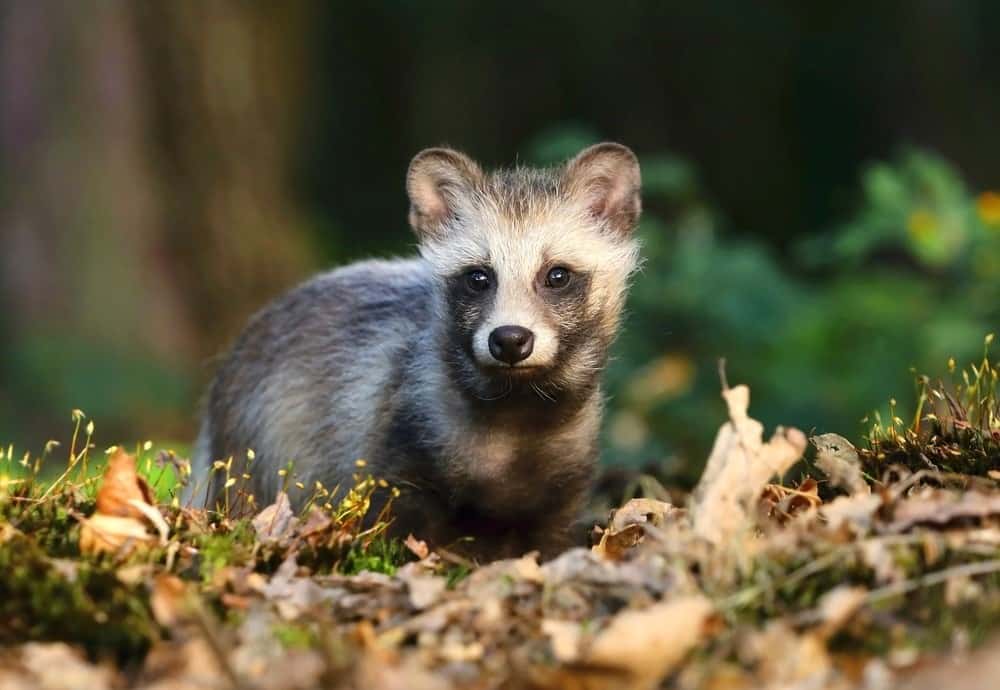
The mating season of these animals begins in February and goes through April. A female releases a scent to signal she is ready to mate. Three or four males fight over her to see which one is strongest. Once a female and a male pair up they are mates for life. This means they are monogamous.

The gestation period of a female falls between 60 and 70 days. Raccoon dog babies, also known as pups, are born in April or May. A female usually has six pups per litter, but there have been litters with as many as 15 or 16 pups in them. Both the males and females help to care for their pups.

These pups are born with eyes close and with a thin coat of coarse hair. They weigh two to six ounces. A six-ounce raccoon dog pup weighs the same as a pet hamster. At ten days, the pups’ eyes open. They are nursed for the first 40 to 60 days of their life but begin to eat some solid foods at three weeks old.

The pups remain with their parents until they are four and a half months old. After that, they go out and live independently. They reach adulthood at 10 months old. These mammals have a lifespan of 6 to 11 years. The oldest Japanese badger aka raccoon dog on record died at age 16. Its name was Tanu and it lived with a family in Japan.

As these mammals age, they can take on parasites and fleas as well as develop mange. In some cases, they have been known to carry rabies.

Population

The conservation status of these animals is Least Concern. Though their exact population is unknown in many areas, scientists estimate there are approximately 120,000 adult raccoon dogs in Finland.

The population of this mammal is categorized as stable mostly because it’s an adaptable creature that can find food and shelter in a variety of environments.

View all 181 animals that start with R

Sources

  1. David Burnie, Dorling Kindersley (2011) Animal, The Definitive Visual Guide To The World's Wildlife / Accessed July 26, 2010
  2. Tom Jackson, Lorenz Books (2007) The World Encyclopedia Of Animals / Accessed July 26, 2010
  3. David Burnie, Kingfisher (2011) The Kingfisher Animal Encyclopedia / Accessed July 26, 2010
  4. Richard Mackay, University of California Press (2009) The Atlas Of Endangered Species / Accessed July 26, 2010
  5. David Burnie, Dorling Kindersley (2008) Illustrated Encyclopedia Of Animals / Accessed July 26, 2010
  6. Dorling Kindersley (2006) Dorling Kindersley Encyclopedia Of Animals / Accessed July 26, 2010
  7. David W. Macdonald, Oxford University Press (2010) The Encyclopedia Of Mammals / Accessed July 26, 2010
  8. Animal Diversity Web / Accessed October 27, 2020
Thank you for reading! Have some feedback for us?


Raccoon Dog FAQs (Frequently Asked Questions)

It’s a mammal with a mask of fur on its face that makes it look a lot like a raccoon. But, despite the name, it’s not related to the raccoon. The fox is its closest relative.

Raccoon dogs are omnivores that can swim, climb trees, and travel long distances on the ground making them very adaptable to their environment. Their conservation status is Least Concern.