

R
Species Profile

Radiated Tortoise

Astrochelys radiata

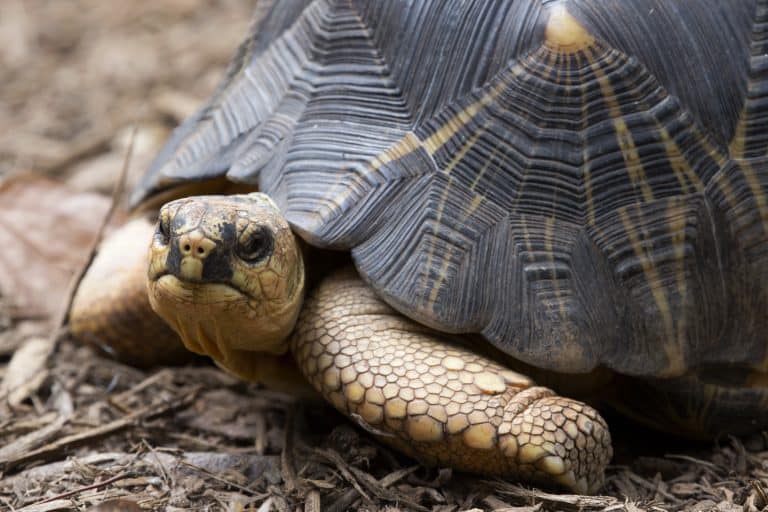
Starbursts of Madagascar's spiny forests
Olivier Lejade / Creative Commons

Radiated Tortoise Distribution

Click a location to explore more animals from that region

Endemic Species
Loading map...

Found in 1 country

At a Glance

Wild Species
Also Known As Radiata tortoise, Star tortoise, Madagascar star tortoise, Madagascar tortoise, Radiated turtle
Diet Herbivore
Activity Diurnal+
Lifespan 50 years
Weight 16 lbs
Did You Know?

Adult size: typically ~30-35 cm straight carapace length (max reported ~40 cm); mass up to ~15 kg (Ernst & Barbour; IUCN species account).

Scientific Classification

A large, terrestrial tortoise famous for its striking radiating yellow-and-black starburst carapace pattern; endemic to the dry regions of southern Madagascar.

Kingdom
Animalia
Phylum
Chordata
Class
Reptilia
Order
Testudines
Family
Testudinidae
Genus
Astrochelys
Species
radiata

Distinguishing Features

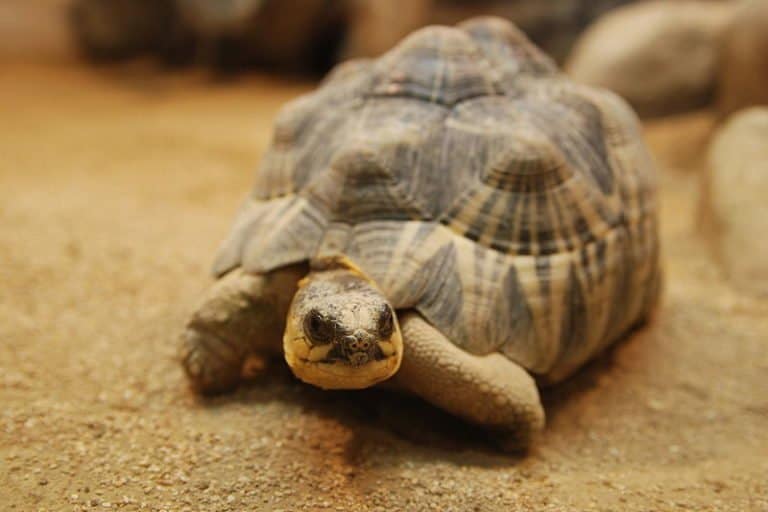
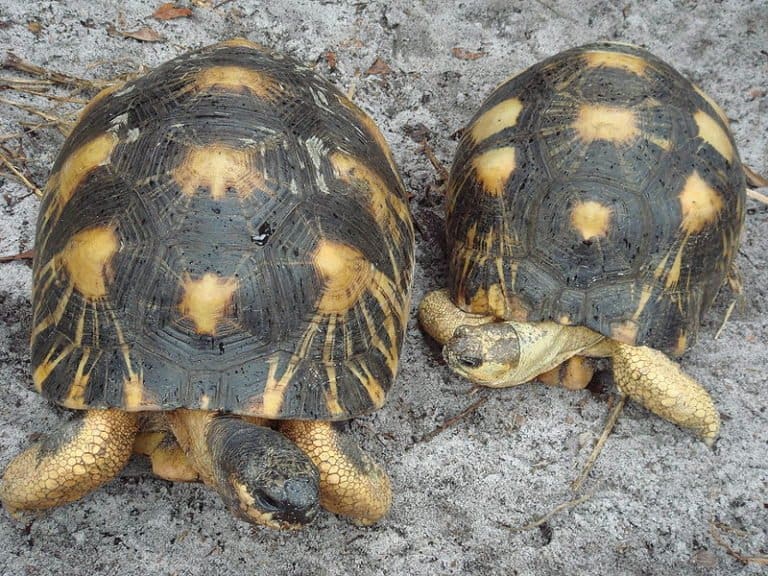
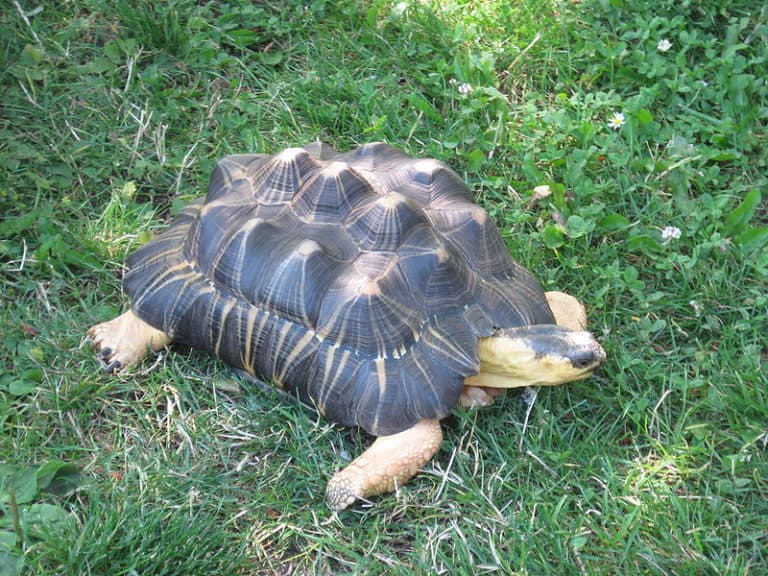
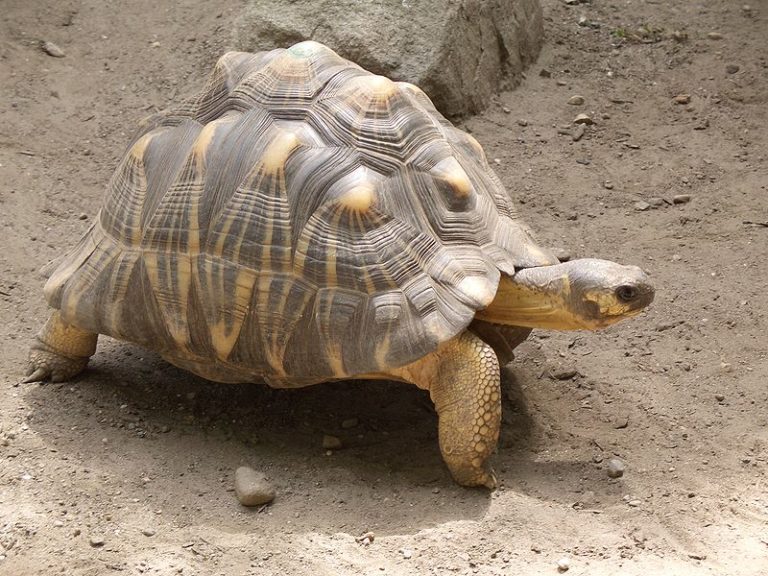
  • High-domed carapace with bold radiating starburst pattern from each scute
  • Typically black/dark brown shell background with yellow rays
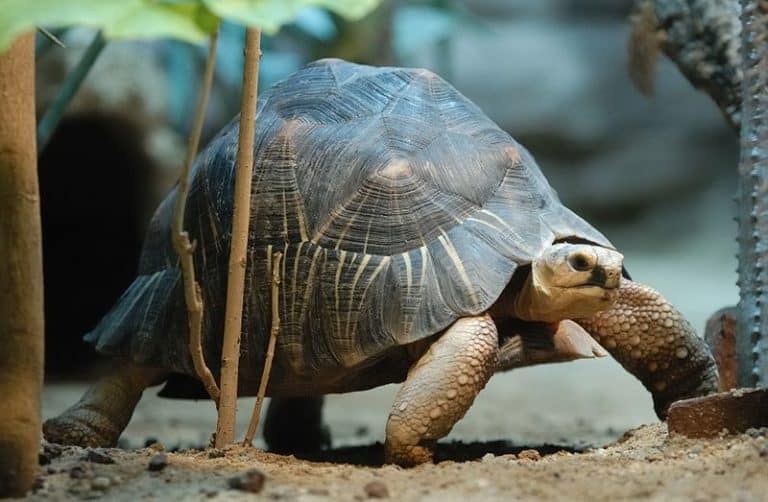
  • Stout, elephantine limbs adapted for terrestrial life
  • Endemic distribution: southern Madagascar (key identification clue)

Physical Measurements

Males and females differ in size

Length
1 ft 1 in (11 in – 1 ft 3 in)
1 ft 1 in (11 in – 1 ft 4 in)
Weight
26 lbs (20 lbs – 35 lbs)
26 lbs (18 lbs – 35 lbs)
Top Speed
0 mph
walking

Appearance

Primary Colors
Secondary Colors
Skin Type Dry, keratinized reptilian skin with large, pebbly scales; thick, columnar 'elephantine' limbs adapted for terrestrial walking.
Distinctive Features
  • Endemic to southern Madagascar, especially spiny forest/thorn scrub; terrestrial species (IUCN Red List: Astrochelys radiata).
  • High-domed, elongate oval carapace with sharply defined radiating scute markings; key field mark.
  • Carapace scutes have black centers with multiple narrow yellow rays; pattern most vivid in juveniles/subadults.
  • Plastron typically pale (cream/yellowish) with darker seams; robust shell margins.
  • Forelimbs and hindlimbs stout and heavily scaled; adapted for walking over dry, thorny substrates.
  • Typical adult straight carapace length about 35-40 cm; maximum reported around 41 cm (e.g., Ernst & Barbour; IUCN accounts).
  • Adult mass commonly reported up to ~16 kg in large individuals (IUCN/species accounts).
  • Long-lived: commonly 50+ years; can exceed 100 years under protected/captive conditions (IUCN/species accounts).
  • Diurnal grazer-browser; feeds on grasses, forbs, succulents, and fallen fruits; often active morning/late afternoon in hot seasons.
  • Conservation-relevant external context: heavily targeted for poaching/illegal trade and impacted by habitat loss/fragmentation in southern Madagascar (IUCN).

Sexual Dimorphism

Males typically show a longer tail and more concave plastron, with more pronounced gular/anal features. Females tend to have a flatter plastron, shorter tail, and a broader, roomier body profile for egg carrying.

  • Longer, thicker tail with vent positioned farther from shell edge
  • Noticeably concave plastron in mature males
  • More pronounced anal notch; posterior shell opening often wider
  • Gular scute projection often longer/more developed
  • Shorter tail with vent closer to shell edge
  • Plastron generally flatter or only slightly concave
  • Body often broader/deeper through the rear for egg capacity
  • Gular scute usually less projecting than in males

Did You Know?

Adult size: typically ~30-35 cm straight carapace length (max reported ~40 cm); mass up to ~15 kg (Ernst & Barbour; IUCN species account).

Extreme longevity: commonly 50+ years; individuals can reach ~100 years under good conditions (IUCN/chelonian husbandry literature).

The "radiated" name comes from the yellow rays on each dark scute; the starburst pattern is the key field mark for identification.

Endemic range: confined to southern Madagascar's spiny forest/thorn scrub (not naturally found anywhere else on Earth).

Reproduction: females lay multiple clutches; clutch size commonly ~3-12 eggs, with incubation typically ~5-8 months depending on temperature (reported ranges ~145-231 days in captive/field studies).

Slow life history: sexual maturity is late (often cited ~15-20 years), which makes populations slow to recover after poaching (IUCN and life-history syntheses).

International trade is legally prohibited: listed on CITES Appendix I; wild collection for the pet trade remains a major enforcement challenge.

Unique Adaptations

  • High-domed, heavily ossified shell: strong passive defense against predators; the tall dome also helps protect internal organs from bites/crushing.
  • Radiating scute pattern ("starburst"): disruptive coloration that breaks up the outline among dappled shade, leaf litter, and thorny understory light patterns.
  • Water economy typical of arid-zone tortoises: capable of tolerating dry conditions via behavioral thermoregulation and internal water conservation, including bladder water storage common in the tortoise family.
  • Robust, columnar limbs with elephantine feet: efficient for long-distance walking over abrasive, thorny terrain and for digging nest chambers/scrapes.
  • Keratinized beak and gut specialization for fibrous plants: suited to grazing/browsing on tough, seasonal vegetation of the spiny forest.

Interesting Behaviors

  • Terrestrial grazer-browser: spends much of the day walking and feeding on grasses, forbs, and succulent vegetation typical of the spiny forest.
  • Bimodal daily activity in heat: most active in cooler morning/late afternoon, using shade and cover to avoid midday overheating.
  • Seasonal slowdown: activity and feeding often drop during cooler/drier periods; individuals shelter under shrubs, in leaf litter, or shallow scrapes.
  • Courtship and mating: males may ram or circle females; vocalizations and head movements are reported during breeding interactions in captive and field observations.
  • Nest-site selection: females travel to choose sunny, well-drained sandy/loamy spots; they dig a flask-shaped nest chamber and carefully backfill to conceal it.
  • Home-range fidelity: individuals often reuse familiar shelter and foraging areas, moving along repeated paths through thorn scrub mosaics.

Cultural Significance

In southern Madagascar the radiated tortoise (Astrochelys radiata) is part of local culture and often protected by taboos. As taboos weaken with migration and poverty, hunting for meat and the illegal pet trade rises. It is a symbol of Madagascar's spiny-forest and the crisis from poaching and habitat loss.

Myths & Legends

Local taboo traditions: in parts of southern Madagascar, oral tradition treats the radiated tortoise as a taboo animal-harming it is believed to bring misfortune, so families pass down rules to leave tortoises untouched.

Ancestral respect narratives: some local accounts link the protection of certain animals (including tortoises) to honoring ancestors and maintaining social order; breaking taboos is said to invite bad luck or social/spiritual repercussions.

Radiated tortoise (Astrochelys radiata) was named 'radiated' by early naturalists for its starburst shell. It was first placed in a different tortoise genus and later reclassified.

Across cultures the tortoise stands for patience and long life. This meaning is often used for the radiated tortoise (Astrochelys radiata) in Madagascar's conservation messages and education programs.

Conservation Status

CR Critically Endangered

Facing an extremely high risk of extinction in the wild.

Population Decreasing

Protected Under

  • CITES Appendix I
  • Madagascar national wildlife protection (collection, possession, and export prohibited without authorization)

Life Cycle

Birth 6 hatchlings
Lifespan 50 years

Lifespan

In the Wild
35–75 years
In Captivity
50–100 years

Reproduction

Mating System Promiscuity
Social Structure Solitary
Breeding Pattern Transient
Fertilization Internal Fertilization
Birth Type Internal_fertilization

Radiated tortoises are solitary; adults form brief mating encounters mainly during the austral rainy season (approx. Nov-Mar). Males actively search, court, and may combat rivals, mating with multiple females; females also mate multiply and provide no parental care beyond egg-laying.

Behavior & Ecology

Social Aggregation Group: 1
Activity Diurnal, Matutinal, Vespertine
Diet Herbivore Prickly pear cactus pads and fruit (where available; widely reported as highly preferred in both field observations and husbandry).
Seasonal Hibernates

Temperament

Generally calm and non-social; adults tolerate nearby conspecifics without stable bonds.
HUBS: individuals repeatedly use key shade/forage sites; overlap increases local encounter rates.
Seasonal variation: heat and drought shift activity toward cooler morning/late afternoon periods.
Males can be combative in breeding context, using ramming and biting to displace rivals.
Typical adult straight carapace length 35-40 cm; reported maxima ~41 cm.
Longevity is high (often >50 years); captive longevity record reported as 188 years (Tui Malila).

Communication

Hissing/forceful exhalation when threatened, restrained, or during close-contact interactions.
Visual courtship: approach, circling, head movements to assess receptivity and dominance.
Tactile signaling: shell-ramming and biting in male-male contests and during courtship attempts.
Chemical cues: scent-based sex/individual assessment via cloacal and skin-derived odors at close range.
Close-range substrate vibrations from ramming may function as an immediate deterrent signal.

Habitat

Biomes:
Tropical Dry Forest Savanna Desert Hot
Terrain:
Coastal Plains Rocky Sandy
Elevation: Up to 1640 ft 5 in

Ecological Role

Large-bodied native herbivore (grazer/browser) in Madagascar's dry ecosystems.

seed dispersal of consumed fruits via endozoochory (defecation of viable seeds) vegetation trimming that can influence plant community structure and maintain open ground-layer patches nutrient cycling through dung deposition and bioturbation while foraging/moving supporting food webs by providing dung resources for decomposers and invertebrates

Diet Details

Other Foods:
Grasses Herbaceous forbs and weeds Leaves and shoots of low shrubs and vines Succulent plant material Flowers Fruit

Human Interaction

Domestication Status

Wild

Radiated tortoise (Astrochelys radiata) is a wild Malagasy species, not domesticated. Humans have hunted and traded it for food and pets, causing big declines. It is on CITES Appendix I and listed as IUCN Critically Endangered. Threats include harvest, illegal pet trade, habitat loss, and road kills; zoos and breeding programs keep it but do not domesticate it.

Danger Level

Low
  • Zoonotic Salmonella exposure from handling reptiles or contaminated enclosures (standard reptile-associated risk).
  • Minor scratches/bites during handling; generally docile and not considered physically dangerous.
  • Husbandry-related hazards (heat lamps/electrical/fire risk) rather than direct animal aggression.

As a Pet

Not Suitable as Pet

Care Level: Expert Only

Purchase Cost: $1,500 - $10,000
Lifetime Cost: $20,000 - $80,000

Economic Value

Uses:
Illegal wildlife trade (high-value pet species) Local consumption (meat/eggs) where enforcement is weak Zoo/exhibit and conservation-breeding value Ecotourism and conservation branding for Madagascar's dry-south biodiversity
Products:
  • live animals (primarily for the pet trade; legal only when properly permitted and captive-bred)
  • meat/eggs (illegal/unsustainable in most contexts and a key threat)
  • display/education value (zoos, conservation centers)

Relationships

Predators 5

Fossa Cryptoprocta ferox
Domestic dog
Domestic dog Canis lupus familiaris
Bushpig Potamochoerus larvatus
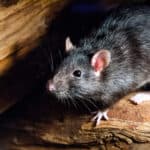
Black rat
Black rat Rattus rattus
Small Indian mongoose Urva auropunctata

Related Species 6

Ploughshare tortoise Astrochelys yniphora Shared Genus
Indian star tortoise
Indian star tortoise Geochelone elegans Shared Family
Burmese star tortoise Geochelone platynota Shared Family
Leopard tortoise
Leopard tortoise Stigmochelys pardalis Shared Family
African spurred tortoise
African spurred tortoise Centrochelys sulcata Shared Family
Greek tortoise Testudo graeca Shared Family

The Radiated Tortoise is a relatively large species of Tortoise, natively found on the island of Madagascar. Although having evolved in similar environments to other star-patterned Tortoises from around the tropics, the Radiated Tortoise has more striking and complex markings than those of the Indian Star Tortoise, for example. The Radiated Tortoise is also known as the Sokake in Madagascar, and although they are critically endangered in the wild, it is widely believed that they are the most beautiful of all Tortoise species. Naturally, then, they are popular exotic pets, which is thought to be one of the main reasons for their demise.
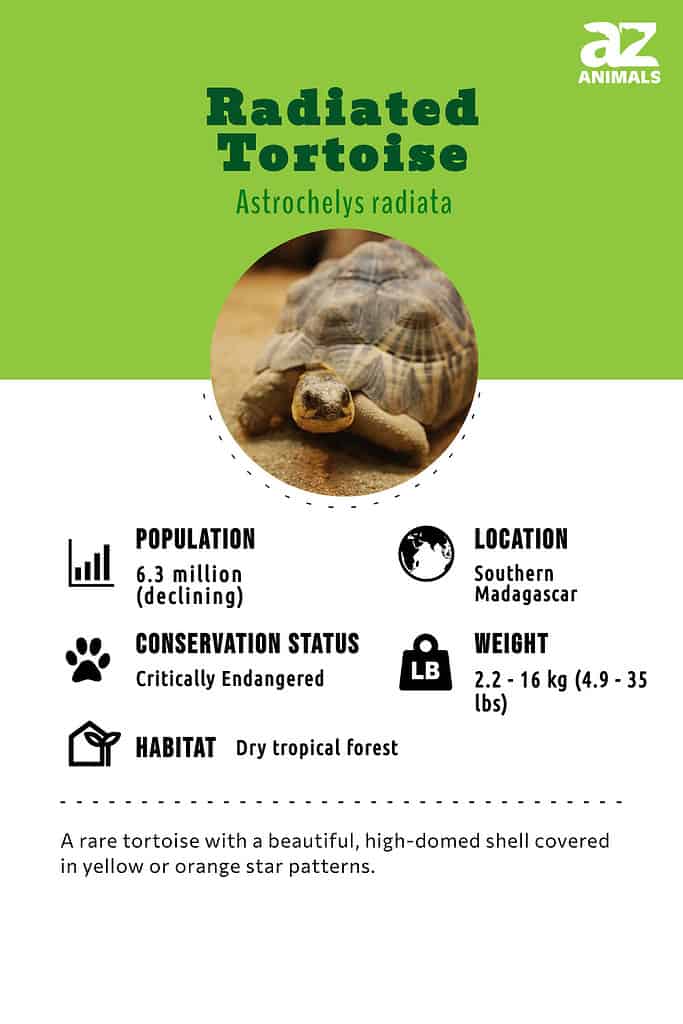
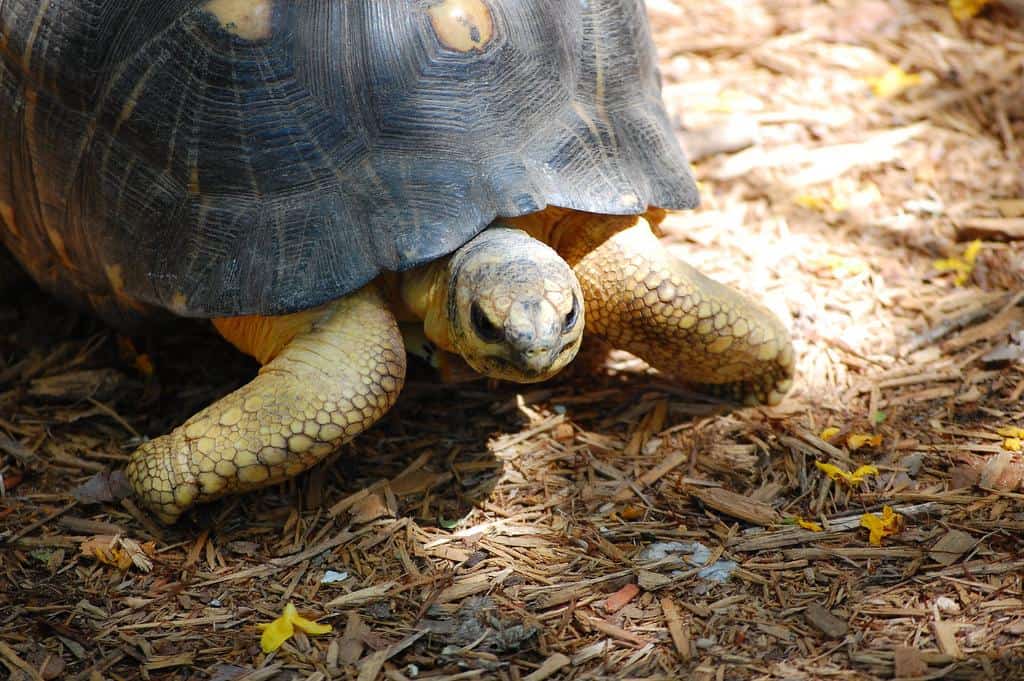
The scientific name of the Radiated Tortoise is Astrochelys radiata.

Classification

The term “tortoise” is often used interchangeably with the term “turtle,” however, the consensus is that a tortoise refers to a turtle that lives exclusively on land. They are reptiles, belonging to the class Reptilia. They are further classified into the order Testudines and the family Testudinidae. From there, there are approximately 49 species spanning more than 15 genera including Astochelys, the genera of the Radiated Tortoise. The scientific name of the Ratiated Tortoise is Astrochelys radiata.

Evolution
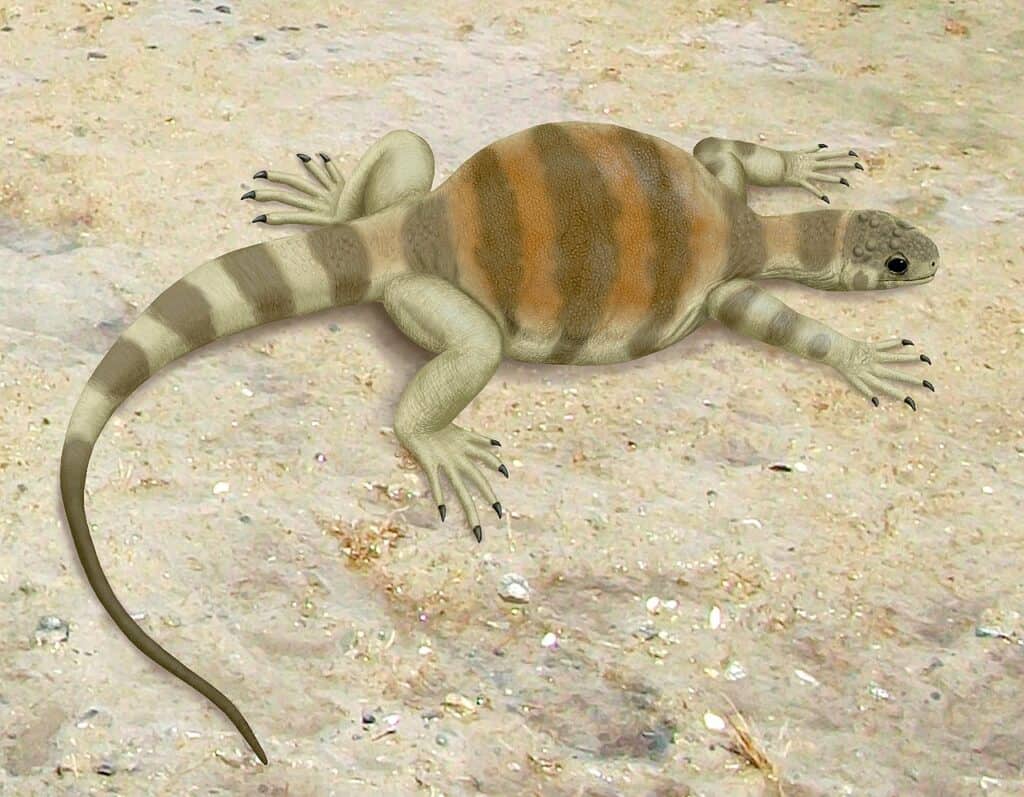
Eunotosaurus africanus

Tortoises evolved in South Africa, from a small reptile named Eunotosaurus africanus around 260 million years ago.

Tortoises and turtles evolved in South Africa, from a small reptile named Eunotosaurus africanus around 260 million years ago. This strange little lizard had the makings of modern-day tortoises with thick, backward curving ribs that formed an armored dome under its skin.

A reptile called Odontochelys semitestacea, evolved 40 million years later in the shallow oceans of China. The Odontochelys had one trait that modern turtles and tortoises share – a plastron or bottom shell. It is believed that these tortoise ancestors developed lower shells first because sharks and other predators attacked them from below the surface of the water.

Proganochelys, or “beast turtle” lived among dinosaurs and was armored above and below. In addition to its protective shell, this ancient turtle had bony neck spikes, leg spikes, and tail spikes. Like its modern relatives, it had a bony shell and a toothless mouth.

These three tortoise ancestors diverged into the terrapin, sea turtle, and tortoise we know today.

Anatomy and Appearance
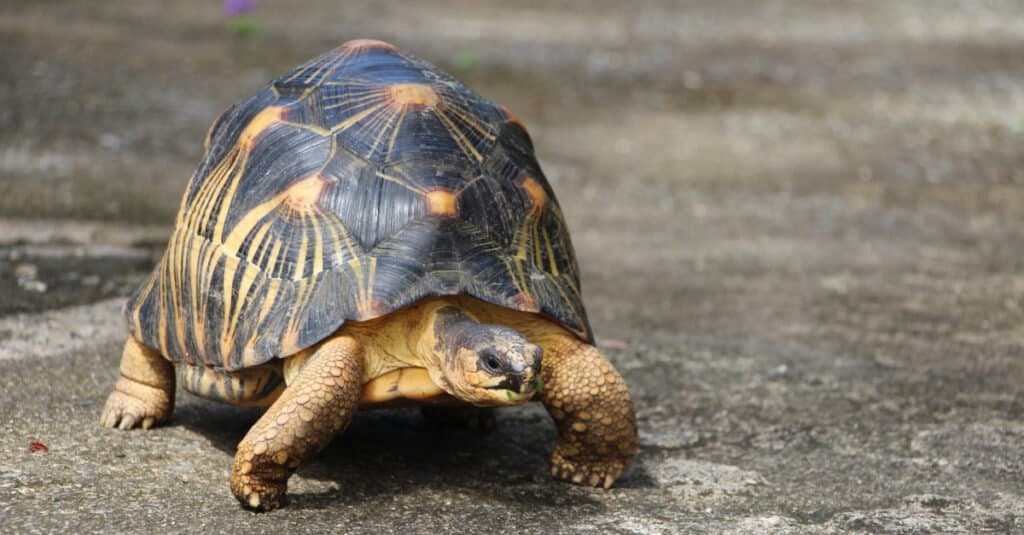
Top 10 Animals That Have Shells - radiated tortoise

The beautiful, dome-shaped shell of the radiated tortoise never loses its unique pattern.

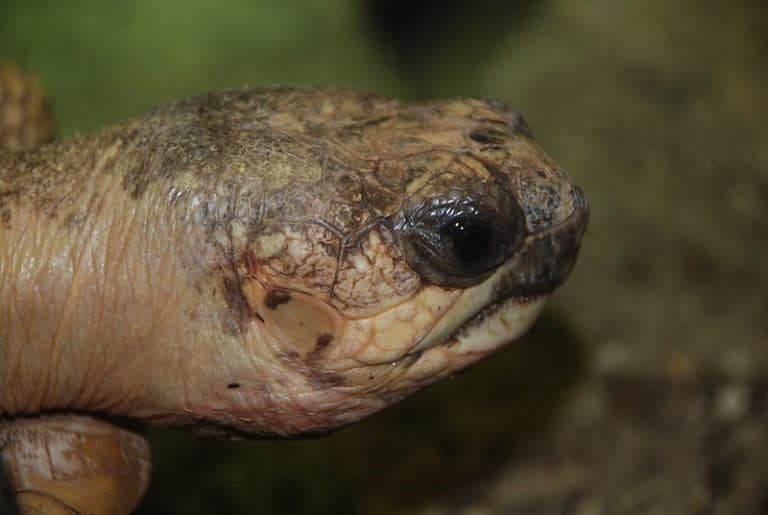
The male Radiated Tortoise tends to be slightly larger than females and the two sexes are also easily identified as the tail of the male Radiated Tortoise is often substantially longer than that of the female. Radiated Tortoises have high-domed, dark brown to black shells, covered with bright yellow or orange intricate star-like patterns. Unlike other star-patterned Tortoises, the centers of the stars on the carapace of the Radiated Tortoise are not raised, giving their domed shell a smoother appearance. The legs, tail, and head are a yellowish color with a black spot on top of the head, which varies in size between individuals. The appearance of this Tortoise actually camouflages it perfectly in the long grasses.

Distribution and Habitat
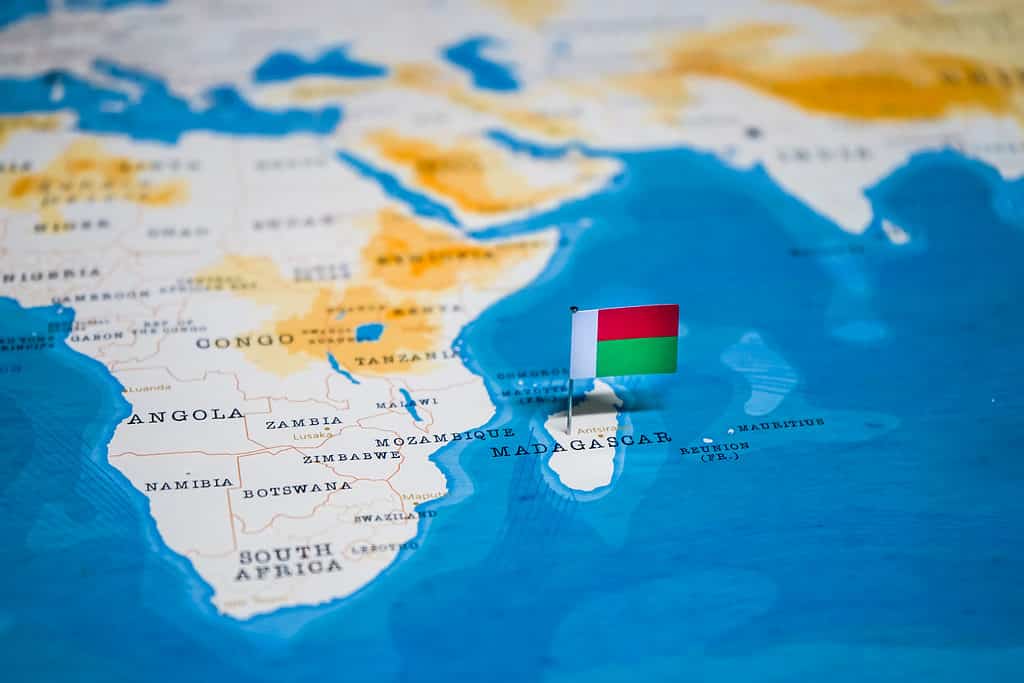
Flag of Madagascar

Madagascar, the home of the Radiated Tortoise, is an island off the southeast of Africa.

The Radiated Tortoise is natively found on the island of Madagascar in the far south and southwestern parts of the island. They inhabit dry regions of brush, thorn forests, tall grasses, and woodland, with the whole population found in an area of 10,000 km squared. Isolated populations can still be found on the higher plateaus as well, but these habitats are incredibly fragmented and the existence of the Tortoise here is not thought to go on for much longer. The Radiated Tortoise is thought to have disappeared entirely from around 40% of its historical range, due to both habitat loss and exploitation.

Behavior and Lifestyle
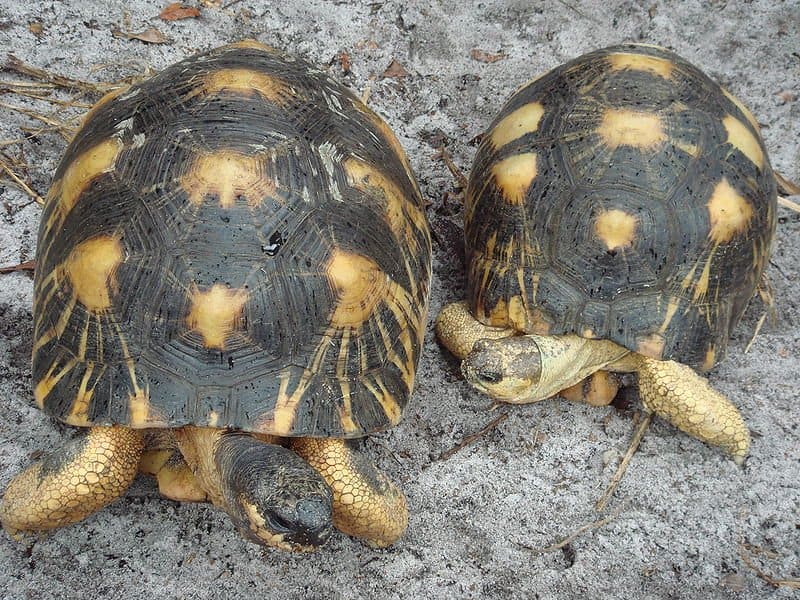
Radiated tortoises are solitary except during mating season.

Like many other Tortoise species found around the world, the Radiated Tortoise generally leads a fairly solitary life, although it is not uncommon for a number to be found grazing together (particularly around the breeding season). They are incredibly adaptable to the changing seasons from dry and arid to the heavy rains of the monsoon, when they are said to almost dance in the rain to shake it off. Radiated Tortoises also emit a loud screeching sound when startled to hopefully intimidate and then scare off the unwelcome predator. The Radiated Tortoise is a peaceful animal but will become aggressive towards individuals that it sees as a threat.

Reproduction and Life Cycles
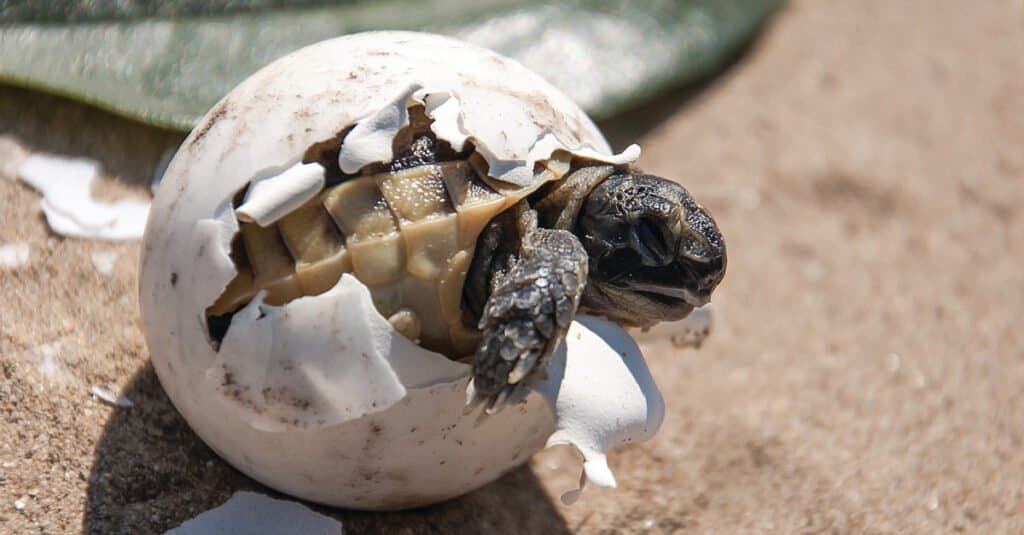
Baby turtle coming out of its eggshell

Female Radiated Tortoises lay 5 – 10 eggs in a nest that she digs in the ground.

Radiated Tortoises usually begin mating when they are around half their adult size, and it starts with the male bobbing his head up and down to court his female. Once mated, the female digs a nest in the ground where she lays up to 5 small eggs (although 10 or more is not uncommon). After an incubation period of between 4 and 7 months, the young Radiated Tortoises hatch measuring between 3 and 4 cm. Although they are born with their detailed star patterns, the markings are white until they grow older. Radiated Tortoises usually live for 40 to 50 years, but some have been known to be more than 100.

Diet and Prey
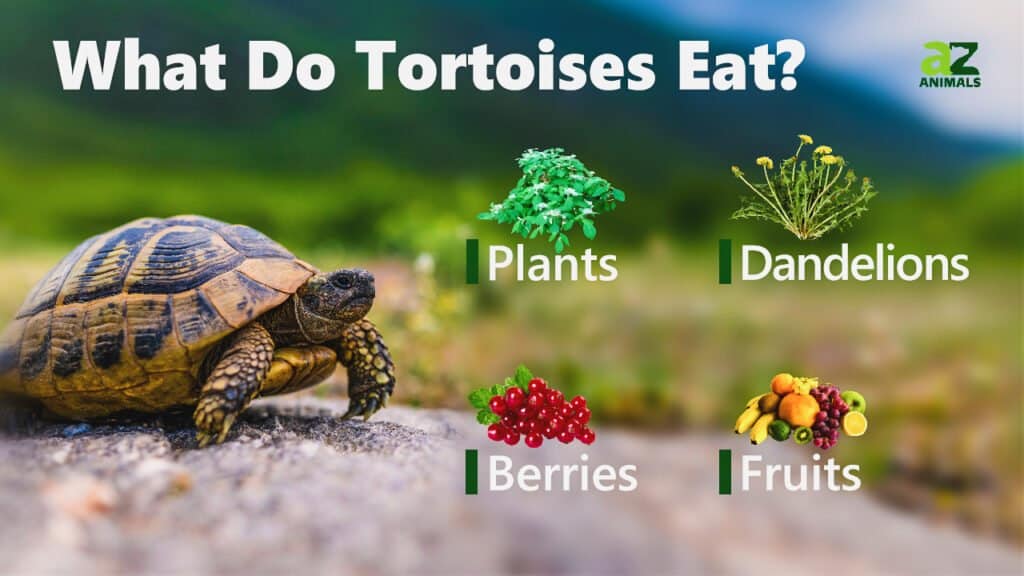
What Do Tortoises Eat
Tortoises eat vegetables, fruits, plants, and fungi in the wild.

The Radiated Tortoise is a primarily herbivorous animal, and although the majority of its diet is comprised of plant matter, they are known to supplement its nutrition by eating a small animal every now and again. Despite this, they need a high-fiber and low-protein diet to survive the most successfully. Leafy greens, grasses, and herbs make up the bulk of the Radiated Tortoise’s food, along with other plant matter like fruits, berries, and prickly pears. In a book written about Tortoises from around the world, the Radiated Tortoise is said to be particularly partial to eating foods that are red in color.

Predators and Threats
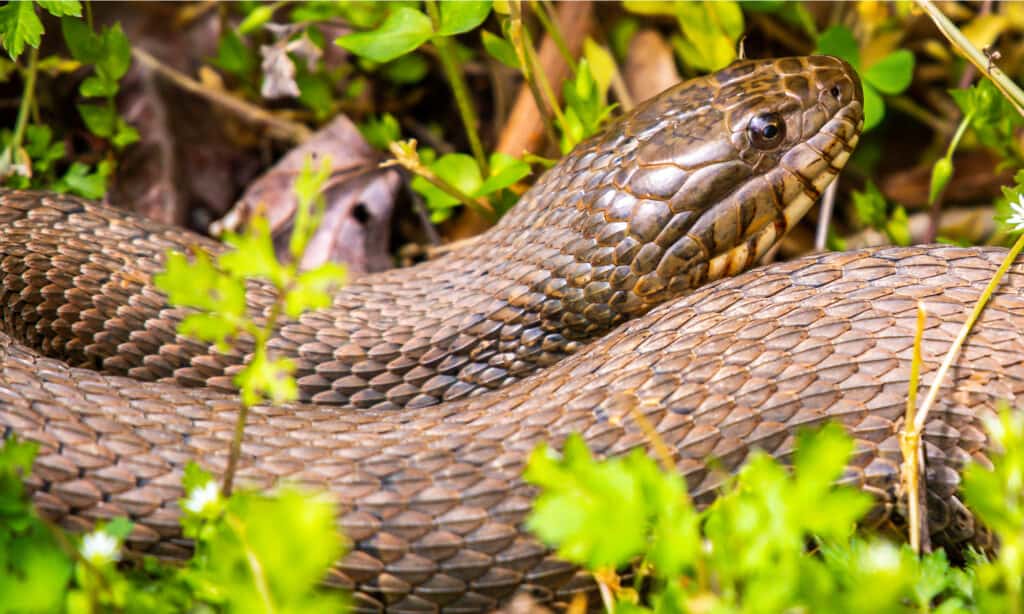
Northern Mole Kingsnake

Kingsnakes are known to prey on tortoises on a regular basis.

In their natural habitats, these ground-dwelling animals are prey to a number of predators including Snakes and large Birds Of Prey. Radiated Tortoises have a couple of defense mechanisms to try to protect them seeing that they can’t run away, including making a loud screeching sound and the ability to pull their soft limbs and head inside their hard shells. Humans are, however, the biggest threat to the Radiated Tortoise both through habitat destruction and exploitation. The Radiated Tortoise is commonly consumed and captured for the exotic pet trade.

Interesting Facts and Features
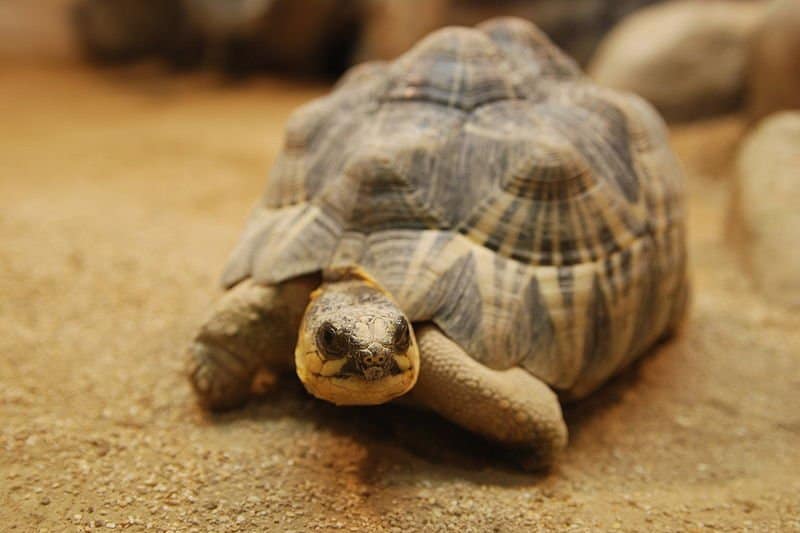
A Radiated Tortoise named Tu’i Malila was given to the British royal family in the mid-1700s and lived 250 years.

The oldest living reptile was a Radiated Tortoise known as Tu’i Malila which was given to the Royal family in the mid-1700s by explorer Captain James Cook, and she died in 1965 at around 250 years old from natural causes. Although Radiated Tortoises are native to Madagascar, they have been introduced to the islands of Reunion and Mauritius in the Indian Ocean to boost their Tortoise populations. Despite the fact that many Radiated Tortoises are eaten in Madagascar, it is actually people coming from other parts of the island, as the local tribes living alongside Radiated Tortoises believe there is a taboo against both touching and eating them.

Relationship with Humans
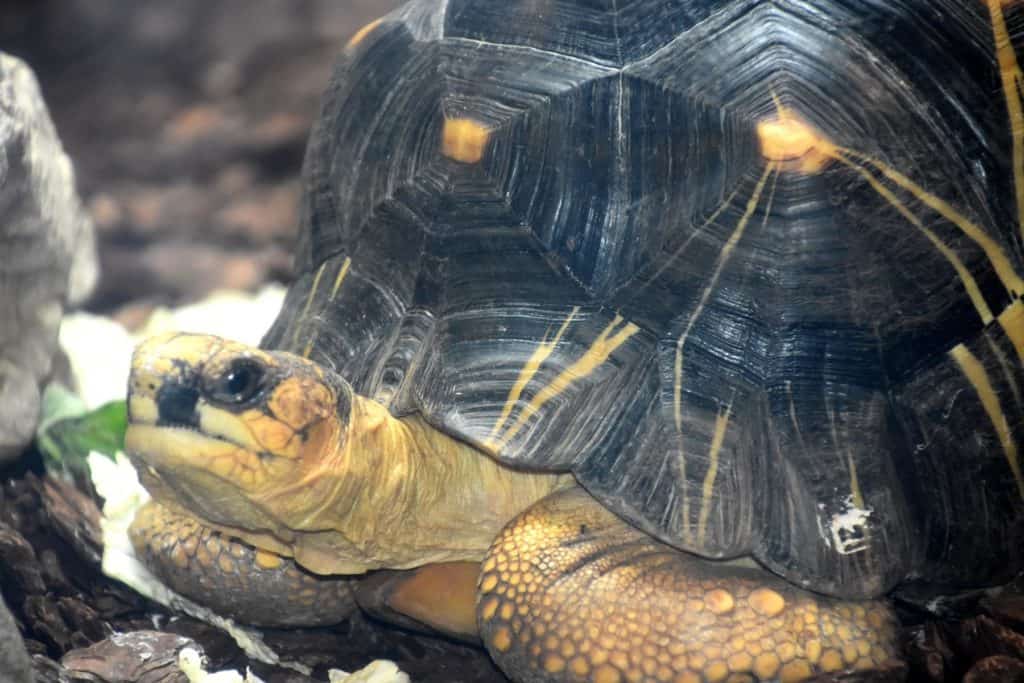
Humans are the biggest threat to the Radiated Tortoise – 45,000 are killed each year for food.

Humans are the biggest threat to Radiated Tortoises, from habitat destruction to their consumption. It is thought that the remaining populations have seen an 80% reduction in numbers over just three generations and those inhabiting south Madagascar’s higher plateaus are even worse affected. Despite the fact that the Radiated Tortoise is now one of the most protected Tortoise species in the world, an estimated 45,000 are killed every year across the southern part of the island, just for food. The beauty of the Radiated Tortoise has also meant that they are in high demand in the illegal exotic pet trade.

Conservation Status and Life Today

The Radiated Tortoise has been listed as being Critically Endangered.

Due to a dramatic fall in population numbers, the Radiated Tortoise has been listed as being Critically Endangered and is therefore under severe threat of becoming extinct in the wild forever. However, captive breeding programs have been relatively successful and are crucial to the survival of this species in the future. Due to the laws about exporting listed species though, there are few found in captivity, most of which are in the USA where they were taken before the species was declared to be at imminent risk of extinction.

View all 181 animals that start with R
How to say Radiated Tortoise in ...
German
Strahlenschildkröte
English
Radiated tortoise
French
Tortue étoilée de Madagascar
Hungarian
Sugarasteknős
Italian
Geochelone radiata
Japanese
ホウシャガメ
Dutch
Stralenschildpad
Polish
Żółw promienisty
Swedish
Strålsköldpadda
Chinese
射紋龜

Sources

  1. David Burnie, Dorling Kindersley (2011) Animal, The Definitive Visual Guide To The World's Wildlife / Accessed January 26, 2011
  2. Tom Jackson, Lorenz Books (2007) The World Encyclopedia Of Animals / Accessed January 26, 2011
  3. David Burnie, Kingfisher (2011) The Kingfisher Animal Encyclopedia / Accessed January 26, 2011
  4. Richard Mackay, University of California Press (2009) The Atlas Of Endangered Species / Accessed January 26, 2011
  5. David Burnie, Dorling Kindersley (2008) Illustrated Encyclopedia Of Animals / Accessed January 26, 2011
  6. Dorling Kindersley (2006) Dorling Kindersley Encyclopedia Of Animals / Accessed January 26, 2011
  7. Radiated Tortoise Facts / Accessed January 26, 2011
  8. Radiated Tortoise Care / Accessed January 26, 2011
  9. Radiated Tortoise Details / Accessed January 26, 2011
  10. Radiated Tortoise Behaviour / Accessed January 26, 2011
  11. About Radiated Tortoises / Accessed January 26, 2011
Lisha Pace

About the Author

Lisha Pace

After a career of working to provide opportunities for local communities to experience and create art, I am enjoying having time to write about two of my favorite things - nature and animals. Half of my life is spent outdoors, usually with my husband and sweet little fourteen year old dog. We love to take walks by the lake and take photos of the animals we meet including: otters, ospreys, Canadian geese, ducks and nesting bald eagles. I also enjoy reading, discovering books to add to my library, collecting and playing vinyl, and listening to my son's music.

Thank you for reading! Have some feedback for us?


Radiated Tortoise FAQs (Frequently Asked Questions)

Radiated Tortoises are Herbivores, meaning they eat plants.