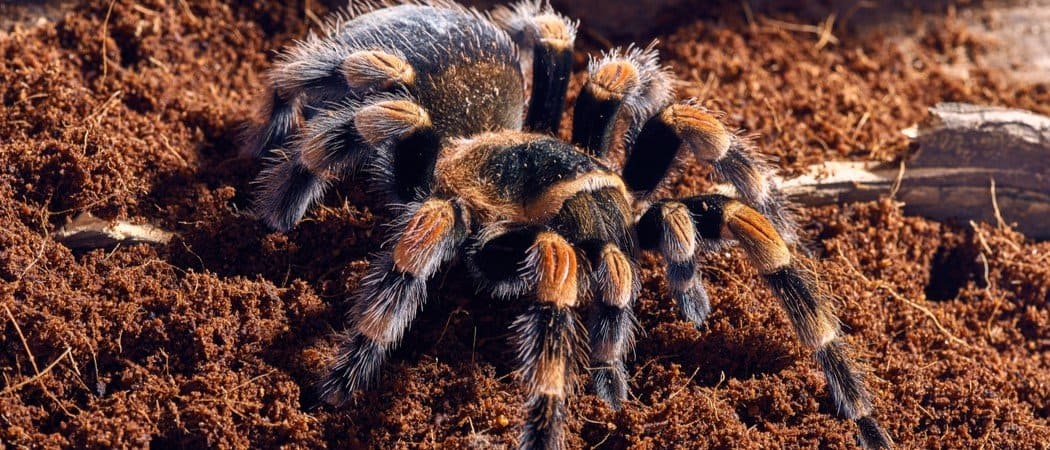
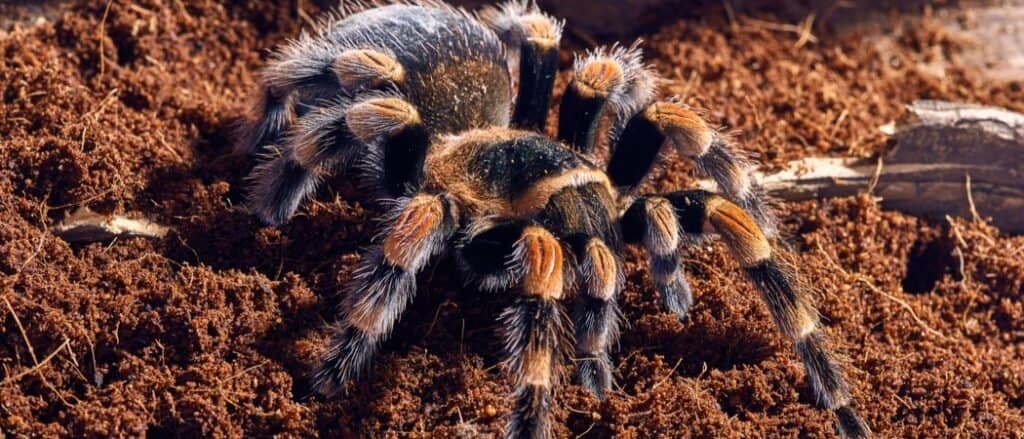
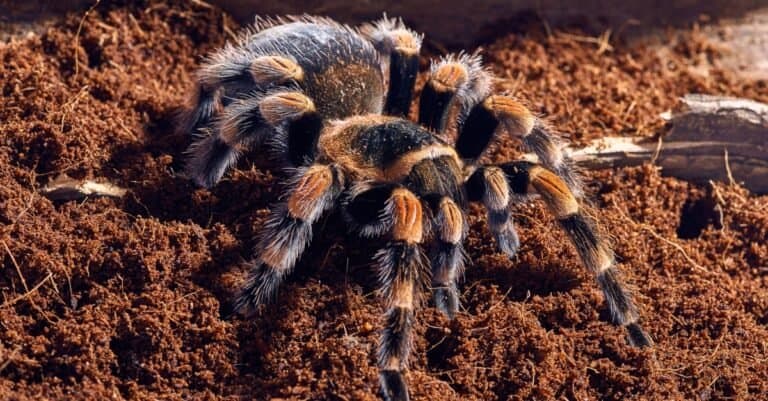
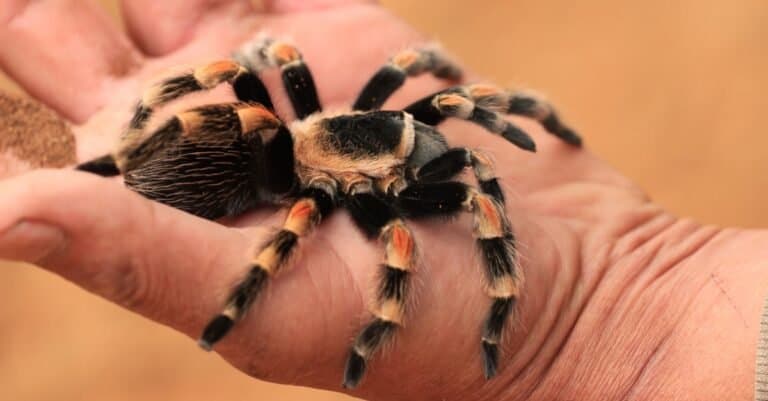
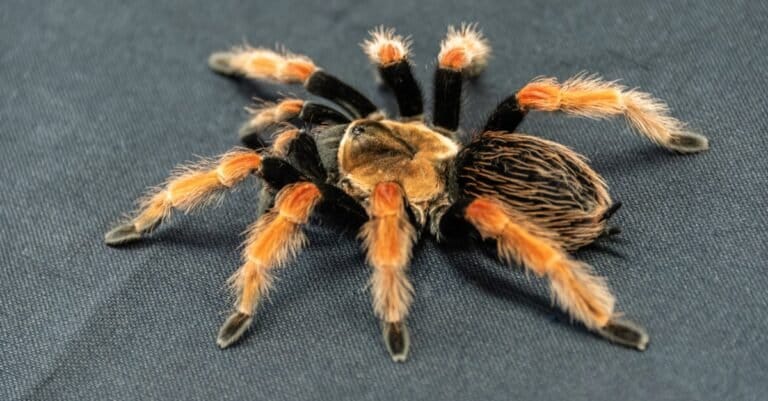
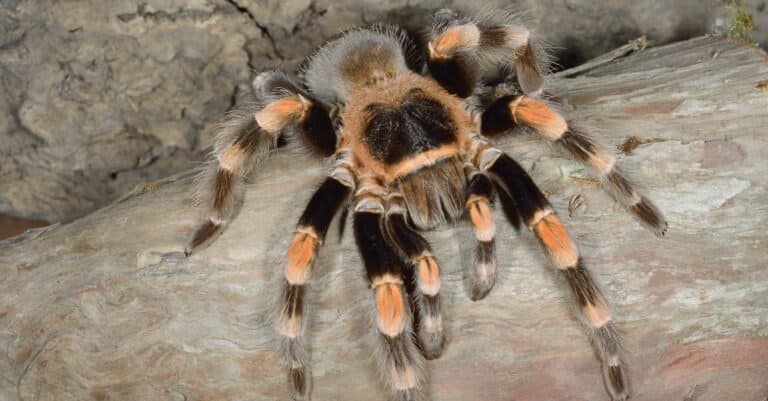


The Red knee tarantula is a desert-dwelling spider.
Instead of spinning a web, these spiders dig burrows and spend most of their lives underground. They have a long lifespan compared to other spiders. Males can live up to ten years whereas females can potentially reach 30 years old. They are carnivores eating a diet of crickets, grasshoppers, roaches, lizards, frogs, and sometimes small mice.
5 Incredible Red Knee Tarantula Facts!
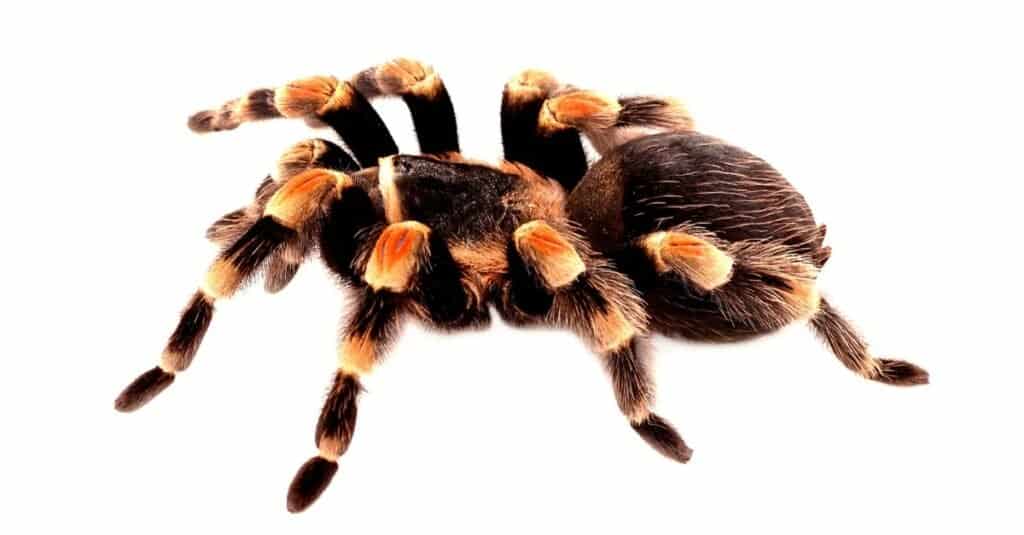
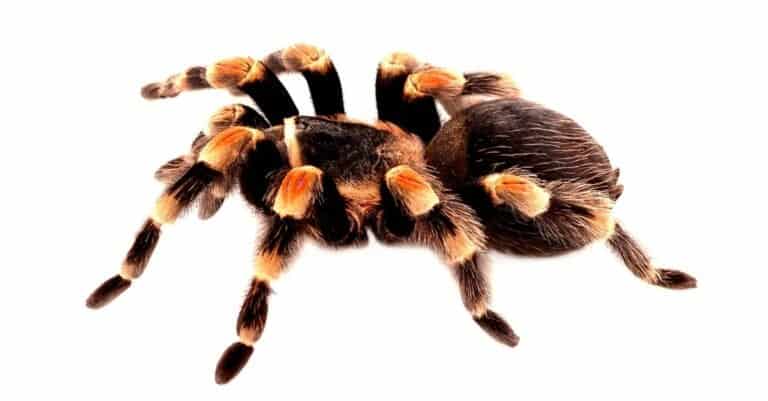
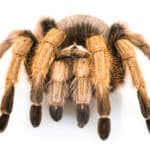
Mexican Red Knee Tarantula isolated on a white background.
©Pixel Memoirs/Shutterstock.com
- This spider is one of over 1,000 species of tarantula.
- These tarantulas hide in their burrow waiting to grab an insect or rodent passing by.
- The eight eyes on the head of this spider allow it to see what’s in front of it and behind it!
- A female red knee tarantula can lay from 200 to 400 eggs at a time.
- There are two claws on the end of each leg that allow this spider to climb a slick surface.
Species, Types, and Scientific Name
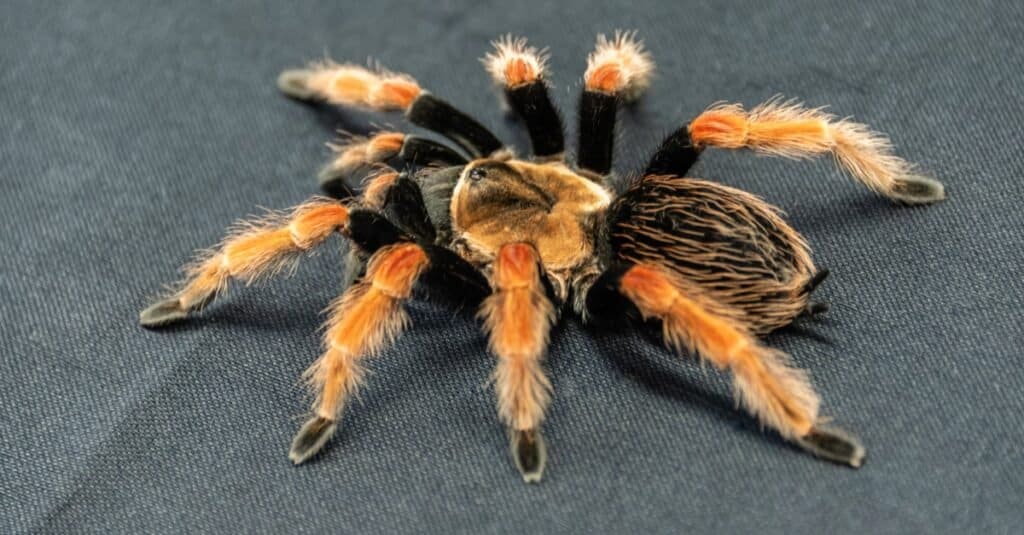
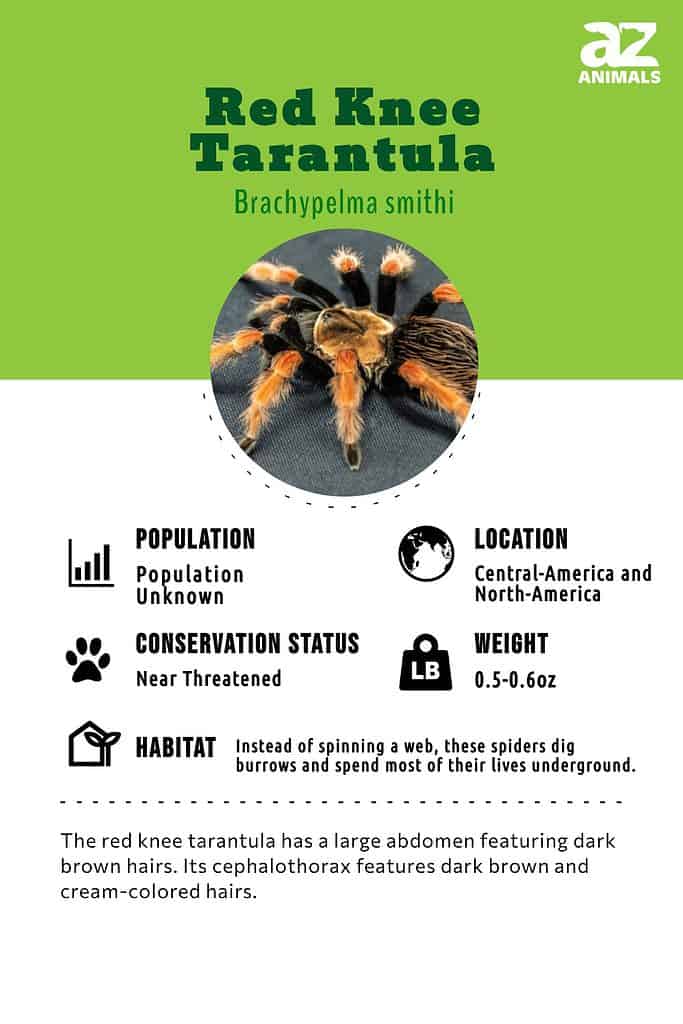
The scientific name of the red knee tarantula is Brachypelma smithi.
©James McKay/Shutterstock.com
The scientific name of the red knee tarantula is Brachypelma smithi. The Greek word Brachypelma means short (brachys) sole/foot (pelma). The word smithi relates to this particular species of tarantula. Red knee tarantulas, also called the Mexican red knee tarantula, belong to the Theraphosidae family and the order Araneae.
There are 1,010 species of tarantula. Tarantulas are different from other types of spiders in that they always have hair on their body and legs. Also, while most spiders have six spinnerets for spinning webs, some types of tarantulas have four spinnerets while others have two. Furthermore, a tarantula’s feet have glands in them that produce silk while spiders have these glands in their abdomen.
The red knee tarantula belongs to the genus Brachypelma. Some of the other tarantulas that belong to this genus include:
- Brachypelma auratum
- Brachyplema albiceps
- Brachyplema andrewi
- Brachyplema aureoceps
- Brachyplema baumgarteni
- Brachyplema boehemi
- Brachyplema emilia
- Brachyplema fossorium
- Brachyplema hamorii
- Brachyplema klaasi
- Brachyplema smithi
Evolution and Origin
Tarantulas first appeared in the Americas about 120 million years ago. The spiders that were ancestors to the African tarantulas appeared close to 112 million to 108 million years ago. However, by the 108 million year mark, taranatulas emerged from what is now known as India.
The first known tarantulas were ancient and first appeared in the Americas as mentioned above. However, at the time, South America would have been connected to Africa, India, and Australia as part of the Gondwana supercontinent.
With that said, spiders are an extremely ancient species.
Appearance
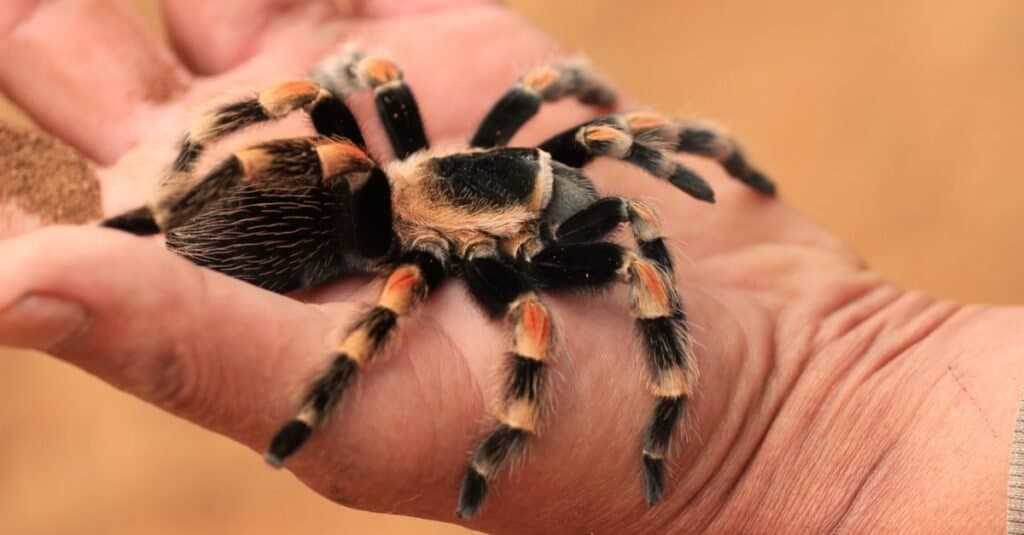
Red knee tarantulas are five to six inches long and weigh an average of 0.5 ounces.
©Vladimira Pufflerova/Shutterstock.com
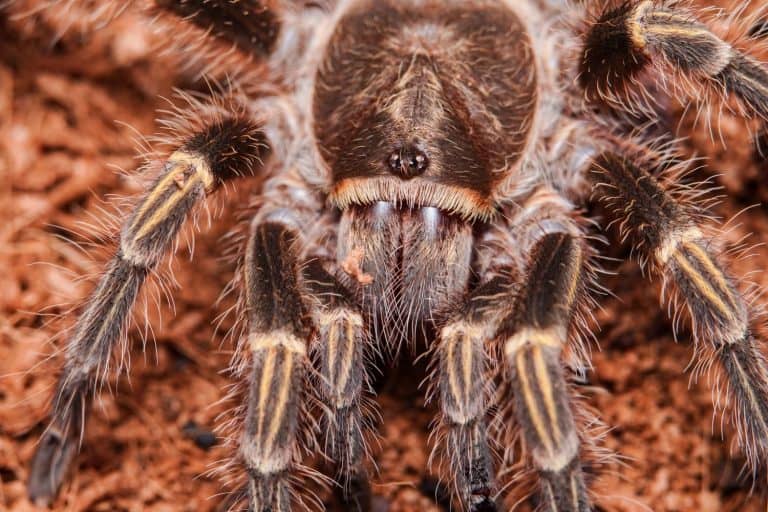
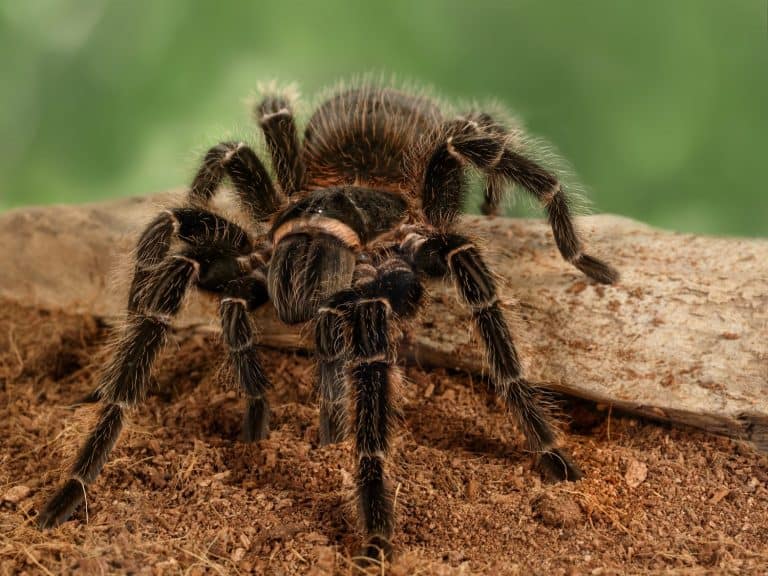
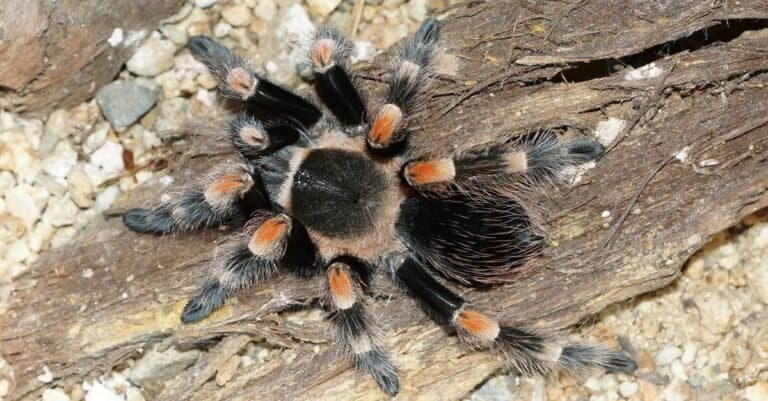
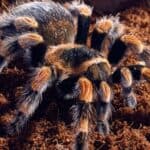
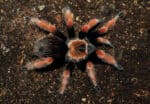
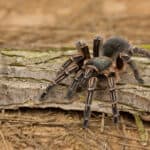
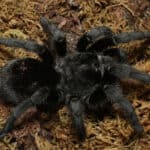
The red knee tarantula has a large abdomen featuring dark brown hairs. Its cephalothorax features dark brown and cream-colored hairs. This spider has bright red or orangish hairs on each of its knee joints. This coloration earned this spider its name.
The colorful hairs on this spider’s legs are designed to sense vibrations in the ground. The vibrations help these spiders to safely navigate their environment. They also have palps that help them to taste and smell things.
Baby red knee tarantulas or spiderlings don’t have the full coloration of an adult. Their body doesn’t start to take on the dark brown and red/orange color pattern until they are several months old.
In terms of size, red knee tarantulas are five to six inches long and weigh an average of 0.5 ounces. The largest diameter of this spider is 10 inches.
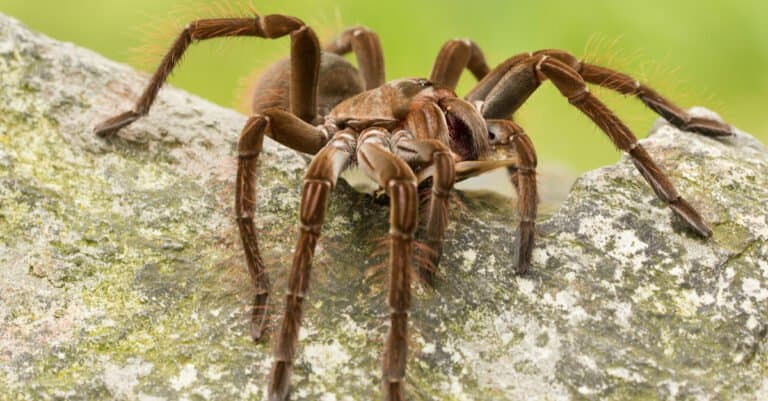
Compare this to another tarantula called the Goliath bird-eating tarantula. The Goliath bird-eating tarantula has a leg span measuring 11 inches in diameter. Not surprisingly, it’s called the Goliath tarantula due to its size!
Normally, a red knee tarantula takes cover in its burrow if it feels threatened by a predator. Sometimes it stands up on its back legs to reveal its fangs to scare the threat away. One of the most interesting facts about this spider is it has barbed hairs on the underside of its abdomen.
It can shoot these barbed hairs at predators to defend itself. These hairs can lodge in a predator’s body causing itching and irritation. If they land in a predator’s eyes they can cause temporary blindness.
This tarantula leads a solitary life except during the breeding season.
Habitat
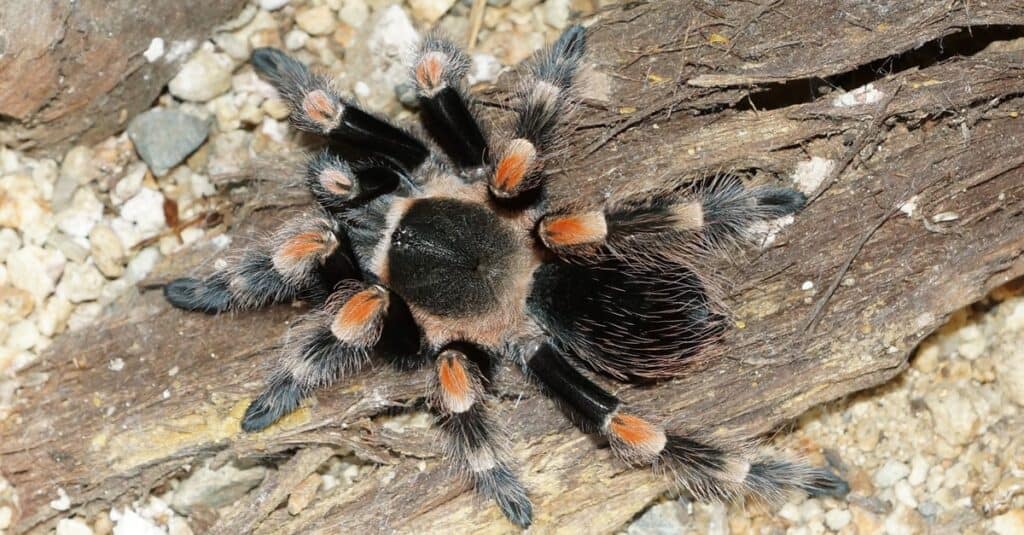
Red knee tarantulas can be found in Mexico, Panama, and the southwestern part of the United States.
©Tye Tygon Filmworks/Shutterstock.com
Red knee tarantulas can be found in Mexico, Panama, and the southwestern part of the United States. They live in a desert habitat as well as in scrublands and dry forests. In a desert, this spider may dig a burrow at the base of a cactus!
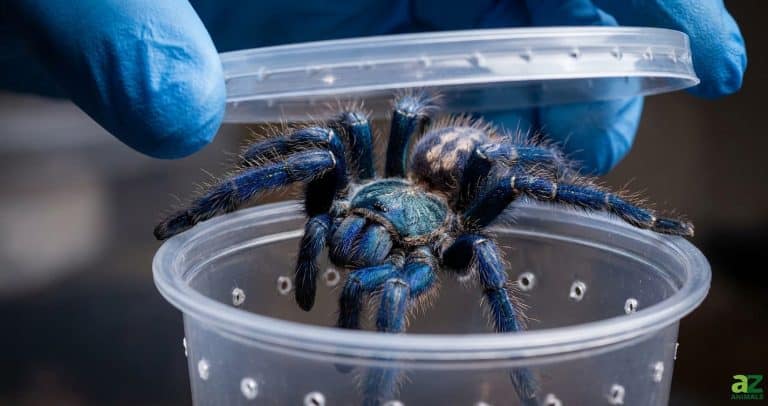
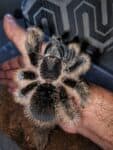
Red knee tarantulas have a shy temperament and look for hiding places. A wild red knee tarantula may find its way into a shed or garage and make a home between a stack of old boxes or behind a dusty collection of brooms, shovels, etc. Otherwise, if a red knee tarantula is in a house, it’s usually a pet!
Diet
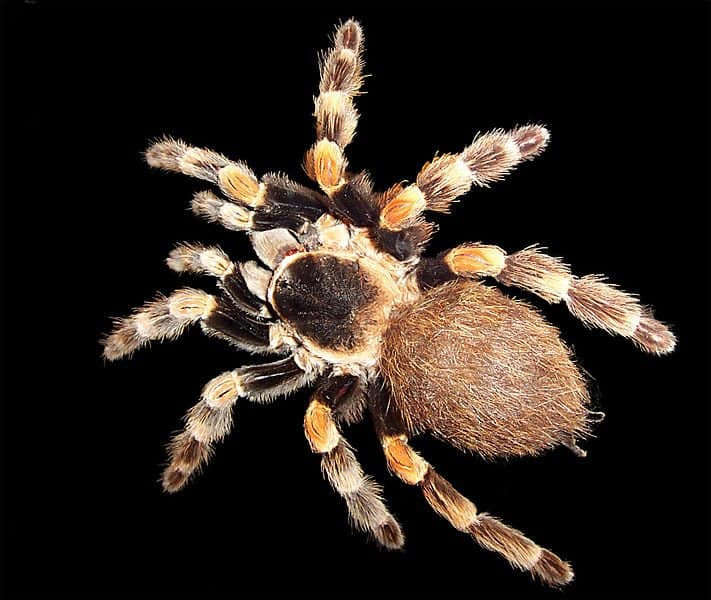
Red Knee Tarantula
©User: Fir0002, CC BY-SA 3.0, via Wikimedia Commons – Original / License
Red knee tarantulas are carnivores. One of the most notable facts about these spiders is they usually let their food come to them. This spider hides in its burrow and waits for a lizard, cricket, or other prey to enter the area. When the animal gets close enough, the tarantula grabs it and gives it a venomous bite. Once their prey is paralyzed, the venom liquifies the insides of the animal. The spider consumes the liquified insides of its prey.
What eats the red knee tarantula?
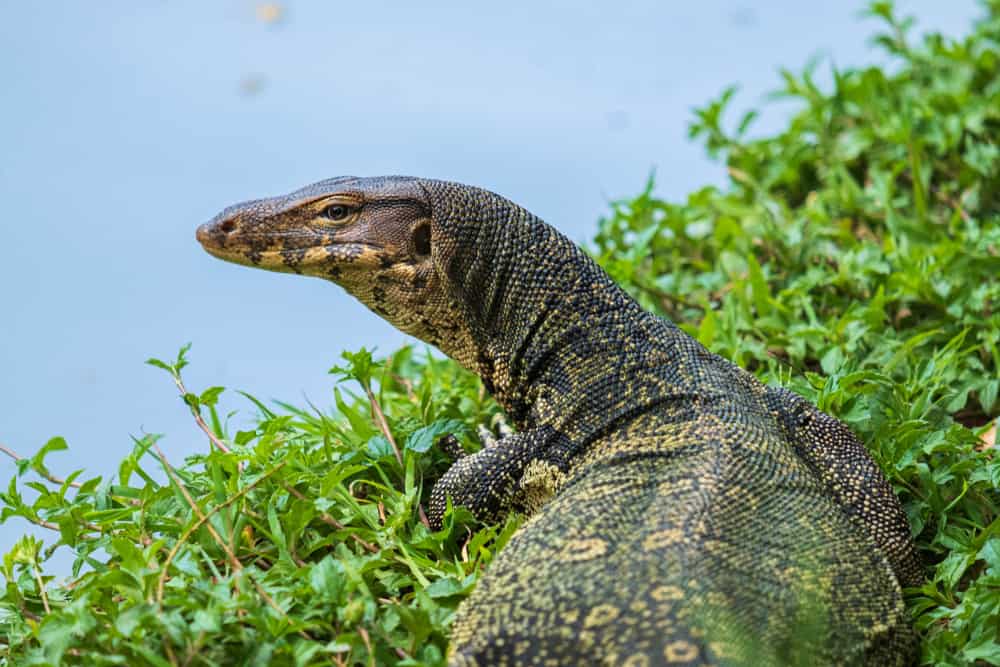
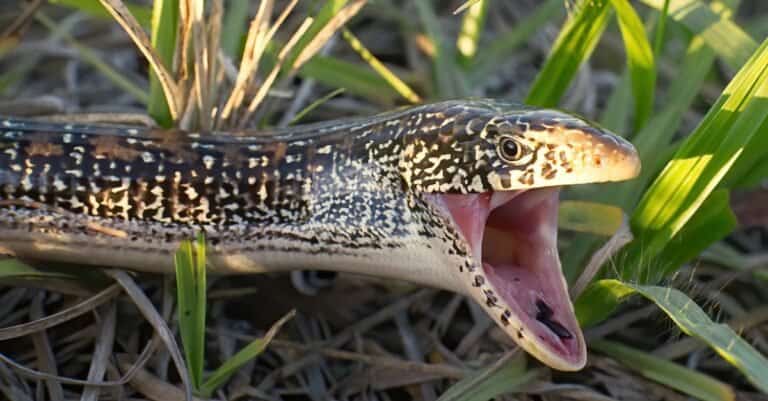
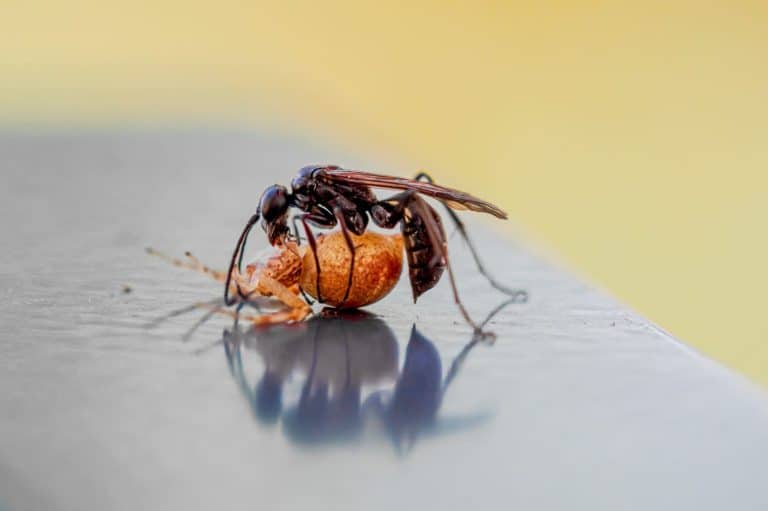
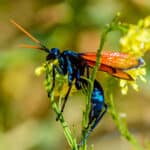
Predators of this colorful spider include birds, large lizards, and the Pepsis wasp.
©Ruben PH/Shutterstock.com
Predators of this colorful spider include birds, large lizards, and the Pepsis wasp aka the Tarantula hawk wasp.
A baby red knee tarantula is even more susceptible to being captured by a predator.
What does the red knee tarantula eat?
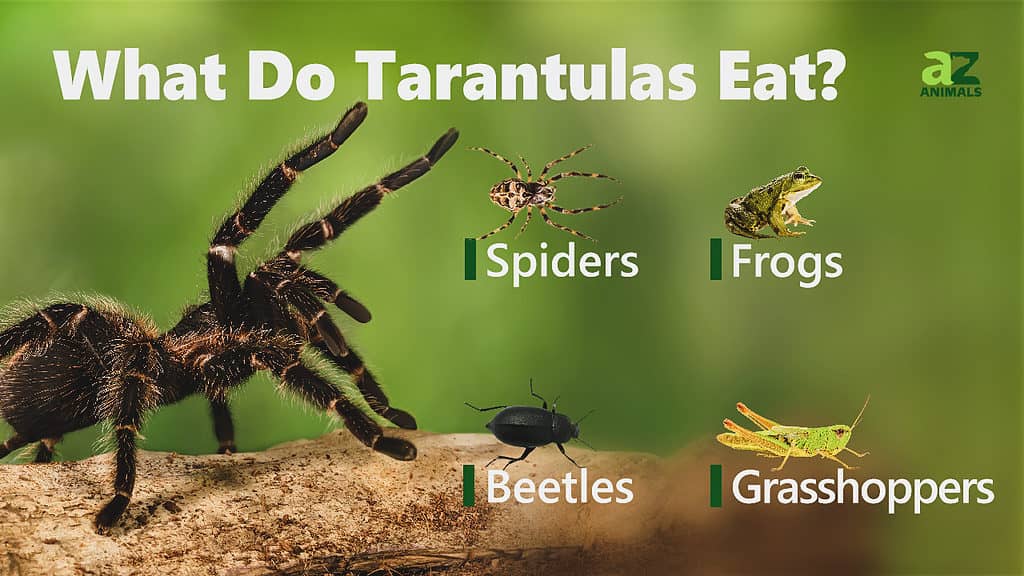
These spiders eat crickets, grasshoppers, rodents, small lizards, frogs, and roaches. They eat whatever animal is most abundant in their desert habitat. A baby tarantula eats the same type of prey, but smaller in size.
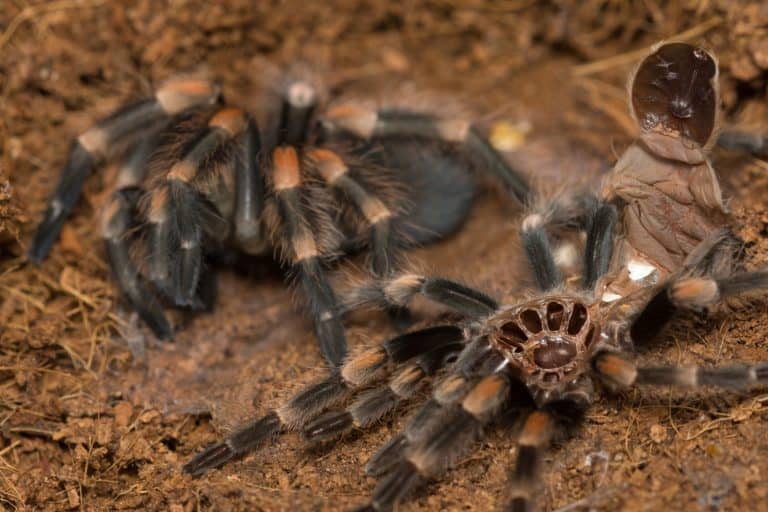
Normally, these spiders eat one or two times per week. A month or two before molting, these tarantulas usually stop eating. This is so they can focus on this stressful process. A tarantula molts many times throughout its long lifespan.
Red Knee Tarantula Pictures
View all of our Red Knee Tarantula pictures in the gallery.

True Touch Lifestyle/Shutterstock.com
Sources
- Wikipedia / Accessed August 13, 2021
- Smithsonian's National Zoo & Conservation Biology Institute / Accessed August 13, 2021
- Arizona-Sonora Desert Museum / Accessed August 13, 2021
- Giant Spiders / Accessed August 13, 2021
- Maryland Zoo / Accessed August 13, 2021