R
Species Profile

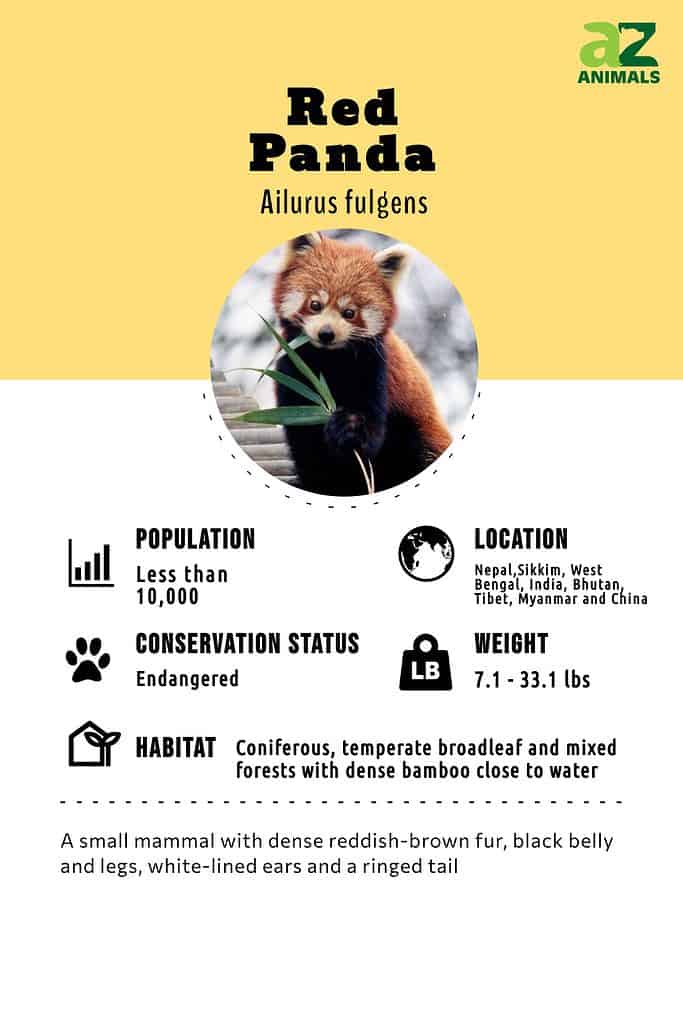
Red Panda

Ailurus fulgens

Bamboo climber of the cloud forests
Abeselom Zerit/Shutterstock.com

Red Panda Distribution

Click a location to explore more animals from that region

Loading map...

Size Comparison

Human 5'8"
Red Panda 9 in

Red Panda stands at 13% of average human height.

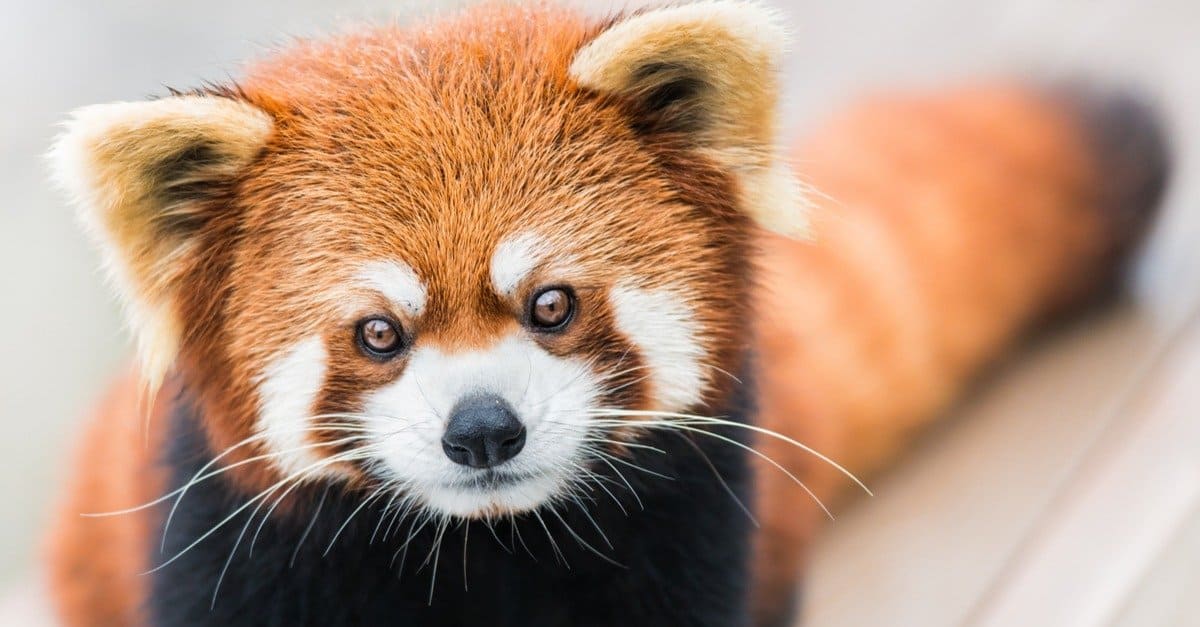
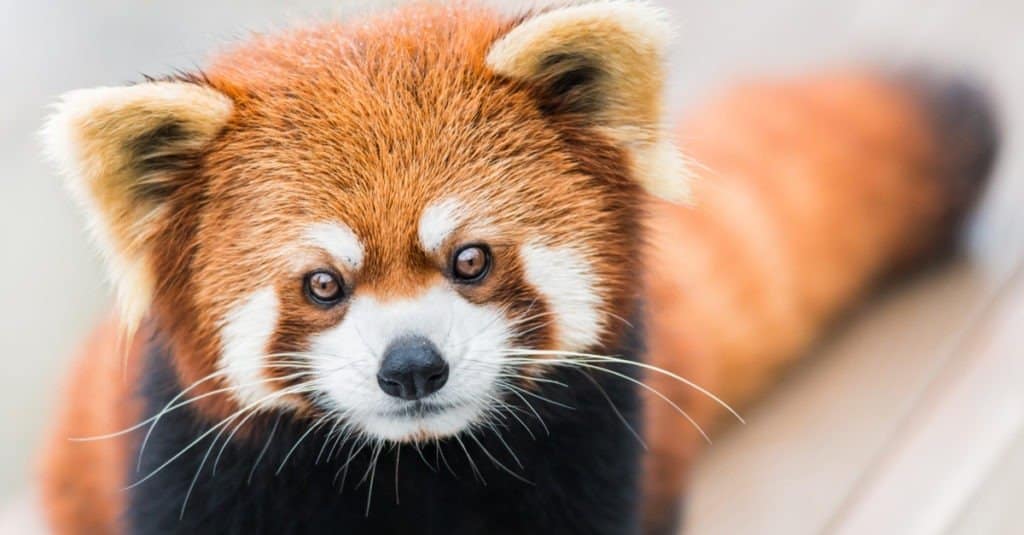
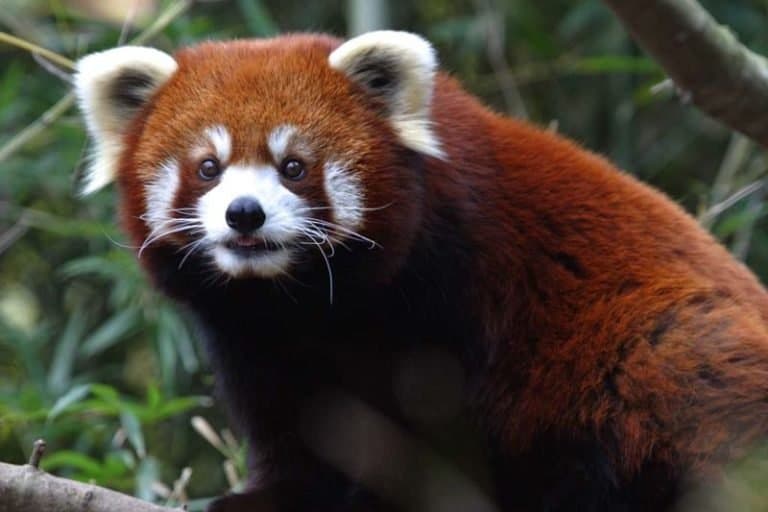
A frontal portrait of a Red Panda

At a Glance

Wild Species
Also Known As Lesser panda, Firefox, Red bear-cat, Bear-cat
Diet Omnivore
Activity Crepuscular+
Lifespan 9 years
Weight 6.2 lbs
Status Endangered
Did You Know?

Size: head-body 50-64 cm; tail 28-49 cm; mass typically 3-6.2 kg (species accounts: Nowak; IUCN/Red Panda Network summaries).

Scientific Classification

The red panda is a small arboreal carnivoran native to the eastern Himalayas and southwestern China, specialized for a bamboo-rich diet despite belonging to the order Carnivora.

Kingdom
Animalia
Phylum
Chordata
Class
Mammalia
Order
Carnivora
Family
Ailuridae
Genus
Ailurus
Species
Ailurus fulgens

Distinguishing Features

  • Reddish-brown coat with darker legs and underside
  • Bushy ringed tail used for balance and insulation
  • White facial mask with reddish “tear” markings
  • Semi-retractile claws and strong grasping feet for climbing
  • Enlarged radial sesamoid (“false thumb”) aiding in grasping bamboo

Physical Measurements

Males and females differ in size

Height
10 in (8 in – 10 in)
Length
3 ft 2 in (2 ft 7 in – 3 ft 8 in)
Weight
12 lbs (10 lbs – 14 lbs)
9 lbs (7 lbs – 12 lbs)
Tail Length
1 ft 3 in (11 in – 1 ft 7 in)
Top Speed
15 mph
running

Appearance

Primary Colors
Secondary Colors
Skin Type Dense double-layered fur (insulating guard hairs + woolly underfur); furred foot soles; semi-retractile claws.
Distinctive Features
  • Head-body length 50-64 cm; tail length 28-49 cm.
  • Adult mass typically 3.0-6.2 kg (Nowak, 1999; IUCN Red List species account).
  • Lifespan ~8-10 years in the wild; up to ~14-15 years in captivity (zoo/managed-care records summarized in major references).
  • Arboreal climber: flexible ankles that can rotate to descend head-first; plantigrade stance aids branch walking (documented in species natural history).
  • Enlarged radial sesamoid ("false thumb") improves bamboo grasping and food handling (classic carnivoran adaptation in Ailuridae).
  • Long, ringed tail provides balance and wrap-around insulation while resting in trees.
  • Dense fur on foot soles increases grip on wet branches and snow in montane forests of the eastern Himalayas and SW China.
  • Bamboo-specialist feeding: primarily bamboo leaves and shoots, supplemented seasonally with fruits, blossoms, eggs, and insects (IUCN natural history).
  • Key identification traits: white facial mask with tear-like markings; reddish coat; black limbs and belly; prominent tail rings.
  • Scent-marking with anal/perineal glands and urine used for territorial communication; also uses vocalizations in dense forest (field observations).

Sexual Dimorphism

Sexual dimorphism is subtle: males average slightly larger and heavier, with broader heads/skulls. Coat color and pattern are similar in both sexes, so size and cranial proportions are the main differences.

  • Slightly larger average body mass and head size (population-level trend).
  • Broader skull/zygomatic arches reported in morphometric comparisons.
  • Slightly smaller average mass and head breadth; otherwise same coat patterning.
  • Mammary nipples evident during lactation; no consistent pelage differences.

Did You Know?

Size: head-body 50-64 cm; tail 28-49 cm; mass typically 3-6.2 kg (species accounts: Nowak; IUCN/Red Panda Network summaries).

Diet: bamboo commonly makes up ~85-95% of intake; they also eat fruit, blossoms, eggs, insects, and small vertebrates when available (field diet studies across Himalaya/China).

They have a "false thumb" (enlarged radial sesamoid bone) that helps grip bamboo stems-an independent evolution from the giant panda's similar tool.

Ankle joints can rotate to climb down tree trunks headfirst-rare among carnivorans and key to their arboreal lifestyle.

Reproduction includes delayed implantation; reported gestation (including delay) is ~112-158 days; litters are 1-4 cubs (most often 2).

Lifespan: typically ~8-10 years in the wild; commonly 12-15+ years in human care (zoo records vary by individual and husbandry).

Unique Adaptations

  • Distinct family within Carnivora (Ailuridae): not a bear or raccoon; it represents its own surviving lineage of "panda-like" carnivorans.
  • Enlarged radial sesamoid ("false thumb") plus flexible wrists for precise grasping of bamboo and climbing supports.
  • Highly mobile ankles that rotate to control descent-supports headfirst down-climbing and agile branch movement.
  • Dense reddish outer coat and thick underfur for cold, high-elevation forests; fur also covers the foot soles for insulation and grip on snow/ice.
  • Long, ringed tail (typically 28-49 cm) used for balance on narrow branches and for heat conservation when curled around the body.
  • Bamboo-specialist strategy with a carnivoran digestive tract: compensates for low-fiber digestion efficiency by selective feeding (tender leaves/shoots) and high daily intake time.

Interesting Behaviors

  • Arboreal daily routine: forages and travels in trees, often resting high in the canopy; when threatened, it commonly flees upward rather than running on the ground.
  • Crepuscular/nocturnal activity in many populations (often most active at dawn/dusk), shifting with season, temperature, and human disturbance.
  • Bamboo feeding behavior: grasps stems with forepaws (using the false thumb), strips leaves, and clips shoots with strong cheek teeth; spends many hours per day feeding due to bamboo's low caloric value.
  • Scent-marking communication: uses anal scent glands and urine to mark branches, rocks, and trail points; also uses shared latrine sites in parts of its range (reported in field observations).
  • Thermoregulation: in cold weather it wraps its long, ringed tail around the body like a blanket; it may also "bask" stretched on branches in sun to warm up.
  • Defensive displays: can stand upright on hind legs to appear larger and use sharp, semi-retractile claws in close defense; vocalizations include whistles/squeals and a characteristic huffing call described in zoo and field notes.

Cultural Significance

In the eastern Himalaya and southwestern China, the red panda (Ailurus fulgens) is a symbol for protecting temperate forests and bamboo undergrowth. It is Sikkim's state animal and became a global icon through the "firefox" name and Mozilla Firefox.

Myths & Legends

In natural history records, the Red Panda was first called the "panda" by Western science. Only later did the bigger species become the "giant panda", making the "lesser panda" vs "giant panda" pair.

The red panda (Ailurus fulgens) has many local names across Nepal and nearby Himalaya. It is part of local stories and local knowledge, not one region-wide myth.

The red panda (Ailurus fulgens) is often called the "fire fox" in English; the name spread around the world with Mozilla Firefox and made the species a modern symbol of the forest canopy.

Conservation Status

EN Endangered

Facing a very high risk of extinction in the wild.

Population Decreasing

Protected Under

  • CITES Appendix I
  • India: Wildlife (Protection) Act, 1972 (Schedule I)
  • Nepal: National Parks and Wildlife Conservation Act, 1973
  • Bhutan: Forest and Nature Conservation Act (national protection)
  • China: national protection status with restrictions on hunting/trade (varies by province/implementation)

Life Cycle

Birth 2 cubs
Lifespan 9 years

Lifespan

In the Wild
6–12 years
In Captivity
10–15 years

Reproduction

Mating System Polygynandry
Social Structure Solitary
Breeding Season January-March (in the Northern Hemisphere; peak estrus and mating typically in February)
Breeding Pattern Transient
Fertilization Internal Fertilization
Birth Type Internal_fertilization

Red pandas are largely solitary; adults associate briefly during the winter breeding season. Males range widely and may mate with multiple receptive females, and females may accept more than one male. After mating, females rear the cubs alone.

Behavior & Ecology

Social No fixed group Group: 1
Activity Crepuscular, Cathemeral
Diet Omnivore Tender bamboo leaves and young bamboo shoots (montane bamboos such as Fargesia spp.)

Temperament

Generally shy and secretive; minimizes conflict via avoidance and scent-marked spacing.
Primarily solitary; intraspecific aggression increases during mating season and resource competition.
Across populations, adults are solitary and scent-oriented; activity shifts with temperature, disturbance, and food.
Maternal care is intensive: cubs are altricial; litter size 1-4 (commonly 2) (Nowak 1999; IUCN species accounts).
Reproductive timing includes delayed implantation; gestation reported as 112-158 days (Nowak 1999; AZA husbandry references).
Longevity reported ~8-10 years in the wild and ~15 years in captivity (IUCN; AZA husbandry references).

Communication

twittering Soft contact call
whistle Alarm/alert
huff/quack-like snort Disturbance
bleat/"moo" Social/sexual contexts
growl/squeal Aggression or handling distress
scent marking with anal glands, urine, and feces on trails and substrates
plantar (foot) glands leave scent trails while walking
cheek/chin rubbing on objects for scent deposition
visual postures: tail arching, piloerection, and bipedal "threat" stance
tactile interactions mainly during mating and mother-cub care

Habitat

Forest Deciduous Forest Coniferous Forest Woodland Mountain
Biomes:
Temperate Forest Alpine
Terrain:
Mountainous Hilly Valley Riverine Rocky
Elevation: 4593 ft 2 in – 15748 ft

Ecological Role

Montane bamboo specialist and opportunistic omnivore in Himalayan/subtropical cloud-forest ecosystems; functions mainly as a bamboo browser with minor predation/scavenging roles.

Regulates bamboo understory biomass and shoot/leaf turnover through intensive browsing Seed dispersal for some fleshy-fruited plants via fruit consumption (localized, seasonal) Nutrient cycling: returns concentrated plant material to soil as feces in forest/bamboo thickets Trophic linkage: occasional predation on insects/eggs and serves as prey for large carnivores, supporting food-web structure

Diet Details

Main Prey:
Insects and other invertebrates Bird eggs Nestling birds Small mammals
Other Foods:
Bamboo leaves and young shoots Soft fruits and berries Acorns and other mast Grasses and herbaceous vegetation Roots and tubers Fungi

Human Interaction

Domestication Status

Wild

Red panda (Ailurus fulgens) is not domesticated and has no history of being bred by people. It is a protected wild species. Humans affect it by habitat loss, hunting/poaching, accidental capture, and disease spread from dogs. Conservation uses protected areas, anti‑poaching, community forestry, monitoring, and zoo programs. Listed on CITES Appendix I.

Danger Level

Low
  • Bites and deep scratches if handled, cornered, or during restraint (sharp claws; defensive behavior)
  • Zoonotic disease risk is generally low but non-zero for anyone handling wildlife (e.g., bacterial wound infections; parasite exposure); risk increases with improper handling and lack of veterinary protocols
  • Public-safety risk in normal field encounters is minimal because the species is shy/avoidant; conflicts are typically limited to stress responses during capture/poaching incidents or enclosure escapes

As a Pet

Not Suitable as Pet

Legality: Red Panda (Ailurus fulgens) is not a legal pet in most places. Listed on CITES Appendix I. Only licensed zoos, research, or breeding programs may keep them; private ownership is usually illegal and permits are not issued for pets.

Care Level: Expert Only

Purchase Cost:
Lifetime Cost: $80,000 - $250,000

Economic Value

Uses:
Conservation flagship species Zoo and aquarium visitation/education value Ecotourism value in range countries Scientific research value (dietary specialization, arboreal ecology, conservation biology) Historic pelt/fur value (now illegal)
Products:
  • Non-consumptive services: zoo exhibits, conservation fundraising/branding, wildlife education programs
  • Ecotourism-related revenue (guiding, lodging) where viewing occurs
  • Research outputs (ecology, nutrition, veterinary medicine) supporting management
  • No legal commercial animal-product trade; historic use of pelts/fur is prohibited under modern protections

Relationships

Related Species 2

Chinese red panda Ailurus styani Shared Genus
Parailurus Parailurus anglicus Shared Family

Classification and Evolution

The red panda (Ailurus fulgens) is a cat-sized species of carnivorous mammal that is found inhabiting the temperate mountain forests on the slopes of the Himalayas. Ailuridae is a family in the mammal order Carnivora, of which the red panda is the only living representative. As their name suggests, they are quite distantly related to the larger and more famous giant panda. The extinct Himalayan and Chinese red pandas diverged from their bear ancestors 250,000 million years ago. The red panda shares a peculiar trait with the giant panda with both animals having elongated wrist bones – or false thumbs- for grasping bamboo. However, molecular testing has shown the red panda to be more closely related to raccoons, weasels, and skunks. The red panda is also known by a number of different names in their native regions including the lesser panda, the red cat-bear, and the firefox in Nepal. Like their much larger distant cousin, the red panda is an animal that relies on bamboo for nutrition and with rapid deforestation of these unique areas, there is less and less for these animals to eat, which has ultimately led to the red panda being listed as being an endangered species.
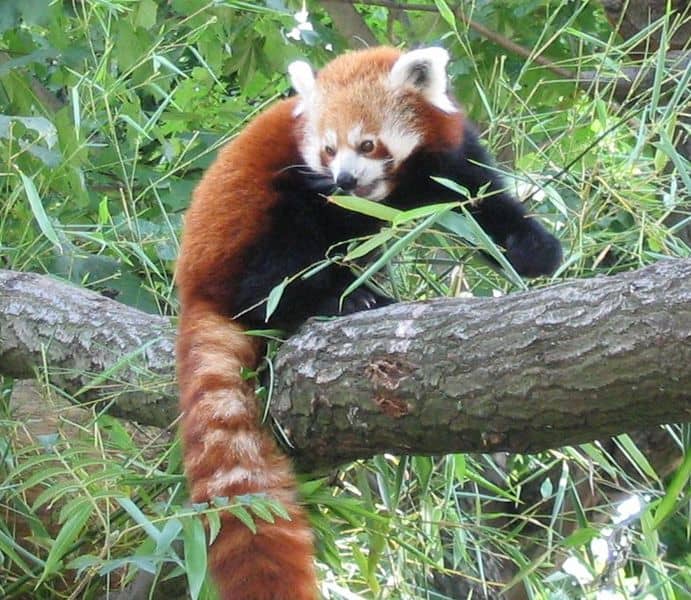
Red Pandas resemble raccoons more than bears.

Anatomy and Appearance

The red panda is an endearing animal that is about the same size as a large housecat, with a cat-like face and a long, bushy tail. Their bodies are covered with a thick reddish fur except for their almost white-colored ears, cheeks, muzzle, and spots above their eyes. The red panda also has reddish-brown stripes that run down either side of its white muzzle, along with alternating light and dark rings on its tails. The red panda is equipped with semi-retractable claws to aid stability while climbing on trees and branches. They also have strong, tough jaws which they use to chew on bamboo. Like the giant panda, the red panda also has a unique extended wrist bone that operates like something similar to a human thumb, allowing them to hold onto bamboo while they are chewing it. Thick, tightly packed fur helps to keep red pandas warm during the cold winters they face in their habitat. The red panda also sports extra thick fur on the soles of their feet for warmth and traction.
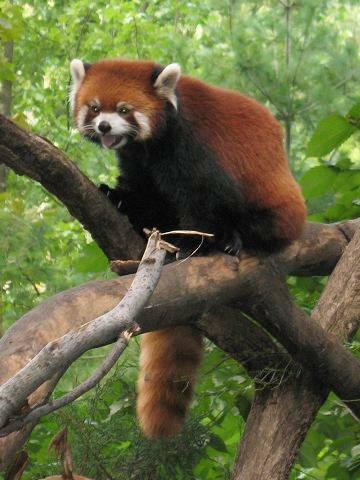
Red Pandas are being pushed out of their native habitats.

Distribution and Habitat

The red panda inhabits the temperate forests in the Himalayas at altitudes between 1,800 and 4,000 meters. These high mountain slopes are typically covered in deciduous hardwood forests with a bamboo that is crucial to the red panda’s survival, growing beneath the forest’s canopy. Their historical range extended through Bhutan, Nepal, India, Myanmar, and China, where their range often overlapped that of the even rarer giant panda, Now, however, the red panda is extinct in certain of these areas and its numbers are rapidly declining in others. Due to the fragile ecology of their native, mountain forests and their reliance on a diet largely consisting of bamboo, the red panda is being pushed into smaller and more isolated pockets within their once wide range. Climate change is affecting the ability of these habitats to produce adequate bamboo to sustain the species.
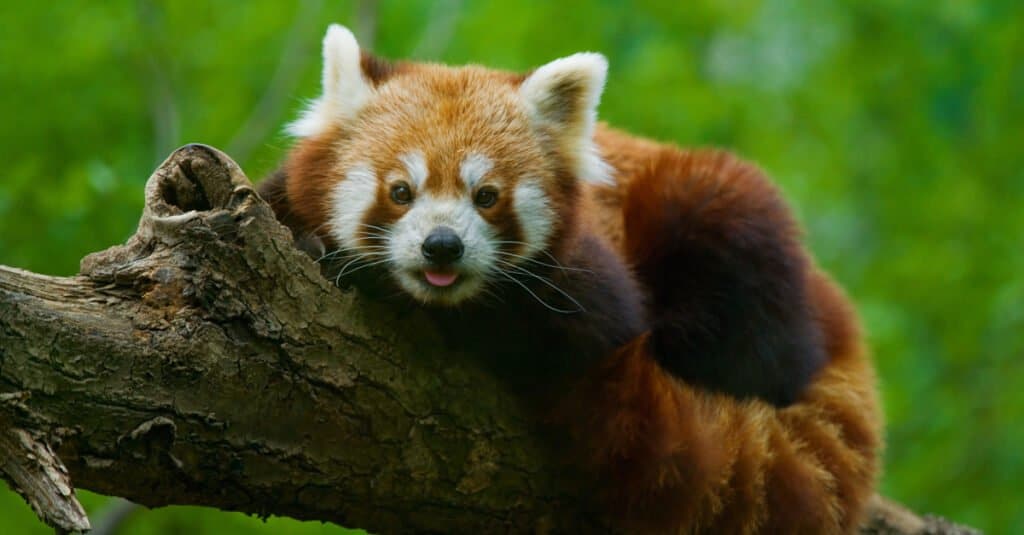
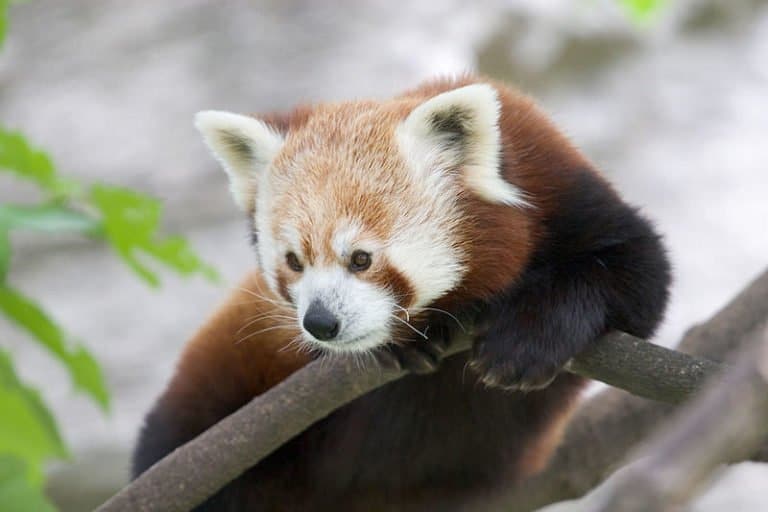
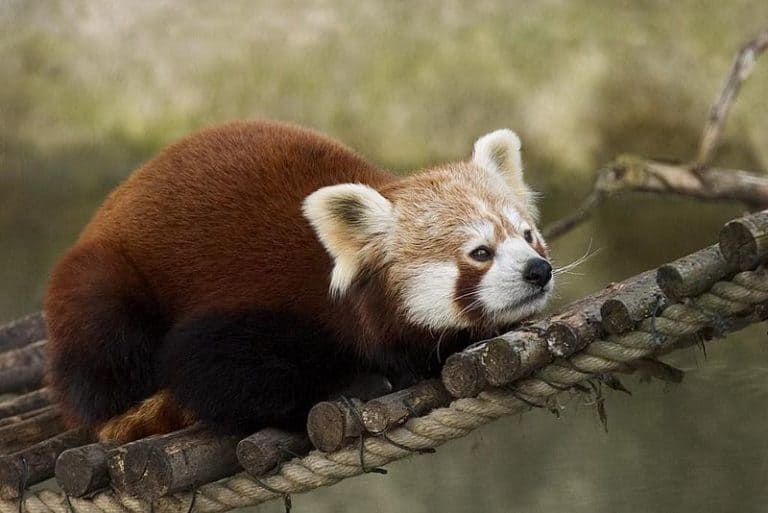
red panda laying on tree with tongue out

Red pandas spend their days sleeping and nights eating.

Behavior and Lifestyle

The red panda is generally a nocturnal and solitary animal, with the exception of breeding season. Red pandas spend the daylight hours sleeping in branches high in the tree canopy with their long, bushy tail wrapped around them to keep them warm. Although they are known to feed in the trees, they usually come down to the ground after dusk to begin foraging in the safety of the darkness. The red panda is a territorial animal that marks its path with droppings and urine, and releases a musky secretion from its anal glands. They often communicate with one another using short whistles and squeaks. The red panda is a strong and agile climber, and while it normally sleeps safely in the branches during the day, it can also dart up a trunk, using its sharp claws, if threatened by predators .
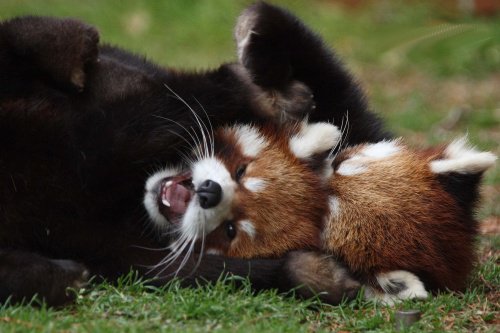
Red panda cubs may not leave the nest until they are three months old.

Reproduction and Life Cycles

Red pandas usually breed between January and March. After a gestation period that lasts for around four months, the female gives birth to 1 – 5 cubs. The cubs are born blind, and although they begin to open their eyes within a couple of weeks, the eyes of the red panda cubs don’t fully open until they are about a month old. Before her cubs are born, the female red panda builds a nest in a hollow area in a tree, among roots, or in a bamboo thicket lined with leaves, moss, and other soft plant material. Red panda cubs typically do not leave the nest until they are around three months old and are strong enough to negotiate the tricky branches. They feed solely on bamboo until they are old enough to stomach other foods. Red pandas reach their full adult size after about a year. There is a high mortality rate in young red pandas, with up to 80% never reaching full adulthood.
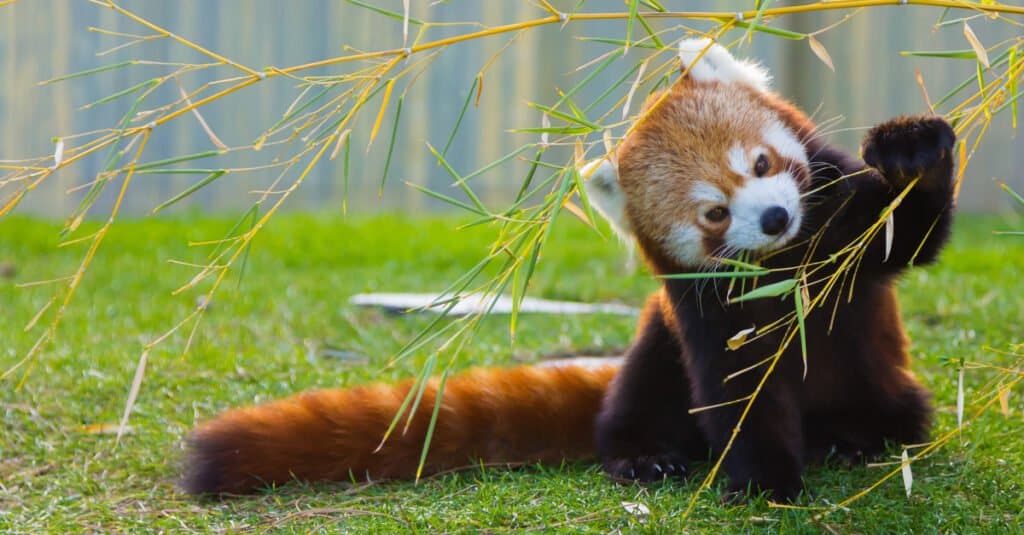
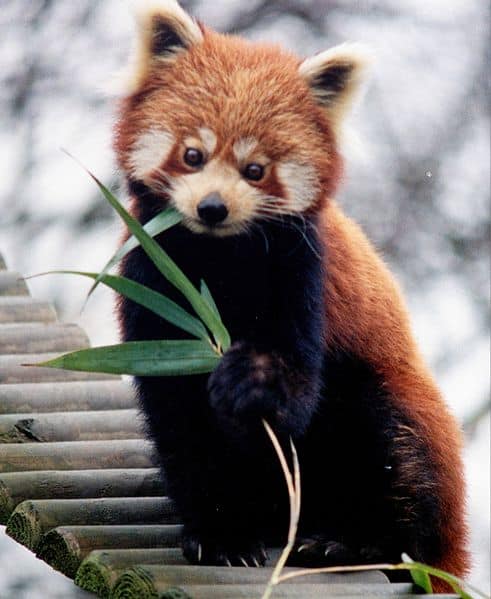
red panda chewing on plant

Red pandas are classified as carnivorous but their diet is mostly bamboo shoots.

Diet and Prey

Although the red panda belongs to a carnivorous group of mammals, their diet is in fact almost entrirely vegetarian, as bamboo shoots comprise the majority of their diet. However, as the red panda is a mammal it has a short digestive system, meaning that while bamboo holds little nutrition in any event, red pandas cannot get the most out of their meals. Unlike the giant panda though, however, the red panda will also eat a variety of other foods to supplement its diet. These foods include acorns, berries, and grasses, along with grubs, mice, lizards, chicks, and birds’ eggs. Red pandas have excellent sight, smell, and hearing. In addition, the red panda also has long, white whiskers on its snout which help it to navigate through the dense vegetation in the darkness of night, when it most actively forages for food. For a complete list of foods red pandas eat, check out our “What Do Pandas Eat?” page.
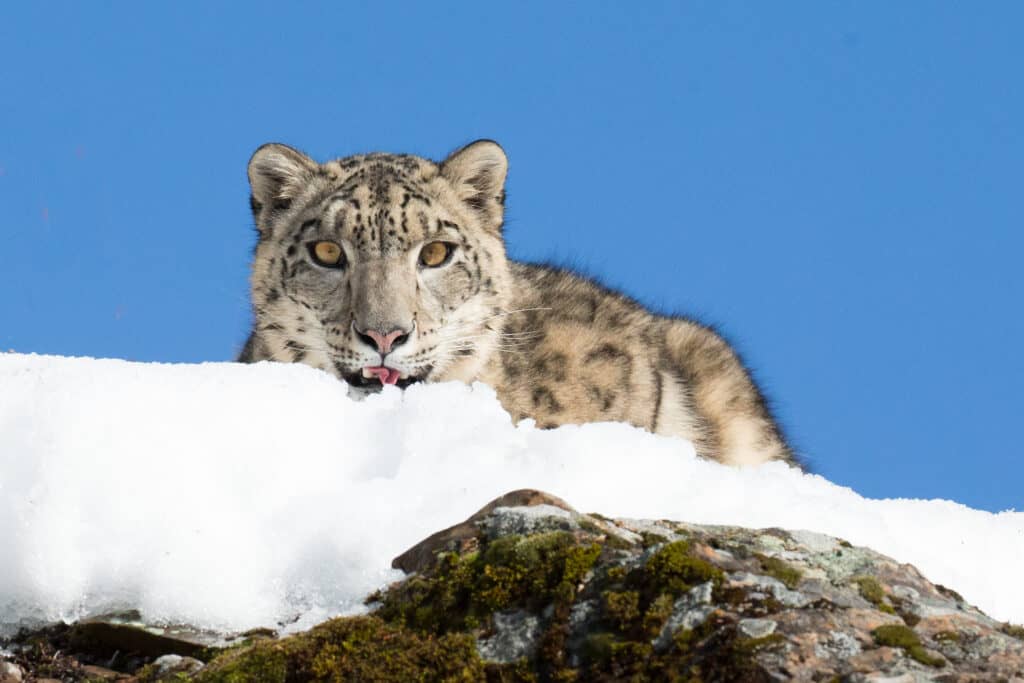
snow leopard

Snow leopards, martens, and birds of prey are the only natural threat to red pandas.

Predators and Threats

Due to the fact that red pandas inhabit high-altitude mountain forests, they actually have fewer natural predators than if their habitat was further down the slopes. Snow leopards and martens are the only real predators of the red panda, although birds of prey and small carnivores prey on the smaller and more vulnerable cubs. The biggest threat to the red panda, however, is people who have affected this species mainly through deforestation of their incredibly unique habitats. Due to human encroachment, illegal hunting, and poaching, the panda population numbers have suffered a serious decline, with these populations also being pushed into more separate, isolated areas. One of the main concerns with this is that these populations will be threatened by inbreeding leading to less successful individuals in these areas.
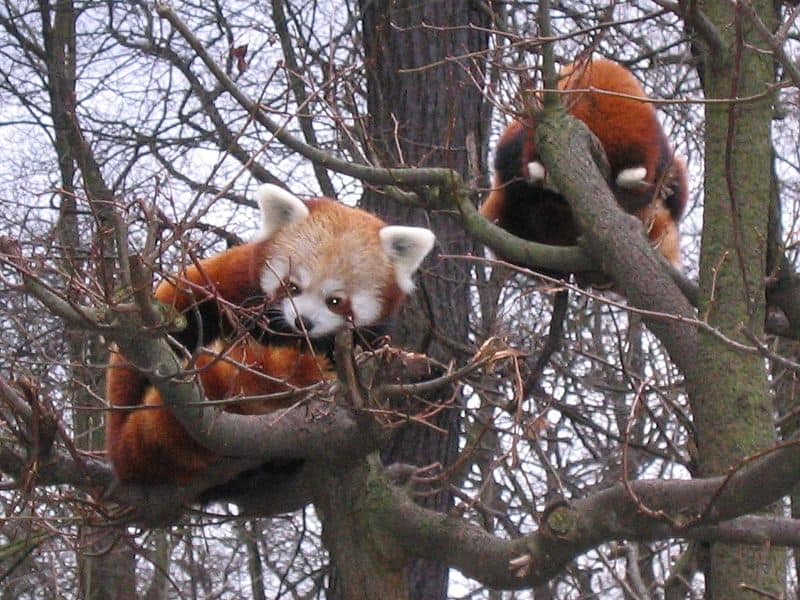
Red pandas sunbathe high in the trees to warm themselves in cold weather.

Interesting Facts and Features

Living high in cold mountain climates means that red pandas are well adapted to keeping warm, equipped with dense fur and a warm bushy tail. However, on especially cold days red pandas have been known to sunbathe high in the canopy to warm themselves up while sleeping during the day. A study conducted in 2001 found that 79% of the red pandas reported were found within 100 meters of the nearest body of water, indicating that a good water source may also be crucial to their already strict habitat requirements. Evidence also suggests that red panda reproduction rates have been declining, which is believed to be related to the decline in the foods that they eat in order to survive and reproduce successfully.
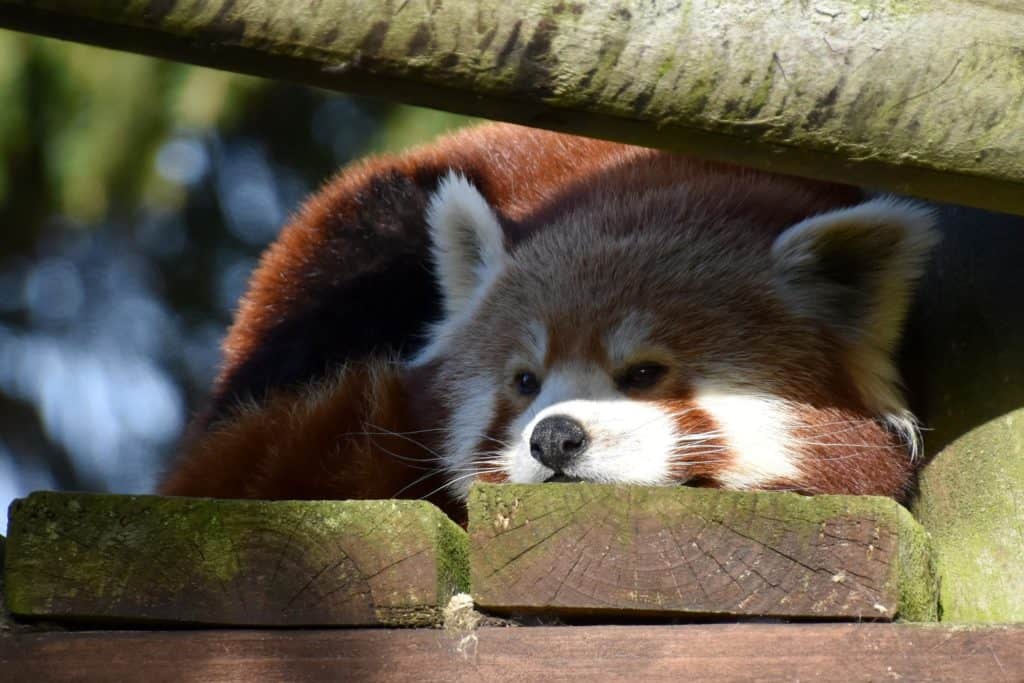
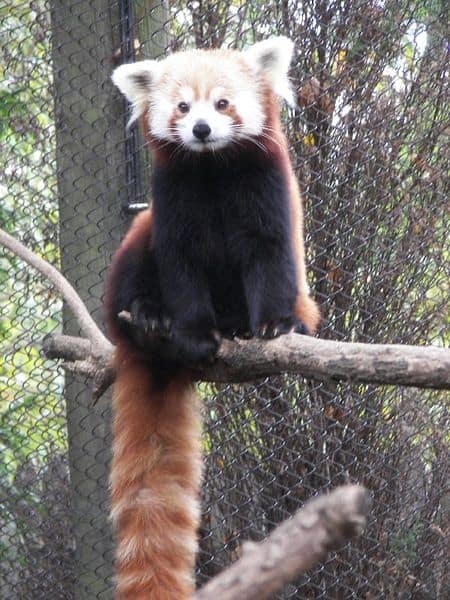
Seldom seen in the wild, red pandas can be viewed in zoos all over the world.

Relationship with Humans

Red pandas have been admired by people for years but most of the experiences that we have with them are in zoos and animal institutions These rare and secretive animals and they are incredibly difficult to spot in the wild. Our fascination with red pandas, however, is one of the factors in their demise. For example, one Indian village reported that 47 red pandas were captured and sold to zoos around the world in just one year. Human interference with their unique and specialized habitats though is believed to be the biggest reason for the decline in red panda numbers throughout the Himalayas, with deforestation mainly in the form of logging being one of the primary culprits. As with the giant panda, the red panda relies heavily on high-altitude bamboo thickets to survive and without them, unfortunately, it has nowhere else to go.

Conservation Status and Life Today

Today, the red panda is listed on the IUCN Red List as being an animal species that is Endangered in its natural environment and is therefore severely threatened by extinction in the near future. There are estimated to be less than 3,000 red pandas remaining in the wild. There are less than 10,000 red pandas in total, with the majority of these inhabiting small protected zones located in national parks. A number of captive breeding programs have also been established in Asia, Europe, and North America and appear to be having a positive impact on the red panda population.

Similar Animals…

View all 181 animals that start with R
How to say Red Panda in ...
Bulgarian
Червена панда
Catalan
Panda vermell
Czech
Panda červená
Danish
Rød panda
German
Kleiner Panda
English
Red Panda
Esperanto
Malgranda pando
Spanish
Ailurus fulgens
Finnish
Kultapanda
French
Petit panda
Hebrew
פנדה אדום
Croatian
Crveni panda
Hungarian
Vörös macskamedve
Indonesian
Panda Merah
Italian
Ailurus fulgens
Japanese
レッサーパンダ
Dutch
Kleine panda
English
Rød panda
Polish
Panda mała
Portuguese
Panda-vermelho
English
Panda roşu
Slovenian
Mačji panda
Swedish
Kattbjörn
Turkish
Küçük panda
Vietnamese
Gấu trúc đỏ
Chinese
小熊貓

Sources

  1. David Burnie, Dorling Kindersley (2011) Animal, The Definitive Visual Guide To The World's Wildlife / Accessed December 5, 2008
  2. Tom Jackson, Lorenz Books (2007) The World Encyclopedia Of Animals / Accessed December 5, 2008
  3. David Burnie, Kingfisher (2011) The Kingfisher Animal Encyclopedia / Accessed December 5, 2008
  4. Richard Mackay, University of California Press (2009) The Atlas Of Endangered Species / Accessed December 5, 2008
  5. David Burnie, Dorling Kindersley (2008) Illustrated Encyclopedia Of Animals / Accessed December 5, 2008
  6. Dorling Kindersley (2006) Dorling Kindersley Encyclopedia Of Animals / Accessed December 5, 2008
  7. David W. Macdonald, Oxford University Press (2010) The Encyclopedia Of Mammals / Accessed December 5, 2008
  8. About Red Pandas / Accessed December 5, 2008
  9. Red Panda Facts / Accessed December 5, 2008
  10. Red Panda Diet / Accessed December 5, 2008
  11. Red Panda Information / Accessed December 5, 2008
  12. Red Panda Conservation / Accessed December 5, 2008
Lisha Pace

About the Author

Lisha Pace

After a career of working to provide opportunities for local communities to experience and create art, I am enjoying having time to write about two of my favorite things - nature and animals. Half of my life is spent outdoors, usually with my husband and sweet little fourteen year old dog. We love to take walks by the lake and take photos of the animals we meet including: otters, ospreys, Canadian geese, ducks and nesting bald eagles. I also enjoy reading, discovering books to add to my library, collecting and playing vinyl, and listening to my son's music.

Thank you for reading! Have some feedback for us?


Red Panda FAQs (Frequently Asked Questions)

The short answer is no, red pandas do not make good pets. Not only are they endangered, but they make heavy use of scent-marking and would become stinky neighbors in any home. They are illegal to own and caring for them would be extremely difficult even if it wasn’t.