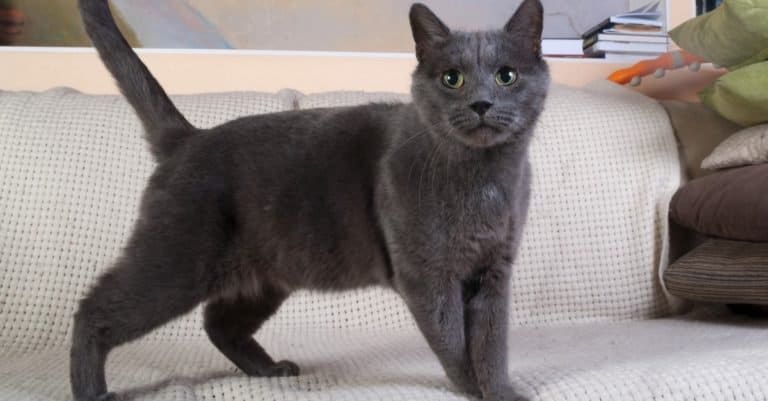







Russian Blues are as smart as they are beautiful. One of the most intelligent of all cat breeds, the Russian Blue will amaze you with its cleverness and charm you with its smile. Although they can seem cautious at first, these cats are loyal and loving companions. It comes as no surprise that Russian Blues are rumored to have been the pets of Russian Czars and British Queens. Even if you don’t have royal blood running through your veins, one of these friendly felines might be the perfect pet for you, too.
The History of the Russian Blue
The origin of the Russian Blue is unknown, but evidence points to the Archangel Isles, or the Solovetsky Islands, in Northern Russia. In the 1860s, Russian sailors in the port city of Arkhangelsk are said to have carried these cats aboard their ships. Russian Blues were nicknamed “Archangel Blues” after the name of that Russian city. Most historians believe these sailors helped to spread this unique breed throughout Europe.
Russian Blues appeared in some of the earliest cat shows in England in the 1880s. Scandinavian breeders also worked to develop the breed in the early 20th century. Russian Blues were found in the U.S. in the early 1900s, but serious breeding programs did not begin until decades later. After WWII, U.S. breeders imported the cats from Europe, crossing English and Scandinavian bloodlines to produce the Russian Blues of today.
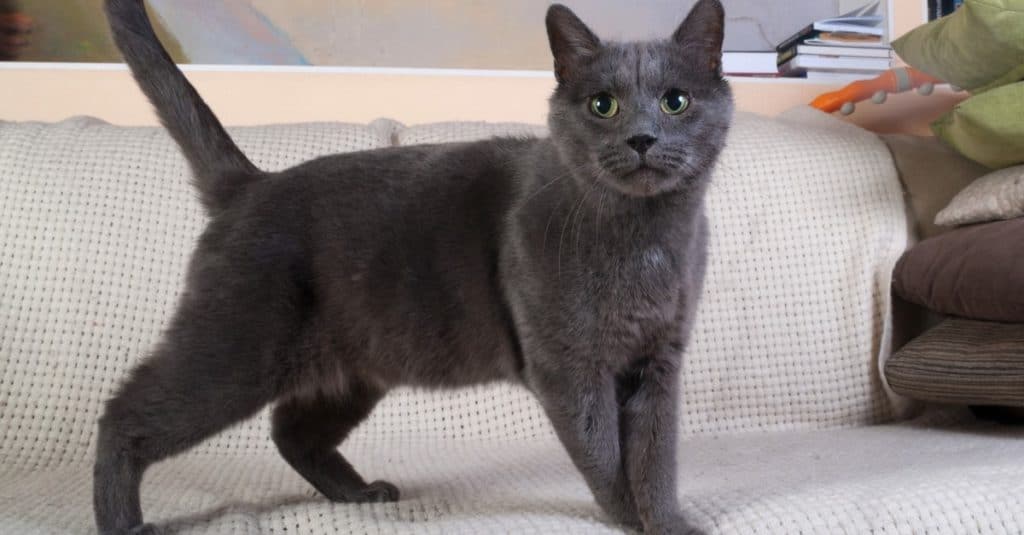
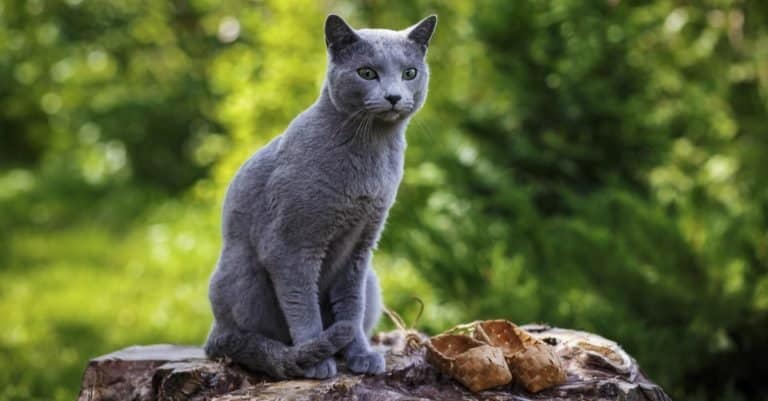
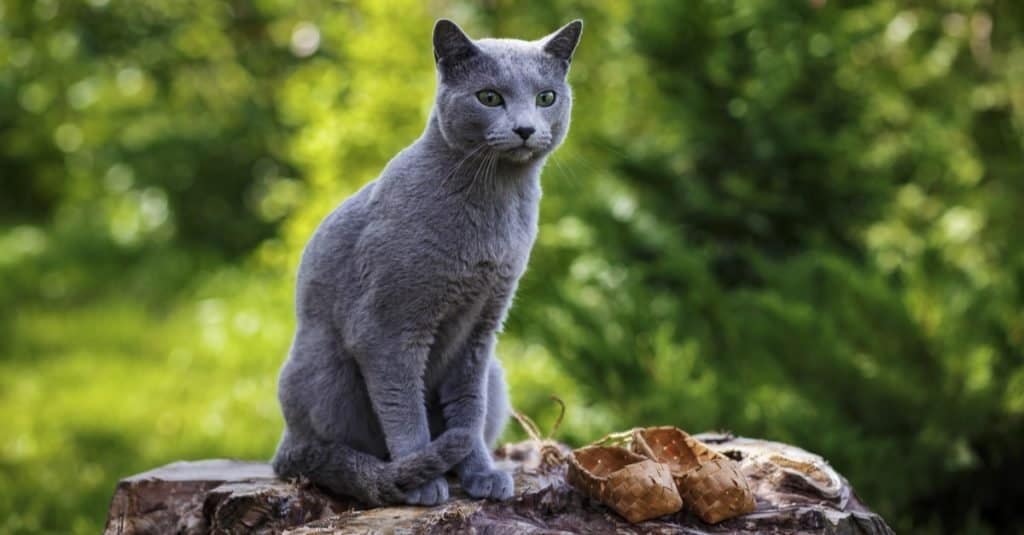
The exact origin of the Russian Blue is unknown, but it’s generally believed they came from northern Russia.
©hannadarzy/Shutterstock.com
Russian Blue Characteristics
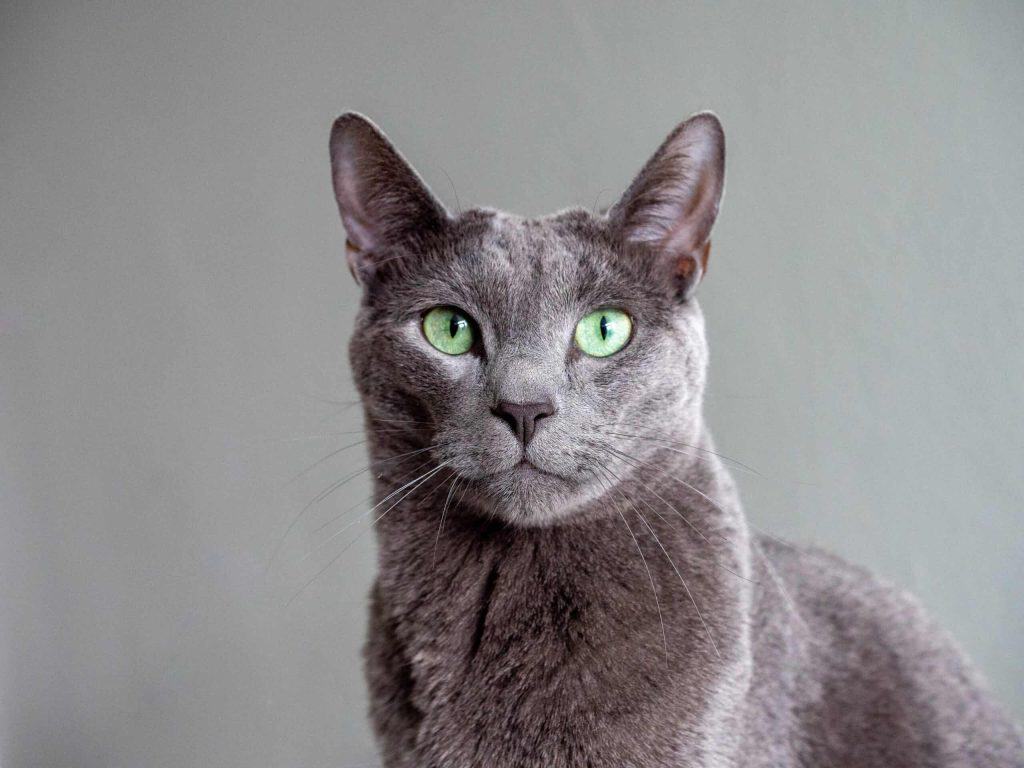
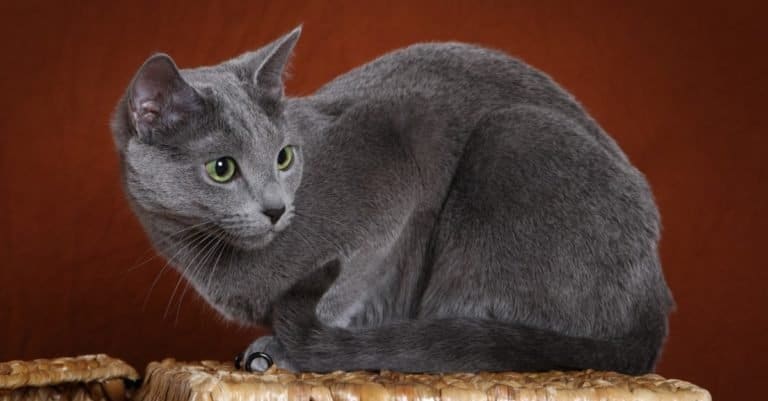
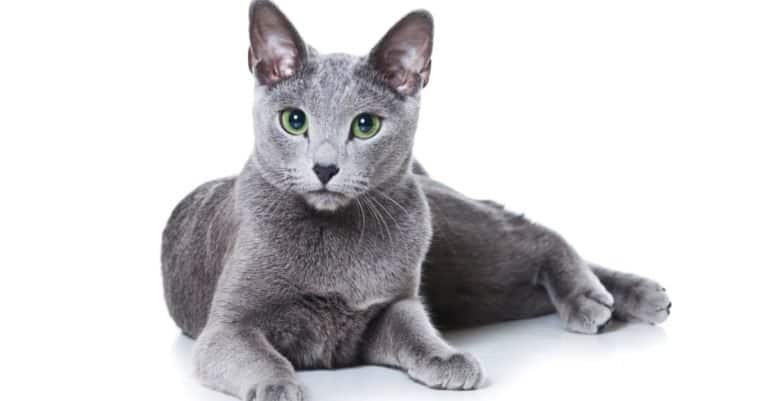
The Russian Blue has a short, dense blue coat with silvery tips. They are medium-sized cats with lean, muscular bodies. Although their thick coats often make them appear larger, males typically only weigh between 10-12 pounds, while females weigh between 7-10 pounds. These cats can grow as tall as 10 inches and as long as 24 inches. They have small, rounded paws with pinkish lavender or mauve paw pads, which are unique to the breed.
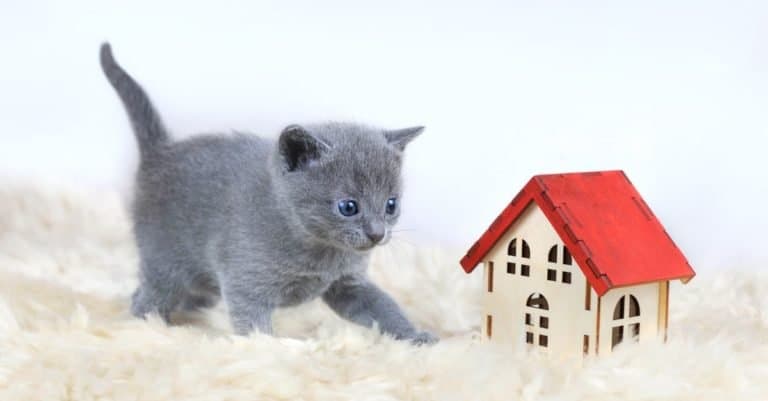
Russian Blues have wedge-shaped heads with high, wide cheekbones and large ears. The muzzle and the cheekbone planes give the Russian Blue its characteristic smile. These cats are also known for their distinctive green eyes. Kittens are born with blue eyes that change to yellow at around four months. The yellow gradually changes to an emerald green as the animal matures.
Personality
Russian Blues prefer quiet environments. They are reserved with strangers, often hiding under a bed or sofa until their inquisitive nature leads them to investigate. They are not only highly intelligent, but also mechanically inclined. Sealed containers and closed cabinets and drawers are often viewed as a challenge. Redirect their attention to problem-solving toys or interactive games to keep your cat mentally stimulated.
These cats tend to be very vocal with their owners and can develop a large vocabulary. Russian Blues dislike any change in routine and they are not shy about making it known. Russian Blues are sweet-tempered, loyal, and affectionate, and will often follow their owners like a furry shadow. Sensitive to their owner’s moods, they will provide purrs or headbutts when they think their humans need cheering up. The Russian Blue is also an excellent pet for families, as they easily get along with children and other animals.
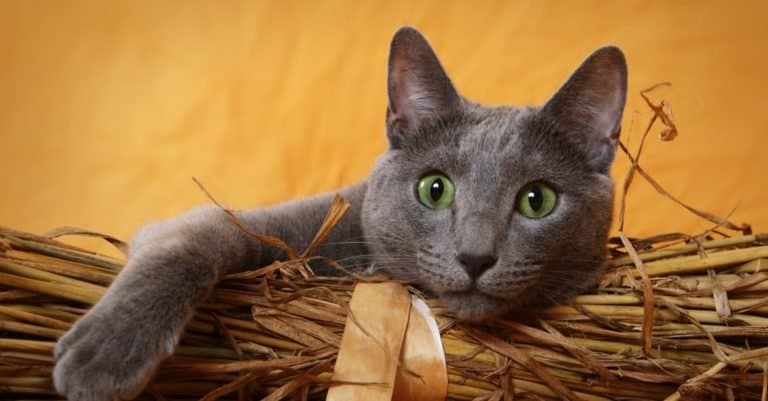
Russian Blue cats are sweet, loyal, and cautious animals who love having a routine.
©Review News/Shutterstock.com
How To Care for a Russian Blue
Russian Blues have no genetic issues specific to the breed. Due to their cautious natures and general good health, they are long-lived cats. The normal longevity range is around 15-20 years. Even 25 years is not particularly uncommon for a well-cared-for member of the breed. To keep your pet happy and healthy, take note of the following considerations in caring for your Russian Blue.
Diet and Exercise
The Russian Blue is known for having a large appetite, so it is important to closely monitor your cat’s food intake. Frequent exercise must also be provided to ensure your cat does not become overweight. Obesity can cause additional health issues like diabetes and heart disease, which will impact your cat’s quality of life.
Grooming
Russian Blues are meticulous about their cleaning rituals, so they require little assistance with grooming. Although they shed very little, a good brushing every few weeks will keep the hair to a minimum and help distribute good skin oils. The Russian Blue is an ideal cat for those with allergies due to the mild shedding, as well as low levels of of Fel d 1, a glycoprotein that triggers cat allergies.
It’s also important to trim your cat’s claws regularly. Wipe down their eyes with a soft, damp cloth, using a different part of the cloth for each eye. Clean ears with a cotton ball or soft damp cloth. Vets also recommend brushing your cat’s teeth weekly to prevent periodontal issues. A proper diet, daily exercise, good grooming habits, and regular vet checkups can ensure your furry friend will be around for many years to come.
Russian Blue Pictures
View all of our Russian Blue pictures in the gallery.

Bildagentur Zoonar GmbH/Shutterstock.com