











S
Species Profile

Saint Bernard

Canis lupus familiaris

Alpine heart, giant helper
Fedor Selivanov/Shutterstock.com

Saint Bernard Distribution

Click a location to explore more animals from that region

Origin Location

This map shows the native origin of the Saint Bernard. As a domesticated species, they are now found worldwide.

Loading map...

Size Comparison

Human 5'8"
Saint Bernard 2 ft 6 in

Saint Bernard stands at 43% of average human height.

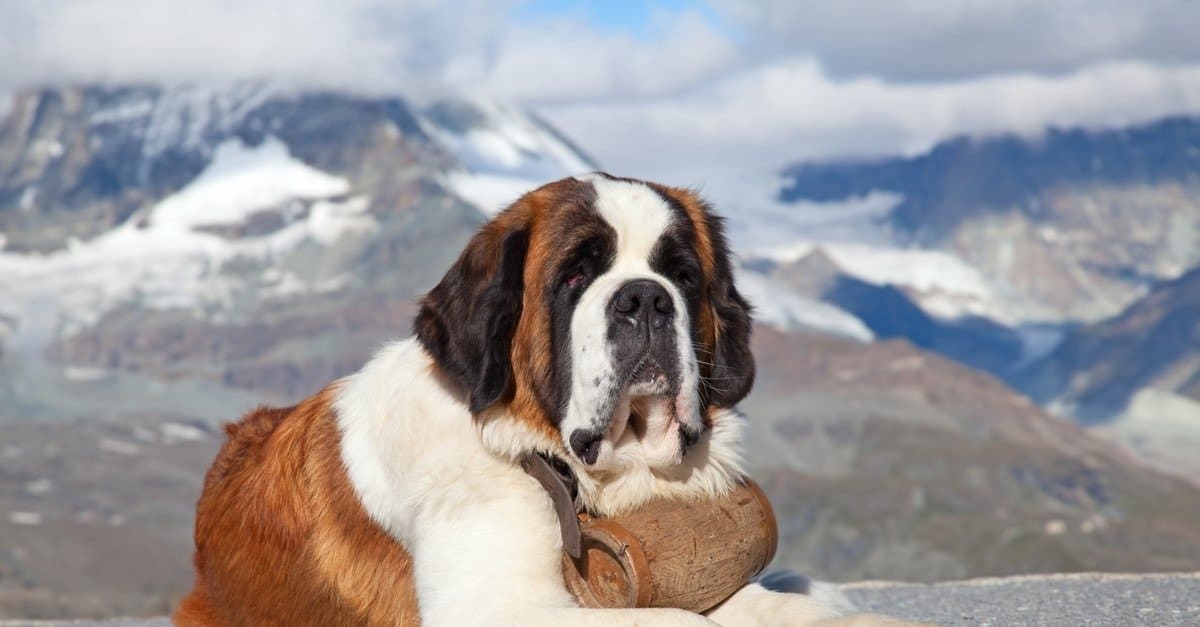
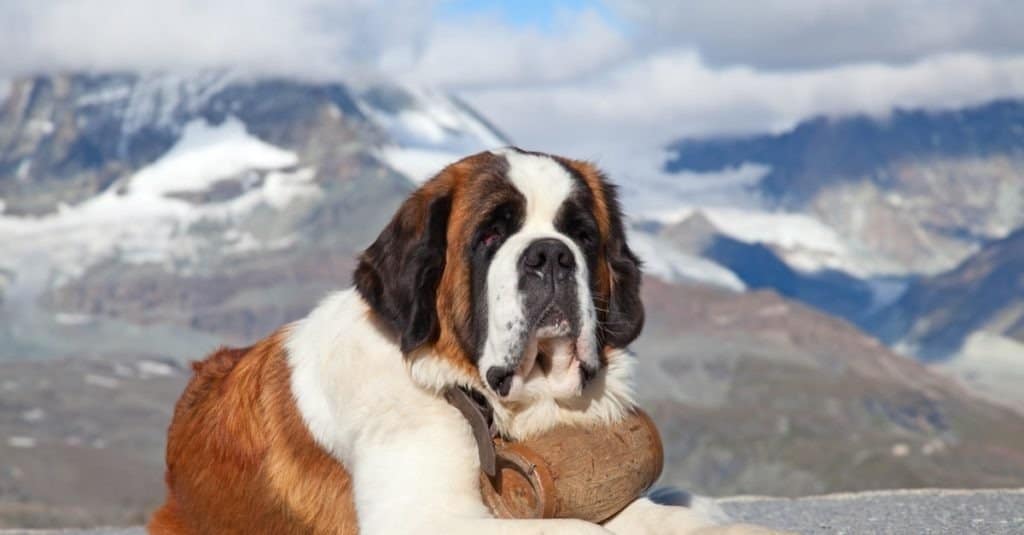
Saint Bernard Dog with keg ready for rescue operation

At a Glance

Domesticated
Also Known As St. Bernard, Saint-Bernard, San Bernardo, São Bernardo, Sankt Bernhard
Diet Omnivore
Activity Diurnal+
Lifespan 4 years
Weight 90 lbs
Status Not Evaluated
Did You Know?

Saint Bernards come in two coat varieties: smooth and rough (longer-haired).

Scientific Classification

The Saint Bernard is a giant domestic dog breed historically associated with the Great St Bernard Pass hospice in the Alps and famed for search-and-rescue lore. It is a heavily built, large-headed working-type dog kept today primarily as a companion and guardian.

Kingdom
Animalia
Phylum
Chordata
Class
Mammalia
Order
Carnivora
Family
Canidae
Genus
Canis
Species
lupus

Distinguishing Features

  • Giant, heavy-boned working dog with broad head and short muzzle
  • Thick double coat; can be smooth- or rough-coated
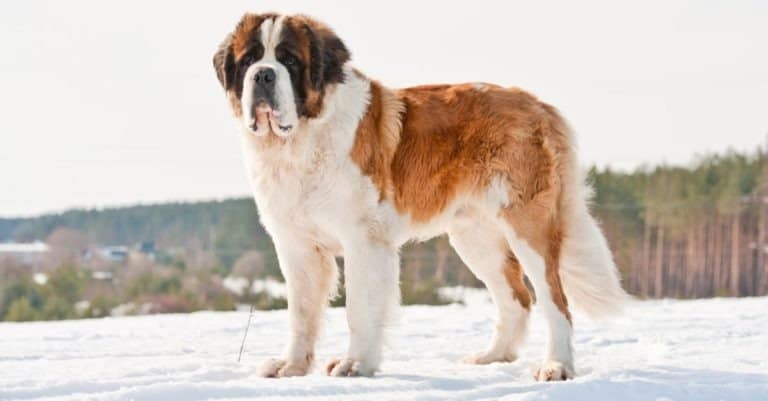
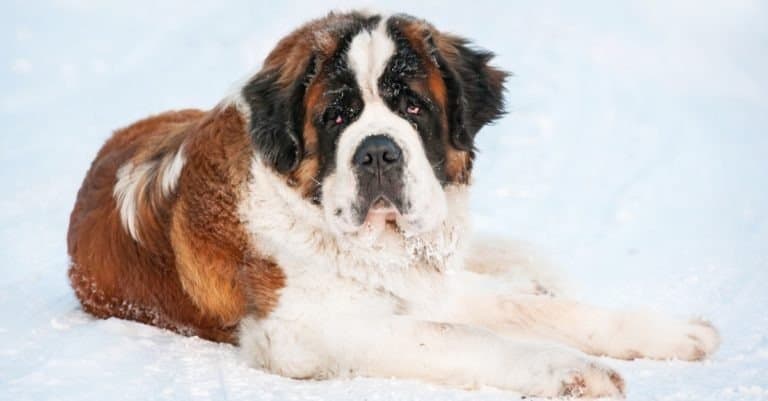
  • Common coloration: white with red/brown patches and dark facial mask
  • Historically depicted with rescue equipment in Alpine contexts

Physical Measurements

Males and females differ in size

Height
2 ft 7 in (2 ft 4 in – 2 ft 11 in)
2 ft 3 in (2 ft 2 in – 2 ft 4 in)
Length
4 ft 7 in (3 ft 11 in – 5 ft 3 in)
Weight
165 lbs (141 lbs – 198 lbs)
130 lbs (119 lbs – 141 lbs)
Tail Length
1 ft 5 in (1 ft 2 in – 1 ft 8 in)
1 ft 4 in (1 ft 2 in – 1 ft 6 in)
Top Speed
22 mph
running

Appearance

Primary Colors
Secondary Colors
Skin Type Thick, loose skin over a massive frame; dense double coat in smooth or rough varieties, with heavy shedding and seasonal coat blow.
Distinctive Features
  • Domestic dog breed selectively bred for giant size and strength; far heavier build than most dogs, developed for work in cold mountain environments.
  • Giant, heavily boned body; deep chest; broad back; substantial neck and shoulders; built for cold mountain conditions rather than sustained speed.
  • Large, broad head with pronounced stop; short-to-moderate muzzle; often noticeable flews and some facial/neck dewlap.
  • Coat varieties: smooth (short, dense, close-lying) and rough (medium-long, harsher outer coat with feathering).
  • Classic markings: white blaze, chest, feet, tail tip; dark mask around eyes/ears; overall "rescue dog" look tied to Alpine hospice folklore (not universal modern rescue work).
  • Care: requires space and joint-friendly exercise; heat-sensitive-needs shade/cooling and avoids heavy work in warm weather.
  • Health concerns common in the breed: hip/elbow dysplasia, gastric dilatation-volvulus (bloat), entropion/ectropion, cardiomyopathy; drooling and skin-fold irritation can require routine cleaning.
  • Grooming: frequent brushing (more for rough coat), regular ear/eye and drool-area hygiene; heavy seasonal shedding expected.

Sexual Dimorphism

Males are typically taller, heavier, and more massively headed and necked, with a broader chest and heavier bone. Females are generally smaller and slightly more refined in head and body outline while keeping the same markings and coat types.

  • Greater overall height and weight; more imposing, blocky silhouette.
  • Broader skull and thicker neck/shoulders; heavier bone and chest.
  • Often more pronounced dewlap/flews and drooling tendency.
  • Slightly smaller, lighter frame with a more refined head.
  • Narrower chest and less bulky neck/forequarters.
  • Same coat varieties and markings, typically with a tidier outline.

Did You Know?

Saint Bernards come in two coat varieties: smooth and rough (longer-haired).

The breed is named for the Great St Bernard Pass hospice in the Swiss Alps, founded in the 11th century.

Their signature coloration is white with red/brown patches and a dark "mask" on the face.

As a giant breed, they mature slowly-often not fully filled out until around 2-3 years.

In cold weather their dense coat and large body help conserve heat, but they overheat easily in warmth.

Famous Saint Bernard "Barry" is credited in hospice records and later retellings with saving many travelers in the early 1800s.

Their slobber is a real "feature": loose lips (flews) help them drink and pant, but also create drool.

Unique Adaptations

  • Giant body mass and heavy bone: selected within the domestic dog (Canis lupus familiaris) for strength and endurance in mountainous conditions, unlike the leaner wolf ancestor (Canis lupus).
  • Broad head and strong neck/shoulders: supports pulling and moving through snow, and historically handling loads or equipment.
  • Thick double coat (in both smooth and rough types): insulation against Alpine cold; rough coats shed snow but can ice up in wet conditions.
  • Large paws and sturdy pasterns: improve stability on uneven, slippery ground.
  • Calm temperament under stress: selection for steady, cooperative behavior around people and livestock in harsh weather.

Interesting Behaviors

  • Naturally people-focused and watchful: many will place themselves between family and strangers without overt aggression.
  • Deliberate, energy-saving movement: a slow, purposeful gait that matches their historic role as steady working dogs in snow.
  • Scent-and-air checking: they often lift the head to sample wind currents, useful for locating scents in open terrain.
  • "Lean and block" greeting: instead of jumping, many Saints lean their weight into people for contact and stability.
  • Cold-weather enthusiasm: increased play and endurance in cool temperatures compared with heat.
  • Vocal style: deep barks used as an alert; many are otherwise quiet and observant in the home.

Cultural Significance

Saint Bernards are symbols of Alpine rescue and the Great St Bernard Pass hospice. In art and media they stand for kind, protective dogs. Today most Saint Bernards are family pets and home guardians, not mountain rescuers.

Myths & Legends

The Great St Bernard Pass rescue tales: hospice dogs were celebrated in 18th-19th century accounts for finding snowbound travelers and guiding help back through blizzards, a legend that shaped the breed's worldwide identity.

Barry of the Hospice: the early-1800s Saint Bernard "Barry" became the centerpiece of stories of numerous rescues; his fame spread through retellings, memorials, and museum displays, turning him into a folk-hero dog of the Alps.

The "brandy-barrel" Saint Bernard: a persistent Alpine image shows a Saint Bernard carrying a small barrel of spirits at its neck for stranded travelers-an iconic legend popularized in paintings and later postcards and films.

Hospice origin lore: traditional narratives describe the canons breeding large farm and mountain dogs into a dedicated rescue type suited to the pass, linking the breed's name and purpose to the hospice's charitable mission.

Cinematic hero stories: films such as "Beethoven" helped cement a modern legend of the Saint Bernard as a chaotic-but-kind giant family protector, reinforcing its cultural role as the lovable colossus.

Conservation Status

NE Not Evaluated

Has not yet been evaluated against the criteria.

Population Stable

Life Cycle

Birth 7 pups
Lifespan 4 years

Lifespan

In the Wild
2–8 years
In Captivity
6–12 years

Reproduction

Mating System Polygynandry
Social Structure Managed Domestic
Breeding Pattern Serial
Fertilization Managed Selective
Birth Type Managed_selective

Saint Bernard matings are typically arranged by humans, with selected sires used across multiple females and females bred to different males across seasons. Pair bonds are not maintained; mating occurs during the female's estrus via internal fertilization.

Behavior & Ecology

Social Pack Group: 3
Activity Diurnal, Crepuscular, Cathemeral
Diet Omnivore Meat-forward complete dog food (often poultry or beef-based) with high-quality animal protein

Temperament

Breed distinction vs base canid: selected for calm, people-oriented companionship over predatory/territorial intensity.
Gentle, steady, and patient; typically tolerant with children when supervised due to large size.
Moderate guardian instinct: more watchful and imposing than reactive; prefers deterrence over confrontation.
Lower drive for roaming and hunting than wild canids; more content with home-based routines.
Can be stubborn/slow to mature; responds best to positive reinforcement and consistent handling.
Heat sensitivity is common in giant, heavy-coated dogs; needs cool rest areas and paced exercise.
Health concerns to monitor: hip/elbow dysplasia, gastric dilatation-volvulus (bloat), entropion/ectropion, cardiac disease, osteosarcoma risk.
Care requirements: controlled growth in puppies, joint-friendly conditioning, weight management, bloat-risk feeding routines.
Most are placid and sociable; variation occurs in drooling, protectiveness, and dog-to-dog tolerance.

Communication

deep bark/woof for alerting
low growl when uncomfortable or guarding space
whine or grumble for attention-seeking
sighing/snorting during rest
occasional howl in response to other dogs
body leaning and full-contact nudging to seek closeness
pawing and head-pressing for attention
posture and blocking behavior to position between family and perceived threat
facial expressions and soft eye contact signaling calm intent
scent marking and sniffing-based information gathering on walks
Uses canine body-language signals (posture, facial expression, and tail/ear position) and close physical contact; typical individuals show a calm, deliberate demeanor rather than rapid, high-energy displays.

Habitat

Mountain Alpine Meadow Coniferous Forest Tundra Bog Wetland Grassland Steppe Woodland Deciduous Forest Coastal Beach Rocky Shore Urban Suburban Agricultural/Farmland +10
Biomes:
Alpine Boreal Forest (Taiga) Tundra Temperate Forest Temperate Grassland Mediterranean Desert Cold Desert Hot Tropical Dry Forest Tropical Rainforest Wetland Freshwater +6
Terrain:
Mountainous Hilly Valley Plains
Elevation: Up to 16404 ft 3 in

Ecological Role

Domestic companion/guardian and historical alpine working/rescue dog; ecologically functions as a human-associated omnivorous canid with limited direct predation impact compared with wild canids.

companionship and social support property/stock deterrence and guardian presence historical search-and-rescue role (breed heritage) therapy/assistance work potential localized vermin control (opportunistic predation on small rodents) educational/cultural value as a flagship working breed

Diet Details

Other Foods:
Fruits Vegetables Grains/starches Grasses and herbs

Human Interaction

Domestication Status

Domesticated

Saint Bernard (Canis lupus familiaris) is a giant working dog from the Swiss/Italian Alps tied to the Great St Bernard Pass hospice. Monks used them to guard, find travelers in snow, and keep company. They are very large, calm, built for cold with dense coat, and are mainly companions and guardians, sometimes in therapy, pulling carts, or rescue.

Danger Level

Moderate
  • Injury due to size/strength (knocking over children/elderly, leash pulling)
  • Bites are possible in any dog; risk increases with poor socialization, fear/pain, or improper handling
  • Protective/territorial behavior if under-trained or poorly managed
  • Zoonotic risks common to dogs (e.g., parasites) without routine veterinary prevention

As a Pet

Suitable as Pet

Legality: Generally legal to own as a pet in most jurisdictions. Restrictions are uncommon but may apply via local dangerous-dog ordinances, landlord/insurance breed policies, or size/weight limits in housing. Compliance with licensing, leash laws, and vaccination requirements is typically mandatory.

Care Level: Experienced

Purchase Cost: $800 - $3,000
Lifetime Cost: $20,000 - $60,000

Economic Value

Uses:
Companion animal Breeding and showing Working/utility (guardian, drafting/carting, symbolic rescue heritage) Services (training, boarding, grooming, veterinary care) Media/branding (rescue iconography, advertising)
Products:
  • puppies from registered breeders
  • professional training (basic manners, giant-breed handling)
  • grooming services (coat care, de-shedding)
  • veterinary services (orthopedics, cardiology, preventative care)
  • pet supplies scaled to giant breeds (crates, beds, vehicle restraints, large-breed nutrition)

Relationships

Saint Bernard dogs are large and extraordinarily muscular working dogs originating from the Western Alps in Italy and Switzerland. While highly intelligent adults, Saint Bernard puppies are known to mentally mature more slowly than other breeds. Often drooling and tracking mud into the house, this breed may be a rather messy pet. Saint Bernards have thick coats adjusted to cold weather and do not do well in hot climates, shedding immensely.

3 Pros and Cons of Owning a Saint Bernard
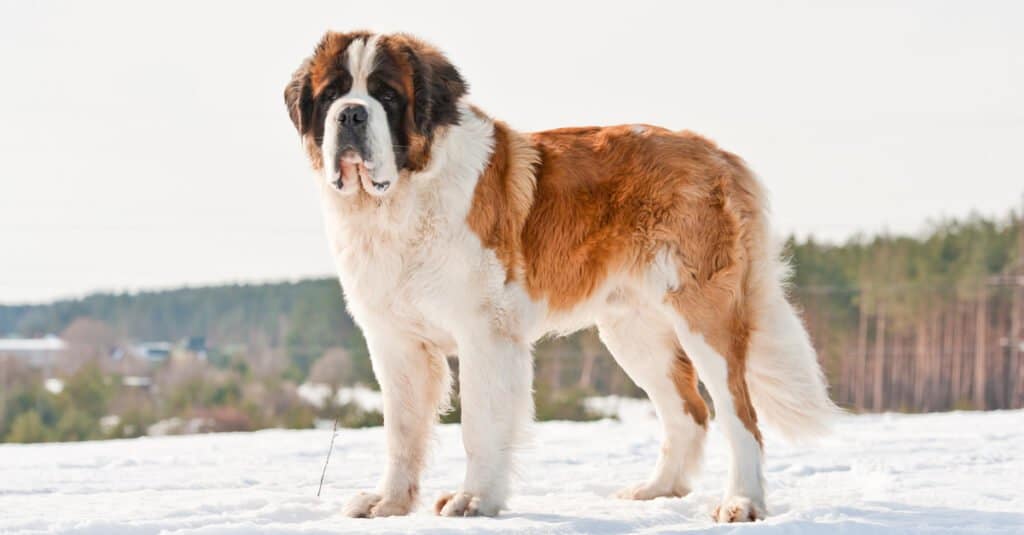
12 Animals of Christmas From Around the World - saint bernard

Saint Bernards are friendly and clever. That said, they are not exactly known for being especially clean.

Pros!Cons!
Intelligence: If you are looking for a witty and intelligent dog breed, this might be a good choice. These dogs are quick learners.Lazy: Most Saint Bernard dogs are not active and require a lot of push for exercise.
Friendly: Saint Bernard dogs are usually happy-go-lucky and can gel well with people.Big size: If you are looking for a compact, small-sized pet, this might not be the one for you, as a Saint Bernard is very large and can easily reach all tables.
Great watchdogs: These dogs may be friendly with their family, but their large size and alertness can mean trouble for burglars.Messy: Cleanliness is not a Saint Bernard’s forte. They drool often and get their paws dirty in the mud, in turn ruining the house interiors. These dogs also shed a lot.

Size and Weight

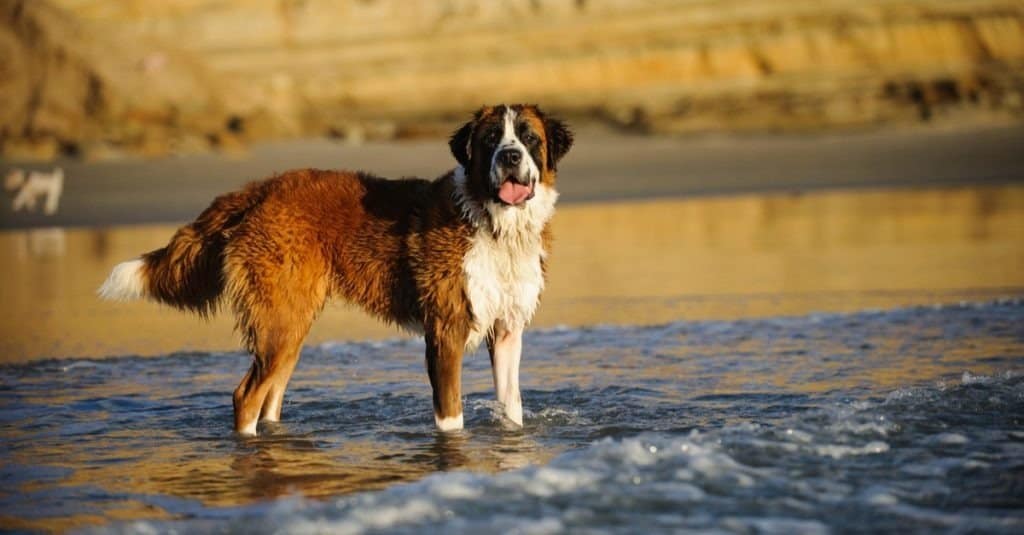
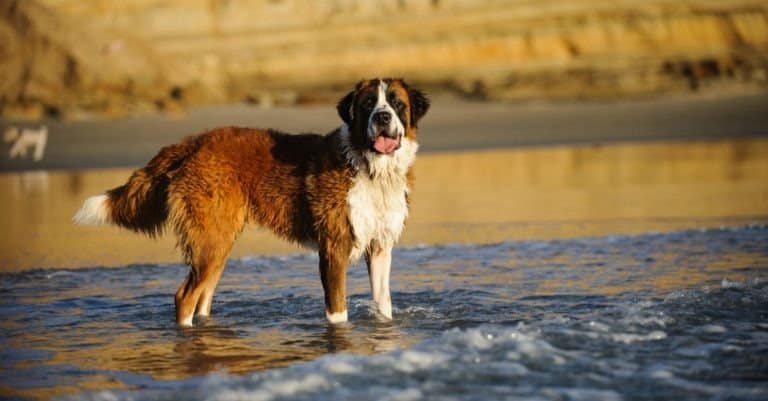
Saint Bernard dog outdoor portrait at beach

Saint Bernards are capable of reaching up to 200lbs.

The Saint Bernard is a large dog, both in weight and height. The female dogs are about 26 to 28 inches as adults, while the males are 28 to 30 inches.

That frame is supported by a rather hefty weight. Females can get as large as 140 lbs., though the males will go even higher to 180 pounds.

Common Health Issues

All dog breeds are prone to health issues, and Saint Bernards are no exception. In particular, this breed is prone to hip and elbow dysplasia, which is caused by an abnormal growth of the bones in the hip and elbow sockets. Osteosarcoma, a type of bone cancer, most often impacts the legs of Saint Bernards, though any bone can be affected.

Addison’s disease is another common condition in this breed; it affects the adrenal glands and prevents the body from producing hormones correctly. With proper treatment, most dogs with Addison’s disease can live a normal lifespan. Common symptoms are non-specific, ranging from weight loss to vomiting to increased urine output.

Dilated cardiomyopathy can be another major concern for these dogs. Hereditary or acquired, this heart condition leads to decreased ability for the heart to pump blood to the body, leading to heart failure. Cardiac tissue thins out but still grows in size, which prevents proper blood flow. Symptoms may include fainting, difficulty breathing, fluid in the abdomen, etc.

Here is a list of the common health issues that these dogs suffer from:

  • Hip Dysplasia
  • Elbow Dysplasia
  • Osteosarcoma
  • Addison’s disease
  • Eye problems
  • Immunity problems
  • Dilated cardiomyopathy

Temperament

Calmest dog - Saint bernard laying in the grass

Saint Bernards make excellent family pets, but are not ideal for small children.

The temperament of a Saint Bernard, much like the name suggests, is saint-like. Calm and gentle, this breed is known to be very patient and rarely aggressive around strangers. However, most people are scared of these dogs because of their looming stature.

Saint Bernards make excellent family dogs; however, careful consideration is required if a family has small children, as the gentle giant may accidentally harm a small infant.

While originally bred to work, Saint Bernards are somewhat lazy dogs, needing a push when it’s time for exercise. Today, Saint Bernards are commonly used as therapy dogs, but they also participate in cart-pulling, drafting, and occasionally in search-and-rescue work.

How to Take Care of a Saint Bernard

Biggest Dog Breeds: Saint Bernard

Saint Bernards’ aversion to activity and health issues means they require a great deal of care.

No two dogs are alike, each having a specific set of requirements to stay healthy and happy. Saint Bernards require an elevated level of care, considering their disdain for exercise and considerable health concerns. Here are a few things to know about taking care of this breed.

The Best Dog Food for Saint Bernards

The right canine diet will supply these giant furballs with the specific nutrients necessary for life. Balancing protein, fat, carbohydrates, minerals, and vitamins is essential when considering which dog food to choose to feed your pet. Dogs are omnivorous, making it possible to meet these dietary needs through plant and animal sources. Dogs should never be fed an all-meat diet, as it would lead to an imbalance in nutrients, while they are able to thrive on an all-plant diet. Quality and digestibility of food are key when choosing which dog food to feed your dog. Saint Bernards should eat dog food made specifically for large breeds, and one that supports bone and joint health may be beneficial in warding off related health issues.

As for the amount to feed a Saint Bernard, it is advised to feed about five to six cups of high-quality food, varying based on brand and content. However, it is important to divide meals into two or three servings a day, keeping metabolism stimulated and preventing unnecessary weight gain.

Maintenance and Grooming

Saint Bernards can have either a short-haired coat or a long-haired coat. The former are smooth with dense fur, while the latter offer a soft wave, designed for colder weather.

The coloration of their coats is highly distinguishable, featuring a rich ginger-red with white or white with ginger-red, and black accenting their facial structure. Both coat types shed heavily during the spring and fall seasons, and regular grooming is recommended. Ultimately, it may be beneficial to brush your dog thoroughly a couple of times per week to remove any loose hair, helping to keep shedding under control.

Apart from regular brushing, Saint Bernards have heavy ears, prone to ear infections. Always keep an eye out for head shaking or head tilting, common signs of ear issues, and clean your dog’s ears when necessary. Nail maintenance is also important when owning a dog, keeping them short and healthy. Dogs do self-groom, so bathing is only necessary after a good romp in the mud or hardcore play session. To keep their mouths clean, wipe away any excess drool or leftover food particles. Lastly, to maintain healthy dental hygiene, brush your dog’s teeth every other day with dog-safe toothpaste, keeping their breath smelling fresh and decreasing the chances of gum disease in the future.

Training

Large and somewhat stubborn, it is important to begin training your Saint Bernard puppy as early as possible so that they adapt quickly. While these puppies tend to mature more slowly than other breeds, Saint Bernards are highly intelligent and meant to be trained for working purposes, so they are highly trainable. Make sure to include socialization with other dogs and people in your training regimen. Positive reinforcement and treat rewards are beneficial to making training fun and successful!

Exercise

Large and in charge, Saint Bernards do not actually require a whole lot of exercise. So, if you are looking for a jogging buddy, you may want to look into another breed, as Saint Bernards are often resistant to exercising at all. A short, daily walk should suffice for this breed.

Puppies
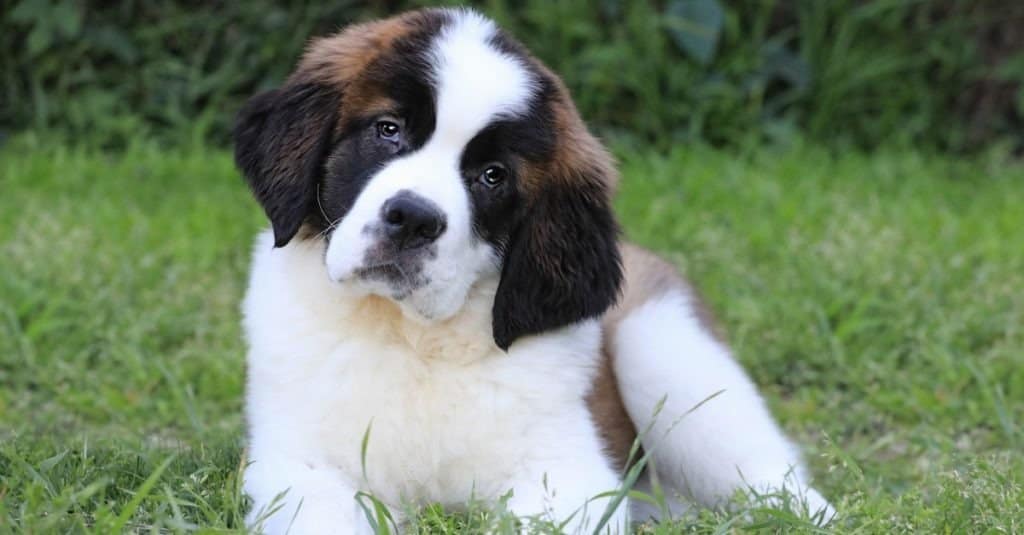
Adorable Saint Bernard Puppy With Sweet Expression

Like most breeds in general, it is best to start training Saint Bernards as puppies.

Saint Bernard puppies are to be taken care of in much the same way as you would take care of an adult Saint Bernard. However, they are fed less and meals are broken down into 4-6 smaller meals, as they do not eat a lot at once. Smaller meals help with the digestive process to avoid vomiting or overindulging.

It is always a good idea to start training your Saint Bernard when he/she is still a puppy. This foundation establishes good habits for easier training as the dog ages.

Children

Even though this is a very friendly dog and is considered to do very well with children, adopting them when you have small children at home is not recommended. Although they are loving and calm, they are large in size and can accidentally hurt your toddlers.

Similar Dogs

  • Greater Swiss Mountain Dog: Just like the Saint Bernard, this canine is also loyal and friendly and has a protective nature towards the owner’s family. The Greater Swiss Mountain Dog has a predominantly black coat, and it was bred as a herding dog.
  • Bernese Mountain Dog: These dogs are friendly and hardworking, and their lineage can be traced back 2,000 years. They are very loyal to the families that they live with, and they have a fairly similar coloring to that of the Greater Swiss Mountain Dog.
  • Entlebucher Mountain Dog: These dogs are strong and alert and have been known as “laughing dogs.” They were originally bred to move cattle and are known to be diligent workers.

Famous St. Bernard Dogs
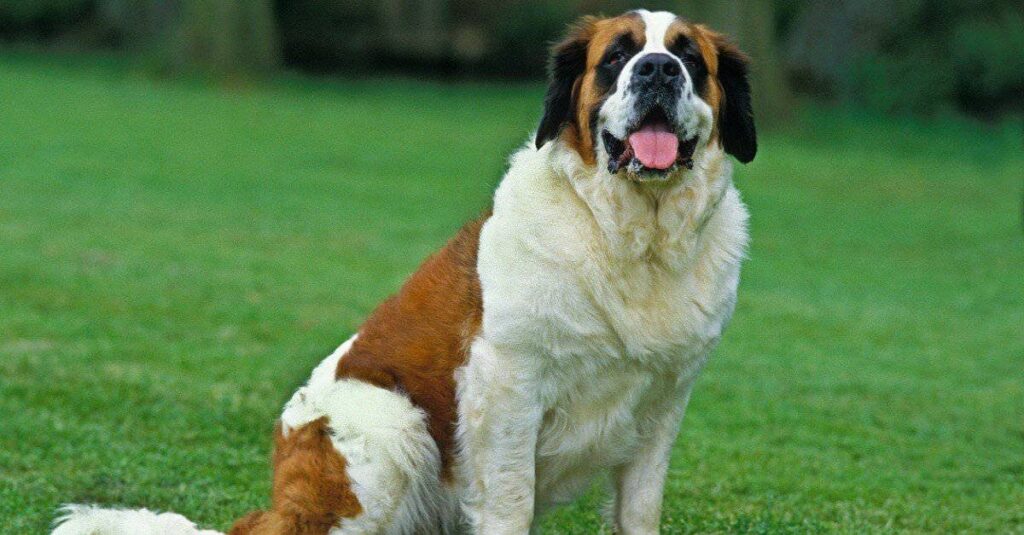
Types of Big Dogs

The St. Bernard is a massive dog, with a huge head, extremely muscular neck, and a deep chest.

Probably the most notable Saint Bernard was the lead dog in the 1992 comedy, Beethoven. Wandering into an unsuspecting home, a Saint Bernard puppy, eventually named Beethoven, ends up as the hero of the movie, saving the daughter’s life. Many spin-offs were made because of the adoration millions had for Beethoven, the Saint Bernard.

Another, more morbidly known Saint Bernard was Stephen King’s Cujo. Unfortunately, this friendly canine contracts rabies and terrorizes people all over the town.

View all 390 animals that start with S

Sources

  1. Dogtime / Accessed January 18, 2021
  2. Mental Floss / Accessed January 18, 2021
  3. Colorado Saint Bernard Rescue / Accessed January 18, 2021
  4. Vetstreet / Accessed January 18, 2021
  5. Dog Lover's Digest / Accessed January 18, 2021
  6. Dogtopia / Accessed January 18, 2021
  7. My Dog's Name / Accessed January 18, 2021
Austin S.

About the Author

Austin S.

Growing up in rural New England on a small scale farm gave me a lifelong passion for animals. I love learning about new wild animal species, habitats, animal evolutions, dogs, cats, and more. I've always been surrounded by pets and believe the best dog and best cat products are important to keeping our animals happy and healthy. It's my mission to help you learn more about wild animals, and how to care for your pets better with carefully reviewed products.
Connect:

Thank you for reading! Have some feedback for us?


Saint Bernard FAQs (Frequently Asked Questions)

The price of a Saint Bernard is usually $1,500. You could expect an additional price of about $2,000 annually for the maintenance of a Saint Bernard.