S
Species Profile

Sea Slug

Nudibranchia

Naked gills, wild skills.
Mike Workman/Shutterstock.com

Sea Slug Distribution

Click a location to explore more animals from that region

This map shows coastal regions where Sea Slug are found.

Loading map...
blue Nudibranch looking at the camera

At a Glance

Order Overview This page covers the Sea Slug order as a group. Stats below are general traits shared across the order.
Also Known As Nudibranch, Marine slug, Shell-less sea snail, Marine gastropod slug, Sea leech (colloquial), Leaf slug
Diet Carnivore
Activity Diurnal+
Lifespan 9 years
Weight 1 lbs
Status Not Evaluated
Did You Know?

"Nudibranch" means "naked gills," reflecting the exposed gill plume many species carry on their backs.

Scientific Classification

Order Overview "Sea Slug" is not a single species but represents an entire order containing multiple species.

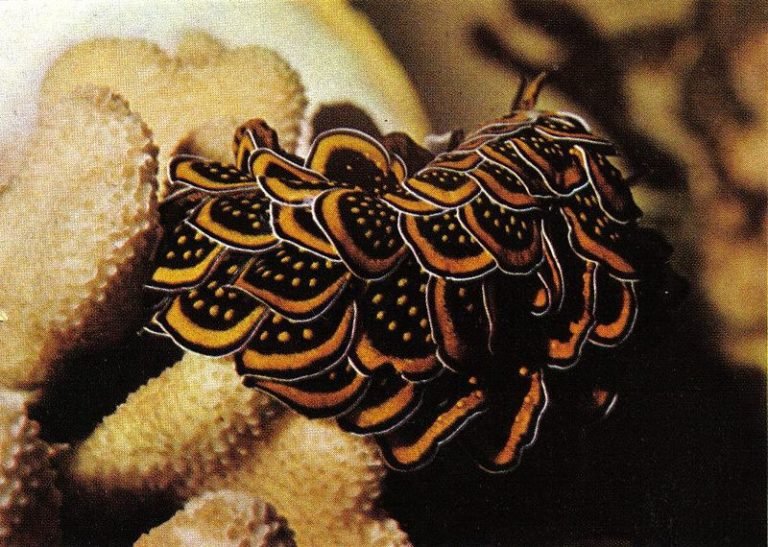
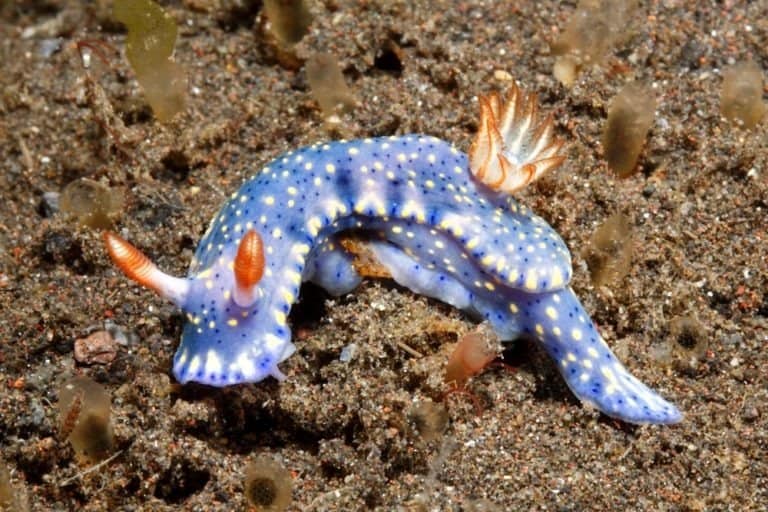
Sea slugs are marine gastropod mollusks with reduced or absent external shells. The best-known sea slugs are nudibranchs (order Nudibranchia), celebrated for vivid coloration, specialized diets (often sponges, cnidarians, bryozoans), and diverse chemical/structural defenses.

Kingdom
Animalia
Phylum
Mollusca
Class
Gastropoda
Order
Nudibranchia

Distinguishing Features

  • Soft-bodied gastropods with reduced/absent external shell (especially as adults)
  • Nudibranchs often have external gills (branchial plumes) and sensory rhinophores
  • Many exhibit bright warning coloration and/or chemical defenses derived from prey
  • Often highly specialized feeding ecology; some can sequester cnidarian stinging cells (nematocysts)

Physical Measurements

Height
1 in (0 in – 6 in)
Length
2 in (0 in – 1 ft 12 in)
Weight
0 lbs (0 lbs – 2 lbs)
Top Speed
0 mph
swimming
Poisonous

Appearance

Secondary Colors
Skin Type Soft bodied sea slugs (nudibranchs) lack or have tiny shells. Mantle may be sticky; skin smooth or with bumps, papillae, or cerata. Many have rhinophores and exposed gills.
Distinctive Features
  • Body length range across Nudibranchia: ~2-600 mm (a few millimeters to ~60 cm).
  • Lifespan range: roughly ~2 months to ~4 years, varying by species and temperature.
  • Key anatomy: paired rhinophores (chemosensory), broad mantle, and dorsal gill plume or cerata.
  • Many species have bright warning colors; others are cryptic, matching sponges, hydroids, or algae.
  • Diet specialization is common: sponges, cnidarians (hydroids/anemones), bryozoans, tunicates, or eggs.
  • Chemical defenses are widespread; some sequester prey toxins, and some retain stinging cells from cnidarians.
  • Movement is slow crawling on a muscular foot; activity can be diurnal or nocturnal depending on habitat.
  • Habitats span intertidal shallows to deeper waters; many are reef-associated, others temperate or polar.
  • Reproduction: simultaneous hermaphrodites; reciprocal mating is typical; eggs laid as ribbons/spirals.
  • Development often includes planktonic larvae, but some lineages show reduced dispersal or direct development.

Did You Know?

"Nudibranch" means "naked gills," reflecting the exposed gill plume many species carry on their backs.

They range from tiny (a few mm) to very large-some "sea slugs" approach ~60 cm when fully extended.

Many are diet specialists (sponges, hydroids, anemones, bryozoans, tunicates, or even other nudibranchs).

Some steal stinging cells (nematocysts) from cnidarian prey and reuse them for their own defense.

Many also sequester or modify prey toxins (especially from sponges) into chemical deterrents.

They're simultaneous hermaphrodites; mates often form a mutual "donut/chain" to exchange sperm, then lay egg ribbons.

Bright colors often signal chemical defenses (warning coloration), but some species rely on camouflage and mimicry instead.

Unique Adaptations

  • Rhinophores: paired sensory "antennae" specialized for detecting dissolved chemicals; many can retract to reduce damage.
  • Exposed respiratory structures: dorids typically have a posterior gill plume; many aeolids breathe via cerata (finger-like dorsal projections).
  • Cerata as multipurpose organs (in many groups): increase surface area for gas exchange, store chemicals, and in some taxa house stolen stinging cells.
  • Kleptocnidy (in some aeolids): sequestration and storage of functional nematocysts from hydroids/anemones for defense.
  • Chemical sequestration and biosynthesis: numerous species store prey-derived metabolites (especially from sponges/bryozoans) and sometimes transform them into stronger deterrents.
  • Autotomy in some taxa: cerata can be shed to distract predators, with regeneration later in life.
  • Reduced or absent external shell (order-wide trend): energy and body plan are shifted toward flexibility, concealment, and chemical/structural defenses.

Interesting Behaviors

  • Diet specialization and "foraging by chemistry": many track prey using chemosensory cues detected by rhinophores; exact prey ranges vary widely among families and habitats.
  • Defensive displays: some flatten, undulate, or "dance" when disturbed; others retract rhinophores/gills or rely on cryptic stillness-responses differ among lineages.
  • Seasonal or prey-driven population booms: local abundance can spike when a preferred sponge/hydroid blooms, then crash when prey is exhausted.
  • Egg-laying in ribbons/rosettes: most lay gelatinous coils attached to rocks, algae, or prey; egg mass shape and placement vary across taxa.
  • Larval strategies vary: many have planktonic larvae (widely dispersing), while others have reduced or non-feeding larvae (more localized recruitment).
  • Intraguild predation: some species specialize on other nudibranchs, sometimes tracking them by prey-derived chemicals.
  • Habitat breadth: from shallow reefs, kelp forests, and tidepools to deeper continental shelves; behavior and activity periods often match local currents, light, and prey availability.

Cultural Significance

Nudibranchs are icons of marine biodiversity for divers, underwater photographers, and public aquariums-often called "jewels" or "butterflies of the sea" for their colors. They also matter scientifically: their extreme chemical ecology (diet-linked toxins and deterrents) has driven major research in marine natural products, predator-prey coevolution, and sensory biology (rhinophore chemoreception).

Myths & Legends

Naming origin (scientific tradition): "Nudibranchia" was coined in the early 1800s (from Latin/Greek roots meaning "naked gills"), a label that helped fix the group in natural history literature and later popular field guides.

Diver lore and common-name storytelling: large, brightly colored species are nicknamed "Spanish dancers" in diving culture for their flowing, dance-like swimming when disturbed-an enduring folk label repeated in coastal tourism and dive storytelling.

Modern cultural association: nudibranchs are frequently treated as "lucky finds" in scuba communities and tidepooling circles because many are seasonal, cryptic, and prey-dependent-sightings are often recorded and shared like notable events in local naturalist lore.

You might be looking for:

Sea hare

18%

Aplysia californica

A large sea slug (order Aplysiida) known for releasing purple ink as a defense; common in the eastern Pacific.

Leaf sheep (a sacoglossan sea slug)

14%

Costasiella kuroshimae

A small sap-sucking sea slug (order Sacoglossa) famous for retaining chloroplasts (kleptoplasty) from algae.

Spanish shawl nudibranch

12%

Flabellina iodinea

A well-known, brightly colored nudibranch species from the Pacific coast of North America.

Blue dragon (pelagic nudibranch)

11%

Glaucus atlanticus

A floating/open-ocean nudibranch that can sequester stinging cells from its prey (siphonophores).

View Profile

Life Cycle

Birth 10000 larvas
Lifespan 9 years

Lifespan

In the Wild
0.25–36 years
In Captivity
0.25–24 years

Reproduction

Mating System Hermaphroditism
Social Structure Solitary
Breeding Pattern Transient
Fertilization Simultaneous Hermaphrodite
Birth Type Simultaneous_hermaphrodite

Behavior & Ecology

Social Aggregation Group: 1
Activity Diurnal, Nocturnal, Crepuscular, Cathemeral
Diet Carnivore Highly variable across Nudibranchia; many species are extreme specialists-commonly on particular sponges or hydroids-while others take a broader mix of sessile cnidarians, bryozoans, or tunicates.

Temperament

Generally non-aggressive and non-territorial; movement is slow, deliberate, and contact-avoidant.
Defensive rather than social: relies on chemical deterrents, camouflage, or aposematic signaling; strategies vary widely.
Opportunistic congregation at food sources can increase contact, but sustained cooperation is absent.
Across the order, body size ranges from a few millimeters to ~60 cm in the largest species.
Lifespan varies broadly by species and environment, from weeks/months to roughly 1-2+ years.

Communication

Chemical communication via pheromones and dissolved cues for mate-finding and aggregation.
Trail-following and substrate-borne chemoreception using mucus and contact with rhinophores.
Tactile signaling during courtship and copulation; partner alignment and reciprocal positioning.
Visual signaling through coloration patterns (warning or camouflage); effectiveness varies with habitat and predators.
Predator deterrence communication is indirect: released chemicals and displayed structures during disturbance.

Habitat

Coastal Rocky Shore Beach Coral Reef Kelp Forest Estuary Mangrove Seabed/Benthic Open Ocean Deep Sea +4
Biomes:
Terrain:
Coastal Island Rocky Sandy Muddy
Elevation: -275591 in

Ecological Role

Benthic mesopredators and specialized consumers in coastal and reef food webs, often tightly linked to specific prey assemblages.

Regulate abundance and community composition of sessile invertebrates (e.g., sponges, hydroids, bryozoans, tunicates) Transfer and recycle bioactive compounds through food webs via sequestration and transformation of prey defenses Serve as prey for fishes, crabs, and other predators while influencing predator behavior through chemical defenses (trophic interactions) Act as sensitive indicators of local biodiversity and habitat condition due to strong prey/habitat specificity in many species

Diet Details

Main Prey:
Sponges Hydroids and other colonial cnidarians Sea anemones and corals Bryozoans Sea squirt Sea pens and gorgonians Sea slugs and their egg masses Barnacles and other sessile crustaceans Fish and invertebrate eggs +3

Human Interaction

Domestication Status

Wild

Nudibranchs (Order Nudibranchia) are wild marine slugs with no domestication history. Humans mainly view them (diving, tidepools), study them, or collect some for public aquaria and a niche trade. Sizes range from millimeters to ~60 cm; lifespans usually months to one to two years. They eat specific prey, keep prey defenses, are hermaphrodites, and live from intertidal to deep and pelagic.

Danger Level

Low
  • Skin irritation or allergic reactions from handling; some species contain or sequester potent chemicals
  • Stinging/irritation from sequestered cnidarian nematocysts in some aeolid nudibranchs if mishandled
  • Poisoning risk if ingested (nudibranchs are not food and may contain toxins from prey)
  • Secondary risks to the animal: handling often harms nudibranchs (fragile bodies), and improper collection can damage habitats

As a Pet

Not Suitable as Pet

Legality: Legality of keeping sea slugs (nudibranchs) varies by place and how they are taken. Wild collection can be limited by local rules, parks, or protected areas; permits and biosecurity rules may apply. Many are wild-caught, raising legal and conservation concerns.

Care Level: Expert Only

Purchase Cost: $20 - $300
Lifetime Cost: $200 - $3,000

Economic Value

Uses:
Ecotourism and recreation (diving/tidepooling/underwater photography) Public aquarium display and education (limited, often short-term) Scientific research (taxonomy, development, neurobiology in some taxa, chemical ecology) Bioprospecting/natural-products discovery (defensive compounds with biomedical interest) Conservation and environmental monitoring (indicator value in some habitats)
Products:
  • Tourism value via dive charters, guides, and photography content
  • Museum and research specimens; genetic/biochemical datasets
  • Natural-product leads (bioactive secondary metabolites; research-grade extracts)
  • Educational materials and exhibits (field guides, outreach media)

Relationships

Predators 7

Related Species 7

Side-gilled sea slugs Pleurobranchida Shared Class
Bubble snails Cephalaspidea Shared Order
Sea hares Anaspidea Shared Order
Sacoglossan sap-sucking sea slugs Sacoglossa Shared Order
Chromodorid nudibranchs Chromodorididae Shared Family
Aeolid nudibranchs Aeolidiidae Shared Family
Blue dragons Glaucidae Shared Family

Ecological Equivalents 5

Animals that fill a similar ecological role in their ecosystem

Sea hare Aplysia spp. Slug-like marine gastropods that rely heavily on chemical defenses. They overlap in shallow coastal habitats, but sea hares are primarily herbivorous/algal grazers, whereas most nudibranchs are carnivorous specialists.
Sacoglossan sea slug Costasiella kuroshimae Small, shell-reduced marine slug occupying similar microhabitats on algae. Notable for sequestration of algal chloroplasts (kleptoplasty), paralleling nudibranch sequestration of prey defenses but via different prey and chemistry.
Side-gilled sea slug Pleurobranchus spp. Very close nudipleuran relatives that share a benthic crawling lifestyle and chemical defense strategies. They can look and behave similarly but differ anatomically (e.g., gill placement).
Polyclad flatworms Polycladida Many reef polyclads mimic nudibranch coloration and patterns (aposematism/Batesian mimicry), occupying similar predator–prey visual-signaling niches despite being unrelated flatworms (phylum Platyhelminthes).
Spongivorous reef invertebrates Specialize on chemically defended sponges, making them ecologically similar; nudibranchs are among the most extreme examples of sponge-specialist predators.

Types of Sea Slug

15

Explore 15 recognized types of sea slug

Blue dragon (blue sea slug) Glaucus atlanticus
California sea hare (sea hare) Aplysia californica
Leaf sheep Costasiella kuroshimae
Spanish shawl nudibranch Flabellina iodinea
Loch's chromodorid nudibranch Chromodoris lochi
Spanish dancer Hexabranchus sanguineus
Shag-rug nudibranch Aeolidia papillosa
Ghost nudibranch Melibe leonina
Lion's mane nudibranch Dendronotus frondosus
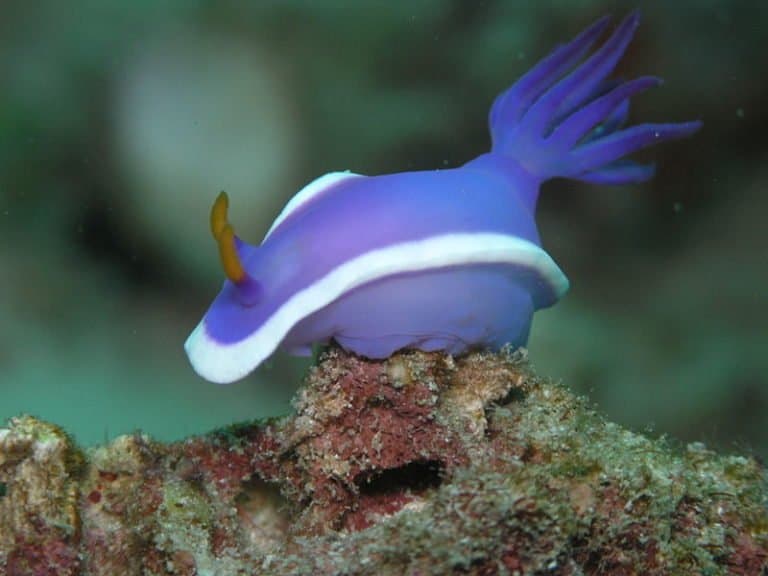
Blue velvet nudibranch Phyllidia varicosa
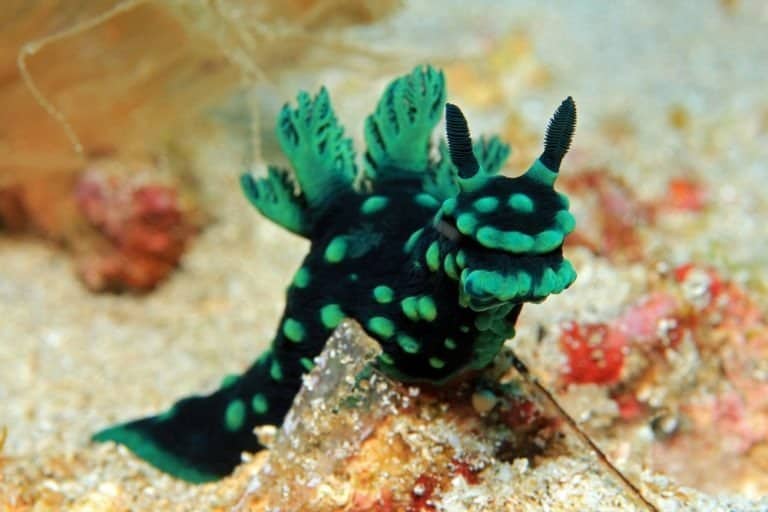
Kubaryana nembrotha Nembrotha kubaryana
Stephanie's (Berghia) nudibranch Berghia stephanieae
Sea lemon nudibranch Doris pseudoargus
Janolus nudibranch Janolus cristatus
Giant dorid nudibranch Discodoris boholiensis

Quick Take

  • Specific species are required to produce over 1,000,000 eggs within a single mass.
  • The Nudibranchia classification creates a high-risk vulnerability by restricting the presence of external shells.
  • These mollusks operate as plant-animal hybrids that eventually cease all traditional consumption.
  • The Blue Dragon targets Man-o-War jellyfish to complete a mandatory defense acquisition loop.

One of the most important facts to remember about sea slugs is that there are over 2,000 species. They are found in both shallow and deep areas of the oceans. In Asia, sea slugs are a form of cuisine.

A detailed educational infographic about sea slugs featuring colorful species illustrations, a global distribution map, and icon-based data on their diet and reproduction.
They steal DNA from plants and venom from the world's deadliest jellyfish. Discover the bizarre survival tactics of these 'naked' mollusks that have mastered the art of biological theft. © A-Z Animals

3 Incredible Sea Slug Facts

  • Poisonous skin: Some sea slugs eat prey that contains poison. Instead of killing them, this animal stores the poison and releases it as protection against predators.
  • Male and female: All sea slugs contain both male and female organs. So, when they mate with another animal, they both release eggs.
  • Cannibals: Sea slugs are known to eat each other. They may eat a dead sea slug or attack a live one to eat it. Not surprisingly, animals that are larger in size usually prey on smaller ones.

Classification and Scientific Name
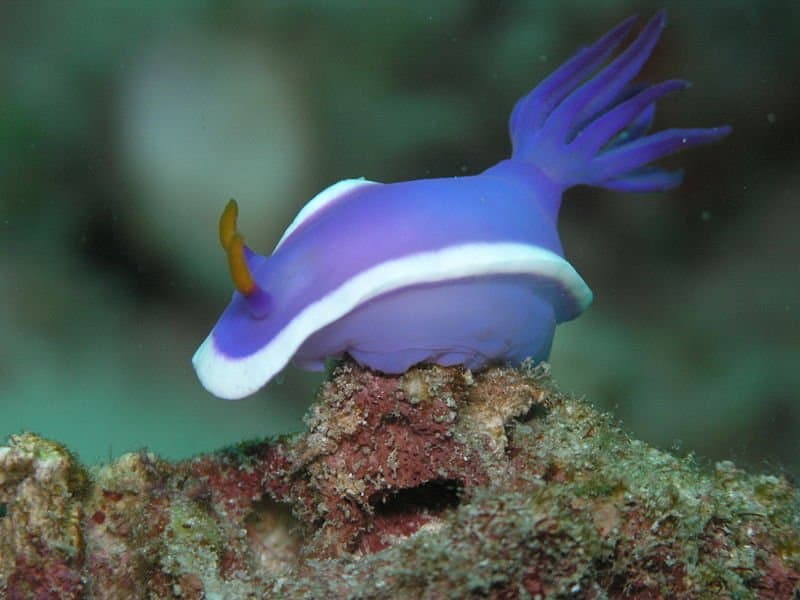
Blue Sea Slug on a rock

Sea slugs are a type of marine gastropod mollusk that come in a wide variety of shapes, sizes, and colors.

Sea slugs are classified in the order Nudibranchia. The name Nudibranchia is Latin for naked gills. This refers to the animal’s lack of a shell as well as the feather-like gills and horns on its body. These animals are also called gastropod mollusks and pteropods.

There are over 2,000 species of sea slugs. In short, sea slug is a common name for many types of these animals. They belong to the Gastropoda class, the family of Opisthobranchs, and are in the phylum Mollusca.

Species
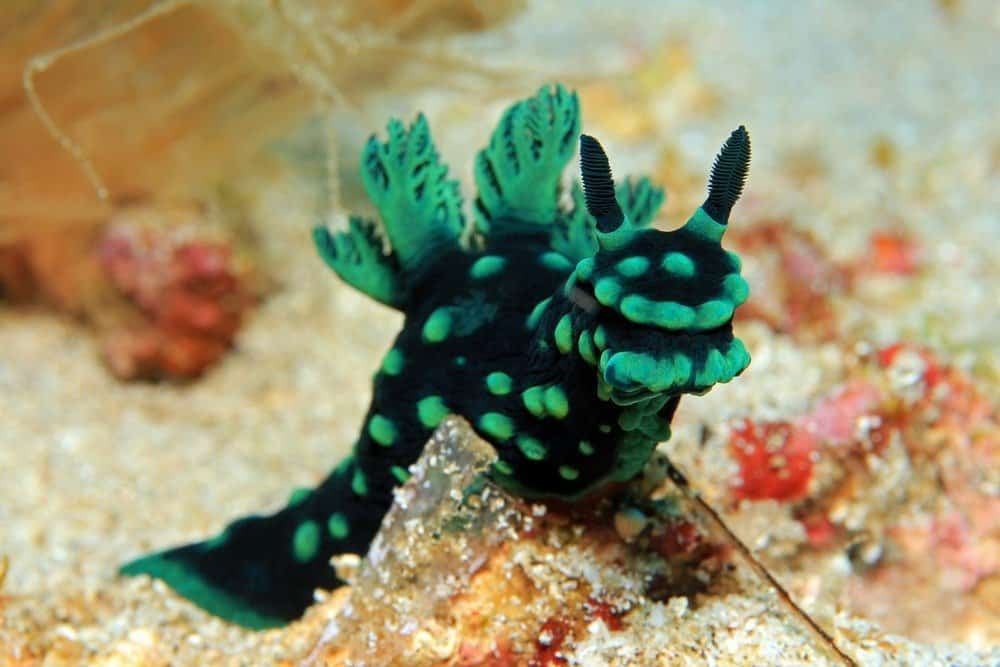
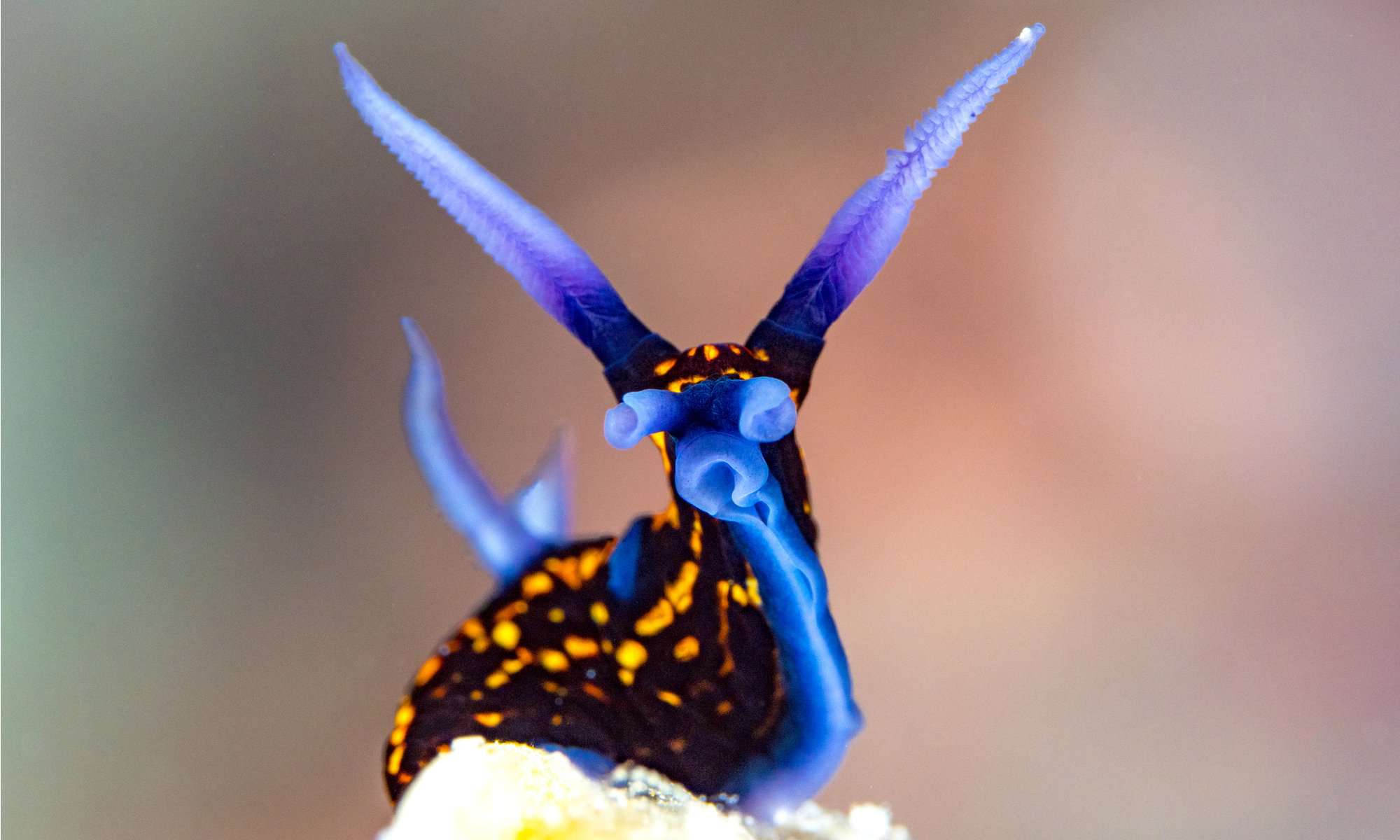
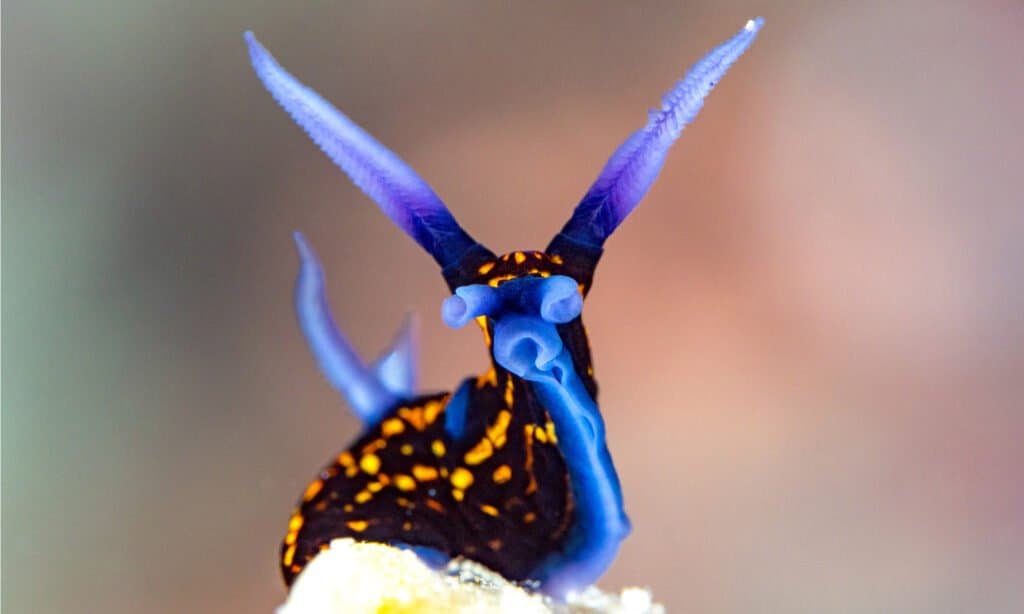
Frontal Close-up of a Cristate Neon Slug, Padang Bai, Bali, Indonesia

Many sea slugs have developed unique and fascinating adaptations to help them survive in their environments, such as camouflage, toxic secretions, and the ability to steal genes from other organisms.

There are species of this animal living throughout the world. There happen to be 8 species living in the Chesapeake Bay. The level of salinity in the Chesapeake Bay makes this an ideal environment for them. Some of the types living in the bay include:

  • The bushy-backed nudibranch (Dendronotus frondosus): This animal could easily be mistaken for an underwater plant. It has what appear to be prickly branches sticking out of its back. It can be brown to gray in color and is just 2 inches long.
  • The ridge-backed nudibranch (Palio dubia): The ridges all over this animal’s body earned it the name ridge-backed nudibranch. It’s white/yellow in color and lives under rocks and within gatherings of seaweed.
  • The striped nudibranch (Armina californica): This animal measures 3-6 inches in length. It’s brown with a pattern of white stripes. Its rhinophores (scent receptors) look like two small clubs.
  • The frosty-tipped nudibranch (Antiopella gelida): This animal is known by the white tips on the cerata, or horns, on its back. They are yellowish in color, and their skin has an opaque appearance.

Evolution and Origins

Sea slugs, which are “real plant-animal hybrids,” are animals that can synthesize food as a result of symbiosis. Green algae were consumed by the sea slugs’ ancestors. The algae entered the animal’s tissue rather than being digested, which allowed the mammal to acquire photosynthetic genes. Adult sea slugs don’t eat anymore.

There are probably repercussions from shrinking the shell, from which slugs evolved from snails. Yes, the majority of slugs have internal shells. A snail has a large enough external shell for the body to retract into.

Many aeolid nudibranchs consume cnidarians — animals with stinging cells like corals and jellies — and can defend themselves by using these stinging cells. From the arctic regions to the tropics, sea slugs can be found anywhere from the shallow intertidal to the deep sea.

Diversity
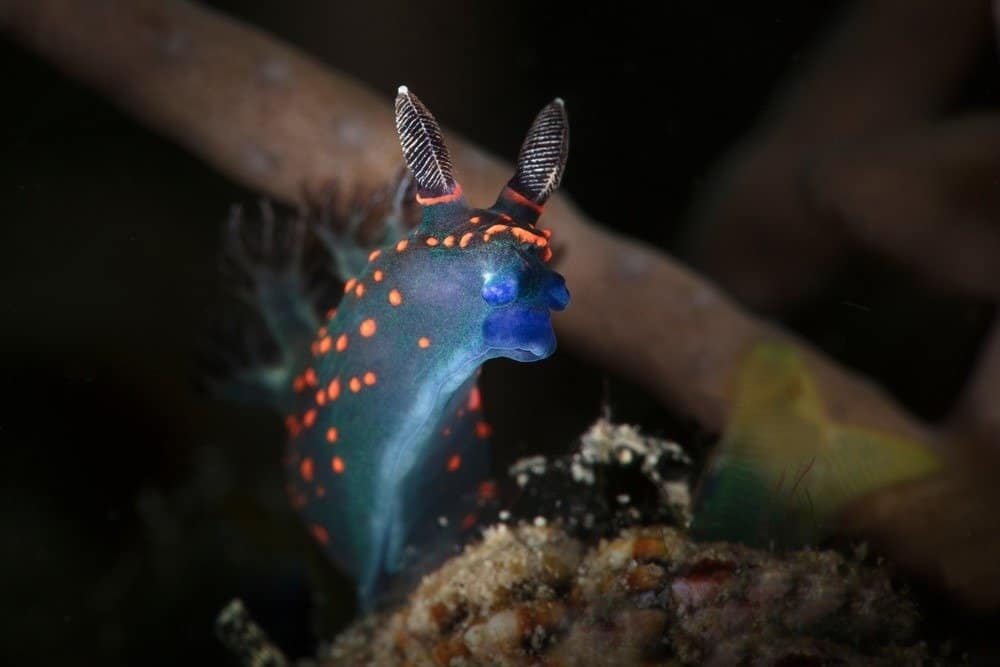
Sea Slug juvenile. Romblon, Philippines

Some sea slugs are herbivores, while others are carnivores, and still others practice a form of symbiotic feeding with algae or other organisms.

Like many nudibranchs, sea slugs can store and use stinging cells, also known as nematocysts, from their prey in their finger-like cerata. Although some species of sea slugs, like the Pyjama slug, may use their colors to express their danger level to prey.

The lettuce sea slug has ruffled lines across its body and has a process of absorbing chloroplasts from the algae it eats. These cells then photosynthesize into sugars. The ruffles of the lettuce sea slug actually increase the slug’s surface area, which allows the cells to absorb more light.

Headshield slugs such as the Chelidonura varians use their heads to dig into the sand, where they spend most of their lives. This shield protects them from the sand entering their mantle during burrowing.

There are many different types of sea slugs, which proves the vast diversity of the species.

Appearance
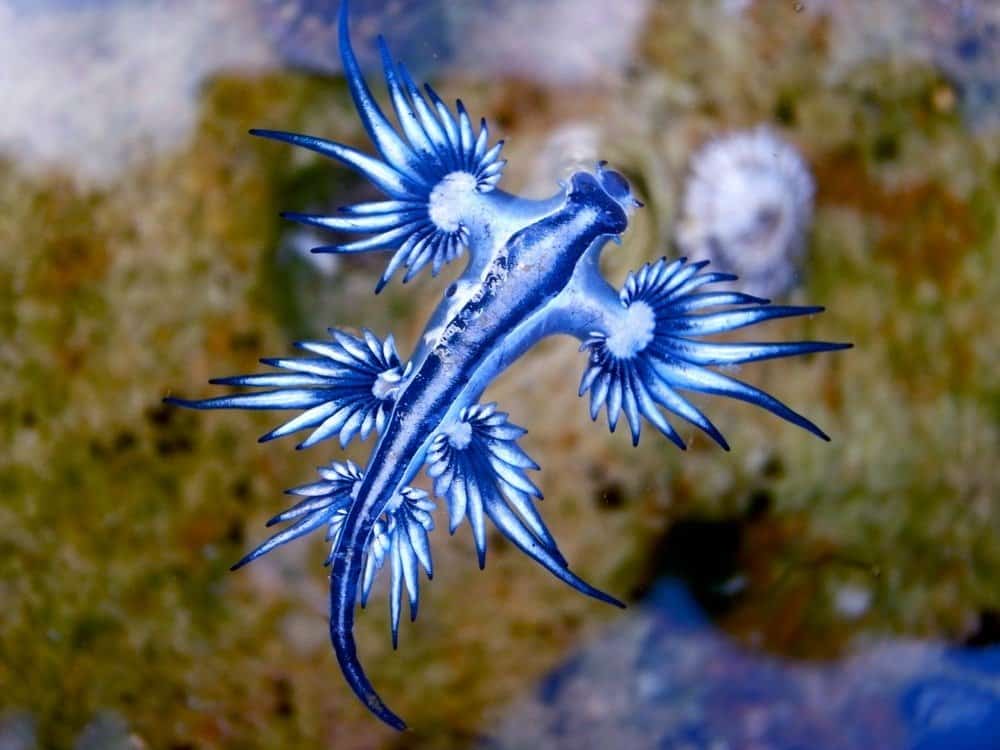
Blue Dragon Sea Slug

Sea slugs play an important role in their ecosystems as both predators and prey, and they are also used in biomedical research to study topics such as cancer and nerve regeneration.

The appearance of these animals depends on their species. Most of them have cerata on their body. Also, most have rhinophores, or scent receptors, on the top of their head. They can range from one-eighth of an inch to 12 inches in length. Furthermore, they can weigh up to 3.3 pounds.

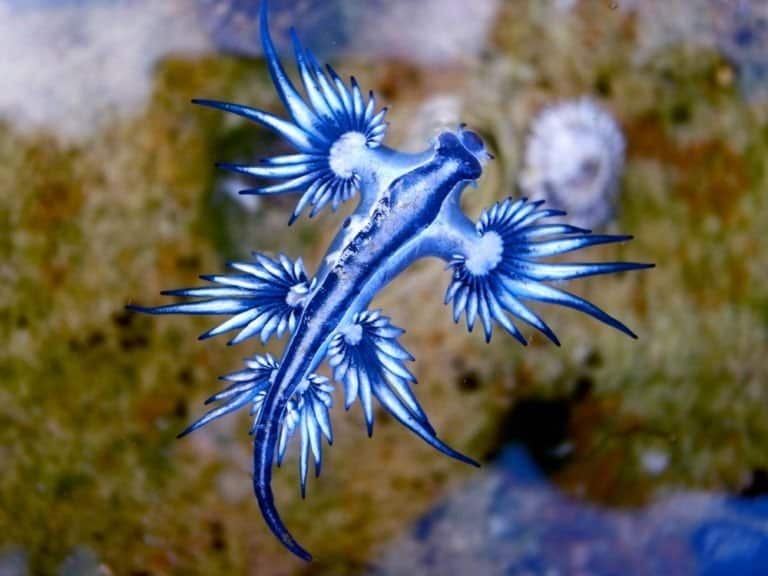
One of the most colorful types is known as the blue dragon. It has a blue body, dark blue stripes on its head, and silver on its back. One of the most interesting facts about this animal is that its cerata look like slim fingers on both sides of its body. It usually grows to be 1.2 inches in length.

The Spanish dancer is another notable animal belonging to the phylum Mollusca. Its flat body is bright orangish-red. It can grow to be 11 inches long. It folds and unfolds itself as it swims.

The black sea hare is an exception to the small size of most of these animals. It is the largest species, measuring 39 inches and weighing 31 pounds!

While some sea slugs feature colors that blend into their underwater habitat, others have toxins in their skin that help to fend off predators.

Distribution, Population, and Habitat

These animals live in oceans throughout the world. They live along the eastern and western coasts of both North and South America. They live off the coast of Europe, Asia, Africa, and Australia. They live in temperate to tropical areas of saltwater. Some live in shallow areas while others live at depths of 2,300 feet beneath the surface.

Some sea slug populations are starting to be under pressure. This is due in part to water pollution. They’re also captured and sold on the exotic pet market.

Otherwise, the animal’s population is described as Stable. Their official conservation status is Least Concern.

Predators and Prey

What eats sea slugs?

Fish, crabs, and lobsters are all predators of these animals. Because of their small size, these animals are vulnerable to many other sea creatures. However, the poison they carry in their skin serves as an effective defense against many predators.

Humans are also predators of sea slugs. Some species are captured and sold on the exotic pet market. Others are captured and eaten.

Another environmental threat to these animals is water pollution.

What do sea slugs eat?

Plankton, algae, and jellyfish are all prey of these animals. Some of these animals are herbivores eating algae and other plant life off rocks. Others are carnivores eating plankton and other sea creatures.

Blue dragons are carnivores eating man-o-war jellyfish. As it eats the man-o-war jellyfish, the blue dragon absorbs poison from its prey and can turn the same poison on a predator.

Reproduction and Lifespan
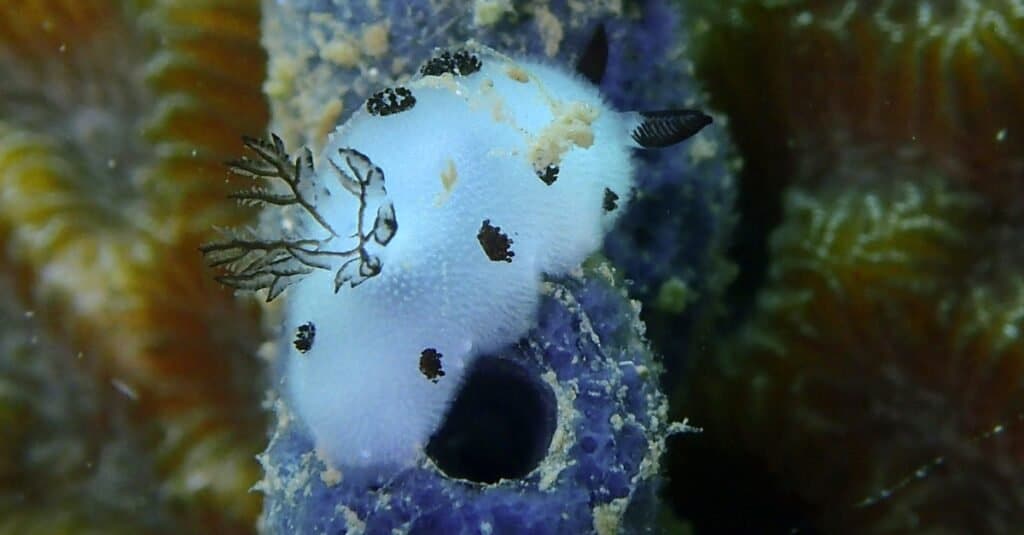
The sea bunny

The sea bunny is a type of sea slug called Jorunna parva. Most are less than an inch (2.5 centimeters) long and can be found throughout the Indo-Pacific Ocean from South Africa to the central Pacific.

These animals have both male and female sex organs. They lay egg masses that can sometimes contain over one million eggs. Some, like the blue dragon, lay eggs on the carcasses of their prey. Others lay their eggs on floating logs or vegetation.

The age of sexual maturity depends upon the animal’s lifespan.

The incubation period of the eggs ranges from 5 to 50 days. The animal’s lifespan is from 1 to 4 years, depending on its species.

Fishing and Cooking

These animals are caught and sold in the exotic pet trade. They are slow and can easily be caught in a net.

They’re eaten in China and other parts of Asia. The animal’s skin is roasted and dried. Some have reported that they have a bitter taste due to the mucus on their skin. When this animal is on the menu, it’s usually served with vegetables, especially mushrooms, and cabbage. They are known to be low in calories and high in protein.

View all 390 animals that start with S

Sources

  1. Wikipedia / Accessed December 4, 2020
  2. Reef Biosearch / Accessed December 4, 2020
  3. New Heaven Reef Conservation / Accessed December 4, 2020
Rebecca Bales

About the Author

Rebecca Bales

Rebecca is an experienced Professional Freelancer with nearly a decade of expertise in writing SEO Content, Digital Illustrations, and Graphic Design. When not engrossed in her creative endeavors, Rebecca dedicates her time to cycling and filming her nature adventures. When not focused on her passion for creating and crafting optimized materials, she harbors a deep fascination and love for cats, jumping spiders, and pet rats.
Connect:

Thank you for reading! Have some feedback for us?


Sea Slug FAQs (Frequently Asked Questions)

Sea slugs are small, slow-moving ocean creatures known for their bright colors and intricate patterns. They can measure an eighth of an inch long to 12 inches. Oftentimes, they have horns on their body and scent receptors called rhinophores on their head.