

S
Species Profile

Sheep

Ovis aries

Wool, milk, meat-made by the flock.
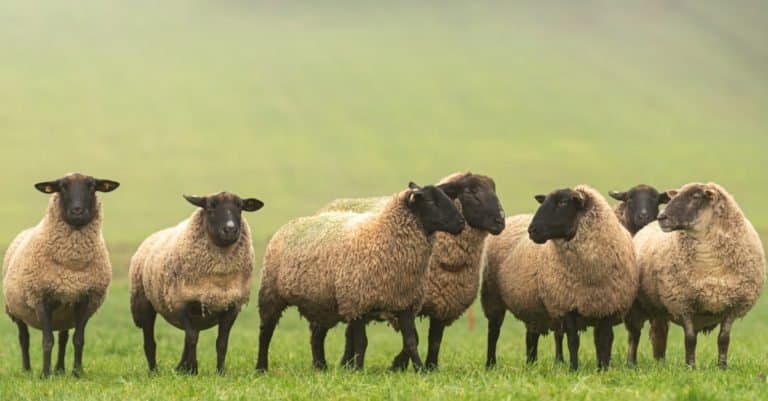
WilliamLWatson/Shutterstock.com

Sheep Distribution

Click a location to explore more animals from that region

Invasive Species
Origin Location

This map shows the native origin of the Sheep. As a domesticated species, they are now found worldwide.

Loading map...

Size Comparison

Human 5'8"
Sheep 2 ft 6 in

Sheep stands at 43% of average human height.

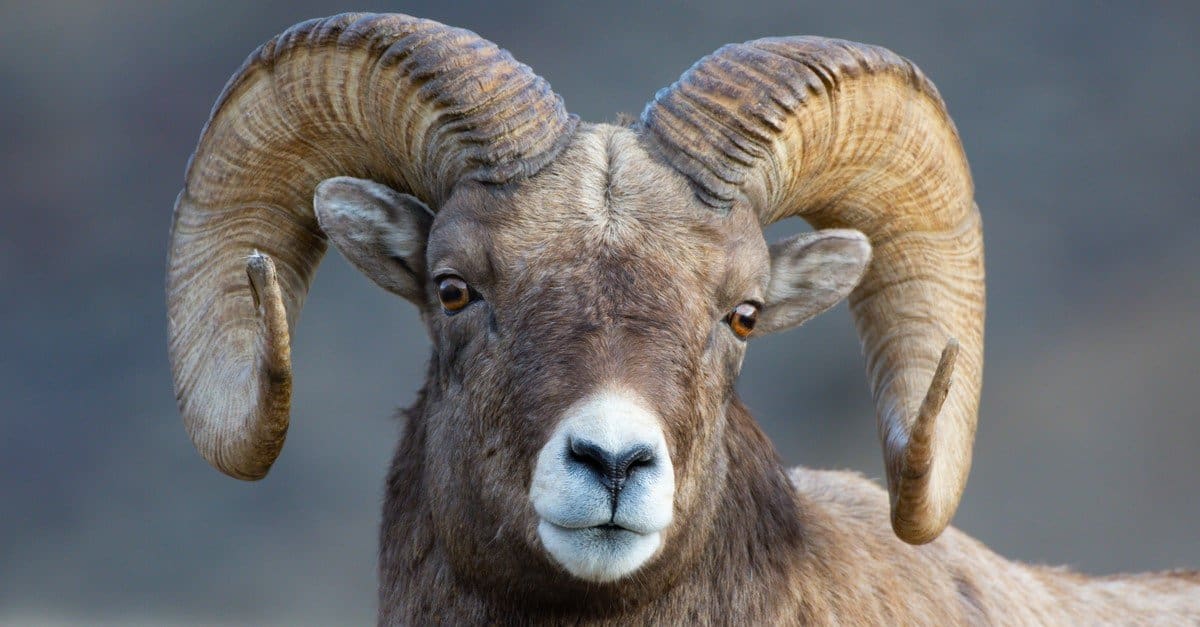
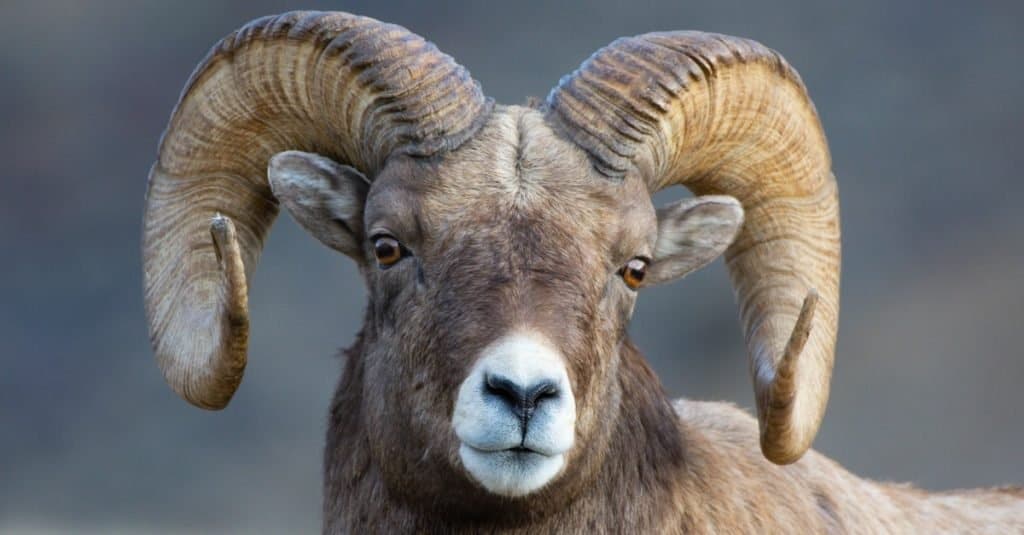
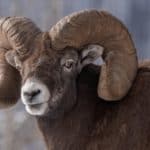
Rocky Mountain Bighorn Sheep in Gardiner Montana

At a Glance

Domesticated
Also Known As Sheep, Ovine
Diet Herbivore
Activity Diurnal+
Lifespan 8 years
Weight 180 lbs
Status Not Evaluated
Did You Know?

Gestation averages ~147 days (about 5 months) and lambs typically stand and nurse within minutes to hours after birth (Merck Veterinary Manual).

Scientific Classification

The domestic sheep is a domesticated bovid (genus Ovis) raised worldwide primarily for wool, meat (lamb/mutton), milk, and hides. It is a social, grazing ungulate with extensive breed diversity shaped by human selection.

Kingdom
Animalia
Phylum
Chordata
Class
Mammalia
Order
Artiodactyla
Family
Bovidae
Genus
Ovis
Species
aries

Distinguishing Features

  • Thick fleece (in many breeds) produced by wool fibers rather than hair
  • Ruminant with a four-chambered stomach; specialized grazing dentition
  • Strong flocking/social behavior
  • High breed variation in size, horn presence, coat type, and tail/fat deposition

Physical Measurements

Males and females differ in size

Height
2 ft 7 in (1 ft 12 in – 3 ft 7 in)
2 ft 4 in (1 ft 10 in – 2 ft 11 in)
Weight
220 lbs (77 lbs – 397 lbs)
154 lbs (77 lbs – 265 lbs)
Tail Length
10 in (4 in – 1 ft 6 in)
Top Speed
25 mph
running

Appearance

Primary Colors
Secondary Colors
Skin Type Thick mammalian skin with dense wool/hair coat (lanolin-rich); cloven hooves with interdigital skin and scent glands.
Distinctive Features
  • Dense woolly fleece (often continuously growing in improved wool breeds); lanolin-coated fibers and skin.
  • Head profile variable by breed; typically no upper incisors (dental pad) and laterally placed eyes.
  • Tail usually hangs down (often docked in managed flocks), contrasting with typical upright goat tail carriage.
  • Cloven hooves with interdigital gland; preorbital, inguinal, and pedal scent glands present (notably used in social/sexual signaling).
  • Adult size is strongly breed-selected: typical adult mass ~45-160 kg and withers height ~55-100 cm (Britannica; Merck Veterinary Manual).
  • Domestication-selected phenotypes include polledness vs horns, extreme wool length/crimp, and wide color variants across global breeds.
  • Typical lifespan about 10-12 years under husbandry, with potential to reach ~20 years (Merck Veterinary Manual).
  • Grazing-adapted muzzle and lips for close cropping; ruminant body form with large left-sided rumen fill after feeding.

Sexual Dimorphism

Males (rams) are typically larger with thicker necks and more frequent, heavier horn development, while females (ewes) are often smaller and commonly polled in many breeds. Degree of dimorphism varies substantially among breed types selected for wool, meat, or dairy.

  • Greater average body mass and height than ewes within the same breed line.
  • Horns more commonly present and more robust (spiraled/curling in many horned breeds).
  • Thicker neck and more pronounced forequarter muscling; more prominent scent-marking behavior.
  • External testes/scrotum visible, contributing to sex recognition in managed flocks.
  • Smaller overall frame; horns absent more often (polledness common in many commercial lines).
  • Udder with two teats; may be more apparent in dairy and lactating ewes.
  • Generally finer head/neck profile; less pronounced horn bosses when horned.

Did You Know?

Gestation averages ~147 days (about 5 months) and lambs typically stand and nurse within minutes to hours after birth (Merck Veterinary Manual).

Estrous cycle is ~17 days; many breeds are seasonally polyestrous (short-day breeders), though some can breed year-round (Merck Veterinary Manual).

Adult size varies strongly by breed: many ewes ~45-100 kg and rams ~70-160 kg; wither height commonly ~0.55-1.0 m (breed-dependent; FAO/DAD-IS & breed standards).

Domestic sheep can distinguish and remember individual faces-studies show recognition of dozens of sheep and human faces with long retention (e.g., Kendrick et al., Nature, 2001; subsequent cognition studies).

They are true ruminants: a 4-compartment stomach (rumen, reticulum, omasum, abomasum) lets microbes convert cellulose-rich grasses into usable energy.

Sheep vs goats: sheep tails usually hang down, many breeds carry a woolly fleece, and they have notable scent glands (e.g., infraorbital "preorbital" glands used in marking).

Record-setting breed diversity is huge: fine-wool types (e.g., Merino), meat types (e.g., Suffolk), dairy types (e.g., East Friesian), and fat-tailed sheep adapted to arid regions (FAO breed records).

Unique Adaptations

  • Ruminant digestion (4-chamber stomach) enabling efficient use of cellulose-rich grasses via microbial fermentation; critical to pastoral systems on lands unsuitable for crops.
  • Continuously growing wool in many breeds: fleece provides insulation and weather protection; lanolin (wool grease) helps water-shed and protects fibers/skin.
  • Wide field of view and low blind-spot strategy: laterally placed eyes give a very broad panorama (commonly reported around ~300° in sheep), aiding predator detection in open habitats (vision/ungulate husbandry references).
  • Split upper lip and mobile muzzle help nip short grasses close to the ground, a key grazing specialization.
  • Cloven hooves with robust keratin and a shock-absorbing digital cushion support long-distance walking over varied terrain; interdigital glands can leave chemical trails.
  • Seasonal breeding physiology in many populations: photoperiod-driven reproductive cycling times lambing to favorable spring forage in temperate regions.

Interesting Behaviors

  • Flocking and follow-the-leader movement: strong social cohesion reduces predation risk; isolation commonly triggers stress and repeated calling.
  • Grazing patterning: primarily grazers (more than browsers), selecting short, fresh growth and foraging in bouts separated by rumination (chewing cud).
  • Rumination cycles: after grazing, sheep regurgitate and re-chew forage to increase particle breakdown for microbial fermentation in the rumen.
  • Maternal bonding by smell and sound: ewes rapidly learn their lamb's odor and voice, enabling selective nursing in crowded lambing groups.
  • Scent marking: rams and ewes use facial (infraorbital) glands and interdigital glands; rubbing or pawing can deposit scent cues.
  • Butting and sparring: rams may clash head-to-head to establish dominance, especially during the breeding season; conflicts are often ritualized before escalation.
  • Vigilance sharing: individuals lift heads and scan while others graze-group living spreads predator detection across the flock.

Cultural Significance

Domestic sheep (Ovis aries) helped herding economies by giving wool, meat, milk, and hides. Wool drove cloth trades and transhumance (seasonal move). They are symbols of sacrifice and purity in Judaism, Christianity, and Islam (Eid al‑Adha); breeds like Merino became national icons.

Myths & Legends

The Golden Fleece (Greek mythology): the magical winged ram rescues Phrixus and Helle; its fleece becomes the famed prize sought by Jason and the Argonauts.

Aries the Ram (Greek/Roman zodiac tradition): the ram's rescue of Phrixus is linked to the constellation Aries, embedding the sheep/ram in astrological lore.

The Passover lamb (Jewish tradition): the lamb sacrifice and its protective blood-sign in the Exodus narrative became a lasting ritual and symbol in Jewish cultural memory.

The "Lamb of God" (Christian tradition): the lamb becomes a central devotional image of sacrificial redemption, echoed in hymns, art, and liturgy as "Lamb of God."

The ram in the story of Abraham (Islamic tradition): a ram is offered in place of the son, commemorated through the Festival of Sacrifice in many Muslim cultures.

English nursery tradition: "Little Bo-Peep" and "Mary Had a Little Lamb" preserve pastoral sheep as folklore figures-symbols of innocence, loss, and faithful following.

Merino origin lore and guarded flocks (Iberian historical tradition): stories of Spain's Merino sheep being protected as a strategic treasure-sometimes framed as near-mythic national wealth tied to fines for export and clandestine smuggling tales.

Conservation Status

NE Not Evaluated

Has not yet been evaluated against the criteria.

Population Stable

Life Cycle

Birth 2 lambs
Lifespan 8 years

Lifespan

In the Wild
6–12 years
In Captivity
10–20 years

Reproduction

Mating System Polygyny
Social Structure Managed Domestic
Breeding Pattern Transient
Fertilization Internal Fertilization
Birth Type Internal_fertilization

Domestic sheep are primarily polygynous: rams compete and may service multiple ewes during a seasonal rut. Under managed breeding, mating is by internal fertilization; ewe estrus lasts ~24-36 h and gestation averages ~147 days (Hafez & Hafez, 2000).

Behavior & Ecology

Social Flock Group: 100
Activity Diurnal, Crepuscular
Diet Herbivore High-quality, leafy pasture-especially grass-clover swards (e.g., perennial ryegrass with white clover), which provide highly digestible energy and protein compared with mature stemmy herbage.

Temperament

Strongly flocking; isolation elevates distress vocalizations and physiological stress (Dwyer, 2008).
Generally docile with habituation to handlers; reactive/flighty lines occur by breed selection (Fraser & Broom, 2015).
Stable, largely linear dominance hierarchies form, influencing priority access to feed and space (Squires, 2010).
Maternal behavior is pronounced; ewe-lamb recognition relies on rapid postnatal learning (Nowak, 1990).
Lifespan commonly ~10-12 years; individuals may reach ~20 years with good care (Merck Veterinary Manual, sheep husbandry).

Communication

Bleats (contact calls) used for mother-offspring and flock cohesion
Lamb distress bleats trigger maternal search and retrieval
Low-frequency rumbles/grunts during close social interactions
Snorts/snorts-and-stamps as alarm signals
Olfaction: anogenital sniffing and pheromonal cues; rams show flehmen to assess estrus
Visual: posture/orientation maintains spacing and dominance; sheep discriminate familiar individuals
Individual recognition: can learn and remember many conspecific faces Kendrick et al., 2001
Tactile: nudging, body contact, and head rubbing reinforce bonds and maternal care

Habitat

Biomes:
Temperate Grassland Mediterranean Savanna Tropical Dry Forest Desert Hot Desert Cold Alpine Tundra Temperate Forest Boreal Forest (Taiga) Wetland +5
Terrain:
Mountainous Hilly Plateau Plains Valley Coastal Island Rocky Sandy +3
Elevation: Up to 16404 ft 3 in

Ecological Role

Primary consumer (grazing herbivore) that converts herbaceous plant biomass into animal biomass; in managed landscapes it functions as a strong vegetation-structure modifier.

Vegetation control and maintenance of open grassland/scrub mosaics through grazing pressure (can reduce shrub encroachment when stocking/season are appropriate) Nutrient cycling: returns nitrogen, phosphorus, and organic matter to soils via dung and urine, stimulating microbial activity and patchy fertility Seed dispersal and plant community filtering: can transport seeds externally (fleece) and internally (endozoochory) and alter competitive balance among plant functional groups via selective grazing Fuel-load reduction: grazing can lower fine-fuel biomass and continuity, potentially reducing wildfire spread/intensity in some grazing-managed systems Creation of habitat heterogeneity: grazing and trampling generate short swards and disturbed microsites that can benefit certain plants/invertebrates; conversely, overstocking can cause overgrazing, erosion, and biodiversity loss (management-dependent)

Diet Details

Other Foods:
Pasture grasses Legumes Herbaceous forbs Young leaves and twigs of shrubs and hedgerow species Hay Silage and haylage Crop residues and stubble Concentrates +2

Human Interaction

Domestication Status

Domesticated

Domestic sheep (Ovis aries) were first tamed from the Asiatic mouflon (Ovis orientalis) in Southwest Asia in the early Neolithic, about 11,000–10,000 years ago. People quickly bred them for thicker fleece, different size, and changed breeding to fit farming and wool, meat, and milk use.

Danger Level

Moderate
  • Physical injury: rams can strike/butt, causing bruises, fractures, or falls-risk increases during breeding season and with hand-reared/overconfident males.
  • Zoonoses/dermatologic infections: contagious ecthyma (orf virus) can infect humans via skin abrasions; ringworm (dermatophytes) possible with close contact.
  • Aerosol/parturition-associated risks: Q fever (Coxiella burnetii) exposure risk around lambing materials in endemic areas-particularly relevant for pregnant or immunocompromised people.
  • Enteric pathogens: potential exposure to Salmonella, Campylobacter, Cryptosporidium via fecal contamination (petting zoos/farm visits).
  • Allergies/asthma triggers: wool/lanolin and barn dust (dander, molds) can exacerbate respiratory or skin sensitivities.

As a Pet

Suitable as Pet

Legality: Generally legal to keep as livestock in many jurisdictions, but commonly restricted by local zoning/animal-control ordinances (minimum acreage, setbacks, shelter/manure rules). Some areas require livestock registration, scrapie identification/ear tags, or movement paperwork. Always check county/municipal regulations and state/province livestock rules.

Care Level: Moderate

Purchase Cost: $50 - $1,000
Lifetime Cost: $2,000 - $12,000

Economic Value

Uses:
Meat production (lamb/mutton) Fiber production (wool; specialty fibers by breed type) Dairy production (sheep milk; cheese/yogurt) Hides/leather Manure/fertilizer and soil nutrient cycling Ecosystem services (targeted grazing/vegetation management) Research/education and agritourism
Products:
  • lamb and mutton (fresh, processed meats)
  • wool (apparel wool, worsted, carpet wool, felt)
  • lanolin (wool grease; cosmetics/industrial uses)
  • sheep milk and derivative products (cheeses such as pecorino-style, yogurt)
  • skins/hides (leather, pelts)
  • rendered by-products (e.g., tallow in some supply chains)
  • breeding stock and genetics (registered animals, semen/embryos in some systems)
  • paid grazing services (weed/brush control, fire-fuel reduction in some regions)

Relationships

Related Species 9

Ecological Equivalents 5

Animals that fill a similar ecological role in their ecosystem

Sheep Breeds

12

Explore 12 recognized breeds of sheep

Dairy (2)

East Friesian Origin: Germany (East Frisia, Lower Saxony)
Lacaune Origin: France (Aveyron/Tarn region)

Dairy (also Meat/wool) (1)

Awassi Origin: Middle East (Levant)

Meat (2)

Suffolk Origin: England (Suffolk)
Texel Origin: Netherlands (Texel island)

Meat (also Maternal) (1)

Dorset Origin: England (Dorset)

Meat (hair/short Wool Type) (1)

Dorper Origin: South Africa

Meat (hardy Hill) (1)

Scottish Blackface Origin: Scotland

Pelt/fur (also Meat) (1)

Karakul Origin: Central Asia (Uzbekistan region)

Wool (2)

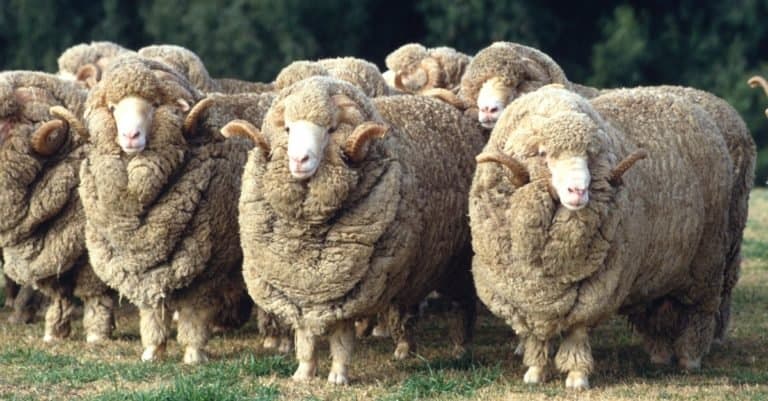
Merino Origin: Spain (later developed extensively in Australia)
Rambouillet Origin: France (Rambouillet; Merino-derived)

Wool (dual Purpose) (1)

Romney Origin: England (Kent)

“Sheep were one of the first and most successful domesticated animals in the world.”

With sweet faces, gentle personalities, and endless amounts of fluffy white wool, it’s no surprise that sheep are some of the most popular livestock animals in existence.

There are more than one billion domestic sheep and several subspecies of wild sheep that can be found around the globe. Some sheep are raised for wool, and others are raised for meat; but either way, these animals are an important part of nearly every culture.

3 Incredible Sheep Facts
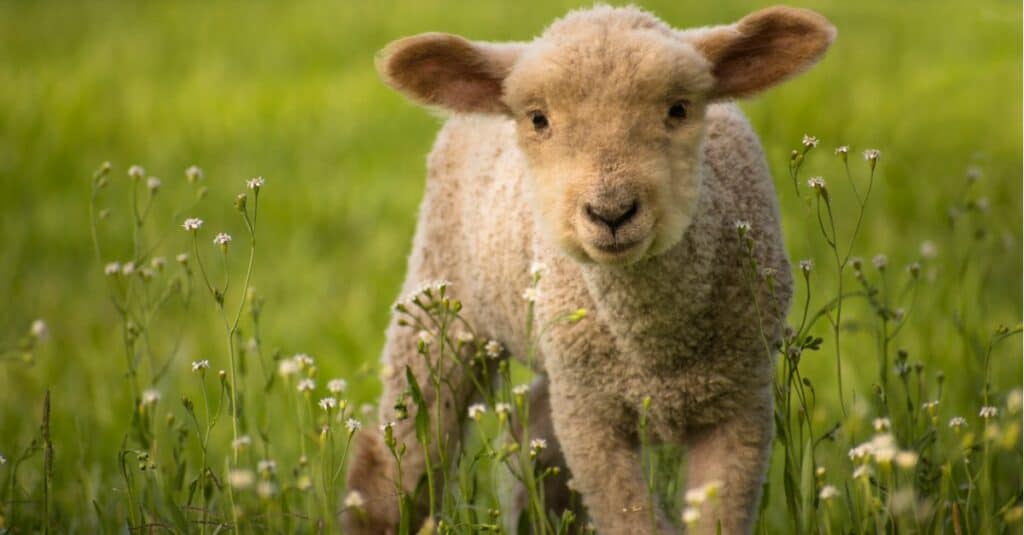
baby sheep lamb

Sheep are animals that have a set of baby teeth that they lose as they get older. Most get their adult slowly and won’t have a full set of teeth until they are 4 years old.

  • Growing teeth: Like humans, sheep are animals that have a set of baby teeth that they lose as they get older. Most get their adult slowly and won’t have a full set of teeth until they are 4 years old.
  • Winter coats: The wool that farmers collect when shearing these animals is actually an undercoat that grows beneath their main coat of fur. Wild sheep get these undercoats in the winter and will shed them when the weather warms up. Domestic sheep have been bred to never shed.
  • Family dynamics: Sheep are animals that love their families and will stick close to their mother and their siblings. In a large flock, you may notice that related sheep are always standing near each other.

Scientific Name
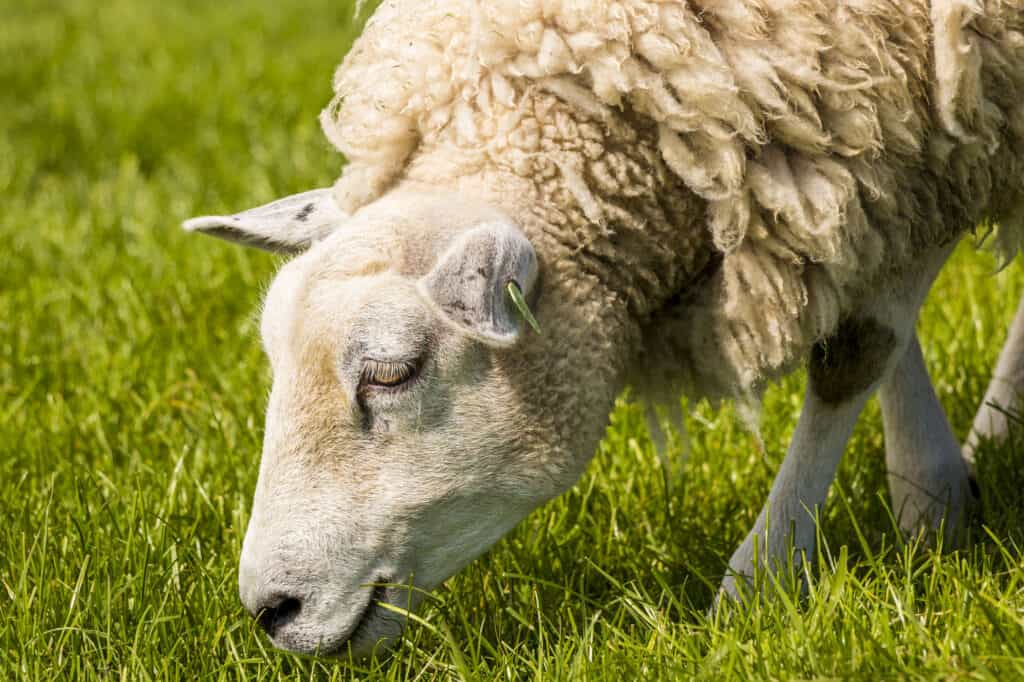
Sheep, Eating, Grazing, Grass, Ewe

The scientific name for the domestic sheep is Ovis aries.

The scientific name for the domestic sheep is Ovis aries. The Latin etymology of this name includes “ovis,” which means “sheep,” and “aries,” which means “ram”. There are several different species that fall under the genus Ovis, and all of them are frequently referred to as “sheep.” Non-domestic examples include the bighorn, the mountain, and the snow sheep. All sheep are part of the Mammalia class and belong to the Bovidae family and the Caprinae subfamily.

Like many domestic species, there are different names for sheep of different genders and ages. A female is called a “ewe,” and a male is called a “ram.” A neutered male is often referred to as a “wether.” Baby sheep are called lambs, and 1-2 year-olds are called “yearlings.”

Evolution and Origins
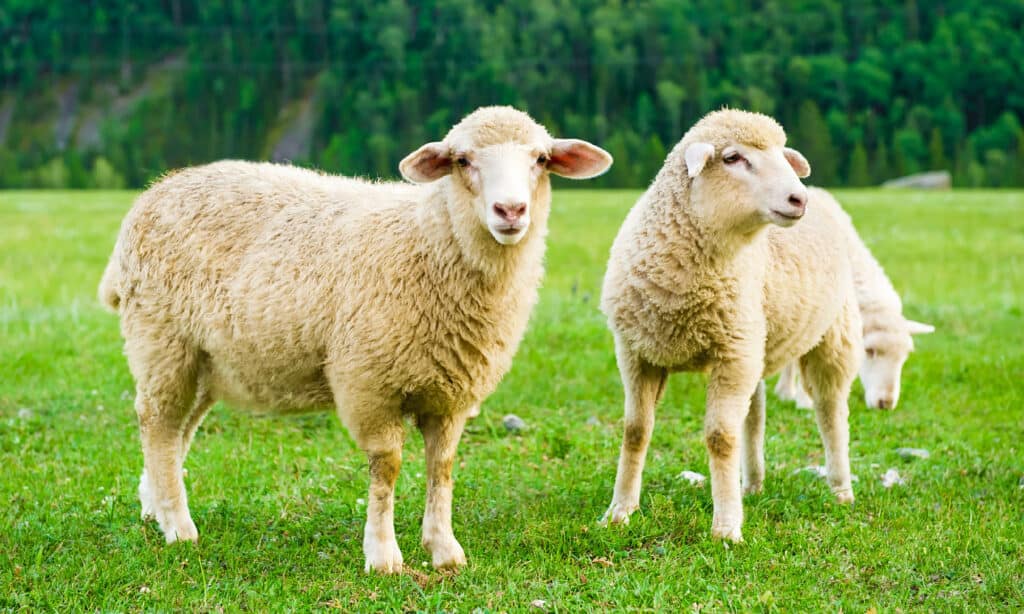
Sheep, Lamb - Animal, White Color, Grass, Herd

The origins of sheep can be traced back to the wild mouflon, a wild sheep that still exists in the mountains of Asia and Europe.

The origins of sheep can be traced back to the wild mouflon, a wild sheep that still exists in the mountains of Asia and Europe. These wild sheep have been domesticated around 8000-9000 years ago in the Middle East and Central Asia. Domestication likely occurred because of the animals’ adaptability to a wide range of environments, as well as their suitability for meat, milk, and wool production.

Over time, sheep were selectively bred to enhance certain characteristics, such as increased wool production and meatier bodies. This process led to the development of the many different breeds of sheep that exist today.

As sheep were domesticated and spread to different regions of the world, they encountered different environments and selective pressures. This led to the evolution of different breeds of sheep that are adapted to specific conditions. For example, some sheep breeds are better suited to cold climates and produce thicker wool, while others are better suited to hot climates and produce less wool.

Today, sheep are raised all over the world for meat, milk, and wool production, as well as for cultural and religious reasons. With the advancement of technology, the breeding and management of sheep have also become more scientific, leading to even more efficient production.

Different Types of Sheep

  • Dorper
  • Merino
  • Valais Blacknose
  • Suffolk sheep
  • Texel sheep
  • Priangan sheep
  • Awassi
  • Cameroon sheep
  • Ladoum
  • Scottish Blackface
  • Hampshire Down
  • Dorset Horn
  • Ouessant sheep
  • Southdown sheep
  • Montadale
  • Herdwick
  • Harri
  • Romanov sheep
  • Corriedale
  • Lacaune sheep
  • Ryeland
  • Racka
  • Royal White
  • Wiltipoll
  • Polypay
  • Meatmaster
  • Coopworth
  • Wiltshire Horn
  • Jacob sheep
  • Katahdin sheep
  • Uda sheep
  • Najdi sheep
  • Columbia sheep
  • Shetland sheep
  • Assaf sheep
  • Lonk
  • Karakul sheep
  • Pelibüey
  • Rambouillet sheep
  • Australian White sheep
  • Cheviot sheep
  • Marco Polo sheep
  • Icelandic sheep
  • Barbados Black Belly
  • Border Leicester
  • Soay sheep
  • Charollais sheep
  • Romney sheep
  • East Friesian sheep
  • Bluefaced Leicester
  • Swaledale sheep

Appearance and Behavior
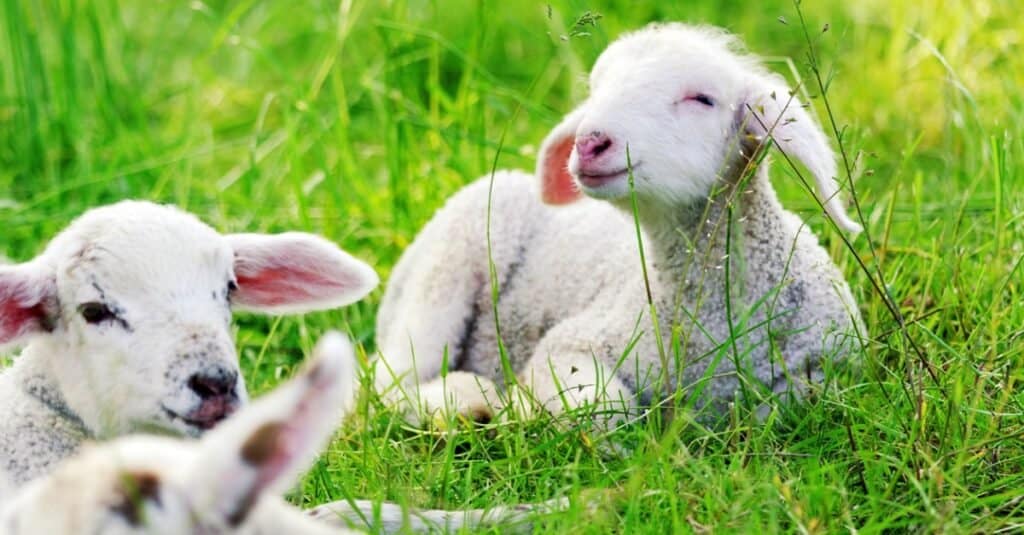
baby sheep portrait

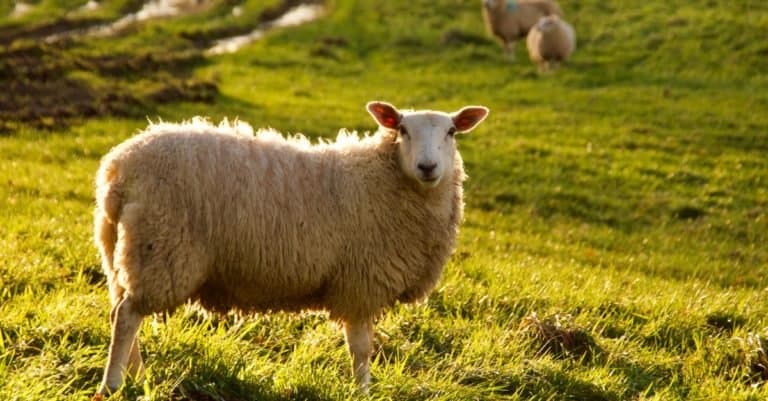
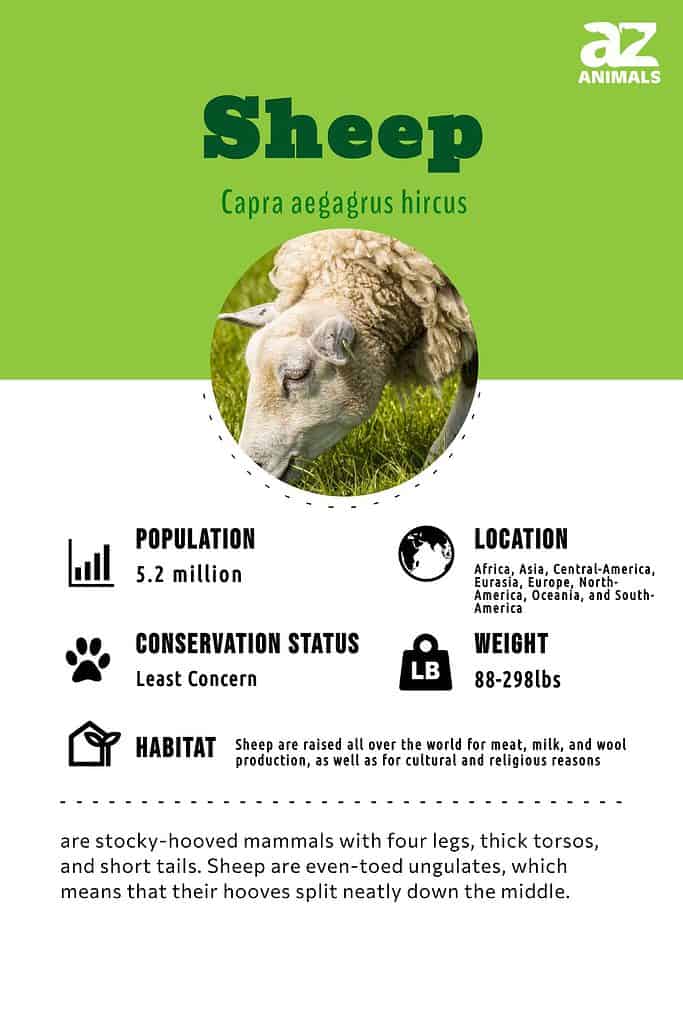
Sheep are stocky-hooved mammals with four legs, thick torsos, and short tails.

These animals are stocky-hooved mammals with four legs, thick torsos, and short tails. Sheep are even-toed ungulates, which means that their hooves split neatly down the middle. All of these animals are covered in thick hairs that are supported by a soft wooly undercoat.

Domestic sheep have been bred to be particularly fluffy, but wild sheep usually have sleeker silhouettes that are more appropriate for mountainous environments.

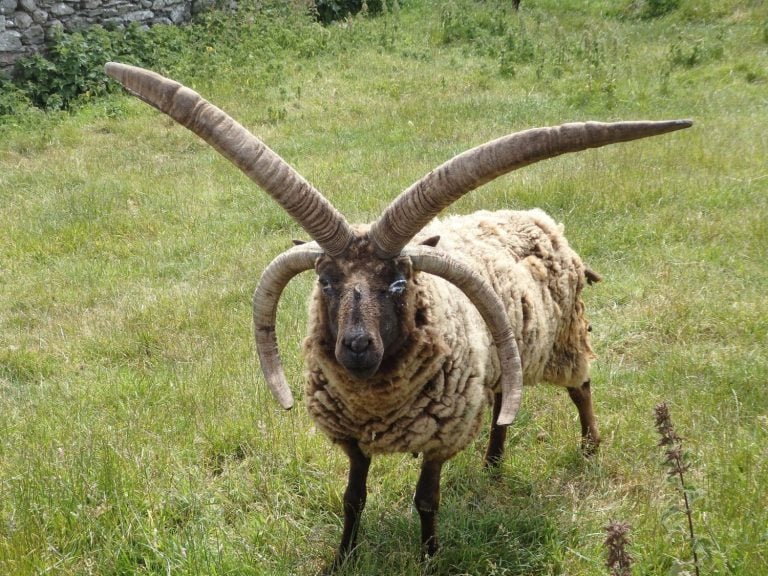
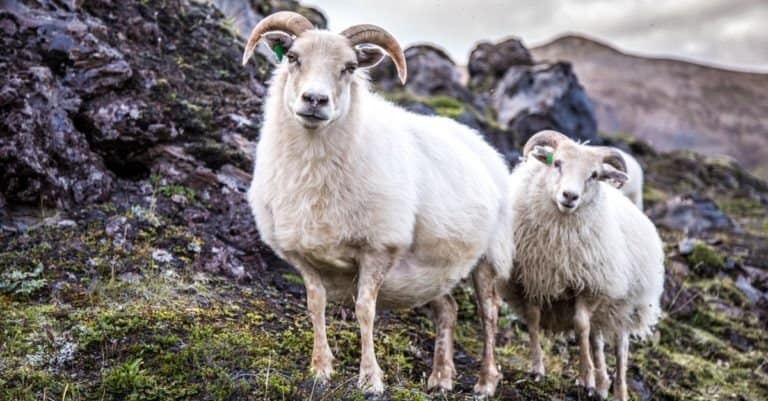
Both wild and domestic sheep can have horns, but wild species tend to have far more impressive spirals. As with most species, the rams will almost always have larger horns than the ewes. Some domestic sheep have been bred to have no horns at all.

These animals are shorter than other ungulates. Most domestic sheep are about 4-5 feet long and stand about 2-4 feet high. A male can weigh anywhere from 100-350 pounds, while females tend to stop growing at 220 pounds. The fluffy wool that they are known for tends to make them look bigger than they actually are, and the impressive

These animals live in flocks and almost never separate from the other members of their group. Lost sheep get incredibly distressed and will bleat loudly until they find their flock or their human caretaker. Within their flocks, they have a strong sense of family.

If you observed a large flock, you might notice the animal hanging out with their siblings, parents, and grandparents. When the flock leader moves to another pasture, the rest of the flock will follow; this is why these animals are such a popular choice for domestic livestock.

Sheep vs. Goat
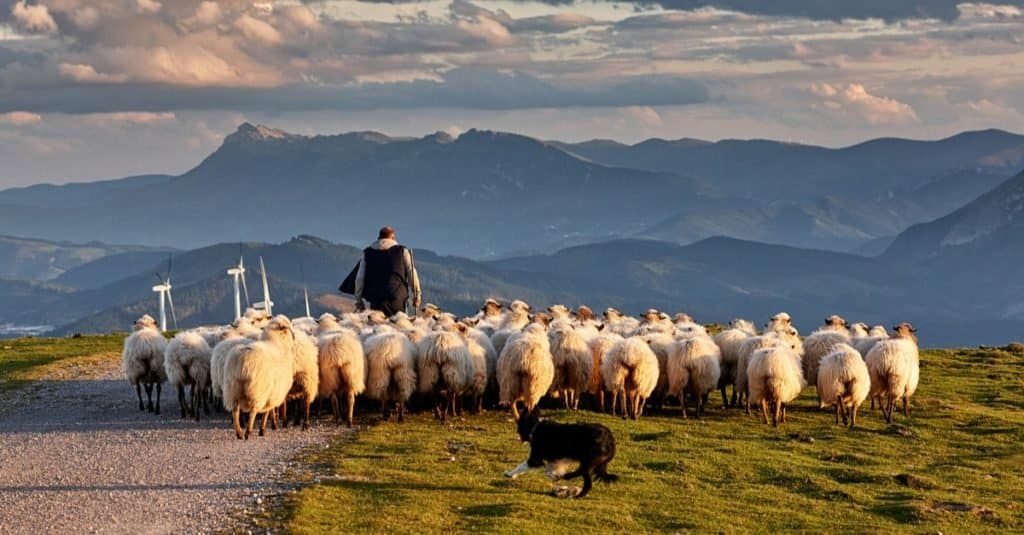
The scientific name for goats is Capra aegagrus hircus.

The scientific name for goats is Capra aegagrus hircus. Sheep and goats are easy to confuse from a distance. However, if you’ve ever interacted with either of these animals, you’ll quickly see the differences between these two members of the Caprinae family.

  • Faces: Goats usually have beards, but domestic and most wild sheep do not. Goats also always have horns; unlike sheep, the base of a goat’s horns typically points straight upward.
  • Diet: Sheep are grazers that slowly eat grass and weeds throughout a pasture. In comparison, goats are browsers who will pick the leaves off a single plant before moving on to the next one.
  • Behavior: Sheep live in flocks and are prone to follow. Goats live in herds and are very social animals, but they have an independent streak that is immediately obvious to anyone who interacts with them.

Habitat

Domestic sheep have been living alongside humans for thousands of years. Because of their thick wool coats, they are capable of living in almost any climate. All they need is shelter, water, and a large grassy pasture where they can graze. Because of the need for grass, domestic sheep are commonly raised in foothills, plains areas, and other places with large stretches of land.

Wild sheep are found in nearly every mountainous region in the world. Bighorn sheep are particularly common in the Rocky Mountains of North America. However, you can also find these animals scattered throughout Europe, Asia, and the Middle East. They are excellent climbers with hardy lungs and are capable of living at elevations of up to 19,600 feet.

Diet
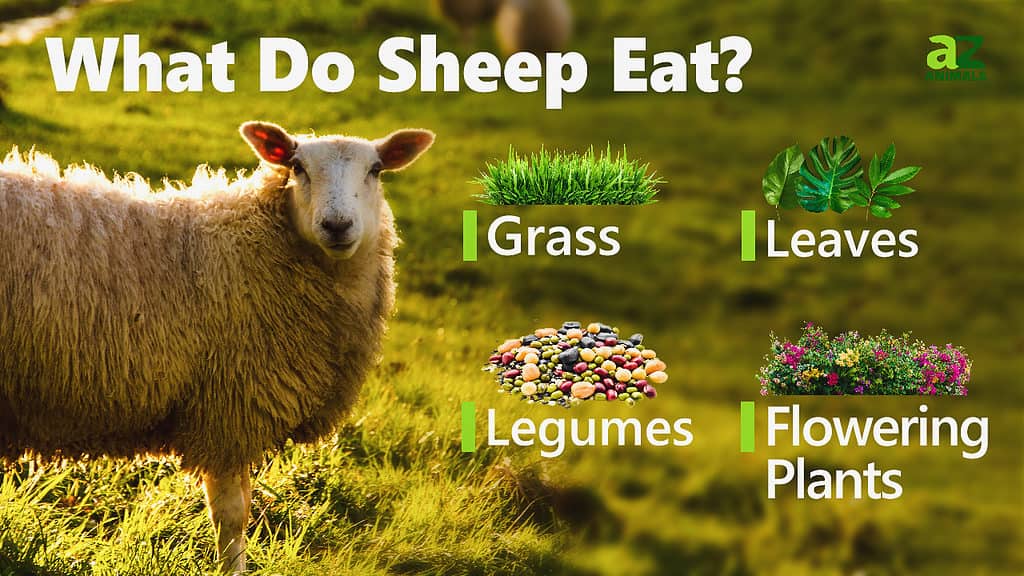
sheep eats
Sheep eats grass, leaves, legumes, and flowering plants.

These animals are a type of herbivore known as a ruminant. This means that they have a complex, multi-stomach digestive system designed to break down the cellulose that’s present in grass and hay. Ruminants require a lot of food to survive, and they need to work to digest it; that’s why they spend most of their time eating and chewing their cud.

The animal’s minimum daily consumption is about 0.03 pounds of grass or hay for every pound of body weight. This means that a 100-pound animal needs to eat 3 pounds of hay every day to maintain healthy body weight. Younger animals tend to eat more than this, and cold weather always calls for an increase in feed.

In the summer, most farmers who own these animals prefer to feed them on a rotating pasture system. This means letting your flock out to pasture on one grass field until it starts to thin. Then, switch your animals to a different pasture, and allow the first one to grow back. Sheep graze incredibly quickly, so you may need to own a lot of lands to make this system work.

Hay is an excellent choice for animals who must be kept indoors, especially in the wintertime. Always use normal hay, as alfalfa hay has an incredibly high level of calcium. Similarly, you should make sure that any pasture your flock is let into has been cleared of toxic weeds.

Finally, if you’re looking to give your animals a treat, they do enjoy munching on grains, vegetables, and fruits. Good choices include apples, oats, carrots, and lettuce. Don’t feed these animals too many treats; if a sheep eats too much of something that isn’t grass, they risk bloating their stomach and experiencing a great deal of discomfort.

Predators and Threats

These are hooved mammals, making them a prime target for large carnivores in every part of the world. Some of the most dangerous threats to sheep include wolves, mountain lions, and coyotes. Most farmers have to work hard to make sure that predators don’t come anywhere near their flock while they are out to the pasture.

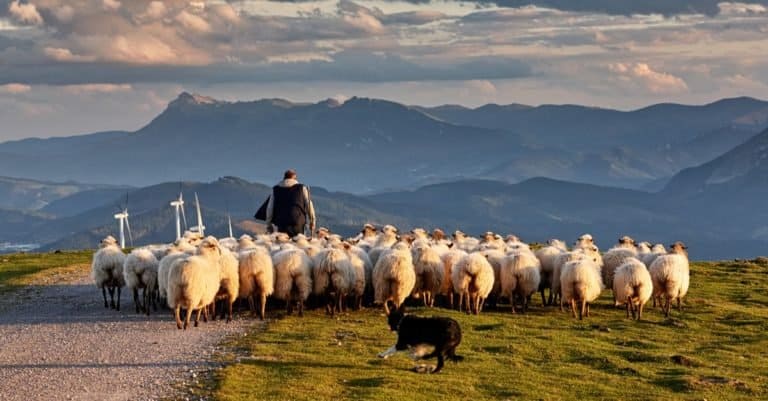
These animals have no way to defend themselves, so they usually rely on their human caretakers and their herding dogs. A good fence will do more for the mental security of your flock than any other security measures. Most shepherds count the members of their flock carefully to make sure no one gets left behind before the barn doors are shut at night.

Wild sheep are not aggressive, but they tend to get scared by the presence of humans. Deforestation and over-development have both contributed to the slow reduction of sheep-friendly habitats across the globe. With that said, most wild sheep are listed as being of least concern for conservation efforts.

Reproduction, Babies, and Lifespan
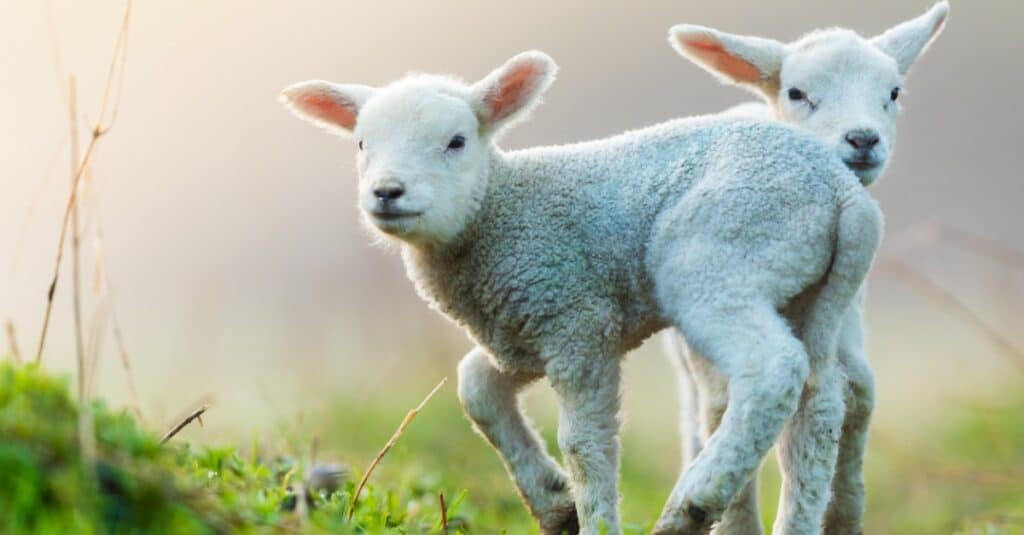
baby sheep siblings

Ewes don’t typically show signs of pregnancy until about a month and a half before the delivery date, so it can be difficult to tell if they are carrying a lamb.

A flock of sheep generally consists of a single ram and as many ewes as he and the farmer can take care of. Large flocks may have two rams, but there is a good chance that they will fight with one another to establish dominance. The dominant ram will typically mate with every non-related ewe in his flock.

An ewe’s pregnancy lasts for an average of five months. Ewes don’t typically show signs of pregnancy until about a month and a half before the delivery date, so it can be difficult to tell if they are carrying a lamb. However, just before delivery, the ewe will start showing obvious signs of discomfort and may begin looking for a place to give birth.

Ewes typically give birth to between 1 and 3 lambs at a time, with pairs of twins being the most common. Lambs usually weigh somewhere between 5-10 pounds when they are born, and they gain about half a pound a day for 2-3 months. Lambs are old enough to be separated from their mothers at around 6 months old; however, because they like to flock together with their families, this separation is not often recommended.

These animals do not reach sexual maturity until they are around 1 year old. Because many females have not reached their full size or emotional maturity by this point, many farmers recommend waiting until a sheep is around 2 years old to breed them. For their safety, yearlings are typically separated from the rest of the flock when breeding season occurs.

A well-loved sheep typically lives to be around 12 years old. The oldest sheep that ever lived was named Methuselina, and she made it to the impressive age of 28 years old. As they get older, sheep start to produce wool more slowly. They may also start to show symptoms of arthritis, weariness, and generally poor health.

Population

There are well over one billion domestic sheep currently scattered across the globe. The country with the most sheep is China with an impressive total of 187 million individual sheep at one time.

Wild sheep populations are not particularly well-tracked, especially in the rural and undeveloped areas where these sheep like to live. There is an estimated total of 700,000 bighorn sheep remaining in North America. Because this population is stable, bighorn sheep are considered to be of least concern.

Sheep in the Zoo

One of the best places to see a bighorn sheep is at the Denver Zoo. You can also find desert bighorns at the Los Angeles Zoo. However, if you want to see domestic sheep in person, your best bet is to visit a local farm that allows you to meet their livestock.

View all 390 animals that start with S

Sources

  1. Wikipedia / Accessed December 20, 2020
  2. Britannica / Accessed December 20, 2020
  3. Sheep 201 / Accessed December 20, 2020
  4. Treehugger / Accessed December 20, 2020
  5. Sheep 101 / Accessed December 20, 2020
  6. Cloverworks Farm / Accessed December 20, 2020
  7. The Open Sanctuary Project / Accessed December 20, 2020
  8. Research Gate / Accessed December 20, 2020
Rebecca Bales

About the Author

Rebecca Bales

Rebecca is an experienced Professional Freelancer with nearly a decade of expertise in writing SEO Content, Digital Illustrations, and Graphic Design. When not engrossed in her creative endeavors, Rebecca dedicates her time to cycling and filming her nature adventures. When not focused on her passion for creating and crafting optimized materials, she harbors a deep fascination and love for cats, jumping spiders, and pet rats.
Connect:

Thank you for reading! Have some feedback for us?


Sheep FAQs (Frequently Asked Questions)

Sheep are Herbivores, meaning they eat plants.