B
Species Profile

Betta Fish (Siamese Fighting Fish)

Betta splendens

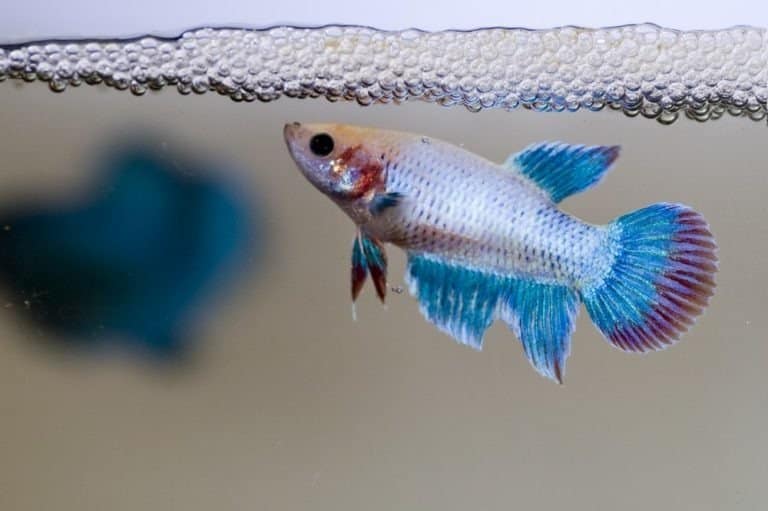
Air-breather with a bubble-nest crown.
Kidsada Manchinda/Shutterstock.com

Betta Fish (Siamese Fighting Fish) Distribution

Click a location to explore more animals from that region

Invasive Species

This map shows coastal regions where Betta Fish (Siamese Fighting Fish) are found.

Loading map...
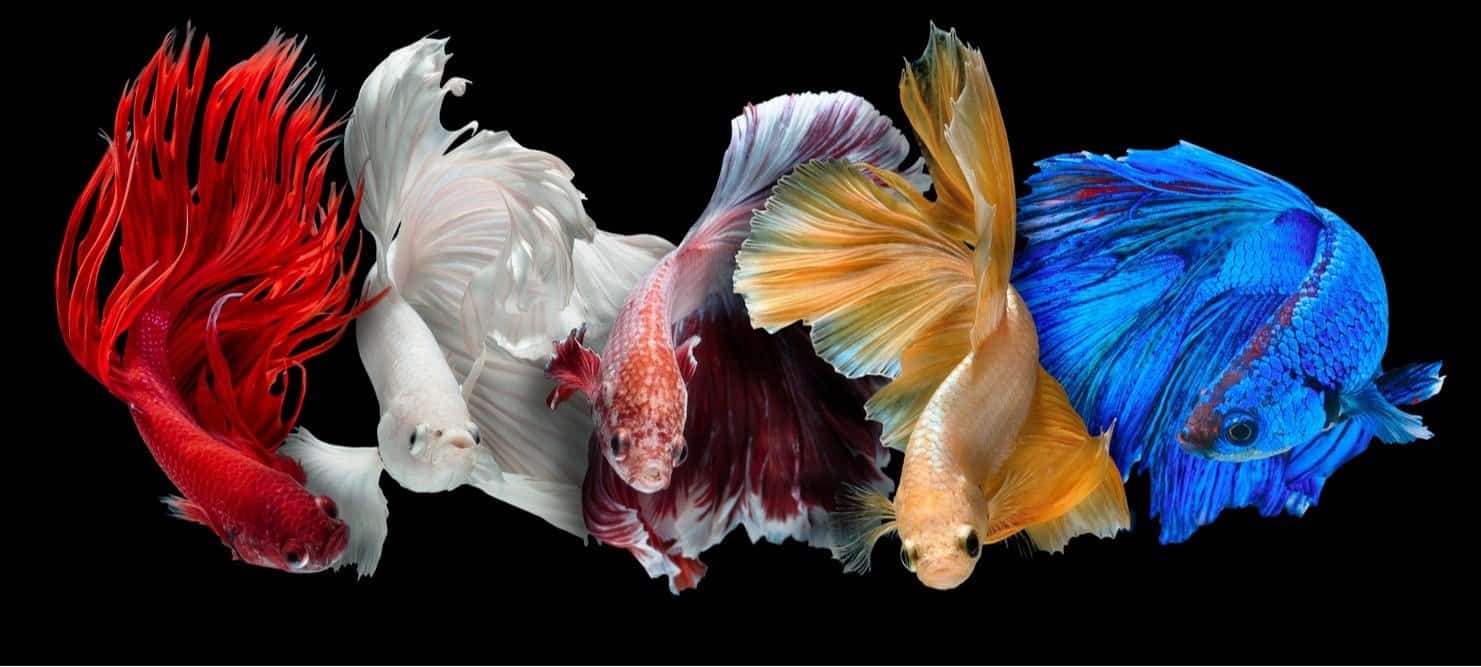
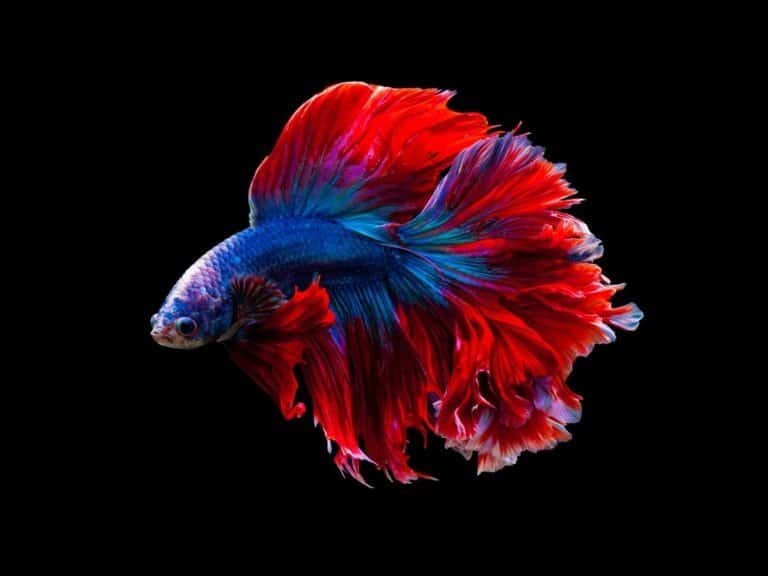
Siamese fighting fish on black background

At a Glance

Wild Species
Also Known As fighting fish, Thai fighting fish, pla kat (ปลากัด), ikan cupang, cupang, cá xiêm
Activity Diurnal+
Lifespan 2 years
Weight 0.0025 lbs
Status Not Evaluated
Did You Know?

Adult size is small: typically ~5-6 cm TL, with a reported maximum around 7.0 cm total length (TL) for Betta splendens.

Scientific Classification

A small Southeast Asian freshwater labyrinth fish widely kept as an ornamental pet; males are famously territorial and display elaborate fins and intense coloration in domesticated strains.

Kingdom
Animalia
Phylum
Chordata
Class
Actinopterygii
Order
Anabantiformes
Family
Osphronemidae
Genus
Betta
Species
splendens

Distinguishing Features

  • Labyrinth organ enabling air breathing at the surface
  • Strong sexual dimorphism; males typically more colorful with larger fins in domestic strains
  • Laterally compressed body; upturned mouth adapted to surface feeding
  • Notably aggressive/territorial behavior in males (hence ‘fighting fish’)

Did You Know?

Adult size is small: typically ~5-6 cm TL, with a reported maximum around 7.0 cm total length (TL) for Betta splendens.

Captive lifespan is commonly ~3-4 years; ~2-5 years is routinely reported with good care (stable warm water, low stress, good diet).

They're labyrinth fish: besides gills, Betta splendens uses a labyrinth organ to gulp atmospheric air at the surface-handy in warm, oxygen-poor waters.

Males are bubble-nest builders: they blow mucus-stabilized bubbles at the surface and guard eggs/larvae; clutches are often on the order of ~100-300 eggs (can be higher in large, conditioned pairs).

Wild-type Betta splendens has relatively short fins and earthy greens/browns; domestic strains have been selectively bred into long-fin forms (e.g., veiltail, halfmoon, crowntail) and intense color morphs.

Thailand officially designated Betta splendens as its national aquatic animal (2018), reflecting its deep cultural ties to the country.

The genus Betta is diverse (dozens of species), including bubble-nesters and mouthbrooders-Betta splendens is the famous bubble-nester people usually mean by "betta."

Unique Adaptations

  • Labyrinth organ air-breathing: a specialized suprabranchial chamber allowing efficient oxygen uptake from air-an adaptation to warm, stagnant, hypoxic habitats like ditches, ponds, and rice paddies.
  • Mucus-stabilized bubble nests: surface bubbles persist longer and keep developing embryos at an oxygen-rich interface; the nest also concentrates parental defense in a small area.
  • High tolerance for low dissolved oxygen (hypoxia): combined gill + air breathing lets them exploit waters that exclude many competing fish.
  • Extreme display morphology under domestication: selective breeding has exaggerated fins and coloration far beyond wild form, amplifying visual signaling (and human preference) in this species.
  • Iridescent coloration mechanics: layers of reflective cells (iridophores) and pigments produce metallic blues/greens and shifting hues, especially in domestic lines.
  • Behavioral 'switch' between display and combat: ritualized signaling can deter rivals without immediate fighting, conserving energy-though captivity can force escalation when retreat is impossible.

Interesting Behaviors

  • Opercular flaring and lateral displays: males spread gill covers and fins, darken/brighten body color, and "parallel" an intruder to signal dominance and readiness to fight.
  • Strong territoriality in males: in confined spaces, two males often escalate from display to biting and fin-ripping combat, which is why they're typically housed singly.
  • Surface-oriented breathing routine: even in well-oxygenated aquaria, they regularly rise to gulp air (a normal behavior tied to the labyrinth organ).
  • Bubble-nest construction: the male repeatedly gulps air, coats bubbles with mucus, and places them under floating cover; he repairs the nest after disturbances.
  • Courtship 'embrace' spawning: the male wraps around the female; eggs are released and fertilized, then collected-primarily by the male-and placed into the bubble nest.
  • Paternal care: the male patrols beneath the nest, retrieves falling eggs/larvae, and defends the site until fry become free-swimming.
  • Ambush-style feeding: they often hover nearly motionless, then strike quickly at insect larvae and other small prey at/near the surface.

Cultural Significance

Siamese fighting fish (Betta splendens) have long been kept and bred in Thailand and nearby areas for fights, gambling, and shows. Breeding for looks made many fin shapes and colors. Thailand named it national aquatic animal in 2018.

Myths & Legends

In Thailand, the Siamese fighting fish has long been bred and prized for organized male-versus-male fighting contests, a tradition historically associated with wagering and hobbyist prestige.

Historical courtly anecdotes in Siam (Thailand) recount nobles and commoners alike staging matches and maintaining treasured bloodlines, treating exceptional fighters as near-legendary animals whose 'spirit' could outmatch rivals.

In the West, naming stories tie the fish's modern name to its old Siam fame. 'Siamese fighting fish' became a short label in travel and hobby writing for the Betta thought brave.

Modern Thai cultural storytelling around the national aquatic animal status frames Betta splendens as an emblem of resilience-an everyday creature from rice landscapes elevated into a national symbol through human admiration and selective breeding history.

Conservation Status

NE Not Evaluated

Has not yet been evaluated against the criteria.

Population Stable

Life Cycle

Birth 300 frys
Lifespan 2 years

Lifespan

In the Wild
1–3 years
In Captivity
2–5 years

Reproduction

Mating System Polygynandry
Social Structure Transient
Breeding Pattern Transient
Fertilization Substrate Spawning
Birth Type Substrate_spawning

Siamese fighting fish (Betta splendens) build bubble nests. Males alone guard and care for eggs, drive females away, and may mate with several females (polygynandry, serial matings). Adults ~7 cm, live 2–5 years, 100–300 eggs.

Behavior & Ecology

Social No fixed group name (typically solitary territorial individuals; occasional loose aggregation) Group: 1
Activity Diurnal, Crepuscular
Diet Insectivore Mosquito larvae (Culicidae larvae)

Temperament

Adult male Betta splendens are very territorial and often aggressive toward other males. Fights start with visual displays (side display, gill flaring, fins spread) and can lead to biting or ramming.
Females: generally less aggressive than males but can establish dominance hierarchies and show chasing/nipping, especially under crowding or limited shelter/food; individual temperament varies widely among strains and rearing conditions.
Context-dependent plasticity ('winner-loser'/experience effects): prior victories can increase likelihood or intensity of subsequent aggression, while prior defeats can increase avoidance/submission-effects reported in experimental studies on Betta contest behavior and social experience.
Strong site attachment around preferred cover and surface access; stress and aggression increase with forced proximity, lack of visual barriers, and restricted refuge (a common husbandry-relevant expression of the species' territorial social system).

Communication

Brief pulsed/click-like sounds have been documented during agonistic and/or courtship contexts in Betta splendens in lab observations; these are generally short broadband pulses produced during close-range interactions Sound production reported in the labyrinth-fish literature, including Betta-focused acoustic studies and broader reviews by fish bioacoustics authors
Visual threat displays: opercular (gill-cover) flaring, lateral presentation, fin erection/spreading, rapid color intensification/darkening, and body posturing; these signals function in assessment and often precede escalation.
Tactile contact in escalated fights Biting, pushing) and during spawning embraces (male wraps body around female beneath the bubble nest
Chemical cues Olfaction): conspecific odors contribute to social/sexual context recognition and may modulate aggression/arousal (reported broadly for teleost social signaling; applied in Betta experimental contexts where water-borne cues affect responses
Mechanosensory cues via the lateral line at close range Detection of movement/vibrations during approach, display, and chasing

Habitat

Biomes:
Freshwater Wetland Tropical Dry Forest
Terrain:
Riverine Plains Valley Muddy
Elevation: Up to 984 ft 3 in

Ecological Role

Insectivorous mesopredator in shallow freshwater wetlands and floodplain/agricultural waters; transfers energy from aquatic invertebrates/zooplankton to higher trophic levels and can locally suppress nuisance insect larvae.

Predation on mosquito larvae (potential local reduction of larval mosquito abundance) Regulation of aquatic invertebrate/zooplankton communities Prey base support for larger fishes, wading birds, and aquatic predators in wetland food webs

Diet Details

Main Prey:
Mosquito larvae and pupae Non-biting midge larvae Aquatic insect larvae Small crustaceans and zooplankton Small benthic microcrustaceans Small aquatic worms

Human Interaction

Domestication Status

Domesticated

Betta splendens (Siamese fighting fish) comes from floodplains and rice paddies in Thailand, Cambodia, Laos and Vietnam. People in Siam bred them for male fighting, then for showy fins and colors. Exports rose in the late 1800s-early 1900s, creating many fancy domesticated strains. They breathe with a labyrinth organ, are territorial, and build bubble nests; males care for eggs.

Danger Level

Low
  • Minor skin pinch/bite if handled (typically trivial; no venom).
  • Aquarium-associated zoonoses are possible but uncommon (e.g., Mycobacterium marinum exposure from contaminated aquarium water can cause persistent skin lesions after cuts).
  • Allergic/irritant reactions to aquarium water additives/foods are possible but not specific to the species.
  • Indirect risk: electrical/fire hazards from aquarium heaters/filters if improperly used (general aquarium husbandry risk, not species-specific).

As a Pet

Suitable as Pet

Legality: Siamese fighting fish (Betta splendens) are usually legal to buy and keep as pets. Some places ban fighting events or limit outdoor release because of invasion risks. Check local laws.

Care Level: Easy

Purchase Cost: $5 - $150
Lifetime Cost: $250 - $1,500

Economic Value

Uses:
Ornamental aquarium trade (primary economic role; mass-produced and boutique-bred strains) Selective breeding/stock improvement (color and fin morph markets; show/competition circuits) Research/education model (notably for aggression, sexual selection, parental care, and air-breathing physiology) Cultural/historical fighting-fish industry (now restricted/illegal in many jurisdictions) Ornamental aquarium fish in the pet trade (commercial breeding and international trade)
Products:
  • Live fish (pet retail, online sales, exports/imports)
  • Breeding services and broodstock lines (named strains/morphs)
  • Aquarium supplies marketed for bettas (small tanks/bowls, heated nano-aquariums, botanicals, prepared diets)

Relationships

Predators 6

Snakehead Channa spp.
Walking catfish
Walking catfish Clarias
Asian swamp eel Monopterus albus
Kingfisher
Kingfisher Alcedo spp.
Herons and Egrets
Herons and Egrets Ardeidae
Water snakes Homalopsidae

Related Species 6

Peaceful betta Betta imbellis Shared Genus
Emerald betta Betta smaragdina Shared Genus
Mahachai betta Betta mahachaiensis Shared Genus
Gourami
Gourami Osphronemidae Shared Family
Three-spot gourami Trichopodus trichopterus Shared Family
Giant gourami Osphronemus goramy Shared Family

Ecological Equivalents 5

Animals that fill a similar ecological role in their ecosystem

Peaceful betta Betta imbellis Very similar to Betta splendens: inhabits small, shallow, warm, often low-oxygen waters; uses a labyrinth organ to breathe air, builds bubble nests, exhibits paternal care, and shows male territorial displays.
Mahachai betta Betta mahachaiensis Occupies low-oxygen, slow or stagnant waters and uses the same bubble-nesting reproductive strategy. Often considered part of the B. splendens complex in hobby and scientific discussions. Niche overlap: predator of insects and zooplankton in vegetated margins; males defend small territories around cover or nesting sites.
Three-spot gourami Trichopodus trichopterus Shares the labyrinth organ and tolerance of warm, oxygen-poor waters (ditches, ponds, rice paddies). Has a similar foraging niche (surface/midwater micro-predator/omnivore) and uses vegetated structure; differs by being larger and generally less intensely territorial than male Betta splendens.
Paradise fish Macropodus opercularis Another small labyrinth fish adapted to warm, stagnant habitats and capable of aerial breathing. Males are territorial and build bubble nests. Ecologically comparable in prey choice (aquatic insects and larvae, as well as small crustaceans) and in breeding behavior.
Southeast Asian snakeheads Channa spp. Not a close taxonomic relative. Overlaps with bettas in shallow, vegetated freshwater margins, and some species are air-breathing. Likely predators that shape betta microhabitat use, causing bettas to remain in dense cover and avoid open water.

The Siamese fighting fish (Betta splendens), more commonly known as the betta fish, is second only to the goldfish in popularity as a home aquarium pet. This small but striking species, famous for its vibrant colors and flowing fins, is equally well-known for its fierce territorial behavior.

It is an aggressive, colorful fish that is native to Southeast Asia. The betta inhabits shallow rice paddies, ponds, and slow-moving streams. Over centuries, selective breeding has produced dozens of colorful ornamental varieties that now thrive in aquariums worldwide, as the active, solitary fish makes for a lively, exciting pet.

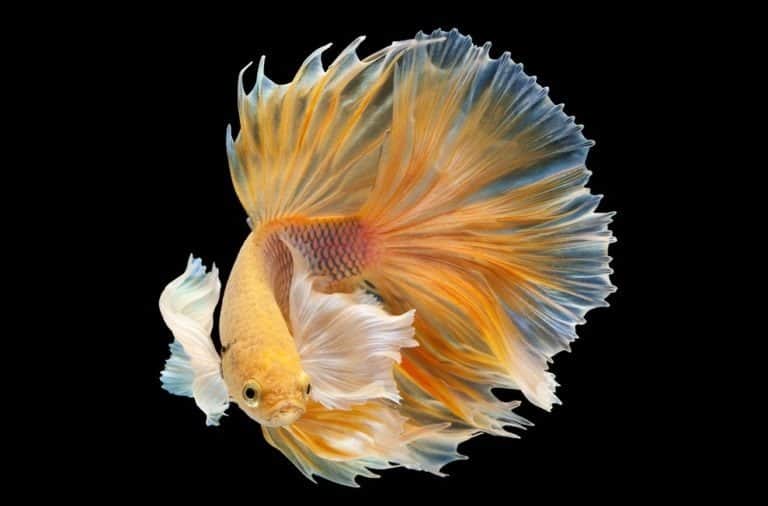
Dumbo Halfmoon Betta,Multi color Siamese fighting fish,Betta splendens,on nature background with clipping path

Dumbo Halfmoon Betta, a multi color Siamese fighting fish.

7 Incredible Betta Fish Facts

  • Although “betta” can refer to 72 other species of the Betta genus, it is used specifically for the species with the scientific name Betta splendens.
  • “Siamese fighting fish” refers to the Betta splendens species in order to avoid confusion with the other species of the genus.
  • Both male and female bettas are aggressive, but the females are less intense and territorial.
  • The betta’s highly aggressive nature is due to artificial selection, although it is aggressive in the wild.
  • The fish spawn with the males building bubble nests, after which they protect the eggs and raise the young.
  • Most of the fancy bettas we see today (Half Moon, Crowntail, etc.) are selectively bred varieties, not separate wild species.
  • Bettas possess a labyrinth organ, which lets them breathe air directly from the surface—an adaptation for low-oxygen waters.

Scientific Classification

The scientific name of the Siamese fighting fish is Betta splendens. It is one of over 70 species of the Betta genus. Betta comes from the word “Bettah” meaning “an ancient clan of warriors.” All bettas are of the Osphronemidae family (Gourami family). They are also classified in the Anabantiformes order.

Evolution and Origins

The Betta fish’s evolution can be traced back to a common ancestor with the gourami fish, another popular fish in the Osphronemidae family. The Betta fish’s ancestors were likely small, dull-colored fish that lived in murky waters, which encouraged the development of their distinctive labyrinth organ. This organ allows Betta fish to breathe air from the surface, making it easier for them to survive in low-oxygen environments.

The wild form of Betta splendens is smaller and duller than the popular ornamental varieties of today. They were bred for fighting for centuries in Thailand, which enhanced their aggressiveness. When bettas were introduced to the West in the 19th century, breeders focused on developing the dazzling colors and fin shapes that now define the species.

Appearance
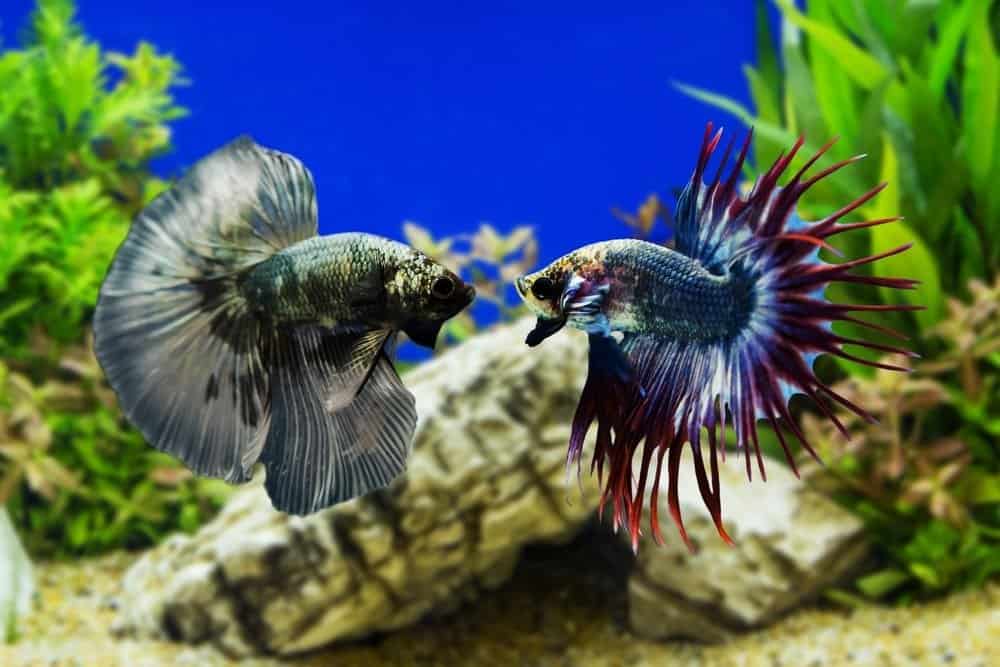
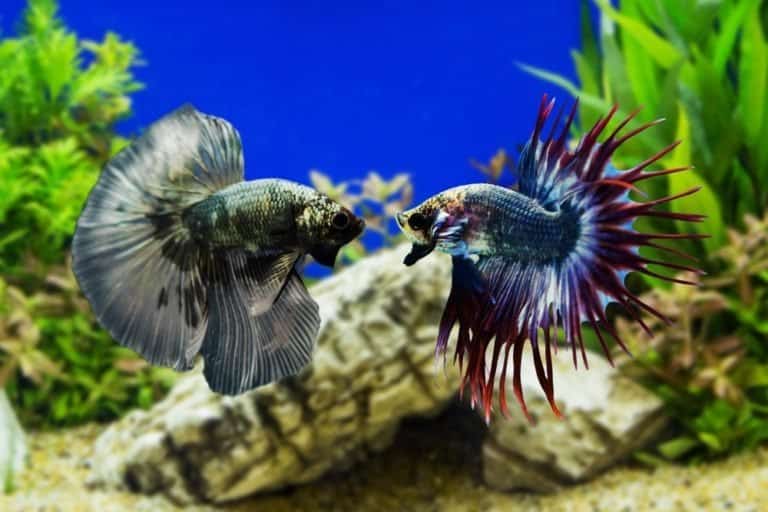
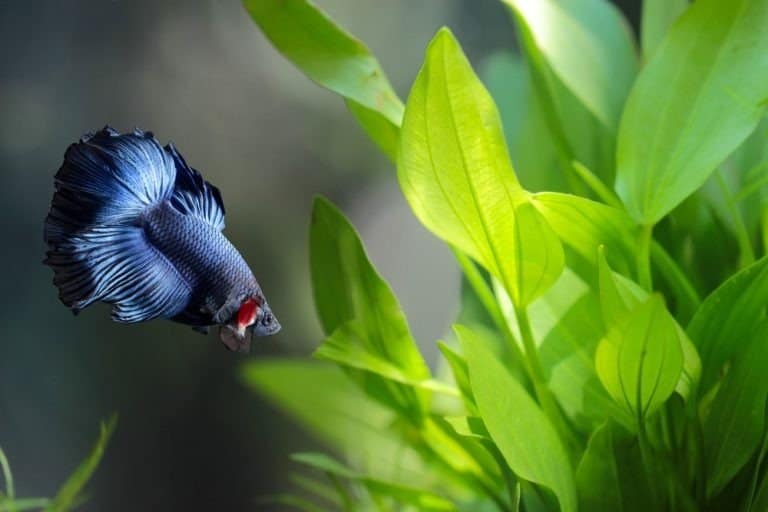
Betta fish, Siamese fighting fish with green plants

Siamese fighting fish are small fish that can have several possible colors.

Siamese fighting fish are small fish, usually 2–3 inches long on average (up to 3.5 inches in captivity). They can have several possible colors. While dark blue and dark red are common colors, captive bettas may also be grey, black, red, orange, yellow, gold, blue, white, violet, or even multicolored. Wild bettas are usually greenish-brown. Each species is characterized by its tails, and the betta has a typically long tail fin — long, flowing fins in ornamental types (e.g., Half Moon, Crowntail) compared to the short, rounded fins of wild forms.

Bettas display sexual dimorphism, with the males being larger, more colorful, and having longer fins; females are smaller and less ornate. All have torpedo-shaped bodies with upturned mouths that they use to eat from the water’s surface.

Varieties and Types
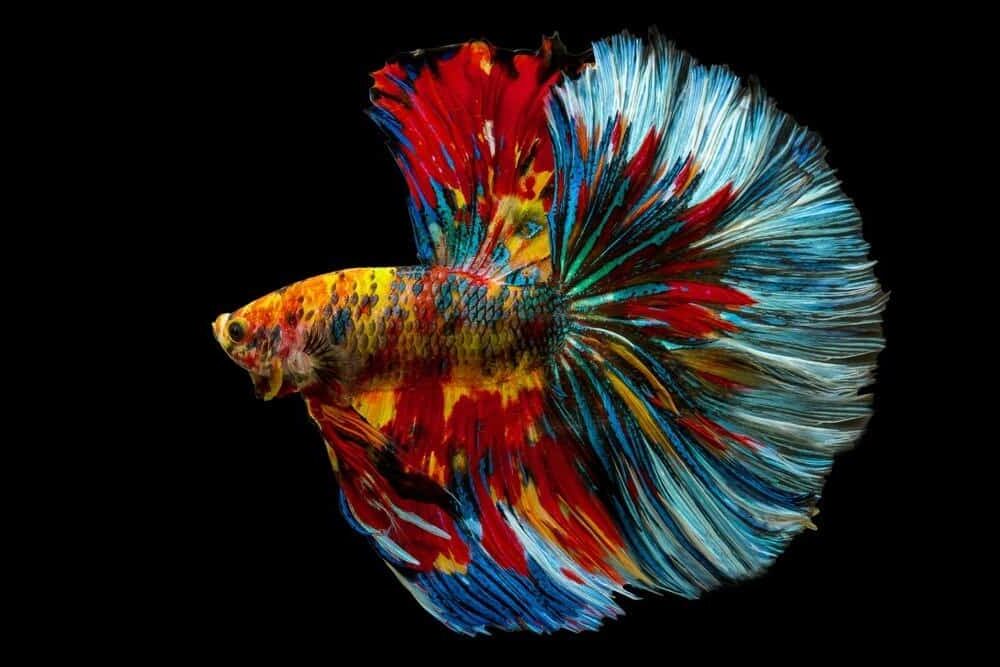
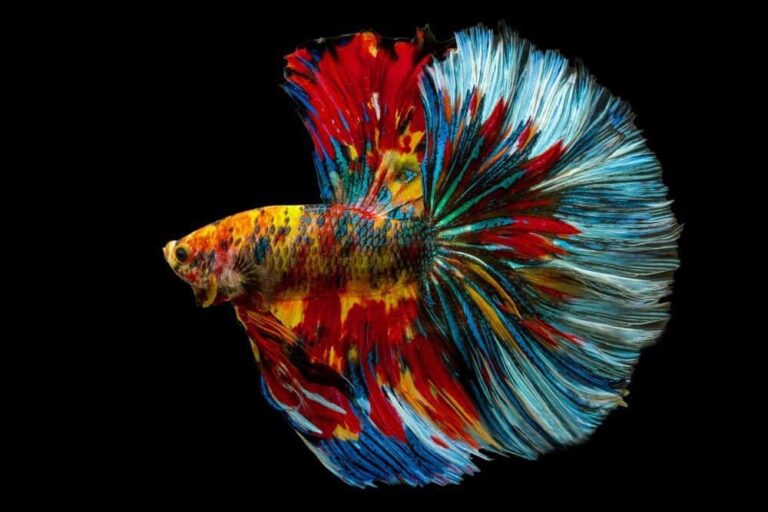
Betta splendens, Siamese fighting fish, Fancy Rainbow multi color half moon long tail isolated on black background

Betta splendens, Fancy Rainbow multi color half moon long tail variety isolated on black background.

Though only Betta splendens is commonly kept as a pet, breeders have created dozens of spectacular varieties, including:

  • Veil Tail Betta — long, flowing tail draping down.
  • Half Moon Betta — tail spreads 180° like a half-circle.
  • Crowntail Betta — spiky rays extend from the fins.
  • Plakat Betta — resembles the wild type, with short fins.
  • Koi Betta — patterned like koi fish.
  • Dragon Scale Betta — metallic, scale-like appearance.

Important: These are ornamental strains, not separate species. True wild Betta species include B. mahachaiensis, B. smaragdina, and others, many of which are threatened.

Distribution and Habitat

Siamese fighting fish are native to Thailand, Cambodia, Laos, and Vietnam, particularly the Mekong Delta, and are most populous in the Chao Phraya River basin.

Their preferred habitat is shallow, slow-moving, or stagnant water, such as large puddles, drainage ditches, rice paddies, and slow-moving streams.

It is an invasive species in Australia, Brazil, Singapore, and parts of the U.S. (Florida, Texas, Hawaii), but it is not disruptive to the natural ecosystems, according to the U.S. Fish and Wildlife Service.

While in captivity, proper care involves keeping them at a warm, freshwater tropical temperature of 74-80 degrees Fahrenheit. All betta species are anabantoids, meaning they use a unique organ called a labyrinth to breathe in low-oxygen environments. In their natural habitat, bettas thrive in warm, shallow waters rich in vegetation.

Behavior and Temperament

Bettas are solitary fish and are highly territorial. Males in captivity will fight, sometimes to the death, if put in the same aquarium. They will flare their fins and gill covers as a display of dominance when threatened.

Despite this aggression, these fish are also intelligent and interactive. Many bettas can recognize their owners, follow fingers along the glass, and even learn simple tricks.

Diet
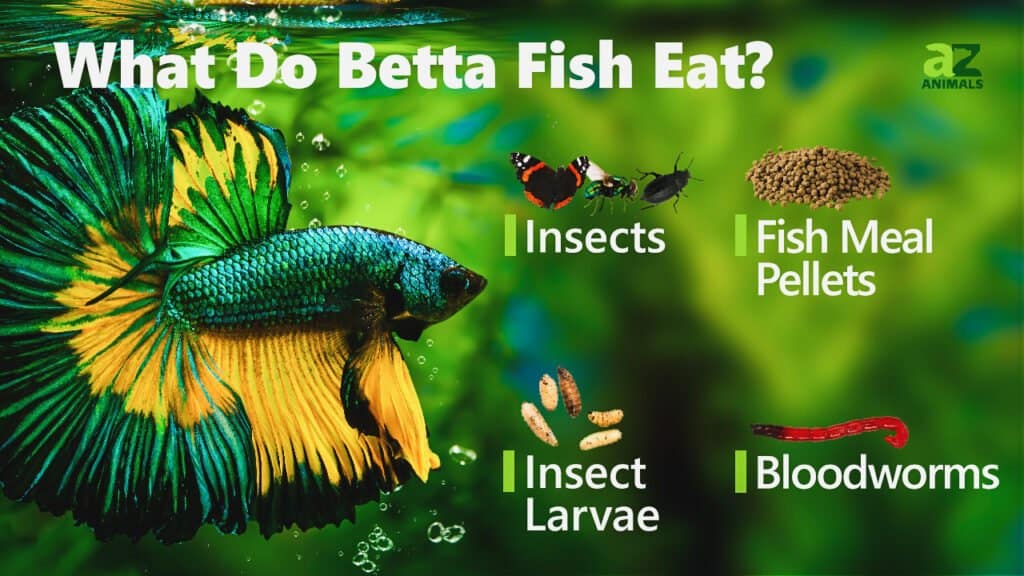
What Do Betta Fish Eat
Betta fish eat a mix of dried foods, flakes, and pellets. In the wild, they’ll also eat insects.

Bettas are carnivorous and consume zooplankton, brine shrimp, and other small crustaceans, and the larvae of aquatic insects, including those of mosquitoes. Bettas in captivity can be fed high-protein pellets, freeze-dried or live foods like bloodworms, brine shrimp, and daphnia.

They are surface feeders, adapted to hunting prey just below the water’s surface.

Predators and Threats

The betta’s conservation status in the wild is Vulnerable as a result of its declining population and the possibility of becoming endangered without conservation efforts. Ornamental bettas are abundant worldwide, however.

The biggest threats to wild bettas are habitat destruction, pollution, and over-collection for the aquarium trade. Its predators are larger fish, cats, newts, salamanders, and birds.

Reproduction

Bettas reproduce through spawning, starting with a mating dance in which the male and female spiral around each other. The male builds a bubble nest and proceeds to guard the eggs as well as raise the young. Gestation is 24-36 hours, and the young stay in the nest until their bodies absorb their yolk sacs. A single spawn can produce 100–500 eggs.
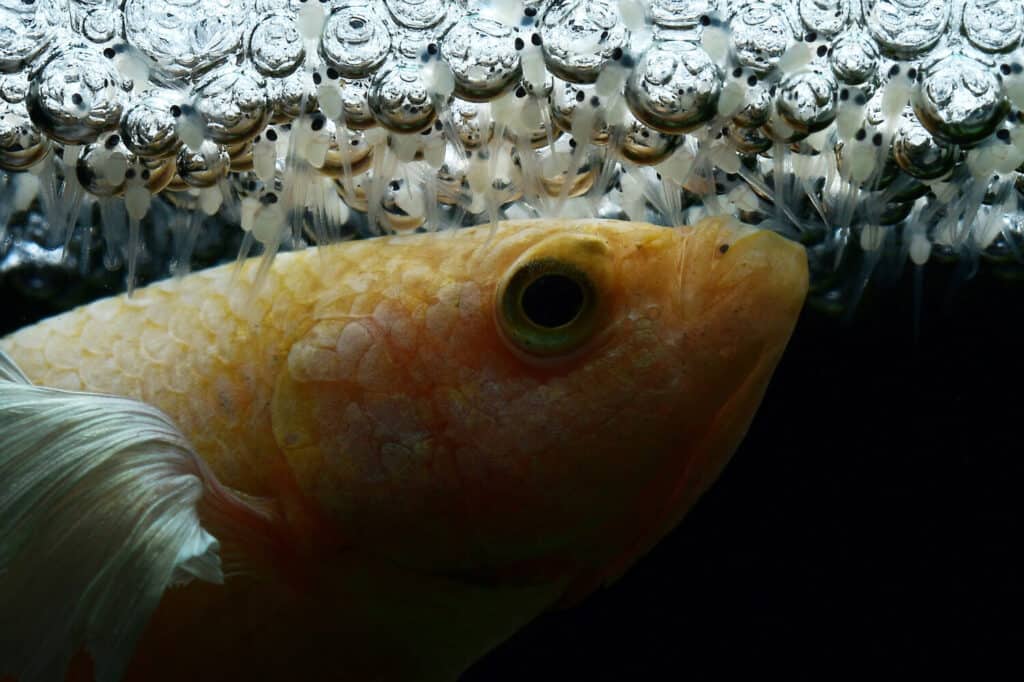
A Siamese male fighting fish, betta splendens guarding newly hatched fries near bubblenest. Take care baby fish

A male betta guarding fry and eggs in a bubble nest.

Lifespan

The typical lifespan of the betta is 3-5 years in captivity, with proper care. This can sometimes extend to 6–7 years. In the wild, bettas live for 2–3 years.

Betta Fish as Pets

Betta fish are popular pets thanks to their incredible colorations. Betta fish grow to be 2.5 inches long on average and require a tank that’s 5 gallons in size (avoid tiny bowls). Gentle filtration is recommended as bettas dislike strong currents. The water temperature should be between 76 and 82°F (24 to 28°C). Provide plants and hiding places to reduce stress.

One should avoid putting male bettas together, as they will fight. Peaceful companions include snails, shrimp, or certain small fish (with caution). Bettas will also enjoy live plants, floating logs, and even small “toys” to explore.

Betta fish are hardy, beautiful, and rewarding pets, but require proper care. If you provide a Betta with these conditions, it should live a long and healthy life.

Conservation

Betta splendens is listed as Vulnerable in the wild due to shrinking habitats. The major threats that bettas face, are agricultural expansion, pollution, and over-harvesting for the pet trade. There are, however, conservations efforts underway to protect the natural wetlands in Southeast Asia, regulate wild collection, and promote captive-bred bettas for aquariums.

Quick Facts (At a Glance)

  • Scientific Name: Betta splendens
  • Average Size: 2.5 – 3 inches
  • Lifespan: 3 – 5 years in captivity
  • Temperament: Aggressive, solitary
  • Diet: Carnivorous (insects, larvae, crustaceans)
  • Special Adaptation: Labyrinth organ for breathing air
  • Conservation Status: Vulnerable (wild)
View all 453 animals that start with B

Sources

  1. Wikipedia / Accessed December 13, 2020
  2. Fishkeeping World / Accessed December 13, 2020
  3. Fishbase / Accessed December 13, 2020
  4. The Aquarium Advisor / Accessed December 13, 2020
  5. Betta Care Fish Guide / Accessed December 13, 2020
  6. Aquarium Fish City / Accessed December 13, 2020
  7. Fisharoma / Accessed December 13, 2020
  8. USGS / Accessed December 13, 2020
Rebecca Bales

About the Author

Rebecca Bales

Rebecca is an experienced Professional Freelancer with nearly a decade of expertise in writing SEO Content, Digital Illustrations, and Graphic Design. When not engrossed in her creative endeavors, Rebecca dedicates her time to cycling and filming her nature adventures. When not focused on her passion for creating and crafting optimized materials, she harbors a deep fascination and love for cats, jumping spiders, and pet rats.
Connect:

Thank you for reading! Have some feedback for us?


Betta Fish (Siamese Fighting Fish) FAQs (Frequently Asked Questions)

Aquatic insects, insect larvae, bloodworms, daphnia, and brine shrimp.