

S
Species Profile

Siberian

Felis catus

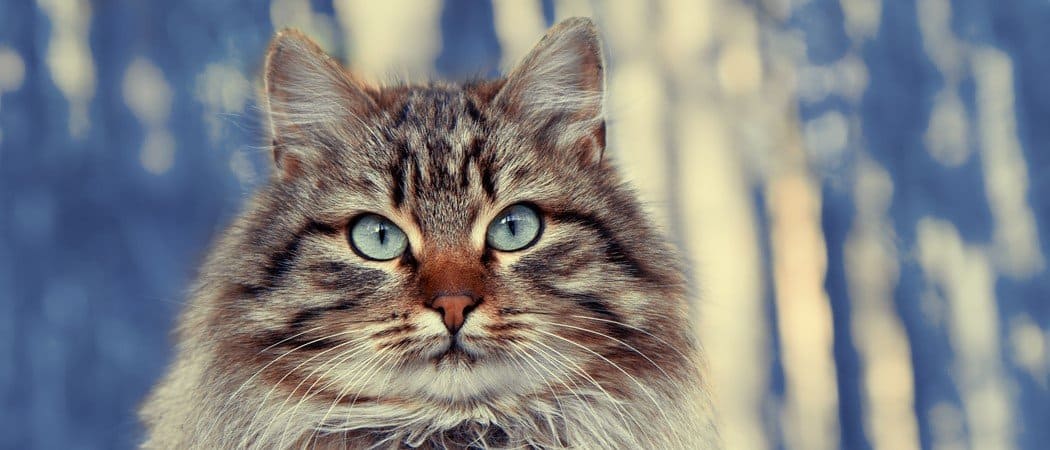
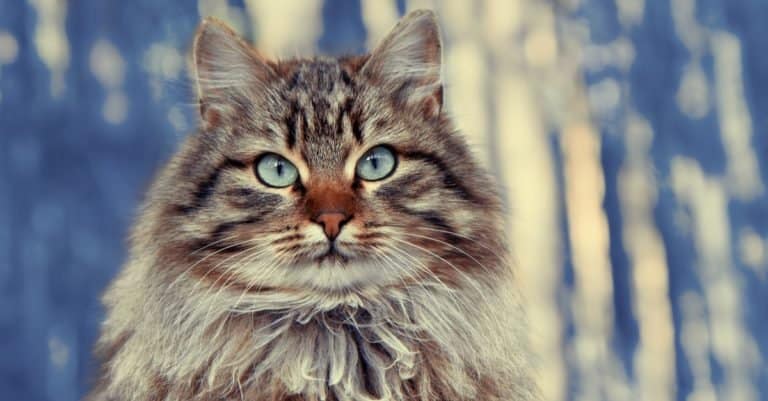
Built for winter, born to leap
vvvita/Shutterstock.com

Siberian Distribution

Click a location to explore more animals from that region

Origin Location

This map shows the native origin of the Siberian. As a domesticated species, they are now found worldwide.

Loading map...

Found in 1 country

Size Comparison

Human 5'8"
Siberian 10 in

Siberian stands at 15% of average human height.

Cute Siberian cat sitting in the pine forest.

At a Glance

Domesticated
Also Known As Siberian forest cat, Moscow Semi-Longhair, Russian Forest Cat
Diet Carnivore
Activity Crepuscular+
Lifespan 14 years
Weight 9 lbs
Status Not Evaluated
Did You Know?

Siberians descend from longhaired Russian landrace cats adapted to harsh, snowy climates.

Scientific Classification

The Siberian Cat is a Russian landrace-derived domestic breed known for a dense, water-resistant triple coat and robust build. It is generally sociable and athletic, adapted to cold climates, and recognized by major cat registries as a pedigreed breed.

Kingdom
Animalia
Phylum
Chordata
Class
Mammalia
Order
Carnivora
Family
Felidae
Genus
Felis
Species
Felis catus

Distinguishing Features

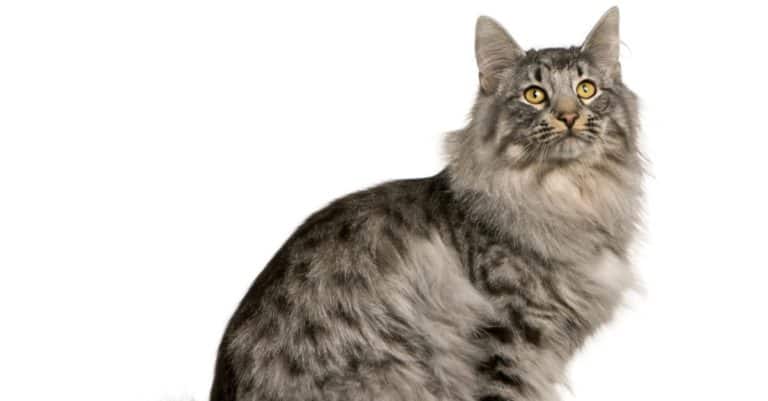
  • Dense semi-long, triple-layered coat
  • Large, muscular “barrel” body type
  • Tufted ears and toe tufts
  • Plumed, bushy tail
  • Often slow-maturing, reaching full size later

Physical Measurements

Males and females differ in size

Height
1 ft 1 in (12 in – 1 ft 2 in)
10 in (9 in – 11 in)
Length
2 ft 11 in (2 ft 6 in – 3 ft 3 in)
2 ft 7 in (2 ft 4 in – 2 ft 11 in)
Weight
16 lbs (12 lbs – 20 lbs)
11 lbs (8 lbs – 13 lbs)
Tail Length
1 ft 2 in (12 in – 1 ft 4 in)
1 ft 1 in (11 in – 1 ft 2 in)
Top Speed
30 mph
running

Appearance

Primary Colors
Secondary Colors
Skin Type Triple coat
Distinctive Features
  • Dense, water-resistant triple coat adapted to harsh Russian winters.
  • Robust, muscular semi-cobby build; heavier than typical domestic cats.
  • Full neck ruff and thick britches; more pronounced in winter coat.
  • Large, rounded paws with toe tufts for traction on snow-like surfaces.
  • Bushy, medium-long tail used for warmth and balance.
  • Rounder head and slightly arched profile; alert, expressive eyes.
  • Athletic, agile jumper; high activity and climbing needs versus average cats.
  • Generally sociable, confident temperament; bonds strongly with family.
  • Requires regular combing, especially seasonal sheds; mats form behind legs.
  • Health watch: hypertrophic cardiomyopathy risk; consider cardiac screening in lines.
  • Slow to mature; full size and coat often develop over several years.
  • Weight management important; sturdy frame can mask obesity without monitoring.

Sexual Dimorphism

Males are typically larger and more heavily boned, with a broader head and more pronounced ruff. Females are smaller and finer, though still muscular and substantial for a domestic cat breed.

  • Larger overall size with heavier bone and broader chest.
  • Broader head and thicker neck ruff in mature males.
  • More massive shoulder musculature; stockier silhouette.
  • Smaller frame with finer bone but strong musculature.
  • Less pronounced ruff; more refined head contours.
  • Lighter overall build while retaining athletic movement.

Did You Know?

Siberians descend from longhaired Russian landrace cats adapted to harsh, snowy climates.

Their triple coat is water-resistant, with guard hairs, awn hairs, and a dense insulating undercoat.

They mature slowly, often taking up to five years to reach full size and coat development.

Breed standards emphasize a rounded, barrel-chested body and strong hindquarters for jumping power.

Many owners report fewer allergy symptoms, though no cat is truly hypoallergenic.

Siberians are recognized by major registries, including TICA and CFA, as a pedigreed breed.

Unique Adaptations

  • Dense, water-resistant triple coat sheds seasonally, helping regulate temperature in cold environments.
  • Large, well-furred paws act like natural snowshoes, improving traction on slippery surfaces.
  • Robust, muscular frame supports athletic bursts, especially vertical leaps and agile landings.
  • Thick ruff and britches provide extra insulation around neck and hindquarters in winter conditions.

Interesting Behaviors

  • High, confident jumping and climbing; they often choose the tallest perch in a room.
  • Social "helper" behavior, following people between rooms and participating in household routines.
  • Play-driven hunting games, carrying toys in their mouths and pouncing with powerful back legs.
  • Some enjoy water play, pawing at dripping taps or investigating wet surfaces without hesitation.

Cultural Significance

Often linked with Russia's "forest cat" tradition, the Siberian became a symbol of hardy northern companionship. As Russian cats entered Western registries in the late 20th century, the breed helped popularize landrace-derived pedigreed cats.

Myths & Legends

In Russian folklore, the Cat Bayun is a magical cat whose voice lulls listeners to sleep, sometimes to their doom.

A Slavic household belief held that letting a cat enter a new home first invites protection and good fortune from a household spirit.

Russian tales of the learned cat, popularized by Pushkin's famous prologue to an epic poem, depict a wise cat telling stories and songs.

In parts of Eastern Europe, black cats were sometimes treated as protective hearth-guardians, linked to warding off misfortune around the home.

Conservation Status

NE Not Evaluated

Has not yet been evaluated against the criteria.

Population Stable

Life Cycle

Birth 4 kittens
Lifespan 14 years

Lifespan

In the Wild
11–18 years
In Captivity
8–20 years

Reproduction

Mating System Polygynandry
Social Structure Managed Domestic
Breeding Season Spring to early fall; indoors year-round
Breeding Pattern Transient
Fertilization Internal Fertilization
Birth Type Internal_fertilization

Siberian cats (dense, water-resistant triple coat; robust, athletic) follow domestic-cat polygynandry, though pedigreed matings are usually breeder-managed. Males may seek multiple females; females can mate with multiple males. Watch hypertrophic cardiomyopathy risk; regular grooming and enrichment.

Behavior & Ecology

Social Clowder Group: 3
Activity Crepuscular, Cathemeral
Diet Carnivore Chicken

Temperament

Affectionate
Gregarious
Playful
Athletic
Curious
Gentle
Confident
Trainable

Communication

meows
trills
chirps
purrs
mrrps
scent marking
tail-up greeting
head bunting
slow blinking
kneading
body posture

Habitat

Biomes:
Temperate Forest Boreal Forest (Taiga) Tundra Alpine Temperate Grassland Savanna Mediterranean Desert Hot Desert Cold Tropical Rainforest Tropical Dry Forest Freshwater Wetland +7
Terrain:
Plains Hilly Mountainous Valley Coastal Island Riverine Rocky +2
Elevation: Up to 19685 ft 1 in

Ecological Role

Domestic mesopredator; capable rodent hunter with strong prey drive.

rodent control reduces household pests

Human Interaction

Domestication Status

Domesticated

Domestic cats were domesticated from Near Eastern wildcats ~9,000-10,000 years ago. The Siberian is a Russian landrace refined into a pedigreed breed in the late 20th century, selected for robust build, sociable temperament, and triple coat.

Danger Level

Low
  • scratches during play or handling
  • bites if fearful or overstimulated
  • allergen exposure from dander and saliva
  • zoonoses via fleas or parasites

As a Pet

Suitable as Pet

Legality: Legal; treated as a standard domestic cat.

Care Level: Moderate

Purchase Cost: $1,200 - $3,000
Lifetime Cost: $15,000 - $35,000

Economic Value

Uses:
Companion Breeding Shows

The Siberian cat, also known as the Siberian forest cat, is an ancient breed that dates back hundreds of years. While popular in its native Russia, where it has become an important element of various fairy tales and folklore, the Siberian didn’t arrive in the United States until 1990, after the fall of the Soviet government. These friendly and people-oriented cats are among the most affectionate and playful breeds you can find.

Breed History

The Siberian cat breed dates back hundreds, possibly thousands, of years. Its known origin is Russia, but these cats were probably descendants of Asian cats, which were imported to Siberia to control the rodent population for settlers there. While Siberian cats are known to have existed since at least the 17th century, they may have developed thicker coats to adapt to the cold climate. Siberian cats earned a reputation for their expert abilities to hunt rats, and during that period, spread throughout Russia.

Siberian cats share similar traits with other long-haired breeds like the Norwegian Forest Cat, but there is no definitive evidence that they are the direct ancestors of all modern long-haired cat breeds. Siberians are the most internationally recognized long-haired cat breed originating in Russia, gaining international registration in 1992, though the Russian Blue was recognized earlier. Meanwhile, a breeding program in the U.S. began in the early 1990s with the arrival of the first breeding pairs after the fall of the Berlin Wall and during the final years of the Soviet Union. While there are Siberians in the U.S., they are rare here due to import costs, but more common in Europe, and are dubbed the national cat of Russia.

Traits: What to Know before You Buy

  • The Siberian is a good-natured breed that seems to get along well with almost everyone, including people, dogs, and other cats. Their personality is laid back and friendly.
  • Despite its calm nature, the Siberian cat is also a very playful and fun-loving breed. This cat will actively encourage playtime by bringing toys and balls to its owner. Some even enjoy playing fetch.
  • This acrobatic breed also has a remarkable sense of balance and control. It will try to climb on almost any furniture that will support its weight — and even some that may not necessarily support it.
  • Owners will need to keep up with the cat’s care. The Siberian cat will require frequent grooming, daily dental hygiene, weekly ear checks, and the occasional nail trimming.
  • The thick and elegant fur coat is another of the Siberian’s appealing qualities. Breeders will accept almost any color or combination: white, black, blue, red, silver, and everything in between.

Personality

Unlike your typical cat breed, the Siberian thrives on people’s adoration. This cat will follow you from room to room and wait for you at the door when you come home. Unfortunately, the Siberian can be a nuisance when you’re trying to focus on your activities. It tends to climb over computer keyboards or interrupt your reading.

But this is sometimes outweighed by their fun and playful nature, fearless attitude, and calm and laid-back personality, which should appeal to people of all ages. Since nothing much appears to frighten or ruffle them, this makes it a good choice for households with large dogs or young children.
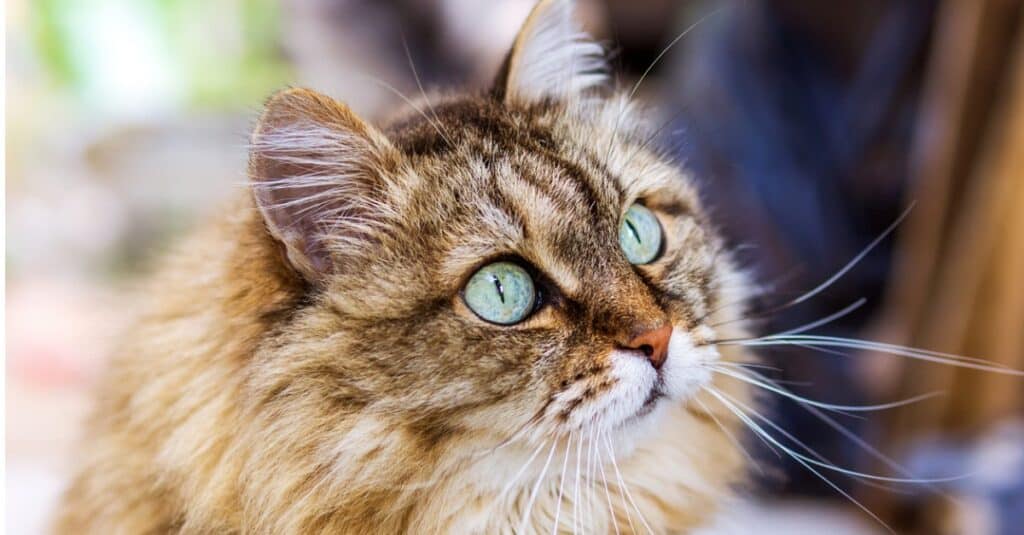
hypoallergenic cats siberian

Siberian cats thrive on the attention of humans, unlike many typical domestic breeds.

Size and Weight

The Siberian is a muscular and powerful cat, measuring 17 to 25 inches, with a big barrel chest and long ears. The cat’s typical weight is 15 to 20 pounds, though they can sometimes weigh up to 25 pounds.

Price

The price of a Siberian kitten from a respectable breeder will probably be an average of $1,200 to $2,000, but there are different options on both sides of the price spectrum. The cost can easily exceed more than $2,000 for a high-quality show cat but only a few hundred dollars for an adopted pet. This is in addition to the price of veterinary care, toys, food, and other common expenses.
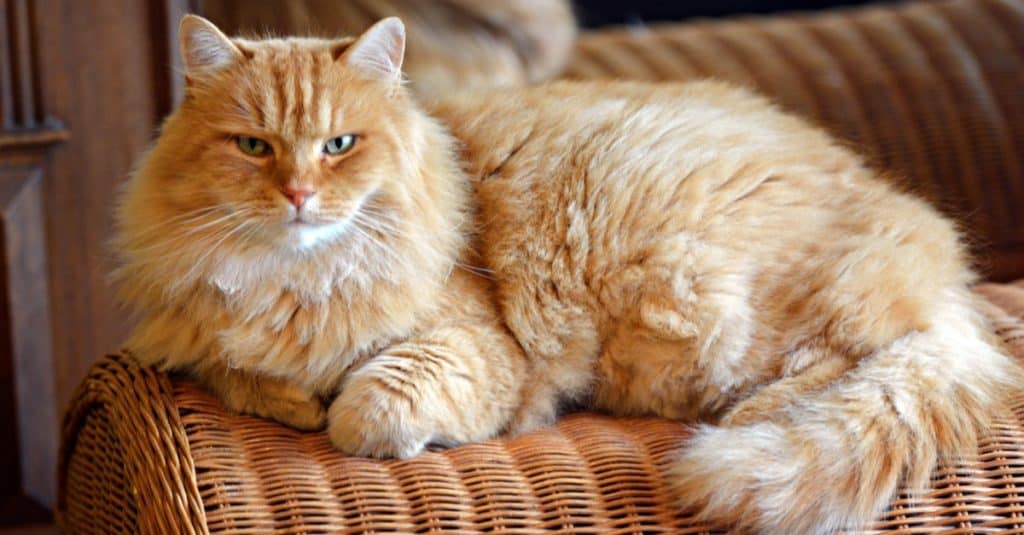
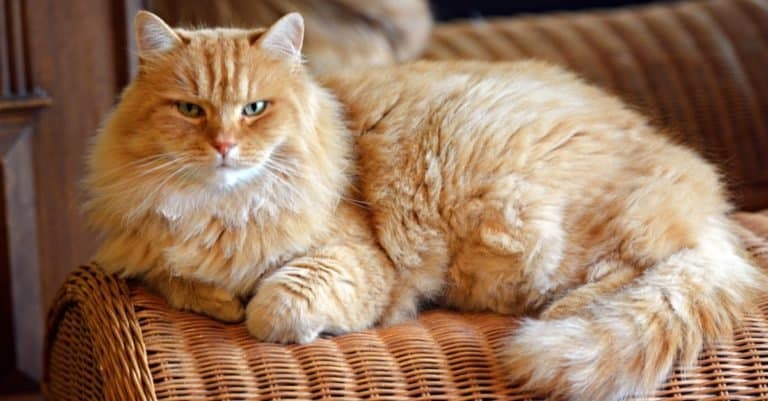
Siberian cat lying on the couch at home.

A Siberian cat can run anywhere from 00-00 to purchase.

Kittens

Siberian kittens should be available for purchase at around the 12 to 16-week mark when they first receive their vaccines. Socialization and training should begin shortly after the kitten is brought home to ensure it becomes a well-behaved adult. Owners should expect a certain amount of rambunctiousness, though. These are exceptionally energetic and playful animals, and their energy won’t necessarily diminish too much with age.

This breed will do most of its growth in the first 18 months, when it will need high-quality kitten food to support its development, but due to continuously growing muscles, it may take up to five years to reach its full size.
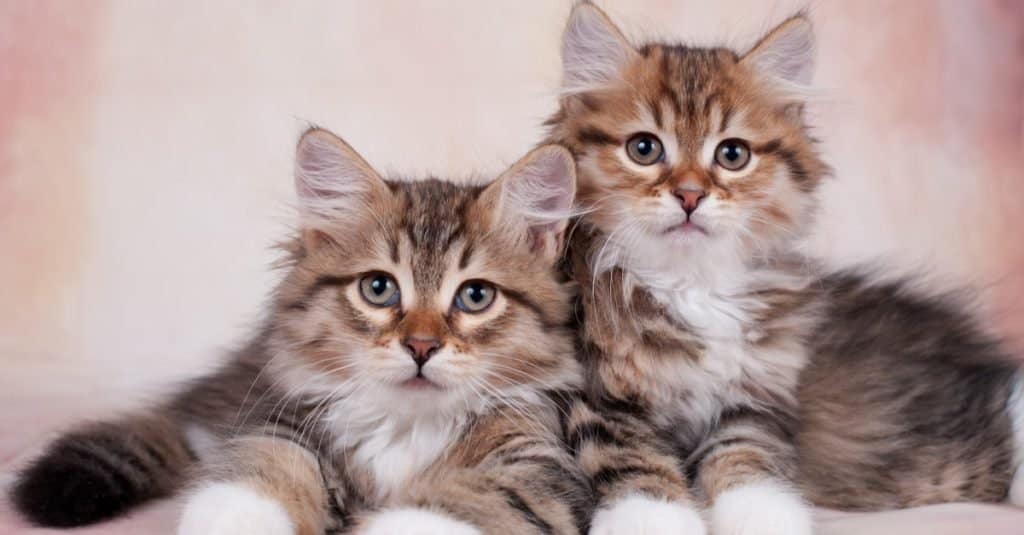
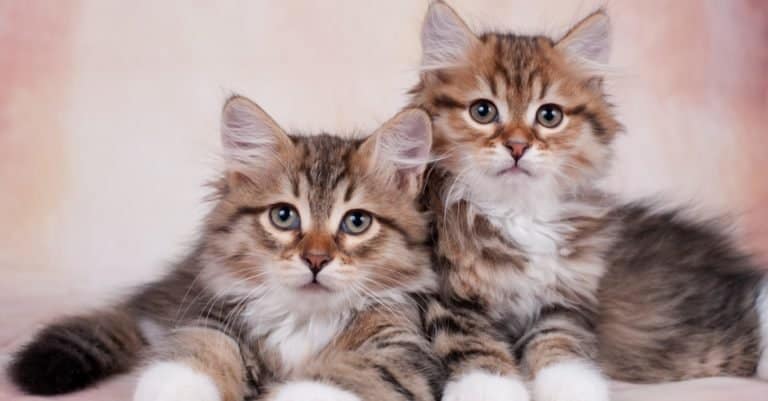
Two cute Siberian kittens on a beautiful neutral background.

Socialization and training should begin shortly after a Siberian kitten is brought home to ensure it becomes a well-behaved adult.

Lifespan

The Siberian cat has a normal lifespan of 11 to 15 years, but with a bit of luck and good health, it’s not uncommon for this breed to live to around 18 years old. While generally healthy, the Siberian might be at risk of several health problems, including kidney disease, gum disease, cancer, and a potentially fatal heart disease called hypertrophic cardiomyopathy, in which the heart becomes enlarged. This can appear at any age of the kitten’s life, beginning at a year old.

Ask your breeder for proof or certification that their cats have been tested for common health problems. While breeders cannot eliminate the risk of all health problems, they can ensure the best chance of a long, high-quality life. Regular checkups at the vet are also necessary to catch potential health problems as early as possible.
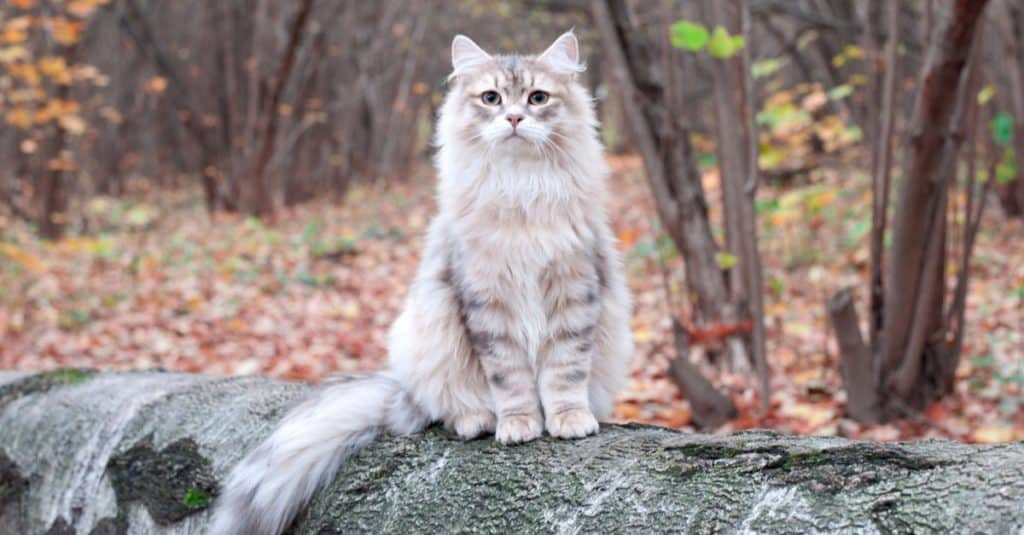
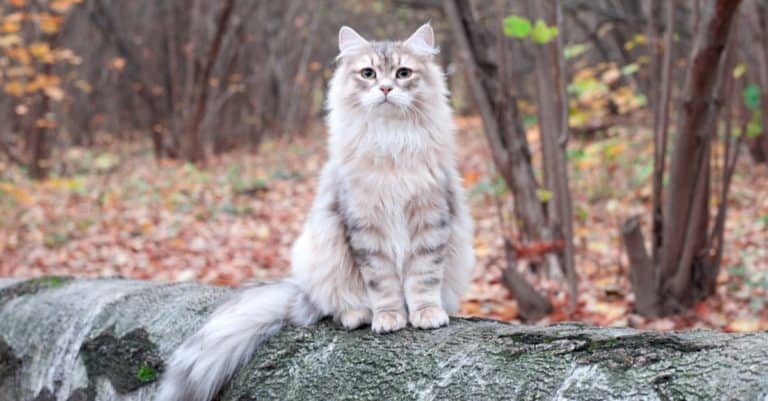
Siberian cat sitting on a tree stump in the woods.

The lifespan of the Siberian is typically 11 to 15 years, while some can live to the age of 18.

Breed vs. Mixed

A purebred Siberian cat is characterized by a wedge-shaped head, long tufted ears, a thick tail, strong legs, large and tufted paws, and big, round eyes with shades of green, yellow, or blue. The Siberian can be mixed with many different breeds of cat, including the closely related Norwegian forest cat and the Maine coon, whose thick, fluffy fur can produce many interesting patterns and combinations.
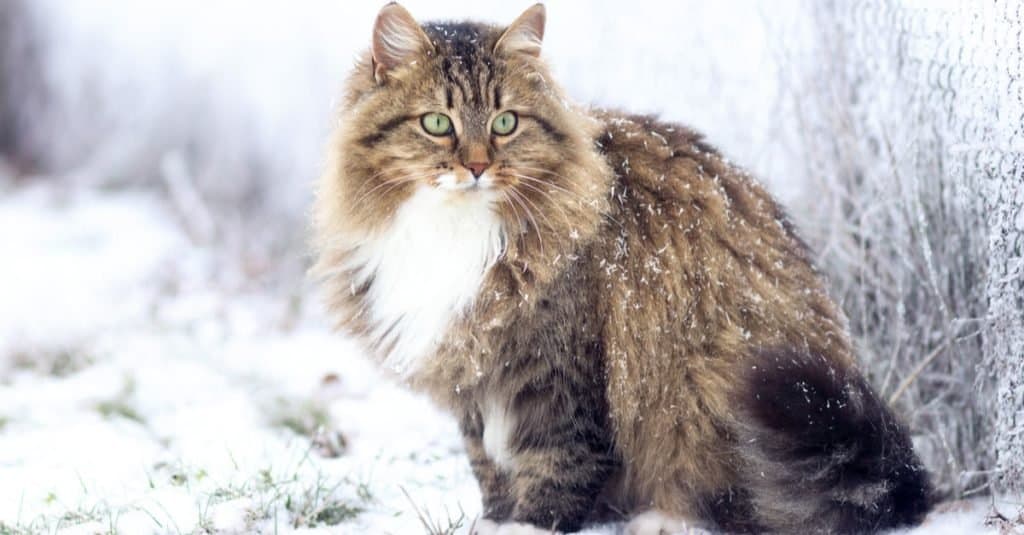
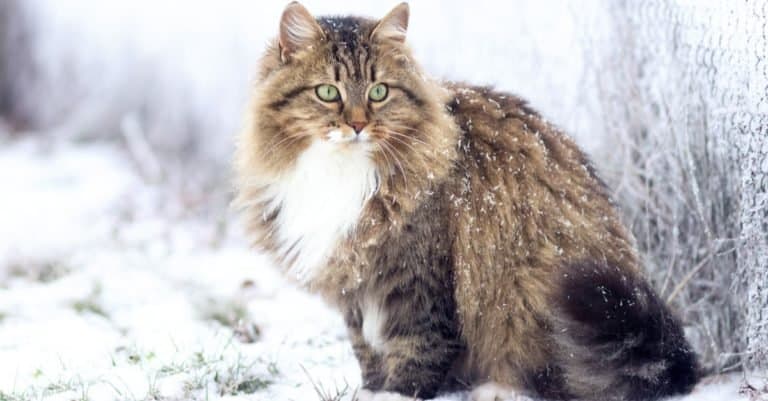
Beautiful Siberian cat sitting on the snow.

A purebred Siberian cat has a wedge-shaped head, long tufted ears, a thick tail, a muscular build, and big, round eyes colored green, yellow, or blue.

Types of Siberian Cats and Colors

The Siberian cat has a very thick triple coat of fur, specialized for surviving in the frigid northern climates, that needs to be groomed a few times a week with a simple brush to remove loose hairs and prevent tangles and mats. The arrival of the annual shedding season in the spring and fall may necessitate more frequent grooming, possibly even once a day.

While there aren’t any distinctive types of Siberian cats, prospective owners may be impressed by the sheer variety of their coats. The Cat Fancier’s Association accepts all colors and combinations, including:

  • All-white
  • Mackerel patterned
  • Colorpoint
  • Black
  • Blue
  • Silver
  • Cameo
  • Tortoiseshell
  • Smoke
  • Tabby patterned

‘An interesting fact in the breed’s history is the colorpoint variety called the Neva Masquerade, named after the Neva River in St. Petersburg. This colorpoint pattern, characterized by mask-like facial coloring and blue eyes, was first recognized in the 1980s and has been preserved in cat nurseries in St. Petersburg since 1989. This breed always has blue eyes, but otherwise is like all other Siberian cats.

View all 390 animals that start with S

Sources

  1. Cat Fancier's Association / Accessed July 6, 2021
  2. Cat Time / Accessed July 6, 2021
  3. The Happy Cat Site / Accessed July 6, 2021
Abby Parks

About the Author

Abby Parks

Abby Parks has authored a fiction novel, theatrical plays, short stories, poems, and song lyrics. She's recorded two albums of her original songs, and is a multi-instrumentalist. She has managed a website for folk music and written articles on singer-songwriters, folk bands, and other things music-oriented. She's also a radio DJ for a folk music show. As well as having been a pet parent to rabbits, birds, dogs, and cats, Abby loves seeking sightings of animals in the wild and has witnessed some more exotic ones such as Puffins in the Farne Islands, Southern Pudu on the island of Chiloe (Chile), Penguins in the wild, and countless wild animals in the Rocky Mountains (Big Horn Sheep, Mountain Goats, Moose, Elk, Marmots, Beavers).
Connect:

Thank you for reading! Have some feedback for us?


Siberian FAQs (Frequently Asked Questions)

The average number of babies a Siberian has is 5.