



S
Species Profile

Sloth

Folivora (within order Pilosa)

Slow life, high in the canopy
Leyo / Creative Commons

Sloth Distribution

Click a location to explore more animals from that region

Endemic Species
Loading map...

Size Comparison

Human 5'8"
Sloth 1 ft 4 in

Sloth stands at 23% of average human height.

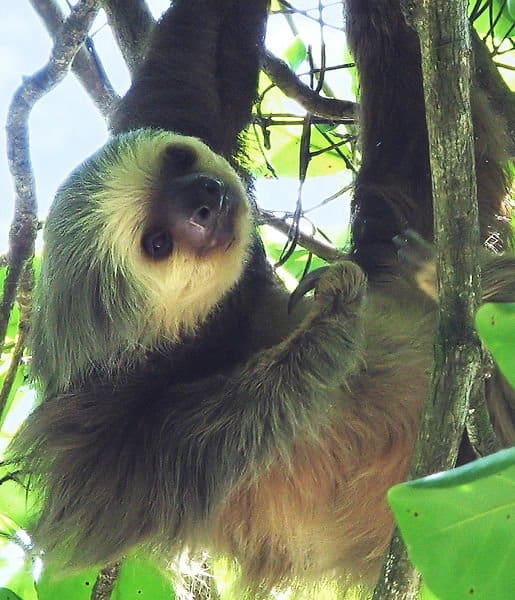
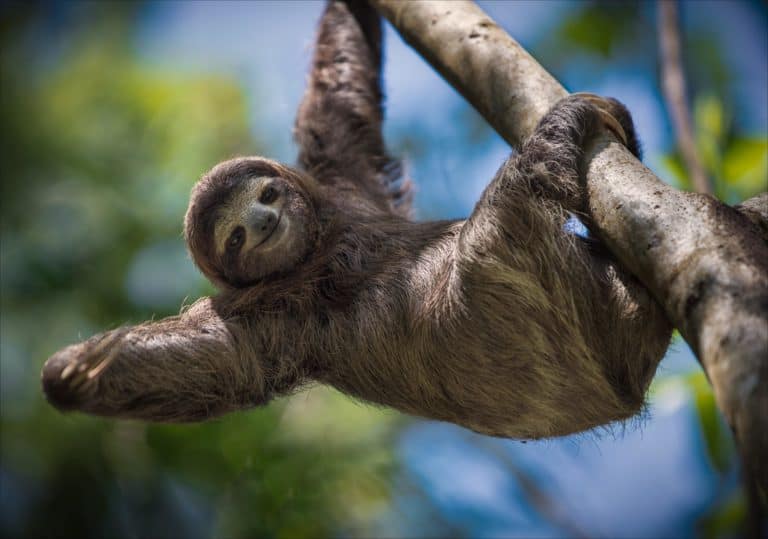
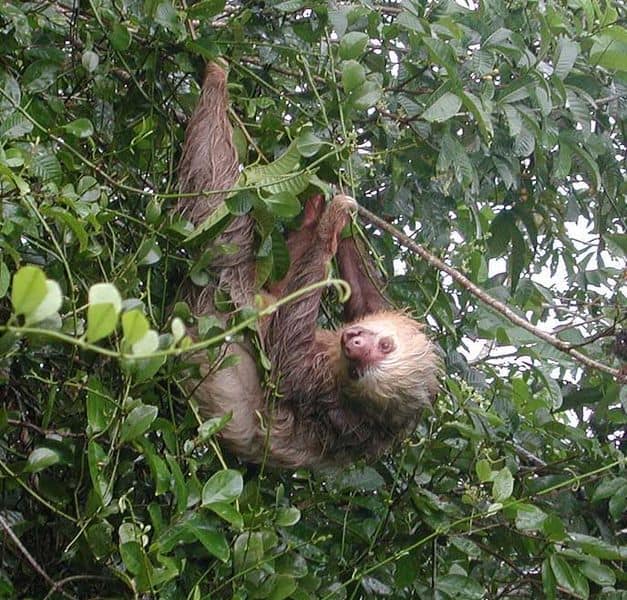
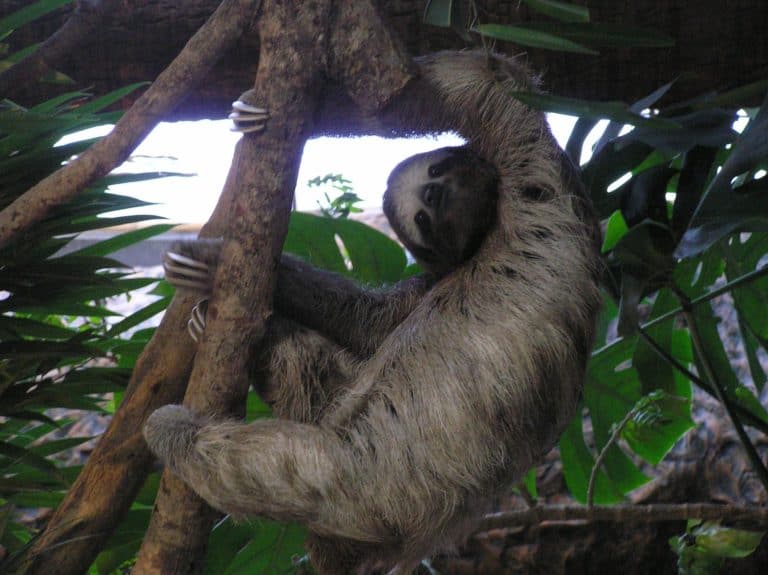
Sloth hanging in a tree

At a Glance

Order Overview This page covers the Sloth order as a group. Stats below are general traits shared across the order.
Also Known As Sloth, Tree sloth, Perezoso, Preguiça, Paresseux, Faultier
Diet Folivore
Activity Nocturnal+
Lifespan 23 years
Weight 10 lbs
Status Not Evaluated
Did You Know?

Living sloths come in two distinct lineages: three-toed sloths (Bradypus) and two-toed sloths (Choloepus)-they're not just "variants" of one animal.

Scientific Classification

Order Overview "Sloth" is not a single species but represents an entire order containing multiple species.

Sloths are arboreal xenarthran mammals best known for very slow movement, upside-down suspension, and folivory. Living sloths comprise two main lineages: three-toed sloths (family Bradypodidae; genus Bradypus) and two-toed sloths (family Choloepodidae; genus Choloepus). They are part of the order Pilosa, which also includes anteaters.

Kingdom
Animalia
Phylum
Chordata
Class
Mammalia
Order
Pilosa

Distinguishing Features

  • Xenarthran anatomy (extra articulations in the vertebral column; specialized musculoskeletal traits)
  • Long curved claws for suspension and climbing
  • Low metabolic rate and slow digestion adapted to leaf-heavy diets (especially in three-toed sloths)
  • Arboreal lifestyle with strong camouflage; fur often hosts algae and invertebrates
  • Two-toed sloths (Choloepus) have 2 fingers on the forelimb; three-toed sloths (Bradypus) have 3

Physical Measurements

Males and females differ in size

Height
1 ft 4 in (12 in – 1 ft 10 in)
Length
2 ft 1 in (1 ft 6 in – 2 ft 10 in)
2 ft 3 in (1 ft 8 in – 3 ft 1 in)
Weight
12 lbs (7 lbs – 22 lbs)
12 lbs (6 lbs – 24 lbs)
Tail Length
Up to 3 in
Up to 4 in
Top Speed
2 mph
climbing

Appearance

Primary Colors
Secondary Colors
Skin Type Thick, tough skin under dense fur; long coarse guard hairs with fine underfur. Fur often hosts algae, fungi, and invertebrates; hair parts and grows away from the belly, facilitating rain runoff while hanging.
Distinctive Features
  • Size range across living sloths: ~45-85 cm body length; ~2-9 kg mass, with short tail in Bradypus and near-absent tail in Choloepus.
  • Arboreal build with very long forelimbs, strongly curved claws for suspensory climbing and hanging rest.
  • Digit differences: "three-toed" refers to forelimb digits; hindfoot digit counts can differ by lineage/species.
  • Head small with short snout; Choloepus typically has longer snout and more mobile neck than Bradypus.
  • Low metabolic rate and low body temperature relative to many mammals; slow digestion with large, compartmentalized stomach adapted to leaf-heavy diets.
  • Behavior/ecology (order-wide generalization): primarily solitary, cryptic, and slow-moving canopy dwellers in Neotropical forests; activity often nocturnal/crepuscular, but varies by species and habitat.
  • Diet variation: Bradypus tends toward stricter folivory; Choloepus is more flexible, sometimes including fruit/flowers and occasional animal matter.
  • Locomotion includes careful climbing and competent swimming; ground movement is awkward and infrequent, varying with forest structure and dispersal needs.
  • Geographic generalization: restricted to the Neotropics (Central and South America), with species occupying lowland rainforests to some seasonal/drier forests.

Sexual Dimorphism

Sexual dimorphism is generally weak. Females are often slightly larger, while some male three-toed sloths show a distinctive dorsal orange/yellow patch; two-toed sloths typically show subtler differences, mostly in size and genital traits.

  • In some Bradypus, a dorsal "speculum" patch (often orange/yellow-tinged) on the back.
  • Males may be slightly smaller on average in several populations.
  • External genital differences are not obvious without close inspection in the field.
  • Females often slightly larger/heavier on average across several species.
  • Usually lack the male dorsal speculum patch seen in some three-toed sloths.
  • Teat placement and reproductive anatomy are the most consistent sex differences.

Did You Know?

Living sloths come in two distinct lineages: three-toed sloths (Bradypus) and two-toed sloths (Choloepus)-they're not just "variants" of one animal.

"Two-toed" refers to the forelimb digits; the hind feet have three toes, which fuels a common misconception.

Across Folivora, adults range from about 45-75 cm in body length and roughly ~2.5-9 kg in mass (smallest pygmy three-toed to largest two-toed).

They have some of the slowest digestion among mammals; food can take weeks to fully pass through their system.

Many sloths descend to the ground about once a week to defecate-an odd, risky habit that varies in frequency and context among species.

Three-toed sloths can rotate their heads extremely far thanks to extra neck vertebrae (more than most mammals).

Sloths are strong swimmers despite their slow climbing pace, and they can cross rivers when needed.

Unique Adaptations

  • Exceptionally low metabolic rate (for their size): supports a leaf-heavy diet by reducing daily energy needs; metabolism and body temperature can fluctuate more than in many mammals.
  • Slow, fermentation-based digestion: enlarged, multi-chambered stomach and lengthy gut retention help extract nutrients from tough leaves; this also contributes to slow movement as a side-effect of energy budgeting.
  • Suspensory anatomy: long limbs, curved claws, and strong tendons/ligaments allow secure hanging and climbing with minimal muscular effort.
  • Fur as a micro-habitat: grooved hair structure in many sloths can host algae and small invertebrates-adding camouflage and a tiny "ecosystem" on the animal.
  • Reduced musculature relative to many mammals: paired with energy conservation, this fits a lifestyle where "not moving" is often the safest strategy.
  • Neck flexibility (especially in three-toed sloths): extra cervical vertebrae enable wide head rotation for scanning while the body stays still.
  • Xenarthran traits: like other Pilosa, sloths have distinctive vertebral joint features (xenarthry) that add trunk support-useful for climbing and hanging.

Interesting Behaviors

  • Arboreal living: Most activity happens in the canopy-feeding, resting, mating, and traveling via cautious climbing and hanging.
  • Activity patterns vary: two-toed sloths are generally more nocturnal, while three-toed sloths are often more cathemeral/diurnal depending on habitat and conditions.
  • "Hang time" is real: they commonly rest suspended from branches, using powerful flexor tendons to maintain grip with low effort.
  • Weekly (often) bathroom trips: some populations routinely climb down to defecate at the tree base; researchers debate the ecological reasons (e.g., nutrient cycling, scent cues). Frequency and consistency vary.
  • Camouflage-by-ecosystem: sloths often remain still for long periods, relying on cryptic coloration and, in some species, algae-tinted fur to blend into mossy canopies.
  • Careful, economical movement: when they do move, it's typically deliberate and route-planned-minimizing energy use and avoiding detection.
  • Mother-young behavior: infants cling to the mother for months; the length of dependence and weaning timing vary by species and habitat.

Cultural Significance

Sloths (Folivora) are a well-known symbol of forest and canopy life. In Spanish/Portuguese (perezoso/preguiça) they suggest slowness. Ecotourism in Costa Rica and Panama often focuses on sloth-watching, helping protect habitat and raise awareness of tropical biodiversity.

Myths & Legends

Naming lore from early colonial-era encounters: Spanish and Portuguese common names for sloths (perezoso/preguiça, "lazy") reflect how newcomers interpreted their stillness-an enduring cultural label rather than an Indigenous name.

Scientific naming as a story of perception: Linnaeus coined Bradypus ("slow-foot"), embedding the animal's reputation for slowness into taxonomy-an anecdote often retold in natural history writing.

A widespread folktale motif in parts of tropical America frames the sloth as a cautionary figure-an animal associated with patience or idleness-used in moral storytelling and children's tales (often without a single fixed canonical version).

Modern "urban legends" of the rainforest (popular in travel storytelling) portray sloths as gentle canopy spirits or lucky sightings-contemporary folklore tied to ecotourism and conservation culture rather than ancient mythology.

In Western Christian tradition, "sloth" is one of the Seven Deadly Sins. Though not about the New World animal, the shared name shaped later symbolic uses of sloths in art and stories.

Conservation Status

NE Not Evaluated

Has not yet been evaluated against the criteria.

Population Unknown

Protected Under

  • National and subnational wildlife protection laws across range states (varies by country)
  • Occurrence within protected area networks (national parks, reserves) throughout the Neotropics

You might be looking for:

Brown-throated sloth

25%

Bradypus variegatus

Common three-toed sloth of Central and South American lowland forests.

Hoffmann's two-toed sloth

18%

Choloepus hoffmanni

Widespread two-toed sloth from Central America into northern South America.

Linnaeus's two-toed sloth

15%

Choloepus didactylus

Two-toed sloth of the Guianas and Amazon basin.

View Profile

Pygmy three-toed sloth

12%

Bradypus pygmaeus

Critically Endangered island-endemic three-toed sloth (Escudo de Veraguas, Panama).

Maned sloth

10%

Bradypus torquatus

Atlantic Forest three-toed sloth with a distinctive mane; threatened by habitat loss.

Life Cycle

Birth 1 pup
Lifespan 23 years

Lifespan

In the Wild
10–35 years
In Captivity
15–50 years

Reproduction

Mating System Promiscuity
Social Structure Solitary
Breeding Pattern Transient
Fertilization Internal Fertilization
Birth Type Internal_fertilization

Across living sloths, adults are mostly solitary and associate briefly for mating. Males' ranges may overlap multiple females, with mating likely polygynous to promiscuous depending on species; no stable pair bonds are typical, and females rear single young alone.

Behavior & Ecology

Social No formal group Group: 1
Activity Nocturnal, Cathemeral, Diurnal
Diet Folivore young, tender leaves (often from common canopy trees; preferences vary by species and habitat)

Temperament

Slow-moving and cryptic
Generally non-aggressive; relies on camouflage and stillness
Low sociality; tolerant of brief close proximity
Stress-sensitive to disturbance and handling; may defend with claws/teeth if threatened

Communication

soft squeaks and chirps Contact/attention
bleats or whines Often mother-young
grunts or huffs during close encounters
occasional louder calls associated with mating or disturbance
olfactory communication via urine/feces and glandular scents for presence and reproductive state
scent investigation of substrates and conspecific trails during mate searching
tactile contact between mother and young Clinging, nuzzling
close-range visual cues (posture, slow head movements) to signal awareness or tolerance

Habitat

Biomes:
Tropical Rainforest Tropical Dry Forest Savanna Wetland
Terrain:
Mountainous Hilly Plateau Plains Valley Coastal Island Riverine +2
Elevation: Up to 9842 ft 6 in

Ecological Role

Canopy folivore and occasional frugivore that links forest primary production to nutrient cycling; impacts tree canopies through selective browsing, and in some species contributes to seed dispersal.

regulates foliage dynamics via selective browsing/pruning (effects vary by density and habitat) supports nutrient cycling through slow digestion and periodic defecation that concentrates nutrients at the forest floor seed dispersal and seed fate effects where fruit intake is meaningful (generally more in two-toed sloths) provides microhabitat/transport for commensals (e.g., algae, moths, other invertebrates in fur), indirectly supporting local food webs

Diet Details

Other Foods:
Leaves Young shoots and petioles Buds Flowers Fruit Tender twigs Bark +1

Human Interaction

Domestication Status

Wild

Folivora (sloths: Bradypodidae and Choloepodidae) are not domesticated. In the past people hunted or captured them, not bred them. Today human impacts include Neotropical forest loss, rescue, zoo keeping, wildlife tourism and illegal pet trade. Adults ~45–80 cm, 2–9 kg; wild ~10–20 years, captive ~20–30. Arboreal and slow; three-toed mostly eat leaves, two-toed eat mixed foods.

Danger Level

Moderate
  • bites and deep puncture wounds (especially if restrained/handled)
  • scratches from long, hooked claws when stressed or mishandled
  • zoonotic/parasite exposure risk (e.g., external parasites; enteric pathogens) mainly through improper handling and hygiene
  • injury risk increases in tourism/photo-prop contexts where animals are forcibly handled

As a Pet

Not Suitable as Pet

Legality: Laws for sloths (Folivora) vary by country, state, or province. Many places ban private keeping or require permits. International trade is regulated by CITES. Even where legal, animals are often taken illegally or in ways that hurt them.

Care Level: Expert Only

Purchase Cost: Up to $15,000
Lifetime Cost: $20,000 - $100,000

Economic Value

Uses:
Ecotourism (wildlife viewing) Education and research (zoos, universities, conservation programs) Conservation funding/charitable initiatives Illegal wildlife trade (live animals; tourism photo-props) Limited local subsistence use (historical/occasional)
Products:
  • non-consumptive value via tourism experiences and park revenue
  • educational display value (accredited zoological institutions)
  • historically/locally: meat and body parts used opportunistically (not a large-scale commodity)

Relationships

Related Species 7

Three-toed sloths Bradypodidae Shared Family
Two-toed sloths Choloepodidae Shared Family
Three-toed sloths Bradypus Shared Genus
Two-toed sloths Choloepus Shared Genus
Giant anteater Myrmecophaga tridactyla Shared Order
Southern tamandua Tamandua tetradactyla Shared Order
Silky anteater Cyclopes didactylus Shared Order

Ecological Equivalents 4

Animals that fill a similar ecological role in their ecosystem

Koala
Koala Phascolarctos cinereus Arboreal folivore with a low-energy lifestyle. Convergent traits include slow movement, energy conservation, and reliance on tough leaves, though koalas specialize on eucalyptus and are not closely related.
Howler monkey
Howler monkey Alouatta spp. Neotropical, canopy-dwelling mammals that rely heavily on leaves. They share dietary constraints (fermentation and slow digestion) and canopy habitat use, although their behavior and locomotion differ markedly.
Colugos Galeopteridae Arboreal, leaf-eating mammals that spend much of their time in trees and conserve energy. They occupy similar forest strata but use gliding rather than suspensory climbing.
Leaf monkeys Trachypithecus spp.; Semnopithecus spp. Specialized folivores with foregut fermentation, giving them an analogous dietary ecology (handling plant toxins and fiber), even though they are active, social primates rather than the typically solitary sloths.

Types of Sloth

6

Explore 6 recognized types of sloth

Pygmy three-toed sloth Bradypus pygmaeus
Maned sloth Bradypus torquatus
Pale-throated three-toed sloth Bradypus tridactylus
Brown-throated three-toed sloth Bradypus variegatus
Linnaeus's two-toed sloth
Linnaeus's two-toed sloth Choloepus didactylus
Hoffmann's two-toed sloth Choloepus hoffmanni

“The Sloth is the world’s slowest moving mammal.”

Sloths are animals that live in the treetops of Central and South American rainforests. They spend their days foraging and eating leaves, buds, and twigs. These slow-moving mammals sleep 15 to 20 hours and only move as far as about 40 yards each day. But they have excellent swimming skills, thanks to their long arms.
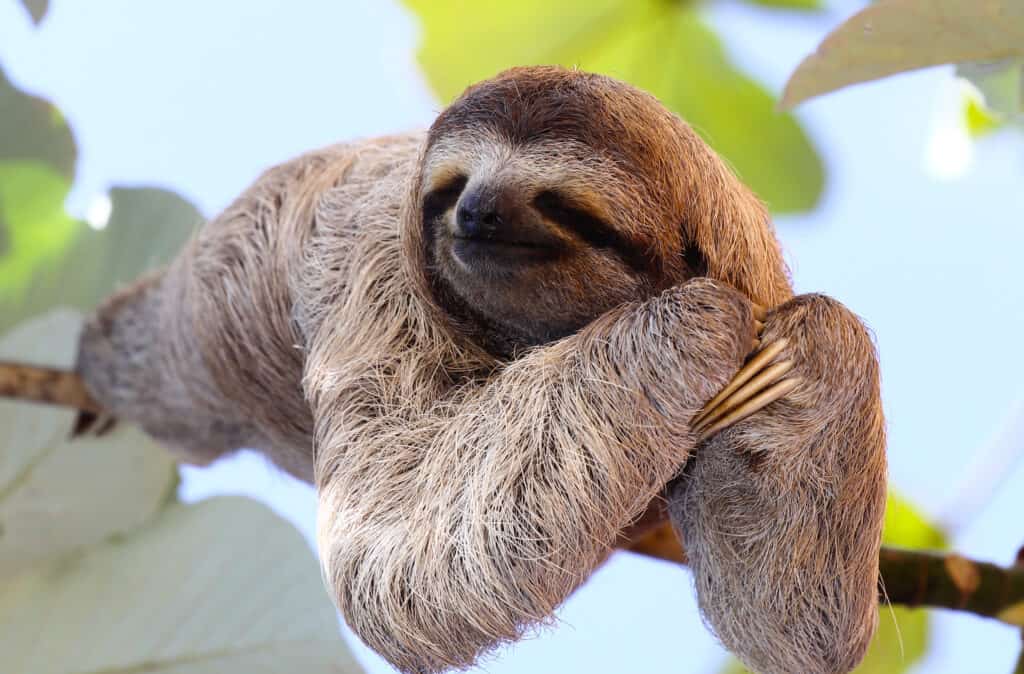
sloth

Sloths sleep 15 to 20 hours and only move as far as about 40 yards each day.


5 Sloth Facts

  • Sloths move slowly due to their extremely slow metabolic rate
  • Sloths come out of the treetops only once per week to relieve themselves
  • There are six species of sloths, one being critically endangered and another vulnerable
  • There are two-toed sloths and three-toed sloths today, all about the size of a dog
  • Ancient giant sloths, called Megatherium, were the size of modern elephants

Read other interesting sloth facts here.
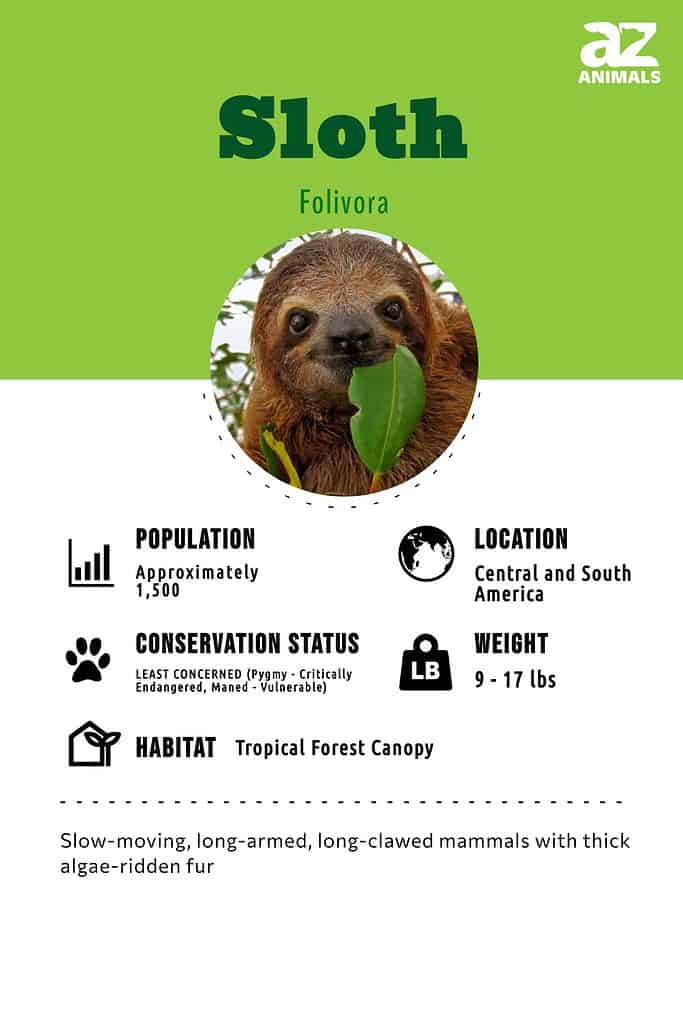
Scientific Name

Commonly called sloths, these animals bear the scientific name of Folivora. Distant cousins in the sloth superorder Xenarthra include anteaters and armadillos. Members of the order Pilosa and suborder Folivora, get their name from the Old English combination of the word “slow” with the ending “the.”
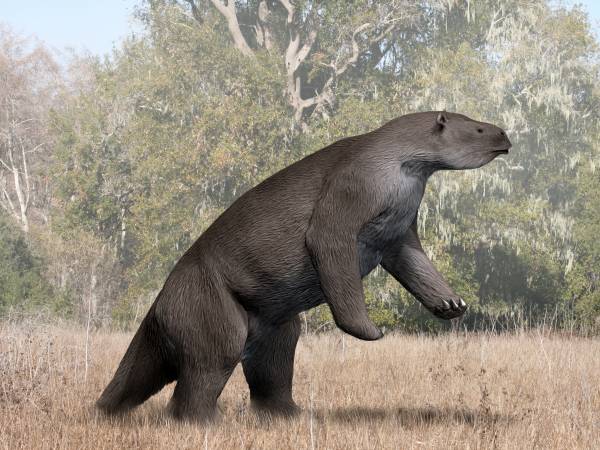
Megatherium americanum

Megatherium americanum looked like a very large tree sloth with less hair and seven-inch long claws.


Evolution

Sloths are members of the suborder, xenarthrans – making them relatives of armadillos and anteaters. These animals originated in South America during the late Paleocene around 60 million years ago and are known for their slow metabolisms and lack of teeth. These animals originated in South America during the late Paleocene around 60 million years ago.

Recent studies and analyses of full mitochondrial DNA from sloth fossils that were 10,000 – 45,000 years old revealed an astonishing conclusion. Three-toed sloths are related to the ground sloth, Megalonyx, a horse-sized creature who roamed the North American continent until about 15,000 years ago, and Megatherium, an elephant-sized giant. Two-toed sloths, although quite similar to their three-toed neighbors, are related to the giant South American Mylodon, the last ground sloth to go extinct, less than 10,000 years ago.
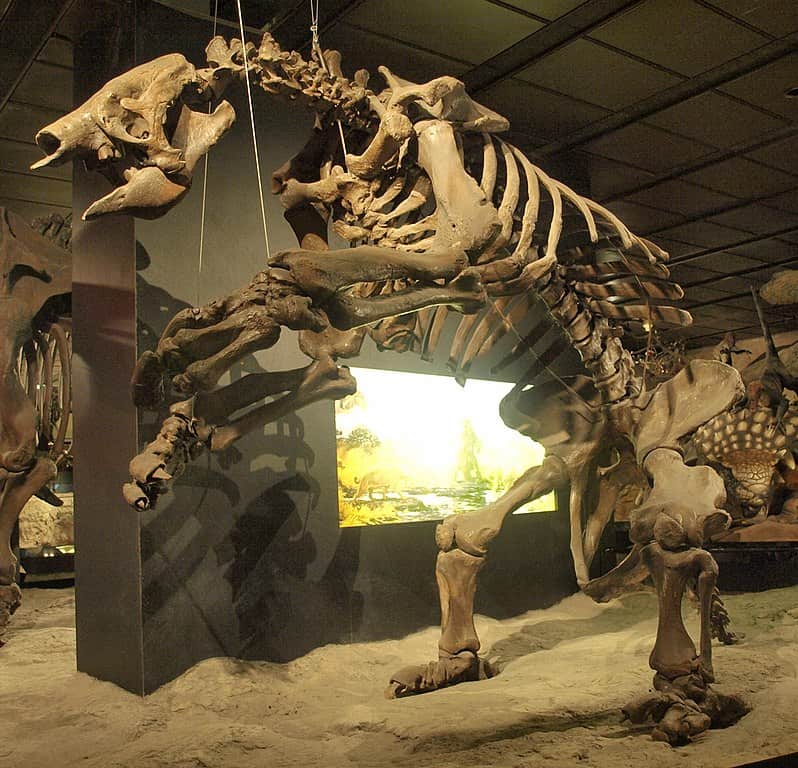
WLA hmns Giant ground sloth Eremotherium

Eremotherium weighs as much as Megatherium but lived more extensively than its size mate, reaching Mexico and the United States.

The two types of sloths that we know and love today escaped extinction when they began to live in the trees. Even more interesting – these two sloth species – the two-toed and three-toed sloths – evolved into tree dwellers totally independent of each other. This is an example of convergent evolution – when a species take different evolutionary routes to reach the same adaptations. The two types of sloths evolved into six species – four with three toes and two with two toes.
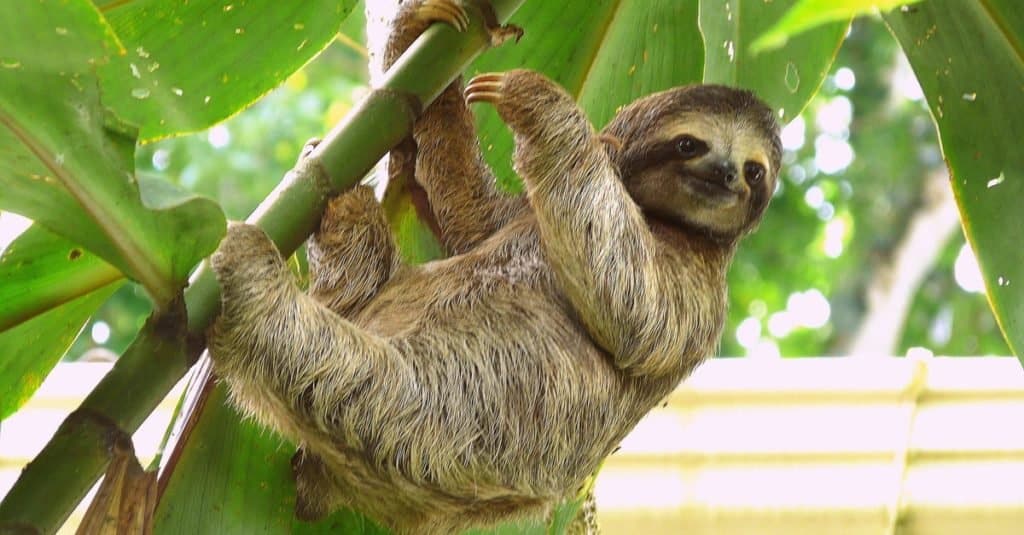
Dumbest Animals in the World: Sloth

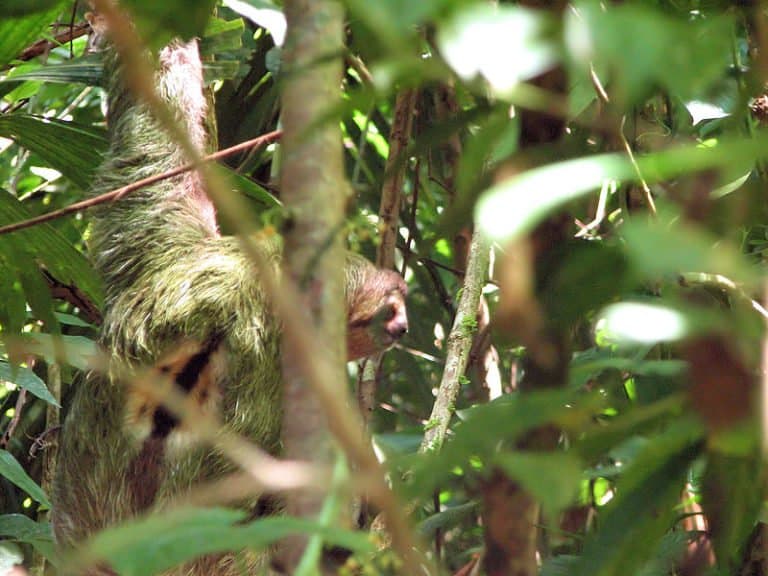
The green tint on a sloth’s fur is algae that serves as camouflage.

Appearance & Behavior

Sloths are animals that measure from 24 to 31 inches long. They weigh between 7.9 and 17 pounds as adults. Two-toed sloths have two toes on their front feet and three toes on their back feet. Three-toed sloths have three toes on all feet and a stubby tail that measures from two to 2.4 inches long. Between these, the two-toed sloths are larger. Both types have long arms and legs, rounded heads, and small ears.

Other differences between two-toed and three-toed sloths include the number of bones in their necks. Two-toed sloths have five to seven neck vertebrae. Three-toed sloths have eight or nine of these vertebrae. Among all other mammals except Manatees, this makes these animals unique. All other mammals have seven neck vertebrae, except Manatees having six sloths and vary between five and nine. Because of the extra neck vertebrae, sloths can turn their heads further around than humans.

These animals have poor eyesight and hearing. But they can see in color. Because of these poor senses, they rely heavily on the senses of smell and touch.

These mammals also have a very slow metabolism and low body temperature. Their temperature varies as low as 68 degrees Fahrenheit according to their environment. But the range typically stays between 77 degrees and 95 degrees Fahrenheit.

The outer coat of sloth fur grows, unlike other mammals, in the opposite direction of others. Mammal hair typically grows toward the arms and legs. But sloth hair grows away from their arms and legs, parting down the middle of their chest and belly. This provides better protection against the elements since they spend most of their life hanging upside down.

Because this is the slowest mammal, their fur grows algae inside each of the hollow hairs. This green algae act as camouflage and helps these animals hide from predators in the treetops. Among the creatures living on their fur and in this special ecosystem are mosquitoes, sandflies, lice, mites, ticks, beetles, and moths. The moths fertilize the algae on their fur, helping more growth.
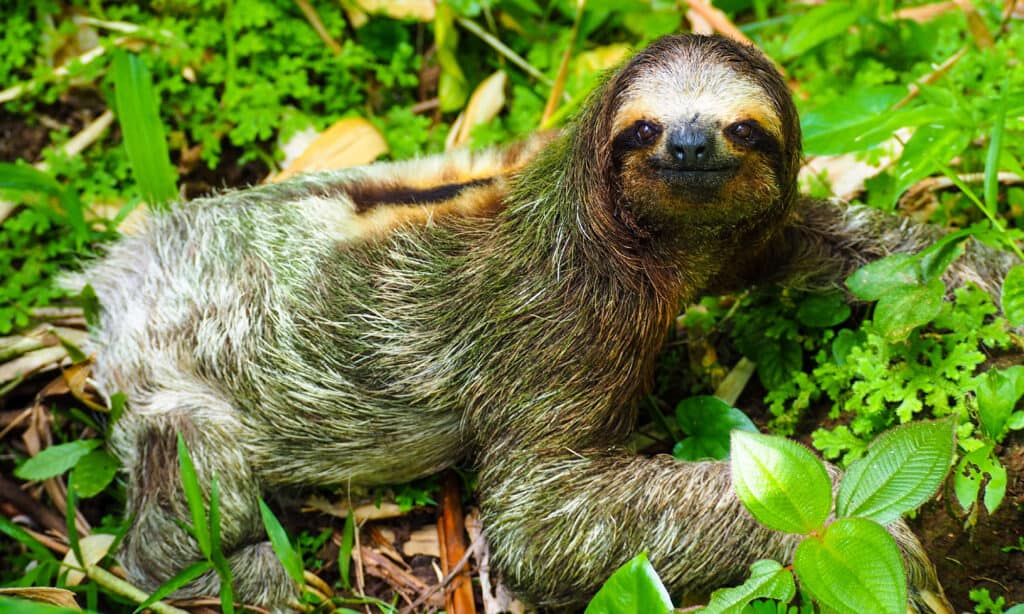
sloth on the ground

Sloths come out of the treetops once a week to relieve themselves.


The limbs of these animals enable the mammals to hang from tree limbs. But these limbs do not support their weight well. This makes these animals helpless and clumsy on the ground. They can only drag themselves by their claws on the ground. So they only come out of the treetops once weekly. They do so to relieve themselves, then go back into the trees where they are less at risk from predators.

Despite not being safe or able to move well on the ground, sloths swim very well. They do a breaststroke like a human, using their long limbs to easily push themselves forward through the water. Their bodies float very well, too.

These animals do not spend time around each other, except for mating and rearing young. They act aggressively with sloths of the same gender. They live mostly nocturnal, solitary lives.
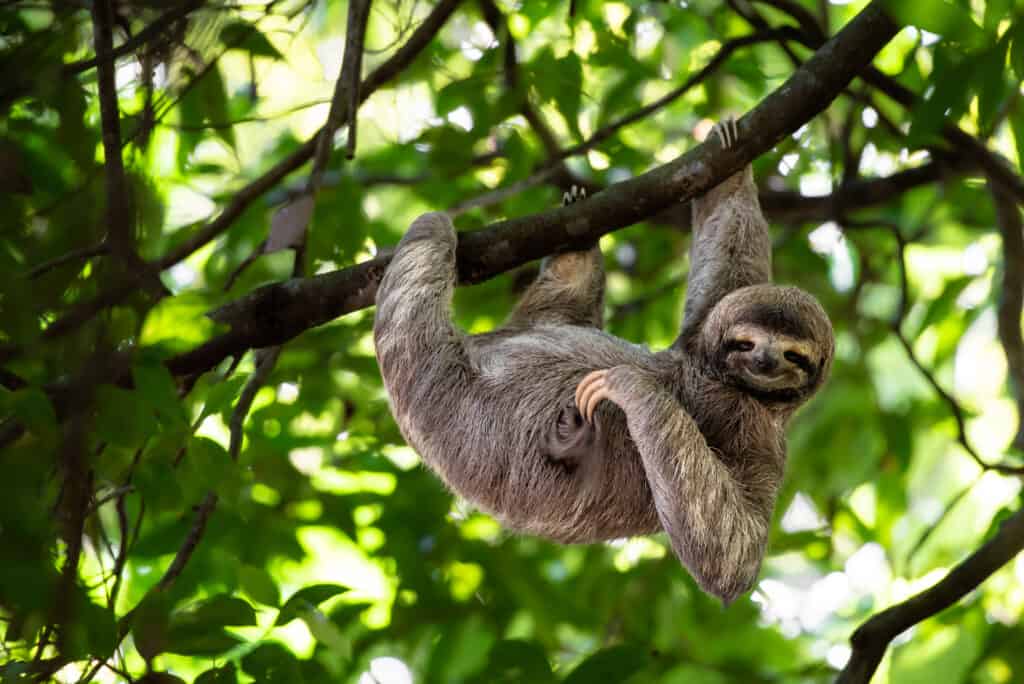
 

sloth

Sloths live in Central and South American – often spending their whole lives in one tree.

Habitat

Modern sloths live in Central America and South America. But their ancestors lived in North America. In Central and South America they prefer the tall trees in rainforests, cloud forests, and mangrove forests. Each sloth moves about several trees throughout the course of their lifetime. But many spend their whole lives in one tree where they were born.

These animals sleep, eat, mate, and raise young while hanging from tree limbs. The only reason the animal leaves the treetops is to use the bathroom once weekly, find a mate or expand their territory.

Diet

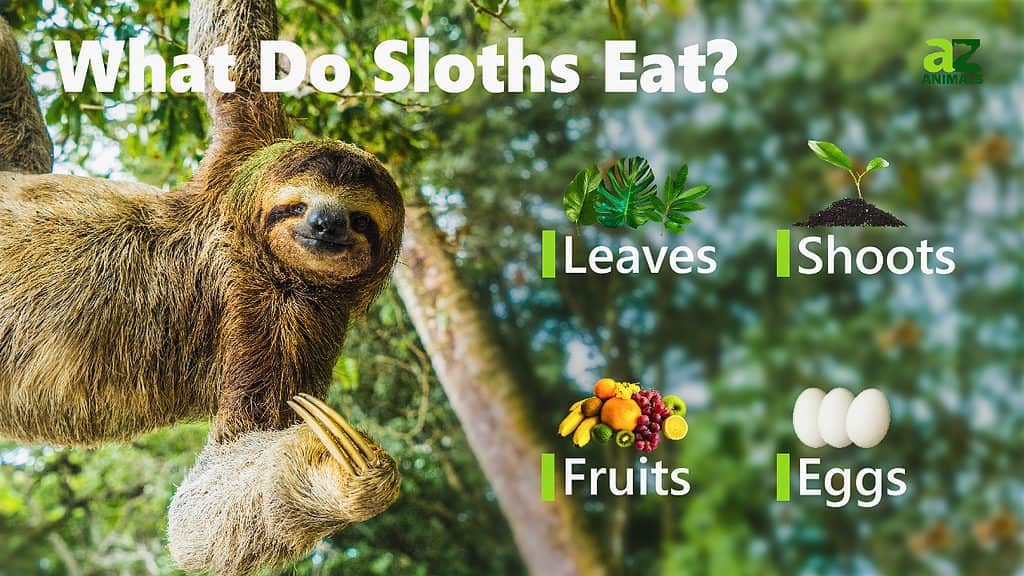
Three-toed sloths eat mostly plants, making them herbivores. They prefer leaves from the leafy cecropia tree. Two-toed sloths eat both plants and small animals. They enjoy leaves, fruits, small lizards, and insects.

These mammals have multi-chambered stomachs that contain many bacteria that break down plant materials. They digest food very slowly. It takes from one week to a month for them to digest most of their meals. These meals also prove low in nutrients, so they do not get energy from most of their food. Scientists believe this lack of energy is why they move so slowly.

Predators & Threats

The primary predators of these animals include jaguars, snakes, large birds of prey, and humans. They defend themselves by swiping at predators with their long, sharp claws that extend from their lengthy arms. Humans hunting sloths for meat have realized that shooting them can prove pointless as these animals tend to remain hanging from towering tree limbs by their claws even in death. The best defense this animal has against any predator is that of using their algae-covered fur as camouflage in the trees.

These slow-moving animals eat poison ivy because it hurts the animals that eat them. Although they easily die at the hands of a snake, jaguar, or large bird of prey, the poison ivy in their system suffocates the animal that eats them. The plant’s toxins cause the predator’s throat to swell, stopping its breathing.

Besides animal predators and man, these animals face other challenges to their existence. It is believed sloths have existed in one form or another on earth for at least 40 million years. But today, they face habitat destruction, road-building, traffic, power lines, tourism, and the pet trade as their threats.
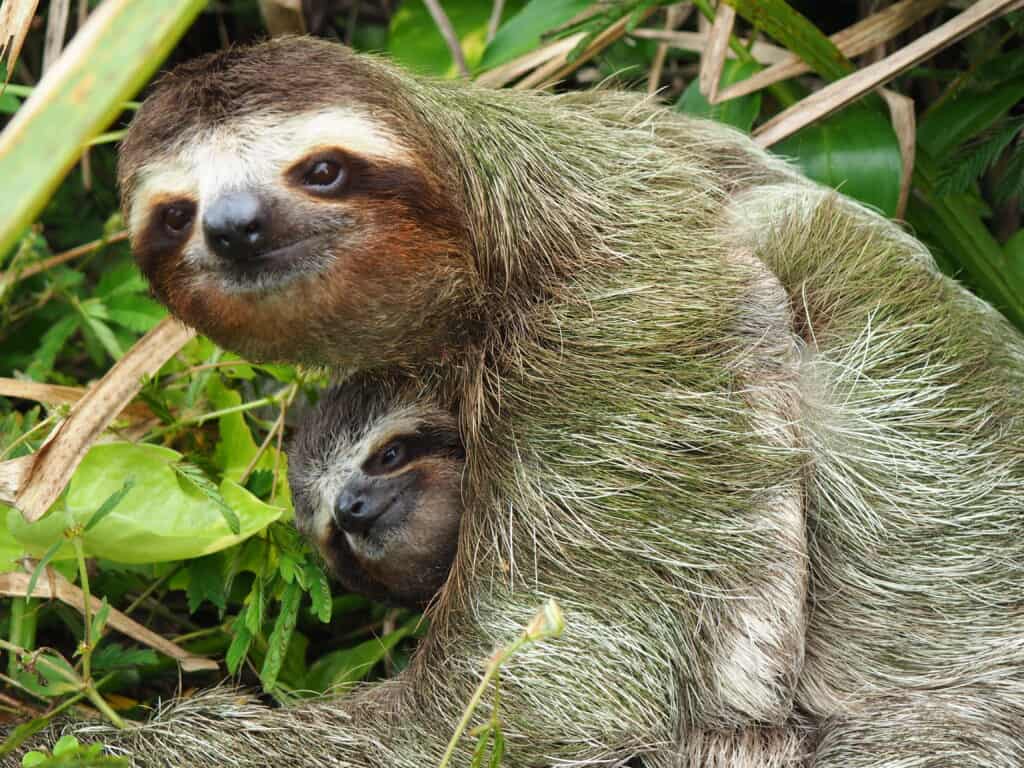
sloth mom with baby

Baby sloths stay with their mothers’ for five months.


Reproduction, Babies, and Lifespan

Some species mate at the same time each year. The maned sloths breed any time of year. Three-toed sloths have only one baby at a time after six months of pregnancy, whereas two-toed sloths are pregnant for 12 months. These newborns live with their mothers for five months. They cling to their mothers’ bodies during this time. Sometimes they fall to the forest floor and their mothers prove are either too lazy or too slow to retrieve them. As a result, the babies die not from the fall, but from being abandoned where they landed.

When a baby has grown to five or six months of age, they leave their mother. They claim a piece of her territory as their own. Although they do not live together again, the mother and her offspring continue to communicate throughout their lifetimes. They use loud calls to “talk” to each other.

For humans, it is difficult to gauge whether the animal is female or male. Zoos often receive the wrong gender than they expected. Scientists do not yet know the lifespan of these animals in the wild. But sloths in human care live for about 16 years on average. One female at the Smithsonian National Zoo in America lived for 49 years.
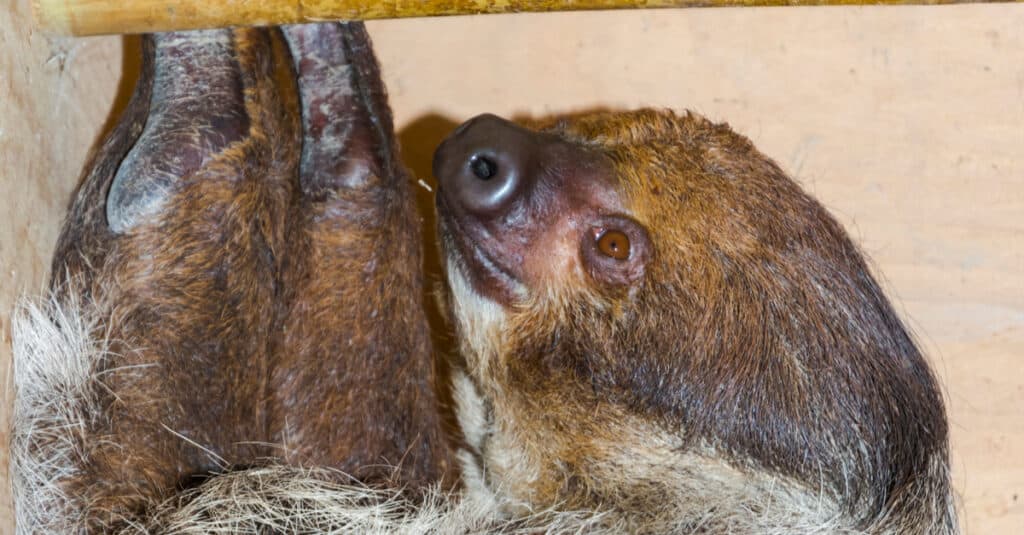
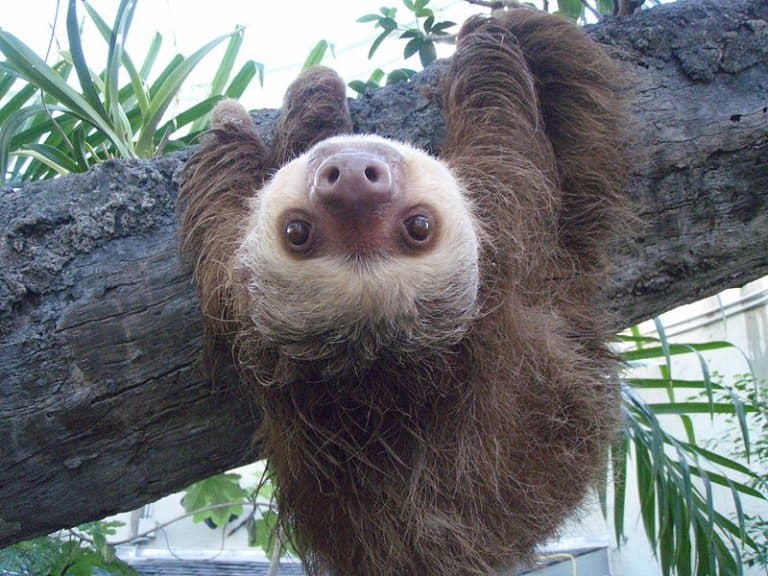
Linnaeus s two-toed sloth or unau in a zoo.

Linnaeus two-toed sloth or unau in a zoo.

Species

  • Pygmy three-toed sloth, (Bradypus pygmoeus) Also known as the monk or dwarf sloth, this little sloth can only be found on the Island of Isla Escuado de Varagaras off the Caribbean coast of Panama.
  • Maned sloth, (Bradypus torquatus) This three-toed sloth is distinguished by its lack of facial markings and long, coarse brown fur.
  • Pale-throated sloth, (Bradypus tridactylus) This sloth can hang upside down for up to 18 hours and even sleeps and gives birth upside down.
  • Brown-throated sloth, ( Bradypus variegatus)
  • Found in the forests of Central America and South America, this species is the most common of the three-toed sloth.
  • Linnaeus’s two-toed sloth, (Choloepus didactylus) With two toes on its front legs and three on its back legs – this little sloth is considered to be the slowest animal in the world – even slower than other sloths!
  • Hoffman’s two-toed sloth, (Choloepus hoffmanni) Also known as the northern two-toed sloth, Hoffman’s two-toed sloth is a solitary creature that can be found in mature rainforests and deciduous forests in South and Central America.
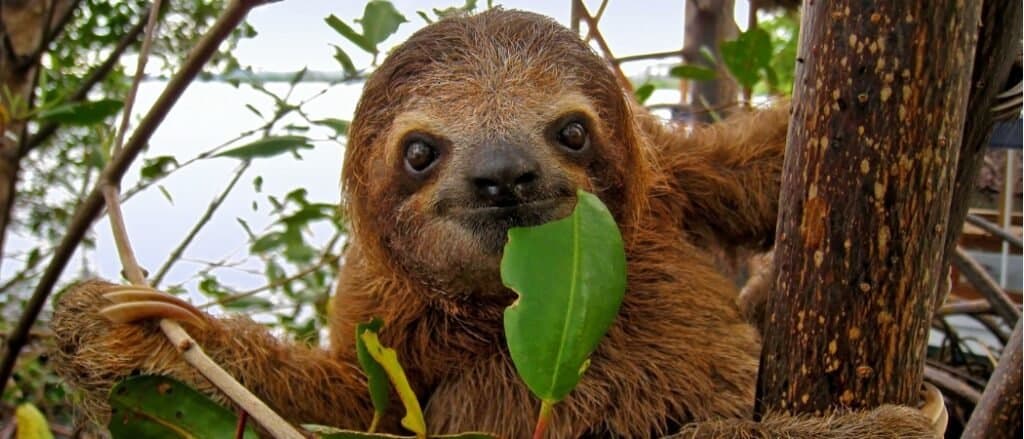

sloth eating a leaf

Baby brown-throated sloth eating a leaf

Population

These animals continue to thrive in South America and Central America. On Panama’s Barro Colorado Island, these animals make up 70 percent of tree-dwelling mammals. Four out of six of the currently living sloth species on Earth do not face extinction. They are listed as “least concern.” But Eastern Brazil’s maned sloth classifies as “vulnerable.” Panama’s pygmy sloth that lives on that country’s islands is critically endangered.

Multiple sloth conservancy organizations exist today. They work to preserve the habitat and the animals, themselves. These organizations educate people about the biology, ecology, and conservation of these animals. They also rehabilitate injured sloths and return them to the wild.


Similar Animals

View all 390 animals that start with S

Sources

  1. David Burnie, Dorling Kindersley (2011) Animal, The Definitive Visual Guide To The World's Wildlife / Accessed November 24, 2008
  2. Tom Jackson, Lorenz Books (2007) The World Encyclopedia Of Animals / Accessed November 24, 2008
  3. David Burnie, Kingfisher (2011) The Kingfisher Animal Encyclopedia / Accessed November 24, 2008
  4. Richard Mackay, University of California Press (2009) The Atlas Of Endangered Species / Accessed November 24, 2008
  5. David Burnie, Dorling Kindersley (2008) Illustrated Encyclopedia Of Animals / Accessed November 24, 2008
  6. Dorling Kindersley (2006) Dorling Kindersley Encyclopedia Of Animals / Accessed November 24, 2008
  7. David W. Macdonald, Oxford University Press (2010) The Encyclopedia Of Mammals / Accessed November 24, 2008
Lisha Pace

About the Author

Lisha Pace

After a career of working to provide opportunities for local communities to experience and create art, I am enjoying having time to write about two of my favorite things - nature and animals. Half of my life is spent outdoors, usually with my husband and sweet little fourteen year old dog. We love to take walks by the lake and take photos of the animals we meet including: otters, ospreys, Canadian geese, ducks and nesting bald eagles. I also enjoy reading, discovering books to add to my library, collecting and playing vinyl, and listening to my son's music.

Thank you for reading! Have some feedback for us?


Sloth FAQs (Frequently Asked Questions)

A sloth is a tree-dwelling animal known as the slowest mammal on Earth. This fur-covered animals spend most of their lives suspended upside down in trees. They live in tropical rain forests of Central America and South America. There are six species of sloths, including some with two toes on their front feet and others with three toes on front feet.