
S
Species Profile

Slow Worm

Anguis fragilis

Blinking lizard, not a snake
Sandra Standbridge/Shutterstock.com

Slow Worm Distribution

Click a location to explore more animals from that region

Loading map...
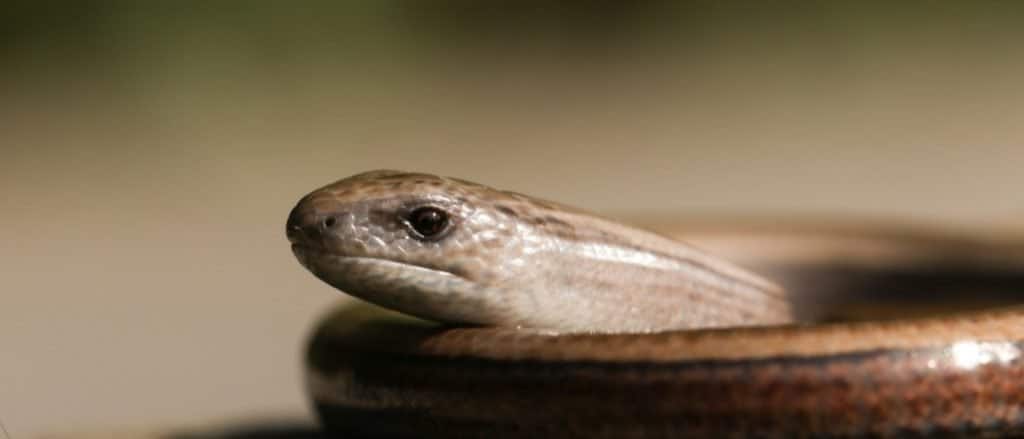
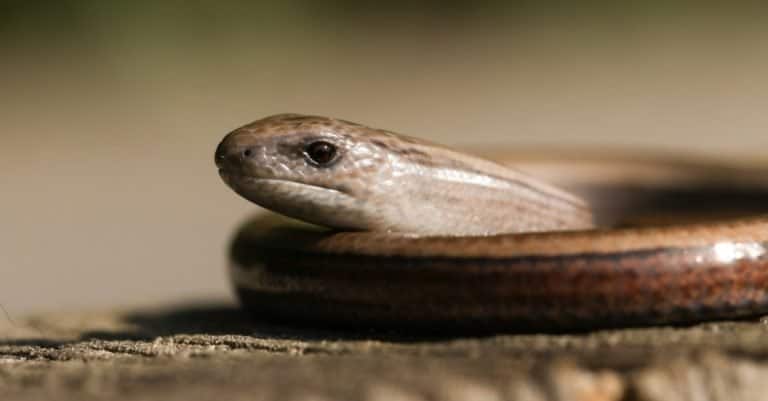
A beautiful Slow worm (Anguis fragilis) sunning itself on a wooden stump in a woodland glade.

At a Glance

Wild Species
Also Known As Blindworm, Blind worm, Legless lizard
Activity Diurnal+
Lifespan 15 years
Weight 0.06 lbs
Status Least Concern
Did You Know?

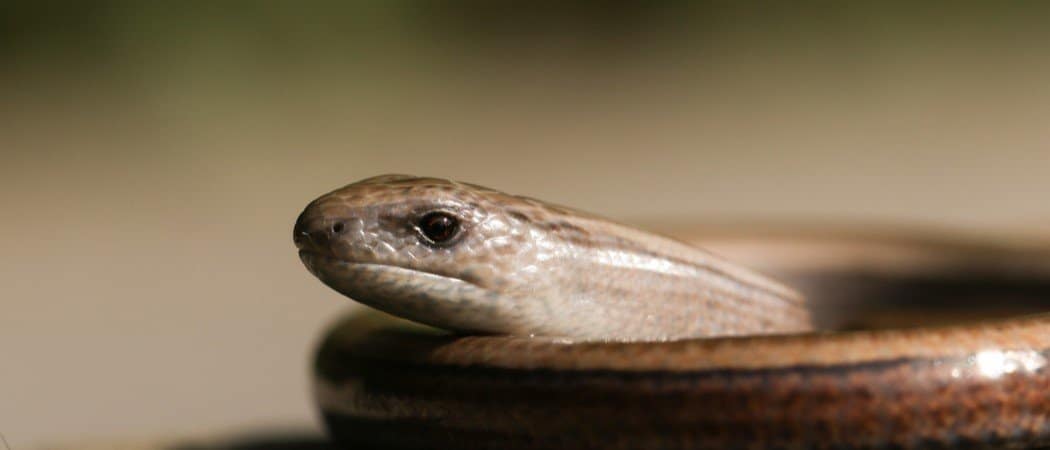
It's a lizard, not a snake: slow worms have movable eyelids and visible ear openings.

Scientific Classification

The slow worm is a small, smooth-scaled, legless lizard native to much of Europe. Despite its snake-like appearance, it is an anguine lizard capable of tail autotomy (dropping the tail) as a defense.

Kingdom
Animalia
Phylum
Chordata
Class
Reptilia
Order
Squamata
Family
Anguidae
Genus
Anguis
Species
Anguis fragilis

Distinguishing Features

  • Legless lizard (not a snake): has eyelids and can blink; external ear openings are present (though small)
  • Smooth, shiny scales with a typically bronze/grey coloration; many individuals show a dark lateral line
  • Ability to shed the tail when threatened (tail autotomy)
  • Head less distinct from neck than many snakes; movement often more “lizard-like” when observed closely

Physical Measurements

Males and females differ in size

Length
1 ft 5 in (1 ft 2 in – 1 ft 8 in)
Weight
0 lbs (0 lbs – 0 lbs)
Tail Length
9 in (7 in – 11 in)
8 in (7 in – 10 in)
Top Speed
1 mph
slithering

Appearance

Primary Colors
Secondary Colors
Skin Type Smooth, glossy integument with small, shiny overlapping scales; rigid, armored anguine body. Movable eyelids and visible external ear openings (diagnostic vs snakes) (Arnold & Ovenden, 2002).
Distinctive Features
  • Legless lizard (Anguidae), not a snake: has movable eyelids and external ear openings (Arnold & Ovenden, 2002).
  • Adult total length typically 30-50 cm; maximum reported about 57 cm (Speybroeck et al., 2016).
  • Tail long and brittle; caudal autotomy common, with regenerated tail shorter and often darker (Beebee & Griffiths, 2000).
  • Body cylindrical with blunt head/neck transition; smooth, glassy appearance from polished scales.
  • Behavior: secretive, often crepuscular; basks at habitat edges (gardens, hedgerows, woodland margins) across much of Europe (Beebee & Griffiths, 2000; Speybroeck et al., 2016).
  • Longevity: commonly >10 years; records up to ~54 years in captivity reported for A. fragilis (AnAge database; zoo longevity reports).

Sexual Dimorphism

Sexes differ subtly: females usually show a distinct dark dorsal stripe and darker flanks, whereas males are more uniform gray-brown. Males also tend to have a relatively broader head and thicker tail base (hemipenal region) (Arnold & Ovenden, 2002).

  • More uniform gray or brown dorsum; striping often weak or absent.
  • Relatively broader head and neck; thicker tail base (hemipenal swellings).
  • Ventral surface may be darker gray/blackish in some individuals.
  • Commonly a clear dark vertebral stripe from head to tail.
  • More contrasting darker flanks with lighter dorsal field.
  • Often slightly slimmer head/neck profile than males.

Did You Know?

It's a lizard, not a snake: slow worms have movable eyelids and visible ear openings.

Adult total length is typically 30-50 cm; exceptionally about 57 cm has been reported in field guides.

It can shed (autotomize) its tail to escape predators; the tail later regrows but usually shorter and blunter.

Unlike most European reptiles, it is live-bearing (ovoviviparous): females give birth to fully formed young.

Litter size is commonly 3-12 young, usually born in late summer (Aug-Sep in much of its range).

They're valuable garden pest-controllers, specializing on slugs, snails, and other soft-bodied invertebrates.

They can be very long-lived for a small reptile: over 30 years is documented in captivity, with exceptional records reported above 50 years.

Unique Adaptations

  • Movable eyelids (can blink) and external ear openings-key anguine-lizard traits that immediately separate it from snakes.
  • Tail autotomy with fracture planes: the tail breaks cleanly when grabbed; regeneration restores length only partially and alters tail shape.
  • Osteoderms (bony plates) embedded in the skin provide subtle "armoring" while keeping the body smooth and flexible for burrowing through vegetation and soil.
  • Live-bearing reproduction is a cool-climate advantage: embryos develop internally, allowing successful reproduction in regions with short, cool summers.
  • Strong, smooth, cylindrical body and reduced limbs (lost externally in evolution) enable efficient "sand-swimming" through leaf litter, thatch, and loose soil.

Interesting Behaviors

  • Secretive edge-habitat living: spends much of the day hidden under stones, logs, compost, corrugated tin, or dense ground cover, emerging to forage.
  • Thermoregulation by brief basking: often "sun-checks" at the surface to warm up, then retreats quickly, making it easy to overlook even where common.
  • Slow, deliberate hunting: uses stealth and close-range strikes to take slugs, snails, earthworms, and insect larvae in damp vegetation.
  • Seasonal dormancy: in cooler parts of Europe it overwinters (hibernates/brumates) in frost-free refuges such as mammal burrows, root systems, and compost heaps.
  • Courtship and mating can be prolonged: males may grasp females with the jaws during courtship while the pair remains entwined for extended periods (hours).
  • Anti-predator strategy besides tail loss: when seized, it can twist powerfully and smear defensive secretions; it may also remain motionless ("thanatosis"-like stillness) if threatened.

Cultural Significance

Anguis fragilis, a common garden reptile in Europe, hides under slabs or compost and eats slugs. Protected in places (UK under the Wildlife and Countryside Act 1981) because of habitat loss and killing after being mistaken for snakes. Folk names (blindworm, deaf adder) show old beliefs.

Myths & Legends

Blindworm name in British and German stories: country people called the slow worm (Anguis fragilis) blind, thinking it could not see, even though it can blink and follow prey up close.

"Deaf adder" and 'little adder' beliefs (Britain & Ireland): slow worms were often treated as dangerous young adders in countryside talk, and people warned children that the harmless 'adder-like' creature could bite or be venomous.

In Scandinavian tales, the slow worm (Anguis fragilis) had a smooth, shiny body thought to be as hard as steel—said to cut, pierce, or resist blades, so people feared it despite its small size.

Milk-stealing countryside tales (various parts of Europe): like many snake-like animals in European folklore, slow worms were sometimes accused of sneaking into byres to drink milk from cows-an enduring pastoral superstition.

Classical-era medicinal associations: ancient and medieval natural-history traditions sometimes attributed healing or protective powers to small serpentine reptiles; the slow worm's limbless form helped fold it into European 'serpent medicine' lore and apothecary stories.

Conservation Status

LC Least Concern (IUCN Red List)

Widespread and abundant in the wild.

Population Decreasing

Protected Under

  • Bern Convention (Convention on the Conservation of European Wildlife and Natural Habitats) - Appendix III (Protected fauna species)
  • United Kingdom: Wildlife and Countryside Act 1981 (as amended) - protected from intentional killing/injury and trade-related offences
  • Germany: Federal Nature Conservation Act / Federal Species Protection Regulation - species protected under national legislation (implementation varies by state)

Life Cycle

Birth 10 juveniles
Lifespan 15 years

Lifespan

In the Wild
5–30 years
In Captivity
10–54 years

Reproduction

Mating System Polygynandry
Social Structure Solitary
Breeding Pattern Transient
Fertilization Internal Fertilization
Birth Type Internal_fertilization

Solitary adults meet briefly in spring; males fight and court, biting the female's head/neck during copulation. Internal fertilization; females often mate with more than one male within a season and give birth to live young later that summer.

Behavior & Ecology

Social Aggregation Group: 1
Activity Diurnal, Matutinal, Vespertine
Diet Insectivore Soft-bodied gastropods-especially slugs (commonly reported as the most frequently taken and strongly preferred prey in field diet studies and stomach-content analyses of Anguis fragilis; e.g., Beebee & Griffiths 2000; Symonds 1994).
Seasonal Hibernates

Temperament

Secretive and non-aggressive; tends to freeze, flee, or burrow when disturbed (Arnold & Ovenden 2002).
Primarily avoids conflict; defensive strategy includes tail autotomy and hiding in vegetation/litter (Beebee & Griffiths 2000).
HUB pattern: mostly solitary, but tolerant of conspecifics at high-quality shelters/hibernacula; aggregation size varies locally.

Communication

Chemical cues: tongue-flicking and scent trails implicated in mate location and recognition Beebee & Griffiths 2000
Tactile contact during courtship E.g., male biting/holding female) functions in mating interactions (Beebee & Griffiths 2000
Limited visual signaling; close-range body positioning and movement used during courtship/encounters Arnold & Ovenden 2002

Habitat

Deciduous Forest Coniferous Forest Woodland Shrubland Grassland Wetland Agricultural/Farmland Suburban Urban +3
Biomes:
Temperate Forest Temperate Grassland Mediterranean Boreal Forest (Taiga) Alpine Wetland
Terrain:
Mountainous Hilly Plateau Plains Valley Coastal Island Riverine Sandy Rocky +4
Elevation: Up to 7874 ft

Ecological Role

Mesopredator of soil- and leaf-litter invertebrates in temperate European grassland/hedgerow/woodland-edge ecosystems.

Natural suppression of gastropods (slugs/snails), including agricultural/garden pest species Regulation of decomposer/ detritivore invertebrate populations (earthworms, woodlice) influencing litter-layer trophic dynamics Provides prey biomass for higher trophic levels (e.g., corvids and other birds, mustelids, hedgehogs), linking invertebrate production to vertebrate predators

Diet Details

Main Prey:
Slugs Snails Earthworms Woodlouse Spiders Insect larvae Small adult insects Millipedes and other small soil and litter arthropods +2

Human Interaction

Domestication Status

Wild

Anguis fragilis (slow worm) is a wild European lizard that often lives in gardens, hedges, allotments and compost heaps near people. People sometimes kill it by mistake, change or destroy its habitat, hit it on roads, protect or move it, or take it illegally for pets. It sheds its tail (caudal autotomy) when handled.

Danger Level

Low
  • Non-venomous; cannot constrict. May bite if restrained, typically causing minor pinprick/scratch-level injury.
  • Zoonotic risk common to reptiles if handled (e.g., Salmonella) via poor hygiene after contact with the animal or its environment.
  • Handling can provoke tail autotomy; while not a direct human danger, it is a welfare risk and a frequent negative outcome of human interaction.

As a Pet

Not Suitable as Pet

Legality: Slow worm (Anguis fragilis) is often illegal to take from the wild; laws vary. In the UK and much of Europe it is protected (Wildlife and Countryside Act 1981; Bern Convention Appendix III). Captive-bred are rare.

Care Level: Experienced

Purchase Cost: Up to $200
Lifetime Cost: $500 - $3,000

Economic Value

Uses:
Ecosystem services (garden/agricultural pest suppression) Biodiversity/conservation value (indicator of habitat quality; mitigation/translocation subject) Education/outreach value (native reptile awareness) Negative economic interactions (development delays/mitigation costs; roadkill cleanup negligible)
Products:
  • No standard commercial products. Indirect value via consumption of slugs/snails and other soft-bodied invertebrates in gardens and some agricultural margins.

Relationships

Predators 11

Related Species 6

Eastern slow worm Anguis colchica Shared Genus
Greek slow worm Anguis graeca Shared Genus
Italian slow worm Anguis veronensis Shared Genus
Peloponnese slow worm Anguis cephallonica Shared Genus
European glass lizard Pseudopus apodus Shared Family
California legless lizard Anniella pulchra Shared Order

Ecological Equivalents 5

Animals that fill a similar ecological role in their ecosystem

The slow worm is a greyish brown lizard, even though they are often mistaken for snakes.

Despite their forked yet flat tongue, their eyelids are a giveaway that these reptiles are lizards. To get away from the predators that come after them, they make their movement smoother by dropping their tails low as they move away.

While female slow worms are brown with dark sides, the males are greyish brown. They are no threat to humans, as they do not bite and only measure about 50 cm long. With a long stripe down their body, black bellies, and gold or silver dorsal sides, these slim reptiles are rather distinguished.

5 Incredible Slow Worm Facts!

Here are some of the interesting facts about slow worms:

  • The heads of slow worms are small, matching their slim 20-inch body.
  • Though they look strikingly close to snakes, this reptile species distinguishes itself with eyelids and ear openings.
  • Slow worms are diurnal, keeping them active predominantly during the day.
  • Slow worms may live longer than any other lizard, reaching a total lifespan of over 30 years outside of captivity.
  • Slow worms can also detach their tails while escaping predators, though they can grow it back.

Slow Worm Scientific Name

Slow worms, also known as the deaf adder, go by the scientific name Anguis fragilis. They belong to the kingdom Animalia and Phylum Chordata. The class is Reptilia and the order is Squamata. Their family is called Anguidae and the genus is called Anguis.

The first word of their scientific name – “Anguis” – is rooted in the Proto-Indo-European word for “snake,” even though they are considered to be a lizard. “Fragilis,” on the other hand, seems to come from the French word “frele,” which means “weak” or “frail,” perhaps as a reference to their slim body.

Slow Worm Appearance

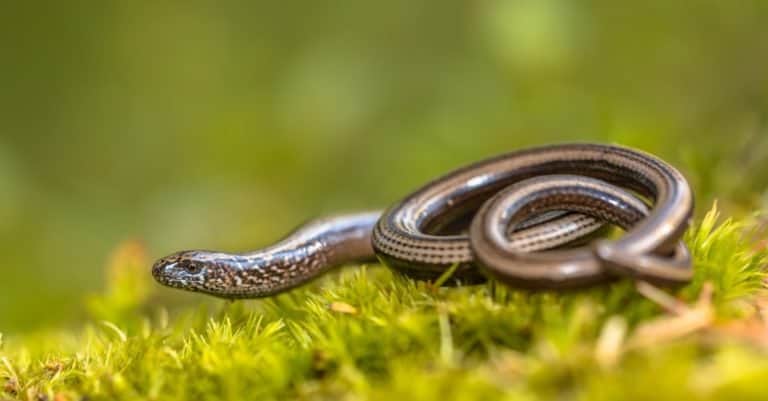
The slow worm, or the deaf adder, is often mistaken for a snake for its long body and lack of legs. However, they are simply a lizard that needs a little further inspection to see the difference. To start, these legless reptiles are smooth and glossy, complementing their cylindrical body. They also have thin eyelids and small ear holes, which snakes do not.

When the slow worm is young, its body is relatively thin and only about 4 cm long. The bodies of the slow worms are shiny, but the males and females are slightly different. While the male slow worms have greyish-brown in color, the females are brown with have dark sides.

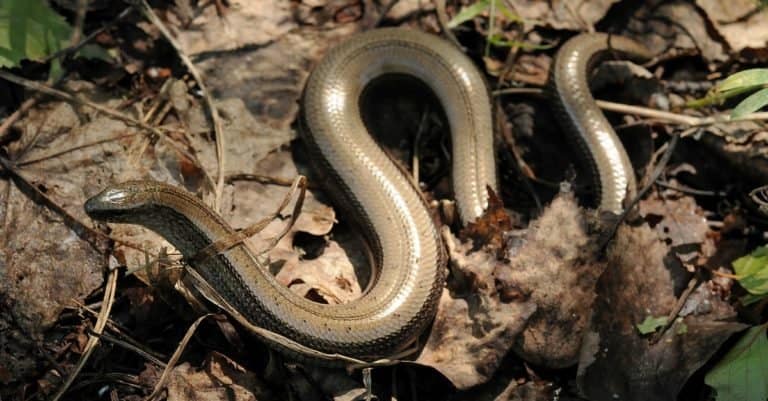
The body of a deaf adder features a golden or silver dorsal side with a black belly. A dark strip of color runs along the length of the slow worms’ bodies. Much like other lizards, slow worms can shed their tails while escaping predators.
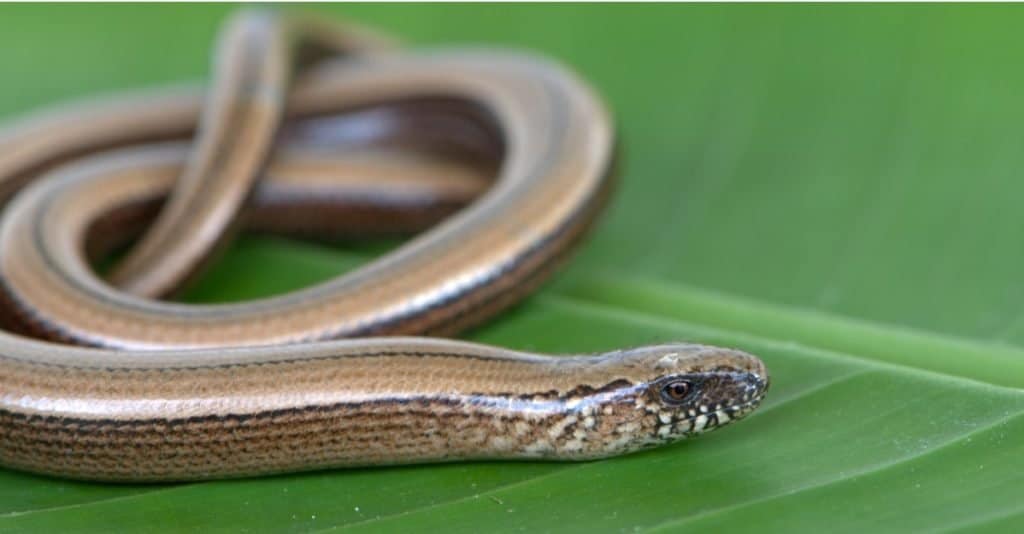
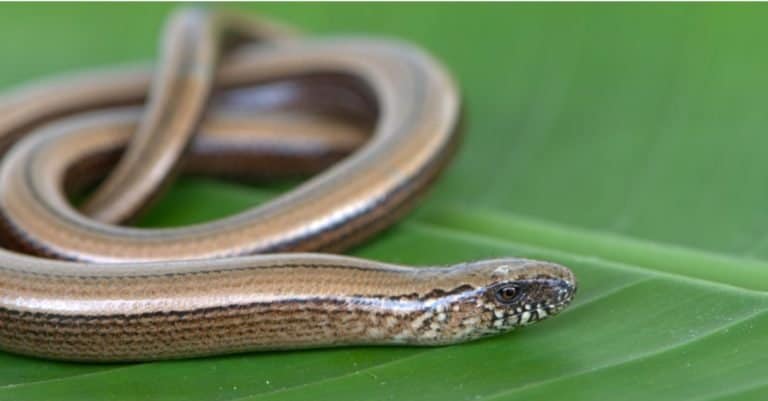
Slow worm basks on a green banana leaf

Slow Worm Behavior

While other British reptiles enjoy basking in the sun, the slow worm does not. Instead, they usually prefer to hide under tree logs. If a compost heap is nearby, they’ll even hide there when they aren’t hunting for their next meal.

The slow worm is a diurnal reptile, which means that they are usually active during the day and rest during the night. However, they aren’t much of a threat to anyone but their prey. They do not seek out humans to bite, but they will shake the end of their tail as a distraction. Once the predator is distracted, the slow worm will take the opportunity to move away. Some of these reptiles will even shed their tail or defecate to escape.

These animals prefer to thrive within their natural environment, and they are not kept in captivity. If humans encounter them in the wild, they have to leave them alone. The Wildlife and Countryside Act of 1981 protects these reptiles within the United Kingdom.

Though they shouldn’t be kept as pets, the reptile may end up creeping into domestic gardens. They are not at all dangerous to humans, but they can come in quite handy around the home. Since they hunt insects, they can clean up the gardens that they reside in, which is beneficial for avid gardeners that want to preserve their plant life.

Slow Worm Habitat

These reptiles can be found in a variety of places. They usually live in areas such as edges of woodlands like the Caledonian forest, tussocky grasslands, allotments, gardens, heathlands, and grassy meadows. They are relatively easy to locate throughout mainland Britain, but the most common areas to find them in include the south-west area of England and Wales. Interestingly, they do not reside in any part of Ireland at all, despite its proximity.

They do not like to live in captivity and prefer hiding under the earth or compost or dung heaps. Therefore, keeping them as a pet is never a great idea. However, if you still want to keep them, as a pet or otherwise, it would be necessary to create such conditions for them to thrive in. You would have to create conditions much like their natural habitat so that they can naturally thrive in the area. They may be better off in the garden where they can roam and feed freely.

Slow Worm Diet

These animals are carnivores, so they eat other animals that are rather easy for them to catch. Many of the animals that they seek out are invertebrates that can be easily found in their dark habitats. Often, they will eat worms, slugs, spiders, and snails. Though they have a similar build to the snake, they cannot expand their body to make room for larger prey.

Slow Worm Predators and Threats

Slow worms are small reptiles, making them a quick meal for many predators. However, one of their biggest threats has previously been humans. Due to their similarity to the snake, many people previously were killing or trading them. The activity became so common that they are now a “priority species” under the UK Post-2010 Biodiversity Framework.
Currently, they are protected under the Wildlife and Countryside Act, 1981. The law makes injuring, selling, or killing the slow worm a crime.

What Does the Slow Worm Eat?

These animals feed on a variety of invertebrates including spiders, worms, slugs, and snails. They maintain a carnivorous diet, and they do not eat plants as other worms do.

What Eats Slow Worms?

Due to their small size, these reptiles are prone to be eaten by a lot of animals and birds. Some of the common predators of the slow worm include adders, pheasants, badgers, domestic cats, and hedgehogs.
However, like lizards, small worms also leave their tails behind while escaping from predators with smoothening the process for them. Not only that, but they are also known to defecate which produces a foul smell and wards off the predators, keeping them safe.

Slow Worm Reproduction, Babies, and Lifespan

Mating is a rather interesting experience for the animal, starting with the male’s biting of the female’s head or neck. To reproduce, the male and female slow worms will intertwine their bodies, engaging in a process that ultimately can take up to 10 hours to complete. The mating season typically starts just before summertime, and the males tend to become aggressive in their competition to find a fertile female.

These lizards are known to be ovoviviparous, which means that they lay their eggs internally. The eggs remain in the female’s body until they hatch, allowing the mother to essentially release the live young when they are ready.

After hatching, the young stay in the mother’s womb for a while. While the babies of slow worms are inside the body of the mother, they live off the yolk of the eggs that hatch inside the bodies of the female slow worms.
After a while, however, the female gives birth to the young and the babies finally come to life. Babies of slow worms are usually very thin and are just about 4 cm long. Most births will occur during summer, and approximately 8 young are released at that time.

Slow worms are known to be the longest living out of all the lizards. While their average lifespan is of 15 years, some have also been recorded to have lived for about 54 years.

Slow Worm Population

Found throughout many parts of Britain, the exact population of these animals is not known. Presently, the UK protects them under the Wildlife and Countryside Act, which was established in 1981. The law prevents humans from injuring, selling, or killing them.

Slow Worm In the Zoo

Presently, there are very few zoo locations that list these reptiles as one of their supported animals. However, you may be able to find them at the Yaroslavl Zoo, which is located in Russia.

View all 390 animals that start with S

Sources

  1. Amphibian and Reptile Conservation / Accessed February 12, 2021
  2. Soft Schools / Accessed February 12, 2021
  3. Woodland Trust / Accessed February 12, 2021
  4. Trees For Life / Accessed February 12, 2021
  5. British Trust for Ornithology / Accessed February 12, 2021
  6. Wikipedia / Accessed February 12, 2021
A-Z Animals Staff

About the Author

A-Z Animals Staff

AZ Animals is a growing team of animals experts, researchers, farmers, conservationists, writers, editors, and -- of course -- pet owners who have come together to help you better understand the animal kingdom and how we interact.
Connect:

Thank you for reading! Have some feedback for us?


Slow Worm FAQs (Frequently Asked Questions)

Slow Worms are Carnivores, meaning they eat other animals.