

S
Species Profile

Snowshoe Cat

Felis catus

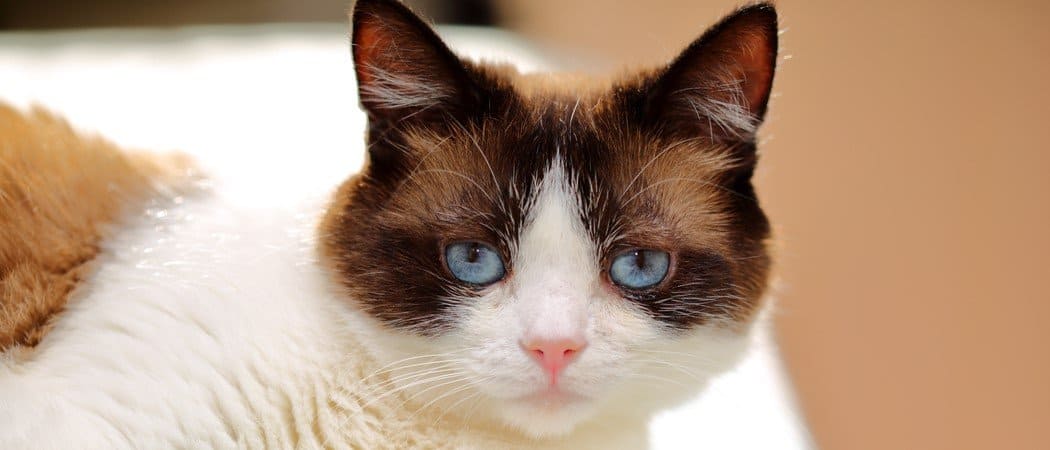
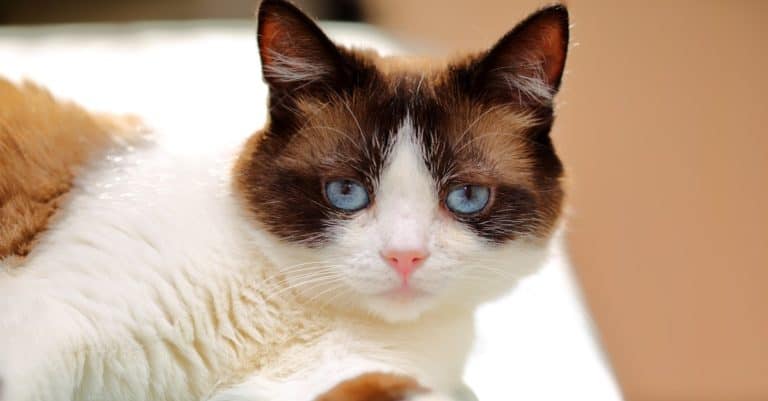
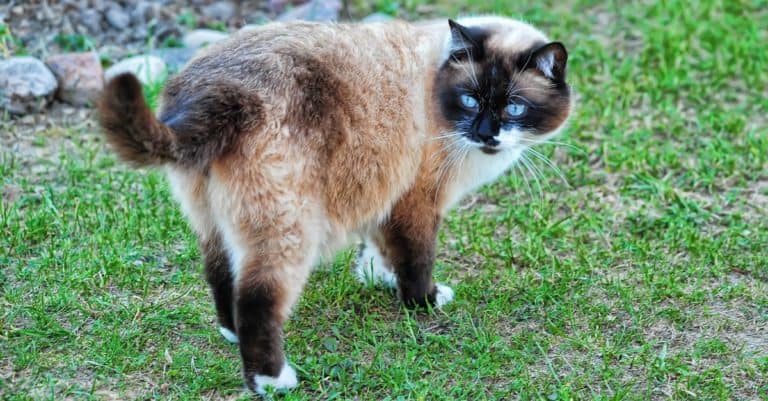
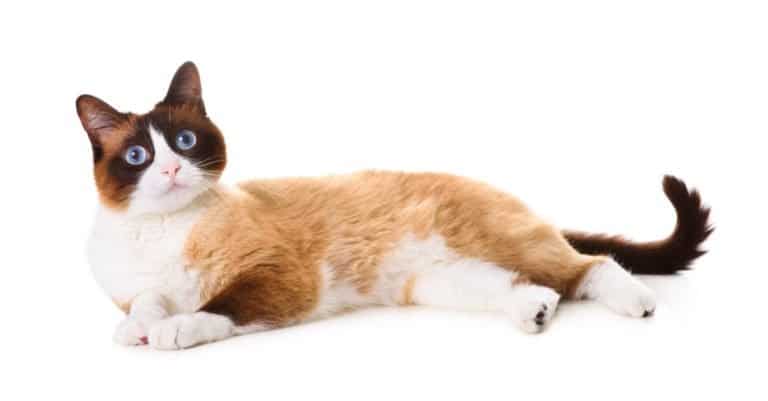
Siamese style, with snowy white boots
Kokhanchikov/Shutterstock.com

Snowshoe Cat Distribution

Click a location to explore more animals from that region

Origin Location

This map shows the native origin of the Snowshoe Cat. As a domesticated species, they are now found worldwide.

Loading map...

Size Comparison

Human 5'8"
Snowshoe Cat 9 in

Snowshoe Cat stands at 13% of average human height.

Snowshoe close-up

At a Glance

Domesticated
Diet Carnivore
Activity Crepuscular+
Lifespan 16 years
Weight 6.5 lbs
Status Not Evaluated
Did You Know?

Snowshoes were developed in the United States (Philadelphia) in the 1960s from Siamese-type cats with unusual white feet.

Scientific Classification

The Snowshoe is a domestic cat breed developed in the United States, known for its Siamese-type colorpoint pattern combined with distinctive white “boots” (white paws/feet).

Kingdom
Animalia
Phylum
Chordata
Class
Mammalia
Order
Carnivora
Family
Felidae
Genus
Felis
Species
Felis catus

Distinguishing Features

  • Colorpoint pattern (darker face/ears/tail/legs) with a lighter body
  • White feet/“snowshoe” boots, often with a white facial blaze
  • Short coat
  • Medium build with a somewhat Siamese-influenced head/ear shape

Physical Measurements

Males and females differ in size

Height
10 in (9 in – 11 in)
9 in (8 in – 10 in)
Length
2 ft 4 in (2 ft 1 in – 2 ft 7 in)
2 ft 4 in (2 ft 2 in – 2 ft 7 in)
Weight
12 lbs (9 lbs – 15 lbs)
8 lbs (6 lbs – 10 lbs)
Tail Length
11 in (10 in – 1 ft 1 in)
Top Speed
30 mph
running

Appearance

Primary Colors
Secondary Colors
Skin Type Domestic short-haired coat: short, fine, close-lying, low undercoat; typical feline skin with seasonal shedding.
Distinctive Features
  • Domestic cat breed developed in the United States; not a separate wild species.
  • Signature white 'boots' on all four feet; symmetry is prized in show standards.
  • Siamese-like colorpoint pattern with darker extremities and lighter torso.
  • Frequent white facial markings, often an inverted V blaze over the nose and muzzle.
  • Blue eyes are typical, reflecting colorpoint ancestry.
  • Medium build with semi-foreign (Siamese-influenced) lines; athletic but not extreme.
  • Breed tends to be social and interactive; benefits from daily play and enrichment.
  • Care: weekly brushing usually sufficient; increase grooming during seasonal shed.
  • Care: dental hygiene is important (regular brushing/vet cleanings as needed).
  • Health: may share Siamese-associated risks such as dental disease and eye alignment issues (e.g., mild strabismus).
  • Health: monitor weight to prevent obesity; maintain portion control and activity.
  • Health: routine veterinary screening is recommended; consider heart health checks in predisposed lines.

Sexual Dimorphism

Males are typically larger and heavier with a broader head and thicker neck. Females are usually more refined and lighter-framed, though overall proportions and coat patterning are similar between sexes.

  • Generally heavier body mass and larger overall size.
  • Broader head and more pronounced jowls in some adults.
  • Thicker neck and more robust shoulder/forelimb musculature.
  • Slightly smaller, finer-boned frame.
  • Narrower head and more delicate facial structure.
  • Often appears more lightly built while retaining the same colorpoint-and-boots pattern.

Did You Know?

Snowshoes were developed in the United States (Philadelphia) in the 1960s from Siamese-type cats with unusual white feet.

Their signature look combines two genetic effects: colorpointing (darker "points") plus white spotting that creates the "boots."

Kittens are typically born very pale; their colorpoint markings darken as they grow, influenced by cooler body temperatures.

Most Snowshoes have striking blue eyes, reflecting their Siamese ancestry.

A neat, high-contrast face pattern-often an "inverted V" of white-is prized, but achieving consistent markings is famously challenging for breeders.

They tend to be talkative and social, often described as a slightly "softer-voiced" alternative to many Siamese.

Despite the name, they're not a wild cat: they're a domestic cat breed (Felis catus) selected for pattern and temperament.

Unique Adaptations

  • Colorpoint coat physiology (shared with Siamese-type cats): a temperature-sensitive pigment pathway makes cooler areas (ears, face, tail, legs) darker.
  • White "boots" from white-spotting genetics: the crisp white feet and often a white chest/belly distinguish the breed's hallmark look.
  • Short, close-lying coat: low grooming demands compared with longhaired breeds, while still offering seasonal shedding.
  • Domestic-cat athletic toolkit (species context): retractable claws, flexible spine, and powerful hindquarters support quick bursts of speed and jumping.

Interesting Behaviors

  • People-shadowing: many Snowshoes follow their favorite person from room to room and seek lap time.
  • Conversational vocalizing: they may "answer" you with chirps and meows, especially around routines like meals.
  • High play drive: they often enjoy interactive games (wand toys, fetch-like play) and puzzle feeders.
  • Perching and surveying: like many domestic cats, they gravitate to elevated spots for security and curiosity.
  • Social bonding: they frequently do best with regular human interaction or a compatible pet companion.
  • Routine sensitivity: they can become stressed with abrupt changes, benefiting from predictable schedules and enriched indoor environments.

Cultural Significance

The Snowshoe (Felis catus) is a U.S. pedigreed breed that mixes Siamese looks with white 'boots.' Loved by cat fancier groups and at shows, it is often shown in pet media as friendly and good with people.

Myths & Legends

Cat fanciers say the Snowshoe breed (Felis catus) began in 1960s Philadelphia when breeder Dorothy Hinds-Daugherty saw Siamese-type kittens with white feet, inspiring the 'Snowshoe' name and a breeding program.

Show-ring lore: early Snowshoes were said to be difficult to standardize because the perfect mix of white boots and facial blaze appears unpredictably-making each well-marked cat feel like a 'lucky find' in breeder circles.

A common cat-and-country superstition often attached to white-pawed cats: 'white feet bring good luck'-a bit of folk belief that owners sometimes extend to Snowshoes because of their bright boots.

Because of their Siamese roots, Snowshoes are often tied to romantic stories of 'royal' or 'temple' Siamese cats, giving colorpoint cats a mysterious air though Snowshoe is a modern American breed.

Conservation Status

NE Not Evaluated

Has not yet been evaluated against the criteria.

Population Stable

Life Cycle

Birth 4 kittens
Lifespan 16 years

Lifespan

In the Wild
14–19 years
In Captivity
10–20 years

Reproduction

Mating System Promiscuity
Social Structure Managed Domestic
Breeding Pattern Transient
Fertilization Managed Selective
Birth Type Internal_fertilization

Behavior & Ecology

Social Clowder Group: 2
Activity Crepuscular, Cathemeral
Diet Carnivore Meat-based, high-protein wet food (especially poultry such as chicken or turkey); small portions of cooked plain meat as treats.

Temperament

Breed distinction: Siamese-derived, people-oriented companion cat with point pattern and distinctive white "boots".
More socially affiliative than many Felis catus; seeks proximity, lap time, and interactive attention.
HUBS: Domestic cats are behaviorally flexible; Snowshoes commonly trend toward higher sociability and tolerance.
Playful, curious, and problem-solving; benefits from routine enrichment and novel toys to prevent boredom.
Often moderately vocal with softer, melodic "talking" than Siamese extremes; may vocalize for engagement.
Can be sensitive to isolation; may develop attention-seeking behaviors if understimulated.
Care needs: 2-3 daily play sessions, vertical climbing space, window perches, and puzzle feeding for mental work.
Health considerations: watch dental disease, weight gain, and Siamese-associated traits like strabismus or airway sensitivity.
Generally cooperative with respectful children and other pets when introductions are gradual and structured.

Communication

meows Often soft, melodic, and frequent when seeking interaction
trills and chirps Greeting and friendly solicitation
purring Contentment, affiliation, self-soothing
yowls/howls Stress, frustration, mating-related in intact cats
growls/hisses/spits Defensive warning signals
tail position and tip twitching Arousal and intent
slow blinking and relaxed eye contact Affiliative signal
head bunting and cheek rubbing Social bonding and scent transfer
kneading and body contact Comfort-seeking and attachment
scent marking via facial glands and scratching posts Territory and familiarity cues
play invitations: crouch-and-pounce, paw taps, object carrying Social play signaling

Habitat

Biomes:
Temperate Forest Temperate Grassland Mediterranean Temperate Rainforest Tropical Rainforest Tropical Dry Forest Savanna Desert Hot Desert Cold Boreal Forest (Taiga) Tundra Alpine Wetland Freshwater Marine +9
Elevation: Up to 17060 ft 5 in

Ecological Role

Domestic mesopredator closely associated with humans; in free-roaming contexts functions as an opportunistic small-game predator.

rodent population suppression around homes and farms part of human-managed companion animal system can influence local urban/suburban wildlife dynamics (predation pressure on small birds and mammals)

Diet Details

Main Prey:
Small rodents Small birds Rabbit Lizards and small reptiles Frogs and small amphibians Invertebrates

Human Interaction

Domestication Status

Domesticated

Domestic cats (Felis catus) were domesticated from Near Eastern wildcats thousands of years ago and spread worldwide with people for pest control and companionship. The Snowshoe is a modern, purpose-bred breed from the United States, started in the 1960s by crossing Siamese-type cats with bicolor American Shorthair-type cats to fix white "boots" and a colorpoint pattern.

Danger Level

Low
  • scratches or bites (most often during rough play, fear, or mishandling)
  • allergic reactions to dander/saliva
  • zoonotic risks common to domestic cats if hygiene/preventive care is poor (e.g., ringworm; rare bite-associated infections)
  • trip/fall hazard in the home (underfoot behavior common in social cats)

As a Pet

Suitable as Pet

Legality: Generally legal as a domestic cat breed in jurisdictions where domestic cats are permitted; subject to local cat licensing, vaccination, and animal control ordinances. Breed-specific restrictions are uncommon compared with exotic felids.

Care Level: Moderate

Purchase Cost: $600 - $1,500
Lifetime Cost: $12,000 - $30,000

Economic Value

Uses:
Companion animal market Pedigree breeding/showing Pet services (veterinary, grooming, boarding, training) Pet products (food, litter, toys, insurance)
Products:
  • pedigree kittens from registered breeders
  • cat show entries/titles (indirect economic value via breeding reputation)
  • routine veterinary care and preventive medicine demand
  • premium diets and enrichment products tailored to indoor companion cats

Relationships

Ecological Equivalents 5

Animals that fill a similar ecological role in their ecosystem

The snowshoe cat is a rare breed that is known for its striking white paws, vivid blue eyes, and Siamese-like markings. This breed combines athletic build with a friendly, social personality and was developed in the United States in the 1960s. Today, snowshoes are cherished for their intelligence, affectionate nature, and unique combination of traits that set them apart from other household cats.

Breed History

The snowshoe cat originated in the United States in the 1960s. A Siamese cat breeder from Philadelphia, Dorothy Hinds-Daugherty, had a cat that birthed three kittens with white feet. She initiated a breeding program to produce what she first termed “Silver Laces,” created by cross-breeding bicolor American Shorthair cats and other breeds with her strangely marked Siamese cats. The quest was carried on by Vikki Olander, once Hinds-Daugherty left the program, who worked to get this new breed full recognition by various cat associations.

This breed is now over 60 years old, but these cats are rare because it’s difficult to reproduce the correct markings through breeding. The marks come from a piebald pattern gene and recessive genes for color points. The appearance of the offspring is essentially unpredictable.

Physical Characteristics

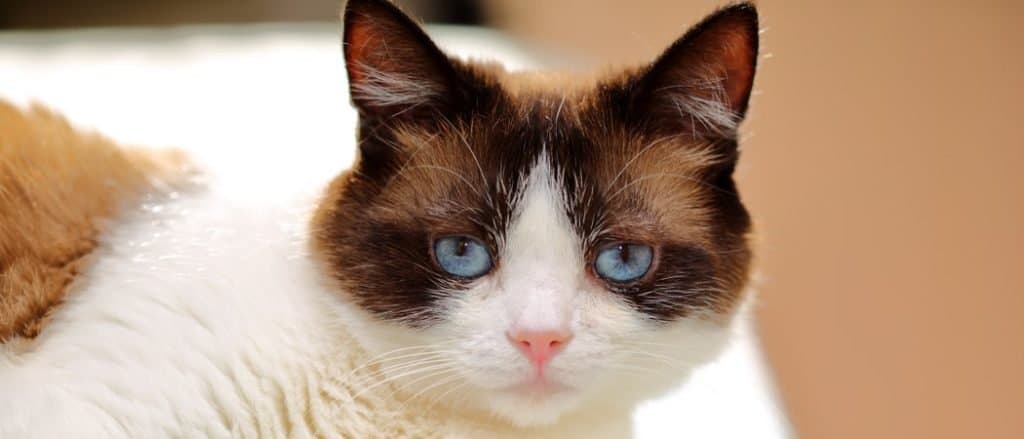
The snowshoe is of note for its color and coat markings. These traits are a direct link to its Siamese ancestry. She usually has a body of light color with dark blue or seal areas. There’s a mask across the eyes with an inverted shape of white over the muzzle and between the eyes.

Physical traits include the feline’s athletic build. The female body isn’t as sturdy as the male’s. Unlike the Siamese, the cat has a fuller, rounder face and body. The head is triangular with rounded, long ears.

Another striking characteristic is the eyes. The cat’s eyes run the gamut from deep to pale blue. And regardless of the blue hue, those eyes are always bright, shining, and expressive.

The kittens come into the world completely white. They gradually darken, developing a coat that can resemble a tuxedo. They come in a variety of colors, including lynx, lilac, and chocolate. What distinguishes the cat is the paws. They’re white. The cat-lover community calls the rear white paws “boots” and the front paws “mittens.”
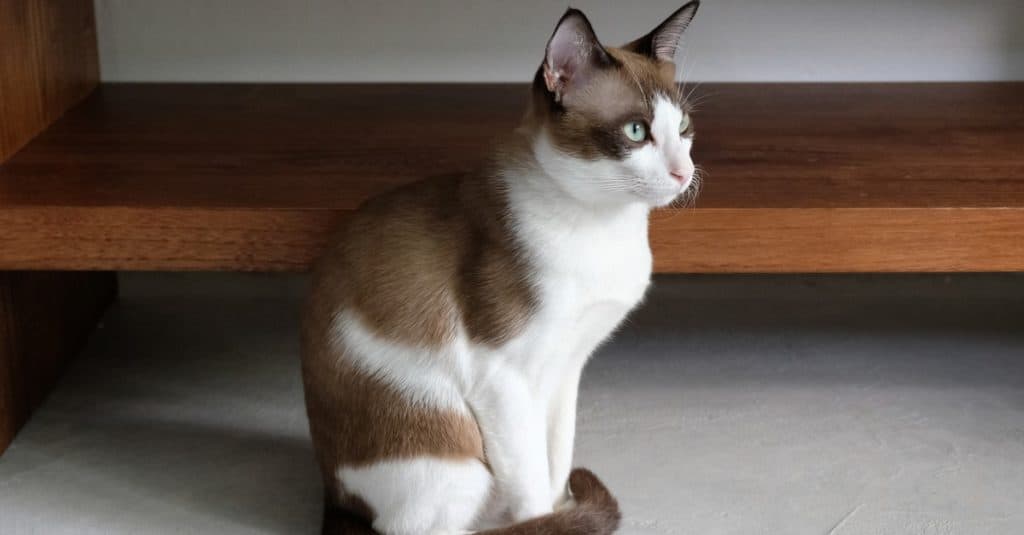
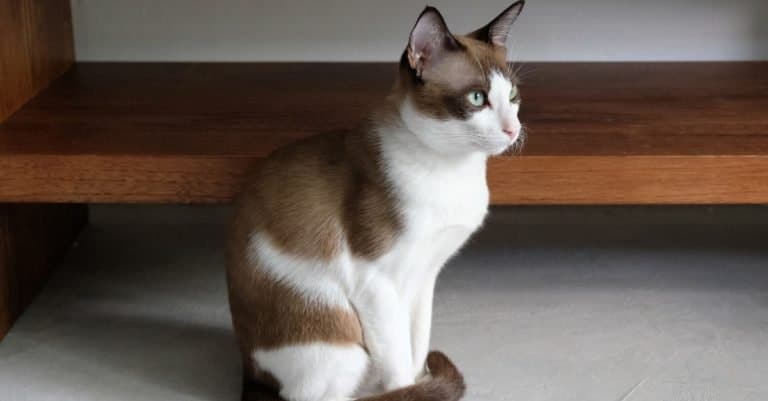
Snowshoe cat sitting on the floor in the sitting room.

The snowshoe cat typically has a body of light color with dark blue or seal areas, and a mask across the eyes with an inverted shape of white over the muzzle and between the eyes.

Personality

The snowshoe cat’s personality is playful and can be darn mischievous. But she is also loving, kind, and intelligent. If she wants your attention, she’ll go after it, jumping on your lap when you’re busy or watching you closely.

The snowshoe isn’t a loner. She craves companionship and doesn’t like being alone, especially for long periods. She’ll find her favorite among family members. Once the snowshoe cat picks that individual, they won’t be able to get rid of her!

The cat’s personality is ideal for a home with young kiddies or other kitties. She promises to always pique your interest with her antics. Kitty will be in charge, checking on you, entertaining you, and being the friend you need.

Your snowshoe will need a little time to warm up to strangers. But for the familiar individual, expect energy and affection.

With smarts to spare, it’s common for snowshoes to figure out how to open doors. She loves running agility courses and performing entertaining tricks. She’ll fetch and play with running water. You’ll often find her watching the world from the most unlikely places.

Kitty likes to communicate, so expect the cat’s meow to become part of your lifestyle. She’ll engage in serious conversations with you. You won’t mind, though. The snowshoe has a melodic, soft meow. She’ll listen closely as you go on about dinner, the job, or what you expect of her. And your cat won’t hesitate to let you know how she feels about it.

Snowshoes like company and would rather not be left by themselves all day. If you’re away from home a lot, give the kitty a friend to keep her company. This can be a dog or another feline.

While some cats do love roaming outdoors, a snowshoe is best kept indoors. There are many dangers and diseases outside your borders. Not to mention the idea of someone on the street gladly taking your beautiful snowshoe.
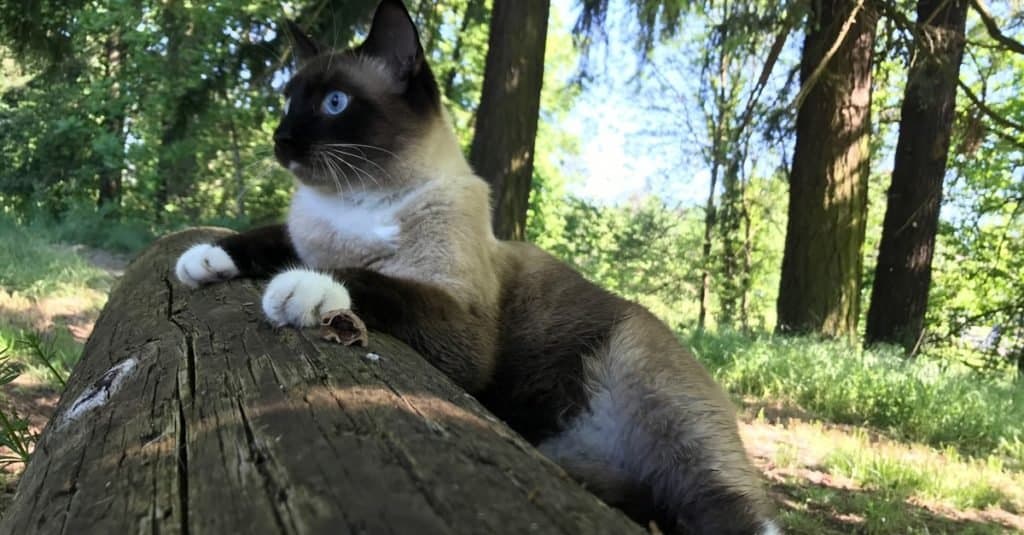
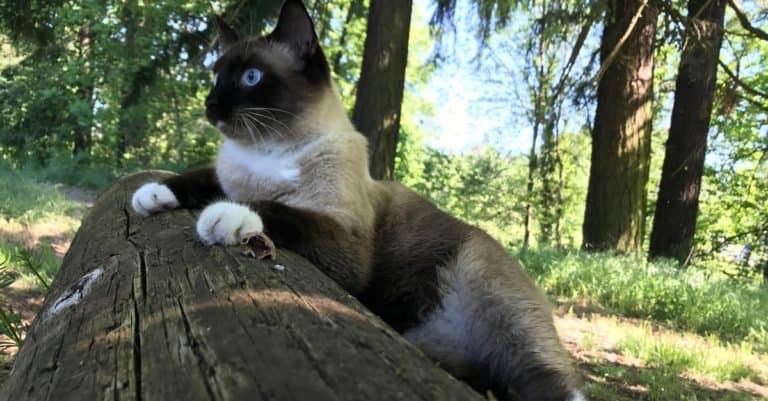
Snowshoe cat playing in the forest.

The snowshoe cat’s personality is playful, mischievous, loving, kind, and intelligent.

Health

All cats have genetic health concerns. Your snowshoe will be generally healthy, especially if you deal with a reputable breeder. There may be vestiges linked to your cat’s Siamese ancestry. Cosmetic flows can include crossed eyes or a kinked tail. But they won’t affect the kitty’s overall health or ability to be a great friend.

Care & Grooming

To remove dead hair, brush your cat’s coat a couple of times a week. Daily tooth brushing keeps periodontal disease away, but a couple of times a week will do.

Unless she’s feeling under the weather or stressed, your cat grooms herself.

Snowshoes & Children

The snowshoe is ideal for a home with children and cat-friendly pooches. She’ll play, fetch like a retriever, and perform. If treated politely and with respect, your snowshoe will always be loving and attentive.
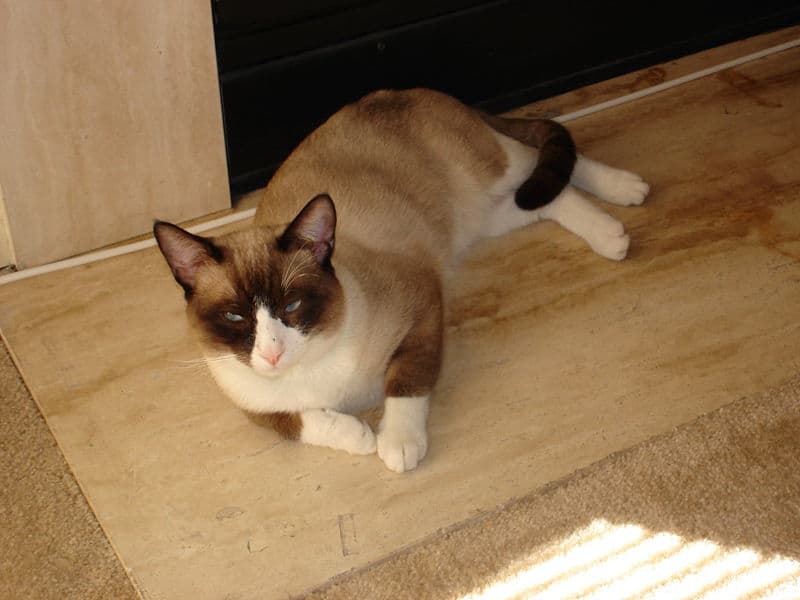
Male snowshoe cats weigh anywhere from 9 to 12 pounds, while females weigh approximately 7 to 10 pounds.

Size and Weight

Though every snowshoe cat is born tiny and adorable with its minuscule meow, no adult cat is the same. Breeds do have certain standards, but there will always be deviations. The snowshoe is no exception.

The snowshoe is a medium-sized creature. The male is usually larger than the female. Males weigh anywhere between 9 and 12 pounds. The female snowshoe weighs approximately 7 to 10 pounds. The snowshoe carries a hefty distribution of weight. This makes the cat seem heavier than she is.

Most members of the Siamese family fall into the same medium size and weight. You can take a look at similar breeds, like the Himalayan, Javanese, or Ragdoll cat.

Price

You’ll find the price for a snowshoe cat will range anywhere from $600 to $1,200 for purebred kittens. What drives the price is the breed’s relatively new and extreme popularity.

You can purchase snowshoe cats with limited registration. These animals will be less expensive, with a price of somewhere between $500 and $800.
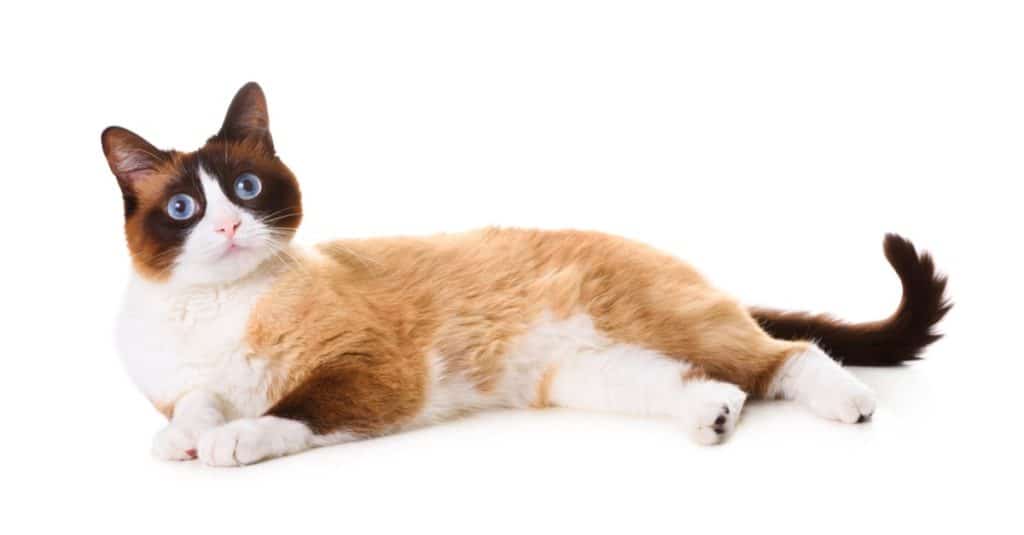
Snowshoe cat lying on white background.

Snowshoe cats typically range in price from 0 to ,200 as purebred kittens, or 0 to 0 with limited registration.

If you can find a rescue or shelter with a snowshoe, you will only be responsible for adoption fees and shots. Not surprisingly, the price will be significantly less than you’d hand to a breeder or shop. In this case, depending on the circumstances, you may spend less than $200.

Laying out a flat figure for any costs after that has too many factors and can be easily underestimated. Two meals a day, vet bills, cat litter, cattery (if you take a vacay), and pet insurance are all included.

On average, a healthy, well-managed cat could cost $1,000 (in addition to adoption fees) for the first year and a half that for every year after.

Kittens

The most obvious distinguishing feature of the snowshoe kitten is that she comes into the world with a coat of solid white colors. By seven weeks old, the kitten will be between 1.2 and 2.3 pounds. You should see signs of her coloring and patterns as well. At adoption, a healthy kitten should weigh 3.5 to 4 pounds.
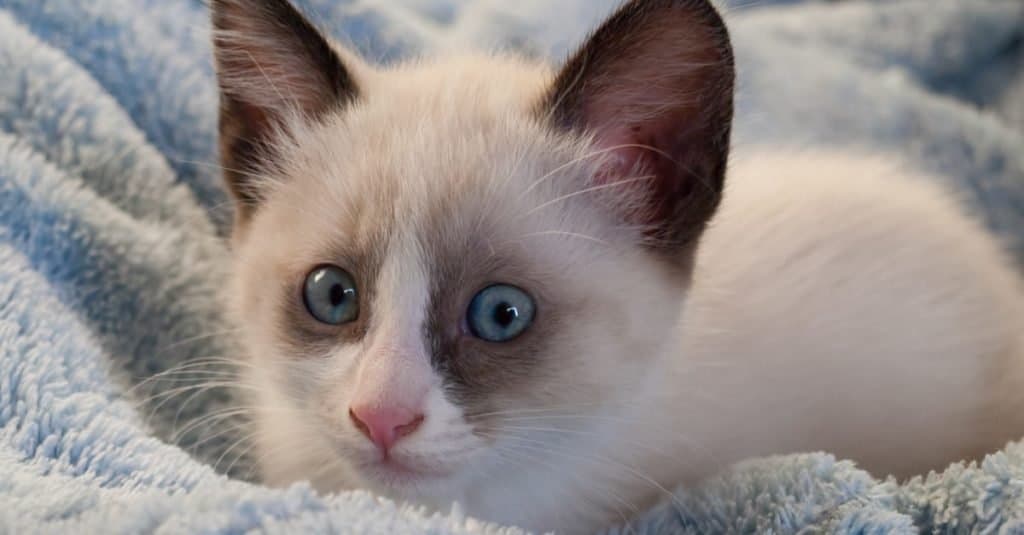
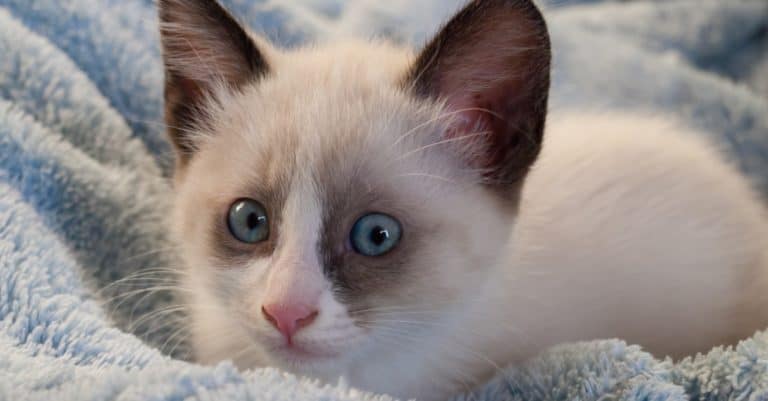
Little Snowshoe kitten with blue eyes, lying on the bed.

The snowshoe kitten comes into the world with soft white fur.

Lifespan

The healthy snowshoe has an average lifespan of 14 to 20 years.

While there are no medical recordings of health issues specific to the snowshoe, there are some ailments that might shorten her time. She’s susceptible to viral and bacterial infections. Many are preventable or treatable if owners are responsible.

Neutering and spaying aren’t just to prevent litters. The procedures can also decrease certain cancers.

Keep up with parasite and vaccination treatments. Once she turns seven years old, your cat should get a senior exam every six months. The regimen ensures no age-related issues become major without getting treated first.

Watch out for obesity. Cats do not require the physical exercise canines do, and are more likely to gain weight. Get kitty activities that promote physical play. There’s catnip, lasers, cat towers, and other toys. Obesity can lead to respiratory issues, heart disease, and diabetes.
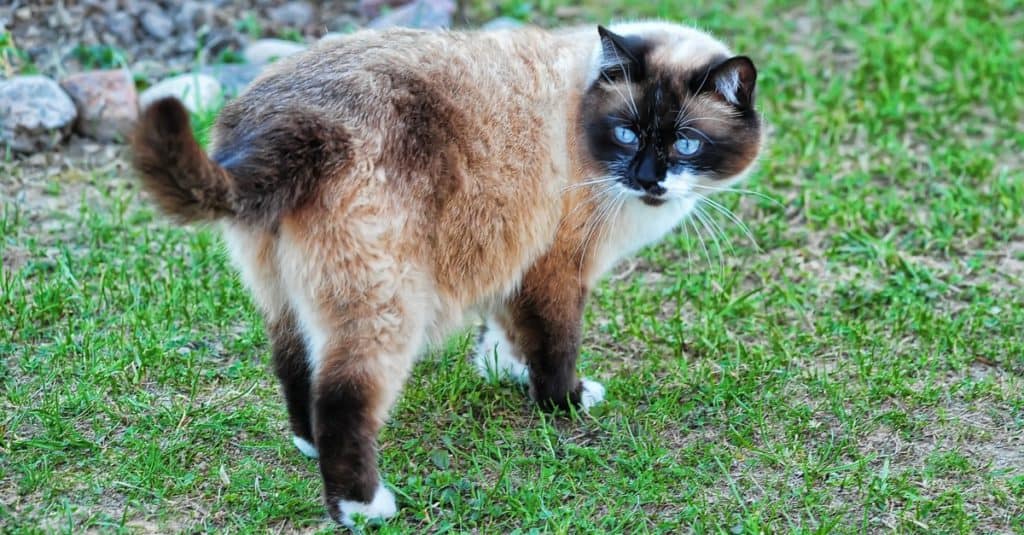
Snowshoe cat playing outside in the garden.

Snowshoe cats are a generally healthy species, most often prone to viral and bacterial infections.

View all 390 animals that start with S

Sources

  1. Embrace Pet Insurance / Accessed July 17, 2021
  2. Pet Finder / Accessed July 17, 2021
  3. Wikipedia / Accessed July 17, 2021
  4. Holistapet / Accessed July 17, 2021
  5. Daily Paws / Accessed July 17, 2021
  6. The Spruce Pets / Accessed July 17, 2021
  7. Hill's Pet / Accessed July 17, 2021
  8. ASPCA Pet Insurance / Accessed July 17, 2021
  9. Go Kitty / Accessed July 17, 2021
  10. Vet West / Accessed July 17, 2021
  11. Catster / Accessed July 17, 2021
Abby Parks

About the Author

Abby Parks

Abby Parks has authored a fiction novel, theatrical plays, short stories, poems, and song lyrics. She's recorded two albums of her original songs, and is a multi-instrumentalist. She has managed a website for folk music and written articles on singer-songwriters, folk bands, and other things music-oriented. She's also a radio DJ for a folk music show. As well as having been a pet parent to rabbits, birds, dogs, and cats, Abby loves seeking sightings of animals in the wild and has witnessed some more exotic ones such as Puffins in the Farne Islands, Southern Pudu on the island of Chiloe (Chile), Penguins in the wild, and countless wild animals in the Rocky Mountains (Big Horn Sheep, Mountain Goats, Moose, Elk, Marmots, Beavers).
Connect:

Thank you for reading! Have some feedback for us?


Snowshoe Cat FAQs (Frequently Asked Questions)

The average number of babies a Snowshoe has is 5.