

S
Species Profile

Snowy Owl

Bubo scandiacus

White hunter of the wide tundra
Kayo/Shutterstock.com

Snowy Owl Distribution

Click a location to explore more animals from that region

Loading map...
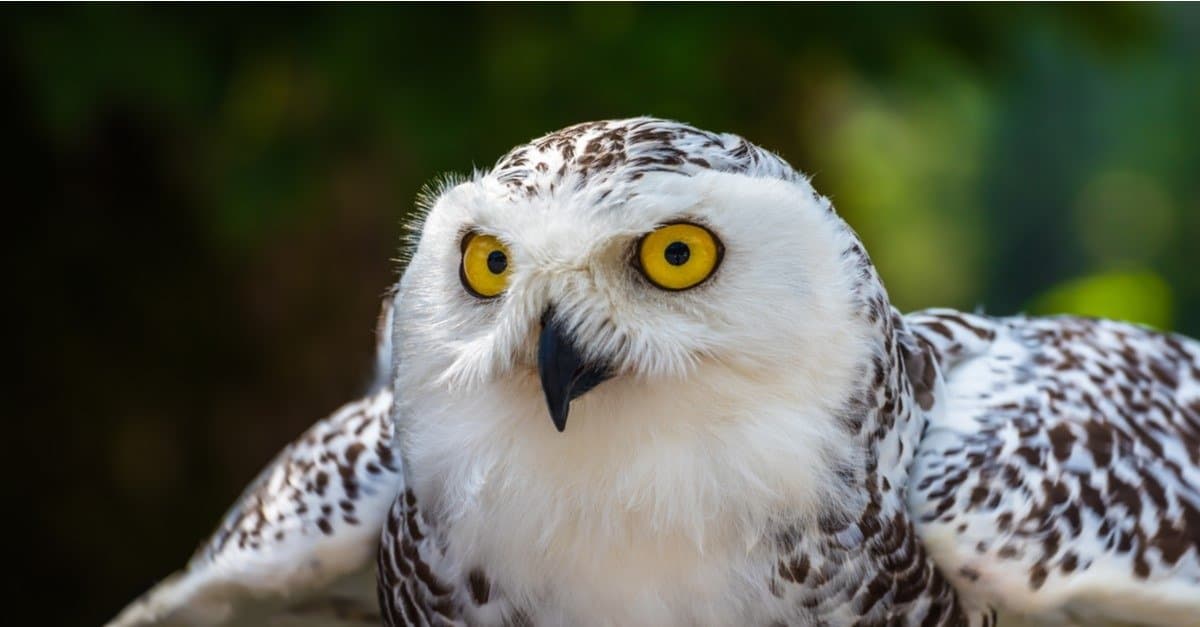
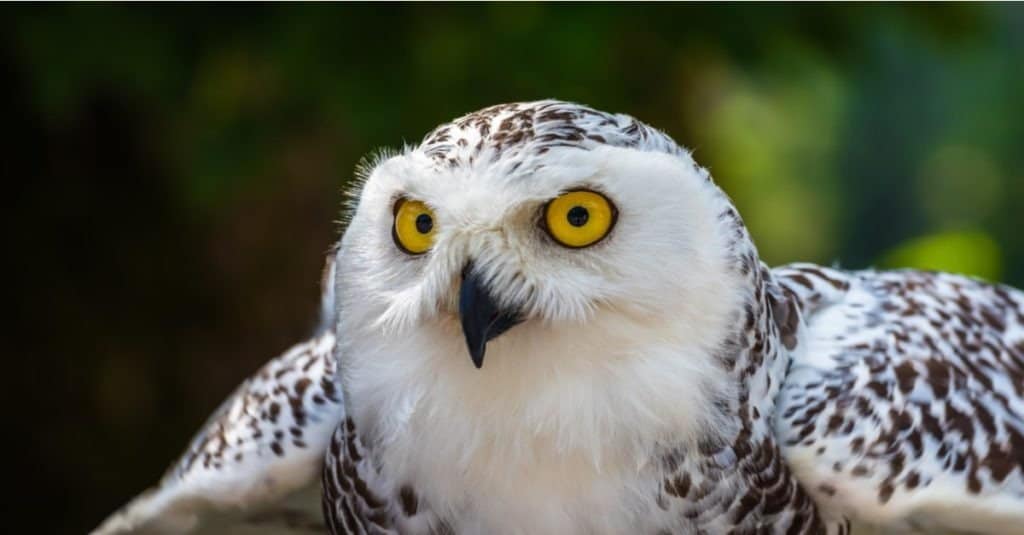
Detail of Head of Snowy Owl with Yellow Eyes - Bubo scandiacus

At a Glance

Wild Species
Also Known As Arctic owl, Polar owl, White owl, Ghost owl
Diet Carnivore
Activity Cathemeral+
Lifespan 9 years
Weight 3 lbs
Status Vulnerable
Did You Know?

Size: 52-71 cm long; wingspan 126-183 cm (one of the largest owls).

Scientific Classification

A large, pale owl of Arctic tundra, famous for its white plumage and winter movements into more southerly regions.

Kingdom
Animalia
Phylum
Chordata
Class
Aves
Order
Strigiformes
Family
Strigidae
Genus
Bubo
Species
Bubo scandiacus

Distinguishing Features

  • Predominantly white plumage; females and juveniles show heavier dark barring than adult males
  • Large, round head with yellow eyes; lacks ear tufts
  • Often hunts in daylight (notably in Arctic summer)
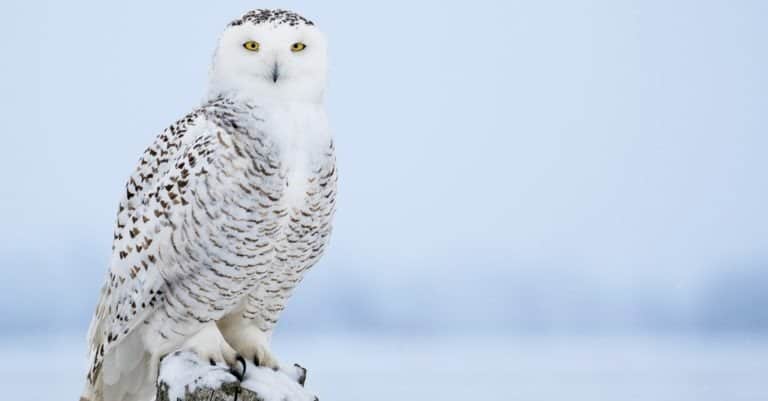
  • Prefers open, treeless landscapes; frequently perches on low rises or man-made structures

Physical Measurements

Males and females differ in size

Length
1 ft 11 in (1 ft 8 in – 2 ft 1 in)
2 ft 1 in (1 ft 11 in – 2 ft 4 in)
Weight
4 lbs (3 lbs – 5 lbs)
5 lbs (4 lbs – 7 lbs)
Tail Length
9 in (8 in – 9 in)
10 in (9 in – 11 in)
Top Speed
50 mph
flying

Appearance

Primary Colors
Secondary Colors
Skin Type Feathers (dense plumage with heavily feathered tarsi and toes for insulation).
Distinctive Features
  • Total length 52-71 cm; wingspan 125-150 cm (large, broad-winged owl of open country).
  • Body mass: males 1.612-2.950 kg; females 2.000-3.000 kg (females typically heavier).
  • Bright yellow iris with strong black eye-ring effect against pale facial disc.
  • Black bill often partly obscured by facial feathers; no ear tufts.
  • Feathered legs and feet ("snowshoe" insulation) adapted for Arctic tundra breeding.
  • Frequently diurnal/crepuscular in Arctic summer; hunts over open tundra, dunes, fields.
  • Typical hunting: perch-and-wait from low mounds/posts, or low coursing flight; takes lemmings heavily on breeding grounds.
  • Breeding ecology linked to lemming cycles; clutch size can range 3-11 eggs, larger in peak lemming years.
  • Seasonal dispersal and periodic winter irruptions can bring birds far south, but southern presence is usually nonpermanent.
  • Longevity: banding record in the wild 9 years 5 months; captive longevity recorded to 28 years.
  • Currently classified with the eagle-owls; formerly often placed in its own separate genus.

Sexual Dimorphism

Adult males average whiter with fewer and narrower dark bars, while females are larger and show heavier brown barring across body and wings. Juveniles of both sexes are strongly barred and darker than adults.

  • Whiter overall plumage; sparse barring, often limited to wings and tail.
  • Slightly smaller average mass than females (1.612-2.950 kg reported).
  • Cleaner white underparts often appear nearly unmarked at distance.
  • Heavier, more extensive dark barring on head, back, and underparts.
  • Typically larger/heavier (2.0-3.0 kg reported).
  • Overall appearance more mottled/barred, providing stronger tundra camouflage when nesting.

Did You Know?

Size: 52-71 cm long; wingspan 126-183 cm (one of the largest owls).

Females are larger and more heavily barred; adult males can be nearly pure white.

Breeding output tracks lemmings: clutches commonly 3-11 eggs, and can be larger in peak prey years (reported up to 14).

Incubation is ~32-34 days (mostly by the female); chicks can leave the nest scrape on foot at ~21-28 days, before they can fly.

Frequently hunts by day (especially in the Arctic summer) using perch-and-pounce or low quartering flight over open ground.

Longevity: a well-documented wild banding record is 9 years 5 months; captive individuals can exceed 25 years with care.

Winter "irruptions" can push birds far south of the Arctic-often linked to prey conditions and juvenile dispersal.

Unique Adaptations

  • Extreme insulation: very dense plumage plus fully feathered legs and toes ("snowshoe" look) reduces heat loss and helps in snow.
  • High-contrast age/sex plumage: males trend whiter with age, while females and juveniles remain more barred-useful for field aging/sexing and likely for camouflage on tundra mosaics.
  • Visual hunting in open habitats: relatively small ear tufts and a less "tunnel-like" facial disc than many forest owls; relies heavily on long-range vision in open landscapes.
  • Powerful feet and talons sized for taking large prey (ptarmigan, ducks) as well as small mammals, enabling diet flexibility when lemmings crash.
  • Low, buoyant flight and glide-hunting over tundra and dunes-behaviorally similar to some diurnal raptors in open country.

Interesting Behaviors

  • Open-country hunting: often sits on hummocks, rocks, fence posts, dunes, or low ridges, then drops in a steep pounce to grab prey on the ground.
  • Diurnal and crepuscular activity is common (a practical fit for Arctic summers with continuous daylight).
  • Nomadic breeding: pairs may skip breeding or move long distances between years depending on lemming abundance.
  • Ground nesting: typically a shallow scrape on a dry rise with broad visibility; adults aggressively defend the nest area (including dive-bombing intruders).
  • Food-caching: can store surplus prey during times of abundance, helping buffer short-term shortages.
  • Winter coastal strategy: in southern wintering areas, many hunt shorelines, airports, and open fields for waterfowl, gulls, and small mammals.

Cultural Significance

The Snowy Owl (Bubo scandiacus) is a northern icon of Arctic tundra and lemming cycles. It is Quebec's official bird (1987), used in northern symbols and teaching about Arctic food webs and climate change, and tied to Harry Potter's Hedwig.

Myths & Legends

Inuit/Yupik traditions include stories explaining the Snowy Owl's white plumage-one common telling pairs Raven and Owl, where soot and white powder (or flour/snow) lead to Raven's black color and Owl's pale/white appearance.

In Northern Indigenous stories, owls are powerful night beings and messengers. The Snowy Owl (Bubo scandiacus), a rare bright bird of the open tundra, is a guardian of treeless lands and winter travel.

In modern folklore and literary tradition, the Snowy Owl's whiteness and silent flight have made it a recurring symbol of winter, mystery, and "spirit guide" imagery in northern-themed tales and art.

Conservation Status

VU Vulnerable

Facing a high risk of extinction in the wild.

Population Decreasing

Protected Under

  • CITES Appendix II
  • United States Migratory Bird Treaty Act (MBTA)
  • Canada Migratory Birds Convention Act, 1994
  • EU Birds Directive (where occurring in the EU)
  • National/provincial/territorial wildlife protection laws across much of its range

Life Cycle

Birth 7 chicks
Lifespan 9 years

Lifespan

In the Wild
1–23.83 years
In Captivity
2–28 years

Reproduction

Mating System Monogamy
Social Structure Socially Monogamous
Breeding Pattern Seasonal
Fertilization Internal Fertilization
Birth Type Internal_fertilization

Snowy Owls usually form seasonal monogamous pairs on tundra breeding territories, with male provisioning the female and brood. In peak lemming years, facultative polygyny is reported. Internal fertilization; typical clutch ranges 3-11 eggs.

Behavior & Ecology

Social Congregation Group: 1
Activity Cathemeral, Diurnal, Crepuscular
Diet Carnivore Lemmings (in many Arctic breeding areas, lemmings can comprise >90% of prey items during peak lemming years; reported in multiple field studies such as Gilg and colleagues (2006) and Therrien and colleagues (2011).)
Seasonal Migratory 1,864 mi

Temperament

Strongly territorial at nest; aggressive diving and striking at intruders (Holt et al., Birds of the World).
Breeding tied to lemming cycles; clutch usually 5-8 eggs, range 3-11 (Holt et al., Birds of the World).
Chicks leave nest at ~2-3 weeks; fledge about 40-45 days, then disperse (Holt et al.).
Outside breeding, typically non-territorial; wintering birds may overlap extensively during irruptions.
Maximum recorded longevity 23 years 10 months (USGS Bird Banding Laboratory longevity record).
Snowy owls are generally solitary; they can be active by day and occasionally gather at prey-rich sites, especially in winter.

Communication

Deep booming territorial hoots Male) used in advertisement and spacing (Holt et al.
Harsh barks/croaks and screaming calls in alarm and defense Holt et al.
Hissing and raspy threat calls at close range during nest defense Holt et al.
Chick begging calls increase with hunger; contact calls within family groups Holt et al.
Visual threat displays: erect posture, fluffed plumage, wing spreading, head bobbing.
Aerial display flights (circling, exaggerated wingbeats) during courtship/territorial advertisement.
Physical defense: stoops, foot strikes, and bill snapping near nest or roost.
Silent flight and perch selection function as spacing signals in shared winter habitats.

Habitat

Biomes:
Terrain:
Plains Plateau Island Rocky Sandy
Elevation: Up to 4921 ft 3 in

Ecological Role

Arctic tundra mesopredator/apex avian predator strongly coupled to small-mammal cycles; opportunistic predator of birds during low-rodent years.

Regulates small-mammal populations (notably lemmings/voles), contributing to tundra prey-cycle dynamics Trophic coupling: shifts predation pressure between rodents and ground-nesting birds across rodent cycles Transfers nutrients locally via pellets, prey remains, and cached prey around nest sites (localized nutrient inputs)

Diet Details

Main Prey:
Lemmings Vole Arctic hare Ptarmigan Waterfowl Seabirds and shorebirds Small mammals +1

Human Interaction

Domestication Status

Wild

Snowy Owl (Bubo scandiacus) is fully wild and has no domestication history. People meet them for research (banding, tracking), short-term care of injured birds, and allowed use in education programs. Sometimes birds are hazed or moved for safety (for example at airports). Adults are about 52–71 cm long, 125–166 cm wingspan, 1.6–2.95 kg.

Danger Level

Moderate
  • Defensive strikes with talons, especially near nests or when handled during rescue/rehabilitation (can cause puncture wounds and lacerations)
  • Bites and beak injuries during handling
  • Zoonotic/health risks are low but include standard wild-bird handling concerns (ectoparasites; hygiene risks from feces; stress-related injury to the bird and handler)
  • Vehicle/aircraft hazard: wintering birds in open terrain (including airports) can contribute to strike risk, leading to human safety management actions

As a Pet

Not Suitable as Pet

Legality: Snowy Owl (Bubo scandiacus) is usually illegal to keep as a pet. In the US it's protected by the MBTA; limited permits may allow rehab, science, education, or falconry. Check local laws.

Care Level: Expert Only

Purchase Cost: $1,500 - $5,000
Lifetime Cost: $25,000 - $80,000

Economic Value

Uses:
Wildlife tourism and birding (winter irruptions draw ecotourism) Conservation and scientific research (banding, telemetry, population monitoring) Education/ambassador programs (permitted raptor centers) Conflict management services (e.g., airport wildlife hazard mitigation and relocation)
Products:
  • Non-consumptive value (viewing/photography/ecotourism services)
  • Educational programming content (live interpretation under permits)
  • Scientific data outputs (tracking datasets, publications)
  • Historically/occasionally: symbolic or decorative use of feathers in cultures (generally illegal to possess in many modern jurisdictions without permits)

Relationships

Predators 8

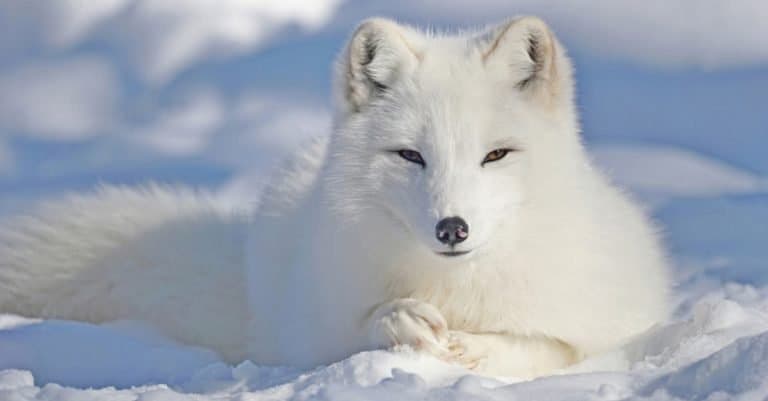
Arctic Fox
Arctic Fox Vulpes lagopus
Red Fox
Red Fox Vulpes vulpes
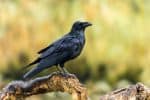
Common Raven
Common Raven Corvus corax
Glaucous Gull Larus hyperboreus
Parasitic Jaeger Stercorarius parasiticus
Long-tailed Jaeger Stercorarius longicaudus
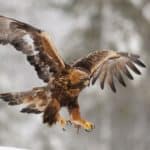
Golden Eagle
Golden Eagle Aquila chrysaetos
Great Horned Owl Bubo virginianus

Related Species 8

Great Horned Owl Bubo virginianus Shared Genus
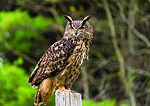
Eurasian Eagle-Owl
Eurasian Eagle-Owl Bubo bubo Shared Genus
Blakiston's Fish Owl Bubo blakistoni Shared Genus
Spotted Eagle-Owl Bubo africanus Shared Genus
Cape Eagle-Owl Bubo capensis Shared Genus
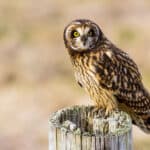
Short-eared Owl
Short-eared Owl Asio flammeus Shared Family
Long-eared Owl
Long-eared Owl Asio otus Shared Family
Northern Hawk Owl Surnia ulula Shared Family

Quick Take

  • Bubo scandiacus maintains territory using a hoot audible from 7 miles away.
  • Short broad legs prevent these owls from perching in trees like other birds.
  • Snowy owls reject nocturnal habits, requiring crepuscular activity for hunting success.
  • Females perform a multi-day scrape process to secure clutches against the arctic environment.

The snowy owl, whose scientific name is Bubo scandiacus, is a large, majestic owl with striking white plumage and luminous yellow eyes. Snowy owls are birds that spend most of their time in the treeless and frigid tundras surrounding the North Pole, but they can occasionally be spotted in the lower regions of Canada and the northern regions of the United States. They are considered to be the largest North American owl by weight due to the heavy insulation of feathers that covers them from head to toe.

A detailed infographic about the Snowy Owl featuring illustrations of the bird, a world map of its habitat, and icons representing its hunting and nesting habits.
From 7-mile hoots to hunting in broad daylight, discover why the world's most iconic owl is fighting a desperate battle for survival. © A-Z Animals

Incredible Snowy Owl Facts

  • Snowy owls have feet that are covered with dense, fluffy feathers to insulate them against the Arctic snows.
  • Unlike most birds, snowy owls prefer to perch on the ground or in low elevations rather than in trees.
  • The snowy owl is not a nocturnal bird. Instead, it is crepuscular, which means that it is most active during the pre-dawn and twilight hours of the day.
  • Female snowy owls are larger than males, and they can usually be distinguished by the markings on their feathers.

Classification and Scientific Name

The scientific name for a snowy owl is Bubo scandiacus. “Bubo” is a Latin word also used to describe a horned owl, which is a very close relative of the snowy owl. “Scandiacus” is derived from a New Latin word for Scandinavia because this is where the birds were first observed.

Appearance

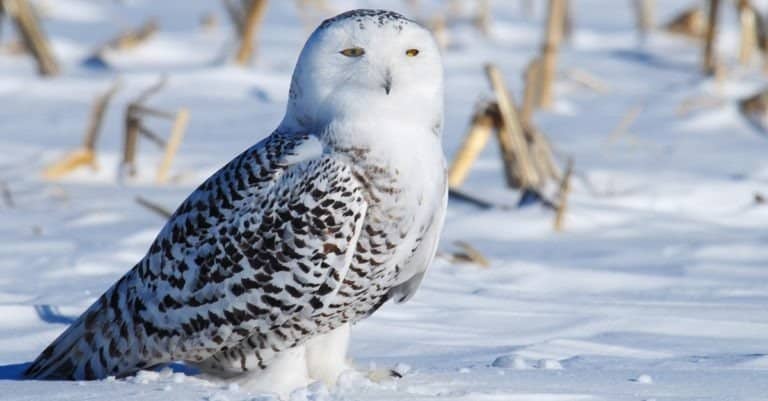
As the name suggests, these owls have beautiful, snowy white plumage. In fact, they are considered to be more of a “pure white” color than other Arctic predators, which helps immensely with camouflage. They can have varying amounts of black or brown markings on their feathers, and these markings can often help identify the age and sex of the owl in question.

In general, females are larger than males, and they typically have more black or brown spotting than males, especially on their crown and leg feathers. Juvenile females are often the darkest, and they usually have significant dark barring throughout their plumage.

Males tend to have markings that manifest more like spots than bars, and they generally have fewer spots overall. Researchers have also noted that adult males tend to become whiter as they age. In some cases, the oldest males are completely white.

In terms of size, snowy owls are one of the largest owls in the world. They are by far the largest owl in North America in terms of weight and wingspan, and they are the second heaviest and longest-winged in Europe. As is common in birds of prey, females are generally larger than males.

Females average 21 to 28 inches in length, and males average from 20 to 25 inches. A female’s wingspan can measure up to 6 feet, but a male’s may only range from about 3.9 to 5.5 feet. In terms of weight, female snowy owls may weigh up to 6 pounds, and males may weigh up to 3.5 or 4 pounds.

Unlike many other owls they are related to, snowy owls do not have tall, distinctive ear tufts. They have a small number of vestigial tuft feathers around their ears, but they are not noticeable from a distance and often do not stick out at all. They have golden yellow eyes, thick feathering, and long, heavy black claws. These adaptations, along with dense layers of leg feathers, make them perfectly suited to their freezing habitat.
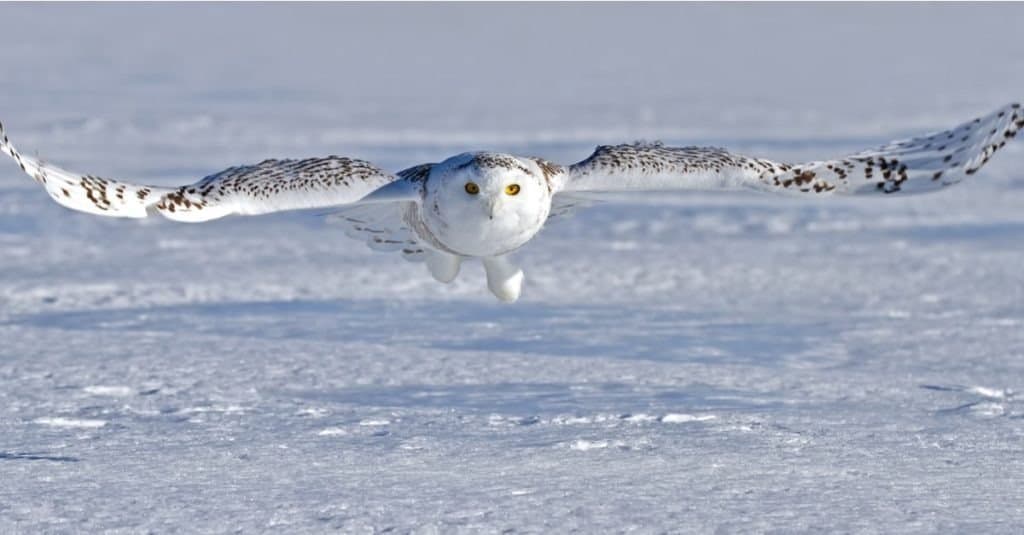
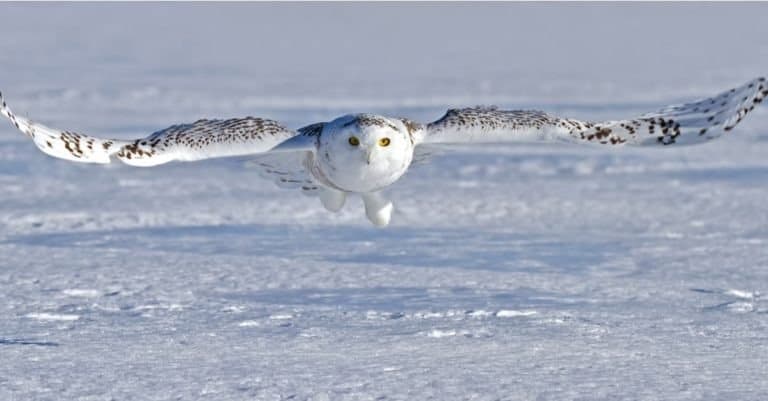
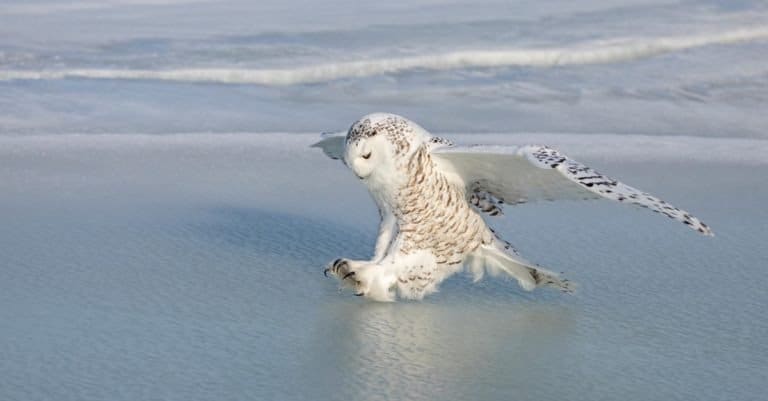
Snowy owl (Bubo scandiacus) flying low and hunting over a snow covered field in Ottawa, Canada

Snowy owl flying low and hunting over a snow-covered field in Ottawa, Canada.

Behavior

In general, snowy owls are solitary birds that do not prefer to socialize. They tend to be monogamous, and a pair will aggressively defend their territory. Unlike many other owl species, snowy owls are crepuscular, which means that they are active during the day, primarily during dawn and twilight hours. They spend much of their time sitting on the flat ground or slight elevations and searching for prey. This is more comfortable for them than perching in trees due to their short, broad legs.

They make many different types of vocalizations as well. Rather than a song, they will make low, raspy, and powerful hoots. These hoots are usually made in pairs, and they can be heard for up to 7 miles. When threatened or distressed, they may hoot, hiss, whistle, or make a sharp, clacking sound with their beaks.

Habitat

Snowy owls are commonly found in the tundra regions surrounding the North Pole, which encompass parts of North America, Europe, and Asia. They are one of the more nomadic species of birds; however, because they must follow their prey, their habitat may shift depending on how much food is available.

During the breeding season, snowy owls stick closely to the treeless Arctic climate, but they can be found much farther south during the rest of the year. It’s common to spot them in the southern regions of Canada and even the northernmost regions of the United States once the breeding season is over.

Diet

Snowy owls are predators, which means that they survive on a carnivorous diet. They prefer to hunt and eat lemmings, and it is estimated that a single adult snowy owl can eat up to 1,600 lemmings in a year.

When they cannot eat their fill of lemmings, they supplement their diet with rodents, rabbits, fish, and even other birds. In fact, snowy owls have been known to take down birds as big as Canadian geese.

Snowy owls are patient and skilled hunters, and they spend much of their time sitting and waiting to see or hear their prey. They have developed adaptations like outstanding eyesight and keen hearing, so they are able to find prey even under dense snow or vegetation.

These owls, like other birds of prey, will swallow their food whole. The food is digested by strong stomach acid, and the indigestible parts, such as bone fragments, teeth, and fur, are regurgitated as a small, compacted pellet.

Predators and Threats

Like many animals, humans are considered to be the biggest threat to the snowy owl. Snowy owls are apex predators, which means that they are at the top of the food chain. Very few other animals hunt or kill these birds. Because of this, they often live long lives. In the wild, a snowy owl may live 10 years or more.

Adult snowy owls may fall victim to other birds of prey, but this is usually the result of a territory dispute rather than hunger. In general, the biggest threat that snowy owls face is the encroachment of humans on their habitat.

Reproduction, Babies, and Life Span

For the most part, snowy owls are monogamous. One male and one female will pair up during the breeding season, and they will remain together in an area that they have carved out as their territory for nesting and feeding. There are a few cases of a male breeding with two females in one season, but these are rare.

Breeding occurs from May through September, with each female only producing one clutch of eggs. The number of young often corresponds to the abundance of food in the area. If there is plenty of food, females have been known to lay up to 12 eggs at once. When food is scarce, they may only lay a couple of eggs, or they may skip breeding entirely for a year or more.

Snowy owls nest on the ground in dry areas covered by moss and rocks. They choose spots that are clear of tall vegetation for a better vantage, and they will spend a few days creating a “scrape,” or a shallow, bowl-shaped depression in the rock with their sharp talons. They do not add additional nesting materials to these scrapes.

Females will typically lay one egg every 2 to 5 days, and the female incubates them for about 32 days. Baby owls usually weigh less than 2 ounces, and they remain in the nest for about 21 days. Unlike many other owl species, baby siblings are not aggressive toward one another, and even when they are juveniles, most do not mind being in proximity to their families during particularly inclement weather.

After 3 to 4 weeks, owlets leave the nest and begin to roam, but they are still protected and fed by their parents. By the time a baby snowy owl is about 50 days old, it can successfully hunt and fly well on its own.
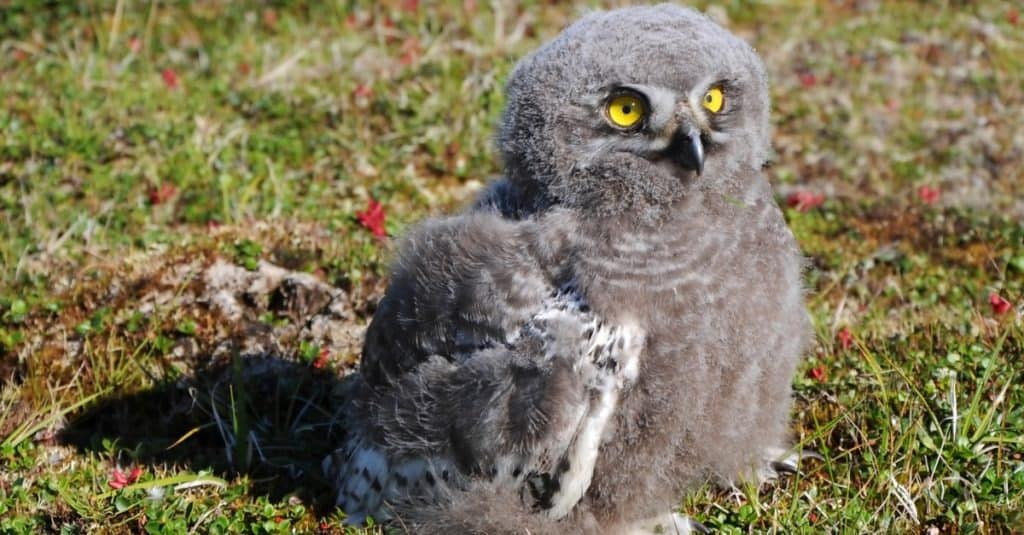
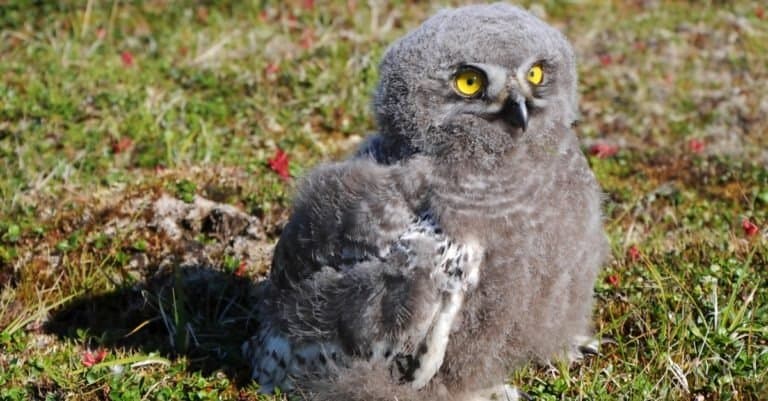
Snowy owl chick (Bubo scandiacus) is sitting on the grass

Snowy owl chicks are not aggressive towards each other.

Population

The exact number of snowy owls in the wild is not known, but it is estimated that there are 14,000 to 28,000 globally. They are classified as “vulnerable” according to the IUCN. Vulnerable is one step below Endangered on the IUCN Red List.

This dramatic population decline is a result of habitat loss due to human behaviors, and there are a number of groups currently working on conservation efforts to preserve and restore their natural habitat.

Snowy Owl in the Zoo

Fortunately, there are zoos and aviaries all across the United States that feature exhibits of these beautiful and magnificent birds. Many zoos and aviaries participate in breeding programs to help bolster the snowy owl population. In captivity, these birds can live as long as 30 years.

View all 390 animals that start with S

Sources

  1. Wikipedia / Accessed January 16, 2021
  2. Audubon / Accessed January 16, 2021
  3. National Geographic / Accessed January 16, 2021
  4. The Owl Pages / Accessed January 16, 2021
  5. Birds of the World / Accessed January 16, 2021
  6. Owl Research Institute / Accessed January 16, 2021
A-Z Animals Staff

About the Author

A-Z Animals Staff

AZ Animals is a growing team of animals experts, researchers, farmers, conservationists, writers, editors, and -- of course -- pet owners who have come together to help you better understand the animal kingdom and how we interact.
Connect:

Thank you for reading! Have some feedback for us?


Snowy Owl FAQs (Frequently Asked Questions)

Snowy Owls live in woodlands within the Arctic tundra.