

S
Species Profile

Somali

Felis catus

The Fox Cat with a Ticked Twist
Nataliya Kuznetsova/Shutterstock.com

Somali Distribution

Click a location to explore more animals from that region

Origin Location

This map shows the native origin of the Somali. As a domesticated species, they are now found worldwide.

Loading map...

Size Comparison

Human 5'8"
Somali 9 in

Somali stands at 13% of average human height.

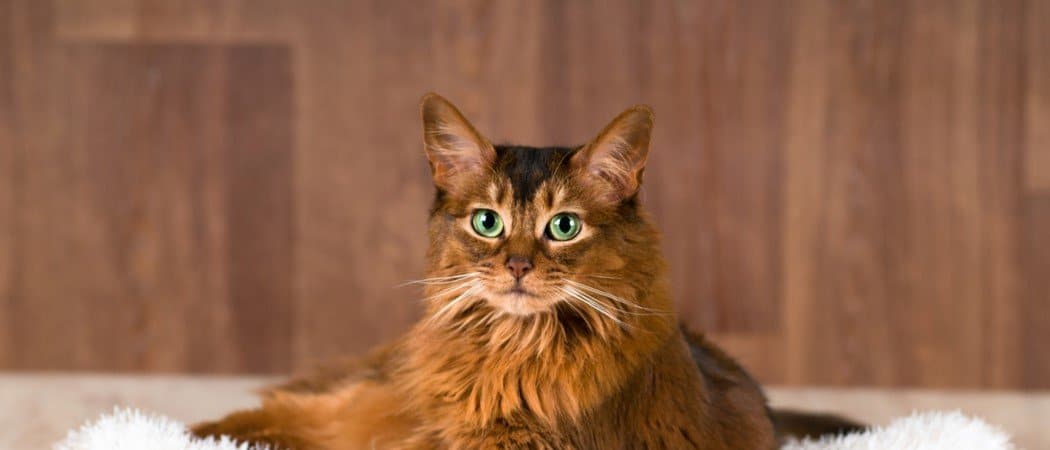
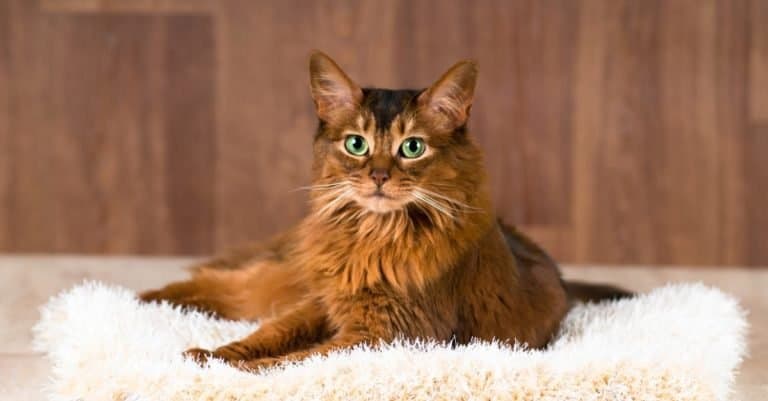
Somali cat lying on a fluffy bed.

At a Glance

Domesticated
Also Known As Somali, Long-haired Abyssinian, Abyssinian Longhair, Somali Longhair
Diet Carnivore
Activity Crepuscular+
Lifespan 3 years
Weight 6 lbs
Status Not Evaluated
Did You Know?

The Somali is often described as the long-haired variant of the Abyssinian "type," sharing the same ticked (agouti) coat pattern.

Scientific Classification

The Somali is a long-haired domestic cat breed, often described as the longhaired variant of the Abyssinian type, known for a ticked (agouti) coat and plume-like tail.

Kingdom
Animalia
Phylum
Chordata
Class
Mammalia
Order
Carnivora
Family
Felidae
Genus
Felis
Species
catus

Distinguishing Features

  • Medium-sized, athletic build with a wedge-shaped head and large ears
  • Semi-long, fine coat with distinct ticked (agouti) patterning
  • Bushy, plume-like tail
  • Often vivid, almond-shaped eyes; alert, active demeanor

Physical Measurements

Males and females differ in size

Height
10 in (9 in – 11 in)
9 in (9 in – 10 in)
Length
2 ft 6 in (2 ft 2 in – 2 ft 9 in)
Weight
11 lbs (9 lbs – 14 lbs)
8 lbs (7 lbs – 10 lbs)
Tail Length
1 ft (11 in – 1 ft 2 in)
11 in (10 in – 1 ft 1 in)
Top Speed
30 mph
running

Appearance

Primary Colors
Secondary Colors
Skin Type Domestic cat with medium-long, fine coat and dense undercoat; "plume" tail and slight ruff.
Distinctive Features
  • Domestic cat breed (not a wild species); "Somali" here refers to the longhaired Abyssinian-type cat.
  • Signature ticked/agouti coat: each hair banded, creating a shimmering, non-tabby look.
  • Plume-like, bushy tail; often the most striking longhair feature versus typical Felis catus.
  • Athletic, lithe body with arched neck and long legs; agile, active temperament common.
  • Large, alert ears and almond-shaped eyes; expressive facial "mask" from ticking.
  • Slight neck ruff and breeches; coat lies close and is less prone to matting than some longhairs.
  • Care: weekly grooming (more during seasonal sheds); focus on tail and pants to prevent tangles.
  • Care: high activity needs-interactive play, climbing spaces, puzzle feeders reduce boredom.
  • Health considerations seen in Abyssinian-related lines: dental disease/gingivitis risk; routine oral care advised.
  • Health considerations: possible hereditary amyloidosis and pyruvate kinase (PK) deficiency in some lines-responsible breeders may screen.

Sexual Dimorphism

Males are typically larger and more muscular, often with a fuller ruff and tail plume. Females are usually smaller and finer-boned, while coat patterning and colors are otherwise similar.

  • Larger overall size; heavier bone and broader chest.
  • Often more pronounced neck ruff and fuller tail plume.
  • Smaller, lighter build with finer facial features.
  • Sleeker silhouette; ruff and plume may appear slightly less developed.

Did You Know?

The Somali is often described as the long-haired variant of the Abyssinian "type," sharing the same ticked (agouti) coat pattern.

Its coat is "ticked" hair-by-hair (banded color on each hair), so it looks shaded rather than striped like many tabbies.

The breed name "Somali" was chosen because Somalia borders Ethiopia (historically called Abyssinia), nodding to the Abyssinian connection.

A hallmark is the full, plume-like tail-one reason Somalis are nicknamed "fox cats."

Somalis are typically highly interactive and athletic, thriving with climbing space and puzzle feeding.

Commonly recognized colors in many cat registries include ruddy, red/sorrel, blue, and fawn (often with silver variants depending on registry).

Despite being long-haired, the Somali's coat is usually fine and not as heavily undercoated as some longhair breeds, so matting can be more manageable with regular grooming.

Unique Adaptations

  • Ticked (agouti) coat pattern: banded hairs reduce the appearance of bold markings and create a rich, shimmering look-an adaptation seen in several mammals for subtle visual blending (in cats, expressed via domestic genetics).
  • Plumed tail and breeches (longer hind-leg fur): give a "fox-like" silhouette while still retaining the flexible, athletic build typical of the domestic cat.
  • Lean, muscular Abyssinian-type body: optimized for climbing and jumping, reflecting the domestic cat's general specialization for ambush and pounce hunting.
  • Large, alert ears and attentive gaze: common domestic-cat sensory strengths (excellent hearing and low-light vision) paired with the Somali's typically vigilant, curious demeanor.

Interesting Behaviors

  • High-perching "canopy living": seeks tall cat trees, shelves, and vantage points to watch household activity.
  • Busy-paws exploration: uses front paws to tap, hook, and manipulate toys, latches, and treat puzzles.
  • Social follow-and-supervise: tends to trail favorite people from room to room and "help" with tasks.
  • Burst athletics: quick sprints, dramatic leaps, and agile midair turns; enjoys wand toys and chase games.
  • Curiosity around water: many individuals investigate running taps or water bowls, sometimes pawing at the surface.
  • Soft-voiced communication: more likely to chirp/trill and body-signal than constantly meow (varies by individual).

Cultural Significance

The Somali is a domestic cat breed (Felis catus), not a wild animal. Its name can be confused with the Horn of Africa. As a long-haired Abyssinian-type, it keeps the ticked coat, bright color, plume tail, and loves people.

Myths & Legends

Breed-origin anecdote: Long-haired kittens occasionally appeared in Abyssinian litters (especially noted in post-World War II breeding records). Rather than being treated as "mistakes," fanciers preserved and developed them into a recognized breed-the Somali.

Naming legend in the cat fancy: The name "Somali" was adopted to echo the Abyssinian connection-Somalia neighbors Ethiopia (formerly Abyssinia)-giving the long-haired Abyssinian-type cat a geographically linked identity.

In ancient Egyptian religion, domestic cats (Felis catus) were linked to the protective goddess Bastet. People kept cats to guard homes and food—a long cultural tradition behind breeds like the Somali.

Sailors long saw cats as lucky ship protectors. Kept to catch vermin, they were also thought to change luck and weather. This old belief helped spread domestic cats worldwide.

Conservation Status

NE Not Evaluated

Has not yet been evaluated against the criteria.

Population Stable

Life Cycle

Birth 4 kittens
Lifespan 3 years

Lifespan

In the Wild
1–10 years
In Captivity
11–16 years

Reproduction

Mating System Promiscuity
Social Structure Managed Domestic
Breeding Pattern Transient
Fertilization Managed Selective
Birth Type Internal_fertilization

In Somali (long-haired, ticked-coat) domestic cats, breeding is usually human-managed, but mating is promiscuous: males may mate with multiple queens during estrus. Pair bonds are brief; queens typically raise kittens without non-parent helpers.

Behavior & Ecology

Social Colony Group: 3
Activity Crepuscular, Cathemeral
Diet Carnivore High-protein animal-based foods (e.g., poultry or rabbit-based wet food; meat-forward treats)

Temperament

Species context (Felis catus): flexible sociality; can be solitary or colony-living when resources allow.
Breed distinction (Somali): notably people-oriented, playful, and curious; often described as "dog-like" and interactive.
High activity and climbing drive; benefits from vertical territory, puzzle feeders, and daily interactive play.
HUBS: most Somalis are confident, affectionate, and sociable; variation ranges from reserved to boldly extroverted.
Typically gentle with respectful children and friendly pets when introduced slowly; may dislike prolonged restraint.
Can be mischievous/food-motivated; thrives on routine, training, and enrichment to prevent boredom behaviors.
Care requirement: coat is longer but usually low-matting; weekly combing, seasonal shedding support, and hairball prevention.
Care requirement: needs companionship and engagement; prolonged isolation may increase vocalizing or attention-seeking.
Health concern (breed-associated): gingivitis/periodontal disease risk-prioritize dental care and regular vet checks.
Health concern (breed-associated): pyruvate kinase deficiency reported in Abyssinian-type lines; consider genetic testing.
Health concern (general feline): obesity/urinary issues if under-enriched or sedentary-support hydration and activity.

Communication

meow
purr
chirp
trill
chatter
yowl
tail carriage and plume flicks for arousal/interest signaling
slow blink and relaxed ear/whisker posture to signal friendliness
head bunting and cheek rubbing for affiliative scent marking
kneading and body rubs to solicit attention and reinforce bonds
scratching and urine/pheromone marking to establish territory
play invitations via crouch-bounce, paw taps, and directed gaze

Habitat

Biomes:
Temperate Forest Temperate Grassland Mediterranean Tropical Rainforest Tropical Dry Forest Savanna Desert Hot Desert Cold Boreal Forest (Taiga) Tundra Alpine Freshwater Wetland Marine +8
Terrain:
Plains Coastal Hilly Mountainous Island Riverine
Elevation: Up to 18044 ft 8 in

Ecological Role

Domestic mesopredator associated with human environments; functions as a small-prey hunter and, when free-roaming, an invasive predator impacting local wildlife.

Rodent/pest suppression around homes, barns, and stores Carries trophic pressure on small vertebrates and some invertebrates (can reduce nuisance species) Potential negative ecological impact via predation on native birds, reptiles, and small mammals-best mitigated by indoor housing, supervised outdoor access, and enrichment

Diet Details

Main Prey:
Small rodents Small birds Rabbits Reptiles Amphibians Invertebrates

Human Interaction

Domestication Status

Domesticated

Felis catus came from the Near Eastern wildcat (Felis lybica) and has lived with people for thousands of years as rodent controllers and pets. The Somali arose mid-20th century from a recessive longhair gene in Abyssinian lines and was bred into a show and companion cat. Humans keep Somalis as indoor pets, groom, and breed them.

Danger Level

Low
  • scratches during play/handling (more likely in active, energetic cats without adequate enrichment)
  • bites (uncommon in well-socialized pets; higher risk if frightened or in pain)
  • allergen exposure (Fel d 1; long coat does not reliably reduce allergies)
  • zoonotic/parasite risks common to domestic cats if preventive care is neglected (e.g., fleas, ringworm; toxoplasmosis risk mainly via litter handling)

As a Pet

Suitable as Pet

Legality: Usually legal to own in the U.S. and most places. Must follow local rules (license, shots including rabies, leash or keeping where required) and home or HOA rules. No special exotic permit needed because it is Felis catus.

Care Level: Moderate

Purchase Cost: $800 - $2,500
Lifetime Cost: $15,000 - $35,000

Economic Value

Uses:
Companion animal industry Pedigree breeding and cat shows Veterinary services Pet grooming and retail (food, toys, enrichment)
Products:
  • purebred Somali kittens (sale/adoption fees)
  • stud services and breeding contracts
  • cat show entry, handling, and related travel/services
  • grooming supplies (combs, de-shedding tools) and professional grooming
  • high-quality diets, interactive toys, climbing structures for high-activity cats

Relationships

Ecological Equivalents 4

Animals that fill a similar ecological role in their ecosystem

Domestic cat
Domestic cat Felis catus The Somali is a longhaired, ticked-coat Abyssinian-type of Felis catus with a fox-like plume tail, lean build, and high activity level. It requires play and regular grooming, and should be screened by breeders/veterinarians for dental disease, pyruvate kinase deficiency (PK-def), progressive retinal atrophy (PRA), and renal amyloidosis.
African wildcat Felis lybica Occupies a similar small-felid niche as a crepuscular/diurnal mesopredator of rodents and small birds. It is also a key ancestral contributor to domestic cats, making it a useful ecological comparison for hunting and foraging behaviors that still appear in active breeds like the Somali.
Small-spotted genet Genetta genetta Occupies a household-adjacent and edge-habitat mesopredator niche in many regions; agile, curious, and primarily reliant on small vertebrate prey. Often used as an ecological analog for small carnivore hunting patterns.
Red fox
Red fox Vulpes vulpes Occupies overlapping mesopredator roles in many human-modified landscapes (rodent control, opportunistic predation) and poses a competitive and predatory risk to outdoor domestic cats.

The Somali evolved from Abyssinians, which were exported to North America, Australia, and New Zealand in the 1940s. However, it was commonly believed that longhaired non-Abyssinian cats or a cousin of the Abyssinian was introduced into the gene pool. Their descendants, known as longhaired Abyssinians or Somalis, first appeared in 1953. They were named after Somalia, the neighbor of modern-day Ethiopia (formerly Abyssinia), from where their ancestors were imported. With a well-balanced, affectionate, sociable, and playful personality, beautiful appearance, and endearing, soft meow, the Somali cat is a great family pet or companion animal.

Breed History

The modern Somali breed began in the 1940s when Abyssinian kittens were exported to North America, Australia, and New Zealand by the British breeder Janet Robertson. In 1953, the first known long-haired Abyssinian appeared in America bearing the name “Raby Chuffa of Selene.” This cat shocked breeders, probably having carried a recessive long-haired gene. Some breeders took to this unique type of Abyssinian and went about breeding more of them.

Meanwhile, an American breeder named Evelyn Mague had long-haired Abyssinians appear in her cats’ litters as well and dubbed them “Somalis,” a reference to the conflict between Ethiopia (ancient name Abyssinia) and Somalia. As there were conflicts among breeders as to whether or not long-haired Abyssinian cats were “true Abyssinians,” the alternative name was fitting. The Somali breed was recognized as a new breed by the CFA in 1979 in North America, in 1982 in Europe, and internationally in 1991.

Some breeders resisted the idea that long-haired Abyssinian cats were “true Abyssinians,” so the alternative name “Somali” was fitting.

Traits: What to Know Before You Buy

  • This breed has some grooming needs. Although its coat is fine and silky-soft, you should brush it 3 times a week.
  • It’s an active breed, having a muscular and agile body. Toys and perches are a must-have.
  • It’s famous for its dextrous paws, which it uses to play with toys similar to how a monkey would.
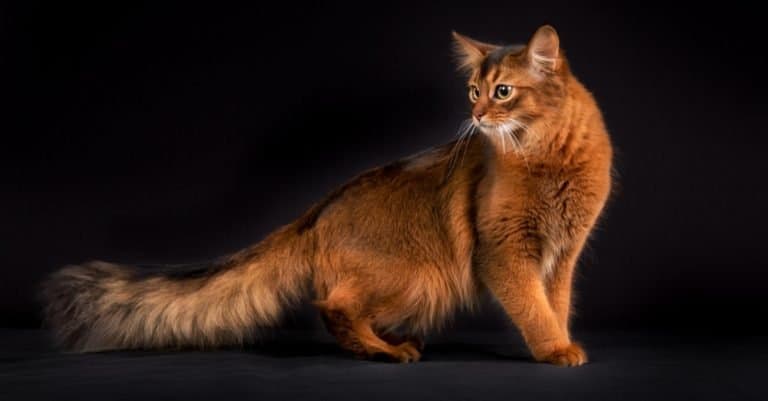
  • Thanks to its large ears, fluffy coat, and bushy tail, it’s nicknamed the Fox Cat.
  • Somalis are intensely curious and need to explore, a characteristic that leads some owners to decide to baby-proof their cabinets and drawers.
  • As a long-haired relative of the Abyssinian, Somali cats have lithe and athletic bodies, and both their markings and fluffy tails provide them with a notable resemblance to a fox.
  • Despite their huge personalities, Somalis aren’t especially outspoken vocally. Their vocalizations are soft, but they aren’t afraid to let you know what they want.
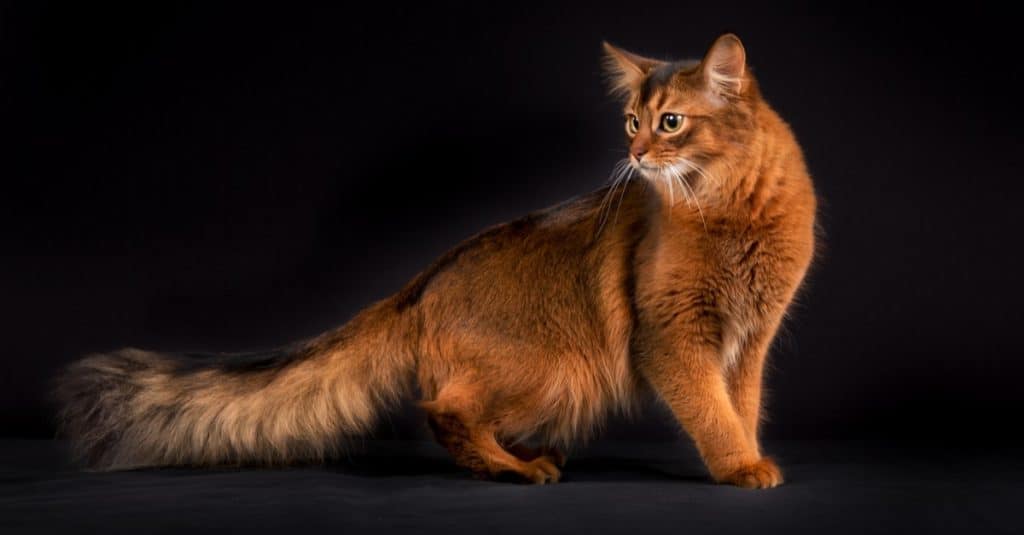
Pedigree orange Somali cat photographed indoors in studio on black background.

The typical lifespan of the Somali breed is 11 to 16 years.

Personality

The Somali cat has a temperament that is balanced and friendly towards children, strangers, and other pets, an easygoing, social, affectionate, playful, intelligent personality, and high-energy, curious, tenacious, and active behavior. It loves to play and explore its surroundings and enjoys company. This adventurous breed is not for the sedentary home or owners who cannot give it plenty of attention. On the other hand, as a very quiet breed, it doesn’t meow much. When it does meow, it’s very soft.
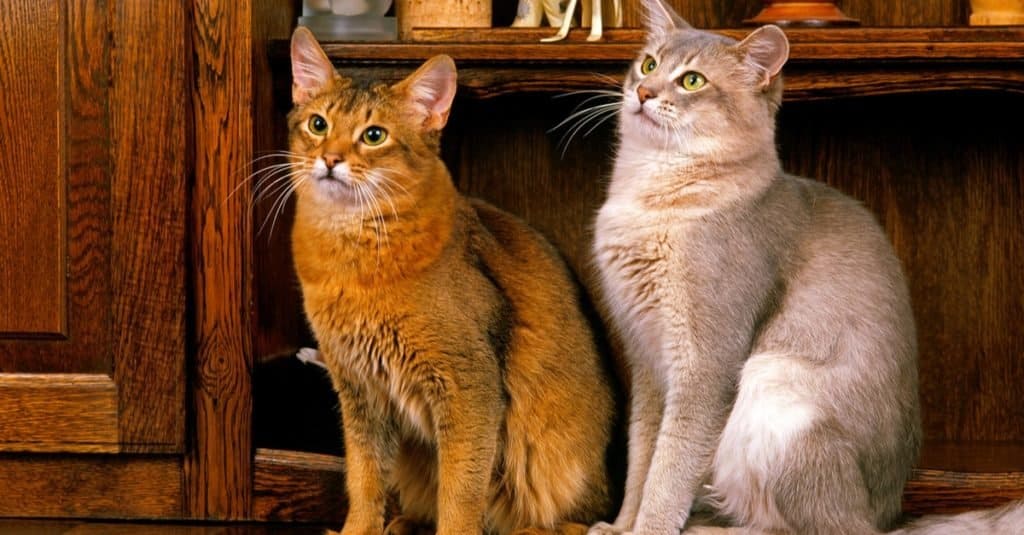
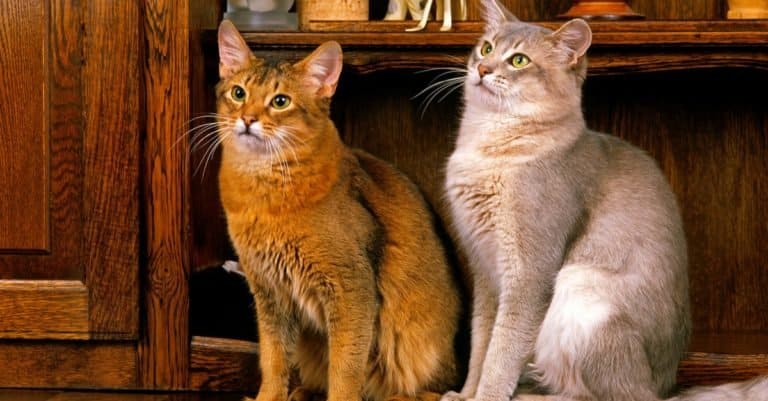
Ruddy and Blue Somali cats sitting on a sideboard.

Somali cats are a quiet breed that doesn’t meow much.

Size and Weight

The Somali cat has a muscular body, large almond-shaped eyes, large pointy ears, bold facial markings, a fluffy tail, and fine, silky-smooth fur. It is medium-large in size with a semi-long, ticked coat. Males and females are about the same size, measuring 11 to 14 inches in length, although males tend to be larger. Males, on average, weigh 8 to 13 lbs, while females weigh 6 to 10 lbs. A Somali kitten is about 2 pounds at 8 weeks of age and remains a kitten until reaching maturity at 18 months.
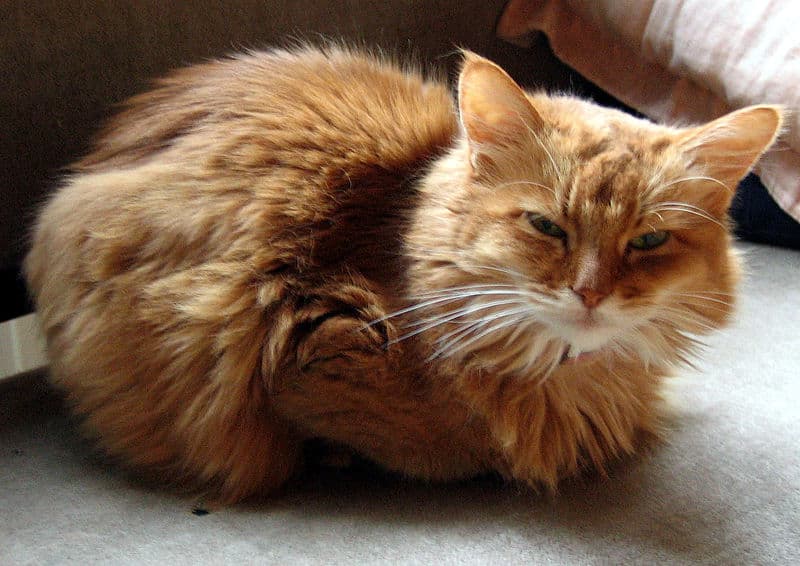
The male Somali averages 8 to 13 lbs in weight, while the female weighs from 6 to 10 lbs.

Price

Somali cats are relatively rare, but they’re also one of the most popular choices for show cats, and full-bred members of the species tend to be expensive as a result. A reliable breeder will charge between $1,000 and $1,500 for a purebred Somali, and that’s likely going to be your best bet. Somali cats are very rare at shelters, and rescues devoted to Somalis are practically unheard of.

There might also be a time investment. The rarity of Somali cats ensures that there are often waitlists involved in getting one. As always, be sure that you’re working with a reputable breeder. Fortunately, Somali cats aren’t especially prone to any particular genetic defects or illnesses. If the price of a Somali is too prohibitive, the short-haired Abyssinian has a very similar personality and is far more common.
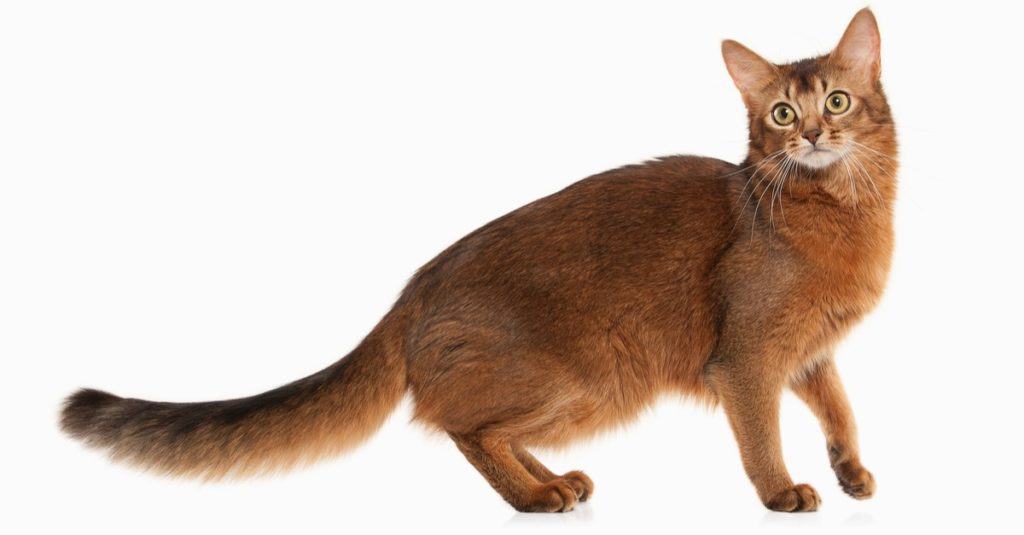
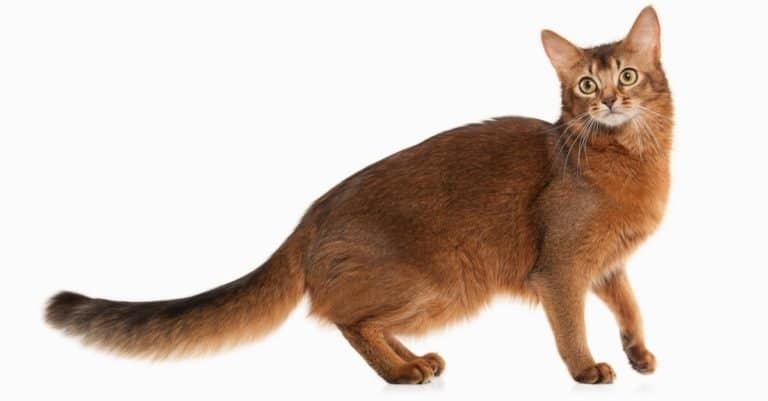
Somali cat, ruddy color, on white background.

A Somali cat will typically cost ,000 to ,500 at a reputable breeder.

Kittens

Somali kittens aren’t that different from kittens of any other breed, but their bright and hyperactive personalities offer a good preview of what you can expect them to be like as adults. A Somali kitten is going to be every bit as rambunctious and playful as kittens of another breed, but their high intellect means that they can be more troublesome than the typical domestic kitten. That level of playful curiosity is only going to extend into adulthood as well, and their cleverness is only going to develop over time.

The development of a Somali kitten is similar to that of a traditional domestic cat. At four to six months of age, a Somali kitten will lose its kitten teeth and grow its adult teeth. The six-month period sees some of the most prodigious growth as well. A Somali kitten will average a weight gain of about a pound a month until it’s a year old. At 18 months, they’ll be fully grown, but they’ll have grown out of their lanky proportions into a shape more resembling an adult cat by the time they’re a year old.
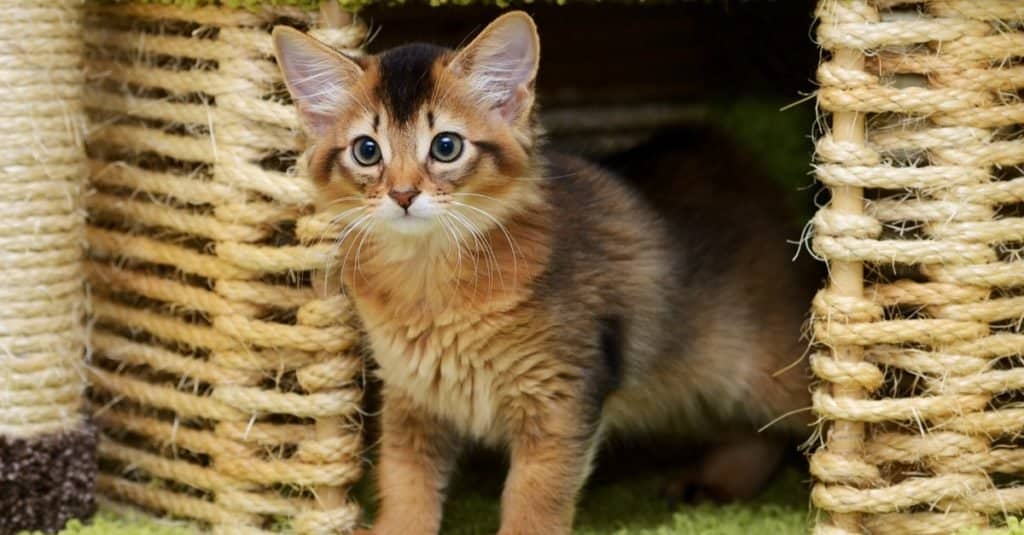
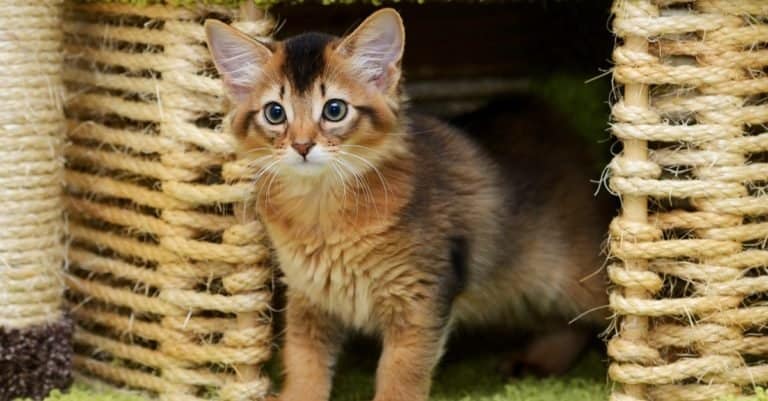
A cute Somali kitten playing in the cat house.

A Somali kitten will average a weight gain of about a pound a month until it’s a year old.

Breed vs. Mixed

Purebred Somali cats are essentially longhaired Abyssinians. They all have large almond eyes, large pointy ears, bushy tails, and fine coats. They are medium to large. The ticking on their coats has between four and twenty colors on each strand of fur.

Somalis can be bred with Abyssinians, although some of the kittens will lack the long-haired coat characteristic of the Somali. To identify if your cat is a purebred Somali or a mixed breed, you must look at the physical features, including the ticking colors on its fur. Body size, proportions, legs, feet, and behavior are also important factors, including the Somali’s famous dexterity. A purebred Somali will have all of the physical and personality features, while mixed breeds lack some. Even if a cat appears to be purebred in appearance, you must also take personality and behavior into account.
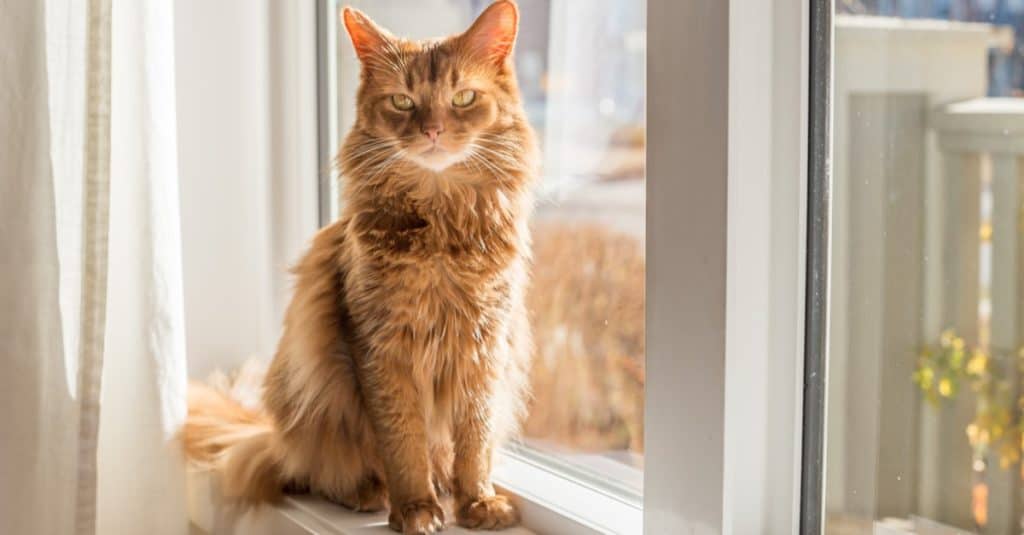
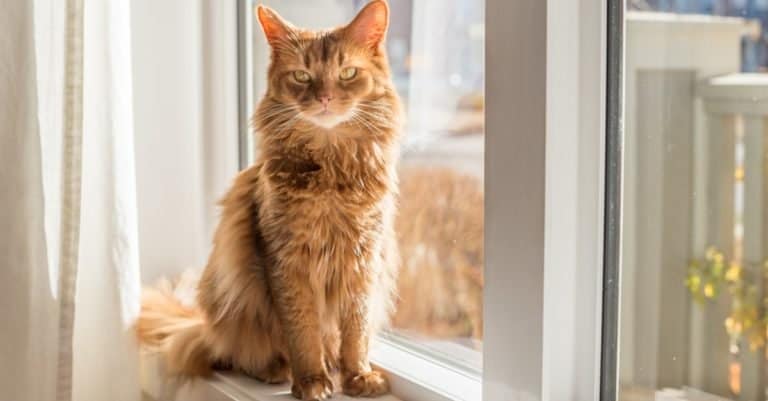
Somali cat sitting in a sunny, white-trimmed window with fall leaves outside.

Purebred Somali cats are essentially longhaired Abyssinians.

Types of Somali Cats and Colors

The standard Somali color is golden brown with black ticking, also called the usual or ruddy color. A total of 28 colors are possible, with certain organizations accepting only some of them. All of the Somali registries allow ruddy, red (sorrel), blue, and fawn. Most also allow ruddy silver, sorrel/red silver, blue silver, and fawn silver, while some registries may accept chocolate, lilac, red, cream, and various combinations of tortie along with silver tortie variants.

Here are the possible types of Somali cat colors:

  • Ruddy: A golden brown
  • Sorrel: A red-orange
  • Blue: Referring to the darker tint on individual hairs, the base coat is a light oatmeal shade.
  • Fawn: Blonde, with a deeper beige over the top.
  • Chocolate: A darker brown on the back, legs, and tail with a lighter belly
  • Lilac: Similar to blue, but with a more purplish tint and darker oatmeal base color
  • Red: A darker sorrel (red-orange)
  • Cream: A white base with an apricot top
  • Tortie: Tortoiseshell, meaning a mixture of 2 colors (except for white), either appearing randomly (mosaic tortie) or split evenly (chimera), including color variants such as ruddy tortie.
  • Silver: A light silvery base color with a darker grey top, legs, and tail, including color variants such as ruddy silver or silver tortie.
View all 390 animals that start with S

Sources

  1. Cat Time / Accessed July 7, 2021
  2. Cat Fanciers Association / Accessed July 7, 2021
  3. Hill's Pet / Accessed July 7, 2021
  4. Pet Finder / Accessed July 7, 2021
  5. All About Cats / Accessed July 7, 2021
  6. Wikipedia / Accessed July 7, 2021
  7. Cat Breeds List / Accessed July 7, 2021
  8. Exited Cats / Accessed July 7, 2021
  9. Cat Breeds Info / Accessed July 7, 2021
  10. Wiki How / Accessed July 7, 2021
Abby Parks

About the Author

Abby Parks

Abby Parks has authored a fiction novel, theatrical plays, short stories, poems, and song lyrics. She's recorded two albums of her original songs, and is a multi-instrumentalist. She has managed a website for folk music and written articles on singer-songwriters, folk bands, and other things music-oriented. She's also a radio DJ for a folk music show. As well as having been a pet parent to rabbits, birds, dogs, and cats, Abby loves seeking sightings of animals in the wild and has witnessed some more exotic ones such as Puffins in the Farne Islands, Southern Pudu on the island of Chiloe (Chile), Penguins in the wild, and countless wild animals in the Rocky Mountains (Big Horn Sheep, Mountain Goats, Moose, Elk, Marmots, Beavers).
Connect:

Thank you for reading! Have some feedback for us?


Somali FAQs (Frequently Asked Questions)

The average number of babies a Somali has is 5.