




S
Species Profile

South China Tiger

Panthera tigris amoyensis

Southern China's tiger-waiting to return
World66 / Creative Commons

South China Tiger Distribution

Click a location to explore more animals from that region

Endemic Species
Loading map...

Found in 1 country

Size Comparison

Human 5'8"
South China Tiger 3 ft 1 in

South China Tiger stands at 55% of average human height.

South China tiger drinking from a stream

At a Glance

Wild Species
Also Known As Amoy tiger, Xiamen tiger, Huanan tiger, Huanan hu, 华南虎
Diet Carnivore
Activity Cathemeral+
Lifespan 10 years
Weight 180 lbs
Did You Know?

Recognized subspecies name: Panthera tigris amoyensis ("Amoy" = old Western name for Xiamen).

Scientific Classification

The South China tiger (Panthera tigris amoyensis) is one of the historically recognized tiger subspecies, formerly distributed across southern China. It is generally regarded as Critically Endangered and functionally extinct in the wild, with remaining individuals historically confined to captive populations.

Kingdom
Animalia
Phylum
Chordata
Class
Mammalia
Order
Carnivora
Family
Felidae
Genus
Panthera
Species
Panthera tigris

Distinguishing Features

  • Medium-sized tiger form compared with some other subspecies (as historically described)
  • Relatively close-set striping pattern in many historical descriptions
  • Native range centered in southern China (historical distribution rather than a currently extant wild population)

Physical Measurements

Males and females differ in size

Height
3 ft 2 in (2 ft 12 in – 3 ft 4 in)
2 ft 11 in (2 ft 9 in – 3 ft 1 in)
Length
1154 ft 10 in (1072 ft 10 in – 1230 ft 4 in)
8 ft 3 in (7 ft 10 in – 8 ft 8 in)
Weight
335 lbs (280 lbs – 390 lbs)
236 lbs (220 lbs – 254 lbs)
Tail Length
3 ft 5 in (3 ft 2 in – 3 ft 7 in)
2 ft 11 in (2 ft 7 in – 3 ft 1 in)
Top Speed
37 mph
running

Appearance

Primary Colors
Secondary Colors
Skin Type Mammalian skin covered in dense fur (short-to-moderate length guard hairs with insulating underfur).
Distinctive Features
  • Subspecies identity: South China tiger (Panthera tigris amoyensis), a tiger subspecies (Panthera tigris), historically native to southern China.
  • Functionally extinct in the wild; known individuals have been maintained primarily in captivity (conservation-breeding context).
  • Adult male mass reported ~127-177 kg; adult female mass ~100-118 kg (Mazák, 1981; commonly cited for amoyensis morphometrics).
  • Head-body length reported ~230-265 cm in males, ~200-230 cm in females; tail often ~95-110 cm (Mazák, 1981; secondary compilations).
  • Coat commonly described as relatively pale orange with comparatively narrow, well-spaced striping in many captive-line individuals (regional phenotype notes; see Mazák-era descriptions).
  • Distinct white/cream areas on throat and belly; prominent white patches around muzzle and eyes typical of tigers.
  • Large, muscular forequarters; broad head with strong canines and robust vibrissae (whiskers).
  • Behavioral appearance context: solitary, territorial big cat; stalking ambush predator like other Panthera tigris subspecies (species-typical, not implying extant wild populations).

Sexual Dimorphism

Males are noticeably larger and heavier than females, with broader heads and thicker necks/forequarters. Females are smaller-bodied with a slimmer neck and overall lighter build; both sexes share the same orange-and-black striped pelage pattern.

  • Greater body mass and shoulder height; more robust forequarters and neck musculature.
  • Broader skull and muzzle; canines typically larger in absolute size.
  • Often a more pronounced facial ruff/cheek fur impression due to head/neck size.
  • Smaller, lighter build with narrower head and less massive neck/forequarters.
  • Same stripe patterning and coloration, typically with finer overall proportions.
  • Often slightly more gracile limb and torso appearance relative to males.

Did You Know?

Recognized subspecies name: Panthera tigris amoyensis ("Amoy" = old Western name for Xiamen).

No confirmed wild records since the 1970s; it's widely regarded as extinct in the wild (e.g., Nowell & Jackson, 1996; later Cat Specialist Group summaries).

Adult male mass is commonly reported around ~130-175 kg and females ~100-115 kg; it is smaller on average than Siberian/Bengal tigers (figures compiled in classic tiger morphometrics such as Mazák).

Historical measurements report males reaching roughly ~230-265 cm total length (incl. tail) and females ~220-240 cm (reported in older morphological treatments; sample sizes are limited).

The living captive population descends from a very small founder base (often summarized as ~6 founders), creating extremely low genetic diversity (reported in conservation genetics literature on the subspecies).

A rewilding-style training program was attempted outside China (e.g., the "Laohu Valley Reserve" project begun in the early 2000s) to develop hunting and survival skills for potential future reintroduction.

Striping is typically relatively widely spaced and the coat often appears a deeper orange than some northern tigers-an identification trait historically noted by taxonomists (variation exists among individuals).

Unique Adaptations

  • Powerful forelimbs and retractile claws for grappling large prey; tigers often kill by throat/neck bite-core Panthera tigris adaptation.
  • Striped camouflage: vertical stripes disrupt the body outline in dappled forest/grass edge light; each individual pattern is unique, functioning like a biological "fingerprint."
  • Exceptional night vision: a reflective tapetum lucidum enhances low-light hunting (felid adaptation shared across tiger subspecies).
  • Large, padded paws for silent stalking and shock absorption during pounces; useful across mixed habitats from broadleaf forests to scrub.
  • Robust canines and carnassial teeth specialized for piercing and slicing flesh-key to a large-carnivore diet.

Interesting Behaviors

  • Solitary territoriality: adults maintain largely exclusive home ranges, using scent-marking (urine spraying) and scrape marks-typical Panthera tigris behavior documented across subspecies.
  • Crepuscular-to-nocturnal activity: hunting and travel often peak at dusk/dawn, especially where human presence is high (inferred from tiger field ecology; direct modern wild data for this subspecies are scarce).
  • Stalking-and-ambush predation: short bursts of speed after a close approach; tigers typically target medium-to-large ungulates where available (general tiger ecology applied to the historical prey base in southern China).
  • Maternal rearing: cubs remain with the mother for roughly 18-24 months in tigers; during this time she progressively shifts from provisioning to teaching hunting (well documented in Panthera tigris).
  • Vocal and chemical communication: roaring and "chuffing" occur alongside long-lasting scent signals-especially important for low-density cats like tigers.

Cultural Significance

Tigers in China stand for power, bravery, and protection; their images appear on talismans, children's hats, doors, and temples to ward off evil. The South China tiger (Panthera tigris amoyensis) is a national symbol and native apex predator; its loss would mean it is gone from southern habitats.

Myths & Legends

The White Tiger of Chinese astronomy and mythology, one of the Four Symbols, rules the West and autumn and is associated with righteous power and protection.

In Chinese folk belief, the "Five Tigers" can represent directional powers (east, west, south, north, center), invoked in rituals and talismans for protection and to repel malevolent forces.

Traditional stories and temple practices in parts of southern China include veneration of a "Tiger Lord," a protective spirit figure who can subdue demons and guard communities when properly respected.

The tiger's forehead markings are popularly linked to the Chinese character meaning "king," reinforcing the cultural idea of the tiger as the "king of beasts" in Chinese tradition.

Folk customs of dressing children in tiger-faced hats and shoes draw on the belief that tiger imagery frightens away illness and harmful spirits, lending the child the tiger's strength.

Conservation Status

CR Critically Endangered

Facing an extremely high risk of extinction in the wild.

Population Decreasing

Protected Under

  • CITES Appendix I (tigers and their parts in international trade)
  • China: Wild Animal Protection Law (national legal protection for tigers)
  • China: National Key Protected Wild Animals-Class I

Life Cycle

Birth 3 cubs
Lifespan 10 years

Lifespan

In the Wild
8–15 years
In Captivity
15–25 years

Reproduction

Mating System Polygynandry
Social Structure Solitary
Breeding Pattern Transient
Fertilization Internal Fertilization
Birth Type Internal_fertilization

South China tigers are solitary; males maintain large territories overlapping several females and mate opportunistically when a female is in estrus. Pairing is brief, with no lasting bond, and females typically rear cubs alone without helpers.

Behavior & Ecology

Social Solitary Group: 1
Activity Cathemeral, Crepuscular, Nocturnal
Diet Carnivore Wild boar (Sus scrofa)

Temperament

Strongly territorial and solitary; intraspecific tolerance mainly for mates or cubs (Sunquist & Sunquist, 2002).
Activity shifts toward nocturnality where human disturbance is high; crepuscular peaks common in tigers (Sunquist & Sunquist, 2002).
Female philopatry and male-biased dispersal typical in tigers; spacing driven by prey and breeding access (Smith et al., 1987; Sunquist & Sunquist, 2002).
Captive South China tigers show stereotypic pacing under stress, consistent with Panthera husbandry observations (e.g., Clubb & Mason, 2003).
Captive longevity for tigers commonly reaches ~20 years; exceptional individuals may exceed this with intensive care (Mazák, 1981; ISIS/ZIMS husbandry summaries).

Communication

roar Long-distance advertisement
chuff/prusten Close-range friendly signal
growl Threat at close range
hiss Defensive warning
snarl Escalated aggression
moan/low call Contact/attention, especially mother-cub
urine spraying on trees/rocks Scent marking
scrapes/rakes with hind feet Visual+olfactory signposts
fecal marking at prominent sites
tree scratching/claw marks Visual signals
cheek rubbing and facial gland scent deposition
body postures Side-on display, piloerection
tail and ear position signals during close encounters

Habitat

Biomes:
Temperate Forest Freshwater Wetland
Terrain:
Mountainous Hilly Plateau Plains Valley Riverine Karst +1
Elevation: Up to 6561 ft 8 in

Ecological Role

Apex predator (historically) in subtropical forests and montane landscapes of southern China; now largely absent in the wild.

Top-down regulation of ungulate populations (e.g., wild boar and deer), influencing herbivory pressure and vegetation dynamics Removal of sick/injured individuals, potentially reducing disease transmission within prey populations Creation of carrion resources that subsidize scavengers and decomposers after kills Maintenance of trophic structure; loss can contribute to mesopredator release and ungulate overabundance in parts of its former range

Diet Details

Main Prey:
Wild boar Reeves's muntjac Tufted deer Sambar deer Chinese serow Macaques Porcupine Livestock +2

Human Interaction

Domestication Status

Wild

South China tiger (Panthera tigris amoyensis) is not domesticated and is a wild cat. Once hunted in southern China, it has no confirmed wild breeding for decades and survives mainly in captivity. Captive breeding began mid‑20th century for conservation. Threats include conflict, poaching, habitat loss, and efforts aim to protect and reintroduce.

Danger Level

High
  • Severe injury or fatality risk from predatory attacks or defensive aggression (especially in close contact/captive settings)
  • High physical hazard during feeding, cleaning, transport, and veterinary procedures; requires protected-contact protocols
  • Zoonotic and occupational risks in captive management (e.g., exposure to parasites/pathogens shared by carnivores and humans)
  • Public-safety risk from escape or inadequate containment

As a Pet

Not Suitable as Pet

Legality: Not suitable and illegal as a private pet: South China tiger (Panthera tigris amoyensis) is listed on CITES Appendix I and treated as Endangered or Critically Endangered; keeping one is widely banned or needs strict permits and big secure enclosures.

Care Level: Expert Only

Purchase Cost:
Lifetime Cost: $150,000 - $500,000

Economic Value

Uses:
Conservation breeding (ex-situ) Public education and zoo exhibit value Cultural symbolism (regional/national iconography) Scientific value (genetics, comparative morphology, husbandry) Illegal wildlife trade pressure (high-value contraband)
Products:
  • zoo visitation/education programming
  • conservation grants and managed breeding outputs (not commercial domestication)
  • (illicit) skins, bones, teeth/claws marketed as trophies or for traditional-medicine claims

Relationships

“The South China tiger is a powerful predator, an expert hunter, and an old cultural symbol of regal strength.”

This subspecies is also perhaps the most imperiled tiger in the world. In precipitous decline since the 20th century, it is now confined to a very small range in China, and the only known live specimens reside in captivity. Conservationists are racing against the clock to save this animal from ultimate extinction.
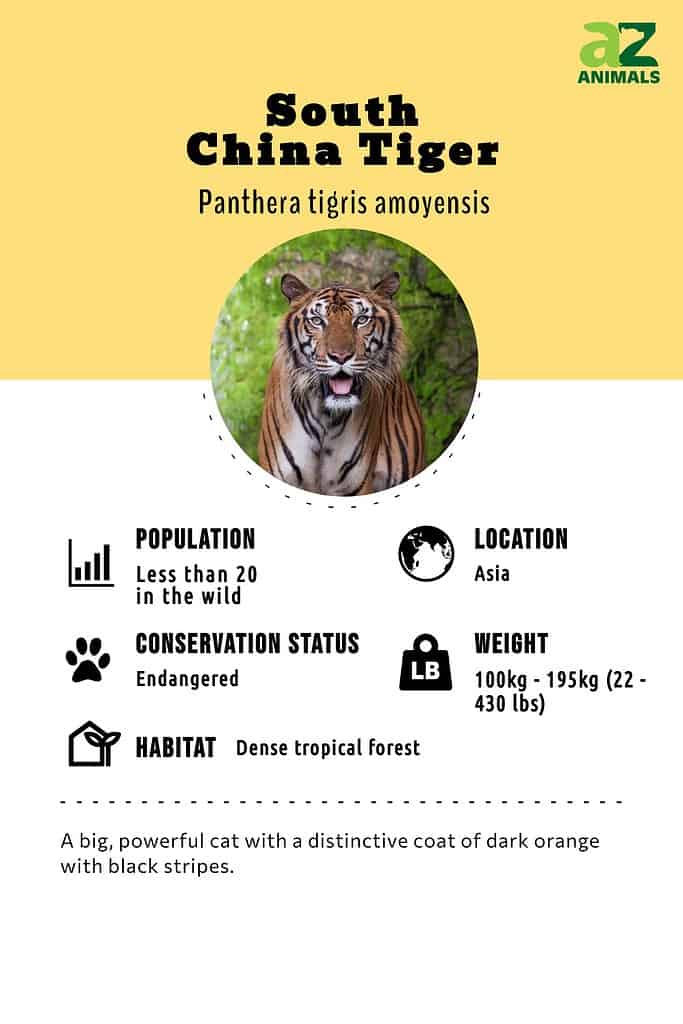
4 Incredible South China Tiger Facts

  • The South China tiger may have split off and evolved from an older lineage of tigers, which means it is more similar to the ancient tiger type rather than recent types. This is inferred from genetic analysis and observations of their physiology.
  • The stripes on a tiger are somewhat comparable to a human fingerprint. Because of their unique nature (no two tigers have the exact same patterns), the stripes can be used to help identify individuals.
  • Tigers have an enormously strong bite. They are able to crack open an animal’s skull with their jaw.
  • The Guangdong Southern Tigers basketball team is named after this animal.

Scientific Name
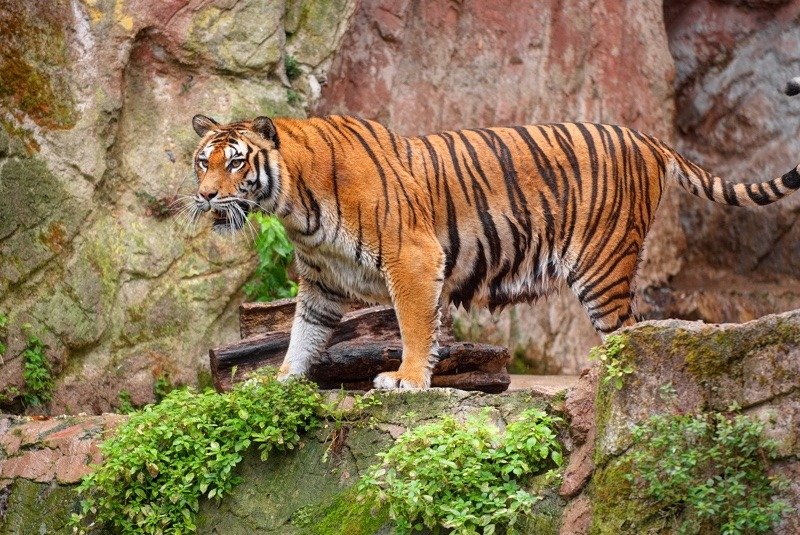
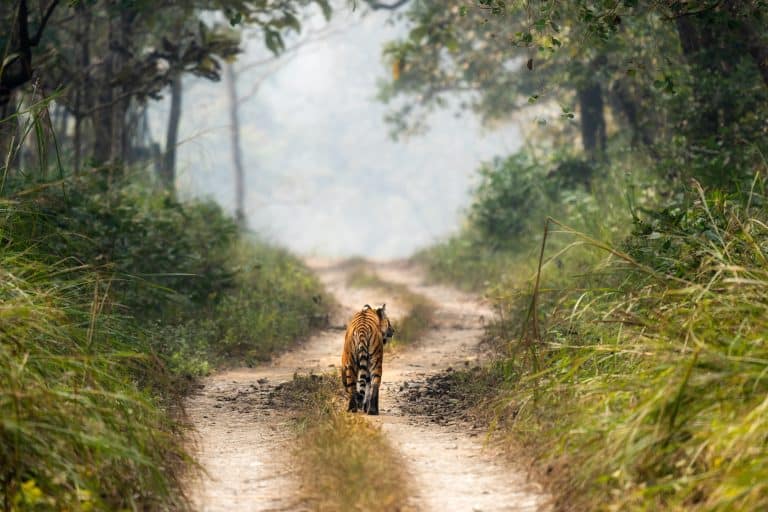
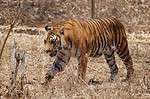
South China tiger on the prowl

The South China tiger is a subspecies of tiger and is closely related to the snow leopard.

The South China tiger is a subspecies of the common tiger. It goes by the scientific name of Panthera tigris amoyensis. This name is possibly derived from the local Amoy dialect, which is spoken in the southern city of Xiamen (historically known as Amoy) and its surrounding areas.

Despite being separated by geography, it is very closely related to the Bengal tiger, Siberian tiger, Malayan tiger, Caspian tiger, and Indochinese tiger. It is believed that all of these types are capable of reproducing viable offspring with each other since they are all part of the same species.

Somewhat more distantly, the South China tiger belongs to the same genus, Panthera, as leopards, lions, and jaguars. Although separated by millions of years of evolution, tigers have been known to produce hybrids with lions in captivity. The tiger’s family, Felidae, includes all known cats in the world.

Evolution
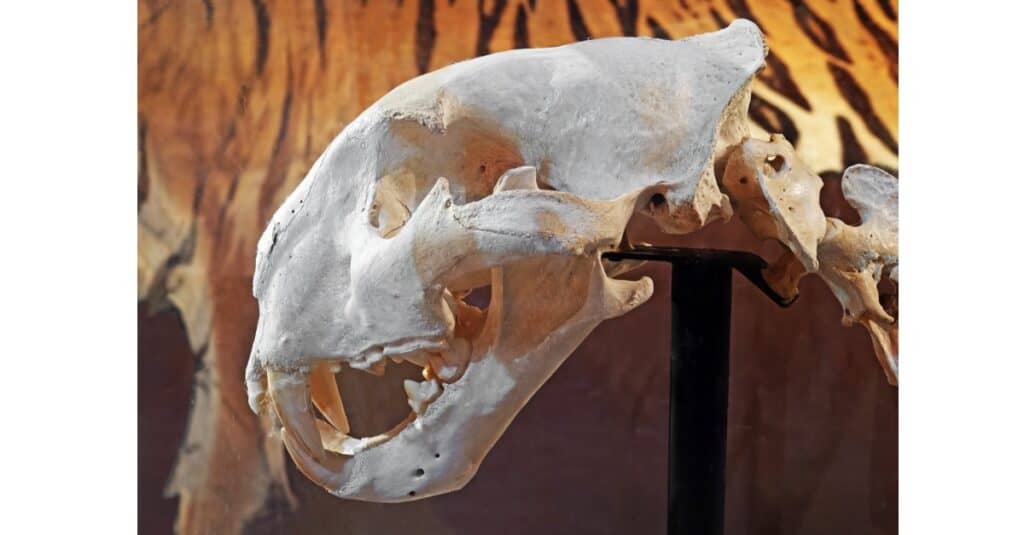
Tiger Teeth - Bengal Tiger Skull

Fossil records show that tigers originated in China around two million years ago.

The earliest fossil record of a tiger was found in China and is believed to have lived two million years ago during the Pleistocene era. This evidence suggests that tigers originated in what is now China with Panthera zdanskyi, the Longdan tiger, being the most primitive tiger species. By the end of the Pleistocene, tigers had spread to the north of Asia, India, the bridge of Beringia, the island of Sakhalin and Japan.

The genus, Panthera, made up of tigers, lions, leopards and jaguars are all closely related to each other. In 2010, it was discovered that tigers are more closely related to the snow leopard – and that they diverged from the rest of the group 3.2 million years ago.

Appearance
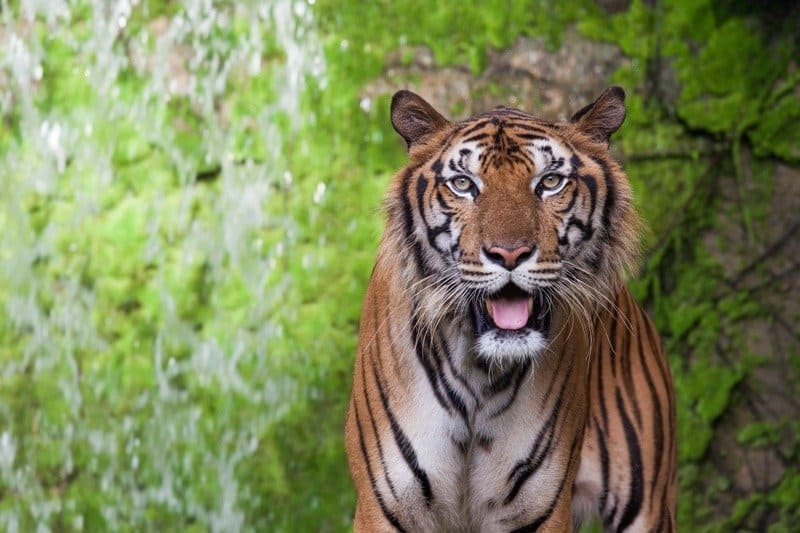
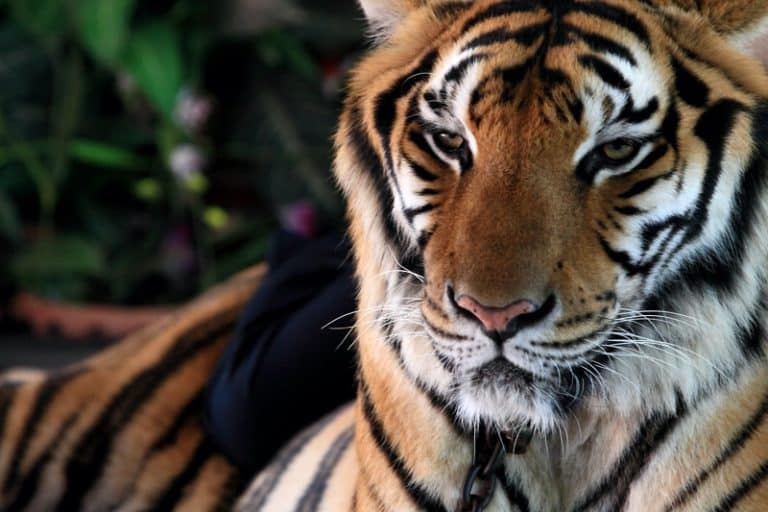
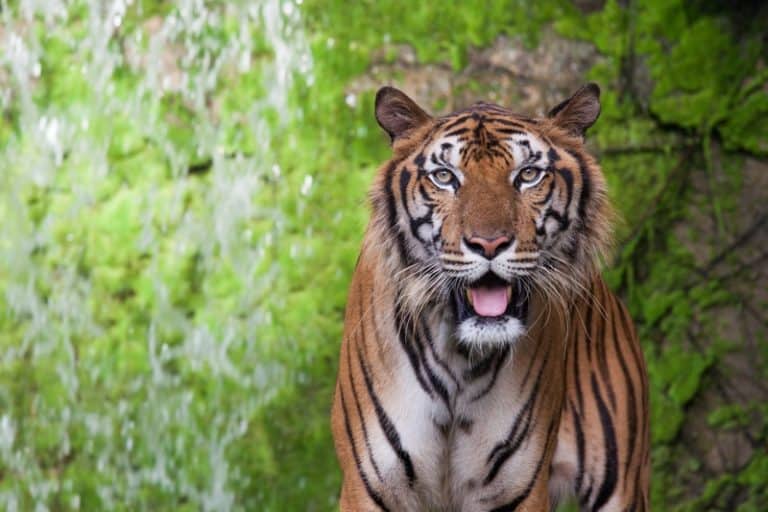
Medium shot of the South China tiger looking at the camera

No two tigers stripes are exactly alike.

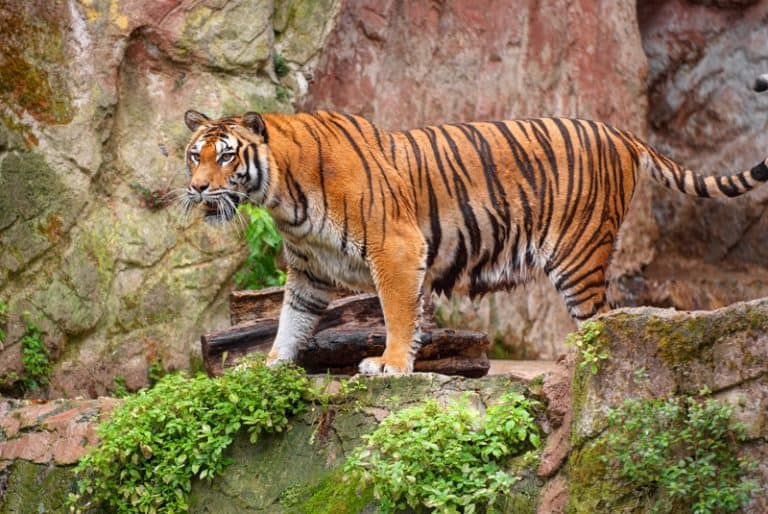
The tiger is the picture of power, thanks to its broad shoulders, large limbs, massive jaw and bite power, and sharp claws. It has the ability to drag away animal carcasses just as large, if not larger, than itself. Despite its enormous size, however, the South China tiger is possibly the smallest tiger subspecies in the world. Male tigers measure 6 to 6.5 feet long and weigh 330 pounds. Females are approximately 5 feet long and weigh 240 pounds. It is also possible to distinguish this subspecies from the slight difference in skull shape and teeth.

Stripes

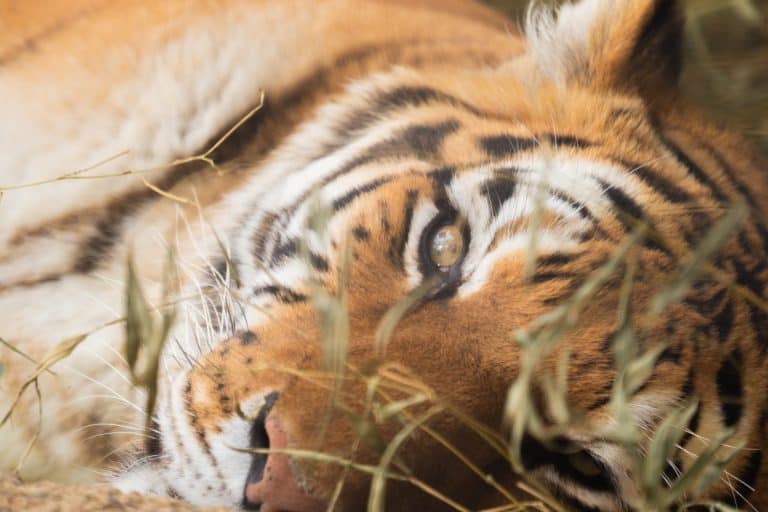
The most striking aspects of the tiger are its sheer size and memorable coloration. This color is a mixture of reddish-orange, almost yellow, around most of the body (generally more vivid in color than other tiger subspecies) and white around the legs, chest, and parts of the face. The signature black stripes, which are long and narrow along the body, allow the tiger to maintain camouflage while moving in dense foliage. All of this is combined with yellow eyes and a pink snout.

Behavior
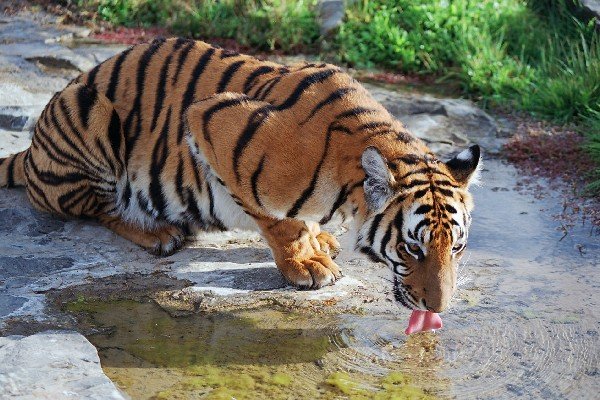
South China tiger drinking from a stream

South China tigers are excellent swimmers that can chase prey for miles down rivers and lakes.

Preferring to avoid avid social gatherings, the tiger does almost everything on its own and only comes together for breeding and child-rearing. When it meets another tiger, it has a suite of vocalizations to signify its emotional state, including fear, anxiety, dominance, and submission. The tiger also leaves behind scent markings through its urine to find mates or mark territory. It will sometimes police the territory aggressively against outside intruders.

The tiger prefers to hunt almost exclusively from the ground, but it does have the remarkable ability to climb trees and swim across large bodies of water. This swimming ability is so prolific that it can chase prey for miles down rivers and lakes. It also bathes in water to keep cool from the hammering summer sun.

One of the more unusual characteristics of the tiger is the presence of false eyes on the back of its head. Their purpose is not entirely clear, but the false eyes may deter potential predators from behind or help cubs follow their mother.

Because of its rarity, almost everything we know about this South China tiger subspecies comes from studies and observations in captivity or documents from the past. Very few members of the subspecies have been cited in the wild since the 1960s and 1970s.

Habitat
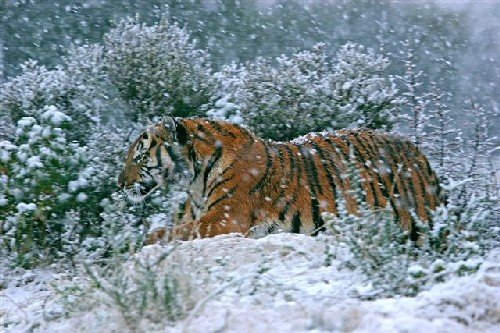
South China tiger running through the snow

South China tigers can adapt to many habitats but prefers forests and woodlands.

As recently as the 19th century, the South China tiger inhabited a huge range of territory throughout most of central China, including as far south as Hong Kong, but hunting and habitat loss have reduced it to a fraction of its former size. The last known group of tigers frequented a very narrow stretch of territory in south-central China. This distribution is highly isolated from other tiger subspecies, so there is no chance of them interbreeding.

The South China tiger can thrive in several different habitats, though it prefers forests and woodlands. A single individual can maintain multiple dens in caves, hollow trees, or dense vegetation but some tigers spend much of their lives in constant motion with no permanent home. The tiger’s territory, and the lengths to which it will travel to find food, largely depend on the number of prey in the area.

Population

According to the IUCN Red List, the South China tiger has been critically endangered since 1996. It is now possibly extinct in the wild since the last confirmed tiger sighting was in the 1990s. Some reports of wild tigers still existing are known to be fraudulent or unconfirmed. However, even if a few individuals exist in the wild, they are unlikely to stage a comeback on their own, as the numbers are too low.

This does not mean the subspecies are completely extinct. As of 2007, there were still approximately 70 individuals being kept captive in zoos or breeding bases, most of which reside in China. All of these specimens are descended from captive rather than wild-born populations. The South China tiger represents only a small fraction of the 3,500 or so tigers left in the world.

Diet
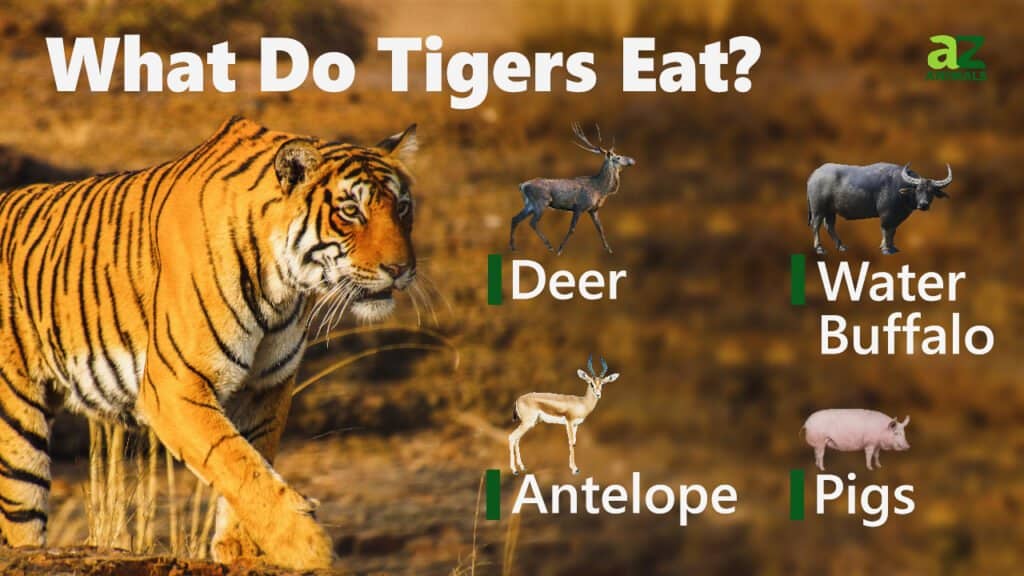
What Do Tigers Eat image
Tigers eat deer, water buffalo, antelope, and pigs.

The preferred diet of the South China tiger consists of large hoofed animals, including antelope, deer, and wild boar. Only if larger prey is exhausted or difficult to find will the tiger begin to pursue smaller prey such as birds, fish, frogs, and rodents. Very rarely will a tiger hunt and kill humans, but once it has acquired a taste, it may continue to hunt people for the rest of its life. Humans may make a tempting meal for tigers too wounded or old to catch their normal prey.

While on the prowl, the tiger sneaks carefully through the foliage and strikes its prey with a single, swift motion, sinking its teeth and claws into the back of the neck or skull. If this is done effectively, then it will kill the animal almost instantly. The dead carcass is then dragged into cover and fed on over the course of several days. The tiger eats most of but not the entire carcass. It has huge projections on its tongue, which are known as papillae, to remove flesh from the bone.

Although it is incredibly big and powerful, the tiger also requires an equal amount of food and territory to sustain itself. A single tiger needs somewhere between 20 and 25 square miles of hunting territory, and altogether, it can eat up to 90 pounds of food in a single meal. The tiger feasts on as much food as it can, as it can go several days or weeks before finding its next meal.

Predators and Threats
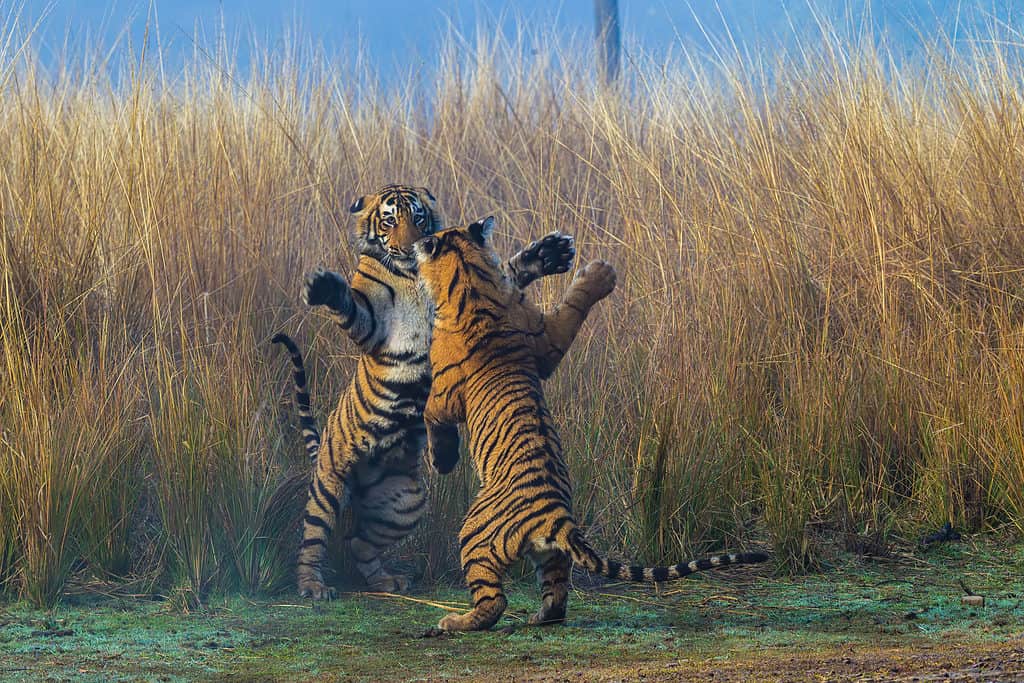
Two Tigers Fighting

Tigers are apex predators with humans being their main threat.

The South China tiger is an apex predator. It has no other natural predators in the wild, but there are nonetheless several threats to its survival. Tigers can be wounded and killed by larger prey, and adults are also known to sometimes kill young cubs. Due to negligent or even hostile actions by humans, the number of South China tigers dwindled dramatically over the course of the 20th century. Climate change could make it more difficult for numbers to improve in the future by altering their natural habitat.

Reproduction and Life Cycle
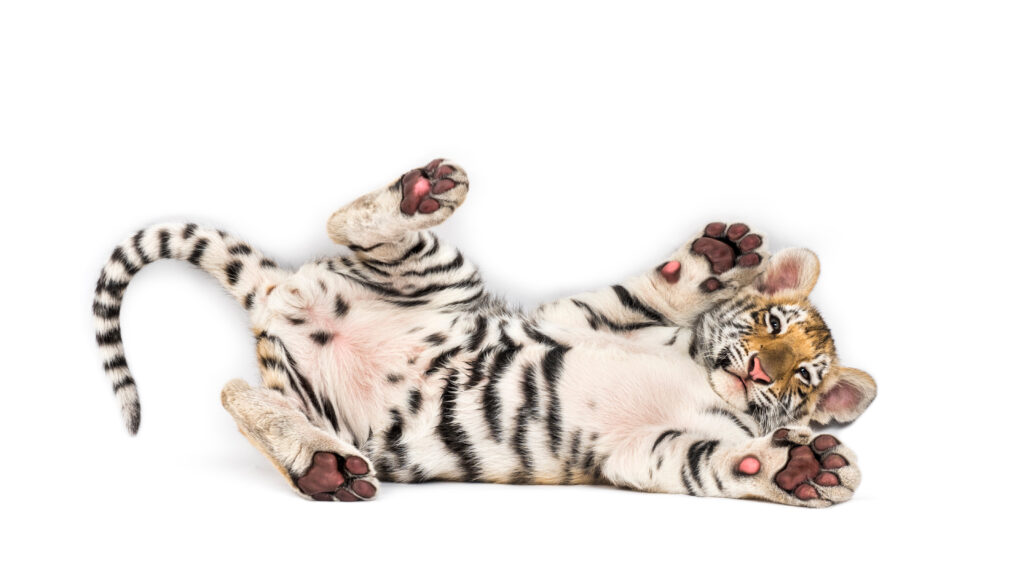
Playful tiger cub shows its paws

Tiger cubs stay with their mothers for 18 months or longer.

The South China tiger does not have a specific breeding season. This leaves it free to breed throughout the year, but it does tend to prefer the winter and spring months. The female will usually signal to the males via scent markings or vocalizations when she is in heat. This will sometimes induce males to compete with each other for access to reproductively available females.

After a pair mates, the male once again resumes its normal activity, while the female is left alone to carry the young for approximately 100 days before giving birth. A normal litter consists of one to four cubs at a time, only rarely more. The mother’s main duty is to protect the cubs, feed them, and teach them to hunt and survive until they are about 18 months old, after which they are free to roam off on their own and embark on a new independent life. Some cubs may stay with their mothers for longer.

It takes about three or four years for females to reach full sexual maturity; slightly longer for males. Because of these long maturation times, females only give birth every three to four years, which greatly slows population growth. The typical tiger lives approximately 10 years in the wild. However, some members of the species have been known to live more than 20 years, particularly in captivity.

View all 390 animals that start with S
How to say South China Tiger in ...
English
South China Tiger
Spanish
Tigre del sur de China

Sources

  1. Tigers-World
  2. Animal Diversity Web
  3. Zhihou Xia for Britannica
  4. Matt Walker for BBC
  5. World Wildlife Federation
Lisha Pace

About the Author

Lisha Pace

After a career of working to provide opportunities for local communities to experience and create art, I am enjoying having time to write about two of my favorite things - nature and animals. Half of my life is spent outdoors, usually with my husband and sweet little fourteen year old dog. We love to take walks by the lake and take photos of the animals we meet including: otters, ospreys, Canadian geese, ducks and nesting bald eagles. I also enjoy reading, discovering books to add to my library, collecting and playing vinyl, and listening to my son's music.

Thank you for reading! Have some feedback for us?


South China Tiger FAQs (Frequently Asked Questions)

Several local Chinese and international organizations, including Save China’s Tigers and World Wildlife Fund, are working to save the South China tiger from ultimate extinction. The most promising plan is to breed the tigers in captivity and release them into special tiger reserves throughout China. The return to the wild can be combined with better outreach to local communities and the protection of livestock from tiger attacks. However, due to the low population numbers, poor genetic variation, low birth rates, and high energy and territorial requirements, it is not guaranteed that the subspecies can recover fully. Even if a suitable habitat is found, the tiger will need ample amounts of prey animals to sustain adequate population numbers.