


S
Species Profile

Sperm Whale

Physeter macrocephalus

Square head, deep dives, giant squid.
wildestanimal/Shutterstock.com

Sperm Whale Ocean Range

Marine Species

Sperm Whale (Physeter macrocephalus) is a deep-ocean whale found in all major oceans from about 60°N to 60°S. It moves seasonally with prey, and males may make long latitude migrations. Common offshore near continental slopes, canyons, and seamounts; sometimes in the Mediterranean and Red Sea. Reaches seasonal sea-ice edge but is not ice-associated.

Loading ocean map...

Ocean Regions 19

atlantic_ocean north_atlantic south_atlantic pacific_ocean north_pacific south_pacific indian_ocean southern_ocean arctic_ocean mediterranean_sea caribbean_sea gulf_of_mexico north_sea south_china_sea sea_of_japan bering_sea coral_sea tasman_sea red_sea
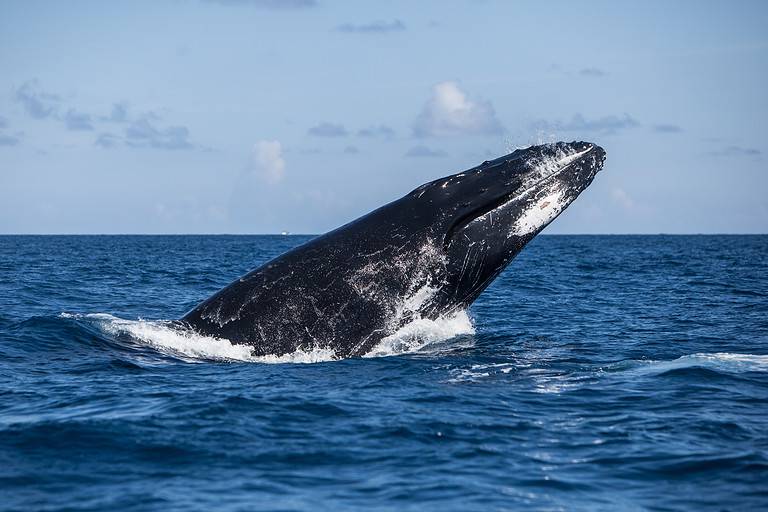
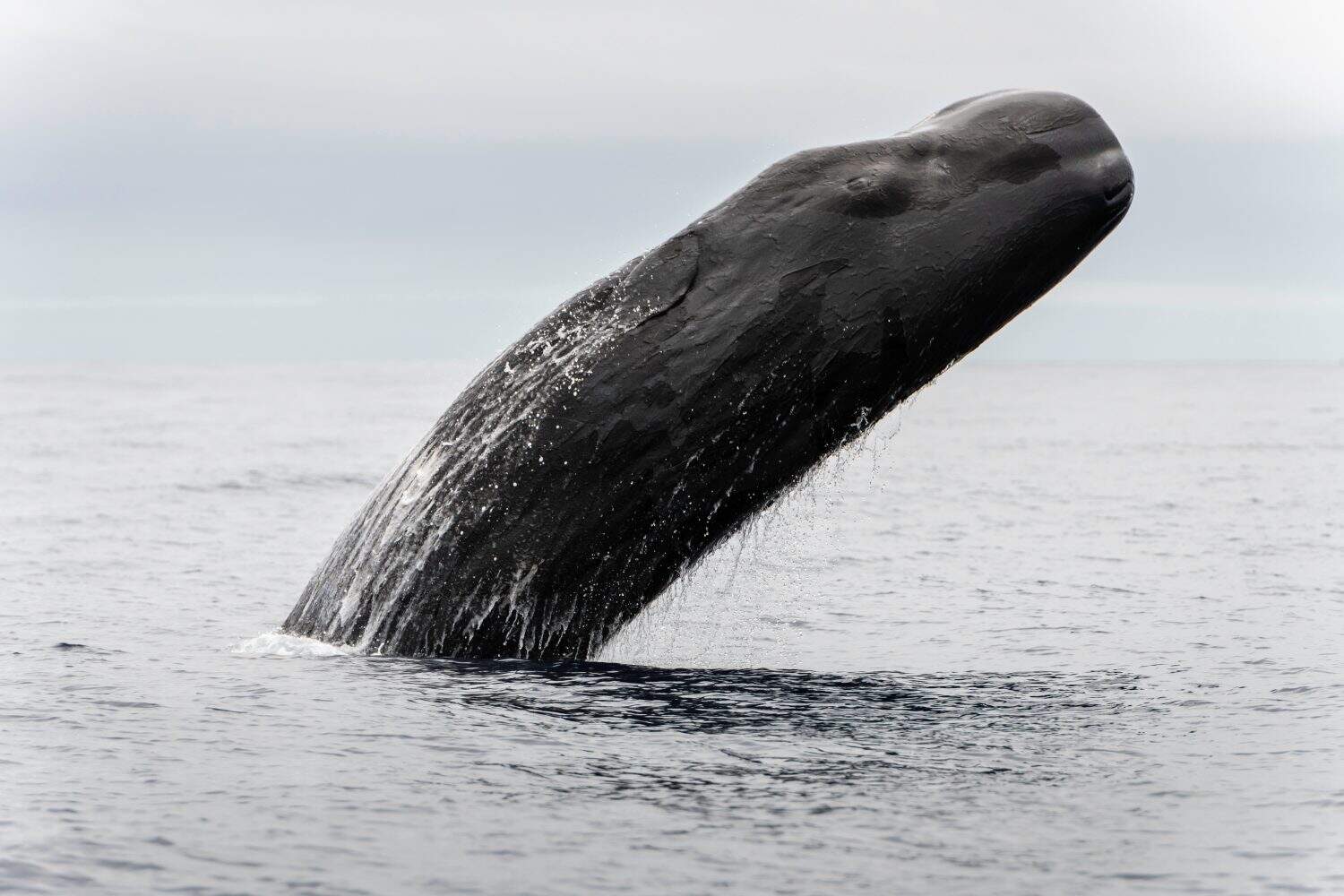
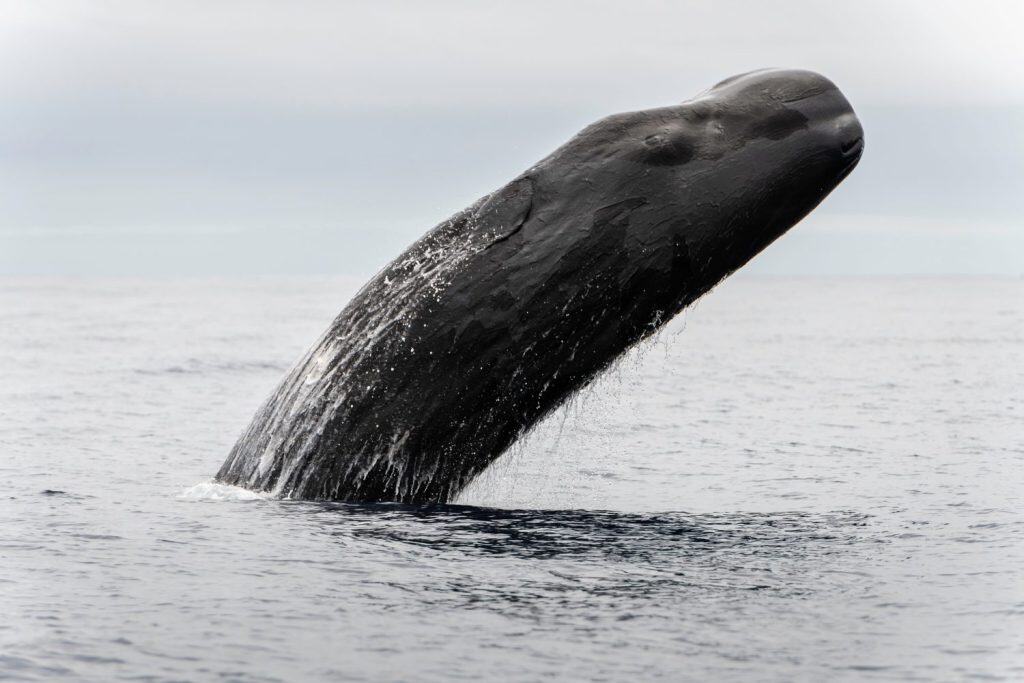
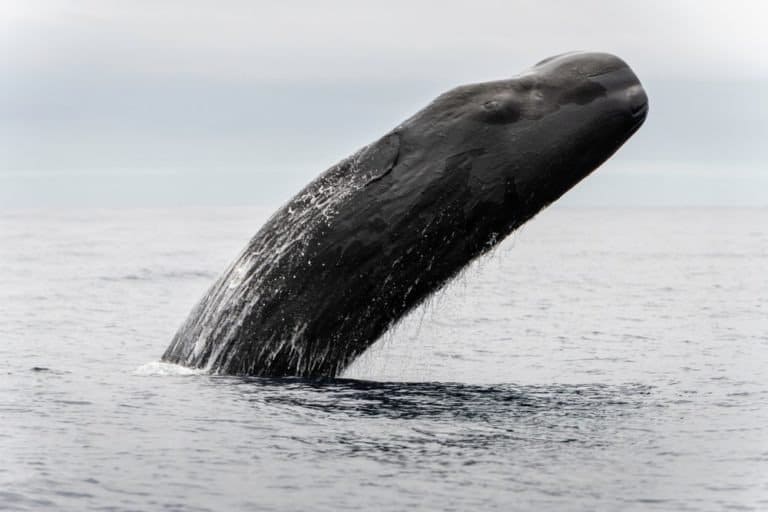
Sperm whale breaching off the coast of Pico Island, The Azores, Portugal.

At a Glance

Ocean Species
Also Known As Cachalot, Cachalote, Spermaceti whale, Pot whale
Diet Carnivore
Activity Cathemeral
Lifespan 60 years
Weight 57000 lbs
Status Vulnerable
Did You Know?

Adult males are typically 15-18 m long; females ~11-12 m (NOAA Fisheries; Whitehead 2003).

Scientific Classification

The sperm whale is the largest toothed whale and a globally distributed deep-diving cetacean, famous for its massive square head (housing the spermaceti organ) and for hunting squid at great depths.

Kingdom
Animalia
Phylum
Chordata
Class
Mammalia
Order
Cetacea
Family
Physeteridae
Genus
Physeter
Species
Physeter macrocephalus

Distinguishing Features

  • Very large, block-shaped head with a prominent spermaceti organ
  • Single blowhole positioned left-of-center at the front of the head, producing a characteristically angled blow
  • Toothed lower jaw (upper jaw largely toothless), adapted for grasping prey
  • Extreme deep-diving ability; specialized physiology for long, deep foraging dives

Physical Measurements

Males and females differ in size

Length
54 ft 2 in (45 ft 11 in – 67 ft 3 in)
34 ft 5 in (26 ft 11 in – 36 ft 9 in)
Weight
49.6 tons (38.6 tons – 62.8 tons)
15.4 tons (12.1 tons – 16.5 tons)
Top Speed
23 mph
swimming

Appearance

Primary Colors
Secondary Colors
Skin Type Thick, tough, hairless cetacean skin; characteristically wrinkled/corrugated on flanks and caudal peduncle, commonly scarred (especially adult males).
Distinctive Features
  • Largest living odontocete (toothed whale); adults commonly: females ~10-12 m, males ~15-18 m; exceptional males reported ~20 m (NOAA; Encyclopedia of Marine Mammals).
  • Massive, blunt, square head ~1/3 of body length housing the spermaceti organ and "junk" complex (implicated in sound production/echolocation and buoyancy hypotheses).
  • Single blowhole located left-of-center at the front of head; produces low, bushy, forward-angled blow.
  • Low dorsal hump followed by a series of knuckles/ridges along the back (no tall dorsal fin).
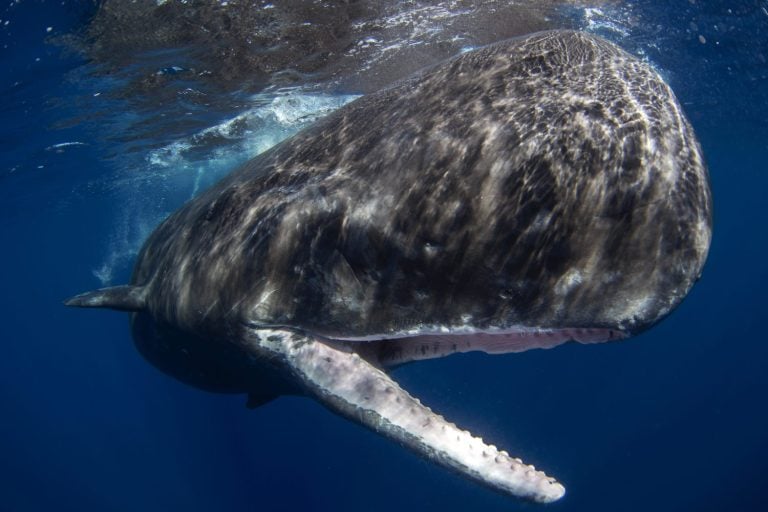
  • Narrow lower jaw with large conical teeth (typically functional teeth mainly in the lower jaw); upper jaw sockets often lack erupted teeth.
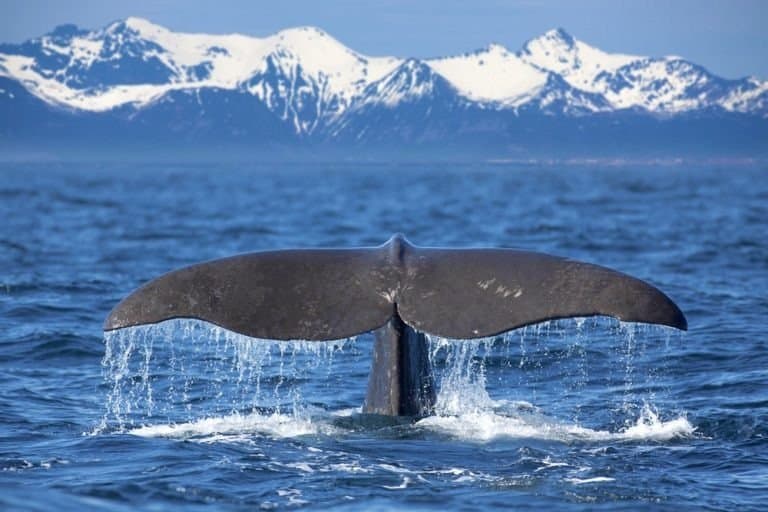
  • Broad triangular tail flukes with deep central notch; powerful peduncle for deep-diving propulsion.
  • Frequent white linear scars and circular rake marks; adult males often heavily scarred from male-male interactions and prey encounters.
  • Deep-diving squid predator: routine foraging dives often ~400-1200 m for ~30-45 minutes; maximum depths and durations vary, with tag studies reporting dives approaching ~2000+ m and ~90 minutes (variability acknowledged; NOAA and tagging literature).
  • Social structure: matrilineal units of females/young; adult males more solitary and wide-ranging, especially outside breeding areas.
  • Key anthropogenic threats affecting body condition/appearance: entanglement scarring, ship-strike trauma, and chronic ocean-noise exposure (NOAA/IUCN assessments).

Sexual Dimorphism

Strong size dimorphism: adult males are much longer and several times heavier than adult females, with proportionally larger heads and more extensive scarring. Females/immatures tend to be smoother-bodied and occur in stable matrilineal groups; males are more solitary.

  • Typically ~15-18 m (exceptional reports ~20 m) and up to ~45,000-57,000 kg; markedly larger than females (NOAA; EMM).
  • Proportionally larger, more massive head and forebody; spermaceti organ correspondingly larger.
  • Heavier, more widespread scarring and rake marks, especially on head and flanks.
  • More likely to show callused abrasions and healed wounds from male-male competition.
  • Typically ~10-12 m and ~14,000-18,000 kg; smaller overall with less massive head (NOAA; EMM).
  • Generally fewer and lighter scars than adult males (though scars still common).
  • Often observed with calves/juveniles in cohesive matrilineal units.

Did You Know?

Adult males are typically 15-18 m long; females ~11-12 m (NOAA Fisheries; Whitehead 2003).

A sperm whale's head can make up ~1/3 of its body length, dominated by the spermaceti organ and associated nasal complex (Whitehead 2003).

They produce among the loudest biological sounds: usual echolocation clicks can exceed ~230 dB re 1 microPa at 1 m source level (Mohl et al. 2003, JASA).

Lower jaws carry 18-26 pairs of large conical teeth; upper teeth are reduced and often don't erupt (Jefferson, Webber & Pitman 2015).

Calves are born about 4 m long after ~14-16 months' gestation and nurse for multiple years (Whitehead 2003; NOAA).

Females can live 70+ years; males commonly ~60 years, with males maturing later and ranging farther (Whitehead 2003; NOAA).

Their brain is the largest of any animal, about 7-8 kg in adults (e.g., Ridgway & Hanson 2014).

Unique Adaptations

  • Spermaceti organ + junk (fatty "acoustic lens"): a highly specialized sound-generation and focusing system for powerful biosonar; additional hypotheses include roles in buoyancy/thermoregulation, though function is still debated (Cranford 1999; Whitehead 2003).
  • Gigantic sound source: the nasal complex can generate extremely high-intensity clicks useful for long-range prey detection in the deep sea (Møhl et al. 2003).
  • Deep-diving physiology: high oxygen stores (large blood volume and muscle myoglobin), dive bradycardia, and flexible ribcage/lung collapse to reduce nitrogen uptake-key for repeated deep dives (reviewed in Hooker et al. 2012; Ponganis 2015).
  • Asymmetric skull and single left blowhole: cranial asymmetry is tied to the nasal sound-production apparatus in odontocetes, extreme in sperm whales (Cranford 1999).
  • Lower-jaw tooth design: robust conical teeth and a narrow rostrum suit grasping large, soft-bodied prey like squid and fish, with the upper jaw acting as a receiving socket (Jefferson et al. 2015).

Interesting Behaviors

  • Extreme deep-diving foraging: routine hunting dives commonly ~30-50 minutes, often several hundred to >1,000 m depending on prey layer and region (Watwood et al. 2006, J. Exp. Biol.).
  • Precision echolocation: rapid click trains ("buzzes") are used at the final approach to prey, similar to toothed-whale terminal feeding sequences (Miller et al. 2004; Watwood et al. 2006).
  • Coda "dialects": social units use distinctive rhythmic click patterns (codas) that can mark clan identity across ocean basins (Rendell & Whitehead 2003).
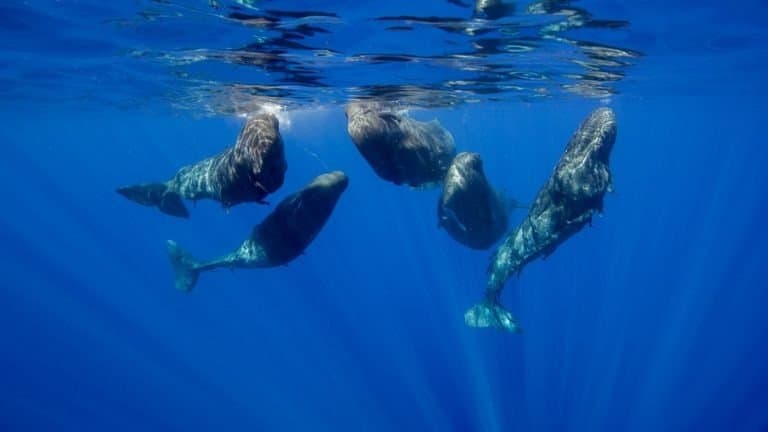
  • Matrilineal society: females and juveniles live in stable, long-term social units with cooperative care (alloparenting/babysitting) while adults forage (Whitehead 2003).
  • Sex and range segregation: adult males often become more solitary or form small bachelor groups and range to higher latitudes than female/juvenile groups (Whitehead 2003).
  • "Logging" at the surface: individuals may rest motionless, often in groups, between foraging bouts-making them vulnerable to ship strikes in busy lanes (NOAA; IWC).

Cultural Significance

Sperm Whale (Physeter macrocephalus) shaped sea travel history: spermaceti oil lit lamps and greased gears; ambergris was used in perfume. They are in Moby-Dick and support whale-watching and photo ID studies. Threats: fishing entanglement, ship strikes, pollution, ocean noise.

Myths & Legends

In 19th-century whaling lore-later immortalized in Melville's "Moby-Dick"-the white sperm whale becomes a near-mythic force of the sea, an adversary embodying fate, obsession, and the unknown depths.

Seafarers' tales around the world linked "devilfish" battles in the deep to clashes between sperm whales and giant squid; these stories helped feed European kraken traditions of monstrous cephalopods rising from the abyss.

Ambergris, linked to the sperm whale (Physeter macrocephalus), had rich Old World stories: people long ago called it hardened sea-foam, a product of undersea springs, or ocean cast-up, making it prized for medicine and perfume.

The species name's history became a kind of nautical "naming legend": early whalers mistook spermaceti for semen, giving rise to the common name "sperm whale," a maritime misunderstanding preserved in language and whaling-era storytelling.

In some Pacific voyaging traditions, whales, including the Sperm Whale (Physeter macrocephalus), are seen as ocean guardians and kin; stories of being guided or carried often lack species detail but show great whales.

Conservation Status

VU Vulnerable

Facing a high risk of extinction in the wild.

Population Decreasing

Protected Under

  • International Whaling Commission (IWC) commercial whaling moratorium
  • CITES Appendix I (international trade generally prohibited)
  • Convention on Migratory Species (CMS) Appendices I & II
  • United States: Endangered Species Act (Endangered)
  • United States: Marine Mammal Protection Act (MMPA)
  • European Union: Habitats Directive Annex IV (strict protection)

Life Cycle

Birth 1 calf
Lifespan 60 years

Lifespan

In the Wild
40–71 years
In Captivity
1–180 years

Reproduction

Mating System Polygyny
Social Structure Aggregation Group
Breeding Pattern Transient
Fertilization Internal Fertilization
Birth Type Internal_fertilization

Mature males periodically join matrilineal female units in low latitudes, competing for access and mating with multiple females. Copulation is internal; gestation ~14-16 months, calves nurse for years, and females often babysit each other's young.

Behavior & Ecology

Social Pod Group: 12
Activity Cathemeral
Diet Carnivore Large deep-water squids (cephalopods dominate most stomach-content datasets for Physeter macrocephalus; regional "key prey" often include ommastrephid and gonatid squids).
Seasonal Migratory 1,864 mi

Temperament

Strongly social and cooperative within female/immature units; individuals show long-term associations (Whitehead, 2003).
Generally non-aggressive toward vessels when undisturbed; avoidance varies by population and exposure.
Adult males are more solitary and wide-ranging; can be assertive during breeding encounters.
Displays coordinated anti-predator behavior (e.g., rosette formation) during killer whale harassment (Whitehead & Weilgart, 2000).

Communication

Broadband echolocation clicks used for navigation and prey detection during deep dives Mohl et al., 2000
Codas Stereotyped click patterns) used for social identity and group cohesion; culturally transmitted (Rendell & Whitehead, 2003
Rapid 'creaks' or buzzes associated with prey capture attempts Miller et al., 2004
Slow clicks produced primarily by males, linked to long-range signaling and breeding context Weilgart & Whitehead, 1997
Tactile contact such as rubbing and body-to-body positioning within social units.
Coordinated surfacing and spacing patterns that maintain cohesion between diving bouts.
Surface displays including breaching, lobtailing, and fluke slaps during social interactions.
Defensive group formations (rosette) with heads inward and flukes outward against predators.

Habitat

Open Ocean Deep Sea Seabed/Benthic Coastal
Biomes:
Terrain:
Coastal Island
Elevation: Up to 9816 ft 3 in

Ecological Role

A globally distributed upper-trophic-level deep-sea predator specializing on large cephalopods; links deep pelagic food webs to surface ecosystems via vertical nutrient transport.

Regulates populations of deep-sea squids and other midwater prey (top-down control in meso-/bathypelagic ecosystems). Biological nutrient pump ("whale pump"): releases nitrogen and other nutrients at/near the surface after deep foraging, enhancing local productivity (concept synthesized by Roman & McCarthy, 2010). Iron recycling in iron-limited waters: sperm-whale fecal plumes can supply bioavailable iron that stimulates phytoplankton and can enhance carbon export (e.g., Lavery et al., 2010, Proc. R. Soc. B). Redistributes energy and nutrients across depths (deep carbon ingestion with partial surface remineralization), influencing biogeochemical cycling.

Diet Details

Main Prey:
Deep-water squids Gonatid squid Histioteuthid squid Large mesopelagic and bathypelagic cephalopods Octopods Deep-water fishes Elasmobranchs +1

Human Interaction

Domestication Status

Wild

Sperm Whale (Physeter macrocephalus) has never been domesticated. Humans hunted it for spermaceti oil and ambergris in the 18th–20th centuries; hunting largely stopped after the 1986 IWC ban. Captivity is not viable: they are huge (males ~15–20 m, females ~11–13 m), deep divers, live long, live in family groups, and are harmed by loud human noise.

Danger Level

Moderate
  • Rare but documented aggressive/defensive interactions with small vessels (historical cases include ramming/stove-in incidents; most famously the 1820 sinking of the whaleship Essex, widely attributed to a sperm whale).
  • Physical hazard due to extreme size and power: close approaches by boats can lead to collision, capsize risk for small craft, or injury during surfacing/lobtailing.
  • Indirect hazards during human activities (whaling/handling/entanglement responses): historically high risk to whalers; modern risks primarily to responders/boaters when approaching stressed, entangled, or stranded animals.
  • Navigation hazard in shipping lanes (ship strikes): generally a greater danger to whales than to humans, but collisions can endanger crews and vessels.

As a Pet

Not Suitable as Pet

Legality: Sperm Whale (Physeter macrocephalus) cannot be kept as a private pet in almost all countries. Trade is highly restricted (CITES Appendix I). Having or catching one needs special government permits for research, public display, or rescue or rehab.

Care Level: Expert Only

Purchase Cost:
Lifetime Cost: $5,000,000 - $50,000,000

Economic Value

Uses:
Historical commercial whaling Ecotourism (whale watching) Scientific research (tagging/acoustics/ecology) Cultural/literary value
Products:
  • spermaceti oil (historical: candles, lubricants)
  • ambergris (historical/perfumery; opportunistically collected)
  • meat (regional/historical consumption)
  • teeth/ivory for scrimshaw (historical)

Relationships

Ecological Equivalents 5

Animals that fill a similar ecological role in their ecosystem

Pygmy sperm whale Kogia breviceps Smaller odontocete; a squid specialist that uses suction feeding and echolocation, and overlaps with sperm whales in diet but dives much less. Sperm whales make long dives (typically 30–45 minutes to depths of hundreds to >1,000 m; recorded dives ~2,250 m and ~2 hours).
Dwarf sperm whale Kogia sima Small sperm-whale relative that hunts mesopelagic squid and fish using echolocation, sharing offshore habitat and prey. It is ecologically comparable to Physeter macrocephalus, which often has cephalopod beaks in its stomach.
Cuvier's beaked whale Ziphius cavirostris Deep-diving squid predator occupying a bathypelagic foraging niche shared with other extreme divers (other beaked whales). Hunts deep cephalopods, undertakes long dives, and uses very loud echolocation clicks (≈230 dB).
Blainville's beaked whale Mesoplodon densirostris Occupies a similar niche as a deep-water suction-feeding cephalopod predator, overlaps strongly in habitat (offshore slope/deep ocean), and uses echolocation during deep foraging dives. This is a close ecological relative despite being taxonomically distant (Ziphiidae vs. Physeteridae).
Short-finned pilot whale Globicephala macrorhynchus A large odontocete that commonly targets squid (often at depth) and forms social groups. It overlaps with sperm whales in prey type (cephalopods) and offshore distribution, serving as a comparably sized, socially foraging squid specialist, though generally shallower-diving than sperm whales.

Found in all of the world’s oceans, sperm whales were once hunted extensively; a moratorium on commercial whaling in 1986 has allowed sperm whale populations to begin recovering, though they remain classified as Vulnerable and their numbers are still well below pre-whaling levels. Despite their colossal size, sperm whales can move at speeds of up to 23 miles per hour and dive to depths as far as 10,000 feet.

5 Incredible Sperm Whale Facts

  • When diving for food, these whales can hold their breath for up to 90 minutes at a time.
  • Their massive tail fluke, measuring an average of 16 feet from end to end, allows them to travel in bursts of up to 23 miles per hour.
  • Two other species of sperm whale exist but are relatively unknown — the pygmy sperm whale and the dwarf sperm whale.
  • These whales will dive up to 3,280 feet to find food, and their skeletons show pitting that may be indicative of decompression sickness.
  • Female sperm whales form lasting bonds with other females, forming social units that often last entire lifetimes.
Animals With the Toughest Skin-sperm whale

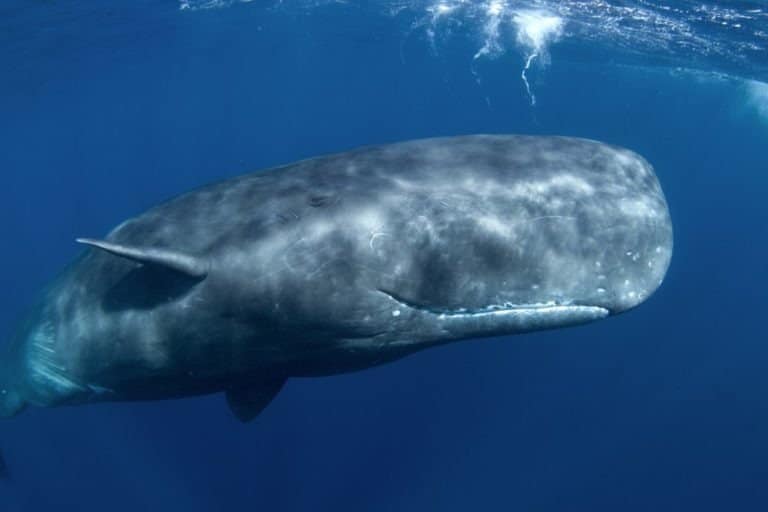
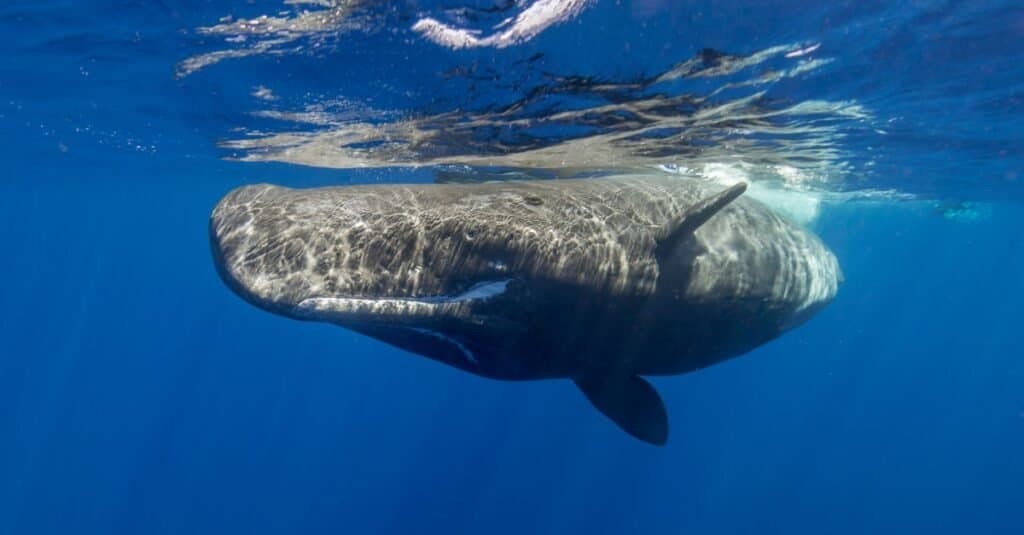
A Sperm whale’s head takes up a third of its body.

Classification and Scientific Name

Sperm whales belong to the class Mammalia, the order Cetacea, the family Physeteridae, and the genus Physeter. The scientific name for this cetacean is Physeter macrocephalus; the word Physeter is derived from a Greek word that means “blower,” which refers to the whale’s blowhole. The word macrocephalus means “big-headed,” which refers to the creature’s massive head, which makes up nearly one-third of its skeleton. This whale is also known by the specific name Physeter catadon; the word catadon means “down tooth,” which refers to the fact that only the bottom teeth erupt while the top remains beneath the gums.

The sperm whale is also called a cachalot, which may be derived from an archaic French term meaning “big teeth” or a Portuguese word meaning “big head.”

Evolution
Livyatan - Ancient Sperm Whale

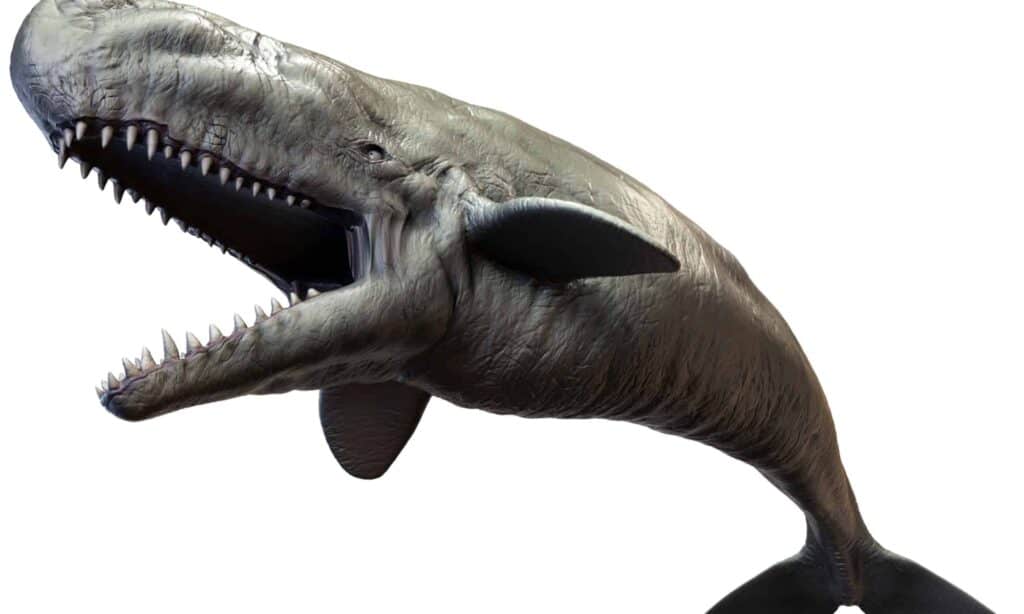
Livyatan mellvillei is an ancient ancestor of the sperm whale with one of the largest bites in the history of life on earth.

During the middle of the Miocene epoch, around 12 million years ago, two giant predators roamed the seas. Megalodon was the ancient ancestor of the shark — a much bigger, more vicious version of the great white shark of today. The other gargantuan killer was the ancestor of the sperm whale, Livyatan melvillei, about the same size as the modern bull sperm whale — but with one of the largest bites in the history of life on earth.

Livyatan’s giant head and mouth had evolved to equip the animal with the bite needed to capture, kill, and consume baleen whales — its main source of food. Scientists believe that Livyatan and Megalodon were as important to Miocene marine ecosystems as orcas and great whites are today. Present-day sperm whales retain the giant head and teeth, as well as the organ referred to as spermaceti — an oil-filled sac prized by whalers. Its purpose in Livyatan and in sperm whales is still unknown.

Species
Pygmy Sperm Whale
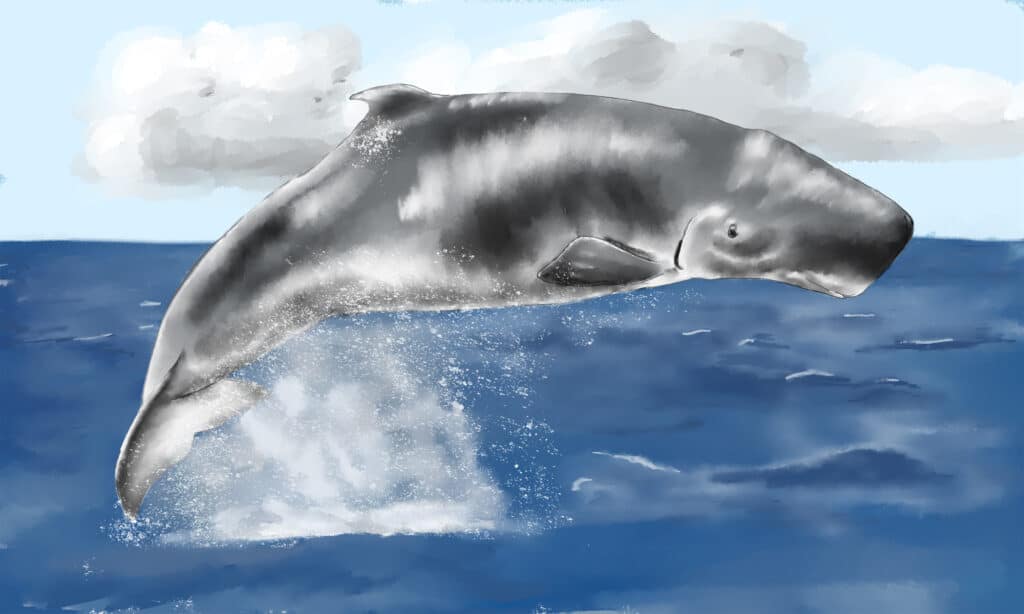
Pygmy sperm whales can produce a dark, ink-like liquid to escape from predators.

This whale is the only living member of the genus Physeter, and it is one of three living species in the sperm whale family, Physeteridae. The other two species in that family are the pygmy sperm whale, Kogia breviceps, and the dwarf sperm whale, Kogia simus. Reminiscent of dolphins, pygmy and dwarf sperm whales measure between 8 and 13 feet long and feature grey bodies and white bellies.

Appearance

The largest toothed predators on earth, these whales grow to a size of 49 to 59 feet in length and between 35 and 45 tons in weight. Males grow to an average size of 52 feet and 45 tons, while females grow to an average of 40 feet and 15 tons. Their massive heads — their skulls make up about one-third of their skeletons — feature prominent, rounded foreheads and narrow lower jaws. The head houses the largest brain of any creature on earth — it weighs up to five times more than a human brain — along with large quantities of spermaceti, an oily fluid that turns waxy when cold. Once thought to be sperm, the substance remains somewhat mysterious to scientists. Some believe that spermaceti may help these whales alter their buoyancy for more effective diving, but its exact purpose is unclear.
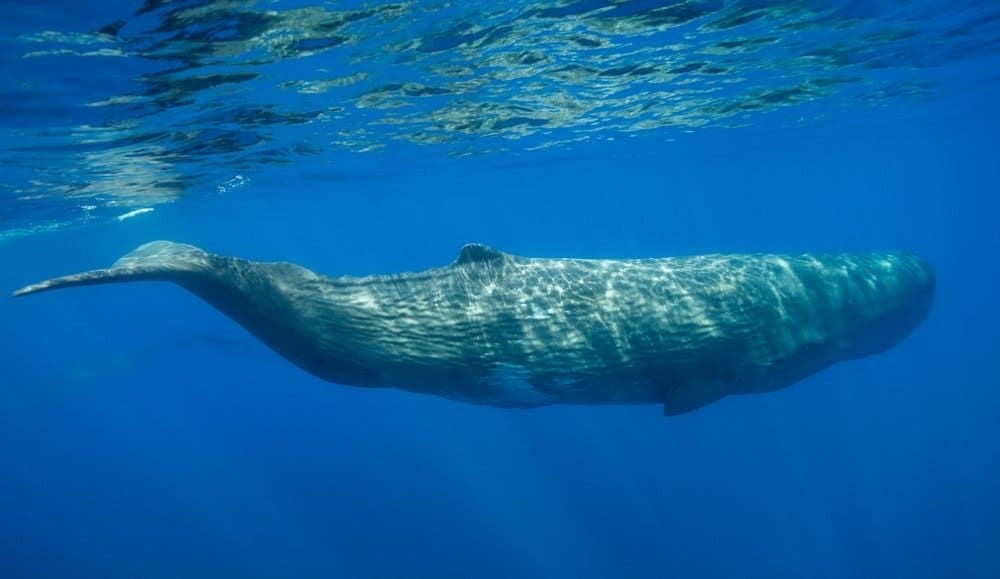
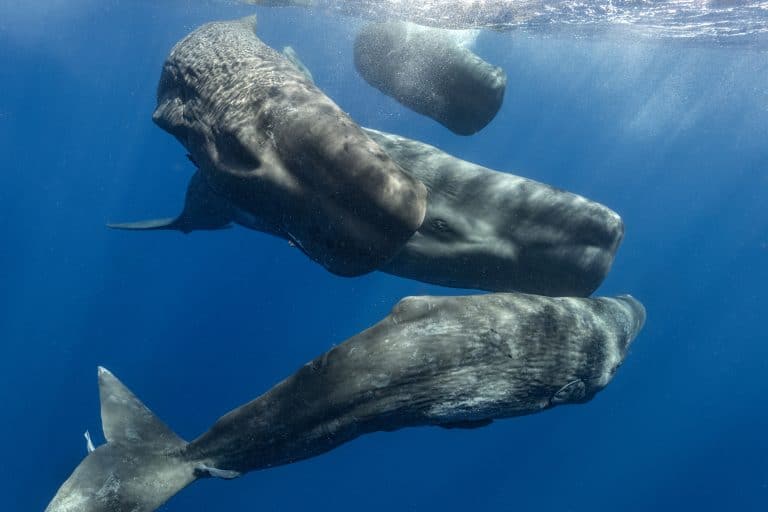
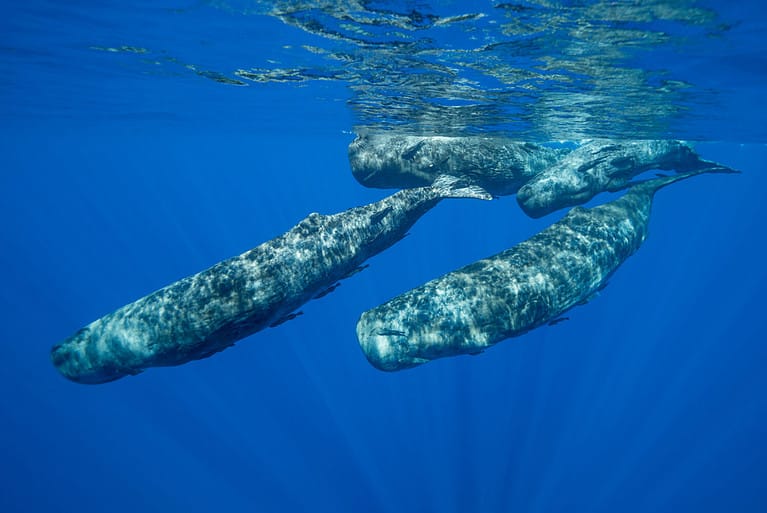
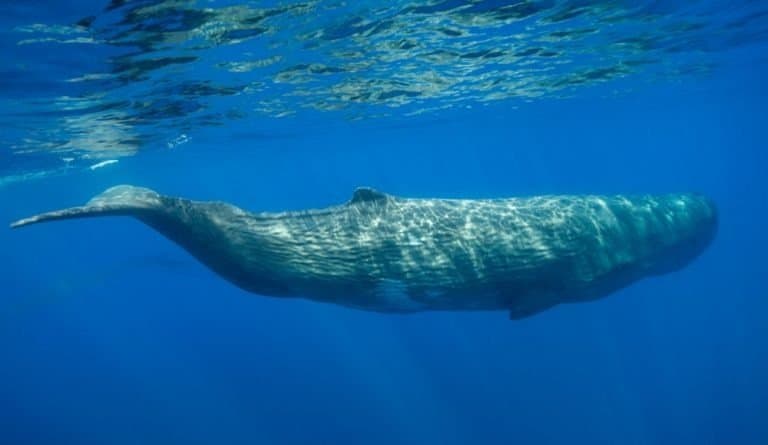
Male sperm whale swimming, Ligurian Sea, Pelagos Sanctuary, Mediterranean, Italy.

The sperm whale is the only living creature with an asymmetrical blowhole on the left side of its head.

The skin behind the head is normally wrinkled, and the skin across the body is typically dark grey; some whales have white patches on their bellies.

This whale is the only living creature with a single, asymmetrical blowhole, which is found on the left side of the crown of its head. The interior of their mouths is usually bright white, and 20 to 26 large teeth are found on either side of the lower jaw; the teeth along the top rarely erupt from the gums. Sperm whales have paddle-shaped flippers, small dorsal fins, and small, triangle-shaped flukes. However, its tail fluke can measure up to 16 feet long from tip to tip, allowing it to travel in short spurts at speeds of up to 23 miles per hour.
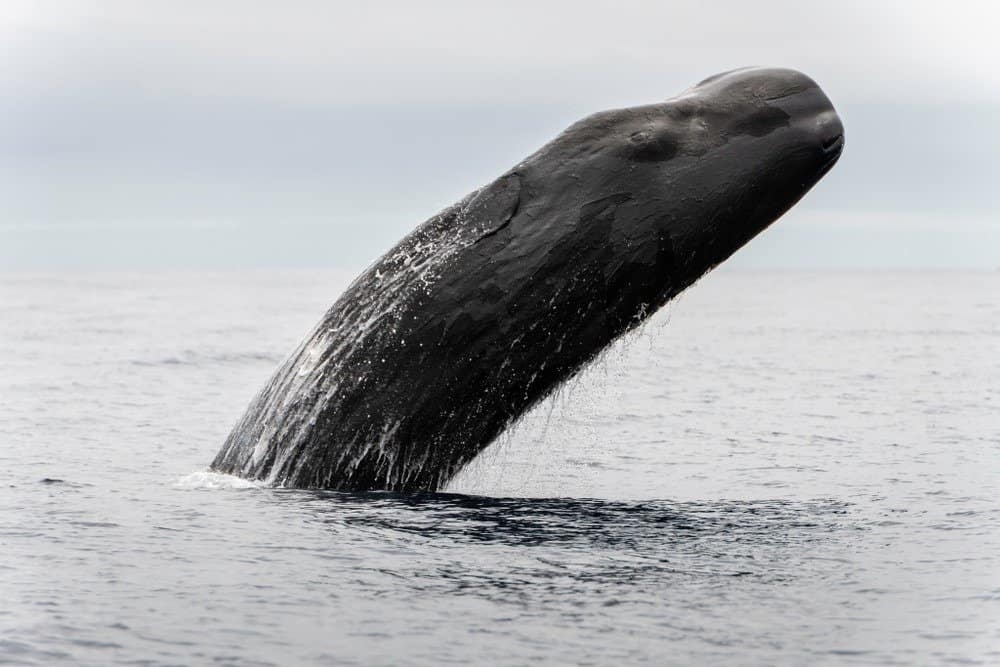
Sperm whale breaching off the coast of Pico Island, The Azores, Portugal.

Sperm whale breaching off the coast of Pico Island, The Azores, Portugal.

Distribution, Population, and Habitat

Sperm whales have one of the broadest global populations of any marine animal species. Heavily targeted by whalers primarily during the 18th and 19th centuries, their population declined drastically until a moratorium was called in 1986 by the International Whaling Commission. Since then, it is believed that their population levels have increased again. No official accounting is available, but it is estimated that there are anywhere from 300,000 to 450,000 sperm whales in the world today. This whale is classified as Vulnerable by the IUCN.

These toothed predators are found in all of the world’s oceans. However, their populations tend to be found primarily in waters near Alaska, New England, the Mid-Atlantic, the West Coast, and the Pacific Islands.

Predators and Prey

While they don’t face much in the way of natural predators, these whales face numerous threats that are mostly caused by humans. These include becoming entangled in fishing gear, vessel strikes, marine debris, oil spills, and other types of contamination. Noise pollution from ships and other human activities interrupts their behavior and may impact their survival. Climate change is increasingly recognized as a significant threat to sperm whales, alongside other major threats such as ship strikes, entanglement, and pollution.

What Eats Sperm Whales?

These whales do not face any true predators in the wild. However, young or injured whales may be hunted by killer whales or orcas.

What Do Sperm Whales Eat?

As carnivores, sperm whales’ diets consist almost entirely of other creatures. They mostly target larger species, and their diets are mostly made up of sharks, skates, squid, and fish. They can eat up to one ton, or between 3 and 3.5 percent of their body weight, per day.

Reproduction and Lifespan

The average lifespan for these whales is around 60 years. Female whales and young male whales live together in pods of between 15 and 20 individuals, while mature male sperm whales tend to travel solo or move from group to group.
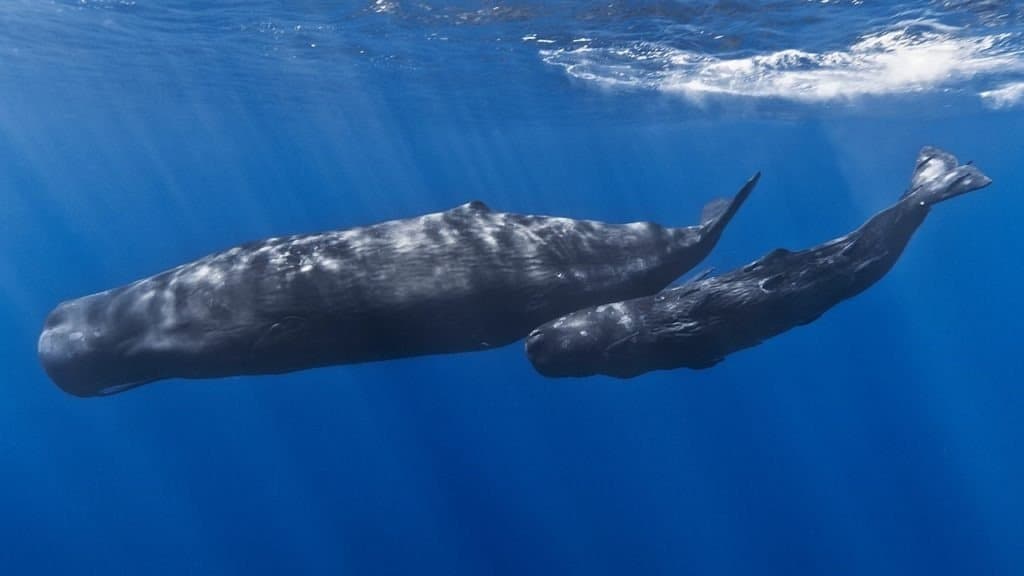
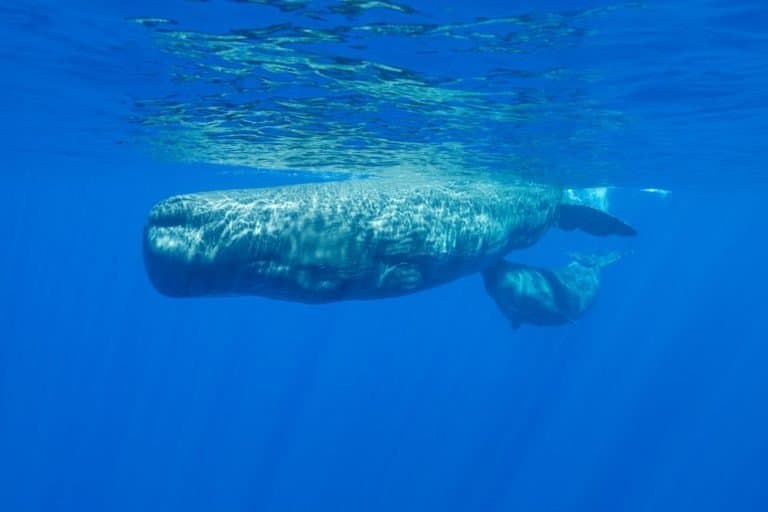
A mother sperm whale and her calf off the coast of Mauritius.

Female sperm whales are believed to engage in communal childcare.

Females and young males stay in tropical and subtropical waters throughout the year, and they are believed to engage in communal childcare. However, males tend to migrate toward higher latitudes alone or in groups before returning toward the equator to breed. Female sperm whales reach sexual maturity at around nine years of age or about 29 feet in length; they reach physical maturity at around 30 years or about 35 feet in length. Females produce one calf every five to seven years, on average. After a gestation period of 14 to 16 months, a calf measuring an average of 13 feet in length is born. They can start eating solids at around one year of age, but they often continue nursing for many years.

Male sperm whales stay the same size as females for roughly the first 10 years of life. However, they continue to grow substantially until well into their 30s. They reach sexual maturity in their late 20s and physical maturity at about 50 years, or at about 52 feet in length. Males typically leave their pods between the ages of four and 21 years; they often join “bachelor schools” made up of other males around the same size and age. As they age, they start migrating toward the poles, making trips back to tropical waters to breed.

Sperm whales are known for being vocal, and they make lots of sounds. Indeed, their sounds can measure up to 530 decibels. Sometimes, they make sounds to communicate; other times, they do so for echolocation purposes.

The average lifespan for a sperm whale is about 60 years.

Whale Oil

Ambergris, ambergrease, ambre gris or grey amber

Ambergris from the sperm whale is still used in perfumes.

Sperm whales were once hunted extensively for their spermaceti, which was used in candles, oil lamps, and as a lubricant. They were also targeted for their ambergris, which is believed to develop in their stomachs around squid beaks, which was used — and still is used — in perfumes. However, a moratorium on commercial whaling was enacted in 1986, though some countries continue limited whaling under objections or reservations. They have never been popularly consumed as food.

View all 390 animals that start with S

Sources

  1. Britannica / Accessed December 6, 2020
  2. NOAA Fisheries / Accessed December 6, 2020
  3. National Geographic / Accessed December 6, 2020
Lisha Pace

About the Author

Lisha Pace

After a career of working to provide opportunities for local communities to experience and create art, I am enjoying having time to write about two of my favorite things - nature and animals. Half of my life is spent outdoors, usually with my husband and sweet little fourteen year old dog. We love to take walks by the lake and take photos of the animals we meet including: otters, ospreys, Canadian geese, ducks and nesting bald eagles. I also enjoy reading, discovering books to add to my library, collecting and playing vinyl, and listening to my son's music.

Thank you for reading! Have some feedback for us?


Sperm Whale FAQs (Frequently Asked Questions)

Sperm whales are found in all of the world’s oceans. However, their populations are most highly concentrated around the Pacific Islands, Alaska, America’s West Coast, New England, and the Mid-Atlantic.