


S
Species Profile

Squid

Teuthida

Ten-limbed sprinters of the sea
DiveIvanov/Shutterstock.com
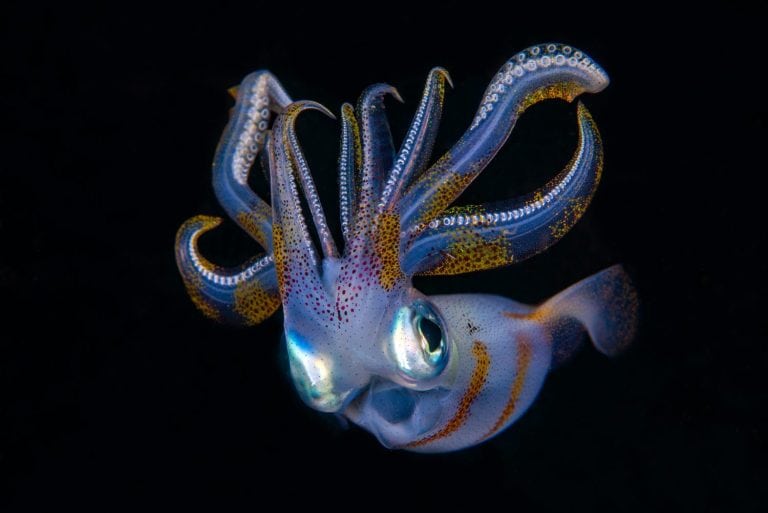
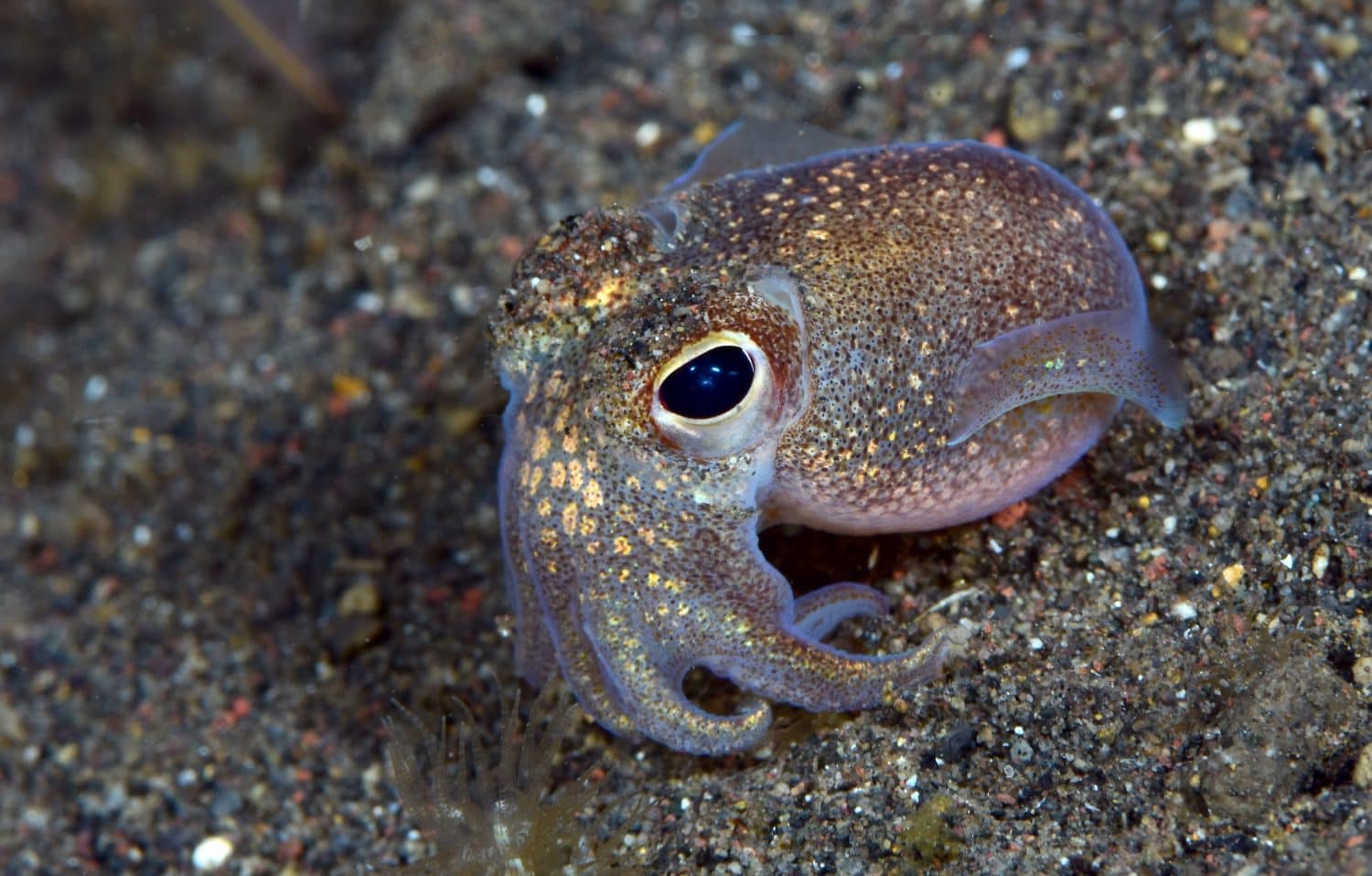
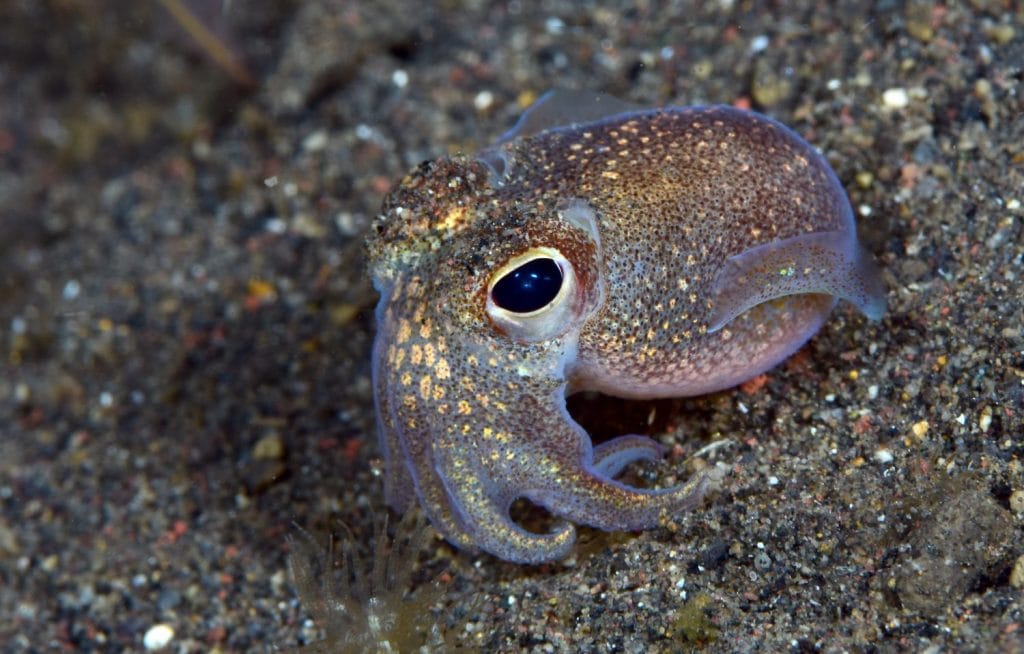
Amazing underwater world - Sepiadarium kochi - White-eyed bobtail squid. Diving and underwater macro photography in Tulamben, Bali, Indonesia.

At a Glance

Order Overview This page covers the Squid order as a group. Stats below are general traits shared across the order.
Also Known As Calamari, Calamar, Calamaro, Lula, Ika, Inkfish
Diet Carnivore
Activity Nocturnal+
Lifespan 12 years
Weight 500 lbs
Status Not Evaluated
Did You Know?

Across Teuthida, body size spans from small squids with mantles only a few cm long to giants with mantles >2 m and total lengths reaching ~10-13 m (tentacles included).

Scientific Classification

Order Overview "Squid" is not a single species but represents an entire order containing multiple species.

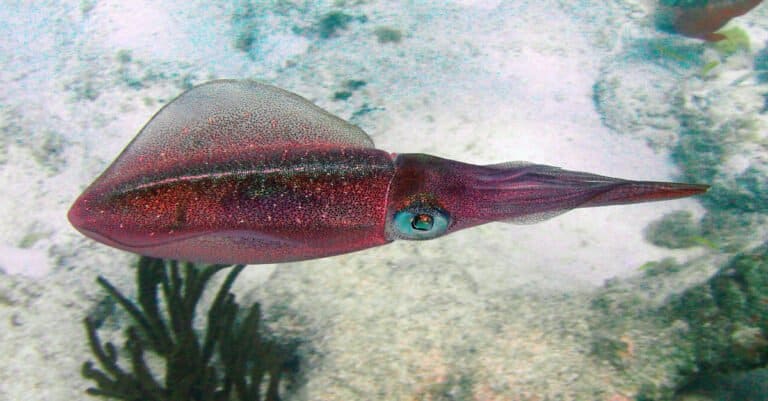
Squids (order Teuthida) are marine cephalopod mollusks characterized by a streamlined mantle, paired fins, a distinct head with large eyes, eight arms plus two longer retractile tentacles, a beak, and (in most) an internal chitinous "pen" (gladius). They are active predators and important prey in ocean food webs.

Kingdom
Animalia
Phylum
Mollusca
Class
Cephalopoda
Order
Teuthida

Distinguishing Features

  • Eight arms plus two longer tentacles (typically with clubs for gripping prey)
  • Mantle propulsion via siphon (jetting) and often fin-assisted swimming
  • Chromatophores enabling rapid color/pattern change; many also use iridophores/photophores
  • Internal shell reduced to a pen (gladius) in most true squids
  • Large camera-type eyes and advanced nervous system
  • Ink sac present in many species for defense

Physical Measurements

Males and females differ in size

Length
1 ft 4 in (1 in – 42 ft 8 in)
3 ft 3 in (2 in – 42 ft 8 in)
Weight
1 lbs (0 lbs – 1,102 lbs)
Top Speed
19 mph
swimming

Appearance

Primary Colors
Skin Type Soft, muscular mantle with dense chromatophores, iridophores, and leucophores; typically smooth, sometimes faintly textured; many species also have photophores and a thin mucous layer.
Distinctive Features
  • Size range across true squids: mantle length about 1-2 cm in the smallest species to about 2-2.5 m in the largest; total length (including tentacles) up to about 10-13+ m.
  • Mass range: a few grams in smallest coastal forms to hundreds of kilograms in the largest deep-sea species.
  • Body plan: streamlined mantle with paired fins (size/shape vary), distinct head with large camera eyes, and a muscular siphon for jet propulsion.
  • Appendages: eight arms plus two longer retractile tentacles with clubs; arm suckers often ringed, sometimes with hooks in oceanic groups.
  • Feeding structures: strong chitinous beak and radula; many species use venom/saliva to subdue prey.
  • Internal support: most have an internal chitinous gladius ("pen"); reduced/absent in a few small-bodied lineages.
  • Color change: rapid, neurally controlled patterning for camouflage, signaling, and startle displays; degree of control varies among species.
  • Light production: photophores common in many oceanic oegopsids (counterillumination, signaling), absent or reduced in many coastal myopsids.
  • Behavior/ecology generalizations: active predators on crustaceans, fish, and other cephalopods; prey for fishes, seabirds, and marine mammals; many pelagic species show diel vertical migration, while many coastal species are more demersal/nearshore.
  • Life history range: typically short-lived and fast-growing (~6-12 months to ~3 years), with some large deep-sea species estimated up to ~4-5 years; many are semelparous (spawn once, then die).
  • Human relevance: multiple Teuthida families support major global fisheries and are widely consumed as "calamari," with stock dynamics varying strongly by region and species.

Sexual Dimorphism

Sexual dimorphism is usually subtle and variable across Teuthida. Males commonly have a modified arm for spermatophore transfer and may differ in size, arm proportions, or photophore patterns; in some species females grow larger with fuller mantles when mature.

  • One arm often modified as a hectocotylus (structure varies by family/species).
  • In some species, longer arms/tentacles or more robust arm musculature during breeding season.
  • Species-dependent size differences: males may be smaller or larger than females.
  • In some oceanic taxa, distinct photophore arrangements or brighter signaling displays.
  • Often larger mantle volume at maturity due to ovary/egg development (species-dependent).
  • Some species show larger overall body size and heavier mass in mature females.
  • May show differences in fin size/shape or body fullness when gravid (variable).
  • Egg-laying adaptations (e.g., nidamental glands in many groups) influence mature body profile.

Did You Know?

Across Teuthida, body size spans from small squids with mantles only a few cm long to giants with mantles >2 m and total lengths reaching ~10-13 m (tentacles included).

Most true squids live fast and die young: many species mature within ~1-2 years, while some larger/deeper-water species may reach ~3-5 years.

"Arms vs tentacles": arms are shorter and often used for handling prey; the two longer tentacles typically shoot out to seize prey with specialized club tips.

Many pelagic squids do diel vertical migration-rising toward the surface to feed at night and descending to darker depths by day.

Some oegopsid squids use photophores (light organs) for camouflage (counterillumination) or signaling, while many coastal myopsids lack photophores.

Squids are key prey for fish, seabirds, and marine mammals-and also major predators of crustaceans, fish, and other cephalopods, including other squids.

Their "pen" (gladius) is an internal chitinous support-an evolutionary remnant of an external shell, unlike the external shells of many other mollusks.

Unique Adaptations

  • Jet propulsion via mantle contractions and a steerable siphon (funnel), enabling rapid bursts of speed and quick turns-especially important for midwater hunting and escape.
  • Eight arms plus two retractile tentacles with enlarged clubs: a versatile capture system spanning "grab-and-hold" (arms) and "project-and-snatch" (tentacles).
  • Internal gladius ("pen"): a lightweight stiffener that supports the mantle for efficient swimming (present in most true squids).
  • Large camera-type eyes and a strong visual lifestyle: many squids rely heavily on vision; eye size and sensitivity vary with depth and water clarity.
  • Chromatophores (and in some, iridophores/leucophores): layered skin systems allow rapid color change for camouflage and communication; effectiveness differs among habitats and lineages.
  • Ink system: melanin-rich ink and mucus can form clouds or pseudomorphs that distract predators; use and potency vary among species.
  • Bioluminescence in many oceanic species: photophores can provide counterillumination (hiding silhouettes from below) and may be used for signaling or luring prey.
  • Rapid neural control (including famously large axons in some squids): supports fast escape responses and precise control of mantle and fins.

Interesting Behaviors

  • Active predation with rapid strikes: many species ambush or chase prey, then subdue it with arms and a parrot-like beak; diets vary widely by habitat and size.
  • Schooling vs solitary lifestyles: some coastal squids form coordinated schools, while many oceanic/deep species are more solitary-both strategies occur across the order.
  • Color and pattern displays: chromatophore-driven flashes, bars, and mottling are used for camouflage, threat displays, and (in some species) courtship signaling; display complexity varies among lineages.
  • Diel vertical migration (common in open-ocean forms): individuals track prey layers through the water column on daily cycles, linking deep and surface ecosystems.
  • Reproductive bursts and semelparity: many species spawn once (often in seasonal aggregations), producing gelatinous egg masses or attaching eggs to substrates; timing and mating systems vary greatly across Teuthida.
  • Inking and escape routines: when threatened, many squids release ink while jetting away; some also perform rapid color changes or zig-zag swimming to confuse predators.
  • Cannibalism and opportunism: in some species and life stages, squids may consume conspecifics-especially when food is scarce or during dense aggregations.

Cultural Significance

True squids (Teuthida) are important food and support big fisheries (calamari, dried squid, regional dishes). Their ink is used as food color and pigment. Scientists study squid nerves to learn how brains work, and squids show ocean changes.

Myths & Legends

The Kraken (Scandinavian seafaring tradition): a colossal sea monster said to rise from the depths and drag down ships-often depicted in later retellings and art as a giant squid or squid-like beast.

Akkorokamui (Ainu folklore, northern Japan): a gigantic red cephalopod-like being associated with coastal waters and storms, sometimes described as dangerous yet also capable of healing or granting aid in certain tellings.

Te Wheke-a-Muturangi (Māori tradition, Aotearoa/New Zealand): a legendary great cephalopod pursued across the sea; while often described as an octopus, it is part of a broader Polynesian tradition of immense tentacled sea beings.

Medieval and early modern sailors told tales of 'devilfish' and giant squids; sailors' stories and later books made tentacled squids seem like bad omens and dangers from the deep sea, shaping European sea-monster traditions.

In North Atlantic coastal stories, tales of drifting tentacles or dead sea animals became sea-serpent and tentacled monster myths, shaping later popular images of giant squids in deep waters.

You might be looking for:

Giant squid

22%

Architeuthis dux

Large deep-sea oegopsid squid; famous for extreme size and elusive biology.

View Profile

Humboldt squid (jumbo squid)

20%

Dosidicus gigas

Large, fast-swimming, commercially important squid of the eastern Pacific; noted for schooling behavior.

View Profile

European squid

18%

Loligo vulgaris

Common coastal myopsid squid in the eastern Atlantic and Mediterranean; frequently eaten.

Japanese flying squid

15%

Todarodes pacificus

Widely fished North Pacific squid; a major seafood species.

Colossal squid

13%

Mesonychoteuthis hamiltoni

Very large Antarctic deep-sea squid; heavier-bodied than the giant squid.

View Profile

Firefly squid

12%

Watasenia scintillans

Small bioluminescent squid known for mass spawning displays off Japan.

Life Cycle

Birth 5000 paralarvas
Lifespan 12 years

Lifespan

In the Wild
3–60 years
In Captivity
0.5–18 years

Reproduction

Mating System Promiscuity
Social Structure Aggregation Group
Breeding Pattern Transient
Fertilization Internal Fertilization
Birth Type Internal_fertilization

Behavior & Ecology

Social School Group: 30
Activity Nocturnal, Crepuscular, Cathemeral
Diet Carnivore Varies widely across Teuthida; many species most often target small fishes and crustaceans (including krill/euphausiids), with prey choice shifting by size, habitat (coastal vs open ocean vs deep sea), and life stage.
Seasonal Migratory 932 mi

Temperament

Highly variable across Teuthida: from strongly schooling pelagic species to largely solitary deep-sea forms.
Generally alert, fast-reacting predators; bold during feeding but evasive when threatened.
Often show context-dependent aggression (e.g., competition and mating), otherwise avoidance-oriented.
Ecology generalization: active visual hunters with frequent diel vertical migration; depth/habitat strongly shape sociality.
Size range across order: ~2 cm to ~2.5 m mantle length; ~3 cm to ~10-14 m total length (largest oegopsids).
Lifespan range across order: typically ~6-18 months; some species reach ~3-5+ years (largest/deep-water taxa).

Communication

No confirmed species-wide vocal calls; any sounds are typically incidental Jetting/splashing
Rapid chromatophore patterning for signaling Courtship, threat, coordination
Body posture and fin/arm displays; orientation changes used in spacing and dominance contexts
Bioluminescent signaling in many midwater taxa Photophores; counterillumination and display
Tactile contact with arms/tentacles during courtship, mating, and competitive interactions
Chemical cues in water and/or contact chemoreception; likely important but varies by species
Ink release and escape maneuvers as defensive signals; may also confuse predators and group-mates
Polarized light and iridescence cues (where present) potentially aid intraspecific recognition

Habitat

Coastal Estuary Kelp Forest Coral Reef Open Ocean Deep Sea Seabed/Benthic +1
Biomes:
Terrain:
Coastal Island Rocky Sandy Muddy
Elevation: Up to 22965 ft 11 in

Ecological Role

Teuthida are diverse, mid-to-upper trophic level marine predators that link zooplankton/crustaceans and small fishes to higher predators; across the order they function as both major consumers (often shaping pelagic food webs) and as abundant prey for fishes, seabirds, and marine mammals, with substantial variation by habitat (neritic to oceanic to deep sea), body size, and life stage.

trophic transfer from lower consumers (zooplankton/crustaceans) to top predators (marine mammals, large fishes, seabirds) population regulation of prey species (fish and invertebrates) in pelagic and near-bottom systems nutrient redistribution and carbon transport via vertical migrations and excretion/egestion (contributing to biogeochemical cycling) support of commercial and subsistence fisheries (direct harvest and as prey supporting higher-value predators)

Diet Details

Main Prey:
Small to medium fish Crustaceans Krill and other macrozooplankton Copepods and small zooplankton Cephalopods Polychaete worms and benthic invertebrates

Human Interaction

Domestication Status

Wild

Teuthida (true squids) are not domesticated. They are wild-caught for food, bait, study, and display, with mostly short-term captivity. Fish-farm trials are experimental and not common. Some species are important study animals and public aquariums display them. Squids are often caught as bycatch and handled in fisheries and labs.

Danger Level

Moderate
  • Bites from beak during handling (can lacerate skin; risk increases with larger/aggressive species and stressed animals)
  • Lacerations/suction-cup abrasions from arms/tentacles during handling
  • Rare aggressive encounters in water with some large, fast-swimming squids (risk of injury is low overall but not zero)
  • Occupational hazards in fisheries/processing (cuts from beaks/hooks, slippery surfaces, allergic reactions to seafood)
  • Food safety risks if improperly handled/stored (common to seafood generally, not unique to squids)

As a Pet

Not Suitable as Pet

Legality: Whether it's legal depends on country, state, and how true squids (Teuthida) are caught. Even where private keeping is allowed, permits, animal care and transport rules, and protected-species laws apply. Public aquariums and research labs hold them. Check local rules.

Care Level: Expert Only

Purchase Cost: Up to $300
Lifetime Cost: $3,000 - $30,000

Economic Value

Uses:
Food fisheries (commercial and artisanal) Bait (recreational and commercial fishing) Research and education (neuroscience, physiology, biomaterials) Public aquarium display/tourism Bycatch (ecosystem and management relevance)
Products:
  • human food (fresh/frozen squid, calamari rings/strips, tubes/mantle, tentacles)
  • processed seafood products (breaded/ready-to-cook items, dried/salted in some regions)
  • bait squid
  • ink (limited culinary/novelty use; more common in other cephalopod groups but present in some squids)
  • scientific specimens (e.g., giant axon preparations, developmental studies) and educational materials

Relationships

Predators 10

Sperm whale
Sperm whale Physeter macrocephalus
Beaked whale Ziphiidae
Pilot whales Globicephala spp.
Dolphins
Dolphins Delphinidae
Elephant seal
Elephant seal Mirounga
Tuna
Tuna Thunnus spp.
Swordfish
Swordfish Xiphias gladius
Billfish Istiophoridae
Large sharks
Large sharks Selachimorpha
Seabirds Procellariiformes, Sphenisciformes

Related Species 7

Longfin squids Loliginidae Shared Family
Flying squids Ommastrephidae Shared Family
Gonatid squids Gonatidae Shared Family
Hooked squids Onychoteuthidae Shared Family
Enoploteuthid squids Enoploteuthidae Shared Family
Giant squid
Giant squid Architeuthidae Shared Family
Cranchiids Cranchiidae Shared Family

Ecological Equivalents 6

Animals that fill a similar ecological role in their ecosystem

Octopus
Octopus Octopoda Fellow coleoid cephalopods and active predators; overlap in diet (crustaceans, fish, and cephalopods) and in their role as mid-to-upper trophic-level prey, but octopuses are typically benthic and lack long, retractile tentacles.
Cuttlefish
Cuttlefish Sepiida Occupy a similar predatory niche in coastal and continental shelf habitats and feed on similar prey; they differ by possessing a cuttlebone and often exhibiting more benthic, camouflage-oriented lifestyles.
Bobtail squid Sepiolidae Small cephalopod predators with similar hunting tactics (ambush and jetting) and heavy reliance on camouflage; often occupy shallow, benthic, or near-bottom niches.
Vampire squid
Vampire squid Vampyroteuthis infernalis Shares deep-sea habitat overlap with some true squids and is often mistaken for a squid; occupies a different niche (detritivory/particle feeding) rather than active predation.
Lanternfish Myctophidae Common mesopelagic micronekton that overlaps strongly with many oceanic squids in depth, diel vertical migration patterns, and predator-prey networks, and are often both competitors for zooplankton and mutual predators/prey depending on size.
Mackerels and tunas Scombridae Fast pelagic predators occupying similar water masses; they frequently share prey (schooling fishes and crustaceans) and also prey heavily on squid, creating tight trophic coupling.

Types of Squid

16

Explore 16 recognized types of squid

Giant squid
Giant squid Architeuthis dux
Colossal squid
Colossal squid Mesonychoteuthis hamiltoni
Humboldt squid
Humboldt squid Dosidicus gigas
Japanese flying squid Todarodes pacificus
Neon flying squid Ommastrephes bartramii
Northern shortfin squid Illex illecebrosus
European squid (common squid) Loligo vulgaris
Longfin inshore squid Doryteuthis pealeii
Market squid Doryteuthis opalescens
Firefly squid Watasenia scintillans
Boreal squid Gonatus fabricii
Magellanic squid Doryteuthis gahi
Slender inshore squid Doryteuthis pleii
Robson's squid Gonatus onyx
Greater hooked squid Onykia ingens
Dana octopus squid Taningia danae

There are about 300 different species of squid. They are found in all of the oceans throughout the world, including in the freezing cold Antarctic waters. They eat a range of different foods, including tiny animals such as krill, some fish, and even each other. Most squid species live less than 1-2 years, though some larger deep-sea species may live several years, but rarely more than 5. Although they have some things in common with octopuses, a squid and an octopus are completely different animals.

5 Amazing Squid Facts

  • Some squid have special cells in their skin that allow them to change colors.
  • Most squids have 8 arms and two longer tentacles.
  • Squid have tough beaks that they use to kill and eat their prey.
  • Many squids that live in deep water have bioluminescent organs that show through their skin.
  • Squids are one of the few animals that have multiple hearts. In total, squids have three hearts.

Classification and Scientific Name

All squid are cephalopods, which means they are members of the scientific class Cephalopoda, along with octopuses and cuttlefish. The class name comes from the Greek words for head and foot. They are members of the superorder Decapodiformes, which is derived from the Greek words for 10 feet. Squids belong to the order Teuthida, a term that comes from the Greek word for fierce.
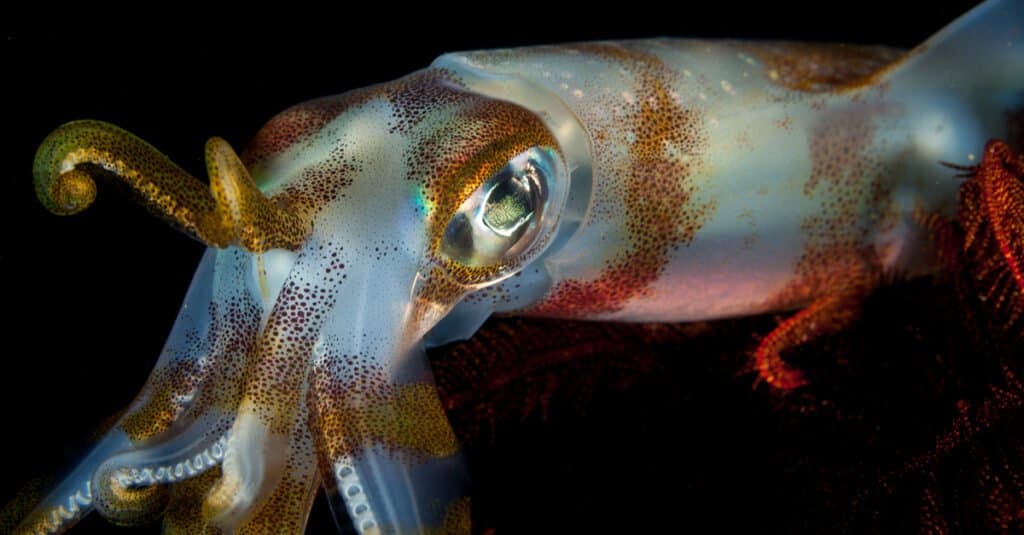
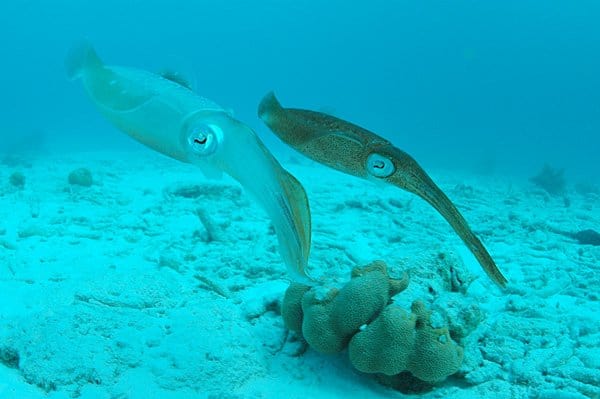
What Do Squid Eat - Bigfin Reef Squid

All squids are cephalopods.

Appearance and Behavior

Squids can look different from one another, depending on the species, but in general, all squid have an elongated, tubular body called the mantle, which ends at a somewhat flattened head. On either side of the mantle are fins that aid the squid in moving through the water. Depending on the species, these fins can be quite large, running the full length of the mantle, or very small, located just at one end. A squid also has relatively large eyes, one on either side of its head, that provide a wide field of vision.

At the lower end of the squid’s body are the arms and tentacles, attached to the head. Each of the arms has suckers on it, as do the tentacles. The suckers of some squids are also armed with sharp hooks that allow them to grip their prey tightly. Squid do not have a skeleton as we do, but they have a chitinous internal structure called a gladius or pen.

The shape of the squid allows it to slip quickly through the water. When swimming slowly, it uses its fins for propulsion, but if the squid is in a hurry, it moves by taking in water through its mantle and then squirting it out through its siphon, jet-propelling it through the water. The siphon can be moved to point in any direction, allowing the squid to quickly move in whichever way it chooses.

Squids are usually black, white, brown, or gray, but many of them can change their appearance at will. The Humboldt squid, for example, can flash red and white, and other squids can match their color to their surroundings or display a colorful pattern on their bodies. They can use color to signal to other squid or to help camouflage themselves to avoid predators.

Deep-sea squid often have bioluminescent organs, and these lighted body parts can be seen from outside the animal. Typically, squid can squirt a cloud of ink when they feel threatened. The ink hides them and gives them time to escape to safety. A notable exception to this is the vampire squid, which squirts a sticky, bioluminescent cloud into the water that glows for about 10 minutes, giving the vampire squid time to get away.

Squid come in many different sizes. The heaviest squid on record was a colossal squid discovered in New Zealand in 2007. This huge animal weighed more than 1,000 pounds (453.6 kg), almost as heavy as a grizzly bear. The longest scientifically confirmed giant squid was about 43 feet (13 meters) long, though unverified reports suggest they may reach greater lengths. Most squid are much smaller, with the average being about 2 feet (60 cm) long, the size of an average man. The smallest squid known is the Southern pygmy squid, which is practically invisible at only ¾ of an inch (1.6 cm) long.

Squids tend to live alone, but they do sometimes gather in groups, and some of them have even been known to hunt cooperatively, similar to the way a pack of wolves hunts. When they do gather, a group of squid is called either a shoal or a squad, with the exception of the giant squid. A group of giant squid is called a school.
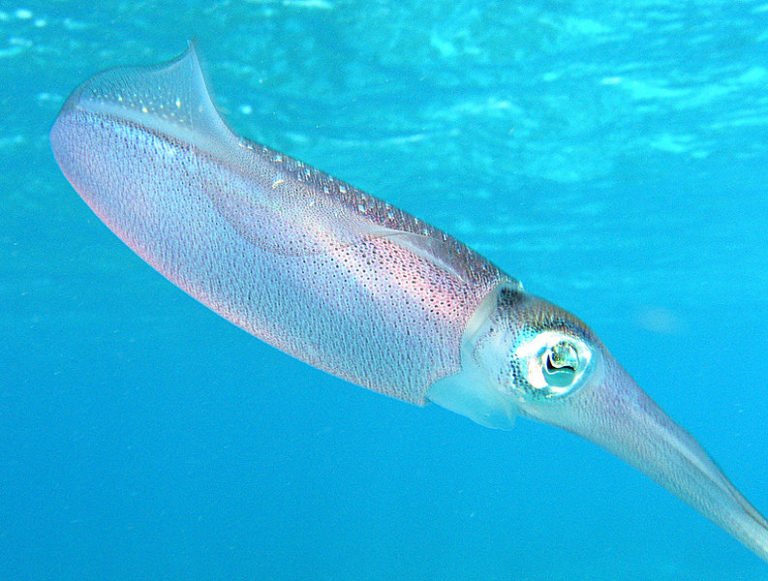
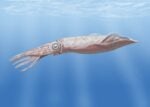
Squid floating in the water
The shape of the squid allows it to slip quickly through the water.

History and Evolution

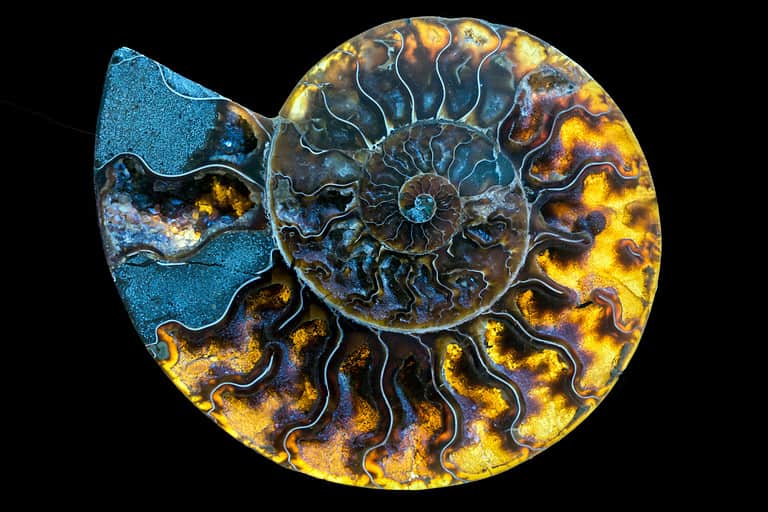
Squid are believed to have evolved from shelled cephalopod ancestors over 400 million years ago, with modern squid lineages diverging much later. Even more interesting, it may appear that they also evolved from a prehistoric snail. It may raise the question of where the snail shell disappeared, but the remainder of shells, or hints of them, are found in other animals with common ancestry. They are like little clues to investigating the family trees of the past for animal species. From such evolutionary evidence, you can see that the cuttlefish has what is called the cuttlebone, which is a leftover clue of having a shell. Nautiluses also have internal and external examples of the remaining shell.

Another fascinating feature of squid evolution is how they came to have eight arms and two tentacles. Scientists have found evidence that the arms and tentacles of squid are derived from the molluscan foot, similar to other cephalopods. Squids have amazingly adapted and evolved their singular foot to become what we know them to be today.

Types of Squid

There are hundreds of different types of squid across the world. These are just a few of them.

  • Colossal Squid (Mesonychoteuthis hamiltoni): The Colossal Squid is incredibly large, with a weight of at least 1,091 pounds and a length estimated at 14 feet. This size makes the colossal squid the largest squid in the world. Colossal squid are believed to be ambush predators and use bioluminescence to attract their prey. These squid are believed to primarily inhabit the Southern Ocean, circumferential to Antarctica, up to 13,000 feet deep. Because they live at such extraordinary depths, much is left to be learned about these creatures.
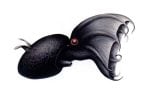
  • Vampire Squid (Vampyroteuthis infernalis): The Vampire Squid usually exists in the deep sea and uses bioluminescent organs and oxygen metabolism to survive parts of the sea that have extremely low levels of oxygen. This sea creature resembles both a squid and an octopus. However, it is neither of the two. ‘It has eight arms and two thin retractile filaments, rather than true tentacles. The vampire squid’s name comes from its dark color and the skin that connects its multiple arms, forming a cape-like structure. Vampire squids have two filaments. However, these sea creatures are only able to extend one filament that helps these fish overcome energy deficiencies in areas where the concentration of oxygen is low.
  • Humboldt Squid (Dosidicus gigas): The Humboldt Squid, often called the jumbo squid, can grow up to 110 pounds with a maximum length of up to 7 feet. This squid is found in the eastern Pacific Ocean and is the largest of the flying squid. They are most often found in large shoals of about 1,200 individuals and live at depths between 660 and 12,300 feet. They can swim up to 15 miles per hour and are vicious predators. They primarily feed on other mollusks, small fish, and crustaceans, but are also frequent cannibals. In pursuit of prey, Humboldt squid chase down and attack using their barbed tentacle suckers. They then tear apart the prey’s flesh with their razor-sharp, parrot-like beak. Each sucker has a ring of sharp teeth, and the squid’s beak can easily tear tough tissue. There have been verified reports of human attacks, primarily on deep-sea divers.
  • Bigfin Reef Squid (Sepioteuthis lessoniana): The Bigfin Reef Squid, also known as the glitter squid or oval squid, belongs to the loliginid squid family Loliginidae. They get their name from the large oval fin connected to the mantle. Although they rank as a medium-sized species and only measure around 1.5 to 13 inches long, they grow faster than almost any other large marine invertebrate. They engage in elaborate mating displays and live relatively short lives, with a maximum age of just 315 days. 
  • Giant Squid (Architeuthis dux): The Giant Squid is estimated to weigh up to 606 pounds and is capable of reaching lengths between 39 and 43 feet, making it the longest squid in the world. Giant squid inhabit the deep-sea between an estimated 989 and 3,280 feet and have therefore been incredibly hard to study. Very few have been studied alive, and most of what is known about them comes from studying carcasses that have washed up onto beaches. The giant squid’s diet consists of deep-sea fish species and other smaller squid. The giant squid is a solitary hunter and catches its prey using two tentacles with barbed suckers.
  • Heterololigo Squid (Heterololigo bleekeri): The Heterololigo Squid is a genus with only one species. It is known for its short tentacles and only lives for about one year. Japanese fisherman catch these off their coasts.
  • Swordtip Squid (Uroteuthis edulis): The Swordtip Squid is commonly caught in the southern East China Sea. They have a lifespan of just nine months and spend most of this time migrating based on sea temperatures.

Habitat

Squids are found in oceans all around the world. Not all species live in all parts of the world. Some squid prefer warmer, tropical waters, while others thrive in the cold seas where krill and other food can be found, but as a species, they can be found almost everywhere.

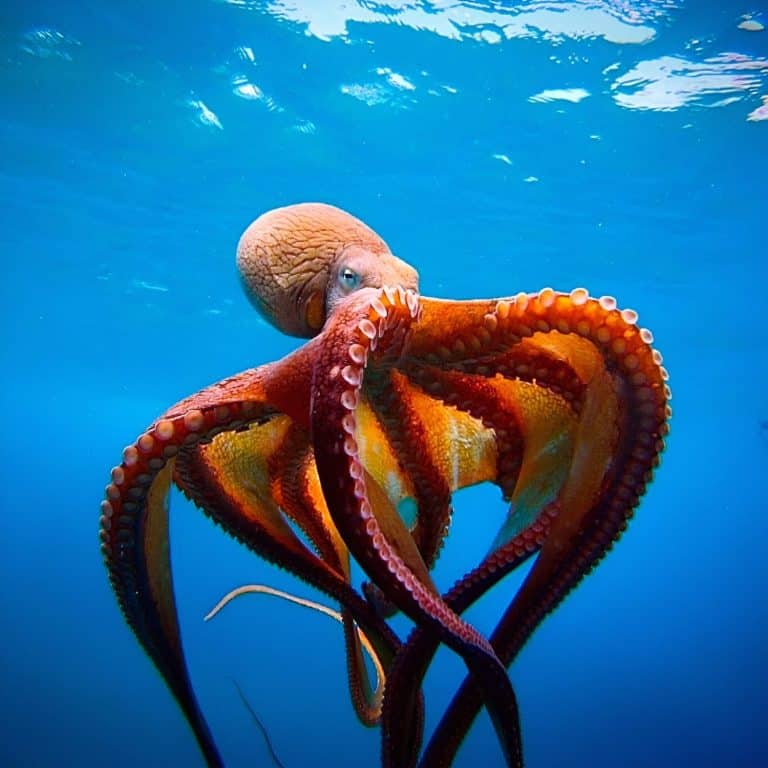
Unlike octopuses, which live in nooks in rocks and coral reefs, squid are free-swimming and do not seek a place to call home, though some of them do live near the ocean floor, which helps to hide them from their enemies.
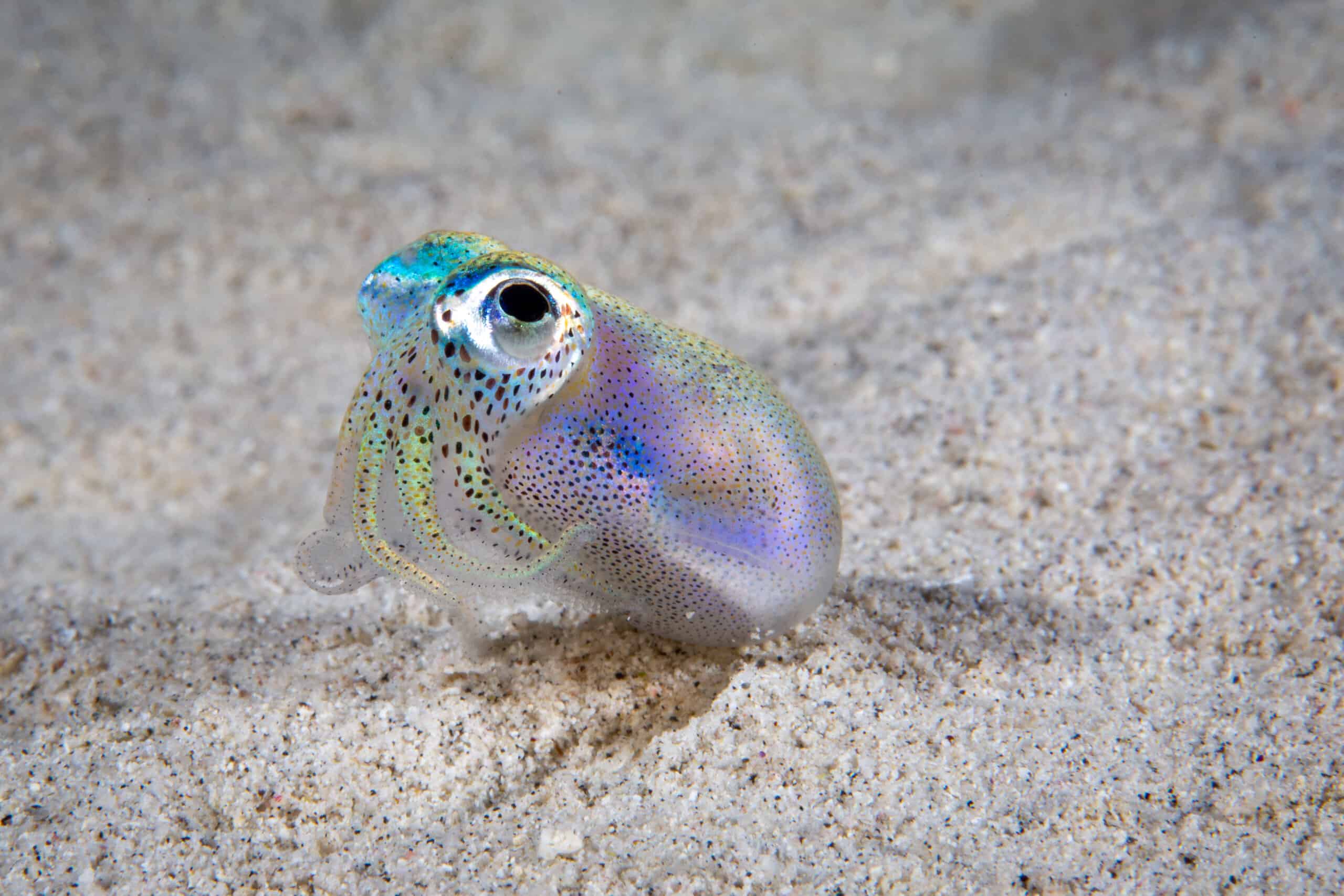
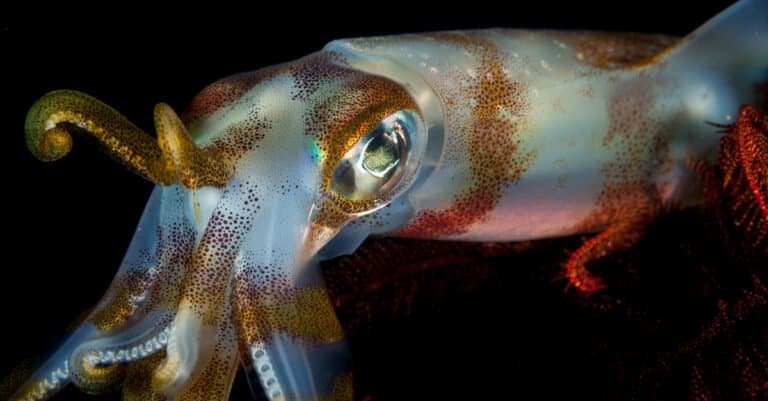
Hawaiian bobtail squid are tiny - only around 1 or 2 inches long

Hawaiian bobtail squid are too small to be dangerous.

Diet

For the most part, squid eat fish such as orange roughy, lantern fish, and hoki, along with other sea creatures such as oysters, crabs, and shrimp. Squids are also cannibals and will happily devour another squid, even of their own species, if they are hungry. The size of the prey depends on the size of the squid.

Humboldt squid are well-known for their aggressive nature, and they will consume anything they can catch. There have even been tales of shoals of them attacking and eating fishermen who are unlucky enough to fall into the water when the squid is present.

The vampire squid is different from most other squids because it doesn’t catch and eat live food, nor does it drink blood, as its name might suggest. Instead, it floats through the water waiting to catch detritus that falls through the water. This is made up of tiny dead animals and fecal pellets from other creatures. This squid then rolls everything it has caught into a ball and sticks it together with mucus, then eats the ball it has made.
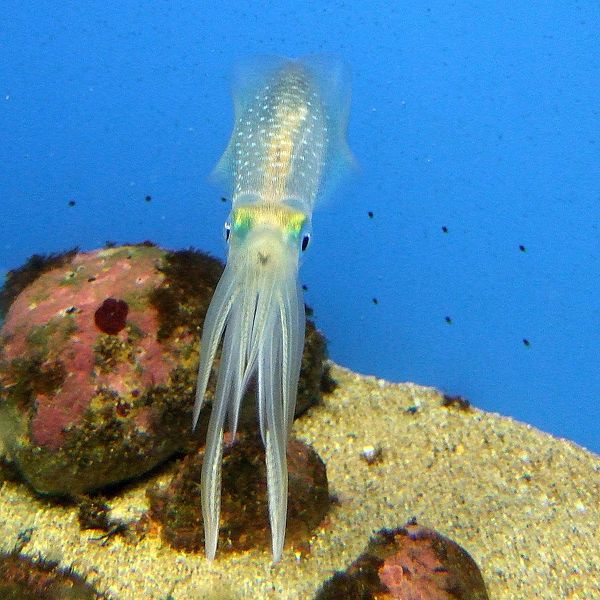
Squids can be cannibals and will happily devour another squid, even of their own species, if they are hungry.

Predators and Threats

Because squid comes in a huge range of sizes and is found almost everywhere, many types of animals eat squid. Small squid are eaten by almost any kind of predator imaginable, but their main predators are penguins, seals, sharks such as the grey reef shark, whales such as the sperm whale, and humans.

Despite being a popular prey item, squid remains plentiful in the wild. According to the International Union for the Conservation of Nature (IUCN), squid is classified as having a status of Least Concern, which means that there are no immediate threats to squid known to exist, and their numbers in the wild are plentiful.

At least some types of squid can regenerate their tentacles, so if one is lost in an attack by a predator or in some other way, the squid can eventually replace the lost part. Scientists do not believe that squids can regenerate their arms. Only their longer tentacles appear to have the ability to regrow.

Human Consumption

In general, squid is a source of food for human beings, and is under threat from overfishing. Squid is consumed as a cultural staple in places like Japan, where it is included in sushi cuisine. In Western culture, it is referred to by the Italian term calamari, served stuffed, as sliced rings, or as flat pieces.

Areas where squid is caught include the North Pacific, the Mediterranean, the East Coast of the U.S., and the Northeast Atlantic. It’s beneficial to humans for the vitamins and nutrients it contains, namely copper, manganese, zinc, selenium, vitamin B12, and riboflavin.
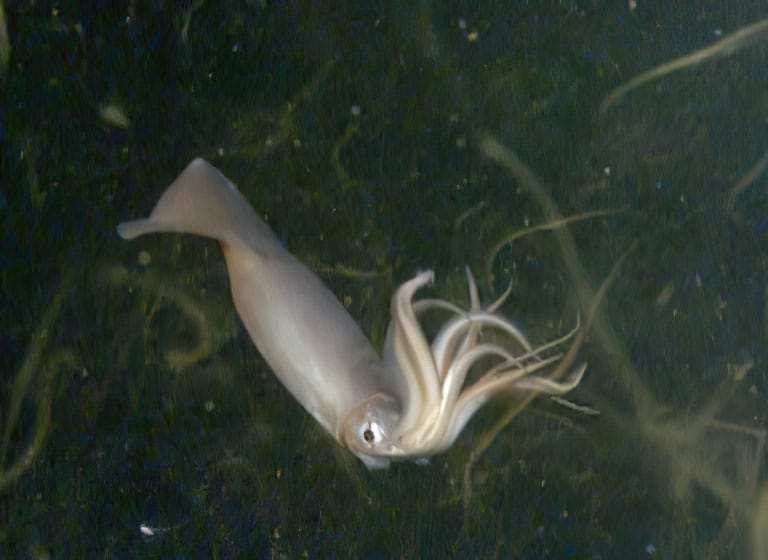
Humboldt squid

Humboldt squid swarm around the research vessel Tiburon, possibly attracted to its lights. Several of the large (3-6 foot) animals clouded the water with greenish-gold ink.

Reproduction, Babies, and Lifespan

Because there are so many different species of squid, some variation exists in how they reproduce and how long they live. Typically, squids mate in large groups and reproduce when the male places sperm into the female’s mantle. She can then store the sperm until she is ready to use it. When it is time, the female uses the sperm to fertilize her eggs, and she will then lay her eggs on the ocean floor or attach them to seaweed. She will not care for them any further.

When the eggs hatch, the babies usually look like tiny copies of the adults and are known as paralarvae. They will grow and change as they mature, ultimately becoming squid that can care for themselves. The little squid absorbs their egg yolk initially, and this feeds them until they can catch food for themselves.

The lifespan of a squid is somewhat uncertain, but scientists think that most squids don’t live longer than 5 years in the wild, and many don’t survive even that long. The exception to this is the larger squid that lives deep in the ocean, some of which have been known to live up to 15 years. Most species die after reproducing.
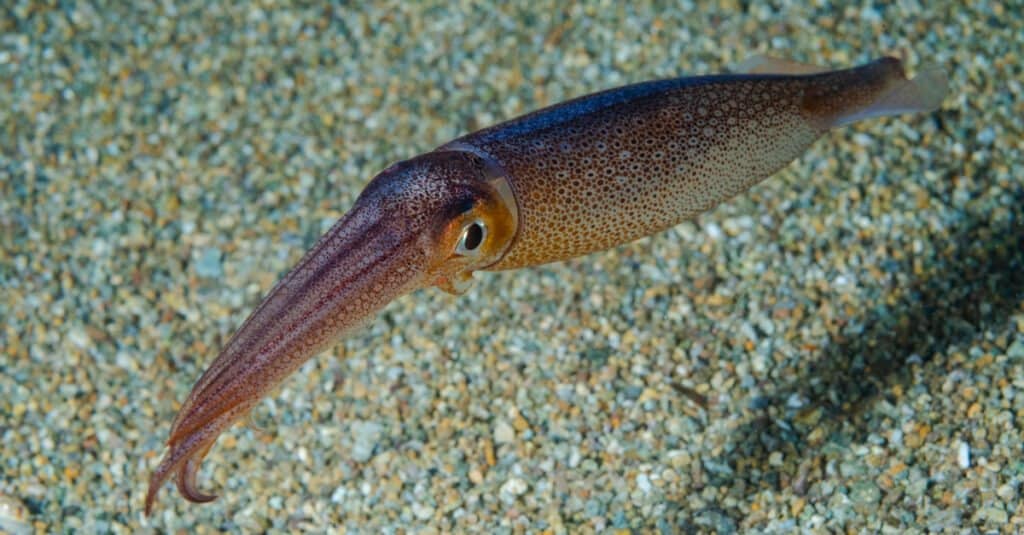
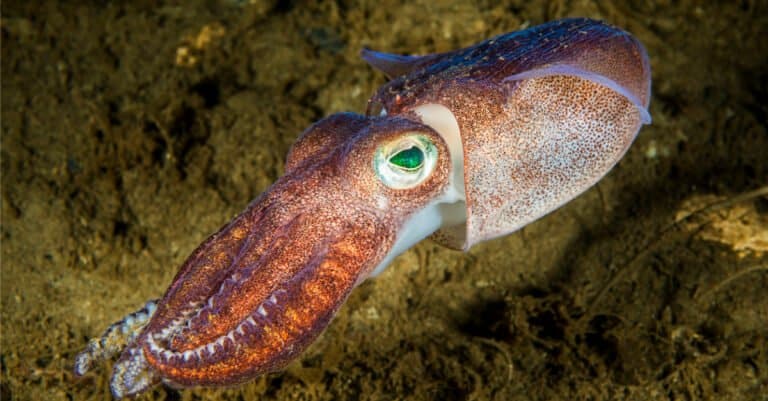
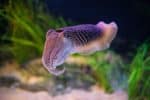
cuttlefish vs squid

The lifespan of a squid is somewhat uncertain, but scientists think that most squids don’t live longer than 5 years in the wild, and many don’t survive even that long.

Population

The total population of all of the varieties of squid is impossible to know, but they number in the millions. The IUCN lists them as being of least concern, which means that squid are not considered threatened or endangered in any way. A drop in the squid population could spell disaster for many other species, as so many creatures depend on the squid for survival. One sperm whale, for example, can eat up to 800 squid in a single day, and elephant seals may consume large numbers of squid as an essential part of their diet.

View all 390 animals that start with S

Sources

  1. David Burnie, Dorling Kindersley Animal, The Definitive Visual Guide To The World's Wildlife / Accessed December 13, 2008
  2. Tom Jackson, Lorenz Books The World Encyclopedia Of Animals / Accessed December 13, 2008
  3. David Burnie, Kingfisher The Kingfisher Animal Encyclopedia / Accessed December 13, 2008
  4. Richard Mackay, University of California Press The Atlas Of Endangered Species / Accessed December 13, 2008
  5. David Burnie, Dorling Kindersley Illustrated Encyclopedia Of Animals / Accessed December 13, 2008
  6. Dorling Kindersley Dorling Kindersley Encyclopedia Of Animals / Accessed December 13, 2008
Heather Ross

About the Author

Heather Ross

Heather Ross is a secondary English teacher and mother of 2 humans, 2 tuxedo cats, and a golden doodle. In between taking the kids to soccer practice and grading papers, she enjoys reading and writing about all the animals!

Thank you for reading! Have some feedback for us?


Squid FAQs (Frequently Asked Questions)

Many people around the world eat squid. It have excellent nutrition, but how good it is for you depends on how it is prepared. A 3-ounce serving of raw squid has only 78 calories and 15 carbohydrates. It also contains 13.2 grams of protein, along with a variety of essential vitamins and minerals, including copper, selenium, zinc, phosphorous, niacin, and B-12. Frying it more than doubles the calories while adding slightly to the protein, but it doesn’t add much else in the way of benefits.