S
Species Profile

Stick Insect

Phasmatodea

Nature's living twigs and leaves
Al'fred/Shutterstock.com
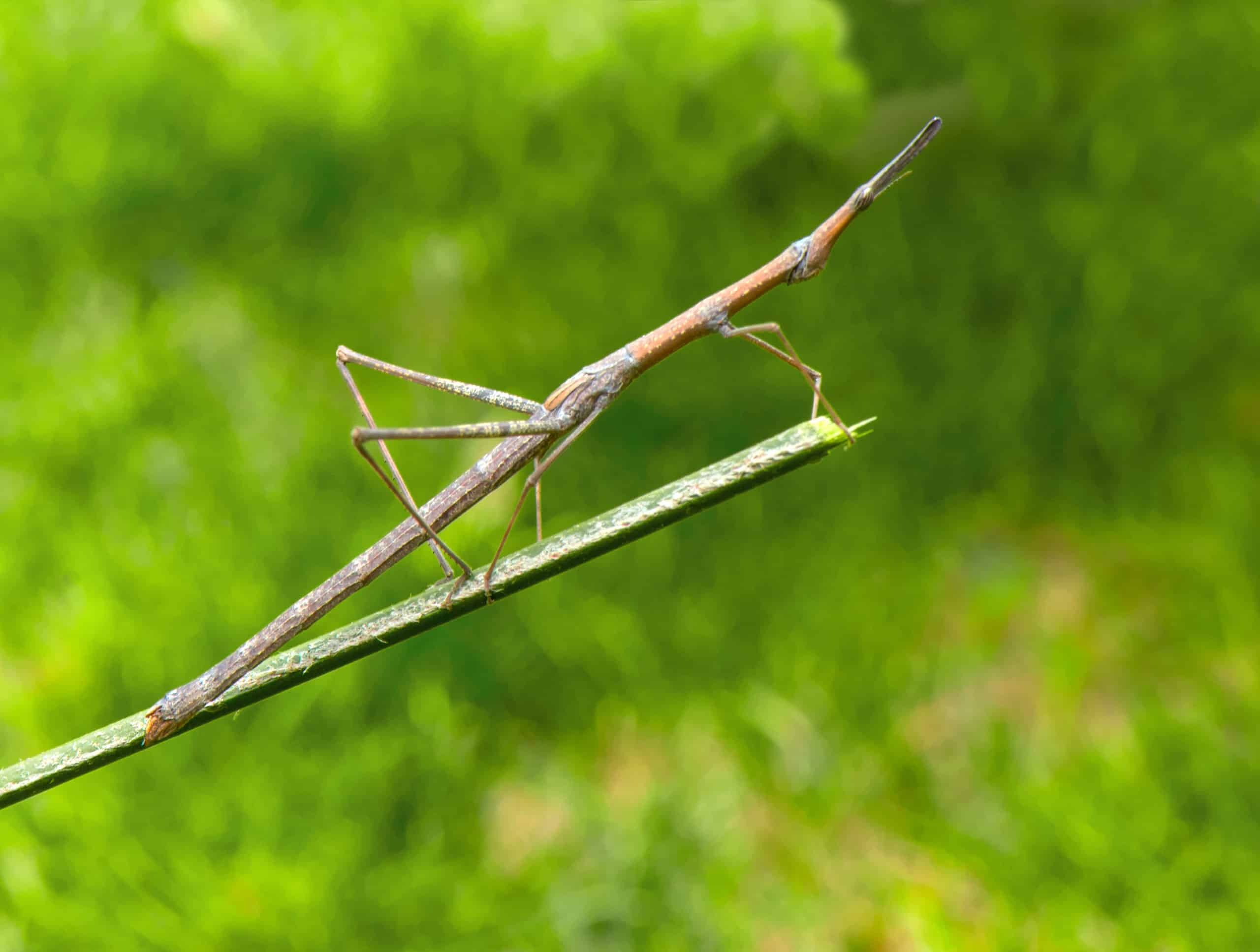
Phasmatodea stick insect

At a Glance

Order Overview This page covers the Stick Insect order as a group. Stats below are general traits shared across the order.
Also Known As Walking stick, Stick bug, Stickbug, Phasmid, Leaf insect
Diet Folivore
Activity Nocturnal+
Lifespan 1 years
Weight 0.05 lbs
Status Not Evaluated
Did You Know?

Phasmatodea includes both "stick insects" and the famously leaf-like leaf insects (family Phylliidae)-a whole order built around plant mimicry.

Scientific Classification

Order Overview "Stick Insect" is not a single species but represents an entire order containing multiple species.

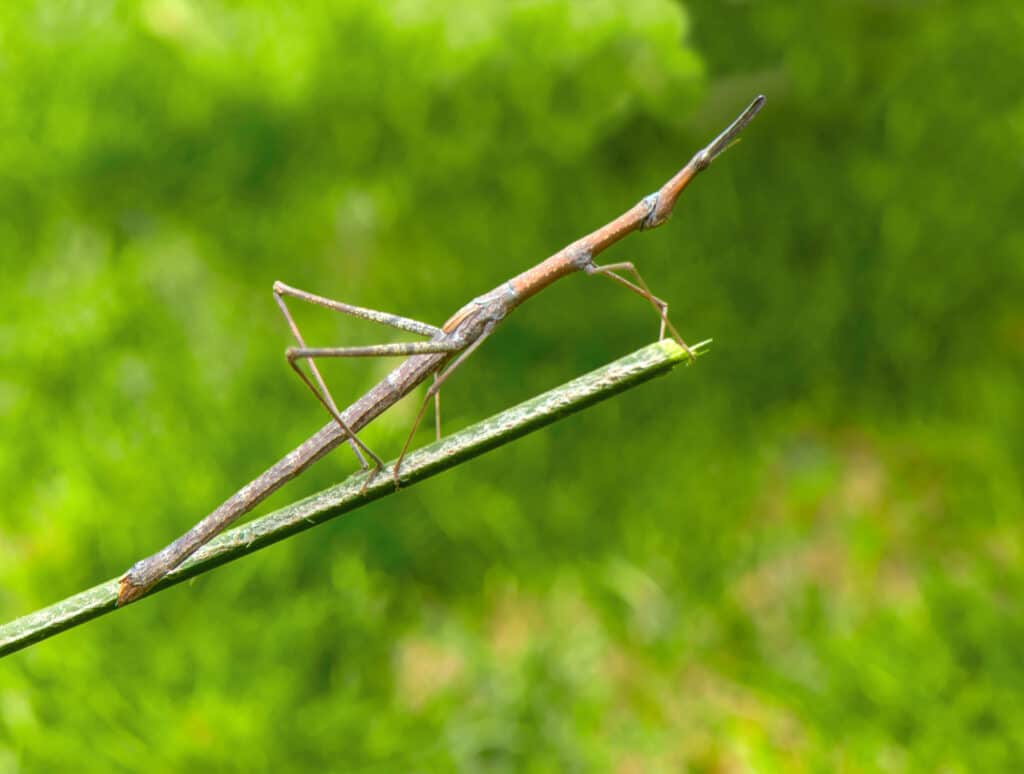
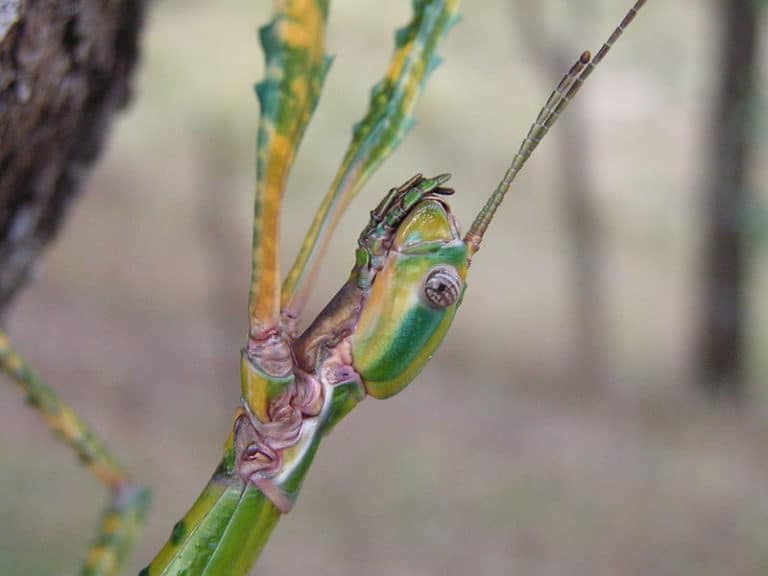
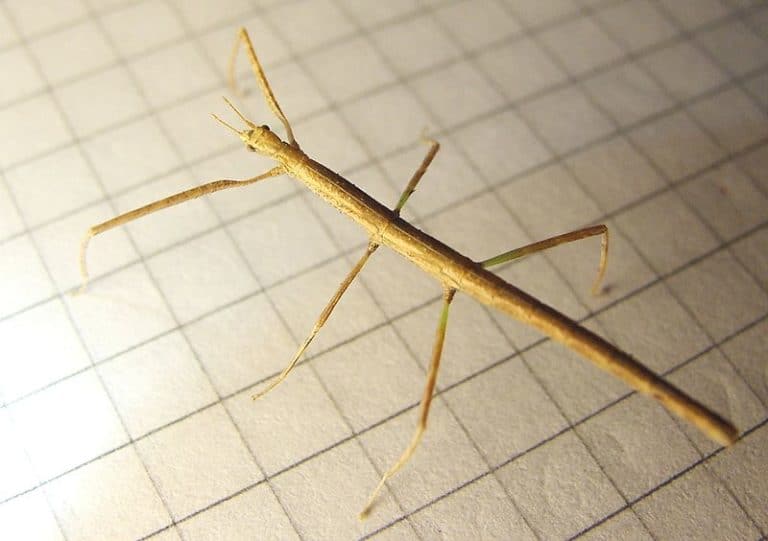
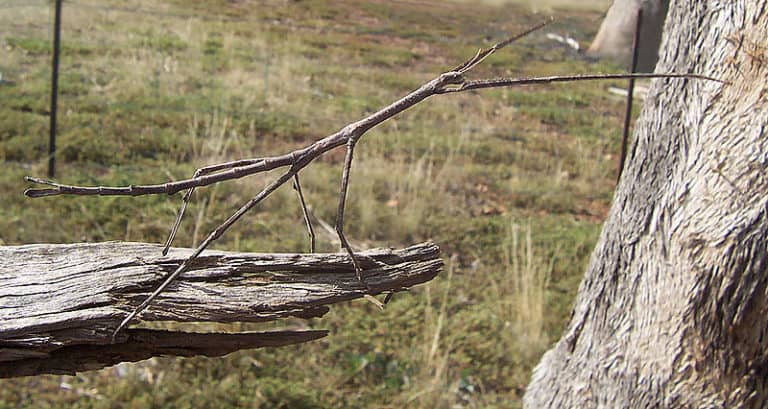
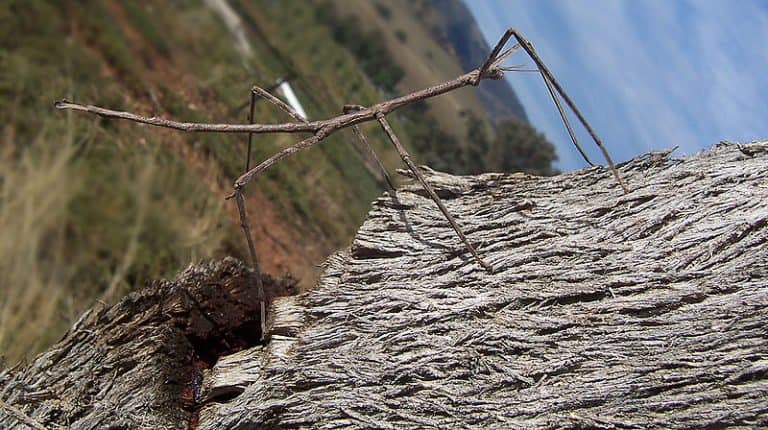
Stick insects are insects specialized for camouflage, typically resembling twigs, stems, or leaves. They are primarily herbivorous and rely on crypsis, stillness, and slow swaying movements to avoid predators; some species also use chemical sprays or spines for defense.

Kingdom
Animalia
Phylum
Arthropoda
Class
Insecta
Order
Phasmatodea

Distinguishing Features

  • Extreme camouflage (twig/leaf mimicry) and elongated body form
  • Herbivorous feeding on leaves; often nocturnal
  • Defenses may include startle displays (wings in some), spines, and chemical secretions
  • Eggs often resemble seeds; parthenogenesis is common in some lineages

Physical Measurements

Males and females differ in size

Length
♂ 5 in (1 in – 1 ft 2 in)
Weight
♂ 0 lbs (0 lbs – 0 lbs)
♀ 0 lbs (0 lbs – 0 lbs)
Top Speed
1 mph
walking

Appearance

Primary Colors
Secondary Colors
Skin Type Chitinous exoskeleton, usually matte to reduce glare; surfaces range from smooth and slender to bark-like with tubercles, spines, or leaf-like lobes; some show a waxy or powdery bloom that softens edges and color transitions.
Distinctive Features
  • Size range (order-level): about 2-36 cm body length; up to about 62 cm overall length including legs in the longest species.
  • Body forms span stick-like (elongate, cylindrical) to leaf-like (broad, lobed, veined) across the order.
  • Camouflage behaviors are common: stillness, slow swaying, and alignment with twigs or leaves; intensity varies by species and habitat.
  • Wings vary widely: wingless to fully winged; some show short wings used for displays rather than flight.
  • Legs may be extremely long and thin; some taxa bear spines or thorn-like projections for defense or camouflage.
  • Primary ecology is herbivory (foliage feeding), often nocturnal; host breadth ranges from specialists to broad generalists.
  • Geographic distribution is global, with greatest diversity and size extremes in tropical regions; temperate groups occur and may be smaller or seasonal.
  • Eggs are often seed-like and dropped or placed on vegetation/soil; many exhibit prolonged diapause and ant-mediated dispersal in some lineages.
  • Defense varies across species: crypsis dominates, but some use startle displays, chemical sprays, or reflex bleeding; autotomy (dropping legs) is common.
  • Life cycle duration varies: active nymph-to-adult lifespan often ~3-18 months; including egg diapause, total generation time can range ~6 months to 3+ years depending on species and climate.

Sexual Dimorphism

Sexual dimorphism is common but variable: females are often larger, heavier-bodied, and more frequently wing-reduced, while males tend to be smaller, slimmer, and more often winged and mobile. In some lineages the differences are subtle or reversed.

♂
  • Often smaller and more slender-bodied, with longer relative leg proportions.
  • More frequently fully winged and capable of stronger flight in many groups.
  • Typically more mobile, actively searching for mates; body outline may be less bulky.
  • Antennae may be relatively longer in some taxa, aiding mate location.
♀
  • Often larger, thicker abdomen for egg production; overall body more robust.
  • Wing reduction or loss is common in many lineages, though not universal.
  • May show stronger leaf-like expansions or broader body outlines in leaf-mimics.
  • Often less mobile, relying heavily on crypsis; many species show parthenogenesis in females.

Did You Know?

Phasmatodea includes both "stick insects" and the famously leaf-like leaf insects (family Phylliidae)-a whole order built around plant mimicry.

Size spans roughly 1.5-2 cm (some Timema species) to about 62 cm total length including legs in the longest recorded species (Phryganistria chinensis).

Many species can reproduce without males (parthenogenesis), sometimes producing long runs of female-only generations.

Their eggs often look like plant seeds and may be simply dropped to the ground-some even have ant-attracting structures so ants carry them to safety.

When threatened, some species "play dead" (thanatosis), freezing as if they're just a twig; others startle predators with sudden wing flashes.

Defenses vary widely: from harmless crypsis to spines, strong grips, and in some groups chemical sprays from thoracic glands.

Tropical regions host the richest diversity, but phasmids occur on most continents; a few live in temperate habitats with seasonal egg dormancy.

Unique Adaptations

  • Extreme morphological mimicry: elongated bodies, twig-like legs, leaf-like lobes, and even "veins" or bite-mark-like notches in leaf insects.
  • Egg architecture: hard-shelled eggs with intricate surface patterns and a cap-like operculum; some have ant-attracting features (e.g., capitula) that promote dispersal by ants.
  • Autotomy: some can shed legs to escape, with limited regeneration in early instars in certain species.
  • Chemical defenses: several groups can emit irritating or odorous secretions from thoracic glands; potency and delivery range from mild smells to directed sprays.
  • Spines and armor: some, especially large tropical forms, carry stout spines that deter grasping predators.
  • Grip and climbing specialization: strong tarsal claws/pads help them cling to narrow twigs and leaves, aiding both feeding and camouflage posture.
  • Life-history flexibility: from fast-developing, short-lived species to slower developers with long egg stages-often tuned to local seasonality and host-plant availability.

Interesting Behaviors

  • Crypsis plus stillness: many remain motionless for long periods, relying on shape, color, and texture to blend into stems, bark, or foliage.
  • Swaying/wind mimicry: slow rocking motions can imitate vegetation moving in a breeze; frequency and style vary by species and context.
  • Mostly nocturnal feeding: many become active at dusk/night to reduce predation risk, though some species feed by day depending on habitat and predator pressure.
  • Startle displays: winged species may reveal bright hindwings or contrasting colors suddenly, then drop or flee; others rely solely on camouflage.
  • Dropping eggs ("seed rain"): females of many species flick or drop eggs to the leaf litter; incubation times vary widely and can include diapause in seasonal climates.
  • Nymph mimicry: in some lineages, early instars resemble ants in color/shape and behavior, potentially reducing predation during the vulnerable hatchling stage.
  • Variable social spacing: many are solitary, but crowding at good host plants can lead to loose aggregations without true social organization.

Cultural Significance

Stick insects (Phasmatodea) and leaf insects are used in classrooms, insectariums, and hobby breeding because their camouflage, life stages (metamorphosis), and plant-eating are easy to watch. They inspire art and had a famous conservation story: the Lord Howe Island stick insect's rediscovery and captive breeding.

Myths & Legends

Name-lore (ancient language): the scientific root "Phasmatodea" comes from Greek "phasma," meaning an apparition or ghost-an old cultural nod to how these insects seem to "appear" from vegetation when noticed.

Cabinets of curiosity (Europe, 17th-19th c.): unusually large or leaf-perfect phasmids were prized as marvels of disguise in natural-history collections, reinforcing a long-running cultural fascination with "living plants."

The Lord Howe Island stick insect, called the 'tree lobster,' was thought extinct for decades but was later found on a remote sea stack. People tell its comeback as almost a myth in conservation.

Conservation Status

NE Not Evaluated (order-level). Individual Phasmatodea species span a wide range of IUCN categories, from Least Concern to Critically Endangered; many remain Data Deficient or unassessed. Notable highly threatened taxa include several island endemics (e.g., the Lord Howe Island stick insect, Dryococelus australis: CR).

Has not yet been evaluated against the criteria.

Population Unknown

Protected Under

  • Protection varies widely by country and species; some threatened phasmids are covered under national or state/provincial threatened-species legislation and recovery plans.
  • Many populations occur within protected areas (national parks, reserves), where habitat protection indirectly safeguards host plants and breeding sites.
  • No broad, order-wide international protection applies; legal status is typically assessed and enacted at the species level.

You might be looking for:

Giant prickly stick insect

22%

Extatosoma tiaratum

Large Australian species common in captivity; often mimics twigs and dead leaves.

Peruvian giant stick insect

18%

Megaphasma denticrus

Very large Neotropical phasmid frequently referenced as a 'giant stick insect'.

Lord Howe Island stick insect

16%

Dryococelus australis

Famous conservation story; once thought extinct, later rediscovered on Ball's Pyramid.

Indian stick insect

14%

Carausius morosus

Common laboratory/classroom species; parthenogenesis frequent.

Jungle nymph

10%

Heteropteryx dilatata

Large, heavy-bodied Malaysian species; females are robust with defensive spines.

Life Cycle

Birth 1 nymph
Lifespan 1 year

Lifespan

In the Wild
0.25–3 years
In Captivity
0.33–4 years

Reproduction

Mating System Polygynandry
Social Structure Solitary
Breeding Pattern Transient
Fertilization Internal Fertilization
Birth Type Internal_fertilization

Across Phasmatodea, mating is typically solitary with both sexes mating multiple times; males may guard females during prolonged copulation. Internal fertilization is standard, but facultative parthenogenesis is common in several lineages, reducing or bypassing mating.

Behavior & Ecology

Social Aggregation Group: 3
Activity Nocturnal, Crepuscular, Diurnal, Cathemeral
Diet Folivore Fresh, tender leaves (often from locally available broadleaf shrubs/trees; frequently reported hosts across the order include bramble/blackberry, oak/rose relatives, and eucalyptus in regions where they occur)
Seasonal Hibernates

Temperament

Generally non-aggressive and avoids conflict
Highly cryptic; prioritizes stillness and slow swaying over fleeing
Readily enters tonic immobility (thanatosis) when disturbed in many species
Defensive escalation varies: startle displays, spines, kicking, or chemical sprays in some taxa
Risk-averse and disturbance-sensitive; handling often triggers freezing or dropping behavior

Communication

stridulation or rasping clicks in some species when threatened
wing/abdomen rubbing sounds during disturbance in a minority of winged taxa
sex pheromones for mate attraction; strength and distance of signaling vary by species
tactile communication via antennal contact during courtship and mounting
substrate-borne vibrations (tapping/drumming) reported in some lineages
chemical defenses (sprays/odors) function as deterrent signaling to predators rather than social bonding
visual displays in some winged species (flashing colored hindwings) as deimatic threat signaling

Habitat

Biomes:
Tropical Rainforest Tropical Dry Forest Savanna Desert Hot Mediterranean Temperate Forest Temperate Rainforest Temperate Grassland Wetland Alpine +4
Terrain:
Mountainous Hilly Plateau Plains Valley Coastal Island Riverine Volcanic Karst +4
Elevation: Up to 10498 ft 8 in

Ecological Role

Primary consumers (folivorous herbivores) in terrestrial plant communities; important prey base for insectivorous vertebrates and invertebrates.

Herbivory that influences plant growth, leaf turnover, and community composition Nutrient cycling via frass (insect droppings) and decomposition of shed skins/eggs Energy transfer to higher trophic levels as prey for birds, reptiles, amphibians, spiders, and predatory insects Occasional contribution to seed/plant-part movement at very small scales (incidental, where eggs/frass are dispersed)

Diet Details

Other Foods:
Leaves of shrubs and trees Young shoots and tender stems Leaf buds and new growth Flowers and soft plant parts

Human Interaction

Domestication Status

Wild

Phasmatodea are not domesticated; they remain wild. People keep many species in terrariums for education, as pets, or for lab studies, and some are captive-bred. Other species can be agricultural or forestry pests, and accidental or intentional releases may make invasive populations where the climate fits.

Danger Level

Low
  • Mild skin/eye irritation if defensive secretions or sprays contact mucous membranes (present in some species)
  • Minor scratches/pinpricks from spines or rough legs in some taxa
  • Allergic reactions/sensitivities to insect debris, frass, or mold in poorly maintained enclosures
  • Indirect risk: potential plant-pest/invasive impacts if non-native species are released or escape

As a Pet

Suitable as Pet

Legality: Rules for stick insects (Phasmatodea) vary by place and species. Many are legal if captive-bred, but import, transport, or release may be restricted; permits and local agriculture and biosecurity rules may apply.

Care Level: Moderate

Purchase Cost: $10 - $150
Lifetime Cost: $40 - $400

Economic Value

Uses:
Pet and hobbyist invertebrate trade Science and education (classroom/lab organisms) Ecotourism/nature interpretation (camouflage examples) Agriculture/forestry (localized pest impact in some species) Biosecurity management (invasive risk in a minority of species)
Products:
  • live insects for terrariums and educational displays
  • eggs/oothecae and starter cultures sold by breeders
  • husbandry supplies (enclosures, host-plant provisioning, misting/humidity tools)

Relationships

Ecological Equivalents 5

Animals that fill a similar ecological role in their ecosystem

Geometer moth caterpillars Geometridae Many are twig mimics and use stillness and swaying behavior, similar to stick insects, to achieve crypsis against visually hunting predators.
Katydids
Katydids Tettigoniidae Arboreal folivores/omnivores that often rely on leaf- and twig-mimicry (masquerade) and nocturnality within the same vegetation layers.
Leaf beetles
Leaf beetles Chrysomelidae Herbivorous insects that live on foliage. Many use camouflage and exhibit host-plant specialization comparable to many phasmids.
Walkingsticks Phasmatodea Share the same structural microhabitats (twigs/branches), rely on masquerade/crypsis, and overlap in predator-prey interactions on vegetation.
Stick-like longhorn beetles Cerambycidae Some have elongated bodies and bark- or twig-like camouflage, occupy similar woody-plant surfaces, and face similar bird predation pressures.

Types of Stick Insect

12

Explore 12 recognized types of stick insect

Indian stick insect Carausius morosus
Giant prickly stick insect (MacLeay's spectre) Extatosoma tiaratum
Lord Howe Island stick insect Dryococelus australis
Jungle nymph Heteropteryx dilatata
Philippine leaf insect Phyllium philippinicum
Chinese giant stick insect Phryganistria chinensis
Common walkingstick (North America) Diapheromera femorata
Two-striped walkingstick Anisomorpha buprestoides
Giant leaf insect Phyllium giganteum
Spiny stick insect Eurycantha calcarata
Timema stick insect (example of a basal lineage) Timema cristinae
Giant Malaysian stick insect Phobaeticus serratipes

The stick insect has evolved a remarkable ability to blend in with its surroundings.
Slow-moving, sedentary, and wary of predators, the humble stick insect strives to be as unobtrusive as possible. Thanks to one of the most effective camouflage systems on the planet, even a determined and sharp-eyed predator would have difficulty spotting the stick insect in the wild. Its camouflage system sometimes makes it look like a walking plant!

3 Incredible Facts!

  • Stick insects are among the world’s longest insects. A stick insect discovered in China in 2014 measured 24.5 inches (62.4 cm)!  
  • Some species of stick insects can reproduce without a mate. This form of reproduction is known as parthenogenesis and results in exact copies of the mother!
  • It is estimated that there are more than 3,000 species of stick insects across the world! As recently as 2019, scientists discovered two brightly colored species in Madagascar. 

Scientific Name and History
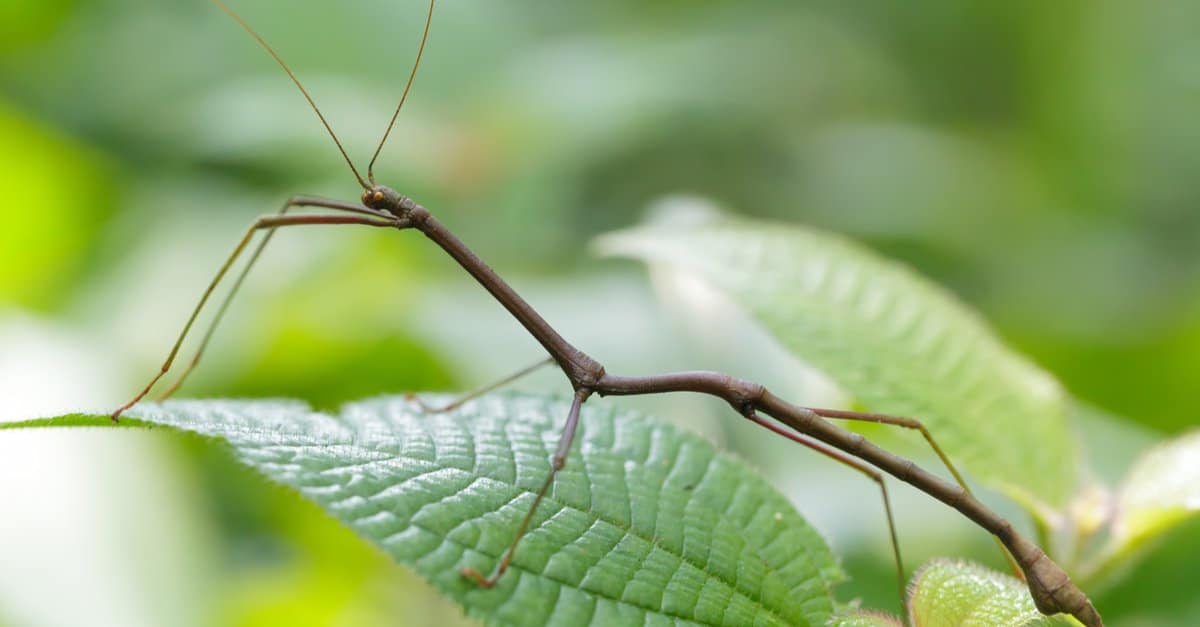
The scientific name for the order of stick insects is Phasmatodea, which derives from the Greek word phasma, meaning an apparition, phantom, or ghost. This is reflected in the animal’s strangely ethereal disappearing act. Because Phasmatodea represents an entire order (a major level of taxonomy below the class Insecta), the stick insect encompasses a truly massive number of species. It is estimated that there are more than 3,000 species of stick insects around the world! 

Given how little is known about stick insect evolution, their taxonomical system is still in flux. Scientists are working out how to classify all of the stick insect species into different families of organisms. What is known is that the first identifiable member of its kind appeared about 201-145 million years ago. Modern prototypes arrived 145-66 million years ago.

Appearance and Behavior
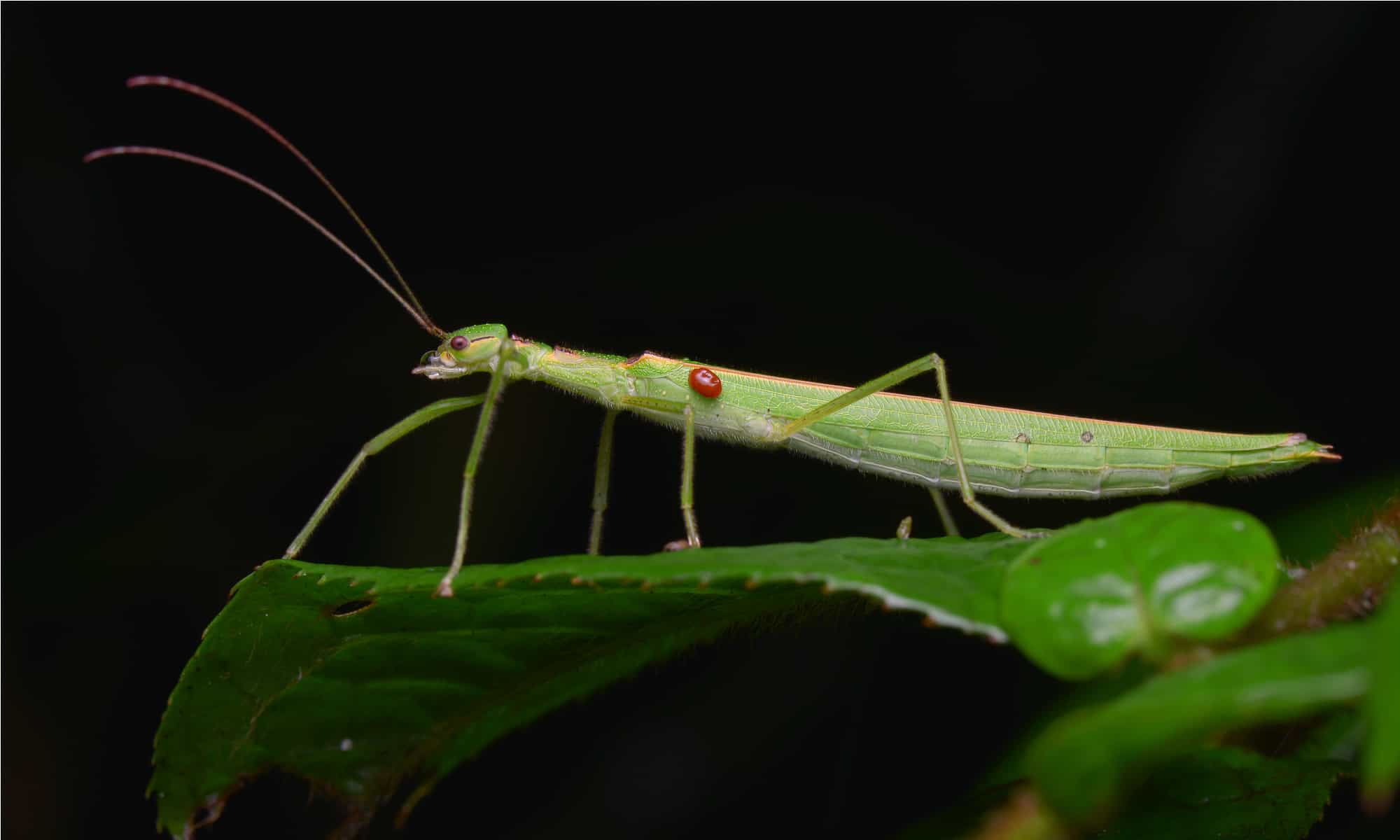
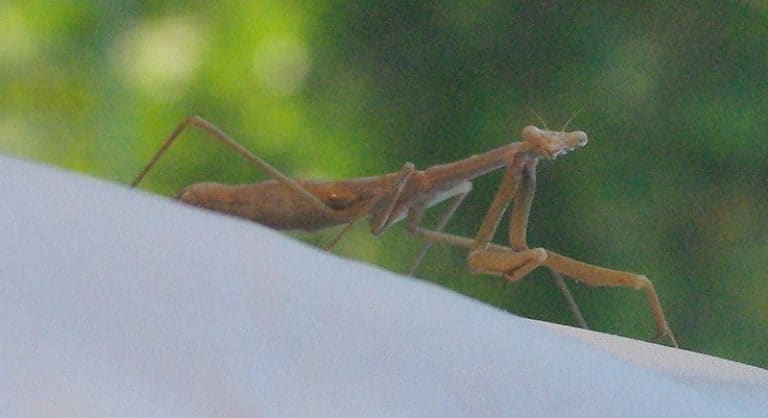
The entire life of the stick insect is dedicated almost exclusively to the singular strategy of crypsis: the ability to blend in with its natural environment, which may include different kinds of bark, moss, leaves, lichen, and twigs. What distinguishes the stick insect from other mimetic species, however, is that its camouflage is more than just an outward affectation. The insect will actually pretend to be a stick or leaf of its host plant. Evidence suggests that it has even honed the ability to mimic the motion of twigs swaying in the wind to throw off particularly observant predators.

Given the sheer number of species in the order of Phasmatodea, stick insects can evince a wide range of morphological sizes. According to National Geographic, the smallest known species — Timema cristinae of North America — is a mere half inch across. The largest species — the daunting Phryganistria chinensis Zhao of China — measures more than two feet long! Just for comparison, the length of a typical adult human foot is approximately 12 inches. Stick insects are sexually dimorphic, so the females are quite a bit larger than the males on average.

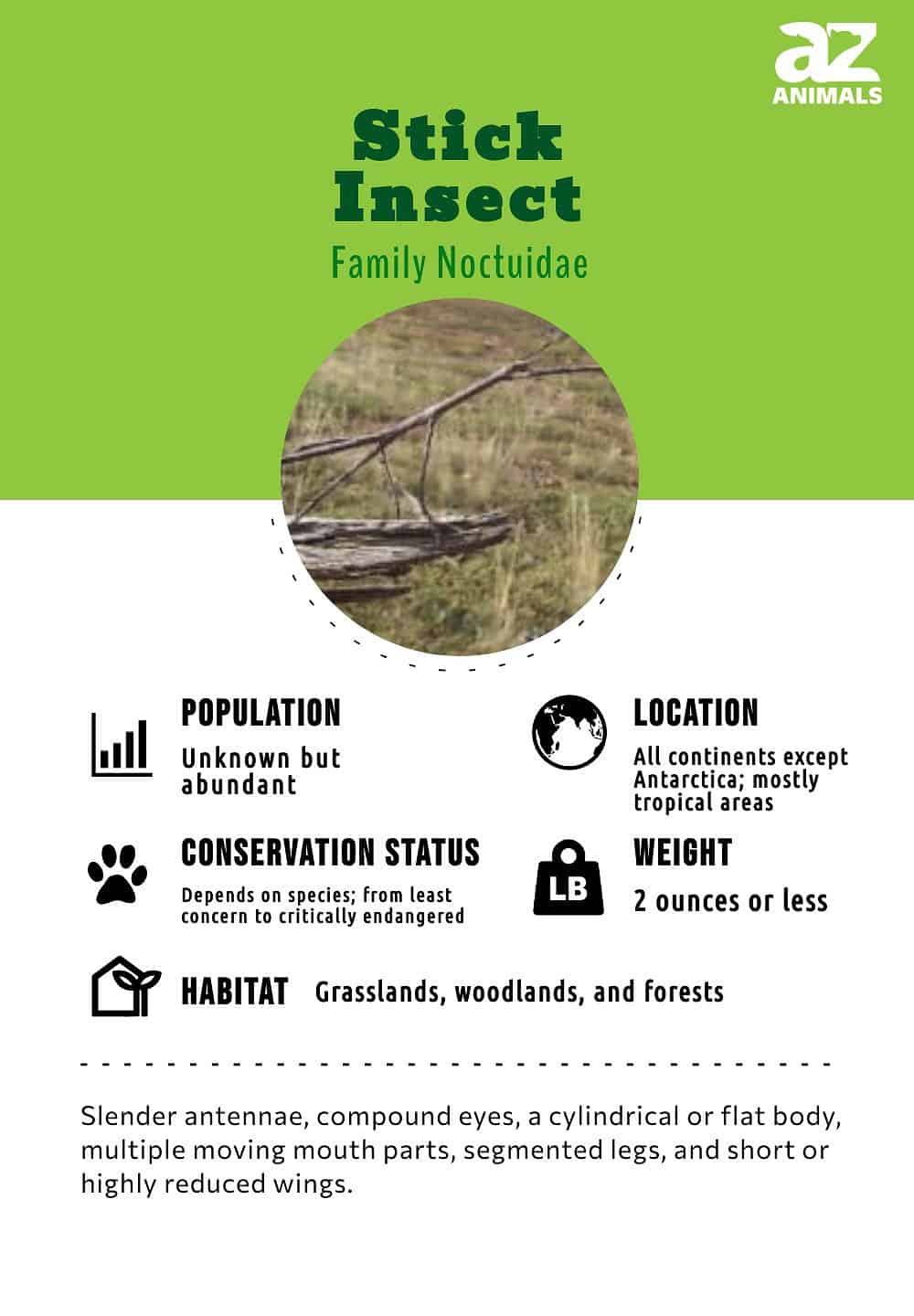
Despite the massive differences in size between species, stick insects do share many characteristics in common, including slender antennae, compound eyes, a cylindrical or flat body, multiple moving mouth parts, segmented legs, and short or highly reduced wings. Although the typical stick insect appears in a quite drab green or brown, certain species are swathed in garish and conspicuous shades of yellow or red to signal to predators how unappetizing they taste. In fact, a new species recently discovered in Madagascar has males that turn blue during mating season. 

Some of the more truly exotic stick insect species exhibit all manner of unexpected features, including well-developed wings, sharp spines on the legs, fake buds, lichen-like outgrowths, and the ability to alter pigmentation to match the surroundings. These defensive mechanisms are adapted to help it survive a relatively solitary life in a hostile environment.

Habitat
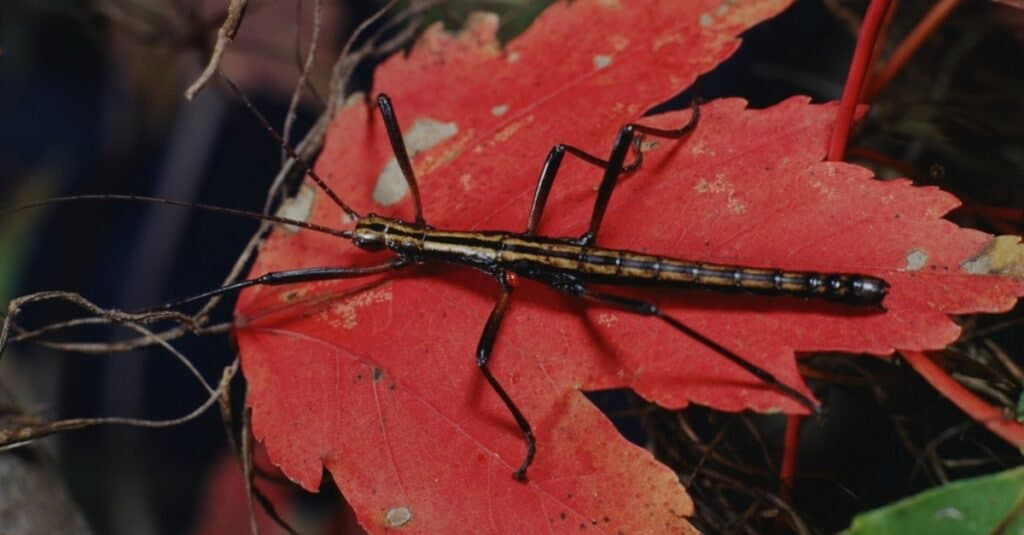
Stick insects are distributed widely across temperate, tropical, and subtropical regions of every continent except Antarctica. They reside almost exclusively in grasslands, woodlands, and forests. The greatest number of stick insect species is found in South America and Southeast Asia, but a disproportionate number of species appear to occupy the large island of Borneo in the Pacific. Borneo is home to all manner of rare and diverse animal species, many of which are found nowhere else in the world.

To avoid predation, stick insects are largely nocturnal in nature. They spend most of their days lying motionless on or under plants and only come out at night to feed. Many species appear to be well-adapted to or at least somewhat selective of their host plant (which also tends to serve as a source of food).

Diet

No matter the species, all stick insects share a predilection for leaves. Their powerful mandibles are well-adapted for carving up and slicing through the tough exterior of plants to make them easier to consume. Some evidence suggests that the stick insect is an integral part of the local ecosystem in the way that it clears out and recycles old plant material. Their droppings also contain enough digested plant matter to become a food source for other animals. However, if the stick insect is abundant enough, then it may cause significant foliage loss in a local area. This can damage local nature preserves and parks in certain parts of the world.

Predators and Threats
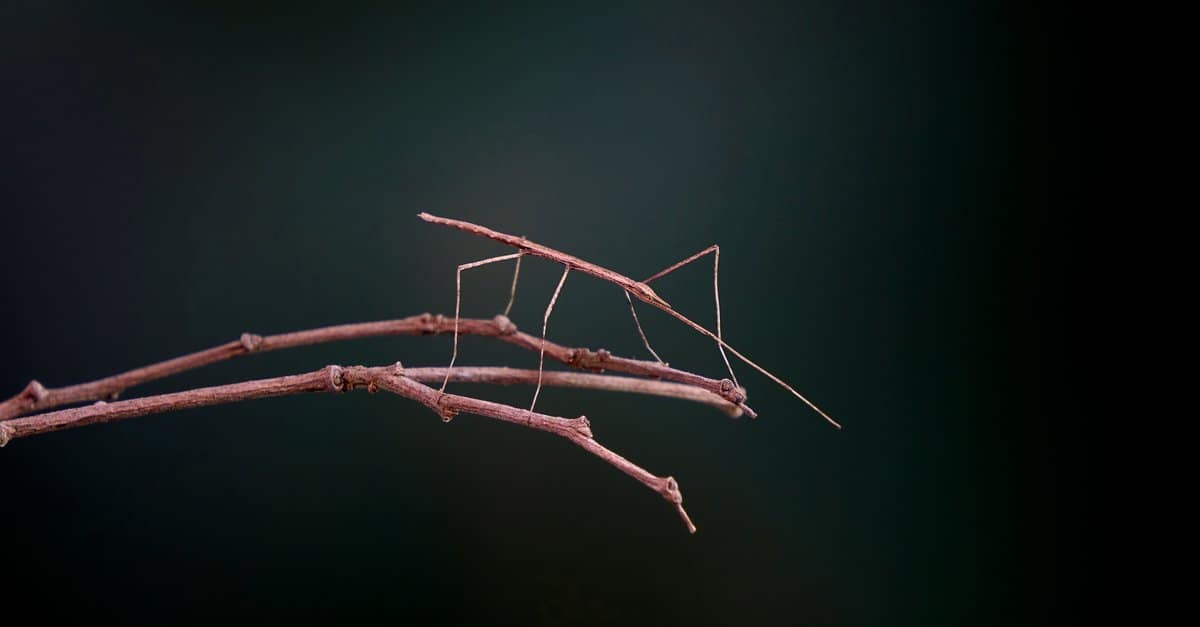
The stick insect occupies a rather low position in the food chain. It is in constant danger of falling prey to birds, primates, reptiles, spiders, small mammals, and even other insects. Bats are perhaps the most dangerous predators. Their echolocation can easily nullify the insect’s greatest advantage, which is its camouflage and furtive movements.

If its cover is blown, then the stick insect may fall back on another of many defensive mechanisms to deter hungry predators. Although each species may be different, common features can include sharp spines with which to attack predators, noxious odors expelled from glands, or even distasteful chemicals in its blood, which it forces through seams in the exoskeleton. Some species have the ability to detach or sever limbs at the joint that are caught in the clutches of a predator. Known as limb autotomy, this phenomenon is only a temporary setback because the insect will then regenerate the missing limb over time.

If all else fails, then the stick insect may resort to the ever reliable tactic of attempting to startle or frighten off the predator with loud noises or an aggressive display. The effectiveness of this display can be enhanced by the presence of colorful wings or unusual features. If the predator is momentarily confused, then the stick insect will drop down and hide amongst the undergrowth to evade detection.

Although stick insects are ubiquitous throughout the globe, they may be susceptible to habitat destruction, pesticide use, and human encroachment. Without the presence of plants or trees to protect it, stick insects are heavily exposed to predators.

Reproduction, Babies, and Lifespan

Stick insect reproduction is perhaps the most complex facet of its existence. Reproduction starts with a lengthy and protracted courtship that may last for days or even weeks at a time. During these non-stop mating sessions, the insects will remain attached to each other, rarely letting go. Because stick insects cannot necessarily rely on visual signals, they release chemicals in the air to attract mates.

In the absence of any males, many stick insects have a remarkable ability to produce female offspring from an unfertilized egg. This asexual form of reproduction is known as parthenogenesis. It results in exact copies of the mother. Although some species may prefer to reproduce almost exclusively in this manner, reproduction methods have been known to fluctuate within a population over time. The origins of sexual reproduction are not well understood, so the emergence of parthenogenesis as a reproductive strategy is a very unusual phenomenon that has incited the curiosity of many scientists.

Regardless of the reproductive utility of parthenogenesis, a single female stick insect can ultimately produce hundreds of eggs over a short period of time. As the eggs are highly vulnerable to predators, stick insects have evolved several strategies for dealing with threats. The female may choose to drop each egg far apart onto the ground below, or lay eggs in discrete hiding spots that are difficult to reach, or even attach the eggs to a leaf or plant.

Some species deploy a particularly remarkable strategy involving a mutually beneficial relationship with ants. Attracted to the nutritional value of the fat-based capsules on the surface, ants will actually carry the unhatched egg back to their nest, where it is kept safe from predators. The young stick insect will then leave the ant colony after it has hatched. Despite these protective measures, many of the eggs will be lost through sheer attrition to predators.
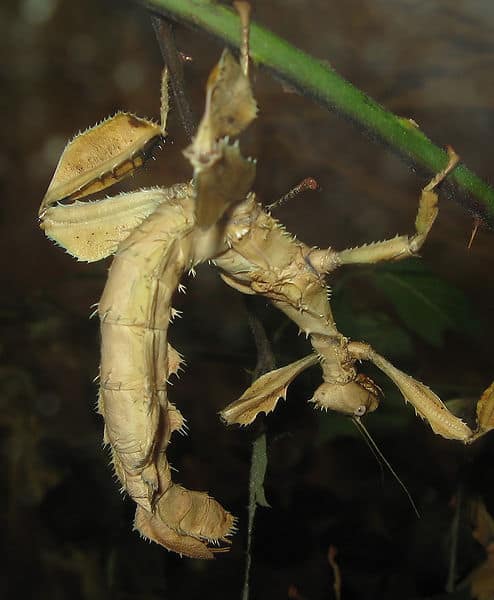
Stick insects rely on a mode of reproduction known as hemimetabolism. This is an incomplete form of metamorphosis in which the insect’s life cycle proceeds through three distinct stages. The first stage of the life cycle, which takes place entirely within the egg, has a long development period between a few months and a year.

Once the stick insect emerges from its egg, it begins the second stage of its life cycle: the nymph stage in which the insect resembles a younger version of the mature insect. Phasmatodea cannot transform all at once — it lacks the pupa stage common to many other insects — so the young nymph must grow gradually through a series of intermediate phases to reach full maturity. At different times throughout this process, the insect will shed off its old exoskeleton and then create an entirely new one. The time in between molts is known as an instar.

Instead of simply discarding its old exoskeleton, the nymph will proceed to consume it. This is done for two reasons. First, the exoskeleton is an excellent source of protein. Second, the insect can hide all evidence of its molting skin from observant predators.


After several molts, the stick insect will finally reach its third and final adult stage. It takes approximately three months to one year to reach this stage of maturity. If an individual stick insect manages to survive into adulthood, then it will have a typical lifespan between two and three years in total.

Population

Phasmatodea is numerous all over the world. While the vast majority of stick insect populations remain in robust health, quite a few are critically endangered. Perhaps the best known of all endangered stick insects is the Dryococelus australis — known colloquially as Lord Howe Island stick insect or the tree lobster. Once thought to be extinct, the species was rediscovered in 2001. It is now being slowly coaxed back from the brink by the Melbourne Zoo, San Diego Zoo, and other zoos around the world.

View all 390 animals that start with S

Sources

  1. David Burnie, Dorling Kindersley (2011) Animal, The Definitive Visual Guide To The World's Wildlife / Accessed December 21, 2009
  2. Tom Jackson, Lorenz Books (2007) The World Encyclopedia Of Animals / Accessed December 21, 2009
  3. David Burnie, Kingfisher (2011) The Kingfisher Animal Encyclopedia / Accessed December 21, 2009
  4. Richard Mackay, University of California Press (2009) The Atlas Of Endangered Species / Accessed December 21, 2009
  5. David Burnie, Dorling Kindersley (2008) Illustrated Encyclopedia Of Animals / Accessed December 21, 2009
  6. Dorling Kindersley (2006) Dorling Kindersley Encyclopedia Of Animals / Accessed December 21, 2009

Thank you for reading! Have some feedback for us?


Stick Insect FAQs (Frequently Asked Questions)

Stick insects do not present much of a danger to humans. However, especially if you plan to keep one as a pet, it would still be wise to handle it with caution. Some species have sharp spines that could potentially draw blood. Much rarer are the stick insects that emit a chemical to cause burning or stinging in the eyes or mouth. They are largely confined to only a few regions in the world such as Peru.