








Stingrays are fish able to glide gracefully through the water. There are about 220 different species in the oceans around the world. They also live in lakes and freshwater rivers. Categorized as a group of sea rays, they are related to sharks.
They consist of eight families of fish: Plesiobatidae, Urotrygonidae, Hexatrygonidae, Urolophidae, Potamotrygonidae, Dasyatidae, Myliobatidae, and Gymnuridae. However, stingrays all around the world face threats to survival. They are known to hit predators with their tails upon sensing danger, which is particularly effective as a result of a barb on their tail.
Rather than bones, their bodies consist of cartilage. These fish also have camouflaging capabilities that allow them to escape their predators.
An Incredible Fish: Five Stingray Facts
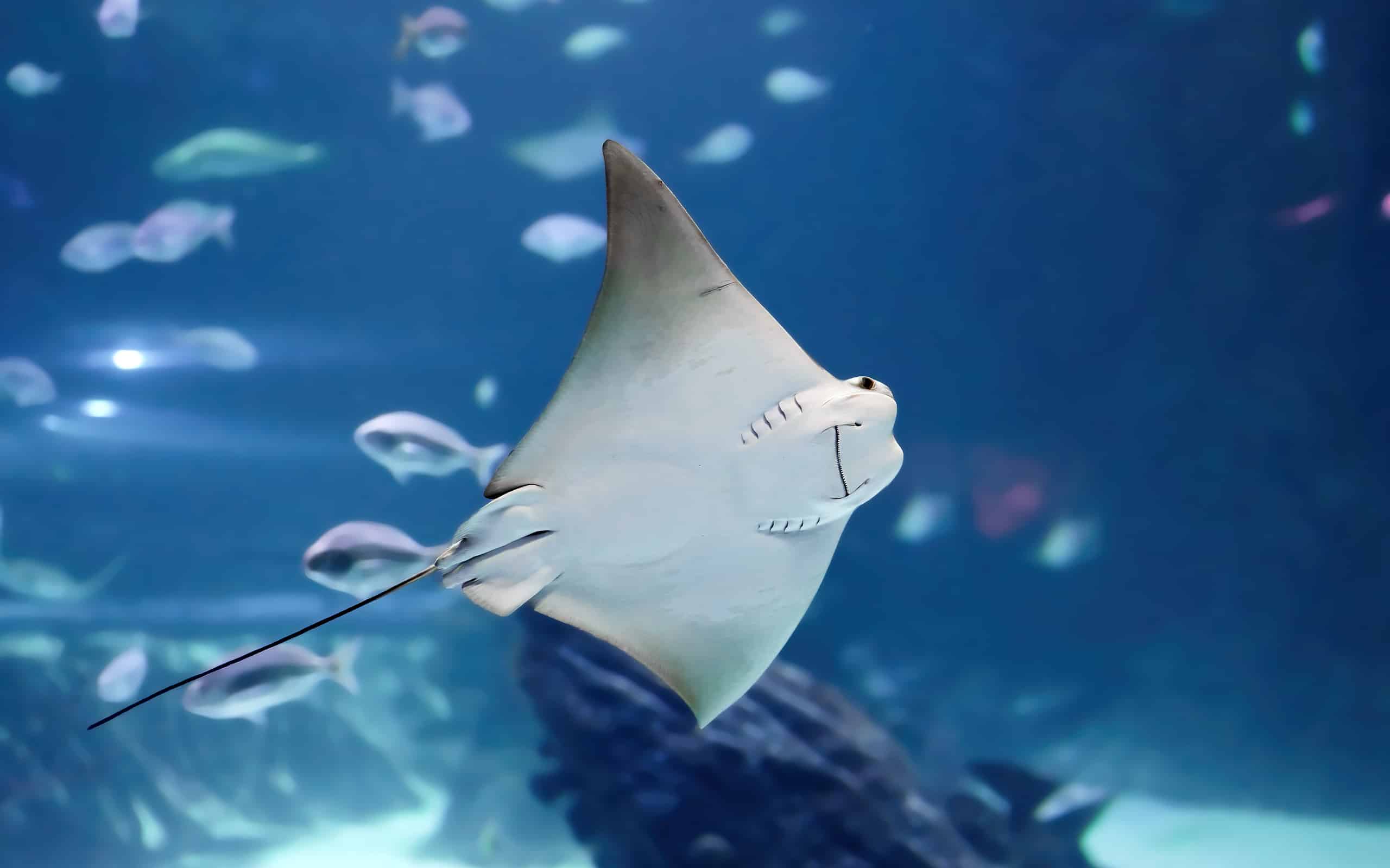
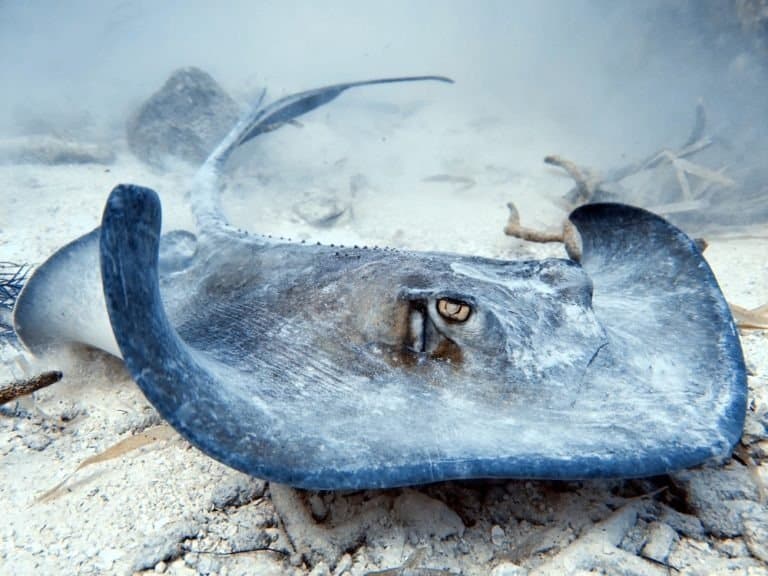
These fish have flat bodies that help them camouflage and blend with their surroundings.
©Richard Whitcombe/Shutterstock.com
- Related to sharks: As part of a group of fish called batoids, stingrays aren’t that different from sharks. Though there are clear differences in size, shape, and anatomy, both animals have cartilage (rather than bone). This similarity has given them the nickname “flat sharks.”
- Flat-bodied: Stingrays are fish that have flat bodies that help them camouflage and blend with their surroundings and eventually escape their predators. They also sting their predators with the spines or barbs in their tails.
- Completely boneless: These fish have no bones in their bodies.
- Hundreds of stingrays: There are about 220 different species, including the ocellate river, the thorntail, and the flower stingray.
- All alone: These fish are solitary creatures and come together only for breeding or migration.
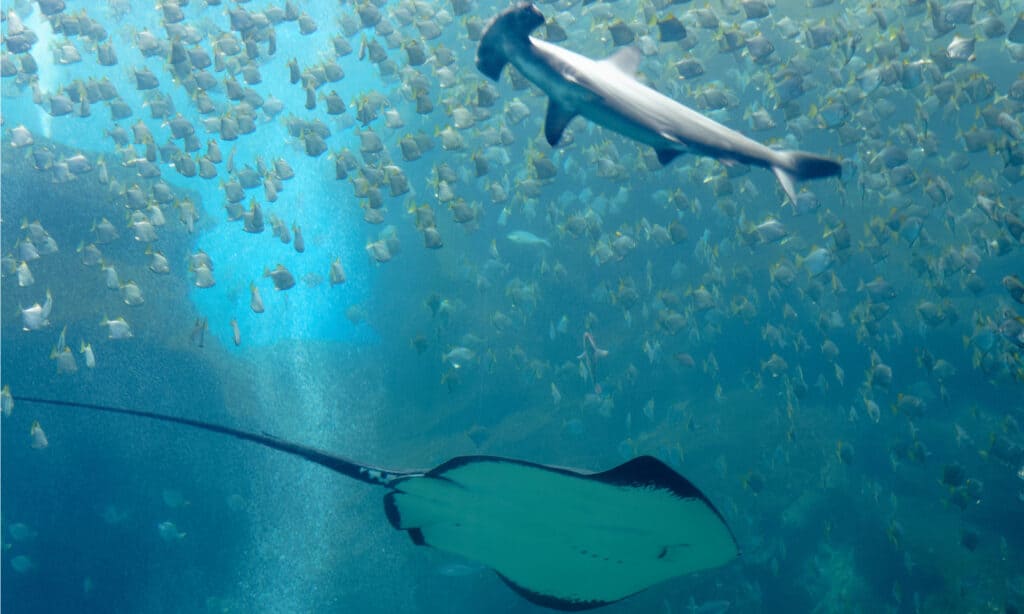
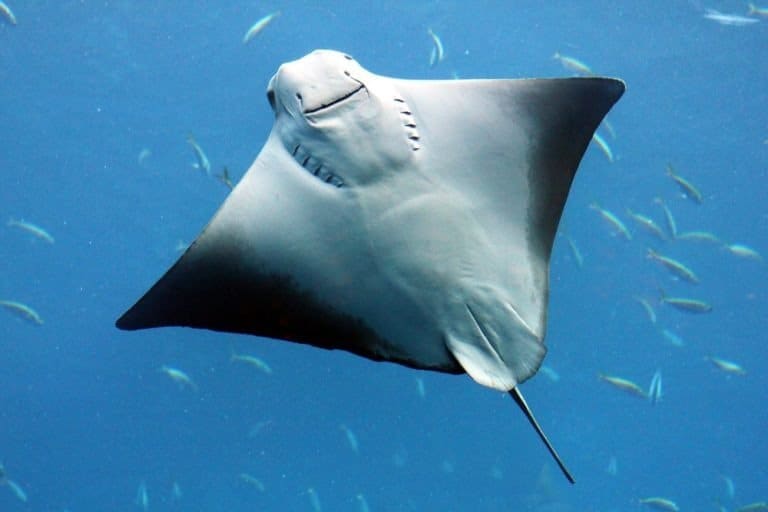
They may hunt with a hammerhead shark, but the shark is a predator of the ray.
©CHEN MIN CHUN/Shutterstock.com
Classification and Scientific Name
Stingrays belong to the kingdom Animalia and phylum Chordata and are classified in the class Chondrichthyes and order Myliobatiformes. Stingray families vary by species, and there are 8 families with about 29 genera. One of the most common families of a stingray is Dasyatidae.
Evolution and Origins
Most scientists believe that the origin of the stingray is related to ancient marine incursions that happened during the Oligocene and Miocene periods.
Species
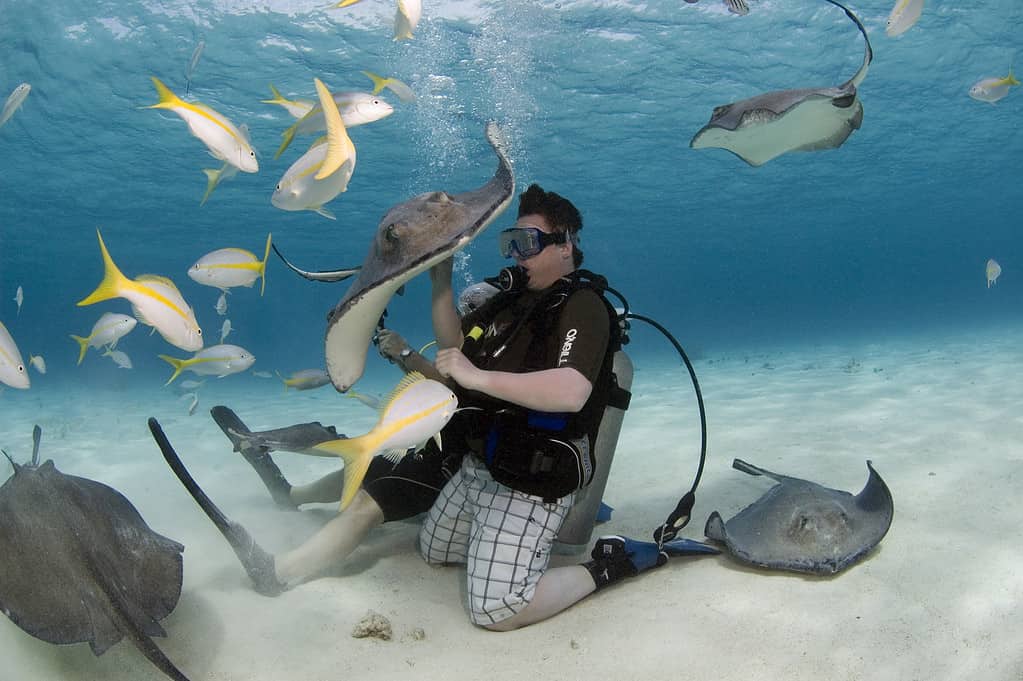
The Cayman Islands is home to Stingray City, where divers can swim with these majestic rays.
Stingrays include 8 different families of fish, and there are about 220 different species of these fish in oceans, freshwaters, and lakes around the world.
One of the most common freshwater stingrays is the river stingray, and the mother gives birth to live babies or pups. In the Atlantic Ocean (as well as in the Mediterranean and Black Seas), the common stingray thrives, though only in habitats with depths of no more than 200 feet. They prefer to reside in muddy or sandy regions. In general, none of the species are aggressive unless threatened.
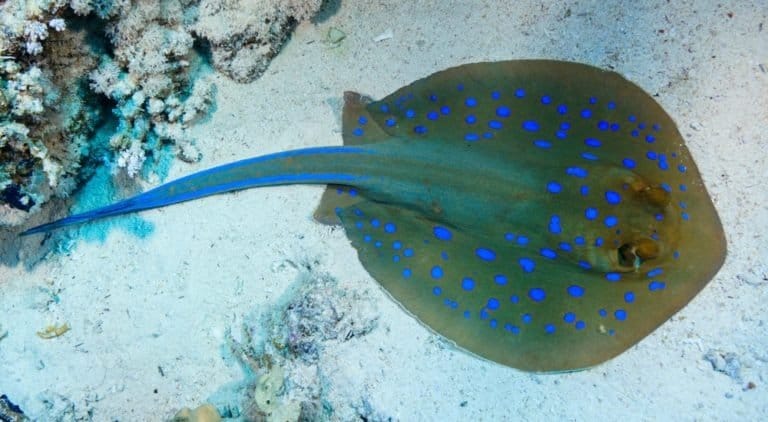
The blue-spotted stingray, however, will attack with their venom, which may be fatal if they sting the victim in the abdomen or heart. If the sting occurs in other areas of the body, the outcome will not likely be fatal.
Appearance
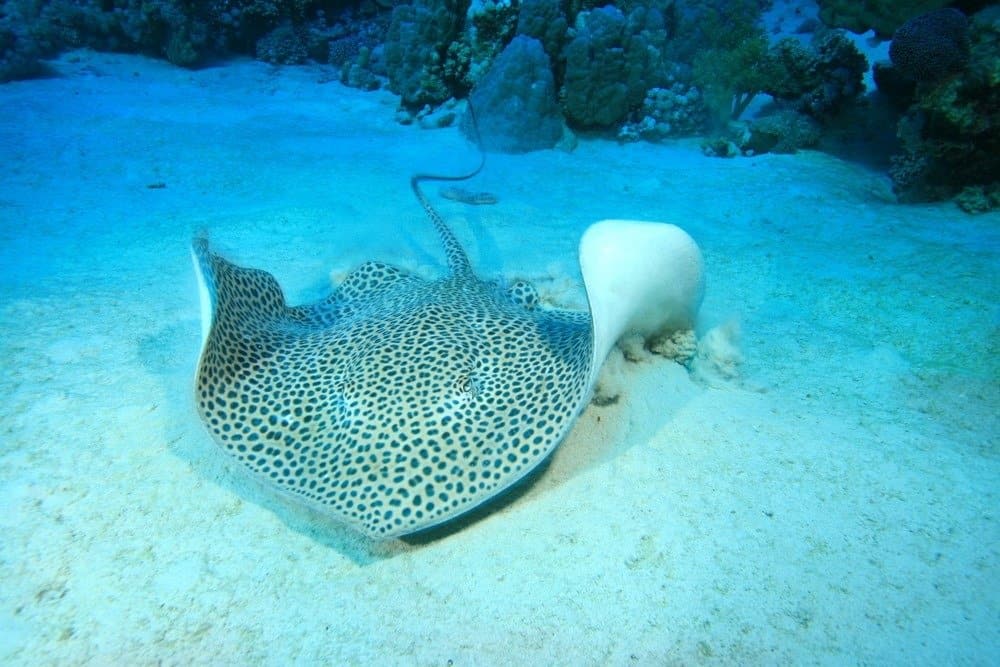
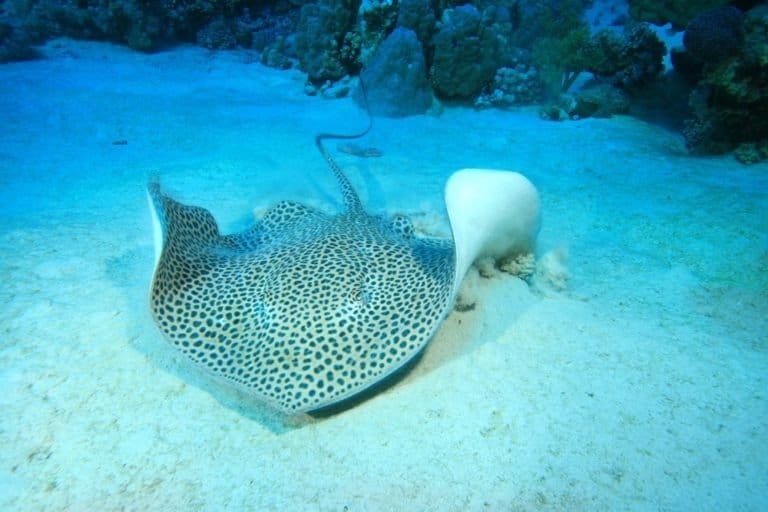
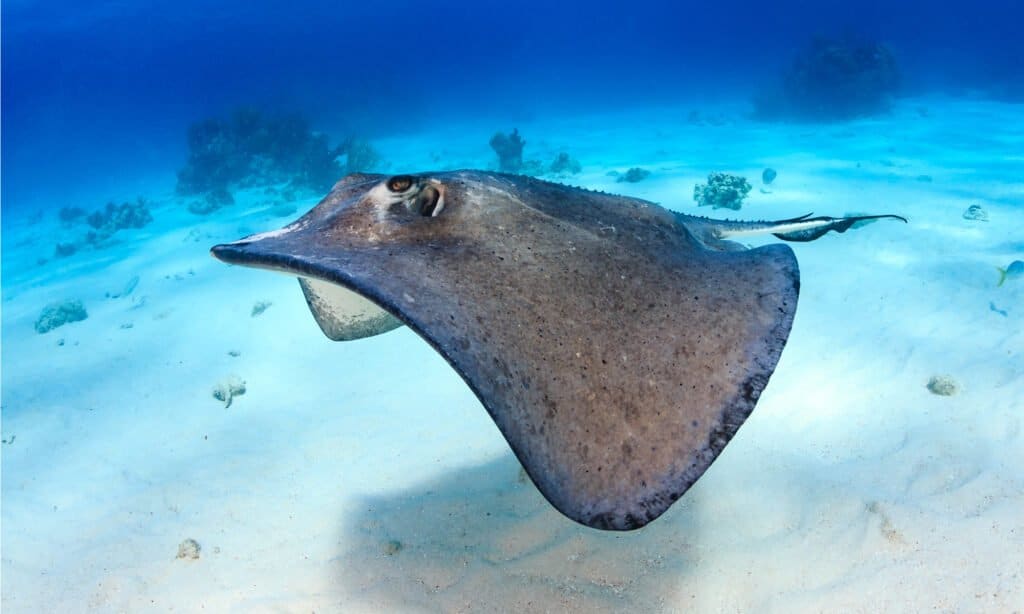
Darkspotted Stingray (Himantura uarnak) is swimming over the ocean floor.
©Rich Carey/Shutterstock.com
These fish have flat bodies only made of cartilage, which means that these fish lack any bones in their bodies. They have broad fins that are the length of their full bodies. Despite being flat, the fins can often give the stingray a round look. Some of these fish look like they “fly” through the water, but the facts indicate that this is just a smooth flapping motion of the fins. They also have defensive tails that usually help them to ward off predators when they sense danger.
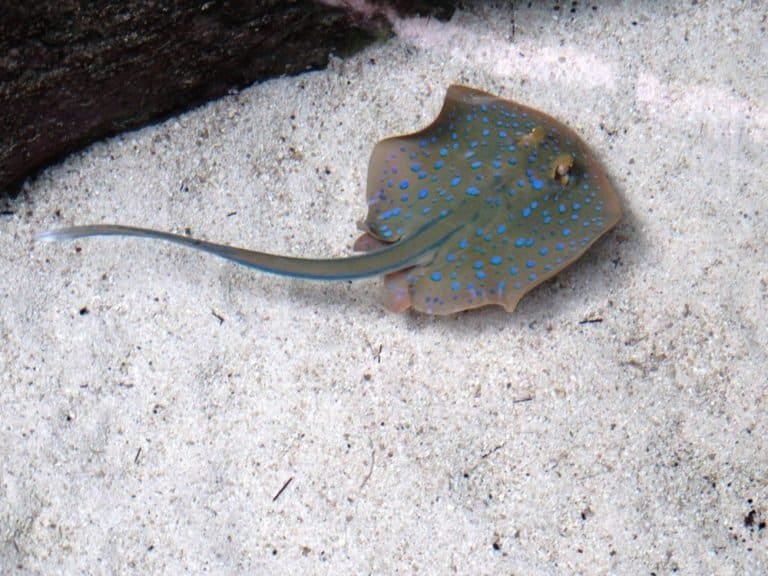
Since there are so many species, color can vary drastically. Though the majority of these fish have a grey or dark brown back with a pale belly, they may also have spots with blue dots, yellow dots, brown dots, and other colors.
Distribution, Population, and Habitat
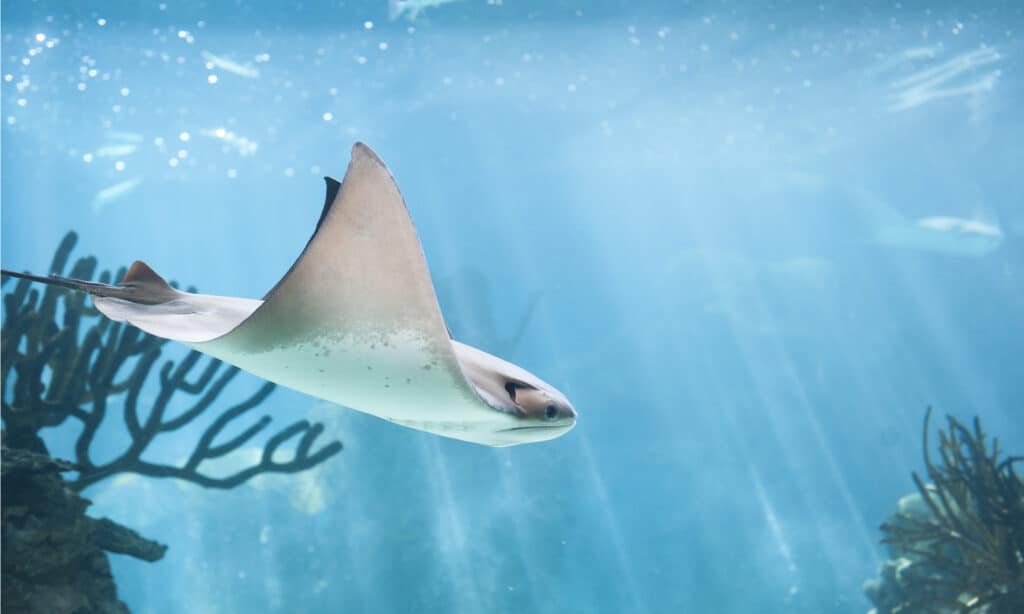
These fish also exist in the Black and Mediterranean Seas.
©Natia Tsuleiskiri/Shutterstock.com
Stingrays live throughout the world.
The Black and Mediterranean Seas are primarily the home of the common stingray, the butterfly ray, the thorntail stingray, and the whiptail stingray. This area allows them to thrive in a calm area, often accompanied by sandy or muddy sea floors, as well as reefs.
Very few of them also exist in the northern Atlantic Ocean, off southern Norway, and the Canary Islands, depending on the particular species. The deepwater stingray prefers the Indian and western Pacific Oceans, and some live in depths of over 2,400 feet.
The Bahamas have become so concentrated with these fish that they are a major tourist attraction in Great Stirrup Cay. There is also a stretch from the Western Baltic Sea to Madeira that makes a great home for these fish.
However, while there are over 200 different species, many stingray populations are threatened or declining, and overall numbers are unknown.
Predators and Prey
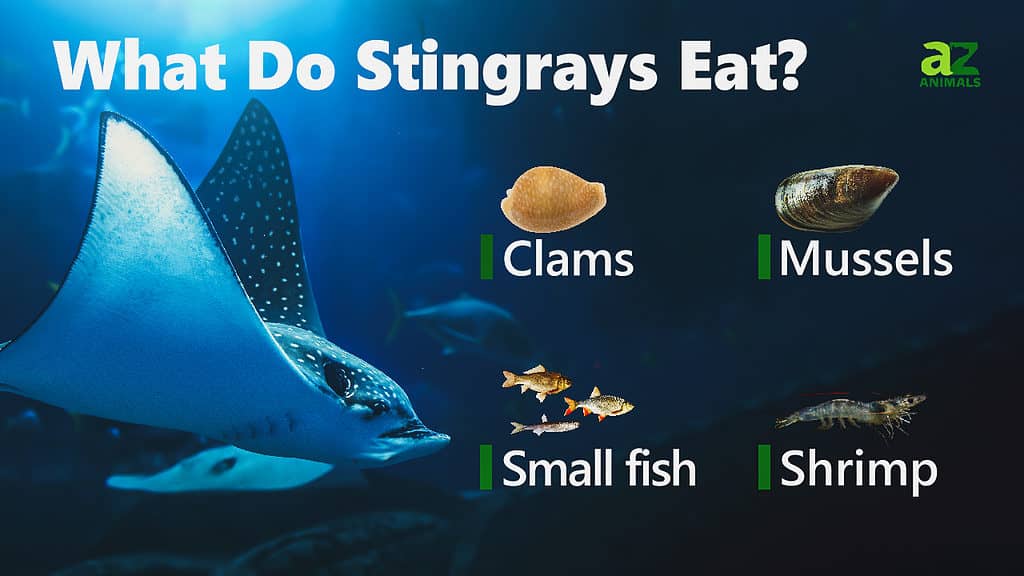
The main predators of these fish include sharks and seals. Other large fish also feed on them since the larger predators in the ocean will go after almost anything smaller than them.
However, their flat body and smooth movements allow them to lie against the floor of their natural habitat to hide. Rather than attacking when threatened, most will simply flee as quickly as they can. For the most part, the primary prey that they go after are fish that are smaller in size than them.
They usually eat clams, oysters, shrimp, and other small fish that are found in shallow waters, though they have been known to eat snails and squid.
For the most part, stingrays are not aggressive and are not very high up on the food chain. However, humans will capture them as a healthy source of protein.
Reproduction and Lifespan
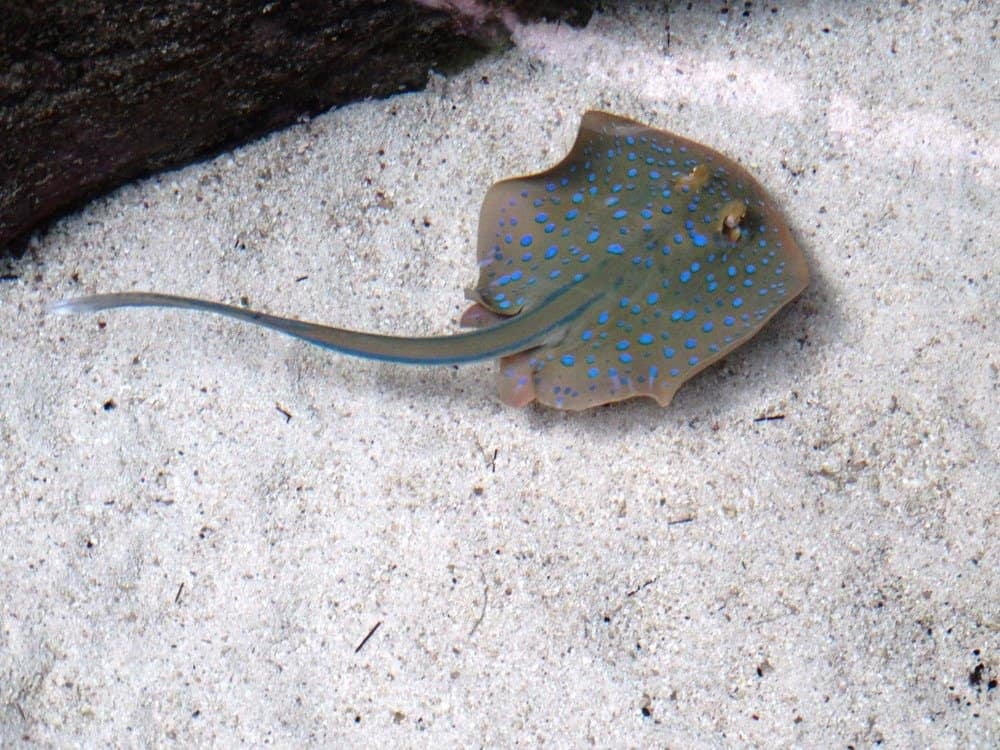
Babies are known as pups.
©Charles B. Cardell/Shutterstock.com
Stingrays reproduce using internal fertilization, which means that a male impregnates the female. This reproduction is preceded by courting, which the male does by biting at the female’s pectoral disc. Some stingrays have longer mating periods, taking over half a year before the female becomes pregnant.
The unborn babies are nourished and grow inside the egg yolk inside the body of the female stingray fish. While the size of a litter of stingrays may vary, the birth typically brings 5-15 live young.
Since stingrays have survival instincts in their genes, the young do not stay with their parents after birth.
Stingrays live for around 15 to 25 years in the wild. In captivity, this lifespan can drop down to as little as five years with proper care.
Fishing and Cooking
These fish are caught using lines or spears and are safe to consume. They are eaten by humans across the globe.
The most common stingray dish worldwide is grilled or barbecued stingray, such as sambal stingray in Southeast Asia. People have often said that they find the meat rubbery, and it tastes a lot like shark meat or scallops.
Stingray Pictures
View all of our Stingray pictures in the gallery.

Rich Carey/Shutterstock.com
Sources
- Wikipedia / Accessed December 3, 2020
- Live Science / Accessed December 3, 2020
- California State University / Accessed December 3, 2020
- National Geographic Kids / Accessed December 3, 2020
- Sea World / Accessed December 3, 2020
- All About Stingrays / Accessed December 3, 2020
- Smithsonian's National Zoo & Conservation Biology Institute / Accessed December 3, 2020
- National Geographic / Accessed December 3, 2020