S
Species Profile

Striped Rocket Frog

Ranoidea nasuta

Built for leaps. Striped for stealth.
Trent Townsend/Shutterstock.com

Striped Rocket Frog Distribution

Click a location to explore more animals from that region

Loading map...
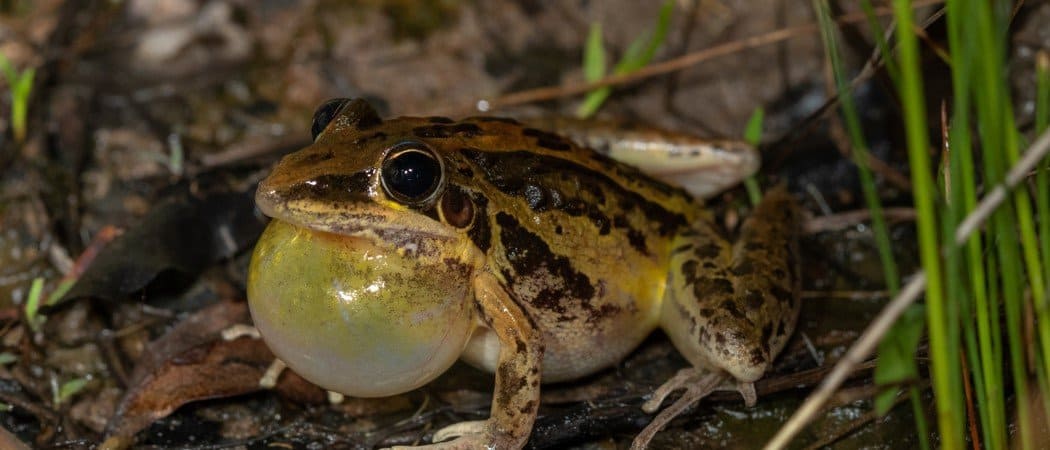
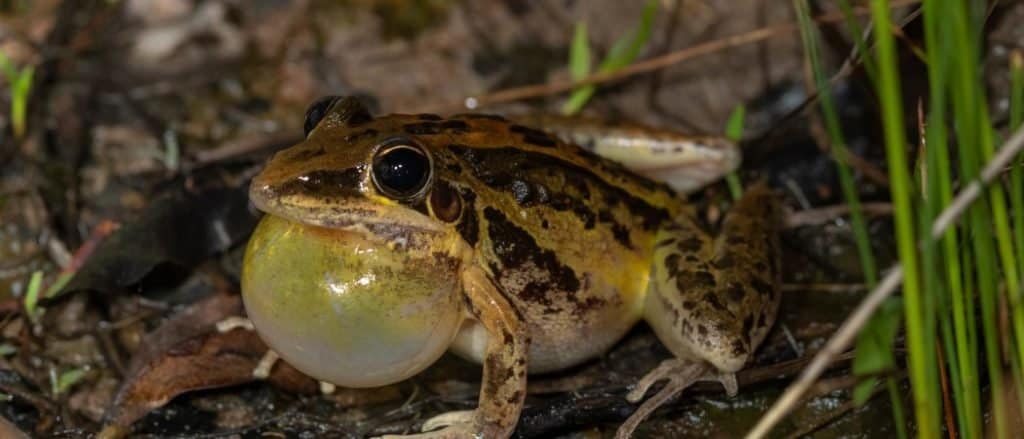
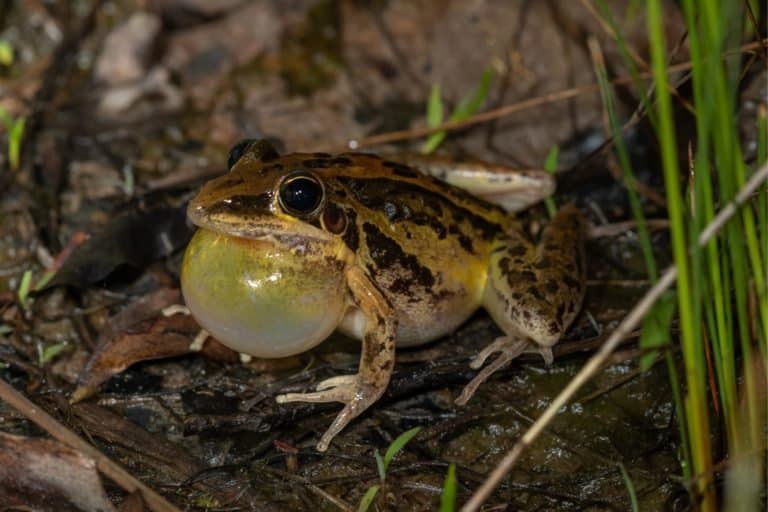
Striped rocket frog (Litoria nasuta) calling. Ravenshoe, Queensland, Australia

At a Glance

Wild Species
Also Known As Rocket Frog, Common Rocket Frog
Activity Nocturnal+
Status Least Concern
Did You Know?

Size (snout-vent length): males ~3.5-4.5 cm, females ~4.5-5.5 cm (reported in Australian field guides and museum species accounts).

Scientific Classification

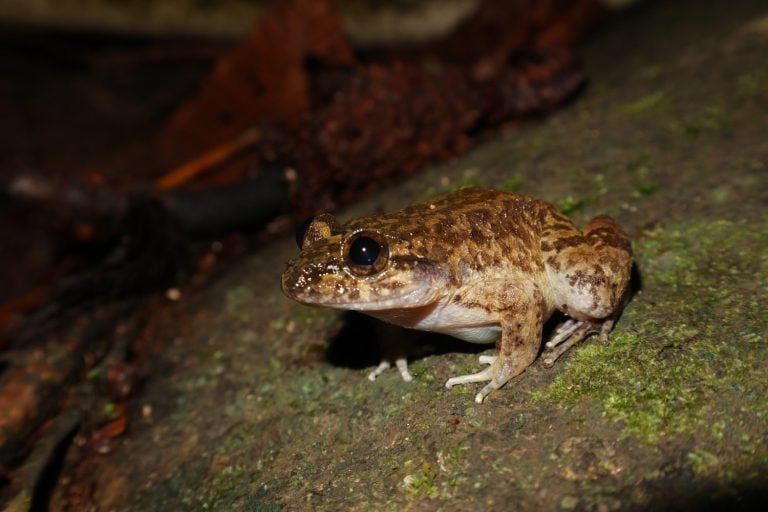
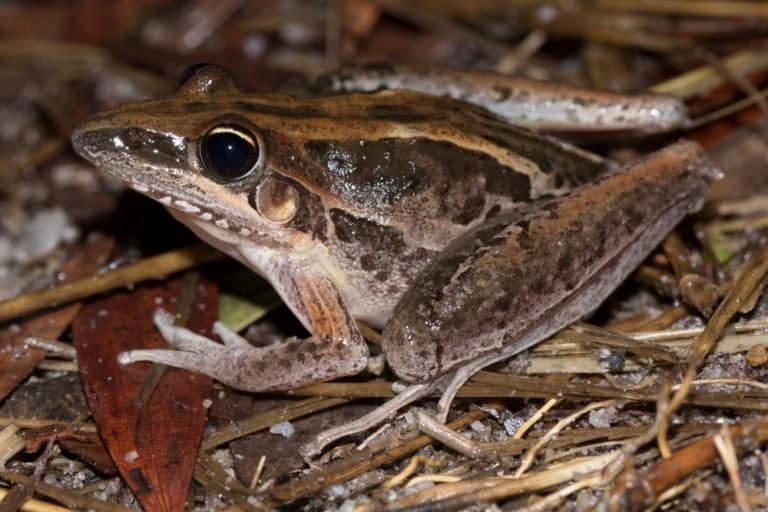
The Striped Rocket Frog (Ranoidea nasuta) is a slender, long-legged Australasian tree frog known for powerful, “rocket-like” leaps and fast terrestrial movement. It is typically brown to grey with distinctive longitudinal striping and a pointed snout.

Kingdom
Animalia
Phylum
Chordata
Class
Amphibia
Order
Anura
Family
Pelodryadidae
Genus
Ranoidea
Species
nasuta

Distinguishing Features

  • Slender body with long hind limbs adapted for long jumps
  • Pointed/elongate snout
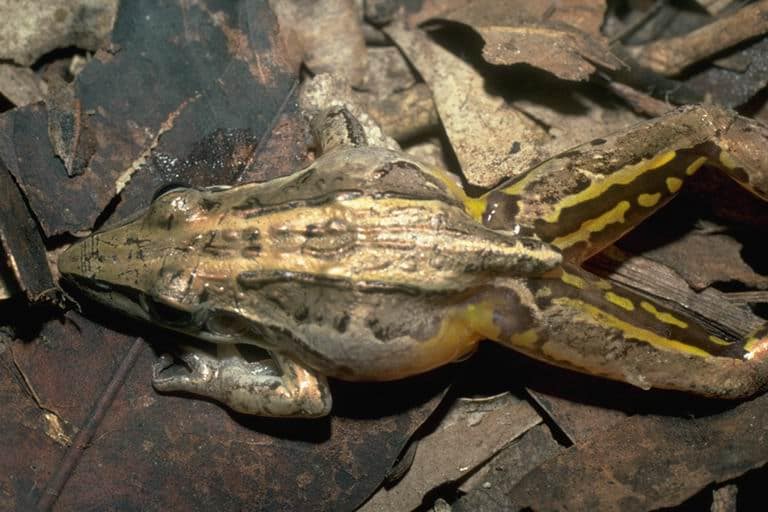
  • Usually shows pale dorsolateral stripes or longitudinal striping along the back
  • Often a dark stripe through/behind the eye
  • Typically active on the ground or low vegetation near water, especially during/after rain

Did You Know?

Size (snout-vent length): males ~3.5-4.5 cm, females ~4.5-5.5 cm (reported in Australian field guides and museum species accounts).

It's an Australasian "tree frog" (Pelodryadidae) that often behaves more like a ground-runner-sprinting and making long, low leaps across grass.

The pointed snout and longitudinal stripes help break up its outline in leaf litter and grassy edges, where it commonly forages at night.

Taxonomy update: long known as Litoria nasuta, now placed in Ranoidea (common in recent Australian checklists and databases).

Breeding is typically triggered by rains: adults converge on still/temporary waters (roadside puddles, farm dams, ephemeral pools) and call at night soon after downpours.

Like many pelodryadids, it has expanded toe pads for grip, but proportionally long hindlimbs reflect its emphasis on powerful jumping.

Lifespan: robust, species-specific longevity estimates are not well established in the primary literature; published sources more often focus on identification, distribution, and breeding ecology than maximum age.

Unique Adaptations

  • Elongated hindlimbs for high acceleration and long-distance jumping-key to the "rocket frog" reputation.
  • Longitudinal striping + earthy tones (brown-grey) provide disruptive camouflage in grass stems and leaf litter.
  • Pointed snout profile helps streamline the head shape visually, aiding concealment in linear vegetation and ground cover.
  • Toe pads (typical of Pelodryadidae) provide traction on smooth leaves and wet grass, supporting both climbing and fast terrestrial movement.
  • Flexible breeding strategy suited to ephemeral water: rapid exploitation of newly filled pools reduces exposure to permanent-water predators (a common advantage in many temporary-pool breeders).

Interesting Behaviors

  • Rocket-style locomotion: makes rapid sequences of long bounds and can change direction abruptly, a useful escape tactic in open ground.
  • Nocturnal foraging: typically active after dusk, hunting small invertebrates along grassy margins and open woodland floors.
  • Rain-chasing breeding: calling and mating activity can spike dramatically after storms, especially when new temporary pools form.
  • Edge calling: males often call from low vegetation, grass tussocks, or the ground near water rather than high in trees.
  • Freeze-or-flee defense: relies on stillness and camouflage when first approached, then suddenly bolts with powerful leaps when threatened.

Cultural Significance

The Striped Rocket Frog (Ranoidea nasuta) is linked to rain and storms in northern and eastern Australia. It appears and calls after rain. Called 'rocket frog' for its big jumps, it is used in guides and community surveys to help frog conservation.

Myths & Legends

Tiddalik (Australia): an Aboriginal story of a great frog who drank all the water; other animals made him laugh so water returned, linking frogs to water’s release, rain and wetland life.

Frog Dreaming stories in many Aboriginal groups tell of frogs as ancestral beings linked to waterholes, rain, and the land's renewal; frog calls are read as signs of changing weather and water availability in region.

In rural Australia, a rain-caller tale says when frogs make loud calls after storms they 'call' more rain. This folk belief connects breeding frogs to ones like Striped Rocket Frog (Ranoidea nasuta).

Conservation Status

LC Least Concern

Widespread and abundant in the wild.

Population Stable

Protected Under

  • Queensland Nature Conservation Act 1992
  • New South Wales Biodiversity Conservation Act 2016
  • Western Australia Biodiversity Conservation Act 2016
  • Northern Territory Territory Parks and Wildlife Conservation Act 1976
  • South Australia National Parks and Wildlife Act 1972
  • Victoria Wildlife Act 1975
  • Tasmania Nature Conservation Act 2002

Life Cycle

Birth 800 tadpoles

Lifespan

In the Wild
0 years
In Captivity
0 years

Reproduction

Mating System Promiscuity
Social Structure Aggregation Group
Breeding Pattern Transient
Fertilization Broadcast Spawning
Birth Type Substrate_spawning

During wet-season breeding aggregations at ponds/temporary pools, males call from the ground and use axillary amplexus; fertilization is external. Females lay floating egg films/clumps in water, with no parental care; both sexes likely mate with multiple partners.

Behavior & Ecology

Social Chorus Group: 6
Activity Nocturnal, Crepuscular
Diet Insectivore ants
Seasonal Hibernates

Temperament

Skittish, fast-escaping terrestrial frog; relies on long jumps and rapid running when disturbed.
Calling males are site-attached over short periods, spacing from nearby males (Anstis 2017).
Most populations are solitary except during rain-triggered breeding congregations; chorus density varies with rainfall and hydroperiod.

Communication

Male advertisement call given from ground or low cover near breeding water; often in choruses Anstis 2017; Cogger 2014
Distress call when handled Reported generally for hylids; Anstis 2017
Release call by amplexed males to terminate unwanted grasping Typical anuran behavior; Wells 2007
Acoustic spacing: males adjust calling position/timing relative to neighbors in choruses Wells 2007
Tactile communication during amplexus and courtship positioning at breeding sites Wells 2007
Visual signals limited; body orientation and rapid movement likely function in close-range interactions.

Habitat

Biomes:
Savanna Tropical Dry Forest Freshwater Wetland
Terrain:
Plains Coastal Riverine Sandy
Elevation: Up to 3937 ft

Ecological Role

Nocturnal terrestrial arthropod predator (mesopredator) in northern and eastern Australian savanna/woodland and wetland-edge food webs.

suppression of insect populations (including pest insects) energy transfer from arthropods to higher trophic levels (prey for snakes, birds, and mammals) contribution to nutrient cycling via predation and waste deposition in riparian/grassland habitats

Diet Details

Main Prey:
Insects Spider Small invertebrates

Human Interaction

Domestication Status

Wild

Ranoidea nasuta (Striped Rocket Frog; formerly Litoria nasuta) is wild with no history of domestication. It is sometimes kept in captivity for teaching or by hobbyists, but not bred on purpose like White's Tree Frog. Adults: males ~45–55 mm, females ~55–70 mm. Fast ground jumper; breeds in still or slow water after rains. Lifespan unclear; care notes say several years.

Danger Level

Low
  • Skin/eye irritation from handling amphibian skin secretions (generally mild compared with strongly toxic amphibians).
  • Zoonotic pathogen risk common to amphibian handling (e.g., Salmonella from poor hygiene; risk mitigated by handwashing and avoiding contact with face/food).
  • Allergy/asthma trigger potential in sensitized individuals (dander/secretions, enclosure molds).
  • Indirect risk: potential spread of amphibian pathogens (notably chytrid fungus) via contaminated gear/water between sites; relevant to fieldworkers rather than personal injury.

As a Pet

Not Suitable as Pet

Legality: Laws vary. In Australia, keeping the Striped Rocket Frog (Ranoidea nasuta) needs state permits and usually must be captive-bred; wild collection and export are mostly illegal, so it's rare in overseas pet trade. Check local laws.

Care Level: Experienced

Purchase Cost: Up to $150
Lifetime Cost: $500 - $2,000

Economic Value

Uses:
Ecosystem services (insect predation) Biodiversity/education value Research/monitoring (amphibian health, chytrid surveillance) Limited hobbyist/permit-based captive keeping HUBS (Pelodryadidae/Ranoidea): common human interactions span backyard coexistence, roadkill near wetlands, habitat modification (drainage/urban growth), pesticide sensitivity concerns, disease monitoring (chytridiomycosis), and a small-to-moderate legal pet trade for a few hardy relatives (e.g., R. caerulea) rather than for R. nasuta
Products:
  • non-consumptive value (wildlife watching/eco-tourism)
  • educational displays (schools/nature centers; typically permit-based)
  • scientific data (surveys, bioacoustics recordings, disease testing)

Relationships

Related Species 8

Broad-palmed Rocket Frog Ranoidea latopalmata Shared Genus
Wallum Rocket Frog Ranoidea freycineti Shared Genus
Australian Green Tree Frog Ranoidea caerulea Shared Genus
Peron's tree frog Ranoidea peronii Shared Genus
Tyler's Tree Frog Ranoidea tyleri Shared Genus
Golden Bell Frog Ranoidea aurea Shared Genus
Motorbike Frog Ranoidea moorei Shared Genus
Dainty Tree Frog Ranoidea gracilenta Shared Genus

Ecological Equivalents 5

Animals that fill a similar ecological role in their ecosystem

Broad-palmed Rocket Frog Ranoidea latopalmata Overlapping Australian range and habitat use. Both are slender, long-legged hylid frogs that forage terrestrially around waterbodies and exhibit rapid, powerful leaping escape responses (the 'rocket frog' ecomorph).
Wallum Rocket Frog Ranoidea freycineti Similar body plan and locomotion (fast ground movement and long jumps), and broadly comparable breeding ecology (rain- or seasonally-triggered breeding in still or slow-water wetlands), despite its strong association with wallum/heath habitats.
Striped Marsh Frog Limnodynastes peronii Often co-occurs in lowland wetlands, farm dams, and temporary pools. Both are nocturnal, generalist insectivores that forage at ground level and breed opportunistically after rainfall, leading to frequent community-level co-occurrence.
Ornate Burrowing Frog Platyplectrum ornatum Uses similar ephemeral-water breeding opportunities in seasonally dry landscapes; both rely on rapid movement between refuges and breeding sites and consume overlapping arthropod prey in open woodland and grassland edges.
Great Barred Frog Mixophyes fasciolatus Shares an insectivorous niche along forested creeks and wet gullies in eastern Australia; both are sit-and-wait/active nocturnal foragers and are common prey for similar riparian predators such as snakes and birds.

The striped rocket frog is one of the unique amphibious treasures of Australia.

Known for its extraordinary leaping ability, this species makes a loud croaking sound that can be heard at night near ponds, wetlands, or other bodies of water. It shares a range with several other rocket frogs in eastern Australia, which makes it difficult to tell them apart from each other, but the key to distinguishing this species lies in its name. The dark horizontal stripes along the side of the body are a signature feature of this frog.

4 Incredible Striped Rocket Frog Facts!

  • Thanks to the long legs and strong muscles, the striped rocket frog can leap approximately 6.5 feet into the air, which is almost 40 times its own body length.
  • The striped rocket frog makes an unusual “wick wick” call to attract mates in the breeding season. This sound is caused by the massive vocal sac near the throat that expands outward like a balloon.
  • Like many other amphibians, the striped rocket frog has thin, porous skin through which it absorbs chemicals from the air and water. The skin needs to be kept constantly moist or else dry out. But this also makes the skin particularly vulnerable to pollution in the environment.
  • The striped rocket frog can be kept as a pet in Australia with the appropriate permits.

Striped Rocket Frog Scientific Name

The scientific name of the striped rocket frog is Litoria nasuta. Litoria is a genus of Australian tree frogs (though the striped rocket frog does not actually spend much time in trees). The species name nasuta appears to be derived from the Latin word nasus, meaning nose, which refers to this frog’s pointed and ergonomic snout.

This species forms a loose relationship with several other species of Litoria rocket frogs, including the Kimberley rocket frog, the dwarf rocket frog, Freycinet’s frog, and the broad-palmed frog. The rocket frogs are often distinguished from other frogs by their strong body patterns, deep skin folds, streamlined appearance, and leaping ability. Together they belong to the family of Pelodryadidae, which includes all frogs native to Australia and Papua New Guinea.

Striped Rocket Frog Appearance

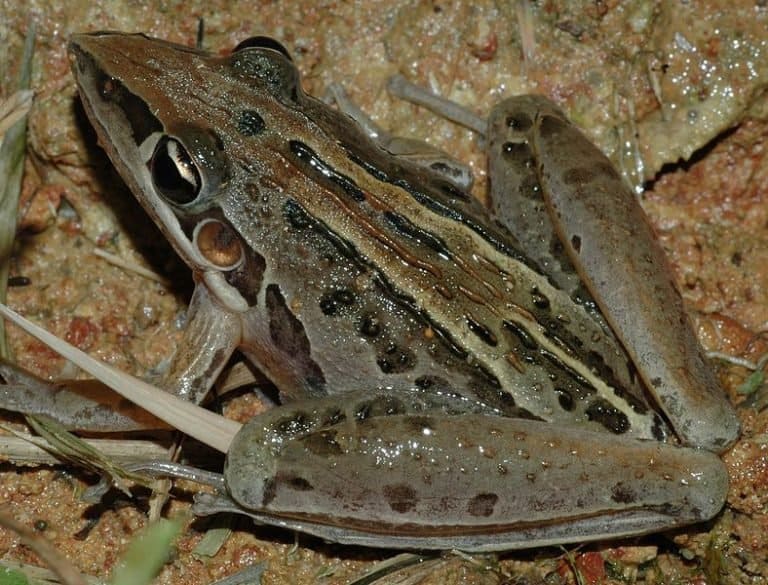
The striped rocket frog is characterized by a pointed snout, warty skin, deep folds on the back, and exceptionally long legs, about twice the length of the actual body. As an amphibian, it has unwebbed front feet and partially webbed toes, all of which have small round discs at the tip. These round discs appear to be a common feature of many tree frogs, despite the fact that the striped rocket frog is mostly terrestrial.

Measuring slightly more than 2 inches long (not much larger than a matchbox), the body is colored grey, reddish-brown, or dark brown with a white stomach and yellow thighs. It is covered in dark stripes and some patches that run horizontally along the length of the body, though the exact pattern varies widely between individuals. It also has a horizontal pupil with a gold upper iris and a dark brown lower iris.

Both sexes are similar in size and appearance, but only the male has a yellow throat in the breeding season. This yellow throat consists of a flexible vocal sac that expands outward to amplify the sound of the male’s mating calls. It looks very much like an expanding balloon.
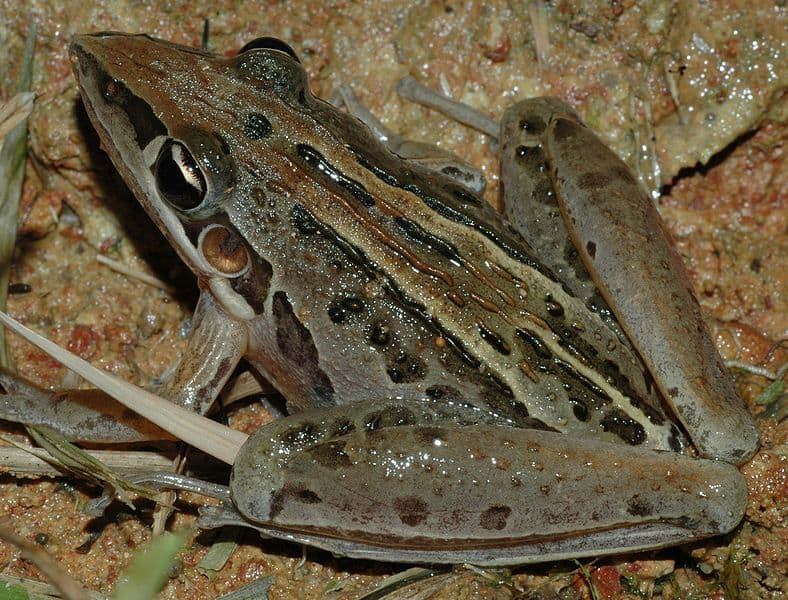
Striped Rocket Frog on leaves

Striped Rocket Frog Behavior

The striped rocket frog is a solitary species that hunts and feeds alone near the edge of the water. The only time it congregates together with other members of the same species is during the breeding season. But unlike many other species of Australian tree frogs, the striped rocket frog is a ground-dwelling species that spends most of its time hunting among leaves on the ground. It does not actually spend much time in the trees.

In order to find a mate, the male rocket frog makes its signature croaking sound at night. This begins with a slow chirping sound, which builds up in intensity to a raucous chattering noise, and then settles down to more chirps. This has been described as a “wick wick” sound followed by a “but but.”

In order to make its call, the frog expels air from the lungs and into the vocal sac. Air does not ever leave the mouth but instead moves back and forth between the mouth and lungs. The actual sound is produced by the vibration of the larynx and vocal cords, and then it’s amplified by the air sac. In order to attract mates, the frog needs to be quite loud and conspicuous, which has the unfortunate side effect of exposing its location to hungry predators, but this is an important element of the mating ritual.

Striped Rocket Frog Habitat

The striped rocket frog inhabits the outer parts of northern and eastern Australia. Its natural territory extends from the Kimberley region of Western Australia to the city of Sydney in New South Wales, right along the coast and the surrounding inland areas. Its habitat also includes the southern lowland parts of Papua New Guinea. This ground-dwelling species prefers to live in open forests, flooded grasslands, swamps, and ponds.

Striped Rocket Frog Diet

The striped rocket frog is a nocturnal hunter that silently creeps up and catches food with its long, sticky tongue.

What does the striped rocket frog eat?

The diet of the striped rocket frog consists of insects, spiders, and worms. With its voracious appetite, this species helps to keep these prey population numbers in check.

Striped Rocket Frog Predators and Threats

These frogs do not face many threats in the wild besides their natural predators and the occasional habitat degradation. The population numbers appear to be in excellent condition.

What eats the striped rocket frog?

An adult frog is preyed upon by birds, cats, foxes, and bats. The eggs and tadpoles are also preyed upon by fish and larger frogs.

Striped Rocket Frog Reproduction, Babies, and Lifespan

These frogs begin breeding in the wet season between spring and summer (in Australia, this would be December to February) when rainfall creates plenty of temporary waterholes for the frog to breed in. The male croaks at night to broadcast his location and attract a suitable female.

After they mate together, the female produces a cluster of about 50 to 100 eggs at a time right on the surface of the water. The parents have no other investment in the well-being of their offspring. Since they reproduce through sheer numbers, a lot of the young are lost to attrition and predation early on in their lives.

After hatching, the brown or gold-colored tadpoles remain in the shallow areas of the water. Well-adapted to their aquatic environment with temporary gills and long tails, they spend the first few weeks of their lives feeding and growing up to about 2.3 inches long, or about the same size as the adult frog.

After about one or two months, they undergo the metamorphosis into the adult form by losing their tail and developing a full set of functional lungs. At this point, they leave the waterhole in which they were born and move on a more permanent basis to the land. If they survive the tadpole phase, then the striped rocket frog has a lifespan of about 10 to 15 years in the wild.

Striped Rocket Frog Population

These frogs are considered to be a species of least concern by the IUCN Red List. The Australian government also considers this species to be in no particular need of additional conservation efforts. It is not known how many of these frogs exist in the wild, but the population numbers appear to be stable and in good health. There are no significant threats to its survival, but continued residential and commercial development, along with some of the pollution it brings, may limit its range a bit.

Striped Rocket Frogs in the Zoo

These rocket frogs are not an exhibit at any American zoo.

View all 390 animals that start with S

Sources

  1. Australian Museum / Accessed February 7, 2021
  2. Queensland Department of Environment and Science / Accessed February 7, 2021
A-Z Animals Staff

About the Author

A-Z Animals Staff

AZ Animals is a growing team of animals experts, researchers, farmers, conservationists, writers, editors, and -- of course -- pet owners who have come together to help you better understand the animal kingdom and how we interact.
Connect:

Thank you for reading! Have some feedback for us?


Striped Rocket Frog FAQs (Frequently Asked Questions)

Striped Rocket Frogs are Carnivores, meaning they eat other animals.