

S
Species Profile

Sumatran Rhinoceros

Dicerorhinus sumatrensis

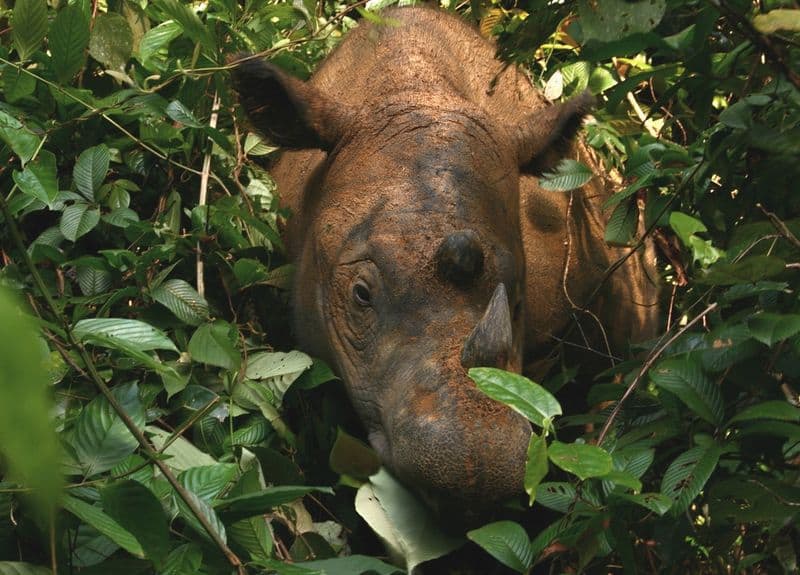
Shaggy forest rhino-save the last two-horned Asian
Bruce1ee - Public Domain

Sumatran Rhinoceros Distribution

Click a location to explore more animals from that region

Loading map...

Size Comparison

Human 5'8"
Sumatran Rhinoceros 4 ft 3 in

Sumatran Rhinoceros stands at 75% of average human height.

Sumatran Rhinoceros

At a Glance

Wild Species
Also Known As Sumatran rhino, hairy rhinoceros, Asian hairy rhinoceros, two-horned rhinoceros, Badak Sumatra
Diet Herbivore
Activity Crepuscular+
Lifespan 37 years
Weight 800 lbs
Did You Know?

It's the smallest living rhinoceros: shoulder height ~112-145 cm; head-body length ~236-318 cm; mass commonly ~500-800 kg (field ranges vary by site).

Scientific Classification

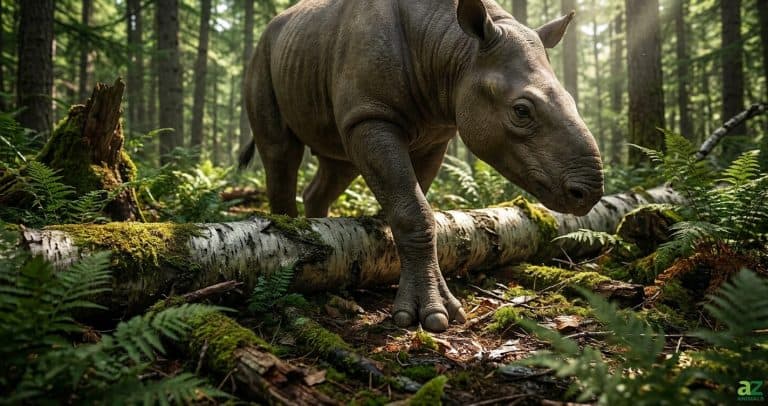
The Sumatran rhinoceros (Dicerorhinus sumatrensis) is the smallest living rhinoceros and the only extant Asian rhino with two horns. It is a forest-adapted, predominantly solitary browser with a shaggy reddish-brown hair coat, representing a very ancient rhino lineage.

Kingdom
Animalia
Phylum
Chordata
Class
Mammalia
Order
Perissodactyla
Family
Rhinocerotidae
Genus
Dicerorhinus
Species
Dicerorhinus sumatrensis

Distinguishing Features

  • Two horns (the front horn usually much larger)
  • Shaggy coat of hair, especially noticeable compared to other rhinos
  • Smallest living rhino; forest-dwelling and secretive
  • Prehensile upper lip adapted for browsing

Physical Measurements

Height
4 ft 3 in (3 ft 8 in – 4 ft 9 in)
Length
10 ft 8 in (8 ft 11 in – 12 ft 9 in)
Weight
1,433 lbs (1,102 lbs – 1,764 lbs)
Tail Length
1 ft 8 in (1 ft 2 in – 2 ft 4 in)
Top Speed
25 mph
running

Appearance

Primary Colors
Secondary Colors
Skin Type Thick, tough rhinoceros hide with shallow folds; uniquely covered by coarse, shaggy hair.
Distinctive Features
  • Only extant Asian rhinoceros with two horns; front horn usually 15-25 cm, rear horn commonly 1-5 cm (IUCN/ARKS).
  • Smallest living rhinoceros: adult shoulder height ~112-145 cm; head-body length ~236-318 cm; mass commonly ~500-800 kg (Groves & Kurt; Nowak; IUCN).
  • Long, coarse reddish-brown hair covering body, with denser fringe around ears and tail tuft.
  • Skin folds less pronounced than Indian rhino; notable folds around neck, shoulders, and flanks.
  • Prehensile upper lip adapted for browsing; forest-adapted body proportions and flexible neck.
  • Frequent wallowing leaves mud-caked appearance; mud acts as sun/parasite protection.
  • Predominantly solitary (except females with calves); uses dense forest cover and salt licks (IUCN).
  • Critically Endangered and highly fragmented; appearance may include scars from dense vegetation and intraspecific encounters.

Sexual Dimorphism

Sexual dimorphism is subtle. Males average larger overall and typically carry a longer, thicker anterior horn; females are slightly smaller with shorter horns, but both sexes retain two horns and a shaggy coat.

  • Typically larger body size within adult range.
  • Anterior horn usually longer/thicker; more horn-wear from sparring and rubbing.
  • Typically slightly smaller body size.
  • Anterior horn usually shorter/thinner; may appear more tapered.

Did You Know?

It's the smallest living rhinoceros: shoulder height ~112-145 cm; head-body length ~236-318 cm; mass commonly ~500-800 kg (field ranges vary by site).

It is the only living Asian rhinoceros with two horns (IUCN): the front horn is usually ~15-25 cm, but the record measured horn length is 79 cm.

Unlike other rhinos, it has a noticeable coat of reddish-brown hair-especially dense in calves-earning the nickname "hairy rhinoceros."

Pregnancy is long: gestation is about 15-16 months (~475 days reported in managed breeding programs).

Calves typically stay with the mother for ~2-3 years; births are usually spaced about 3-4 years apart (species accounts/IUCN).

Sumatran rhinos are among the most vocal rhinos, using whistles, "eeps," and whale-like calls to communicate through thick forest.

IUCN lists it as Critically Endangered; remaining animals persist in small, isolated pockets in Indonesia, with historical range once spanning much of Southeast Asia.

Unique Adaptations

  • Shaggy hair coat: unusual among modern rhinos, likely aiding protection in wet, cool montane forests and dense vegetation.
  • Compact body for forest life: smaller size and rounded profile help movement through thick understory compared with more open-habitat rhinos.
  • Two-horned toolkit in Asia: the long anterior horn and much smaller posterior horn are used in rooting, manipulating vegetation, and defense.
  • Flexible, prehensile upper lip: adapted for selective browsing-grasping leaves and twigs rather than grazing.
  • Thick, folded skin plus mud "armor": skin is tough, and habitual wallowing adds a protective layer against biting insects and sun exposure in canopy gaps.
  • Ancient lineage: the genus Dicerorhinus represents a very old branch of Rhinocerotidae; its traits (hair, forest specialization) differ markedly from other living rhinos.

Interesting Behaviors

  • Predominantly solitary: adults usually travel alone, except for mothers with calves; temporary associations occur during mating.
  • Forest browsing: feeds on leaves, shoots, twigs, and fruit from many plant species, moving along dense understory rather than open grasslands.
  • Frequent wallowing: uses mud wallows to cool down, protect skin from insects, and possibly reduce parasites; individuals often maintain favorite wallows.
  • Scent-marking: uses dung piles, urine spraying, and scraping/foot-marking along trails to advertise presence and reproductive status.
  • Use of salt/mineral licks: regularly visits natural licks (common in many forest ungulates) to obtain sodium and other minerals absent from browse.
  • Crepuscular tendencies: often most active in early morning/late afternoon, with daytime resting in thick cover (patterns vary with disturbance).

Cultural Significance

The Sumatran rhinoceros (Dicerorhinus sumatrensis) was long part of rainforest cultures and hunted for its horn for trade and traditional medicine. Now it is a symbol for forest conservation in Indonesia, linked to Way Kambas National Park and the Sumatran Rhino Sanctuary.

Myths & Legends

In some Malay and Indonesian mouse-deer folktales, a rhinoceros appears as a very strong but easily tricked opponent; the clever mouse-deer exploits the rhino's strength and gullibility to escape danger or embarrass more powerful animals.

In Malay oral stories, folktales and animal fables teach morals; when the Sumatran rhinoceros (Dicerorhinus sumatrensis) appears among forest animals, its role and meaning change with local tradition, not one pattern.

Early European naturalists called the Sumatran rhinoceros the "hairy rhinoceros." Its scientific name, Dicerorhinus sumatrensis, means "two-horned rhino from Sumatra," noting its two horns and shaggy coat.

Conservation Status

CR Critically Endangered

Facing an extremely high risk of extinction in the wild.

Population Decreasing

Protected Under

  • CITES Appendix I (international commercial trade prohibited)
  • Indonesia: Law No. 5/1990 on Conservation of Living Resources and Their Ecosystems
  • Indonesia: Government Regulation No. 7/1999 on Preservation of Flora and Fauna
  • Malaysia: Wildlife Conservation Act 2010 (where applicable to national protection measures)

Life Cycle

Birth 1 calf
Lifespan 37 years

Lifespan

In the Wild
35–40 years
In Captivity
35–40 years

Reproduction

Mating System Polygyny
Social Structure Solitary
Breeding Pattern Transient
Fertilization Internal Fertilization
Birth Type Internal_fertilization

Predominantly solitary; males maintain overlapping ranges and seek receptive females, often competing aggressively. Pairing occurs only during courtship and copulation; there is no parental care by males and calves stay with mothers until weaning.

Behavior & Ecology

Social Crash Group: 1
Activity Crepuscular, Cathemeral
Diet Herbivore Figs (Ficus spp.)-fruit when available, plus young leaves/shoots from saplings and lianas

Temperament

Secretive, wary forest browser; disturbance typically triggers silent withdrawal rather than confrontation (Foose & van Strien, 1997).
Adult males can be highly aggressive toward other males; physical injuries from fights reported (van Strien, 1986).
Social tolerance is low outside reproduction; temporary proximity occurs at mineral licks and wallows (Foose & van Strien, 1997).
Longevity reported to ~30-35 years (captivity records; Nowak, 1999; Species360/ISIS summaries).

Communication

High-pitched 'eep' contact call used between individuals at close-to-moderate range Van Strien, 1985
Long, modulated 'whale-like' call 'song') used for long-range communication in forest habitat (van Strien, 1985
Snorts/blows and grunts associated with alarm, agitation, or close encounters Foose & van Strien, 1997
Scent marking via urine spraying and dung piles/middens; conspecifics investigate by sniffing Foose & van Strien, 1997
Territorial/path marking by scraping with feet and rubbing on vegetation; leaves mud/scent traces Foose & van Strien, 1997
Wallowing creates shared mud wallows that function as information hubs; visitation varies by sex and season Foose & van Strien, 1997

Habitat

Biomes:
Tropical Rainforest Wetland Freshwater
Terrain:
Mountainous Hilly Plains Valley Riverine Island Muddy +1
Elevation: Up to 6561 ft 8 in

Ecological Role

Large-bodied understory browser and fruit consumer in Southeast Asian rainforests; influences forest regeneration dynamics and functions as a mobile nutrient transporter.

Selective browsing that shapes understory composition and promotes patchy regeneration Seed dispersal via endozoochory for small/soft fruits consumed (notably figs when eaten) Nutrient cycling through dung and urine deposition across home ranges Creation/maintenance of trails and wallows that can alter microhabitats and provide resources for other species Soil disturbance and localized nutrient enrichment around wallows and resting/latrine areas

Diet Details

Other Foods:
Leaves from understory trees and shrubs Twigs and small branches Bark and cambium Woody vines and their shoots Fruits Forest herbs and seedlings Aquatic and semiaquatic vegetation Salt lick +2

Human Interaction

Domestication Status

Wild

The Sumatran rhinoceros (Dicerorhinus sumatrensis) has never been domesticated; captive animals were wild-caught or moved for rescue and breeding. Human impacts include hunting for horn, habitat loss from logging, farming and roads, and modern conservation such as anti-poaching patrols, camera traps, vet care, and managed breeding at the Sumatran Rhino Sanctuary.

Danger Level

Moderate
  • Can inflict severe injury or death if threatened or surprised at close range (charges, goring with horns, trampling).
  • Highest risk scenarios are close-quarters encounters in dense forest, during capture/immobilization operations, or near calves.
  • Secondary risks during handling: stress-related complications for the animal and injury risk for personnel during transport/veterinary procedures.

As a Pet

Not Suitable as Pet

Legality: Not a legal pet. Dicerorhinus sumatrensis is a CITES Appendix I species, fully protected across its range. Private ownership or trade is banned except under strict conservation or scientific permits. Keeping as a pet is illegal and very harmful.

Care Level: Expert Only

Purchase Cost:
Lifetime Cost: $2,000,000 - $10,000,000

Economic Value

Uses:
Conservation and biodiversity value (keystone/flagship species) Ecotourism and protected-area revenue (where viewing is feasible) Scientific research value (reproductive biology, genetics, assisted reproduction) Illegal wildlife trade pressure (horn)
Products:
  • No legal commercial products (trade prohibited).
  • Illicit: horn (target of poaching/trafficking).

Relationships

Predators 4

Sunda tiger Panthera tigris sondaica
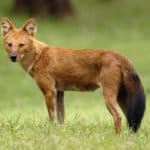
Dhole
Dhole Cuon alpinus
Sunda clouded leopard Neofelis diardi
Human
Human Homo sapiens

Ecological Equivalents 4

Animals that fill a similar ecological role in their ecosystem

Malayan tapir Tapirus indicus Forest-dwelling perissodactyl megaherbivore that uses dense cover, moves on established trails, and relies on wallows and water for thermoregulation. Like the Sumatran rhino, a predominantly solitary browser, tapirs are primarily browsers/frugivores and function as seed dispersers in Southeast Asian rainforests.
Asian elephant
Asian elephant Elephas maximus Co-occurs with Sumatran rhinos in Sumatra and Borneo and functions as an ecosystem engineer: large herbivores that create paths, alter vegetation, disperse seeds, use mineral licks and wallows, consume a wide variety of plants, and live in social groups.
Banteng Bos javanicus Sumatran rhinos and banteng are large Southeast Asian herbivores that use lowland forest edges and mineral licks. Banteng graze more, but both shape understory and edge plant communities and are harmed by habitat fragmentation and hunting.
Sambar deer Rusa unicolor Common large forest ungulate that shares predators (notably tigers) and utilizes dense cover and water. Although smaller and more herd-prone, it is an ecological comparator for browsing and predator–prey dynamics.

The last ‘prehistoric’ rhino is now one of the world’s most endangered species 

The Sumatran rhinoceros is the last “hairy” rhinoceros left on Earth. The smallest species of rhinoceros, the Sumatran rhino may very well be the most endangered large mammal in the world today.

Incredible Sumatran Rhino Facts!

  • The Sumatran rhino is believed to be the closest living relative to Wooly rhinos that were covered in fur and went extinct 8,000 years ago.
  • The Sumatran rhino may be the most endangered large mammal in the world, with potentially as few as 30 individuals remaining
  • Among rhinos, the Sumatran is by far the smallest species surviving today. On average, Sumatran rhinos weight just ¼ the size of white rhinos!

Sumatran Rhino Scientific Name

The scientific name of the Sumatran rhinoceros is Dicerorhinus sumatrensis. The genus Dicerorhinus is Greek for “two horns”, although the Sumatran rhinoceros is the last living species of this genus.

Samatrensis means “of Sumatra” as the species was first located on the island (though its original range stretched far beyond Sumatra).

Sumatran Rhino Appearance

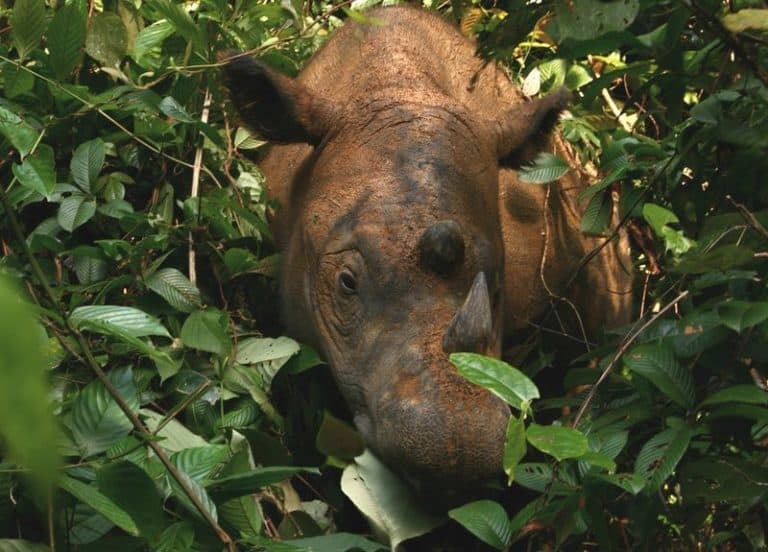
The Sumatran rhinoceros is the smallest of the five rhinoceros species with a body length of less than 250cm (about 8.2 feet). At their shoulders, a Sumatran rhino is approximately 150 cm (5 feet) in height.

The smallest of all rhino species, Sumatran rhinos weigh between 500-800 kg (1,100 lbs – 1,760 lbs). It is unique among rhino species in that it has a reddish-hair that can cover a large portion of its body.

The Sumatran rhinoceros has relatively poor eyesight, relying more on hearing and smell to detect what is going on around them. The ears of the Sumatran rhinoceros possess a relatively wide rotational range to detect sounds and an excellent sense of smell to readily alert them to the presence of predators.
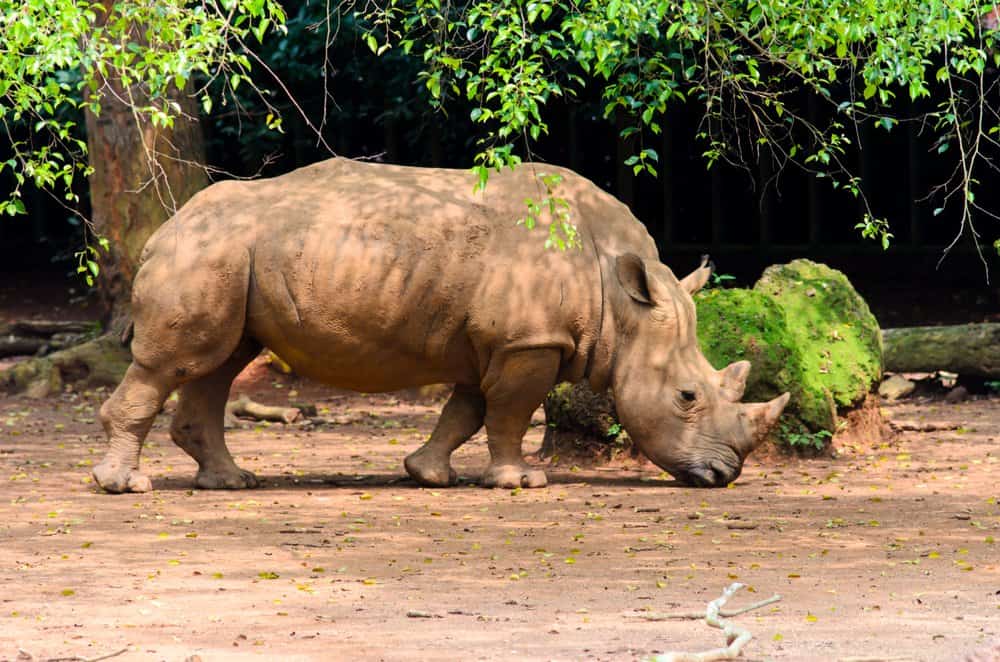
Sumatran Rhinoceros (Dicerorhinus Sumatrensis) - standing up

Sumatran Rhino Horn

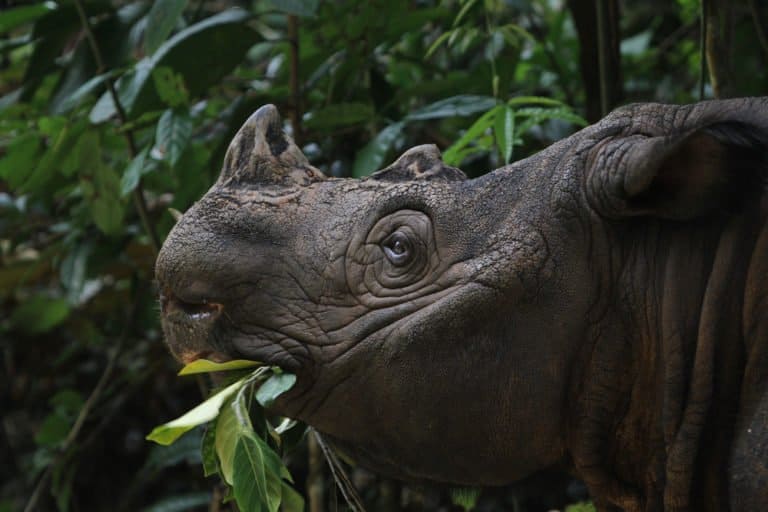
The Sumatran rhinoceros uses it’s horns for defense, intimidation, digging up roots and breaking branches during feeding. The horns of the Sumatran rhinoceros are made from a substance called keratin and are therefore very strong. The horns of the Sumatran rhinoceros are used in ancient medicine and many Sumatran rhinos have been illegally hunted for them.

Unlike the other Asian rhinoceros species, the Sumatran rhinoceros has two horns like the white and black rhinos found on the African continent. However, its horns are generally much smaller than those species.

While the largest ever recorded Sumatran rhino horn measured 32 inches (81 cm), their horns generally measure less than 10 inches (25 cm) in length. The front horn of Sumatran rhinos is longer, while the back horn is often less than an inch (2.5 cm) in length.

Sumatran Rhino Behavior

The Sumatran rhinoceros is a solitary animal and only comes together with other Sumatran rhinos to mate.

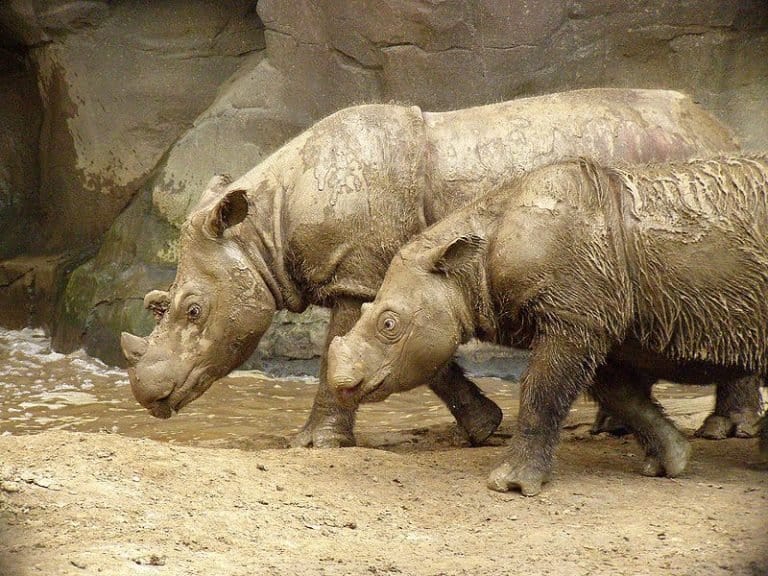
Sumatran rhinos spend long portion of their day in mud wallows they utilize their feet and horns to deepen. Layers of mud not only help protect the Sumatran rhino from biting insects, but also regulate skin temperature. Sumatran rhinos kept in captivity that lacked sufficient daily wallowing suffered from chronic skin problems as a result.

The Sumatran rhino is also very diligent about marking its territory and trails through feces, urine, and even scraping trees. The large territory of each Sumatran rhino (up to 50 square kilometers for males) helps explain why sightings of these animals is so rare.

Sumatran Rhino Habitat

The Sumatran rhinoceros primarily inhabits dense lowland rainforests, tall grass and reed beds that are plentiful with rivers, large floodplains, or wet areas with many mud wallows, swamps and cloud forests. The range of Sumatran rhinoceros once stretched from India, through south-east Asia and down to Sumatra but today, the Sumatran rhinoceros is only found on the islands of Sumatra and Borneo.

Sumatran Rhino Diet

The Sumatran rhinoceros is a herbivorous animal meaning that it sustains itself on a purely plant-based diet. Sumatran rhinos browse the densely vegetated sub-tropical forest for leaves, flowers, buds, fruits, berries and roots which they dig up from the ground using their horns

Sumatran Rhino Population — How Many Sumatran Rhinos Are Left?

Today, the Sumatran rhino may be the most endangered large mammal on Earth. In 1986, the IUCN estimated there were between 425 and 800 Sumatran rhinos were left. By 2009, the International Rhino Foundation estimated its population had shrunk to as few as 250 individuals.

Today, they estimate fewer than 80 Sumatran rhinos are left, and that number could be as low as 30 individuals that live across four fragmented national parks.

While the Sumatran rhino populations today continue decreasing due to loss of habitat and poaching, the species has long been on the brink of extinction. A study from Current Biology estimated that only 700 individuals were left after major climate changes about 9,000 years ago and have struggled to rebound since.

Sumatran Rhino Predators

Due to its large size, the Sumatran rhinoceros’ only real predator in the wild are large wild cats such as tigers that will prey on the Sumatran rhino calves and weak individuals. With the Sumatran Tiger numbering no more than 500 individuals across the island and isolated into small, isolated pockets, its encounters with Sumatran rhinos today are likely rare.

Humans are the biggest threat to the Sumatran rhinoceros as they have been hunted to the brink of extinction for their horns.

Sumatran Rhino Reproduction and Life Cycles

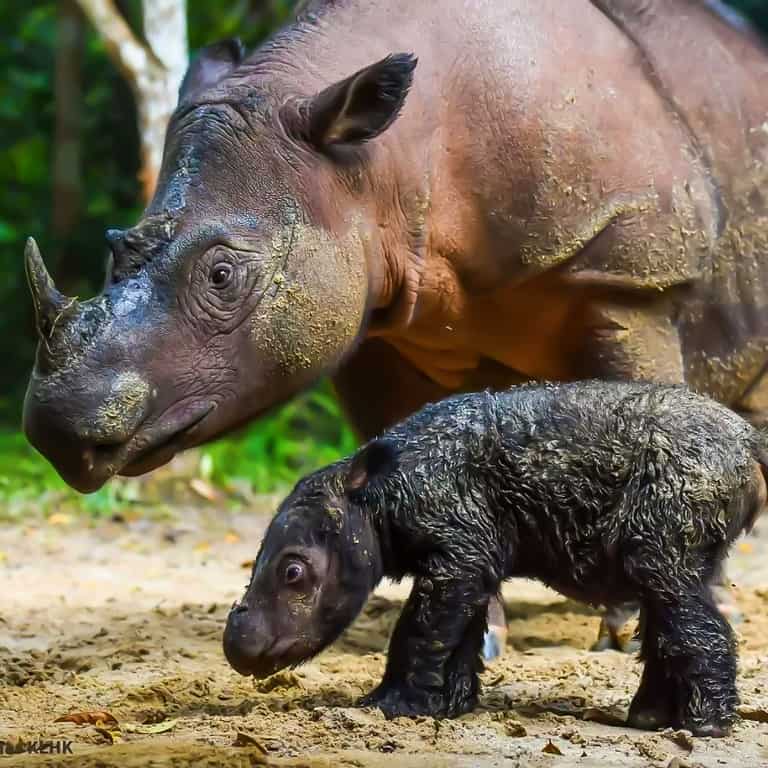
The female Sumatran rhinoceros gives birth to a single calf after a gestation period that is over a year long (approximately 15-16 months). The Sumatran rhinoceros calf remains with its mother until it is at least 2 years old and big enough to become independent.

The longest surviving Sumatran rhino in captivity is estimated to be about 35 years of age, as of 2020. It is believed that in the wild, Sumatran rhinos can live to about 45 years of age.

Sumatran Rhinos in Zoos

In 1984 a program to capture and breed Sumatran rhinos was launched. Unfortunately, of the 46 captured for breeding purposes only five are still alive today, and only four calves were born and survive today. The last Sumatran rhino in the Western hemisphere – 8-year old Harapan – was moved back to Indonesia from the Cincinnati Zoo in 2015.

Sumatran Rhino Facts

  • The most prehistoric rhino
     
    • The Sumatran rhino is the last surviving member of the Dicerorhinini group which emerged roughly 20 million years ago! It is considered the closest living relative to Wooly rhinos that went extinct approximately 8,000 years ago.


  • Extinct in Malaysia


    • No sightings of the Northern Sumatran rhino, which once lived on mainland Asia have been seen since 2007. In 2019, the Sumatran rhino was declared extinct in Malaysia.


  • Hope in Borneo: The first sighting in 40 years!


    • After more than 40 years without a sighting in Indonesian Borneo, a Sumatran rhino was captured and relocated for protective and breeding purposes. The rare sighting shows how remote of locations Sumatran rhinos live in. However, it’s still unclear if a viable breeding population survives on the island.


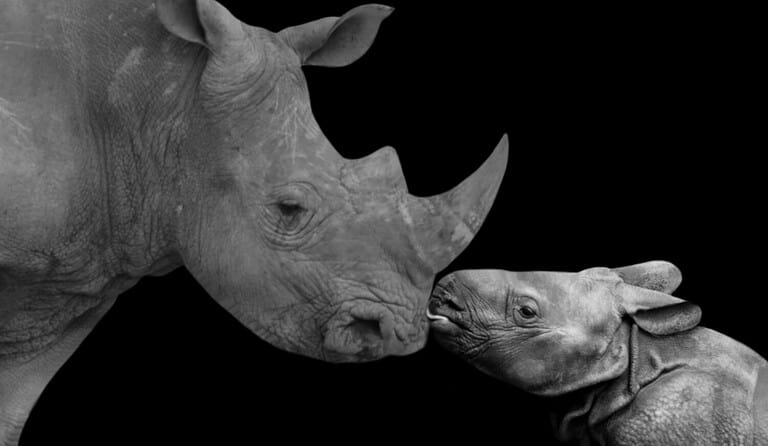
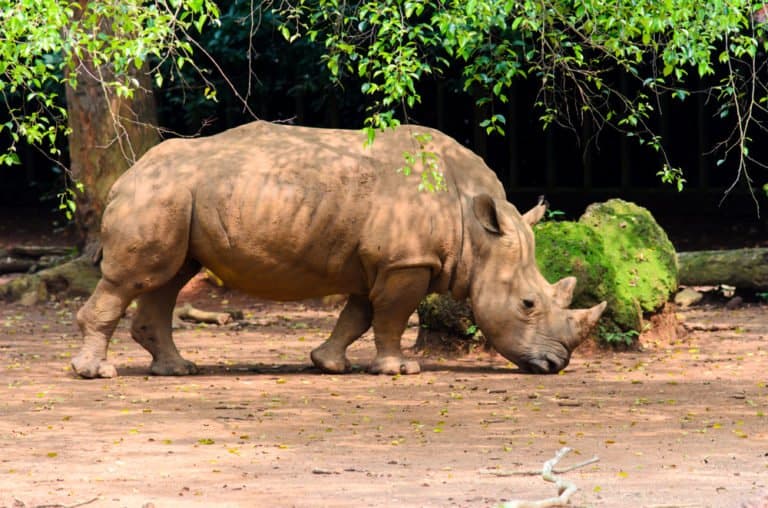
  • Just ¼ the size of the white rhino!


    • As the largest of the rhino species, the White rhino can weigh up to 7,920 lbs (3,600 kg). By comparison, Sumatran rhinos weigh up to 1,760 lbs (800 kg), or only about a quarter the weight! It is believed the Northern Sumatran rhino that once roamed from India to Malaysia was larger, but with it believed to be extinct, only the smaller subspecies of Sumatran rhinos surviving in Indonesia remain today.


View all 390 animals that start with S

Sources

  1. David Burnie, Dorling Kindersley (2011) Animal, The Definitive Visual Guide To The World's Wildlife / Accessed July 6, 2010
  2. Tom Jackson, Lorenz Books (2007) The World Encyclopedia Of Animals / Accessed July 6, 2010
  3. David Burnie, Kingfisher (2011) The Kingfisher Animal Encyclopedia / Accessed July 6, 2010
  4. Richard Mackay, University of California Press (2009) The Atlas Of Endangered Species / Accessed July 6, 2010
  5. David Burnie, Dorling Kindersley (2008) Illustrated Encyclopedia Of Animals / Accessed July 6, 2010
  6. Dorling Kindersley (2006) Dorling Kindersley Encyclopedia Of Animals / Accessed July 6, 2010
  7. David W. Macdonald, Oxford University Press (2010) The Encyclopedia Of Mammals / Accessed July 6, 2010
A-Z Animals Staff

About the Author

A-Z Animals Staff

AZ Animals is a growing team of animals experts, researchers, farmers, conservationists, writers, editors, and -- of course -- pet owners who have come together to help you better understand the animal kingdom and how we interact.
Connect:

Thank you for reading! Have some feedback for us?


Sumatran Rhinoceros FAQs (Frequently Asked Questions)

The Sumatran rhino is the last member of a group of hairy rhinos. The hair provides an additional benefit of helping cake mud to the rhinos body, which protects it from insects and helps cool its body.