S
Species Profile

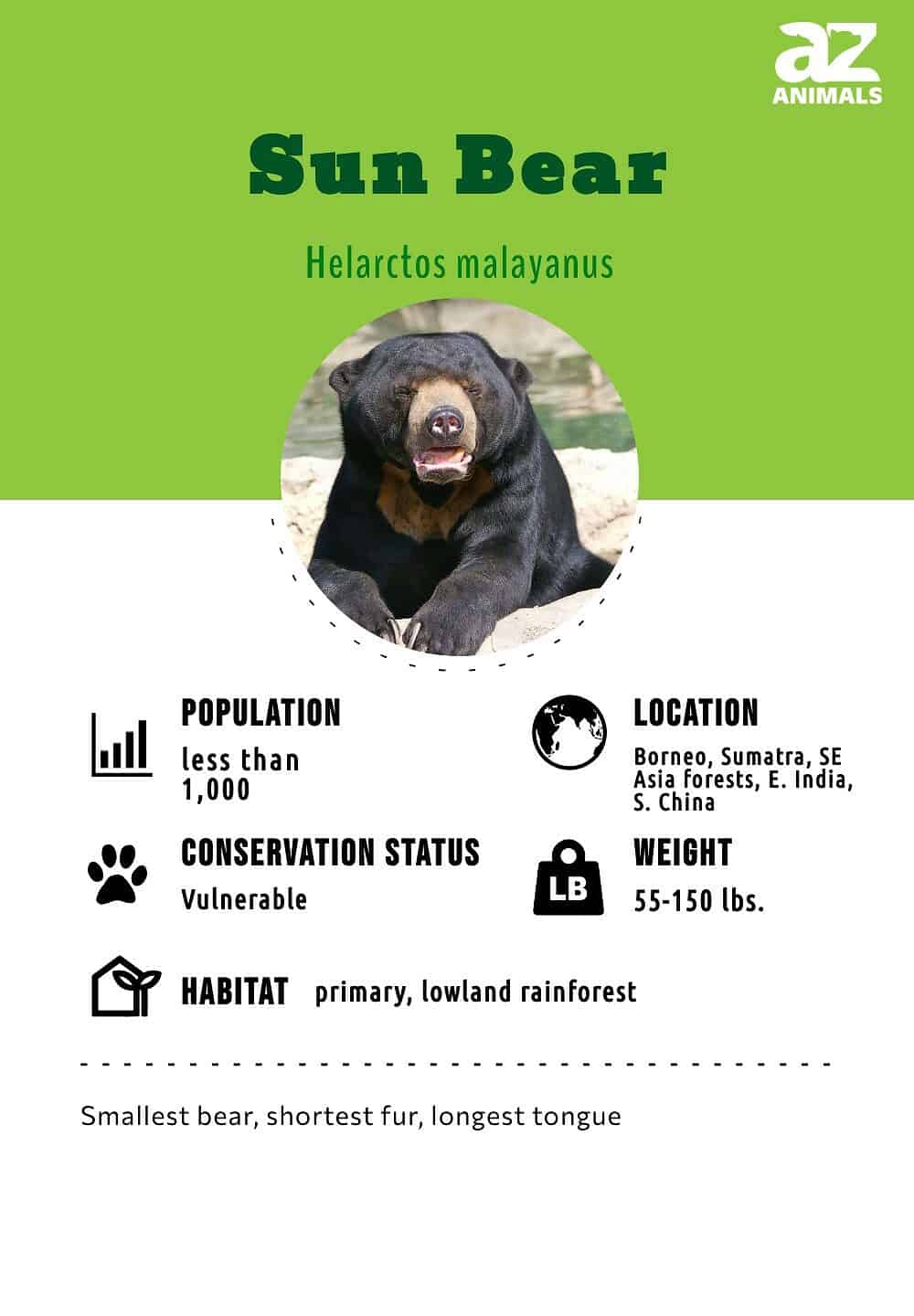
Sun Bear

Helarctos malayanus

Tiny bear, giant tongue, big appetite
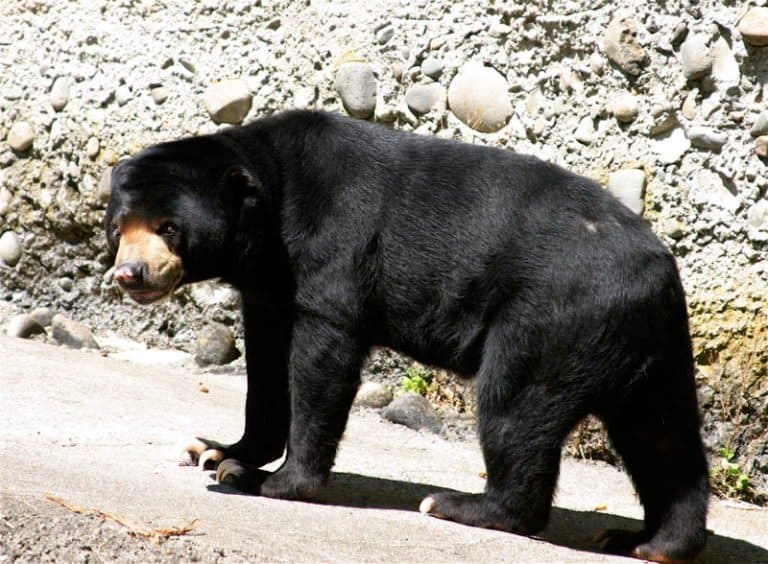
Grendelkhan / Creative Commons

Sun Bear Distribution

Click a location to explore more animals from that region

Loading map...

Size Comparison

Human 5'8"
Sun Bear 2 ft 6 in

Sun Bear stands at 43% of average human height.

At a Glance

Wild Species
Also Known As Honey bear, Malayan bear, Malay bear, Malayan honey bear, Beruang madu
Diet Omnivore
Activity Cathemeral+
Lifespan 20 years
Weight 65 lbs
Status Vulnerable
Did You Know?

It's the smallest living bear: adults typically measure 100-150 cm head-body length, with a 3-7 cm tail (Nowak, *Walker's Mammals of the World*).

Scientific Classification

A small, primarily forest-dwelling bear of Southeast Asia, known for a pale crescent-shaped chest patch and a long, highly flexible tongue adapted for extracting insects and honey.

Kingdom
Animalia
Phylum
Chordata
Class
Mammalia
Order
Carnivora
Family
Ursidae
Genus
Helarctos
Species
Helarctos malayanus

Distinguishing Features

  • Smallest bear species; relatively short, sleek coat
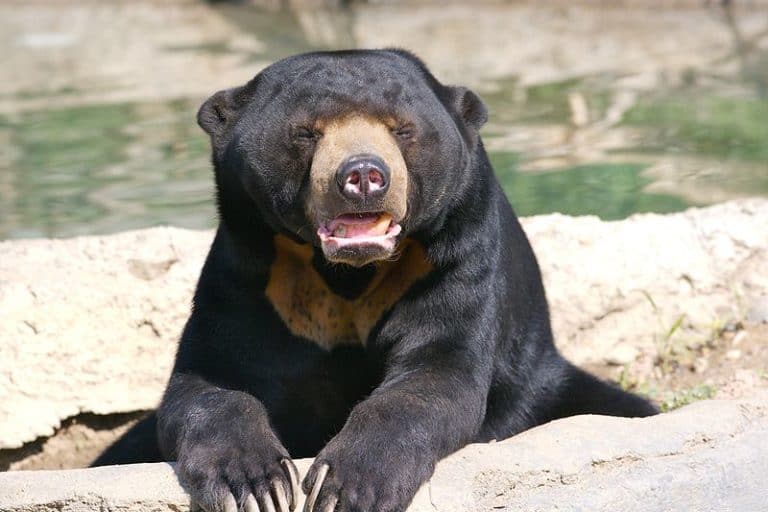
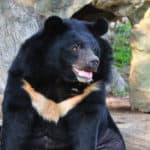
  • Pale orange/yellow chest patch often shaped like a rising sun
  • Long, protrusible tongue for insects/honey
  • Strong forelimbs and curved claws; adept climber

Physical Measurements

Males and females differ in size

Height
2 ft 4 in (1 ft 12 in – 2 ft 7 in)
2 ft 2 in (1 ft 12 in – 2 ft 4 in)
Length
4 ft 1 in (3 ft 5 in – 4 ft 10 in)
Weight
121 lbs (66 lbs – 176 lbs)
66 lbs (44 lbs – 88 lbs)
Tail Length
2 in (1 in – 3 in)
2 in (1 in – 3 in)
Top Speed
30 mph
running

Appearance

Primary Colors
Secondary Colors
Skin Type Short, sleek fur over thick mammalian skin; minimally insulating compared with other bears.
Distinctive Features
  • Smallest extant bear: head-body length 100-150 cm; tail 3-7 cm (Nowak, 1999).
  • Adult mass commonly: males 30-80 kg; females 25-65 kg (Nowak, 1999; regional field summaries vary).
  • Distinctive pale chest 'sun' patch, often U- or crescent-shaped; used in threat displays.
  • Very long, highly protrusible tongue (reported up to ~20-25 cm) aiding honey/insect extraction.
  • Relatively short, broad muzzle; small, rounded ears; compact, low-slung body profile.
  • Large, inward-curving claws and strong forelimbs; specialized for climbing and tearing into nests/logs.
  • Forepaws often turned inward (pigeon-toed stance), aiding climbing and grasping on trunks.
  • Tropical forest-associated appearance: short, sleek coat suited to humid Southeast Asian lowland forests.
  • Strong insectivory reflected in wear/foraging behavior: frequently breaks logs and opens termite/bee nests.
  • Lifespan reported up to ~25 years in captivity; wild longevity commonly lower and less well documented (zoo records; Nowak, 1999).

Sexual Dimorphism

Males are typically heavier and more robust than females, with broader heads and thicker neck/forequarters. Females are smaller-bodied overall, but share the same black coat and variable pale chest patch.

  • Higher average body mass and more muscular forequarters (commonly 30-80 kg).
  • Broader skull and thicker neck, giving a more powerful head-and-shoulder silhouette.
  • Lower average body mass and more lightly built frame (commonly 25-65 kg).
  • Narrower head and less pronounced neck/shoulder musculature.

Did You Know?

It's the smallest living bear: adults typically measure 100-150 cm head-body length, with a 3-7 cm tail (Nowak, *Walker's Mammals of the World*).

Adult mass is commonly ~25-65 kg (males generally heavier), varying by region and condition (Nowak; IUCN Red List species account).

Its tongue can extend about 20-25 cm-an extreme length among bears-helping it lap honey and extract termites/ants from crevices (Nowak; zoo anatomical summaries consistent with field accounts).

Front claws can reach ~10 cm, aiding climbing and ripping open logs and termite mounds (Nowak).

The pale chest patch is highly variable in shape and color between individuals; it's a key field mark used in identification (IUCN Red List; regional field guides).

It occurs across Southeast Asia's tropical forests (e.g., Myanmar-Indochina-Peninsular Malaysia-Sumatra-Borneo) from lowlands up to roughly ~2,100 m in some areas (IUCN Red List).

In captivity, sun bears can live 25+ years; reports commonly cite up to ~30 years under managed care (zoo records; species husbandry references).

Unique Adaptations

  • Long, highly protrusible tongue (~20-25 cm) specialized for extracting social insects and honey from narrow crevices (Nowak).
  • Large, strongly curved claws (to ~10 cm) and powerful forelimbs for climbing and tearing into logs/termite mounds (Nowak).
  • Short, sleek coat adapted to hot, humid equatorial forests-less insulation than temperate bears, aiding heat dissipation (comparative ursid morphology references).
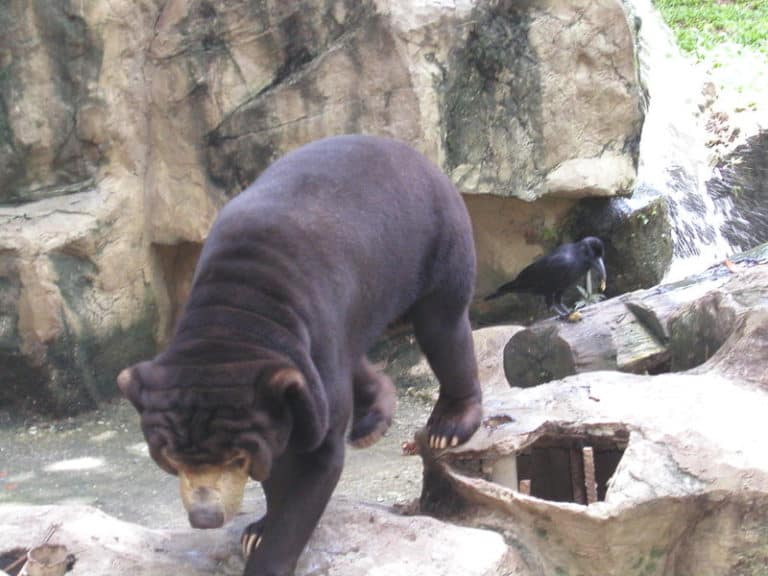
  • Loose skin around the neck/shoulders can reduce vulnerability in fights by allowing the bear to twist within its skin if grabbed (noted in ursid anatomical descriptions).
  • Compact body and strong climbing ability allow efficient use of vertical forest structure (fruiting trees, epiphyte zones, canopy refuges).

Interesting Behaviors

  • Arboreal resting and nesting: individuals frequently climb and can build day beds/nests in trees, especially in disturbed areas where ground risk is higher (field observations summarized by IUCN).
  • "Bark-peeling" foraging: uses claws and strong forelimbs to strip bark and tear into rotten wood to reach beetle larvae and other invertebrates.
  • Honey raiding: seeks wild bee nests; the long tongue and flexible lips help reach honey and brood deep inside cavities.
  • Flexible activity pattern: can be diurnal, nocturnal, or cathemeral depending on human disturbance, food availability, and habitat conditions (IUCN).
  • Mostly solitary: adults are typically alone outside of breeding and maternal care; home ranges can overlap, but direct encounters are limited (IUCN/field studies).
  • Scent communication: rubbing, scratching, and marking on trees is used for signaling presence and reproductive state (reported in bear behavioral literature; referenced in regional studies).

Cultural Significance

The sun bear (Helarctos malayanus), called the "honey bear," is tied to tropical forests and wild honey gathering, appears in wildlife education and ecotourism, and is harmed by demand for bear bile and parts, making it important for conservation (IUCN, CITES).

Myths & Legends

Name-and-symbol story: the English name "sun bear" is widely linked to the crescent-to-U-shaped chest patch, interpreted as a rising sun emblem-an enduring naming motif repeated in regional natural history writing.

Sun bear (Helarctos malayanus) was first described in 1821 by Sir Thomas Stamford Raffles. Its scientific name shows early European links to the Malay region and colonial naming of animals.

Folk naming tradition: throughout parts of Malaysia and Indonesia, the common name "honey bear" reflects a long-standing cultural association with honey-seeking behavior and forest beekeeping landscapes-more a lived narrative than a single codified myth.

Conservation Status

VU Vulnerable

Facing a high risk of extinction in the wild.

Population Decreasing

Protected Under

  • CITES Appendix I (international commercial trade generally prohibited)
  • Malaysia: Wildlife Conservation Act 2010 (Act 716)
  • Thailand: Wildlife Preservation and Protection Act B.E. 2562 (2019)
  • Indonesia: Law No. 5/1990; Government Regulation No. 7/1999 (protected species framework)

Life Cycle

Birth 2 cubs
Lifespan 20 years

Lifespan

In the Wild
15–25 years
In Captivity
20–33 years

Reproduction

Mating System Promiscuity
Social Structure Solitary
Breeding Season Year-round (no fixed breeding season; breeding and births have been recorded in multiple months)
Breeding Pattern Transient
Fertilization Internal Fertilization
Birth Type Internal_fertilization

Sun bears are largely solitary; adults associate briefly to mate, with both sexes likely taking multiple partners. Reproduction is via internal fertilization; gestation is reported ~95-174 days (often with delayed implantation), and females rear 1-2 cubs alone.

Behavior & Ecology

Social Sleuth Group: 1
Activity Cathemeral, Nocturnal, Diurnal
Diet Omnivore Honey and bee brood (especially larvae/pupae), plus seasonally abundant fruit (notably figs).

Temperament

Primarily shy and evasive; increases nocturnality where human disturbance or hunting pressure is high (Scotson et al., 2017; Fredriksson et al., 2008).
Strongly food-motivated, persistent forager; spends substantial time tearing logs and nests for insects and honey (Servheen et al., 1999; Fredriksson et al., 2008).
Generally avoids conspecifics; tolerance is situational and usually limited to brief feeding-site overlap (Scotson et al., 2017).
Can be defensive and aggressive when surprised at close range or when protecting cubs (Servheen et al., 1999).

Communication

huffs/"chuffing" and blowing sounds during threat or agitation Servheen et al., 1999
grunts and snorts in close-range interactions Servheen et al., 1999
roars/snarls during intense aggression or fear responses Servheen et al., 1999
cub distress calls Bleats/squeals) and contact whines with mother (Servheen et al., 1999
Scent marking via urine, feces, and rubbing against trees; used for spacing and reproductive signaling Servheen et al., 1999; Scotson et al., 2017
Visual/postural threat displays Standing, head-low postures) to increase apparent size (Servheen et al., 1999
Clawing/biting at logs and tree trunks can leave conspicuous sign used in area advertisement Servheen et al., 1999
Close-range tactile communication between mother and cubs Nuzzling, grooming) (Servheen et al., 1999

Habitat

Biomes:
Tropical Rainforest Tropical Dry Forest Wetland
Terrain:
Plains Valley Hilly Mountainous Riverine Coastal Island Karst +2
Elevation: Up to 7030 ft 10 in

Ecological Role

Omnivorous forest mesocarnivore/insectivore-frugivore that links arthropod regulation with plant regeneration processes.

Seed dispersal via frugivory (notably figs and other forest fruits) and movement across large home ranges, aiding forest regeneration Population control of social insects (termites/ants) and other wood-dwelling invertebrates through intensive predation Nutrient cycling and microhabitat creation by ripping/turning decaying wood and occasionally digging, accelerating decomposition and creating feeding sites used by other organisms Potential indirect support of forest dynamics by reducing wood-boring insect loads in deadwood and opening cavities/logs that become microhabitats for other species

Diet Details

Main Prey:
Termites Ants Bee and wasp brood Beetle larvae Earthworms and other soil invertebrates Small vertebrates
Other Foods:
Hard and soft mast fruits Honey and wax comb Nectar and pollen Young shoots and leaves Palm heart Tubers and other underground plant parts

Human Interaction

Domestication Status

Wild

Sun bears (Helarctos malayanus) are not domesticated and were not bred as pets. They are wild in Southeast Asian forests. People clash with them (crop raiding, livestock loss), hunt them for meat and bile, take cubs for pets, and rescue them in sanctuaries and ecotourism. They are small, tree-climbing, solitary, with long tongues and live about 20-25 years.

Danger Level

High
  • defensive attacks (bites/mauling) when surprised at close range, cornered, or when a cub is present
  • serious injury risk in captivity due to strength, climbing ability, and long canine teeth/claws
  • human-bear conflict near farms/settlements (property damage; escalation during attempts to chase/handle)
  • zoonotic and hygiene risks typical of large wild mammals in captivity (enteric bacteria/parasites; bite-wound infection)

As a Pet

Not Suitable as Pet

Legality: Sun Bear (Helarctos malayanus) are generally not legal or practical as pets. CITES and local laws restrict trade; keeping one needs special permits, imports are often banned, and legal supply is unavailable.

Care Level: Expert Only

Purchase Cost:
Lifetime Cost: $200,000 - $800,000

Economic Value

Uses:
Ecotourism and wildlife viewing (where populations persist) Ecosystem services (seed dispersal; insect predation) Human-wildlife conflict costs (crop damage mitigation) Illegal wildlife trade (high conservation and enforcement relevance) Conservation employment (rescue, rehabilitation, sanctuaries)
Products:
  • illegal trade in bile/gallbladders for traditional medicine
  • illegal trade in paws/meat (local consumption and trade)
  • live cubs for the illegal pet/entertainment trade
  • non-consumptive value via tourism (permits, guiding, lodging where applicable)

Relationships

Predators 4

Ecological Equivalents 4

Animals that fill a similar ecological role in their ecosystem

Sloth bear Melursus ursinus Sun bear (Helarctos malayanus) is the smallest bear. Both sun bears and sloth bears focus on eating insects and hive foods; they have long tongues and use strong claws to tear open logs and termite mounds.
Asiatic black bear
Asiatic black bear Ursus thibetanus Sun bear (Helarctos malayanus) is a tropical Asian forest bear that climbs well and is omnivorous. It similarly uses trees, fruits, and cavities (including bee nests), but focuses more on insects and honey.
Sunda pangolin Manis javanica Sunda pangolins are Southeast Asian insect-eaters that overlap with the sun bear (Helarctos malayanus) by feeding on ants and termites in logs and nests. Sun bears eat more fruit and some vertebrates and have an approximately 25 cm tongue.
Honey badger
Honey badger Mellivora capensis Sun bears raid bee nests for honey and larvae and eat many small animals and plants. Like honey badgers, they tolerate stings and occupy a similar hive‑raiding, insect‑heavy niche, although their geographic ranges mostly differ.

Sun Bear Classification and Evolution

Descended from the Black Bear, the Sun Bear has developed some unique characteristics of its own to suit its tree-dwelling and mostly herbivore lifestyle:

  • Paws turned inward, flattened chest, and powerful forearms and claws for climbing trees
  • A long tongue, adapted from Asian Black Bears, for reaching honey and termites in trees
  • Flattened molars for grinding instead of tearing
  • Loose neck skin so, if attacked, can turn its head to bite its predator
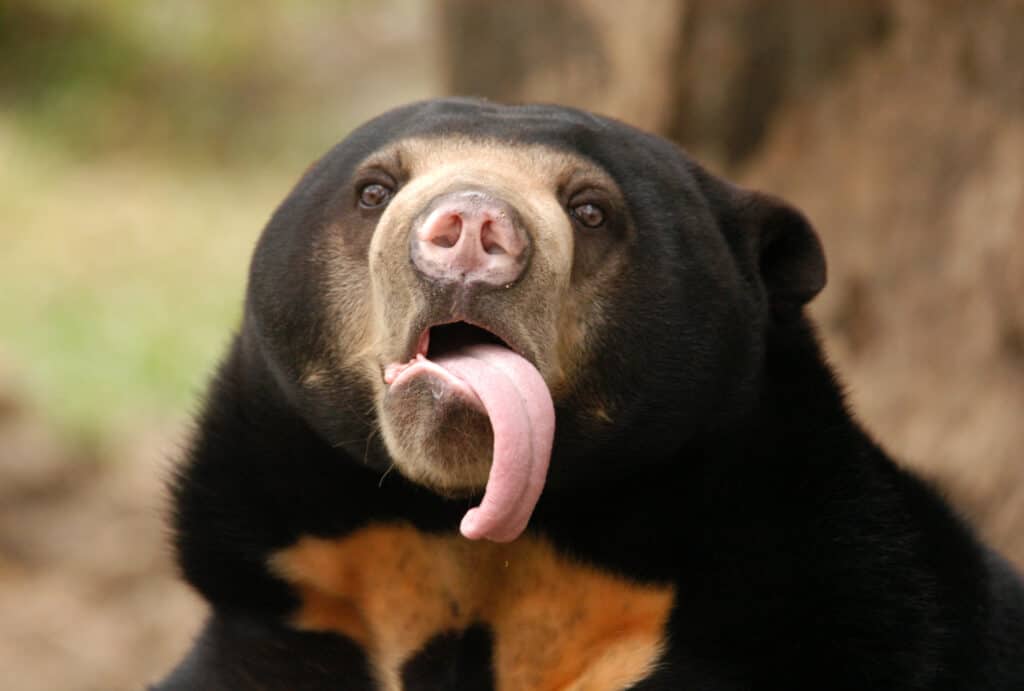
Sun bear

A Sun bear is a tree-dwelling bear with a very long tongue.

Description

The Sun Bear is a small species of bear that is found inhabiting the dense, tropical forests of south-east Asia. The Sun Bear is the smallest species of bear in the world and it is also one of the most unique, being the only member of its family that has not only adapted to living in the jungle but also leads an exclusively tree-dwelling life. Also known as the Honey Bear, the Sun Bear is an animal that has a number of distinctive features, most notably the orange U-shaped marking on its chest from which it gets its name. Sun Bears are both rare and elusive animals meaning that very little is actually known about their behaviors and habits in the wild (or indeed exactly how rare they are). Populations however, are known to be drastically decreasing as Sun Bears are threatened by both hunting and habitat loss throughout much of their natural range.

Anatomy and Appearance

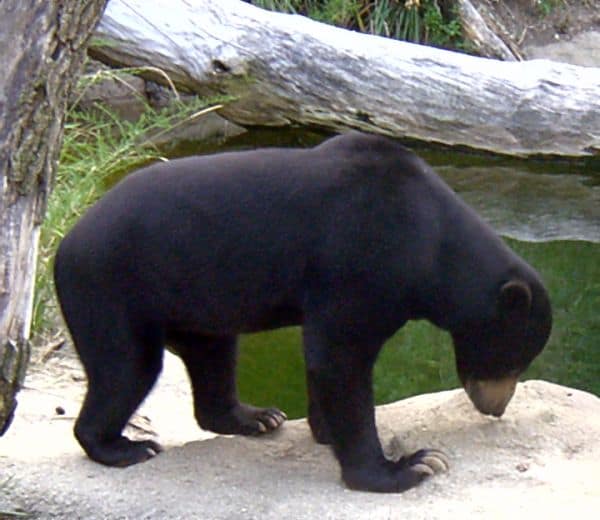
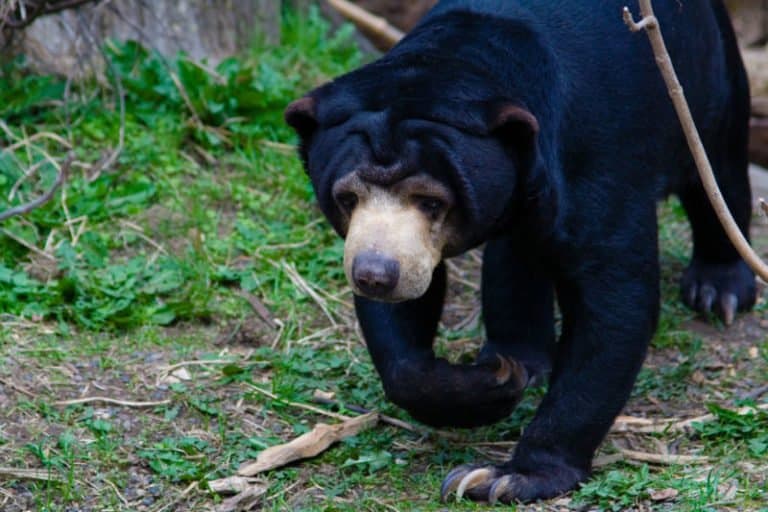
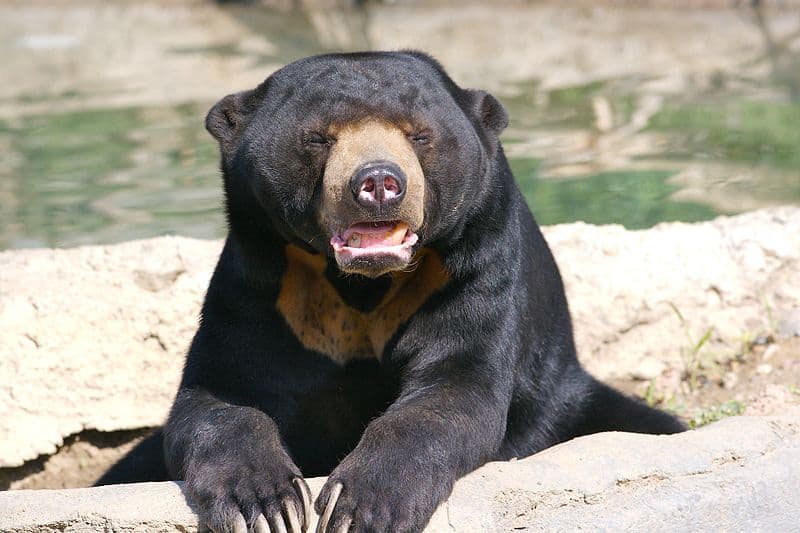
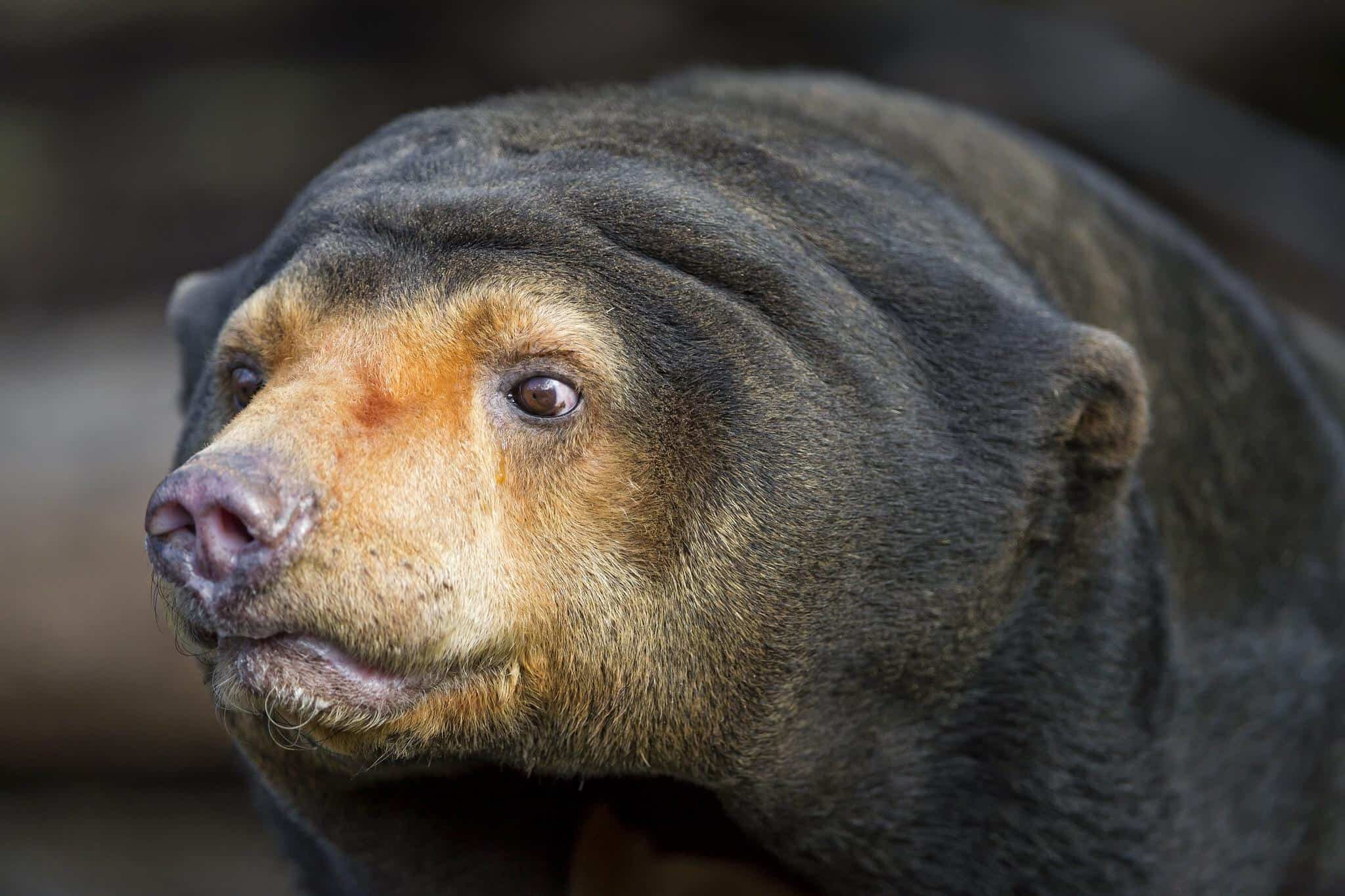
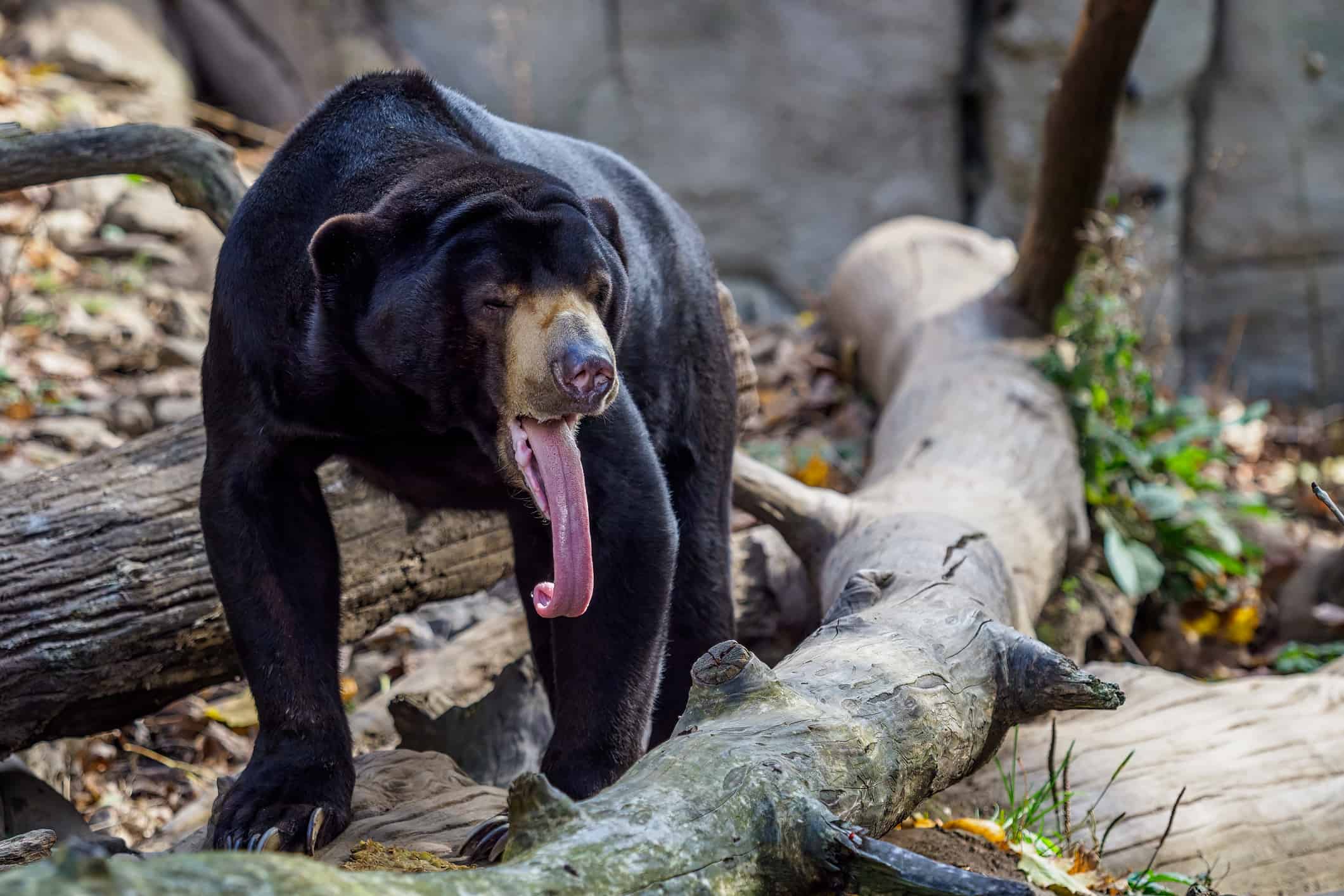
The Sun Bear is not only the smallest bear species in the world, but it also has the shortest fur. The sleek, glossy coat of the Sun Bear ranges from black to dark brown or grey in colour with their distinctive chest marking varying from white to yellow or orange, and can take a number of shapes including the standard crescent, a circle, or an irregular spot. The Sun Bear is an animal with a light-coloured face with a short muzzle, which along with its short fur and ears, is thought to be an adaptation to spending so much time in the trees. It also has long, curved claws on its front paws which help the animal to climb trees and break open hollow logs in search of termites, which it is also able to do with its large canines and strong jaw. One of the most remarkable features of the Sun Bear is its long tongue that can be up to 25cm long and is used to extract grubs and honey from nests and crevices.
Distribution and Habitat

The Sun Bear would have once been found throughout a number of countries in south-east Asia but due to growing Human development, they are now only found in a handful of increasingly isolated habitats. Sun Bears can be found on the islands of Borneo and Sumatra, in forests on the mainland (Malaysia, Thailand, Cambodia, Laos and Vietnam) and there are also a few remote populations of Sun Bears in eastern India and southern China. The Sun Bear inhabits primary, lowland rainforest where there are not only a wide variety of foods to eat, but also plenty of cover to remain safe from predators. However, throughout much of their natural range (but particularly in Indonesia and Malaysia) the Sun Bear has lost vast regions of its native habitats to deforestation, primarily to clear land for agriculture (such as palm oil plantations) and to cut down the rare and valuable tropical trees for the timber industry.

Behaviour and Lifestyle

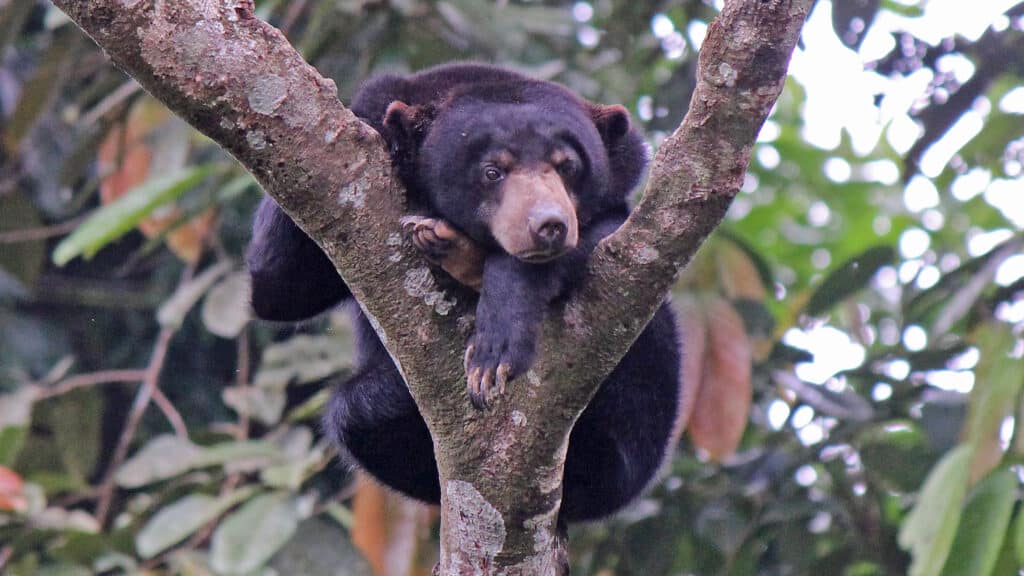
The Sun Bear spends the majority of its life high in the trees. It sleeps in a nest in the canopy, which is built out by folding leafy branches over. Sun Bears are therefore incredibly adept at climbing with remarkable speed using their long, curved claws. However, Sun Bears are also known to climb trees by actually hugging the trunk with their front limbs and by gripping with their strong teeth so that they are able to haul themselves up. Oddly enough, Sun Bears are primarily diurnal animals that spend the daytime foraging for food and resting high in their tree-top nests at night. However, in areas that are being increasingly affected by growing levels of human activity, Sun Bears are known to adopt a more nocturnal way of life to avoid confrontation. Like the other bear species, Sun Bears are also solitary animals that are only really seen in each other’s company when a male and female are looking to mate.

Reproduction and Life Cycles
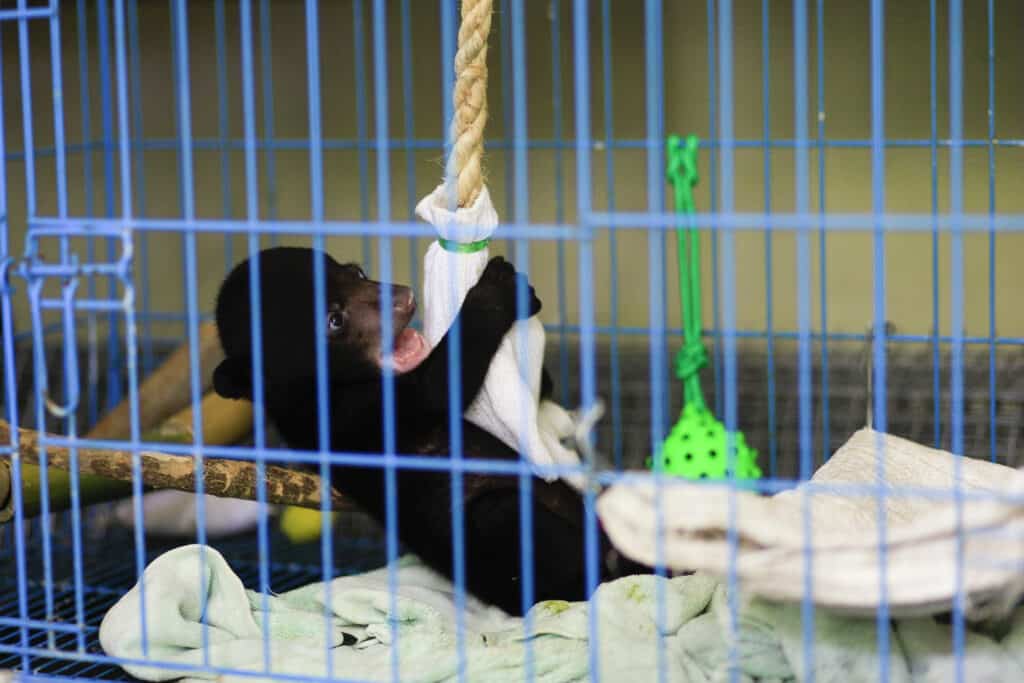
Sun Bear Cub

At birth sun bear cubs are quite small.

In the same way as a number of other animal species that are found in the tropics, the Sun Bear is known to both mate and give birth all year round. After a gestation period that is known to vary dramatically (between 3 and 8 months) depending on the individual and the amount of food available, the female Sun Bear gives birth to up to three cubs (but usually only one cub) in a nest that she makes in a large cavity such as a hollow tree. The young Sun Bear cubs are nursed and fiercely guarded by their mother and are taught the skills of surviving in the tropics until they become independent of her when they are nearly two years old and leave to establish their own territories. Females are usually able to reproduce when they are three years old and males a year later. Sun Bears are thought to live for an average of 25 years in the wild but have been known to be more than 30 years old in captivity.

Diet and Prey

Despite technically being a classed as a carnivore, the majority of the Sun Bears diet is comprised of fruits and other plant matter that it finds in the surrounding forest. Like other bear species, their molar teeth have lost their “flesh-shearing” capabilities and are instead flatter to help with the grinding down of vegetation. Sun Bears eat a wide variety of fruits, nuts, berries and shoots along with supplementing their diet with insects, grubs, honey, eggs, and small animals such as rodents, when plant matter is scarce. By using their strong teeth and sharp claws, Sun Bears are able to break open hollow logs before using their long tongue to extract the termites inside. However, when it is not possible to break the nest in a tree trunk, Sun Bears are known to place their front paws into the hole one at a time, allowing the termites to crawl over their paws before the Sun Bear then licks them off.
Predators and Threats

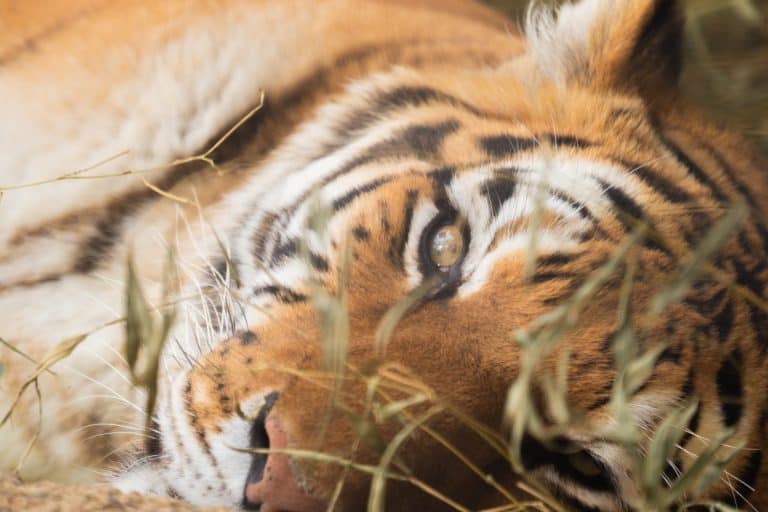
Due to the relatively large size and tree-dwelling nature of the Sun Bear, adults have relatively few predators in their native environment. Large carnivorous animals like tigers are the main predators of the Sun Bear, but these animals have evolved another unique adaptation to help them to escape in these situations. The Sun Bear has loose skin, particularly around its neck, which means that if it is caught by a predator, it is able to still spin its head round to try and bite its attacker. Sun Bear cubs, however, are much more vulnerable and are preyed upon by a variety of jungle predators including snakes and large birds of prey. The biggest threat, though, to southeast Asia’s remaining Sun Bear populations is the drastic declines in much of their natural habitats due to deforestation. In areas where agricultural plantations encroach on their territories, Sun Bears are also known to raid oil palms, particularly to eat the young shoots. They are therefore also persecuted by farmers who fear for the stability of their crops.

Interesting Facts and Features
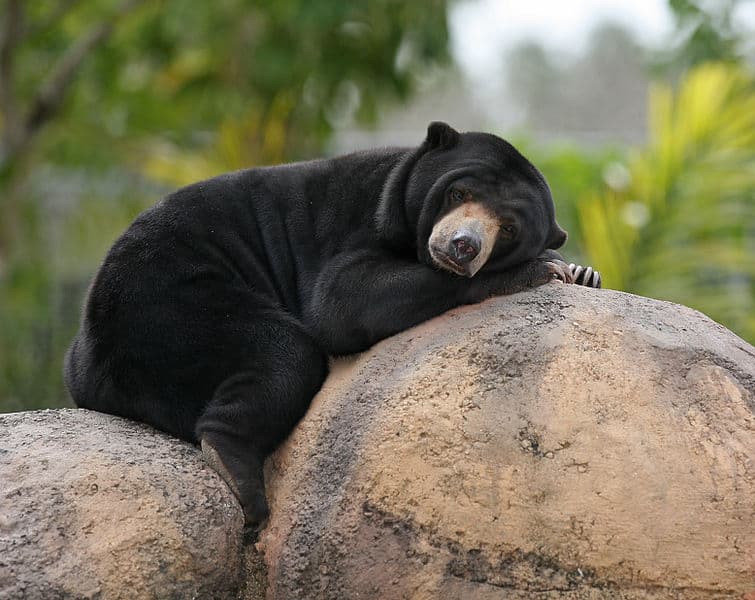
Sun Bear Sleeping

Sun bears, also known as dog bears, do not hibernate.

The Sun Bear is known by a number of different names but its small size, short snout and ears, and short, glossy fur has led it to being commonly known as the “Dog Bear” in local communities. Although the Sun Bear is generally solitary, on rare occasions a few individuals are known to congregate around ripening fruit trees and will tolerate one another while they feed. Even though Sun Bears are similar in varying parts of their natural range, there is actually a smaller recognised sub-species of Sun Bear that is found on the island of Borneo, but very little is known about it. Unlike a number of the other eight bear species around the world, the Sun Bear does not hibernate. Due to the fact that Sun Bears are found in the tropics where there are not such sweeping seasonal changes, they simply have no need to sleep through the winter months (breeding is also known to occur all year round for the same reason).

If you’re looking for more amazing sun bear facts, make sure to read ’10 Incredible Sun Bear Facts.’

Relationship with Humans

Since modern people arrived in southeast Asia thousands of years ago, Sun Bears, as well as all other bear species, have been hunted mainly for the use of certain of their body parts. Asian medicine markets seek the gallbladder in particular. Because of their small size and generally docile nature, Sun Bears are also captured to be sold into the exotic pet market around the world. However, the biggest problem for the Sun Bear today is the fact that it has lost vast areas of its once extensive natural habitat to deforestation for logging and land clearance for agriculture (most of which is illegal). As Sun Bears spend the majority of their lives in the trees, they rely heavily on the rich, dense rainforests that they have become accustomed to, but much of it today has now disappeared with growing human activity.
Conservation Status and Life Today

Today, the Sun Bear is listed by the IUCN as an animal that is Vulnerable in its natural environment and is therefore at risk from becoming extinct in the wild in the future. The elusive nature of the Sun Bear makes it difficult for anyone to really know exactly how threatened they are, but populations are thought to have fallen by up to 30% in the past few decades. Sun Bear numbers are still declining. and although their exact population numbers are unknown, there could be less than 1,000 individuals left in the wild today. Although illegal deforestation is harder to control, Sun Bears are at least protected by anti-poaching laws to help prevent so many being hunted.

Types

The Sun Bear is considered a monotypic species; that is, there are no subspecies that have developed from it. However, there are two proposed, but not yet recognized, subspecies: The Malayan Sun Bear (from Malaysia) and the Bornean Sun Bear (from Borneo). The Bornean type has a smaller skull, but otherwise any differences are slight and still under scientific study. Since there are so few Sun Bears in existence, and since they hide so well in the forest, it is hard to ascertain from the few if there are truly any unique subspecies.

View all 390 animals that start with S
How to say Sun Bear in ...
Catalan
Ós malai
Czech
Medvěd malajský
German
Malaienbär
English
Sun Bear
Esperanto
Malaja urso
Spanish
Helarctos malayanus
Finnish
Malaijikarhu
French
Ours malais
Hebrew
דוב מלאי
Hungarian
Maláj medve
Italian
Helarctos malayanus
Japanese
マレーグマ
Dutch
Maleise beer
English
Malayabjørn
Polish
Niedźwiedź malajski
Portuguese
Urso-malaio
English
Ursus malayanus
English
Ontohod
Swedish
Malajbjörn
Turkish
Malaya ayısı
Vietnamese
Gấu chó
Chinese
马来熊

Sources

  1. David Burnie, Dorling Kindersley (2011) Animal, The Definitive Visual Guide To The World's Wildlife / Accessed November 24, 2008
  2. Tom Jackson, Lorenz Books (2007) The World Encyclopedia Of Animals / Accessed November 24, 2008
  3. David Burnie, Kingfisher (2011) The Kingfisher Animal Encyclopedia / Accessed November 24, 2008
  4. Richard Mackay, University of California Press (2009) The Atlas Of Endangered Species / Accessed November 24, 2008
  5. David Burnie, Dorling Kindersley (2008) Illustrated Encyclopedia Of Animals / Accessed November 24, 2008
  6. Dorling Kindersley (2006) Dorling Kindersley Encyclopedia Of Animals / Accessed November 24, 2008
  7. David W. Macdonald, Oxford University Press (2010) The Encyclopedia Of Mammals / Accessed November 24, 2008
  8. About Sun Bears / Accessed November 24, 2008
  9. Sun Bear Information / Accessed November 24, 2008
Thank you for reading! Have some feedback for us?


Sun Bear FAQs (Frequently Asked Questions)

Sun Bears are Omnivores, meaning they eat both plants and other animals.