Swan
Cygnus atratus
 Verified by: AZ Animals Staff
Populations have been affected by pollution!
Advertisement
Swan Scientific Classification
- Kingdom
- Animalia
- Phylum
- Chordata
- Class
- Aves
- Order
- Anseriformes
- Family
- Anatidae
- Genus
- Cygnus
- Scientific Name
- Cygnus atratus
Read our Complete Guide to Classification of Animals.
Swan Conservation Status
Swan Facts
- Lifestyle
- Flock
- Favorite Food
- Aquatic Plants
- Type
- Bird
- Average Clutch Size
- 5
- Slogan
- Populations have been affected by pollution!

 © Sergej Razvodovskij/Shutterstock.com


How to Add Us to Google News


The Swan is known around the world for its beauty, elegance, and grace.
The swan is a genus of waterfowl that has the ability to swim and fly with incredible speed and agility. This bird is also very intelligent, devoted to its mate, and highly aggressive about defending its young. They are a common sight in temperate and colder climates around the globe.
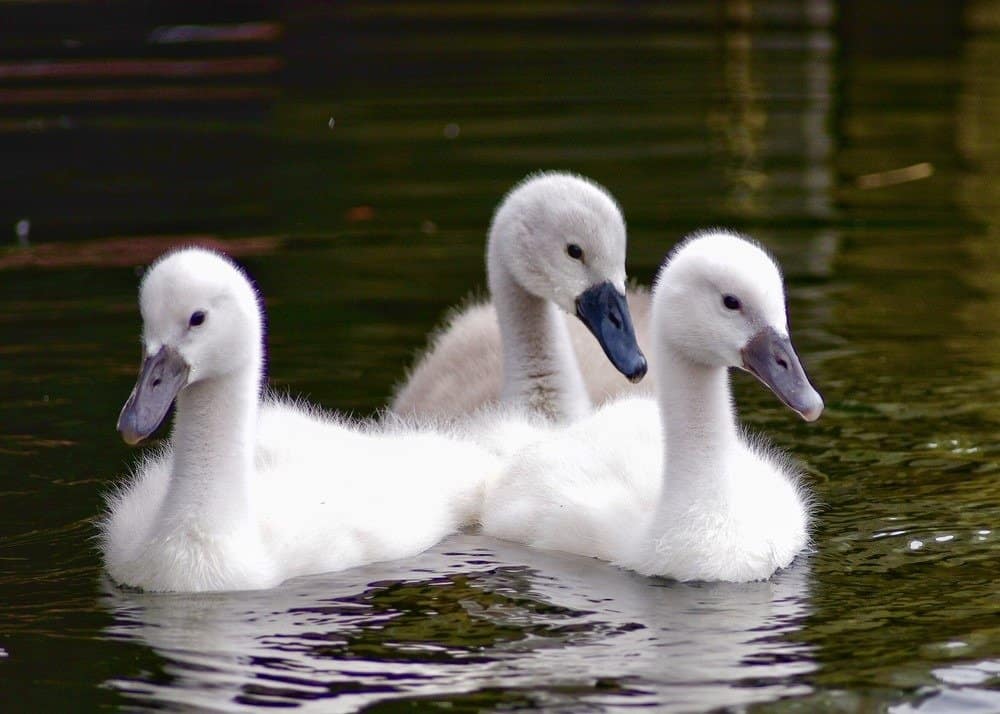
Swans love to live together as a family unit and mate for life
©john hambleton/Shutterstock.com
An Incredible Bird: 4 Swan Facts!
- The English word swan is also shared with the German and Dutch. It likely has its roots in the older Indo-European word swen, which means to sound or to sing.
- The black swan is often cited as a symbol of rare and unexpected events due to the fact that ancient writers theorized it did not exist. This was assumed to be true until after the discovery of black swans in Australia, which are actually quite common in the region.
- This bird is much faster on land than you might suspect with speeds of 22 miles an hour. In the water, it can also achieve speeds of around 1.6 miles per hour by paddling its webbed feet. But if they stretch out their wings, then swans can let the wind carry them at much higher speeds while also saving energy.
- These birds feature prominently in human mythologies and arts around the world. Some of the most famous stories involve metamorphosis and transformation. A Greek legend claims that the god Zeus once disguised himself as a swan. The famous 19th century Tchaikovsky ballet Swan Lake, which derived from Russian and German folk tales, is the story of a princess transformed into a swan by a curse. And of course, the Hans Christian Andersen fairy tale The Ugly Duckling is about a duck that transforms into a swan.
You can check out more incredible facts about swans.
Scientific Name
The scientific name for the genus of swans is Cygnus (the word derives from the Greek and Latin words for swan). There are six living species of swans and many other known from the fossil record. These include:
- Black Swan (Cygnus atratus): Found in the southwestern and eastern Australian wetlands, this large swan is capable of growing to 56 inches in length and having a wingspan of 6.6 feet. It is known for its dark plumage, white flight feathers, and red bills.
- Black-Necked Swan (Cygnus melancoryphus): Members of this species have dark head and neck feathers, a dash of white behind their eyes, and a bump at the base of their beaks which appears by their third or fourth year. They live in South America and can be found in Argentina, Brazil, Chile, and Uruguay.
- Coscoroba Swan (Coscoroba coscoroba): A relatively small-sized swan, this avian is capable of growing to 61 inches with a wing span of 155 cm. It can be found in Argentina, Bolivia, Brazil, Chile, Paraguay, and Uruguay.
- Mute Swan (Cygnus olor): Members of this subspecies have a pristine white plumage and an orange bill with a black base. They are monogamous and build nests at the edge of bodies of water or at their center which they repair as needed. They are capable of reaching 32 lbs in weight.
- Trumpeter Swan (Cygnus buccinator): Recognizable by its pristine white plumage and black bill, this avian is capable of reaching 28 lbs in weight. Considered North America’s largest waterfowl, it is also capable of growing to 5 ft 11 inches with a maximum wingspan of 8 ft 2 inches.
Additional species include the Tundra Swan (Cygnus columbianus) and the Whooper Swan (Cygnus cygnus). These birds belong to the waterfowl family (scientific name Anatidae) along with ducks and geese.
Evolution
According to experts swans spread north of the equator between the Miocene (23 – 5.3 million years ago) and the slightly warmer Pleistocene ( 5.3 – 2.58 million years ago) period.
During this period, the earth progressively cooled. Cockatoos, crows, dabbling ducks, plovers, ostriches and owls also made an appearance during this period.
The Bird’s Appearance
Swimming gracefully through the water, these birds are an impressive spectacle whose characteristics include a large body, a long and curved neck, and big feet. Each species has different colored plumage. The common mute swan is almost completely covered in white feathers except for an orange bill and some black markings on the face. The trumpeter swan has white feathers and a black bill, whereas the tundra and whooper swan both have a mixture of black and yellow on the bill. The black-necked swan, as the name implies, has black feathers all along the neck, plus a black bill, a red knob around the bill, and white markings around the eyes. The black swan is entirely covered in black feathers with a bright red bill and pale tip.
These birds rank as the largest waterfowl and among the largest birds in the world. The longest species is the trumpeter swan, which measures nearly 5.5 feet with a wingspan of some 10 feet. The heaviest species is the 30-pound mute swan (which sometimes weighs as much as 50 pounds), but even though it’s formidable, this extra weight is a problematic characteristic that makes it more difficult to fly. They compensate for it with weaker honeycomb-like bones. Males (called cobs) are generally larger than females (called pens), but the characteristics of their plumage are remarkably similar.
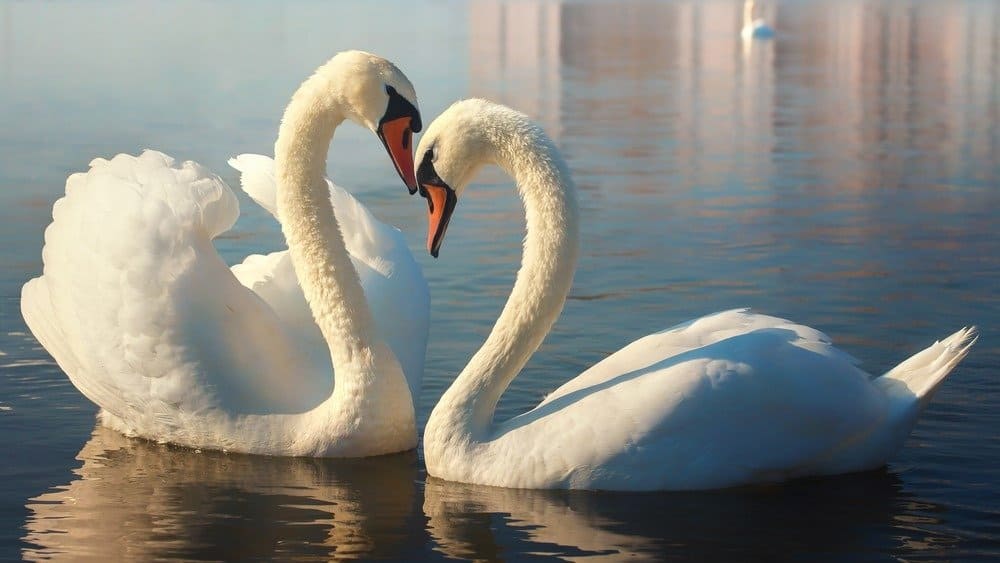
Two white swans.
©Ira Kalinicheva/Shutterstock.com
The Bird’s Behavior
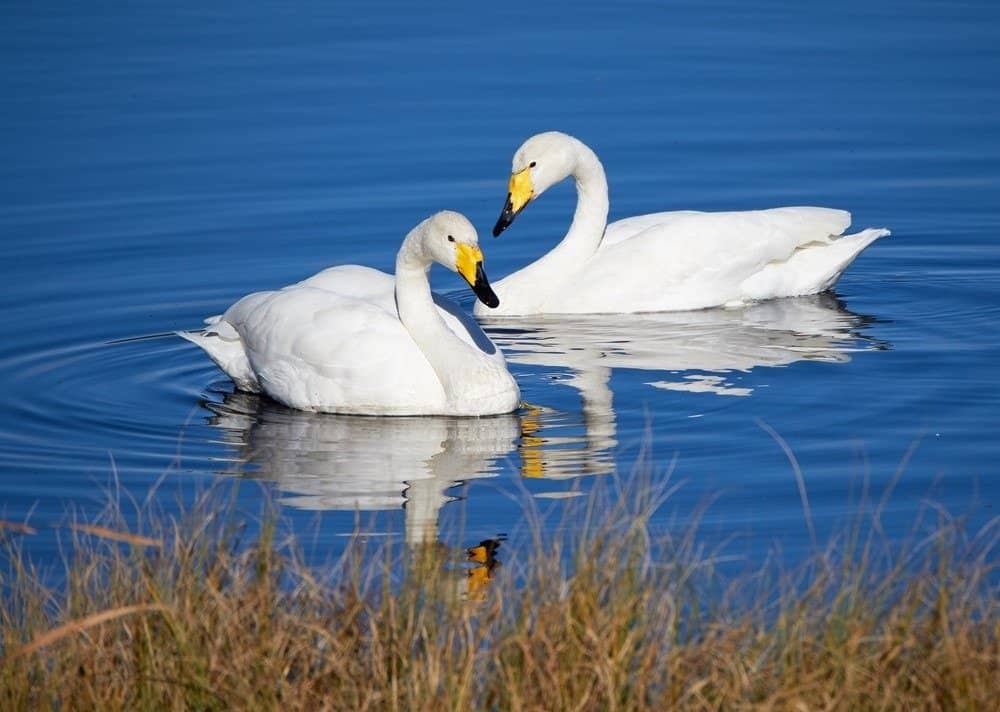
Swans form close lifelong bonds
©Teemu Tretjakov/Shutterstock.com
Among these birds’ most remarkable social characteristics are the intense bonds they form with one mate for life. Unlike many other species of birds (even the closely related geese and duck), this has a few distinct advantages. First, it allows the pair to learn from their reproductive failures and develop better strategies. Second, the couple will share several duties, including the construction of nests, which they build out of grasses, branches, reeds, and other vegetation. This makes them far more effective than they would be on their own. Third, because of their long migratory routes, they have less time to acquire a mate, so the lifelong bond actually saves them time.
Even though it makes logical sense for the couples to remain faithful to each other for their entire lives, even swan fidelity has its limits. Cheating seems to occur with some regularity among female black swans, perhaps as a backup reproductive strategy. It is estimated that one of every seven eggs from this species is the result of adultery. If the couple fails to produce any young at all, then it is possible for swans of any species to break up with each other and find a new mate.
These birds are quite defensive animals that will do anything to protect their young. To drive off threats, they will engage in a display called busking, which involves hissing, snorting, and flapping with their outstretched wings. Due to their relatively weak bones, this display is largely a bluff that has little force behind it, but it doesn’t stop them from gloating. After driving off a predator, they make a triumphant sound. They also communicate through a variety of other vocalizations that emanate from the windpipe or the breastbone, including in some species a geese-like honk. Even the so-called mute swan can make hissing, snoring, or grunting sounds.
After the breeding season, the bird migrates to warmer climates in the winter by flying in diagonal V formations with around 100 individuals. When the lead bird tires, another one takes its place at the front. These birds can be either partially migratory or wholly migratory depending on where they nest. The fully migratory species typically live in colder climates and may travel the same route thousands of miles every year toward warmer climates.
The Bird’s Habitat
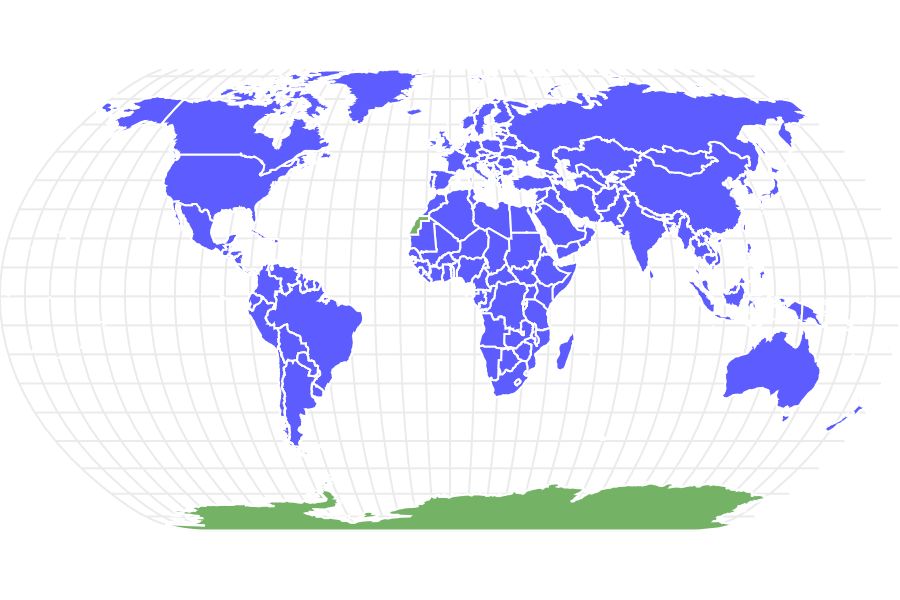
These birds are endemic to ponds, lakes, rivers, estuaries, and wetlands all over the world. Most species prefer temperate or Arctic climates and migrate during the colder seasons. The common mute swan is native to Europe. It was later introduced into North America (where it flourished), New Zealand, Japan, and South Africa. The tundra swan, as the name implies, inhabits the Arctic regions of North America and Asia but migrates as far south as Texas and northern Mexico in the winter. Other species include the whooper swan of Eurasia, the trumpeter swan of North America, the black-necked swan of South America, and the black swan of Australia.
Diet
This bird is an herbivorous animal that feeds exclusively on roots, leaves, stems, shoots, and other plant matter. When swimming in the water, it feeds via a method called dabbling in which it flips upside down and reaches down with its long neck to the vegetation at the bottom of the floor. The bird can also come up onto land in search of food.
Predators and Threats
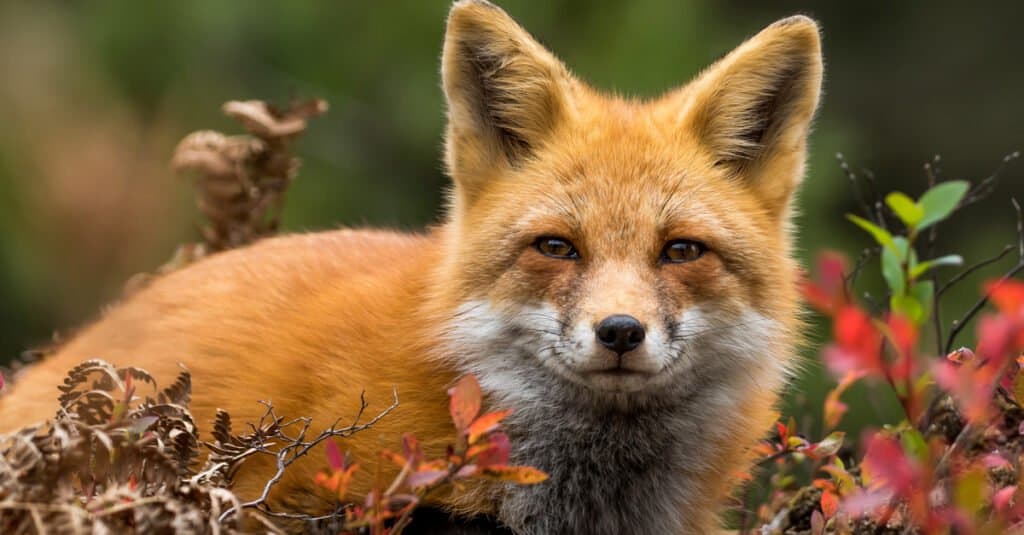
Foxes are rather fond of swan eggs and may even attempt to take a mouthful or more out of an adult, too
©RT Images/Shutterstock.com
These birds large sizes, fast speeds, flying ability, and rather aggressive behavior (at least when threatened) are a deterrent for most predators, but the old, ill, and young (especially the eggs) are sometimes preyed upon by foxes, raccoons, wolves, and other carnivorous mammals. Habitat loss, pollution, and overhunting have all posed a persistent threat, but they can adapt quite well to human habitations, and the cultivation of ponds and lakes for local wildlife has kept population numbers high. In the future, swan habitat and migratory patterns will be affected by climate change.
The Bird’s Reproduction, Babies, and Lifespan
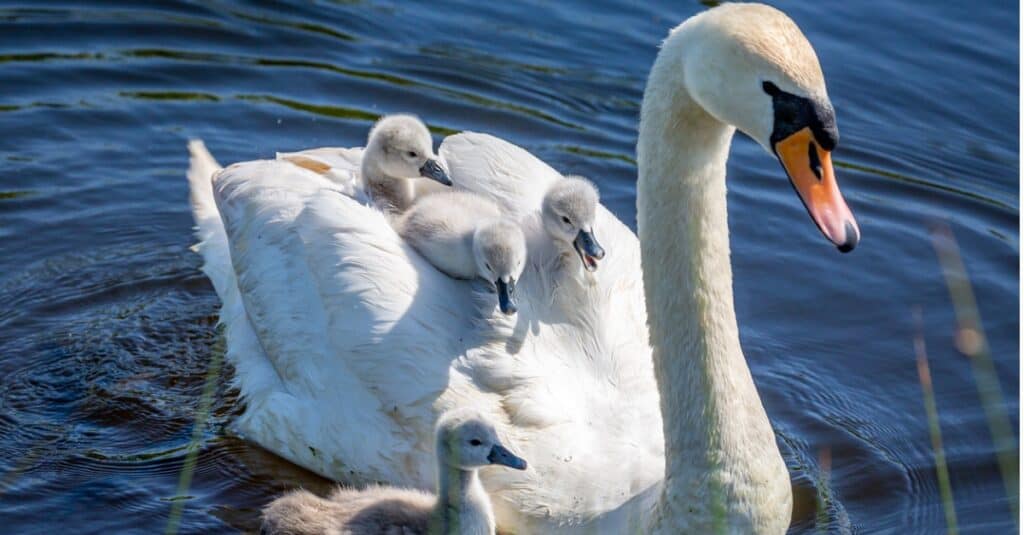
Baby cygnets are quite capable of swimming once they’ve hatched, however, nothing beats a ride on a doting parent’s back
©iStock.com/Lemanieh
Swan courtship involves a series of elaborate bonding rituals such as bill dipping, synchronized swimming, and head contact (when their curved necks form a heart shape). Swans also dance, make noises, and spend time with each other. The black swan of Australia even has special feathers to help them attract a mate. Some swan species mate for life.
Once the pair copulates, the female pen lays a clutch of about three to eight unmarked eggs in the nest (the black swan is the only species that lays multiple clutches per year). She spends most of the time incubating the eggs while the male stands guard nearby, but the male will sometimes join in on incubation duties as well. This allows the female time to feed on extra food and rebuild her fat stores.
The incubation period typically lasts a month. Once they hatch, the young baby cygnets have short necks and a thick down of feathers. They are capable of running and swimming almost immediately, but the parents still keep careful watch over the brood and sometimes give the young baby cygnets a ride on their back. The birds sport a mottled gray or brown appearance for at least the first two years of life. They reach full sexual maturity after three or four years and have a full life expectancy of some 20 years in the wild and up to 50 years in captivity.
Population
Thanks to years of protection, the swan genus as a whole is in excellent health. According to the IUCN Red List, which tracks the population status of many animals around the world, every single species of the swan is listed as least concern, which is the best possible conservation prognosis. Population numbers, though not known with precise accuracy, appear to be stable or increasing around the world. The trumpeter swan endemic to North America once fell to as little as 100 birds in 1935, but it has since been rehabilitated.
Birds in the Zoo: Where to find Swans
Even though it’s a common sight around the world, the swan is a very popular feature at many American zoos, usually floating around the ponds. The trumpeter swan is kept at the Minnesota Zoo, Maryland Zoo, and the Lincoln Park Zoo in Chicago. The tundra swan can be found at Zoo New England. A black-necked swan known as Swanton is also an exhibit at the Denver Zoo.
View all 293 animals that start with S How to Add Us to Google News


Swan FAQs (Frequently Asked Questions)
What's the difference between swans and geese?
When comparing a swan vs. goose, both animals belong to the same family. However, they do have differences. Swans are generally larger and more comfortable on the water. In addition they have an “S” curved neck that geese lack.
What is a baby swan called?
The baby swan is called a cygnet. This is a word meaning little swan derived from the genus name of Cygnus.
What does a swan symbolize?
Swans have symbolized different things to different people. They were a symbol of religious piety in ancient Greece. They were revered for their purity and saintliness in Hinduism. And because of their lifelong bonds, they’ve also symbolized love and devotion around the world.
The common phrase “swan song,” which means a mournful call at the moment of the swan’s death, appears to be a myth. It is still regularly used in modern English to signify a final graceful exit, but the origin of this belief is not well understood. According to the author Jeremy Mynott, who wrote a book about birds in the ancient world, the phrase might have to do with the swan’s connection to Apollo, the god of prophecy and music. The philosopher Plato believed that the swan song was a “metaphorical celebration of the life to come.” Rather than bewailing their own deaths, Plato writes, the swans are “happy in the knowledge that they are departing this life to join the god they serve.” Other ancient authors were skeptical of the swan song and sought to debunk it. More recently, some scientists have tried to find a more rational and scientific explanation for this belief, but more likely it’s based entirely on symbolism and myth.
Do swans die when their mate dies?
Despite their intense devotion to each other, swans do not die from grief. This appears to be a myth derived from a dubious ancient source. If a mate dies prematurely, then the surviving swan will usually find a new mate. What they feel after a mate dies is not entirely clear, since we cannot know fully what they are thinking.
Do swans fly?
Yes, swans are very fast and adept flyers, achieving speeds of up to 30 MPH or even 60 MPH with a tailwind. Reaching an altitude of 8,000 feet, they migrate immense distances, sometimes more than a thousand miles, during the winter.
How much do swans weigh?
The swan varies on average between the black-necked swan at 15 pounds and the mute swan at 30 pounds and sometimes more.
Are Swans herbivores, carnivores, or omnivores?
Swans are Omnivores, meaning they eat both plants and other animals.
What Kingdom do Swans belong to?
Swans belong to the Kingdom Animalia.
What class do Swans belong to?
Swans belong to the class Aves.
What phylum to Swans belong to?
Swans belong to the phylum Chordata.
What family do Swans belong to?
Swans belong to the family Anatidae.
What order do Swans belong to?
Swans belong to the order Anseriformes.
What type of covering do Swans have?
Swans are covered in Feathers.
What genus do Swans belong to?
Swans belong to the genus Cygnus.
In what type of habitat do Swans live?
Swans live in large, shallow wetlands and open water.
What is the main prey for Swans?
Swans eat aquatic plants, insects, and small fish.
What are some predators of Swans?
Predators of Swans include humans, wolves, and raccoons.
What are some distinguishing features of Swans?
Swans have large, powerful wings and webbed feet.
How many eggs do Swans lay?
Swans typically lay 5 eggs.
What is an interesting fact about Swans?
Swan populations have been affected by pollution!
What is the scientific name for the Swan?
The scientific name for the Swan is Cygnus atratus.
What is the lifespan of a Swan?
Swans can live for 8 to 12 years.
What is the Swan's wingspan?
The Swan has a wingspan of 200cm to 350cm (79in to 138in).
How do Swans have babies?
Swans lay eggs.
What's the difference between swans and ducks?
There are many differences between ducks and swans. Swans are far larger than ducks, but ducks are found in more colors. Ducks do not mate for life, while swans do.
Thank you for reading! Have some feedback for us? Contact the AZ Animals editorial team.
Sources
- David Burnie, Dorling Kindersley (2011) Animal, The Definitive Visual Guide To The World's Wildlife
- Tom Jackson, Lorenz Books (2007) The World Encyclopedia Of Animals
- David Burnie, Kingfisher (2011) The Kingfisher Animal Encyclopedia
- Richard Mackay, University of California Press (2009) The Atlas Of Endangered Species
- David Burnie, Dorling Kindersley (2008) Illustrated Encyclopedia Of Animals
- Dorling Kindersley (2006) Dorling Kindersley Encyclopedia Of Animals
- Christopher Perrins, Oxford University Press (2009) The Encyclopedia Of Birds
- Britannica, Available here: https://www.britannica.com/animal/swan
- BBC, Available here: http://www.bbc.com/earth/story/20141204-the-truth-about-swans
- National Geographic, Available here: https://www.nationalgeographic.com/news/2016/10/mute-swan-windsurfing-animals/
- The Christian Science Monitor, Available here: https://www.csmonitor.com/1998/0929/092998.home.home.1.html