T
Species Profile

Tang

Acanthuridae

Reef gardeners with a hidden blade
Nantawat Chotsuwan/Shutterstock.com

Tang Distribution

Click a location to explore more animals from that region

This map shows coastal regions where Tang are found.

Loading map...
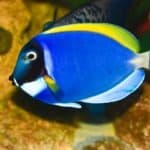
Powder Blue tang

At a Glance

Family Overview This page covers the Tang family as a group. Stats below are general traits shared across the family.
Also Known As Surgeonfish, Doctorfish, Dory, Unicornfish
Diet Omnivore
Activity Diurnal+
Lifespan 15 years
Weight 12 lbs
Status Not Evaluated
Did You Know?

Their trademark "surgeon's scalpel" is a sharp spine on the tail base (caudal peduncle) used for defense and dominance displays.

Scientific Classification

Family Overview "Tang" is not a single species but represents an entire family containing multiple species.

Tangs (surgeonfishes) are laterally compressed, reef-associated marine fishes best known for grazing algae and for having sharp, scalpel-like spines ("surgery" spines) on the caudal peduncle used in defense and dominance interactions.

Kingdom
Animalia
Phylum
Chordata
Class
Actinopterygii
Order
Acanthuriformes
Family
Acanthuridae

Distinguishing Features

  • Laterally compressed, disk- or oval-shaped body adapted for maneuvering on reefs
  • One or more sharp, retractable or fixed caudal-peduncle spines (“scalpels”)
  • Often bright, high-contrast coloration; many species change color with mood or at night
  • Primarily herbivorous/detritivorous grazing behavior important for reef algae control

Physical Measurements

Length
12 in (3 in – 3 ft 3 in)
Weight
3 lbs (0 lbs – 18 lbs)
Top Speed
16 mph
swimming
Poisonous

Appearance

Primary Colors
Secondary Colors
Skin Type Marine fish skin with small, tight scales and a mucus-coated, tough epidermis; laterally compressed body reduces drag; caudal peduncle houses one or more retractable, scalpel-like bony spines (often sharp, sometimes mildly venomous in some taxa).
Distinctive Features
  • Family-wide size range (total length): ~10-12 cm in smallest species up to ~60-70 cm in largest (e.g., big Naso species).
  • Lifespan varies widely by species and environment: commonly ~5-30+ years, with some large species potentially reaching ~40+ years.
  • Laterally compressed, oval to disc-like bodies with long continuous dorsal and anal fins; many species have small terminal mouths adapted for grazing.
  • Signature defensive structure: one or more sharp, laterally placed 'scalpel' spines on each side of the caudal peduncle, used in defense and dominance interactions.
  • Ecological role: primarily diurnal reef-associated grazers controlling algal growth; variation includes detritivores (brush-toothed forms) and some species that supplement with zooplankton.
  • Behavior ranges from solitary and strongly territorial grazers to schooling or loosely aggregating species; juveniles often use safer microhabitats and may differ in diet and coloration.
  • Many undertake daily feeding movements over reef flats and slopes; pelagic larval stage supports broad dispersal among reefs.

Sexual Dimorphism

Sexual dimorphism is often subtle, but in several species males can be larger or show longer fin streamers, more pronounced forehead/horn structures (notably in some Naso), or stronger coloration during courtship. Many species show little consistent external difference.

  • May attain larger maximum size in some species.
  • Longer trailing fin filaments/streamers in some taxa (especially larger-bodied forms).
  • More pronounced head profile or horn development in some Naso species.
  • Temporary intensified coloration during spawning displays in certain species.
  • Often slightly smaller on average where dimorphism occurs.
  • Typically shorter fin streamers where present in males.
  • Generally less pronounced head/horn features in species where males develop them.
  • Coloration usually similar outside of spawning-associated changes.

Did You Know?

Their trademark "surgeon's scalpel" is a sharp spine on the tail base (caudal peduncle) used for defense and dominance displays.

Not all tangs eat the same thing: many graze algae, some sweep detritus (e.g., bristletooths/Ctenochaetus), and some (notably Naso) take a lot of plankton.

Several genera familiar to divers and aquarists-Acanthurus, Zebrasoma, Paracanthurus, and Naso-represent very different shapes and feeding styles within the same family.

Many surgeonfishes form large spawning aggregations, releasing eggs and sperm into the water column for external fertilization.

Their larvae are distinctive, transparent, open-ocean drifters (often called "acronurus" larvae) that can disperse far before settling on reefs.

Some surgeonfish species are important local food fishes, but in some regions they're avoided at times due to ciguatera risk (toxins can accumulate through reef food webs).

Aquarium popularity is huge: tangs are iconic reef fish, and films (e.g., the "Dory" blue tang) dramatically increased public recognition of the group.

Unique Adaptations

  • Caudal-peduncle "scalpel" spines: blade-like defenses that may be fixed or hinged/erectile depending on the lineage; in some groups (e.g., Prionurus) there can be multiple spines.
  • Laterally compressed, disc-like bodies: helps maneuver through complex reef structure and makes them harder to swallow for predators.
  • Feeding-tool diversity: scraping teeth in many Acanthurus; brush-like teeth in bristletooths (Ctenochaetus) for sweeping fine detritus/film algae; and different jaw shapes across genera reflecting diet niches.
  • Long, efficient digestive tracts for processing plant-heavy diets (common in herbivorous species), supporting their role as major reef grazers.
  • Color and pattern signaling: strong visual cues (bars, spots, bright fins) used in species recognition, courtship, and dominance-highly variable across the family.
  • A pelagic larval stage adapted for dispersal: transparent larvae can drift and grow in open water before metamorphosing and settling onto reefs.

Interesting Behaviors

  • Algal "lawn" grazing and patrols: many species repeatedly crop preferred patches, sometimes defending feeding territories; others roam widely and feed opportunistically.
  • Schooling vs. solitary life: some tangs travel in large daytime schools (often for feeding or predator avoidance), while others are more territorial-patterns vary by species, size, and habitat.
  • Dominance signaling with the caudal spine: individuals may flare/angle the tail to display the scalpel, escalating to slashing if threatened or competing.
  • Day-night routine: most are diurnal reef foragers that shelter in crevices at night; many show noticeable nighttime color fading or pattern changes (varies among species).
  • Cleaning interactions: tangs commonly visit cleaner fish or shrimp stations, pausing to have ectoparasites removed.
  • Reef role variation: from shallow reef-flat grazers to outer-slope cruisers; some species frequent lagoons and seagrass edges, others prefer high-energy reef fronts.

Cultural Significance

Surgeonfishes are important to tropical coastal communities in the Pacific and Indian Oceans as food, though some areas warn of seasonal ciguatera. Today Acanthurus, Zebrasoma, Paracanthurus (blue tang), and Naso are popular aquarium fish tied to reef conservation and fishery management debates.

Myths & Legends

Name-origin tradition: "surgeonfish" is a long-standing European common name referencing the tail spine's resemblance to a surgeon's scalpel-an early natural-history analogy that shaped how people talked about and identified the group.

Classical-language naming: the family name Acanthuridae traces to Greek roots meaning "thorn" and "tail," a historical etymology reflecting how early describers prioritized the caudal spine as the defining trait.

In some tropical coastal places, fishers warn against eating certain reef fishes, sometimes surgeonfishes (Acanthuridae), in some seasons because reef toxins can make people sick. This is a local food tradition, not a single legend.

Modern pop-culture legend: the "blue tang" became a global storytelling icon through animation, creating a contemporary cultural narrative that strongly influenced how the public perceives reef fish diversity and reef stewardship.

Conservation Status

NE Not Evaluated (family-level hub; IUCN assessments are made at species level-most Acanthuridae are listed as Least Concern, with a smaller number of range-restricted reef endemics assessed as Near Threatened or Vulnerable, and some species remaining Data Deficient)

Has not yet been evaluated against the criteria.

Population Unknown

Protected Under

  • Species occur within many national and regional Marine Protected Areas (coverage and enforcement vary widely)
  • Fisheries regulations in parts of the Indo-Pacific and Atlantic ranges (e.g., gear restrictions, size/bag limits, seasonal closures, herbivore protections in some jurisdictions)
  • Most surgeonfishes are not CITES-listed; protection is primarily through local fisheries and habitat management rather than international trade controls

You might be looking for:

Blue tang

26%

Paracanthurus hepatus

Bright blue surgeonfish (famous from reef aquaria); Indo-Pacific reefs.

View Profile

Yellow tang

22%

Zebrasoma flavescens

Popular Hawaiian surgeonfish with solid yellow coloration; common in aquaria.

View Profile

Convict tang

12%

Acanthurus triostegus

Striped reef-grazing surgeonfish widespread in the Indo-Pacific.

Sohal tang

10%

Acanthurus sohal

Territorial Red Sea surgeonfish with bold striping; larger, aggressive aquarium species.

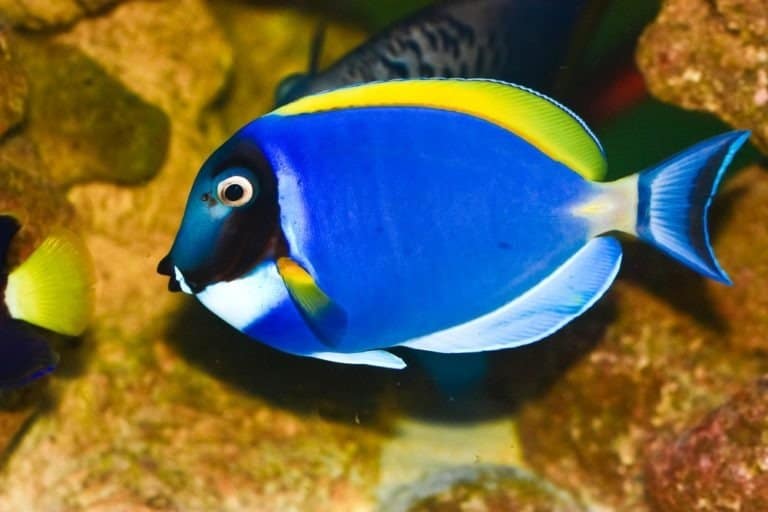
Powder blue tang

8%

Acanthurus leucosternon

Vivid blue-and-yellow surgeonfish from the Indian Ocean; sensitive in captivity.

Life Cycle

Birth 100000 frys
Lifespan 15 years

Lifespan

In the Wild
5–45 years
In Captivity
3–30 years

Reproduction

Mating System Promiscuity
Social Structure Aggregation Group
Breeding Pattern Transient
Fertilization Broadcast Spawning
Birth Type Broadcast_spawning

Across Acanthuridae, mating is typically external broadcast spawning, often at dusk in brief pair spawns or larger aggregations. Many species show temporary courtship territories or harem-like local structure, but long-term pair bonds and parental care are generally absent.

Behavior & Ecology

Social School Group: 20
Activity Diurnal, Crepuscular
Diet Omnivore Turf algae and epilithic algal matrix (algal films with associated detritus/microbes)

Temperament

Body size varies widely across the family (~7-70+ cm total length), depending on species.
Lifespan spans roughly ~5-40+ years; larger-bodied species generally live longer.
Typically alert and wary; often becomes bold and assertive around concentrated food sources.
Territoriality ranges from strongly territorial grazers to more roaming, schooling browsers.
Intraspecific aggression is common, using threat displays and caudal-spine dominance interactions.
Risk-taking and grouping behavior shift with predator pressure, habitat complexity, and life stage.
Juveniles often tolerate closer neighbors and aggregate more than territorial adults.

Communication

Low grunts/clicks reported in some species, often during stress or handling.
Visual displays: body orientation, fin erection, lateral presenting, rapid color/pattern changes.
Caudal-peduncle spine showing and tail swipes as threat and dominance signals.
Chasing, circling, and boundary patrols to maintain territories or spacing in schools.
Schooling alignment and spacing cues via vision and lateral-line sensing.
Spawning aggregations use synchronized swimming and timing cues Light/tide/reef landmarks

Habitat

Coral Reef Coastal Rocky Shore Kelp Forest Seabed/Benthic Open Ocean Mangrove Estuary +2
Biomes:
Terrain:
Coastal Island Rocky Sandy Muddy
Elevation: -7874 in

Ecological Role

Reef-associated primary consumer-mesopredator mix (mostly algal/detrital grazers with some planktivores/omnivores), shaping benthic community structure; diversity in feeding modes is a key feature of the family.

Controls algal turf and limits algal overgrowth on corals (supports coral recruitment and reef resilience) Transfers primary production and detrital energy into reef food webs (nutrient/energy cycling) Bioturbation and cleaning of reef surfaces via grazing/sifting (maintains productive algal films) Provides prey/biomass for higher trophic levels and supports reef fish community dynamics

Diet Details

Main Prey:
Zooplankton Small pelagic crustaceans Benthic micro-invertebrates
Other Foods:
turf algae and epilithic algal matrix Diatoms Macroalgae Cyanobacteria Detritus and organic films Seagrass

Human Interaction

Domestication Status

Wild

Acanthuridae (tangs or surgeonfishes) are not domesticated; most come from wild capture, with limited captive breeding rising for some. People use them in reef fisheries (food), the marine aquarium trade, and ecotourism. Reef-dwelling grazers (10–100 cm, 5–30+ years) have sharp tail spines; over-collection can harm reefs.

Danger Level

Moderate
  • Deep lacerations/puncture wounds from caudal "scalpel" spines during handling or netting; wounds may require medical care.
  • Secondary infection risk from marine bacteria after cuts (common concern with reef-fish injuries).
  • Food-safety risk in some regions: certain reef fish including some surgeonfishes may be associated with ciguatera poisoning depending on location and trophic pathways.
  • Aquarium-related injuries: slashing during capture/transfer; stress-induced thrashing can worsen injury risk to handlers.

As a Pet

Suitable as Pet

Legality: Tangs (Acanthuridae) are usually legal as pets, but collection and trade often need local permits and follow protected area and export or import rules. Some places ban reef fish collection; check laws and if fish are wild caught or farmed.

Care Level: Expert Only

Purchase Cost: $30 - $2,000
Lifetime Cost: $3,000 - $25,000

Economic Value

Uses:
Marine aquarium trade (live fish) Subsistence and commercial reef fisheries (food fish) Ecotourism (reef viewing/diving value) Scientific research and education
Products:
  • live aquarium specimens (wild-caught and limited aquacultured)
  • fresh/frozen food fish in some regions
  • non-consumptive value via diving/snorkeling tourism
  • research/teaching specimens and biological data (e.g., reef herbivory studies)

Relationships

Predators 6

Reef grouper Epinephelus
Barracuda
Barracuda Sphyraena spp.
Reef snapper Lutjanus
Jacks and trevallies Caranx spp.
Moray eel
Moray eel Gymnothorax spp.
Reef shark
Reef shark Carcharhinus amblyrhynchos

Related Species 4

Rabbitfishes Siganidae Shared Order
Moorish idol Zanclus cornutus Shared Order
Louvar Luvarus imperialis Shared Order
Spadefishes Ephippidae Shared Family

Ecological Equivalents 5

Animals that fill a similar ecological role in their ecosystem

Parrotfish
Parrotfish Scaridae Reef-associated, diurnal herbivores and detritivores that strongly shape algal growth and reef substrate dynamics. They overlap in grazing role, though parrotfishes often scrape and excavate while many tangs crop turf algae or browse macroalgae.
Rabbitfishes Siganidae Occupy a very similar niche as reef herbivores/browsers; they often co-occur with tangs and can functionally substitute for them in controlling macroalgae, but rabbitfishes rely on venomous dorsal spines rather than caudal 'scalpels'.
Algae-farming damselfish Stegastes spp. Maintain and defend algal gardens that can overlap with tang grazing areas; tangs may be excluded from territories or may exploit surrounding turf algae.
Reef grazing sea urchins Diadema spp. Non-fish grazers that can fill a similar ecosystem function (algal removal), sometimes complementing or substituting for tang grazing pressure depending on reef conditions.
Herbivorous combtooth blenny Blenniidae Small-bodied turf-algae grazers that occupy similar feeding guilds at smaller spatial scales and often inhabit the same reef microhabitats.

Types of Tang

24

Explore 24 recognized types of tang

Blue tang (palette surgeonfish) Paracanthurus hepatus
Yellow tang
Yellow tang Zebrasoma flavescens
Convict tang Acanthurus triostegus
Naso tang (lipstick tang) Naso lituratus
Powder blue tang Acanthurus leucosternon
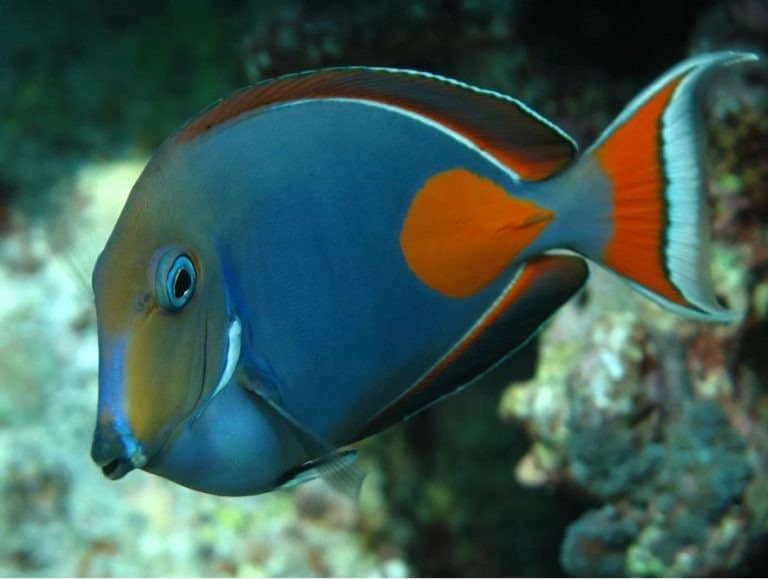
Achilles tang Acanthurus achilles
Sohal tang Acanthurus sohal
Clown tang Acanthurus lineatus
Lavender tang Acanthurus nigrofuscus
Orange-shoulder tang Acanthurus olivaceus
Atlantic blue tang Acanthurus coeruleus
Doctorfish
Doctorfish Acanthurus chirurgus
Ocean surgeonfish Acanthurus bahianus
Purple tang Zebrasoma xanthurum
Scopas tang Zebrasoma scopas
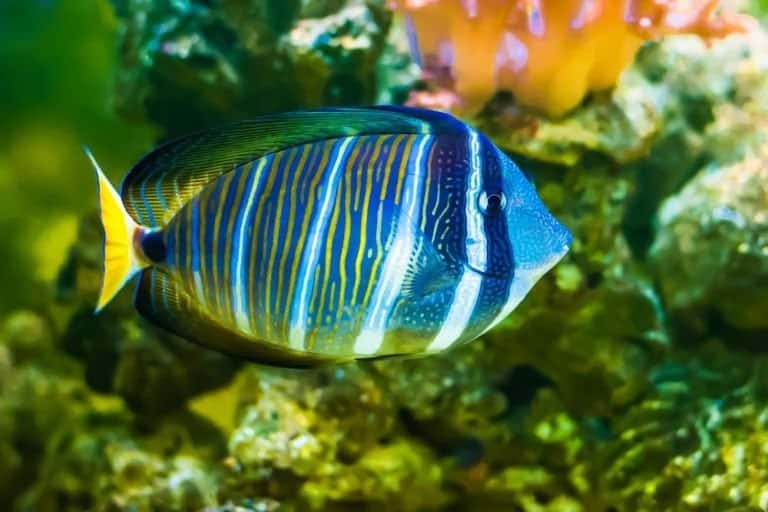
Sailfin tang Zebrasoma veliferum
Desjardin's sailfin tang Zebrasoma desjardinii
Unicornfish
Unicornfish Naso unicornis
Blonde naso tang Naso elegans
Kole tang (goldring bristletooth) Ctenochaetus strigosus
Tomini tang Ctenochaetus tominiensis
Two-spot bristletooth tang Ctenochaetus binotatus
Razor surgeonfish Prionurus laticlavius
Sawtail surgeonfish Prionurus punctatus

Quick Take

With its brightly colored body and stark patterns, the tang makes for an incredibly vivid display in the home. It is well-adapted for its natural habitat in the coral reefs. This can make it a little difficult to keep in an artificial environment. But for those with the budget and inclination to take care of its needs, the tang makes a very rewarding aquarium fish.

A comprehensive infographic about Tang fish featuring a large blue tang illustration, a world map of their tropical habitats, and biological data points regarding their defense mechanisms and lifecycle.
From wielding a razor-sharp tail spine to carrying a heart-slowing toxin, the Tang is a master of reef survival with a surprisingly deadly secret. © A-Z Animals

An Incredible Fish: 3 Tang Facts

  • Tang fish prefer to travel and feed together in large schools, perhaps as a means of overwhelming other fish that jealously protect algae spots.
  • Some species can lie motionless, as if dead, until a predator passes.
  • The tang’s bright colors come from special crystalline cells in the skin. Some tangs can modify their colors based on their stress level or environmental conditions.

Classification and Scientific Name

The tang belongs to the family Acanthuridae. This name is derived from the Greek words akantha and oura, meaning ‘thorn’ and ‘tail.’ It belongs to the order Perciformes, one of the most diverse animal orders in the world. Included in the family Acanthuridae are surgeonfishes, tangs, and unicornfishes. The Royal Blue Tang/Palette surgeonfish (Paracanthurus hepatus) is the only member of the genus Paracanthurus.

Species
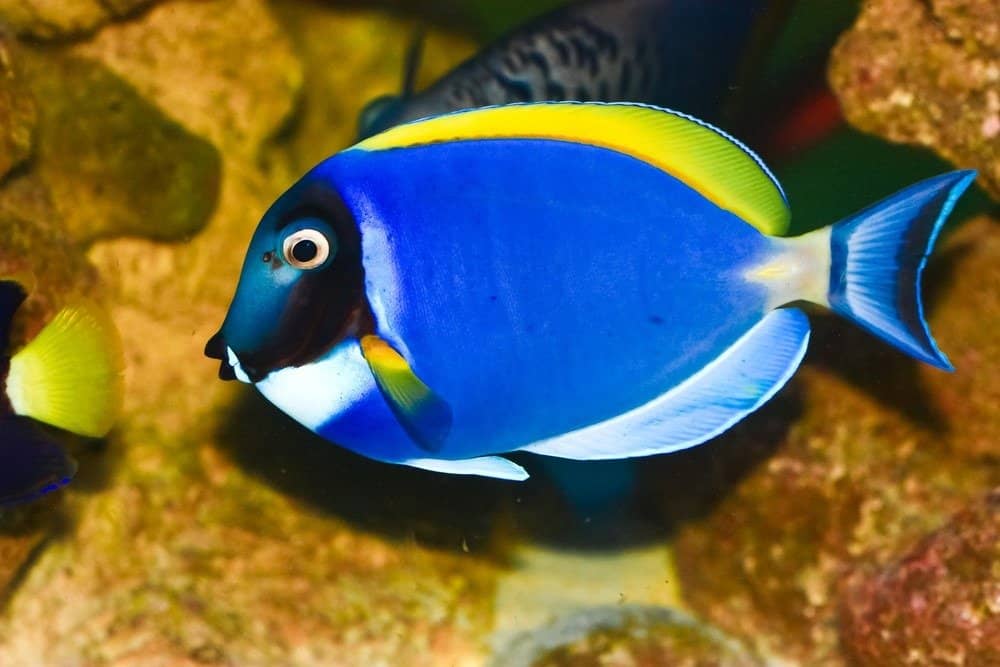
Powder Blue tang

This powder blue tang is representative of the over 80 species of tang fish.

There are over 80 species in the family of Acanthuridae, plus many more extinct types known from the fossil record. Many of them go by the name of surgeonfish, doctorfish, or unicornfish, but there isn’t much to distinguish these types from the true tang.

  • Blue Tang: Also known as the surgeonfish or the hippo tang, and many other names, this species lives in the Indian and Pacific Oceans. It has a remarkably bright blue color with a yellow tail and black markings. In the movie Finding Nemo, the fish called Dory is a blue tang.
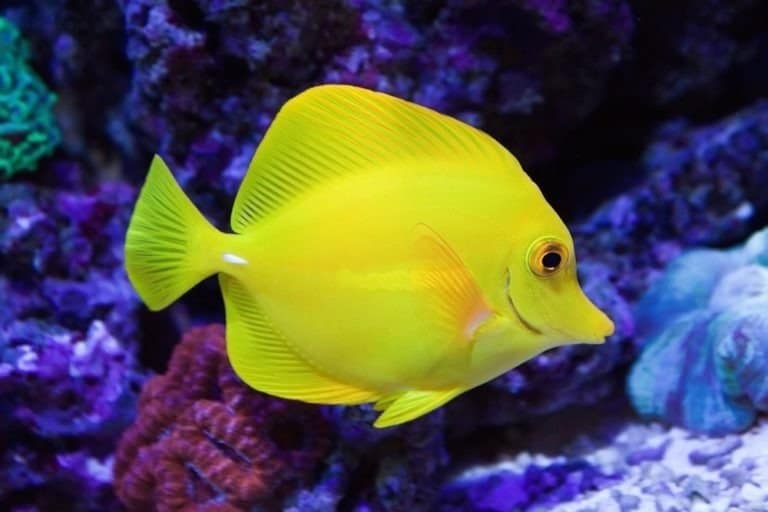
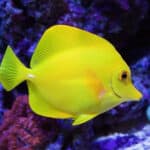
  • Yellow Tang: This species has an all-yellow body and a narrow “nose.” It is one of the most popular aquarium fish in the world.
  • Convict Tang: With its white body (fading to yellow near the back) and black stripes, it’s easy to see how this species got its name.
  • Red Sea Sailfin Tang: The sailfin is aptly named. The highly elevated dorsal and anal fins have the appearance of gigantic sails. The sailfin’s blue body is also covered with dark blue bands and yellow-orange stripes and spots.
  • Clown Surgeonfish: Also known as the lined or striped surgeonfish, the clown surgeonfish has alternating blue and yellow stripes all over its body. The clown surgeonfish has a wide range from East Africa to Hawaii.

Appearance
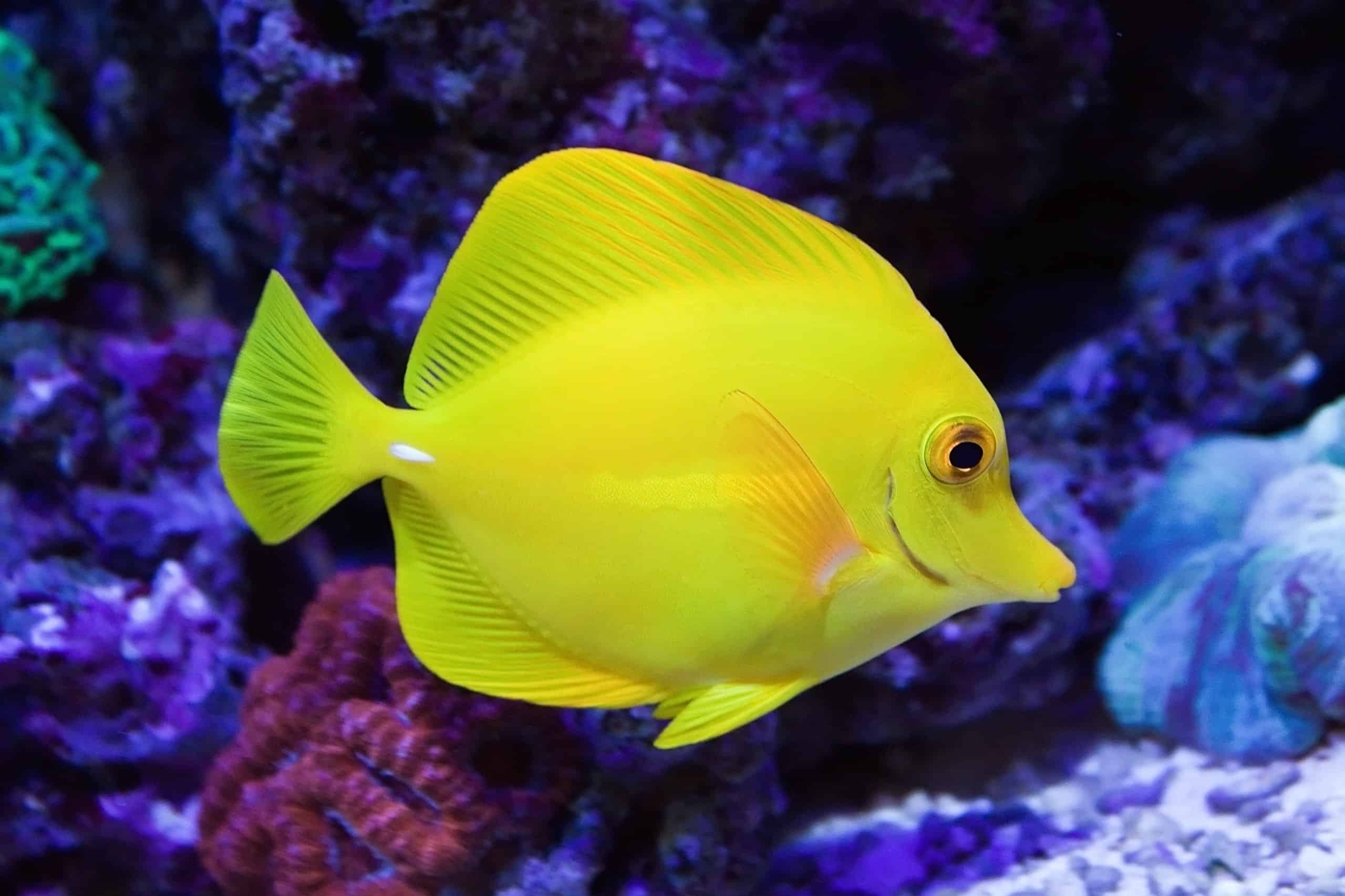
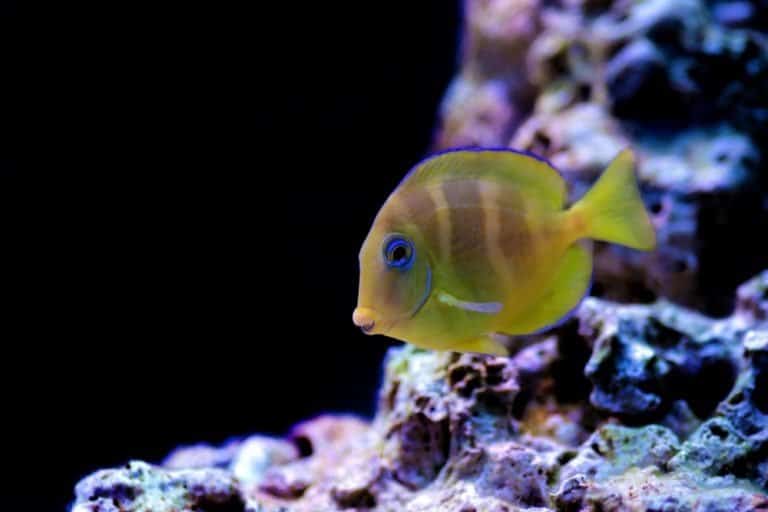
yellow tang

The yellow tang is another example of the bright colors found among the fish family.

The tang is a small, rounded saltwater fish with all manner of bright colors and patterns adorning its body. The sheer diversity across species is truly remarkable — there is almost nothing else like it in the animal kingdom. Many theories have been suggested for why tropical fish are so brightly colored, but it probably has something to do with their coral environment.

In addition to the bright colors, these fish sport a single dorsal fin across the length of their backs and another long anal fin along the stomach. Perhaps the most distinctive physical characteristic is the sharp spine (scalpel) located on either side of the tail, used to protect itself against predators. It also allows the tang to duel other males to establish dominance.

Members of the tang family rarely grow larger than 2 feet (with few exceptions, such as the 3-foot-long whitemargin unicornfish). Most species are less than 10 inches long from head to tail.

Distribution, Population, and Habitat
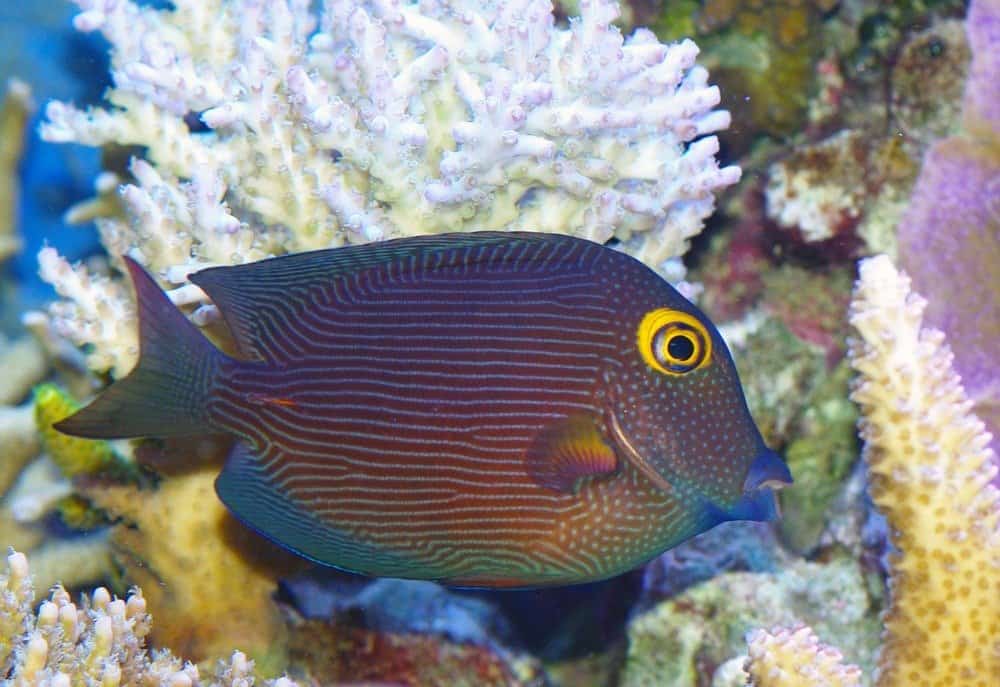
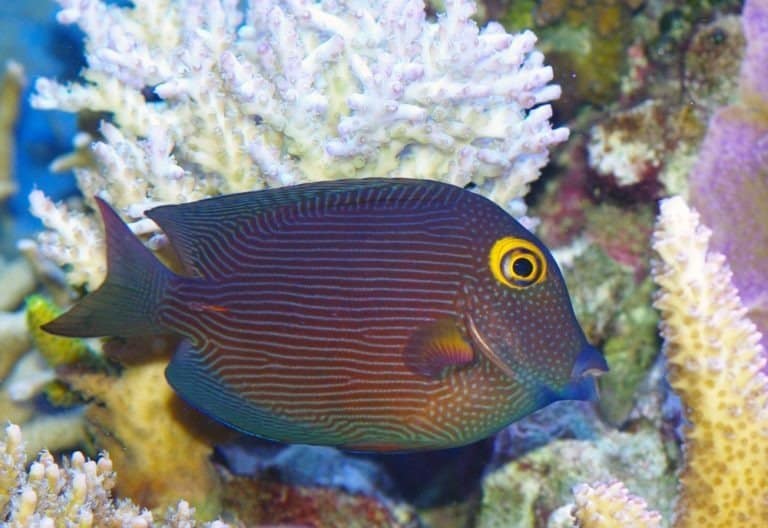
Kole Tang, Spotted surgeonfish

Tangs are endemic to tropical regions in the Indian, Pacific, and Atlantic Oceans as well as the Caribbean Sea.

Most members of the tang family are endemic to the tropical regions in the Indian and Pacific Oceans, as well as the Atlantic Ocean and the Caribbean Sea. The coral reef often provides an oasis for these vulnerable types of fish. When threatened, they can dip into small nooks and crevices in the reefs. These fish are incredibly abundant around the world’s oceans. The IUCN Red List considers many of them to be species of least concern. However, as more coral reefs die off from the effects of climate change, this could put stress on these fish.

Predators and Prey
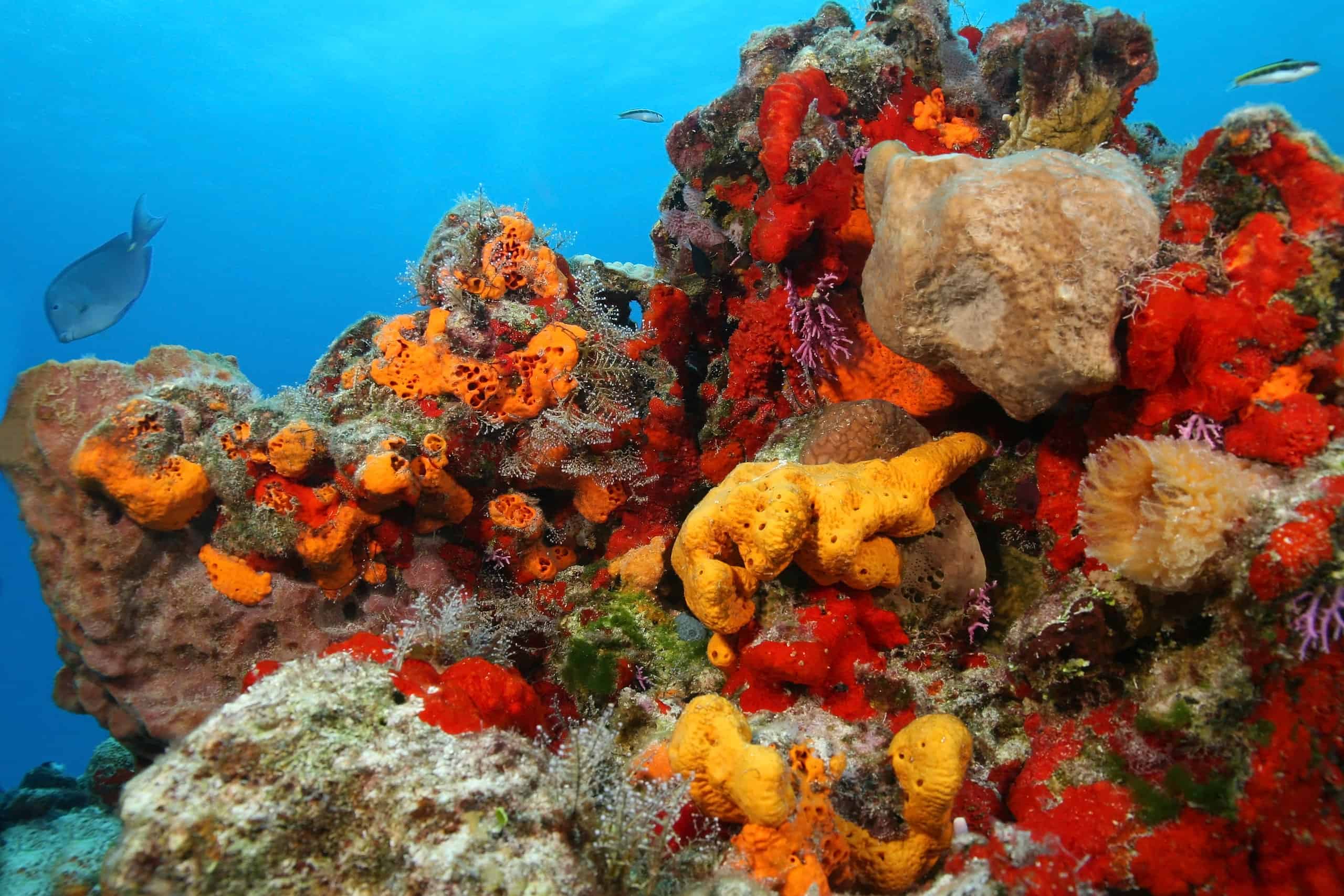
This colorful coral reef is in the Gulf of Mexico near Cozumel.

Tangs are an important intermediary fish in the coral reef food chain.

Tangs are an important intermediary fish in the coral reef food chain. They extract vital nutrients from plant matter and also keep algae levels down, preventing them from suffocating the reefs. They are also an important source of food for secondary consumers in the food chain.

What does the tang eat?

Most species of tang are herbivorous consumers that constantly move along the surface of coral reefs and graze on algae and plankton growing in the shallower waters. Some species supplement this with a little meat.

What eats the tang?

The main predators of most tang are large carnivorous fish such as tuna, barracuda, groupers, and snappers. The sharp scalpels at its tail are its main means of defense against predators.

Reproduction and Lifespan
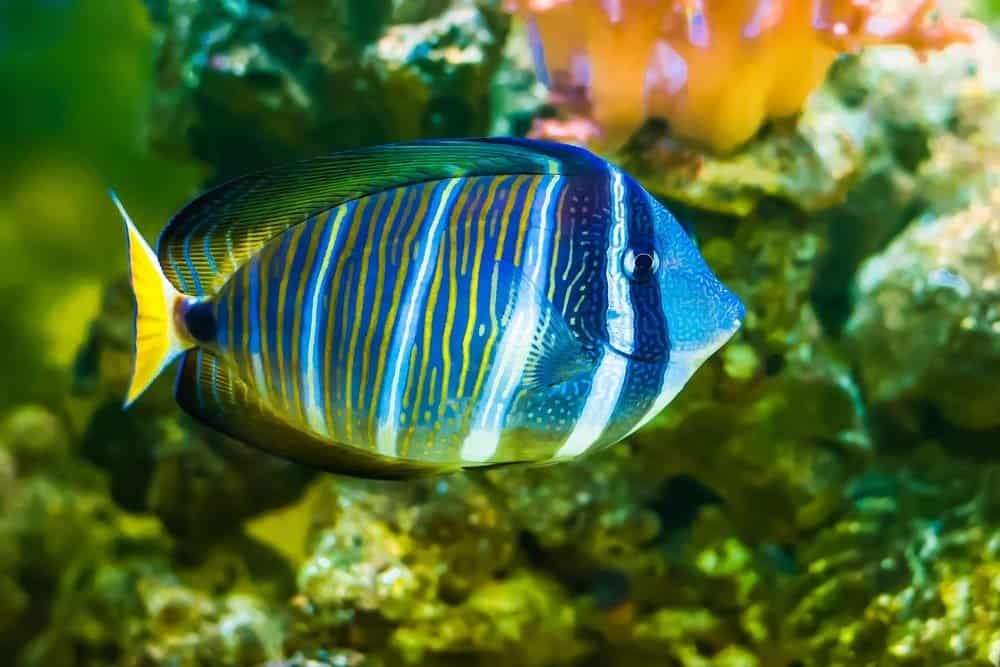
Sailfin Tang fish

It takes up to a year for the juvenile tang to reach sexual maturity, like this adult sailfin tang.

The tang as a family has many different methods of reproduction. Most are broadcast spawners that maximize the chances of fertilization by releasing many thousands of eggs and sperm into the water at the same time, where they mix.

The juveniles usually hatch in a matter of days and sometimes lack even rudimentary eyes, mouths, or a heartbeat. Some species spawn in protective coral or mangrove forests and then move toward the open coral surface as they age. It takes up to a year for the juvenile tang to reach sexual maturity. These are relatively long-living fish that may have a life expectancy of a few decades in the wild.

Fishing and Cooking

The tang is rarely used in human cuisine. The flesh of some species (like the regal blue tang) is poisonous and should be avoided completely. The fish does not produce this toxin itself; instead, it ingests it from another organism and passes it on to whatever eats it. Symptoms of the toxin include diarrhea, low blood pressure, and reduced heart rate. Deaths from ciguatera poisoning are extremely rare, with mortality generally estimated at below 0.5%.

View all 606 animals that start with T

Sources

  1. Britannica / Accessed December 18, 2020
  2. Seaworld Parks & Entertainment / Accessed December 18, 2020
  3. Tropical Fish Magazine / Accessed December 18, 2020
Thank you for reading! Have some feedback for us?


Tang FAQs (Frequently Asked Questions)

As a tropical coral fish, the tang has very specific needs that may make it difficult to keep in captivity. There are a few things to keep in mind. First of all, the tank should have a powerful filtration system. You can combine this with an optional ozone producer or a refugium chemical filtration system to maintain a healthy ecosystem in the tank. Constant water movement is also recommended to simulate the tang’s natural environment. You should always be on the lookout for possible signs of health problems, including spots, labored breathing, lethargy, and loss of appetite. If you follow all of the recommendations, then the tang may even end up outliving many other pets.