



T
Species Profile

Tawny Owl

Strix aluco

The hoot that rules the woods
Koroleva Yana/Shutterstock.com
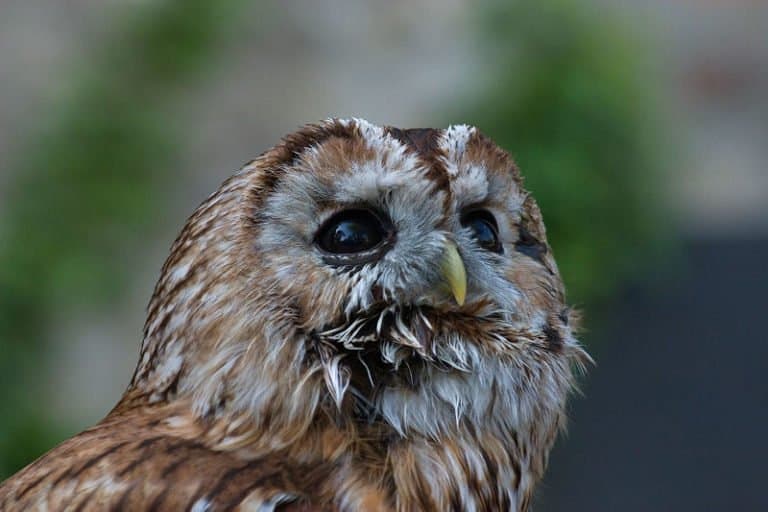
Tawny owl close up

At a Glance

Wild Species
Also Known As Brown Owl, Wood Owl
Diet Carnivore
Activity Nocturnal+
Lifespan 4 years
Weight 0.8 lbs
Status Least Concern
Did You Know?

Size: body length 37-46 cm; wingspan 81-105 cm (standard field/handbook ranges for Strix aluco).

Scientific Classification

A medium-sized woodland owl of the genus Strix, notable for its rounded head (no ear tufts), large dark eyes, and highly variable plumage (often brown/tawny or grey morphs). Primarily nocturnal and strongly territorial; well known for its distinctive hooting call.

Kingdom
Animalia
Phylum
Chordata
Class
Aves
Order
Strigiformes
Family
Strigidae
Genus
Strix
Species
aluco

Distinguishing Features

  • Rounded head with no ear tufts (typical of Strix wood-owls)
  • Large dark eyes; facial disk relatively plain compared with some other owls
  • Plumage highly variable: brown/tawny and grey morphs are common
  • Rich, resonant hooting; pairs may duet in breeding season
  • Often hunts from perches for small mammals, birds, and amphibians

Physical Measurements

Males and females differ in size

Length
1 ft 3 in (1 ft 3 in – 1 ft 4 in)
1 ft 4 in (1 ft 3 in – 1 ft 5 in)
Weight
1 lbs (1 lbs – 1 lbs)
1 lbs (1 lbs – 2 lbs)
Tail Length
6 in (6 in – 7 in)
6 in (6 in – 7 in)
Top Speed
31 mph
flying

Appearance

Primary Colors
Secondary Colors
Skin Type Dense feathered plumage; feathered tarsi with partly bare, scaly toes and dark claws.
Distinctive Features
  • Medium-sized Strix owl: body length 37-43 cm; wingspan 81-96 cm (standard field references).
  • Rounded head with no ear tufts; broad facial disk with subtle concentric patterning.
  • Large, dark brown eyes giving an overall dark-eyed appearance in low light.
  • Plumage polymorphism: common brown/tawny morph and grey morph within Eurasian populations.
  • Bill pale horn to yellowish; strong curved talons adapted for small mammal prey.
  • Typically roosts by day in tree cover; mainly nocturnal and strongly territorial year-round.
  • Characteristic male hoot and female 'ke-wick' calls; vocalizations central to territory defense.
  • Nests in tree cavities, broken trunks, and readily uses nest boxes; also in parks and gardens.
  • Longevity: commonly several years; documented maximum >20 years in the wild in ringing records.
  • Flight rounded-winged and quiet; broad wings and soft-edged feathers for silent flight.

Sexual Dimorphism

Sexes look similar in plumage and coloration, but females average larger and heavier. Males tend to be slightly smaller-bodied with subtly narrower heads/frames; dimorphism is primarily size-based rather than color-based.

  • Slightly smaller overall size and mass on average (sexing often by biometrics).
  • Voice: classic territorial hooting most often associated with males.
  • Larger and heavier on average; may appear broader-bodied in hand.
  • Voice: sharp 'ke-wick' calls commonly attributed to females.

Did You Know?

Size: body length 37-46 cm; wingspan 81-105 cm (standard field/handbook ranges for Strix aluco).

Strong sexual size dimorphism: females are typically heavier-about 0.40-0.80 kg vs males ~0.33-0.59 kg (handbook ranges).

The classic "twit-twoo" is usually a duet: the sharper "ke-wik"/"twit" is typically the female, and the deeper "hoo...hoo"/"twoo" is the male.

Color polymorphism is common: many populations contain both brown ("tawny") and grey morphs, with intermediates-useful camouflage across different woodland types.

Often nests in natural tree cavities but readily uses nest boxes; it does not build a stick nest.

Breeding is early: eggs are incubated ~28-30 days; young typically fledge at ~24-26 days (species-typical published ranges).

Longevity can be high for a wild owl: individuals have been recorded living into their late teens or more; maximum reported lifespan reaches about 25 years (UK species accounts).

Unique Adaptations

  • Rounded head with no ear tufts: an iconic Strix profile that reduces snagging and supports a broad facial disc for sound focusing.
  • Facial disc + offset ear openings: helps pinpoint prey by sound in darkness, including under leaf litter or snow-light cover in northern areas.
  • Silent flight: fringed/softened feather edges and velvety surfaces reduce turbulence noise, improving stealth when striking prey.
  • Large, light-gathering eyes optimized for low light (owls trade some color detail for sensitivity).
  • Powerful, locking grip: tendon mechanisms help maintain a strong hold on prey with minimal muscular effort.
  • Camouflage via polymorphism: brown and grey morphs (plus intermediates) better match different bark/woodland backgrounds across Eurasia.
  • Extreme neck flexibility (owl-typical): allows wide scanning without moving the body much, reducing detection by prey.

Interesting Behaviors

  • Intense territoriality: resident pairs defend all-purpose territories year-round, using persistent hooting and direct attacks on intruders.
  • Call-and-response duets: mates coordinate spacing and pair-bonding with stereotyped vocal exchanges that carry far through forest at night.
  • Sit-and-wait hunting: commonly hunts from a perch, dropping silently onto prey (small mammals dominate, but birds/amphibians are also taken).
  • Cavity nesting and "site fidelity": pairs often reuse the same woodland patch and nesting cavity/box for multiple seasons if undisturbed.
  • Defensive nest behavior: adults can strike humans close to the nest-especially during the chick stage-aiming at the head/face.
  • Crepuscular spillover: although mainly nocturnal, it may begin hunting at dusk and can be active in dull daytime conditions.
  • Food handling: often decapitates or dismembers larger prey and may leave distinctive plucking/feeding remains on favored stumps or logs.

Cultural Significance

Tawny Owl (Strix aluco) is a well-known night voice across Europe, calling in late winter and early spring. In Britain and Ireland it is linked to old woods, churchyards, parks and gardens, and inspired the 'twit-twoo' sound. Its presence shows mature trees used in care of woods and nest-box programs.

Myths & Legends

In British and Irish folk belief, the hoot of the tawny owl (Strix aluco), called a "mopoke", was seen as an omen of death or bad luck, or as a warning call from dark woods.

In rural Britain, Tawny Owl (Strix aluco) night calls were part of weather and season folk belief: long late-winter calling was a sign hard weather or change was coming, linked to early breeding calls.

Welsh medieval legend tells of "Flower-Face," created from flowers and transformed into an owl-an outcast of daylight birds-linking owls to night, exile, and haunting calls.

Roman-era European superstition cast owls as portents when they appeared or called in unusual places (towns, rooftops), a motif that persisted in later European storytelling where the owl's night voice signaled impending news or fate.

In English-language storytelling and stage tradition, the nocturnal "twit-twoo" became a shorthand for night in the woods; the tawny owl's real duet underlies this cultural sound-symbol used in plays, poems, and later film soundscapes.

Conservation Status

LC Least Concern

Widespread and abundant in the wild.

Population Stable

Protected Under

  • EU Birds Directive (Directive 2009/147/EC) - general protection for wild birds across EU member states
  • Bern Convention on the Conservation of European Wildlife and Natural Habitats - Appendix II (Strictly Protected Fauna Species)
  • United Kingdom: Wildlife and Countryside Act 1981 (as amended) - protects wild birds, nests, and eggs

Life Cycle

Birth 3 chicks
Lifespan 4 years

Lifespan

In the Wild
0.1–18.83 years
In Captivity
0.1–27 years

Reproduction

Mating System Monogamy
Social Structure Socially Monogamous
Breeding Pattern Long Term
Fertilization Internal Fertilization
Birth Type Internal_fertilization

Tawny Owls form strongly territorial male-female pairs and typically breed as socially monogamous partners across multiple seasons, often reusing the same territory and nest site. Reproduction involves internal fertilization; the female incubates while the male provides most prey.

Behavior & Ecology

Social Pair Group: 2
Activity Nocturnal, Crepuscular
Diet Carnivore Small rodents-especially voles (Myodes/Microtus) and wood mice (Apodemus sylvaticus); classic pellet-based studies in UK woodlands report small mammals typically forming the majority of prey items (often ~70-90% by number in many habitats/years; e.g., Southern 1954; Petty 1999; Cramp (ed.) 1985).

Temperament

Strongly territorial year-round; territorial calling and boundary defense intensify before and during breeding.
Typically socially monogamous with long-term pair bonds; high mate tolerance within territories.
Aggressive nest/roost defense toward intruders (including humans) at close range; threat postures and strikes occur.
Across the species' range, stable territorial pairs are typical; urban or park birds often tolerate humans more than forest birds.
Juveniles are solitary after dispersal; post-fledging dependence commonly lasts ~6-10 weeks before separation (Cramp 1985).
Longevity: maximum recorded in the wild 18 years 1 month (EURING longevity record for Strix aluco); most individuals die much earlier due to mortality in first years.

Communication

Male territorial hoot Classic two-part hooting often rendered as "twit-twoo"
Female "kewick" contact call (sharp, repeated), often during pair coordination.
Alarm calls: harsh barking/screeching and hissing at nest or roost when disturbed.
Juvenile begging: high-pitched, persistent food-begging squeals during post-fledging dependence.
Antiphonal calling/duetting between pair members to advertise occupancy and maintain pair contact.
Threat displays: body upright, feathers fluffed, wings partially spread, tail fanned toward intruder.
Bill snapping and foot strikes in close defense, especially near nest cavities.
Roost-site fidelity and scent-free spatial signaling via repeated use of prominent calling perches.

Habitat

Deciduous Forest Coniferous Forest Forest Woodland Plantation Agricultural/Farmland Suburban Urban +2
Biomes:
Temperate Forest Mediterranean Boreal Forest (Taiga) Temperate Rainforest
Terrain:
Mountainous Hilly Plateau Plains Valley Coastal Island Riverine +2
Elevation: Up to 7874 ft

Ecological Role

Nocturnal woodland mesopredator and key regulator of small-vertebrate and large-invertebrate populations within temperate forest/woodland-edge ecosystems.

Rodent population suppression (voles/mice), indirectly influencing tree seedling survival and reducing crop/forestry pest pressure near woodland edges Trophic structuring: predation on small birds, amphibians, reptiles, and large invertebrates contributes to community balance Bioindicator value: pellet contents reflect local small-mammal communities and habitat condition, aiding ecological monitoring and biodiversity assessment

Diet Details

Main Prey:
Small mammals Rats and other small rodents Small birds Bats Amphibians Reptiles Large terrestrial invertebrates Earthworms +2

Human Interaction

Domestication Status

Wild

Strix aluco (Tawny Owl) is a wild, non-domesticated bird with no history of selective breeding for tameness or pets. Humans help by keeping woods and hedges, putting up nest boxes, rescuing and rehabilitating injured birds, and studying or banding them. Many die from road crashes and poisoning; captive use is regulated for education and research.

Danger Level

Low
  • Defensive strikes with talons/beak if handled or if approached at nest/roost (can cause lacerations/eye injury risk at close range).
  • Occasional dive-bombing or aggressive behavior near nesting territories during breeding season (territorial, strongly site-attached).
  • Zoonotic risk is generally low but possible with improper handling (e.g., Salmonella spp. exposure from feces; avian influenza is a broader wild-bird risk).
  • Indirect risks from human-wildlife conflict mitigation (e.g., secondary poisoning concerns relate more to owl health than direct human harm).

As a Pet

Not Suitable as Pet

Legality: Tawny Owl (Strix aluco) is usually not legal to keep as a pet. Many places ban taking them from the wild and need permits, raptor licenses, safe housing, records, and proof they came from legal sources.

Care Level: Expert Only

Purchase Cost: Up to $2,000
Lifetime Cost: $15,000 - $45,000

Economic Value

Uses:
Ecosystem services (predation on rodents and other small mammals) Wildlife tourism and recreation (birdwatching, nocturnal ecology walks, sound-based surveys) Education and research (licensed captive birds, museum specimens, telemetry studies) Cultural value (folklore, literature; iconic nocturnal call recognition)
Products:
  • No conventional commercial products are ethically/legal commonly derived from this protected wild species; economic value is primarily non-consumptive (services, tourism, education).

Relationships

Related Species 7

Barred Owl
Barred Owl Strix varia Shared Genus
Great Grey Owl Strix nebulosa Shared Genus
Ural Owl
Ural Owl Strix uralensis Shared Genus
Spotted Owl Strix occidentalis Shared Genus
Brown Wood Owl Strix leptogrammica Shared Genus
Long-eared Owl
Long-eared Owl Asio otus Shared Family
Little Owl Athene noctua Shared Family

Quick Take

  • Achieving the highest injury rate against humans in Europe is a territorial requirement.
  • The tubular shape of their eyes creates a monocular vision constraint during hunting.
  • Surprisingly, hearing is more essential for hunting than better vision.
  • Owlets must survive a territory-scouting phase at 3 months old to prevent starvation.

A species of wood owl, tawny owls are highly territorial and about the size of a wood pigeon. These medium-sized owls live across Europe and in some parts of Asia, but you will mainly find them in wooded places in Europe. In fact, these owls are one of the most common owls that live in Europe, and they are the most widespread owl species in the United Kingdom.

A detailed green and white infographic explaining the biology and behavior of the Tawny Owl, featuring diagrams of its tubular eyes and ear structure.
Behind the iconic twit-twoo call lies a fiercely territorial predator that relies on sound more than sight and won't hesitate to strike human intruders. © A-Z Animals

Incredible Tawny Owl Facts

  • Tawny owls are also commonly known as brown owls.
  • Tawny owls are sometimes confused with an owl-like bird called the tawny frogmouth.
  • The classic call of “twit twoo” is attributed to this owl. However, this is a misinterpretation of the sound of a male and a female’s sounds overlapping.

History and Evolution

Like most owls, the tawny owl is nocturnal and has developed many features to help them hunt at night.

One example is their adaptation of their ears. They are asymmetrical and angled differently. The right ear is also larger than the left. These features help these owls pinpoint movement in the brush on the forest floor. They actually rely more on their hearing than their sight for hunting.

The tawny owls’ eyes are also adapted for their hunting, although they are not much more sensitive to low-light situations than our own. Their eyes are somewhat tubular in shape and located on the front of their face, which provides a higher percentage of their field of vision being binocular (unlike some other birds with a more monocular percentage).

Classification and Scientific Name

The scientific name of the tawny owl is Strix aluco. Strix is a Greek derivative meaning “owl.” Aluco, however, comes from the Italian words allocco. Allocco means tawny owl from the Latin ulucus (“screech-owl”). They are also referred to as brown owls.

11 Types of Tawny Owls

  • Strix aluco aluco: This is a nominal species of Tawny Owl, and it can be found in Europe, from the Mediterranean and the Black Sea up to Scandinavia.
  • Strix aluco biddulphi: This subspecies is known as Scully’s Wood Owl and lives in Pakistan and also India.
  • Strix aluco harmsi: The Common Night Owl, this bird can be found in Turkmenistan.
  • Strix aluco sanctinicolai: The Zagros Tawny Owl lives in Iran and Iraq and hybridizes with the Common Tawny Owl.
  • Strix aluco Siberiae: The Siberian Night Owl, as you might guess, has its territory in western Siberia and middle Russia.
  • Strix aluco sylvatica: The Common Tawny Owl can be found in Great Britain and most of western Europe.
  • Strix aluco willkonski: The Caucasian Night Owl’s habitat stretches from northern Iran to Palestine.
  • Strix aluco ma: The Korean Tawny Owl lives in Korea, of course, and also parts of China.
  • Strix aluco mauritanica: The North-west African Tawny Owl dwells near Tunisia, Mauritania, and Morocco to surrounding areas of northwestern Africa.
  • Strix aluco yamadae: This tawny owl can be found in Taiwan.
  • Strix aluco nivicola: This subspecies has its territory ranging from Nepal to southeast China, including Burma and Thailand.
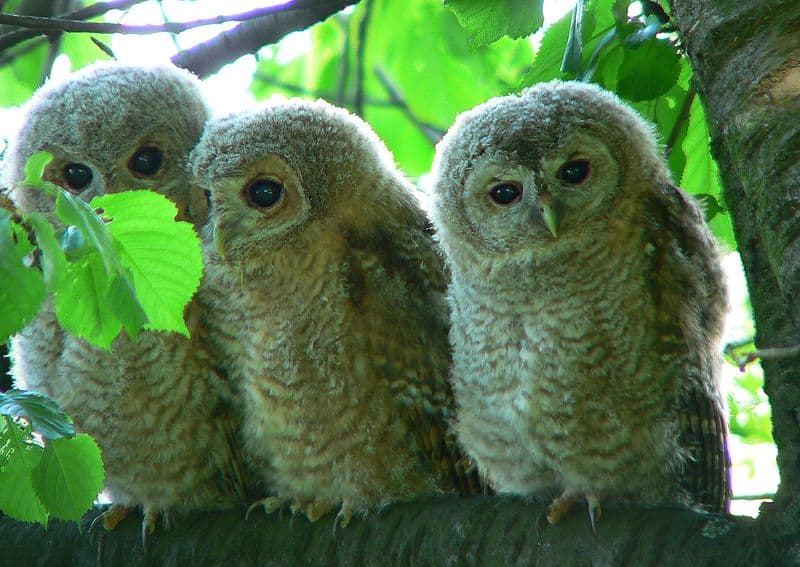
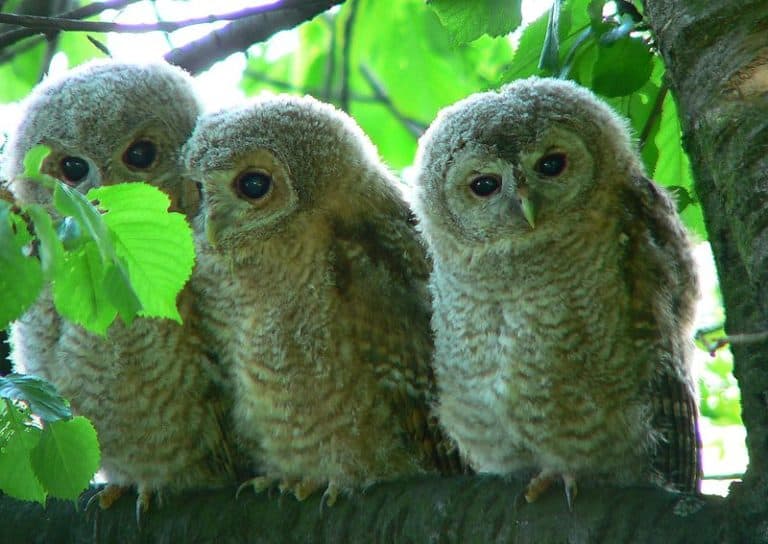
Three tawny owls sitting on branch

Worldwide, the population of these owls extends from the United Kingdom throughout Europe and eastwards to Russia.

Appearance

Tawny owls are considered robust owls, measuring up to 16.9 inches tall and having wingspans as long as 39.4 inches. They are stockier than other similar species of owl, including eagle and Ural owls. On average, these owls weigh around 1lb. You can recognize it from its rounded head and body and the ring of darker feathers around its eyes. They are seen in the wild in brown, grey, or reddish-brown colors. All colors of tawny owls have paler underparts with dark streaks.

Females are, on average, 5% longer and more than 25% heavier than males. The northern subspecies average 10% longer and 40% heavier than other subspecies.
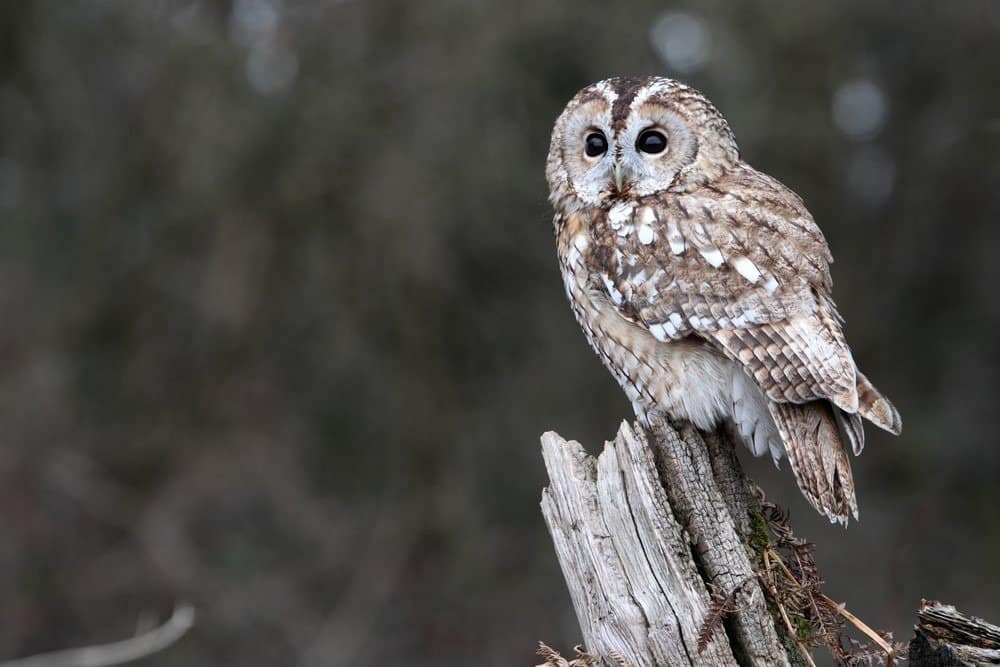
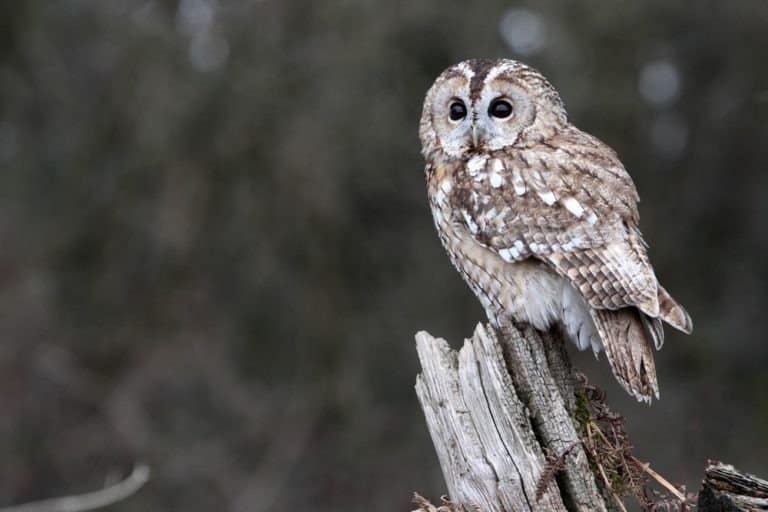
Tawny owl, single bird on stump

Tawny owls have rounded heads and bodies, and they have a ring of darker feathers around their eyes.

Behavior

These owls are nocturnal birds of prey. Typically, this means that they can be found asleep in their tree hole nests during the daylight hours. During the early spring breeding season, however, males might be seen hunting during the day to collect food for their mates.

These agile owls are extremely vocal during autumn, winter, and early spring. During the night, they can often be heard making hooting and screeching noises. These various calls allow them to mark their territory, communicate with other owls, and help attract a mate. When defending their nests, they can be very aggressive. They cause more injuries to humans than any other bird in Europe. Tawny owls do not live with others unless they have a mate or owlets.
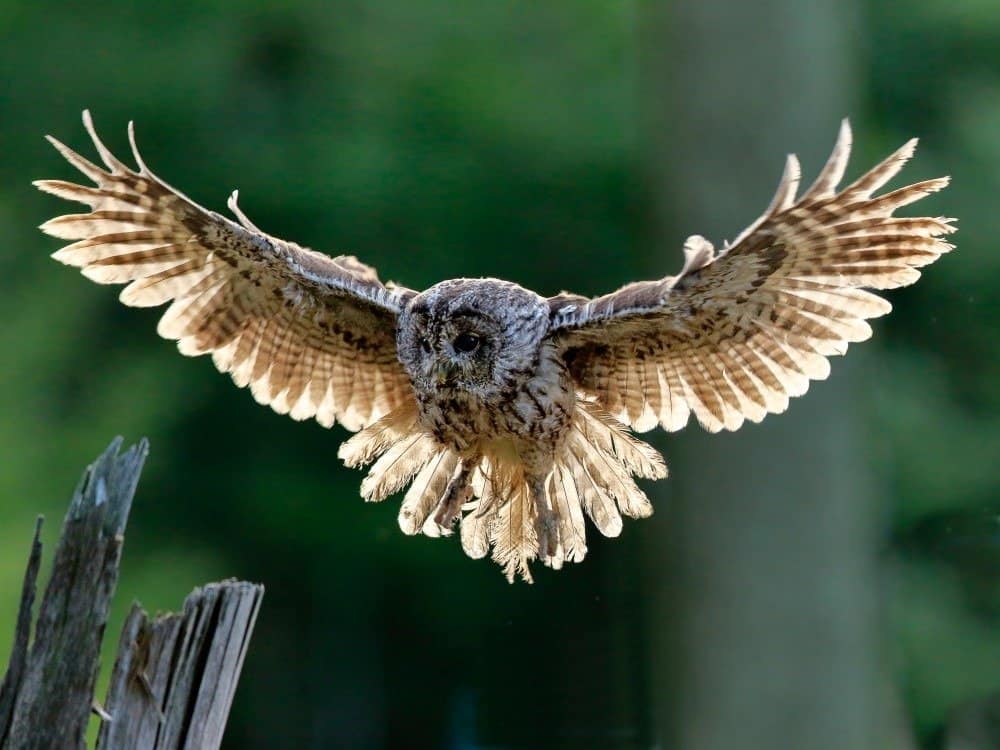
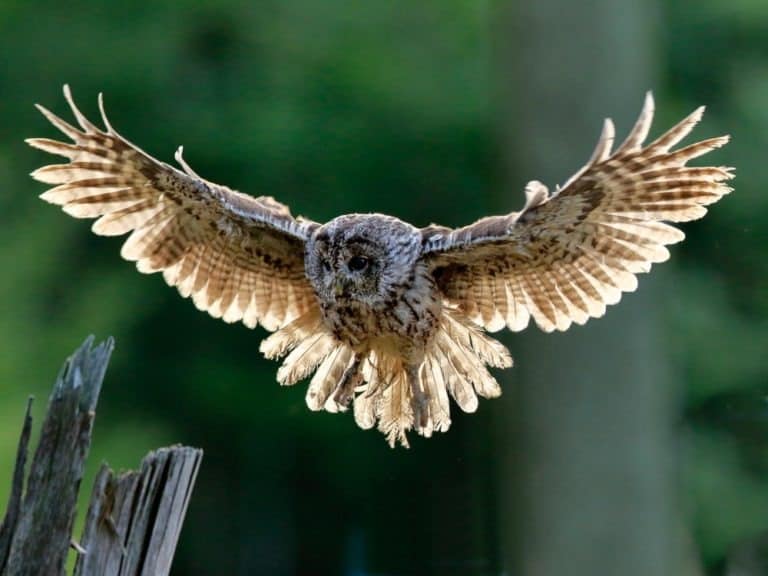
Beautiful landing Tawny Owl in the backlight, feathers of wide-spread wings and tail illuminated by the morning sunshine.

Tawny owls can be very aggressive when defending their nests.

Habitat

Tawny owls are considered resident birds across their large geographical range of 3.8 million square miles. The world’s wild population of these owls extends from the United Kingdom eastward into western Siberia. Therefore, although these owls are confused with tawny frogmouths, they do not even live on the same continent as the Australian bird. This means they do not migrate outside of their territories. When fledglings leave their parents’ nest, they do not travel very far to find their own independent territory.

These owls make their homes in dense forests and woodland. These covered landscapes allow them to rest undisturbed during the day. They are mainly found in deciduous and mixed forests and like to be near water. Green spaces, like cemeteries and parks, in urban areas, have allowed their habitat to expand into places like central London. They also prefer lowlands, especially in colder climates.

They are well-adapted to wooded areas, thanks to superior vision and hearing. Because they are nocturnal, the evolution of tawny owls has given them front-facing eyes for better binocular vision. Their night vision is significantly better than that of humans, allowing them to see well in low-light conditions. Evolution has also given them uniquely shaped ear openings to improve directional hearing.
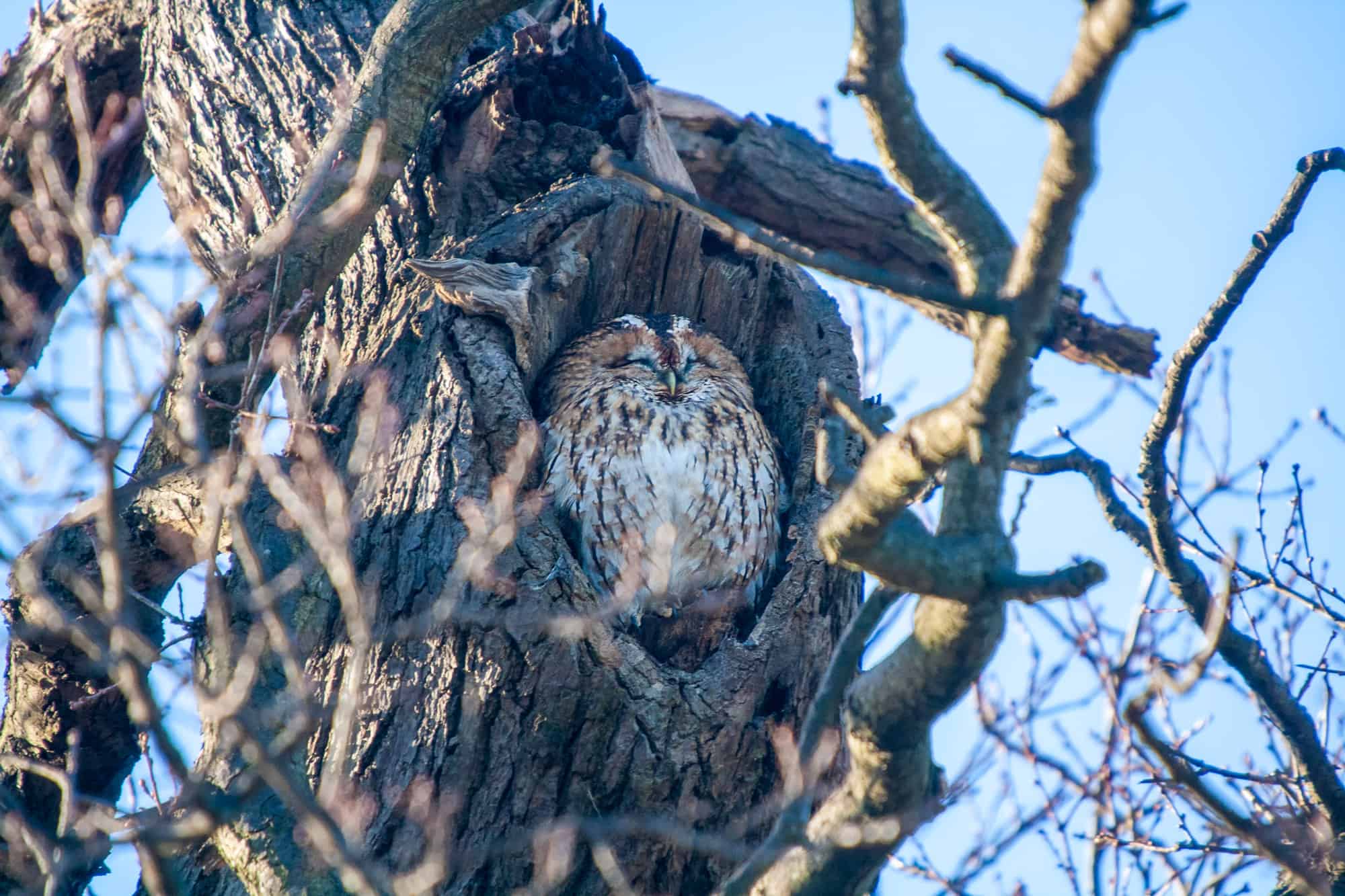
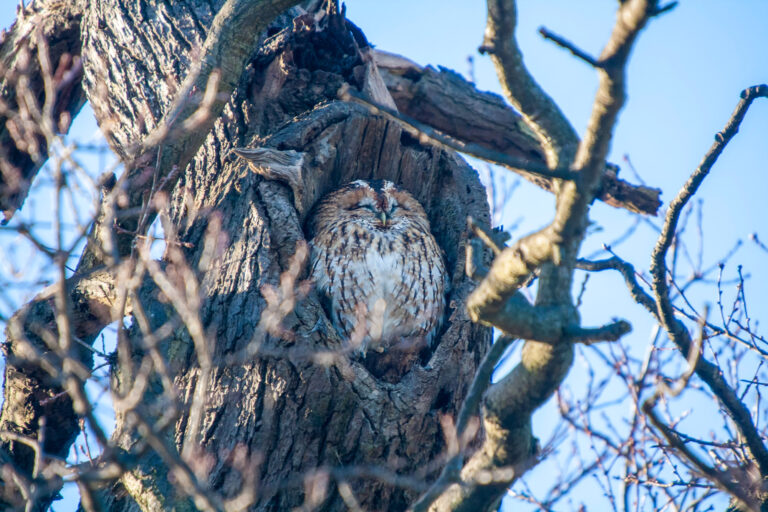
Tawny Owl in tree hole

Tawny owls make their homes in dense forests and woodland.

Diet

Because tawny owls are nocturnal, they can use the advantage of incredible hearing and night vision to catch their prey swiftly. Their flight is almost completely without sound, which makes it easy for them to glide down to their victims. These owls prey on small rodents such as voles and mice, and also beetles, frogs, and fish. In the same way as other species of owl, they swallow their prey whole. After a few hours, they will regurgitate anything that is indigestible. These undigestible parts take the form of medium-sized, grey pellets consisting of fur and tiny bones.

Tawny owls are also predators of other, less-aggressive woodland owls. Little owls and long-eared owls find it hard to coexist with them for this reason.

Predators and Threats

Tawny owls are relatively small birds compared to other birds of prey. Their smaller size makes them a more obvious target for several natural predators within their environment. Predators of these owls include larger birds of prey such as hawks, eagles, buzzards, and even larger species of owls. Eagle owls and northern goshawks are the birds of prey of most concern. Other animals might be a threat to them, in particular their eggs and chicks, including dogs, cats, and foxes. Pine martens have also been known to raid their nests for eggs.
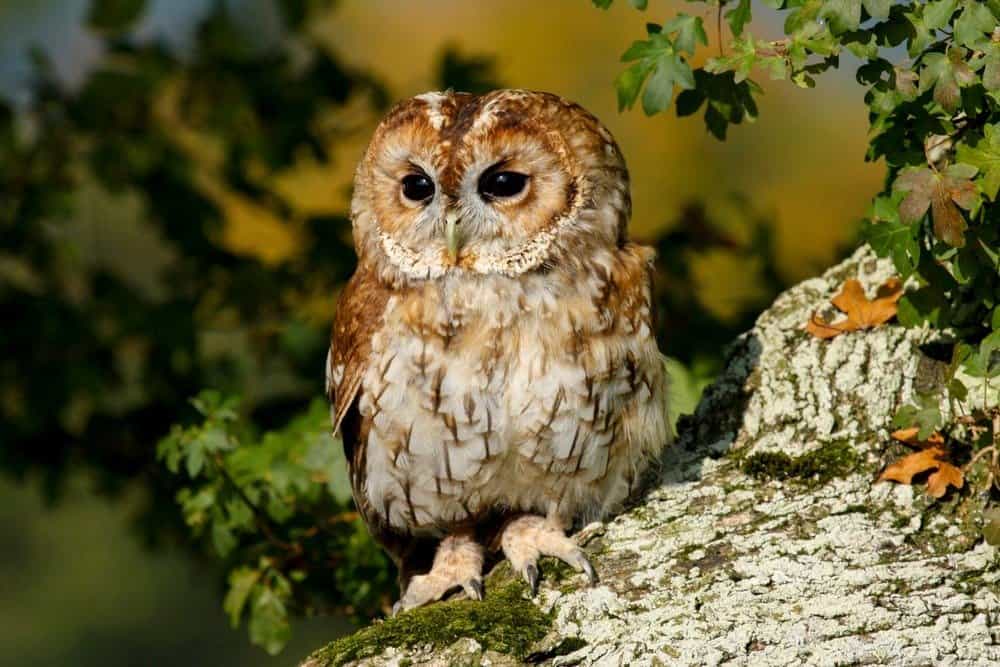
Tawny owl, in the British countryside, UK

The small size of tawny owls makes them an obvious target for several natural predators within their environment.

Reproduction, Babies, and Lifespan

Around the age of one, these owls begin to pair off. They are known to mate for life, but this is not universal. In fact, some males have been recorded as polygamous. Most tawny owls establish nests in tree holes, but may also readily use old European Magpie nests, holes in buildings, and manmade nest boxes.

Anywhere from 3 to 6 eggs are laid by a female owl in early spring, typically from March to early April. A female will spend about one month incubating her eggs while her mate brings her food. A mated pair will raise their chicks until they are around just 2 months old. Evidence shows, however, that these owls might look after their chicks for as long as 3 months of age.

Wild tawny owls generally live between 4 and 6 years, depending on different factors. The oldest recorded owl was a captive bird that lived in the UK for 27 years. In the wild, the oldest known tawny owl lived 18 years. Besides becoming victims of stronger birds of prey, there are a few things that shorten their lifespan. Young owls recently removed from their parent’s nest often starve while trying to establish a territory of their own. This is very common with young owls that refuse to move out of the parental territory. Otherwise, they die in accidents related to vehicles, trains, and wires.
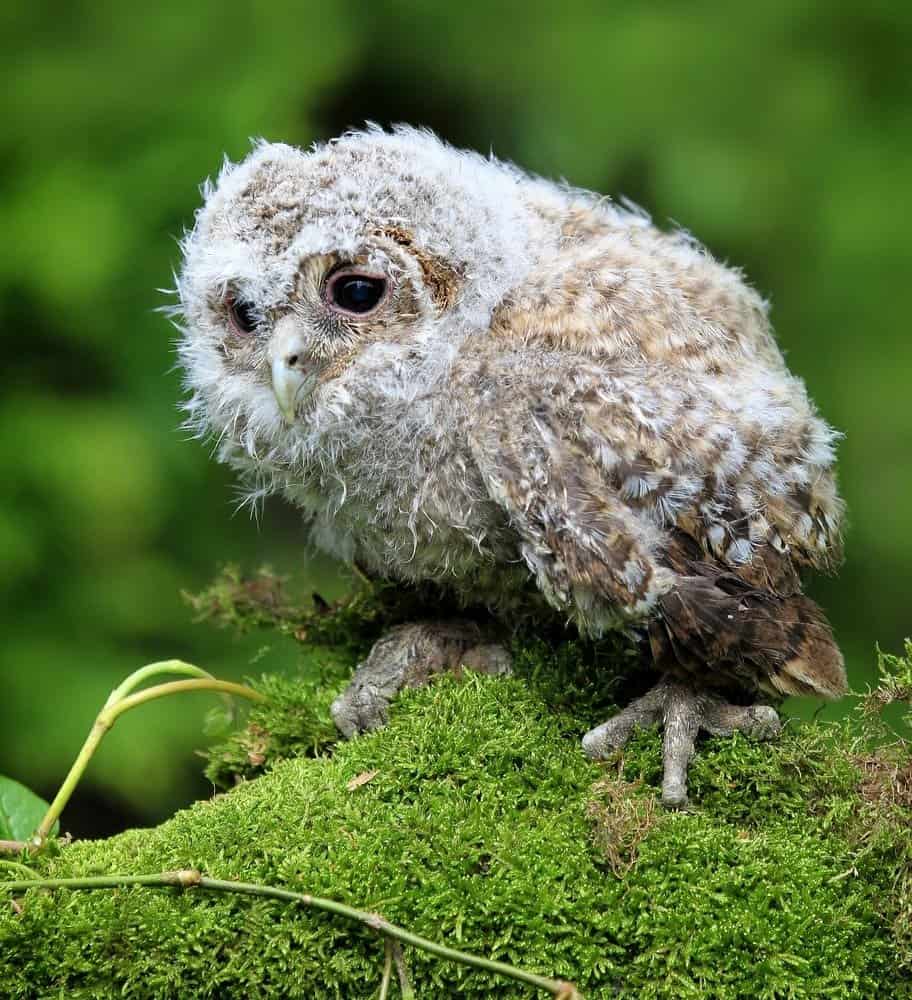
Tawny Owl Chick or Owlet sat on moss and ivy covered branch

Young tawny owls recently removed from their parents’ nest often starve while trying to establish a territory of their own.

Population

Worldwide, the population of these owls extends from the United Kingdom throughout Europe and eastwards to Iran. There are tawny owls as far east as western Siberia, Iran, and parts of Central Asia such as Tajikistan. In the United Kingdom, they are absent from the islands, as well as Ireland. There is a bit of lore or myth that these owls do not like to make short trips over the sea, which could explain this distribution.

Just in the continent of Europe, there are an estimated 1,260,000 to 1,870,000 of these owls. Their population has not been regularly recorded over the years, but evidence points to an overall increase.

View all 606 animals that start with T

Sources

  1. David Burnie, Dorling Kindersley Animal, The Definitive Visual Guide To The World's Wildlife / Accessed November 10, 2008
  2. Tom Jackson, Lorenz Books The World Encyclopedia Of Animals / Accessed November 10, 2008
  3. David Burnie, Kingfisher The Kingfisher Animal Encyclopedia / Accessed November 10, 2008
  4. Richard Mackay, University of California Press The Atlas Of Endangered Species / Accessed November 10, 2008
  5. David Burnie, Dorling Kindersley Illustrated Encyclopedia Of Animals / Accessed November 10, 2008
  6. Dorling Kindersley Dorling Kindersley Encyclopedia Of Animals / Accessed November 10, 2008
  7. Christopher Perrins, Oxford University Press The Encyclopedia Of Birds / Accessed November 10, 2008
  8. The Barn Owl Trust / Accessed October 23, 2020
  9. RSPB / Accessed October 23, 2020
  10. BBC Wildlife / Accessed October 23, 2020
Heather Ross

About the Author

Heather Ross

Heather Ross is a secondary English teacher and mother of 2 humans, 2 tuxedo cats, and a golden doodle. In between taking the kids to soccer practice and grading papers, she enjoys reading and writing about all the animals!

Thank you for reading! Have some feedback for us?


Tawny Owl FAQs (Frequently Asked Questions)

A tawny owl is a species of wood owl that is very common in the UK and throughout the continent of Europe. Tawny owls are known for their very distinct call that was once immortalized by a line in a Shakespeare play.