
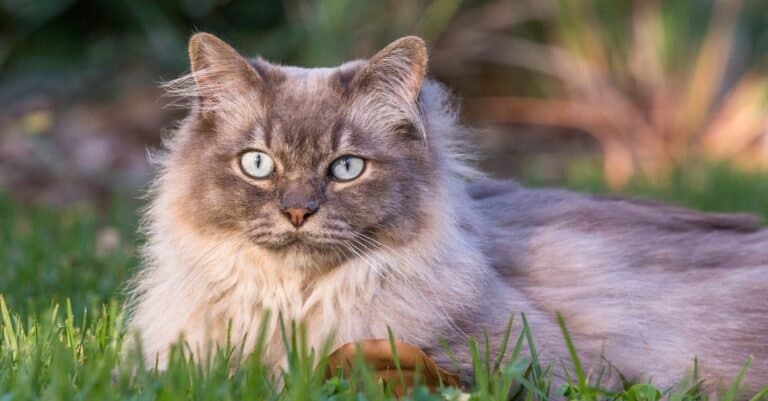


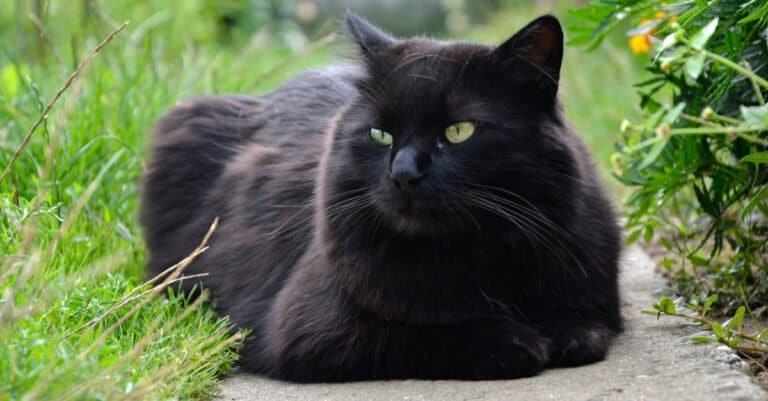












The Cantilly-Tiffany is an attractive medium-sized cat with no extreme features. It sports a broad, wedge-shaped head, mid-sized ears with fur protruding from them, and a medium-length soft, silky coat that has the appearance of being long-haired. Its eyes are a blazing gold color. This breed originated in North America. Sadly, with the destruction by fire in 2012 of the last known cattery to breed Tiffany cats, the Amorino Cattery, and the passing or neutering of the last known Chantilly-Tiffany cats by 2015, the breed is now considered extinct.
Breed History
The Chantilly-Tiffany, also known as just the Tiffany for short, is a rare semi-longhaired cat breed with a long and tangled history. It first originated in the late 1960s, when professional breeder Jennie Robinson of New York bred a pair of long-haired chocolate-colored cats of unknown origin called Thomas and Shirley. Her original name of Foreign Longhair, didn’t exactly stick, so after a new breeder by the name of Sigyn Lund took over responsibility for the breed in the 1970s, it was renamed to the more appealing Tiffany. Foreign Longhair quickly fell out of use.
There is a common misconception that the Tiffany was a mix between a Burmese and a Persian or Himalayan cat. The mistake showed up in registries and published books from that time. While the cat’s new breeder, Sigyn Lund, was indeed an expert in the Burmese, there is no evidence that the Tiffany has any Burmese heritage at all. At the same time, this breed would receive yet another rebranding. In the 1980s, when a new breeding program began in Canada, the name was changed to Tiffany-Chantilly or just the Chantilly, and the number of available colors expanded greatly. This did nothing to dispel much of the confusion surrounding this breed.
Today, these cats are extremely rare, and although various breeders may claim to carry the Tiffany, no breed registry currently recognizes them, which makes it difficult to organize a breeding program. If you spot someone selling a purebred Tiffany, then you should be cautious. Do your research and ask the owner about where their cats originated from. This breed is often mistaken for other dark-colored long-haired breeds. It also should not be mixed up with the Tiffanie, a long-haired variant of Asian cats.
Traits: What to Know before You Buy
- The Tiffany is a friendly and people-oriented cat. It can form a surprisingly strong bond with its owner.
- The Tiffany generally gets along very well with other pets, both cats and dogs. But you should always keep in mind that animal relationships ultimately come down to the pet’s personality. Some individuals may just be poorly suited for each other, no matter how friendly the breeds.
- The Tiffany will need daily grooming sessions to keep the coat looking healthy and prevent matting. This should be combined with regular ear checks, nail trimmings, and teeth brushing with an appropriate, vet-approved paste.
- The Tiffany is long sought after for their rarity. Their mystique is bolstered by the misconceptions that surround them. Potential owners should be skeptical of breeders or sellers who claim to have a purebred Tiffany.
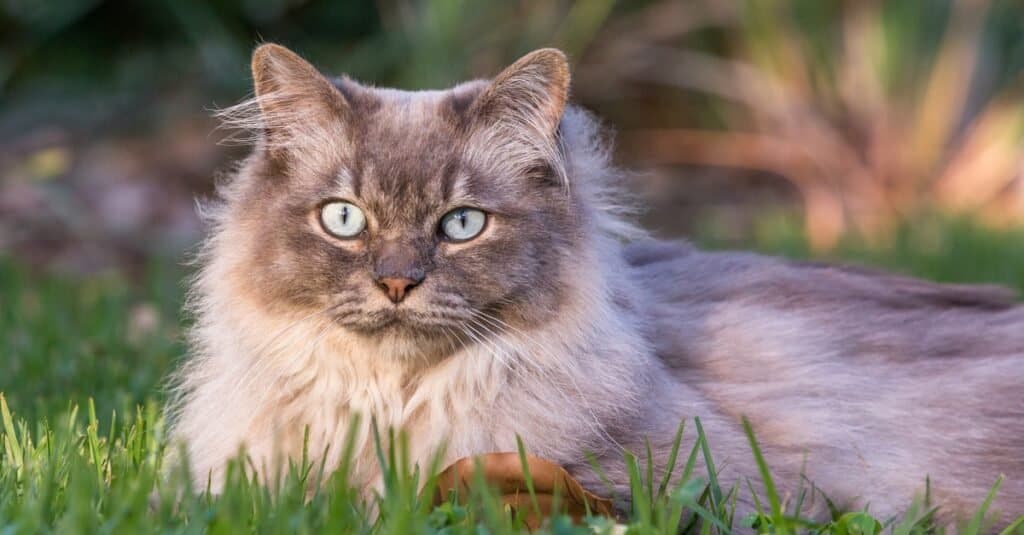
The Tiffany will need daily grooming sessions to keep the coat looking healthy and prevent matting.
©Chris de Blank/Shutterstock.com
Personality
The Tiffany is a very friendly, playful, and affectionate cat breed that should get along with just about all members of the family, including children and adults. Don’t be surprised if it follows you from room to room, meowing at you with its soothing and pleasant voice. This cat has a very strong attachment to its owner.
The downside, however, is that the cat suffers from separation anxiety when you are gone. If you plan to be away from home for long periods of time, then you might want to provide the cat with plenty of toys and games to interact with – or have someone check in on your cat throughout the day. This is another reason why it’s a good idea to have family members around the home to take care of it at all times.
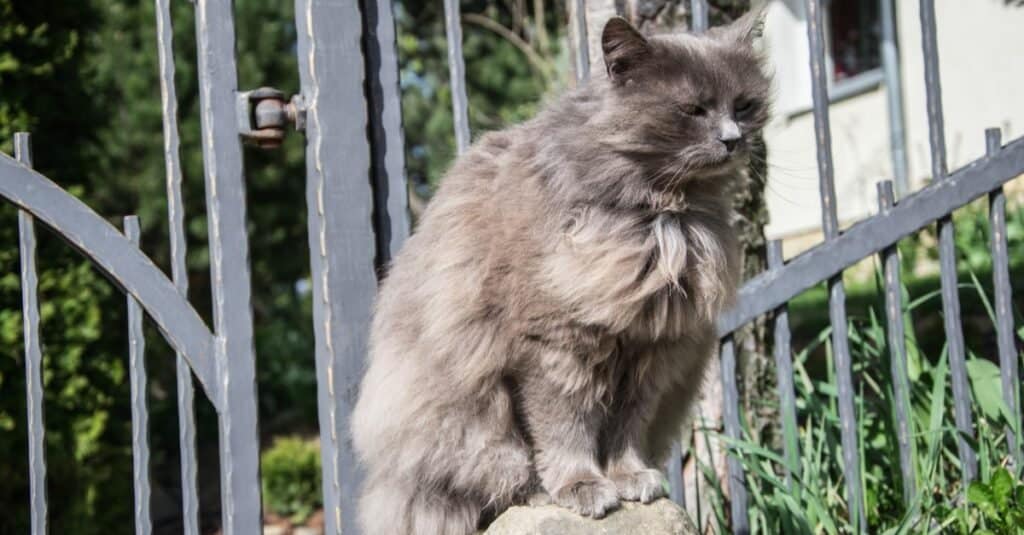
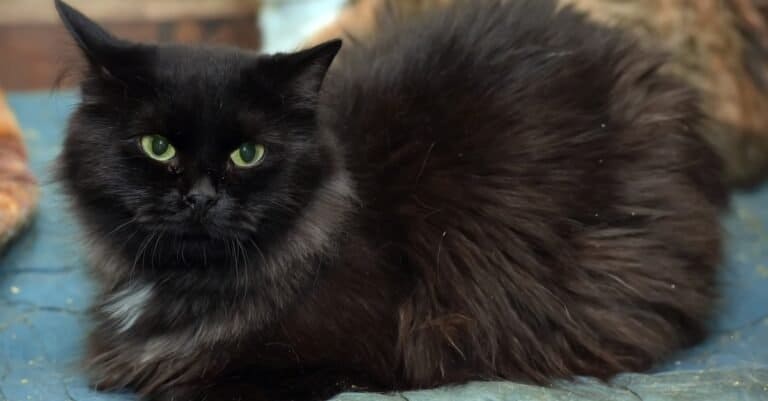
The Tiffany is a very friendly, playful, and affectionate cat breed that gets along well with adults and children.
©Lukas Beno/Shutterstock.com
Size and Weight
The Tiffany is a medium-sized cat that weighs about 6 to 12 pounds, though some individuals may exceed this. Males weigh slightly more than females on average, but they are otherwise very similar.
Price
The price of a new Tiffany will be somewhere in the range of $300 and $1,000. As mentioned previously, the Tiffany is extremely rare and difficult to find. Because there are no recognized breeders, it may even be functionally extinct. So prospective owners should be cautious about breeders who claim they carry the Tiffany. Assuming you can find one at all, the Tiffany will take time and effort to track it down, since they are not listed on any breed registry. Do not trust random breeders when they claim their cats are a Tiffany unless they can provide solid evidence.
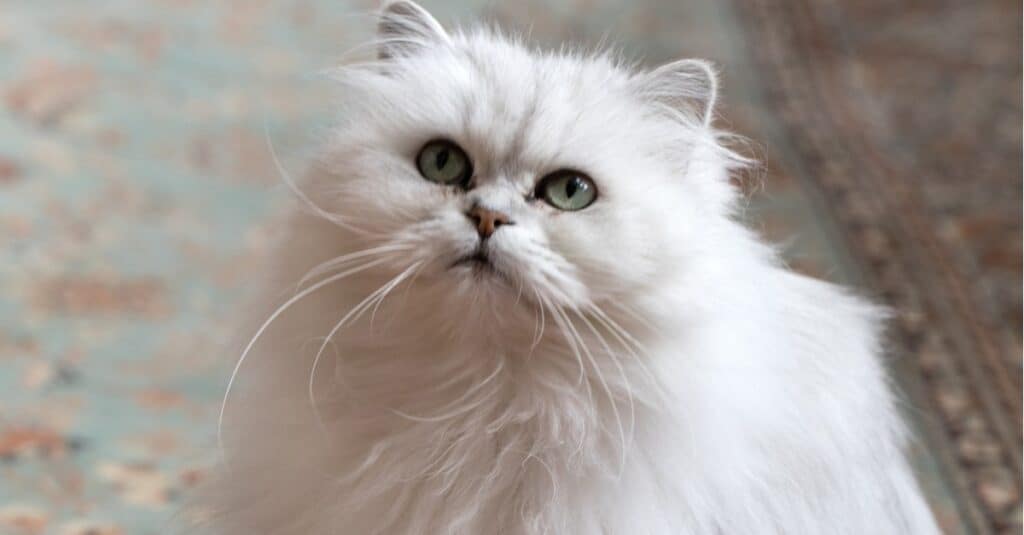
The Tiffany is an extremely rare and difficult to find, as there are no recognized breeders.
©iStock.com/Ken Griffiths
Kittens
With its pleasant, affectionate, and good-natured personality, the Tiffany seems naturally predisposed to obey people even as a kitten. Owners should nevertheless not neglect the breed’s early training and socialization to help their cat become a well-behaved adult. Proper socialization and training should ideally begin within the first few months of the cat’s life. Fortunately, owners shouldn’t have too many problems training the Tiffany.
If you plan to get your cat spayed or neutered, this should probably happen within the first year of its life. Spaying and neutering have enormous benefits for the cat’s health and behavior. Talk with your vet about the best time to have this done.
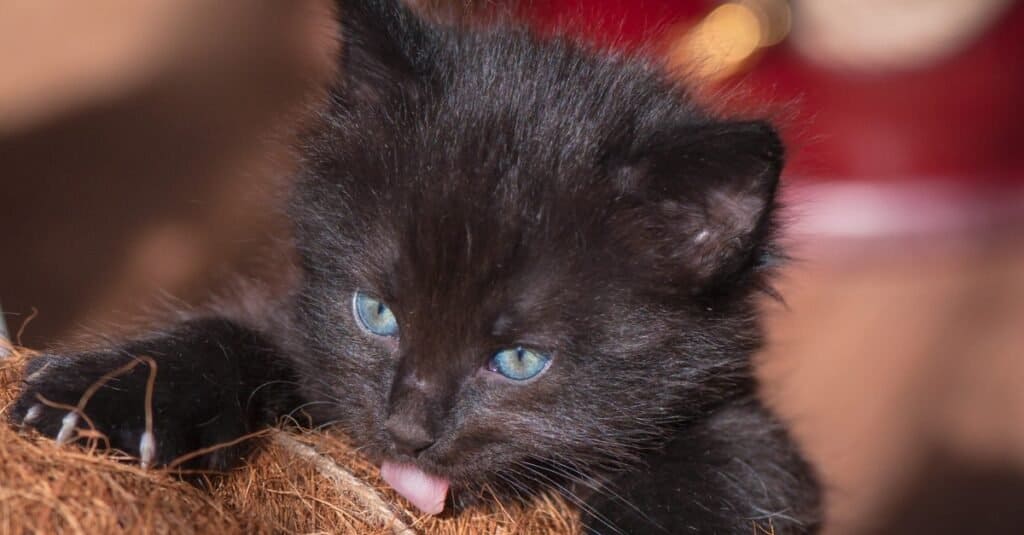
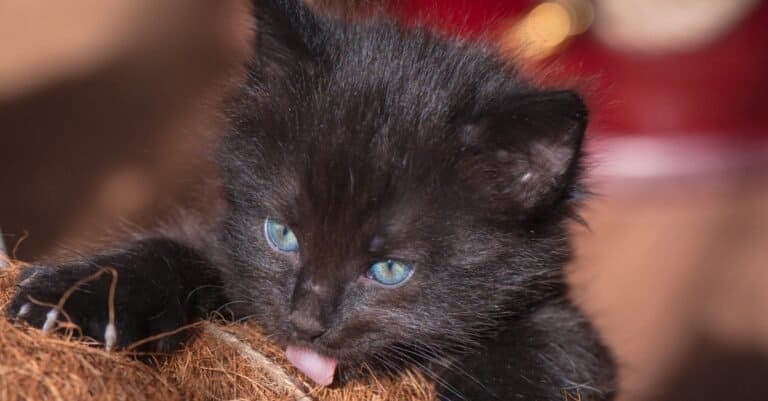
The Tiffany seems to have a natural-born predisposition toward obeying people even as a kitten.
©Lyudmila Lucienne/Shutterstock.com
Lifespan
The Tiffany has a typical lifespan of seven to 16 years old. While a generally healthy breed, this cat is at risk of a few health conditions, including obesity and digestive problems. These problems can be avoided entirely by feeding your cat a balanced, low-calorie diet and avoiding foods that might upset its stomach. The Tiffany will need regular checkups at the vet to catch potential health problems as soon as possible.
Unfortunately, because it isn’t registered anywhere, health data for these cats isn’t widely available. Owners should nevertheless ask breeders to present evidence that their cats have been checked for common health problems.
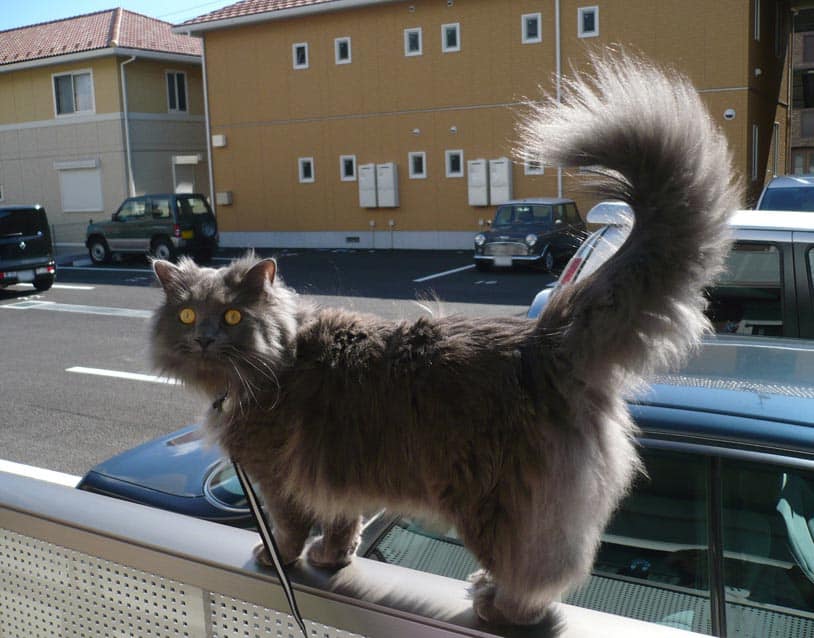
Tiffany cats can be prone to digestive issues and obesity.
©Jennie Kondo (Jennie Valdivieso Kondo – Grialte) / CC BY-SA 3.0 – Original / License
Breed vs. Mixed
A purebred Tiffany will have medium to long silky fur, yellow or golden eyes, a curled and fluffy tail, a broad wedge-shaped head, a short and broad muzzle, medium ears with tufts or furnishings, and extra fur around the neck. It can be crossed with any number of different cat breeds to produce some interesting results. There were even some reports that the Tiffany had been mixed with the Havana and Abyssinian.
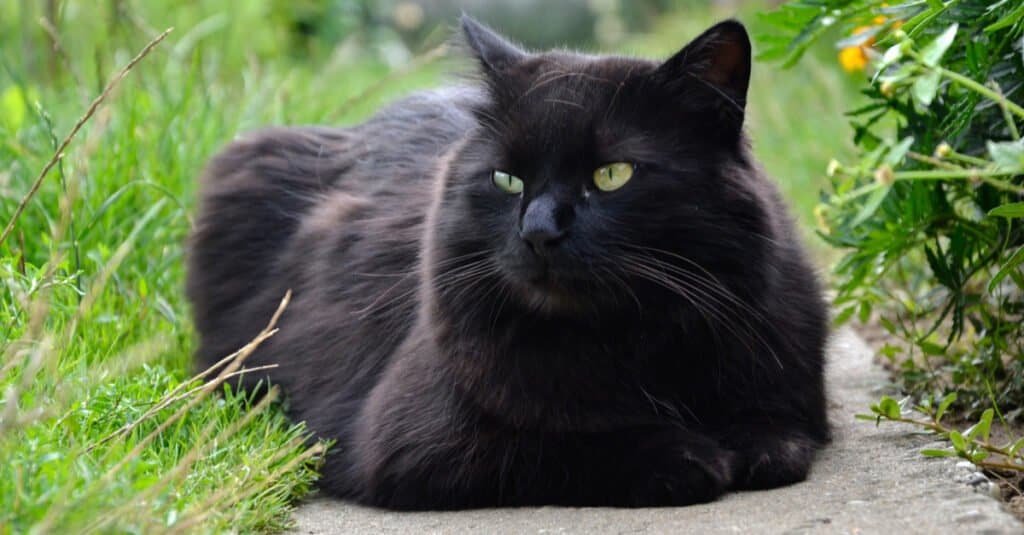
The Chantilly-Tiffany is also known as the Foreign Longhair.
©Lukas Beno/Shutterstock.com
Types of Tiffany Cats and Colors
The original coloring of the Chantilly-Tiffany cat was chocolate, but other colors have been added to the pool, along with varied patterns. The standard accepted colors for a Chantilly-Tiffany are:
- Chocolate
- Blue
- Lilac
- Cinnamon
- Platinum
- Fawn
The following are acceptable coat patterns of the Tiffany breed, with solid being the most accepted:
- Solid
- Ticked
- Mackerel
- Spotted Tabby
Since it isn’t currently recognized by any breed registry or organization, there is also no one currently maintaining a strict standard, so deviations are possible.
Tiffany Pictures
View all of our Tiffany pictures in the gallery.

Chris de Blank/Shutterstock.com
Sources
- Cat Time / Accessed July 21, 2021
- All About Cats / Accessed July 21, 2021
- The Happy Cat Site / Accessed July 21, 2021