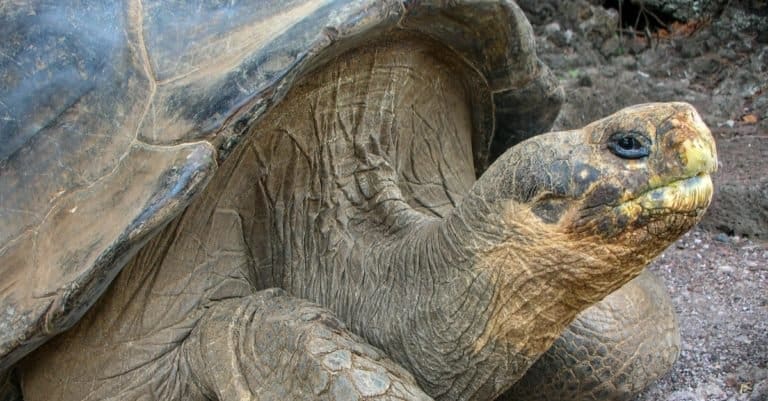













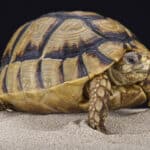


The tortoise, any member of the family Testudinidae, is a reptilian vertebrate that lives exclusively on land.
Also known as land turtles, tortoises are found on all continents except for Antarctica and Australia. With nearly 50 species spread across more than 15 genera, tortoises vary widely in terms of size, color, and other features. Many exist only in the wild, but some are kept as pets. Several species are considered endangered to some degree, but conservation efforts have helped increase populations in some cases. With an average lifespan of 80 to 150 years, tortoises are the longest-living land animals on the planet.
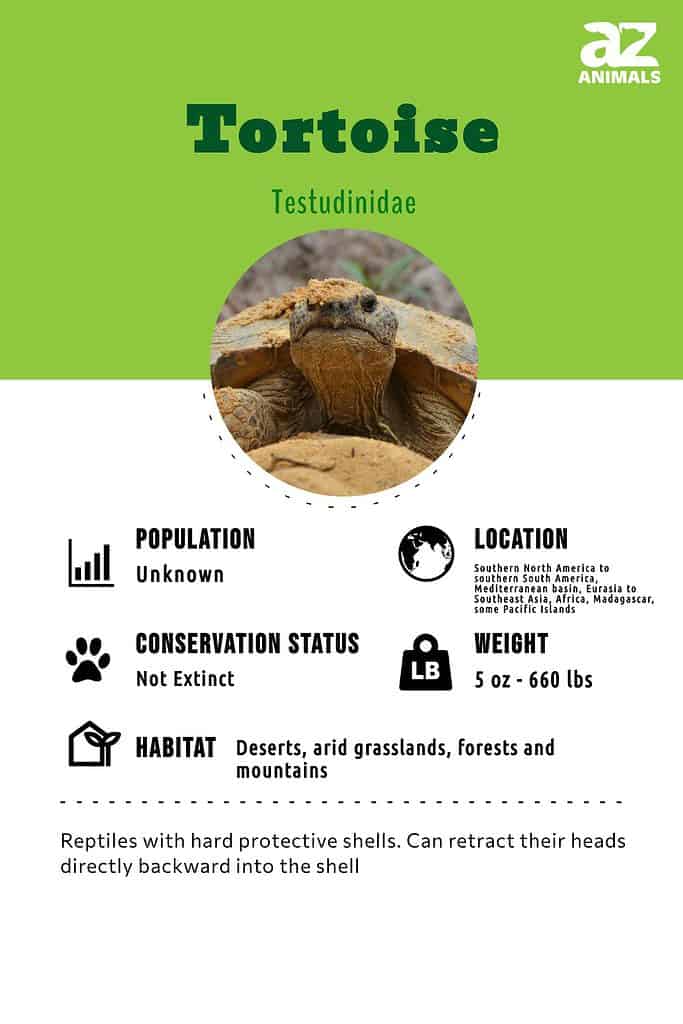
5 Incredible Tortoise Facts!
- Survivors: Tortoises can survive for extended periods of time without consuming any water or food. On whaling ships, they were often kept on their backs and used as a source of fresh meat on long voyages.
- Persistence: Like all turtles, tortoises move very slowly. On arid islands, tortoises lick dew off of boulders, leaving half-sphere depressions in the rock.
- Long Living: Adwaita, an Aldabra giant tortoise, purportedly lived to the age of 255 years. There are several other examples of tortoises living well past the age of 150 years.
- Widespread: Tortoises are widely distributed and can be found from southern North America to southern South America; across Eurasia to southeast Asia; across the Mediterranean basin; through sub-Saharan Africa; on Madagascar and on some Pacific Islands.
- Ancient: Turtles and tortoises are believed to have first appeared around 220 million years ago.
Want more tortoise facts? Make sure to read ’10 Incredible Tortoise Facts.’
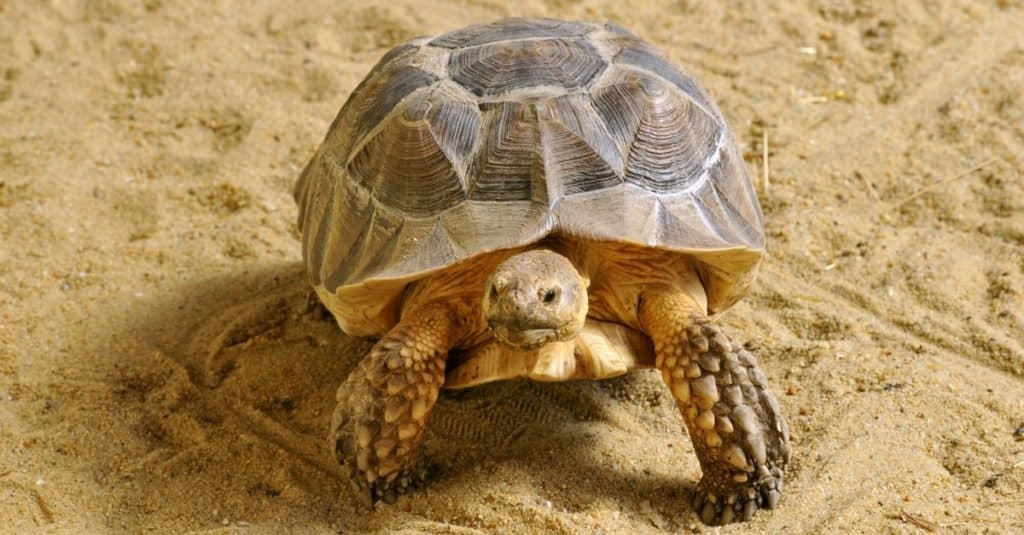
Tortoises, like this African Spurred Tortoise, are turtles that live exclusively on land.
©Christian Musat/Shutterstock.com
Scientific Name
In some parts of the world, the term “tortoise” is used interchangeably with the term “turtle.” However, the consensus generally is that a tortoise refers to a turtle that lives exclusively on land. These animals are reptiles; therefore, they belong to the class Reptilia. They are further classified into the order Testudines and the family Testudinidae. From there, there are approximately 49 species spanning more than 15 genera. The term Testudines is derived from the Latin word for tortoise. The pronunciation of tortoise is confusing. The proper pronunciation is “tore” followed by “tuss.”
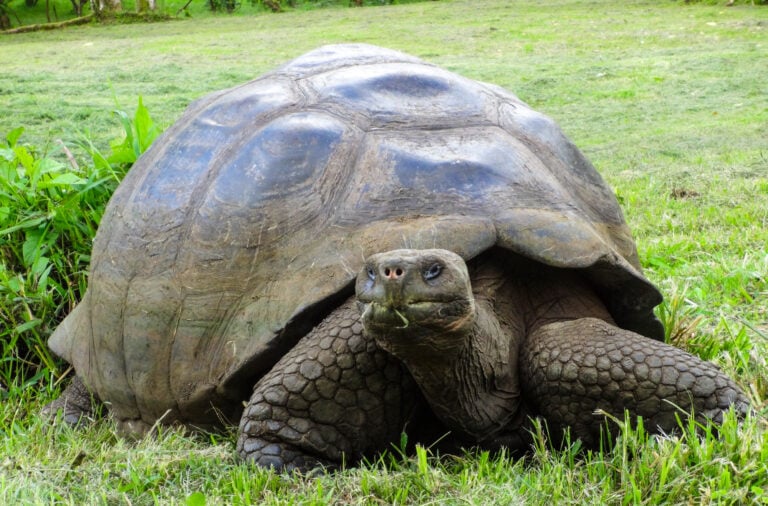
Tortoise species vary considerably in terms of size, color, and other features. The smallest, padlopers – members of the genus Homopus – grow up to 4 to 6 inches in length and are found in southern Africa. The largest, the giant tortoise – members of the genus Geochelone — can have shells measuring more than 3.3 feet long.
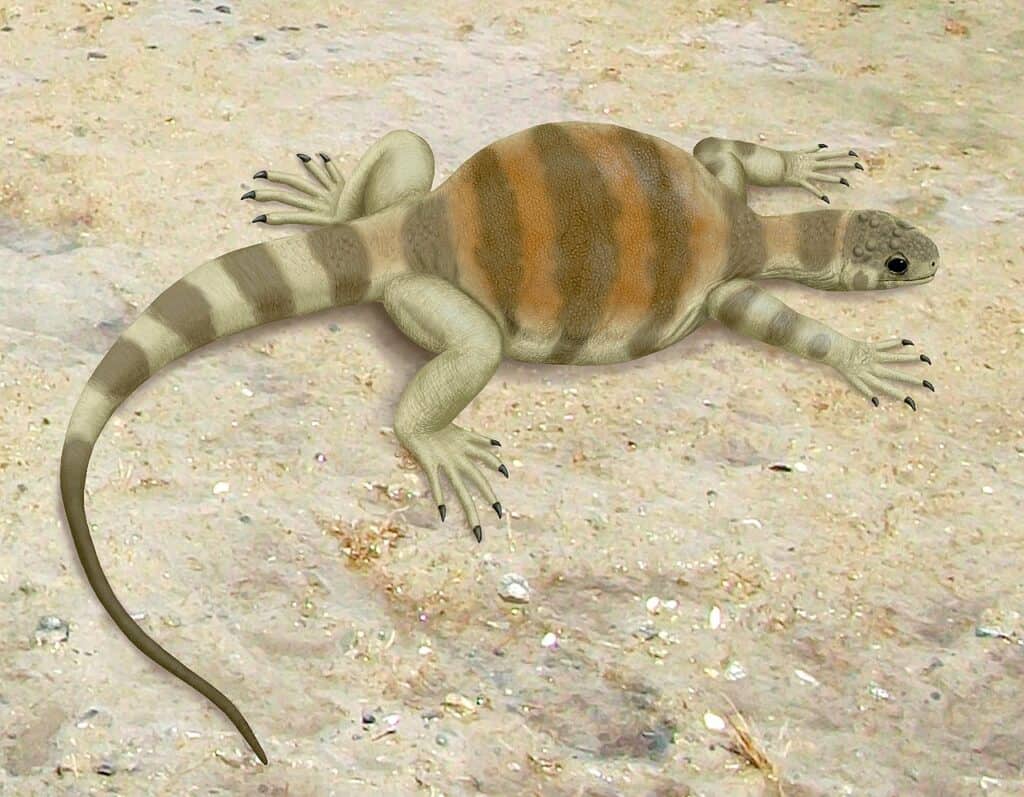
Tortoises evolved in South Africa, from a small reptile named Eunotosaurus africanus around 260 million years ago.
Evolution
Turtles/Tortoises evolved in South Africa, from a small reptile named Eunotosaurus africanus around 260 million years ago. This strange little lizard had the makings of modern-day turtles with thick, backward curving ribs that formed an armored dome under its skin.
A reptile called Odontochelys semitestacea, evolved 40 million years later in the shallow oceans of China. The Odontochelys had one trait that modern turtles share – a plastron or bottom shell. It is believed that these turtle ancestors developed lower shells first because sharks and other predators attacked them from below the surface of the water.
Proganochelys, or “beast turtle” lived among dinosaurs and was armored above and below. In addition to its protective shell, this ancient turtle had bony neck spikes, leg spikes, and tail spikes. Like its modern relatives, it had a bony shell and a toothless mouth.
These three tortoise ancestors diverged into the terrapin, sea turtle, and tortoise we know today.
Appearance
Tortoises are cold-blooded, or ectothermic, animals with high-domed shells, or carapaces. The only species with a flat shell is the pancake tortoise, Malachochersus tornieri. Like most turtles, they can retract their heads and necks into their shells for protection. They hold the distinction of being the only vertebrates whose pectoral and pelvic girdles are located within their ribcages, and they are the only vertebrates with shells.
Their shells consist of 59 to 61 bones that are covered by plates called scutes. The pronunciation of “scute” is the same as “scoot.” Scutes also form segments, creating distinct patterns on tortoises’ shells. The shell’s underside is called the plastron, and the two halves are connected by a bridge. Tortoiseshells are made up mostly of keratin, and tortoises can sense pain through their shells just as people can sense pain through their fingernails.
The tortoise has a toothless jaw. Although this animal lacks teeth, it possesses a horny beak that it can use to break up food and other matter. All tortoises share specialized hind-limb anatomy consisting of elephantine, or cylindrical, hind limbs, and hind feet. Each digit of the animal’s forefeet and hind feet features two or fewer phalanges.
Many species of tortoise have sexual dimorphism, meaning that females and males have distinct features. The easiest way to determine the gender of a tortoise is by examining its tail. Females’ tails tend to be smaller, and they drop straight down. Males typically have much longer tails, which they usually keep pulled up and to the side at the back of the shell.

Tortoise versus Turtle
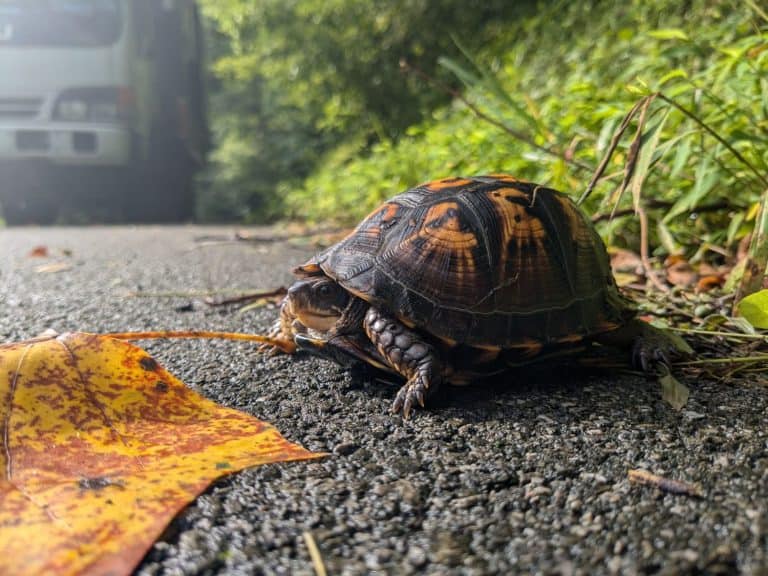
All shelled vertebrates, including tortoises and terrapins, are considered to be turtles. This includes all 200 or so species of the Testudines group, which feature a compressed anatomical structure with the shell fused to the ribs and vertebrae and the pelvic girdle within the rib cage. Turtles can be aquatic, semi-aquatic, or mostly terrestrial, but tortoises are exclusively terrestrial. Tortoise feet look like tiny elephant feet while other turtles have webbed feet. Finally, most tortoises have very convex or rounded, carapaces while turtles’ shells are usually more streamlined. Exceptions include the box turtle and the Sonoran mud turtle, which have more rounded shells.
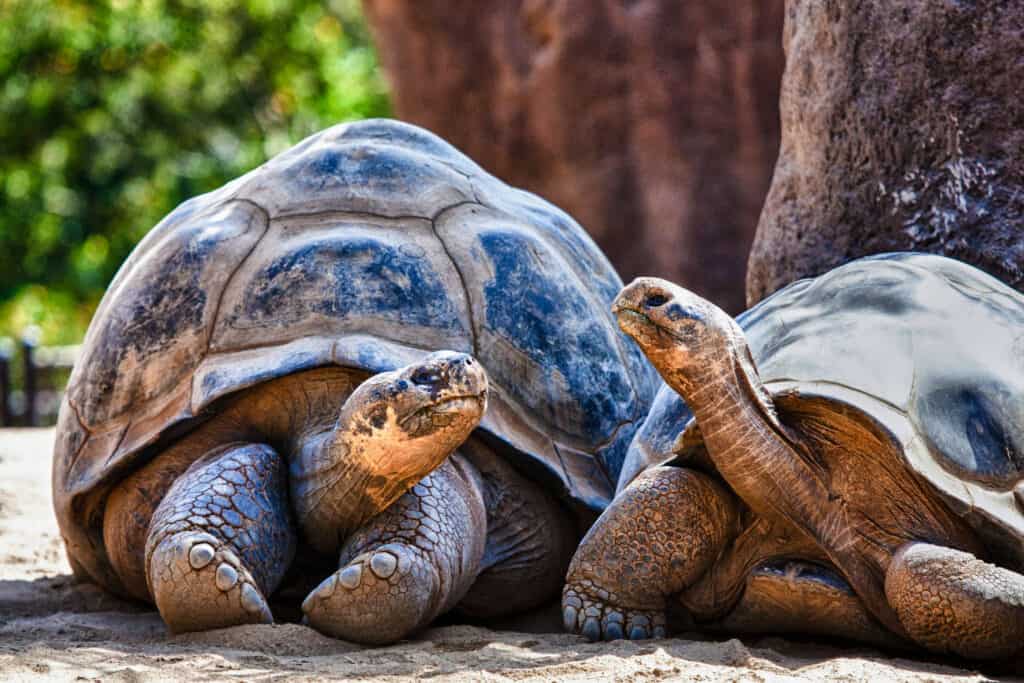
As cold-blooded animals, tortoises typically bask for one to two hours after dawn to absorb heat for the day.
©iStock.com/paulacobleigh
Behavior
Tortoises are primarily diurnal animals, meaning that they are awake by day and sleep by night. However, many species tend to be crepuscular, meaning that they are most active during the twilight hours. All tortoises are reclusive creatures with placid behavior. They are known for moving very slowly; the average speed of a tortoise is estimated at about 0.2 to 0.5 kilometers per hour. Since they lack ears, tortoises rely less on hearing and more on vision and smell.
As cold-blooded animals, tortoises typically bask for one to two hours after dawn to absorb heat for the day. They then spend several hours foraging for food. They tend to travel early in the morning and late in the afternoon, and they take dust baths to keep pests at bay. Tortoises rarely make any sound except during copulation or in aggressive situations.
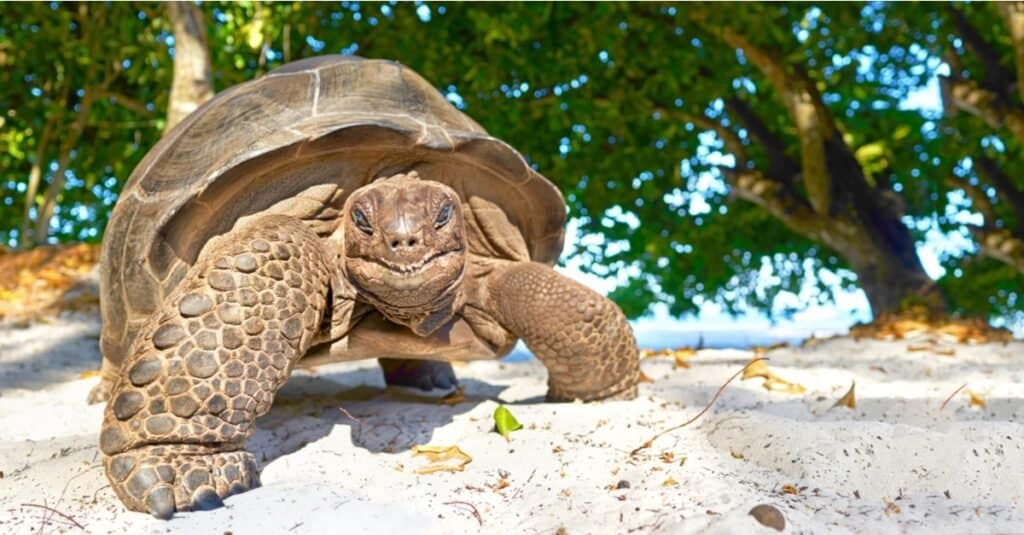
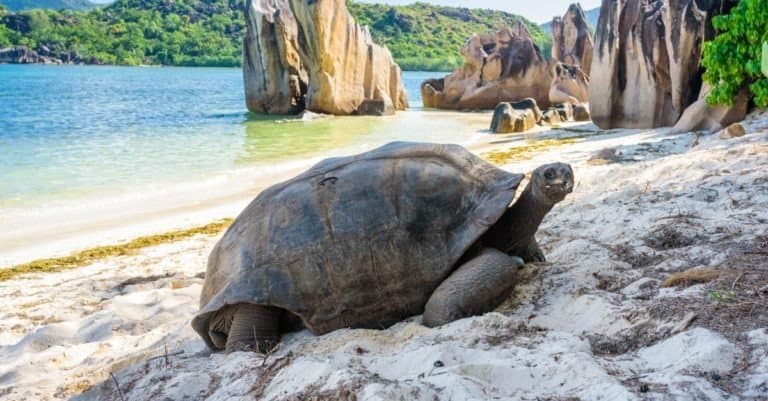
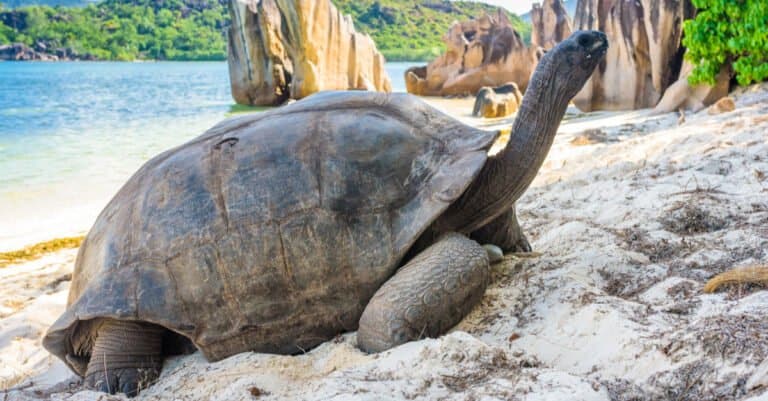
Tortoises, such as this Seychelles giant tortoise, are found all over the world but prefer semi-arid climates.
©Jenny Sturm/Shutterstock.com
Habitat
The tortoise is found on all continents except for Australia and Antarctica. Species are distributed across southern North America through southern South America and are also found on some Pacific Islands, across Eurasia to southeast Asia, in sub-Saharan Africa, across the Mediterranean basin and on Madagascar. They generally prefer semi-arid climates but are found everywhere from deserts to tropical rainforests, and they can thrive at sea level or in more mountainous terrain.
Diet
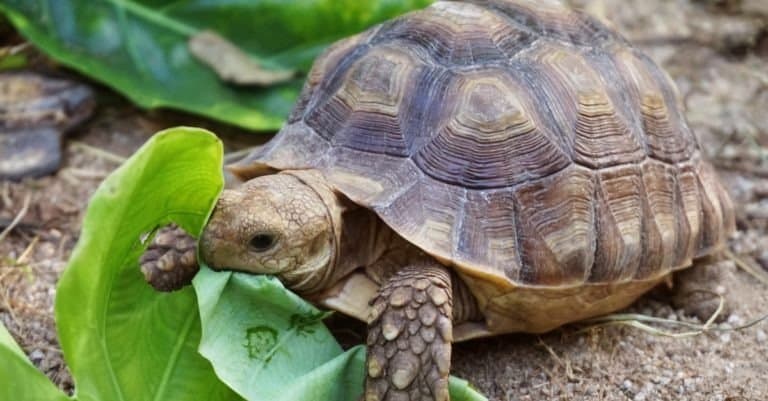
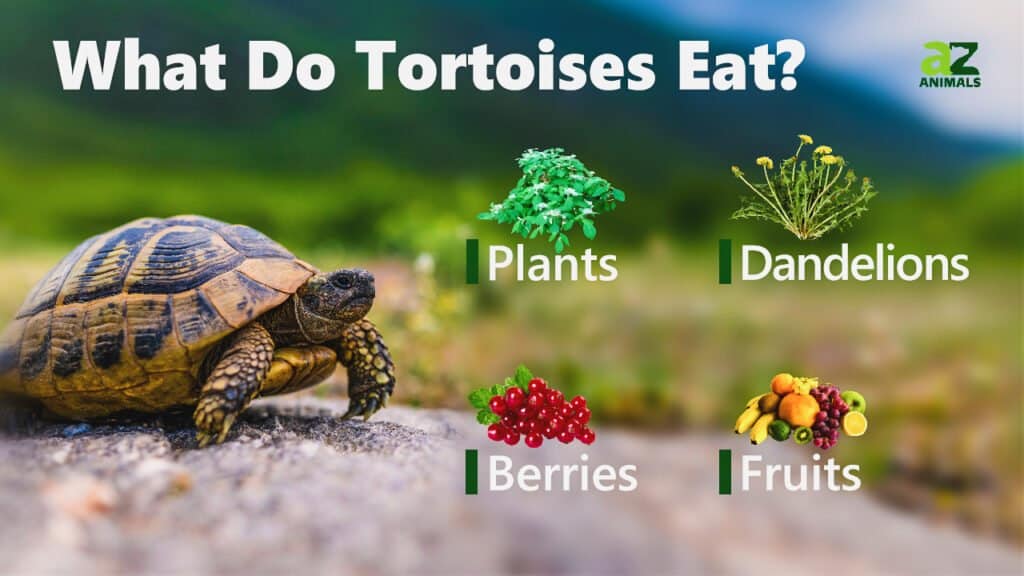
Most tortoise species are herbivores, subsisting primarily on foliage, flowers, and some fruits. Some species located in moist forest environments are more opportunistic and will consume limited amounts of animal matter as needed.
For more on the diet of tortoises, make sure to read our complete guide ‘What Do Tortoises Eat? 20+ That They Eat.”
Predators and Threats
Human activity poses the greatest threat to tortoises around the world. In particular, tortoises are hunted for their oil and meat. Their habitats are often cleared for agriculture and other developments. In many parts of the world where they live, the introduction of non-native animals, including rats, pigs, and goats, negatively impacts their populations. Tortoises have no natural predators, so the introduction of non-native species can be very detrimental.
Reproduction, Babies, and Lifespan
Most tortoise species mate throughout the year. To initiate the mating process, the male tortoise rams the female tortoise’s shell with his shell and may nip at her legs. Copulation is tricky because of the convex shells at play, but the male balances himself precariously to make it happen.
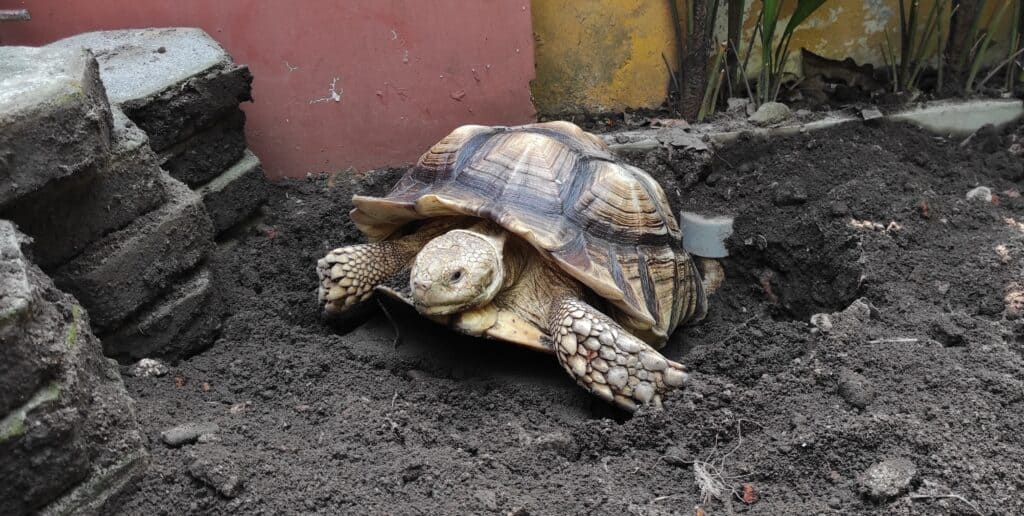
Female tortoises use their hind legs to dig nests for their eggs.
©Osa Sumanohara/Shutterstock.com
Female tortoises use their hind limbs to dig nests. They lay their eggs at night and cover the clutch with soil, sand, and organic material. Incubation averages 100 to 160 days and the eggs are left unattended. Fully formed hatchlings use egg teeth to break out of the ping-pong-ball-sized eggs and then dig their way to the surface. They are hatched with an embryonic egg sac that provides nutrition for the first three to seven days. Baby tortoises make their way to their mother’s burrow, where she protects them for about 80 days before they are on their own.
Tortoises are the longest-living land animals on earth. Their lifespan averages between 80 and 150 years. Several examples of long-living tortoises are found in the historical record. One of the best known, Tui Malila, was gifted to the Tongan people by explorer James Cook in 1777 and died in 1965 at 188 years of age.
Population
Tortoise populations vary by species and region. Several species are listed as Critically Endangered by the IUCN, including the radiated tortoise, the Madagascar tortoise, and the spider tortoise. Some, including the geometric tortoise, are classified as Endangered. Several more are classified as Vulnerable, including the Galapagos giant tortoise, the Aldabra giant tortoise, and the desert tortoise.
Tortoises as Pets
Thanks to their laidback demeanor, not to mention sedate carriage, and adorable wrinkled faces, tortoises are a favorite among pet owners all over the globe.
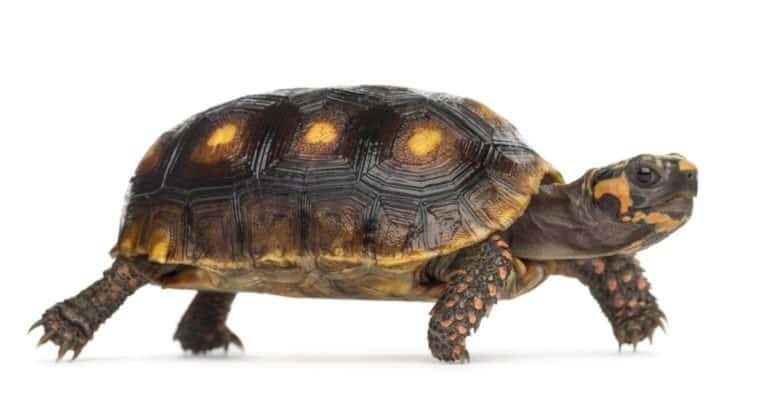
That said some species are more popular choices than others in this regard. They include Egyptian, Greek, Hermann’s, leopard, pancake, and red-footed tortoises.
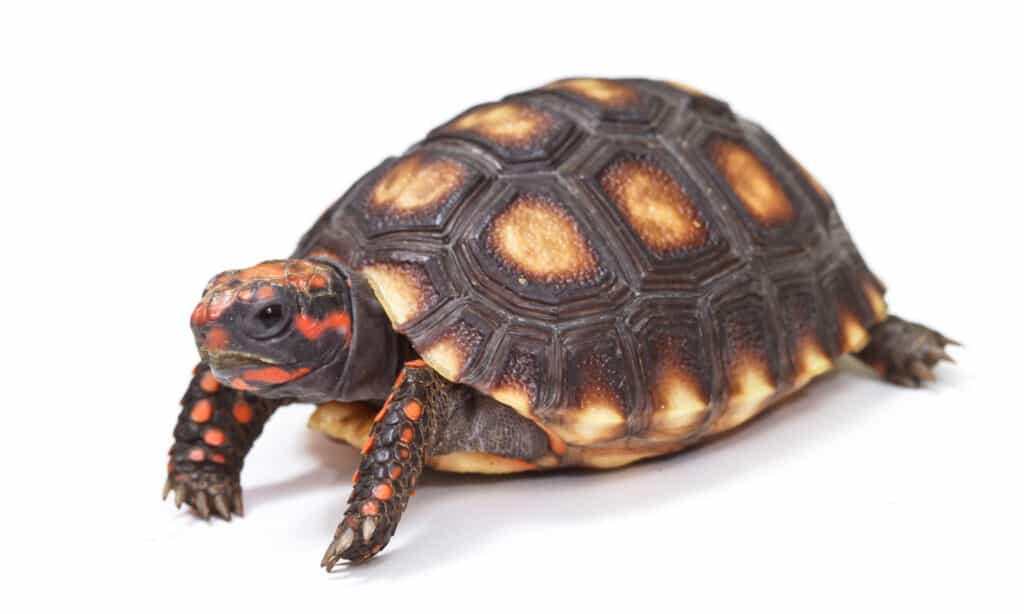
Red-footed Tortoises are often kept as pets.
©bluedog studio/Shutterstock.com
You will have to factor in the space they need, shelter during colder weather, heating, vitamin supplements, and veterinary care.
Diet of course is also another all-important factor and these reptiles will thrive on bergamot, chickweed, chicory, evening primrose, Fuschia, hollyhock, etc.
Vegetables such as cauliflower, cucumbers, collard greens, kale, and sweet peppers, can be added in smaller quantities.
About 5% of their diet should consist of fruit which they are also partial to and they are likely to find apples, berries, grapes, pears, plums, and melons delightful.
The choice of flatmate, if any will matter a great deal. Male tortoises may promptly swap that placid manner for a more belligerent and even violent one in the presence of another male.
Top Tortoise Species
- Galapagos Tortoise – Members of the genus Chelonoidis, Galapagos tortoises are found in the Galapagos Islands off the coast of Venezuela and on Aldabra, an island in the Indian Ocean approximately 430 miles east of Tanzania. During the 16th century, their population size was estimated at more than 250,000; by the 1970s, it had dwindled to just around 3,000 individuals. Since they have no natural predators, it is believed that human activity is almost exclusively to blame. Through conservation efforts, thousands of captive-bred juvenile tortoises have been released back into the wild. By the year 2000, their population had grown to around 19,000 individuals.
- Indian Star Tortoise – Known by the scientific name Geochelone elegans, the Indian star tortoise is found in India, Pakistan, and Sri Lanka. This species grows to an average size of about 10 inches long, and it features a very convex shell. The Indian star tortoise is listed as endangered by the IUCN, and its primary threat is the exotic pet trade.
- Leopard Tortoise – This tortoise, known by the scientific name Stigmochelys pardalis, is found across the savannas of east and south Africa – roughly from the southern Cape to Sudan. The only member of its genus, the leopard turtle thrives in grassland habitats, including in arid and savanna regions. The fourth-largest tortoise species, this animal grows to an average length of 16 inches and an average weight of 29 pounds and is mostly yellow in color. Unlike many other large tortoises, the leopard tortoise is not endangered.
- Gopher tortoise – The gopher tortoise, Gopherus polyphemus, is native to the southeastern United States and is the only tortoise native to North America. They get their name because they dig deep gopher-like burrows that provide shelter for many other species.
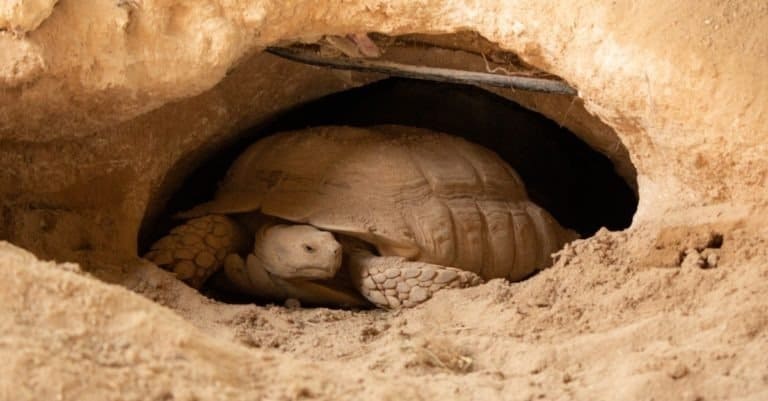
- African spurred tortoise – Centrochelys sulcata, inhabits the southern edge of the Sahara desert in Africa. They dig deep burrows to shelter from the sun. The grasses that grow around their burrows are fertilized by their feces and provide the tortoise with food.
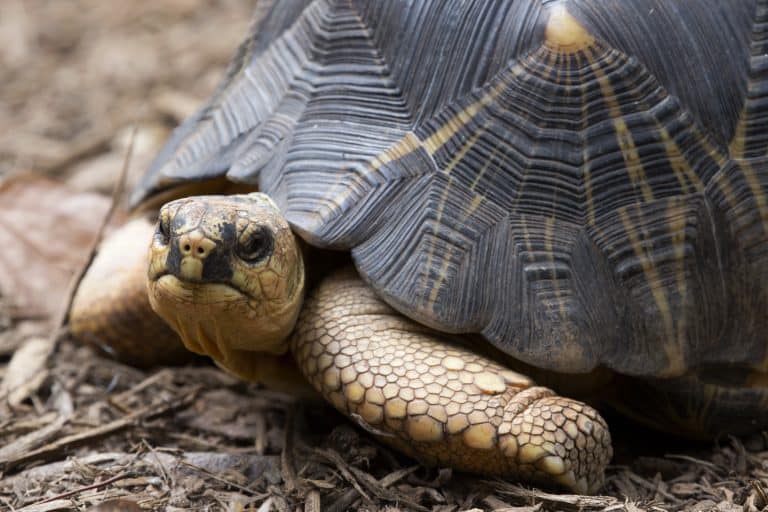
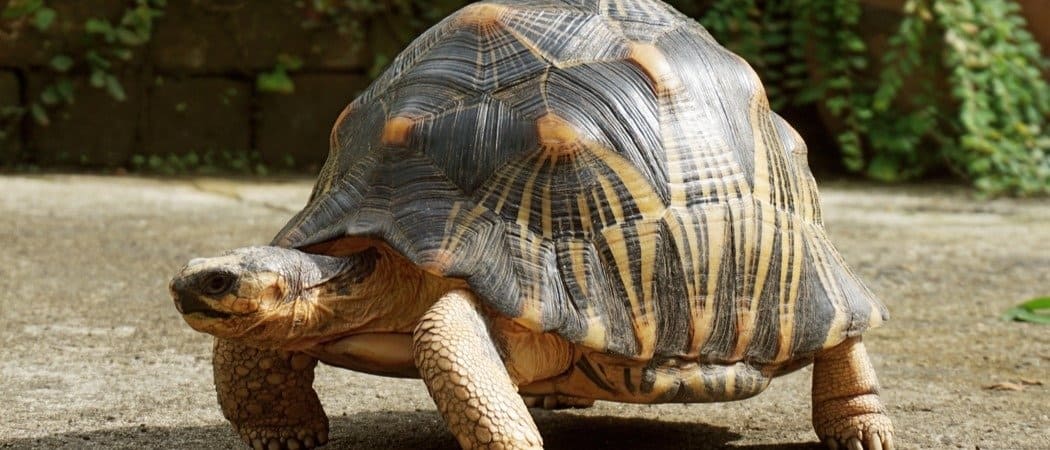
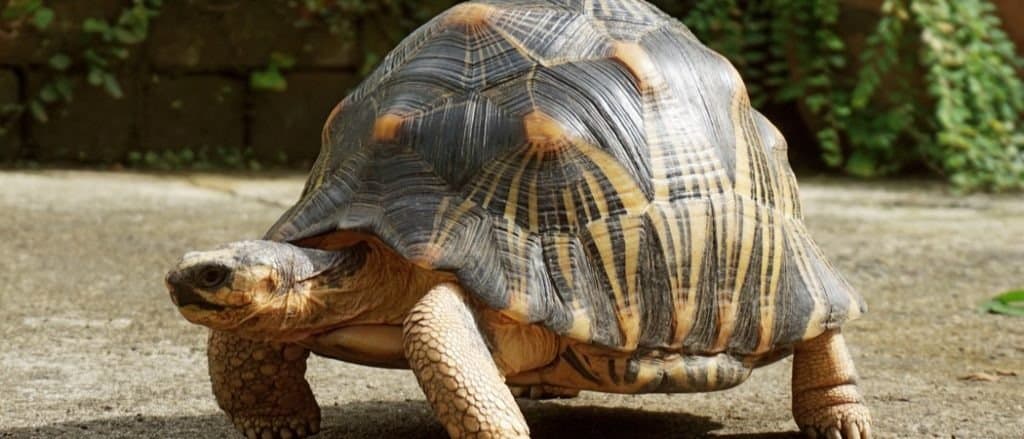
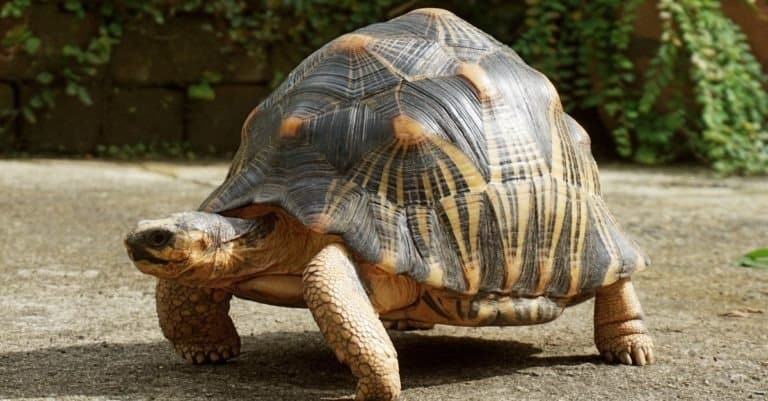
- Radiated tortoise – This critically endangered tortoise, Astrochelys radiata, lives in Madagascar in the thorn forests and scrublands. Its smooth, high-domed shell is marked with yellow lines that radiate from the top in a beautiful pattern.
- Spider tortoise – The Spider tortoise, Pyxis arachnoides, is the smallest tortoise of Madagascar and is named for the spider web-like pattern on its shell. It is critically endangered. During the island’s hot, dry season, these tortoises go dormant in a state like hibernation.
- Desert tortoise – Gopherus agassizii, a large tortoise native to the Mojave desert, spends up to 95% of its life underground. These ancient animals have lived in the Mojave for millions of years – yet today they are rarely seen. Its conservation status is “vulnerable.”

In the Zoo
Major zoos around the world have examples of many tortoise species. The San Diego Zoo, for example, received its first Galapagos tortoises in 1928 and now has a total of 16, including nine original members. Many zoos have Aldabra giant tortoises, including Zoo Atlanta. You can find examples of the African spurred tortoise at Zoo New England, and the Australia Zoo once housed Harriet, a giant tortoise that was brought to England by Darwin and lived to the age of 176 years.
Read more…
Tortoise Pictures
View all of our Tortoise pictures in the gallery.

Jan Bures/Shutterstock.com
Sources
- San Diego Zoo / Accessed February 4, 2021
- New World Encyclopedia / Accessed February 4, 2021
- National Geographic / Accessed February 4, 2021
- Britannica / Accessed February 4, 2021
- Rainforests / Accessed February 4, 2021