


These cats, even when they are young, have a particular affinity for time with their owner, gracefully playing and cuddling with anyone in their family. While they may have some separation anxiety without their familiar surroundings, the Turkish Angora has a certain alertness and confidence that shows how intentional every movement can be. The personality of the Turkish Angora cat is as elegant as the traditional white coat that has become the most popular look for the breed.
Breed History
In the 16th century, long-haired cats were originally imported to European countries like France and Britain from Russia, Asia Minor, and the Middle East. The Turkish Angora originated in Turkey and specifically inhabited the city of Ankara (earlier named Angora), where varied long-haired animals were bred, such as rabbits, goats, and possibly the first long-haired cats. By the 17th century, the Turkish Angora was recognized as a distinct breed in Europe.
As European cat fanciers bred Turkish Angoras with Persians, the Angoras came to the point of disappearing. In Turkey, however, the Ankara Zoo created its own breeding program to preserve Turkish Angoras. American soldiers encountered this rare breed in the Ankara Zoo in the mid-1900s, and in 1962, the zoo allowed a pair of breeding Angoras to be imported to Colonel and Mrs. Walter Grant, who began breeding Angoras on U.S. soil.
In 1972, the Cat Fanciers Association allowed white Angoras to compete in its championship, and colored Angoras later in ’78.
Traits: What to Know Before You Buy
When considering a Turkish Angora as your next pet, there are some important details to know before making this investment:
- One of the main reasons that the Turkish Angora cat is so coveted is for its sweetness, but an abrupt change can be very upsetting.
- Although there are many domesticated Turkish Angora cats, this breed is still featured in zoos. Up until recently, it only survived extinction as a result of a zoo in Turkey.
- The Turkish Angora, though generally healthy, is prone to a few rare conditions. If inherited, the kittens of this breed are prone to hereditary ataxia, which causes them to have shaky movements. They can also develop hypertrophic cardiomyopathy as early as 2 years old.
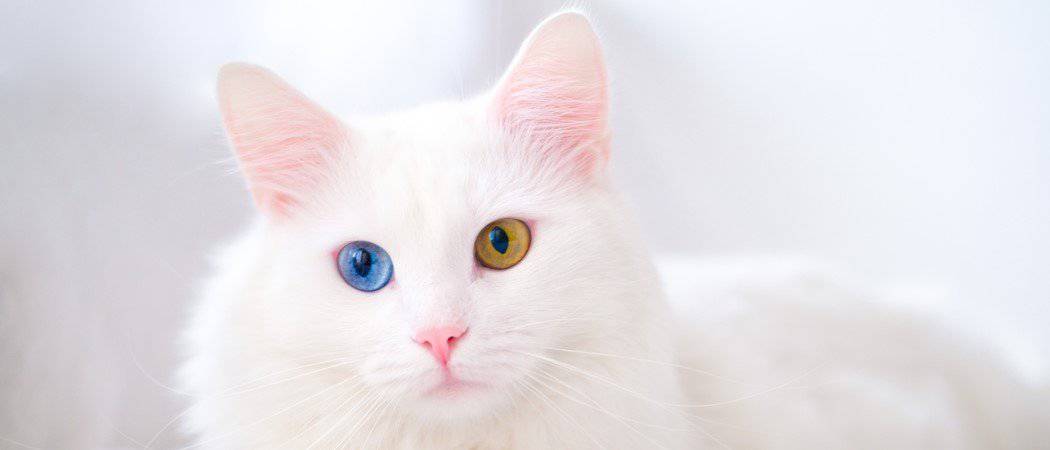
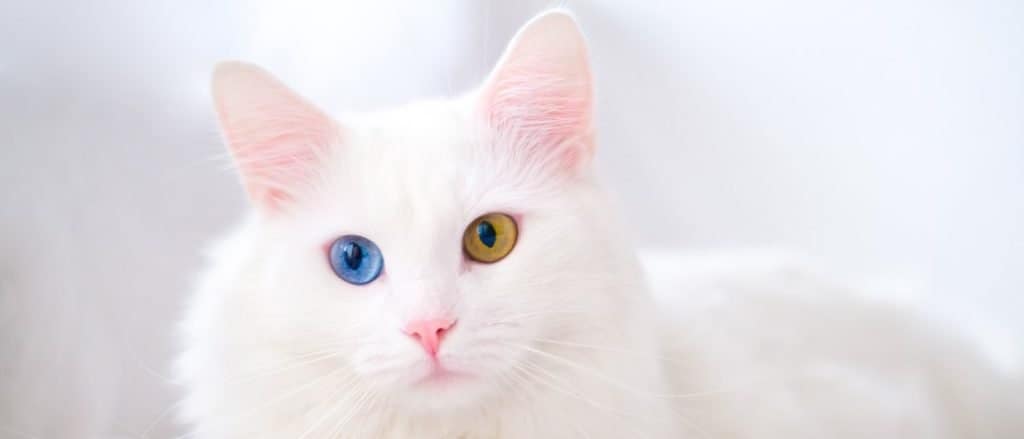
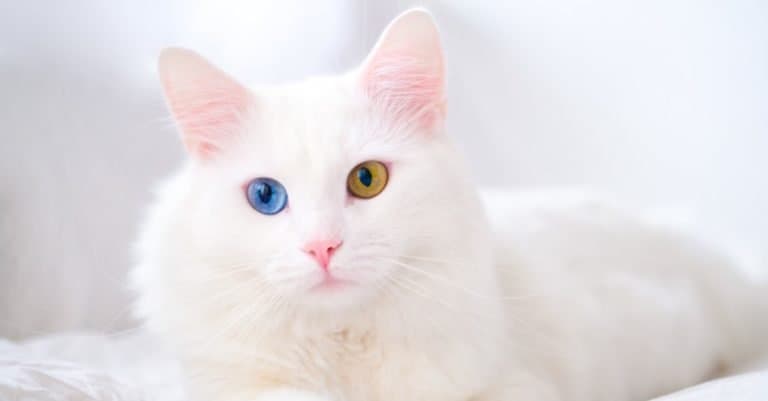
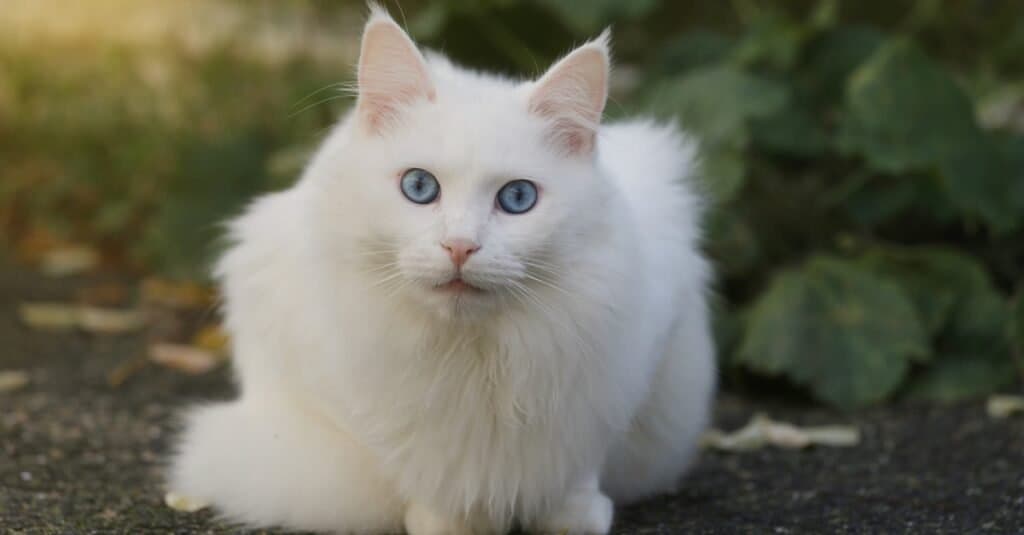
- The Turkish Angora cat naturally carries a gene in most bloodlines that can cause them to be deaf.
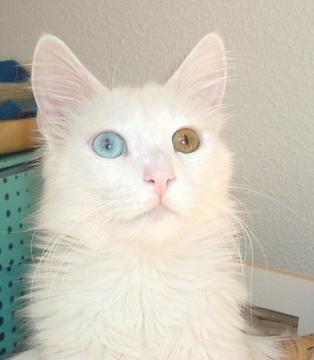
The Turkish Angora cat naturally carries a gene in most bloodlines that can cause them to be deaf.
©Catherine Soriano / Creative Commons – Original
Personality
The Turkish Angora’s beauty and affection complement the adoring personality that they show their owner, involving themselves quickly in everything that they do. They’ll sit for long periods of time for the simple enjoyment of camaraderie, which is only further complemented by their good nature.
Despite this adoration, a Turkish Angora will be rather determined and focused on the activity that they want to do next. Whether they want to play with their owner, go after innocent toes, or prance around a living room, the Turkish Angora has a rather independent attitude regarding their daily activities. Owners who are worried about aggression should consider spaying or neutering their cat, as it also reduces the risk of certain marking behaviors (like spraying) in territorial pets.
Luckily, watching the Turkish Angora prance around the room can be an elegant experience. This cat has incredible grace and intelligence, supporting every move they make with deliberate forethought. Though they will willingly be held by anyone who wants to adore them for a few minutes, they would much rather entertain others as they entertain themselves, even if only to bask in the sunlight from a window.
The Turkish Angora is one of the few breeds that particularly loves water, though this statement is not necessarily true for every cat of the species. Some will jump into a bathtub or a pool to show off yet another way that their body can exude enthusiastic grace.
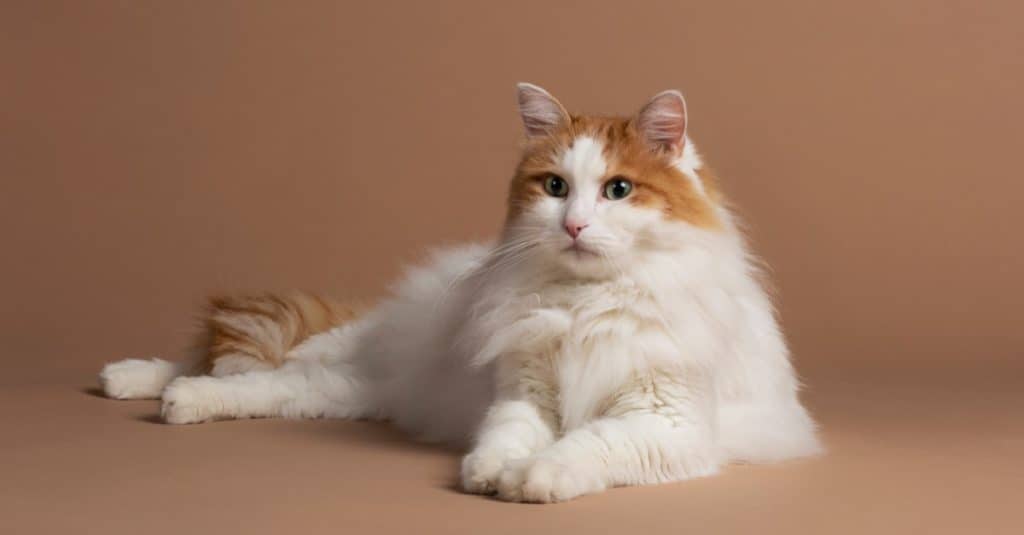
Turkish Angoras will sit for long periods of time for the simple enjoyment of camaraderie.
©Lea Rae/Shutterstock.com
Size and Weight
With a long and slender body, the Turkish Angora is rather round with a single full coat to add to its elegance. With the britches on their hind legs, this cat stands about 9 to 14 inches tall. Unfortunately, the world record for the largest Turkish Angora cat has yet to be recorded.
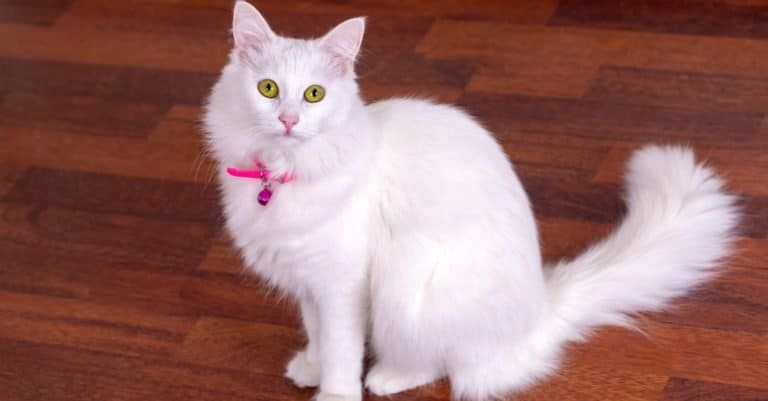
Female Turkish Angora cats typically range between 8 and 12 lbs. On average, males may be slightly larger than females, weighing more than the average 12 lbs. If the cat is neutered or spayed, it should not impact its future growth, but it may cause its metabolism to change.
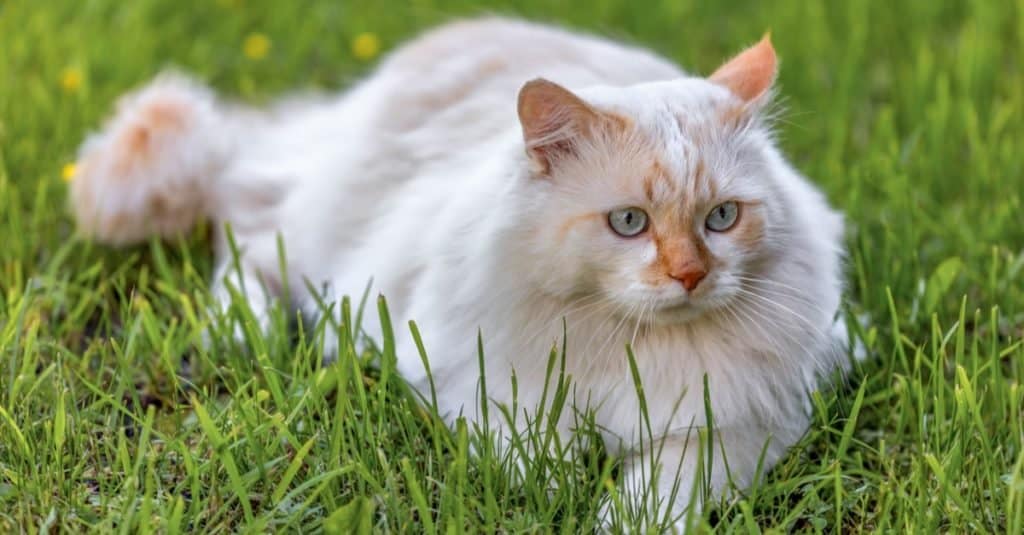
Turkish Angoras typically weigh from 8 to 12lbs.
©Vadim Petrakov/Shutterstock.com
Price
When looking to adopt a Turkish Angora, the price can fluctuate significantly. Adopting from a shelter is always cheaper, often ranging from $75 to $150. However, seeking out a breeder that specifically offers purebred kittens can increase the price from $600 to $2,000. Kittens that come from incredible lineage and that would be considered for the competition can cost as much as $3,000.
The primary reason that the price of these cats can vary so much is based on their genetics. Their exotic breed is already rather rare to come across, but the body ratio, color choice, and family line bring more value to the breed, especially as a kitten.
Adopting from some rescues will bring the cost of these cats down significantly, especially if you want to foster one.
While shopping online for these cats, keep in mind that many breeders do not post the price that they sell for online. Spending some time in personal discussions with the breeders can give a better idea of the cost in your area.
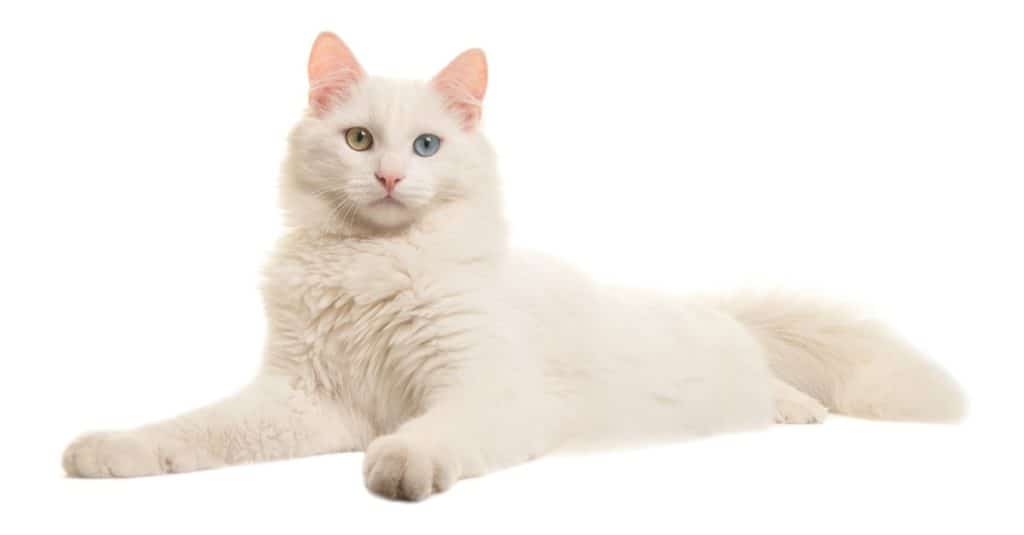
The price range of a Turkish Angora is from 0-00 when purchased from a breeder.
©MirasWonderland/Shutterstock.com
Kittens
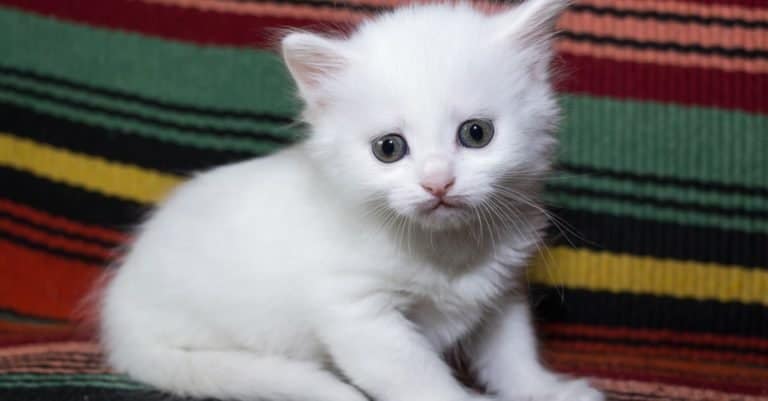
Whether the Turkish Angora is a kitten or a cat, its long and slender body is a prominent quality. Their elegant and refined nature tends to be consistent throughout their lifetime, though they may only weigh 5 lbs. before they reach adulthood (when they are around 12 lbs.) The Turkish Angora reaches sexual maturity between 8 to 12 months, though many owners choose to sterilize their pets for health reasons.
Regardless of age, these cats are always at their best when it is with their family.
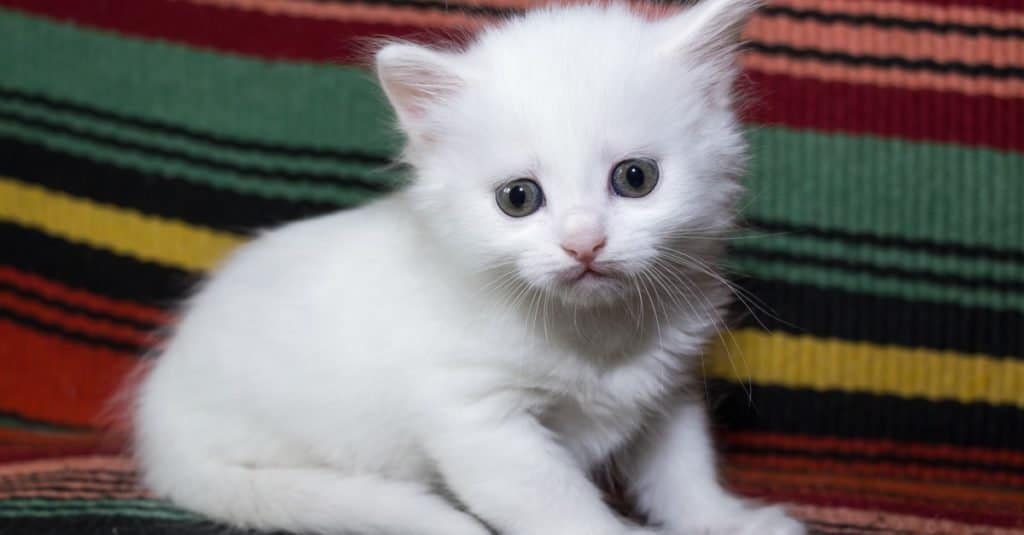
The Turkish Angora reaches sexual maturity between 8 to 12 months.
©Alexanro/Shutterstock.com
Lifespan
While the average cat lives to be about 16 years old, these cats tend to live to be between 9 and 14 years old. Even though they’ll need some care for their coat, veterinary care for early intervention against rare feline diseases is necessary.
Since many of these cats carry the gene for deafness, they should be screened early to prepare the owner for proper care. Kittens that have hereditary ataxia will not likely reach adulthood, though the onset of hypertrophic cardiomyopathy may occur between ages 2 and 6. Males are more prone to it, but they could pass earlier from heart failure.
Breed vs. Mixed
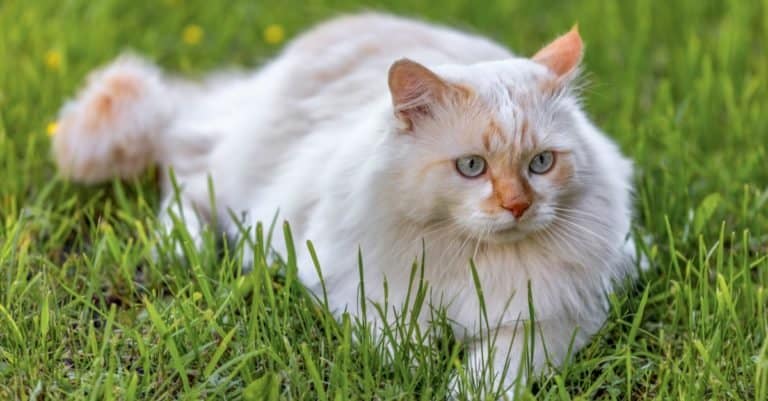
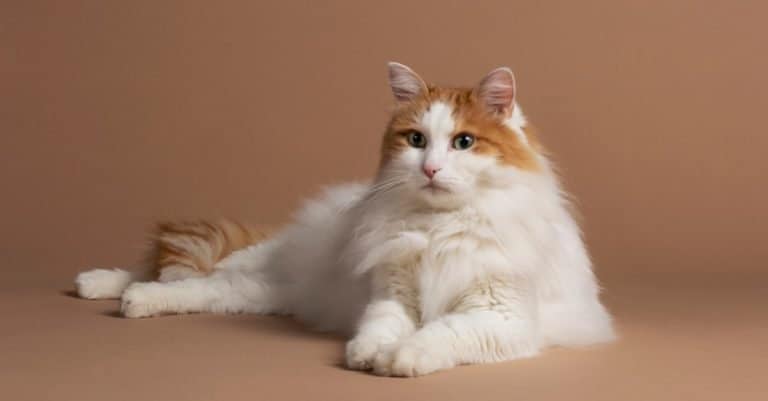
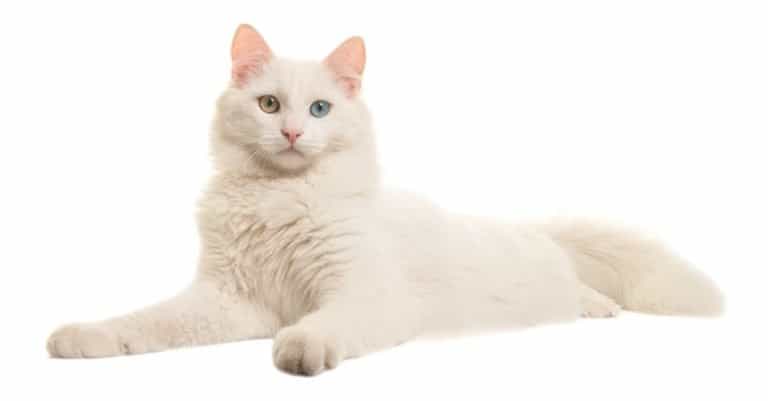
Traditionally, these cats have a silky yet long coat, found in many different colors and patterns. While white is the most common, they are also found in black and white, gray, brown, and other combinations. Since their ears are rather large (in comparison with the rest of their triangular head), and they have almond-shaped or round eyes, cats that only meet a few of these criteria are likely mixed.
If you’re in doubt, check for an undercoat – Turkish Angoras don’t have one at all!
White is the most common color for a Turkish Angora, but they come in other colors like brown, gray, and black and white.
©love pattern/Shutterstock.com
Types of Turkish Angora Cats and Colors
As a species, these cats don’t have any subtypes, per se. However, they are known for coming in many different colors. Most people imagine the Turkish Angora with a white coat because it is the most popular. However, they can also be found in red, brown, gray, and black.
Their patterns are rather distinctive as well, and they can be found in:
- Tuxedo (i.e., black and white with no other colors)
- Tabby
- Blue cream
- Calico
- Tortoiseshell
- Bi-color or tricolor combinations
- Lilac
Turkish Angora Pictures
View all of our Turkish Angora pictures in the gallery.

iStock.com/Natalia Kuzina
Sources
- Wikipedia / Accessed June 28, 2021
- Daily Paws / Accessed June 28, 2021
- Petsmont / Accessed June 28, 2021
- Animal Path / Accessed June 28, 2021
- Hill's Pet / Accessed June 28, 2021
- Petfinder / Accessed June 28, 2021